
Equipment
Q&A: Avoda Golf’s Tom Bailey on the incredible story of his company’s meteoric rise

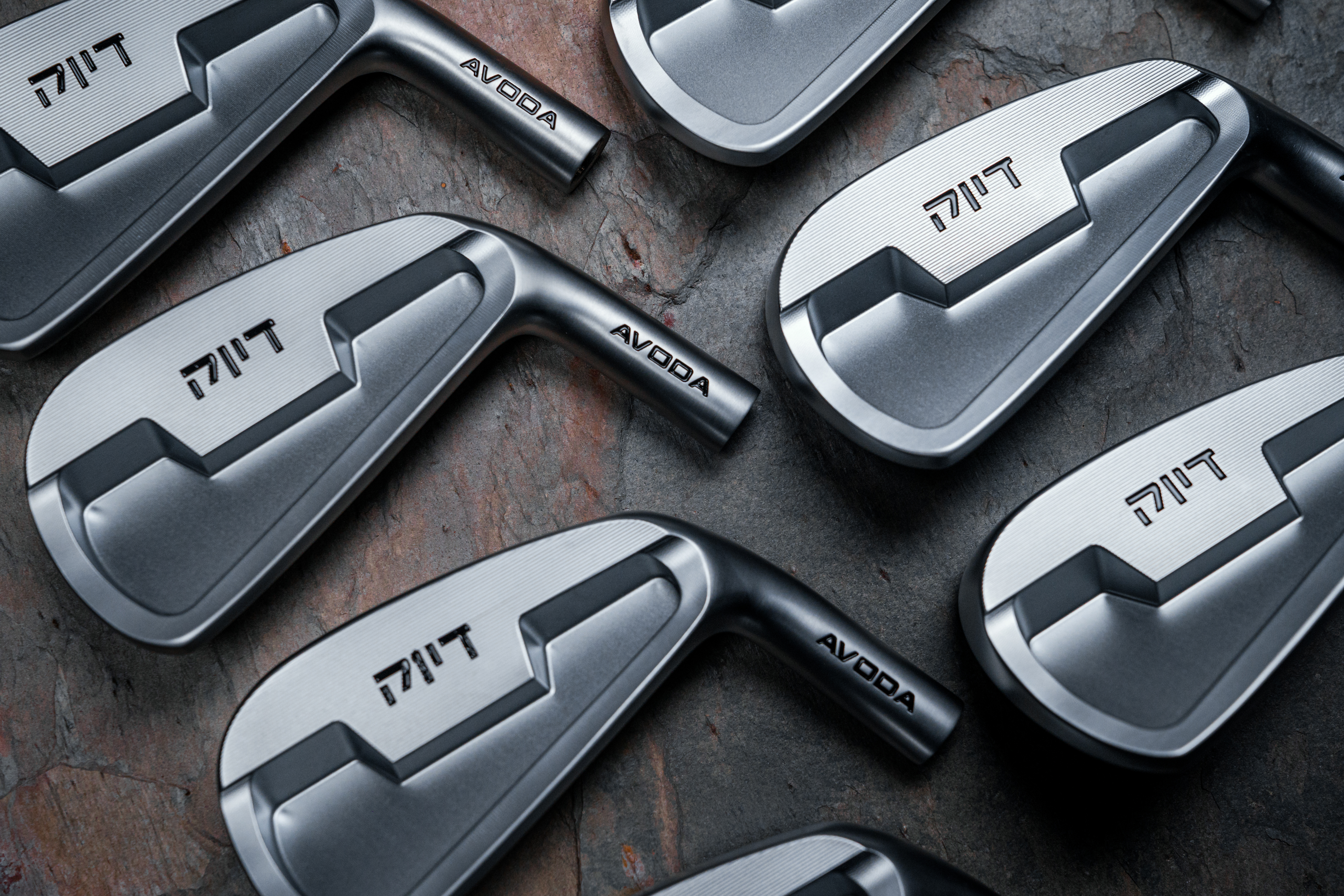
There are Q&As, and then there’s real discussion. On the one hand, there’s submitting a list of questions to an interviewee and, whether in text or in an interview, getting a tidy list of expected talking points in return, where depth and detour are eschewed. This is suitable for transmitting information, but it leaves much to be desired. On the other hand, there’s in-depth conversation, which covers miles of terrain, delivering insight and shifting perspective; the kind where you don’t leave the discussion the same way you came in.
The latter is what, over the course of an hour, Avoda Golf’s CEO and co-founder, Tom Bailey, offered in a discussion about the meteoric rise of his company and its singular, groundbreaking products. I’d say more about Bailey, or Avoda, or its lineup of irons and work with Bryson DeChambeau, but we covered all of that and more in our talk.
Enjoy it below.

Ben Alberstadt: Let’s start with the 2024 Masters: Bryson had your irons in play. Obviously, that’s not the beginning of your story. Where did it begin? How did it all come together? What opportunity did you see in the market that led you to jump in?
Tom Bailey: I’ll go into a little bit of my background first. Picked up golf seriously around the age of 15. I knew immediately that’s what I wanted to do. I wanted to be in the golf industry in some way or another, and I figured that would be playing. That’s obviously what everyone’s goal for a period of time is to play. I still have that dream. To do that, and that’s something that helps us a lot here at Avoda.
Went to college for a few years in Texas, and I decided to leave after my sophomore year to play full-time professionally. When I upped the amount of golf I was playing, I definitely came across some injuries, and trying to dig my way out of the hole of injuries, I was having back problems and wrist problems. I ended up solving a lot of my problems myself. I went to a few really good coaches that helped me along the way and guided me through it, but ultimately, I had to figure a lot out.
Got myself out of pain, and a lot of other people are asking the questions, hey, I’m struggling with the same things you are, how did you fix it? So I would share my experiences and what helped me. By complete accident, I ended up in full-time coaching just by helping people out of their own holes with that.
So I got fortunate enough to work with a couple of really high-level players, a few guys on the European Tour, and a top amateur, one of whom won the British Am, played the Masters, U.S. Open, and the Open. I shut down my studio and went completely online so I could control my time a bit better, travel, and get back into pursuing playing again. When I got back into playing and finally healthy, I’m moving the best I’ve ever moved.
I would still see similar problems coming up on the course that I knew weren’t because of the work I’d done. I said, there has to be something else. And that’s when I really started asking the question around, could it be the golf clubs? Because we’re not allowed to blame our golf clubs. Everyone says you’re not allowed to blame the clubs. I started asking myself, could it be the golf clubs? And obviously, you have a lot of people going, you know, it’s the bad workman, bad workman blames his tools.
Mike Schy, he’s a mentor of mine. He’s a big part of what we do here…[he said] if it’s not right for you and it’s not working, you can blame it. So he really opened my eyes to…he made me feel like I could explore the equipment space without being judged for it. A lot of people weren’t that willing. They give you the fitting and, here’s what’s available. But it was always like, yeah, I’ve been fit. I know what’s available. There’s something else missing here. I got connected with Mike and explored the same length world, and I spent a bit of time out at his academy, where he really opened the doors on being able to test what golf clubs can do for your golf game. I visited him at the start of 2022, right after COVID restrictions were lifted. I’d planned to stay for a month, but three and a half years later, I’m still here.
He just opened the rabbit hole for me in the equipment space. So I really started diving into what clubs can do. I started designing my own heads, hand-making clubs. He had a bench grind at the tent, and we would just have raw heads, and I would be completely making what I wanted to see, what I wanted the club to do. And very quickly, the same as I found in the coaching space, people are asking, ‘Well, I want my clubs to do that. What can clubs do for me?’
So I would be helping my own clients with their equipment and seeing absolutely gigantic results, faster results through fixing equipment problems than you could have ever done with a drill or a training aid or a huge amount of coaching. And I quickly realized that the golf club is the number one training aid in the world, and it will do more for a player’s development or hold back their development more than, frankly, any coaching, any drill, any training aid. Those are all important. The foundation of everything is a club that’s working for you, not against you. So that’s where we really realized the club’s the number one training aid. So very quickly, I found myself solving…our players’ problems with equipment.
Then I realized I was standing on a bench and grinding seven days a week, so I’d caught up with my brother. He’s a few years younger than me, but he went straight into work out of school. didn’t go to college or uni…he built his way up into a top position in a firearms and accessories company. He’s part of precision equipment. So he is fully immersed in the manufacturing space and the product sales space, and understands how the product space can work…
He’s like, ‘Why the heck are you making them yourself?’…He said, ‘We can manufacture your clubs to the same specs.’ So I’m just thinking, all right, that sounds amazing. So the goal was to sell 50 sets or to have 50 sets made in the specs that I was making clubs for people, so we could do the fitting piece of it. But we had a great product that would make golf easier, but we can still then fit from it. So everything I was doing on the bench, we could manufacture it. So we got started on prototyping some models, set the goal, right, 50 sets in 2024. I won’t have to hand-make them. I can still do the fitting, I still do the assembly, but I won’t have to hand-make them, so I can get back to golfing, and I can create a revenue stream alongside golf that can help finance it and help fund it.
Right around the time we were finishing off our prototyping and just getting ready to do our first batch of clubs, Bryson entered the scene, and that was because of being out of Mike’s academy. I got to know him quite a bit over those few years. So I already knew him at the time, but I knew he was having equipment struggles. I knew he wasn’t happy with the irons. They finally figured out the driver, and I hadn’t told him I was doing stuff, nor had I told Mike at the time. So I wanted to make sure we had a really good product before I said, ‘Hey, look at this, I’m making golf clubs.’ I didn’t want them to end up being terrible. And they weren’t, they were really good. So I said, ‘I’m actually making golf clubs, manufacturing clubs.’ Well, first thing Mike does is turn around and go, ‘Great, let’s make clubs for Bryson.’
…So I got properly thrown into the deep end of that. So that was around September, October, 2023. Sat down with Bryson, said, ‘All right, well, what are you looking for?’ And he just said, ‘The club that lets me keep my swing the same through the whole set.’ And I was like, ‘Now you’re talking my language, because this is what we’ve been doing.’ So that was the biggest piece in creating sets of clubs that didn’t conflict with the other part of your bag.
We had a lot of experience in making sure the whole set lined up. So then it was like, okay, where are you happy? ‘I love my driver. My swing’s great with my driver, but every time I hit an iron, I hook it.’ So we started diving into, okay, well, why do you, when you go to your irons, why does the swing have to change? What can we do to stop that? We use this driver as the baseline, and we really started diving into how to match the irons up with the driver. So fast forward from September 23 to, yeah, April 24 or the end of March 24. We got to a really, really good place for the prototyping to where he had a prototype set in his hands. That was the second full set we did, but the third generation of heads we did.
He said, ‘This is good to go. I’m using it right now.’ And we’re like, yeah, this is a prototype, you know…have to make sure that that’s it is conformed. And we had some problems there. We…overcame those problems on Wednesday morning of the Masters. And he said, ‘Cool, we’re good to go.’ Like, that’s how much of a difference they were. So he played nine holes on a Wednesday afternoon, put them in play, and his score was 65 in the first round.
So that’s kind of the origin story of where it all came from. Really, it was one big accident. That’s the truth from the beginning of it. My whole objective was to help myself get better at golf. And the things I’d learned helped a lot of people get better.

BA: I assume that just threw rocket fuel and everything in terms of your timelines and anything you would spec out and, you know, bringing stuff to market. Everything is messed up in a good way, I hope?
TB: It was, it was a gigantic learning lesson all at once. We went from zero to a hundred really quickly. The intention of selling 50 sets of clubs…to selling hundreds in a weekend, we were like, ‘OK. This has just got really real.’ So then it was for us, the only, the best way to summarize 2024 is that it was just a scramble to put in orders. The orders were coming from everywhere.
I had some advice from people who have been thrown into situations like that before. And I’m really grateful for that. One of them said, or a few of them said, ‘Do not hold back on how much you sell. Figure out how to fulfill.’ Because…if you hit the brakes too hard now, and you try and work at a pace that you feel you are capable of, you’re going to lose out on an opportunity to establish your brand in year one that most of the time could take 10 plus years to.
We grabbed anyone and everyone around us. And it was like, who wants to get involved? Like get in now. We’re going to build this thing, and let’s see where we get it. There’d be easily a week or two at a time where we wouldn’t sleep. Like maybe a couple of hours here and there. Went on from February 24 to I would say…earlier this year. Just burning at both ends non-stop. But we wanted to make sure that we service everyone. We got our name out there. We built our fitting network. We had hundreds of thousands of accounts worldwide applying to be fitters and people wanting to know who we are, what are we doing. So…2024 was just an absolute scramble to make the most of every opportunity we had.
And 2025 has been about building the foundations of the company, stuff that you usually do when you’re getting going. So, a bit of a pause, reorganize, orders are flowing, we’re good. Build a team.

BA: OK. After 2024…you’re reorganizing, you know, you have the opportunity to take a breath…Where does that leave you with respect to product offerings? Where did you come from, and where were you at, product-wise?
TB: Yeah, so the product that we’ve been working with for that first year was what we call the Origin Series, and that’s our same-length product and our combo-length product. The combo-length product is really what kicked us all off in the first place. I’ll give you kind of the origins of how that came about.
Getting into equipment, I wanted to see what it could do for the player. I really was interested in the same length like everyone was at first. And I thought, let’s dive into that. Who better to speak to than Mike Schy, the guy who literally brought the same length back to the game with Bryson. So when I really started diving into it with him, I would be using a training aid called the deWiz. I don’t know if you’ve come across that before, but it’s like a watch on the wrist that shocks you and measures your swing length.
So I was using that. And what I learned…I would stand there practicing swing lengths like the clock system, and I’d use my lob wedge, and I’d hit them all. And then I’m like, ‘Perfect, okay.’ Go to my sand wedge, make the exact same feeling swings, like where I know I wasn’t getting shocked, and I’d start getting shocked. I’m thinking that doesn’t make any sense. I know I’m making the same swing. On camera, sure enough, not the same swing. I’m thinking ‘What the heck could be the difference there?’ And the moment the length and the head weight started changing, the force applied, even though you feel it’s the same, was changing. And then it was like…’Well, how do I make sure that stays the same?’ Well, make it all the same.
So I started diving into the same length set. The moment I put a same length set in play, I just put it the whole way through the bag, because that’s what same length was, right? I started doing the same wedge tests and going, ‘Man, I can literally keep the same feels regardless of the club.’ The gapping’s good, because really the distance control is controlled by the force you put into it, and not everything’s a full swing. So at the moment, it’s about controlling the distance, which is really where the better players are. The loft being the only thing that changed because I’m controlling the swing length from the force anyway…But what I know is that I’m not the tallest. I’m 5’10”, I’ve got crazy long arms. I’ve got a 6’3″ arm span at 5’10”, it’s ridiculous. So my hands are hanging down on my feet already. A 7-iron-length wedge felt long.
A big complaint in same-length usually is that the 4-iron and the 5-iron don’t get in the air, they come out too low, the gapping’s not good. Or for me, high speed, really high ball flight, really spinny, it just optimised the windows to where now my four iron was really controllable and hits a great spin window…
So, I went shorter with everything. I really went up to 36 and 35, even 34 inches at one point, so like an inch shorter than a standard log wedge the whole way through. I settled around 36 inches as the length that worked really well for me in the scoring clubs. So, that’s the lob wedge to the 8-iron. I just couldn’t get 4-iron in the air. So I said…’Why don’t I just make that one longer?’ And then I aggressively ended up going a bit longer than 4, 5, 6, 7. And I had what we now call the combo-length set.
Same length in the scoring clubs, where it’s really important, where proximity matters, the most important part of the game for scoring. And now my backswing lengths all felt the same, and all were the same. My distance control just changed overnight. And that’s using the club to help you, not hold you back. And I was getting the right spin, windows on my 7, 6, 5, and 4. So I’m like, this is the way I’m building my set. And obviously, everybody else in the same length world who loved the same length concept, but were like, I have those same problems. The forearm doesn’t go hard; the waist feels wrong. All of a sudden, they’re going, can you make my set into a combo-length set? So I’m grinding away at their brand new sets of golf clubs, getting the weight right on them, and you know, pretty much mauling them apart on the bench grind. And that’s where it was kind of like, we moved to using raw heads. So I was custom-making combo-length sets from a raw head, butchering people’s existing sets. And then that’s obviously where I was busy making those, and we decided to manufacture those specs.
To your question, the product line at launch has been so far as being the combo length and the same length sets. We had one line of wedges to start with, which we called the W1. I designed those for thinking my market was going to be in the UK. In the UK, when you play in tournament season, playing on mini tour circuit, playing links golf, when you play in tournament season, usually, the courses are baked out; they’re really tight, the grass is really bouncy, it’s not grabby, and everyone just struggles with the clubs skipping up into the ball around the green. I wanted to, it didn’t matter if you go to like a super low balance T-grind or whatever it was, still skip up.
I wanted to make a wedge that you could use through the summer in the UK and still be able to get it under the ball when you needed to, fly it right. So that’s what we called Wedge One, the first one we made. Very low bounce, very low leading edge height. And then obviously, when we went to market in the U.S., that’s not typically the case. So we were a bit stuck with the W1 product to start with. It’s all we had available. From a time point of view, getting another product to market like that is not doable. It takes a few months, sometimes more…so through all that craziness, I’m still at the course doing product testing and developing what we now call the W2s, the next wedge in the line, but it’s just the more mid to higher balance model with more mid to mid leading edge height. So, for the U.S. market, the summer is a great, great wedge to play. We have our W1 and our W2…

BA: I mean, it’s got to be a challenge again, thinking about what you want to add versus what you want to keep the same and make better. But you know, also you don’t want to be stagnant and kind of, you know, you want to be seizing opportunities. sort of figuring out all those different levers to pull…while you’re of course dealing with huge demand and trying to build the infrastructure of a business…
TB: Yeah, the team’s growing quickly, and we’re really working on the business side of things and structuring it right. But yeah, we’re getting there. We’re trying to get some cycles in place where we know where we’re at with product for the future, and we’ve got some really, really fun stuff in the works.
…I think something that we’re really proud of from last year is that we were able to go from having our fitting process…taking that process, putting it into a system that was extremely easy to follow, and that we can roll out real quick and was very accessible…we call it our Precision Fitting System.
That’s something I think is particularly important, considering every product from last year, making sure people were not only in the correct length makeup for them that worked for them, but also in the right specs. And being from a coaching background and being about equipment as the training aid first, I understood how important getting your club dialed into the right specs and the right fit is. It’s all very good buying a new set of items, but if they’re not in the right specs for you, and especially from a lie angle point of view…we wanted to get the message and we’re still working really hard and getting the message of get in the clubs: get fit.
So we rolled out two initiatives on that. One was the Precision Fitting System, which is the in-person version of the process. And then one is our online fitting system, which is the exact same results as the in-person fitting, but without the whole experience of the in-person fitting…obviously, it relies on the customer being confident that we can deliver on the specs, versus the in-person experience is very much customer-driven. They’re experiencing why the club’s right for them.
So I’ll go a little bit into the Precision Fitting system first, because that’s something we want to share the message on. And from the golf coaches, we want to get the message out there as a golf coach that it’s not just a fitting system, it’s a coaching tool. It’s the baseline to every lesson. If the club’s not working for the player, don’t waste their money and their time. Don’t waste your time. Get the club right for them, get that huge low-hanging fruit taken care of, and now enjoy the work with them, turning them into a better course manager, better at shot making, not fighting golf clubs and lessons on the swing that were because of the golf clubs.
We developed the Precision Fitting System. There are four real simple parts of the system. Number one, we do a lie angle fit. Number two, we do a shaft fit. Number three, we do a grip fit. And then number four, we do a combo length versus same length fit…You know, it’s not about the labels of combo length, variable length, or same length. It’s about what length you need to play at your best. And everyone delivers the club differently. Everyone has different launch, spin, and ball speeds.
The length and head weight of the club massively affect launch, spin, and ball speed. Lofts are part of it. Changing the loft only moves the problem further up or further down the bag. It doesn’t really solve it.
BA: For my own curiosity, how subjective…is deciding between, you know, combo and single length, but like how subjective versus objective is that determination? Is there data that’s showing you guys this player should…this is what their set makeup should be?
TB: Sure. So, we can dive through the process of the fitting system, and that will answer that question, but ultimately, a quick summary on it is that if you need to dive into the data on the stuff I’ve listed out there, you’re either not testing it in the right way or you’re not exposing the player to it at all. Because what those four components, or those four pieces, do for improvement is so obvious that the player can feel it.
The coach can see it and the ball flight, and just the overall confidence of the player is, and I’ll share some research on that as well, it’s just, it’s night and day to the point where they forget that they even need to check data, or they don’t need to. So if we go through that, that’ll kind of answer it as we go. Step one of the system is the lie angle test. The reason we put that first and we ordered the components in the way we did is that…using FlightScope, you know, they have the profiles, the acceleration profiles or the speed profiles….What we found is we went through, and this is again, before we even had a company, it was like, OK, if we’re going to change something in a golf club, we have dozens and dozens of components to make up a golf club. You know, we can go through so many different things: offset, line, or shaft profile, shaft weight, grip type, grip weight, CG, top line, materials, you know what I mean. You just go for all of these things. It’s just something else. But by the time you’ve gone through all of that, how much time have you wasted that you could have been practicing or playing? And if you’re going to go through components, which ones really, really made the difference? So we did a profile test on the extremes of every component you could go through to find out when they were wrong or when they were off what was right for their player, how much did it mess things up?
We created a hierarchy of, say, this component; if this isn’t right, it will mess up everything. And if this component’s not right, it’s not really going to mess things up. There might be a half-percent gain in there, but let’s not bother with half-percent gains until we deal with 99%. And in our opinion, 90 to 95% of that golf club is made up of the lie angle and the shaft profile combined with weight and flex, but mainly the shaft profile, and the grip size. Grip weight can be a part of it, but grip size is more important. And then the length makeup of the set. So the compensation patterns created when those components were off were just absolutely catastrophic to a player’s development and their confidence on the course.
When we were looking at the profiles, if you’re familiar with it, you have your chart, and you’re looking to get the most consistent profiles as possible. Nothing with a huge acceleration unless that’s what you’re looking for, on the driver, maybe. Nothing with a huge decel. You want the speed patterns to be pretty consistent and ideally overlay as much as possible. So even when a swing was bad, they really shouldn’t be delivering too much differently. The huge error was the part of it that was the problem, not the club error.
So when a component’s right for a player, the profiles just overlay every single time. When a component is wrong for a player, they have to make a compensation to still get a good ball flight…But anytime you’re making swings that go against your natural anatomy, your natural force, how you’re built to move, and your capabilities, that will throw around and mess up the profiles. Cause you’re having to time it and figure it out on the fly.
So when a component was off, you’d start to see the profile spread out a bit. And when those components were off, they weren’t just slightly different on the profile. They were unrecognizable between shots…Lie angle was so high up on that list. But it’s like, right, if we don’t deal with this first, then there’s every single other component in the fit. You’re going to have to do as much as you possibly can with those to make up for the wrong line. You’re fitting all of these components wrong to make the wrong other component work. So anytime you go out of that testing, that hierarchy order of what makes the biggest difference, you can end up with Frankenstein. There’s systems out there which I think are amazing, that break down components by component and you’re literally testing…for components in isolation…you’re going to find out which one’s best for you. But when you throw those all together, it could be Frankenstein. They might not match up when they’re with each other.
Placing a component in order of the hierarchy. You’re building the club as you go. Now you actually really get to find out what was best. So we put our system together with lie angle testing first. Then we go to shaft profile testing, where the shaft bends. Then we go through shaft weight and flex, how much it bends and what’s speed.
What weight does the player need for their force? And then from there, we go through grip size testing. Grip size testing had as much influence over profiles lining up as the shaft profile did. When the grip size, and it’s becoming more known, Jumbo Max is doing a great job of providing grips in so many different sizes, but when you’re looking at the acceleration profiles and you’re seeing grip size mess up swing profiles more than weight and flex combined. Weight and flex combined have less influence over the profiles than grip. The grip is literally changing your wrist position on the club, and your wrist position either matches your natural anatomy and your release pattern, or it doesn’t. And the further away from matching it is, the more work you’ve got to do to hit the brakes and figure out where the place is.
Shaft flex and weight really just change the force you’re putting into the shot. They change the tempo and the timing. So I don’t want a club not to deliver when I expected it to. The way to make that work is to just very slightly change the tempo and your timing, which if you’re a good player, you’re very good at doing anyway, or you wouldn’t be able to control distance. So you don’t really change the mechanics of your swing, you really just change the tempo and the timing of your swing. Shaft profile, however, is literally like, ‘Where’s the shaft gonna kick through on us? When is it releasing at the right point for us?’ When that was off, you would literally have to change the mechanics of your swing to get the club face to square up.
So, lie angle, shaft profile, and grip size were the three heaviest on; if they were wrong, how bad could it get? That’s it. It was huge. There was one other component that was up there with lie angle, and it was swing weight, but not in the sense that everyone’s talking about swing weight. If it didn’t balance through the set, if one club was way different swing weight, that first swing is so far thrown off from what you needed to do that there’s no consistency. That swing weight number, as long as they were balanced, after two or three swings, the player figured out what they needed to do to load it Really, you were just changing tempo and timing, io it has an influence, but it’s down there with the weight and the grip weight and the total weight of the club…it was massive. The balancing of the swing weight through the set would change the release balance…
The overall weight of the club has more influence over things than the swing weight of the club…If a club was too light for someone, they could have two clubs at D2, one could be way heavier at D2 than the other. That part matters more than what the swing weight number was, because it’s about matching your force, the force you have available to put into a shot.
So we put the system together, lineal testing, shaft profile testing, we would do weight and flex as part of shaft profile testing. We would then move on to grip testing in isolation, and then we would…do the combo length versus the same length. This is kind of the head weight or that length piece of it. If the head weight was too heavy for someone or the club was too short, they might get a lot of ball speed with this. It’s a high smash [factor], a lot of ball speed, not much club head speed. The ball would come out lower. So when the club head was too heavy, the club would come out too low with not enough spin. And when the club head gets lighter, the ball comes out higher with more spin.
And that’s why, you know, that’s why clubs are built the way they are. The longer clubs are longer and lighter so that you can get a little bit more launch and spin and more speed into it. And then the shorter clubs are heavier, which brings the launch down, but it also brings the spin down. If the head weight was wrong for someone, let’s talk about the 4-iron end of the bag. If the head weight was too light for someone, they’d be trying to force the flight down so much that they would literally have to change the mechanics of their swing to deliver a completely different impact. And if the club head was too heavy for someone, nothing to do with swing weight, just overall smash being too high, launch and ball speed being too low, they would have to change the mechanics of their swing to try and help the ball up into the air. The problem you have, if you have the two ends of your bag, not many people struggle getting height on the higher lofted end of the bag.
If you struggle getting high on the lower loft at the end of your bag, the compensations you’d have to make to get them in the air would then mess up your swing on the higher loft end of the bag. Now you’d be hitting them way out of control and height. And if you’ve got the high end of your bag dialed in and got the launch and spin where you needed it, and then you went to the lower loft at the end of the bag, they wouldn’t get in the air. Regardless of whether you’re using a variable length set, same length set, combo length set, it’s about what’s your head weight that’s right for you.
So when we do the test of the same length versus combo length, it’s really a test of which 4-iron can I actually get the numbers I need out of. Do I need it in same length or combo length? Which one is going to actually give me the launch and spin I need out of the four-iron? And if I can’t get the launch and spin I need out of a four-iron from one of those two, then I don’t need a 4-iron, I need a hybrid. So I know I shouldn’t have that club in that part of the set. And that makes it the final piece. So when you have the wrong head weights and lengths, the compensations you make in your swing to try and get a usable wall flight would massively mess up the profiles. So that’s kind of where the science behind the way we put the system together matches in with the profiles, where it got really, really interesting. This is why this is such an accessible system for everyone out there. Where it got really, really interesting was when we would go through fittings with players, and we knew this stuff made a big difference.
When we were really going through it as a structured fitting process, the Avoda Precision Fitting System, we started learning that every time we found a component that was right, we would see the profiles, we would say to the player, these profiles are the most consistent, this is the one that’s performing best for you. And they would always go, yeah, that one felt the best. And you’re just like, all right, okay, it’s the whole like, oh, I see the numbers and that must be the best one. We’re thinking, why is it though, every single time without fault, the one that was the best profile is the player felt the best with? We started going, it kind of makes sense. THe player was delivering the best, it felt the best, it felt like the least amount of work. We started asking the player, ‘Does this make it easier or more difficult to hit good shots?’ And everyone’s idea of good shots is different, everyone’s ball flight and patterns are different, but ultimately a good shot is one you struck off the middle of the face, hit it kind of where you wanted it to. So we started asking the player, ‘Which one did you feel was easiest?’
And 100% of the time, without fault, the one that the player felt was easiest was always the one with the best acceleration profiles. It makes a lot of sense, but it’s kind of like, that’s annoyingly simple. So we started asking the players that, and over time, we started realizing that as much as the player knew which one was right, the bias of the component and what I want to be right came in. And it’s always like, ‘What was the numbers on that one? How far did that one go?’ And we started thinking, they know it, but they keep asking for the numbers anyway.
So we would remove the launch monitors, and we would just do it because we know that they knew what it was. And the moment we remove the launch monitors and remove the data altogether, you can see and feel the differences. If you know what you’re looking for as a coach or a player, you know whether something’s working for a player or it’s not without looking at the numbers. And the player knows whether it felt easier to find the club face or harder to find the club face. So we removed the data. All of a sudden, the players stopped going. ‘What were the numbers?’ And they started going, ‘Well, I need to figure out which ones were right somehow.’ So they would be way more in tune with what they were feeling during their swing, ‘How was the consistency of strike?’ It sped up the fitting process, and it created a way more…engaging experience for the player. And what it also did was allow us to get fitting systems out to people who didn’t have access to launch monitors.
There’s a lot of coaches who can benefit from having that system to help their players get the right equipment, but they do not have $50,000 to invest in a whole fitting studio. And quite frankly, it’s unfortunate, but most of time they’re not going to get taken seriously if they don’t have those A lot of companies that will not give them access to fitting systems if they can’t prove that they have all the gear, right? So it was great. We can start giving coaches access to club fitting, club fitting revenue, and tools to help their players get better.
And the systems are free. We just put them out there. So the coach wants one of those, reach out. If you qualify as someone who we can clearly see wants to help players get better, yeah, here you go. It is a system. If they hit a certain revenue target, it’s very small. It’s half a dozen sales over a year. That kit’s free. If they don’t at the end of the year, they cover the kit. And even then, it’s only $3,000. So it’s nothing crazy. That’s the system. That’s the Precision Fitting System.

BA: Yeah, it’s incredible. Do you feel like you are looking to the future? Are you kind of taking your cues from what you’re seeing there in terms of ‘Here’s a gap and something we can…that would be useful sort of in the context of, everything we see there.’ Or do you take sort of like R&D as a separate thing from the data you’re gathering there?
TB: Yeah, so our core motto here and core focus at the company is authentic innovation. If we say we’ve innovated, the term innovation is just thrown around the industry. It’s become a marketing term that people are so familiar with that they just like, they probably haven’t really innovated. So it’s tough to come into it genuinely doing something different. And I think that’s obviously getting noticed with the stuff we did with Bryson and other products. Okay, this is different, a different scares people.
So for us, the idea of what is authentic innovation is if someone’s already doing it and they’re doing it well, then we won’t bother because I want to go play golf. And if I can buy that product already, I’m going to use it. You know, I’m going to go, I’m not going to waste my time and our money and our energy doing something that someone else is already doing really, really well. If someone’s not doing it and we are going, this might be something that’s needed. We’re gonna go down that rabbit hole, we’re gonna find out if it’s needed. And if through those kind of fitting processes and those testing processes, there’s a night and day difference, and the golf game will be a better place for having that, then we will bring it to market. And it’s not a question of does that fit in with the marketing strategy, does that fit in with the new product cycles that everyone’s going down? It’s just, if it needs to exist, if it can help me play better, and it clearly makes a difference to people’s games, we will bring that to market. And if we go down that rabbit hole and find out that it’s, you know, for some people it is better, for some people it isn’t, or you know what, for no one this isn’t better for anyone, then I’m not going to waste my time selling a product that doesn’t help people either. And our kind of reasoning behind that is that, as a smaller company, we do not have the marketing budgets that these companies have. We can’t outmarket a bad product. That’s a word of mouth that we’re never coming back from. So you want to be really careful that if we’re bringing a product to market, it’s something that can actually help people. And if it’s something that can help people, they actually get fit correctly for it because it could be the best product ever. If it doesn’t match their specs, it doesn’t matter…I don’t care how good your manufacturing is and what your club can do.
If the lie angle ain’t right on that, you ain’t finding the middle anyway, so you better have a game improvement head at that point. That’s kind of where things have moved with the speed of getting product to market, speed in the purchasing processes, gotta get the volume of sales, gotta get instant gratification, gotta get people in clubs quick. It’s kind of like the game improvement clubs are becoming a much more focused area now; even the highest-level players in the world, who are leaning towards them because something as simple as lie angle hasn’t been taken care of.
BA: Interesting. So we haven’t talked about 3D printing, we haven’t talked about bulge and roll within iron design. Those were things I wanted to discuss. I think maybe the two are related, I mean, in terms of like prototyping?
TB: To wrap up on the fitting side of things and what our offerings are there…with all of the in-person sessions we did, mean, thousands of in-person sessions and this is going back even thousands more before we had it as a system, there’s huge correlations between the way someone’s built, the swing they have, and the clubs they need. And through all of this testing, it’s very easy for us to go, okay, these are the specs this player needs. And it’s not even; it’s not negotiable anymore. These are the specs to match how you’re built to move. And you can use anything and figure it out. But if you don’t want to have to figure it out and you don’t have to spend countless hours on the range, but you don’t have time for that, here’s a club that you can go and play with, and it’s actually training you to be a better golfer.
What we created based on that was our online fitting experience. We have charts that are 10,000 variations deep, tens of thousands deep…But from that, we can figure out from seeing someone swing, finding out their height, and rough carry distance, we can literally put that through and find out the exact specs that would match that in-person fitting. To the point where we’re doing this as our online fitting experience, players have to trust us. But the players who go, that’s really interesting, that’s different from what I would have thought I was, so I’m gonna go for an in-person fitting. They go for the in-person fitting, and then they reach back out and go, ‘How did you know those specs would be the same as what I got fit into in-person?’ And the reality is, the fitting process is the experience; it’s player-driven.
In the Precision Fitting System, they go through what the worst component and the best component are for them by testing both extremes. We go, here’s one extreme, here’s the other extreme, here’s somewhere in the middle. Which one of those did you get along with the best? Okay, we can eliminate that side. We can focus on this side, narrow it down. And the way we narrow down is by exposing the player to everything.
They say what worked for them and what didn’t work for them. And once you’ve removed every single variable that made it more difficult, and you’re only left with one thing, it’s tough to argue that that’s not the right thing. Because if everything else didn’t work, and you’re only left with one thing, that has to be the right thing. And that’s what the experience of the in-person process is, is that the player really gets to go, ‘man, you know how difficult it was for me to hit a golf ball when it was with that setup?’
That’s kind of what I feel like right now. And then when they get into the right one, it’s like this emotional attachment to these specs that just made golf easier for them. And the mental stress of figuring it out kind of goes away. In person, they get that experience. Online, they won’t have that experience, but they will when they get those golf clubs. So that’s kind of where we’re at. We can fit 100% of people, regardless of where they are in the world, into the right specs, but they have to trust us with that information. And I love the experience piece of it. know, players getting to an in-person location, experiencing a very different style of fit that’s led by the player. They actually now understand what a wrong profile shaft and the right profile shaft feels like. They understand that where the shaft bends is even more important than how much it bends. These are all things that players don’t get exposed to. So that’s what we’re offering from a fitting point of view to get players into our clubs, into the right specs.
And then, as far as the equipment, what we’re working on and building the club to be a training aid, there’s a lot of other components in there that we can introduce that really are those kind of like outside of that 90% of it, but make that 10% piece turn you into the best goal for you can possibly be. And that’s what we did with Bryson, for example, and are doing for some other players at the moment. So that’s what we have to offer. And there’s some fun stuff coming from…some of the R&D and product development side of things. It’s all led by player feedback. It’s all led by player testing. Our team here is a team of guys who have played high-level amateur golf or professional golf. You know, we really are trying to, you know, we bring in a lot of golf professionals into the team here. People who love golf, that’s the people we want working with.
It wasn’t just a job for them, it’s a lifestyle for them, they love it. So when we bring a product to market, it’s because the guys here have tested it, their bodies have tested it, high-level players have tested it. The profiles say this thing’s working better than the other one. And it really is like a training aid for your golf game. So we’re really excited to bring more to market from that over the next few years and over the next few decades and see where we can get to with making the club the ultimate training aid for the player.

BA: It’s a fascinating perspective. Can we talk about your thinking about bulge and roll on an iron? I’m interested in where that came from and how you decided it was something to bring to market.
TB: For sure. So when we started on the project with Bryson, it was really just to make him a club he liked the look of and didn’t have too much offset that delivered what he, you know, the swing that he felt he could repeat with the driver. So that was piece one of it. And we did all of that. The second piece was diving into what we would call the one-percenters or, know, depending on your speed, it could be more than a one-percenter, which was what else can we do with this golf club to make it go even better?
…Obviously, he was super interested in the bulge and roll side of things, which is where he came across the Krank driver and started doing the testing with that. And that was right around the time of this all happening. So Mike threw the comment out there, ‘Why don’t we put some curvature on an iron and see if it makes the ball go straighter like it does on woods?’ So he took the raw forgings that we would work with into what we call the tent, which is his academy over in Fresno, California.
And he ground some, basically tried to add some bulge to the face. Now, it was pretty hacked to pieces, but you could tell that this thing wasn’t flat anymore. had a radius to it, whatever that was; it was a bit inconsistent, but there was curvature. Took it back out, Bryson started hitting it, and he’s like, ‘That shot shouldn’t have gone straight. I can never hit the toe and have that shot.’ He’s like, ‘I’d put this in play right now.’ So then they looked at me and said, ‘Can we put that curvature on an iron?’ And I’m like…’I can find out.’ I’m learning this right now. doing this. Find out if we can do it. Sure enough, we could. We started on that process. I built him a flat face and a curved face in more of the head he was looking for. And we said, right, there are two identical clubs, one flat, one curved. What’s the difference? Let’s find out. And he went through driver testing. The off-center hits got more curvature than they had. The side spin just reduced a bunch.
So to the point where there was so much curvature that you literally didn’t matter where you hit it, he couldn’t get above 50 RPM of sidespin. And he was like, ‘That’s too straight. We need to have a bit more curvature than that.’ So on the iron, it had a similar effect, but not as much on reducing spin as it did on keeping the direction of the spin consistent. So we did a test where he would hit it pretty much present the same face-to-path as often as possible when anything that fell outside of that he would remove the number so it didn’t conflict it. So let’s just, for example, say two degrees face-to-path, and it produced 600 to 700 RPM of side spin to the left, that’s the same as the draw pattern. When he hit across the face on the flat face, doing that, if you hit off middle, those side spin numbers reduce or increase. Heel starts going straighter, toe starts drawing a bit more.
At the speed he’s swinging at, there is a lot more gear effect on the line than there is, it exists. He went to the curve-face club.
It didn’t really matter where he hit it on the face; the direction of the side spin stayed pretty consistent. It was always around six to 700 every time. So it was noticeable to the point where you could look at the bull fly and go, ‘That shouldn’t have gone straight.’ And those are the kinds of differences that we want to bring out. A voter is one where you can literally hit a golf shot and go, That shouldn’t have happened and not have to check the data to find that it made a difference. You know, when we run out of things to go through that you can look up and go, man, that’s different. Then we might start diving into the half-percenters and the data side of things, but when we realized that it was about making the full set, that’s where the 3D printing piece came in. So the 3D printing piece was just rapid prototyping. We were CNC-ing the heads, but when he wanted to see a thicker top line, a wider sole, a wider blade with the curvature, there’s only so much you can do without making that hollow.
So it had to be on the time taken to go through CNC, and putting together a hollow body CNC head is going to take a lot more time, a lot more construction involved. And we were working against an off-season schedule. LIV obviously had a bigger off-season than you usually have. They still only left about, and you wrapped up in September and started again in February. So they only left for four or five months. It wasn’t anything crazy. We knew we had that small window to get in something, or if the season started, he’s probably not going to want to start changing things around during the season. And then, which we’ve officially found out wasn’t the case from the end. When there’s that much of a game, these guys are like, ‘Would I wait for this?’ There’s a lot of testing to find out this thing’s better when you’re hitting it and going, this thing’s better. So it was like, right, let’s get him something. So we…3D printed the heads so we could just get them a lot quicker, get them done a lot quicker, all for prototyping purposes. And the plan was once we’re done with that, we know what we want, then we’ll go ahead with full manufacturing or take a bit more time putting these together. But for prototyping, we’re gonna find out everything we need to get these done. So we did him a full set of heads, 3D printed, and he got them in late January. We finished the testing on that stuff in mid-November.
So he had a whole set 3D printed by late January. He took them to Myakoba, used them there, and found that they were way better. But there were a few things that he didn’t do that he still wanted to improve on. He didn’t put them in place straight away. We went back, went through round two of prototyping a full set. That’s the one that we had the week before the masters. He’s like, ‘This is it, I’m using these.’
So, really, the 3D printing was just used for rapid prototyping. It was never the intention to take anything to market…From a rapid prototyping point of view, you get things done pretty damn quickly that way. It does lead to its own issues, which we ran into a little bit with some groove stuff. But we got that figured out in the end. That was all sorted. It just took a little bit longer than we had planned. But that’s really all it is.
BA: And how much do you feel like face curvature is a big part of irons in the future, you know, that you’re putting out there? Or is that, you know, a more niche thing? How core is that to your thinking about iron design?
TB: It’s for everyone. It’s for absolutely everyone. What I would say is that the faster you are, the straighter it will go. So it is for everyone. But I would say if you’re over 95 miles an hour with a 7-iron, which the amount of guys that are there now is kind of crazy. You know, even players who played slowly for a long, long time figure out better ways to move.
If you are over 95 miles an hour, it is a non-negotiable. If you like playing better golf, you should be using it. You wouldn’t, you wouldn’t go with a driver without it. Although a lot of guys are still using drivers with not enough curvature for them…it is a non-negotiable above that. If you’re between 85 to 95, which is where most of the golfing population is sitting, more competitive golfers and the male golfers are sitting.
It is 100% going to make a difference for you again, but it’s not going to make as much of a difference if you were 95 and above. I would say make sure that you get your line angle and your other specs dialed in. If you’re looking for more, you might find a few percent from it. It will make a difference, but it isn’t a non-negotiable. If you’re below 85, again, it makes a difference, but visually, if you hit a flat face versus a curved face, you’re not going to look up below 85 and go, wow, that’s different. It’s going to be like, ah, that’s kind of similar.
Maybe you’re going to have to dive into the data to prove it, but below 85, like chances are you’re not playing like a best of golf. And there’s other things we can do to find gains in your game versus just hitting it straight. And we needed to go further and straighter, but curvature is not going to necessarily make it go further. Although the confidence it gives you on being able to swing faster and control your misses does make it go further. So it is, yeah, it’s a non-negotiable bug. Those 7-iron to 4-iron, if you’re not using it like, just, know, as a reason why people love hybrids or higher lofted fairways, and we use them up to 30 degrees sometimes or even more. They’ve got curvature. The thing that makes them forgiving isn’t only the CG-based material for the construction, but the fact that the faces aren’t flat. Big difference. So if we’re going to use it on those, yes, the gear effect on an iron might not be as much as those, but it still exists.
It’s there, and the faster you are, the more it’s going to do it. So you might as well have it there to save you when you’re off-center. And if you’re a really high-level player, you can just use the face to do so much more because it’s not flat. But you can do way more with the flat face now if you’re skilled with it. So it is huge. I’m never going to go back to playing a flat face time again. That’s just not going to do it.

BA: I knew you emphasized fitting, but did not know to what degree. And this is a really interesting approach to it…
TB: Yeah, it makes it accessible. And so the point I really want to drive home to coaches out there is like, I’m a coach from a coaching background. I’m from a playing background. If I had this system when I was on the mat nine hours a day giving lessons, I would have helped a lot more people. What it would have done for my business and what we see it doing for the coaches we work with is it gives them access to the number one revenue generator in the industry, which is golf equipment. And a lot of pros have been cut out of the process, and fitting lies with the coach and the player. Whenever we’re working with a player, a high level, doesn’t matter what level it is, we want the coach as part of that process. The person we’ve been working with recently, I want to make sure that his coach is enabled to lead the way on the equipment piece of it, because I’m not going to be there all the time, and they are. So it allows coaches to get access to fitting without investing $40,000, $50,000. It’s mobile, it’s a 40-inch gun case…
You can take it anywhere, take it in the car, fly with it. I fly everywhere with mine. Their players get better, faster, which means more people are like, hold on a minute, what is this guy doing? More lessons and it gives coaches the opportunity to break out of the hour by hour model…it lets them really break out of that and access more players a lot of the people that go to our fitting locations are now getting lessons with our business with our coaches, because they’re coaches, so they go through the process they’re like, “Man, this coach really understands what can influence things…Can I get lessons from you as well?”
At first, it was about the player making sure they’re in the right clubs, but now it’s just as much about the coach having a system to help their players get better. It’s not in the system that’s fine, but 100% of coaches should have a system for analyzing their players’ equipment and should have access to education around what equipment can do for their players. It’s the number one training aid on the planet. I’ll leave you with that statement. It is the number one training aid on the planet without a doubt.







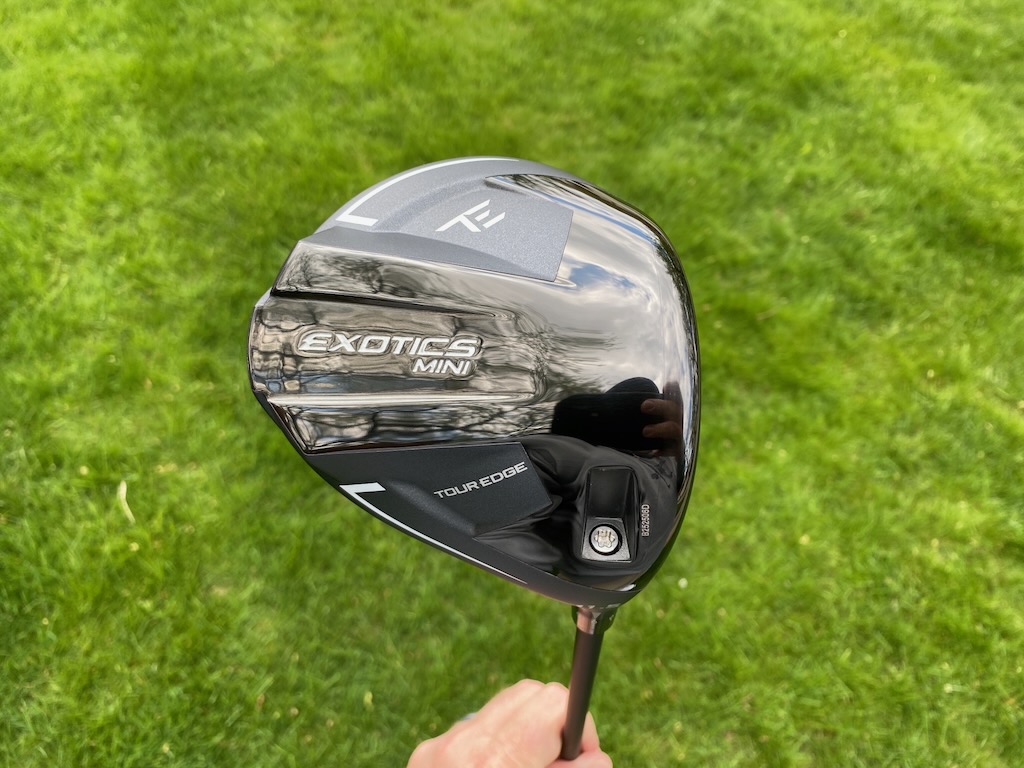
Tour Edge Golf has today introduced the all-new Exotics mini driver, engineered to deliver a powerful combination of speed, control, and versatility in the long game.
The Exotics Mini combines a titanium face with a stainless-steel body in design to balance ball speed with stability and control, creating a versatile option at the top end of the bag.

At the core of the design is Tour Edge’s proprietary Combo Brazing technology, a high-precision thermal bonding process that seamlessly fuses a titanium cup face to a stainless-steel body into a single, continuous structure. By eliminating energy loss found in traditional multi-piece constructions, Combo Brazing is designed to deliver faster face response, more efficient energy transfer, and a uniquely powerful yet controlled feel.

The multi-material construction also allows mass to be positioned lower and deeper in the head in a bid to increase stability, while the thin titanium face is engineered to maintain ball speed across a wider impact area.

“While the initial goal was to enhance control and versatility in the long game, Combo Brazing ultimately drove measurable gains in ball speed and distance within the mini driver category. In robot testing, we’ve documented higher ball speeds, higher launch, reduced spin, and increased carry and total distance compared to leading models.” – Vice President of R&D Matt Neeley

In addition to distance performance, the Exotics mini emphasizes forgiveness through a heavier stainless-steel body that shifts mass toward the perimeter. This configuration increases MOI relative to traditional all-titanium mini drivers, helping preserve ball speed and directional stability on off-center strikes. Paired with Pyramid Face Technology from the Exotics metalwood line, the design is intended to support consistent speed across the face.

To further enhance MOI, a lightweight carbon fiber crown frees additional mass that is strategically repositioned low and deep in the head in design to improve stability and promote optimal launch with controlled spin.

“We designed the Mini to be about five millimeters shallower than other mini drivers on the market. That change improves playability off the deck. From a clean fairway lie, it can function as a strong 3-wood alternative while still providing control off the tee.” – Tour Edge CEO David Glod
An adjustable hosel system allows for loft and lie tuning to dial in trajectory and shot shape, while a fixed 13-gram rear weight helps stabilize the head through impact to improve dispersion consistency. The Exotics Mini Driver is available in 11.5 and 13.5-degree lofts in right-handed models.

Pricing & Availability
The Exotics Mini Driver is available for pre-order beginning today for $399.99 USD at touredge.com, and will be available for purchase at retail outlets worldwide on May 22, 2026.

In our forums, our members have been pitting a Srixon ZXi combo against a TaylorMade P7CB/770 combo. WRXer ‘edutch22’ is on the hunt for a new set of irons and kicks off the thread saying:
“Looking at picking up a new set of irons and think I’ve narrowed it down to Srixon ZXi combo or Taylormade P7CB/770 combo. I am currently a 5 cap and allbeit I feel irons are my weakness. My miss is a little to the toe side. I am decently steep at 4-5 down. Always thought I am high spin but recently on trackman my 7 was spinning at 5800 roughly.
My question or looking for thoughts on which one would benefit me more from a forgiveness standpoint? Or is there another iron is should be looking at entirely? I only get to play about once or twice a week, if I am not playing a 2-3 day event. Thanks in advance.”
And our members have been sharing their thoughts and suggestions in response.
Here are a few posts from the thread, but make sure to check out the entire discussion and have your say at the link below.
- manima1: “You just can’t go wrong with Srixon ZXi7.”
- MattM97: “You have to hit them to know, the V-Sole on the Srixon can be make or break for many.”
- dmeeksDC: “P7CB is more forgiving for me than ZXi7 because my main miss is low middle and the P7CB still flies and spins great on that miss. These are both really nice irons but I like the P7CB more than the Zxi7 and the P770 (or P790) more than the Zxi5. The Srixons are larger so if that gives you confidence that is the way to go. I don’t feel like I get any benefit from the V-sole and the P7CBs live up to their high Maltby forgiveness rating so the TaylorMades have been great for me.”
Entire Thread: “Srixon ZXi combo or TaylorMade P7CB/770 combo? – GolfWRXers discuss”

At GolfWRX, we are a community of like-minded individuals who all experience and express our enjoyment of the game in many ways.
It’s that sense of community that drives day-to-day interactions in the forums on topics that range from best driver to what marker you use to mark your ball. It even allows us to share another thing we all love – buying and selling equipment.
Currently, in our GolfWRX buy/sell/trade (BST) forum, @pianoman0123 has a 2024 Wilson Staff CB/Blade combo up for grabs.

From the listing: “2024 Wilson Staff CB/Blade Combo. 4-8 irons are CB’s and the 9,PW are Blades. 5-PW have Project X 6.0 Shafts and the 4 Iron has a Steelfiber CW110 Stiff Shaft. Standard Length, Lie and Lofts. These are in very good condition the shafts just don’t work for me. Like new Lamkin Grips on the 5-PW and a stock Golf Pride on the 4 Iron. $525 OBO.”
To check out the full listing in our BST forum, head through the link. If you are curious about the rules to participate in the BST Forum, you can learn more here: GolfWRX BST Rules

RBC Heritage Tour Report: More minis, course-specific setups, Spider & GTS launches

Justin Rose WITB 2026 (April): Full WITB breakdown with new McLaren irons

Best fairway woods of 2026: The most versatile fairway woods + the most forgiving fairway woods

Gary Woodland’s winning WITB: 2026 Texas Children’s Houston Open

What’s the story behind Webb Simpson’s custom-stamped irons?

Cadillac Championship Tour Report: Spieth’s sizable changes, McLaren Golf launches, and more

The 24 players who can win the Masters

Rory McIlroy’s winning WITB: 2026 Masters

Kristoffer Reitan’s winning WITB: 2026 Truist Championship

J.J. Spaun’s winning WITB: 2026 Valero Texas Open


Alex Fitzpatrick WITB 2026 (May)
Driver: Ping G440 LST (9 degrees) Shaft: Fujikura Ventus Black 6 X 3-wood: TaylorMade Qi4D (15 degrees) Shaft: Fujikura Ventus...

Kristoffer Reitan’s winning WITB: 2026 Truist Championship
Driver: Ping G440 Max (9 degrees) Shaft: Mitsubishi Tensei 1K White 60 TX 3-wood: Ping G440 Max (15 degrees) Shaft:...


WITB Time Machine: Rory McIlroy’s winning WITB, 2021 Truist Championship
Rory McIlroy’s victory at the 2021 Wells Fargo Championship 2021 (now the Truist Championship) marked a significant return to form,...


Collin Morikawa WITB 2026 (May)
Driver: TaylorMade Qi4D LS (8 degrees) Shaft: Mitsubishi Diamana D+ Limited 60 TX 3-wood: TaylorMade SIM Tour (14 degrees) Shaft:...
-
 Equipment2 weeks ago
Justin Rose WITB 2026 (April): Full WITB breakdown with new McLaren irons
-
 Equipment1 week ago
What’s the story behind Webb Simpson’s custom-stamped irons?
-
 Equipment2 weeks ago
Cadillac Championship Tour Report: Spieth’s sizable changes, McLaren Golf launches, and more
-
Whats in the Bag3 days ago
Kristoffer Reitan’s winning WITB: 2026 Truist Championship
-

 Whats in the Bag1 week ago
Cameron Young’s winning WITB: 2026 Cadillac Championship
-

 Whats in the Bag3 weeks ago
Nelly Korda WITB 2026 (April)
-

 Equipment2 weeks ago
Justin Rose on the switch to McLaren Golf, learnings from previous equipment moves
-

 Tour Photo Galleries2 weeks ago
Photos from the 2026 Cadillac Championship

