
Instruction
The Six Biggest Myths in Golf Fitness


As a golf fitness professional, I spend most of my waking hours writing programs and protocols to help golfers perform better. The moment when a golfer starts to move and feel better, swing better, or post lower scores as a result of one of my programs is my greatest motivation. However, when I step out of my bubble of dedicated clients, the misconceptions and pseudo-science that seem to greet golfers in developing their fitness programs always shock me. Furthermore, this misinformation is stopping golfers achieving these moments of better movement, a better golf swing, or lower scores for themselves.
Indeed, I recently polled golfers on my social media communities for their opinions on golf fitness. Much of the results reflected long standing (and I had hoped long dead!) myths such as weight training reducing flexibility, making golfers too slow or too big to properly execute the swing. Writing this is my attempt to dispel some of the most commonplace fitness myths I see touted to golfers. So without further ado, let the myth busting commence!
Myth No. 1
Golfers shouldn’t lift weights because it will make them tight. This will ruin a player’s ability to swing.
Ah the big one! It amazes me this myth is still quite so prevalent to be honest. After all, look at Tiger Woods’ success since bulking up and massively increasing his strength levels after his Masters win as a lanky 21-year-old.
First of all, research has actually shown that resistance training is one of the most effective ways to develop functional mobility and flexibility. A properly designed strength program, in conjunction with playing golf, is the best way to make your strength and flexibility gains golf specific.
Let’s also not forget about injury prevention. Golf is a much more physical sport than most people think. You only need to look at force plate and biomechanical analysis of the forces on the body during the golf swing to get an understanding of this. Heck, guys are swinging a 44-to-46-inch club at well over 100 mph! Strength training is imperative to staying healthy and overcoming muscular imbalances created by the asymmetrical nature of the golf swing.
Finally, swinging a golf club is one of the most explosive activities in all of sports. Without a strong, powerful lower body, you’ll never reach your full potential.
Myth No. 2
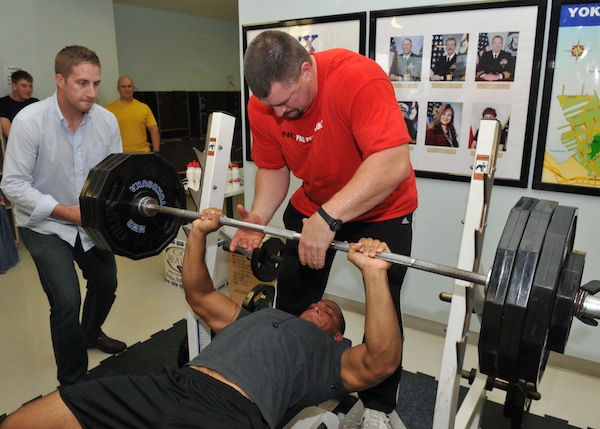
Golfers shouldn’t bench press because it’s not “sport specific.”
In reality, no exercise is truly sport specific. We make the physical attributes gained in the weight room specific by playing golf and learning how to transfer these attributes to the course. Don’t get me wrong; certain exercises are more productive than others. And remember that it is impossible to duplicate the speed, intensity and technique of the golf swing in the weight room, and it’s something that golfers shouldn’t try to do.
The bottom line is that the bench press is a great, multi joint, free-weight exercise for developing strength in the chest, triceps and shoulders. And there’s nothing wrong with that! The chest, back and triceps musculature have been shown by Dr. Sergio Marta in multiple studies to be the most important muscles in the upper body for the golf swing.
I’m not saying that the bench press is the most important exercise for golfers, but it can and should be incorporated into the training programs of most golfers.
Myth No. 3
Olympic lifts are the only way to get explosive.
Olympic lifting is without doubt a great way to develop speed, power, explosiveness and overall athleticism. As countless strength coaches and studies have shown, they improve clubhead speed and lead to greater distance off the tee. While I’m not disputing their effectiveness, I do believe there are other more user-friendly and effective moves to develop power in the golf swing.
The Olympic lifts have a large learning curve and mastering the complex form required can be difficult and time consuming. After all, Olympic lifting is a sport in itself! Olympic weightlifters spend their entire lives practicing these lifts and some of these athletes still never perfect them! Research has shown simpler and much more teachable moves, such as the weighted squat jump bring all the benefits of the Olympic lifts to golfers without the learning curve.
Recent studies into power development in rotational sports have also shown that power is plane specific. That is, you only develop power in the direction of movement in which you are training. The Olympic lifting movements above are sagittal plane dominant (movement is up and down). With this in mind the golf swing, which features movements in the transverse plane (rotation movement) and frontal plane (movement is side to side), should be trained using movements with a rotational and/or lateral nature.
For these reasons I tend to opt for med-ball training, jump drills and lateral jumps to get power training in. Many of these lack any significant learning curve at all, provide great effect and have the happy coincidence of utilising movement in the same plane as the golf swing.
[youtube id=”MVLBx630S44″ width=”620″ height=”360″]
Myth No. 4
Strength training is unsafe for kids.
Parents that wouldn’t hesitate to get their young children involved in sports such as football, gymnastics, basketball and indeed golf often fear that participating in a strength-training program is damaging to their children’s long term health and may even stunt their growth. Nothing can be further from the truth. The fact of the matter is that running, jumping, swinging a golf club and many of the activities our children are involved in daily create loading on their bodies that is up to 10 times greater than most strength training exercises. In other words, the physical demands on a child’s body are far greater on the playground, golf course or running track compared to the weight room.
Parents who don’t let their children participate in resistance training could actually be increasing their children’s risk of injury on the athletic field, as weight training has been shown to have the same injury prevention benefits in children as in adults. Indeed, there have even been campaigns by organizations such as the American Orthopaedic Society for Sports Medicine and the American Academy of Paediatrics promoting the benefits of participation in a properly designed and supervised resistance training program for children.
Prepubescent children shouldn’t lift maximal weights; they should lift weights that can be lifted for at least six repetitions with proper form. Strength training in this manner can be the most potent exercise stimulus for bone and muscle growth and development, as well as improving balance, coordination and kinaesthetic awareness, all of which are vital for a child’s athletic development. In fact, research has shown that young weightlifters have greater bone densities than individuals who don’t lift. The positive benefits of resistance training for bone health, injury prevention and improved athletic performance are far greater than the risks.
Myth No. 5
Lifting weights for high reps is more appropriate for golfers as this will “shape” and “tone” their muscles.
I really have no idea how this myth got started, but its prevalence is amazing. Especially considering it has absolutely zero scientific or factual evidence to support it!
Here are the facts. The main difference between a “lean and toned” physique and a “bulky” physique is the amount of body fat that surrounds your muscles. Basically, the “lean and toned” look that most people desire is a result of having muscle that isn’t hidden under layers of fat. And let’s not forget that the best way to build muscle is through strength training.
More importantly, with regards to training for golf, lifting light weights for high reps affects the musculoskeletal system in such a way as to build local muscular endurance. Muscular endurance specific to the golf swing (usually best developed by simply playing golf incidentally) is of course highly useful to golfers, as our sport requires multiple efforts over a long period of time.
Muscular endurance, however, has little to no carryover to any of the other physical qualities we need to address in order to perform better on the course. Strength, on the other hand, is the mother of all physical adaptations. All other physical capacities, such as power, speed, mobility, balance, muscular endurance and coordination depend on force production within the physical environment. If strength improves, all other capacities improve with it to varying degrees. With this being that case, strength training should form the heart, soul and major basis of your training programs for golf.
Myth No. 6
Golfers need to improve balance and build core strength by training on unstable surfaces.
This one, I have to admit, is my personal favorite! Unstable surface training (UST) has become an integral and expected part of many strength and conditioning programs, particularly in golf. Indeed, magazine covers and articles are abundantly promising a better swing, longer drives and lower scores from a few simple exercises performed on a stability ball.
Claims have been made for the effectiveness of UST for injury prehab and rehab, increasing power in the golf swing, increasing balance in the swing and improving swing mechanics. However, there is no evidence that UST reduces the likelihood of injury or improves performance in healthy, trained individuals.
In fact, studies have found that UST minimised improvements in plyometric and agility tests. Basically, the subjects of these studies who weren’t doing UST made bigger gains in power and speed. The other issue highlighted by the UST research is the specific nature of improvements made by trainees. Put bluntly, classic core work on unstable surfaces, such as stability ball crunches or Russian twists, doesn’t really carry over to anything at all, let alone a complex motion carried out whilst standing, like a golf swing.
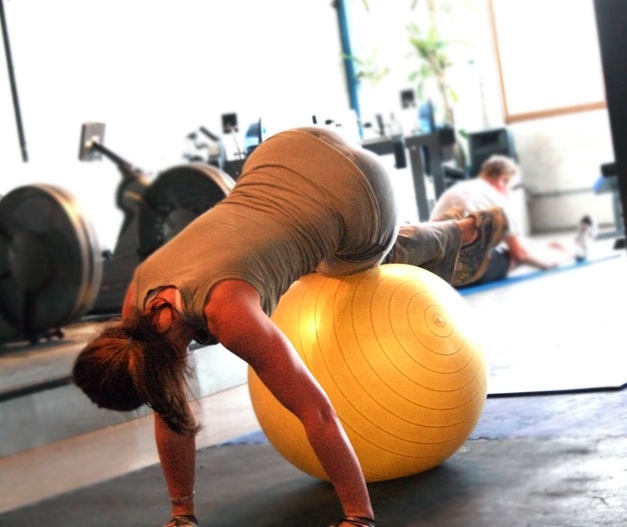
Lastly, balance is best trained in the parameters it is to be used. Golf is a game played with both feet on a stable surface and should be trained this way. Additionally, significant anecdotal evidence is beginning to emerge that attempting to replicate sporting tasks on unstable surfaces actually impairs the learning of the skill through competing motor demands. In a sport as technically demanding as golf, this is unacceptable.



The LPGA Tour is kicking off its 2026 season this week at Lake Nona Golf and Country Club in Orlando, and the pros are dealing with something most Florida golfers rarely face: freezing temperatures.
“It’s colder here than in the UK at the minute, which is a first,” said England’s Charley Hull during Wednesday’s media day at the Hilton Grand Vacations Tournament of Champions.
Even Lydia Ko, who lives at Lake Nona, seemed surprised by the cold snap. “We’re pretty much getting to below zero in celsius here, which maybe in other parts of the country they would be thankful, but when you’re in Florida it is a little bit of a surprise,” she said.
If the world’s best players are adjusting their games for cold weather, recreational golfers should, too. Here’s how to play smart when the mercury drops.
Understand What Cold Does to Your Game
Before you change anything, you need to know what you’re fighting against. Cold air is denser than warm air, which means your ball won’t fly as far. Period.
Hull noticed this immediately during practice rounds at Lake Nona. She mentioned hitting a gap wedge into the 18th hole during a previous win but needing a 4-iron during Tuesday’s practice round. That’s a difference of four or five clubs for the same shot.
Action item: Expect to lose 5-10 yards on every club in your bag when temperatures dip below 50 degrees. Plan accordingly and don’t be stubborn about club selection.
Layer Up Without Restricting Your Swing
Hull admitted she wore three pairs of pants during practice. While that might be extreme for most of us, staying warm is critical to playing well in cold conditions.
Your muscles need warmth to function properly. When you’re cold, your body tightens up and your swing gets shorter and faster. Neither of those things help you hit good golf shots.
Action item: Wear multiple thin layers instead of one bulky jacket. Look for golf-specific cold weather gear that stretches with your swing. Keep hand warmers in your pockets between shots. And don’t forget a good hat because you lose significant body heat through your head.
Take More Club Than You Think You Need
This is where ego gets in the way of good scores. When it’s cold, the ball doesn’t compress as well off the clubface. Combined with denser air, you’re looking at serious distance loss.
The pros at Lake Nona are dealing with a course that measures 6,642 yards but plays much longer this week. If they’re adjusting, you should too.
Action item: Take at least one extra club on every approach shot. In temperatures below 40 degrees, consider taking two extra clubs. It’s better to fly the ball to the back of the green than to come up short in a bunker.
Adjust Your Expectations on the Greens
Cold weather affects putting in ways most golfers don’t consider. The ball is harder and doesn’t roll as smoothly. Your hands are cold, making it harder to feel the putter. And if there’s any moisture on the greens, they’ll be slower than normal.
Ko mentioned that she still sometimes reads the greens wrong at Lake Nona despite being a member for years. Cold weather makes that challenge even tougher.
Action item: Hit putts more firmly than usual. The ball needs extra speed to hold its line on cold greens. Take a few extra practice strokes to get a feel for the speed before you putt.
Embrace the Mental Challenge
Hull said something interesting about cold weather golf: “I like the mental toughness of it.”
That’s the right attitude. Everyone on the course is dealing with the same conditions. The player who stays patient and doesn’t get frustrated by the extra difficulty will come out ahead.
Action item: Lower your expectations by a few strokes. If you normally shoot 85, accept that 90 might be a good score in 40-degree weather. Focus on solid contact and smart decisions rather than perfect shots.
Warm Up Longer and Smarter
This might be the most important tip of all. Cold muscles are tight muscles, and tight muscles get injured easily.
World No. 1 Jeeno Thitikul revealed she’s been protecting a wrist injury that bothered her late last season. Cold weather makes those kinds of injuries more likely if you don’t prepare properly.
Action item: Spend at least 20 minutes warming up before your round. Start with stretching, then hit easy wedge shots before working up to your driver. Keep moving between shots on the course to maintain body heat and flexibility.
The pros at Lake Nona this week will adapt and compete at the highest level despite the cold. You can do the same at your local course by following these tips and keeping a positive attitude.
PGA Professional Brendon Elliott is an award-winning coach and golf writer. You can check out his writing work and learn more about him by visiting BEAGOLFER.golf and OneMoreRollGolf.com. Also, check out “Playing Through” now on R.org, RG.org’s partner site, each Monday.
Editor’s note: Brendon shares his nearly 30 years of experience in the game with GolfWRX readers through his ongoing tip series. He looks forward to providing valuable insights and advice to help golfers improve their game. Stay tuned for more tips!

Brooks Koepka is back on the PGA Tour, and whether you love him or hate him, the guy knows how to win when it matters. After his LIV Golf stint, the five-time major champion returns this week at the Farmers Insurance Open.
What makes Koepka fascinating? He doesn’t fit the mold. His swing isn’t textbook. He doesn’t obsess over mechanics. Yet he’s won three PGA Championships and two U.S. Opens, regularly making it look easier than guys with prettier swings.
So, what can average golfers learn from someone who treats the game so differently? Quite a bit.
Stop Overthinking Every Shot
Koepka describes his approach as “reactionary” rather than mechanical. While most tour pros grind over swing thoughts, Brooks sees the target and hits it. No mental checklist.
This might be the most valuable lesson for weekend golfers who’ve watched too many YouTube swing videos.
How to actually do this:
On the range, hit five balls where you stare at the target for three seconds prior to addressing the ball. Don’t think about grip or stance. Just burn that target into your brain. You’ll be shocked at how pure you hit it when your brain focuses on where the ball is going instead of how you’re swinging.
Next time you play, give yourself a rule: Once you pull the club, you’ve got 15 seconds to hit. Koepka is one of the fastest players on tour because he doesn’t give his brain time to sabotage him.
If you feel tension in your hands at address, you’re trying to control too much. Koepka’s grip pressure is famously light. Loosen up until the club almost feels like it might slip, then add just enough pressure to hold on. That’s your swing thought: soft hands, see the target.
This approach works better under pressure. When you’re standing over that shot with water left and OB right, the last thing you need is a mental checklist. See it, feel it, hit it.
Play to Your Strengths (Even If They’re Not Pretty)
Koepka uses a strong grip that wouldn’t pass muster in some teaching circles. But he’s built his game around what works for him, elite driving distance and recovery skills. He doesn’t try to be someone he’s not.
Here’s how to build your game like Brooks:
Look at your last five rounds and figure out where you’re actually gaining strokes. Bombing it off the tee, but can’t hit greens? Lean into it. Play courses where distance matters more than precision. On tight holes, grip down on your 3-wood instead of trying to thread a driver through a keyhole you’ll miss seven times out of ten.
Koepka knows he can scramble, so he’s not afraid to miss greens. If you’re deadly from 50 to 75 yards, start leaving yourself those distances on the par 5’s instead of going for them in two every time.
Know when to take your medicine. Koepka in the trees at the PGA? He’s punching out to 100 yards, not trying to bend a 6-iron around three oaks. You’re in the rough with a flyer lie and water short? Hit your 8-iron to the middle and move on. That’s not playing scared, that’s playing smart.
Save Your Best for When It Counts
Here’s a wild stat: Koepka’s putting average in majors is often more than a full stroke better per round than in regular events. He elevates when pressure is highest.
How does an amateur tap into that gear? It’s not about trying harder, it’s about caring differently.
Here’s what actually works:
Decide which rounds matter to you. Club championship? Member-guest? That annual trip with college buddies? Circle those dates and treat them differently. Koepka doesn’t care much about regular tour events, but majors? That’s when he locks in.
Two weeks before your big round, change your practice. Stop beating balls mindlessly. Play nine holes in which every shot has consequences. Miss the fairway? Hit from the rough on the next hole too. Three-putt? Twenty push-ups. Koepka’s practice intensity ramps up before majors because he’s rehearsing pressure, not just swings.
Develop a between-shot routine that resets your brain. Koepka is famous for his blank expression after bad shots. Try this: After any shot, take three deep breaths while walking, then find something specific to notice, a tree, a cloud, someone’s shirt. That’s your reset button. By the time you reach your ball, the last shot is gone.
The Bottom Line
Brooks Koepka’s return reminds us there’s no single path to success in golf. His “substance over style” approach proves that results matter more than looking good.
You don’t need a perfect swing; you need a reliable one that holds up under pressure. You don’t need to hit every shot in the book; you need the shots you can count on. And you don’t need to play great every time; you need to play great when it matters.
Welcome back, Brooks. Thanks for the reminder that golf is ultimately about getting the ball in the hole, not winning style points.
PGA Professional Brendon Elliott is an award-winning coach and golf writer. You can check out his writing work and learn more about him by visiting BEAGOLFER.golf and OneMoreRollGolf.com. Also, check out “Playing Through” now on R.org, RG.org’s partner site, each Monday.
Editor’s note: Brendon shares his nearly 30 years of experience in the game with GolfWRX readers through his ongoing tip series. He looks forward to providing valuable insights and advice to help golfers improve their game. Stay tuned for more tips!

Blades Brown made a big impression last week in the California desert, and not just because he’s only 18. He put up numbers that would catch any weekend golfer’s attention. Most of us won’t hit 317-yard drives or find 86% of our greens in regulation, but there’s a lot to learn from how Brown managed his game at The American Express.
Here are three practical lessons from his performance that you can use on your own course this weekend.
Step 1: Give Priority to Accuracy Over Distance Off The Tee
Brown’s driving stats are impressive. He averaged almost 318 yards off the tee, ranking 12th in the field. More importantly, he hit 76.79% of his fairways, tying for fourth place in the tournament.
Think about that ratio for a second. Brown could have swung harder, chased more distance and tried to overpower the course. Instead, he played smart golf and kept his ball in play.
Your Action Item: Next time you’re on the tee box, ask yourself a simple question before pulling the driver. Do you need maximum distance here, or do you need to be in the fairway? If there’s trouble lurking or the hole doesn’t demand every yard you can muster, take something off your swing. Grip down an inch. Make a three-quarter swing. Do whatever it takes to find the short grass. Brown’s approach illustrates that fairways lead to greens, and greens lead to birdies. He made 22 of them last week, along with an eagle.
The math is simple. When you’re hitting three out of every four fairways like Brown did, you’re giving yourself legitimate looks at the green with your approach shots. That’s when scoring happens.
Step 2: Commit To Hitting More Greens
This is where Brown really separated himself. He hit 62 of 72 greens in regulation, an 86.11% clip that tied for first in the entire field. Read that again. An 18-year-old kid tied for the lead in one of the most important ball-striking statistics in professional golf.
How did he do it? By keeping his ball in the fairway (see Step 1) and giving himself clean looks with mid-irons and wedges.
Your Action Item: Start tracking your greens in regulation. You don’t need a fancy app or a statistics degree. Just mark down whether you hit the green in the regulation number of strokes. Par 3s in one shot. Par 4s in two shots. Par 5s in three shots.
Once you know your baseline, set a goal to improve it by 10%. If you’re currently hitting five greens per round, aim for six. The beauty of this approach is that it forces you to think strategically about club selection and shot shape. Brown’s strokes gained approach number was positive (0.179), meaning he was better than the field average. You don’t need to be perfect. You just need to be on the dance floor more often.
When you hit more greens, you eliminate the need for heroic short game shots. Brown only had to scramble 10 times all week, and he got up and down 70% of the time. That’s solid, but the real story is that he rarely put himself in scrambling situations to begin with.
Step 3: Minimize Mistakes And Stay Patient
Here’s the stat that jumps off the page: Brown made only three bogeys all week. Three. In four rounds of professional golf against the best players in the world.
He also made just one double bogey. That kind of clean card doesn’t happen by accident. It happens when you play within yourself, avoid the big miss and trust that pars are never bad scores.
Your Action Item: Before your next round, decide that you’re going to play boring golf. No hero shots over water. No driver on tight holes just because you can. No aggressive pins when there’s a safe side of the green.
Brown’s performance shows us that consistency beats flash every single time. He didn’t lead the field in any single strokes gained category, but he was solid across the board. That’s how you post numbers and cash checks.
Give these three steps a try. Your scorecard will thank you.
PGA Professional Brendon Elliott is an award-winning coach and golf writer. You can check out his writing work and learn more about him by visiting BEAGOLFER.golf and OneMoreRollGolf.com. Also, check out “The Starter” now on R.org, RG.org’s partner site, each Monday.
Editor’s note: Brendon shares his nearly 30 years of experience in the game with GolfWRX readers through his ongoing tip series. He looks forward to providing valuable insights and advice to help golfers improve their game. Stay tuned for more tips!

RBC Heritage Tour Report: More minis, course-specific setups, Spider & GTS launches

Justin Rose WITB 2026 (April): Full WITB breakdown with new McLaren irons

Best fairway woods of 2026: The most versatile fairway woods + the most forgiving fairway woods

Gary Woodland’s winning WITB: 2026 Texas Children’s Houston Open

What’s the story behind Webb Simpson’s custom-stamped irons?

Cadillac Championship Tour Report: Spieth’s sizable changes, McLaren Golf launches, and more

The 24 players who can win the Masters

Rory McIlroy’s winning WITB: 2026 Masters

Kristoffer Reitan’s winning WITB: 2026 Truist Championship

J.J. Spaun’s winning WITB: 2026 Valero Texas Open


Alex Fitzpatrick WITB 2026 (May)
Driver: Ping G440 LST (9 degrees) Shaft: Fujikura Ventus Black 6 X 3-wood: TaylorMade Qi4D (15 degrees) Shaft: Fujikura Ventus...

Kristoffer Reitan’s winning WITB: 2026 Truist Championship
Driver: Ping G440 Max (9 degrees) Shaft: Mitsubishi Tensei 1K White 60 TX 3-wood: Ping G440 Max (15 degrees) Shaft:...


WITB Time Machine: Rory McIlroy’s winning WITB, 2021 Truist Championship
Rory McIlroy’s victory at the 2021 Wells Fargo Championship 2021 (now the Truist Championship) marked a significant return to form,...


Collin Morikawa WITB 2026 (May)
Driver: TaylorMade Qi4D LS (8 degrees) Shaft: Mitsubishi Diamana D+ Limited 60 TX 3-wood: TaylorMade SIM Tour (14 degrees) Shaft:...
-
 Equipment2 weeks ago
Justin Rose WITB 2026 (April): Full WITB breakdown with new McLaren irons
-
 Equipment1 week ago
What’s the story behind Webb Simpson’s custom-stamped irons?
-
 Equipment2 weeks ago
Cadillac Championship Tour Report: Spieth’s sizable changes, McLaren Golf launches, and more
-
Whats in the Bag3 days ago
Kristoffer Reitan’s winning WITB: 2026 Truist Championship
-

 Whats in the Bag1 week ago
Cameron Young’s winning WITB: 2026 Cadillac Championship
-

 Whats in the Bag3 weeks ago
Nelly Korda WITB 2026 (April)
-

 Equipment2 weeks ago
Justin Rose on the switch to McLaren Golf, learnings from previous equipment moves
-

 Tour Photo Galleries2 weeks ago
Photos from the 2026 Cadillac Championship


Pingback: Does Golf Build Muscle? - Golf Yay!
Nicole
Jan 7, 2020 at 9:47 pm
Então porque não escolher Bucs? E os prédios? Art. https://tudosobreloteria.home.blog/
online gaming
Oct 30, 2019 at 6:30 am
Very interesting points you have noted, regards for posting.
Situs Judi Depobola
Jul 16, 2019 at 11:30 am
I’m really enjoying the theme/design of your website. Do you ever
run into any web browser compatibility problems? A few of my
blog visitors have complained about my website not
operating correctly in Explorer but looks great in Chrome.
Do you have any recommendations to help fix this issue?
Doyle
Jul 2, 2019 at 10:10 pm
I blog often and I truly thank you for your information. This
great article has truly peaked my interest. I’m going to bookmark your blog and keep checking for new
details about once per week. I opted in for your RSS feed as well.
deposaja.com
Jul 2, 2019 at 9:28 pm
What a data of un-ambiguity and preserveness of valuable experience on the topic of unexpected feelings.
https://vitalxl.org/
Apr 28, 2019 at 8:07 am
It’s an amazing article in support of all the web
people; they will obtain advantage from it I am sure.
Keto Enhanced Slim
Apr 5, 2019 at 5:08 pm
Superb site you have here but I was wondering if you knew of any user discussion forums that cover the same topics talked about in this article?
I’d really like to be a part of online community where I can get responses from other
knowledgeable people that share the same interest.
If you have any suggestions, please let me know. Thank you!
Slim Fit 180 Keto Review
Mar 28, 2019 at 10:41 pm
Sweet website, super layout, real clean and employ friendly.
nitro xl review
May 3, 2015 at 2:06 am
Thanks a bunch for sharing this with all folks you actually realize what you’re speaking approximately!
Bookmarked. Please also talk over with my website
=). We can have a link trade agreement between us
xtreme nitro info
Apr 23, 2015 at 6:38 am
What’s up to every , as I am really eager of reading this weblog’s post
to be updated on a regular basis. It includes good data.
Test Force Ultra Max
Mar 12, 2015 at 12:53 am
An intriguing discussion is worth comment. I do think that you need to
write more on this topic, it may not be a taboo matter but generally people
don’t speak about such issues. To the next! Best wishes!!
Unnecessary Weight
May 22, 2014 at 7:50 pm
Hi there, just wanted to tell you, I liked this article.
It was funny. Keep on posting!
cat and dog videos funny
May 17, 2014 at 3:52 am
I just wouldn’t give wet food or veggies when you are giving your pet bananas.
If doe dog shows some aggression towards your cat, you need to calmly and softly stop the dog
from doing so. This is why cats and dogs have the tendency to chase or be chased by
the other.
www.photoshopguide365.com
May 15, 2014 at 1:24 pm
Thanks for every other informative site. Where
else may just I get that kind of information written in such a perfect manner?
I have a venture that I’m just now running on, and I’ve been at
the look out for such info.
remodeling contractor
Apr 29, 2014 at 11:35 pm
Everything is very open with a very clear description of the challenges.
It was truly informative. Your site is extremely helpful.
Thanks for sharing!
Pingback: The Six Biggest Myths in Golf Fitness Read | athletic golfer
JL Holdsworth
Apr 5, 2014 at 4:04 pm
Nick – I started to read the first comment and then realized there was going to be a bunch of nit picking dumb comments and you seemed to handle them much nicer than I do. Great article, totally agree with every point, I just wish more people were trying to get this message out instead of selling their newest miracle gadget. Keep up the good work.
Nick Buchan
Apr 6, 2014 at 7:50 pm
Couldn’t agree more about the prevalence of gimmicky gadgets in golf fitness to be honest. Thanks for the comment!
Yorkshire Yogi
Apr 4, 2014 at 9:55 am
Interesting article and a lot of what you say is right however I would make a point on a couple of the items within the article.
Tiger Woods, although he did bulk up from skinny lanky kid that was. One of the biggest aspects of Tigers game was actually the delicacy of his touch around and on the greens. Who can fail to remember the clutch putt after clutch putt he made throughout many tournaments. His size didn’t affect his touch, however it could be argued that his insistence on such an intense regime is now coming back to bite him with some of the back and knee issues he is and has suffered.
Of course lifting weights isn’t a bad thing, however how many amateur golfers have a lot of time to spare? The odds are that they will go to the gym and train chest and tris, back and bis, legs or shoulders, a spot of cardio and then leave. No one factors in any warm up and warm down. This is why there the issue arises, the training regime will be sound, but 8/10 regimes lack a proper stretch routine. Even the pro sports mean nd women lack it. Employing strength and endurance coaches but not flexibility and agility coach.
Strength can also be increased by just using the body’d own weight. How many folk can bench press a couple of plates yet only do a couple of chins, half dozen press ups or stay in a plank for 10 seconds before their body gives over to uncontrollable shakes?
My final point would refer to point 6, golfers do need core strength and balance, however they can easily do it on a flat surface. Someone mentioned earlier about the muscles in the legs firing away when in a balance. Well, stand on one leg, bend over at the waist and take the arms out wide, see how easy it is.
Overall we now know so much more about what suits the body than we did even 15 years ago. Evryone is different and reacts to various regimes. However one thing is certain, if you don’t have an effective flexibility program the intensity of your regime will come back to haunt you. Stay strong and stay bendy it is possible to do both. 😉
Nick Buchan
Apr 4, 2014 at 6:13 pm
Thanks for the comment. I would like to address some of the points you have raised if I may. Obviously the short game is a vital part of the game and is probably not as directly affected by increasing strength levels (although this is an interesting area of research and strength may have more of a role to play in consistency of swing and short game shots than you would think). However being able to drive the ball 350yrds, hit low long iron shots, hit high stopping balls out of high rough, etc also help with your ability to shot lower scores and these require great strength levels! Its not the be all and end all obviously but it helps is my point. On the injury issue, research is unequivocal on this…strength training makes you less prone to injury and faster to recover if injury does occur!
Gone are the days of body part splits in training for sports performance, sessions are usually full body as this is more time efficient. A good strength coach, indeed sessions for my clients, will include a full array of flexibility, mobility and speed work in a session alongside the strength and still have the client in and out the door within an hour. All of my clients are more than happy to trade 1 hour 3x a week for better health and better golf.
Bodyweight exercises are great and we do use them a lot. They teach kinaesthetic awareness and body control which is also a plus in a technical sport like golf. However they are often difficult to externally load or cannot be loaded heavy enough to elicit training effect once the trainee reaches a reasonable level of strength so free weight exercises become more appropriate. Strong is strong usually a seen very few guys (unless they are in heavyweight strength categories, in which case of course their numbers on bodyweight exercises will suffer) who can squat or deadlift twice their bodyweight fail to be able to crank out 10 or 15 pull-ups or hold a plank for several minutes.
I think there is some confusion over what I meant with no. 6: I am not advocating golfers forgo core work, just that core work on an unstable surface is an incredibly ineffective modality and golfers should seek core work on stable surfaces, and planes specific to golf. Same goes for balance training, golf is played on a stable surface with two legs on the ground and significant dynamic lateral and rotational weight transfer, as such we should train balance in this manner, not on an unstable surface.
Well put. Stay strong and stay flexible, it is most definitely possible to do both!
CraigerP
Apr 6, 2014 at 10:42 pm
Why does Tiger Woods have to swing so much harder/faster to hit the golf ball the same distance as the other pros? He blew out a knee and now back surgery! Good bye Tiger.
Kyle
Apr 3, 2014 at 2:19 pm
i would agree with all but # 6. While I get your point I believe this trainings help use(train) those “little” muscles along with ligs & tends that don’t always get specific work. I forces one to engage core more often. You do specify unstable surfaces, but I think we can all agree you should work on stability and the core in some fashion or another. I personally like using UST drills for that.
Nick Buchan
Apr 3, 2014 at 7:18 pm
Thanks Kyle. Stability and the core are of course important. Pretty sure that unstable surface training is not the best way to achieve this though. The research on healthy (i.e. not rehabing) trainees is pretty unequivocal on this. Utilising core exercises like the turkish get-up will develop core strength and stability in a manner much functional to the golf swing. Strength training at high reps is also a more effective way to ligament and tendon strength as well as isolate some ‘smaller’ muscles that it is useful to work specifically. But then again, I do believe part of physical trainings effectiveness is mental, if you feel it does you good it probably will, so who am I to say don’t sprinkle in some UST to your strength training if you want too! Just don’t focus on it too much please!
Hieronymus
Apr 3, 2014 at 12:10 pm
I am a proponent of P90X. I was a wrestler in high school and have been on various workout programs for the last 40 years. I started with P90X about 5 years ago and repeated it 5 times in row. I went from an overweight somewhat in shape 5′ 11″ 225 pounds down to a lean and mean 179. I had strength at 55 I hadn’t had in 20 years. I lost an inch and a half on my Biceps alone. I went from doing 17 pushups to 45. 1 pullup to 9. A diagnosis of Rheumatoid Arthritis put me on the bench for a while but I have since moved on to P90X3. I started this December 23rd and have lost 22 pounds. I am a believer….just push play.
Nick Buchan
Apr 3, 2014 at 7:10 pm
Great job!
Taylor
Apr 2, 2014 at 7:01 pm
This is the best thing I have ever read on golfwrx. I opened this with my eyes rolling thinking I’d be seeing the opposite(per the norm in the golf fitness)…. Bravo, I hope everyone reads this!
Nick Buchan
Apr 2, 2014 at 7:16 pm
Thanks for the kind words Taylor. So do I!
Thom H
Apr 2, 2014 at 3:04 pm
Great article, thanks Nick. When I hit my mid 30’s, golf started aggravating my back. It may have been a blessing in disguise, as it forced me to diligently get into the gym for strength training. A couple questions:
1. I like the medicine ball rotation – but there is no wall to slam against in my gym. Any alternative suggestions?
2. I have had good results with back extensions in a 45° roman chair. I don’t see this type of exercise mentioned on your site. Is this something you would recommend against?
Nick Buchan
Apr 2, 2014 at 6:11 pm
Thanks Thom. Good to hear another example of the benefits of strength training on golf performance and injury prevention.
The ideal solution to the med ball wall is to have a partner to throw to. Alternatively, the key really is an exercise to develop power. Lateral jumps are probably your best bet as they include a lateral element similar to that in the golf swing. Check them out here http://strongergolf.org/2013/08/29/heidens-lateral-power-golf-swing/ squat jumps or box jumps, dumbbell weighted jumps, dumbbell snatch, standing long jumps, seated box jumps, med ball floor slams or even plyo push-ups are also useful in developing power in the golf swing.
Yes definitely use back extension. the hip hinge (as in a back extension) is a vital movement for all athletes including golfers. Personally I prefer kettlebell swings or cable pull throughs as they incorporate some power work and require you to control and stabilise your entire body. That said if back extensions work for you carry on! Just remember also to keep including your big compound lower body lifts like squats and deadlifts.
Miguel
Apr 2, 2014 at 1:01 pm
This off season I have started doing 5×5 exercises for the purpose of losing weight, getting stronger and being a better golfer. And this article is very nice since I have been searching for articles online about lifting weights and how it can help my golf game.
Seeing how Tiger Woods become jacked up is really inspiring because most people I talk to laugh at me when I said I am lifting weights for my golf game. Maybe because most of the tour players, at least before, really don’t look like someone who has stepped into a gym.
Since I live in Canada, the winters are long and harsh so I have spent most of the winter lifting weights and running indoors. I hope that this summer it will have a big effect on my game.
By the way should you recommend lifting weights even if the golfing season comes? If so my many times should I lift then? Maybe 2 or 3 x a week or less?
Thanks!
Nick Buchan
Apr 2, 2014 at 6:00 pm
Miguel, 5×5 is a great place to be for strength gains and better golf. Sure you will see a big pay off after your winter of hard work.
This is a difficult one to answer without knowing you really and depends on how much golf you are playing and how much you are training now and your recovery ability. Best advice is to continue as you are with frequency of your strength training and see how your body responds with the added golf. However I would definitely drop the volume on assistance work and muscular endurance work you are doing (this won’t be needed as you are playing more golf anyway). Additionally, move to more golf specific moves like lateral and rotational moves and power moves rather than just 5×5 on compound strength moves.
Hayden
Apr 2, 2014 at 11:43 am
I have to commend you on this terrific article. I’m a competitive powerlifter and recreational golfer (hopefully I’ll be competitive in both soon) and I see and hear a lot of awful claims and training techniques every day on both golf training and fitness overall. Thank you for spreading the truth, I hope people listen to your advice rather than than refuting it. Keep up the great work!
Nick Buchan
Apr 2, 2014 at 5:51 pm
Thank you Hayden! I hope people are beginning to get our message. And great to have you on board as a golfer, we need more powerlifters in golf! 😉
ryan
Apr 2, 2014 at 9:35 am
Well written! However, I disagree with #4. I am a Personal Trainer and Fitness Instructor as well as a health educator in the early childhood world. Kids need to be involved in active play both indoors and outdoors at young ages. If they are to do ‘exercises’ they should be either isokinetic or band resistance ‘exercises’ as well as free body exercises. We need to focus less on getting kids to understand reps/sets and instead teach them body awareness, effort awareness and relationship awareness through fun and inclusive activities. Hopping and skipping generate osteoblast development just as ‘weight training’ does so why not have kids doing high impact social activities when they are young.
“Unsafe” is not really even a factor in this decision, we all know that with good guidance and a well thought out exercise program, safety should never be an issue. I think the issue here is the myth of what is ‘best appropriate’ for young children and that makes me think that reps and sets is not the answer. Outdoor/indoor MVPA and unstructured/structured activity sounds better to me and the 100’s of kids I have worked with.
Nick Buchan
Apr 2, 2014 at 11:02 am
Thanks Ryan!
The six rep rule is taken from Zatsiorsky’s guidelines and does not incapsulate my entire strategy when coaching kids, merely the part I felt applied most to this article. I usually utilise bodyweight moves almost entirely for younger children and less experienced trainees. I am also broadly anti-early specialisation so our sessions involve many other games and activities to build kinaesthetic awareness, etc whilst driving the most important aspect which is of course fun.
I hole heartedly take your point regarding hopping and skipping and perhaps should endeavour to make this a larger part of training for our more physically able and athletic kids (do still however have some reservations about the use of any sort of plyometric exercise on a skeletal system already carrying too much mass shall we say, don’t know if you agree?)
I totally agree here. Unsafe isn’t really an issue with proper programming and guidance. Although personal experience, for me at least, has shown that many parents still fear any type of strength training for their kids when it has many benefits as we know, and should not be feared.
Mark
Apr 1, 2014 at 9:37 pm
Nice article! I’m in Canada so each off season I hit the gym to get some strength back that I lose during the summer months when I spend more time on course and less in the gym. I usually work around a 5×5 type program with some other aspects worked in, but this year I started adding a few more Oly lifts. I’ve been doing cleans and snatches (power and full for both) and found that it forced me to work on hip, ankle and shoulder flexibility that I hadn’t focused on as much previously, so that’s an added bonus for me.
As someone who puts in a lot of reps on the range and does a ton of video work, I LOVE working on my form on the complex Oly moves. It’s technical, complicated and takes time and I think that’s why I fell in love with it so much. It’s the strength training equivalent of the golf swing.
I can’t wait for this long winter to pass and to see how it pays off on the course. Look forward to additional articles from you.
Nick Buchan
Apr 2, 2014 at 6:24 am
Thanks Mark! 5×5 and olympic lifts are a great combination for golf. Especially if you have the time, energy and love to properly master the oly lifts they will pay off big time. Never thought of the comparison between learning the oly lifts and the golf swing but yes you are spot on…so many similarities there!
Thanks again, as do I.
Best of luck with the game once the winter is out of the way, sure your hard work in the gym will reap it rewards.
todd v
Apr 1, 2014 at 12:09 pm
Great article! This past winter (which started in mid-November here in Rochester NY and still isn’t over) I’ve focused on strength training. Mostly a regimen of bench press, squats, deadlifts, shoulder press, bent over rows along with some other muscle specific exercises. I added some cardio, too. Basically a 5×5 regimen with a few more exercises.
It is nice to see an article that reinforces the fact that strength training is essential to general health AND your golf game. This winter I’ve been told “You should be doing yoga instead”, “you aren’t working enough on your balance”, and “you are harming your joints.”
The truth is my shoulder pain has disappeared, my back (sore from hours sitting at a desk) feels better than it did when I was in my 30s, and I’m the strongest I’ve ever been. Early work at the range seems promising, and I can’t wait to see the impact on my game this year.
Nick Buchan
Apr 2, 2014 at 6:15 am
Thanks Todd! 5×5 is an awesome place to start and I love the compound exercise choices. Exactly, there are so many myths surrounding strength training and it’s perils. However in reality strength is an awesome physical adaptation that in my experience improves most other things! Best of luck with the new season, sure you’ll be very happy with the results of you’re winters hard work!
Ben Hudson
Apr 1, 2014 at 9:18 am
Great article Nick! I have been rehabing both a knee and back injury (well, the back is more pain than anything), and I don’t think it’s going all that well. When I play a round of golf, usually by hole 13 or 14 my lower back on the leading edge (my lower right) begins to hurt in the golf stance. This also happens when I’m washing dishes, sweeping, or doing any chore that involves that slightly bent over pose. Any advice on strengthening and PT exercises I could do for this area?
Nick Buchan
Apr 2, 2014 at 6:10 am
Thanks Ben! I don’t know without doing a physical screening on you obviously, but assuming your a like 80-90% of the population with a desk job. Injuries to the lower back are usually caused or exacerbated by poor thoracic spine mobility. Take a look at the few articles from my blog which explain what your thoracic spine is and how to get mobility up to scratch (bonus alert: you’ll get more shoulder turn out of this too!) Would also recommend some work strengthening and improving mobility in the lats, think lots of rowing exercise variations (steer clear of barbell bent over rows tho as these will not do well with your lower back, standing cable/resistance band rows, face pulls or band pull-aparts are probably your best bets) The knee injury could be a stability issue so incorporate lots of single legs work (lunges, reverse lunges, split-squats, step-ups etc). Hope this helps.
Nick Buchan
Apr 2, 2014 at 6:19 am
Sorry Ben, forgot to add those links didn’t I!? Again hope the advice gives some ideas as to where to go. http://strongergolf.org/2013/11/03/thoracic-spine-what/ http://strongergolf.org/2013/09/05/thoracic-rotation-golf-swing/
David
Mar 31, 2014 at 10:09 pm
Awesome article, Nick. As a former gymnast, my flexibility was always there, but not always the power. Largely because I had trained for different muscle groups. However, when it came to strength training, even in gymnastics, it was focused strength moves, one exercise at a time. Your Olympic lift illustration couldn’t be more applicable. Thank you.
Nick Buchan
Apr 1, 2014 at 6:44 am
Thanks David. Not everyone is as lucky as you so some will need to work on the flexibility, it is important of course. But totally agree, almost everyone completely underestimates the importance of strength to golfers.
Kyle
Mar 31, 2014 at 8:41 pm
Nick,
As a physical therapist and strength coach it is so refreshing to read some quality training information that is evidence based and practical in the golf world. Unfortunately many of my pt counterparts propagate the unstable surface/flexibility myth that hinders performance. Sport practice is “sport specific training”. Getting strong is sport non-specific and the best performance enhancer. Great stuff!
Nick Buchan
Mar 31, 2014 at 8:55 pm
Thanks for all your support Kyle. I must admit I have come across many like pts myself. If we keeping pushing the message of solid strength training advice loud enough, and engage golfers and fitness professionals alike, we will end up with a better industry and more importantly better (and happier) clients!
AJ Jensen
Mar 31, 2014 at 3:46 pm
Great article. Living in Ohio as I do, I spend a good four to five months indoors whenever it gets cold and I can’t play. When the snow flies I hit the gym to build strength for golf. Golf pushes me to lift more and lift harder… it’s always easier to make gains in the gym when you have a goal in mind, or at least a tangible reason to push yourself. With every weight increase I picture my longest drives, and I imagine them going further.
The real core reason behind my gym routine is to build explosive strength, so when I’m out there on the tee box or hitting from the fairway I can focus my mind completely on control. The power is always there when I need it, without even ‘trying’ to increase clubhead speed… I know it’s there, because I did my homework over the winter months.
Nick Buchan
Mar 31, 2014 at 7:27 pm
Thanks AJ! Totally agree. Living in an often cold and wet England myself, it’s great to see the hard work of an off-season in the gym come to fruition come the start of the season.