
Opinion & Analysis
12 Things You Don’t Know About The Mini Tours


Many people think playing professional golf at any level is glamorous, but I can tell you after more than four years of professional golf that’s often not the case. Don’t get me wrong. I had a lot of fun and learned a lot on the mini tours, but the life of a mini tour player barely resembles that of a PGA Tour player.
I believe it was Lee Janzen who said, “If you haven’t slept in your car then you’re not a professional golfer.” Lee might have a point, but my back and neck would disagree the next day. Mini tour players have to do what they’ve got to do to make ends meet, but low scores normally allow them to get them a hotel room. Maybe that’s why I don’t play anymore… that score thing kind of matters.
What I do know is that most recreational golfers and even some top-level amateurs don’t know a lot about the life of a mini tour player and what it takes to play golf for a living. Here’s 12 things you should know.
No. 12: Tour Players

The next time you look at a PGA tour leaderboard, remember most of them started their professional golf career on the mini tours. Here is a short list of players who have won on the PGA Tour and played on the NGA Hooters Tour: Keegan Bradley, Zach Johnson, Stewart Cink, Jim Furyk, Ben Curtis, Lee Janzen, Shaun Micheel, John Daly, Tom Lehman, Lucas Glover, Craig Perks, David Toms, Gary Woodland, Camilo Villegas, Mark Wilson and Bubba Watson.
No. 11: Driving

The mini tour player’s vehicle is their predominant mode of transportation. Driving for 8-to-10 hours between tournaments or Monday qualifiers is nothing new. Your vehicle will even double as your bed on some nights. One time I had to sleep in the back of my two-door Honda Civic in a hotel parking lot in Iowa because all the hotels were sold out. I guess the state fair was going on and there was a big flood in Iowa. It was in July, so it was really humid and hot. I was awakened by some people making out on the hood of my car at 3 a.m.
No. 10: Pro Ams

Some mini tour events will have a pro-am the day before the tournament starts where players play in the same group with four amateurs. This is a great opportunity to see the course one last time before the tournament starts and have a fun time with your playing partners. The playing ability of your amateur partners might not be extremely high, so always be ready to give some pointers and duck. There was an amateur in my group who shanked the ball off the toe of his driver into the tee marker. If you thought it couldn’t get any worse, it did. The next person reverse shanked the ball off his driver between his legs and hit the other tee marker. I don’t know what’s more impressive: the winner shooting 25-under that week or those two shots in a row.
No. 9: The Off-Season

Mini tour tournaments are held year-round in Florida, Arizona and Southern California for players to tee it up. A large percentage of players work in the off-season at golf courses in some capacity, either as a caddy or in the bag room or pro shop to make ends meet.
No. 8: Accommodations

How cheap can you get the room and how many people can you fit in the room to split the bill? These are two common questions you will hear. Players will use websites like Kayak and Priceline to find the best room rate for the week. The whole goal is to keep costs down so you can play in more tournaments throughout the year. Another option is host housing, which is where a family will host a player for the week in their house for free. These are some of the nicest people you will ever meet and you’ll call them friends for the rest of your life.
No. 7: Sponsors

You don’t see big corporate sponsors on any players’ bags on the mini tours. There are a few options of how players typically afford a season playing professional golf. They fund it themselves, their family helps them or they have a group of investors/backers that put up the money. Former mini tour legend Zach Johnson had help from a group of members from his home course growing up help him play on the Hooters Tour.
No. 6: Cinnamon Rolls

I’m talking about the cinnamon rolls at the Holiday Inn continental breakfast and they’re delicious. Here’s the deal, though: mini tour players normally stay at the Motel 8 or Quality Inn across the street for half the price, then casually walk across the street to enjoy a nice warm cinnamon roll. Sorry, Holiday Inn.
No. 5: Big Cities

Oh yeah, mini tour players tee it up in big cities all the time like Miami, Okla., Morganton, NC and Hawkinsville, Ga. But, you know what? Those small towns and the people who welcome the players with open arms are what make the tournament special. If it weren’t for them there wouldn’t be such a thing as mini tours.
No. 4: Equipment

Receiving equipment varies from player to player between each club manufacturer. The majority of players order equipment at a discount price, while others receive it for free. The players who receive free equipment normally have some kind deal where they’re required to carry a certain number of clubs.
No. 3: Caddies

Did you say caddy? No thanks, I will carry my clubs so I can eat dinner each night of the week. Around 90 percent of players carry their clubs using a carry bag or use a pushcart if the tournament allows. If a player does have a caddy for the week, it’s normally a relative or friend.
No. 2: Entry Fees

The entry fees vary based on the tournament and tour you play, but range from $700-to-$1,000 per tournament. Most tours have a membership fee you have to pay at the beginning of the year, which is normally between $1,500 and $2,200.
No. 1: These Guys Are Good

You’ve probably seen the commercials from the PGA Tour with players like Bubba Watson and Bill Haas saying, “These guys are good.” Here’s the thing: players on the mini tours could be included in those commercial. Did you know the winning score each week is between 15 and 25-under par? That’s with pin locations three steps from the edge or next to a huge slope of every green.


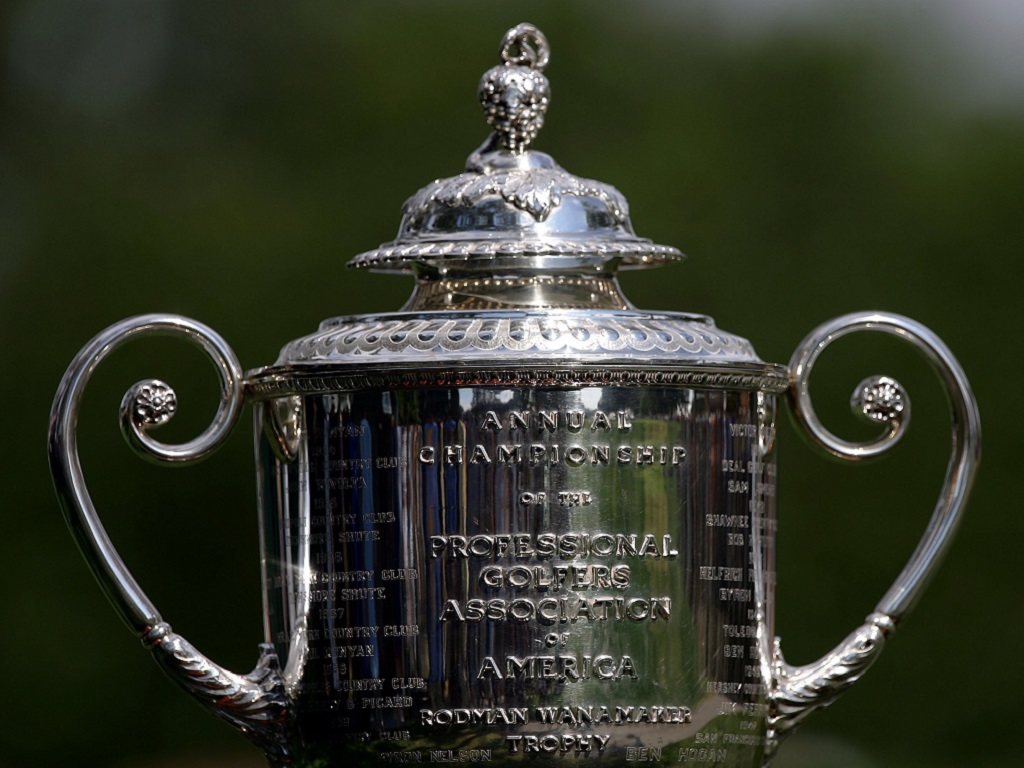
Aronimink is not a storied club, but when Donald Ross himself proclaimed it to be as good as he can design and build, one had to take notice. Jay Sigel was the pre-eminent male amateur golfer from the mid-1970s to the mid-1990s. He might have called any number of Philadelphia clubs home, but he chose Aronimink. It served him well. Gary Player won a PGA Championship here in 1962, and was followed by the 1993 winner … nobody. Aronimink gave that event away to Inverness, for reasons of which it is certainly not proud. So be it. We had to wait sixty-four years for the PGA to return to Newtown Square, but here we are. Aronimink has been neo-restored by Gil Hanse and team, to return Ross features with an eye toward defense against the dark arts, errrr, high-tech equipment.
Day one saw Rory McIlroy and Bryson DeChambeau dig big holes, to the tune of plus-four and plus-six, respectively. Since the first-round lead will be minus-three at worst, many shots will need to be made up for the power couple to reach contention. By nightfall, seven golfers held the day-one lead at three-under par 67. Shots and sticks caught our attention, and we are proud to present Five Things We Learned on Tech Thursday at the 2026 PGA Championship. Thanks to InsideTourGolfer, Today’s Golfer, and GolfWRX for initial equipment research.
First, meet Min Woo Lee
Min Woo Lee, aka Dr. Chipinski, has once again thrust himself into the conversation of Can he, will he, when will he? Lee has so much talent, wins not nearly as often as we believe that he should, and has no major near-misses (much less titles) on his wiki. The young Aussie is getting older and wiser, but is he able to avoid the scarring that holds the older and wiser back from breaking through? Philadelphia offers another opportunity. Min Woo signed for five birdies and two bogeys on day one, and grabbed a share of the opening-day lead at Aronimink. Winners transcend history and the moment, and Lee will need that sort of ascent to lift the Wannamaker on Sunday.
Second, meet Aldrich Potgeiter
The young South African golfer can rip driver with the best of them. Aronimink tips out at nearly 7400 yards, but beyond the fairway bunkers that ensnare only the mortals, Potgeiter can take his chances with wedge from the rough. On Thursday, he spent plenty of time in the spinach. Like Popeye, he used his muscles to gouge and thrash and dig his way out. Six birdies against three bogeys on the card brought AP in a three deep.
Third, meet Martin Kaymer
Not a major event takes place without a where’s he been throwback moment. We know that Martin Kaymer left the PGA and DP World tours for LIV golf, but the two-time (US Open and PGA) major winner has a lifetime exemption into at least one major event, and he seizes the opportunity each May. Kaymer joined the six-seven brigade with four birdies and a solitary bogey on day one. Kaymer was never a long hitter, and the years are kind to no golfer. The German champion will need to uncork every bottle of guile and strategy in his cabinet to remain in contention. For today, though, he occupies a rung on the ladder of Tour Tech.
Fourth, meet Scottie Scheffler
Let’s see, he’s the defending champion at the PGA, and he found his way back to the top tier with five birdies against two bogeys. To be a favorite and then play up to that stature and expectation is quite difficult. Just ask Rory, Bryson, and some of the other pre-tournament heartthrobs. Scheffler’s game is complete, and to knock him off the OWGR #1 pedestal, one needs to defeat him at the majors. Aronimink is the sort of course that fits Scheffler’s game. Better yet, it unfits the game of many of his challengers. Don’t expect Scheffler to go away anytime soon. Come Sunday, he’ll be around.
Fifth, meet Stephan Jaeger
Clocking in for the unheralded players shift are Ryo Hisatsune and Stephan Jaeger. Hisatsune logged seven birdies on day one, but gave most of them back with four bogeys. Still, he’s tied at the top for a time. Jaeger pitched five birdies against two bogeys, including a run of three consecutive, from holes four through six. Odds are that one of the two will hang around through 36 holes. Odds also suggest that both will be gone by Saturday evening. Still, the PGA Championship has historically been the major most likely to be won by an under-known. Both Hisatsune and Jaeger feature on that list, so good luck, lads!

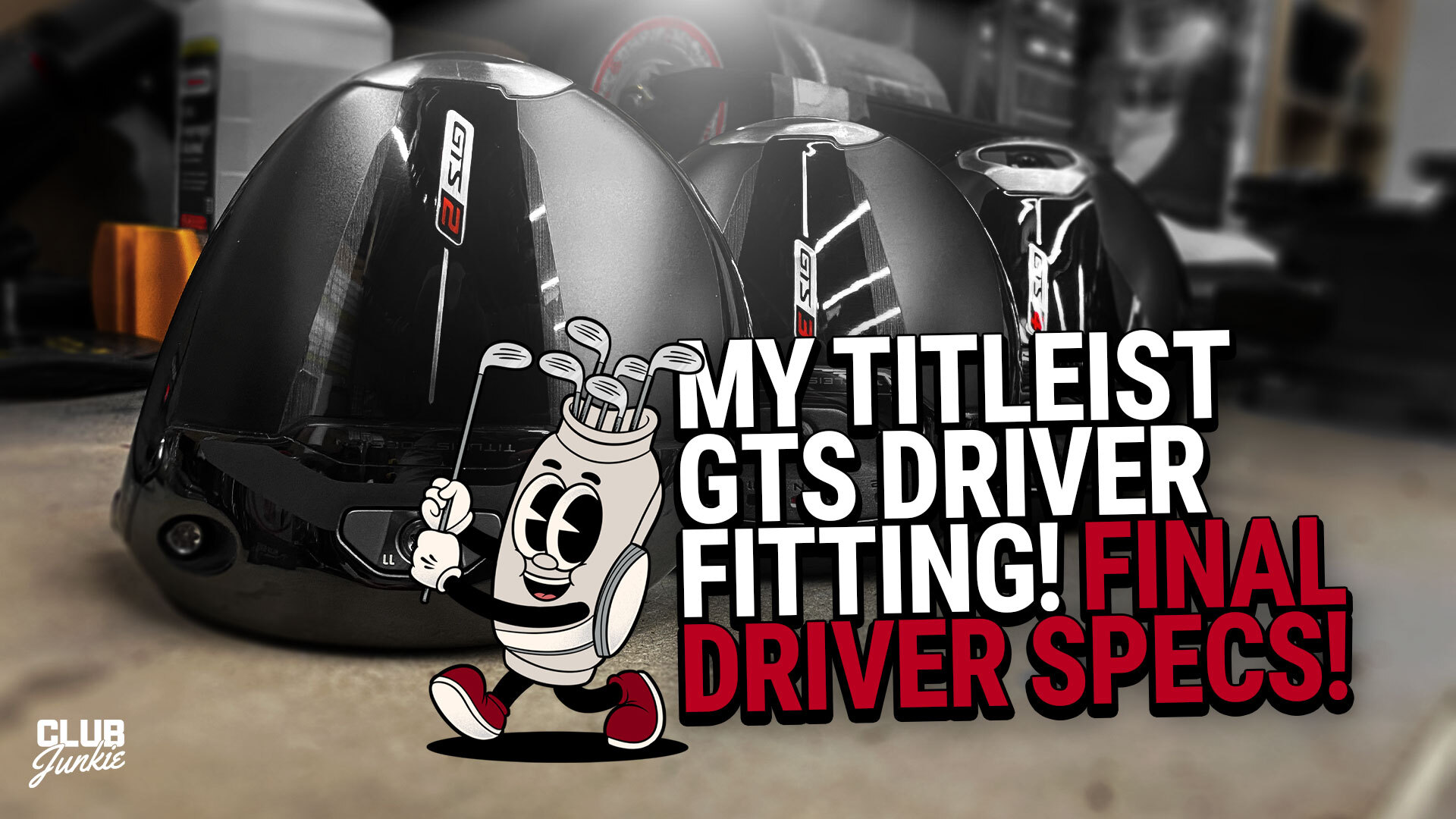
On this episode of the Club Junkie Podcast, I head to the Titleist Performance Institute for a full driver fitting with the new Titleist GTS lineup. We dive into the fitting process, talk about what made the biggest difference in performance, and break down how the different GTS heads and shaft combinations compare on the launch monitor. If you are thinking about a new driver setup for this season, there is a lot to take away from this one.
I also get into Brooks Koepka and the gear setup he brought to the PGA Championship, including the putters that caught my eye during the week. There are some interesting equipment trends showing up at the highest level right now and we break down what stands out.
To wrap things up, I talk about reshafting a few wedges, what I learned during the process, and swapping an adaptor onto a new shaft for another build project in the shop. A gear packed episode from start to finish for anyone who loves golf equipment and club building.
Follow Club Junkie everywhere:
Instagram: https://www.instagram.com/clubjunkiepod/
X: https://x.com/ClubJunkiePod
TikTok: https://www.tiktok.com/@clubjunkiepod
Threads: https://www.threads.com/@clubjunkiepod
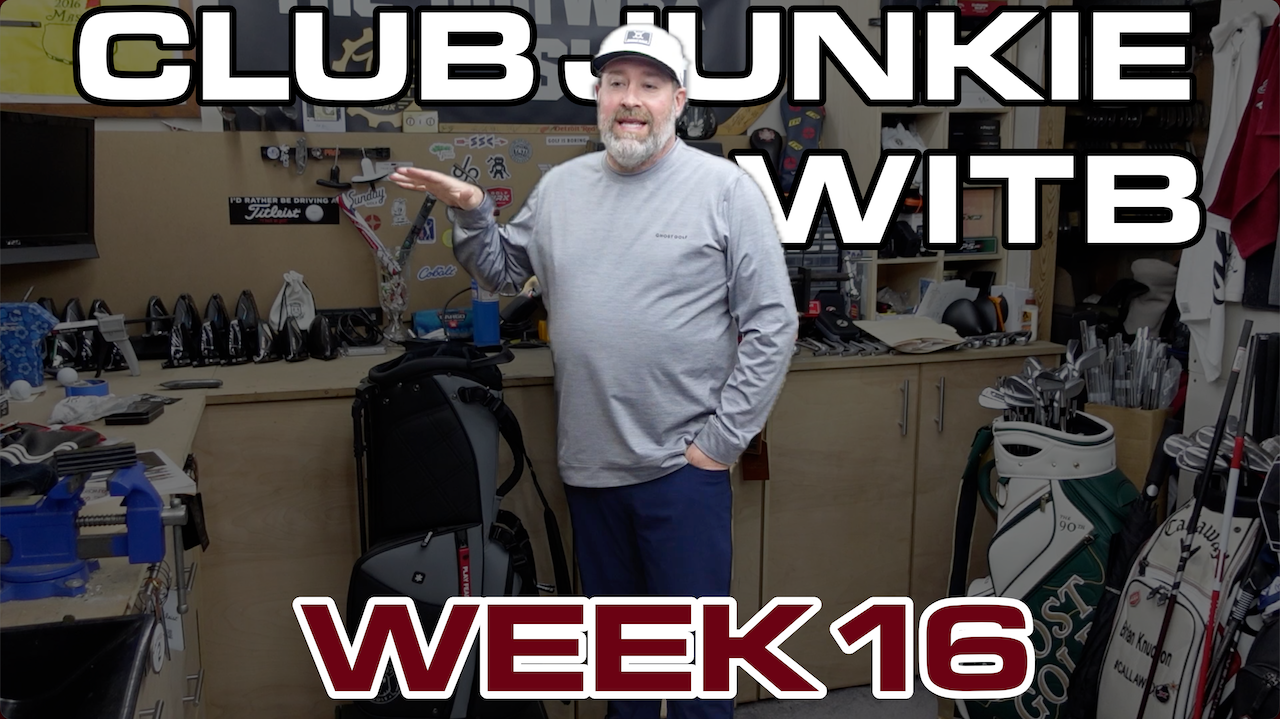
Excited for this week’s WITB as we get to add the new Titleist GTS woods to the bag! I was fit at Titleist’s TPI facility in Oceanside California a few weeks ago and my new clubs just showed up. I am also adding a cool set of irons that I built last year some wild custom wedges into a new golf bag. Speaking of the bag I have a new Ghost Anyday Black Ops stand bag that I will be using on my Motocaddy Remote M7 electric cart.
Driver: Titleist GTS3 (11 degrees @ 10.25)
Shaft: Fujikura Ventus Red 6s
3-wood: Titleist GT1 3Tour (14.5 degrees)
Shaft: Graphite Design Tour AD CQ-7s
5-wood: Titleist GTS (18 degrees)
Shaft: Fujikura Ventus Red 7s
9-wood: Titleist GT1 (24 degress)
Shaft: Fujikura Ventus Red 7s
Irons: Bettinardi CB24 (5-PW)
Shafts: KBS C-Taper Lite 110 stiff
Wedge: TaylorMade MG5 (50-09 SB)
Shaft: Mitsubishi MMT 125 Stiff
Wedge: TaylorMade MG5 (56-12 SB)
Shaft: Mitsubishi MMT 125 Stiff
Wedge: TaylorMade MG5 (60-08 LB)
Shaft: Mitsubishi MMT 125 Stiff
Putter: Dan Carraher ZT Proto
Ball: Callaway Chrome Tour
Bag: Ghost Anyday Black Ops Stand Bag

Justin Rose WITB 2026 (April): Full WITB breakdown with new McLaren irons

RBC Heritage Tour Report: More minis, course-specific setups, Spider & GTS launches

What’s the story behind Webb Simpson’s custom-stamped irons?

Cadillac Championship Tour Report: Spieth’s sizable changes, McLaren Golf launches, and more

Kristoffer Reitan’s winning WITB: 2026 Truist Championship

Cameron Young’s winning WITB: 2026 Cadillac Championship

Aaron Rai’s winning WITB: 2026 PGA Championship

Nelly Korda WITB 2026 (April)

Justin Rose on the switch to McLaren Golf, learnings from previous equipment moves

Photos from the 2026 PGA Championship


Patrick Reed WITB 2026 (May)
Driver: Titleist GT3 (9 degrees) Buy here. Shaft: Aldila Rogue Silver 130 M.S.I. 70 TX 3-wood: TaylorMade Qi35 (15 degrees)...

Aaron Rai’s winning WITB: 2026 PGA Championship
Driver: TaylorMade M6 (9 degrees) Shaft: Aldilda Synergy Blue 70 TX 3-wood: TaylorMade Qi10 (15 degrees) Shaft: Fujikura Ventus Blue...


Michael Block WITB 2026 (May)
Driver: TaylorMade Qi4D (9 degrees) Shaft: Fujikura Ventus Black VeloCore+ 5 X 3-wood: TaylorMade Qi4D (15 degrees @14.25) Shaft: Mitsubishi...


Bryson DeChambeau WITB 2026 (May)
Driver: Krank Formula Fire Pro (6 degrees) Shaft: Project X Prototype 3-wood: Krank Formula Fire (10 degrees) Shaft: LA Golf BAD...
-
 Whats in the Bag3 weeks ago
Kristoffer Reitan’s winning WITB: 2026 Truist Championship
-
Whats in the Bag2 weeks ago
Aaron Rai’s winning WITB: 2026 PGA Championship
-
 Tour Photo Galleries3 weeks ago
Photos from the 2026 PGA Championship
-
 Equipment2 weeks ago
GolfWRX Launch Report: 2026 Titleist GTS drivers
-

 Equipment2 weeks ago
PGA Championship Tour Report: Fitzpatrick, Koepka among big-name putter switches for Aronimink
-

 News2 weeks ago
WITB Time Machine: Phil Mickelson’s winning WITB, 2021 PGA Championship
-

 Equipment2 weeks ago
Which of Tiger’s major winning irons are your favorite? – GolfWRXers discuss
-

 Equipment2 weeks ago
Lead Tape Report: Adjusting the swingweight of the Wanamaker Trophy


Scott
Apr 2, 2014 at 3:22 pm
This is great insight!! Thanks Josh. It’s great to see these players pursuing their dreams. I hope we hear more about life and events on the mini-tours.
joselo
Apr 2, 2014 at 1:58 pm
wow! didnt know must of the things here, impressive
Matt
Apr 2, 2014 at 12:11 pm
I worked at Echo Farms in Wilmington, NC when a Hooters Tour event came through. Those guys are good. REALLY good. There were a couple of range rats in that group. Get up early and hit balls until they tee up in the afternoon or play in the morning and hit balls till dark. It helped me understand what it was gonna take to make it. That and the one guy that showed up in a 1972 Winnebago that his grandparents had given him. It was nearly worn out but it made life a little easier for the guy and his wife. All they asked us for was a place to plug in and get water. I can’t remember what the winning score was but the winner had won the week before in Myrtle Beach.
FraBreezy
Apr 2, 2014 at 11:59 am
“I was awakened by some people making out on the hood of my car at 3 a.m.”
Well, yeah. All the hotel rooms were sold out.
James
Apr 2, 2014 at 11:28 am
There used to be a NGA Hooters Tour event held at my home club but when they lost the sponsor the tournament left too. Mostly it was young guys fresh out of college or even high school with the goal of making the PGA Tour. The course was always set up difficult and these players blistered it. The last year it was held the winner came in at -22. Was a great event and yes those guys are good.
Jeff Pelizzaro
Apr 1, 2014 at 10:30 pm
Josh, I work with a few guys that are trying to make it on some of these tours and I would have to say that the general public doesn’t realize how hard some of them are working and how slim the margins are. While the life of a golf pro sounds pretty luxurious, I think you’re article sheds some light on the fact that it’s not all glitz and glamour like we see on the TV on Sundays.
These guys are grinding it out week after week, shelling out cash hoping to make some of it back. I know a few of the other readers above eluded to the fact that these are all privileged kids floating on their parents bucks, but I think you and I both know that’s not the case for all of them.
And I don’t know about the rest of the readers, but I don’t know how well I would handle that much stress week after week, not knowing if this gamble of a career path is going to pan out or not as you stand over a 4ft. putt.
Nagar
Apr 9, 2014 at 7:34 am
Have a friend who played on the Troppo Tour hear in Australia. In the late 80’s. He said it was the best time of his life. Frienships and competition was great. He said though it was extremely cut throat. 2 Missed puts inside feet said would take you from 8th to 33rd in 2 holes. Love hearing his stories.
andy
Apr 1, 2014 at 8:09 pm
Spot on article! As a former professional who played for 8 years after college it is difficult. Don’t forget to mention PGA Qschool entry, and travel expenses! 5k entry, then caddie and travel expenses. Took me 3 years to pay off all of the debt I accumulated trying to make it! The check I made with a Web.com win (as a caddie) helped pay it off!
Evan
Apr 1, 2014 at 7:40 pm
The only golfers I have known that have tried mini tours are college/ young adults who come from upper/ upper middle class families. Who else has $30000 to risk playing one year of small purse tournaments. That money for most people is needed to get an education or start a business, which has a much higher chance of payoff than a golf career. I think the “sleeping in a car” and “sharing hotel rooms” is somewhat misleading as one would think these individuals are poor or are roughing it. The opportunity for someone to be on the road for weeks at a time without working a “real job” is not available for most. How does working a part-time low-paying job in a pro shop pay for your food, rent, car all year? Many adults with full time jobs only make $30000 a year.
To have individuals sponsor you is also limited to very few as you have to have relationships and ties with people who have thousands of dollars to risk. The chances of these people sponsoring someone who has a successful enough career to repay is very slim.
Professional golf and the opportunity to attempt professional golf is reserved for only those who have had a privileged upbringing.
RG
Apr 1, 2014 at 11:25 pm
Well said. This article expresses the rift. Sleeping in a car and splitting hotel bills is not difficult. He thinks he’s had it tough.
GJR
Apr 2, 2014 at 9:27 am
Evan..it’s a shame you have such a short sided view of this. I hope you are happy in your life and have the courage to chase a dream every now and then. From the sounds of your post, intended or not, you are making some very blanket statements that make you sound like you’re choking on sour grapes because your struggle or someone else you know, was harder. We all make choices in life. Some guys come from normal middle to low middle class upbringing and say ‘screw it, I’m going for it’, no matter if it’s golf, minor league baseball, or starting a lawn care company. You come across with the attitude that only those with money in the bank can do things like this or get ahead. I hope that’s not what you meant. If it is, please, educate yourself. In more ways that just a degree. Good luck to you Evan. I sincerely mean that.
DRHolmes
Apr 2, 2014 at 11:38 am
I think you missed Evan’s point completely.
Guys dont just say “I’m going for it” and then have $30,000 magically appear in their bank account. Golfers from lower class upbringings dont just say “I’m going for it” and the tournaments agree to let them compete for free. Guys find the money somewhere. But to fully pay for all of your life expenses as well as your tournament fees/expenses I cant imagine there are any guys at all that are doing that working the low wages they would in a golf shop in the off season.
I know a couple of guys who have played mini tours for a season or two that worked at my local range in the winter. Those guys work ridiculously long hours for next to nothing, I’d be surprised if their work-wages covered their car payments and rent. Both of them had to have a group of sponsors footing the bill for their tournament fees. The math just doesnt add up, you cant work for a few months at minimum wage and save enough money to pay $1,500+/week in expenses during the golf season.
Daniel V
Apr 2, 2014 at 12:36 pm
I had the pleasure of having a “mini-tour” player caddie for me at Rio Secco. Man could he hit the ball. He worked several different golf related jobs so he could pursue his dream. He was as blue collar as golf allows.
Evan
Apr 2, 2014 at 2:04 pm
Thanks DRHolmes,
I think my original statement was misunderstood. MOST if not ALL, middle to lower class individuals CANNOT even attempt a full year or two of tournament golf. It is not at all like team sports that make sure you at least have your room, meals and travel covered. If you make a minor league baseball team, you are essentially sponsored. Not making a lot of money, but not doing it on your own. They are apples and oranges…
Most individuals from a middle to lower class family don’t have the support to use all of their part time money for travel and golf. My parents would have laughed me out of the house if I said I was going to take two year and all of my earnings to play a mini tour. How far behind in life does that put you? Unless of course your family can absorb a couple of fruitless years.
This reminds me of a economic study on Minor League sports, baseball in particular. Chasing a dream too long and risking too much to become a pro athlete is usually disastrous. For every one who makes it, there are a thousand who have really damaged their adult lives.
Evan
Apr 2, 2014 at 2:21 pm
Yes, I am making a general statement. Your similarity between starting a local business (lawn company) and joining a mini tour are on opposite ends of the spectrum. Your return and chance of long term success with the lawn company are much greater than a pro golf life.
Many people who come from middle to lower class families only get a chance or two to make something of themselves. If I took a couple years and $20k to $50k I might not ever fully recover from that sacrifice.
Considering your response to what I wrote, I think you should educate yourself. Their have been studies on the risks and effects of chasing a dream in minor league sports. This is not only my own experience as someone who comes from a lower middle-class family, but as someone who has studied the risk and reward of playing pro sports.
benseattle
Apr 2, 2014 at 6:31 pm
This comment is perhaps the most off-base, most ill-informed piece of nonsense I’ve ever read. The stories of professional golfers (both on the PGA Tour level and the mini-tours) who come from humble beginners are legion. For every surgeon-father Charles Howell III, there are a dozen who scrape and work just for the opportunity to play golf. Even Phil Mickelson used to drive the range cart at the old Stardust in San Diego just to be able to hit balls.) What… you’re saying that Tiger Woods came from a “privileged” background? Just what do think the U.S. Army pays, anyway? Why not do a little research next time rather than simply display your ignorance?
Evan
Apr 3, 2014 at 10:33 am
Once again, you might want to do your homework… Earl Woods was an officer in the Army, a LT Col to be exact… 0-5 pay grade. Which is very good, especially in the era he grew up in. Yes, it’s not trust fund or CEO money… but by military standards, he was white collar. Pro Golf is a full-time sacrifice and career these days. Back in the Jones/ Hogan era, many of these men had jobs and lives away from golf, the tour wasn’t as demanding. I understand that everyone’s definition of “wealthy” or “well off” is different, especially in the golf community. If your household income is under $50000 a year (which much of the population is), you most likely will not have the opportunity to give pro golf a legitimate run, let’s say 2 years on mini tours.
Evan
Apr 3, 2014 at 10:39 am
Phil grew up in San Diego CA (one of the most expensive places in the country). His father was an airline pilot and naval aviator… I pity that he had to work part time at a golf course. BTW, Earl Woods was also a defense contractor after his Army officer career. I think you need to educate yourself… the examples you gave are completely contrary to the point you’re trying to make.
Sean
Apr 1, 2014 at 3:26 pm
All you guys are great ball strikers. What separates the mini-tour players from let’s say the Web.com, or the PGA Tour?
Thank you,
Sean
Josh Thompson
Apr 1, 2014 at 5:00 pm
Hi Sean! I would say the putts gained stat you would see a slight difference. Every year there are a numerous mini tour players that go on to play the PGA and Web.com Tour. Thanks for the question and have a good one 🙂
L
Apr 1, 2014 at 11:41 am
You forgot to mention how you could end up being real smelly for not taking a shower for a few days while you slept in the car!
Josh Thompson
Apr 1, 2014 at 11:50 am
Good point “L”
Golfraven
Apr 1, 2014 at 7:13 am
assuming you make the cut, how high on the leaderboard do you need to be on Sunday evening to at least cover your expenses for the week – entry, stay, food? Cheers
Josh Thompson
Apr 1, 2014 at 10:14 am
Hi Golfraven, it all depends on the entry fee, purse and your expenses for the week. Some tournaments you need to finish higher because the purse is small.
Alex
Apr 1, 2014 at 12:37 am
Would be really interesting to know how the details work out.
How do you get host families? Do the tournaments arrange it? Do you get any perks while at the courses, like meals? What about the equipment deals? Do they have tee up money on the mini tours like they do on the bigger ones? What about lessons and coaches? Do people get free lessons? Do they pay a reduced rate, etc?
Really wondering how people can afford to play golf, afford the fees, the practice, the equipment and travel earning so little prize money.
How much do you need to have set aside to start out?
Josh Thompson
Apr 1, 2014 at 10:11 am
Some great suggestions–Thanks Alex!
Richard L Cox III
Apr 1, 2014 at 12:06 pm
Alex,
As a former hack pro myself I can answer each of your questions with 90% certainty.
How do you get host families?
*They’re only offered at some events.
Do the tournaments arrange it?
*They tell you it’s available. You either say, “I want in,” or not.
Do you get any perks while at the courses, like meals?
*You’re lucky to get a discounted practice round unless you’re playing a Hooters’ event.
What about the equipment deals?
*Josh has a great explanation here, but ‘equipment deals’ on mini-tours basically amount to getting free balls, hats, and gloves mailed to you every couple of months or a set of wedges if you made the cut last week.
Do they have tee up money on the mini tours like they do on the bigger ones?
*No. Not even close.
What about lessons and coaches?
*It’s player specific, but 90% of the guys have regular instructors, etc.
Do people get free lessons? Do they pay a reduced rate, etc?
*No. No. No.- not even Philly Mick gets free lessons.
Really wondering how people can afford to play golf, afford the fees, the practice, the equipment and travel earning so little prize money.
*You sir, have just figured out why playing mini-tours can drive a person to drink.
How much do you need to have set aside to start out?
*I’d say $30,000 would last you one year.
terry
Mar 31, 2014 at 11:27 pm
I always loved the Waterloo Open in Iowa. I didn’t have a caddy one year. Some guy volunteered to carry my bag and refused payment at the end of the round. Had a beer with him and called it a night…not before I hit up Shag Nastys
Josh Thompson
Apr 1, 2014 at 8:41 am
I have played the Waterloo Open a hand full of times, its a great tournaments.
Kelly
Mar 31, 2014 at 10:09 pm
Nice article. I live in Morganton, NC and am a member at Mimosa Hills.
Josh Thompson
Mar 31, 2014 at 10:14 pm
Thanks Kelly! I’ve heard it’s a great course.
Mat
Mar 31, 2014 at 9:25 pm
Great article, Josh. I can’t imagine…
Maybe your next article can be about how to best interact and become involved… be better advocates. For example, how do you get to play in a pro-am? Should you tip your player?
I always wondered if it was ethical for guys to sell “shares” of their career winnings for an investment… e.g., I pay $1,000 into a player for 0.2% of his winnings for 6 years, or something like that. I would imagine that there are a lot of guys who would take a chance on a guy if for nothing beyond the same thinking as fantasy football.
Josh Thompson
Mar 31, 2014 at 9:29 pm
Thanks Mat! Great suggestions on future articles — will write those down.
Paul Kaster
Mar 31, 2014 at 8:48 pm
Nice job Josh! I have lots of great memories of my time playing minis but it’s definitely tough. Well worth trying for anyone who thinks they may have what it takes. Best of luck!
Josh Thompson
Mar 31, 2014 at 8:52 pm
Thanks Paul!
Don
Mar 31, 2014 at 8:46 pm
Great article man! I wish the PGA and the big golf companies would pour more money into these mini tours. This is a great way to grow the game. I personally pull for the mini tour turned big time pros like Zach Johnson. Who by the way is one of the top five players on tour right now. “What an incredible Cinderella story”
Josh Thompson
Mar 31, 2014 at 8:51 pm
Thanks! I know what you mean Don. The tour now runs the Canadian and Latin America Tours – so who knows whats next.
Nagar
Apr 9, 2014 at 7:42 am
What an incwedable Cindawella Story. Ha Ha. Remember the Super in Caddy Shack had a r lisp!
Gary
Mar 31, 2014 at 8:22 pm
That Hooters girl second from the left is gorgeous!
Derrick
Mar 31, 2014 at 8:14 pm
Saw you mentioned Morganton, NC. Did you play at Mimosa Hills? One of my all time favs.
Josh Thompson
Mar 31, 2014 at 8:38 pm
I didn’t play at Mimosa Hills, but some of my friends have.
Curt
Mar 31, 2014 at 7:46 pm
Great insight Josh, thanks for sharing! Good luck to you!
Josh Thompson
Mar 31, 2014 at 8:10 pm
Thanks Curt!
Adam
Mar 31, 2014 at 7:28 pm
Great stuff man, cool to hear what those guys go through and prepare myself if i ever get a chance to play pro.
Josh Thompson
Mar 31, 2014 at 7:36 pm
Thanks Adam! Hope to provide more insights of the tour life to the Golf WRX community. Any thing you want to hear about in particular in future articles? Have a good one.