
Equipment
Equipment changes come full circle for Choi


By Zak Kozuchowski
GolfWRX Managing Editor
There’s a simple rule most golfers follow when making equipment changes – don’t mess with success.
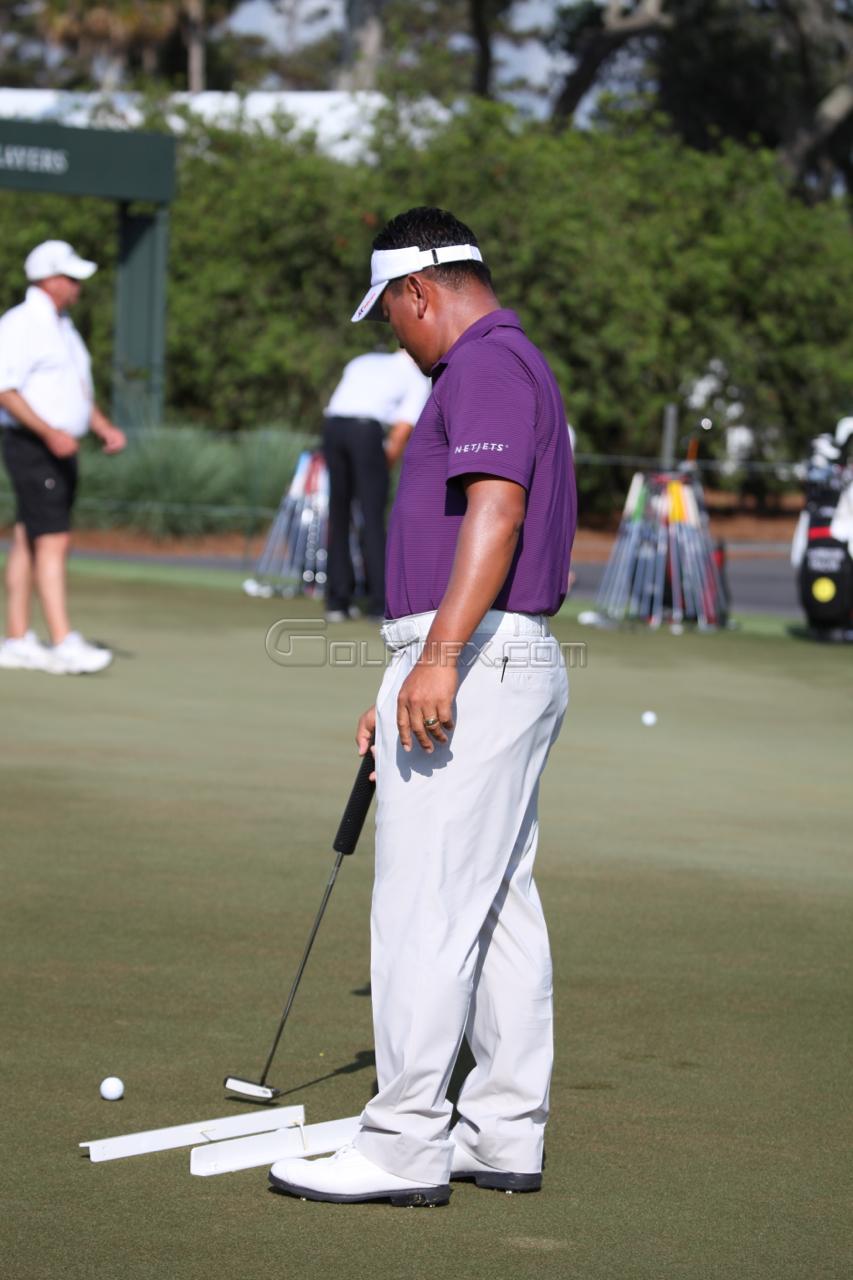
And golfers certainly shouldn’t switch from a set of clubs that helped them win the biggest tournament of their lives – at least not for a while. But that’s exactly what K.J. Choi, winner of The Players Championship last year, has done in 2012.
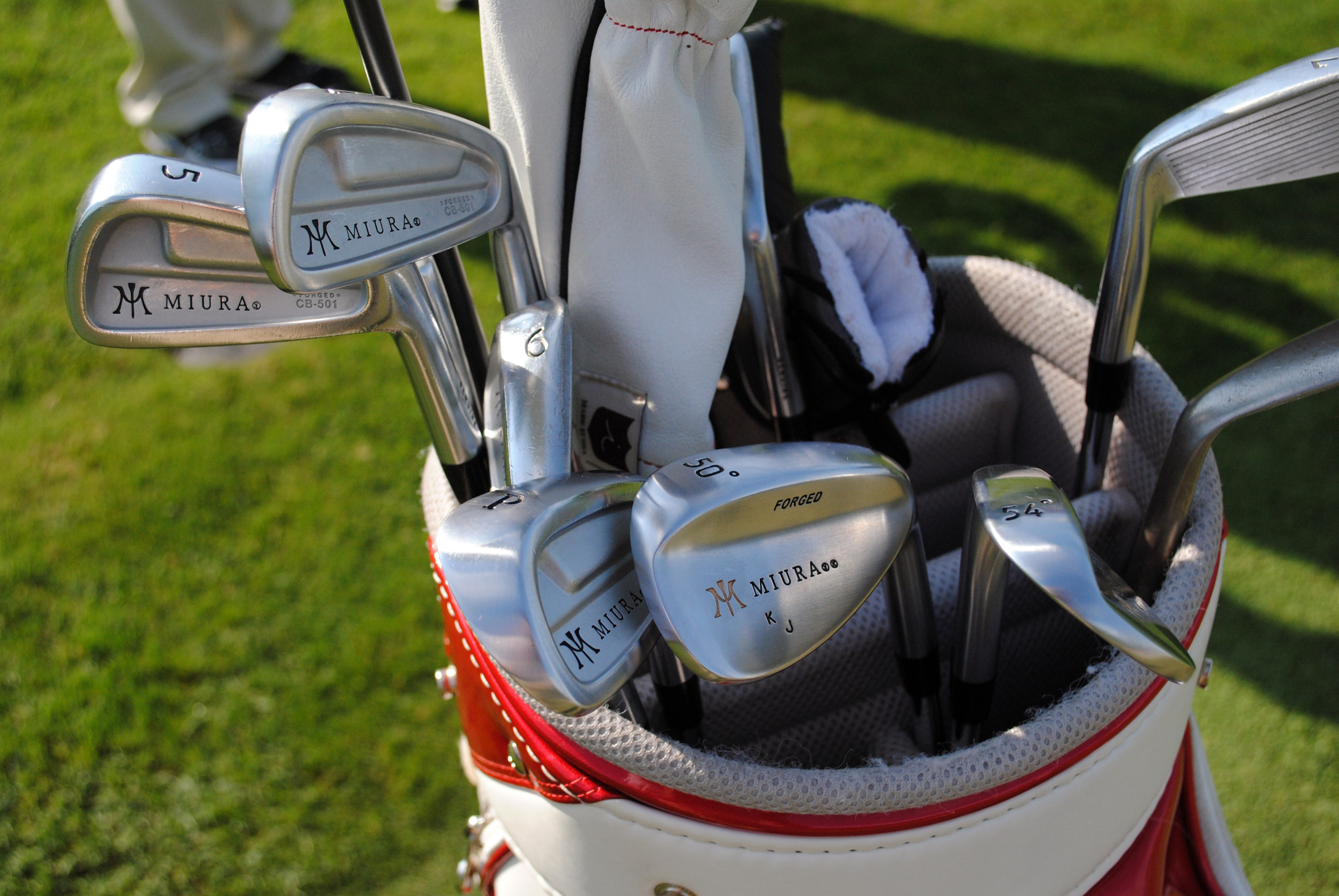
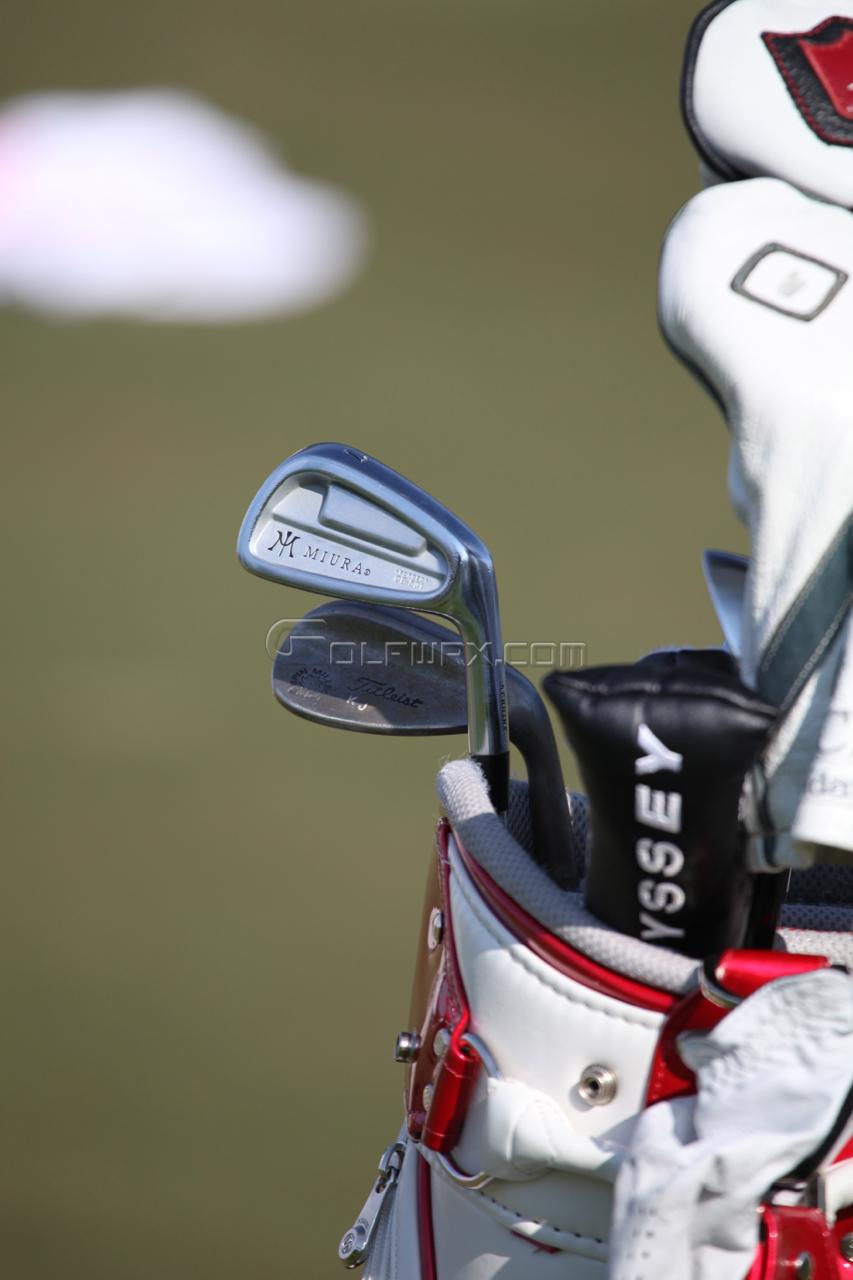
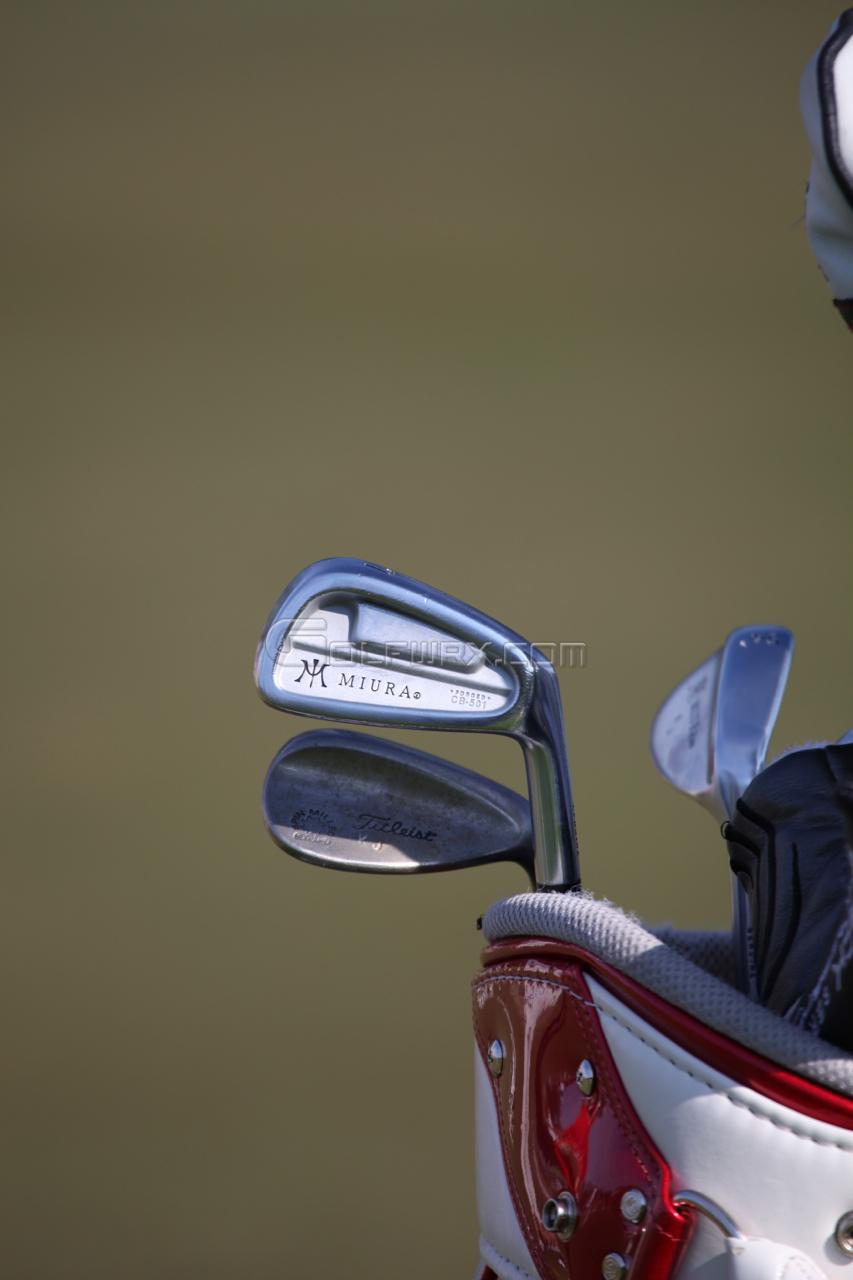
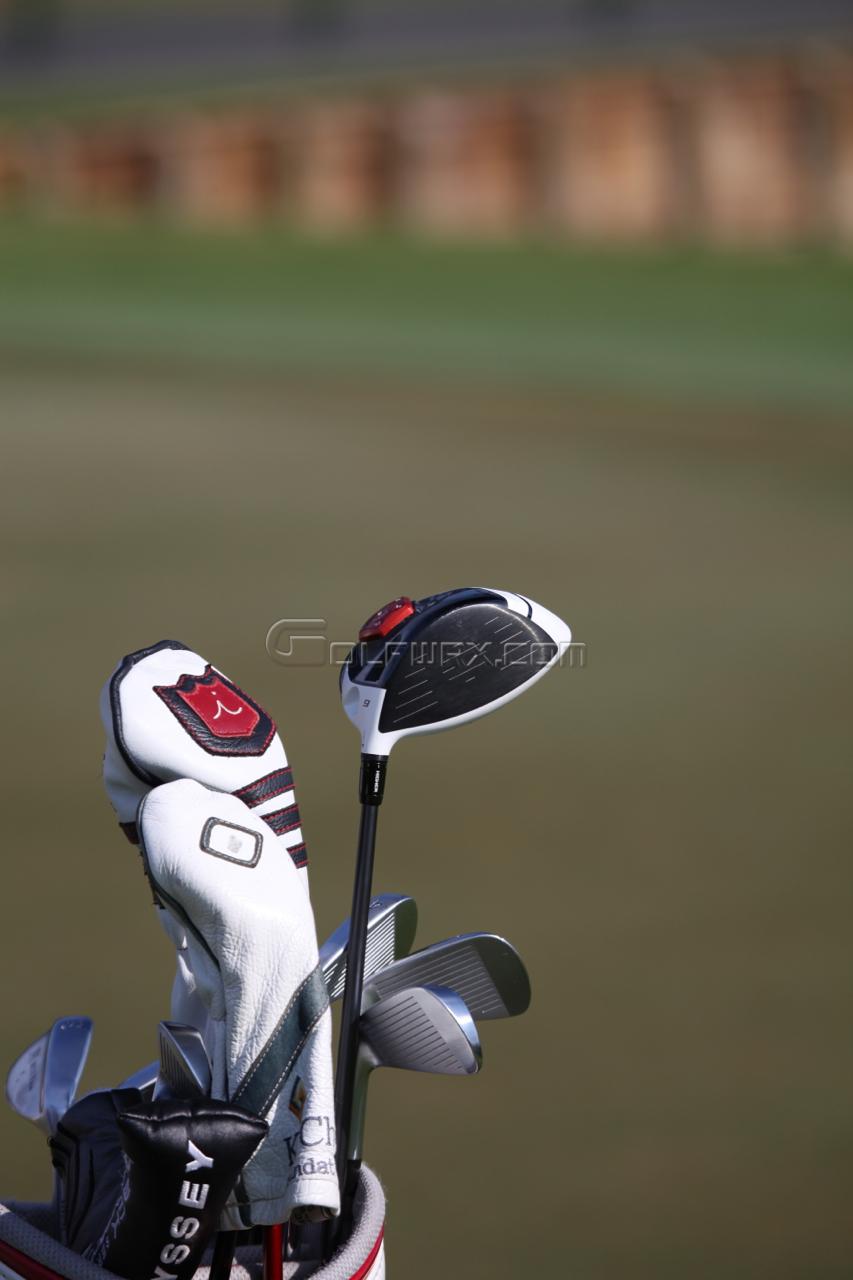
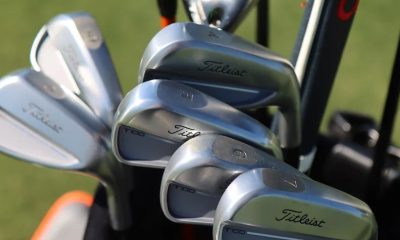
In early March, Choi put away the set of Miura CB-501 irons that he used in his victory at the TPC Sawgrass Stadium Course for a set of Cleveland 588 CB Forged irons. Just a few weeks later he sampled another manufacturer’s clubs, Ping i20 irons. But as the one-year anniversary of Choi’s win approaches, he again finds himself using the same set of irons that he used last year at The Players.
Many people will jump to point out that Choi’s tinkering was unnecessary – he should have been working on his game instead of trying to catch lightning in a bottle with an equipment change, they might say. But there’s another way of thinking about equipment changes. Bill Choung of CompuGolf Center in Dallas has been working with Choi on his equipment since March 2010. Since Choung opened CompuGolf nine years ago, he has been seeking to answer a simple question,
“How does an equipment change impact the golf swing?”
He’s found that changing equipment has a very real impact on a player’s swing, especially with tempo and rhythm.
The goal of Choung’s work with Choi has been to give Choi a higher trajectory and more spin on his iron shots. Choi felt that he wasn’t hitting the ball high enough or with enough spin to control his distances at major championships – setups that generally have firm greens and tight pin positions.
There are several different ways of achieving that goal, and Choi and Choung have tried just about all of them. Choi played the 2011 Masters with a 6-iron hybrid, which gave him a higher trajectory, more forgiveness and more spin. But Choi felt that he was sacrificing workability and feel, which led to more experimenting.
Choung hit paydirt when he built Choi a set of Miura CB-501 irons just days before the 2011 Zurich Classic. To create Choi’s desired ball flight, Choung used KBS Tour parallel tip shafts, which are different than the taper tip shafts used by nearly every other PGA Tour player. Whereas taper tip shafts are precut to a specific length for a certain club (6 iron shafts are generally used in 6 iron heads), parallel tip shafts are uncut, which means that they can be trimmed to fit any iron head. This allows the club builder to trim the shafts to the exact stiffness that a player desires.
Shaft stiffness, which is measured by the frequency of a shaft, is important because according to Choung it changes the way a player loads and unloads the club during the swing. When trimming Choi’s parallel tip shafts, Choung cut more off the butt end of the shaft and less off the tip, creating a “softer” tip that allowed for a higher trajectory and more spin. Choi liked the combination of the parallel tip shafts and the Miura CB-501 head, and the results proved it. That week he put the clubs in play to finish in the top 5 at the 2011 Zurich Classic, and of course, to win The Players two weeks later.
There are at least two reasons why Choi decided to change from the iron set that brought him a $1.7 million payday and a new level of fame in the golf world. First, he received information that parallel tip shafts were not generally played on the PGA Tour, which made him interested in trying taper tip shafts. Second, he changed because he was in the process of trying out different iron heads and shaft combinations that he thought might improve on the results of the Miura set he used to win The Players.
When Choi changed to a taper tip shaft, he was forced to use a softer flex to give him the trajectory he wanted. While this resulted in the desired higher flight, he lost consistency and control.
Science or art?
Talking about Choi’s golf clubs in terms of shaft frequency, spin rate and launch angle creates the assumption that his swing is always the same. While Choi does have one of the most consistent golf swings on Tour, even he falls in and out of bad habits. That’s why it’s Choung’s belief that no matter how technically sound a golfer’s fundamentals are, the golf swing is still an organic movement.
“When [golfers] change clubs, what they are really doing is changing their swing,” Choung said. “More than anything, they are inducing a change in tempo and rhythm.”
So it’s no surprise to Choung that Choi has returned to his Miura CB-501 irons with parallel tip shafts. He was struggling during the time he was playing Cleveland and Ping irons, shooting only two rounds in the 60s during that period. Last week, when he returned to the Miuras, he shot two rounds in the 60s and finished tied for 39th. It wasn’t a huge improvement, but it was his best finish in relation to par since the Hyundai Tournament of Champions in January.
Choung said that Choi’s performance since switching back to parallel tip shafts might have improved because of the increased tip diameter of parallel tip shafts — .370 inches instead of the .355 inch tip that taper tip shafts offer. So why don’t more Tour pros opt for parallel tip shafts if they offer more stability? According to Choung, it’s because parallel tip shafts are much more labor intensive to build. Choung and his staff at CompuGolf can build a set of taper tip shafts in about 30 minutes, while it takes them about three hours to build a set of parallel tip shafts.
A lot of independent club builders and even Tour vans can’t justify spending extra time to create frequency-matched sets either, but Choung’s research has shown the value in it. Because of the chaotic nature of the shaft industry, where one industry’s stiff flex is another’s x-flex, Choung places huge value in frequency matching, which streamlines the frequency throughout the set. For example, Choi’s driver shaft frequency, the base measurement Choung uses to find the frequencies for the rest of his clubs, is 271. As shaft length decrease, however, frequency must increase to match. Choung and his team did testing of exactly how many cycles frequency should increase as the shaft shortens .5 inches, and their researched concluded that four cycles is best. That’s why Choi’s 4 iron, which measures 38.5 inches, has a frequency of 314, while his 60 degree wedge, which measures 34.5 inches, has a frequency of 334.
So what does all this mean for the average golfer? Even if you don’t swing like Choi, Choung said that there is still good reason to go through a verifiable fitting process, especially processes like his that have an improvement guarantee.
“A lot of golfers come to me and they say I’m hitting my driver well, but can’t hit my irons,” Choung said. “Or they say that they’re hitting their irons well and can’t hit their driver. Often there’s a total mismatch between the driver and the irons. They’ve adapted their swings to either the driver or the irons.”
If you still can’t be swayed to go through a custom-fitting process, Choung has this advice for you. The club that you liked demoing so much – buy it. But don’t order it. Buy that exact club. Because chances are, the one you order will be slightly different.
Click here for more discussion in the “Clubmaking” forum.






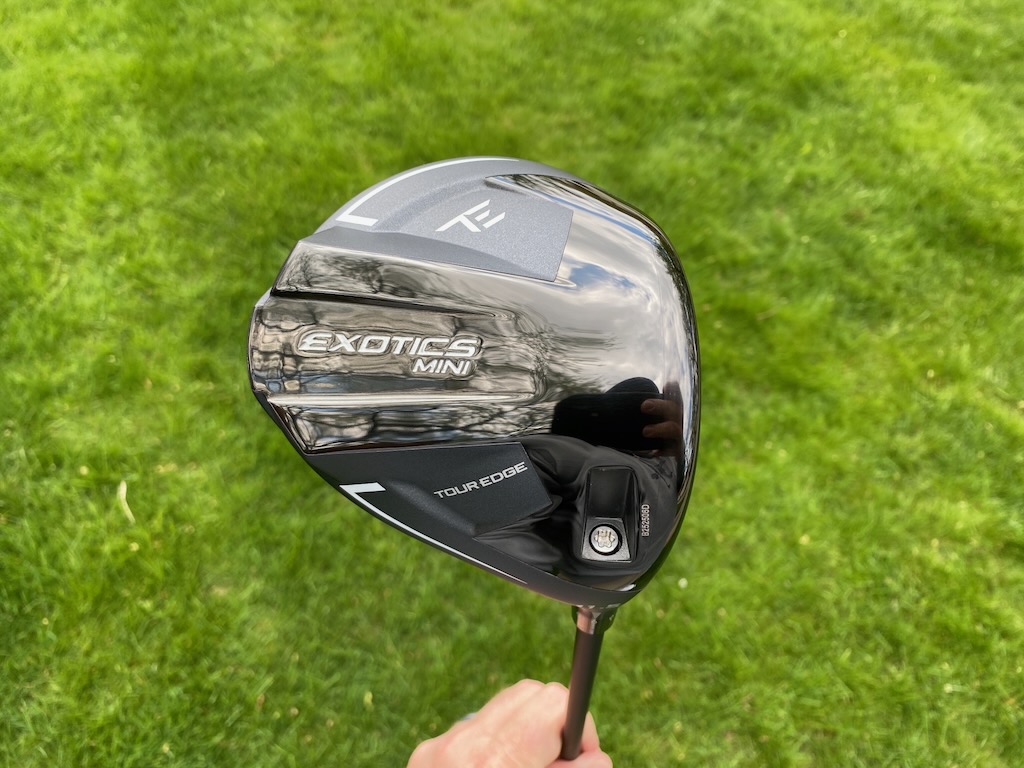
Tour Edge Golf has today introduced the all-new Exotics mini driver, engineered to deliver a powerful combination of speed, control, and versatility in the long game.
The Exotics Mini combines a titanium face with a stainless-steel body in design to balance ball speed with stability and control, creating a versatile option at the top end of the bag.

At the core of the design is Tour Edge’s proprietary Combo Brazing technology, a high-precision thermal bonding process that seamlessly fuses a titanium cup face to a stainless-steel body into a single, continuous structure. By eliminating energy loss found in traditional multi-piece constructions, Combo Brazing is designed to deliver faster face response, more efficient energy transfer, and a uniquely powerful yet controlled feel.

The multi-material construction also allows mass to be positioned lower and deeper in the head in a bid to increase stability, while the thin titanium face is engineered to maintain ball speed across a wider impact area.

“While the initial goal was to enhance control and versatility in the long game, Combo Brazing ultimately drove measurable gains in ball speed and distance within the mini driver category. In robot testing, we’ve documented higher ball speeds, higher launch, reduced spin, and increased carry and total distance compared to leading models.” – Vice President of R&D Matt Neeley

In addition to distance performance, the Exotics mini emphasizes forgiveness through a heavier stainless-steel body that shifts mass toward the perimeter. This configuration increases MOI relative to traditional all-titanium mini drivers, helping preserve ball speed and directional stability on off-center strikes. Paired with Pyramid Face Technology from the Exotics metalwood line, the design is intended to support consistent speed across the face.

To further enhance MOI, a lightweight carbon fiber crown frees additional mass that is strategically repositioned low and deep in the head in design to improve stability and promote optimal launch with controlled spin.

“We designed the Mini to be about five millimeters shallower than other mini drivers on the market. That change improves playability off the deck. From a clean fairway lie, it can function as a strong 3-wood alternative while still providing control off the tee.” – Tour Edge CEO David Glod
An adjustable hosel system allows for loft and lie tuning to dial in trajectory and shot shape, while a fixed 13-gram rear weight helps stabilize the head through impact to improve dispersion consistency. The Exotics Mini Driver is available in 11.5 and 13.5-degree lofts in right-handed models.

Pricing & Availability
The Exotics Mini Driver is available for pre-order beginning today for $399.99 USD at touredge.com, and will be available for purchase at retail outlets worldwide on May 22, 2026.

In our forums, our members have been pitting a Srixon ZXi combo against a TaylorMade P7CB/770 combo. WRXer ‘edutch22’ is on the hunt for a new set of irons and kicks off the thread saying:
“Looking at picking up a new set of irons and think I’ve narrowed it down to Srixon ZXi combo or Taylormade P7CB/770 combo. I am currently a 5 cap and allbeit I feel irons are my weakness. My miss is a little to the toe side. I am decently steep at 4-5 down. Always thought I am high spin but recently on trackman my 7 was spinning at 5800 roughly.
My question or looking for thoughts on which one would benefit me more from a forgiveness standpoint? Or is there another iron is should be looking at entirely? I only get to play about once or twice a week, if I am not playing a 2-3 day event. Thanks in advance.”
And our members have been sharing their thoughts and suggestions in response.
Here are a few posts from the thread, but make sure to check out the entire discussion and have your say at the link below.
- manima1: “You just can’t go wrong with Srixon ZXi7.”
- MattM97: “You have to hit them to know, the V-Sole on the Srixon can be make or break for many.”
- dmeeksDC: “P7CB is more forgiving for me than ZXi7 because my main miss is low middle and the P7CB still flies and spins great on that miss. These are both really nice irons but I like the P7CB more than the Zxi7 and the P770 (or P790) more than the Zxi5. The Srixons are larger so if that gives you confidence that is the way to go. I don’t feel like I get any benefit from the V-sole and the P7CBs live up to their high Maltby forgiveness rating so the TaylorMades have been great for me.”
Entire Thread: “Srixon ZXi combo or TaylorMade P7CB/770 combo? – GolfWRXers discuss”

At GolfWRX, we are a community of like-minded individuals who all experience and express our enjoyment of the game in many ways.
It’s that sense of community that drives day-to-day interactions in the forums on topics that range from best driver to what marker you use to mark your ball. It even allows us to share another thing we all love – buying and selling equipment.
Currently, in our GolfWRX buy/sell/trade (BST) forum, @pianoman0123 has a 2024 Wilson Staff CB/Blade combo up for grabs.

From the listing: “2024 Wilson Staff CB/Blade Combo. 4-8 irons are CB’s and the 9,PW are Blades. 5-PW have Project X 6.0 Shafts and the 4 Iron has a Steelfiber CW110 Stiff Shaft. Standard Length, Lie and Lofts. These are in very good condition the shafts just don’t work for me. Like new Lamkin Grips on the 5-PW and a stock Golf Pride on the 4 Iron. $525 OBO.”
To check out the full listing in our BST forum, head through the link. If you are curious about the rules to participate in the BST Forum, you can learn more here: GolfWRX BST Rules

RBC Heritage Tour Report: More minis, course-specific setups, Spider & GTS launches

Justin Rose WITB 2026 (April): Full WITB breakdown with new McLaren irons

Best fairway woods of 2026: The most versatile fairway woods + the most forgiving fairway woods

Gary Woodland’s winning WITB: 2026 Texas Children’s Houston Open

What’s the story behind Webb Simpson’s custom-stamped irons?

Cadillac Championship Tour Report: Spieth’s sizable changes, McLaren Golf launches, and more

The 24 players who can win the Masters

Rory McIlroy’s winning WITB: 2026 Masters

Kristoffer Reitan’s winning WITB: 2026 Truist Championship

J.J. Spaun’s winning WITB: 2026 Valero Texas Open


Alex Fitzpatrick WITB 2026 (May)
Driver: Ping G440 LST (9 degrees) Shaft: Fujikura Ventus Black 6 X 3-wood: TaylorMade Qi4D (15 degrees) Shaft: Fujikura Ventus...

Kristoffer Reitan’s winning WITB: 2026 Truist Championship
Driver: Ping G440 Max (9 degrees) Shaft: Mitsubishi Tensei 1K White 60 TX 3-wood: Ping G440 Max (15 degrees) Shaft:...


WITB Time Machine: Rory McIlroy’s winning WITB, 2021 Truist Championship
Rory McIlroy’s victory at the 2021 Wells Fargo Championship 2021 (now the Truist Championship) marked a significant return to form,...


Collin Morikawa WITB 2026 (May)
Driver: TaylorMade Qi4D LS (8 degrees) Shaft: Mitsubishi Diamana D+ Limited 60 TX 3-wood: TaylorMade SIM Tour (14 degrees) Shaft:...
-
 Equipment2 weeks ago
Justin Rose WITB 2026 (April): Full WITB breakdown with new McLaren irons
-
 Equipment1 week ago
What’s the story behind Webb Simpson’s custom-stamped irons?
-
 Equipment2 weeks ago
Cadillac Championship Tour Report: Spieth’s sizable changes, McLaren Golf launches, and more
-
Whats in the Bag3 days ago
Kristoffer Reitan’s winning WITB: 2026 Truist Championship
-

 Whats in the Bag1 week ago
Cameron Young’s winning WITB: 2026 Cadillac Championship
-

 Whats in the Bag3 weeks ago
Nelly Korda WITB 2026 (April)
-

 Equipment2 weeks ago
Justin Rose on the switch to McLaren Golf, learnings from previous equipment moves
-

 Tour Photo Galleries2 weeks ago
Photos from the 2026 Cadillac Championship


John
Sep 19, 2012 at 1:04 am
Jon, oftentimes players prefer softer wedges as they are not making full/all-out swings with those clubs. They are looking for more feel and control in the short, scoring shots. For this reason, we often build the wedges a little softer than the rest of the set.
Jon
Jul 12, 2012 at 2:57 pm
I don’t understand the math. If 4 cycles per 0.5 inches is the rate, how do we go from a 38.5″ 4 iron at 314 cpm to a 34.5″ wedge at 334 cpm? Four inches is eight one-half inches, times 4 cycles, is 32 cycles. 314+32=346, not 334. The article makes no sense.
Michael
Jun 8, 2012 at 4:33 am
Old news from the building stand point. I try to avoid using taper tip shafts, since you can’t make a set with a correct frequency slope. You would have to have to many sets in your workshop, to do it right and you would have to through away to many shafts, that just don’t fit into a matched set. This is why I always try to work with parallel tips.
Tim
May 17, 2012 at 1:23 am
Mike, Really? That my friend, is how you frequency match a set of clubs.
Ian
May 12, 2012 at 11:02 pm
Bill Choung does great work. He did several clubs for me in Dallas years ago as well as clubs for many of my friends….the work was always first class
Mike Krzewsky
May 11, 2012 at 9:34 pm
I heard this guy is not all that great and he had originally messed up KJ’s clubs by cutting the tip end instead of the butt end.
Brian Cass
May 11, 2012 at 9:59 am
This is why Villegas and McDowell have struggled after seemingly nonsensical equipment changes (McDowell wins at Pebble then takes a signing bonus to Srixon…where’s he been of late?) Villegas wins Honda then switches to TMade (where’s he been of late???).
Sam
May 9, 2012 at 12:47 pm
Had that exact same thing done several years ago to a set (frequency matched parallel tip shafts installed). Initially felt soft but played some marvelous rounds with them. Went back to tapered tips and regretted selling the set ever since.
Pingback: Anonymous
Pingback: Equipment changes come full circle for Choi | Augusta Blog