
Opinion & Analysis
The story of Red Greens

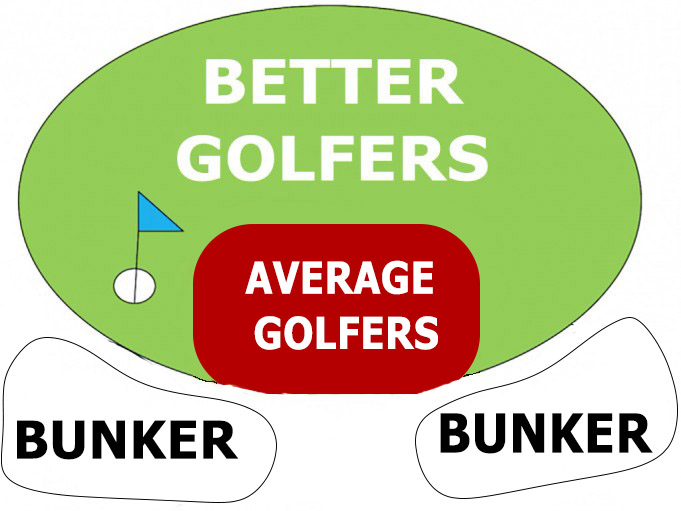
I wrote the original story about amateurs playing relatively longer courses than the pros some four years ago and it became a movement called “Tee It Forward,” the name courtesy of the PGA of America. I lobbied for a specific definition — to become part of a nationwide education program. But the general concept was presented to courses around the country, and reactions as you might expect ranged from doing nothing to instituting a variety of local efforts.
Admittedly, I was then and now of the opinion that a specific message accompanied by visual education would be more effective, but the movement does seem to have some legs. While that is a good thing, from what I’ve seen “Tee It Forward” is associated with senior golf and that was never my concept. It’s about shots into the green and golf balls have no clue about the age of those hitting them.
I will say that I can personally attest to environments where it has been ignored, but such is life; we still watch and are influenced by the PGA Tour. I did watch Rickie Fowler hit a driver and sand wedge to a 470-yard par 4 and think, “Well I do that all the time, eventually.” And yes it was down wind, but I don’t care if it was down freeway.
The male ego says, “Maybe I can’t reach the green from 470 yards, but I can get home from 430 yards. I have the same answer, “Eventually.”
I still get calls from courses looking to put in a forward set of tees and find that it’s virtually impossible to be very accurate not knowing the course. It’s green complexes, fairway speeds, elevations, prevailing winds — all the things that affect how long a hole plays. And to repeat, what I’m really after isn’t tees but shots into the green.
That brings me to this specific column. I recently “consulted” (and to be clear, consulting is a profession, my fee is zippo) on a course layout and once again found myself frustrated not having all the information to be precise. The result is the attached diagram and it caught on to the point where they are looking into ordering hats with it on the front. I’m presenting it here in the hope that it catches on elsewhere. In the “picture is worth a thousand words” realm, it tells the story pretty well.

I picked a fairly simple green complex with bunkers supporting it on either side. I then superimposed a red section and explained that the objective wasn’t specific distances, but to give the club’s members the chance to play to the green like the best players in the world, as opposed to the “Red Green,” which is what they do now. Further, since I knew some of the members, I was aware of the male ego bit about not moving up.
The green is designed to give golfers a chance to hit a good shot ending up near the flag and a chance for a birdie. The traps protect the green, making access a case of greater precision. After all, this is golf. In order to play into the green the way it’s designed, you have to be able to hit the ball into the air over trouble with sufficient spin so that it stops. That will offer golfers a decent birdie putt. At this juncture, I don’t care if you’re a touring pro or normal club member. The shot requirement is the same.
If you are playing from 50 yards or so back, from where the average strong player approaches the green, you are hitting a fairway wood or hybrid. On average, this means a flatter ball flight that has to land in the red area. Since the flight is flatter, it won’t hold like a short iron. So in essence the Red Green is much shallower and narrower than it appears.
Let’s crystalize what is happening: the objective for all skill levels is the same. Golfers want to make a good score. The less skilled players have by far the hardest shot (the Red Green), while those with the highest skills have the easiest shot.
According to the National Golf Foundation (NGF), golf has lost more than 4 million of its “avid golfers” over the last 15 years, landing on a number less than we had in 1985. This is a critical category because avids pay 71 percent of all golf related expenses, according to the NGF. Red Green players, as judged by the more than 1 million handicaps, comprise more than 90 percent of the 4 million who left the game.
Is there a correlation?
The public reasons listed for avids leaving golf are that it’s “too slow, no fun.” Is playing Red Greens too slow and no fun?
There has not been a statistically based study linking the correlation, but a quick analysis would draw “yes” as a logical conclusion. I understand that there are young family cost and time issues, but a significant percentage of the avid category has the time and can afford to play. I understand there are other factors, but for a large number of courses this is certainly worth investigating.
Sure, less skilled golfers can lay up on a long par-4, hit a wedge to the green for their third shot and still have a putt for par — and a pretty safe bogey. This presumes we stifle our ego and block out the one time everything came together.
I play a hole where a good drive leaves me about 170 yards from the front of the green. The green has serious pot bunkers in front, falls off in the back and plays dead uphill. My forced carry of 170 yards plays at least 190 yards, considering the elevation. Do you know what club goes 190 yards in the air? My driver… off a tee!
Yes, annually I’ll flush something, get to that green and have my ball roll off the back where chipping close is less than a one of out 10 (for anyone). I know all this because I’ve played the hole a hundred times. Do I lay up? I think I did once because a hurricane was blowing into us. I still remember that one shot where I pulled it off and a little voice in my head says, “You can do it again.” So when it comes to receiving the message, I’m just as thick headed as the rest.
Now, let’s discuss the obvious. If the green has no protecting traps, the ball can roll to any pin position and we can present average golfers with a longer shot. Green slope is a factor, as is fairway elevation through the entry, prevailing winds, and other playing conditions. The Red Green explains a concept; there are designs where it is less severe, and designs where the approach to the green slopes toward the traps and the effective entry is that much smaller.
One thing I like about Red Greens is the concept skips the argument that “I’m a man and I must play from the testosterone tees.” It’s about shots into the green, and as I wrote earlier, that’s golf.
I can never forget an experiment I once ran. I was hosting a terrific young player, you know, the kind that you can’t believe isn’t playing a professional tour somewhere. We went out in the evening and I convinced him to play Red Green golf and positioned him far enough back to make it work. After 6 holes and a score of 3-over par he said:
[quote_box_center]”This is crazy. The course isn’t designed to be played like this.”[/quote_box_center]
His comment about how the course wasn’t designed was perfect; I’ll never forget it.
Most courses could reset tees to take away a high percentage of the “Red Green” plague. No remodel cost — just move the tees while keeping the backs for the big boys. These are not seniors tees, and not for the nearly departed. They are the most sensible placement, from where the vast majority of golfers can actually hit a few greens in regulation.
What a concept. Greens in regulation, birdie putts, faster play, and more fun. Tell your friends!


Opinion & Analysis
Brandel Chamblee PGA Championship Q&A: Rose’s huge McLaren risk, distracted LIV pros and why Aronimink suits the bombers


PGA Championship week is here, and Brandel Chamblee did not hold back in our latest discussion ahead of the season’s second major.
In our 2026 PGA Championship Q&A, golf’s leading analyst made the case that PIF pulling LIV’s funding has left its players competing in a state of confusion, called Justin Rose’s mid-season equipment switch a huge risk at 45, and explained why Aronimink will be a bombers’ delight this week.
Check out the full Q&A below.
Gianni: With the PIF confirming that they’re pulling funding from LIV at the end of the season, what impact do you expect that to have on the LIV players competing at the PGA Championship?
Brandel: I would imagine that they have all been thrown into a state of confusion, and will be distracted, not knowing where they are going to play next year and not knowing exactly their road back to either the DP World Tour or the PGA Tour. Or in Rahm’s case, being tied to a sinking ship for the next few years, likely playing for pennies on the dollar in events that no one cares about or watches.
I doubt this would put him in the best frame of mind to compete at his highest level. Keeping in mind, however, that majors are the only time that LIV disciples get to play in events that matter, so never disregard the motivation they have to prove to the world they are still relevant.
Gianni: Justin Rose switched to McLaren Golf equipment mid-season while playing some of the best golf of his career. What do you make of the change?
Brandel: I don’t really know what to make of Rose switching equipment. It seems a huge risk on his part, even though it is likely, in my opinion, that the clubs he’s playing are similar, if not the exact grinds, to what he was playing previously, with a McLaren stamp on them.
Having said that, at best, it is a distraction when he seemed to be as dialed in with his game as any 45-year-old could be and trending in the majors to perhaps do something that would definitely put him in the Hall of Fame. At worst, given the possibility that these clubs aren’t just duplicates of his old set stamped with McLaren on them, he’s made an equipment change that would take time, and 45-year-old athletes don’t have the time to do such things.
Gianni: Aronimink has only hosted a handful of professional events since it hosted the 1962 PGA Championship. What kind of test does it present, and does a course with less recent major championship history tend to level the playing field?
Brandel: Even though Aronimink has only hosted a handful of meaningful professional events, it has been fairly discerning in who can win there. When Keegan Bradley won the BMW Championship on the Donald Ross masterpiece in 2018, he was the 2nd best iron player on tour coming into that week. When Nick Watney won the AT&T at Aronimink in 2011, he was 2nd in strokes gained total coming into the week.
In 2020, Aronimink hosted the KPMG Championship, and Sei Young Kim won. On the LPGA that year, she was first in greens in regulation, putts per green in regulation, and scoring average on the way to being the LPGA player of the year. And then there is the 1962 PGA Championship won by Gary Player, who eventually became just one of a few players to win the career grand slam on the way to winning 9 majors. It is a formidable test, and if it’s not softened by rain, it will bring out the best in the upper echelons of the game.
Gianni: Is there a specific hole at Aronimink that you think will do the most to decide the winner?
Brandel: The hardest hole at Aronimink in each of the three tour events that have been played there since 2010 has been the long par-3 8th hole, with the par-4 10th being the second hardest, so most of the carnage will happen around the turn, but with the par-5 16th offering opportunities for bold plays and the tough closing holes at 17 and 18, the finish is likely to be frenetic.
Gianni: The PGA Championship has always sat in the shadow of the other majors. What does the ideal PGA Championship look like in your eyes, and what would it take for it to carve out its own identity?
Brandel: The PGA Championship, to whatever degree it suffers from the comparison to the other three majors, is still counted just as much when adding them up at the end of one’s career. Almost 1/3 of Nicklaus’ major wins were the five PGA Championships he won. Walter Hagen won 11 majors, five of which were PGA Championships.
Tiger Woods twice in his career won back-to-back PGA Championships, and those four majors count just as much as the other 11 he won. The PGA may not have the prestige of the other three, but it carries the same weight. Having said that, I preferred the identity that it had as the last major of the year.
Gianni: You nailed your Masters picks. Rory won, Scottie finished solo second, and Morikawa surged to a tie for seventh. Who are your top 3 picks for the PGA Championship and why?
Brandel: I am not a huge fan of majors played on golf courses that have been shorn of most of the trees, although I understand some of the agronomic reasons for doing so and of course the ease with which it allows members to play after errant drives. However, at the highest level, it all but eliminates any strategy off the tee and turns professional golf into an even bigger slugfest. That means that it will likely be a bomber’s delight this week, but fortunately, Scottie Scheffler is long enough to play that game and straight enough to play it better than anyone else.
The major championships give us very few surprises anymore, going back to the beginning of 2012, so the last 57 majors played, the average world rank of the winners has been better than 15th in the world. So look at the highest ranked and longest drivers who are on form coming into the PGA Championship who also have great short games as the surrounds at Aronimink are very challenging. That’s Scottie Scheffler by a mile and then McIlroy and Cameron Young with a far bigger nod towards DeChambeau than I gave him at the Masters.


In this episode of the Club Junkie Podcast, we dive into one of the most interesting flatstick releases of the year with a full review of the new TaylorMade SYSTM 2 putters. After spending time on the greens, I break down what makes this design stand out, where it performs, and why it has me completely torn between loving it and fighting it. If you are into feel, alignment, and consistency, this is one you will want to hear about.
We also take a look at some of the putters in play on the PGA Tour last week. From familiar favorites to a few surprising setups, there is always something to learn from what the best players in the world are rolling with under pressure.
To wrap things up, I walk through the process of building a set of JP Golf Prime irons paired with Baddazz Gold Series shafts. From component selection to performance goals, this is a deep dive into what goes into creating a unique custom set and why this combo has been so intriguing.


This year my 50th birthday. Gosh, where has the time gone?
As a teenager in rural Missouri, some of my junior high and high school years felt interminable. Graduation seemed light years away. But the older I get, the faster life seems to fly by.
I’m also increasingly aware of my mortality. My dad died recently. Earlier this year, a friend and fellow PGA of America professional and I were texting about our next catch-up. The next message I received was news of his unexpected passing at 48. Shortly after, a woman I dated in college succumbed to cancer at 51.
Certainly, one can share perspective at any age. Seniors help freshmen, veterans guide rookies. But reaching this milestone feels like as good a time as any to do one of those “what would I tell my younger self?” articles.
I’ve had a uniquely varied career in golf. I started as a 27-year-old, average-length-hitting, 14-handicap computer engineer and somehow managed to turn pro before running out of money, constantly bootstrapping my way forward. I’ve won qualifiers and set venue records in the World Long Drive Championships, finished fifth at the Speedgolf World Championships, coached all skill levels as a PGA of America professional, built industry-leading swing speed training programs for Swing Man Golf, helped advance the single-length iron market with Sterling Irons®, caddied on the PGA TOUR and PGA TOUR Champions, and played about 300 courses across 32 countries.
It’s been a ride, and I’ve gone both deep and wide.
So while I can consult and advise from a lot of angles, let me keep it to a few things I’d tell the average golfer who wants to improve.
1. Think About What You Want
Everyone has their own reason for picking up a golf club.
Oddly, as a professional athlete, I’m not internally driven by competition. That can be challenging, as the industry currently prioritizes and incentivizes competition over the love of the game.
For me, I love walking and being outdoors. Nature helps balance my energy. I prefer courses that are integrated into the natural beauty of their surroundings. I’m comfortable practicing alone. I’m a deep thinker, and I genuinely enjoy investigating the game, using data and intuition to unearth unique, often innovative insights. I’m fortunate to be strong and athletic, so I appreciate the chance to engage with my abilities. Traveling feels adventurous. I could go on.
You don’t have to overthink it like I do. For you, it might be as simple as hitting balls to escape work, hanging out with friends, and playing loosely with the rules and the score.
The point is to give yourself permission to play for your own reasons, and let that be enough.
But if improvement is your goal, thinking about your destination—and when you want to get there—is important, because it dictates the steps you need to take. When I set out to go from a 14-handicap to the PGA TOUR as quickly as possible, the steps I needed were very different from those of a working golfer trying to break 90 in six months. That’s also different from someone who just wants a few peaceful hours outside each week, away from work or family.
None of these goals are better than the others, but each requires a different plan that you can work backward from.
2. There Are Lots of Things That Can Work
One of the challenges of golf is that, although there are rules for playing, there aren’t clear, industry-wide standards for how to best play the game. There’s a lot of gray area.
You might hear a top coach or trainer insist that a certain move is the best way to swing or train. Then you dig a bit deeper and, much to your confusion and frustration, another respected coach or trainer says something completely different. I don’t think anyone is trying to confuse you—at least I hope not. It’s just where the industry is right now.
You have to be careful with advice from tournament pros, too. They might be great at scoring, but they’re also human and sometimes just as susceptible as amateurs to believing things that don’t really move the needle. Tour players might describe what they feel, but that’s not always what they’re actually doing when assessed with technology.
I recently ran a test on my YouTube channel (which connects to my GolfWRX article “How to use your hands in the golf swing for power and accuracy”), and, interestingly, two of the most commonly taught hand actions produced the worst results in the test.
Coaches can certainly help. If you find someone you connect with to help navigate, that’s great. But there are many ways to get the ball in the hole. In the current landscape, you may need to seek multiple opinions, think critically, and use your own intuition to discern what seems true and whose advice resonates with you.
I’d recommend seeking someone who is open-minded and always learning, because things constantly change. Absolutes like “correct” or “proper” should raise a red flag. AI can be useful, but it tends to confidently repeat popular advice, so proceed with caution.
3. Get Custom Fit
If you’re serious about becoming a better player, getting custom fit is hugely important. There’s no sense fighting your equipment if you don’t have to. Most better players get fit these days and, if they don’t, they’re usually skilled enough to work around clubs that aren’t ideal.
If you plan to play for a long time, it’s worth spending a little more upfront to get something that truly fits you and your game, rather than continually buying and discarding equipment.
Equipment rules haven’t really changed significantly since the early 2000s. To stay in business, manufacturers keep pushing those limits. If you pull a bunch of clubs and balls off the rack and test them, you’ll find differences. I’ve tested two new drivers and seen a 30-yard total distance gap. Usually, the issue isn’t bad equipment; it’s that the combination of components simply isn’t the best fit.
It’s like wearing a new pair of floppy clown shoes. Sure, they’re shoes—but you won’t sprint your best in them compared to track shoes that fit perfectly.
Be wary of what’s called custom fitting, too. Sometimes the term is used as a marketing strategy rather than an actual fitting. In some retail settings, fitters may be incentivized to steer you toward higher-priced components. That doesn’t automatically mean it’s not the best fit, but you should be aware of potential biases.
I learned a version of this lesson outside of golf. Years ago, I bought a tennis racquet at a big box store from a seemingly knowledgeable employee who thought it would suit me best. The racquet gave me tennis elbow, and I spent months recovering with rest and acupuncture. The next season, I invested more time and money to find what actually fit me, and I walked away with something amazing that I still play with years later.
So if you’re going to get fit, be smart about it.
Find someone you believe has deep knowledge—possibly with certifications, but not necessarily. Make sure there’s a wide inventory across many brands. Check recent reviews for the individual fitter if possible. Make sure you trust that the fitter has your best interests at heart. If they’re wearing a hat or shirt with a specific brand’s logo, proceed with caution. Unless you specifically want a certain brand or look, be wary of upsells, especially if two options perform nearly the same.
Also, while golf is called a sport of integrity, there’s a thread of manipulation in the industry. I once drafted an equipment article for an industry magazine, structured just like one of their previous popular stories, with matching word count and great photos. The assistant editor loved it; it was useful to readers and required little work on his part. But the editor-in-chief nixed the story. When I asked why, I was told it was because I wasn’t an advertiser. It turned out the article I’d modeled mine after was a paid ad cleverly disguised as editorial content.
I really dislike games, clickbait, and fear-based manipulation. I hope this changes, but golfers deserve to know it exists.
4. Distance and Strategy Matter
There’s a real relationship between how far you hit the ball and your scoring average, even at the PGA TOUR level.
I experienced this early in my pro career. I started as a power hitter, swinging in the high 120s and breaking 200 mph ball speed with a stock driver.
Back then, some instructors advised swinging at 80%, so I tried slowing down for more accuracy. That worked fine on shorter, tighter courses. But on longer setups, I was coming into greens with too much club, and par 5s stopped being realistic opportunities. Later, when I tested the “80%” idea with a radar, it wasn’t 80% at all. For me, and for most golfers I’ve tested, it was more like going above 92 to 96% of max before full swing control started to noticeably drop off.
If you want more distance, there are swing technique changes that can help. See my author profile for previous articles. Technical changes can be dangerous to play with, though. A lot of golfers want consistency too, and it can be disruptive when you constantly change swing thoughts and mechanics.
The low hanging fruit is usually custom fitting, as mentioned above.
From there, if you have a big banana ball swing that’s fairly reliable but you just need more distance, consider swing speed training at Swing Man Golf. If you’re starting from zero, the first level program using driver swings, a radar to measure speed, and simple resistance bands can move the needle quickly to the tune of 12 to 16 mph and 30 to 40 yards, plus what you gain on iron distance as well.
Strategy matters too. For a golfer shooting in the 90 to 100 range, I’ll share a demo I’ve done when golfers have hired me for their golf vacations. I’d play at average golfer speeds and distances, hitting a smooth hybrid off the tee, maybe 190 yards. I wouldn’t aim at the fairway. Instead I’d aim between the biggest trouble, like the center of the tree line. Then I’d cruise a 6-iron about 160 to a safer area short of greenside bunkers or other major trouble. From there it might be a wedge or a simple pitch, depending on hole length. Go middle unless you are almost 100% confident you will keep it on the green by aiming closer. Then it’s a lag putt for par, followed by a tap-in.
It’s not flashy, but if you want to break 90 or 100 more regularly, something that keeps you out of big trouble like this can be super effective.
This is also where a playing lesson can help. If a coach tells you what to do and where to aim, you’d be surprised at how many shots can get dropped just having the coach be your decision maker until you get the hang of it. In some of those cases, you don’t even need to make much if any technical changes. You might already be there with a playable swing. It could just be better decision making that gets you around the course with a lower score.
Okay, I hope something here was useful for you.
Thanks for being with me all these years, and I wish you and your game the best.

RBC Heritage Tour Report: More minis, course-specific setups, Spider & GTS launches

Justin Rose WITB 2026 (April): Full WITB breakdown with new McLaren irons

Best fairway woods of 2026: The most versatile fairway woods + the most forgiving fairway woods

What’s the story behind Webb Simpson’s custom-stamped irons?

Cadillac Championship Tour Report: Spieth’s sizable changes, McLaren Golf launches, and more

The 24 players who can win the Masters

Rory McIlroy’s winning WITB: 2026 Masters

Kristoffer Reitan’s winning WITB: 2026 Truist Championship

J.J. Spaun’s winning WITB: 2026 Valero Texas Open

Cameron Young’s winning WITB: 2026 Cadillac Championship


Alex Fitzpatrick WITB 2026 (May)
Driver: Ping G440 LST (9 degrees) Shaft: Fujikura Ventus Black 6 X 3-wood: TaylorMade Qi4D (15 degrees) Shaft: Fujikura Ventus...

Kristoffer Reitan’s winning WITB: 2026 Truist Championship
Driver: Ping G440 Max (9 degrees) Shaft: Mitsubishi Tensei 1K White 60 TX 3-wood: Ping G440 Max (15 degrees) Shaft:...


WITB Time Machine: Rory McIlroy’s winning WITB, 2021 Truist Championship
Rory McIlroy’s victory at the 2021 Wells Fargo Championship 2021 (now the Truist Championship) marked a significant return to form,...


Collin Morikawa WITB 2026 (May)
Driver: TaylorMade Qi4D LS (8 degrees) Shaft: Mitsubishi Diamana D+ Limited 60 TX 3-wood: TaylorMade SIM Tour (14 degrees) Shaft:...
-
 Equipment2 weeks ago
Justin Rose WITB 2026 (April): Full WITB breakdown with new McLaren irons
-
 Equipment1 week ago
What’s the story behind Webb Simpson’s custom-stamped irons?
-
 Equipment2 weeks ago
Cadillac Championship Tour Report: Spieth’s sizable changes, McLaren Golf launches, and more
-
Whats in the Bag4 days ago
Kristoffer Reitan’s winning WITB: 2026 Truist Championship
-
 Whats in the Bag2 weeks ago
Cameron Young’s winning WITB: 2026 Cadillac Championship
-

 Whats in the Bag3 weeks ago
Nelly Korda WITB 2026 (April)
-

 Equipment2 weeks ago
Justin Rose on the switch to McLaren Golf, learnings from previous equipment moves
-

 Tour Photo Galleries2 weeks ago
Photos from the 2026 Cadillac Championship


Andy W
Aug 30, 2015 at 8:39 am
Barney,
Any more articles coming? Love your stuff especially the articles advising guys like me on what needs to be done in the new putter business to be a success. I have made them my bible..
How about an article of your perspective on what happened to Teardrop and Carbite, both had spent tens of millions and disappeared…
Gorden
Jun 6, 2015 at 8:43 am
Amateur male golfers if they would swing under control will find a 5700 yard par 72 course just about right….Amateur female golfers swinging under control will find a 4500 yard par 72 course about right. Of all the hundreds of guys and gals I have played with these are about the yardages I see that will speed up play and get most people breaking a 100 with a good chance of finding an 89 on a good day. If your a guy and cannot break 90 from the tee’s your playing your playing to far back…
Peter
Jun 3, 2015 at 7:17 pm
Great article and discussion…..I think the ‘tee it forward’ concept is great, but I think the best way to increase speed of play / lower scores / more enjoyment and most of all encouragement to junior / beginner golfers is simpler…a BIGGER HOLE. Anyone starting the game / juniors etc have the most trouble holing out, I’ve seen this personally for my own kids, they hit the ball pretty well, get to the green ok, even if it takes them a few more shots but then get frustrated holing out and it ruings their score and they forget all the good golf they played, which is a shame. Each green can have two pins, one standard and one 6 inches with a different color flag……
James G
Jun 1, 2015 at 2:35 pm
While some good points are made, I will say that studying the handicaps of the members of my club show no significant improvement even though the Men’s Golf Association got everyone to Tee It Forward one set of tees. For most, that went from playing about 6780 yards to about 6350 yards. Handicaps didn’t change really. In fact, certain bunkers that weren’t really in play off the tee from the 6780 tees for most members now were in play. Simple fact is this, good players are good players from any set of tees and bad players are going to be bad players from any set of tees also.
Cliff
Jun 2, 2015 at 8:47 am
Maybe you need to move up to another set of tees. When you shoot par or better you can move back.
Joe
May 31, 2015 at 7:41 am
Tee times should be no less than 10 minutes apart
Bernard
May 25, 2015 at 9:20 pm
Okay we have had aerospace engineers employing CAD/CAM to come up with great equipment to help our game. We have the tee it forward campaign, and we now have to add ‘red greens’ to address the falling participation of golf.
How about a campaign to get average players to grip and address the ball properly?
How about educating the masses on principles of a good swing?
How about imparting that a good game is developed and not purchased at a big box retailer?
Do I sound like a look down your nose elitist? Maybe, but then again I’ve added many yards to my swing by learning good mechanics. And when you watch those that struggle to hit the ball, save for seniors it’s usually due to really poor swing habits. ‘Average guy’ could easily add 20 yards to all shots if they chose to do so. They don’t and maybe someone should say, you need to if you want the game to be really fun. Good fundamentals lead to good times which lead to higher participation. Problem solved.
Royal blue
Jun 6, 2015 at 8:18 am
No doubt the average joe or jill could play a lot better if they stopped trying to swing like the guys and gals on TV and learned to hit the ball with a simple move like a single plane less moving parts swing.
Marty Neighbour
May 25, 2015 at 3:50 pm
I think they should just replace the colors and names associated with the tee boxes and have all tee boxes labelled with a number and the total yardage from that number. No “ladies” or “seniors”. Just 1 – 5. And perhaps a suggested number based on driving distance on the 1st and 9th holes.
e.g
Tee #1 – 7300 yards
Suggested driving distance >300 yards
Tee #5 – 5000 yards
Suggested driving distance <200 yards
Which probably won't work either, as every male golfer seems to believe they hit their driver 300+. Then they don't understand when it only goes 200 yards on the GPS.
While I do realize golf numbers have been declining. The question becomes, declining from what? From the peak of golfing numbers? Could it be they're actually just normalizing? Perhaps the "tiger" effect brought in more new golfers than was practical to sustain. And now the numbers are just returning to where they should be?
Jeez Utz
May 23, 2015 at 8:01 pm
Move the tee up all you want
It’s still going in the woods from what I see on my course
ABgolfer2
Jun 16, 2015 at 1:51 pm
I agree. Teeing forward has never speeded up play in my opinion. Playing the right tees so there is a consistent flow to the game without waiting on every shot is more important to me than having a wedge into every green. For some players a longer course makes more sense. Whether or not people shoot lower scores doesn’t have as much of an effect on the number of rounds played as pace of play…or perceived pace of play.
DK
May 23, 2015 at 2:01 pm
The T.I.F. concept is just reframed here with the onus on course operators instead of golfers. If only courses simply stopped maintaining the back tee box and each tee marker was moved up accordingly. Sounds like we’re still left with the same issue, adult children whose egos won’t allow them to play the appropriate tee box because of what their playing partners will say, etc. This issue is summed up by the tendency of skilled players to truthfully represent their avg. distance / skill level, and higher handicappers to embellish their avg. distance / skill level (or cling to that one career-shot 5 years ago). Someday, maybe they’ll realize they’re only hurting themselves. As a lower handicapper, I don’t really care what tee box we play. With the right group we can enjoy an executive course or championship course, from any tee box.
Double Mocha Man
May 23, 2015 at 5:04 pm
The solution to male golf ego follows: You know how Tour tournaments have tee markers that fit the sponsor or the locale? Pineapple tee markers at the Hawaiian Open, for example. So the front tee markers are fashioned in the shape of a manly steak and baked potato combo. Next tees back are the broccoli quiche tees. And the very back tees… Hostess Twinkie tees.
Kevin
May 23, 2015 at 10:55 am
My friends and I range in handicap from 10 to 15. Used to always play the blue tees regardless of the course rating. About a year ago we decided to start playing the whites with the philosophy that we can move back to the blues when two of us can shoot par on the whites. Still playing the whites lol but we’ve had much more fun.
Andy W
May 22, 2015 at 9:27 am
8-iron for Tour Pros is say 165 yards; say the average Joe hits an 8-iron 135 yards. So on a Par four hole with the green designed for an 8-iron approach, need to set the tee-of markers. So doing the math, average Pro hits a drive 285 + 165 = 450 yd. And average Joe drives 230 + 135 = 365 yard hole. So there you are, set the tees. But here’s an idea. On the range half bury five 4×8 sheets of painted plywood. First one at 200 yards is painted orange, 225 (white), 250 (blue), 275 (black) and the final one painted gold at 300 yards out. Hit your driver to furthest plywood marker you can, and that color becomes the tees you play with everybody pulling the same approach club at the same time.
Cliff
May 22, 2015 at 10:13 am
That would be an awesome idea. Set the tees up by driving distance.
100-150 = 250-275 yard par 4’s
150-200 = 300-325 yard par 4’s
200-250 = 350-375 yard par 4’s
250-300 = 400-425 yard par 4’s
300+ = 450+ yard par 4’s
Martin
May 22, 2015 at 8:46 pm
I think that’s a great idea, I now hit it maybe 220 on a good drive, any hole longer than 380 is tough, particularly if the green is elevated or really protected in front.
Cliff
May 27, 2015 at 8:36 am
Not saying all the par 4’s play to this distance but the average should. Maybe have 1 or 2 that are drive-able with risk reward. Then have 1 or 2 that are a little longer than average.
RG
May 21, 2015 at 3:38 pm
Great article Barney, very insightful. Now for my 2 cents:
1. Instead of labeling tee boxes by handicap( i.e red = 30+, gold 30-25, white 25-20, blue 20-12, black 12/ scratch) The powers that be call them ladies , seniors, members, pros, etc. Now if your a red blooded American male in the prime of life “ladies” and “seniors” is a derogatory term and if you play from there it as if you admit to being less than a man. Since embarrassment and shame and wanting to avoid those things fuel most golfers, you’re never going to get Harry Hacksalot to play where he belongs because “ladies” and “seniors” is emasculating. That’s the USGA’s fault, those in reality have nothing to do with it, but they’re on every scorecard in the land.
2. By labeling a tee box with the term ‘pros” you have given Harry Hacksalot an excuse for playing slowly/poorly. “I shot 97 (it was really 103, but Harry gives himself 3 mulligans a side) from the tips,” By saying “from the tips” Harry has established and protected his manhood. Although he plays poorly and it takes him 5 1/2 hours to finish he is not afraid to take on the challenge of playing the course “as it was meant to be played.” Oh, and Harry doesn’t care that it takes 5 1/2 hours to play. He’s got time and he’s ready for the challenge.
Double Mocha Man
May 21, 2015 at 4:45 pm
Well, that course needs to have another set of tees… called Harry’s tees. They’re in front of the red tees. Seriously, I don’t know what the answer is. Oh wait, I know, the farther back you play the more clubs the starter gets to remove from your bag. If you think you’re a “tips” guy then you should be able to tee off with your 3 or 4 iron and be relieved of your driver. If you don’t carry a 3 or 4 iron then you march your butt right up to the front tees. There you have it… problem solved.
MHendon
May 22, 2015 at 12:13 am
Hell there are some Pro’s that don’t carry a 3 or 4 iron, are they supposed to move up to?
JMaron
May 21, 2015 at 12:08 pm
I think course setup in almost all situations is too hard. There is a mentality that tough is good.
I’m a 2 handicap. I’ve tried to qualify for the Ontario Mid-Am for the past 4 years, made it twice, missed twice.
Play in tourneys is unbelievably slow. After my first midam the committee surveyed the players after for opinions to speed up play and my reaction was, “why do you make it so difficult”? Now I shot 85-88 so you could take it as sour grapes, but the cut line was +15. The winner was 2 under and only two guys broke par. One guy, Dave Bunker, finished 2nd shooting 72-69-74. He shoots right around par seemingly at every mid am. Well Mr. Bunker qualified for two Canadian Opens – 2010 he shot a couple of 71s in – that was better than guys like Snedeker, Woodland, and Couples. Why on earth are you setting up a course that is roughly as difficult as a PGA event?
My idea – make pins easier on almost all courses all the time unless pros are playing. Make just about everything a lateral hazard – so much time is lost searching for lost balls, people are a lot quicker to abandon the search when they don’t have to play their provisional or head back to the tee. Keep rough reasonably easy. And for gosh sakes, slow down the greens. I know, I know, everyone says they like faster greens – 99% are kidding themselves.
Martin
May 22, 2015 at 8:49 pm
Wish there was a “Like” button on comments.
We played Pugwash in NS the week before they had the NS Amateur there and th egreens were ridiculous.
Everytime I play a Stanley Thompson course built 50+ years ago I think it’s goofy that they have made the greens stimp out at 11+. When the greens were built with huge undulations they probably ran around 7-8.
Jayw
May 21, 2015 at 4:40 am
Barney, what I see is a short concise article discussing an idea. I understand that you couldn’t write every possible situation or idea that you could think of in an article with limited space and time. I get it. Thank you.
Richard
May 20, 2015 at 10:06 pm
We have four sets of tees at our course (blue,white, gold and red). I won’t include the yardage because to me it’s just a number. 6000 yards on the side of a mountain isn’t the same as a flat as a pancake course. I was asked my thoughts about adding forward tees. They hadn’t decided what color. I thought it sounded like more work for tee boxes that weren’t going to get played. I recommended adding black tees in the back and moving most other tees up. This could work on a lot of courses. Shorter forced carries better angles on dog legs ect. The general consensus was they didn’t want to mess up the course rating. Nothing has been done at this point. I don’t think the course rating would change that much. Most the better golfers would play the blues and our father in law would still feel like a young man teeing up his ball between the white manly tee markers lol. Can’t we feel better about ourselves and play shorter yardage. Yes we can. Most golfers that play my home course couldn’t tell you the yardage of the course but they can find their way to the white tees.
Snowman9000
May 20, 2015 at 5:44 pm
I think Mr. Adams is saying that courses need to make setup changes to compensate for the unwillingness of people to play the correct tees. Specifically, move up the tee markers for all but the championship tees.
Double Mocha Man
May 21, 2015 at 4:53 pm
I like that idea. Nothing ticks me off more than playing behind guys who average 195 off the tee playing from the championship tees. I play from the middle tees and drive it 100 yards beyond those guys… but it means waiting on every tee shot for them to clear the fairway, or in many cases, to clear the rough leading up to the fairway.
MHendon
May 22, 2015 at 12:22 am
Why are you playing the middle tees if you’re driving it 295?
Double Mocha Man
May 22, 2015 at 10:52 pm
You gotta work on your math. Hint: The middle tees are about 20 yards closer to the green.
Mat
May 20, 2015 at 3:39 pm
This still, STILL comes down to a simple thing. The concept of “LADIES” tees is the problem. Tee boxes should be laid out by handicap. If you’re a weekend guy that shoots 100, you should be on tee #2. If you carry a 15, #3. Under a 5 HC? Any box you want.
Stop making this gender or age-specific. The sooner we debunk the idea of “macho” on the back tees, the better for everyone. We can do that by making sure that the course tells patrons which they are allowed to use.
Cliff
May 20, 2015 at 3:51 pm
100 should be on the #1 tees as well. I find it funny how all the guys want to play the same tees so they are together but then are like 40-60-80 yards apart in the fairway. If we all played the correct tees we would be more together in the fairway and this would help speed up play because I can even get close to my ball until 2 other guys hit first.
Cliff
May 21, 2015 at 9:46 am
Most people playing the wrong tees don’t even have a handicap! If they made the GHIN service free and then set the tees up for handicaps it would be much better.
tony
May 20, 2015 at 3:26 pm
There’s a valuable message somewhere tangled inside this blob of words. Most innovators/inventers have a quirkiness to their approach to life and thought process that normal people have a hard time comprehending. The article reads like I’m assuming Barney’s mind works: 1000 mph. I worry his information is getting lost in translation to most of the golf readers.
Scott
May 20, 2015 at 3:44 pm
I am glad that it wasn’t just me
Matto
May 21, 2015 at 6:28 am
I got maybe halfway through. Wowee.
Barney Adams
May 20, 2015 at 11:51 pm
Guys, I try I actually write these stories several times trying to develop a pristine message. Some come in the middle of the night when I wake up with what I’m sure is a killer idea. In the light of day they sometimes are a bit confused.
RG
May 21, 2015 at 3:43 pm
OR your just unable to comprehend genius at work.
Jim
May 20, 2015 at 1:10 pm
You referenced RF’s monster drives on 18, but what you didn’t mention is that his average drive on 16 for the week was somewhere around 281 if I’m not mistaken. It happens a lot on Tour where some holes average in the 270s and sometimes lower if there is wind–the announcers just don’t tell you those because they are uninspiring and far too close to what some amateurs can muster themselves. At Valspar, the 3 playoff guys all hit drives of 285 or less on the 18th hole during the playoff.
I also never understood the point of owning a 3-7 iron if I’m supposed to be hitting a Driver + near Wedge to the green on every par 4. And while I’d love to have 18 10-ft birdie putts in a round, there is nothing like the satisfaction I get while en route to an 87 when I sink a 75ft putt for par. If an amateur doesn’t know by now that shooting a 75 or a 95 during their next round of golf will not change his life, then they have bigger issues than knowing which tees properly suite them.
Also playing a longer course shouldn’t decelerate pace of play just because you are hitting longer clubs; the guy who shanks the ball in the woods but has to go find his brand new $4 ProV1 is the type to slow down play, and it won’t matter what tees he is playing from to do so.
Cliff
May 20, 2015 at 1:41 pm
Jim – you own multiple clubs because you don’t always hit the perfect drive or perfect approach. On average you should be hitting 8i into the average par 4. Hit a good drive and have a wedge hit a bad drive and have a 5i. I guess you’re that good with a wedge that you can stick it inside 10ft. every time, if so I think you’d be shooting in the 60s.
Playing longer course does slow the game down…..don’t kid yourself. Play shorter and shoot 80, play longer and shoot 90. Those 10 strokes take time!
Jim
May 20, 2015 at 2:01 pm
I completely disagree that your long clubs are only intended to correct the previous shot if mishit. Even on Tour they are NOT hitting 8 iron or better to every green on Par 4s, that is just flat out wrong. Zach Johnson is a great example of driving 280 and having 215 left on most of the 490+ yard par 4s on Tour. There are many players on Tour with the same results. It’s asinine to assume that every amateur should hit an 8i as an approach on every par 4. What’s the fun in that?
Longer tees should not slow down the game very much at all, even if you are landing short of the green. At least then you clear the area for the group behind you to tee off, even if your approach shot doesn’t get all the way there. You’d have to be playing terribly for it to matter, and if you’re playing terrible then you are going to be slow no matter the tees.
Lastly, there is no way moving up one tee box improves your game by 10 strokes.
Cliff
May 20, 2015 at 3:34 pm
Jim – obviously your good enough to hit wedge then driver and be on the green. My apologies!
I know if I move back it will add anywhere from 2-6 strokes and I’m a 2 from around 6400 yards.
Trevor
May 20, 2015 at 12:30 pm
Barney,
Thank you for your insights. The golfing community and myself are blessed to read your columms. Please keep it up!
Butch
May 20, 2015 at 12:26 pm
At our course, i am almost always hitting long hybrids into the green. We have several 400 yd par 4s into strong winds. I almost always hit my drive 195 – 200 yds. We have 3 par 3s that are routinely 190 – 200 yds! The distances are from senior tees. I am 69 years-old. I asked the club pro why he did not move the senior tees up some, he answered that many seniors can shoot in the 70s and 80s from those tees and they would be upset! I said “let then move back!” I can only go forward to ladies’ tees – not a happy camper always getting on par 4 in three and having to one putt for par. Also fairway hazards come into play at abt 200 yds. Not an issue for longer hitters, they jusy fly them – but big issue for seniors. Thanks for allowing my rant!
Ron
May 20, 2015 at 12:00 pm
Interesting discussion. I’m all in favor of the tee-it-forward movement (and the principle is what I think Barney Adams is trying to articulate) – it speeds up play, gives more opportunities for a good score regardless of the skill level, reduces some of the frustration that often accompanies our game, and players have fun. That said, I still usually play one tee further back. On the courses I play most often – that’s about 6000-6200 yards, and I’m hitting wedges into the five-pars and wedges and short irons into maybe four of five 4-pars when I hit good (for me) drives. That gives me a lot of birdie opportunities if I’m playing well, and adds some stress if I’m not. If I move up a tee on those courses, I don’t have the opportunity to hit long irons or hybrids to the longer holes, and the three-pars are usually easier. So a good score, although nice, seems like it came at the expense of some of the challenge. The 70-par 6000 yard course I played yesterday still had a 460 yard 4-par – and that is unreachable for me unless downwind – as well as a 225 yard 3-par which is bordered by a lake and bunker complex. So also having some short four pars with wedges to the green are welcome. I played a course while traveling last summer that was 6900 yards – with seven of the ten 4-pars over 430 yards. A bit outside my comfort zone! So the next day I moved up a tee (to 6500 yards), played well and scored well – and it was still a serious challenge for me. The point is to pick the tees that give you some opportunities, but also some challenges. I’m not thrilled when I shoot a good score even when I’m not playing well – and that can happen on a course without enough challenges.
I’m a 75 year-old with an index of about 3 (lower right now, but that’s because of a string of low rounds!) – not long on any absolute scale, but pretty long for my age.
Bryan
May 20, 2015 at 11:52 am
Friday-Sunday don’t tuck any flags and move tees forward. That will easily speed up play and make golf more enjoyable for the average golfer.
Eric
May 20, 2015 at 12:35 pm
bingo.
Cliff
May 20, 2015 at 4:22 pm
it’s not really about the hard pin placements. It’s about being to far out on your approach to attack those tough pins. I can after most pins from 150 and in but I’m hitting a 9i where my dad is hitting a 5i. For us to be playing the same game he needs to hit from 100 when i’m hitting from 150 because his 9i only goes 100 yards.
MHendon
May 22, 2015 at 12:35 am
Yes but I guarantee his 9i doesn’t fly as high or carry as much spin, therefore accessing a tucked pin would still be much harder for him
Cliff
May 22, 2015 at 8:44 am
Yes, you are correct but it would still leave him a better chance of putting one on the green and closer to the pin. He wouldn’t be playing the exact same game but it would similar.
pooch
May 20, 2015 at 10:55 am
Thanks Mr Adams,
I suffer from Rheumatoid arthritis and Ankylosing Spondylitis. I was once a 4 handicap and could play from the back tees. I have lost most of my power.I have since started Enbrel which allows me to play but it didn’t return my power. So I have moved to a Senior Tee sometimes White Tees and it makes the game enjoyable again.I am on in regulation. I was now shooting in the 70s again because my wedges and putter didn’t leave me. I get sour grapes from some players who think I shouldn’t move up. I invite them to move up with me if they are so good they will have no problem to breaking 70.
ALEX
May 20, 2015 at 10:41 am
Convoluted way to say “tee it forward”, greatly dislike the term “red green” as it really doesn’t make sense and is used incorrectly in sentence syntax, disappointing article
ALEX
May 20, 2015 at 10:40 am
This article is very difficult to follow, the term “red green” really doesn’t make sense and is used incorrectly in terms of syntax that adds to the confusion. This is a convoluted way to say “tee it forward”, disappointing at best
Jay
May 20, 2015 at 12:24 pm
Well, at least we only had to read the article once
Barney Adams
May 20, 2015 at 2:25 pm
Well I originally wrote it in Russian. Golf WRX had a little trouble with the translation.
Duncan Castles
May 21, 2015 at 10:44 am
Makes perfect sense to me. The point is that if you make a plus-handicap golfer hit long shots with a landing angle and spin rate that the green is not designed to receive their score will shoot up and they will become frustrated.
If you have to hit a 4 iron or above to an elevated green guarded by a front bunker, or water, it’s difficult for most golfers to stop the ball on that green whatever distance they hit their 4 iron. Yet there a tonne of modern courses with holes built exactly in that manner (many with hard putting surfaces that repel shots landing on them with the lower landing angle of such a club). If you hit the ball long off the tee – no problem, you can use an appropriate short iron to safely land the ball on the green. If you are average off the tee, you are presented with a problem with virtually no solution. Set a plus-handicap golfer problems like that and he’ll get frustrated too.
This, incidentally, is one of the reasons why genuine links courses are superior to many modern designs. They very rarely ask these kind of questions and almost always allow an alternative route into the green for a low landing angle shot – land the ball short and allow it to run onto the green.
Barney Adams
May 22, 2015 at 1:06 am
Great comment about links courses I wish I had used them as a comparison. On balance my absolutely favorite courses to play
Duncan Castles
May 23, 2015 at 8:18 am
Thanks for another excellent article Barney. Always an interesting read.
Stretch
May 25, 2015 at 2:36 pm
Links style courses give the higher handicap players a chance to roll the ball onto the putting surface. By eliminating sand traps so only one side of the green is protected will extend the red green area and give an opportunity to speed up play. The city course I marshall at has two par 3s that have a narrow opening with deep faced bunkers that bog down the course to the point of having up to four groups waiting on the tee.
Additionally two holes that used to have a lateral water hazard has a protected jogging/biking trail that is now out of bounds. One of the holes has lantana bushes between the protective netting and a concrete wall. This shrubbery will hide 19 of 20 balls hit into them and cause a back up for looking. Few muni players will hit a provisional and often spend over five minutes looking.
Lastly I played a course in a small town that was a challenging layout for scratch players. It took three rounds before I noticed there was not a single sand trap. The course made mounds out of the original sand traps and the course was a bear to get the ball close, yet an average handicap player could bounce the ball into a playable chip at the worst.
Ronald Montesano
May 20, 2015 at 10:29 am
I believe I understand the premise, but the green should have been designed with slopes to feed the red-green approach to those other sections. Additionally, say you hit the red green section; what is the greatest distance you can have to the wings? If it is more than 20 feet, I’m surprised. 20-25 feet is still a birdie putt, albeit one of distance.
I feel badly for the young buck you had play the game this way, who didn’t understand that others play the game differently. He’ll wise up eventually, gaining that sweeping wisdom that the game gifts us with after years of toil and dedication.
Cliff
May 20, 2015 at 10:33 am
The chance of hitting the opening and running the ball up to the red portion is slim at best. Most people will be at least 20 yards off target from 200 yards putting them in the trap or worse.
PH
May 20, 2015 at 11:53 am
To piggy back on this comment, most golfers who cannot reach the green with a reasonable club will miss the green, miss the bunkers and probably be short of target altogether. Also, most golfers I see playing from the wrong tee box are suffering constantly from the “I’ve got to hit this harder” mentality. Swinging harder does not equal faster or better contact, resulting in topped shots, fat shots and basically a ton more shots to get to the green. Most of these golfers are taking par just to reach the green. This is not fun for anyone, plus the groups 3 behind that are slowed down because of this. Now this isn’t the occasional long Par 3, 4 or 5. This is every single hole is too long for the normal average golfer to reach.
Scott
May 20, 2015 at 3:54 pm
Wasn’t the point of the article that golfers that can not hit the ball very far technically have to try to hit the green in the red box from a long distance in order to keep a ball on the green? The point of the young kid trying to hit the red box using a long club was to show how difficult is can be for short hitters.
Cliff
May 20, 2015 at 4:31 pm
Here’s the point. I hit a 9i 150 yards and my playing partner hits a 9i 120 yards. If we both play the same tees he’s already at a disadvantage regardless of how good he is. I will always out drive him by 20-50 yards. He needs to move to the forward tees to play the same game I’m playing or at least have a chance at doing so.
Carl
May 20, 2015 at 10:27 am
Once the longest pros start averaging 350+ and then 375+ for the season which is not far away, maybe then people will realize the ball goes too far
the days of the 6000-6500 yard course are dead
tour courses are trending towards the 8000-9000 yard range
longer course means more acres required to build them. The price of land is sky high which means that green fees on the “tour” courses will be sky high.
Leaving the discounted golf to be played on the <6000 yard courses.
Golf is cool because anyone can go play a Harding Park or a Bethpage Black. I can't play baseball at Wrigley or play hockey at MSG but I can for now play some of the tour courses. Those days are numbered just like idea that golf can be a game for everyone.
Ball goes too far
Jon Silverberg
May 20, 2015 at 8:52 pm
So what you’re saying is you want either: a) different balls for the pros and top amateurs vs. the rest of us, or b) you want to prevent me from hitting it 235 when I crush it. Neither of these “solutions” makes any sense; neither does your trying to play a 7500 yard course because the pros do. When I play Bethpage Black, I play from the 6600 yard tees, and I don’t say to myself “I’m just like Rory…”
Carl
May 26, 2015 at 1:33 pm
A)No I did not say that, I propose the same balls for everyone (ones that go shorter)
B) I could care less about how far you do or don’t hit it
C) I play 6500-7000 yards wherever I go
My point is that the longer the courses the less affordable golf becomes and the more likely we end up with good courses and value courses and a wide gap in between.
what your not getting is that every mph faster you swing you get exponentially more distance. So longer players actually benefit the most from the equipment. A 85mph swing gets little benefit from new equipment. Brooks Koepka with 125+mph swing gets way more benefit from the equipment because his ball is in the air longer with less spin and more penetrating flight.
If you hit it 235 the equipment is doing very little for you, maybe your getting 5-10 yards
If you hit it 335 the equipment allows you to hit a high launched shot with low spin that goes way straighter than with the old equipment
I like the purple Barney better
May 20, 2015 at 10:18 am
In a few short years someone on the PGA tour will average over 350yds for the season and then 375 and then 400. At that point the tour will have to find longer courses or modify the existing ones.
Land is very expensive today so more courses will fold and eventually you’ll have a huge disparity between tour courses and regular courses 8000-9000 yards vs 6000-6500 yards.
One of golf’s greatest attributes is that you can go play a Harding Park or Bethpage Black with the same equipment and walk on the same grass. I can’t play baseball at Wrigley Field or play hockey at MSG.
The more disparity in the length of the courses will mean more disparity in green fees and less people taking up the game.
The ball goes too far!!
Ryan
May 20, 2015 at 12:56 pm
I will respectfully disagree with you (and others) on this. USGA equipment and ball limits have been in place for a few years now and the rate of increase of distance has significantly tapered off. There are still two ways to hit it farther for a tour pro – optimization of their equipment (launch angle, spin rate, etc) and optimization of their bodies (stronger, leaner, flexibility). Most pros already have their equipment optimized, and most of the longest hitters (Rory, DJ, etc) live in the gym and do things with weights that make me cry just looking at them. I believe we’re approaching the end of significant distance increases. Also, the average scores on the tour really haven’t changed in 50 years, so I see no need to cry “the sky is falling”. Remember, most amateurs are nowhere near playing the correct equipment and are DEFINITELY not optimized in their bodies.
I also hate the typical Gary Player line that there needs to be separate balls/separate rules for tour pros. Goes back to your point – I want to play the same track with (relatively) the same equipment as the big boys. Different rules and different balls make that hard. Also, what about amateur competition? What if I want to qualify for the US Open? Do I have to learn two balls, one for my regular games, and one to prepare for the Open? Crazy talk.
My vote is to keep things the way they are. Golf will be just fine.
MHendon
May 22, 2015 at 12:45 am
+1 and I would like to add average driving distance has actually been dropping on tour for the last couple of years.
Carl
May 26, 2015 at 1:51 pm
1)I never suggested different balls for different people, so maybe go back and read what I wrote. I just said the ball goes too far
2) since you mentioned it the pros are using golf balls you can’t always buy anyways. Many use prototype balls or previous years models of current balls that you can’t buy in a store. I know a titleist player staff player and they are constantly sending hm golf balls to test. Tiger in I beleive 2008-09-10 had a specially built nike golf ball that no one else used with a different cover, Nike spent a lot of money and energy on making this ball for him
3) For a period of time you needed to have the new CC wedges that allowed you to play USGA Open qualifying but you could use the old box grooves for the USGA amateur qualifying so clearly the USGA has no issues putting in arbitrary equipment rules that differ for amateurs and pros.
My point is that 5-10 years ago they should have slowed the ball down, now its too late and Barney Adams has this cockbrained idea when really his industry could have made steps a long time ago to solve this problem
Jack
May 20, 2015 at 10:05 am
I generally love Barney’s comments and read your column religiously, but I read this twice and I still don’t know what the point is. I must be dumb.
Cliff
May 20, 2015 at 10:11 am
Move to the tees that allow you to hit 7i-8i into a majority of the par 4’s. If you play a 400yrd par 4 in normal playing conditions and hit driver 4i then you are playing the wrong tees. You can only play for the area Barney has outlines in red. Me I hit driver 9i-W and I can go after the pins.
ca1879
May 20, 2015 at 9:56 am
Barney – I’m not clear on the young player story. When you say you moved him back far enough for the Red Greens concept to work, what does that mean? Can you give an example of one of the six holes you played and how you adjusted it?
Cliff
May 20, 2015 at 10:27 am
He moved him back far enough back to were he couldn’t go pin seeking and had to play to the middle of the green outlined in red above. He was probably 225-245 out from the pin hitting a long iron or hybrid. It was to illustrate that even a really good player would get frustrated hitting long irons into the greens all day long. You cannot score hitting long irons, you must be hitting w-8i.
ca1879
May 21, 2015 at 10:14 am
Ahh, thanks. That makes sense.
Duncan Castles
May 21, 2015 at 10:38 am
Exactly. The point is that if you make a plus-handicap golfer hit long shots with a landing angle and spin rate that the green is not designed to receive their score will shoot up and they will become frustrated.
If you have to hitt a 4 iron or above to an elevated green guarded by a front bunker, or water, it’s difficult for most golfers to stop the ball on that green whatever distance they hit their 4 iron. Yet there a tonne of modern courses with holes built exactly in that manner (many with hard putting surfaces that repel shots landing on them with the lower landing angle of such a club). If you hit the ball long off the tee – no problem, you can use an appropriate short iron to safely land the ball on the green. If you are average off the tee you are presented with a problem with virtually no solution. Set a plus-handicap golfer problems like that and he’ll get frustrated too.
This, incidentally, is one of the reasons why genuine links courses are superior to many modern designs. They very rarely ask these kind of questions and almost always allow an alternative route into the green for a low landing angle shot – land the ball short and allow it to run onto the green.
Thanks Barney. Excellent article.
Care
May 20, 2015 at 9:55 am
“golf has lost more than 4 million of its “avid golfers” over the last 15 years, landing on a number less than we had in 1985.”
GOOD. We are now back to where we should be with the game. The over-explosion and impact of the 90’s commercialization as well as the globalization of world economics is what made this game, as well as many other things, as huge as we see it.
But it’s good that golf can go back to the fairly mediocre, quiet ways it always used to have: more respectable people will play it who actually care about the game and not their egos, who will go out to take care of the courses while they play and insert creative, constructive input than the lazy, beer-bellied weekenders who don’t walk and certainly don’t rake bunker nor fix divots.
Lets kick out the garbage and bring respect back to the game and take care of the game ourselves.
Scott
May 20, 2015 at 4:00 pm
I have to agree. One of my favorite local courses (and not cheep) does not have any Saturday morning tee times until June 20. We still need some thinning of the herd.
RI_Redneck
May 20, 2015 at 9:44 am
Barney is correct. Golfers have to learn course management in order to enjoy the game as much as possible. I can still whale a driver out past 250 with no problem and I’m pretty decent with my long irons and 5w. I played a course recently that wasn’t overly long for my game, but it had one par 4 that was 500 yds uphill!!! Made no sense, but yet that’s what it was. I simply accepted that it should be a par 5 and played it as such. No intimidation or frustration. If we as golfers will accept our abilities for what they are and just go have a good time, everything will be a lot better for everyone.
BT
Eric
May 20, 2015 at 12:44 pm
this is illogical, though, as the entire point is to remove the human element. you sound like a sensible guy and therefore have realistic expectations about the course and your game. most golfers aren’t like you. most hit 1 7-iron 150 yards and 9 of them are spread like buckshot yet we hang onto that one time we hit it right. it’s always “if i catch it right i can…”
point being, you can’t force all golfers to learn how to play a course appropriate to their abilities and thus speeding up the game. you can, however, sabotage their own efforts to be heroic by setting up the course accordingly.
Bryan P
May 20, 2015 at 9:11 am
I had a hard time following this… At first it sounded as if you were suggesting greens were marked, probably on a score card, on where players would want to land their shots on the green to leave them the best chance at a good putt, like a Pro would. Then at the end it seems like the point of the article was mostly that golf clubs should move the tee’s up since people won’t ‘tee it forward’ like they should.
Maybe the golf course should just do the reverse of the OEMs and change the tees to one shorter (white becomes red, blue becomes white, black becomes blue, and add another gold, etc, etc). It’s probably all a mental block for ego’s saying “I play the blue’s” anyway.
Dave N.
May 20, 2015 at 9:47 am
I also had trouble following it. Meandering or perhaps non-parallel from segment to segment. Barney, any way you could sum up your point with a few sentences? I’m interested in understanding the content…
Barney Adams
May 20, 2015 at 2:18 pm
This is for everyone who was confused. Golf is declining, courses close people lose jobs etc… I wrote long ago that this may simply be a natural correction. BUT if the concern is to stop the trend then understand that the vast majority of those who play and support the game are mid teen handicappers. Courses are set up on average too long for them they ( with less skill) play harder approach shots than good players. Fuel to find another pastime that is more enjoyable. I don’t talk about forward tees as that is designated seniors golf I try to get folks to understand its about shots into the green.
Cliff
May 20, 2015 at 9:54 am
People need to understand that the pros typically hit 8i-7i for their approach shots. If you as an amateur are hitting 5i-4i for the approach you are playing the wrong tees and are making the game much harder.
michael
May 20, 2015 at 1:41 pm
Cliff actually I don’t think that was his point. I think his argument is at the courses not the players. I am a 33 year old male, there are only two tees for me to play, the back tees, or the next set (usually the white tees). I am not going to play the back because I know I’m not good enough, but I’m not going to play further tees because I am not a lady or a senior and I would get shredded by my playing partners (as I would shred them too if they are 30-something and playing ahead). But on a 400 yd par 4 I can drive the ball 230 but I’m getting very little roll. So my shot into the green will be 150-170 so I’m looking at a 6i most likely. It is hard for me to hit that shot steep enough to have it stick on the green.
Instead I think the point is for the course to setup the tee boxes differently. On that 400 yaerd par 4, make it 400 – 410 from the tips, but bring the whites up to 360ish. If everyone is going to hit it 220 – 260, that means the approach shot will be 100 – 140 for everyone and that keeps competition reasonable. We all know that scores are made on the green and 360 isn’t going to give a good amatuer the ability to drive the green. For amatuers the total distance should be 5400 yards or less. You can have a 7200 yard course setup from the tips but bring the whites closer and you solve a lot of these problems. Tee it forward means bring the tees closer, not tell people to move to closer tees.
Cliff
May 20, 2015 at 3:46 pm
The point is if there are tees that get you closer to the greens for your approach shots so you have a realistic chance at hitting the green in regulation you should use them regardless of their color or stigma! If you can’t break 80 from the whites/middle tees move up!! Don’t blame the course if there are tees their to use. Most of the seniors I play with use 3 or 4 clubs in their bag (driver, 3w, wedge, putter).
Nathan
May 20, 2015 at 8:14 am
Don’t think so