
Opinion & Analysis
The effect that the NCAA’s new recruiting rules will have on college golf

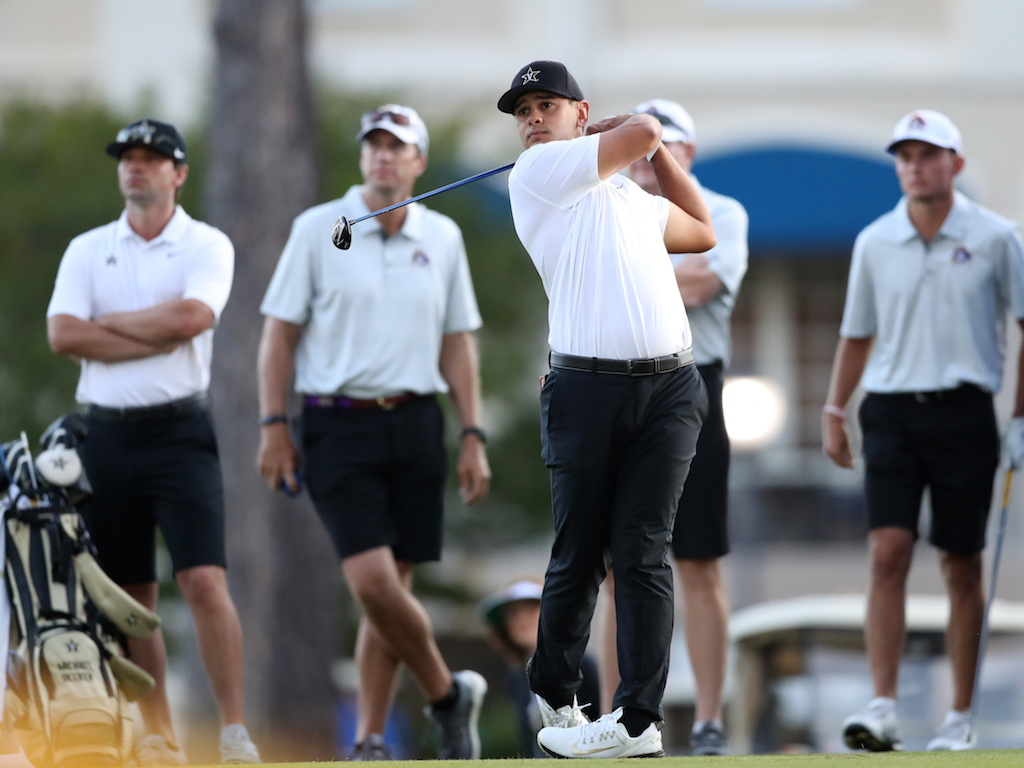
The current NCAA rules allow students to make unofficial visits any time, and make official visits (definitions for “visits” at the bottom of the article) starting September 1 of the player’s Senior year. Over the past five years, these unofficial visits have started earlier and earlier, as the sport has started to experience younger athletes making commitments. Last week that rule changed; the new rule, effective immediately, will prevent student athletes from making visits involving athletic staff before September 1 of their junior year, however coaches will be able to pay for official visits starting September 1 of the players Junior year.
In summation:
- Old Rule: Prospective Student Athletes (PSA) can make unofficial visits any time. They can make official visits starting September 1 of their Senior year of High School.
- New Rule: Effective immediately, PSA cannot meet on campus with a coach until September 1 of their Junior Year, however coaches can start to pay for official visits starting September 1 of the prospective student athlete’s junior year.
The adoption of this legislation signals a major paradigm shift in recruiting among college coaches. Data collected by GolfWRX,suggests that not all coaches support the new rule, however. Through an online, optional survey, GolfWRX was able to collect feedback from 60 NCAA Men’s and Women’s coaches; 51 percent of respondents identified themselves as women’s coaches, and 49 percent of respondents identified themselves as men’s coaches.
The first question we asked coaches: “Are you in favor of the resolution which prevents players from visiting before September 1 of their Junior year?” In response, 51 percent of respondents suggested they where in favor, including Bradley women’s coach Mary Moan.
“The more time we can give athletes to explore their options thoughtfully the better,” Moan said. “There is such an urgency to verbally commit that players may not be making the best choice with the limited information they have. In the long run, this rule, allows players to mature and have more time to explore options.”
The second question we asked coaches: “Do you think the rule will prevent early commitments?” Nearly 60 percent of respondents said, “No.” According to comments collected anonymously as part of the survey, many coaches think the legislation will simply nudge coaches to use other methods to interact with recruits, such as camps. Steve Runge, the Head Men’s Coach at University of Central Arkansas and former college standout at Ohio State said, “while you want to do what’s right for the student athlete, it is important that coaches keep to the intention of the rule and allow young people the time to properly develop, as well as explore all their options”.
As a former college coach myself, and someone with an academic training and strong interest in behavioral economics, it will be interesting to see the long-term impact of the rule. Colleagues in other sports where this legislation has been adopted have suggested similar rules in their sports have not been overly effective, as coaches simply have more camps and clinics where they can not only interact with younger players but can also make money. The new rule also opens potential interference from either club reps/apparel reps, college advisors, high school coaches and swing instructors who could look to capitalize on the later time table, acting as middle men in the recruitment process.
While the rules do take a step towards protecting PSA from making decisions early, they don’t fully address the problem facing the typical recruit, which is the issue of bad information. At the root of the issue is the lack of useful information for PSA, their families and coaches. It’s important for PSA to use a wide range of resources to help them make the best choice for them and thirr future.
As the rule nudges visits after September 1 of players Junior Year, it may also have a fiscal and scheduling impacts. These visits, funded fully or in part by the college or university, have been significantly decreasing as the time table for players have moved up. Shifting the timing back makes it more likely they will again be a part of both recruiting, as well as a line item in budgets. For some schools, this will mean they can make less investment in the student athlete experience. The rule may also have a significant impact on Fall schedules as many schools such as Norte Dame, Stanford and Alabama look to make sure they can entertain their best recruits on major football weekends.
One cannot help but applaud the intentions of the NCAA; to serve the best interest of the student athlete. However, one can question their understanding of the process; while coaches need to be held accountable, so do college advisors, media outlets, agents, industry reps and others. This rule does nothing to better frame their roles and accountability in the process and it is my feeling that until that happens, it will be much of the same.
In the future there is also talk of other significant rules changes. New legislation likely to become effective in early August will limit the days coaches can recruit off-campus to 45 days. To put this in perspective, when I coached at the University of Kentucky, I recruited approximately 150 days per year. Cutting those days by a third will handcuff coaches; they will need to make quicker decisions, which could result in earlier offers with shorter windows to accept. It could also lead to a lot of offers on players who coaches have not watched, which over the long term could lead to an increase in transfers.
Another potential rule will limit recruiting during the month of December, allowing coaches to have more of a break during the holidays. During my 8 years of college coaching, I was never home once at Christmas. Instead I was at either Doral, the South Beach Amateur, the Orange Bowl or watching National teams at training camps. I can therefore appreciate how this can impact the quality of family life, however, I think the rule will have significant consequences for the late developer who uses tournaments like the AJGA Senior Showcase and Doral (both in December) to demonstrate to coaches their skill. This is particularly true for players from outside the United States, who might not be as savvy with the NCAA rules.
Definitions
- Unofficial Visit: when the recruit, and their family, pay for all costs associated with visiting a school. During the visit the prospective student athlete can meet coaches and teams, as well as tour academic and athletic facilities within a 30-mile radius.
- Official Visit: When the athletic department pay for part or all the cost associated with the trips for the student athlete. The parents must pay their own costs.


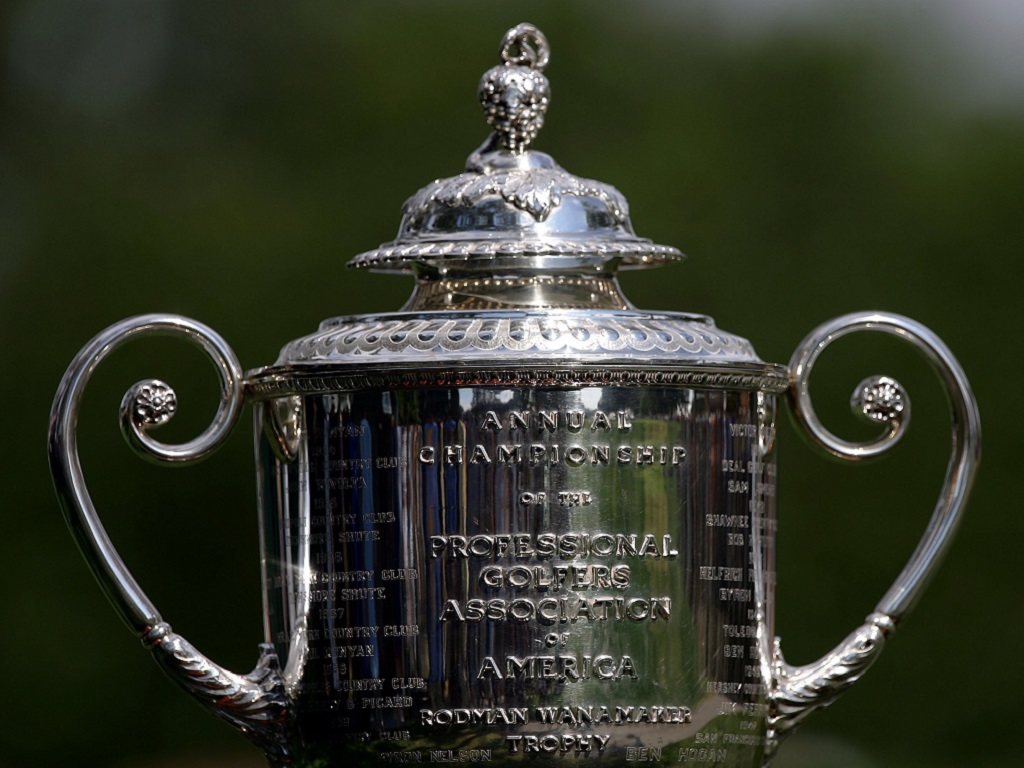
Aronimink is not a storied club, but when Donald Ross himself proclaimed it to be as good as he can design and build, one had to take notice. Jay Sigel was the pre-eminent male amateur golfer from the mid-1970s to the mid-1990s. He might have called any number of Philadelphia clubs home, but he chose Aronimink. It served him well. Gary Player won a PGA Championship here in 1962, and was followed by the 1993 winner … nobody. Aronimink gave that event away to Inverness, for reasons of which it is certainly not proud. So be it. We had to wait sixty-four years for the PGA to return to Newtown Square, but here we are. Aronimink has been neo-restored by Gil Hanse and team, to return Ross features with an eye toward defense against the dark arts, errrr, high-tech equipment.
Day one saw Rory McIlroy and Bryson DeChambeau dig big holes, to the tune of plus-four and plus-six, respectively. Since the first-round lead will be minus-three at worst, many shots will need to be made up for the power couple to reach contention. By nightfall, seven golfers held the day-one lead at three-under par 67. Shots and sticks caught our attention, and we are proud to present Five Things We Learned on Tech Thursday at the 2026 PGA Championship. Thanks to InsideTourGolfer, Today’s Golfer, and GolfWRX for initial equipment research.
First, meet Min Woo Lee
Min Woo Lee, aka Dr. Chipinski, has once again thrust himself into the conversation of Can he, will he, when will he? Lee has so much talent, wins not nearly as often as we believe that he should, and has no major near-misses (much less titles) on his wiki. The young Aussie is getting older and wiser, but is he able to avoid the scarring that holds the older and wiser back from breaking through? Philadelphia offers another opportunity. Min Woo signed for five birdies and two bogeys on day one, and grabbed a share of the opening-day lead at Aronimink. Winners transcend history and the moment, and Lee will need that sort of ascent to lift the Wannamaker on Sunday.
Second, meet Aldrich Potgeiter
The young South African golfer can rip driver with the best of them. Aronimink tips out at nearly 7400 yards, but beyond the fairway bunkers that ensnare only the mortals, Potgeiter can take his chances with wedge from the rough. On Thursday, he spent plenty of time in the spinach. Like Popeye, he used his muscles to gouge and thrash and dig his way out. Six birdies against three bogeys on the card brought AP in a three deep.
Third, meet Martin Kaymer
Not a major event takes place without a where’s he been throwback moment. We know that Martin Kaymer left the PGA and DP World tours for LIV golf, but the two-time (US Open and PGA) major winner has a lifetime exemption into at least one major event, and he seizes the opportunity each May. Kaymer joined the six-seven brigade with four birdies and a solitary bogey on day one. Kaymer was never a long hitter, and the years are kind to no golfer. The German champion will need to uncork every bottle of guile and strategy in his cabinet to remain in contention. For today, though, he occupies a rung on the ladder of Tour Tech.
Fourth, meet Scottie Scheffler
Let’s see, he’s the defending champion at the PGA, and he found his way back to the top tier with five birdies against two bogeys. To be a favorite and then play up to that stature and expectation is quite difficult. Just ask Rory, Bryson, and some of the other pre-tournament heartthrobs. Scheffler’s game is complete, and to knock him off the OWGR #1 pedestal, one needs to defeat him at the majors. Aronimink is the sort of course that fits Scheffler’s game. Better yet, it unfits the game of many of his challengers. Don’t expect Scheffler to go away anytime soon. Come Sunday, he’ll be around.
Fifth, meet Stephan Jaeger
Clocking in for the unheralded players shift are Ryo Hisatsune and Stephan Jaeger. Hisatsune logged seven birdies on day one, but gave most of them back with four bogeys. Still, he’s tied at the top for a time. Jaeger pitched five birdies against two bogeys, including a run of three consecutive, from holes four through six. Odds are that one of the two will hang around through 36 holes. Odds also suggest that both will be gone by Saturday evening. Still, the PGA Championship has historically been the major most likely to be won by an under-known. Both Hisatsune and Jaeger feature on that list, so good luck, lads!


On this episode of the Club Junkie Podcast, I head to the Titleist Performance Institute for a full driver fitting with the new Titleist GTS lineup. We dive into the fitting process, talk about what made the biggest difference in performance, and break down how the different GTS heads and shaft combinations compare on the launch monitor. If you are thinking about a new driver setup for this season, there is a lot to take away from this one.
I also get into Brooks Koepka and the gear setup he brought to the PGA Championship, including the putters that caught my eye during the week. There are some interesting equipment trends showing up at the highest level right now and we break down what stands out.
To wrap things up, I talk about reshafting a few wedges, what I learned during the process, and swapping an adaptor onto a new shaft for another build project in the shop. A gear packed episode from start to finish for anyone who loves golf equipment and club building.
Follow Club Junkie everywhere:
Instagram: https://www.instagram.com/clubjunkiepod/
X: https://x.com/ClubJunkiePod
TikTok: https://www.tiktok.com/@clubjunkiepod
Threads: https://www.threads.com/@clubjunkiepod
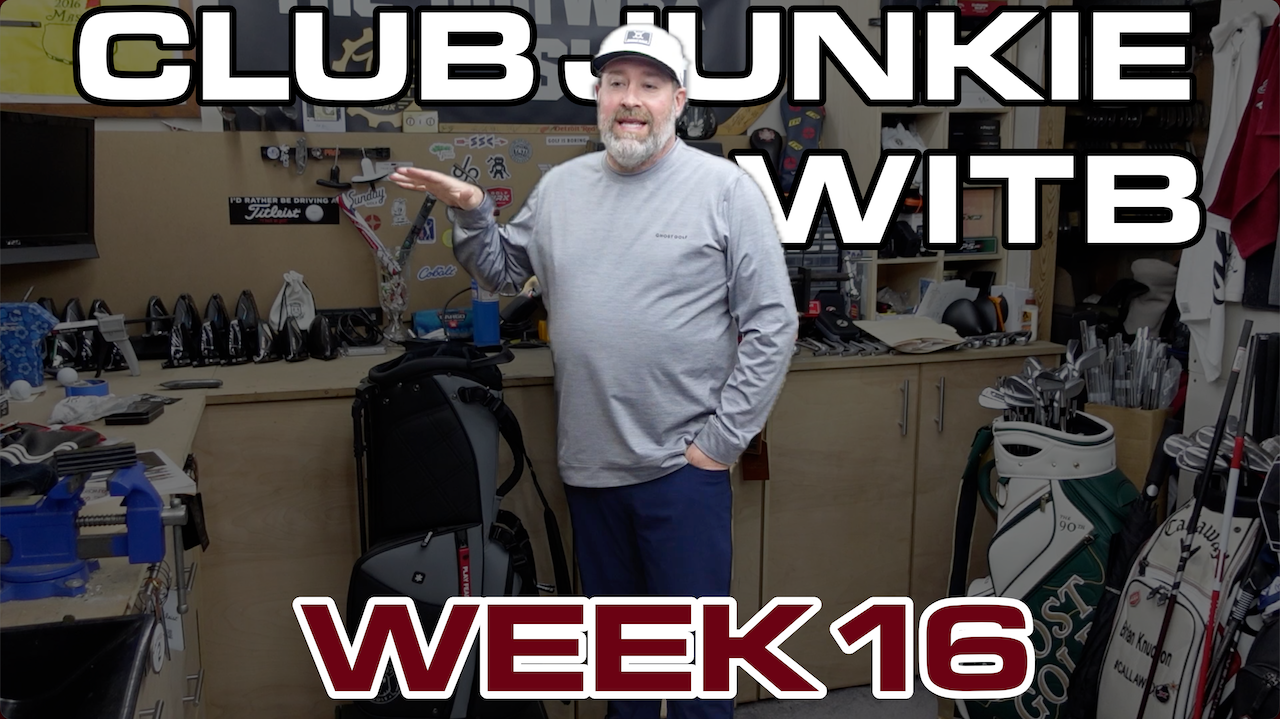
Excited for this week’s WITB as we get to add the new Titleist GTS woods to the bag! I was fit at Titleist’s TPI facility in Oceanside California a few weeks ago and my new clubs just showed up. I am also adding a cool set of irons that I built last year some wild custom wedges into a new golf bag. Speaking of the bag I have a new Ghost Anyday Black Ops stand bag that I will be using on my Motocaddy Remote M7 electric cart.
Driver: Titleist GTS3 (11 degrees @ 10.25)
Shaft: Fujikura Ventus Red 6s
3-wood: Titleist GT1 3Tour (14.5 degrees)
Shaft: Graphite Design Tour AD CQ-7s
5-wood: Titleist GTS (18 degrees)
Shaft: Fujikura Ventus Red 7s
9-wood: Titleist GT1 (24 degress)
Shaft: Fujikura Ventus Red 7s
Irons: Bettinardi CB24 (5-PW)
Shafts: KBS C-Taper Lite 110 stiff
Wedge: TaylorMade MG5 (50-09 SB)
Shaft: Mitsubishi MMT 125 Stiff
Wedge: TaylorMade MG5 (56-12 SB)
Shaft: Mitsubishi MMT 125 Stiff
Wedge: TaylorMade MG5 (60-08 LB)
Shaft: Mitsubishi MMT 125 Stiff
Putter: Dan Carraher ZT Proto
Ball: Callaway Chrome Tour
Bag: Ghost Anyday Black Ops Stand Bag

Justin Rose WITB 2026 (April): Full WITB breakdown with new McLaren irons

RBC Heritage Tour Report: More minis, course-specific setups, Spider & GTS launches

What’s the story behind Webb Simpson’s custom-stamped irons?

Cadillac Championship Tour Report: Spieth’s sizable changes, McLaren Golf launches, and more

Kristoffer Reitan’s winning WITB: 2026 Truist Championship

Cameron Young’s winning WITB: 2026 Cadillac Championship

Aaron Rai’s winning WITB: 2026 PGA Championship

Nelly Korda WITB 2026 (April)

Justin Rose on the switch to McLaren Golf, learnings from previous equipment moves

Photos from the 2026 PGA Championship


Patrick Reed WITB 2026 (May)
Driver: Titleist GT3 (9 degrees) Buy here. Shaft: Aldila Rogue Silver 130 M.S.I. 70 TX 3-wood: TaylorMade Qi35 (15 degrees)...

Aaron Rai’s winning WITB: 2026 PGA Championship
Driver: TaylorMade M6 (9 degrees) Shaft: Aldilda Synergy Blue 70 TX 3-wood: TaylorMade Qi10 (15 degrees) Shaft: Fujikura Ventus Blue...


Michael Block WITB 2026 (May)
Driver: TaylorMade Qi4D (9 degrees) Shaft: Fujikura Ventus Black VeloCore+ 5 X 3-wood: TaylorMade Qi4D (15 degrees @14.25) Shaft: Mitsubishi...


Bryson DeChambeau WITB 2026 (May)
Driver: Krank Formula Fire Pro (6 degrees) Shaft: Project X Prototype 3-wood: Krank Formula Fire (10 degrees) Shaft: LA Golf BAD...
-
 Whats in the Bag3 weeks ago
Kristoffer Reitan’s winning WITB: 2026 Truist Championship
-
Whats in the Bag2 weeks ago
Aaron Rai’s winning WITB: 2026 PGA Championship
-
 Tour Photo Galleries3 weeks ago
Photos from the 2026 PGA Championship
-

 Equipment2 weeks ago
GolfWRX Launch Report: 2026 Titleist GTS drivers
-

 Equipment2 weeks ago
PGA Championship Tour Report: Fitzpatrick, Koepka among big-name putter switches for Aronimink
-

 News2 weeks ago
WITB Time Machine: Phil Mickelson’s winning WITB, 2021 PGA Championship
-

 Equipment2 weeks ago
Which of Tiger’s major winning irons are your favorite? – GolfWRXers discuss
-

 Equipment2 weeks ago
Lead Tape Report: Adjusting the swingweight of the Wanamaker Trophy


MIKE
May 2, 2018 at 9:16 am
Well written article but I think it misses the point that this is only a D1 rule change. Both D2 and D3 allow unofficial at any time. D2 allows official starting June 15 after sophomore year. D3 allows official starting Jan 1 of junior year.
Gregg grost
May 1, 2018 at 10:45 pm
New rule change the landscape but recruiting calendar in Div I is the game changer….
2putttom
Apr 30, 2018 at 5:15 pm
don’t call me, I’ll call you
squeezefade
Apr 30, 2018 at 4:43 pm
Still won’t prevent college coaches from finding ways to meet with recruits on campus before Sept. 1 of their junior year. Host a golf prospect camp, invite Fr. and So. recruits, and talk/tour recruits when they are there for the camp. I’d be surprised if this isn’t done already.