
Equipment
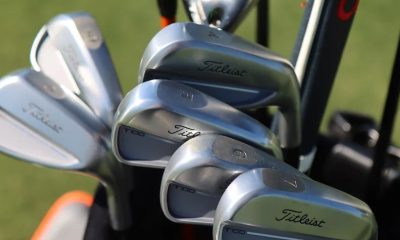
The story behind Jason Dufner’s new National Custom Works irons

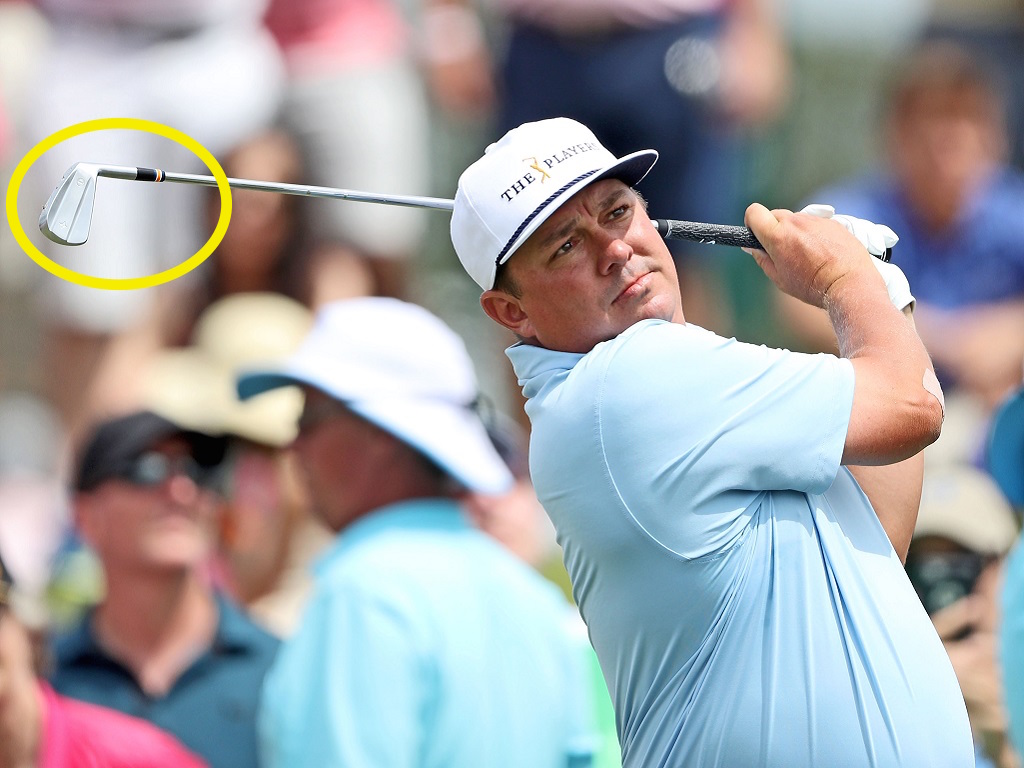
If you caught any of Jason Dufner shooting 66-68 on the weekend at The Players, you might have been intrigued by the blades the Auburn man was carving up TPC Sawgrass with.
GolfWRX members, not surprisingly, spotted the switch from his previous gamers over the weekend, eventually identifying Dufner’s irons as National Custom Works products.
We reached out to NCW to learn more about Dufner’s new weaponry, and company co-founder Patrick Boyd was kind enough to share some details.
BA: So Jason Dufner puts your clubs in the bag and lights it up on the weekend. How did this happen?
PB: I got an email from him a while ago…I saw the email and I laughed. I was like, ‘Yeah. OK. Sure, buddy.’ But I wrote an email back and said, “If this is you, I’d love to work with you on something.’ He gave me his number, we got in touch…scheduled an appointment with Don [White]. We spent an afternoon working with him on some sample clubs, and it’s kind of gone from there.
I text with him [Dufner] pretty regularly, and I’d heard from him the clubs were a couple of weeks out from making the bag, and he texted me Friday and said, ‘They’re going in the bag this weekend.’ And I hadn’t been paying attention to the leaderboard, so I thought he didn’t make the cut and he was just going home to mess around with them. Then, I’m watching Saturday and he shoots 66!
BA: So he just put them in the bag in the middle of the tournament? Crazy.
PB: Yeah. And the other interesting thing is, he’s a client like any of my other clients: he pays for his golf clubs. We don’t have a contract with him. He’s all about playing the best equipment that works for him.
BA: He insists on paying? Wow. So what was Jason Dufner looking for when he came to you initially, and what did you end up delivering?
PB: He’s been trying a lot of different stuff. He doesn’t have a contract right now. So, I asked him during that process what was happening and what he was seeing, and it became apparent that the soles on the irons he was playing were digging in too much. His spin rates were a little bit high, which to me indicates he was hitting it higher on the face than he’d like to. That was the beginning of the conversation. He was really, really thorough. He knew all his numbers and he knew exactly what he was talking about.
Initially, we met down at Albany. I had him bring what he was playing and what had been successful for him. Me and Don had a look at what was going on. It became clear pretty quickly what we needed to do as far as the sole configuration. That’s what he was fighting: the bottom of his golf clubs weren’t matching up with his angle of attack.
That was the first step. We made a couple of samples for him to take home…I got about two hours down the road and my phone rang. It was Dufner saying, “I hit balls with them. Everything is great. Just make this one little change,” and I got everything in to Don.
The first set we made for him, this is kind of interesting, when he told us about the trajectory he wanted and what he had in mind, Don looked at him and said, ‘Man, you want some blades!’ And he hadn’t played blades since he was in college. But the first project we worked on with our client were cavity backs.
He worked with them on Trackman and his numbers were really good, but the thing that was interesting to me was we used the smaller cavity back we work with and he thought it was a little too long heel-to-toe for him, so he asked me to make him a set of blades. So, we talked about that project…and once we had the sole knocked out and knew what he needed there, as well as what his preferred toe shape is, his preferred aesthetics, the offset he likes, it was pretty easy to put a set together for him.
The 4 and 5-iron are kind of a lower CG profile, and the 6-iron through pitching wedge is more of a mid-CG profile. He just wanted something to kind of knock it down and flight it a little bit flatter with the 6 through pitch, and then with the 4 and 5, he was looking for something a little easier to launch and hold greens with. Kind of a mixed muscle setup.
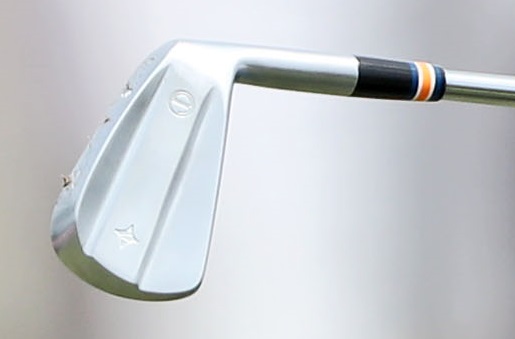
BA: It looks like he has Auburn colors on the ferrules? And can you confirm the stamping?
PB: Yep. I designed those ferrules for him. And the irons have the NCW star stamp in the toe of the muscle, and then we have the [Jason Dufner] Foundation logo. Then, the letters on the sole of the golf clubs are his dad’s name.
PB: Well, I’ll reiterate, what I thought was just fascinating was, when we initially had the conversation, he really wasn’t sure about working with blades. But once you get the sole profile knocked out for somebody and they’re not fighting the sole of the club…I mean, to me, it speaks volumes that once you get a set of blades in his hands with the correct sole profile it made such a difference in just his initial reaction to wanting to talk about blades…it’s just a testament to the importance of fitting somebody, getting the right sole for their angle of attack, tendencies, and conditions.

PONTE VEDRA BEACH, FL – MAY 13: Jason Dufner of the United States plays a shot during the final round of THE PLAYERS Championship on the Stadium Course at TPC Sawgrass on May 13, 2018 in Ponte Vedra Beach, Florida. (Photo by Sam Greenwood/Getty Images)
For more about National Custom Works, well, works, check out our Peter Schmitt’s talk with Patrick Boyd last month.
EDIT: Patrick sent Dufner’s full spec sheet along
Make up: 4-P Standard Flatback
Muscle: PMB Long Iron muscle with straight line 4/5, Phatty ’53 (PJB) muscle 6/7, Phatty ’53 (PJB) muscle but slightly higher than 6/7 for 8-P
Shape: duplicate samples
Grind: duplicate samples. Client noted modification per our conversation, please adjust accordingly
Loft: 23/28/32/36/40/44/48
Lie: 59.5/60/60.5/61/61.5/62/62.5
Offset: duplicate samples
Weights: D-3 (-2g for chrome) 50g grip, 38.5/38/37.5/37/36.5/36/35.75″ cut length
Finish: Dull Satin, prep for chrome
Stamping: 1/4″ letters 4 (F), 5 (R), 6 (A), 7 (N), 8 (K), 9 (E), P (D) on toe side of sole, DW on heel side of sole, JD logo stamp on muscle heel side, Star N logo on muscle toe side
Paintfill: none
Ferrule: Custom Auburn




In a golf world where players are looking to eke out every yard possible, usually by lengthening their drivers to add clubhead speed, there’s one player at the PGA Championship who’s going in the opposite direction. In fact, for Rickie Fowler, his goal off the tee is not about gaining extra distance or yards north to south, but rather about shrinking the misses from east to west.
Ahead of the PGA Championship and the week prior at the Truist Championship. Fowler mentioned to Cobra Tour Rep Ben Schomin that the driver didn’t quite swing feel the same as everything in the bag. As a result, and with Schomin’s suggestion to try and sync everything up with the big stick, Fowler decided to test out a shorter length shaft.
“He’s been at 45 (inches), and he’d been at 45 for a few weeks, 44 1/8 (inches) is really is where he is been living really for the most part, for the last couple of years, and is where he is been comfortable,” Schomin told GolfWRX. “It just felt like it was a little long and loose on him.”
Interestingly, Fowler ranks 40th in Driving Accuracy this year on the PGA Tour. It’s his most accurate season with the driver since the start of the decade. But sometimes for players, feel is more important than statistics.
“It was really more of a trying to get the swing to feel the fluidness from club to club to club to try to get it to feel the same,” Schomin added. “And so we took it down to 43 and a quarter, and it was a touch of a ball speed loss, just based on that overall club head speed. But honestly, he squared it up probably a little better. The right miss wasn’t nearly as far. So really, overall down-range dispersion tightened up a fair amount, and he felt confident in swinging it.”
The change in length had Fowler’s caddie, Ricky Romano, beaming at how well he had driven during Tuesday’s practice round at Aronimink. So much so, he was asking Schomin not to suggest changes anymore.
Fowler’s shaft-shortening is one of a few driver adjustments he’s made this season, and to Schomin’s credit, it’s thanks to the fact that he and the rest of the Cobra team had Fowler fit very well into three of the four heads in the Cobra OPTM lineup.
“He had three distinct drivers and the biggest decision was trying to decide which worked best at that time,” Schomin told GolfWRX previously. “He’s played the majority of the season with OPTM X, but has also played a couple of tournaments with OPTM LS. His overall driving stats have been good.”
At the RBC Heritage earlier this spring, Fowler switched drivers, changing from his Cobra OPTM X and into the Tour, low-loft Max K model that Gary Woodland used to win just a few weeks prior.
Now for the PGA Championship, Fowler’s back in the X head, but still using the UST Mamiya LIN-Q PowerCore White 6TX shaft, just a little bit shorter.
“Will he stay there? I’m not sure,” Schomin added. “Could we end up say at like 43 and 7.5 (of an inch). If it’s giving him the same feel of consistency through the bag, then I think we might end up just a touch longer. But if he likes where he is at, he’s confident where he is at, that’s really all that matters.”
If there’s more testing, though, just don’t tell his caddie.

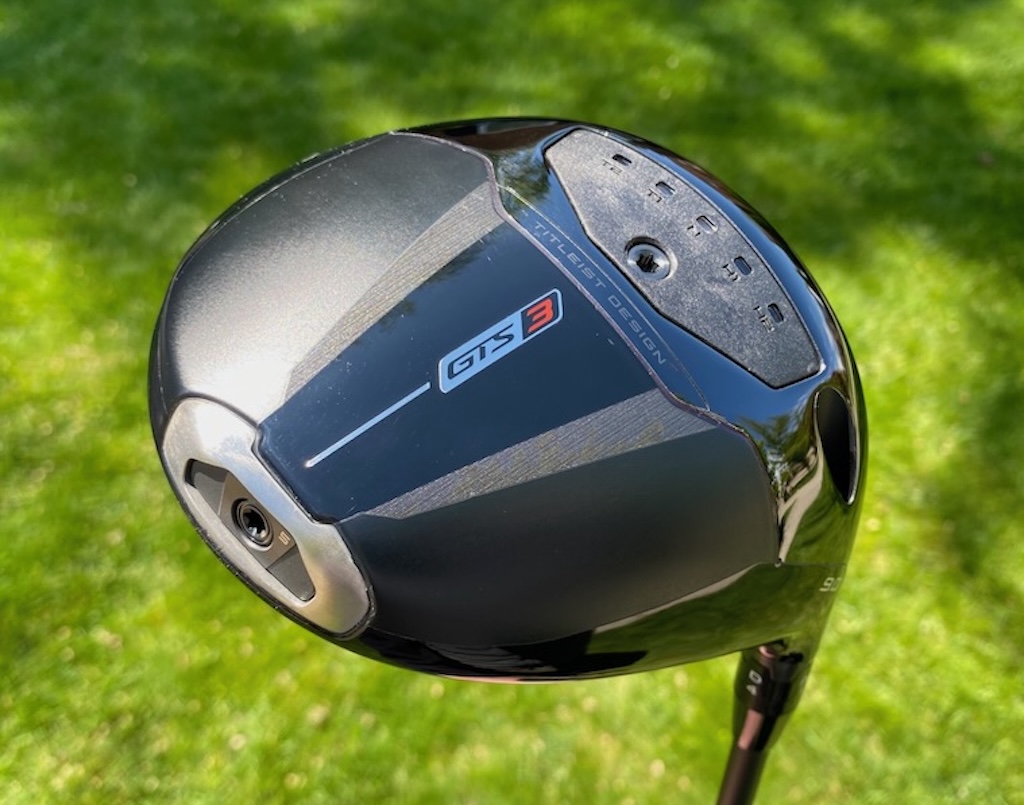
What you need to know: As is customary for the Fairhaven-based company, Titleist officially announced today that its GTS drivers are headed to retail, following a successful tour release. The GTS2, GTS3, and GTS4 drivers will be available in golf shops June 11.
Since debuting at the Texas Children’s Houston Open, the new GTS lineup has quickly gained traction on the PGA Tour, with more than 50 players already making the switch to a GTS2, GTS3, or GTS4 driver. Among them are Justin Thomas and Jordan Spieth.

Justin Thomas’ Titleist GTS2 driver (Greg Moore, GolfWRX)
According to Titleist, the GTS series builds upon the performance foundation established by the GT Series, while introducing several major technological advancements, including a new Split Mass Frame construction, refined aerodynamics, and an updated Speed Sync face design.

2026 Titleist GTS drivers: What’s new, key technology
Split Mass Frame and thermoform body
At the center of the new GTS lineup is a redesigned internal structure: the Split Mass Frame. This technology works with a full-thermoform body made from Titleist’s Proprietary Matrix Polymer (PMP), a lightweight composite that enables engineers to reposition mass more efficiently throughout the head. Compared to the previous GT generation, GTS drivers feature nearly double the PMP material, increasing from 13 grams to 26 grams, while maintaining the sound and feel preferred by better players.
The weight savings from the thermoform construction allowed Titleist engineers to strategically separate mass placement inside the head. Specifically, more weight is pushed rearward to improve stability and forgiveness, while additional mass is positioned low and forward to optimize speed, launch, and spin.
In short, golfers are able to maintain ball speed and consistency across both centered and off-center strikes.

Faster aerodynamics
Titleist also refined the aerodynamic shaping of the GTS heads to help players generate more clubhead speed.
The tails of the new GTS2 and GTS3 heads have been raised compared to previous models, helping airflow stay attached to the crown and sole longer during the swing. According to Titleist, the improved airflow reduces drag and increases speed without affecting launch conditions or center of gravity placement.
Typically, aerodynamic gains can compromise forgiveness or launch characteristics, but the weight savings from the Split Mass Frame allowed engineers to preserve preferred CG locations.

New Speed Sync face
The new Speed Sync Face design is engineered to improve ball speed retention across a larger portion of the face. A reinforced perimeter structure helps maximize face deflection and COR on centered strikes, while the upper portion of the support ring is opened up to increase speed on high-face impacts, a common strike location for many golfers. The face also features a variable thickness design to preserve speed and performance across a wider impact area.
Expanded adjustability
Each GTS model includes a dual-weighting system to fine-tune launch, spin, and shot shape more precisely than previous generations. GTS2 uses interchangeable forward and aft weights, while GTS3 and GTS4 combine a rear weight with an adjustable forward track weight system.
Tour-inspired face graphics
The new lineup features redesigned high-contrast face graphics to improve alignment and framing at address, according to Titleist. Sharp visual lines are designed to make it easier to center the golf ball and to perceive loft more easily at setup.

Additional model details
GTS2

- The GTS2 is the most forgiving model, designed for golfers seeking maximum stability and consistent speed across the face.
- It produces high launch with mid spin and features a larger, confidence-inspiring profile behind the ball.
- Standard weighting includes an 11-gram forward weight and a 5-gram rear weight, with additional fitting configurations available.
GTS3

- The GTS3 is aimed at players who want more control over launch, spin, and shot shaping.
- Compared to GTS2, the GTS3 offers lower launch and spin while featuring a more compact profile and deeper face design preferred by many stronger players.
- The head features an adjustable forward-track weight system to further fine-tune center of gravity placement.
GTS4

- The lowest-spinning option in the lineup, GTS4 is built for golfers looking to reduce excessive spin and maximize total distance.
- Unlike previous “4” models from Titleist, the new GTS4 features a full 460cc profile that improves forgiveness and stability while retaining its low-spin DNA.
- Like GTS3, it includes a forward track weighting system for precise fitting adjustments.

What Titleist says
“When we talk about driver design, it’s never about the one feature or benefit — it’s about all of them,” said Stephanie Luttrell, Titleist’s Senior Director of Metalwood R&D. “Ball speed, forgiveness, spin stability, adjustability, exceptional sound and feel… these are all attributes that golfers care about. It’s our job to design a lineup that elevates performance across the board without sacrificing in key areas, and we feel we’ve done that with GTS.”
“We know that forward CGs drive speed with great launch and spin characteristics, but you need to be able to do that with an inertial stability that still preserves ball speed, launch and spin consistency on off-center hits,” Luttrell said. “We’ve never before been able to hit these CG positions and inertia properties at the same time, and we’re achieving that because of GTS’ construction.”
Club Junkie’s take
I feel like every time there is a new Titleist wood release, I figure they can’t outdo their previous driver. And every year, I am wrong and impressed with the performance. The GTS fits right into that narrative again, as I didn’t know where Titleist could go from GT, but they pushed the limits again, and my fitting proved the smart people there found ways to improve.
My past four Titleist drivers have been a 2 series as my swing typically requires a little height, spin, and forgiveness so I figured I would just get a new GTS2 and be on my way. During the fitting, I was impressed by the new GTS construction, its added PMP material, and the advanced adjustability on each model. My fitter, Joey, got to work putting together a GTS2 and we started there. The launch and spin were great, and the consistency on misses was very tight. My average ball speed with the GTS went up a little bit as the new Speed Sync face creates more speed away from the center.
Joey then built up a GTS3 in 11 degrees, but I figured this wouldn’t have the stability I needed for tight dispersion on my miss hits. That thought was quickly erased after a few shots, and I really liked the more center start line and reduced draw on the misses I was seeing. We tried a few different settings and shafts to dial in the details in order to get the best fit. Having a forward and rear weight in the head allowed Joey to set up the GTS3 with a heavier rear weight to keep the launch and spin up, while the Sure Fit hosel set flat created a more center start line for me. My misses were not nearly as far left, and I was really impressed with the consistency on the spin and launch when I didn’t hit it in the center.
Titleist again created a wood line in GTS that delivers improvements over previous drivers while keeping the traditional look and feel you expect. More adjustability, better off-center speed, and 3 drivers that are playable over a wider range of players should make these extremely successful in fittings.
Pricing, specs, availability
GTS2 lofts: 8, 9, 10, 11 degrees (RH/LH)
GTS3 lofts: 8, 9, 10, 11 degrees (RH/LH)
GTS4 lofts: 8, 9, 10 (RH/LH)
Featured shafts
- Project X Titan Black
- Mitsubishi Tensei 1K White
- Mitsubishi Tensei 1K Blue
- Mitsubishi Tensei 1K Red
Premium shafts
- Graphite Design Tour AD DI
- Graphite Design Tour AD VF
- Graphite Design Tour AD FI
Available for fittings and pre-sale now.
In golf shops worldwide beginning June 11.
Price: $699 (standard), $899 (premium)


Titleist has today introduced its new GTS2 and GTS3 fairways.
Lower and deeper center of gravity (CG) positions, new adjustable heel-toe weights and advanced clubface innovations drive total performance in the two tour-proven models.
- Tour-inspired polished clubfaces: To help players see more of the clubface at address.
GTS2 Fairway


The new GTS2 fairway is designed with a shallower face and a larger profile than GTS3, ideal for players with more sweeping deliveries with their fairway metals.


GTS2’s new face height, inspired by tour feedback, was designed shallower than the prior generation GT2 model and more in line with the GT1 fairway. Each loft in GTS2 leverages a shallower profile except for the 13.5-degree, which maintains a slightly taller face.

With its new dual-weighting system, the ‘2’ model now has heel-toe CG adjustability.
Lofts: 13.5, 15.0, 16.5, 18.0, 21.0
Dual-weight system: 11-gram weight in heel, 5-gram weight in toe (standard)
GTS3 Fairway


The new GTS3 fairway is designed with a deeper face and a more compact profile, ideal for players who hit down on the golf ball more with their fairway metals.

New to the GTS3 family is a 21-degree offering, giving players two distinct profiles in Titleist’s 7-wood loft.


RBC Heritage Tour Report: More minis, course-specific setups, Spider & GTS launches

Justin Rose WITB 2026 (April): Full WITB breakdown with new McLaren irons

Best fairway woods of 2026: The most versatile fairway woods + the most forgiving fairway woods

What’s the story behind Webb Simpson’s custom-stamped irons?

Cadillac Championship Tour Report: Spieth’s sizable changes, McLaren Golf launches, and more

The 24 players who can win the Masters

Rory McIlroy’s winning WITB: 2026 Masters

Kristoffer Reitan’s winning WITB: 2026 Truist Championship

J.J. Spaun’s winning WITB: 2026 Valero Texas Open

Cameron Young’s winning WITB: 2026 Cadillac Championship


Alex Fitzpatrick WITB 2026 (May)
Driver: Ping G440 LST (9 degrees) Shaft: Fujikura Ventus Black 6 X 3-wood: TaylorMade Qi4D (15 degrees) Shaft: Fujikura Ventus...

Kristoffer Reitan’s winning WITB: 2026 Truist Championship
Driver: Ping G440 Max (9 degrees) Shaft: Mitsubishi Tensei 1K White 60 TX 3-wood: Ping G440 Max (15 degrees) Shaft:...


WITB Time Machine: Rory McIlroy’s winning WITB, 2021 Truist Championship
Rory McIlroy’s victory at the 2021 Wells Fargo Championship 2021 (now the Truist Championship) marked a significant return to form,...


Collin Morikawa WITB 2026 (May)
Driver: TaylorMade Qi4D LS (8 degrees) Shaft: Mitsubishi Diamana D+ Limited 60 TX 3-wood: TaylorMade SIM Tour (14 degrees) Shaft:...
-
 Equipment2 weeks ago
Justin Rose WITB 2026 (April): Full WITB breakdown with new McLaren irons
-
 Equipment1 week ago
What’s the story behind Webb Simpson’s custom-stamped irons?
-
 Equipment2 weeks ago
Cadillac Championship Tour Report: Spieth’s sizable changes, McLaren Golf launches, and more
-
Whats in the Bag4 days ago
Kristoffer Reitan’s winning WITB: 2026 Truist Championship
-
 Whats in the Bag2 weeks ago
Cameron Young’s winning WITB: 2026 Cadillac Championship
-

 Whats in the Bag3 weeks ago
Nelly Korda WITB 2026 (April)
-

 Equipment2 weeks ago
Justin Rose on the switch to McLaren Golf, learnings from previous equipment moves
-

 Tour Photo Galleries2 weeks ago
Photos from the 2026 Cadillac Championship


Les
Jun 15, 2018 at 3:04 pm
I’m gonna get a set of those clubs to lower my score…. and get that ‘traditional’ look to my WITB arsenal of weapons… 😮
Soheil Shirzadi
May 18, 2018 at 12:49 pm
Scratch 2.0? Looks like Ari Techner is part of NCW
GCGC
May 17, 2018 at 10:45 pm
FINALLY a set of clubs with normal lofts! Yay to NCF and Dufner! Where is all the OEM BS about “our engineers lowered the center of gravity soooo much that we had to put the 6-iron loft down to 22° in order to keep the launch angle down and spin down to a manageable level”….. bla bla bla. You too can be a hero and impress your friends by hitting a 9-iron 225 yards (even though said 9-iron has only 21° of loft). Either NCF totally messed up in their design of this iron head – ‘cuz they are nowhere near the “modern high tech” clubs, or the OEM’s are all talking out of their arse. I think it is the latter. Just sayin’.
Hogan Fan
May 26, 2018 at 7:07 pm
I could not agree more! I would like an equipment manufacturer who lowers the CG and creates a higher launching club to actually let the club launch really high to help all those guys who are playing below the tree line. At least provide it as an option! I really don’t want a 27* #7 iron (this is actually true) I want my clubs to have reasonable launch angle, reasonable descent angle, reasonable spin and the appropriate combination of those three to actually be a useful set of tools to help me around the golf course. I really don’t care what they say on the bottom.
Marc Grenier
May 17, 2018 at 1:14 pm
Mr. Alberstadt,
VERY good article, simple terms, easy to understand. I subscribe to GOLF WRX. newsletter and will read your past and future articles. Keep up the good work.
HDTVMAN
May 17, 2018 at 9:28 am
???? Very good and interesting article.
Bob Parson Jr.
May 16, 2018 at 5:23 pm
They are not Parsons, meh!
JOEL K GOODMAN
May 16, 2018 at 8:35 pm
NO THEY AREN ‘T . THEY ARE BETTER BY FAR. AND PROBABLY NOT AS OVERPRICED.
ron
May 16, 2018 at 4:36 pm
now everyone wants them
Dave r
May 16, 2018 at 12:31 pm
One of the best articles I’ve read on here real good work . Good luck to Jason hope he does well on tour I know I’m pulling for him.
Mirage
May 16, 2018 at 12:10 pm
Don White. ‘Nuff said. Great piece!
Scott
May 16, 2018 at 11:32 am
Best article in a long time
2DudesTony
May 16, 2018 at 8:20 am
Duff Daddy has always been a pure striker & more than adequate putter. Everyone misses short putts regularly, most of us due to the “gimme”. I’d like to know what angle of attack caused a need for a different fitting. Details anyone? I used to be VERY steep w irons but corrected that w a posture change. Self taught but read & try a lot of teaching & have never had a fitting. At 66 I’m thinking it’s too late.
dat
May 15, 2018 at 11:10 am
Now this is quality content!
Mizzle Fizzle
May 15, 2018 at 4:08 pm
This.
Mizzle Fizzle
May 15, 2018 at 4:11 pm
Most on point article in looooong time.
douglas terry
May 15, 2018 at 10:42 am
I guess shaft info is not important?
JW
May 16, 2018 at 11:44 am
They probably didn’t shaft the heads…. and if they did you’re right it’s the least important info in everything provided. The impact the shaft has its minimal compared to sole grind, head design, etc but if you see the pics it looks like the S400 AMT Tour Issue that he’s been using but I’m sure he could find a tour van to build them with those and Superstroke grips
CJ
May 15, 2018 at 10:13 am
Great stuff…I see 12 oxygen theives marked it a shank…what a joke.
Chuck Barkley
May 15, 2018 at 12:14 am
Great piece! Yeah, loving the “hat a day” situation too. Walked into Lids today to ask about their connection to New Era and the The Players cap Jason wore, and they were like, “duhhhhhhh, we don’t have any info on that cap.” Well can you call your contact their? “duhhhhhh, we don’t have access.” Ehhhh whatever. Go Duffy!!!
Sue
May 14, 2018 at 11:48 pm
Love Dufner, this further supports my feeling!
rymail00
May 14, 2018 at 11:18 pm
This was a cool story.
I was such a huge fan of Scratch Golf (really sad to them go), but now to see the guys doing there thing again is awesome. I’m truly happy for them cuz they are a great group guys.
I like Dufner and hope he plays well with the new sticks and it helps shine some light on NCW.
moses
May 14, 2018 at 11:06 pm
Man I’m going back to blades. My iron game has been off lately.
Larry
May 14, 2018 at 9:45 pm
NCW is using open designs by a Chinese foundry and passing it off as custom.
2putttom
May 15, 2018 at 10:40 am
I must of missed that part in the article
Blake
May 15, 2018 at 2:10 pm
They do purchase blanks and grinds them. Not sure how open a blank design is
Lenny
May 14, 2018 at 9:26 pm
Duf is trying to look like a 72 year old man and succeeding.
Brett Weir
May 14, 2018 at 8:57 pm
Looks like some old school 1960’s Wilson Staff Blades.
2putttom
May 15, 2018 at 10:41 am
yep the ever successful step muscle design.
T. Lee
May 16, 2018 at 5:52 pm
DynaPowered from mid 60’s! minus the red plugs in heel.
JOEL K GOODMAN
May 16, 2018 at 8:37 pm
THEY WERE THE STANDARD FOR THE WORLD AT THAt time
len
May 14, 2018 at 8:49 pm
See… plain vanilla flavored muscleback fitted irons is all you need if you are a decent golfer… and the rest of us duffers hope our Super Game Improvement cavity back or hollow jello-filled multi-scruw irons will rescue our pathetic golf swing and wild ball flight. 😮
JD
May 14, 2018 at 8:45 pm
Those are some sharp irons. I’m very impressed. Love the Auburn ferrule. WDE
MB
May 14, 2018 at 7:33 pm
Duf’s the Man he will figure the putter out relax, very underrated ball sticker imo.
kevin
May 15, 2018 at 9:33 am
figure the putter out? he was +7.4 in shots gained putting for the week (top 3)…..and top 50 in 2018 for shots gained. the idea that dufner is an awful putter is such a myth
Thomas A
May 15, 2018 at 11:37 am
Everyone only watched his one mis-putt on the 18th on Sunday. Cost him $403,000.
SK
May 14, 2018 at 6:55 pm
See… plain vanilla flavored muscleback fitted irons is all you need if you are a decent golfer… and the rest of us duffers hope our Super Game Improvement cavity back or hollow jello-filled multi-screw irons will rescue our pathetic golf swing and wild ball flight. 😮
Matty
May 14, 2018 at 6:48 pm
How about a Jason Dufner Hat Compilation for 2018?
Gorden
May 14, 2018 at 6:39 pm
Love seeing Dufner and Woods for that matter, playing old style irons shows all these gimmicks the Club companies are putting on their clubs is nothing more then bubbles and bangles..truth known the Ping eye 2 could be brought back out and they would sell thousands of sets….
Richard
May 14, 2018 at 6:18 pm
What a fantastic story for National Custom Works. They are doing some great stuff. So cool that he paid for them!!!
Dan
May 14, 2018 at 5:34 pm
They look sooo one fashioned. Love em!!
I wish I could call Don White and have him make me a set
Buchs
May 14, 2018 at 6:25 pm
You can. Just call NCW. Patrick will hook you up. Just may take a little longer after this article lol.
the dude
May 14, 2018 at 5:17 pm
how bout they make him a putter…….(that 3 wiggle on 18 cost him ~ 700-400k)
Ryan Michael
May 14, 2018 at 7:49 pm
It’s not the arrow it’s the Indian.
Ralph Guldahl
May 14, 2018 at 10:09 pm
Tell that to the Indian with a quiver full of crooked arrows.
kevin
May 15, 2018 at 9:34 am
he was top 3 in putting for the week and +7.4 in strokes gained putting. what are you talking about?
Sue
May 15, 2018 at 11:05 am
All 4 rounds determine the $$$. He got to where he was because of all (4) rounds.
Tiger
May 15, 2018 at 6:43 pm
Go back to the land of stupid ignorant comments where you came from
The Dude
May 19, 2018 at 8:42 pm
Dumb…