
News
Does weight affect aim?

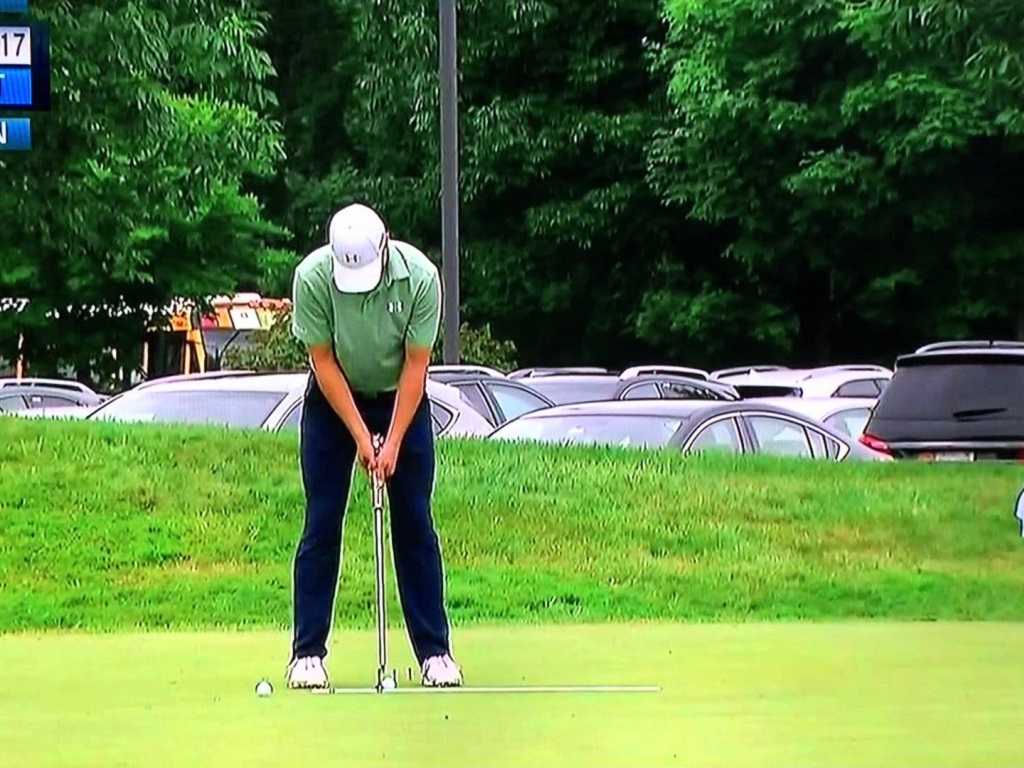
Why Speed Dictates Aim
When it comes to putting, and more importantly holing putts, there are only a few factors that are truly going to make a difference when it comes down to it. Technique aside, Speed is going to be one of the biggest influencers on the probability of making the putt. The reason for this is because Speed is going to determine the line you aim the ball on. A putt with less pace is going to break more than a putt of equal distance with more pace.
In addition to Speed being an important contributor to the line you select, it also affects the size of the golf hole that you are putting towards. The hole doesn’t really change size, however, once the golf ball goes into motion, the holes “effective size” changes. Essentially, at rest the golf ball can cross any threshold of the hole and fall in, thus making the holes “effective size” 100%. However, once the ball is placed into motion and is traveling at 1.68MPH the “effective size” of the hole decreases to 75%.
1.68 MPH, Entry Speed, 1-foot past the hole on an 8 stimp meter green, or 2-feet past the hole on a 14 stimp meter green, they all represent the same thing, your best chance to make the putt while giving you the best chance at a kick-in on your next attempt should you miss. Entry speed is a relatively new term, however, is a concept that has been around for a long time.
Real World Application
Mr. Smith is an average golfer and routinely shoots in the mid 80’s at his local course from the regular tees. Mr. Smith decides he wants to put in some work on his short game, and set’s about making more putts from 10-feet and closer. Mr. Smith knows that the practice green has some slope and undulation and picks a putt that breaks from left-to-right at a 2% grade. Mr. Smith putts 10 tries and makes 4 of them from 10 feet. Out of the 6 that missed, only one was missed on the low side of the hole with all of the other putts missed on the “pro” or high side of the hole. The balls that missed on the high side of the hole all came to rest between 3-5 feet past the hole. Based off of traditional knowledge, he feels confident that if he just aims a little more right on those left to righters, he is sure to make more on the next batch. Will Mr. Smith make more than 4 putts out of the next 10 attempts while aiming slightly more to the right?
Mr. Smith could potentially make more putts by aiming more to the right and maintaining his current speed, however, by aiming more “directly” at the hole he has created a more downhill putt which will also increase the Effective Stimp making the ball roll farther past the hole should it miss. Therefore, while we may increase make percentage some, the putts that are missed will be farther from the hole when they come to rest increasing the risk and likelihood of a three-putt.
What would be most beneficial to Mr. Smith would be working on speed control and using the slope and undulation to his advantage. Mr. Smith is like most golfers and routinely misses putts only to blame the line, when in actuality, it was the speed that caused the putt to miss the hole.
Why is Speed Control to Blame?
Some athletes see more curve, and some swear that they only see straight lines. Either way both are at a disadvantage if they are trying to putt the ball to the apex of the break. The reason for this is because the ball will begin to move off of the aim line very quickly as the break takes effect on the ball, and in most cases with breaking putts, the aim line will be outside or farther away from the hole then the actual apex of the break due to this initial breaking prior to reaching the apex.
With that said, using our previous example of Mr. Smith, when the average golfer sees the ball miss left of the hole on a left-to-right breaking putt, they assume that they “pulled’ the putt, when in actuality, they had to strike the putt much to firmly to get the ball to the apex of the break which is what caused it to not take the break at the end of the putt and go in the hole.
Now that we understand that most golfers are hitting the putt with too much pace and not playing enough break, how do we fix this problem? One way to approach this problem would be working with a coach and identifying the areas of speed control (length of stroke, force application, tempo, centeredness of contact, etc.) that need the most work and then develop a training plan to change the motion pattern. Another way, from a club fitting perspective would be to look at how the Instrument is weighted throughout and how that matches and affects the biomechanics of the athlete.
The Heavier the Putter the Better, right?
When you pick up your putter, do you ever balance it on one finger? If so, you know that the “balance point” of the putter tends to be a few inches up the shaft from the club head, and when you find it, you can balance the putter horizontally on one finger. Most putters in the market have most of their mass or weight much closer to the club head then the hands, and this is very important to understand. The more the total mass moves towards one end point, the more the heavier side is going to want to swing relative to the other end point. In engineering, they call this a moment arm.
When we feel how “soft” a putter face is, we are actually experiencing all of our senses and sound tends to affect what we feel a lot. For example, older Ping putters would tend to be lighter and have less mass than current putters, and luckily, they were named Ping because that is the exactly the sound you would get when you struck one. Often times, people would describe a Ping putter as being hard due to it being cast and not forged when in actuality it was due to weight. At the opposite end of the spectrum was the Heavy Putter that was around about 10 years ago. This putter was big and heavy and always felt to be incredibly soft, but in reality, was just a big chunk of lead with lots of mass.
The issue with having a putter that feels great and has a lot of mass is that it tends to hit the golf ball too firmly relative to the perceived “effort” needed to be applied to get the ball to travel to the hole. This leads to putts traveling at too much speed to take the amount of break that we planned on which influences our aim over time.
Perception vs. Reality
Most athletes believe that they prefer a heavy putter, however, when asked about putting, they frequently state that they tend to hit their putts too firmly and miss on the high side of the hole. Based off an understanding of how the weight affects the moment arm and acceleration of the putter, we can see how this is a conflicting ideology. So, if we know that weight contributes to creating the correct “feeling” of the putter for the athlete, yet leads to poor speed control, how do we satisfy both needs?
The answer lies in moving some of the weight or mass to the other side of the center of mass of the putter. The more we “balance out” the weight distribution between the two endpoints, the less moment arm effect will be created. The other advantage to moving mass or weight to the other side of the center of mass of the putter is that we can now satisfy both needs if we are strategic with where the mass or weight is added.
If the center of mass of the putter is a few inches up the shaft from the club head, then if we added mass or weight within the shaft but below the hands, technically the mass or weight is above the center of mass of the putter, yet still below the hands of the athlete which satisfies the “feel” component while still reducing the amount of moment arm effect. This internal weighting can be accomplished using the Opti-Vibe system.
If this attempt at slowing down the club head fails due to the weight of the putter “feeling” too heavy, then we can counter-weight the putter and actually put more mass in the butt-end of the putter. This tends to be very effective in slowing down the club head and many putter manufactures have begun to sell counter-weighted putters. This process can also be completed using a product called Tour Lock.
Summation
Speed kills, and most of us are much too aggressive with our putting strategy, which exposes us to longer “come-back” putts and leads to a higher likelihood of 3-putts. By better understanding how speed effects the line, we can reduce the number of total putts taken by reducing the amount of 3-putts. This is a much easier task to accomplish than having to make more putts outside of 10-feet.
If you are interested in seeing this concept in action, I highly recommend our Big Tilt Pro Max XL. Not only does it project the aim line, but also the maximum speed, minimum speed, and maximum percentage to make line. In addition to being able to see the lines, it also comes with over 50 different training programs designed not only to help with making more putts, but also developing all the necessary skills that go into becoming a good putter.
In addition to training the necessary skills to become a good putter, it is also important to evaluate your putter from a few different perspectives. In addition to creating the proper alignment and loft scenario at address, it is also important to evaluate the weight distribution of the putter and how that affects the timing or tempo of the stroke. While the timing or tempo will be unique for each individual, most good putters will maintain the same timing or tempo when hitting putts from different lengths, which is impossible to do with a putter that is either too light or too heavy. It is important to understand that you probably don’t need a new putter, just a little fine tuning with the weighting.
Fine tuning this process is very easy with the use of the Trackman 4 Putting Solution. By understanding the “fine details” of how we deliver the putter, and how this matches the biomechanics of the body, we can finally get down to working on the parts of the stroke that will have the biggest effect size and actually lead to lower scores.


Scottie Scheffler leads the betting ahead of the second major championship of the year, with the World Number One a +345 favorite to get his hands on a second PGA Championship.
Rory McIlroy who won the Masters back in April is a +800 shot to complete half of the calendar slam at Aronimink Golf Club this week, while Jordan Spieth can be backed at +5900 to become a career grand slam winner.
Here is the full betting board for the 2026 PGA Championship courtesy of DraftKings.
Scottie Scheffler +345 – (Check 0ut his WITB here)

Rory McIlroy +800 – (Check out his WITB here)

- Jon Rahm +1300
- Cameron Young +1500
- Bryson DeChambeau +1700
- Xander Schauffele +1850
- Matt Fitzpatrick +1950
- Ludvig Aberg +2000
- Tommy Fleetwood +2600
- Collin Morikawa +3500
- Brooks Koepka +3900
- Justin Rose +4300
- Russell Henley +4600
- Si Woo Kim +4700
- Justin Thomas +4800
- Robert MacIntyre +5300
- Patrick Cantlay +5300
- Viktor Hovland +5400
- Tyrrell Hatton +5500
- Jordan Spieth +5900
- Sam Burns +6000
- Hideki Matsuyama +6200
- Adam Scott +6400
- Rickie Fowler +7000
- Chris Gotterup +7400
- Patrick Reed +7400
- Min Woo Lee +7800
- Ben Griffin +8000
- Sepp Straka +8400
- Shane Lowry +9000
- Akshay Bhatia +9200
- Maverick McNealy +9200
- Joaquin Niemann +9200
- Jake Knapp +9200
- Jason Day +9600
- Kurt Kitayama +10000
- J.J. Spaun +10000
- Harris English +10500
- Nicolai Hojgaard +11000
- Gary Woodland +11000
- David Puig +11000
- Michael Thorbjornsen +12000
- Jacob Bridgeman +12000
- Keegan Bradley +12500
- Corey Conners +14000
- Alex Fitzpatrick +15000
- Sungjae Im +15500
- Sahith Theegala +15500
- Harry Hall +15500
- Alex Noren +16000
- Thomas Detry +16500
- Marco Penge +16500
- Kristoffer Reitan +17000
- Alex Smalley +17000
- Wyndham Clark +17500
- Sam Stevens +17500
- Keith Mitchell +17500
- Daniel Berger +18500
- Ryan Gerard +20000
- Nick Taylor +20000
- Rasmus Hojgaard +21000
- Dustin Johnson +21000
- Pierceson Coody +23000
- Aaron Rai +24000
- Jordan Smith +24000
- Angel Ayora +24000
- Bud Cauley +25000
- Matt McCarty +26000
- Jayden Schaper +26000
- Brian Harman +27000
- Taylor Pendrith +27000
- Ryan Fox +27000
- J.T. Poston +27000
- Cameron Smith +29000
- Ryo Hisatsune +29000
- Michael Kim +29000
- Max Homa +29000
- Denny McCarthy +29000
- Tom McKibbin +30000
- Rico Hoey +32000
- Matt Wallace +32500
- Ricky Castillo +33000
- Haotong Li +33000
- Michael Brennan +34000
- Max Greyserman +36000
- Stephan Jaeger +37500
- Christiaan Bezuidenhout +37500
- Rasmus Neergaard-Petersen +39000
- Aldrich Potgieter +40000
- Andrew Novak +42000
- Patrick Rodgers +42500
- Daniel Hillier +42500
- Max McGreevy +46000
- Billy Horschel +48000
- Chris Kirk +48000
- Ian Holt +49000
- Casey Jarvis +49000
- William Mouw +50000
- Steven Fisk +50000
- John Parry +50000
- Nico Echavarria +52500
- Garrick Higgo +52500
- John Keefer+55000
- Matthias Schmid +57500
- Austin Smotherman +57500
- Sami Valimaki +60000
- Andrew Putnam +60000
- Lucas Glover +62500
- Daniel Brown +62500
- Jhonattan Vegas +75000
- Emiliano Grillo +80000
- Mikael Lindberg +85000
- Adrien Saddier +100000
- Bernd Wiesberger +100000
- Elvis Smylie +110000
- Stewart Cink +130000
- Kota Kaneko +130000
- David Lipsky +150000
- Chandler Blanchet +150000
- Andy Sullivan +150000
- Joe Highsmith +180000
- Adam Schenk +200000
- Travis Smyth +200000
- Davis Riley +225000
- Martin Kaymer +400000
- Brian Campbell +400000
- Padraig Harrington +450000
- Kazuki Higa +450000
- Jordan Gumberg +450000
- Ryan Vermeer +500000
- Austin Hurt +500000
- Tyler Collet +500000
- Timothy Wiseman +500000
- Shaun Micheel +500000
- Y.E. Yang +500000
- Michael Block+500000
- Mark Geddes+500000
- Luke Donald+500000
- Bryce Fisher+500000
- Jimmy Walker +500000
- Jason Dufner +500000
- Jesse Droemer +500000
- Jared Jones +500000
- Garrett Sapp +500000
- Francisco Bide +500000
- Zach Haynes +500000
- Paul McClure+500000
- Derek Berg +500000
- Chris Gabriele +500000
- Braden Shattuck +500000
- Ben Polland +500000
- Ben Kern +50000

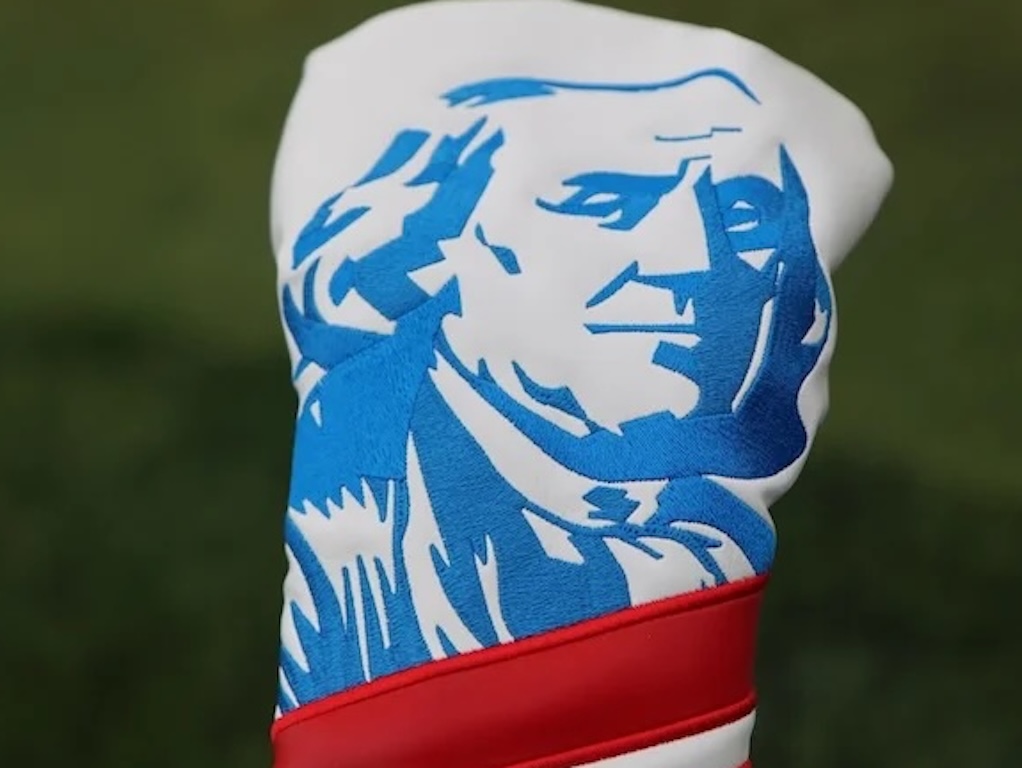
GolfWRX is on site for the second major of 2026: The PGA Championship from Aronimink in Newtown Square, Pennsylvania.
The tournament’s location, just outside Philadelphia, and its status as a major championship mean GolfWRXers are in for a treat: WITBs from a strong field, custom gear celebrating the PGA Championship, and the rich culture of the City of Brotherly Love — we have noted a relative absence of cheesesteak-themed items thus far this week, but most of the rest of the usual suspects are well represented.
Check out links to all our photos below.

General Albums
- 2026 PGA Championship – Monday #1
- 2026 PGA Championship – Monday #2
- 2026 PGA Championship – Monday #3
- 2026 PGA Championship – Monday #4
- 2026 PGA Championship – Tuesday #1
- 2026 PGA Championship – Tuesday #2
- 2026 PGA Championship – Tuesday #3

WITB Albums
- Dustin Johnson – WITB – 2026 PGA Championship
- Bryce Fisher – WITB – 2026 PGA Championship
- Brooks Koepka – WITB – 2026 PGA Championship
- Jon Rahm – WITB (mini) – 2026 PGA Championship
- Martin Kaymer – WITB – 2026 PGA Championship
- Francisco Bide – WITB – 2026 PGA Championship
- Travis Smyth – WITB – 2026 PGA Championship
- Cameron Smith – WITB – 2026 PGA Championship
- Chris Gabrielle – WITB – 2026 PGA Championship
- Jared Jones – WITB – 2026 PGA Championship
- Ian Holt – WITB – 2026 PGA Championship
- Ben Kern – WITB – 2026 PGA Championship
- Angel Ayora – WITB – 2026 PGA Championship
- Zach Haynes – WITB – 2026 PGA Championship
- Daniel Hillier – WITB – 2026 PGA Championship
- Mikael Lindburg – WITB – 2026 PGA Championship
- Paul McClure – WITB – 2026 PGA Championship
- Garrett Sapp – WITB – 2026 PGA Championship
- Austin Hurt – WITB – 2026 PGA Championship
- Mark Geddes – WITB – 2026 PGA Championship
- Adrien Saddier – WITB – 2026 PGA Championship
- Patrick Reed – WITB – 2026 PGA Championship
- Joaquin Niemann – WITB – 2026 PGA Championshi
- Derek Berg – WITB – 2026 PGA Championship
- Timothy Wiseman – WITB – 2026 PGA Championship
- Tyler Collett – WITB – 2026 PGA Championship
- Andy Sullivan – WITB – 2026 PGA Championship
- Jesse Droemer – WITB – 2026 PGA Championship
- Michael Block – WITB – 2026 PGA Championship
- Jordan Gumberg – WITB – 2026 PGA Championship
- Braden Shattuck – WITB – 2026 PGA Championship
- Elvis Smylie – WITB – 2026 PGA Championship

Pullout Albums
- Cameron putter covers – 2026 PGA Championship
- Custom Cameron made for Brooks to test – 2026 PGA Championship
- Cameron putters – 2026 PGA Championship
- Haotong Li’s custom Cameron putter – 2026 PGA Championship
- L.A.B. Golf putter covers – 2026 PGA Championship
- TaylorMade putter covers – 2026 PGA Championship
- New L.A.B. Golf VZN.1i putter for Adrien Saddier – 2026 PGA Championship
- Odyssey putter covers – 2026 PGA Championship
- TaylorMade staff bag and covers – 2026 PGA Championship
- Callaway staff bag and covers – 2026 PGA Championship
- Xander with a new Odyssey milled 7X putter – 2026 PGA Championship
- Srixon driver head cover – 2026 PGA Championship
- Bettinardi covers – 2026 PGA Championship


Kristoffer Reitan held his nerve at Quail Hollow on Sunday to claim his first PGA Tour victory and the $3.6 million winner’s check that came with it. The Norwegian fended off a packed leaderboard on a dramatic final day, with Rickie Fowler and Nicolai Højgaard both taking home $1.76 million for their runner-up finishes.
With a total prize purse of $20 million up for grabs, here’s a look at how much each player won at the 2026 Truist Championship.
1: Kristoffer Reitan, $3,600,000
T2: Rickie Fowler, $1,760,000
T2: Nicolai Hojgaard, -$1,760,000
4: Alex Fitzpatrick, $960,000
T5: Tommy Fleetwood, $730,000
T5: Sungjae Im, $730,000
T5: J.J. Spaun, $730,000
T8: Ludvig Aberg, $600,000
T8: Harry Hall, $600,000
T10: Patrick Cantlay, $500,000
T10: Matt McCarty, $500,000
T10: Cameron Young, $500,000
13: Justin Thomas, $420,000
T14: Min Woo Lee, $360,000
T14: Chris Gotterup, $360,000
T14: Nick Taylor, $360,000
T17: Alex Smalley, $310,000
T17: Gary Woodland, $310,000
T19: Austin Smotherman, $242,100
T19: Rory McIlroy, $242,100
T19: Keegan Bradley, $242,100
T19: Sudarshan Yellamaraju, $242,100
T19: Kurt Kitayama, $242,100
T24: Patrick Rodgers, $156,643
T24: Pierceson Coody, $156,643
T24: Adam Scott, $156,643
T24: Andrew Novak, $156,643
T24: Harris English, $156,643
T24: J.T. Poston, $156,643
T24: David Lipsky, $156,643
T31: Brian Harman, $114,416.67
T31: Viktor Hovland, $114,416.67
T31: Alex Noren, $114,416.67
T31: Tony Finau, $114,416.67
T31: Nico Echavarria, $114,416.67
T31: Corey Conners, $114,416.67
T37: Sam Burns, $82,187.50
T37: Maverick McNealy, $82,187.50
T37: Akshay Bhatia, $82,187.50
T37: Taylor Pendrith, $82,187.50
T37: Matt Wallace, $82,187.50
T37: Andrew Putnam, $82,187.50
T37: Bud Cauley, $82,187.50
T37: Lucas Glover, $82,187.50
T45: Justin Rose, $60,000
T45: Daniel Berger, $60,000
T45: Ryo Hisatsune, $60,000
T48: Denny McCarthy, $50,000
T48: Aldrich Potgieter, $50,000
T48: Webb Simpson, $50,000
T48: Michael Kim, $50,000
T52: Mackenzie Hughes, $45,187.50
T52: Max Homa, $45,187.50
T52: Brian Campbell, $45,187.50
T52: Jhonattan Vegas, $45,187.50
T52: Matt Fitzpatrick, $45,187.50
T52: Chandler Blanchet, $45,187.50
T52: Jordan Spieth, $45,187.50
T52: Jacob Bridgeman, $45,187.50
T60: Xander Schauffele, $42,500
T60: Robert MacIntyre, $42,500
T60: Ricky Castillo, $42,500
T63: Ben Griffin, $41,250
T63: Sepp Straka, $41,250
T65: Ryan Gerard, $40,250
T65: Si Woo Kim, $40,250
67: Ryan Fox, $39,500
68: Jason Day, $39,000
69: Sahith Theegala, $38,000

RBC Heritage Tour Report: More minis, course-specific setups, Spider & GTS launches

Justin Rose WITB 2026 (April): Full WITB breakdown with new McLaren irons

Best fairway woods of 2026: The most versatile fairway woods + the most forgiving fairway woods

Gary Woodland’s winning WITB: 2026 Texas Children’s Houston Open

What’s the story behind Webb Simpson’s custom-stamped irons?

Cadillac Championship Tour Report: Spieth’s sizable changes, McLaren Golf launches, and more

The 24 players who can win the Masters

Rory McIlroy’s winning WITB: 2026 Masters

Kristoffer Reitan’s winning WITB: 2026 Truist Championship

J.J. Spaun’s winning WITB: 2026 Valero Texas Open


Alex Fitzpatrick WITB 2026 (May)
Driver: Ping G440 LST (9 degrees) Shaft: Fujikura Ventus Black 6 X 3-wood: TaylorMade Qi4D (15 degrees) Shaft: Fujikura Ventus...

Kristoffer Reitan’s winning WITB: 2026 Truist Championship
Driver: Ping G440 Max (9 degrees) Shaft: Mitsubishi Tensei 1K White 60 TX 3-wood: Ping G440 Max (15 degrees) Shaft:...


WITB Time Machine: Rory McIlroy’s winning WITB, 2021 Truist Championship
Rory McIlroy’s victory at the 2021 Wells Fargo Championship 2021 (now the Truist Championship) marked a significant return to form,...


Collin Morikawa WITB 2026 (May)
Driver: TaylorMade Qi4D LS (8 degrees) Shaft: Mitsubishi Diamana D+ Limited 60 TX 3-wood: TaylorMade SIM Tour (14 degrees) Shaft:...
-
 Equipment2 weeks ago
Justin Rose WITB 2026 (April): Full WITB breakdown with new McLaren irons
-
 Equipment1 week ago
What’s the story behind Webb Simpson’s custom-stamped irons?
-
 Equipment2 weeks ago
Cadillac Championship Tour Report: Spieth’s sizable changes, McLaren Golf launches, and more
-
Whats in the Bag3 days ago
Kristoffer Reitan’s winning WITB: 2026 Truist Championship
-

 Whats in the Bag1 week ago
Cameron Young’s winning WITB: 2026 Cadillac Championship
-

 Whats in the Bag3 weeks ago
Nelly Korda WITB 2026 (April)
-

 Equipment2 weeks ago
Justin Rose on the switch to McLaren Golf, learnings from previous equipment moves
-

 Tour Photo Galleries2 weeks ago
Photos from the 2026 Cadillac Championship


geohogan
Apr 5, 2022 at 10:08 am
We aim a bow and arrow. We aim a fire arm.
Standing 90 degrees to the target line, it is not possible to “aim” a golf club at a distant target.
We can position ourselves to sweep the inside quadrant of the golf ball.
Wasted my Time
Apr 2, 2022 at 10:37 pm
All these mumbo-jumbo for a sales pitch? Shameful!
lee
Apr 2, 2022 at 9:19 pm
nice ad