
Product Reviews
L.A.B. Golf OZ.1i HS putter review – Club Junkie Reviews


L.A.B. Golf is one of the fastest-growing equipment manufacturers in the game. The company’s Lie Angle Balance technology has really resonated with golfers, and many have found tons of success with the putters. Lie Angle Balance is a combination of how the shaft enters the head and the weighting of the putter head to make the face point towards the target through the entire stroke.
You can listen to the full review on the Club Junkie podcast, streaming on YouTube or any podcast platform — and be sure to follow on Instagram.
L.A.B. Golf on their technology
“Lie Angle Balance (L.A.B.) Technology makes it effortless for golfers to deliver a square putter face at impact because, unlike other putters, it keeps the putter face square to the arc throughout the stroke. It makes putting as easy as picking the right line, the right speed, and making your natural stroke.”

I was able to visit L.A.B.’s headquarters in Eugene, Oregon, to see the new heel-shafted L.A.B. OZ.1i HS putter in person and get a peek behind the curtains there. Sam Hahn, L.A.B. CEO, explained that so many golfers love the technology but not everyone likes the look of a center-shafted putter. Both professional golfers and amateur players gave feedback about the look, so Sam and his team worked on creating something that looked a little more traditional but still performed just like every other L.A.B. putter.
The first key to the OZ.1i HS putter’s heel-shafted design was to create a lightweight hosel from aluminum that didn’t throw off the balance of the putter but was strong enough for everyday use. L.A.B. is all in on custom fitting and found that you can’t make a single hosel and bend it to the lie angle required for each golfer without throwing the balance off, so the team came up with a system of 10 hosel lengths that each work with a different lie angle but don’t change the look from address.

During my visit to L.A.B.’s headquarters, I got put into a custom-fit OZ.1i HS putter. We started off talking about my Mezz.1 Max putter that is my current favorite L.A.B. putter in my collection and then grabbed an HS with similar spec. I am a shorter guy, 5’9″, and like to get over the ball a little more when I putt, so we settled on my usual 33-inch length, and that felt very comfortable. I think my Mezz.1 Max has a 67-degree lie angle from when I did L.A.B.’s video fitting years ago, but the putter was the most level at 69 degrees with the HS. L.A.B. has a ton of alignment options, and I love that with the heel shafted design you can see more of the head and alignment markings you choose.
I went with a design that was a little busier than usual, but I couldn’t deny that I was lining it up better than the simpler options. I think my alignment option was Z on the front and 17 on the back. Cappuccino was the head color I have always preferred, and on the HS it seems to be a touch more copper-colored.

L.A.B. offers a lot of shaft options, and it was wild to hear how demanding their specs and quality control are for shaft manufacturers. They talked about how a lot of shafts aren’t straight or round and have had to work with these companies to get shafts with tighter tolerances in order to ensure they can get the Lie Angle Balance weighting correct. L.A.B. looks at shafts more about feel and sound than true performance, like you would see in a driver shaft fitting. I was a little skeptical, but after trying all of the shafts, side-by-side, you could really feel and hear a difference between them. The firmest to me was the TPT shaft, followed very closely by the Mitsubishi Diamana, and then the Accra was one of the softer-feeling. I struggled between the TPT and the Diamana but in the end liked the slightly firmer feel of the TPT.
L.A.B. built our putters for us while we had lunch, so they were ready for our round of golf in the afternoon, and that was a nice touch. Out on the course, the new HS putter does have a slightly different look from address. You will still see the face in front of the shaft but you don’t get as much of the center shaft look as you address the ball. As I stated before, I love being able to see the alignment lines and it was my one complaint with the DF3 and OZ.1i putters. I never felt comfortable lining them up to my target and the Oz.1i HS helped make me more confident lining up my putt. On the front 9, I putted very well, making some longer putts as well as never missing any of the shorter putts for par or bogey. I made fewer putts on the back 9, but I think the 103-degree heat had more to do with it than the putter. I like the looks from address on the new HS and feel like more people will give L.A.B. a try with this putter as an option.

Sound and feel are very good and similar to my OZ.1i that I have as well. The steel face not only produces a touch more speed off the face, something that golfers asked for, but also gave a more solid feel. The HS is more crisp than the aluminum-faced Mezz.1 Max or DF3 putters with a touch of click at impact that I like to hear. With the fly mill steel face, you don’t remember that the head is aluminum, as it feels very much like a traditional steel putter. When the first OZ.1i came out and I tried it, I claimed it was the best feeling L.A.B. they make, and I feel like the OZ.1i HS goes down the same path.
For me, the original OZ.1i felt more neutral through the stroke, and I didn’t feel like the face of the putter was pulling the head through impact like I feel with the DF3 or the Mezz.1 Max. I have spoken with people who have more arc in their putting stroke and prefer the OZ.1i feel as it works more naturally with their stroke. L.A.B.’s OZ.1i HS feels more stable than the original OZ.1i putter and I like that it has a more stable, mallet feel, that is like the Mezz.1 Max through the stroke. It isn’t as stable feeling as the DF3 but there are different feels and looks for different golfers out there. I like where LAB situated the OZ.1i HS in the lineup and again think it will fit a wide range of golfers when it comes to the feel through the stroke.

Overall, I think L.A.B. did a great job with the new OZ.1i HS putter in being innovative and solving a golfer need. The new heel-shafted design not only brings a different look to the putter but also changes some of the feel and performance that will again resonate with different golfers out there. If the looks of L.A.B. putters have kept you away from really giving them a try, it might be worth taking a few putts with this new flatstick to see if this fits your eye.




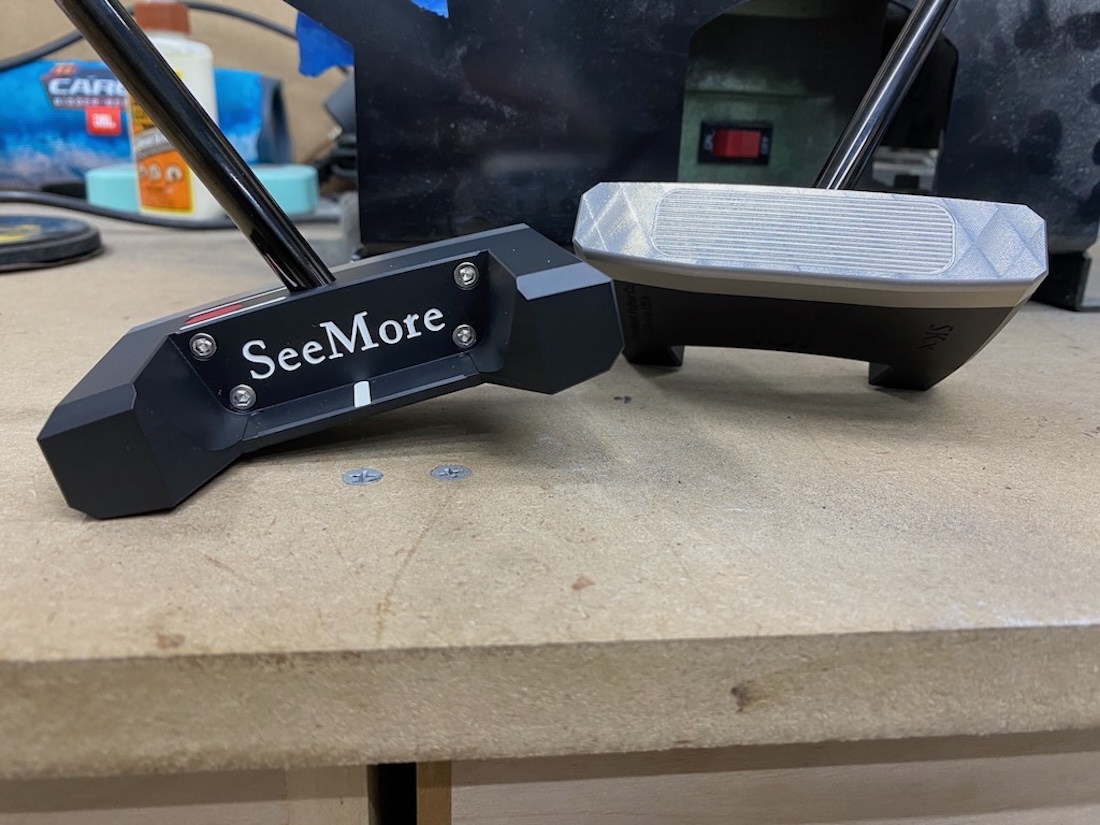
SeeMore has had a long history of making precision putters. The company gained worldwide fame after Payne Stewart won the 1999 U.S. Open with one. SeeMore’s most famous putter is the FGP Blade, which Zach Johnson used to win the Masters and the Open Championship.
SeeMore is also the creator of a unique, simple, and very effective alignment aid in their Rifle Scope Technology. RST is the use of a red oval and two white lines on the heel of the putter. When the putter shaft, or hosel, covers the red dot and you can only see the white lines on either side of the shaft, then you know the putter is lined up square. SeeMore is now adding another technology to its putter lineup, zero torque.
You can listen to the full review on the Club Junkie podcast, streaming on YouTube or any podcast platform — and be sure to follow on Instagram.

The SBx and SKx putters are the latest additions to SeeMore’s lineup. Zero-torque putters are probably the most significant and hottest segment in golf right now. The design is based on installing the shaft into the putter head’s center of gravity so the toe points up when you set the putter on a table to hold it without restriction. That balance keeps the face square to the target throughout the entire stroke, eliminating the need to square the putter face like you have to do with traditional putters. Now, this isn’t going to turn you into a tour pro, but for many golfers, it can help them consistently get the ball started on the intended line.


SeeMore did a great job with the putter’s looks, keeping it simple without straying from what they do best. The platinum color face is milled from stainless steel for a solid feel and feedback to the golfer, while the body is precision-milled from a block of aluminum. I like the contrast of silver and black as that divide gives my eye an additional alignment aid to make sure I am putting the ball at the hole, or target.
The SBx is going to have a boxier, more straight and sharp look from address with straight wings that extend back from the body. Some golfers will like that look for framing the ball in combination with the single white sight line on the flange. If you like a little softer and more rounded look, then the SKx fits the bill with more rounded fangs that taper inward to give a more compact look at address.
SKx also uses a single alignment line on the stainless topline, and if you look closely, there are two milled sight lines on the back flange that aren’t painted. If you want a little more to look down at, then you could probably fill them in with white paint pretty easily.
Both putters use SeeMore’s RST alignment, and I do have to say it is a simple yet effective way to ensure the putter is lined up correctly. Usually, if I am testing out two zero-torque putters at the same time, one of them stands out as easier to line up or get rolling on the right start line, but these two were equally matched. Lining up putts and starting them on the intended line are easy and repeatable.


Sound and feel are very important when it comes to finding the putter, as it is the voice that speaks to you. I was really impressed, and so was another WRX staff member, by how soft both the SBx and SKx putters are. The first putts were right out of the box on the office carpet, and we both looked at each other with big smiles! The horizontal milling lines on the face provide a soft feel at impact, and the sound is excellent and low-pitched. Not clicky at all, but you still get a good sound with it that is easy to recognize where you hit it on the face.
Being zero torque, the putters have a good feeling of the face staying square through the stroke. They both are a good mix of highly stable feeling and have the ability to move with an arching putting stroke, also. While they may not have the strongest feeling of the face pulling the head through impact, they should be more versatile, as many golfers find success with them.
I still feel very confident when putting with these that the ball is going to come out on its intended line. I have found that with some zero-torque putters, I tend to have a ball that misses left of the hole or target, and I didn’t find that the case with either the SBx or SKx models. I was really impressed with how consistently I was rolling the ball at the target, and I think the heavy focus on the RST allowed me to avoid overthinking other putting thoughts and swing freely.
Overall the SeeMore SBx and SKx are just solid zero torque putters with a more classic shape to them for players who find zero torque hard to look at. The milling and finish work from SeeMore are fantastic and it shows through the performance.
Most of us know Sugarloaf Social Club (SSC) as a clothing and accessory brand that has been leading the way in golf fashion and lifestyle since 2011. Ian Gilley is the founder of the brand and has created some amazing products, primarily in the soft goods category. While clubs have not been the focus of SSC, there have been some limited collabs in the space before working on the Tour 3 putter with Makino.
Makino is a Japanese golf brand founded by Shohei Nomura, an industrial designer based in Tokyo. All Makino’s products are made in small batches where precision and craftsmanship are the most important factors.

To be completely honest, I saw the putter on the Sugarloaf website and wasn’t blown away. When taking the putter out of the box, my mind changed, as the quality of the putter and classic look don’t come through with online pictures.
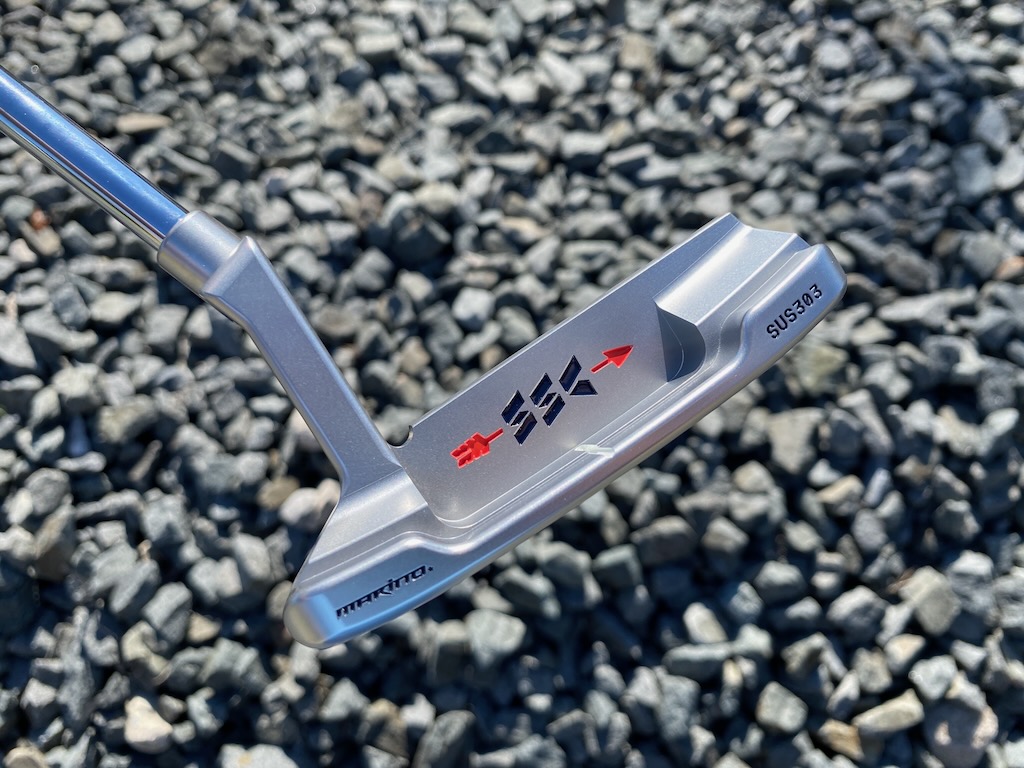
At first glance, the putter appears a little chunky, with larger shoulders that are very defined near the back cavity area. The bumpers are clean and a good blend of rectangular with softened edges. The topline is definitely on the thicker side, but for some golfers, like myself, it can be used as an additional alignment aid to ensure the face is square to the target.

A single sightline is machined into the flange and filled with white paint, creating a simple and traditional look. A shallow milling pattern is used on the face, featuring the model name and the “S” of Sugarloaf on the heel. The little details like the “Play or Perish” motto on the L-neck are excellent touches that let you know this isn’t a mass-produced putter. 

On the grip wrapping, I was surprised to see there is a sticker that says this is an un-plated putter and could rust…but the putter is made from stainless steel? Now I am not a metallurgist, but a search on the old Google machine told me that SUS303 stainless steel uses materials in the alloy, like sulphur, that make it a little more susceptible to corrosion if you aren’t careful. No rust has shown up yet, but I guess that explains it.
On the green, this putter offers a much softer feel than I and a coworker expected from the face milling. SUS303 and the thick face create a really nice feel and sound! The putter is still responsive, however, and you will get good feedback on putts that you don’t hit on the center of the face.
The putter’s sound is also softer, with not really a click but a more gentle knock as the ball leaves the face, even with a firmer ball like the Pro V1x. Ball speed is consistent and repeatable, and while there is no real high-tech engineering in this head, it performs well enough on mishits. Distance drop off from putts off the toe and heel aren’t massive, and there is still a decent chance you get that ball to the hole.

At the end of the day, this putter is much more than I thought it was going to be. The shaping and quality of the finish are phenomenal, showcasing the skill of Makino and the creativity of Sugarloaf. Traditionalists will love the classic look, while feel players will be impressed by the softness and responsiveness the Sugarloaf Social Club x Makino Tour 3 provides.
See more in-hand photos and read what GolfWRXers are saying in the forums.


Our forum faithful are well acquainted with the incredible giveaways and review opportunities in the realm of threads and comments, but we want to ensure front-page readers are involved as well.
Check out what GolfWRX members are saying about the Precision Pro Titan Elite Rangefinder
Precision Pro Titan Elite rangefinder
The Titan Elite features a robust aluminum shell and a best-in-class IP67 dust and waterproof rating. The Titan Elite stands alone with seamless integration to the Precision Pro Golf app, unlocking features not available in any other rangefinder, including front, center, back distances and Find My Precision Pro.
Check out the full testing thread here.
How we choose our testers
GolfWRX staff evaluates each entry against the criteria laid out in the testing thread to determine the best fit for each specific product — For example, if a game-improvement iron is being tested, game-improvement iron-playing golfers will be considered
Member testers
- Warrick
- bertsbogeys
- getair23
- WV_golfer
- dmecca2
Member review highlights
Warrick
“Nice sturdy unit, has a touch of weight but not heavy, simple charging, flip down plate and plug in, nice case. The optics are good on this, picks up distances quick in my backyard. Magnet is strong, really good first impression.”
bertsbogeys
“I currently use the Caddytek CaddyView V3 from Costco so I will be comparing it to that! The build quality is already much better and sturdier to the Caddytek, it feels premium and well-built.”

“I have been loving the Titan Elite. I have probably used it for over 15 rounds now and not had to charge it yet. I love the vibrating feedback when you tag the pin and haven’t received a bad yardage yet. Definitely should be highly considered amongst the other premium options in the market – feel is very sturdy and I love the designs they offer rather than the standard grey/black.”
getair23
“You immediately notice this is a high-quality rangefinder right out of the box. The Titan has excellent feel and weight; when I opened it, it was charged 100%.”
“My first impressions on the course have been positive. I walk most rounds and am never too far from my bag, which allows me to take advantage of the Bluetooth connectivity.
“The Titan Elite has already eliminated the need for multiple devices and saved my Apple Watch battery. Typically, I use Hole 19 on my watch for the front, middle, and back and then a rangefinder for the flag and slope yardage, often leaving my watch without a charge for the rest of the day. The Titan was very easy to synch with the Precision Pro App. I love having all the info I want before a shot at the click of a button.”

“My other Rangefinder has a similar app and club tags similar to Arcos. My experience with that system has left me wanting more. The constant connectivity and the need to tap the back of the club on a separate device are frustrating. After a few years, I essentially have 14 screw-in ball markers in my grips.
“The Precision-Pro connects instantly to the app, which was a major gripe of mine in the previous device. It found my location and kicked into gear instantly. ”

“The Titan Elite should be considered a high-end range finder. It checks every box as a no-frills range finder, and the more I use it, the more it separates itself from the pack overall.
Vs. the competition
- Bushnell has led the pack for a long time. Most have 6x magnification, similar to the Titan, and are well made. I could be happy with either as just a rangefinder, but the extra features on the Titan quickly separate it from Bushnell.
- Garmin Z30 has similar features (including Find My Rangefinder) and magnification, but it does not show the front, middle, or back without using your phone.
- Garmin Z82: I really wanted to love the Garmin Z82, but I don’t. The hole graphics and information available are often helpful, especially on a course you don’t play a lot, but this thing lags. At $600, the juice is not worth the squeeze.
- Shot Scope is also feature-rich but lacks overall identity because it tries to do too much and isn’t good at any of them. It feels light and cheap. It is within a yard compared to other devices, but I often have to shoot the pin several times to get a number. I loved the idea of the club tags (think Arcos). Having to have a separate device to carry around or hope it stayed on the range finder (it doesn’t) was a lot to do during a round. I credit them for not charging a subscription, but the extra effort to gather data made me stop using it quickly.
“To date, I highly recommend the Precision-Pro Titan. It is exceptionally well made, picks up the pin accurately and QUICKLY, and is priced in line or better than other high-end range finders.”
WV_golfer
“First impressions when I opened the package was the exceptional build quality of the device itself. I chose the standard “silver bullet” model. Very classy looking product with high-quality case. Connectivity to the app was surprisingly seamless. I was anticipating this needing some effort, but it was connected within 2 seconds. Quality looking app as well with lots of functionality.
“I have only been able to use the rangefinder for 1 round so far, but first impressions were very impressive. When I arrived at the first tee, I opened the app, and it knew the course I was on, so I selected “start round” and away I went. The optical display is very crisp and clear and while it’s only 6x magnification, it feels closer to 7x. I will add that the magnet on the device is quite strong. As far as ranging various targets, I enjoyed the functionality of holding down the laser button and scanning different targets. They immediately update as you scan and when you finally hit the flag, you feel a very obvious vibration and a visual effect in the display to confirm you’re on the target. Very nice touch.
“As for the GPS, I wasn’t sure if I would like having 2 separate buttons for laser and gps but after using it live, I feel that the display would have been too cluttered to try to display all that information at once. I love having that feature when, for instance, you’re hitting an approach to an elevated green and can’t tell if the flag is front, back or middle. This is an incredible feature, especially for tournament players that are used to calculating pin locations from the pin sheet.”
dmecca2
“I have my first round of the year tomorrow and it’s also my first tournament. I dove into the app a little bit and found a feature called “personal layups”. Sure enough, it’s a course scouting feature. You go in beforehand and map out yardages off the tee like carry over bunkers and yardages to hazards, etc.”

“With a high of 40° I was concerned about the battery life of the Precision Pro and the new electric handwarmers I had. The handwarmers lasted about 2 hours… the rangefinder is still at full charge. The optics are way better than my old Bushnell. A lot of rangefinders have dark spots around the edges if your eye is lined up correctly, the Precision Pro did not. As for the front/back/center numbers, I love how it isn’t a permanent fixture on the display. You press a button and it appears. I found that for some holes, this feature wasn’t needed, so I didn’t press the button and the display wasn’t cluttered with more information than I needed. But on holes like this, I press the button and get really important information.

“Battery life update. I have now had the rangefinder for a month and a half. I charged it the first day I got it, and I have not plugged it back in. I’ve only played 4 rounds with it, but it still shows full battery on the optic view.”
Bonus Comment
getair23: There are three strong magnets under the badge on the left side of the rangefinder. If you ride, it will never fall off the cart. A club easily picks up the Titan.

More about GolfWRX member testing
Member testing gives our forum members the opportunity to put the latest golf equipment through the paces. In exchange for getting a product to test (and keep), forum members are expected to provide in-depth product feedback in the forums, along with photos, and engage with the questions of other forum members.
For brands, the GolfWRX member feedback and direct engagement is a vital window into the perceptions of avid golfers.
You can find additional testing opportunities in the GolfWRX forums.

RBC Heritage Tour Report: More minis, course-specific setups, Spider & GTS launches

Justin Rose WITB 2026 (April): Full WITB breakdown with new McLaren irons

Best fairway woods of 2026: The most versatile fairway woods + the most forgiving fairway woods

What’s the story behind Webb Simpson’s custom-stamped irons?

Cadillac Championship Tour Report: Spieth’s sizable changes, McLaren Golf launches, and more

The 24 players who can win the Masters

Rory McIlroy’s winning WITB: 2026 Masters

Kristoffer Reitan’s winning WITB: 2026 Truist Championship

J.J. Spaun’s winning WITB: 2026 Valero Texas Open

Cameron Young’s winning WITB: 2026 Cadillac Championship


Alex Fitzpatrick WITB 2026 (May)
Driver: Ping G440 LST (9 degrees) Shaft: Fujikura Ventus Black 6 X 3-wood: TaylorMade Qi4D (15 degrees) Shaft: Fujikura Ventus...

Kristoffer Reitan’s winning WITB: 2026 Truist Championship
Driver: Ping G440 Max (9 degrees) Shaft: Mitsubishi Tensei 1K White 60 TX 3-wood: Ping G440 Max (15 degrees) Shaft:...


WITB Time Machine: Rory McIlroy’s winning WITB, 2021 Truist Championship
Rory McIlroy’s victory at the 2021 Wells Fargo Championship 2021 (now the Truist Championship) marked a significant return to form,...


Collin Morikawa WITB 2026 (May)
Driver: TaylorMade Qi4D LS (8 degrees) Shaft: Mitsubishi Diamana D+ Limited 60 TX 3-wood: TaylorMade SIM Tour (14 degrees) Shaft:...
-
 Equipment2 weeks ago
Justin Rose WITB 2026 (April): Full WITB breakdown with new McLaren irons
-
 Equipment1 week ago
What’s the story behind Webb Simpson’s custom-stamped irons?
-
 Equipment2 weeks ago
Cadillac Championship Tour Report: Spieth’s sizable changes, McLaren Golf launches, and more
-
Whats in the Bag3 days ago
Kristoffer Reitan’s winning WITB: 2026 Truist Championship
-
 Whats in the Bag1 week ago
Cameron Young’s winning WITB: 2026 Cadillac Championship
-

 Whats in the Bag3 weeks ago
Nelly Korda WITB 2026 (April)
-

 Equipment2 weeks ago
Justin Rose on the switch to McLaren Golf, learnings from previous equipment moves
-

 Tour Photo Galleries2 weeks ago
Photos from the 2026 Cadillac Championship


Josh
Aug 30, 2025 at 10:04 am
‘The steel face not only produces a touch more speed off the face, something that golfers asked for’
The Oz.1i was already a rocket ship, I don’t know how many players were jonsing for something even *faster* in a Mallet.