
Equipment
Best driver 2026: The best drivers for high, mid, low swing speed golfers

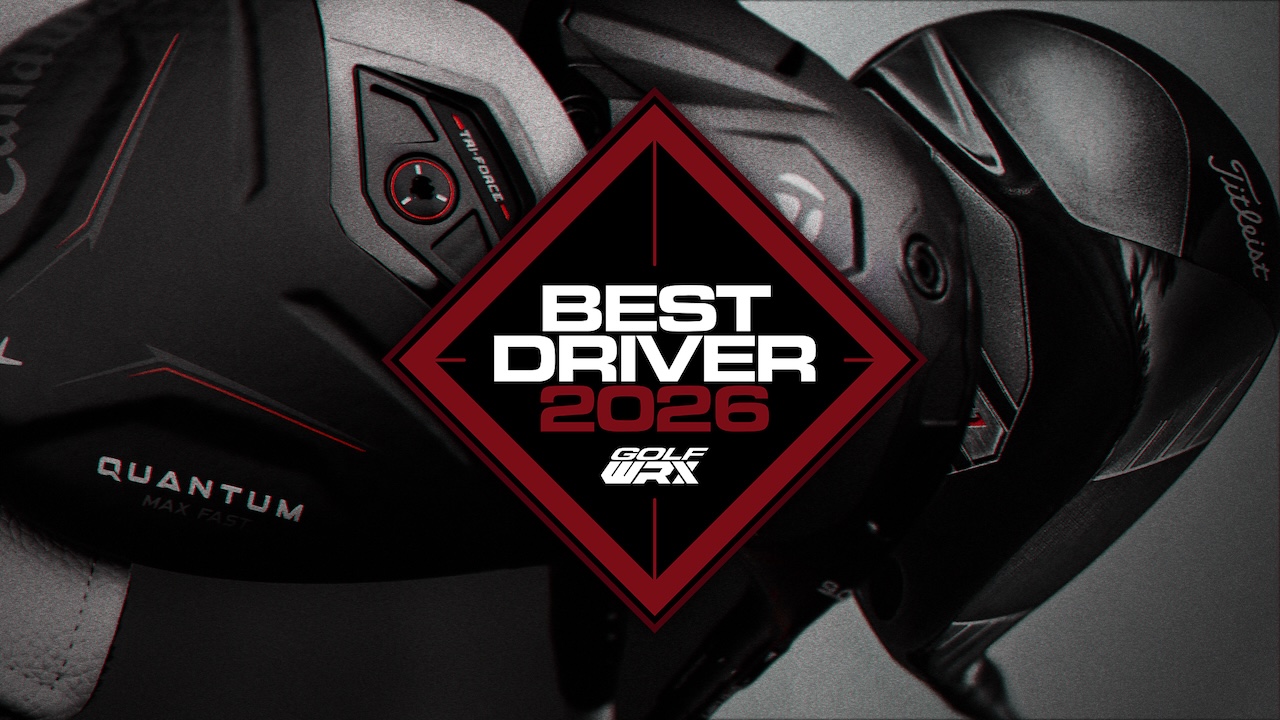
What’s the best driver of 2026? Well, it depends on your swing speed — and plenty of other factors, best determined in a professional club fitting. However, we know many golfers will insist on grabbing something off the rack to test. If that’s your preference, we have you covered with our short list of models most likely suited to you.
Best driver 2026: How we did it
For the past couple of incarnations of “best driver,” we have pointed out that we continue to exist in an era of not just maximizing distance but also minimizing the penalty of common misses for each player with the driver. Discretionary weight within the driver is also at an all-time high, so engineers can provide the widest range of performance characteristics in the metalwood era. Additionally, all manufacturers continue to lean further into a component approach to the driver, seeking to improve the crown, the sole, the face, the hosel, etc, independently.
 We have again broken our 2026 best drivers list into four total categories. Three are swing speed-based, and the other is forgiveness.
When we reconfigured our Best Driver process in 2021, we reached out to our trusted fitters to discuss how they sort through the endless head combinations available to golfers. Time after time, swing speed and forgiveness were the highest-ranked choices. We reconfirmed this for 2026.
We continue to select this format because every golfer fits into one of these categories regardless of age, handicap, or gender, and for a lot of golfers, forgiveness is the number one factor when selecting a driver.
Without further ado: Best driver 2026.

Best driver for high swing speed

TaylorMade Qi4D
From our launch piece: “As has been the case throughout the company’s “Carbonwood Era,” the Qi4D lineup is built around a carbon face design that TaylorMade emphasizes is lighter than titanium and more efficient at generating ball speed. For the Qi4D, the face has been redesigned with a new roll radius intended to reduce spin variability on high and low strikes. This improves launch and distance consistency across the vertical impact area. Additionally, a redesigned cut-through Speed Pocket, which was developed using finite element analysis, aims to improve face flexibility low on the face, an area where many players tend to miss.”
For the technology breakdown, check out the full story.
Fitter notes
Pro:
- High degree of spin control with the ability to go higher in loft than normally needed. Still offers forgiveness when fit correctly.
- This is the best TaylorMade driver in the last 5 years. Very stable and very fast compared to the 2026 lineup.
- The consistency this driver has while also having the 4 different weight ports is awesome from a fitting standpoint. Match that up with TaylorMade’s adapter settings. It’s a threat to be reckoned with. This driver is the driver TaylorMade needed for the past 2 seasons.
Con:
- The biggest negative to this driver is the fact that the fitting equipment looks different than the consumer model.
- The biggest con I have gotten from customers is the color of the head.

Titleist GT3
From our launch piece: “Titleist emphasizes it is pursuing total driver performance with its new GT line of drivers (in contrast to the market trend of designing primarily for consistency and forgiveness). That’s right, following the Titleist Speed Project, the folks in Fairhaven are still chasing (and delivering) ball speed, billing GT drivers as “faster, longer, straighter and more forgiving across the face” than previous offerings.:
For the technology breakdown, check out the full story.
Fitter notes
Pro:
- This is the perfect driver for those demanding speed, precision, and adjustability. An extremely fast face paired with a forward CG sliding weight and Surefit sleeve – the possibilities are endless. Great spin control is always a pro, and Titleist has knocked it out of the park here.
- Excellent ball speeds on off-center strikes. A true distance monster.
- Great ball speed for the faster swinger. Great adjustments.
Con:
- Maybe spins a bit much.
- A little too draw bias for some players

Callaway Quantum Triple Diamond Max
From our launch piece: “The headline innovation in the Quantum driver family is the Tri-Force Face. Callaway engineers layered titanium, a military-grade polymer, and carbon fiber into a fully integrated speed-producing system, and each material serves a specific purpose.”
For the technology breakdown, check out the full story.
Fitter notes
Pro:
- Extremely stable for a low spin driver, high ball speeds, and consistent.
- Great head and look at address. Ball speed and spin rate are much better this year.
- This driver is low spin with high ball speed. It offers great forgiveness on off-center strikes.
Con:
- Can get a bit spinny on low/heel strikes.
- Only con is that you can only move the back weight neutral or fade. Still needs a draw option for some players.

Ping G440 LST
From our launch piece: “Ping substantially refined the cosmetics of its flagship driver line with new G440 drivers. These don’t look like G430, G425, etc. The lowest center of gravity (CG) in company history and more speed are the key storylines for these sleeker-looking Ping woods. The low-spin driver also features a 29-gram rear weight in a 450cc design targeting faster swing speed players.”
For the technology breakdown, check out the full story.
Fitter notes
Pro:
- Very straight and forgiving for an LS head. Easy to hit.
- Most well-rounded driver. Uber consistent spin numbers, forgiving enough to give to different level golfers. Less distance oriented at times, but elite dispersion.
- Fairway finder with a ton of distance. Do not sleep on Ping.
Con:
- Ball speeds a little slower than the rest in this category.
- The con is that it’s always heavy, and it can create some inconsistency on the face.

Callaway Quantum Triple Diamond
From our launch piece: “Continuing to leverage artificial intelligence, Callaway, of course, is not just relying on innovative materials, and its Tri-Force Face is paired with next-generation artificial intelligence modeling. As it began with its Paradym Ai-Smoke drivers, Callaway has again used AI to precisely tune the entire driver face to optimize speed, launch angle, and spin consistency based on real player impact patterns.”
For the technology breakdown, check out the full story.
Fitter notes
Pro
- Great speed with this driver. The look of the head is much better than the previous TD model, and it can be low spin with the right player.
- The proverbial king of distance and accuracy. Callaway year after year somehow finds a way to make their drivers even better than the last. Fast, forgiving, good feel, great look. It does it all for the high-speed player.
- Perfect for the right high-speed guy. Probably best for the fastest drivers.
Con
- An absolute spin killer, but might be too draw-biased for some.
- Less forgiving and is tougher to fit the player who struggles with the block or slice miss, but wants to see something slightly smaller.
Best driver for mid swing speed

Titleist GT2
From our launch piece: “Titleist emphasizes it is pursuing total driver performance with its new GT line of drivers (in contrast to the market trend of designing primarily for consistency and forgiveness). That’s right, following the Titleist Speed Project, the folks in Fairhaven are still chasing (and delivering) ball speed, billing GT drivers as “faster, longer, straighter and more forgiving across the face” than previous offerings.:
For the technology breakdown, check out the full story.
Fitter notes
Pro:
- Titleist has delivered with the GT lineup. Classic black Titleist look with adjustability, and the best face technology they have ever had. Feel and performance have met in the middle.
- This driver is so fast. It has enough forgiveness that any player level could hit it with consistency. The multiple material constructions also provides familiar feel with low spin.
- Fast. Actually, very fast. Great launch condition when dialed with adjustability.
Con:
- Some think Titleist means hard to hit or for better players only, when that’s not the case.
- Size is large, and needs to be. Not as fast as the core model, which is very forgiving as well.

TaylorMade Qi4D
From our launch piece: “As has been the case throughout the company’s “Carbonwood Era,” the Qi4D lineup is built around a carbon face design that TaylorMade emphasizes is lighter than titanium and more efficient at generating ball speed. For the Qi4D, the face has been redesigned with a new roll radius intended to reduce spin variability on high and low strikes. This improves launch and distance consistency across the vertical impact area. Additionally, a redesigned cut-through Speed Pocket, which was developed using finite element analysis, aims to improve face flexibility low on the face, an area where many players tend to miss.”
For the technology breakdown, check out the full story.
Fitter notes
Pro:
- Solid feel and tight dispersion down range. Very hot across all areas of the face.
- They did a great job with basically releasing the dot head from last year on tour to the public in the core model. Spin is a little lower, sounds great, and is really consistent.
- Best driver on the market.
Con:
- I wish there was a greater variation in weights in the stock head 4 and 6 grams. They should have at least made it 8 and 2 grams.
- Can be a little inefficient with ball speed.

Ping G440 K
From our launch piece: “The first thing you will notice about the new driver is the extensive use of carbon fiber on the club’s sole. Ping created Dual Carbonfly Wrap in order to save additional weight for use around the perimeter of the head. This combination of titanium and carbon helps push the center of gravity deeper and lower in order to dial in the launch and spin. Typically, max forgiveness drivers have high launch and spin, but that can limit the types of golfers who find success with a driver.”
For the technology breakdown, check out the full story.
Fitter notes
Pro:
- This driver is great. It is incredibly stable. If the player is looking to hit more fairways and do so with a swing that has left them guessing, this driver is the one. It is long (not the longest) given how easy it is to swing.
- Really consistent and keeps ball in play really well.
- Just easy to hit. As easy as it gets.
Con:
- Little slower ball speed.
- Size is big, for obviously good reason. The spin can be hard for some swings to stay in line, but it will find fairways.

Callaway Quantum Max
From our launch piece: “The ultra-thin, high-strength titanium layer is engineered for ball speed off the face. Binding these layers together is Poly Mesh, a military-grade polymer that ensures structural integrity while still allowing the face to perform at its peak. Carbon fiber reinforcement is the third of the material, which is designed to allow the face structure to flex more at impact and recover faster, which maximizes energy transfer to the golf ball.”
For full technology breakdown, check out the full story.
Fitter notes
Pro:
- Similar ball speed to Triple Diamond Max with more forgiveness.
- Looks great at address and is easy to hit with consistent lower spin rates all across the face.
- Great speed and forgiveness across the face.
Con:
- Can lack a little distance compared to other drivers.
- Need to be able to make the weight in a fade position for this head.

Ping G440 Max
From our launch piece: “Ping substantially refined the cosmetics of its flagship driver line with new G440 drivers. These don’t look like G430, G425, etc. The lowest center of gravity (CG) in company history and more speed are the key storylines for these sleeker-looking Ping woods. The most forgiving model in the lineup, this 460cc design features a three-position, 29-gram weight in the rear of the club.”
For the full technology breakdown, check out our launch piece.
Fitter notes
Pro:
- Easy to launch. Speed is there on center strikes. Sounds powerful. Very forgiving and very consistent with spin across the whole face.
- The most stable feeling head on the list, ball speed is better than the previous Ping drivers.
- Ping, I believe, is the golden standard in this category of 95-105 mph. With Ping’s stability and forgiveness, I believe it is unmatched compared to other brands. A Ping will always be in the Top 5 category for me for any skill level of golfer.
Con:
- Misses can fall short if loft is added at impact.
- I wish it would spin a little less.
Best driver for low swing speed

Ping G440 K
From our launch piece: “…The other advantage to using Dual Carbonfly Wrap is the added adjustability of the head so fitters and players can really make this driver perform for a certain swing or ball flight. The 32-gram weight is located at the back of the head and has 3 positions for a neutral, fade, or draw bias flight. Pushing that much weight back in the head increases the MOI and adds adjustability, something the G430 Max 10K didn’t have.”
For the technology breakdown, check out the full story.
Fitter notes
Pro:
- If you can embrace the styling, the 440K can get the ball downrange accurately with a lot of roll. For players in the 135-ball speed range, exceeding 240 yards is most effectively achieved with a roll-out on the fairway. The 440k will give you the best chance of consistently doing that.
- Absolutely the king here.
- Straight, fast, reliable like an old wrench. You gotta try this one for sure.
Con:
- Spins too much for any other category. Had little success outside of slower swing speeds.
- Even with a lighter shaft, it tends to be a bit heavy, but it is a very forgiving club.

Titleist GT2
From our launch piece: “Titleist emphasizes it is pursuing total driver performance with its new GT line of drivers (in contrast to the market trend of designing primarily for consistency and forgiveness). That’s right, following the Titleist Speed Project, the folks in Fairhaven are still chasing (and delivering) ball speed, billing GT drivers as “faster, longer, straighter and more forgiving across the face” than previous offerings.:
For the technology breakdown, check out the full story.
Fitter notes
Pro:
- Great all-around head, could probably play this head at any speed.
- All around solid performer with the correct loft.
- Great distance, look, and forgiveness, and now at a lower price than the competition.
Con:
- May need a higher loft for a slower player.

Callaway Quantum Max
From our launch piece: “Callaway’s new Quantum driver features centerpiece Tri-Force Face technology. With this multi-material, Callaway has, for the first time, integrated three distinct materials into a single driver face.
For the full technology breakdown, check out the full story.
Fitter notes
Pro:
- Forgiving and fast. Hard combo to beat.
- Looks great at address and is easy to hit with consistent lower spin rates all across the face.
- Super consistent, great sound and look, good blend of everything this player is looking for.
Con:
- It’s a little too low spin for some golfers.
- Need to be able to make the weight in a fade position for this head.

Callaway Quantum Max Fast
From our launch piece: “Specifically engineered for players seeking greater speed through a lighter overall system. The lightweight construction and high-MOI design, combined with a shallower face profile, help generate increased clubhead speed without requiring extra effort.”
For the technology breakdown, check out the full story.
Fitter notes
Pro:
- If light weight is needed, which at this club speed can be, the adjustability with this club is great. The face generates a lot of consistency with mishits.
- Allows the slower swinger to get more ball speed for longer tee shots.
- The proverbial king of distance and accuracy. Callaway, year after year, somehow finds a way to make their drivers even better than the last. Fast, forgiving, good feel, great look. The Max Fast line is great for the lower club head speed players. The lightweight carbon design with a fast face generates distance and height for players at lower speeds.
Con:
- The club can look closed at address.

Titleist GT1
From our launch piece: “Breaking with titanium tradition, Titleist leveraged an ultra-light Proprietary Matrix Polymer for the crown of the club to allow for precise mass placement for the unique objectives of each model in the GT line. Tuning PMP materials also allowed engineers to deliver “Titleist sound and feel.” Engineers wrapped the crown to the sole via an “advanced thermoforming process,” which eliminates any visible seam between the materials for a cleaner look in the three-times-lighter-than-titanium crown.”
For the technology breakdown, check out the full story.
Fitter notes
Pro:
- Most forgiving Titleist driver and easy to launch.
- Titleist has delivered with the GT lineup. Classic black Titleist look with adjustability, and the best face technology they have ever had. Feel and performance have met in the middle. With GT1, Titleist has brought this driver’s performance in line with its higher-speed cohorts in the GT line with ease.
- Lightweight design helps generate a bit more speed, while the head shape allows for a wider contact area.
Con:
- Lots of spin.
Most forgiving driver

Ping G440 K
From our launch piece: “Like the current Ping G440 driver line, the G440 K is built on a cast titanium 811 body with a T9S+ titanium face. This construction makes a strong head with a fast, flexible face for increased speed across the entire area. I think the G440 models offer some of the best sound Ping has ever engineered into a head, and the G440 K keeps with that tradition. Sole ribs and a crown bridge mute the sound waves and vibrations to give the driver a muted sound and soft feel.”
For the technology breakdown, check out the full story.
Fitter notes
Pro:
- It’s literally maximized the math and created the best balance of forgiveness and low spin. A true fly swatter with unmatched driving stats.
- The Ping G440 K is super easy to hit and has great spin consistency. I am glad they made the weight movable this year. No cons.
- Super straight and stable driver. This thing is a fairway finder.
Con:
- Lighter vs the past, this may feel different if playing a Ping, trying this one for the first time
- I wish it would spin a little less.

Cobra OPTM Max-K
From our launch piece: “Cobra’s 2026 OPTM driver family introduces what the company calls a breakthrough in accuracy technology: POI (Product of Inertia) design. Cobra says the new drivers promise to reduce shot dispersion by up to 23 percent through a combination of optimized shaping and strategic weighting. Positioned as the most forgiving model with the highest MOI, the Max-K features an oversized profile and a fixed 11-gram rear weight.”
For the technology breakdown, check out the full story.
Fitter notes
Pro:
- Forgiveness all over the face, a great distance for this type of club.
- Most forgiving and accurate Cobra driver I have ever hit.
- Very stable and forgiving. Ball just goes straight!
Con:
- Can look closed at address.
- Adapter can be a bit confusing for some.

Titleist GT2
From our launch piece: “Titleist emphasizes it is pursuing total driver performance with its new GT line of drivers (in contrast to the market trend of designing primarily for consistency and forgiveness). That’s right, following the Titleist Speed Project, the folks in Fairhaven are still chasing (and delivering) ball speed, billing GT drivers as “faster, longer, straighter and more forgiving across the face” than previous offerings.”
For the technology breakdown, check out the full story.
Fitter notes
Pro:
- Fast and extremely forgiving!
- Extremely stable and easy to hit driver that does not penalize misses too drastically.
- Its combination of lightweight components makes this a winner with slower players.
Con:
- Not a lot of help for the player who slices it.

Callaway Quantum Max
From our launch piece: “The most versatile option in the lineup and best suited to the largest portion of the fitting bell curve, Quantum Max combines the Tri-Force Face with AI-optimized face mapping and adjustable weighting.”
For the technology breakdown, check out the full story.
Fitter notes
Pro:
- A great club for a poor driver of the golf ball. Easy to interface with, welcoming visuals, high MOI, and promotes a high launch angle with performance-oriented spin bias. Good first driver for a beginner with upside.
- Looks great at address and is easy to hit with consistent lower spin rates all across the face.
- A solid driver, and with the AI Face, provides great distance with straight ball flight.
Con:
- Need to be able to make the weight in a fade position for this head.

TaylorMade Qi4D Max
From our launch piece: “As has been the case throughout the company’s “Carbonwood Era,” the Qi4D lineup is built around a carbon face design that TaylorMade emphasizes is lighter than titanium and more efficient at generating ball speed. For the Qi4D, the face has been redesigned with a new roll radius intended to reduce spin variability on high and low strikes. This improves launch and distance consistency across the vertical impact area. Additionally, a redesigned cut-through Speed Pocket, which was developed using finite element analysis, aims to improve face flexibility low on the face, an area where many players tend to miss.”
For the technology breakdown, check out the full story.
Fitter notes
Pro:
- Longer than the 440 K but not quite as forgiving. The spin is surprisingly low for this class as well.
- Really forgiving with some great ball speed.
- Made an accurate driver even more accurate.
Con:
- Lots of spin.

Best driver: Meet the fitters
*Note: We once again have so many fitters participating in Best Driver that it would be unwieldy to list hundreds of names here. We’ll be thanking them in a separate post later this week, which we will link here when it becomes available! Thank you to all who participated!
Conclusion
The fitters who contributed to this article have gathered insights from thousands of fittings with golfers of all skill levels, from beginners to tour professionals. Their expertise and the data they’ve shared are invaluable, and we sincerely appreciate their time and input. If you come across any of these fitters in your area, put them at the top of your list.
Now it’s your turn: Every golfer has a unique swing and personal experience with their driver. We’d love to hear about yours! Join the discussion in the thread linked below and share your thoughts: What driver are you using this season? What did you upgrade from? Have you noticed any performance improvements in your game?


Equipment
Spotted at the PGA Championship: Koepka’s new putter, L.A.B. Golf’s latest prototype and custom Philly gear

Aronimink Golf Club takes center stage for the 2026 PGA Championship, as the world’s best, along with America’s top club pros, take on the Donald Ross classic, just outside Philadelphia in Newtown Square, Pennsylvania.
Even on the first official practice day of the championship, there was plenty of gear news and storylines to dive into, with a three-time champion going through an extensive putter testing, as well as new prototype putters spotted and custom gear galore. Let’s dive into it.
Brooks Koepka’s putter testing
Three-time PGA Championship winner Brooks Koepka spent plenty of time Monday morning and into the afternoon on the practice putting green in front of the Aronimink clubhouse, working with coaches and Tour reps and putting plenty of different flasticks through their paces, after apparently recently breaking his new TaylorMade Spider Tour X last time out at the Myrtle Beach Classic.
Koepka tested out a couple of Scotty Cameron heads, similar to that of Cameron Young’s Phantom 9.5R with a full sightline. It’s not the first time a Tour pro has asked to follow in Young’s footsteps. Justin Thomas had the same request last week at the Truist Championship. Why not follow the hot hand?
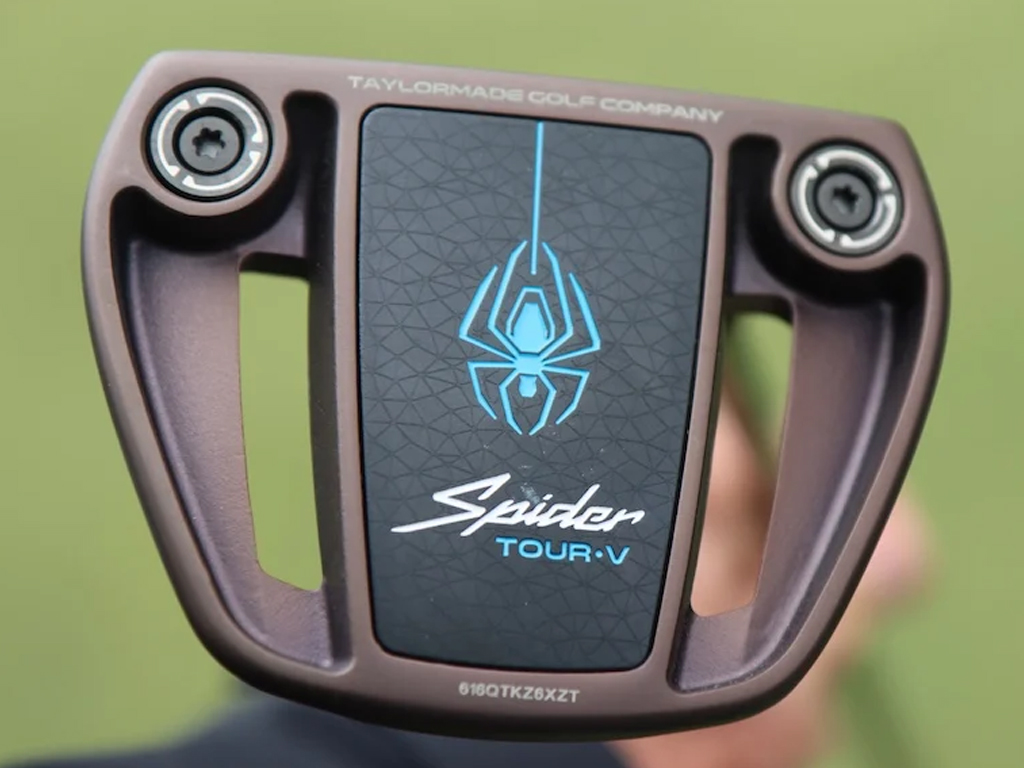
Koepka’s custom Cameron featured the same style Teryllium insert that he has used previously, most notably during his PGA Championship wins in a Newport-style blade. The putter, however, that looks to have the best chance of making its way into the bag come Thursday is a TaylorMade Spider Tour V, the model of head recently launched on Tour at the RBC Heritage.

What’s unique about Koepka’s new Tour V putter is the custom length L-Neck (plumbers) hosel that he has equipped. The extended version looks ot reduce the toe-hang of the putter along with adding stability to the stroke.

The putter change comes with a plethora of additions to Keopka’s bag after his split with Srixon/Cleveland. Along with already playing a Titleist ist Pro V1x golf ball, Koepka added Vokey wedges to his Grove XXIII staff bag last week in South Carolina. The 36-year-old is using SM11s in 48.10F, 52.12F and 56.10, along with the WedgeWorks 60B, a special grind with an interesting letter choice.
Look at Koepka’s full bag here.
L.A.B. Golf’s new vision
As GolfWRX continued the long tradition of capturing players’ bags and equipment, we got a glimpse of the latest L.A.B. Golf putter in the bag of Adrian Saddier. The Frenchman, who’s making his PGA Championship debut at Aronimink, is rolling with the newly added VZN.1i putter, which features a closed-back, winged-mallet design, resulting in a square cutout in the middle of the mallet.
Saddier’s new stick is center-shafted with two thick white alignment lines. The VZN.1 is the latest L.A.B. putter to be spotted. It comes after the traditional blade-style LINK.2.1 & LINK.2.2 were released on Tour, featuring a heel-shaft.

Take a look at the full gallery here.
Custom Philly-themed gear
As with every major championship, the PGA sees a bevy of custom gear from equipment manufacturers to highlight the theme of the week. With Aronimink sitting just west of Philadelphia, the City of Brotherly Love takes full focus.
Callaway is ringing the Liberty Bell with its Philly special-edition staff bag that tour players will be rocking at Aronimink. The bag features a pin-striped design, embossed with the Liberty Bell itself and a special green-fluff strap for the Philadelphia Phillies’ mascot, the Phillie Phanatic.

TaylorMade is also theming the staff bag around the birth of a nation, with a specially crafted staff back to celebrate the city where American independence was born. The bag features Philadelphia’s fingerprints with Independence Hall lives on the ball pocket, the Liberty Bell graces the valuables pocket, and Benjamin Franklin holds court on the back. The bottom collar reads – City of Brotherly Love – and custom “LOVE” zipper pulls pay tribute to the iconic Robert Indiana’s sculpture situated in the city center.
Tileist has adopted a different design for its GTS headcovers, going with Kelly Green, for the 2025 Super Bowl-winning Philadelphia Eagles.
Check out more custom gear in the forums.

Driver: Ping G440 LST (9 degrees)
Shaft: Fujikura Ventus Black 6 X

3-wood: TaylorMade Qi4D (15 degrees)
Shaft: Fujikura Ventus TR Black 7 X

7-wood: TaylorMade Qi4D (21 degrees)
Shaft: Fujikura Ventus Black 9 TX

9-wood: TaylorMade Qi4D (21 degrees)
Shaft: Fujikura Ventus Black 9 TX

Irons: Titleist T100 (5-9)
Shafts: Nippon N.S. Pro Modus 3 Tour 120 X (5-9)

Wedges: Titleist Vokey Design SM11 (46-10F, 50-12F, 56-14F), WedgeWorks (60-A+)
Shafts: Nippon N.S. Pro Modus 3 Tour 120 X (46, 50), True Temper Dynamic Gold Tour Issue S400 (56, 60)

Putter: Odyssey Ai-One #7S

Grips: Golf Pride MCC
Ball: Titleist Pro V1x

Today is a very special day for the Lead Tape Hall of Fame. Our second inductee is announced, and with great honor, we welcome Hideki Matsuyama to the Silver Jacket ceremony. Hideki’s meticulous attention to detail and precision have earned him his place in the Lead Tape Hall of Fame.

Hideki turned professional in 2013 and began his career on the Japan Tour. He was the first rookie on the Japan Tour to lead the money list, highlighted by five wins in his first season. His first appearance on the PGA Tour was the 2013 U.S. Open at Merion, where he came in 10th place in his debut. In 2014, he won his first PGA Tour event at Memorial. Hideki is currently at 11 PGA Tour wins, including a scoring record at The Sentry in January 2025 at 35 under par. In 2021, he won The Masters. An incredible career and still full of momentum, what kind of tools does Hideki use to get in the mix week in and week out?
Matsuyama has been a career Srixon and Cleveland staff player. Typically with Graphite Design shafts in his woods and True Temper Dynamic Gold S400 shafts in his irons. A unique trait is that in his wedges, he will play X100 shafts that suit his launch preferences. Rarely do you see a stiffer profile in wedges compared to irons.


Speaking of wedges, Hideki plays the Cleveland RTX4 Forged wedges. These debuted in 2018, but due to his level of detail, this is what he plays today. You can see the lead tape placed on the wedges in different places on the back flange. Usually erring towards the heel promoting certain launch characteristics and if anything a slight draw ball flight. In a 2021 GolfWRX interview, we found Hideki does not want to see the ball fall to the right. He wants the ball to fall to the left.

We see the use of lead tape on clubs like his fairway metal, where we see a small strip near the ferrule and even at the base of the grip. Looking at the details, Hideki operates; everything is done with purpose and measured for his stats. Not the type of feel player that doesn’t know how much weight is where and says, “That’s fine.”

Srixon told us, “We also travel with pre-cut lead tape in half-gram and one-gram increments, and Hideki will apply the tape to different areas of the club (muscle, flange, hosel, shaft), depending on how the club feels while testing.”
Hideki and his team have his club spec’d to the half gram for what to add or subtract from his set. This is Hall of Fame level here, nearly alone, but with Hideki’s meticulous attention to detail for each club is amazing to see.
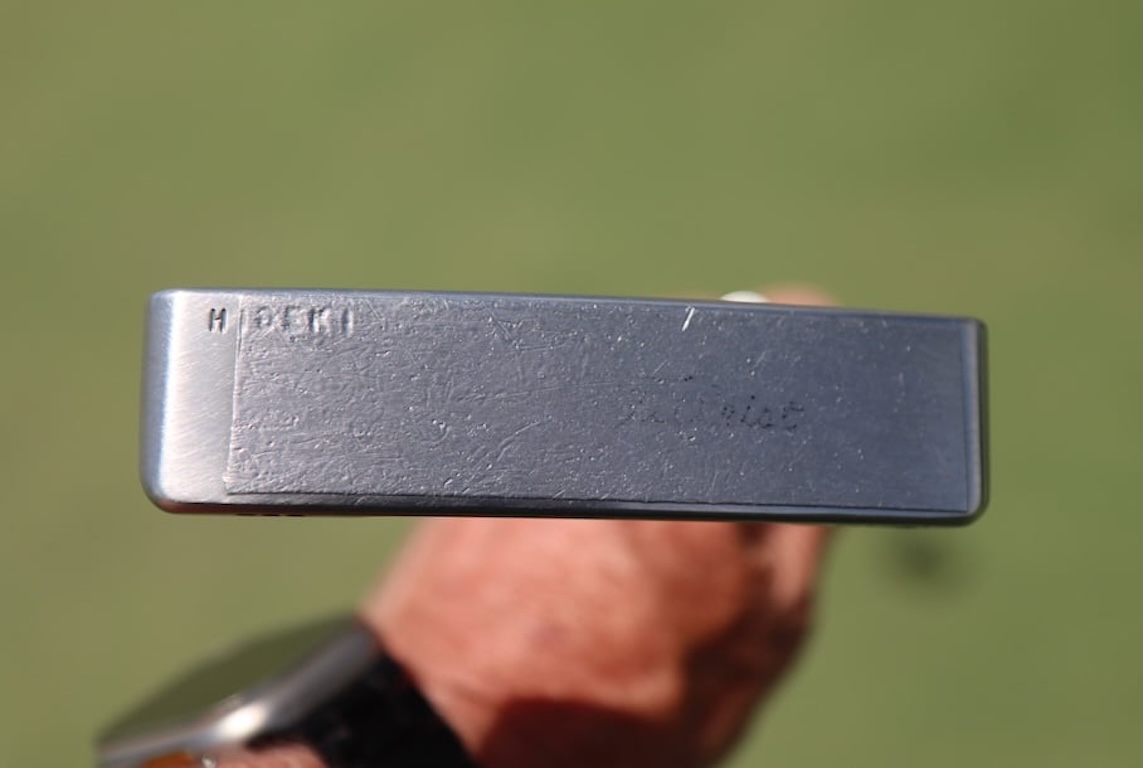
This attention to detail carries down to the putting green as well. Hideki rotates through a series of Scotty Cameron Newport putters with subtle changes on sightlines, bumpers, and welded plumber’s necks. Sometimes on the bottom of the putter? A strip of one-inch lead tape. The tape has been on there so long that you can see the hand-stamped logo underneath. That is absolutely Hall of Fame grade!


It is incredible to see through the lens of the level of detail that Hideki operates in. We see lead tape anywhere from the shaft, above the hosel, in different positions on the back flange of wedges, and on the bottom of the putter. The precision he brings to the course has translated into a record of winning results from the beginning. We will have to stay tuned if his new Silver Jacker accompanies his Green Jacket in the trophy room!
RELATED: Lead Tape Hall of Fame: Why Scott Piercy is a first ballot inductee

RBC Heritage Tour Report: More minis, course-specific setups, Spider & GTS launches

Justin Rose WITB 2026 (April): Full WITB breakdown with new McLaren irons

Best fairway woods of 2026: The most versatile fairway woods + the most forgiving fairway woods

Gary Woodland’s winning WITB: 2026 Texas Children’s Houston Open

What’s the story behind Webb Simpson’s custom-stamped irons?

Cadillac Championship Tour Report: Spieth’s sizable changes, McLaren Golf launches, and more

The 24 players who can win the Masters

Rory McIlroy’s winning WITB: 2026 Masters

J.J. Spaun’s winning WITB: 2026 Valero Texas Open

Cameron Young’s winning WITB: 2026 Cadillac Championship


Alex Fitzpatrick WITB 2026 (May)
Driver: Ping G440 LST (9 degrees) Shaft: Fujikura Ventus Black 6 X 3-wood: TaylorMade Qi4D (15 degrees) Shaft: Fujikura Ventus...


Kristoffer Reitan’s winning WITB: 2026 Truist Championship
Driver: Ping G440 Max (9 degrees) Shaft: Mitsubishi Tensei 1K White 60 TX 3-wood: Ping G440 Max (15 degrees) Shaft:...


WITB Time Machine: Rory McIlroy’s winning WITB, 2021 Truist Championship
Rory McIlroy’s victory at the 2021 Wells Fargo Championship 2021 (now the Truist Championship) marked a significant return to form,...


Collin Morikawa WITB 2026 (May)
Driver: TaylorMade Qi4D LS (8 degrees) Shaft: Mitsubishi Diamana D+ Limited 60 TX 3-wood: TaylorMade SIM Tour (14 degrees) Shaft:...
-
 Equipment2 weeks ago
Justin Rose WITB 2026 (April): Full WITB breakdown with new McLaren irons
-
 Equipment7 days ago
What’s the story behind Webb Simpson’s custom-stamped irons?
-
 Equipment2 weeks ago
Cadillac Championship Tour Report: Spieth’s sizable changes, McLaren Golf launches, and more
-
 Whats in the Bag1 week ago
Cameron Young’s winning WITB: 2026 Cadillac Championship
-
Whats in the Bag3 days ago
Kristoffer Reitan’s winning WITB: 2026 Truist Championship
-

 Whats in the Bag3 weeks ago
Nelly Korda WITB 2026 (April)
-

 Equipment2 weeks ago
Justin Rose on the switch to McLaren Golf, learnings from previous equipment moves
-

 Tour Photo Galleries2 weeks ago
Photos from the 2026 Cadillac Championship

