
Equipment
Q&A with Fourteen Golf’s Rusty Estes

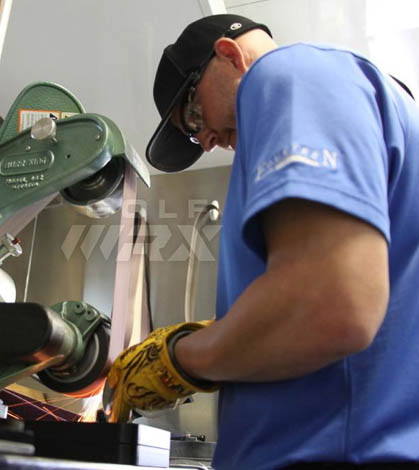
Twenty years ago, Rusty Estes couldn’t hit a wedge shot.
Actually, he was a 16-year-old who could hit a lot of different wedge shots for a boy his age, but there was one shot in particular he couldn’t hit.
Estes noticed that when he attempted to hit low-flying, high-spinning chip shots around the greens, which he tried to do with a square club face and a short, speedy action, that the trailing edge on the toe of his wedge would catch the grass, which slowed the club down.
That loss of speed cost Estes the spin he was looking for, which is why he took his wedge to the maintenance facility at the course where he worked at a began grinding down the troublesome area of the sole with a stone grinder (the same grinder the maintenance staff used to sharpen the blades of its equipment), until the wedge slid through the grass the way he wanted.
Estes didn’t know it then, but that day was an important one for him. He’s now one of the most respected grinders on the PGA Tour, and has spent most of the last eight years as the director of Tour operations for Fourteen Golf, a Japanese golf equipment manufacturer known for its high-quality wedges and irons.
Our Zak Kozuchowski had a chance to talk to Estes about Fourteen Golf, the difference between cast and forged clubs and what he’s learned about wedges in the last 20 years.
ZK: You’ve come a long way from that stone grinder, Rusty. What are you using now to shape clubs?
RE: I have a several different tools that I use to achieve the shapes that I am looking for in creating our wedges. I do the majority of my shaping on a variable speed Burr King (1.5 inches by 60 inches), using sanding belts ranging from as low as 40 grit to as high as 200 grit. The sanding belts get me the overall shape that I am looking for and I use four different versions of 3M scotchbrite belts for the polishing aspect. From there, I hand finish each of my custom grinds by hand, assuring the finish that the player is looking for.
ZK: Your company, Fourteen Golf, gained notoriety in the United States in 2002 when its HI-858 driving iron was used by Ernie Els to win the British Open. The HI-858 and its follow up, the HI-660, also found its way into the bags of many other Tour players, including major champions David Duval and Justin Leonard around that time.
Just a few years later, however, the company decided that it wanted to focus on wedges. Why?
RE: Trends of new product development. At the time of the introduction of the HI utility irons, very few OEMs offered a true long iron replacement club. The replacement was often found in the form of a high-lofted fairway metal. The HI provided an option that allowed players a replacement that was easier to hit and control versus the fairway metal.
Since the HI’s introduction to the Tour, several OEMs developed a “hybrid wood,” and those products have become extremely popular among professionals and amateurs. With this new trend, we had an opportunity to redirect our focus and efforts into our wedges — wedges that already had a huge following on the Japanese and Asian tours.
We worked extensively with our R&D team in Japan to design and develop a series of wedges that PGA Tour players would find appealing and carried tremendous performance. Plus, Fourteen Golf is a full-line equipment company. Wedge provided us an avenue to further introduce our products and develop our brand as a full-line OEM.
ZK: Aside from grinding, one of the most important parts of your job as director tour operations is identifying talented players on the tours who can serve as ambassadors for the Fourteen brand. What makes you favor one player over another?
RE: A staff player is a personal reflection of the brand. Our staff carries a wide variety of personalities and demeanors, however, they all carry traits that we embrace at Fourteen Golf — style, professionalism and hard work.
Click here to see more discussion in the forums.

John Mallinger’s wedges, shot at the Honda Classic.
Click here to see more discussion in the forums.
ZK: The newest member of Fourteen’s tour staff is John Mallinger, who is one of the most accurate players on the PGA Tour this year from inside 125 yards. Staffers Arjun Atwal and Ryuji Imada are also very good wedge players. What can golfers learn from the clubs these players use and how they use them?
RE: You’ll find a lot of uniqueness to how each of them play and practice.
Mallinger has a very consistent routine, and his wedges are ground and bent to his eye specifically. His clubs are bent to specific lofts that will fill the voids in the lower aspect of his bag, especially. He is very particular with turf interaction and how the club appears at address.
Atwal has a less structured approach to short game, hitting shots primarily with feel. His wedges are made to be very versatile, allowing him to the ability to hit a wide variety of shots.
Imada possesses a tremendous amount of creativity and shot making skills in his wedge game. His wedges have been heavily modified and ground to get him the most versatile soles and bounce configurations of the three guys.
I wouldn’t recommend any of their wedges to the average consumer, because they’re too unique. But what golfers can learn from them is that each golfer has to identify what they want out of their wedge games and pick a wedge accordingly. Ultimately, the product has to look good to them at address and provide performance for their level of ability.
ZK: Throughout the years, there has been a lot of heated discussion in the GolfWRX Forums about the trade-off between cast and forged clubs. You’ve been grinding clubs for Fourteen’s Tour Staff for the last eight years, as well as a lot of other Tour players. What do they say is the difference between cast and forged?
RE: The main feedback I’ve received is based primarily on feel, both the actual sensation of the strike and the enhanced feel around the greens. The majority of players feel that they have more control over both their distances and trajectory with forged clubs.
ZK: Your thoughts?
RE: From all of the testing, both in consumer and professional arenas, I feel that forged products tend to have a tighter dispersion and more consistent spin and trajectory on center-face strikes versus cast products.
I’ve been fortunate enough to be involved in the development of both cast and forged products over the years. Casting has made tremendous strides in its process, feel and performance, and many cast clubs are great parts. However, in a game of inches, I would prefer to have a club in my bag that has the advantage, no matter how small or large.
ZK: Fourteen seems limited is the amount of wedge grinds that it currently offers to consumers — only its 56- and 58-degree wedges offer more than one stock sole grind. Are there plans to release a wider variety?
[youtube id=”xrUHcX7H3b8″ width=”620″ height=”360″]
RE: The development process is ongoing, and we currently have several prototype models in play and in the testing phase on Tour. We believe that the Tour is a proving ground and want to assure that each product is Tour worthy prior before it is released to consumers.
ZK: What’s more important in a wedge, fresh grooves or the proper sole grind?
RE: Neither. Center of gravity trumps them both, however fresh grooves outweigh the importance of sole grind.
ZK: Really?
RE: Yes. Center of gravity is a constant, an imperative.
Think about it. Grooves wear down, get dirty and collect debris. Plus, golfers have to take into consideration the type of ball (compression, launch and spin characteristics) they’re playing, the weather (which should include but not be limited to temperature, elevation, wind) as well as the type of lie, turf type, turf height and sub layers of turf.
The sole and its interaction will change depending on ball position, angle of attack, face angle, lie angle, hand position and swing/shaft plane. In all of the scenarios, however, the club’s center of gravity hasn’t dramatically changed — it remains fairly constant.
And golfers can create spin without grooves. Just think of the spin you create when you hit a shot in the center of your driver, which probably doesn’t have grooves.
ZK: That being said, what should golfers look for when they’re buying a new wedge?
RE: Golfers need to identify the characteristics of a wedges that give them the most confidence and fills the voids in their games. Confidence goes a long way in creativity and execution — again, it’s a game of inches. From there, find the lofts that fill distance gaps and do not beafraid of bounce. And always, when in doubt, ask your local PGA professional or certified club fitter.
ZK: Thank you for your time, Rusty.
Click here to see more discussion in the forums.
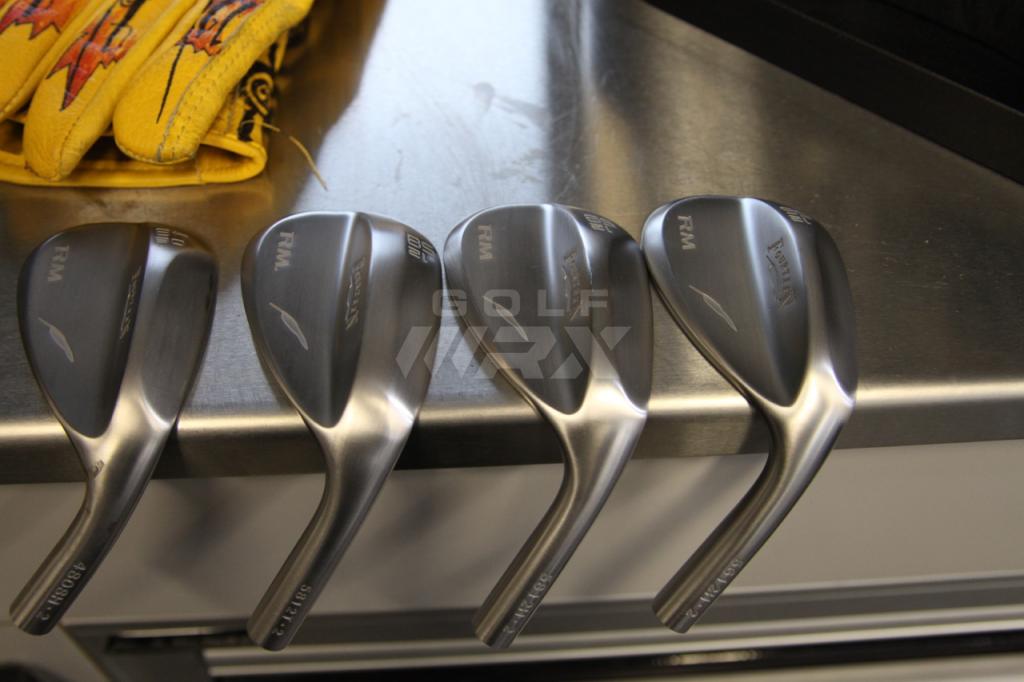
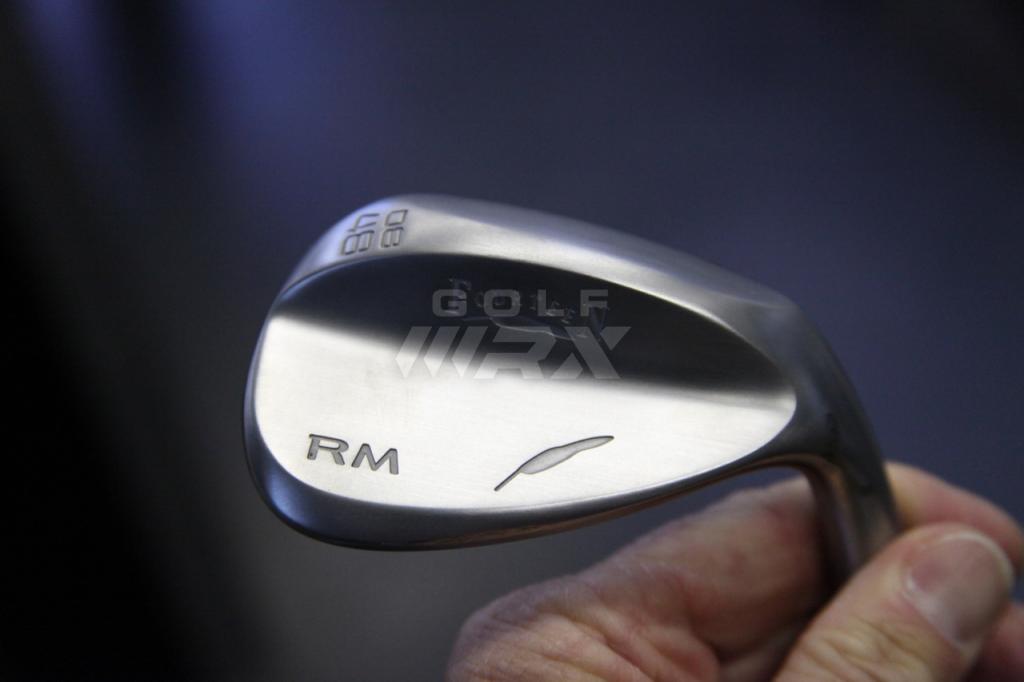
Check out the photos of the Fourteen wedges Rusty was grinding before he took them the wheel in the gallery below.





Click here to see more discussion in the forums.




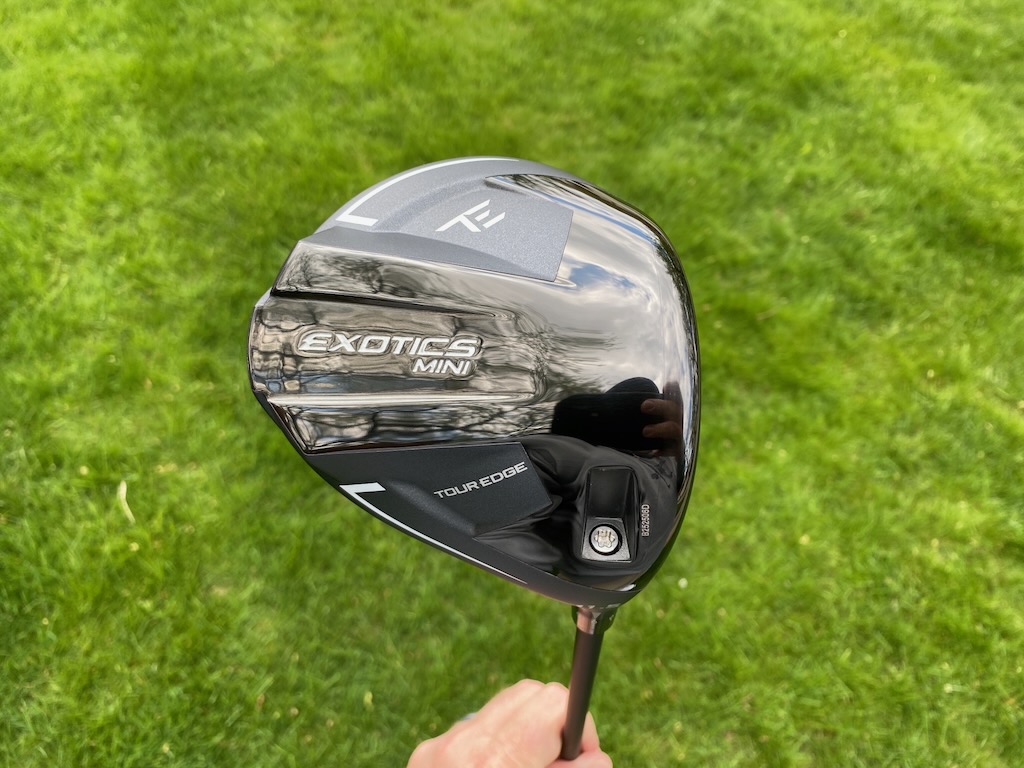
Tour Edge Golf has today introduced the all-new Exotics mini driver, engineered to deliver a powerful combination of speed, control, and versatility in the long game.
The Exotics Mini combines a titanium face with a stainless-steel body in design to balance ball speed with stability and control, creating a versatile option at the top end of the bag.

At the core of the design is Tour Edge’s proprietary Combo Brazing technology, a high-precision thermal bonding process that seamlessly fuses a titanium cup face to a stainless-steel body into a single, continuous structure. By eliminating energy loss found in traditional multi-piece constructions, Combo Brazing is designed to deliver faster face response, more efficient energy transfer, and a uniquely powerful yet controlled feel.

The multi-material construction also allows mass to be positioned lower and deeper in the head in a bid to increase stability, while the thin titanium face is engineered to maintain ball speed across a wider impact area.

“While the initial goal was to enhance control and versatility in the long game, Combo Brazing ultimately drove measurable gains in ball speed and distance within the mini driver category. In robot testing, we’ve documented higher ball speeds, higher launch, reduced spin, and increased carry and total distance compared to leading models.” – Vice President of R&D Matt Neeley

In addition to distance performance, the Exotics mini emphasizes forgiveness through a heavier stainless-steel body that shifts mass toward the perimeter. This configuration increases MOI relative to traditional all-titanium mini drivers, helping preserve ball speed and directional stability on off-center strikes. Paired with Pyramid Face Technology from the Exotics metalwood line, the design is intended to support consistent speed across the face.

To further enhance MOI, a lightweight carbon fiber crown frees additional mass that is strategically repositioned low and deep in the head in design to improve stability and promote optimal launch with controlled spin.

“We designed the Mini to be about five millimeters shallower than other mini drivers on the market. That change improves playability off the deck. From a clean fairway lie, it can function as a strong 3-wood alternative while still providing control off the tee.” – Tour Edge CEO David Glod
An adjustable hosel system allows for loft and lie tuning to dial in trajectory and shot shape, while a fixed 13-gram rear weight helps stabilize the head through impact to improve dispersion consistency. The Exotics Mini Driver is available in 11.5 and 13.5-degree lofts in right-handed models.

Pricing & Availability
The Exotics Mini Driver is available for pre-order beginning today for $399.99 USD at touredge.com, and will be available for purchase at retail outlets worldwide on May 22, 2026.

In our forums, our members have been pitting a Srixon ZXi combo against a TaylorMade P7CB/770 combo. WRXer ‘edutch22’ is on the hunt for a new set of irons and kicks off the thread saying:
“Looking at picking up a new set of irons and think I’ve narrowed it down to Srixon ZXi combo or Taylormade P7CB/770 combo. I am currently a 5 cap and allbeit I feel irons are my weakness. My miss is a little to the toe side. I am decently steep at 4-5 down. Always thought I am high spin but recently on trackman my 7 was spinning at 5800 roughly.
My question or looking for thoughts on which one would benefit me more from a forgiveness standpoint? Or is there another iron is should be looking at entirely? I only get to play about once or twice a week, if I am not playing a 2-3 day event. Thanks in advance.”
And our members have been sharing their thoughts and suggestions in response.
Here are a few posts from the thread, but make sure to check out the entire discussion and have your say at the link below.
- manima1: “You just can’t go wrong with Srixon ZXi7.”
- MattM97: “You have to hit them to know, the V-Sole on the Srixon can be make or break for many.”
- dmeeksDC: “P7CB is more forgiving for me than ZXi7 because my main miss is low middle and the P7CB still flies and spins great on that miss. These are both really nice irons but I like the P7CB more than the Zxi7 and the P770 (or P790) more than the Zxi5. The Srixons are larger so if that gives you confidence that is the way to go. I don’t feel like I get any benefit from the V-sole and the P7CBs live up to their high Maltby forgiveness rating so the TaylorMades have been great for me.”
Entire Thread: “Srixon ZXi combo or TaylorMade P7CB/770 combo? – GolfWRXers discuss”

At GolfWRX, we are a community of like-minded individuals who all experience and express our enjoyment of the game in many ways.
It’s that sense of community that drives day-to-day interactions in the forums on topics that range from best driver to what marker you use to mark your ball. It even allows us to share another thing we all love – buying and selling equipment.
Currently, in our GolfWRX buy/sell/trade (BST) forum, @pianoman0123 has a 2024 Wilson Staff CB/Blade combo up for grabs.

From the listing: “2024 Wilson Staff CB/Blade Combo. 4-8 irons are CB’s and the 9,PW are Blades. 5-PW have Project X 6.0 Shafts and the 4 Iron has a Steelfiber CW110 Stiff Shaft. Standard Length, Lie and Lofts. These are in very good condition the shafts just don’t work for me. Like new Lamkin Grips on the 5-PW and a stock Golf Pride on the 4 Iron. $525 OBO.”
To check out the full listing in our BST forum, head through the link. If you are curious about the rules to participate in the BST Forum, you can learn more here: GolfWRX BST Rules

RBC Heritage Tour Report: More minis, course-specific setups, Spider & GTS launches

Justin Rose WITB 2026 (April): Full WITB breakdown with new McLaren irons

Best fairway woods of 2026: The most versatile fairway woods + the most forgiving fairway woods

What’s the story behind Webb Simpson’s custom-stamped irons?

Cadillac Championship Tour Report: Spieth’s sizable changes, McLaren Golf launches, and more

The 24 players who can win the Masters

Rory McIlroy’s winning WITB: 2026 Masters

Kristoffer Reitan’s winning WITB: 2026 Truist Championship

J.J. Spaun’s winning WITB: 2026 Valero Texas Open

Cameron Young’s winning WITB: 2026 Cadillac Championship


Alex Fitzpatrick WITB 2026 (May)
Driver: Ping G440 LST (9 degrees) Shaft: Fujikura Ventus Black 6 X 3-wood: TaylorMade Qi4D (15 degrees) Shaft: Fujikura Ventus...

Kristoffer Reitan’s winning WITB: 2026 Truist Championship
Driver: Ping G440 Max (9 degrees) Shaft: Mitsubishi Tensei 1K White 60 TX 3-wood: Ping G440 Max (15 degrees) Shaft:...


WITB Time Machine: Rory McIlroy’s winning WITB, 2021 Truist Championship
Rory McIlroy’s victory at the 2021 Wells Fargo Championship 2021 (now the Truist Championship) marked a significant return to form,...


Collin Morikawa WITB 2026 (May)
Driver: TaylorMade Qi4D LS (8 degrees) Shaft: Mitsubishi Diamana D+ Limited 60 TX 3-wood: TaylorMade SIM Tour (14 degrees) Shaft:...
-
 Equipment2 weeks ago
Justin Rose WITB 2026 (April): Full WITB breakdown with new McLaren irons
-
 Equipment1 week ago
What’s the story behind Webb Simpson’s custom-stamped irons?
-
 Equipment2 weeks ago
Cadillac Championship Tour Report: Spieth’s sizable changes, McLaren Golf launches, and more
-
Whats in the Bag3 days ago
Kristoffer Reitan’s winning WITB: 2026 Truist Championship
-
 Whats in the Bag1 week ago
Cameron Young’s winning WITB: 2026 Cadillac Championship
-

 Whats in the Bag3 weeks ago
Nelly Korda WITB 2026 (April)
-

 Equipment2 weeks ago
Justin Rose on the switch to McLaren Golf, learnings from previous equipment moves
-

 Tour Photo Galleries2 weeks ago
Photos from the 2026 Cadillac Championship

