
Opinion & Analysis
The Most Important Fitting Elements for Accuracy

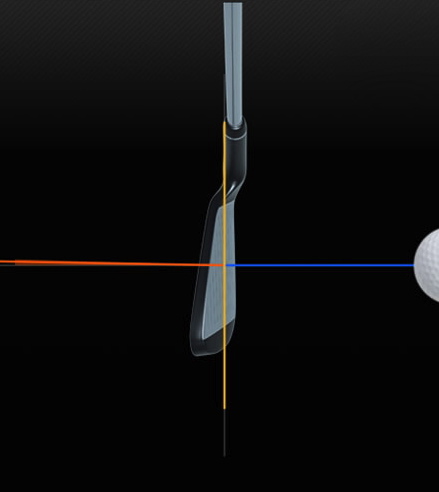
Golfers don’t enjoy the game when they struggle to keep the ball in play. There is no question the primary causes of inaccuracy result from errors in the golfer’s swing path and/or rotation of the club face back to the ball. However, through accurate clubfitting, it is possible to make changes in a number of specific fitting specifications of the clubs to visibly reduce the golfer’s misdirection tendencies.
It is also probable for changes in the some of the fitting specifications related to accuracy to be able to allow golfers to benefit more from lessons to more easily make changes in swing path and/or delivery of the face to the ball to result in accuracy improvement. Making swing changes in the path and face delivery change are much more difficult to accomplish when the clubs are too long and/or are the wrong total weight and swing weight for the golfer.
There is a limit to what clubfitting changes can do to achieve an improvement in accuracy. If the golfer’s slice or hook is too consistently severe, lessons to improve the golfer’s swing path and face delivery should always be the first priority. In general, if the golfer consistently slices or hooks the ball more than 30 yards of sideways movement, lessons should be always advised before a fitting change. But for golfers who slice, hook, push or pull the ball from 10 to 30 yards, accurate fitting for the specifications which do have a significant effect on accuracy will enable them to experience a definite level of accuracy improvement.
The fitting changes that can improve shot accuracy do not typically CURE or completely eliminate the inaccuracy of the golfer’s shots. They act to REDUCE the severity of the misdirection shots and tighten the overall range in shot dispersion for the golfer.
To do everything you can to improve shot accuracy through clubfitting changes, the following are the key fitting elements which have a bearing on accuracy. Through our research we have been able to identify which fitting specifications have a major effect (“A effect” specifications) and others which have a medium effect (“B effect” specifications). In addition, some of the fitting specifications show their effect for accuracy more with one segment of the clubs than with others. In the chart accompanying this article, we have identified which fitting specs have more of a major “A effect” on accuracy, which have a medium “B effect” and which have “no effect” on accuracy.
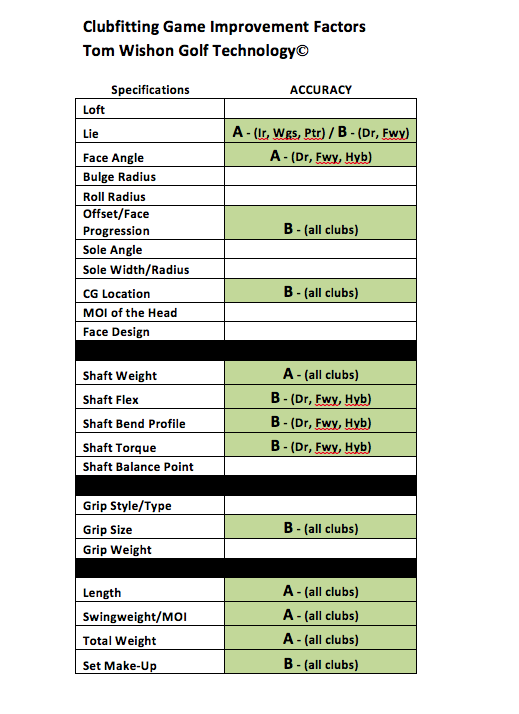
The most significant “A effect” fitting specifications which have a direct effect on shot accuracy are:
- Lie angle in the irons, wedges and putter.
- Face angle in the driver, fairway woods and hybrids.
- Club length, particularly so in the driver and fairway woods.
- The shaft weight, total weight and swing weight.
The “B effect” fitting specifications which have a little less of an effect, yet which still can bring about improvement in accuracy are:
- The face progression/offset, the center of gravity (CG) location.
- Lie angle in the driver and fairway woods.
- The torque, flex and bend profile of the shaft.
- Grip size.
- The set makeup selection of the clubs.
Click here to see what members are saying in the forums.
The A Effect: Fitting specifications for accuracy
1. Lie Angle
The higher the loft of the club head, the more the misdirection angle caused by an improperly fit lie to the golfer will translate into an off-line shot. The lower the loft of the club head, the less this is a visible factor for accuracy. Without question, every golfer needs to have each of their irons, wedges and yes, the putter correctly fit for lie angle for their physical stature, swing characteristics and posture/hands position through the ball. Without question, lie fitting must be done in one of the two dynamic lie fitting methods – either with the lie board or the ink on the back of the ball method. And the reason the putter lie is so important even though it has the lowest loft of all club heads is because the target for the putt is so small (4 1/4-inch small!).
2. Face Angle
Proper fitting of the face angle of the driver, fairway woods and hybrids is the number one most effective means to reduce the golfer’s misdirection tendencies with the driver, woods and hybrids to bring about visible improvement in accuracy. Using a more closed face angle to reduce the severity of a slice or a more open face angle to reduce the amount of hook is not a “Band-Aid” for the golfer’s swing path and face delivery errors. A change in the face angle acts as a direct 1:1 correction for the number of degrees the golfer leaves the face open or closed at the moment of impact. How much does a face angle change correct for a slice or hook? Based on a carry distance of 200 yards, a 1-degree change in the face angle from the face angle the golfer has results in a 4- to 5-yard reduction in the slice or hook. For a golfer with a 20- to 30-yard slice or hook, a face angle that is 2 to 3 degrees more closed/open THAN WHAT THEY CURRENTLY PLAY can easily be the difference between the ball being in play or out of play.
3. Club Length
The longer the length of the club, the higher will be its assembled club MOI. We’re not talking about the MOI of the head itself — we’re talking about the MOI of the fully assembled club. The higher the MOI of the club, the more load the club places on the golf swing for the golfer to overcome to be able to swing the club on the proper path and rotate the face back around to impact. The more load the club places on the swing, the more the weaker elements of the swing are subject to becoming more inconsistent.
For golfers with an outside-in path, a forceful transition move, a faster tempo and an earlier release, a longer-length driver and fairway woods will contribute to inaccuracy of the shot.
The reason that longer length is not as much of an accuracy problem with the irons is because irons as a group are much shorter in relation to the driver and fairway woods. In addition, few golfers play irons that are more than 1-inch longer than the old standard of 30-plus years ago. Not so with drivers where today’s “standard length” is 2 to 3 inches longer than the driver length standard of 30-plus years ago. That means that few golfers end up playing with irons that are more than 0.5 to to 1 inch off from what they should be playing. Today’s 45.5 to 46.5-inch driver lengths and 43.5-inch 3 wood lengths seen on so many retail models are much longer than what most golfers have the ability to control.
4. The Shaft Weight, the Total Weight and the Swing Weight
In combination together, the shaft weight, total weight and swingweight/MOI of the clubs can definitely be an “A Effect” for accuracy improvement. If the overall weight or feel of the clubs is too light or too heavy for the golfer’s transition force, downswing tempo, strength and individual perception for weight FEEL, more severe mistakes can be made in the swing path, release and on-center hit proficiency that will affect accuracy.
Of these, the swingweight/MOI (the headweight FEEL) is the most important contributor for effect on accuracy. The reason is because the swing weight/MOI can be increased to offset the effect of a shaft weight/total weight that is too light for the golfer. On the other hand, if the shaft weight/total weight is too heavy for the golfer, no swing weight/MOI adjustment can overcome the effect of a too heavy shaft weight/total weight on accuracy.
Remember, the weight of the shaft is the number one controlling factor for the total weight, so when you are fit for the shaft weight, you are covering 95 percent of the fitting for total weight at the same time. Hence from a fitting standpoint, shaft weight and total weight are considered the same thing. Only when an excessively heavy or extremely light grip is used does the weight of the grip show a noteworthy effect on the total weight of the clubs.
These combined “weights” of the golf club have to be fit to match each golfer’s unique combination of transition force, downswing tempo, strength and any personal preference for what the golfer perceives to be the “right weight feel.” If the weighting of the clubs is too light, either in total weight or head weight feel (swing weight/MOI), golfers with a stronger transition, faster tempo and greater strength can get too quick with their swing tempo and greater inaccuracy can result from the golfer not being able to achieve a consistent swing path and/or delivery of the face to impact.
Conversely, if the weighting of the clubs is too heavy in either the total weight or swing weight for the golfer’s transition, tempo, strength or feel, the golfer’s with the consistency of path and face angle delivery to the ball will also suffer. Either way, if the weighting of the clubs is matched properly to the golfer’s transition, tempo, strength and feel preference, the golfer can improve the consistency of the accuracy of the shot.
Click here to see what members are saying in the forums.
The B Effect: Fitting Specifications for Accuracy
The concept of the B Effect specifications on each of the game improvement factors is to say that on their own, each of these specifications may not bring about much more than a subtle improvement. However, if any of the B Effect specifications are poorly matched to the golfer in his/her current clubs, it then is more likely the change in the B Effect specifications can offer visible improvement. However, in combination, the proper fitting of several to all of the B Effect specifications can add up to be almost as important as some of the A Effect specs on a game improvement factor.
1. The Face Progression/Offset and the Center of Gravity (CG) location in the club head
The chance for the FP/Offset or CG to bring about any improvement in accuracy depends heavily on whether these elements were very poorly matched to the golfer’s swing characteristics in the present or previous clubs. Less face progression/more offset as well as a lower CG can generate a slightly higher ball flight with more spin, which for some golfers may combine with an open or closed face at impact to accentuate the amount of hook or slice spin on the ball.
Conversely, more face progression/less offset as well as a higher CG can generate a slightly lower ball flight with less spin, which for some golfers may combine with an open or closed face at impact to slightly reduce the amount of hook or slice spin on the ball. Seriously though, these are slight factors at best which border on being no factor for accuracy for many golfers.
2. Lie Angle in the Driver and Fairway Woods
The higher the loft, the more an ill-fit lie angle contributes to misdirection on the shot. Even though the driver and fairway woods are hit farther than the irons, because of their much lower loft, there is so much less of a misdirection angle of the face that the longer distance these clubs are hit does not cause a less than perfect driver/fairway wood lie to contribute very much to inaccuracy.
However, it should be said that for many golfers, modern fairway wood lies are too upright and can affect the solidness of the shot as well as a smooth travel of the sole on the ground through impact. As such, if the hosel design of the fairway wood will allow the lie to be adjusted to better fit the golfer and allow the sole to travel level through impact, by all means that should be done as a part of the fitting process.
3. The Torque, Flex and Bend Profile of the Shaft
In modern shaft design, 98 percent of the time the torque is designed to coordinate with the overall stiffness (Flex) of the shaft. In other words, you’re not going to find a 5-degree or 6-degree torque in an X-flex shaft and you’re rarely going to see a 2-degree or 3-degree torque in an A- or L-flex shaft.
Shaft designers realize that a substantial part of the swing characteristics that cause a shaft to bend more (the transition force to start the downswing along with the club head speed) are also the swing elements that cause the shaft to twist (torque). Hence when the overall stiffness (flex) is fit correctly to the golfer, rarely will there be a case when the flex is fit correctly but the torque is far enough off to be a cause of misdirection for the shot. Occasionally with VERY aggressive swingers, but not very often. From a shaft feel standpoint, yes, there are golfers who can detect the stiffer feel that comes from a lower torque, but from a pure accuracy standpoint, 98 percent of the time the golfer is correctly fit for the flex and the bend profile of the shaft, he will also be properly fit for the torque from the standpoint of accuracy.
There are some golfers who swear that playing too stiff or too flexible of a shaft will have a significant effect on accuracy. It is true that if a golfer with a later-to-late release were playing a shaft that was two full flexes too stiff or too flexible for his swing, there would be a visible change in the flight shape of the shot — higher and with a little more tendency for a draw. But even if a late-release golfer were to use a shaft that would be two full flexes softer than what he needed, the result would only be a visible increase in a draw only if the golfer’s natural flight tendency was to draw the ball. But rarely would the increase in draw be enough to hit the ball out of play.
The reason some golfers experience an accuracy problem playing with the wrong flex is chiefly because a feel-sensitive golfer’s perception of poor flex feel can cause the golfer to make swing errors/changes that result in a drop in accuracy. A bad feeling shaft can cause some golfers with a fine sense of perception to swing differently than they will when playing a shaft that feels just right. But this is not the case with the majority of golfers who do not have a specific perception of bending feel for the shaft.
The primary reason for properly fitting a golfer for the flex and bend profile of the shaft is to allow the flex/bend profile to combine with the loft of the club head to optimize the golfer’s launch angle, spin and angle of descent. In addition, as previously stated, proper flex and bend profile fitting is also important for fitting the golfer with the right bending FEEL that matches his preference for that type of feel. If the shaft flex and bend profile are fit properly for launch angle, spin and bending feel, it will have no significant effect on accuracy.
4. Grip Size
It is simply not true that all golfers who play with a grip that is too small will pull or hook the ball more, and all golfers who play with too large of a grip will push or slice the ball more because of the way the ill-fit grip size affects the golfer’s release. However, it is true that if the grip size does not feel comfortable to the golfer, this can translate into adversely affecting the golfer’s swing tempo, swing path and release, which in turn can affect the accuracy of the shot. Bottom line: Fit every golfer for a comfortable grip size and any possibility of the grip affecting the accuracy will disappear.
5. Set Makeup
How could the set makeup have an effect on accuracy? By replacing hard-to-hit clubs the golfer may be hitting more off line with clubs that are easier to hit by virtue of their design. That will result in better accuracy for the same distance.
For example, it is not uncommon for a golfer with an outside-in path and fast swing tempo to hit the fairway woods with some degree of inaccuracy, but be able to hit hybrids the same distance and more accurately because of the shorter length of the hybrids.
Conclusion
For the driver, fairway woods and hybrids, the key elements for maximum accuracy in the fitting process are the length, face angle and the combination of the shaft weight/total weight/swingweight (MOI) of the clubs. Within these three fitting elements, many golfers who presently suffer from misdirection problems most definitely can achieve a visible improvement in accuracy.
For the irons, the key elements for maximum accuracy in the fitting process are the lie angles along with the combination of the shaft weight/total weight/swingweight (MOI) of the clubs.
Get these fitting specifications perfectly matched to the golfer’s swing characteristics and pretty much everything that can be done to maximize the golfer’s shot accuracy will have been done. After that, if the golfer still suffers from a significant misdirection problem, the remedy will be lessons to work on improving the golfer’s alignment, posture, swing path and delivery of the face to impact.
Click here to read Tom Wishon’s series on the proper way to select a shaft



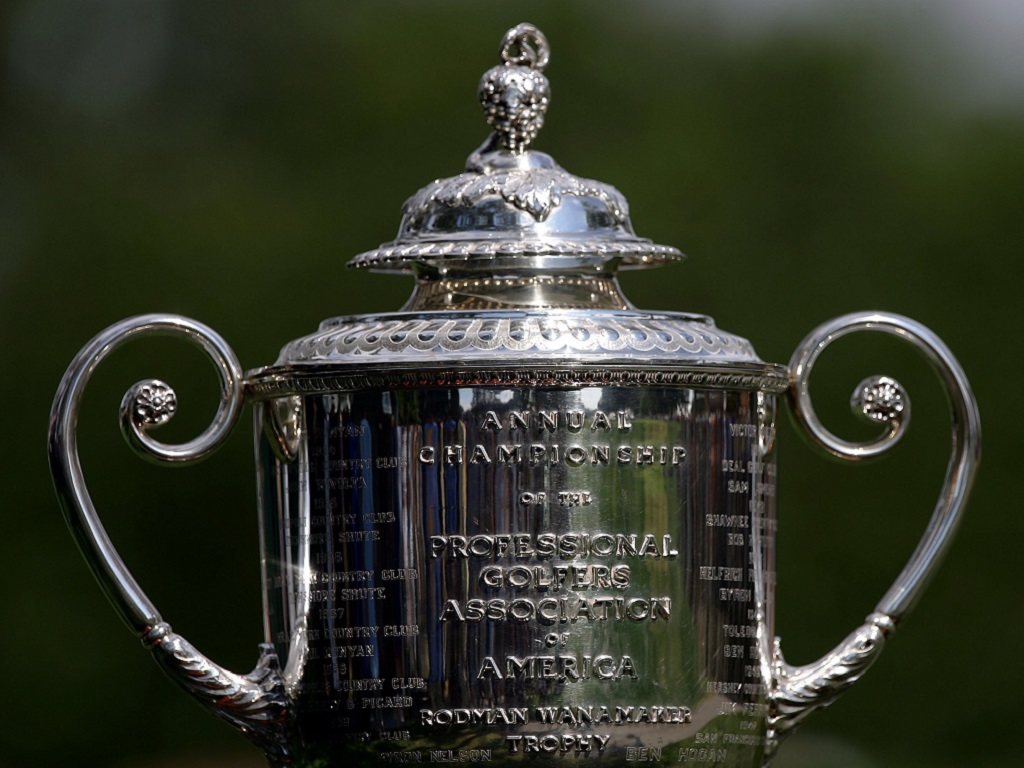
Aronimink is not a storied club, but when Donald Ross himself proclaimed it to be as good as he can design and build, one had to take notice. Jay Sigel was the pre-eminent male amateur golfer from the mid-1970s to the mid-1990s. He might have called any number of Philadelphia clubs home, but he chose Aronimink. It served him well. Gary Player won a PGA Championship here in 1962, and was followed by the 1993 winner … nobody. Aronimink gave that event away to Inverness, for reasons of which it is certainly not proud. So be it. We had to wait sixty-four years for the PGA to return to Newtown Square, but here we are. Aronimink has been neo-restored by Gil Hanse and team, to return Ross features with an eye toward defense against the dark arts, errrr, high-tech equipment.
Day one saw Rory McIlroy and Bryson DeChambeau dig big holes, to the tune of plus-four and plus-six, respectively. Since the first-round lead will be minus-three at worst, many shots will need to be made up for the power couple to reach contention. By nightfall, seven golfers held the day-one lead at three-under par 67. Shots and sticks caught our attention, and we are proud to present Five Things We Learned on Tech Thursday at the 2026 PGA Championship. Thanks to InsideTourGolfer, Today’s Golfer, and GolfWRX for initial equipment research.
First, meet Min Woo Lee
Min Woo Lee, aka Dr. Chipinski, has once again thrust himself into the conversation of Can he, will he, when will he? Lee has so much talent, wins not nearly as often as we believe that he should, and has no major near-misses (much less titles) on his wiki. The young Aussie is getting older and wiser, but is he able to avoid the scarring that holds the older and wiser back from breaking through? Philadelphia offers another opportunity. Min Woo signed for five birdies and two bogeys on day one, and grabbed a share of the opening-day lead at Aronimink. Winners transcend history and the moment, and Lee will need that sort of ascent to lift the Wannamaker on Sunday.
Second, meet Aldrich Potgeiter
The young South African golfer can rip driver with the best of them. Aronimink tips out at nearly 7400 yards, but beyond the fairway bunkers that ensnare only the mortals, Potgeiter can take his chances with wedge from the rough. On Thursday, he spent plenty of time in the spinach. Like Popeye, he used his muscles to gouge and thrash and dig his way out. Six birdies against three bogeys on the card brought AP in a three deep.
Third, meet Martin Kaymer
Not a major event takes place without a where’s he been throwback moment. We know that Martin Kaymer left the PGA and DP World tours for LIV golf, but the two-time (US Open and PGA) major winner has a lifetime exemption into at least one major event, and he seizes the opportunity each May. Kaymer joined the six-seven brigade with four birdies and a solitary bogey on day one. Kaymer was never a long hitter, and the years are kind to no golfer. The German champion will need to uncork every bottle of guile and strategy in his cabinet to remain in contention. For today, though, he occupies a rung on the ladder of Tour Tech.
Fourth, meet Scottie Scheffler
Let’s see, he’s the defending champion at the PGA, and he found his way back to the top tier with five birdies against two bogeys. To be a favorite and then play up to that stature and expectation is quite difficult. Just ask Rory, Bryson, and some of the other pre-tournament heartthrobs. Scheffler’s game is complete, and to knock him off the OWGR #1 pedestal, one needs to defeat him at the majors. Aronimink is the sort of course that fits Scheffler’s game. Better yet, it unfits the game of many of his challengers. Don’t expect Scheffler to go away anytime soon. Come Sunday, he’ll be around.
Fifth, meet Stephan Jaeger
Clocking in for the unheralded players shift are Ryo Hisatsune and Stephan Jaeger. Hisatsune logged seven birdies on day one, but gave most of them back with four bogeys. Still, he’s tied at the top for a time. Jaeger pitched five birdies against two bogeys, including a run of three consecutive, from holes four through six. Odds are that one of the two will hang around through 36 holes. Odds also suggest that both will be gone by Saturday evening. Still, the PGA Championship has historically been the major most likely to be won by an under-known. Both Hisatsune and Jaeger feature on that list, so good luck, lads!

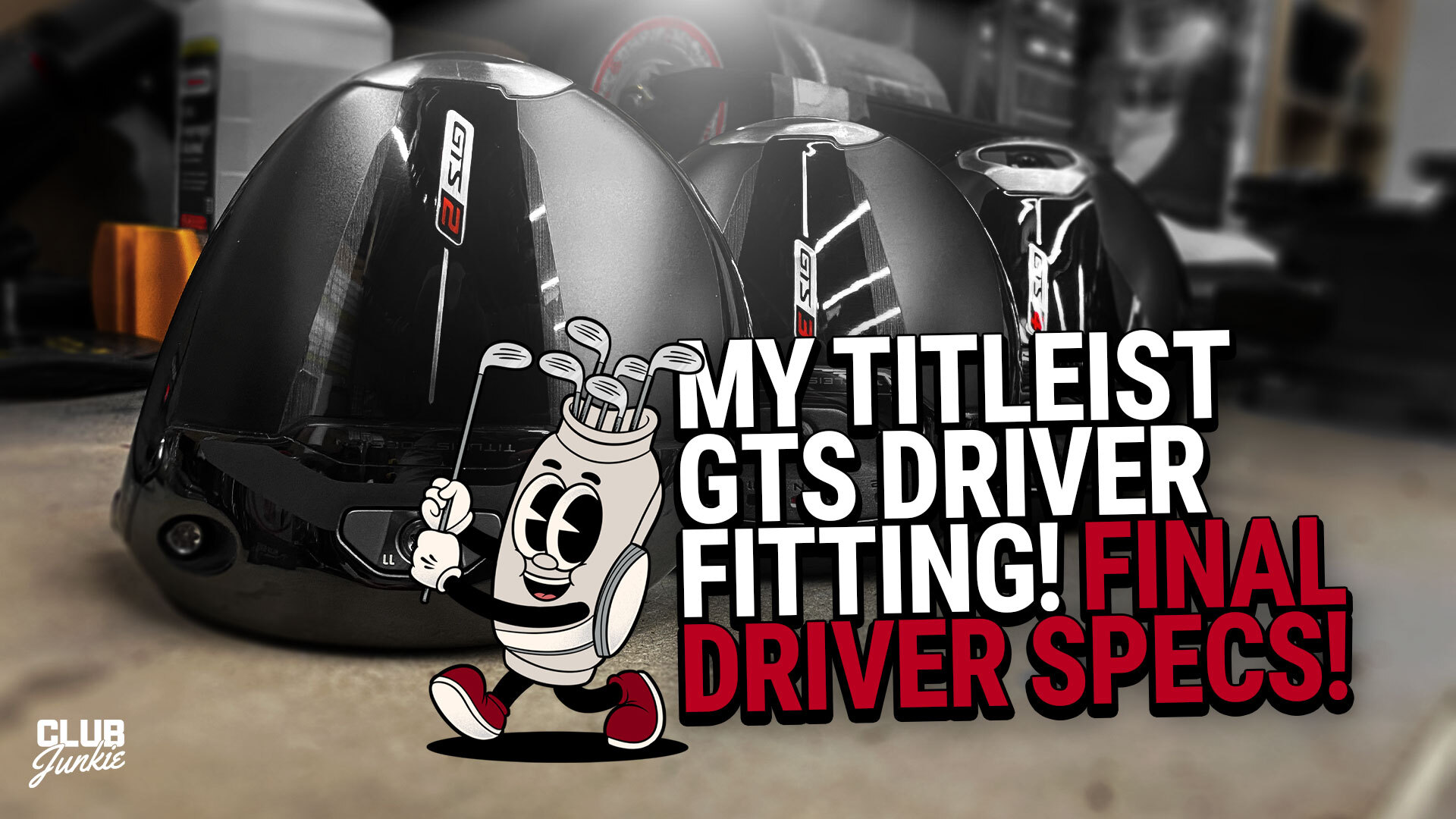
On this episode of the Club Junkie Podcast, I head to the Titleist Performance Institute for a full driver fitting with the new Titleist GTS lineup. We dive into the fitting process, talk about what made the biggest difference in performance, and break down how the different GTS heads and shaft combinations compare on the launch monitor. If you are thinking about a new driver setup for this season, there is a lot to take away from this one.
I also get into Brooks Koepka and the gear setup he brought to the PGA Championship, including the putters that caught my eye during the week. There are some interesting equipment trends showing up at the highest level right now and we break down what stands out.
To wrap things up, I talk about reshafting a few wedges, what I learned during the process, and swapping an adaptor onto a new shaft for another build project in the shop. A gear packed episode from start to finish for anyone who loves golf equipment and club building.
Follow Club Junkie everywhere:
Instagram: https://www.instagram.com/clubjunkiepod/
X: https://x.com/ClubJunkiePod
TikTok: https://www.tiktok.com/@clubjunkiepod
Threads: https://www.threads.com/@clubjunkiepod
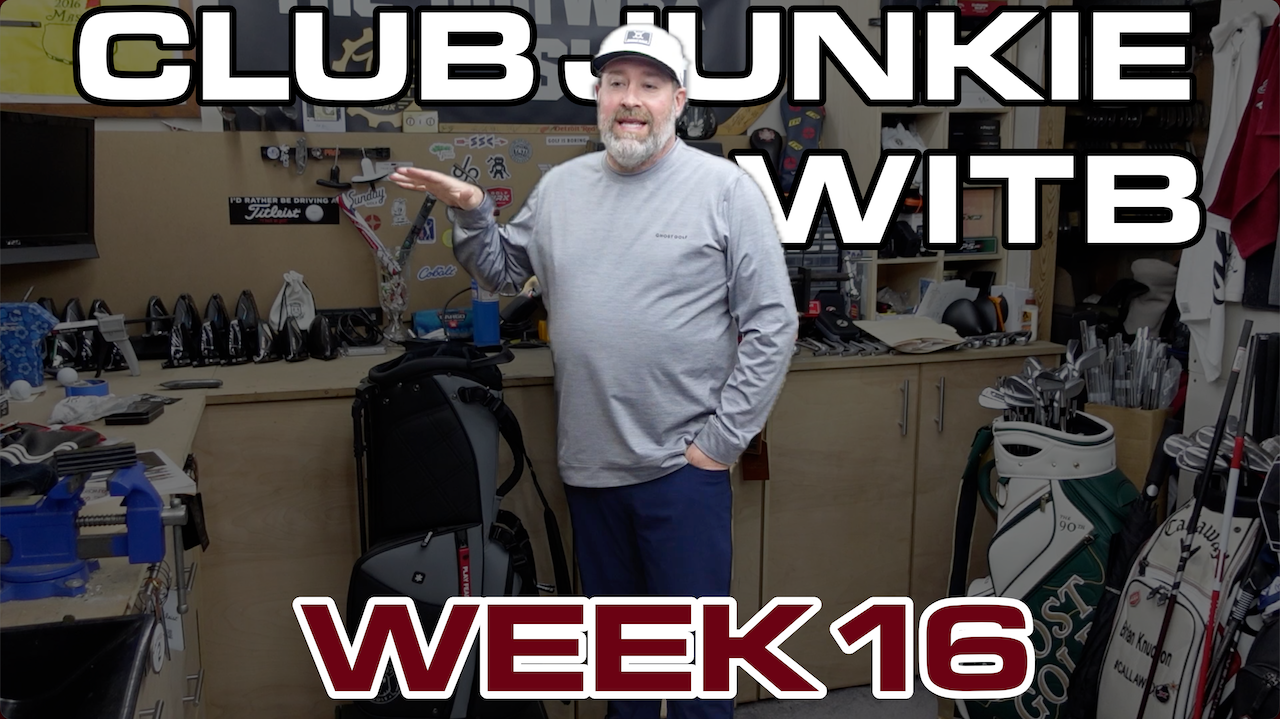
Excited for this week’s WITB as we get to add the new Titleist GTS woods to the bag! I was fit at Titleist’s TPI facility in Oceanside California a few weeks ago and my new clubs just showed up. I am also adding a cool set of irons that I built last year some wild custom wedges into a new golf bag. Speaking of the bag I have a new Ghost Anyday Black Ops stand bag that I will be using on my Motocaddy Remote M7 electric cart.
Driver: Titleist GTS3 (11 degrees @ 10.25)
Shaft: Fujikura Ventus Red 6s
3-wood: Titleist GT1 3Tour (14.5 degrees)
Shaft: Graphite Design Tour AD CQ-7s
5-wood: Titleist GTS (18 degrees)
Shaft: Fujikura Ventus Red 7s
9-wood: Titleist GT1 (24 degress)
Shaft: Fujikura Ventus Red 7s
Irons: Bettinardi CB24 (5-PW)
Shafts: KBS C-Taper Lite 110 stiff
Wedge: TaylorMade MG5 (50-09 SB)
Shaft: Mitsubishi MMT 125 Stiff
Wedge: TaylorMade MG5 (56-12 SB)
Shaft: Mitsubishi MMT 125 Stiff
Wedge: TaylorMade MG5 (60-08 LB)
Shaft: Mitsubishi MMT 125 Stiff
Putter: Dan Carraher ZT Proto
Ball: Callaway Chrome Tour
Bag: Ghost Anyday Black Ops Stand Bag

Justin Rose WITB 2026 (April): Full WITB breakdown with new McLaren irons

RBC Heritage Tour Report: More minis, course-specific setups, Spider & GTS launches

What’s the story behind Webb Simpson’s custom-stamped irons?

Cadillac Championship Tour Report: Spieth’s sizable changes, McLaren Golf launches, and more

Kristoffer Reitan’s winning WITB: 2026 Truist Championship

Cameron Young’s winning WITB: 2026 Cadillac Championship

Aaron Rai’s winning WITB: 2026 PGA Championship

Nelly Korda WITB 2026 (April)

Justin Rose on the switch to McLaren Golf, learnings from previous equipment moves

Photos from the 2026 PGA Championship


Patrick Reed WITB 2026 (May)
Driver: Titleist GT3 (9 degrees) Buy here. Shaft: Aldila Rogue Silver 130 M.S.I. 70 TX 3-wood: TaylorMade Qi35 (15 degrees)...

Aaron Rai’s winning WITB: 2026 PGA Championship
Driver: TaylorMade M6 (9 degrees) Shaft: Aldilda Synergy Blue 70 TX 3-wood: TaylorMade Qi10 (15 degrees) Shaft: Fujikura Ventus Blue...


Michael Block WITB 2026 (May)
Driver: TaylorMade Qi4D (9 degrees) Shaft: Fujikura Ventus Black VeloCore+ 5 X 3-wood: TaylorMade Qi4D (15 degrees @14.25) Shaft: Mitsubishi...


Bryson DeChambeau WITB 2026 (May)
Driver: Krank Formula Fire Pro (6 degrees) Shaft: Project X Prototype 3-wood: Krank Formula Fire (10 degrees) Shaft: LA Golf BAD...
-
 Whats in the Bag3 weeks ago
Kristoffer Reitan’s winning WITB: 2026 Truist Championship
-
Whats in the Bag2 weeks ago
Aaron Rai’s winning WITB: 2026 PGA Championship
-
 Tour Photo Galleries3 weeks ago
Photos from the 2026 PGA Championship
-
 Equipment2 weeks ago
GolfWRX Launch Report: 2026 Titleist GTS drivers
-

 Equipment2 weeks ago
PGA Championship Tour Report: Fitzpatrick, Koepka among big-name putter switches for Aronimink
-

 News2 weeks ago
WITB Time Machine: Phil Mickelson’s winning WITB, 2021 PGA Championship
-

 Equipment2 weeks ago
Which of Tiger’s major winning irons are your favorite? – GolfWRXers discuss
-

 Equipment2 weeks ago
Lead Tape Report: Adjusting the swingweight of the Wanamaker Trophy


Dennis
Aug 14, 2013 at 10:46 am
Hello Tom,
An insighful and interesting article, thank you.
Can you tell me which factor(s) would have the most affect on off-center hits on irons.
Is it the “A effect” items: Lie angle, shaft weight/total weight, & length that would affect this in irons?
If so is there any one of these in particlur that would affect it most?
Or are there any other factors that would affect this?
I assume club length would have a bearing from its very nature, but I have seen in irons where the shaft is slightly shorter that the ball strikes closer to the heel (and not from the center), which i would have assumed the opposite would happen (i.e. strikes closer to the toe).
So I wonder could there be something else thats having a bearing then, like lie angle or something else.
And if so how it affects off-center strikes in this way?
I have tested it myself and seen smash numbers go from 1.33 to 1.44 from one club setup to another.
But even away from monitor numbers, its visible to see the ball mark on the face closer to the heel on one iron brand/set-up than another and while some manipulation by the player can get it back on center, its not as “automatic” as with their own irons or with a specific iron that suits them.
Thank you for the excellent information as always and hope i have not asked too many questions together 🙂
Dennis.
TCMPGolf
Jun 6, 2013 at 6:31 am
Tom-
Great article and insight. Everyone needs to READ the entire article word for word before making ill-informed comments about your words of wisdom. It’s all there, some are just skimming through this and posing questions based on information already covered/accounted for.
Good job and I look forward to reading the remainder of the series.
TCMP
Hunter
Jun 5, 2013 at 11:18 am
Tom,
Can you explain how to find the right weight shaft? I can feel the difference between light and heavy shafts obviously but I don’t know how to pick what is best for me other than to use my “gut”. I have always felt that I liked lighterweight shafts but I am playing a AD DI-7x that I think weighs 75 grams in my driver because it fits my launch characteristics well.
Thanks!
Tom Wishon
Jun 7, 2013 at 10:03 am
HUNTER:
The weight of the shaft is the number one controlling factor for the TOTAL WEIGHT of the clubs. Shaft weight also has an influence on the swingweight (headweight feel) of the clubs, though it is possible to make a club be different swingweights after changing from heavy to light or light to heavy in the shaft weight.
As mentioned in the article, these two weights of the club must be matched to the golfer’s natural or acquired sense of swing tempo, timing, rhythm, strength and feel. If the club has too light of a total weight or too light of a swingweight for the golfer’s swing tempo, timing, rhythm, strength and feel, he will get too quick and have problems being consistent with his swing. if the club has too heavy of a total weight or too heavy of a swingweight for the golfer’s swing tempo, timing, rhythm, strength and feel, he will labor more with the club trying to achieve his most consistent swing rhythm.
Fighting your tempo results in more off center hits and a broadening of variation in your swing path and delivery of the face to the ball – overall inconsistency.
Problem is, there is no measurement and no empirical test that can be performed to determine precisely how heavy or how light the shaft needs to be to match well to each golfer’s own sense of swing tempo/timing/rhythm. We use these guidelines to start – strong, forceful transition move, aggressive downswing golfer uses heavier weight shafts, and vice versa – but it has to be done on a bit of a trial and error basis.
You’ll know when the shaft weight/total weight AND the swingweight are right for you when you do not have conscious thoughts about needing to slow down or swing smoother or swing more aggressively. When the shaft weight/total weight AND the swingweight are right for you, you don’t fight your tempo and rhythm.
TOM
G
Jun 1, 2013 at 11:58 pm
I don’t understand.
How can grip weight not be a factor? That’s impossible. Also, how can grip type/style (i.e. various textures and feel) not be a factor? Ridiculous.
td
Jun 2, 2013 at 9:52 am
It has an effect…just less of one compared to the other variables. Reread the article.
G
Jun 2, 2013 at 12:28 pm
Still makes no sense, especially when a grip weight can vary from anywhere from 25 grams all the way up to 75, depending on the type. Telling me that if you change from a grip that weighs 25 to the one that weighs 75 grams, there isn’t going to be much of a difference? No way! That’s the same as counter balancing. Of course it’s going to be a huge factor in the way it plays. He talks about swingweight and total weight – but he forgot to mention that the grip has a big factor in how it affects both of those things.
Jaacob Bowden
Jun 2, 2013 at 12:36 pm
“Only when an excessively heavy or extremely light grip is used does the weight of the grip show a noteworthy effect on the total weight of the clubs.”
yo!
Jun 2, 2013 at 2:37 pm
i see you read the article instead of just skimming the headings
G
Jun 2, 2013 at 10:32 pm
But he doesn’t go into enough detail about it to say that it DOES have a huge importance – it’s on;y touched upon briefly and there’s no real analysis of it here but other facts are analyzed. Yes it bothered me a bit.
Dave
Jun 12, 2013 at 10:46 pm
It doesn’t. Stop trolling and pretending you know more than Tom, it’s annoying. If you read his article he explains it perfectly.
Jack
Jun 26, 2013 at 11:54 pm
Sorry it bothers you, but this is a long article as is. Basically I would think that the grip weight is part of the total weight. It is part of the equation. If you say huge importance, is that relative to all other other factors? Just calling it having huge importance doesn’t really mean much in the big picture (of a golf club).
Tom Wishon
Jun 3, 2013 at 12:50 pm
G:
If you re read the article, under the TOTAL WEIGHT section you will see that I said that 95% of the time, the grip weight does not factor into the total weight and swingweight of the club very significantly. But that leaves 5% of the time it can have a small additional effect to the total weight and swingweight.
The main reason that I do not place grip weight as an A or B factor in Accuracy is because you can install grips to be oversize by using layers of build up tape under the grip. So you would be using the same weight grip as before, and the layers of masking tape simply do not add enough to the total weight or lower the swingweight by more than a very small increment. For decades, this was the only way that oversize grips were made, as there were no separately molded larger size grips available.
In the case of the grips molded larger in size, yes they do weigh more than conventional size grips. But two things here make this only a rare case for them to be a way to improve accuracy. 1) the vast majority of molded oversize grips weigh within 10g of their conventional version grip. So that 10g is pretty insignificant in its effect on accuracy. 2) If one is looking for fitting help for accuracy, they need to be focusing on all the other A and B effect factors I listed in the article because these are the ones that are going to have the MOST EFFECT on helping with accuracy. Do that and you do as much as you can do to have fitting help improve accuracy. Grip wise, you always fit the grip size first and foremost so that it fits the golfer’s hands AND fits them for COMFORT.
Since the VAST MAJORITY of golfers are properly fit for grip size within a range of +1/32 down to -1/64″, and since these sizes are easily made using light build up tape under a conventional grip, that means the times in which a golfer may use a grip molded heavier are quite small in the overall scope of the clubfitter’s work. But even when that does happen, the main accuracy benefit that heavier molded grip is offering the golfer is from it being the right SIZE because virtually every heavy grip is larger too – and not from its weight effect on the club.
TOM
Sean
Jun 1, 2013 at 8:30 pm
Thanks for the insightful article Tom.
Tyler
Jun 1, 2013 at 2:42 pm
Thank you Mr. Wishon for this article. It is probably the most enlightening and intuitive article on fitting that I’ve read. My question is in regards to iron sets. If i understand the article correctly, you’re saying that an optimal set of irons would have have heads that aren’t too progressive in offset and loft change (for example maybe Mizuno MP-53), but have shafts that gradually lighten up as the clubs get longer. So maybe your PW shaft would weigh 130 grams and your 4 iron shaft would weigh 100 grams. Rather than a set (such as Ping G25) that has the same weight shaft throughout the set, but which features heads with progressive offsets and CG locations.
I ask because I’ve always had trouble with my MP-53 4 and 5 irons with DG S300 shafts not launching and carrying enough. I was thinking of going with Mizuno MP-H4 4 and 5 irons as they feature a lower CG with the same DG S300 shafts, but now I’m thinking that what I really need to do is just lighten the shafts of my MP-53 4 and 5 irons. Am I understanding the data and applying it correctly?
Thanks in advance,
-Tyler
Tom Wishon
Jun 3, 2013 at 12:38 pm
Tyler
If the main problem is not launching the 4 and 5 irons high enough so the carry distance is compromised, the first and best step to take is to use hybrids or other iron heads that have a lower AND a more rear located center of gravity position. In the end, hybrids will do this far better than irons because the wider body of the hybrid allows the CG to be farther back from the face than can be done in any iron head design.
Shaft wise you can try that with the same DG S300 shafts you have in your irons, but if you see that the height and carry of the 6 iron starts to get to be a little less at times than you would like, then you might want to think about either a little more flexible shaft in the hybrids OR one that has a little more flexible tip section than do the DG’s. But just going lighter in the shaft weight is not typically going to help increase launch angle unless that lighter weight shaft is also a little more flexible and/or a little more tip flexible than the DG’s.
TOM
rtylerg
Jun 3, 2013 at 9:50 pm
Thank you Mr. Wishon for your feedback and time. That makes perfect sense.
-Tyler