
Opinion & Analysis
Well… We’re waiting


One of my favorite scenes from the best golf movie ever, Caddyshack:
Judge Smails: “Ty, what did you shoot today?”
Ty Webb: “Oh Judge, I don’t keep score.”
Judge Smails: “Then how do you measure yourself with other golfers?”
Ty Webb: “By height.”
It was stroke play that rang the death knell for fast play. As soon as golfers became obsessed with the phrase, “What did you shoot,” reasonable pace of play went the way of the featherie.
Listen to the great Tom Watson on pace of play:
“At the great Muirfield Course in Scotland, there’s a venerable tradition concerning foursomes which I think should be tried, at least occasionally, at American clubs: Nothing except foursomes play (alternate shot) is permitted on weekend mornings. A brisk foursome, which might have one partner already positioned in the drive zone to play the second shot, can be played in two and a half hours. Then a quick break for lunch, and perhaps a four ball (better ball as we call it) in another three and a half hours. All told, the members get in 36 holes, with lunch in under seven hours. An estimable goal for all of us.”
But here in America, it is almost sacrilegious to even consider not keeping your score. And when amateurs insist on counting every stroke, and holing out every putt, it takes considerably longer to play a round. That’s why golfers should consider more match play in their groups, and shouldn’t be afraid to pick up their ball when they are out of the hole. The handicap system allows for this with the maximum number of strokes clause, so use it, because there is nothing worse than someone agonizing over a putt for a nine!
Another issue that tends to slow play is watching professional golf on TV. What golfers fail to realize is that these guys and gals are playing FOR A LIVING and every shot can mean thousands of dollars. They have well rehearsed pre-shot routines, professional caddies and perhaps even more important is that they are the playing the most difficult courses in the world with greens that are lightening quick and tricky.
I am not defending pace of play on the PGA Tour, it is entirely too slow, but I do think it is important to realize the difference. And remember they do their pre-shot routines 70 times, the average golfer might do it 90 times!
Carts have also slowed down play, for the simple reason that many golfers do not know how to drive or park them in a way that speeds up play. Many golfers have become “overly social” in this area of the game. There is nothing that slows play more than driving to your playing partner’s ball and sitting in the cart as he hits. I would rather have four small, single carts so that everyone could drive directly to their ball (Any entrepreneurs out there)! But because that is financially impractical I suppose, try this: When you drive to the shortest tee shot, drop your partner off and head for your ball. As her or she hits, be going through your pre-shot routine. After his/her ball lands, be ready to fire!
The same thing with putting: You can be lining up your putt as the others are preparing to putt. Just be still when they are making the stroke. And remember to park the cart where you walk off the green toward the next tee. And on days when the carts must be kept on the path, take a handful of clubs with you out to the fairway. Simple common sense ideas that can save time in a round.
Here’s an old Scottish story: An American visited Scotland for the first time and he topped his first tee shot. He turned to the local Scottish player and said,
“In America we call that a mulligan. What do you call it?”
“Cheating,” the Scot replied.
Mulligans. Really? If you get to hit balls before your round, you should be ready, and your first shot is in play. Or if your club allows mulligans, try this: If you do hit a second tee shot, you MUST play it. You’ll be surprised at how few choose to re-tee!
Let’s face it — we live in an age when a lot more people play golf than they did many years ago. And maybe we are being unrealistic to use the four-hour round as our model, but if more golfers were educated and taught to realize how many small things add up to big time savings for all of us, the game would move more quickly.
As always, feel free to send a swing video to my Facebook page and I will do my best to give you my feedback.


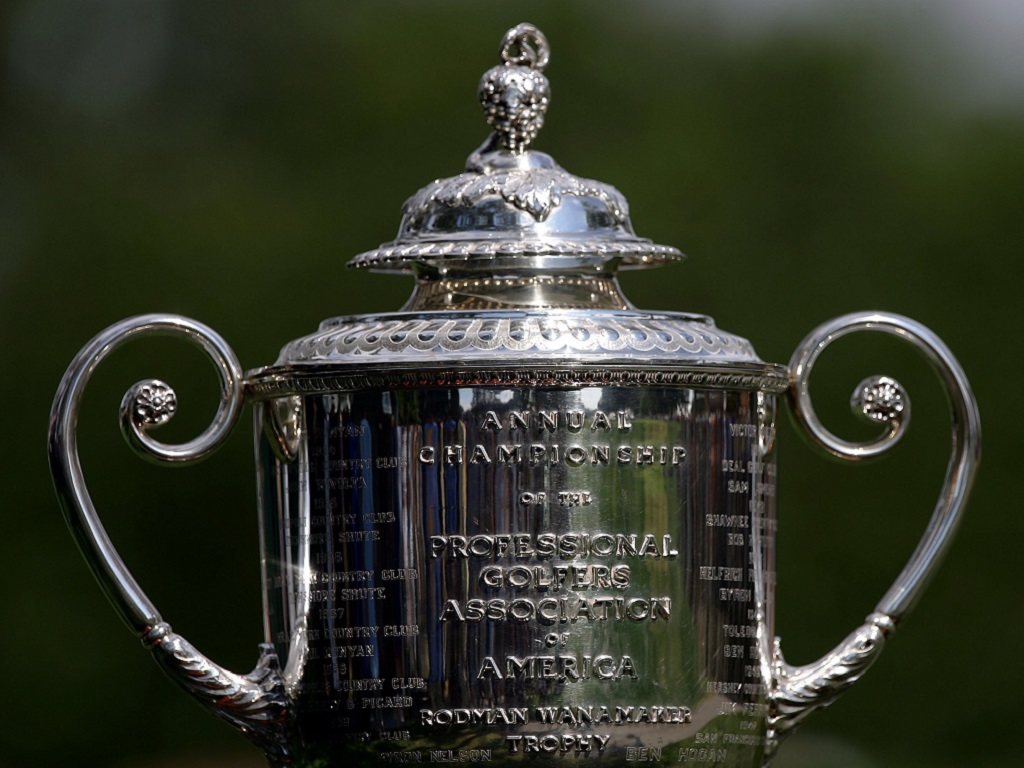
Aronimink is not a storied club, but when Donald Ross himself proclaimed it to be as good as he can design and build, one had to take notice. Jay Sigel was the pre-eminent male amateur golfer from the mid-1970s to the mid-1990s. He might have called any number of Philadelphia clubs home, but he chose Aronimink. It served him well. Gary Player won a PGA Championship here in 1962, and was followed by the 1993 winner … nobody. Aronimink gave that event away to Inverness, for reasons of which it is certainly not proud. So be it. We had to wait sixty-four years for the PGA to return to Newtown Square, but here we are. Aronimink has been neo-restored by Gil Hanse and team, to return Ross features with an eye toward defense against the dark arts, errrr, high-tech equipment.
Day one saw Rory McIlroy and Bryson DeChambeau dig big holes, to the tune of plus-four and plus-six, respectively. Since the first-round lead will be minus-three at worst, many shots will need to be made up for the power couple to reach contention. By nightfall, seven golfers held the day-one lead at three-under par 67. Shots and sticks caught our attention, and we are proud to present Five Things We Learned on Tech Thursday at the 2026 PGA Championship. Thanks to InsideTourGolfer, Today’s Golfer, and GolfWRX for initial equipment research.
First, meet Min Woo Lee
Min Woo Lee, aka Dr. Chipinski, has once again thrust himself into the conversation of Can he, will he, when will he? Lee has so much talent, wins not nearly as often as we believe that he should, and has no major near-misses (much less titles) on his wiki. The young Aussie is getting older and wiser, but is he able to avoid the scarring that holds the older and wiser back from breaking through? Philadelphia offers another opportunity. Min Woo signed for five birdies and two bogeys on day one, and grabbed a share of the opening-day lead at Aronimink. Winners transcend history and the moment, and Lee will need that sort of ascent to lift the Wannamaker on Sunday.
Second, meet Aldrich Potgeiter
The young South African golfer can rip driver with the best of them. Aronimink tips out at nearly 7400 yards, but beyond the fairway bunkers that ensnare only the mortals, Potgeiter can take his chances with wedge from the rough. On Thursday, he spent plenty of time in the spinach. Like Popeye, he used his muscles to gouge and thrash and dig his way out. Six birdies against three bogeys on the card brought AP in a three deep.
Third, meet Martin Kaymer
Not a major event takes place without a where’s he been throwback moment. We know that Martin Kaymer left the PGA and DP World tours for LIV golf, but the two-time (US Open and PGA) major winner has a lifetime exemption into at least one major event, and he seizes the opportunity each May. Kaymer joined the six-seven brigade with four birdies and a solitary bogey on day one. Kaymer was never a long hitter, and the years are kind to no golfer. The German champion will need to uncork every bottle of guile and strategy in his cabinet to remain in contention. For today, though, he occupies a rung on the ladder of Tour Tech.
Fourth, meet Scottie Scheffler
Let’s see, he’s the defending champion at the PGA, and he found his way back to the top tier with five birdies against two bogeys. To be a favorite and then play up to that stature and expectation is quite difficult. Just ask Rory, Bryson, and some of the other pre-tournament heartthrobs. Scheffler’s game is complete, and to knock him off the OWGR #1 pedestal, one needs to defeat him at the majors. Aronimink is the sort of course that fits Scheffler’s game. Better yet, it unfits the game of many of his challengers. Don’t expect Scheffler to go away anytime soon. Come Sunday, he’ll be around.
Fifth, meet Stephan Jaeger
Clocking in for the unheralded players shift are Ryo Hisatsune and Stephan Jaeger. Hisatsune logged seven birdies on day one, but gave most of them back with four bogeys. Still, he’s tied at the top for a time. Jaeger pitched five birdies against two bogeys, including a run of three consecutive, from holes four through six. Odds are that one of the two will hang around through 36 holes. Odds also suggest that both will be gone by Saturday evening. Still, the PGA Championship has historically been the major most likely to be won by an under-known. Both Hisatsune and Jaeger feature on that list, so good luck, lads!


On this episode of the Club Junkie Podcast, I head to the Titleist Performance Institute for a full driver fitting with the new Titleist GTS lineup. We dive into the fitting process, talk about what made the biggest difference in performance, and break down how the different GTS heads and shaft combinations compare on the launch monitor. If you are thinking about a new driver setup for this season, there is a lot to take away from this one.
I also get into Brooks Koepka and the gear setup he brought to the PGA Championship, including the putters that caught my eye during the week. There are some interesting equipment trends showing up at the highest level right now and we break down what stands out.
To wrap things up, I talk about reshafting a few wedges, what I learned during the process, and swapping an adaptor onto a new shaft for another build project in the shop. A gear packed episode from start to finish for anyone who loves golf equipment and club building.
Follow Club Junkie everywhere:
Instagram: https://www.instagram.com/clubjunkiepod/
X: https://x.com/ClubJunkiePod
TikTok: https://www.tiktok.com/@clubjunkiepod
Threads: https://www.threads.com/@clubjunkiepod

Excited for this week’s WITB as we get to add the new Titleist GTS woods to the bag! I was fit at Titleist’s TPI facility in Oceanside California a few weeks ago and my new clubs just showed up. I am also adding a cool set of irons that I built last year some wild custom wedges into a new golf bag. Speaking of the bag I have a new Ghost Anyday Black Ops stand bag that I will be using on my Motocaddy Remote M7 electric cart.
Driver: Titleist GTS3 (11 degrees @ 10.25)
Shaft: Fujikura Ventus Red 6s
3-wood: Titleist GT1 3Tour (14.5 degrees)
Shaft: Graphite Design Tour AD CQ-7s
5-wood: Titleist GTS (18 degrees)
Shaft: Fujikura Ventus Red 7s
9-wood: Titleist GT1 (24 degress)
Shaft: Fujikura Ventus Red 7s
Irons: Bettinardi CB24 (5-PW)
Shafts: KBS C-Taper Lite 110 stiff
Wedge: TaylorMade MG5 (50-09 SB)
Shaft: Mitsubishi MMT 125 Stiff
Wedge: TaylorMade MG5 (56-12 SB)
Shaft: Mitsubishi MMT 125 Stiff
Wedge: TaylorMade MG5 (60-08 LB)
Shaft: Mitsubishi MMT 125 Stiff
Putter: Dan Carraher ZT Proto
Ball: Callaway Chrome Tour
Bag: Ghost Anyday Black Ops Stand Bag

Justin Rose WITB 2026 (April): Full WITB breakdown with new McLaren irons

RBC Heritage Tour Report: More minis, course-specific setups, Spider & GTS launches

What’s the story behind Webb Simpson’s custom-stamped irons?

Cadillac Championship Tour Report: Spieth’s sizable changes, McLaren Golf launches, and more

Kristoffer Reitan’s winning WITB: 2026 Truist Championship

Cameron Young’s winning WITB: 2026 Cadillac Championship

Aaron Rai’s winning WITB: 2026 PGA Championship

Nelly Korda WITB 2026 (April)

Justin Rose on the switch to McLaren Golf, learnings from previous equipment moves

Photos from the 2026 PGA Championship


Patrick Reed WITB 2026 (May)
Driver: Titleist GT3 (9 degrees) Buy here. Shaft: Aldila Rogue Silver 130 M.S.I. 70 TX 3-wood: TaylorMade Qi35 (15 degrees)...

Aaron Rai’s winning WITB: 2026 PGA Championship
Driver: TaylorMade M6 (9 degrees) Shaft: Aldilda Synergy Blue 70 TX 3-wood: TaylorMade Qi10 (15 degrees) Shaft: Fujikura Ventus Blue...


Michael Block WITB 2026 (May)
Driver: TaylorMade Qi4D (9 degrees) Shaft: Fujikura Ventus Black VeloCore+ 5 X 3-wood: TaylorMade Qi4D (15 degrees @14.25) Shaft: Mitsubishi...


Bryson DeChambeau WITB 2026 (May)
Driver: Krank Formula Fire Pro (6 degrees) Shaft: Project X Prototype 3-wood: Krank Formula Fire (10 degrees) Shaft: LA Golf BAD...
-
 Whats in the Bag3 weeks ago
Kristoffer Reitan’s winning WITB: 2026 Truist Championship
-
Whats in the Bag2 weeks ago
Aaron Rai’s winning WITB: 2026 PGA Championship
-
 Tour Photo Galleries3 weeks ago
Photos from the 2026 PGA Championship
-
 Equipment2 weeks ago
GolfWRX Launch Report: 2026 Titleist GTS drivers
-

 Equipment2 weeks ago
PGA Championship Tour Report: Fitzpatrick, Koepka among big-name putter switches for Aronimink
-

 News2 weeks ago
WITB Time Machine: Phil Mickelson’s winning WITB, 2021 PGA Championship
-

 Equipment2 weeks ago
Which of Tiger’s major winning irons are your favorite? – GolfWRXers discuss
-

 Equipment2 weeks ago
Lead Tape Report: Adjusting the swingweight of the Wanamaker Trophy


Jedidiah
Jul 26, 2013 at 9:02 am
Why are there so many damn beta males out there?
Ken
Jul 7, 2013 at 10:16 am
So many courses mandate the use of carts…and do it in the name of speeding up play. C’mon guys, we see through the thinly veiled revenue driver. My friends and I drive 30 miles on Saturday mornings to play a wonderful course that allows walkers. I live right next to a course that only allows hoofers at twilight. I understand that some people are not able to walk a course, but there are many that should. Courses should promote it and they would find that play speeds up due to each player going to his own ball. We’ve walked many sub 3 hour rounds.
Dennis Clark
Jul 8, 2013 at 12:04 pm
yes sir, carts slow play no question…but they are here to stay. I advocate 4 very small individual carts that allow players to drive directly to their shot!
inncfromnj
Jul 3, 2013 at 4:47 pm
Here are the problems which plague pace of play.
1. Being “married to the cart”…Instead of waiting in the cart for your partner to hit a shot then ride to your ball, get out grab some clubs and your range device. Walk to your ball, hit your shot and walk toward the hole. You partner will pick you up.
2. When the conditions warrant cart path only. Take several clubs with you to your ball. If you ball may be lost or in a hazard,take a ball with you.
3. If you are an average player and are 200 yards or more from the front of the green on a par 5, or even a long par 4. LAY UP….You are not going to “get there in two”. So forget waiting for the green to clear.
4 Play READY GOLF…This nonsense of “are you away or am I” is for the birds. Who cares!. Remember, in the rules of golf, there is no “out of turn” rule in stroke play.
5. If you are hopelessly out of the hole, pick up and take the maximum number permitted under the USGA Equitable Stroke Control formula. Most middle handicap golfers would take a triple bogey.
6. Ask the beverage cart girl to wait until all players have hit their shots, then go buy your stuff.
Don
Jul 3, 2013 at 2:58 pm
Funny the writer mentions Scotland. I believe there are a couple issues here. First, he should check how far apart tee times in scotland or the rest of Europe are booked. I know for a fact it is not the usual eight to ten minutes we get packed into here in the states. They do not try to cram over 60 tee times a day onto their courses. Second, I agree that slow play is an issue. When I play with slower partners I tell them I will pick my ball up after double par on a hole. Third, I wish everyone would play ready golf. I do think that people watching golf on tv has a lot to do with this too. Why can’t we take our practice swing or line up our ball while the rest of the foursome plays their shot. While I agree slow play is an issue, I think the biggest reason we find ourselves standing on tee boxes waiting ten to fifteen minutes is because the courses OVER book tee times.
rixirox
Jul 3, 2013 at 8:33 am
Ignorance, intolerance and a lack of golf ettiquette are “slowing the pace” of the game. Smarten up and play nice.
Marc
Jul 3, 2013 at 12:55 am
I play fast, almost always walk and play one Chicago course that doesn’t offer carts for that reason alone. Good golfers move along well in a cart. Average to poor generally don’t. It would speed up play if at the pro shop and on the 1st tee every group would be told to tee off when the group in front is out of range, not on or off the green. A new golfer that hits the ball 100 yards can be off the tee before the group in front gets to their ball. If you can’t hit them, you can hit your ball. Limit practice swings. One or two if you must is fine, but anything more is causing damage and just tiring you out. Unless you are Dennis (I still refer to your course as Marco Shores) or a pro, don’t give advice on the course and don’t take it. Practice is done at the range. On the course, you play. Play courses suited to your ability. If you are new, find a nice executive course, or wide open muni. Try to play on a weekday, it’s less crowded and you’ll have more fun. If you must tackle something beyond your ability for whatever reason, play from the tee that suits your ability (this holds true for all courses actually). Lastly, limit one tee shot per hole unless you’re taking the penalty and being true to the game. If you’re bending rules, you might as well drop one where it went out or play from where the person driving the cart landed. You can shoot 120 in under 4.5 hours if you move along, play ready golf, and eliminate 600 or 700 practice swings.
inncfromnj
Jul 3, 2013 at 5:24 pm
I always take a practice swing. It’s part of my pre shot routine. It helps with muscle memory and concentration. The routine takes maybe 10 seconds. I set and pull the trigger. Ball goes and I am in the cart before the ball stops rolling.
If I am driving the opposite pairings cart, I am off as soon as the last ball of the guys in the other cart is in the air. I don’t think it’s necessary for me to wait on a ‘pose’.
Jay Smith
Jul 2, 2013 at 6:01 pm
Unless you post signs in korean then actually police it well, good luck! The stupid comercials are lame and the goobers arent going to pay attention to it!!
szap
Jul 2, 2013 at 5:52 pm
Going back to Marty’s observation on type A personalities being the only one’s who are bothered by slow play, I am definitely a type A, but the people I regularly play with are far from it. What I find is that the slow play bothers everyone in the group, it is just the type A person who will try to say or do something about it.
marty
Jul 2, 2013 at 6:55 pm
classic type A. YOU DON’T HAVE TO FIX EVERYTHING.
inncfromnj
Jul 3, 2013 at 5:11 pm
Marty, I am ecstatic you do not play golf where I play.
Marty
Jul 7, 2013 at 2:38 pm
Me tooloooooloo
FAST PLAYER
Jul 2, 2013 at 5:43 pm
In my 50 years of playing what I have noticed is that the slow players don’t think they are slow.
duck_football_cheats
Jul 2, 2013 at 12:27 am
Courses need to do their part, too, like going with 10-minute tee time intervals (not alternating 7,8-minute) and stationing a starter to enforce that. You tee off on your appointed time, NOT when the group ahead hits their second shots. This spaces out groups, prevents bunching like a freeway on-ramp during rush hour.
Courses put the onus on players to speed up play, but they need to do their part, as well.
Jcjmw
Jul 1, 2013 at 9:42 pm
jcjmw • a day ago ?
Out on the golf course, NOTHING will change unless and until the course marshalls do something. As an example, I am a local to and regular at Rio Secco Golf Course (Butch Harmon headquarters and home course to Gulbis). Great staff there but lately the marshalls set the pace at 5 hrs. My last 3 rounds there have been 5 hours, like this morning. There was a 1.5 – 2 hole gap between the group in front of us and the next after them. When we complained to the marshall, the response was “our pace of play is 5 hours.” No, I personally know its not. I have been playing Rio for 10+ years and the pace of play used to be 4 hours. Over the years it has gotten worse. The key is the Marshall. If a golf Marshall believes 5 hours is acceptable, then no amount of TV promos or otherwise will make any actual difference on the gold course.
inncfromnj
Jul 3, 2013 at 5:10 pm
I would present my concerns to course Managers. Tell them the Marshall stated the 5 hour time frame. Make a point to alert them that there are many golfers who are unhappy with the 5 hour rounds and are considering taking their business elsewhere.
If the manager gives you any static about the time frame, call his bluff. Pull out your cell phone right there and make a tee time at another course for your foursome.
The best way to alter the business model of an establishment that eschews customer service is to no longer patronize that business.
John F
Jul 1, 2013 at 4:35 pm
A question for the author, because I have read about the pace of play being quickened by playing “ready golf” many times on GolfWRX. Most golfers aren’t that confident in their shotmaking to feel comfortable with their partners walking up the fairway as they’re shooting. How do you reconcile this with encouraging players to walk up to their ball before the furthest player shoots?
As I understand it, these pace-of-play concerns all hearken back to the problems of declining rounds and how best to “grow the game,” but saying “just play two quicker rounds” is the most tin-eared solution I’ve heard of yet. That might work for members of elite country clubs, but I doubt that preaching to country club members will grow the game much. Two rounds is 100 bucks if you bring your own cooler, and all this best-ball and alternate-shot stuff will leave you shooting a fraction of the shots. Most of the people you want to encourage to get out and play and sink money into the game are going to be hesitant to pay more than a couple bucks a hole for a round, and that would raise it to a couple bucks a shot.
Dennis Clark
Jul 1, 2013 at 7:25 pm
Confidence is not hampered by your partners walking away OUT of your sight. And if you’re talking about walking, that is not the problem; the article states CART DRIVING is slowing play. Most people would be surprised at the joy of match play and the variety of formats it offers. The individual final score obsession is something we might reconsider.
naflack
Jul 3, 2013 at 12:50 am
“declining rounds”
you nailed the point of this entire ad campaign.
they think too many of us cant see it for what it really is.
and this is coming from someone who can play a round in under 3 hours with my friends that are good sticks. but we also understand who is on the course with us, we are married to women who enjoy the game for us. they dont want to go out with us the few times they do and feel like they are “on the clock”. and good or bad these are the people that would need to play for the game to actually grow.
dont get me wrong, we have all had the groups in font of us who are terrible or completely inconsiderate and refuse to let people through but they are the exception not the norm.
if the courses were actually serious about this pace of play business they would stop putting groups out on top of each other. a group should go out every 12 minutes, no more no less.
shoeshines
Jul 1, 2013 at 9:09 am
This is a reason why golf should consist of three 6 hole courses instead of two nine hole ones, that way people can have the option to play 12 in a reasonable amount of time. The game is simply too long. There are more players now. These are principles that were played in the 1800s when the game was played by very few. No one buzzes through a course anymore. We need to modernize and establish a new pace of play.
KB
Jul 1, 2013 at 8:40 am
The old guys just yesterday were the culprit … I was teeing off with my group on 16, while they were chatting it up the a par-3 17…I wondered how long it would take them to tee off and get going. As we were putting they were still standing there – chatting, making swing movements, talking golf – with no one on the green. They didn’t tee off until we pulled up behind them in our carts.
Really?
WVUgolfer
Jul 1, 2013 at 8:23 am
Golf courses themselves can help with pace. Have beverage stands on specific holes. If the group with honors is at a stand and the tee is open the next group fills the spot. I have seen beverage carts slow play by not properly doing their jobs. Muni’s could shorten their courses. Faster carts! USGA should place an asterisk on handicaps that includes pace of play times. Dr Bob is a 7* with a 5 hour round. 22* with a 3 and a 1/2 hour round.
Dennis Clark
Jun 30, 2013 at 10:06 am
The lead group of the day is the key: If that group can go 3.5 hours and everyone keeps pace, we can tee off every 8-9 minutes and have no trouble.
Jon Silverberg
Jul 2, 2013 at 6:41 pm
Actually, that is incorrect…you cannot tee groups off faster than it takes to play the slowest par 3 (usually 9-10 minutes) without backing up the course…this is not my opinion, research shows it to be fact (it is the same principle as factory throughput depends on the time it takes for the slowest separate process)…for more, see http://www.three45golf.org…the site founder has been on The Golf Channel, writes for Golf Digest and The Met Golfer, etc.
naflack
Jul 3, 2013 at 12:28 am
+1
Grant
Jun 29, 2013 at 9:14 pm
I play as a single quite regularly. The other day I played two rounds in under 4 hrs (local muni, just over 6k yards from whites). It was very hot (100*+), weekday, and I had a cart. I was lucky enough to play through the entire way through the 2nd round. A few observations:
1. Courses need to manage how crowded the course becomes. I think the vast majority of slow play comes from course overcrowding. On particularly busy days, assistants could be used where the course bottle necks (locate t shots, monitor pace).
2. If your group has waived someone on…keep playing the hole!
3.I don’t think it’s a big deal to ask to play through. If I’m waiting on the group ahead on every shot, I’ll politely ask at the next tee.
My $.02
naflack
Jul 3, 2013 at 12:25 am
Well said…
Where is the course accountability in this issue?
Respect the golfers around you and let faster people through, its not a sign of disrespect that they are faster or better.
They may not like that you’re slow but they respect that you acknowledge it and show some etiquette
rixirox
Jul 3, 2013 at 8:24 am
I completely concur.
Dennis Clark
Jun 29, 2013 at 12:41 pm
Having played the game now for 50 years and taught it for 30, I have done everything in my power, to “teach” faster, yet still enjoyable, golf. The two are NOT mutually exclusive. The point of my article is that if more players discovered the joys of match play, it might be better for moving play along. When foursomes AND four balls are played on busy days, it helps the pace greatly. Note that in the rules of play, a conceded stroke cannot be refused or declined, so marshall them to put that putt for a 7 in their pocket:) And congrats to your group for walking and playing at that pace. Thx for comment.
marty
Jun 29, 2013 at 12:29 pm
another article about slow play? really?
there does need to be a place for the slow and beginning players where they can explore how to play the game and not be bothered by you type-A dudes.
Dennis Clark
Jun 29, 2013 at 12:45 pm
Beginning does not have to be slow if they are educated. I have new-player groups play scramble and simply tell them to keep pace with the group in front of them. Its not a personality type, it’s education and common courtesy. If you can’t see the group in front of you, you can bet there are a whole LOTTA folks close behind you.
marty
Jun 30, 2013 at 7:26 pm
disagree. part of it is definitely personality type.
and any true beginning golfer (unless you’re Jim Thorpe) will be hacking it all over the place and will by definition take a good amount of time to play a round.
just bugs me that part of the hard-earned cash that i dole out for a round of golf gets wasted on overzealous marshals who only care about making money for the course. you want to grow the game? let players regulate themselves and live with the few less paying customers you can fit on the course during the day.
rixirox
Jul 3, 2013 at 7:49 am
Just allow type A speeedballers to play through. Every courtesy observed can only help.
Eric
Jul 3, 2013 at 1:03 pm
Are you serious? What about the other players “Doling Out” their hard earned cash to stand there and wait for slow players not even trying to speed things up and are clueless on golf etequtte! If you are going to golf you should learn not only how to hit the ball and which club to use but also how to play faster and make it enjoyable for “Everyone”. Not A type personality, Common Sense, respectful personality.
inncfromnj
Jul 3, 2013 at 4:55 pm
No. They are there to move along players who think they can “take their sweet time”…Look, no one wants to wait 5 or 10 minutes to hit every shot. If you are out of position( behind an entire hole) pick up and move along or allow faster players through.
The main reason for course Marshalls is because players cannot police themselves. On a busy day, there is no reason a 4 foursome should take more than 4.5 hours to play 18 holes. 4 hours is expected.
DO the math. 15 minutes per hole is a 4.5 hour pace. 12 minutes per hole is a 3.6 hour pace. So a 4 hour round allows 13.5 mins per hole.
Ken
Jul 5, 2013 at 9:47 am
Hence why they make par 3 courses and driving ranges. Golfers brand new to the game who can barely hit the ball should not be playing 7000 yard regulation courses. It is no fun for them and it is no fun for the other golfers that are being slowed down. The chain is only as strong as its weakest link and the round of 18 is only as fast as the slowest golfer…
Dennis Clark
Jul 5, 2013 at 9:57 am
excellent observation; the courses you choose to play and the tees you choose to play from should be based on your ability and experience.
naflack
Jul 3, 2013 at 12:16 am
For a game that is looking for growth at ever turn that sure seems to be a lot of complaining about the very people you want taking the game up.
I play and prefer to play quickly but i’m a 3 index, the pace I can play at is due to my ability. To expect that of my wife who shoots a 120 simply isn’t fair. If respecting those around us by letting them through when it applies isn’t good enough then we will gladly play somewhere that appreciates our hard earned money.
end all that money to dg
naflack
Jul 3, 2013 at 12:18 am
Ignore the last line…phone issue.
Dennis Clark
Jul 5, 2013 at 10:06 am
I don’t think anyone is complaining, rather explaining. Golfers of ANY ability can learn to play faster through education. The article offers suggestions about how to do that. We had a group of “low single digits” who wanted “the first tee time so we don’t have to wait.” Granted. They played the tour tees on a 7500 yard golf course, one broke 80 and the lead group took 4 hour, 30 minutes to play. The group behind them, all average golfers playing from the white tees were on their heels all day. If everyone is educated and plays from the tees they should, play can move nicely.
G
Jun 30, 2013 at 10:58 am
Would you teach your daughter to drive on the freeway? No. You’d only let her drive the freeway when she’s ready. The same is true for golf. The driving range, and muni courses are for learning not a real golf course. “Type-A dudes,” really? Do you call everyone who can do something you can’t a compliment that you obviously mean to be derogatory? What a genius!
marty
Jun 30, 2013 at 7:19 pm
ha! if only you knew– i golf quite quickly.
seems that when i AM playing with slower golfers, the ones that get the angriest at us for ‘holding up play’ are the type-A business dudes or old farts.
rixirox
Jul 3, 2013 at 8:22 am
Ok. I am a type A, old fart business dude. I “play” golf. I play through if I am playing faster. Never encountered a slower foursome that didn’t concede to a courteous request. Season your play with grace.
ScottyBinSLC
Jul 3, 2013 at 12:10 pm
What point are you defending Marty? Being argumentative for argument’s sake does nothing. The point of the discussion and the article is to discuss the problem and potentially come up with creative ways to solve it. Personality types, “old farts”, businessmen, etc. are not the problem or even a result of the problem.
Many who take up the game and who have played for years; albeit only a few rounds a year, take extraordinarily long to play because they don’t take the time to “work” on their game. They hope to sort it out on the course. This takes what used to be a 3.5-4 hr round and turns it into 4.5-6hrs/round. That’s unfair to all others on the course who have paid their use/rental fee.
And despite your feelings about it, golf is a revenue sport. Marshals and course managers all need to be concerned about the number of rounds per year/season in order to not only keep the doors open, but to make improvements and repairs year after year.
I once again would voice that the US moves to a handicap system as it’s played in the EU. To play you present a handicap card and you are placed on the appropriate tees; i.e.: Black/championship= Plus-4.4, Blue=4.5-8.9, White=9-11.4,etc., or something there abouts. The game would be better enjoyed by all, the pressure would be reduced for all high handicappers, and egos would have less of a role.
The course could then be enjoyed and it can become a Game again for all.
marty
Jun 30, 2013 at 7:29 pm
oh, and you gotta learn to drive on the freeway at some point. no amount of parking lot (or driving range) practice will prepare you for the real thing.
“real golf course”? really? nice backhanded dis at the large portion of golfers who happen to play muni’s full-time.
marty
Jun 30, 2013 at 7:30 pm
ha! if only you knew– i golf quite quickly.
seems that when i AM playing with slower golfers, the ones that get the angriest at us for ‘holding up play’ are the type-A business dudes or old farts.
inncfromnj
Jul 3, 2013 at 5:01 pm
Most muni’s are easy to play. THat’s where people should learn the game before venturing out on more difficult courses.
Look, golf is a difficult sport to even become moderately proficient.
A newbie should not run out and play A Mike Strantz, Pete Dye or Donald Ross course as they will not enjoy the game and lose interest.
Beginning golfers should play easier tracks so the game is FUN for them. That is where I learned. On the County courses and muni’s.
inncfromnj
Jul 3, 2013 at 4:38 pm
When I was first learning the game, my Dad insisted on learning the rules of golf etiquette first. We walked so there was no issue with cart logic/use.
When I play with novice golfers, I first tell them this is supposed to be fun. No one is paying us to play on tv, so getting upset is not an option. One must learn to play fast before considering playing well.
Nothing to do with type A..A round of golf lasts the time it lasts. It is the constant waiting 5 or 10 minutes to hit a shot is what is ruining the game.
Ryan
Jun 29, 2013 at 11:39 am
I just played this morning in 2 hours 45 min. It was just a 2 some and we were the first group off. I coach high school golf and I work with my golfers on speed all the time. I tell them that if you are going to play bad at least do it fast. I totally agree with an earlier post that you have to teach people how to keep up. Most people that are slow golfers would probably be better if they took less practice swings and less time over the ball.
George
Jun 29, 2013 at 10:26 am
Interesting idea about single carts. As a Marshall I have seen things you would not imagine. I walk and carry as a 60+ year old and 12 handicap. My group usually plays our 6200 yard course in a 3 hour round during the week. When marshalling we strive to have players play 15 minute holes for a 41/2 hour round. Our Marshall’s have no Qualms about asking a slow group to stay in sync with the group ahead. Also if they don’t I will ask them to pick up and go to the next hole. Golfers need to understand that they are renting the course not buying it when they pay for a green fee. Slow play and poor golf etiquette irks Marshall’s as much as the players on the course.
roger
Jun 28, 2013 at 7:01 pm
Slow play causes problems and ruins our game also.
This Summer i have been far more assertive in giving instructions
to slow players in front of my group. Our Firm Instructions with an initial Kind Prompting has yet to be ignored!!!!
Caddyshack. The Best Sound Track ever. Thanks Kenny!
Rob
Jun 28, 2013 at 5:38 pm
Two days ago it took my friend and I 3 hours to play 9 holes due to the group of golfers infront of us. One player would literally top every single shot down the fairway as she went it took her 15 strokes just to make a green on a <300 yard par 4, and the other 3 in her group were no better. None of them played ready golf either – one person would top their shot 20 yeards then they would sit there and talk for a couple minutes then the next person would go through a whole pre-shot routine and then proceed to top her shot 20 yards they would sit there and talk for a couple minutes then the next person would go through her entire pre shot routine only to top it another 20 yards, and so it went for 3 long hours. The worst part is they would not let us play through. Many times we made it too the tee box before they had finished teeing off for the hole, they would look at us and go on their way. The worst part of it all, is the Marshall did nothing about it. He just kept saying "they are sure slow arent they?" It had to be the most frustrating experience I have ever had on the course. There is no excuse for a 5 hour round nevermind a 6 hour round. While we're young!