
News
The Lengths That We Drive To

 Driver shaft lengths are way way too long – there I’ve said it. It’s a comment that is unlikely to win me many friends among the OEMs but over the last few years driver shafts have become so long that they have begun to work against the guy swinging the club. Despite all the technology the we now see in driver heads – and more recently in the shafts – the madness seems to have gotten so far that we have passed a tipping point and we’ve started to lose the benefits that all these technological breakthroughs brought us.
With all these amazing advances we’ve probably forgotten that even just a few year ago the driver was the hardest club in the bag to hit. For most golfers the driver was a low lofted nightmare of a club that rarely made an appearance on the course. Players like Greg Norman were rightly seen as gods for the fearless way they smashed the ball off the tee even down the tightest fairways.
It was the introduction of steel headed drivers by the likes of Gary Adams and Ely Callaway that suddenly made the driver not only longer but far more forgiving. Suddenly bringing out the Big Dog was a real option rather than a statement of machismo. When graphite shafts were added to the mix suddenly the driver become practically the safest club in the bag and certainly consistently the longest.
Before graphite shafts started to replace steel ones, the average length of a driver was 43.5 inches. With the new graphite shafts being lighter than steel the manufacturers took the chance to lengthen the shaft without increasing the swing-weight.
The very reason the driver is in the bag is that we want to hit the ball a long way. We are forever talking about getting that extra 20-30 yards from a new driver because that is what we are all looking for and the manufacturers know it. The driver lengths quickly moved from 43.5" to 45" and a quick glance at current lengths sees that they have grown to as high as 46.25". So what’s the reason behind this relentless increase in shaft length. Well it’s pretty simple and it’s all to to with two things: robotic club testing and the way we demo drivers.
Glancing at the adverts for the current crop of drivers, almost everyone emphasizes how far you can how them – ‘Maximize Distance’, ‘Optimize distance’, ‘Take it Deep’ are just some of the straplines you’ll find. Even with the recent emphasis on adjustibility, there is still an overwhelming emphasis on distance. The one thing above all else that a driver manufacturer wants to be able to say about their driver is that it is longer than their previous generation and longer than their current rivals. Ideally they want to be able to say that it is the longest driver going. They take a robotic swing device like ‘Iron Byron’ as a using a bunch of golfers (even good ones) would be far too inconsistent. With the hotness of the face limited by R&A and USGA restrictions, how else can the manufacturers increase distance with a robot swinging the club at the same speed apart from lengthen the shafts.
The other part of the problem is when we test drivers (that is if we ever do test them rather than being persuaded by the advertising!) we almost exclusively do it at the driving range. On a 300 yard wide driving range it’s almost impossible to care whether the ball goes in a straight line. It’s natural enough for everyone to focus on length. Who cares if half the balls we hit would have ended up OB if we were on the course we say, did you not see how far I was hitting this beast past my old thing! The longer and lighter shafts play to our desire to hit the ball longer rather than to play the game better as we sacrifice accuracy for distance. And when a driver with a shaft that is an extra inch longer hits the ball approximately 8 yards further, it isn’t hard to guess which one is going to be sold.
Unfortunately this means that the driver has become an unruly beast. We can now hit it further than at any time but we stand less chance of keeping it on the short stuff, despite all the MOI, head geometry, COG placement, multi-material construction and shaft design that requires a PhD to understand.
It doesn’t appear to be only me either as a number of golf professionals I’ve spoken to agree with me and have talked about the difficulty of selling drivers with 46" and longer shafts that they know are going to be almost uncontrollable for the average golfer. And it’s not like you have to have long driver to hit it a long way. The average driver length on Tour is about 44.5" to 45". Sergio Garcia and Camilo Villegas both use 44" drivers and given how much Anthony Kim grips down his 45" driver plays around 42.5" and none of them are exactly short hitters. Even the world number one has struggled with his fairways hit average since moving to a longer shafted driver even though he is still an artist with a 3 wood.
OEM’s have done an amazing job with new drivers. They are streets ahead of clubs from even just a few years ago and the shafts now available are light-years ahead of the old steel shafts, it’s just this triumph of marketing over usability helps no one. Unless you are hitting the ball less than 200 yards you really don’t need a 46" driver. Every golfer I know that has shortened their drivers down to 44" to 45" have seen their fairways hit stats up with no drop off in distance from more consistantly hitting the sweetspot. So if you have the opportunity, try a ‘cut down’ driver and see how you get on, you might make friends with your driver again.


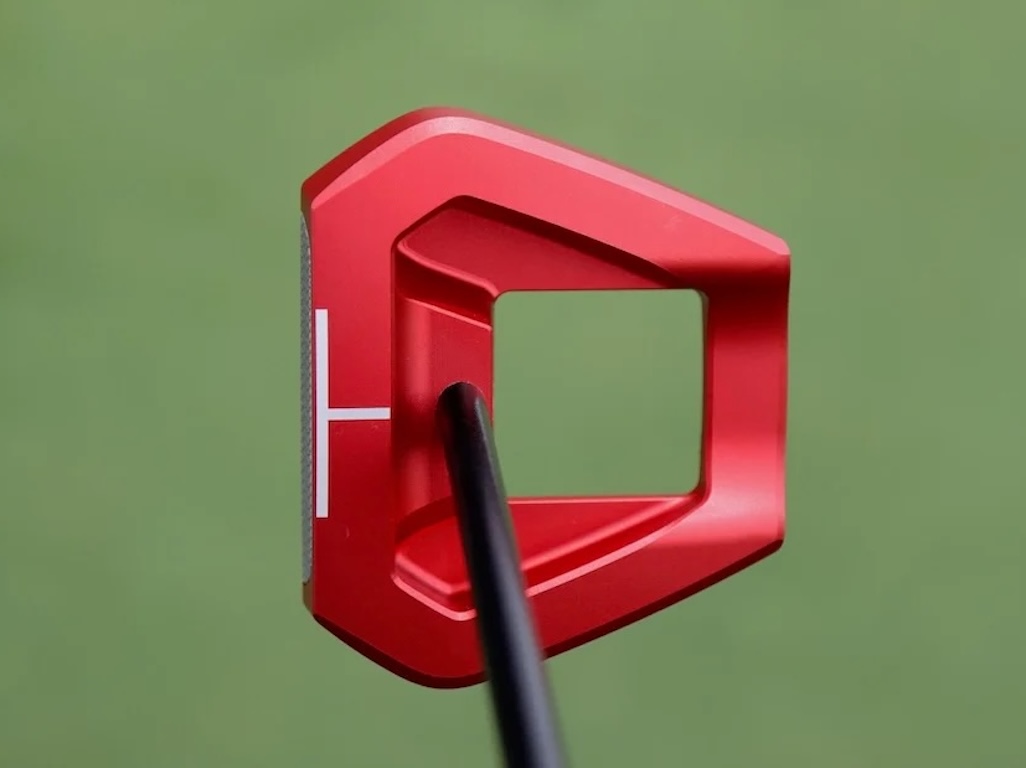
With the second major of 2026 now behind us, the PGA Tour arrives in Texas for the CJ Cup Byron Nelson.
GolfWRX Tour Photographer, Greg Moore, is on site at TPC Craig Ranch in McKinney, Texas, and he’s already captured several WITBs and a look at some new colorways of just-spotted L.A.B. Golf VZN.1i putters.
Check out links to all our photos below.

General Albums
- 2026 CJ Cup Byron Nelson – Monday #1
- 2026 CJ Cup Byron Nelson – Monday #2
- 2026 CJ Cup Byron Nelson – Monday #3
WITB Albums
- Brennan Little (Gary Woodland’s caddy) – WITB – 2026 CJ Cup Byron Nelson
- Adam Svensson – WITB – 2026 CJ Cup Byron Nelson
- Martin Laird – WITB – 2026 CJ Cup Byron Nelson
- Lee Hodges – WITB – 2026 CJ Cup Byron Nelson
- Aaron Wise – WITB – 2026 CJ Cup Byron Nelson
- Dylan Wu – WITB – 2026 CJ Cup Byron Nelson
- AJ Ewart – WITB – 2026 CJ Cup Byron Nelson
Pullout Albums
- New Graphite Design Tour AD shafts – 2026 CJ Cup Byron Nelson
- L.A.B. Golf VZN.1i putters (new colors) – 2026 CJ Cup Byron Nelson

See what GolfWRXers are saying and join the discussion in the forums.


Aaron Rai upset the odds to win his first major championship on Sunday at Aronimink, firing a final round of 5-under par to see off his competitors and claim the winner’s check for $3,690,000.
Jon Rahm and Alex Smalley were the best of the chasing pack, with both men sharing runner-up spot which was good enough for each to receive a check for $1,804,000.
With a total prize purse of $20.5 million up for grabs, here’s a look at how much each player won at the 2026 PGA Championship.
Players who missed the PGA Championship cut each received $4,300 each.
1: Aaron Rai, $3,690,000
T2 : Jon Rahm, $1,804,000
T2 : Alex Smalley, $1,804,000
T4: Justin Thomas, $843,866
T4: Ludvig Aberg, $843,866
T4: Matti Schmid, $843,866
T7: Cameron Smith, $637,050
T7: Rory McIlroy, $637,050
T7: Xander Schauffele, $637,050
T10: Kurt Kitayama, $496,707
T10: Chris Gotterup, $496,707
T10: Justin Rose, $496,707
T10: Patrick Reed, $496,707
T14: Matt Fitzpatrick, $364,762
T14: Scottie Scheffler, $364,762
T14: Max Greyserman, $364,762
T14: Ben Griffin, $364,762
T18: Maverick McNealy, $229,128
T18: Jordan Spieth, $229,128
T18: Stephan Jaeger, $229,128
T18: Padraigh Harrington, $229,128
T18: David Puig, $229,128
T18: Harris English, $229,128
T18: Min Woo Lee, $229,128
T18: Joaquin Niemann, $229,128
T26: Nick Taylor, $125,523
T26: Alex Noren, $125,523
T26: Cameron Young, $125,523
T26: Andrew Novak, $125,523
T-26: Daniel Hiller, $125,523
T26: Tom Hoge, $125,523
T26: Sam Burns, $125,523
T26: Hideki Matsuyama, $125,523
T26: Bud Cauley, $125,523
T35: Christiaan Bezuidenhout, $78,805
T35: Patrick Cantlay, $78,805
T35: Ryo Hisatsune, $78,805
T35: Daniel Berger, $78,805
T35: Ryan Fox, $78,805
T35: Haotong Li, $78,805
T35: Aldrich Potgieter, $78,805
T35: Si Woo Kim, $78,805
T35: Martin Kaymer, $78,805
T44: Chris Kirk, $53,743
T44: Matt Wallace, $53,743
T44: Shane Lowry, $53,743
T44: Jhonattan Vegas, $53,743
T44: Denny McCarthy, $53,743
T44: Chandler Blachet, $53,743
T44: Taylor Pendrith, $53,743
T44: Dustin Johnson, $53,743
T44: Nicolai Hojgaard, $53,743
T44: Michael Kim, $53,743
T44: Kristoffer Reitan, $53,743
T55: Collin Morikawa, $34,186
T55: Corey Conners, $34,186
T55: Andrew Putnam, $34,186
T55: Brooks Koepka, $34,186
T55: Mikael Lindberg, $34,186
T60: Sami Valimaki, $29,218
T60: Sahith Theegala, $29,218
T60: Rico Hoey, $29,218
T60: Rickie Fowler, $29,218
T60: Brian Harman, $29,218
T65: Casey Jarvis, $26,900
T65: Jason Day, $26,900
T65: Rasmus Hojgaard, $26,900
T65: Keith Mitchell, $26,900
T65: Sam Stevens, $26,900

Justin Rose WITB 2026 (April): Full WITB breakdown with new McLaren irons

RBC Heritage Tour Report: More minis, course-specific setups, Spider & GTS launches

What’s the story behind Webb Simpson’s custom-stamped irons?

Cadillac Championship Tour Report: Spieth’s sizable changes, McLaren Golf launches, and more

Kristoffer Reitan’s winning WITB: 2026 Truist Championship

Cameron Young’s winning WITB: 2026 Cadillac Championship

Aaron Rai’s winning WITB: 2026 PGA Championship

Nelly Korda WITB 2026 (April)

Justin Rose on the switch to McLaren Golf, learnings from previous equipment moves

Photos from the 2026 PGA Championship


Patrick Reed WITB 2026 (May)
Driver: Titleist GT3 (9 degrees) Buy here. Shaft: Aldila Rogue Silver 130 M.S.I. 70 TX 3-wood: TaylorMade Qi35 (15 degrees)...

Aaron Rai’s winning WITB: 2026 PGA Championship
Driver: TaylorMade M6 (9 degrees) Shaft: Aldilda Synergy Blue 70 TX 3-wood: TaylorMade Qi10 (15 degrees) Shaft: Fujikura Ventus Blue...


Michael Block WITB 2026 (May)
Driver: TaylorMade Qi4D (9 degrees) Shaft: Fujikura Ventus Black VeloCore+ 5 X 3-wood: TaylorMade Qi4D (15 degrees @14.25) Shaft: Mitsubishi...


Bryson DeChambeau WITB 2026 (May)
Driver: Krank Formula Fire Pro (6 degrees) Shaft: Project X Prototype 3-wood: Krank Formula Fire (10 degrees) Shaft: LA Golf BAD...
-
 Whats in the Bag3 weeks ago
Kristoffer Reitan’s winning WITB: 2026 Truist Championship
-
Whats in the Bag2 weeks ago
Aaron Rai’s winning WITB: 2026 PGA Championship
-
 Tour Photo Galleries3 weeks ago
Photos from the 2026 PGA Championship
-
 Equipment2 weeks ago
GolfWRX Launch Report: 2026 Titleist GTS drivers
-

 Equipment2 weeks ago
PGA Championship Tour Report: Fitzpatrick, Koepka among big-name putter switches for Aronimink
-

 News2 weeks ago
WITB Time Machine: Phil Mickelson’s winning WITB, 2021 PGA Championship
-

 Equipment2 weeks ago
Which of Tiger’s major winning irons are your favorite? – GolfWRXers discuss
-

 Equipment2 weeks ago
Lead Tape Report: Adjusting the swingweight of the Wanamaker Trophy


Robbie Camacho
May 27, 2009 at 1:26 am
I agree with the “shorter driver.” I am of course talking about the shaft length. My driver Length is 44.5, however, I grip down about a half-inch. I have increased both distance and accuracy.
Simon C
May 23, 2009 at 8:32 pm
If you cut down your driver (eg. to 43.5″) you will be lowering your swingweight but also the MOI. In an MOI matched set the swingweight of the driver would commonly C5-C6. The idea is you swing the driver with the same effort you would swing your 7 iron. This is A) more controllable and B) INCREASES swingspeed.
It depends on your approach, if you want to kill every shot you may want to stay with longer length/high SW but if you want to control your shots and hit fairways give it a try. I have recently done this on my 3 wood (lighter shaft and slightly lighter head) and believe me the difference is incredible. It also stiffens the shaft (frequency and torque) so do not do it if you already find the shaft stiff.
I believe it is a good option for those who struggle to square the clubface because the lower MOI means your wrists and hands don’t have to work as hard. You will also find yourself less tired come the 15th hole.
Rich B
May 18, 2009 at 10:28 am
My favoured fairway finder is 43″ but it’s called a 3 wood. If I’m hitting driver I need at 25 to 40 yards of extra distance otherwise there is no point taking the risk…hence why my V2 Rapture is staying at 45.75″ and I love it….
Patrick
May 17, 2009 at 8:00 pm
I hope the technology in golf starts going backwards and we start seeing 460cc going back down to at least 300 cc, I know it would probably destroy the golf industry and not as many people would be playing because of the skill that would be required to hit it pure, but to me that is what golf is all about is hitting the ball pure and crisp with the most extreme focus. The secret has been laying out behind my house for years and just now realized what that secret is.
David
May 15, 2009 at 4:02 pm
I agree with the article in therory that in days of old the driver was hard to hit. The typical steel shafted driver of old was 180 to 225cc’s and NOT very forgiving. My 45 inch driver (Titleist D2) is the most forgiving club in my bag. I find it easier to hit than my fairway wood and just about as accurate. With that said, I guess if you had a head with adjustable weighting you could cut the club down to 43.5 – 44.0 icnhes and use the the weight kit to bring the swingweight back up but to make the club feel right you would probably need to install a 75 to 85 gram shaft so that the club would have a balanced feel. I have an old Hogan driver that has been cut down to 43 inches and it is sooo light I can’t control it…
Pat
May 14, 2009 at 8:24 pm
Now remember if you do play a longer shaft it’s going to make you swing a little flatter so as long as the swingweight isn’t so light it causes you to go left on release. I have a TP R7 superquad 460 and installed a prolaunch red x stiff tipped .5 inch at 47 inches and have 2 four gram weight up front with the 2 one grams in the back and OMG it’s a beast. Also, the feel to me is alot better when the shaft is longer you get a better kick. I never did understand why someone would want to chop 3 inches off an expensive shaft to make it 44 inches. I honestly think the reason why most touring pros don’t hit 46 and higher length shafts is because they would be riducously long and most courses you don’t want that.
Doogie
May 13, 2009 at 3:26 pm
and even though I’m a senior
(55) I agree completely with Randall’s comment.
If you’re serious have your shaft put in by someone who knows what they’re doing and have it done right and pay for the right shaft.
The Ozik shaft that Adams puts in their A4 is NOT the one the pros
would be playing believe me.
Doogie
May 13, 2009 at 3:20 pm
oh and even though theses shafts like the Motore, Ozik Matrix, and Diamana Blue/Whiteboard are exceptional shafts they still should be Pured.
Doogie
May 13, 2009 at 3:18 pm
I am a 2 handicap and I love hitting a 46 inch driver
It’s got to be the right shaft though and most likely you’re gonna
pay a lot more than 80 bucs for it
Randall
May 13, 2009 at 8:17 am
I couldn’t disagree more.
I recently switched all three of my drivers to 48″ and my accuracy has improved by 4 or more fairways per 18. I previously played a 44″ 907D2 and it was absolutely erratic… The much higher swingweight of the longer club keeps everything in control and even at XX 48″ there is more ‘feel’ than a single X at 44″. I’ve also gained more than 15% avg. distance with a smoother swing to boot.
Further, OEM shafts are pure garbage. They play softer than stated flex and torqe more than 4* with very low kick points… all in the effort to get Gramps off the tee in style and his money out of his pension/retirement account. The average ‘better’ player stands no chance of being properly fit with off the shelf product. Combine all that with longer length and you do have a nightmare. The cause, however, is not the added length… its because the OEM’s don’t think you are good enough to play your appropriate specs.
tim glennon
May 12, 2009 at 5:12 pm
I’m 5’7″ 155 lbs. and I’ve been hitting a 47′.25″ driver for over 25 years. I’m typically a 7 handicap. I believe this is the easiest length driver for me to hit, as well as longest, because it requires tempo and focus. I can’t hit a std. driver to save my life.
Jim
May 11, 2009 at 4:27 pm
I play a Titleist 907D2 and had the shaft cut to 43.5″, I am only 5’7″. I actually gained about 10 yds because the sweet spot was getting met more often and the control was excellent. Give it a try all you have to do is swallow some pride.
Mark Strain
May 9, 2009 at 9:43 pm
I just cut down my driver the other day 1 inch to 44 and i hit it so much better and even a little farther believe it or not. i am a 1 handicap college player and i hit it reasonably long as it is, but i was looking for a more accurate driver, and i think i found it with this small change.
marco righetti
May 9, 2009 at 7:26 pm
i agree with pat, i’m 52 years old and i’ve been playing golf for 2 years now and am a 28 handicapper and i have fallen in love with longdriving!
i love playing golf on the course but equally love going to the range and use the driver until i become tired!..i feel as if ive had a workout!
i have a callalway 8 deg diablo neut driver on a ust v2 longdrive 50 inch LDA shaft and a cleveland hi-bore xl 9.5 deg on a 46 inch aldila dvs shaft…i agree that the 46 inch shaft driver is harder to use than a 44 inch shaft driver..but..once you get used to the 50 inch the 46 inch becomes easy and a 44 inch would be extremely easy to use..and..i can honestly say that if hit in the sweetspot a 50 inch driver will send the ball further than a 46 inch etc……
so my main point is once a person gets older and they begin to loose ditance off the tee with the driver…… then…trying to get used to a longer shafted driver can help to get more distance back!
Pat
May 7, 2009 at 1:55 pm
I’ve been playing a 47 inch driver for the past 5 years and I hit it dead solid perfect everytime, the trick is to have the stiffest shaft possible at that length with the swingweight being just the right amount that it’s not to heavy and actually lose distance because of the weight. It takes lots and lots of practice and alot of hand eye coordination, but after you get to hitting it solid with that lenght and you try to go back to say a 44 inch driver it feels like a dang 5 wood.
Mike M.
May 7, 2009 at 9:58 am
Great story, Richie A. I find it comical how some players feel as if others are “cheating” if they actually have clubs that fit their swings & game – as if we’re all somehow obligated to accept what the OEMs give us off the rack and ajust our swing to their rigid standards. Sounds to me like your friend had a difficult time coping with the fact that you were outdriving him by 20 – 30 yards with a club that’s 3″ shorter. I’m a really slow swinger (85 mph) & play with a 44″ driver, regular flex, 13.5 degrees of loft. Some have said to me “that’s not really even a driver – it’s a strong 3-wood with a big head.” Well, whatever – I’d rather play my second shot from the fairway after hittng a “strong 3-wood” than scramble out of the trees after hitting a wild shot with something that meets somebody else’s definition of the word “driver.”
Scott
May 6, 2009 at 5:32 pm
Where does the driver shaft length for the pros get posted? I have looked everywhere for it. I think it would be really enlightening to see.
Richie A
May 6, 2009 at 2:43 pm
I played a scramble the other day with a guy who was using the exact same driver I was — G10 9* Draw, Stiff. I was hitting the ball 250-265 consistently, compared to his 230-235 (I’m bigger and I do swing harder). I was also in the fairway 70% of the time, and he was in the fairway two or three times. His index is 12; mine is 14. (he is a much better iron player than me).
He mentioned our identical drivers at one point, and I handed mine to him. He set it next to his and was shocked that mine was a full 3″ shorter (mine is 43″, with about 10g of tape on the head). He was dumbfounded and rambled on about “too short…makes it too light…can’t hit far with this thing…ruined the club…it’s a 3 wood…” I just shrugged and hit another fairway so our scramble team could keep having shots at birdies. We used my drive 10 of 14 times. (we shot a 58 and I won a $100 gift card to Golfsmith!).
If I could hit irons, I’d be dangerous. 😉
Mike Crozier
May 6, 2009 at 1:02 pm
Great article, I think the author could have included one more thing about testing now. The driving range is on the way out most new drivers are tested on SIMULATORS, in which everyone looks at the final distance as a benchmark of how good the driver is!
Mike M.
May 6, 2009 at 11:32 am
This article is dead on. The top pros in the world won’t play with a 46″ driver because they want something they can control, yet Average Joe Weekend Golfer is supposed to able to hit fairways with these unwieldy things? Call me a conspiracy theorist, but I think the OEMs are in bed with shaft manufacturers and clubmakers – they purposely make drivers longer than any player can hope to control so people will get them cut down or reshafted with shorter shafts to make them playable.
I don’t agree with the statement that “unless you hit the ball less than 200 yards, you don’t really need a 46″ driver.” The opposite is true – If you’re hitting the ball less than 200 yards, then there’s no earthly way possible you have the skill to control a 46″ driver, and you’re worse off with one than anybody else. Maybe you hit the sweep spot 1 in 10 times and it goes 210-215 yards, and the other 90% or your shots are 180-yard wild things than end up in the trees. Or play with a 44″ driver and have 80% of your drives go 195-200 yards down the middle of the fairway. The second scenario is better for the weak hitter than the first. Players with slow swing speeds are the LAST people on earth who need to be messing around with a 46″ driver. Fact.
Dom C.
May 6, 2009 at 12:27 am
This is a great article. Whenever I get a new driver, I immediately cut it down to 43.5″. It’s easier to drive the ball, it’s a lot more consistent. I’m no single digit handicapper, but a 14 instead. Not a long hitter, but not short either, consistently in the 265 yards range. With the “shorter” driver by today’s standards, I have not lost yardage that has hurt me, so I would rather have the consistency. I have persuaded my golfing partner to cut down to the same length with great results as well.
In regards to machismo, I actually get more satisfactions letting the other 3 players know that I’ve been out-driving them all day with a 43.5″ driver.
gabbo
May 6, 2009 at 12:04 am
Very true article. One additional point is longer shafted drivers often come with light heads to keep the swingweights reasonable. If someone wants to shorten the driver, they’ll either need to add weight to the head or get a heavier shaft to compensate.
As a golfer who prefers a 44 or 44.5 inch driver, I rarely demo drivers anymore. The shafts are so long, the club doesn’t feel right…even when I choke down. And trying to figure out how it will play shorter is just a in the dark.
So I just play my old two year old driver with a shaft I like and call it a day.