
Equipment
The inside track — Scotty Cameron


By Zak Kozuchowski
GolfWRX Managing Editor
What’s in a name?
If the name is Scotty Cameron, then it includes some of the most memorable moments in modern golf history.
Tiger Woods has won all 14 of his major championships using a Scotty Cameron putter. Two of last year’s majors, the 2011 U.S. Open and British Open, as well as 10 others majors have been won by players using a Scotty Cameron. Together, that’s 26 major wins — not bad considering that the first major championship win for a Scotty Cameron came only 20 years ago at the 1993 Masters.
Many times, products from a specific equipment manufacturer are successful in the hands of professional golfers because of an accepted change in equipment appearance or technology – think white-painted drivers and spikeless golf shoes. But for Scotty Cameron, the man behind Scotty Cameron putters, his success story hasn’t been as much about innovation as it has been about attention to detail and refinement.
Cameron’s newest line of putters, the Select line, is an example of the fine-tuning that the putter maker has been finessing into his work for years. The line includes some new retail designs as well as Cameron’s most popular shapes – the Newport, Newport 2 and their cousins – the Newport 1.5 and the Newport 2 Notchback.
The recent trend on the PGA Tour for putters has been bright, bold colors — designs that provide ample contrast for alignment. That’s why it was surprising to many that Cameron chose to make the Select line mostly black. Cameron calls the putter finishes “smoky grey,” and the sightlines on certain models “shiny black.”
“I put [prototypes of the Select line] out on Tour to get some feedback with grey, white and black sightlines,” Cameron said. “Honestly, it makes sense to put a white sightline … but it was overwhelming how many guys dug the black sightline.”
Like all of Cameron’s putter lines, the putter head is only one part of the putter’s total package. Everything from the putter’s grip, shaft, shaft band and head cover is designed to create a specific mood. For the Select line, he said he aimed for “sexy,” “more gentlemanly” and “elegant,” which requires not just cosmetic changes, but aesthetic ones as well.
One of Cameron’s previous lines, the Studio Select, was made with a two-degree high toe (the amount the toe is raised from the ground at address). For the Select line that Cameron put together this year, he flattened the toe one degree, which he felt streamlined the look of his putters.
Another element that Cameron worked hard to insert into the Select line was the ability for the putters to be easily customized through the Scotty Cameron Custom Shop. The Custom Shop allows players to add personal touches to any authentic Scotty Cameron putter, such as custom stamps, lettering, alignment lines or dots and paintfill. One of the most widely visible customizations seen on Scotty Cameron putters on the professional tours are stamping made in the dots on some Scotty Cameron putter faces and back cavities. A red dot first appeared on the heel of the putter face of the world’s former No. 1 player. The dot, which served to make the putter’s sweet spot perfectly centered with the sight dot, has come to symbolize the Scotty Cameron brand.
Cameron has included three of his signature dots in the back cavity in all but two models of the Select line, a feature that first came to retail in the Studio Select line in 2008. But for the Select line, he increased the size of the dots to better accommodate his custom stampings – the “Junk Yard Dog,” the “Cameron Money” stamp, hearts, four leaf clovers and others.
Steve Pelisek, Titleist general manager of golf clubs, said that it’s fun to see what models come back the most at the Custom Shop. Despite a large Custom Shop demand for restoration of Cameron’s Napa putter and other models like the Bullseye and non-pocketed putters, there’s not enough following to justify putting those putters in the retail line, Pelisek said.
“Sometimes it’s thought to justify putting them in the line,” Pelisek said. “But if we were to put those in the line, they would be the least seller by far. So much of it is tour trends … we watch and listen. If the market place starts to rumble, we address that with a short run. We don’t want to make a large run of Coronados and have them left sitting in the shops.”
Click here for more discussion in the putter forum.
Even though Cameron called the Napa the favorite putter he makes, he agreed with Pelisek that there is not enough demand for such models. One reason, he said, is the highly repeatable putting stroke that is required to achieve consistent results with putters like a Napa.
“If you’re rhythm and timing is good, [the Napa] is fantastic,” Cameron said. “I did one for the PGA Show – polished it, turned it blue, stamped it sexy.”
One of the classic designs that is not currently part of the Select line, the Laguna, will be part of the line extension at some point. But right now, the focus at Scotty Cameron is on the GoLo, a mid-mallet that Cameron called the “homerun” of this year’s line. He and his team are running milling machines 24 hours a day, six days a week to meet demand for the GoLo, which is intended to bridge the gap between the Kombi and Kombi-S models, which are oversized-mallets, and the Red X putters, which are smaller-sized mallets. At first, Cameron tinkered with a symmetrical design of the GoLo, but decided to shave or “sweep out” the heel of the putter. The problem with symmetrical designs, according to Cameron, is that they give a player the appearance that the putter wants to go straight back in the backstroke, which he does not believe is the best way to putt. By shaving the heel of the GoLo, the putter looks as though it should be taken back slightly to the inside, a putting style he sees time after time from the best players in the world.

“We can design putters to make you think things and do things,” Cameron said. “That’s why we make high toes [on putters], so you don’t drop your hands … when you drop your hands, the four degrees of loft on the putter starts to point left.”
Examining trends
Since Cameron came to prominence as a putter maker nearly two decades ago, golf equipment design and technology has changed drastically. Driver heads have doubled in size. Graphite shafts are no longer the exception in drivers and fairway woods – they are the standard. And clubs called hybrids have become a popular alternative to long irons.
Cameron’s detractors are quick to say that his designs are not truly original – they say his popular Newport head is all to similar to the Anser putter that PING founder Karsten Solheim developed in the late 1960s. But that comparison is similar to penalizing Apple Co-Founder Steve Jobs for not inventing the computer.
Cameron has been at the forefront of many putter trends, most noticeable the popularization of high MOI putters. In 2003, Cameron brought to retail his Futura putter, a futuristic mallet with a heavy horseshoe-shaped ring located in the rear of the putter that served to redistribute the putter’s weight for a better roll. Many putter makers had released high MOI putters prior to 2003, but none had the immediate success that Cameron enjoyed with the Futura.
According to Cameron, Phil Mickelson saw a right-handed Futura prototype in Cameron’s studio, and asked if he could make him a left-handed model. Cameron also made one for Scott Hoch, who like Mickelson, won on the PGA Tour with a Futura in his bag.
“The Futura was about putting weight in an optimum place,” Cameron said. “The putter didn’t sound that crisp, and it didn’t look that great, but it could be one of the best putters we’ve ever made at Titleist.”
According to Cameron, the design “was never supposed to come out.” But when it did, it had a profound impact on the putter industry. Now, it’s hard to find a putter maker that doesn’t offer at least one high-performance mallet in his or her line.
In 2009, Cameron brought another oversized mallet to market, the Kombi. Cameron said he incorporated what he learned from the Futura into the Kombi, designing it in a way that he said made it sound and look better.
The worst part about the Kombi turned out to be the name. Cameron took the name from Volkswagen’s Type 2 bus, which was named the Transporter 2 or Kombi (short for Kombinationskraftwagen) — a combination vehicle on one chassis. His idea was to have a Kombi short, Kombi mid and Kombi long (for a short-length, mid-length and long-length putter). But Cameron tired of explaining to people what Kombi meant, so for the Kombi long-length putter in the Select line, he and his team decided to bring back the classic long putter name that they’d used in the past – Big Sur.
One of the trends that Cameron has resisted throughout the years is creating putters with plastic and rubber inserts. Cameron has made putters with inserts out of metals such as German Stainless Steel and Teryllium, but he has shied away from plastics and rubbers out of fear of what can happen to the materials over time.
“Plastics and rubbers sometimes fail,” Cameron said. “They can crack, chip and delaminate. What happens when [putters with plastic and rubber inserts] are in the trunk of your car after a round in Palm Springs, and then are transported back home in the belly of an airplane. I don’t want to get into a situation where I have to replace a failed insert.”
Cameron said that he could change the feel of his putters with high-quality metal inserts, as well as through the texture of his putter faces. One of the most prominent features on the Select line, as well as Cameron’s trendier California line, are deep mill marks on the putter faces. How they change the feel of a putter is simple – deep mill marks impact a smaller surface area on the ball, which creates a softer feel that meshes better with the harder-feeling golf balls that are currently dominating the professional tours. Cameron’s once popular “beached” putter models achieve exactly the opposite feeling. A slot cut behind the putter face creates a firmer sound, which is why the putters are no longer offered in the retail lines. Like Napa putters, interest in beached putters has also become limited.
Click here for more discussion in the putter forum.
Cameron has also stayed away from “groove inserts” in his putters, which he said do not offer the benefits that many manufacturers are touting.
“All the groove putters that we have tested have one-to-two degrees of loft,” Cameron said. “We’ve found that groove technology drives the ball into the ground. We want [the ball] along the ground, not into the ground … if there’s a better way to [putt], we’re looking at it. We have the robots and the high-speed video technology.”
Cameron identified three trends that he sees as major parts of putter design in the future. He said that putters are going to become shorter, putters are going to become heavier and putter grips are going to increase in size. He had several requests for mid and long putters from tour players in the offseason, but found that come tournament time, most players returned to their trusted short putter. Still though, he doesn’t see mid and long putters going away any time soon. For some players, mid and long length putter are a great way to putt, he said, but “some guys need it and some guys don’t.”
This year’s Select line includes more straight-shafted putters than any of Cameron’s lines in the past. Many people refer to these models as center-shafted putters, but Cameron said there is an important difference between a straight-shafted putter and a center-shafted putter. Center-shafted putters, which began to get a lot of play on tour seven years ago, have the shaft inserted directly into the center of the putter head. It was a trend that Cameron thought would fade quickly, but when it did not, he adjusted. Cameron said that his testing has shown that many players tend to address center-shafted putters with the ball too far out on the toe. As a result, they strike their putts too far toward the toe of the putter. Cameron’s straight-shafted putters address this issue with a shaft that is inserted one shaft diameter back from the center of the head, giving players the look they desire, but helping them address the ball and strike their putts properly. Straight-shafted putters in the Select line include the Newport 2.6, the Newport 2 Mid (a mid-length putter), the GoLo S and GoLo S Mid, and the Big Sur S Long.
Custom putter fitting
There was a time when custom putter fitting consisted of going to a pro shop, trying a few different putters and purchasing the one you liked the best. But like the custom fitting of the other 13 clubs in a golfer’s bag, technology has changed that. From the outside, it appears that Scotty Cameron is behind the curb when it comes to custom putter offerings. But according to Pelisek, there is good reason why there isn’t a Scotty Cameron fitting system in place, and the company only offers short putters in lengths of 33 inches to 35 inches with lie angles no more than two degrees flat or upright from standard.
“Scotty brings in the best players in the world to his putter studio, and they fit into a surprisingly small range,” Pelisek said. “We feel that our product line covers 98 to 99 percent of the spectrum. To putt well means to putt correctly. There aren’t a lot of players that need anything shorter than 33 inches or longer than 35 inches … or more than two degrees [variance from standard] lie angles.”
For that reason, Pelisek and Cameron don’t endorse freelance putter fitting methods, which they said could fit a player into a “crutch” for bad technique. That being said, Scotty Cameron plans to publish a selection guide on May 1 that Cameron and Pelisek said would provide the necessary information for players to choose the right Scotty Cameron putter for them. The selection guide will cover length, toe hang and important information about the visual aspects of each putter, as well as recommendations for lie angle and loft.
One aspect of custom fitting that Cameron has embraced is the addition of removable weights in putters, which help with length adjustments. Cameron always wanted to make putters in different lengths, not just the 35-inch standard length putters that he produced in most models for years. Cameron believes that shorter putters need to have heavier head weights, and vice versa, that longer putters need lighter height weights. The solution to this was to create one shell for each model, but include in the bottom of the putter removable weights that could add or subtract head weight based on length.
Rolling on
Many putter makers have fallen in and out of favor in the 18 years Cameron has been at Titleist designing putters, but through the years and all the different trends, he has managed to remain the most recognized name in putters.
His love affair with the design of his Napa putter is a good example of why. The design is nothing new – its roots are the classic 8802 that great putters have used for decades. When Cameron was in the initial stages of the Napa design, he did something he often does when building a new design. He sought the advice of loyalists that had used a Napa-like putter for years – Arnold Palmer, Larry Mize and Ben Crenshaw. Their input and his vision resulted in a design that is morphed from a solid block of steel into an elongated curved shape. If any part of the design is out of proportion, it will not look right at address — too thin of a neck will make it look weak and too thick of a design will make it look lethargic. It’s a challenge, but that’s the reason Cameron said he loves making Napa putters. Really, it’s why he loves making all his putters. There’s the history, the technology, and most important to him, the chance to “do it right.”









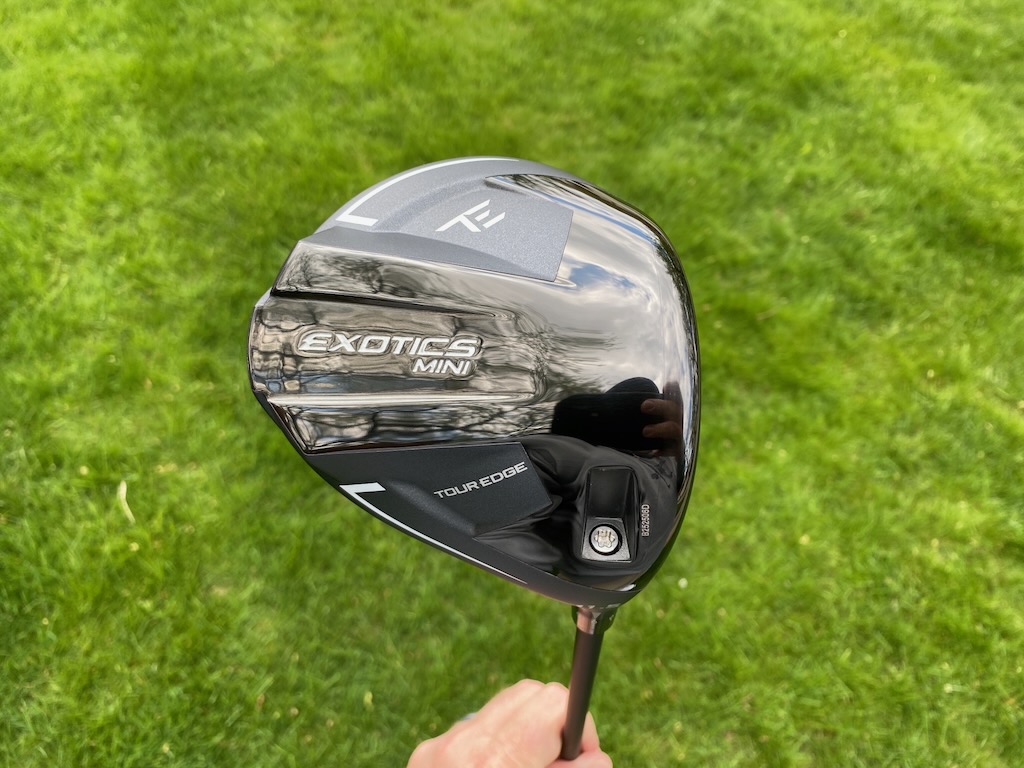
Tour Edge Golf has today introduced the all-new Exotics mini driver, engineered to deliver a powerful combination of speed, control, and versatility in the long game.
The Exotics Mini combines a titanium face with a stainless-steel body in design to balance ball speed with stability and control, creating a versatile option at the top end of the bag.

At the core of the design is Tour Edge’s proprietary Combo Brazing technology, a high-precision thermal bonding process that seamlessly fuses a titanium cup face to a stainless-steel body into a single, continuous structure. By eliminating energy loss found in traditional multi-piece constructions, Combo Brazing is designed to deliver faster face response, more efficient energy transfer, and a uniquely powerful yet controlled feel.

The multi-material construction also allows mass to be positioned lower and deeper in the head in a bid to increase stability, while the thin titanium face is engineered to maintain ball speed across a wider impact area.

“While the initial goal was to enhance control and versatility in the long game, Combo Brazing ultimately drove measurable gains in ball speed and distance within the mini driver category. In robot testing, we’ve documented higher ball speeds, higher launch, reduced spin, and increased carry and total distance compared to leading models.” – Vice President of R&D Matt Neeley

In addition to distance performance, the Exotics mini emphasizes forgiveness through a heavier stainless-steel body that shifts mass toward the perimeter. This configuration increases MOI relative to traditional all-titanium mini drivers, helping preserve ball speed and directional stability on off-center strikes. Paired with Pyramid Face Technology from the Exotics metalwood line, the design is intended to support consistent speed across the face.

To further enhance MOI, a lightweight carbon fiber crown frees additional mass that is strategically repositioned low and deep in the head in design to improve stability and promote optimal launch with controlled spin.

“We designed the Mini to be about five millimeters shallower than other mini drivers on the market. That change improves playability off the deck. From a clean fairway lie, it can function as a strong 3-wood alternative while still providing control off the tee.” – Tour Edge CEO David Glod
An adjustable hosel system allows for loft and lie tuning to dial in trajectory and shot shape, while a fixed 13-gram rear weight helps stabilize the head through impact to improve dispersion consistency. The Exotics Mini Driver is available in 11.5 and 13.5-degree lofts in right-handed models.

Pricing & Availability
The Exotics Mini Driver is available for pre-order beginning today for $399.99 USD at touredge.com, and will be available for purchase at retail outlets worldwide on May 22, 2026.

In our forums, our members have been pitting a Srixon ZXi combo against a TaylorMade P7CB/770 combo. WRXer ‘edutch22’ is on the hunt for a new set of irons and kicks off the thread saying:
“Looking at picking up a new set of irons and think I’ve narrowed it down to Srixon ZXi combo or Taylormade P7CB/770 combo. I am currently a 5 cap and allbeit I feel irons are my weakness. My miss is a little to the toe side. I am decently steep at 4-5 down. Always thought I am high spin but recently on trackman my 7 was spinning at 5800 roughly.
My question or looking for thoughts on which one would benefit me more from a forgiveness standpoint? Or is there another iron is should be looking at entirely? I only get to play about once or twice a week, if I am not playing a 2-3 day event. Thanks in advance.”
And our members have been sharing their thoughts and suggestions in response.
Here are a few posts from the thread, but make sure to check out the entire discussion and have your say at the link below.
- manima1: “You just can’t go wrong with Srixon ZXi7.”
- MattM97: “You have to hit them to know, the V-Sole on the Srixon can be make or break for many.”
- dmeeksDC: “P7CB is more forgiving for me than ZXi7 because my main miss is low middle and the P7CB still flies and spins great on that miss. These are both really nice irons but I like the P7CB more than the Zxi7 and the P770 (or P790) more than the Zxi5. The Srixons are larger so if that gives you confidence that is the way to go. I don’t feel like I get any benefit from the V-sole and the P7CBs live up to their high Maltby forgiveness rating so the TaylorMades have been great for me.”
Entire Thread: “Srixon ZXi combo or TaylorMade P7CB/770 combo? – GolfWRXers discuss”

At GolfWRX, we are a community of like-minded individuals who all experience and express our enjoyment of the game in many ways.
It’s that sense of community that drives day-to-day interactions in the forums on topics that range from best driver to what marker you use to mark your ball. It even allows us to share another thing we all love – buying and selling equipment.
Currently, in our GolfWRX buy/sell/trade (BST) forum, @pianoman0123 has a 2024 Wilson Staff CB/Blade combo up for grabs.

From the listing: “2024 Wilson Staff CB/Blade Combo. 4-8 irons are CB’s and the 9,PW are Blades. 5-PW have Project X 6.0 Shafts and the 4 Iron has a Steelfiber CW110 Stiff Shaft. Standard Length, Lie and Lofts. These are in very good condition the shafts just don’t work for me. Like new Lamkin Grips on the 5-PW and a stock Golf Pride on the 4 Iron. $525 OBO.”
To check out the full listing in our BST forum, head through the link. If you are curious about the rules to participate in the BST Forum, you can learn more here: GolfWRX BST Rules

RBC Heritage Tour Report: More minis, course-specific setups, Spider & GTS launches

Justin Rose WITB 2026 (April): Full WITB breakdown with new McLaren irons

Best fairway woods of 2026: The most versatile fairway woods + the most forgiving fairway woods

Gary Woodland’s winning WITB: 2026 Texas Children’s Houston Open

What’s the story behind Webb Simpson’s custom-stamped irons?

Cadillac Championship Tour Report: Spieth’s sizable changes, McLaren Golf launches, and more

The 24 players who can win the Masters

Rory McIlroy’s winning WITB: 2026 Masters

Kristoffer Reitan’s winning WITB: 2026 Truist Championship

J.J. Spaun’s winning WITB: 2026 Valero Texas Open


Alex Fitzpatrick WITB 2026 (May)
Driver: Ping G440 LST (9 degrees) Shaft: Fujikura Ventus Black 6 X 3-wood: TaylorMade Qi4D (15 degrees) Shaft: Fujikura Ventus...

Kristoffer Reitan’s winning WITB: 2026 Truist Championship
Driver: Ping G440 Max (9 degrees) Shaft: Mitsubishi Tensei 1K White 60 TX 3-wood: Ping G440 Max (15 degrees) Shaft:...


WITB Time Machine: Rory McIlroy’s winning WITB, 2021 Truist Championship
Rory McIlroy’s victory at the 2021 Wells Fargo Championship 2021 (now the Truist Championship) marked a significant return to form,...


Collin Morikawa WITB 2026 (May)
Driver: TaylorMade Qi4D LS (8 degrees) Shaft: Mitsubishi Diamana D+ Limited 60 TX 3-wood: TaylorMade SIM Tour (14 degrees) Shaft:...
-
 Equipment2 weeks ago
Justin Rose WITB 2026 (April): Full WITB breakdown with new McLaren irons
-
 Equipment1 week ago
What’s the story behind Webb Simpson’s custom-stamped irons?
-
 Equipment2 weeks ago
Cadillac Championship Tour Report: Spieth’s sizable changes, McLaren Golf launches, and more
-
Whats in the Bag3 days ago
Kristoffer Reitan’s winning WITB: 2026 Truist Championship
-

 Whats in the Bag1 week ago
Cameron Young’s winning WITB: 2026 Cadillac Championship
-

 Whats in the Bag3 weeks ago
Nelly Korda WITB 2026 (April)
-

 Equipment2 weeks ago
Justin Rose on the switch to McLaren Golf, learnings from previous equipment moves
-

 Tour Photo Galleries2 weeks ago
Photos from the 2026 Cadillac Championship


Figs
Sep 10, 2012 at 2:32 pm
Advice for those who decide to customize their putter, make sure you are 100% sure what you want and make sure you are as detailed as you can be. I had put in a request if it was possible to change the color of the letters in the original grip for the new select putter. I never received a phone call or email stating that it wasn’t possible. Instead I found out when I had placed a called for an update on my putter. I had asked the customer service agent to please change out the original grip and I would pay for the difference. Less than a week later I received my new putter with the original grip. I have sent multiple emails and placed phone calls and SC is not willing to help me out.
I’m shocked that they have poor customer service. Has anyone else had any issues with them?
Christian
Apr 26, 2012 at 10:09 am
Thanks for the well written article. Interesting about the Futura. I wonder if Scotty will ever start a support group for wives that find his putters stashed/hidden around the house?
Devlin
Apr 25, 2012 at 8:04 pm
Good article. Nice to see that some editors actually read some of the wrx forums.
Cheers
Devlin
Anthony C Simmons
Apr 25, 2012 at 1:20 pm
I am a huge Scotty Cameron Fan and own many of the models that he has created,nice to know that gimmicks are not part of the design process.Keep up the great work Scotty.
Scott
Apr 25, 2012 at 11:07 am
Great article Zak. I like to hear Scotty’s views on the industry. Love him or hate him, everyone has to admit that he is a good marketer of his products.
Drew
Apr 24, 2012 at 11:24 pm
thanks for the article. I am a big Cameron fan and found out some info there that I haven’t heard before.