
Opinion & Analysis
Golf gets its first Czar (Part 5)

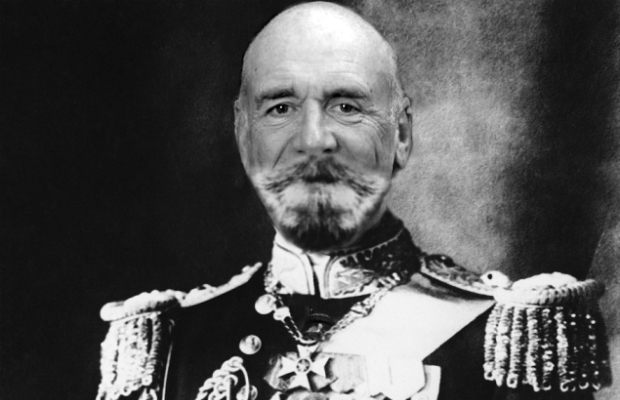
I must admit that I was surprised and humbled when told I’ve been named Czar over all of golf. I asked about the process and was told that upon investigation the computer drives failed but the appointment stands. I was afraid it would eat into my gin rummy time, but given the lack of focus involving participation I have decided to accept.
I do not plan to dismantle any of the current organizations and those of you who openly questioned my election process will be forgiven over the next several decades. There will also be a new event starting at the regional level, “The (Mandatory) Czar Homage Invitational,” featuring a huge field and colossal entry fee: details forthcoming except for distribution of the entry fee.
As promised before being elected, I will devote my time and energies to setting up a format where golf courses can combat the “too slow, no fun” malaise that is effecting the game. I will also drop any pretense of formality and go forward in a conversational tone. As Czar, my legacy will be seeing participation increase to a comfortable level. This does not mean I’m ignoring cost, good management and associated issues. It means my first goal is to improve the game as a value proposition.
Some facilities have attempted a leadership position by moving players up to shorter tees under the “Tee It Forward” influence. With a few exceptions, the effort is C-worthy and emblematic of the lack of thought which resulted in the original problem.
A short course with bland, uninteresting holes is only slightly better than one with spectacular holes that are too long for 90 percent of players. There’s no question that moving up benefits the majority of players, but I want the assembled minds in the industry to take that objective and do so with the combined goal of a shorter and still challenging layout.
As Czar, I don’t really have to do this, but to show my humanitarian side, let me start by apologizing to women golfers. I will write about men’s lengths and layouts because it’s easier for me and I’m lazy. I can provide specifics for women and if anyone is serious in that area I suggest they contact Carol Mann of the LPGA’s Hall of Fame. She did the best job of altering a course to be “woman friendly” that I have encountered (email address available upon request).
I realize golf courses are not easily adjusted. What follows is a statistic-based analysis of what it should be. I say “statistic-based” because the guidelines emanate from data on more than 1 million handicaps. If you really want to improve, you will look at the concepts and change what you can.
First we establish the back tees. Every course, public or private, has some number of long-hitting, good players and they deserve the challenge. The difference is that these tees will be identified as being for a small percentage of the players and the “real courses” are shorter but very challenging.
Since there is a historical association with the color of tees and who is supposed to play there, my first suggestion is new tee names and colors. The name “Czar Tees” is available with rental terms to be negotiated.
Wind and terrain are major factors and must be considered. It’s not how long a hole measures, it’s how it plays. Obviously, unless you live in West Texas or Oklahoma, the wind won’t be predictable (it never stops, and yes, I have lived in both places).
Look at the great links courses of Europe where they design holes around prevailing winds. Trust me, they have great layouts. So as I lay out ground rules, understand that theoretically each hole has been factored for the conditions. The other premise is that the average golfer gets to hit something in the neighborhood of an 8 iron into par-4 holes.
For the record, 8 iron is the average club tour players hit into par-4’s on the Tour. This is a key factor. It really isn’t about where the tees are or how long the hole measures; it’s about where you play from into the green so you can hit the ball into the air and have it land and stop on the green.
Par 5’s
The unthinking rush to front tees has produced a lot of 450-to-480 yard par-5 holes. The majority are dumb holes, still three shots for most everyone, but you can hit almost anything off the tee, anything for a second shot and still have a relatively short third shot. The great unwashed can whip something around 210 yards with a decent tee shot and have 180-to-190 yards for a second shot.
Assuming that a player can hit a 7 or 8 iron about 140 yards, we should have par 5 holes of 530 yards or more, not 475 yards. A downhill par-5 with a fast fairway should play longer than 530 yards, while an uphill par-5 or one that plays into the wind should player shorter. Let me repeat that I’m talking distances for the majority. Challenges for long-hitting, good players are handled very well by today’s architects.
Par 3’s
I’ve seen a lot of par 3’s that play something like 180 yards over a 30-foot deep water hazard replete with man-eating creatures. Let’s move those up to about 150 yards. If it’s a fairly open fairway where golfers can roll the ball onto the green, 190 yards is not out of the picture. If the green is protected by 18-foot deep traps where you can break an ankle getting in and out, let’s shallow them out.
The bottom line is that par-3 holes should range from 120 yards with small, protected greens to 190 yards with a helpful fairway.
Par 4’s
Par 4 holes now become more obvious from our experiences with the par-3’s and par-5’s. Drivable par 4’s are a great addition to some tour courses. Good for them, but they’re not applicable for us. Longer par 4’s (up to 400 yards) should feature straighter, faster fairways that encourage a ball to roll onto the green. Shorter par-4’s can obviously be more nefarious with curves and rough, and my personal reaction is that these types of holes are where great architecture can truly emerge.
I have a personal favorite par-4 that measures 340 yards and plays uphill. I swear it plays closer to 400 yards and the very memory of hitting a decent drive and needing a hybrid to have a chance just bugs me. But I CAN play it, unlike many others at 430-yard holes. Those leave me thinking about fishing more.
For those of you obsessed with numbers, I can provide a playable course between 6000-and-6600 yards under normal conditions. Remember, the back tees will still be in the 7000-yard range. For the golf architects bemoaning the low level of current business, I suggest that applying their skills to this concept creates more business opportunities. Let them be known for designing fun, playable courses and altering current ones accordingly.
Who pays for all these makeovers? That will be covered in the next and final issue.
Related


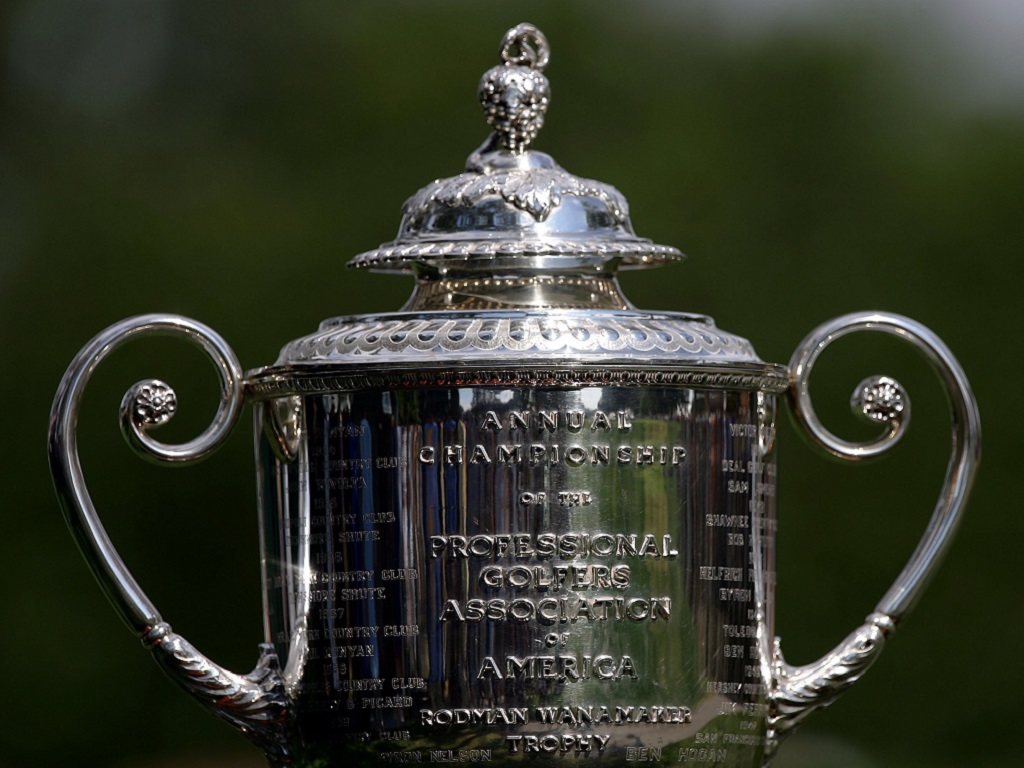
Aronimink is not a storied club, but when Donald Ross himself proclaimed it to be as good as he can design and build, one had to take notice. Jay Sigel was the pre-eminent male amateur golfer from the mid-1970s to the mid-1990s. He might have called any number of Philadelphia clubs home, but he chose Aronimink. It served him well. Gary Player won a PGA Championship here in 1962, and was followed by the 1993 winner … nobody. Aronimink gave that event away to Inverness, for reasons of which it is certainly not proud. So be it. We had to wait sixty-four years for the PGA to return to Newtown Square, but here we are. Aronimink has been neo-restored by Gil Hanse and team, to return Ross features with an eye toward defense against the dark arts, errrr, high-tech equipment.
Day one saw Rory McIlroy and Bryson DeChambeau dig big holes, to the tune of plus-four and plus-six, respectively. Since the first-round lead will be minus-three at worst, many shots will need to be made up for the power couple to reach contention. By nightfall, seven golfers held the day-one lead at three-under par 67. Shots and sticks caught our attention, and we are proud to present Five Things We Learned on Tech Thursday at the 2026 PGA Championship. Thanks to InsideTourGolfer, Today’s Golfer, and GolfWRX for initial equipment research.
First, meet Min Woo Lee
Min Woo Lee, aka Dr. Chipinski, has once again thrust himself into the conversation of Can he, will he, when will he? Lee has so much talent, wins not nearly as often as we believe that he should, and has no major near-misses (much less titles) on his wiki. The young Aussie is getting older and wiser, but is he able to avoid the scarring that holds the older and wiser back from breaking through? Philadelphia offers another opportunity. Min Woo signed for five birdies and two bogeys on day one, and grabbed a share of the opening-day lead at Aronimink. Winners transcend history and the moment, and Lee will need that sort of ascent to lift the Wannamaker on Sunday.
Second, meet Aldrich Potgeiter
The young South African golfer can rip driver with the best of them. Aronimink tips out at nearly 7400 yards, but beyond the fairway bunkers that ensnare only the mortals, Potgeiter can take his chances with wedge from the rough. On Thursday, he spent plenty of time in the spinach. Like Popeye, he used his muscles to gouge and thrash and dig his way out. Six birdies against three bogeys on the card brought AP in a three deep.
Third, meet Martin Kaymer
Not a major event takes place without a where’s he been throwback moment. We know that Martin Kaymer left the PGA and DP World tours for LIV golf, but the two-time (US Open and PGA) major winner has a lifetime exemption into at least one major event, and he seizes the opportunity each May. Kaymer joined the six-seven brigade with four birdies and a solitary bogey on day one. Kaymer was never a long hitter, and the years are kind to no golfer. The German champion will need to uncork every bottle of guile and strategy in his cabinet to remain in contention. For today, though, he occupies a rung on the ladder of Tour Tech.
Fourth, meet Scottie Scheffler
Let’s see, he’s the defending champion at the PGA, and he found his way back to the top tier with five birdies against two bogeys. To be a favorite and then play up to that stature and expectation is quite difficult. Just ask Rory, Bryson, and some of the other pre-tournament heartthrobs. Scheffler’s game is complete, and to knock him off the OWGR #1 pedestal, one needs to defeat him at the majors. Aronimink is the sort of course that fits Scheffler’s game. Better yet, it unfits the game of many of his challengers. Don’t expect Scheffler to go away anytime soon. Come Sunday, he’ll be around.
Fifth, meet Stephan Jaeger
Clocking in for the unheralded players shift are Ryo Hisatsune and Stephan Jaeger. Hisatsune logged seven birdies on day one, but gave most of them back with four bogeys. Still, he’s tied at the top for a time. Jaeger pitched five birdies against two bogeys, including a run of three consecutive, from holes four through six. Odds are that one of the two will hang around through 36 holes. Odds also suggest that both will be gone by Saturday evening. Still, the PGA Championship has historically been the major most likely to be won by an under-known. Both Hisatsune and Jaeger feature on that list, so good luck, lads!

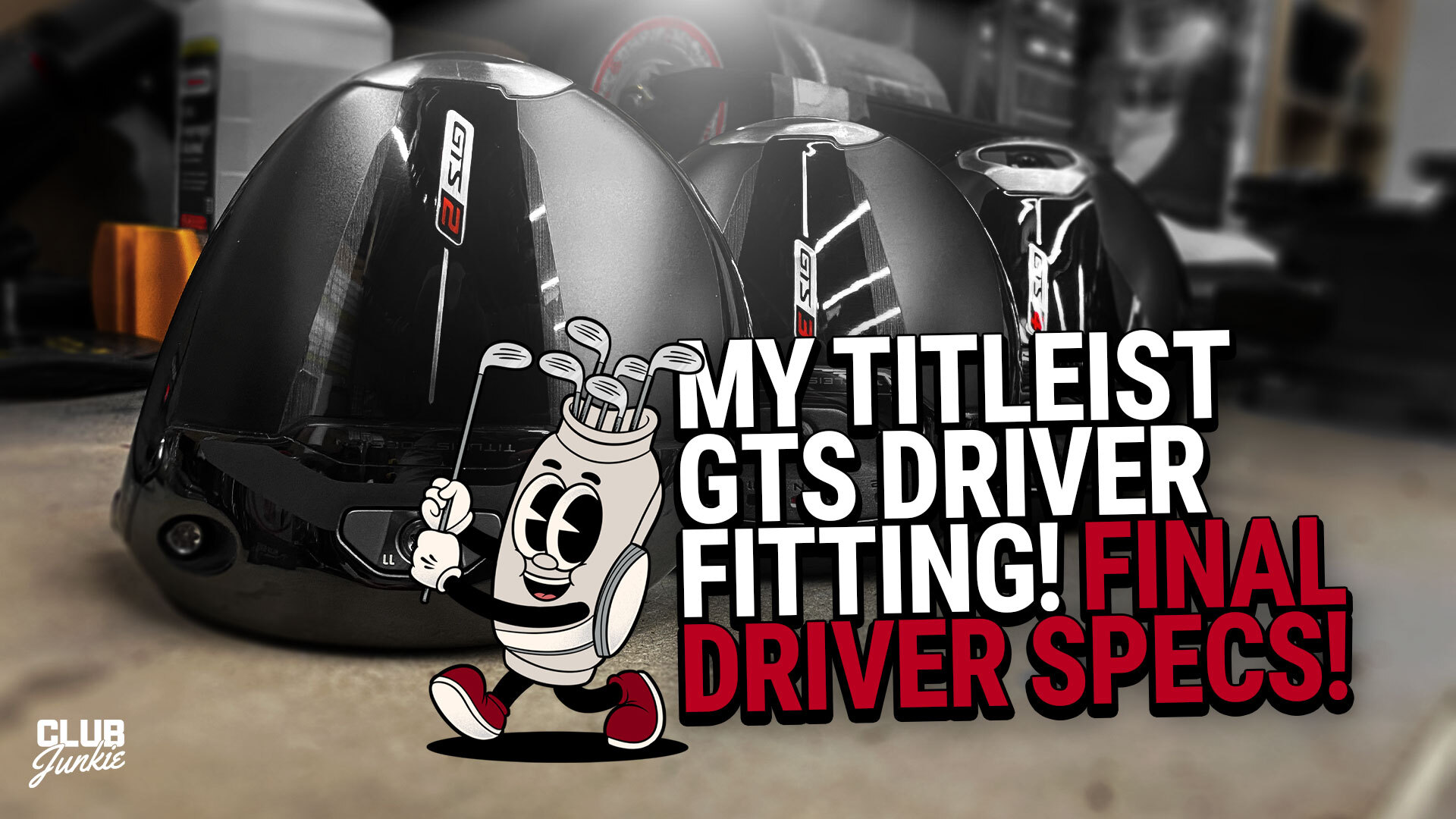
On this episode of the Club Junkie Podcast, I head to the Titleist Performance Institute for a full driver fitting with the new Titleist GTS lineup. We dive into the fitting process, talk about what made the biggest difference in performance, and break down how the different GTS heads and shaft combinations compare on the launch monitor. If you are thinking about a new driver setup for this season, there is a lot to take away from this one.
I also get into Brooks Koepka and the gear setup he brought to the PGA Championship, including the putters that caught my eye during the week. There are some interesting equipment trends showing up at the highest level right now and we break down what stands out.
To wrap things up, I talk about reshafting a few wedges, what I learned during the process, and swapping an adaptor onto a new shaft for another build project in the shop. A gear packed episode from start to finish for anyone who loves golf equipment and club building.
Follow Club Junkie everywhere:
Instagram: https://www.instagram.com/clubjunkiepod/
X: https://x.com/ClubJunkiePod
TikTok: https://www.tiktok.com/@clubjunkiepod
Threads: https://www.threads.com/@clubjunkiepod

Excited for this week’s WITB as we get to add the new Titleist GTS woods to the bag! I was fit at Titleist’s TPI facility in Oceanside California a few weeks ago and my new clubs just showed up. I am also adding a cool set of irons that I built last year some wild custom wedges into a new golf bag. Speaking of the bag I have a new Ghost Anyday Black Ops stand bag that I will be using on my Motocaddy Remote M7 electric cart.
Driver: Titleist GTS3 (11 degrees @ 10.25)
Shaft: Fujikura Ventus Red 6s
3-wood: Titleist GT1 3Tour (14.5 degrees)
Shaft: Graphite Design Tour AD CQ-7s
5-wood: Titleist GTS (18 degrees)
Shaft: Fujikura Ventus Red 7s
9-wood: Titleist GT1 (24 degress)
Shaft: Fujikura Ventus Red 7s
Irons: Bettinardi CB24 (5-PW)
Shafts: KBS C-Taper Lite 110 stiff
Wedge: TaylorMade MG5 (50-09 SB)
Shaft: Mitsubishi MMT 125 Stiff
Wedge: TaylorMade MG5 (56-12 SB)
Shaft: Mitsubishi MMT 125 Stiff
Wedge: TaylorMade MG5 (60-08 LB)
Shaft: Mitsubishi MMT 125 Stiff
Putter: Dan Carraher ZT Proto
Ball: Callaway Chrome Tour
Bag: Ghost Anyday Black Ops Stand Bag

Justin Rose WITB 2026 (April): Full WITB breakdown with new McLaren irons

RBC Heritage Tour Report: More minis, course-specific setups, Spider & GTS launches

What’s the story behind Webb Simpson’s custom-stamped irons?

Cadillac Championship Tour Report: Spieth’s sizable changes, McLaren Golf launches, and more

Kristoffer Reitan’s winning WITB: 2026 Truist Championship

Cameron Young’s winning WITB: 2026 Cadillac Championship

Aaron Rai’s winning WITB: 2026 PGA Championship

Nelly Korda WITB 2026 (April)

Justin Rose on the switch to McLaren Golf, learnings from previous equipment moves

Photos from the 2026 PGA Championship


Patrick Reed WITB 2026 (May)
Driver: Titleist GT3 (9 degrees) Buy here. Shaft: Aldila Rogue Silver 130 M.S.I. 70 TX 3-wood: TaylorMade Qi35 (15 degrees)...

Aaron Rai’s winning WITB: 2026 PGA Championship
Driver: TaylorMade M6 (9 degrees) Shaft: Aldilda Synergy Blue 70 TX 3-wood: TaylorMade Qi10 (15 degrees) Shaft: Fujikura Ventus Blue...


Michael Block WITB 2026 (May)
Driver: TaylorMade Qi4D (9 degrees) Shaft: Fujikura Ventus Black VeloCore+ 5 X 3-wood: TaylorMade Qi4D (15 degrees @14.25) Shaft: Mitsubishi...


Bryson DeChambeau WITB 2026 (May)
Driver: Krank Formula Fire Pro (6 degrees) Shaft: Project X Prototype 3-wood: Krank Formula Fire (10 degrees) Shaft: LA Golf BAD...
-
 Whats in the Bag3 weeks ago
Kristoffer Reitan’s winning WITB: 2026 Truist Championship
-
Whats in the Bag2 weeks ago
Aaron Rai’s winning WITB: 2026 PGA Championship
-
 Tour Photo Galleries3 weeks ago
Photos from the 2026 PGA Championship
-
 Equipment2 weeks ago
GolfWRX Launch Report: 2026 Titleist GTS drivers
-

 Equipment2 weeks ago
PGA Championship Tour Report: Fitzpatrick, Koepka among big-name putter switches for Aronimink
-

 News2 weeks ago
WITB Time Machine: Phil Mickelson’s winning WITB, 2021 PGA Championship
-

 Equipment2 weeks ago
Which of Tiger’s major winning irons are your favorite? – GolfWRXers discuss
-

 Equipment2 weeks ago
Lead Tape Report: Adjusting the swingweight of the Wanamaker Trophy


Stretch
Jul 22, 2014 at 1:22 pm
I learned to play on a 9 hole course with two sets of tees. About 2800 yds from the longer tees. Quick domed greens and also very small. Firm fairways let players roll the ball a long ways. The course held the longest running amateur tournament in the state and it was rare if a scratch or plus handicap player shot better than two under.
The second point is I worked at a championship course that had a lot of mini Tour pros and hot shot amateurs working in the tourist season. I had a running bet that they could not break par from the ladies tees. Never lost the bet. The really good players could not figure out that scoring on a short course meant controlling shot placement and that trying to overpower the course only led to penalties and chip outs from behind trees that normally aren’t in play.
Barney adama
Jul 22, 2014 at 11:26 pm
Exactly what I mean when I talk about educating the golfing public
Jim
Jul 22, 2014 at 9:06 am
Barney – Love the articles. Please keep writing and writing. Most amateurs don’t even look at the yardage on a score card they either go to the back tees or they go one up from there. They never factor in wind, weather, temp, etc. That is a big problem and the stock response you get is “it doesn’t matter what tees I play, I still shoot the same”. I laugh at that because an 8 iron is easier to hit than a six iron. I even have friend you used to be elite college players who are no longer elite but still good and we have to play long courses. Well on our last trip, we got rain and wind and the course was too long for all of us and our scores skyrocketed. And the worst part was when we came in, everyone said they just didn’t play well not that the course was too long or tough in those conditions. Moving up helps, it speeds play, is more fun and changes course strategy. I don’t remember the last time I saw a starter on a tee “helping” a foursome play the correct tees.
myron miller
Jul 21, 2014 at 1:52 pm
Personally I think Barney has hit it on the head. I play a ton of rounds each year with “average” golfers (those with zero handicap or even interest in one) and lots of beginners. And they can’t carry it 200 yards with the driver (not straight). Of course, there are also those that carry it 250 but only do it in the fairway 1 time in 4. But then they think they should play the next to back tees because they carry the ball so far.
And I can’t count the number of courses where the “white” tee par-3 requires a carry from 180-220 yards over some major hazard. Average yardage for driver is about 200 with roll of 25 yards as measured by many many groups. So these par-3s become unplayable by many.
I played one course in Seattle where the carry to the fairway was 225. Needless to say, lots of people didn’t carry it and ended up in the grunge (and the course has lots of 5-6 hours rounds and says that’s just because of the course difficulty – true, lousy design and artificial difficulty).
And then there’s the PGA “Play it forward” program that the course pro’s don’t entirely follow. They put their membership at 6600-6800 yard events even though a number of the membership can’t handle more than 6200-6300 yards at best. And of course, the seniors are totally out because they can’t handle more than 5800 but unless they want to give strokes to the field they have to play at the long yardage.
And of course, when all the events are at the long yardage, all the players play during regular play at these yardages (even though the Pro “encourages” players to “play it forward”.
Seems contradictory to me. Why have the play it forward when all the events are too long for the players involved except for the longer better players.
So since everyone is “practicing” for the next event, they’ll playing at too long yardages which makes play even slower.
cliff
Jul 21, 2014 at 4:58 pm
I assume your are talking about club championships and other tournaments. Our club championship is played from the back tees the first day (6800+) and flighted for the next day. Championship flight stays on the back tees and the rest of the flights move forward (6400+). Tournaments should be played from longer yardages, it separates the men from the boys.
I work hard to be good at this game and people that don’t should be punished when the THINK they are ready to play tournaments.
Rich
Jul 23, 2014 at 1:26 pm
That’s the typical type thinking that has put golf in the position it’s in…Completely stupid thinking! You want to separate men from boys? What a crock of crap that comment is! Come put on the gloves…or no gloves…that will satisfy your “separation” …Meanwhile. your thinking is the very problem golf is facing! Sad!
cliff
Jul 24, 2014 at 9:40 am
So in your mind we should just have one set of tees at 5800 yards? Sounds comical to me! If you can play golf it really doesn’t matter what tees you play. If you can’t play golf it really doesn’t matter what tees you play. Point is, good golfers typically play fast and bad golfers typically play slow.
Idiot golfer who think the are better than what they really are is the problem!
Tommy
Jul 20, 2014 at 11:42 pm
All hail my 7100 yard private golf club that doesn’t allow women
Chuck
Jul 20, 2014 at 11:36 am
Barney since you picked on unnamed “architects,” I thought I might offer a countering view…
You wrote: “For the golf architects bemoaning the low level of current business, I suggest that applying their skills to this concept creates more business opportunities. Let them be known for designing fun, playable courses and altering current ones accordingly.”
I’ve met Tom Doak and Geoff Shackelford and have read just about all of the books by both of them. There are few things I can imagine either one of them doing, than building a natural-looking, low-water, fine playable links on good ground for golf at about 6700 yards, with a number of forward tees up to 5800 or even 5500 yards. We’d need to ask their clients why they don’t want such designs.
And I know — because he has put it in writing — that Tom Doak professes no interest in re-configuring classic golf course architecture to suit modern elite/tour golf. And mostly, when somebody forces (because that’s what it would usually take) Tom to comment on such courses, he thinks it is mostly rotten.
We live in a golfing world where the gap between elite players and recreational players is wider than ever, and the elite players are threatening much of the architecture at golf’s most hallowed venues. Paraphrasing Shackelford, in no other sport are the venues where the game is conducted as central and critical to the enterprise, and in no other sport are the venues as delicately designed. The enduring beauty of golf, clearly (and, I’d say, unarguably) is in the courses and not the implements of play.
We now have no less a triumvirate than Jack Nicklaus, Arnold Palmer and Gary Player all agreeing that the golf ball needs to be rolled back:
http://www.geoffshackelford.com/homepage/2012/4/5/jack-arnold-gary-vital-to-slow-down-the-ball.html
Barney, you might well say that a ball rollback has nothing to do with getting recreational players out to play more golf. I think I’d agree. But there’s also no reason to think that clever new ball regulations would hurt recreational golf. With all of your access to data, you must know that a relatively small number of recreational players even bother with urethane balls much less depend upon them the way that tour players do. The only people in golf who would miss the current status quo are the executives at Acushnet.
I still think the big falloff in getting new devotees to golf is the death of caddy programs across the country with the rise of golf carts. Just more unintended consequences of golf technology.
Chuck
Jul 20, 2014 at 11:38 am
Correcting a typo above:
“There are few things I can imagine either one of them RATHER BE doing MORE, than building a natural-looking, low-water, fine playable links…”
Barney adama
Jul 20, 2014 at 9:34 pm
I guess I’m just missing something. Lets design courses applicable to 4% of the market ? What business model does that follow. I will address the golf ball in my equipment column.
LB
Jul 20, 2014 at 9:55 pm
But what percent of US courses are designed with the issues you mention? It can’t be THAT much, can it? Sounds like a relatively recent problem…
Chuck
Jul 21, 2014 at 10:57 am
No, Barney. The question — paraphrasing you — is why build EQUIPMENT that benefits 4% of the golfing world? It’s a gross paraphrasing, of course. But who, really, has been aided most by the Pro V-1 era?
I will look forward to your comments on the ball when we get there.
But back to architects. Again, if what you are suggesting for the betterment of golf is more courses that are simple, playable, challenging from shorter overall distances, using less water to save costs (and therefore “firm and fast”) and walkable without need of golf carts… I say as I did above, that the architects in whom I believe would LOVE to build more of those. And the real question is why the people who hire those architects don’t ask for such designs.
AW
Jul 24, 2014 at 4:31 pm
Our neighborhood Doak course is: a) public, b) cheap, c) eminently fair and d) owned by the Colorado Golf Association. So at least for that one example, there’s no “4% of the maket” discrimination at all by one of the big name architects.
http://www.commongroundgc.com
Jeff Daschel
Jul 19, 2014 at 4:46 pm
I wholly appreciate what you’re trying to do from the saving golf angle. I believe in my heart its the wrong thing to do. First let me tell you why I play golf. I started playing at 24 when I got a job at a Country Club. In that time, 6 years, I have spent thousands upon thousands of hours practicing.(I don’t have any more free time than anyone else) I just became addicted to the challenge. Yes, golf is really hard. Its taken me 6 years of intense practice to SOMETIMES play to a single digit handicap. To SOMETIMES reach a par 5 in two. From the time I started it probably took me 4 years to stand on the first tee and know I had a good chance at hitting a solid approach to give myself a look at birdie.
Now, respectfully, I earned every damn 8 iron I hit into a par 4. My playing partners may not hit 8 iron into the green all the time because my playing partners may not have spent hours that week hitting driver into an open field. They can’t get up and down because I spent 3 hours chipping into a kiddie pool and they didn’t. If you make golf easier for those who aren’t willing to try as hard, you risk cheapening the genuine admiration most have for the guys who put in enough work to be brilliant.
I have a box that I used to keep every ball I’ve ever made birdie with in. I can’t imagine placing such a value and meaning to a birdie or the game if they suddenly became easy to come by.
My argument is basically that there are plenty of people who love golf, as the game Hogan played. That’s good by me
Barney adama
Jul 19, 2014 at 6:01 pm
The problem, Jeff is the vast majority cannot reach the holes and they are out of gym time and practice. Congratulations on your time and effort and the back tees will always be there for you. I still want to see more people playing that will help keep the game healthy financially.
Jeff Daschel
Jul 20, 2014 at 5:56 pm
I guess I don’t. I think there’s nothing in the world better than an empty golf course, almost nothing worse in the world of golf than a crowded course. When any problem is addressed with the question, how do we make more money? the answers are problems in themselves. What are your thoughts on caddy programs?
Peter
Jul 21, 2014 at 1:05 am
Jeff, an empty course is great for a quick, enjoyable round. But it’s also the fastest ticket to a bankrupt golf course, since you’d be the only one playing! Wishing for markedly fewer golfers is cutting off one’s nose to spite one’s face.
Ryan K
Jul 19, 2014 at 1:48 pm
Great take on how holes should be set up to par. Wholly agree on that! One thing that bothers me most on courses is having 4 Par 3’s, all within 15-20 yards of each other. Too many around my home will play something like 175, 190, 181, 188. That’s no fun! And again, too many Par 4’s at 410, 423, 427, etc. I am on the longer side of the average golfer but not by much. The repetition just gets old. Let’s see some variety, some of the 380 but tough Par 4’s and, again, 140 but tough Par 3’s make the round feel more complete! Make it happen!
Barney adama
Jul 19, 2014 at 2:23 pm
And you got it ; Variety !
Chuck
Jul 18, 2014 at 5:13 pm
Barney, if you are the new Czar of All of Golf, who is going to break the news to Walter Driver?
LB
Jul 18, 2014 at 1:49 pm
Great ideas to address design issues, but not much more of an idea or solution than just playing the white tees.
ca1879
Jul 18, 2014 at 11:00 am
Hail Czar! We who are about to duff, salute you! Nice tongue in cheek article. Your description doesn’t seem all that far off the middle tees at most clubs I play. In fact it’s pretty close to dead on for my home club (7717 from the champ tees, 6532/5987 from the tees most male members play). Are there really that many clubs that need to change to offer reasonable length and challenge? I don’t see the average golfer behaving the way he’s presented by others here, even on munis. The vast majority seem to play one of the two middle sets of tees. You can argue that they should move up even further, but I don’t think the situation is as extreme as you would think from reading the golf forums. Are there any actual statistics available on the tees or length we choose to play?
Barney adama
Jul 18, 2014 at 9:54 pm
To coin a phrase on statistics. PLENTY in fact a majority. It’s getting better with Tee It Forward but the resistance is significant
IH8
Jul 18, 2014 at 10:03 am
While Mr. Adams is very well written and is presenting some interesting ideas, I have to admit that I’m not really sure where this is going. I will say this however, this sure does come off very similar to all those other ‘grow the game’ things, i.e. written from a very golf centric perspective. Many of the premises here are taken from the view of the avid golfer. Too slow? Yeah, for all of us. But for an average golfer (you know, the type that plays 2-4 times a year, in a cart, drunk, can’t break 120 and is most interested in where the beer cart girl is so they can harass her), they don’t care that much as golf is usually an all day type event for them anyway (usually part of an all day outing, hence the heavy drinking). And to non-golfers, too slow? Not for them. They don’t know how long it takes to play and further more, they don’t care. Telling them the pace is quicker is like telling me that cricket is cheaper. I didn’t know it was expensive before and I don’t care if it’s free, I’m not interested (i.e. the majority’s attitude to golf). An 8 iron 140? Carry? You’re kidding right? Again, for us, sure. But the average golfer? I’d be amazed if they hit hybrid 150, with roll. I’m a former green fee golfer who’s in his first year private and with that knowledge I can honestly say that I don’t think Mr. Adams knows much about the average golfer. He knows us (golfwrx/avid golfer types) quite well. Most of us can break 100 or 90 fairly easily, play tees that are too long, hit an 8 iron 140 carry (or so) and understand the issues he’s talking about. But to the average golfer and the non-golfer, I don’t think any of this matters. I like his point about value for dollar but I don’t think he’s touching upon much other than to preach to the choir.
And while I have your attention, why is every par 5 in this article designed to be a 3 shot hole? By his logic, anything over 400 yards or so should be a par 5, which might not necessarily be a bad thing. At least the punters could have a go. Basically, the par 5s being proposed by the czar here is basically a driving range for your driver and fw metal followed by an 8-iron par 3. If I’m playing it the same all the time, who cares? Might as well hit the range for some practice.
melrosegod
Jul 18, 2014 at 5:23 pm
We get it, you’re a hater. I don’t think anyone is trying to persuade drunk scramble golfers to get out more than twice a year. I think the average golfer loves the game but does work for a living. Hence, the average golfer would enjoy shooting trying to break 80 instead of avoid the 90s.
ih8
Jul 20, 2014 at 2:46 pm
I’m not hating, my point is Mr. Adams points are geared towards a golf obsessed culture with good players and nice courses. The reality for the average golfer doesn’t match up to the culture Mr. Adams comments are aimed at. He’s doing the equivalent of “let them eat cake.”
Barney adama
Jul 18, 2014 at 6:14 pm
Sorry cant pass that one up. Mr Adams has access to a data bank of 1.7m handicaps, has been in the equipment business as a club fitter then designer for 30 + years. Yes actually I do understand the average golfer.
Philip
Jul 19, 2014 at 11:55 pm
Note – I agree with Tee if Forward – I see many golfers playing off the whites/blues that cannot carry their driver 200 yards, and if you include their misses than the average is a lot lower. So this is not negative, just looking for additional info.
So you mention 1.7m handicaps, compared to how many golfers? I’m assuming this information is USA – doesn’t the USA have over 25m golfers?
The USGA GHIN system only has 2.3 million golfers from 79 golf associations that represent more than 14,000 golf clubs (as of January 2014).
This tells me that the average golfer does not have a handicap, in fact the majority don’t and most likely do not pay for a custom fitting or purchase new clubs every year like many maintaining handicaps (USGA or not).
ih8
Jul 20, 2014 at 2:44 pm
Totally agree with Philip. 1.7 million handicaps when there are supposedly 25 million golfers in the US alone, so you’re data doesn’t even cover 10% of golfers. How can you make the claim you know the average golfer with such a teeny tiny amount of data? How often do you play a public course (where roughly 3/4 of rounds are played)? How many green fees do you pay a year? How often do you play with individuals without a handicap (i.e. 90+% of golfers)? If the answer to those questions are high numbers, I think you have a handle on the average golfer…or for that matter, the average golf course.
John
Jul 17, 2014 at 9:34 pm
Look at Mr. Tom Watson, who at 64 is still competitive in The Open Championship (a 73 today that bettered many younger players). Why? Because the balls ROLLS over there in England, even with the course being greener than usual. Let’s get rid of the over watered, lush, environmentally irresponsible golf agronomy here in the US and Barney “Czar” Adams won’t have to build any courses. The ones we have, properly set up, will do just fine. Oh, and by the way, for the clueless posters out there, he’s kidding about the Czar thing. It’s humor.
Thanks Mr. A, good articles, looking forward to the final edition and thank you for your efforts to improve the game.
Barney adama
Jul 18, 2014 at 6:15 pm
Exactly what Mr Watson told me the last time we were fishing. The roll out allows him to be competitive
Jason
Jul 17, 2014 at 7:22 pm
Those are all nice ideas. Most courses already have several tee boxes set up for varied skill levels, the problem is that almost every group thinks their PGA ready.
paul
Jul 18, 2014 at 2:35 pm
Oh crap, we aren’t ready for the pro leagues?!
Charlie
Jul 17, 2014 at 5:10 pm
Are you going to start designing courses? This article just seems like a farce to me.
Tom
Jul 17, 2014 at 5:08 pm
Who called you Czar of anything? Is this a bad joke?
Barney adama
Jul 17, 2014 at 7:28 pm
Bad ? I guess up to the individual. Humor ? You bet. Just so we all don’t get too serious.
Don
Jul 17, 2014 at 4:54 pm
I disagree about the par 5’s. Tour players get to eat up par 5’s, why shouldn’t the rest of us? Sub-500 yarders are the way to go for the average 200-225 yard drive golfer, IMO.
Barney adama
Jul 17, 2014 at 5:17 pm
But they are still 3 shot holes even at sub 500 unless slope and prevailing winds help The tour eats them up when they get home in two.
Jeremy
Jul 17, 2014 at 7:02 pm
Don is right though, mostly when they put a shot in the fairway they have the opportunity to go for it. I don’t see too many holes these days where it’s only Bubba who can make it in 2 with a helping wind. If you’re talking about making the game more fun, there’s few things in the game more fun than making eagle.
Also, I love me some drivable par 4s and I think every course should have at least one.
paul
Jul 18, 2014 at 2:39 pm
My local course has two par 5s that are 500 yards. One has water around the green, so you need a high shot to hold it. The other has a big green and dog leg, make up the stroke you lost on last par 5 when you were going for it. Also has one drive able par 4 if its windy. I have flown it twice in to bunkers. The course plays 5900 white and 6400 blue tees. Just about shot par from the white, so I am graduating to the blues.
James
Jul 17, 2014 at 3:28 pm
The Czar has spoken well. I can remember the old courses I grew up on where you could run a ball up on the green and modern courses today seem to take that away from us all. I prefer firm and fast fairways and greens to the overly watered down soft courses that most are these days. My home course has about half the holes designed into the prevailing winds be them out of the south or north. Just those into the wind change depending on wind direction. You make some great points Czar Barney!
Christian
Jul 19, 2014 at 12:00 am
Czar Barney doesn’t work, comes off too soft. We’re gonna need a name that can instill a little fear if there’s any hope of getting some of these changes into effect. If Czar Barney called you onto the carpet would you sweat or giggle? I vote for Czar RipsYourHeadOff. Czar RipsYourHeadOff gets sh*t done!
Btw the tee’s are an issue that do need some attention. Speed of play, enjoyment and attracting new players are all affected by it.
Christian
Jul 19, 2014 at 12:02 am
@IH8
Next time you have a thought, wait 15 minutes, if you still have it let it go.