
Instruction
We may never see golfers digging it out of the dirt again

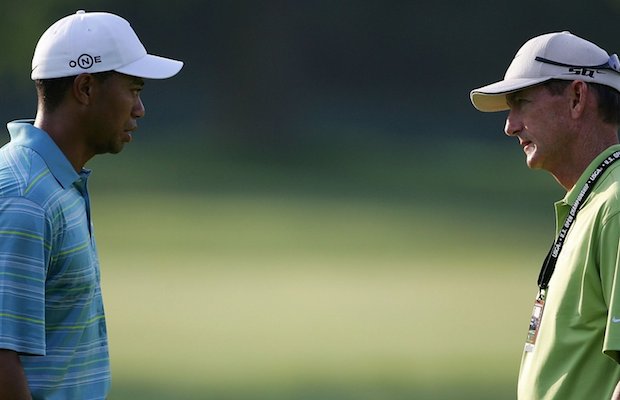
The role of the professional golf coach is relatively new in the game of golf. Most tour pros nowadays have any number of coaches on their “team,” in charge of everything from their backswing to their thoughts between shots. This whole concept, however, is entirely a modern day occurrence.
Professional golf has been played in this country since the late 19th century, and it has only been since the late 20th century that players have embraced the concept of a swing coach. It was unheard of for Ben Hogan, Gary Player, Byron Nelson, Sam Snead or Arnold Palmer to seek a swing coach (let alone their fourth swing coach, Mr. Woods). And those are some of the modern era greats. Go back before that and we find zero professional coaching on the professional golf scene.

Ben Hogan’s “Five Lessons: The Modern Fundamentals of Golf” included this famous illustration.
Sure, there were teachers and how-to books on the game. Players like Seymour Dunn, Alex Morrison, Bobby Jones, Tommy Armour and of course Ben Hogan wrote instructional books and developed theories on playing, but there was one essential difference: Almost to the man, every one of these teachers were professional players. Some of them were very successful, some less so, but they all played golf professionally.
The problem was, because golf was so new in this country and still quite unknown, there simply was not enough money for them to play golf exclusively. They supplemented their tournament winnings with club jobs. They ran tournaments for their members, sold clubs and of course gave lessons to their members. Rarely, if ever, did they give lessons to other pros. These pros would commiserate and bounce ideas off each other (Maniac Hill at Pinehurst was famous for that), but they essentially did not have coaches. It was not unlikely for a pro, say Gene Sarazen, to win the U.S. Open on Saturday, and be on the lesson tee at Fresh Meadows on Sunday.
What changed and when did it change?
Well for one, golf became more popular. In fact, it’s popularity grew to such a point that television started to cover the game. With this exposure, corporate America recognized the opportunity to showcase its products through sponsorship and purses began to grow considerably. We also had a gentleman named Arnold Palmer who started to dominate the game, and a very popular president who spent a good part of his white house years at the Augusta National Golf Club (Hint: They named a tree after him that was lost this winter to an ice storm).
Golf had hit the big time and the touring circuit was well under way. With that development, we saw the rise of the full-time touring professional. The very best players could (and had to) devote all their time to playing, and they left the golf clubs en masse.

Arnold Palmer and President Dwight David “Ike” Eisenhower, probably at Augusta National.
That left a void: who will teach the members now? The next best level of players, club professionals, could devote all their time to their shops and members’ needs. Most club professionals are very fine players in their own right, perhaps just one step from making a living playing the game. So it was a win-win really for all involved. The members no longer had the big names perhaps, but they did have very talented and devoted young men and women at their service whenever needed. And the tour pros could do nothing but work on their game. This division came to a head in 1968 when the PGA of America formed the players division of the PGA.
But there was another, seemingly unnoticed at the time, benefit to all of this. The club professionals could devote their time not just to their shops, but FULL TIME to teaching. They had the opportunity to explore the world of teaching golf. They were no longer giving lessons on the side; they were doing it full time for a living. Through this diligence, they developed a way of understanding the game, the swing and methods of communicating this to the amateur world that had previously been lacking. The early great players approached teaching from a “this is how I did it” perspective.
“This worked for me, so it’s bound to help you.”
And while this helped some, many simply couldn’t relate. The field as a whole was lacking something. And just as we had the early pioneers in playing the game, we had the same in the teaching field. Two names come immediately to mind when we think of pioneer teaching professionals: Bob Toski and Jim Flick.

A young Bob Toski instructing one of his students.
Bob Toski played the PGA Tour quite successfully. In fact, he was the leading money winner in 1954. But Jim Flick, co-author of “How to become a Complete Golfer” with Toski, was not a touring professional. While he was a quite capable player, he was one of the first “big name” instructors who did not play for a living. Together, Toski and Flick developed the concept of golf schools through their affiliation with Golf Digest magazine and voila! The era of the teaching professional was in full flight.
Many of the names associated with the early days of Golf Digest such as Davis Love Jr., John Jacobs, Bill Strasbaugh, Paul Runyan, Eddie Merrins and others became household names in the teaching world. These teachers honed their crafts hour-by-painstaking-hour on the lesson tee (a routine I’m all too familiar with), not on the practice tee. But they were still, for the most part, teaching amateurs. And the idea caught fire. Golf Digest schools started with some 12 schools a year in the 1970s. By 1990, the company was doing 250 a year.

Instructor David Leadbetter and Ernie Els. Els has worked with both Leadbetter and Butch Harmon on his swing.
But the final leg of this journey was complete when Sir Nick Faldo decided that, to win major championships, he needed to rebuild his swing. He sought the services of David Leadbetter, a Florida-based teaching professional, to help him accomplish this. Faldo went on to win six major championships and just like that the era of the “tour teacher” was upon us. After Faldo’s great success, Nick Price came into the Leadbetter stable and we were off and running. This mutually beneficial relationship went something like this: The player’s part was to work hard on the game, and teacher’s part was to continue to study the science of teaching and the golf swing.
The names that so many are now familiar with: Harmon, Haney, McClean, Kostis and Leadbetter developed strong followings not just as teachers, but as Tour teachers in particular. They kept their private clientele and in fact it grew exponentially after their reputation as teachers of the stars grew. This was the very beginning of the professional coach.
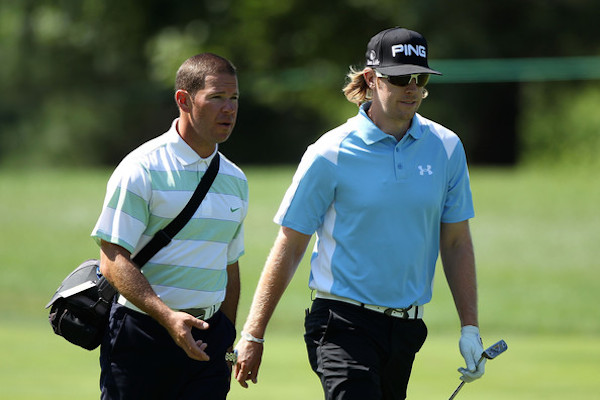
Hunter Mahan with instructor Sean Foley, Tiger Woods’ former swing coach who also teaches Justin Rose, Stephen Ames, Parker McLachlin and others.
The upside of all this is obvious: big money for the successful teacher/student teams. The downside? Well, many feel that the players of today have become too reliant on their teachers, that they are automatons playing mechanical golf and have lost the feel for the game. Still others believe some of the mystique of the game has been lost through so much scientific research into the body and swing connection. Be that as it may, the era of coaching, and surely science, is here to stay. We may never see players digging it out of the dirt again.
The days of early mentoring, and then sending the budding professional out on his own have gone the way of persimmon drivers and the niblick. So for those expecting Tiger to “go it alone” from here on out, you might think twice. He has had a coach since he was 5 years old and will continue to seek the right one for the rest of his career. As well he should, I believe.
As always, feel free to send a swing video to my Facebook page and I will do my best to give you my feedback.



The LPGA Tour is kicking off its 2026 season this week at Lake Nona Golf and Country Club in Orlando, and the pros are dealing with something most Florida golfers rarely face: freezing temperatures.
“It’s colder here than in the UK at the minute, which is a first,” said England’s Charley Hull during Wednesday’s media day at the Hilton Grand Vacations Tournament of Champions.
Even Lydia Ko, who lives at Lake Nona, seemed surprised by the cold snap. “We’re pretty much getting to below zero in celsius here, which maybe in other parts of the country they would be thankful, but when you’re in Florida it is a little bit of a surprise,” she said.
If the world’s best players are adjusting their games for cold weather, recreational golfers should, too. Here’s how to play smart when the mercury drops.
Understand What Cold Does to Your Game
Before you change anything, you need to know what you’re fighting against. Cold air is denser than warm air, which means your ball won’t fly as far. Period.
Hull noticed this immediately during practice rounds at Lake Nona. She mentioned hitting a gap wedge into the 18th hole during a previous win but needing a 4-iron during Tuesday’s practice round. That’s a difference of four or five clubs for the same shot.
Action item: Expect to lose 5-10 yards on every club in your bag when temperatures dip below 50 degrees. Plan accordingly and don’t be stubborn about club selection.
Layer Up Without Restricting Your Swing
Hull admitted she wore three pairs of pants during practice. While that might be extreme for most of us, staying warm is critical to playing well in cold conditions.
Your muscles need warmth to function properly. When you’re cold, your body tightens up and your swing gets shorter and faster. Neither of those things help you hit good golf shots.
Action item: Wear multiple thin layers instead of one bulky jacket. Look for golf-specific cold weather gear that stretches with your swing. Keep hand warmers in your pockets between shots. And don’t forget a good hat because you lose significant body heat through your head.
Take More Club Than You Think You Need
This is where ego gets in the way of good scores. When it’s cold, the ball doesn’t compress as well off the clubface. Combined with denser air, you’re looking at serious distance loss.
The pros at Lake Nona are dealing with a course that measures 6,642 yards but plays much longer this week. If they’re adjusting, you should too.
Action item: Take at least one extra club on every approach shot. In temperatures below 40 degrees, consider taking two extra clubs. It’s better to fly the ball to the back of the green than to come up short in a bunker.
Adjust Your Expectations on the Greens
Cold weather affects putting in ways most golfers don’t consider. The ball is harder and doesn’t roll as smoothly. Your hands are cold, making it harder to feel the putter. And if there’s any moisture on the greens, they’ll be slower than normal.
Ko mentioned that she still sometimes reads the greens wrong at Lake Nona despite being a member for years. Cold weather makes that challenge even tougher.
Action item: Hit putts more firmly than usual. The ball needs extra speed to hold its line on cold greens. Take a few extra practice strokes to get a feel for the speed before you putt.
Embrace the Mental Challenge
Hull said something interesting about cold weather golf: “I like the mental toughness of it.”
That’s the right attitude. Everyone on the course is dealing with the same conditions. The player who stays patient and doesn’t get frustrated by the extra difficulty will come out ahead.
Action item: Lower your expectations by a few strokes. If you normally shoot 85, accept that 90 might be a good score in 40-degree weather. Focus on solid contact and smart decisions rather than perfect shots.
Warm Up Longer and Smarter
This might be the most important tip of all. Cold muscles are tight muscles, and tight muscles get injured easily.
World No. 1 Jeeno Thitikul revealed she’s been protecting a wrist injury that bothered her late last season. Cold weather makes those kinds of injuries more likely if you don’t prepare properly.
Action item: Spend at least 20 minutes warming up before your round. Start with stretching, then hit easy wedge shots before working up to your driver. Keep moving between shots on the course to maintain body heat and flexibility.
The pros at Lake Nona this week will adapt and compete at the highest level despite the cold. You can do the same at your local course by following these tips and keeping a positive attitude.
PGA Professional Brendon Elliott is an award-winning coach and golf writer. You can check out his writing work and learn more about him by visiting BEAGOLFER.golf and OneMoreRollGolf.com. Also, check out “Playing Through” now on R.org, RG.org’s partner site, each Monday.
Editor’s note: Brendon shares his nearly 30 years of experience in the game with GolfWRX readers through his ongoing tip series. He looks forward to providing valuable insights and advice to help golfers improve their game. Stay tuned for more tips!

Brooks Koepka is back on the PGA Tour, and whether you love him or hate him, the guy knows how to win when it matters. After his LIV Golf stint, the five-time major champion returns this week at the Farmers Insurance Open.
What makes Koepka fascinating? He doesn’t fit the mold. His swing isn’t textbook. He doesn’t obsess over mechanics. Yet he’s won three PGA Championships and two U.S. Opens, regularly making it look easier than guys with prettier swings.
So, what can average golfers learn from someone who treats the game so differently? Quite a bit.
Stop Overthinking Every Shot
Koepka describes his approach as “reactionary” rather than mechanical. While most tour pros grind over swing thoughts, Brooks sees the target and hits it. No mental checklist.
This might be the most valuable lesson for weekend golfers who’ve watched too many YouTube swing videos.
How to actually do this:
On the range, hit five balls where you stare at the target for three seconds prior to addressing the ball. Don’t think about grip or stance. Just burn that target into your brain. You’ll be shocked at how pure you hit it when your brain focuses on where the ball is going instead of how you’re swinging.
Next time you play, give yourself a rule: Once you pull the club, you’ve got 15 seconds to hit. Koepka is one of the fastest players on tour because he doesn’t give his brain time to sabotage him.
If you feel tension in your hands at address, you’re trying to control too much. Koepka’s grip pressure is famously light. Loosen up until the club almost feels like it might slip, then add just enough pressure to hold on. That’s your swing thought: soft hands, see the target.
This approach works better under pressure. When you’re standing over that shot with water left and OB right, the last thing you need is a mental checklist. See it, feel it, hit it.
Play to Your Strengths (Even If They’re Not Pretty)
Koepka uses a strong grip that wouldn’t pass muster in some teaching circles. But he’s built his game around what works for him, elite driving distance and recovery skills. He doesn’t try to be someone he’s not.
Here’s how to build your game like Brooks:
Look at your last five rounds and figure out where you’re actually gaining strokes. Bombing it off the tee, but can’t hit greens? Lean into it. Play courses where distance matters more than precision. On tight holes, grip down on your 3-wood instead of trying to thread a driver through a keyhole you’ll miss seven times out of ten.
Koepka knows he can scramble, so he’s not afraid to miss greens. If you’re deadly from 50 to 75 yards, start leaving yourself those distances on the par 5’s instead of going for them in two every time.
Know when to take your medicine. Koepka in the trees at the PGA? He’s punching out to 100 yards, not trying to bend a 6-iron around three oaks. You’re in the rough with a flyer lie and water short? Hit your 8-iron to the middle and move on. That’s not playing scared, that’s playing smart.
Save Your Best for When It Counts
Here’s a wild stat: Koepka’s putting average in majors is often more than a full stroke better per round than in regular events. He elevates when pressure is highest.
How does an amateur tap into that gear? It’s not about trying harder, it’s about caring differently.
Here’s what actually works:
Decide which rounds matter to you. Club championship? Member-guest? That annual trip with college buddies? Circle those dates and treat them differently. Koepka doesn’t care much about regular tour events, but majors? That’s when he locks in.
Two weeks before your big round, change your practice. Stop beating balls mindlessly. Play nine holes in which every shot has consequences. Miss the fairway? Hit from the rough on the next hole too. Three-putt? Twenty push-ups. Koepka’s practice intensity ramps up before majors because he’s rehearsing pressure, not just swings.
Develop a between-shot routine that resets your brain. Koepka is famous for his blank expression after bad shots. Try this: After any shot, take three deep breaths while walking, then find something specific to notice, a tree, a cloud, someone’s shirt. That’s your reset button. By the time you reach your ball, the last shot is gone.
The Bottom Line
Brooks Koepka’s return reminds us there’s no single path to success in golf. His “substance over style” approach proves that results matter more than looking good.
You don’t need a perfect swing; you need a reliable one that holds up under pressure. You don’t need to hit every shot in the book; you need the shots you can count on. And you don’t need to play great every time; you need to play great when it matters.
Welcome back, Brooks. Thanks for the reminder that golf is ultimately about getting the ball in the hole, not winning style points.
PGA Professional Brendon Elliott is an award-winning coach and golf writer. You can check out his writing work and learn more about him by visiting BEAGOLFER.golf and OneMoreRollGolf.com. Also, check out “Playing Through” now on R.org, RG.org’s partner site, each Monday.
Editor’s note: Brendon shares his nearly 30 years of experience in the game with GolfWRX readers through his ongoing tip series. He looks forward to providing valuable insights and advice to help golfers improve their game. Stay tuned for more tips!

Blades Brown made a big impression last week in the California desert, and not just because he’s only 18. He put up numbers that would catch any weekend golfer’s attention. Most of us won’t hit 317-yard drives or find 86% of our greens in regulation, but there’s a lot to learn from how Brown managed his game at The American Express.
Here are three practical lessons from his performance that you can use on your own course this weekend.
Step 1: Give Priority to Accuracy Over Distance Off The Tee
Brown’s driving stats are impressive. He averaged almost 318 yards off the tee, ranking 12th in the field. More importantly, he hit 76.79% of his fairways, tying for fourth place in the tournament.
Think about that ratio for a second. Brown could have swung harder, chased more distance and tried to overpower the course. Instead, he played smart golf and kept his ball in play.
Your Action Item: Next time you’re on the tee box, ask yourself a simple question before pulling the driver. Do you need maximum distance here, or do you need to be in the fairway? If there’s trouble lurking or the hole doesn’t demand every yard you can muster, take something off your swing. Grip down an inch. Make a three-quarter swing. Do whatever it takes to find the short grass. Brown’s approach illustrates that fairways lead to greens, and greens lead to birdies. He made 22 of them last week, along with an eagle.
The math is simple. When you’re hitting three out of every four fairways like Brown did, you’re giving yourself legitimate looks at the green with your approach shots. That’s when scoring happens.
Step 2: Commit To Hitting More Greens
This is where Brown really separated himself. He hit 62 of 72 greens in regulation, an 86.11% clip that tied for first in the entire field. Read that again. An 18-year-old kid tied for the lead in one of the most important ball-striking statistics in professional golf.
How did he do it? By keeping his ball in the fairway (see Step 1) and giving himself clean looks with mid-irons and wedges.
Your Action Item: Start tracking your greens in regulation. You don’t need a fancy app or a statistics degree. Just mark down whether you hit the green in the regulation number of strokes. Par 3s in one shot. Par 4s in two shots. Par 5s in three shots.
Once you know your baseline, set a goal to improve it by 10%. If you’re currently hitting five greens per round, aim for six. The beauty of this approach is that it forces you to think strategically about club selection and shot shape. Brown’s strokes gained approach number was positive (0.179), meaning he was better than the field average. You don’t need to be perfect. You just need to be on the dance floor more often.
When you hit more greens, you eliminate the need for heroic short game shots. Brown only had to scramble 10 times all week, and he got up and down 70% of the time. That’s solid, but the real story is that he rarely put himself in scrambling situations to begin with.
Step 3: Minimize Mistakes And Stay Patient
Here’s the stat that jumps off the page: Brown made only three bogeys all week. Three. In four rounds of professional golf against the best players in the world.
He also made just one double bogey. That kind of clean card doesn’t happen by accident. It happens when you play within yourself, avoid the big miss and trust that pars are never bad scores.
Your Action Item: Before your next round, decide that you’re going to play boring golf. No hero shots over water. No driver on tight holes just because you can. No aggressive pins when there’s a safe side of the green.
Brown’s performance shows us that consistency beats flash every single time. He didn’t lead the field in any single strokes gained category, but he was solid across the board. That’s how you post numbers and cash checks.
Give these three steps a try. Your scorecard will thank you.
PGA Professional Brendon Elliott is an award-winning coach and golf writer. You can check out his writing work and learn more about him by visiting BEAGOLFER.golf and OneMoreRollGolf.com. Also, check out “The Starter” now on R.org, RG.org’s partner site, each Monday.
Editor’s note: Brendon shares his nearly 30 years of experience in the game with GolfWRX readers through his ongoing tip series. He looks forward to providing valuable insights and advice to help golfers improve their game. Stay tuned for more tips!

RBC Heritage Tour Report: More minis, course-specific setups, Spider & GTS launches

Justin Rose WITB 2026 (April): Full WITB breakdown with new McLaren irons

Best fairway woods of 2026: The most versatile fairway woods + the most forgiving fairway woods

What’s the story behind Webb Simpson’s custom-stamped irons?

Cadillac Championship Tour Report: Spieth’s sizable changes, McLaren Golf launches, and more

The 24 players who can win the Masters

Rory McIlroy’s winning WITB: 2026 Masters

Kristoffer Reitan’s winning WITB: 2026 Truist Championship

J.J. Spaun’s winning WITB: 2026 Valero Texas Open

Cameron Young’s winning WITB: 2026 Cadillac Championship


Alex Fitzpatrick WITB 2026 (May)
Driver: Ping G440 LST (9 degrees) Shaft: Fujikura Ventus Black 6 X 3-wood: TaylorMade Qi4D (15 degrees) Shaft: Fujikura Ventus...

Kristoffer Reitan’s winning WITB: 2026 Truist Championship
Driver: Ping G440 Max (9 degrees) Shaft: Mitsubishi Tensei 1K White 60 TX 3-wood: Ping G440 Max (15 degrees) Shaft:...


WITB Time Machine: Rory McIlroy’s winning WITB, 2021 Truist Championship
Rory McIlroy’s victory at the 2021 Wells Fargo Championship 2021 (now the Truist Championship) marked a significant return to form,...


Collin Morikawa WITB 2026 (May)
Driver: TaylorMade Qi4D LS (8 degrees) Shaft: Mitsubishi Diamana D+ Limited 60 TX 3-wood: TaylorMade SIM Tour (14 degrees) Shaft:...
-
 Equipment2 weeks ago
Justin Rose WITB 2026 (April): Full WITB breakdown with new McLaren irons
-
 Equipment1 week ago
What’s the story behind Webb Simpson’s custom-stamped irons?
-
 Equipment2 weeks ago
Cadillac Championship Tour Report: Spieth’s sizable changes, McLaren Golf launches, and more
-
Whats in the Bag3 days ago
Kristoffer Reitan’s winning WITB: 2026 Truist Championship
-
 Whats in the Bag1 week ago
Cameron Young’s winning WITB: 2026 Cadillac Championship
-

 Whats in the Bag3 weeks ago
Nelly Korda WITB 2026 (April)
-

 Equipment2 weeks ago
Justin Rose on the switch to McLaren Golf, learnings from previous equipment moves
-

 Tour Photo Galleries2 weeks ago
Photos from the 2026 Cadillac Championship


ALH
Sep 2, 2014 at 4:07 pm
I have been digging for 30 years and dirt is all I have to show for it. I think a second set of eyes is important and if that set of eyes is assisted by technology then even better. The dirt did teach me that the ball direction is mainly influenced by where the club face is pointed during impact. After several frustrating years of seeing my divots pointing to the right of the target even as my ball started left of the target and moved further left I realized I was not coming over the top and it must be my club face being severely closed and pointing left at impact.
Dennis Clark
Sep 3, 2014 at 6:38 pm
That is a CLASSIC example of knowledge being the greatest teacher and self discovery having the most beneficial effects! Forget the divot!
bwb
Sep 5, 2014 at 10:00 pm
What the heck does Foley carry around in his “man” purse?
Andrew Cooper
Sep 1, 2014 at 7:13 am
Thanks Dennis for an interesting read. I’d say all really good players will always “dig it out of the dirt” to a large degree, even with all the tech around. The intricacies of playing the game really can only be LEARNED not TAUGHT. Sure a good coach can steer a golfer in a good direction-but ultimately it comes down to the player. In many cases the best thing a coach can do is simply shield a talented golfer from the nonsense that would screw them up-see Mike Furyk, Victor Garcia, Michael Bannon…
I understand full time teaching pros are not going to be too focused on their own games (and the days of Touring pros/teachers, such as a Tommy Armour, will never return) , but I think it’s sad that many teachers are so far removed from PLAYING golf.
Dennis Clark
Sep 1, 2014 at 3:18 pm
Agreed Andrew. A teacher should be a “capable” player at the very least. They need to know hoe learning and trying things actually feel. They cannot simply read numbers and watch videos. Good observation.
slimeone
Sep 1, 2014 at 7:06 am
Firstly – great article. These days the stakes are just too high for tour players to spend time developing their swing on their own. Imagine if Tiger was determined to struggle through his poor game for months on his own until he felt at peace with his swing, he would lose sponsors and potential prize money at an unacceptable rate. When Ben Hogan was in his early career he had to leave the tour because his play was too weak and he was broke! Then of course one night while stressing about his shocking hook he figured it all out. As cool and inspiring as his tale is, the modern tour is filled with young ruthless assassins lurking for an opportunity to take your ranking, sponsors and prizemoney at the first opportunity.
rus
Aug 31, 2014 at 2:14 am
Truth be told…. Great article Dennis.
Those that teach for a living see technology as a different being entirely. (not knocking the am’s reading this)
When explaining what Trackman numbers mean in a lesson even the biggest feel player can understand what they felt versus what they saw. Trackman doesn’t inhibit a players feel, overthought inhibits a players feel. Mark McGuire never thought about a home run hit during a game. The process is honed in the batting cages and in batting practice. The greatest hitter in the modern era the late Tony Gywnn studied film before it was the norm. Understanding his strengths and pitchers strengths and exploited their weaknesses.
It boils down to this – IN MODERATION! Tiger has become obsessed with playing by numbers. Mr. Foley is a modern era instructor and has adopted new school ideology – Tiger learned in the dirt but has lost that feel. He doesn’t need an instructor, he as learned all that there is to know about the golf swing especially his. Unfortunately people that become mechanical forget that this is really a clear thinking, free moving reaction based move from start to finish. Playing golf swing is way different than playing golf. Tiger go back to what made you successful – 3 Jr. Am & 3 US Am & 14 Majors – Yup that guy!
Dennis Clark
Aug 31, 2014 at 6:33 pm
very true rus. AND the ability to self correct when all hell breaks loose in a big event. Its ALL feel then. Jack and Hogan were the best ever at it.
Søren Skadhede
Sep 2, 2014 at 6:05 am
Absolutely spot on – over-use any one technology, way of thought etc. usually is to your own detriment. But, it is exactly the over-use (abuse) of any one technology that ruins it. Not the technology itself.
michael
Aug 30, 2014 at 11:03 pm
I have a home grown swing my father taught me the basics and how to cure my slice. Its interesting to me that many of your great golfers had the one fundamental that was the most important the grip. It is the basis for everything that has to do with the swing. My father told me that for the most part the grip and keeping the club square before you hit the ball, during the hit and afterwards was the most important part of the swing. I have been playing for over 40 yrs and I am sometimes a 10 and sometimes a 15 handicap but I have times when I can be a single digit. I am a feel player and that is what is lost I think with all of the technology is feel. As Arnold Palmer would say swing your swing.
michael
Aug 30, 2014 at 11:09 pm
by the way I have had only a few lessons in my life time and I am just fine with how I hit the ball it is as I said about feel and how my swing feels to me not how the instructor wants to see my ball fly a certain way but how I want it to fly my flight preference.
Gib15
Aug 30, 2014 at 8:54 pm
I think that what has happened over the years is that the current and future crop of golfers are getting more focused instruction earlier, leading to more dependence on their teacher and if the teacher uses technology a bunch, they become dependent on that too.
Nicklaus, Palmer, Trevino and many other old school pros played various sports growing up. Like didn’t hale irwin play college football? Point is, they developed a swing based on their person salute and circumstances and used instructors to make sure the fundamentals were in place from time to time. They all had clubs that are not as tuned in as today’s stuff, but they used feel to make those work for them and I believe they knew how to “play” the game more so than many players today.
A great example of feel versus becoming mechanical is just by looking at charles Howell vs bubba.
On the surface, we all would say ch3 would have a better swing just by looking at it. But he has always seemed to be so concerned about being in this position or that position during his swing.
Bubba’s looks downright crazy, but it’s his, he owns it, it matches his personality. And while ch3 may be a analytical golfer, it’s hard for me to believe that his swing is more his own than his instructors thoughts on what he should be looking like.
Yes ch3 has won a couple of regular events, but bubba has won both regular and majors. And I believe it’s because he made his swing mostly on his own, and under the gun he is relying on what he knows and feels, not trying to be perfect at every point in the swing.
Tiger has always had instructors I know, but I remember how many times he won with a shut face at the top and how he could will shots to happen, why? Because he mixed the 2 worlds well. Michelson has even been successful at merging the 2.
But now I think tiger has let the technology part overrule the feel part and that is why when things go wrong he cannot adjust like his old self.
My point is, I think technology is good in proper amounts, and teachers would be better to serve as ones who guide or nudge their students in the proper direction, not trying to make them golf swings as picture perfect as possible.
Butch Harmon I think does this the best, he did not change dj’s closed face at the top and the guy still wins, when he is not on a leave of absence.
Side point too, it thinks that the more mechanical guys today are, in large part more mechanical to fans as well.
I also think that the feel players are better at short game under pressure.
Gib15
Aug 30, 2014 at 8:56 pm
Sorry for my horrible typing skills.
Jeez I need to pay attention better.
Philip
Aug 30, 2014 at 7:33 pm
There is nothing wrong with technology. Sometimes it can help someone get closer to what they are trying to achieve and other times it can draw you away from your goal (I’ve done the same with digging it out of the dirt). Depends on the person at that moment in time. I’ve known the correct way to do some things in golf for years, both through playing golf and also through technology. However, until I was ready to accept the information and change, neither method helped.
I applaud technology whenever it helps me understand the difference between my feels and what I’m actually doing. However, that being said, every time I play golf on a golf course I am digging it out of the dirt. For me, the two will be intertwined going forward, not one or the other.
F
Aug 30, 2014 at 12:50 pm
If we didn’t have technology, we couldn’t be discussing stuff here on the web, and we wouldn’t have computer-assisted designed super-duper Drivers, balls and other equipment. So of course tech is a great thing! We need it!
But the point is……. people are different. We can’t all be the same. Some have feel, understand it, and others are more technical and understand that and don’t necessarily need to feel. A happy marriage somewhere between all of that? Then you’re a genius. But there will always be people of all kinds, even in golf. Especially in golf!
The point that the numbers-feeding people don’t explain enough to the numbers-eating people is……. you still have to practice and maintain a swing. Even if the numbers are all there, if you can’t swing, because you’re not fit enough nor coordinated enough – it doesn’t matter what the numbers say if you happen to hit 1 ball on the number out of 3 just to prove a point. The game is played over 18 holes in all kinds of conditions and terrains. Nobody can explain how a ball bounced a certain unexpected way and killed the numbers, when the student asks “why did it do that?” and it can’t be explained.
Jeffcb
Aug 30, 2014 at 11:15 am
I think what trackman helps to do also is validate the coaches ideas. Not a bad thing but maybe it takes some of the feel out of the game. We all can use an experienced eye to help fix our flaws but for me I still like seeing what my ball is doing. So I think there can be a happy medium of feel and technology melding. I really think the feel is necessary for shots you run across on the course that you won’t find on the range.
Dennis Clark
Aug 29, 2014 at 7:03 pm
technology taking a bad rap in this thread; Technology is a GREAT thing; who doesn’t want to know what their doing wrong? The point is the game has swung in that direction and it will be interesting to see where it takes us
Ty Webb
Aug 30, 2014 at 12:49 pm
Here is good example for to quiet down to technology haters. When I was learning to play golf 8 years ago I wanted to learn how to hit big draws and fades to get around trees or other obstacles when I missed fairways. I went to several different instructors and all said the same thing as the one I ended up working with. They told me to aim the face at the target where I wanted the ball to finish and swing on my stance line for where I wanted the ball to start. Needless to say I hit several trees in front of me if they were inline with my target and if i didn’t get fortunate enough to hit a tree I had massive over draws and fades. I knew it wasn’t working and I don’t know who discovered this but I first read from Bennett and Plummer in their original video describing that the face influences the start direction from 70 to 95% depending on the loft. This was completely opposite of the popular teaching method. Aim the face for direction and stance for path controlling the amount curvature. I’m not saying S&T guys discovered this but it was probably picked up from someone who noticed something on trackman or some launch measuring device and had an AH HA moment. Technology told me how to do it properly I still have to dig it out of the dirt to get the feel for shots on the course to how much to change face and path for the clubs, ball, and my swing type. Technology helps eliminate guesswork. Some people were lucky to have to discovered correct methods for them. The rest of us have to work to find it and I would rather practice correctly.
Patrick
Aug 29, 2014 at 2:41 pm
This is disheartening. I learned from an old pro that had been crippled. He taught me and about 6 or 7 other kids from his wheelchair at the local par 3 driving range. Everything since then has been dug out of the dirt. I would put that swing in a pressure situation vs. any swing that was built on perfect science and relies on another individual (teacher) to remain intact.
Norman Bates
Aug 29, 2014 at 11:40 pm
I’m pretty sure he meant his range built swing versus having a swing science coach building a scientifically optimally swing.
JW
Aug 29, 2014 at 5:06 am
Thank you Mr.C.
There was an article in (If I remember correctly) Golf World by a touring pro, where he talked about the growing size of the entourage for the average tour player. How feeble men are.
247
Aug 29, 2014 at 3:33 am
Funny enough, only the teachers would hope that players DON’T dig out for themselves but come to the teachers to check their swings. Because otherwise how will all those starving PGA teachers make a living?
Wade
Aug 29, 2014 at 12:00 am
Dennis, thanks for the insight. I sat in on a seminar with Brian Manzella earlier this spring and he said that he thinks there’s a kid right now growing up somewhere (probably Asia) who’s working on Trackman and that this person will shoot 59 in a US Open someday. Now I know he’s saying this in jest, but it just says where teaching and learning the game is going.
Zubair
Aug 29, 2014 at 1:43 am
So many ways to falsify that point…
Takes more than a perfectly sound swing or trackman numbers to even get to a US Open, let alone shoot 59 in one HA!
Lies, weather, wind, etc etc etc
Hmm emotions? Pressure?
The list could go on and on
He is a teacher trying to sell that teaching is important for the elite players, yet most of the true legends and shotmakers of the game haven’t been seen in decades
Dennis Clark
Aug 29, 2014 at 6:58 pm
I wouldn’t go that far; clearly Tiger Woods is a legend, and the quality of the shots he hit for 12 years, no one has ever matched. David Faherty: “Of the 10 greatest shots I have personally witnessed in my life, Tiger has 12 of them”!
Rich
Aug 30, 2014 at 9:26 pm
I think you may be getting a little carried away there with the tiger thing. Using a David Feherty quote as supporting evidence is not exactly convincing either. While he is funny and I like him as a commentator, he has a few screws loose.
Dennis Clark
Aug 31, 2014 at 8:15 am
I played with him once, he’s funny as a stand up, and can flat out golf his ball!
Dennis Clark
Aug 29, 2014 at 6:55 pm
Hes got a point; you get the right student on the new technology, and IF they can maintain feel for the game, look out.
w
Aug 28, 2014 at 11:56 pm
technology was good for a while, but now its destroying the game.
Dennis Clark
Aug 29, 2014 at 6:59 pm
WE cant blame anything on technology. Its an inanimate object! Only as good OR bad as the teacher/student using it
Dan the Man
Sep 4, 2014 at 11:53 am
W…I’m with you! The USGA failed to get out in front of the technology tsunami in the early 70’s (driven by Karsten Solheim)and many ball manufacturers (most of whom are no longer around). The USGA now lets the horse (Taylor Made/Titliest/callaway etc.) drive the cart. The USGA’s failure to enforce equipment standards…from composite shafts to metal wood club head size and even “rescue club” technology has forever altered the history of a once great game. the “feel player” is all but gone. The true shot maker…he’s gone too. Toski was a great teacher. I was privileged to attend one of his clinics while in college. He taught all about ball movement and how wind conditions affect the flight of the ball etc. It was a day will never forget.
pokeman
Aug 28, 2014 at 11:27 pm
Tger’s best coach died some time ago … it was his dad Earl
Dennis Clark
Aug 28, 2014 at 8:55 pm
Authors note: I do not mean to indicate in anyway that this is bad trend in golf. It’ll just be interesting to see how it goes. Great athletes being taught by knowledgeable teachers with all the latest tech has got to produce better players. RIGHT?
MHendon
Aug 28, 2014 at 11:09 pm
Nope golf is all about muscle memory created through repetitive motion. The proof is in the pudding. Arnold Palmer, Lee Trevino, Jim Furyk. All great players with Butt ugly swings, but they worked.
Sir Charles
Aug 29, 2014 at 12:57 am
Those are not butt ugly swings. Arnie in his prime had one of the best body motions and separation of upper and lower body to start the downswing of just about anyone that’s played the game. Arnies follow through was a bit different. Other than the quirky shuffle into the ball trevinos action was pretty awesome to watch. I’ll give you Furyk because I have no idea how he even hits the ball let alone rank as high as he has in ball striking. It really does come down to controlling face angle to the dplane club path and using whatever body and god given athletic ability you have to repetitively achieve impact. Interesting though that the three players you mentioned MHendon were very one dimensional ball strikers meaning they primarily played one shape. They found something that worked for them.
MHendon
Aug 29, 2014 at 11:47 am
Just goes to show we all see things our own way. I would have said Furyk actually had the best swing of the three. True his take away is a nightmare to watch but his down swing is much more conventional than Palmer or Trevino. Unlike the two of them who both dip down and chase through the ball Furyk maintains his level, stays behind the ball, and slots the club perfectly. The point of course being your swing doesn’t have to look like Els, Oosthuizen, Schwartzel, etc to strike the ball solid and play the game at the highest level. For instance, I wouldn’t put this guy at the level of the previous ones mentioned but Tommy two gloves is a PGA Tour player so in my book a great player but I guarantee you he’s dug his game out of the dirt.
Leslie Chow
Aug 30, 2014 at 12:21 am
Dipping, squatting, lowering in the downswing provides power. All the best powerful strikers do it Miller, Hogan, Woods, Mcilroy and Nelson. Pretty much any power player is going to use the ground for leverage and lower in the downswing. Two players that gave the illusion of level are Nicklaus and Faldo. Faldo raises his head out of posture and then returns to original height. Nicklaus lowers in the backswing and by the top of the swing he raises back to his original height and the lowers again in the downswing. Maintaining a level head is a power leak and used by weaker swingers. Furyk lowers his head about 9 inches in his swing he just does it all in the downswing like Johnny Miller whereas Woods and Hogan lower in the backswing and lower further in the downswing. Again MHendon you don’t know what you are talking about
MHendon
Aug 30, 2014 at 11:03 am
Sure Leslie the 1.9 hdcp with 20 years of playing this game doesn’t know what he’s talking about. To be clear LESLIE I stated both Palmer and Trevino dipped and chased down and through the ball. NO and I do mean NO teacher would teach that move, BUT my point was they where still great players who played at the highest level. I simply stated that Furyks down swing was MUCH more conventional. Plus I doubt he or anyone for that matter dips 9 inches not even Mcilroy dips that much. And all though many or most POWER players dip usually at the start of the down swing they raise back to level by impact. However that move can lead to some inconsistency if your timing isn’t spot on! But thanks for educating me Leslie let me know when you’re on tour or teaching anyone for that matter.
Leslie Chow
Aug 30, 2014 at 10:32 pm
Actually lots of teachers teach a power squat move in the downswing. All good players and I do mean ALL lower in or compress in the downswing. Wayne Defransesco, Shawn Clement, and Sean Foley are a couple teachers that teach a compression move. I don’t have time to scroll through all the teachers postings, videos or writings just to prove you wrong but if you draw a line on top of players head all good players lower and chase through a swing as you describe it. I did say Furyk lowers about 9 inches but could be 7 which is why I said ABOUT. That was the lowest I found of his online swing but most looked to be about 4 or 5 or half of the length of his head and I have no idea what he was trying to make the ball do. It’s tough to accurately measure how much lowering takes place but whether it’s 5 or sometimes 7 it doesn’t matter the fact is it’s happening. Lowering may lead to inconsistencies because from fairway bunkers to pick a ball clean lowering in the downswing must be minimized but that is also not a normal shot. Compressing into the ground is a power move. The reason for lowering is the same reason why you hinge the club or make a shoulder turn. Golf is a balancing act between power and consistency. If it was just consistency swings would look like a chip shot or a putt with the least moving parts. I find it odd that you always have to defend your arguments online with your handicap as if a 15 handicap couldn’t possibly know or see something you don’t.
MHendon
Aug 31, 2014 at 12:00 pm
Leslie READ what I’m saying then There will be NO need to defend my argument. I know dipping is a power move, I dip slightly on full shots too but what I said was Palmer and Trevino DIP and CHASE through meaning they STAY DOWN instead of springing back up to a more level position which is the power move. So once again NO teacher would teach you to DIP and CHASE through the ball like that NONE! It seems to me you where just looking for an excuse to make a point that was never even disputed. It’s guys like you who talk crap behind the anonymity of a computer screen then approach me on the driving range for free tips. Lastly let me point out my whole initial response to this article was to simply point out you don’t need a perfect swing to play this game at the highest level. I never intended on getting into a debate about proper swing mechanics.
Leslie Chow
Aug 31, 2014 at 10:11 pm
I’m really happy for you that golfers approach you for lessons hoping that some of your 1.9 handicap and your athleticism that you boast about throughout the forums will rub on us mere mortals. Handicap doesn’t matter when discussing golf but just to ease your mind I will not be approaching you on the range as my handicap is 1.1 and I’m not hiding behind a computer, you want to meet in person bring it, your arrogance it’s offensive.
MHendon
Sep 1, 2014 at 12:29 am
Leslie you are the one who chimed in on my post trying to discredit my knowledge of the game. I simply came to my own defense and you got your feelings hurt. Please let me know when you’re in Western North Carolina or up state South Carolina. I would love to play a match with you. Otherwise I am done arguing with you.
Regis
Aug 28, 2014 at 8:32 pm
I think what really set this into warp speed is the growing popularity of Tracman and other swing analyzers. Pros and now amateurs are slaves to swing speed, angle of attack launch stats etc. Smart phone apps for the range. That’s how they train and what influences their buying habits. “Boy I hit that nice and feels like butter” has been replaced by “What were my numbers”.
Dennis Clark
Aug 28, 2014 at 9:02 pm
I would agree with this. I use Flightscope and I love it but I do have two of my professional players who DO NOT want to know their numbers. Tiger won 14 majors before Trackman. None since.
BcavWecllh
Aug 29, 2014 at 12:16 am
That is very interesting.
Matt Reynolds
Aug 29, 2014 at 12:20 pm
Could mean 2 things. He’s become too technical or players are much better now due to technology like trackman hence stiffer competition.
C
Aug 28, 2014 at 8:10 pm
You still have the likes of Bubba Watson doing it by himself, so it’s still possible to do it without a swing coach. And it’s becoming easier to do it by yourself with all the portable video and computer technology, so we may yet see another wave of self-diggers who figure it out themselves by analyzing themselves on tech at home.
Dennis Clark
Aug 28, 2014 at 8:20 pm
We might. It would be interesting to see that. Bubba’s a rare talent. I make my living as a teaching professional but taught myself to play golf. So go figure:)
BcavWecllh
Aug 29, 2014 at 12:18 am
But Bubba might be a better player with a coach !
247
Aug 29, 2014 at 3:31 am
No, he might be a better player with a sports shrink 24/7!
christian
Aug 29, 2014 at 4:43 am
Just a shrink I’d say.
Claude
Aug 28, 2014 at 7:30 pm
“After Faldo’s great success, Nick Price came into the Leadbetter stable and we were off and running”
Nick Price worked with Leadbetter for 2 years before he starting coaching Faldo
Dennis Clark
Aug 28, 2014 at 8:02 pm
I first took a lesson from David in 1984 I believe at Grenelefe. He met Faldo in 83 and their work began shortly after. Nick was playing the European and South African tour until 1984 I believe when he came to America. David may have worked with Nick in SA or Europe before that I don’t know? But thanks for that info.
Claude
Aug 30, 2014 at 2:03 pm
I just happened to be reading Nick Price’s book the other day and he mentions his first lessons with Leadbetter in 1982 at Grenelefe, How long did you work with Leadbetter and what did you think of his teaching?
Dennis Clark
Aug 30, 2014 at 3:45 pm
One lesson when I was playing mini tours. Great teacher, nice guy.
Silverhead
Aug 28, 2014 at 7:20 pm
I agree. It’s not that today’s touring pros are not talented. I believe it’s more overthinking themselves to perfection. The money that is available today has hurt the game, I’m my opinion. Top pros now can take off weeks at a time, time that used to be spent (in earlier eras) between weekly tournaments to work their games… Then back to playing the next weekend. It is not that they didn’t seek help, but would get tips where they could. I don’t see where a pro has to change his swing in order to compete. I shoot in the 90’s and could benefit from some lessons, but don’t need wholesale changes (or new clubs every year) to improve my scores. I need small tweaks to my form in order to become more consistent. Excellent perspective in the article. Perhaps I’m too naive and/or old-school, though.
Dennis Clark
Aug 28, 2014 at 7:30 pm
Yea money is huge no question. When you can afford to fly your instructor in for the weekend, it makes things a little easier I suppose. I wonder what happens when it falls apart though and the player has not totally internalized the changes?
scott
Aug 29, 2014 at 8:41 am
I think an exchange something like this happened recently at the Web.com season-ending event:
Player: Teach, I’m having problems – – I can’t figure out what is wrong!
Teacher: Send me a video – – I’ll take a look and get back with you ASAP.
Player: OK, I’m going to the range now.
Time passes . . . . .
Player: Teach, I found a little something on the range and I’m hitting it much better
Teacher: Yeah, I looked at your video and things look great – – stop thinking so much & play golf
Bainz
Aug 29, 2014 at 6:01 pm
Trackman and k vest won’t fix your swing when it goes off mid round. Pro’s need to be able to fix it there and then in the round. Maybe ’cause Hogan Nelson and others of that era had so little cash they had to find the fix immediately. Nowadays even ‘journeymen’ are millionaires, they don’t have to find it week in week out – just enough to be in top 125.
It’s the amateurs that need help not the pro’s – if we could get a fix that works we would keep on lessons, but when you don’t get a change you lose heart in seeing a Pro.
Dennis Clark
Aug 29, 2014 at 6:22 pm
absolutely agree with all of that…partly why i wrote the article. Most amateurs have no idea what they’re doing wrong. The professionals need feel, ams need information
Philip
Aug 28, 2014 at 6:54 pm
For the most part, yes – such is the draw of money. However, every now and then – someone who has no choice but to dirt it out of the dirt will come onto the scene.
It is sad how golf is going full circle. At first it was the elite, the rich (money and birth right) who played and completed in the old system. Then for a wonderful period, anyone who wanted too could pick up a club give it a go, as the new pro circuit had few boundaries other than could a player play. Now it is going back to money and working at it from almost birth to make it in the new system.
Andrew
Aug 28, 2014 at 6:16 pm
What’s the point of this article?
Dennis Clark
Aug 28, 2014 at 6:24 pm
Don’t know that it has a “point” just an observation on the changing nature of professional golf in light of Tigers recent decision. Does he “go it alone” or choose a new teacher? Sems like no one goes it alone any longer
A J
Aug 29, 2014 at 4:15 am
Dennis, I thought it was a relevant and interesting article. I hadn’t considered Faldo to be a pioneer in this way but I guess you are right.
Will be interesting to see if McIlroy ever feels tempted to ‘improve’…
Bainz
Aug 29, 2014 at 6:04 pm
That will be when he stops winning 😉 He should stick with the coach that has got him where he is.
Changing coach for Luke Donald seems to have ruined his steady game that he had.
Ctmason
Aug 29, 2014 at 12:38 pm
Chuck Connors in Airplane II: “I have no point.”
Dennis Clark
Aug 28, 2014 at 6:14 pm
Jones’ chronicler. “Bobby Jones on Golf” and “Down the Fairway” are my two favorites.
nikkyd
Aug 28, 2014 at 6:13 pm
I played in a tournament last weekend where a bunch of really good young sticks demolished the rest of the field. Not one of then weighed over 145lbs. They looked mechanical and awkward. Absolute cookie cutter (daddys money bought them all premier lessons with a top pro and one of them went to pelz short game school) . Anyways, short story long. The art of the swing looks lost. No such thing as natural anymore. Its a shame. Palmers swing was something you wouldnt want to emulate, but it was his
Brad
Aug 28, 2014 at 10:33 pm
Uhhhh….isn’t the point to win the tournament??? You said they demolished the rest of the field and then you criticize them because they are “mechanical and awkward”? I’m confused.
I’m sorry but you can have your artsy swing and I’ll take mechanical all day if I’m taking your money….
A J
Aug 29, 2014 at 4:13 am
Two words for you:
Rory McIlroy.
Hardly mechanical is he?
In fact there are a number of guys out on tour who all swing it very differently and have great success. Your argument just doesn’t stack up.
DB
Aug 29, 2014 at 8:08 am
Good, Good… let the hate flow through you.
paul
Aug 29, 2014 at 8:30 am
disagreeing is not hate.
marty
Aug 29, 2014 at 9:07 am
To the left it is.
Dennis Clark
Aug 28, 2014 at 5:15 pm
Jones is probably the most literate golf writer Ive ever read. Bernard Darwin and Herb Wind possibly excepted. His English lit degree served him well! I could read him all day.
Christosterone
Aug 28, 2014 at 5:55 pm
OB Keeler.
Christosterone
Aug 28, 2014 at 5:04 pm
I learned golf from “How I play Golf” and “How To Break 90” with Bobby Jones.
I rewatch the entire series’ at least every other year and other than the putting and sand lessons, they all hold up.
Mr. Jones teaches the thought process(game management) and intertwines technical thoughts.
I highly recommend yall to watch these series(amazon sells them as a set).
I promise you there is a ton of cool things you can take from them…and i generally shoot in, around and under par(more occasionally these days)
Christosterone
Aug 28, 2014 at 5:11 pm
Best $20 you can spend:
http://www.amazon.com/Bobby-Jones-Complete-Warner-Collection/dp/B00A33J8XY/ref=sr_1_2?ie=UTF8&qid=undefined&sr=8-2&keywords=Bobby+jones+dvd