
Equipment
Ben Hogan irons of the past and future

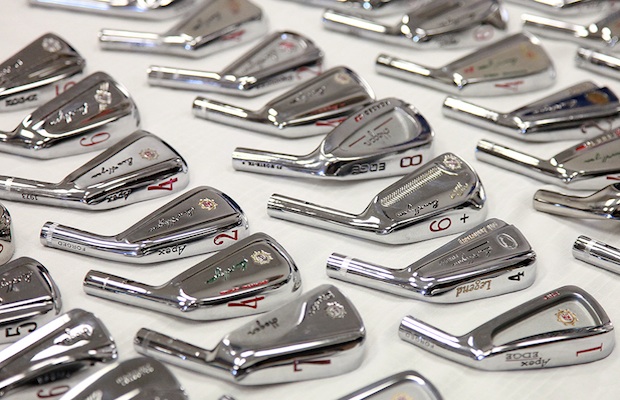
The “Table Full of Jewelry” is Ronnie McGraw’s incredible collection of Ben Hogan iron heads. Laid out like a banquet, the assortment of some of the finest irons ever made catalogues 50 years of chief Hogan Company iron designer Gene Sheeley’s work — much of which was done with Ben Hogan peering (literally and figuratively) over his shoulder.
The table is a place of reflection, reorientation, and inspiration for Terry Koehler, President and CEO of the Ben Hogan Golf Equipment Company.
[quote_box_center]”I look at this table full of clubs and go ‘I had that one, I had that one,’” he says.[/quote_box_center]

Koehler often returns to the table to imagine what the golf legend-turned clubmaker might have had in mind with each design, what he was trying to, what his sharp mind was calculating and considering.
Mr. Koehler was kind enough to select three of Mr. Hogan’s designs from the full spread of treasures, talk to me about them in detail, and indicate how what he sees is shaping the upcoming release of the first Ben Hogan iron in nearly a decade.
The clubs, and his comments, are below.
Power Thrust

“In the early 60s, the Precision had run its course and Hogan introduced a club called the Power Thrust,” Koehler says. “The Power Thrust was the beginning of a really radical weight distribution change that Mr. Hogan drove: distributing the weight up higher through the clubhead.
“The toe on the back of the clubhead is really swept away … mass was really concentrated behind the center two-thirds of the face, rather than all the way across the bottom of the blade. He moved the center of mass up in the blade quite a bit higher. The Power Thrust was the club Mr. Hogan really favored the rest of his playing career.”
IPT

“Then, they did the IPT, which was the Improved Power Thrust: The first appearance of the classic Hogan muscle pad,
Koehler says. “Mr. Hogan really perfected what he considered optimum weighting.
“He moved away from what muscle backs at that time had become. The muscleback blade has been defined as this upside-down crescent. Hogan never did that. The Hogan muscle always extended evenly across the back of the golf club—across the entire impact area of the face.
“This…was when Mr. Hogan came upon this idea of squeezing the weight back a little more toward the center of the golf club. If you look at Hogan clubs from then on, there was considerable mass out on the toe-third of the golf club. The weakness of every muscleback blade out there is that there’s no mass out on the last third of the golf club, so when you catch one on the toe, it’s just horribly penalizing. I believe that’s why Mr. Hogan didn’t like the traditional muscleback blade.”
1992 Apex

“The ’92 Apex has a lot of the Apex II design in it,” Koehler says. “There’s not a lot of difference between it and the IPT. I think that’s because the object of striking the golf ball didn’t change in those 25 years, and it hasn’t changed since. If you’re in the middle of the fairway at — pick a number — you’re objective is the exact same thing Mr. Hogan wanted to do: You want to control trajectory. You want to control distance. You want to control ball flight.
“There’s not a guy on the PGA Tour today that strikes a golf ball with the precision Mr. Hogan did. These three clubs for me define what Mr. Hogan personally felt about how a ball ought to come off of a club, how you build a club to allow you to control trajectory and how you build a club to allow you to have precise distance control.”
The Vault
Mr. Koehler also alluded to something called “The Vault.” For even the most casual fan of golf history, The Vault sounds incredible. For a Hogan aficionado, the collection is Shangri La: Mr. Hogan’s personal collection of hundreds of prototypes. Inside The Vault, Koehler said, you can see just how far Mr. Hogan was willing to go to answer the question “How do we build a club to help people play better golf?”
The Hogan Company, which is synonymous with traditional forged blade, experimented with some pretty off-the-wall designs under Mr. Hogan’s direction. Included in The Vault are items such as a wedge with wavy grooves from the mid-60s (an experiment to see if more spin could be imparted than with traditional parallel grooves).
Also in The Vault: A persimmon driver with a brass insert in the toe to move weight to that portion of the club and a small aluminum-headed wood that looks a great deal like the modern hybrid. Speaking of modern design, there’s a putter in the The Vault that, according to Koehler, looks and feels exactly like one of today’s counterbalanced designs.
Several Hogan Company associates quote the Hawk as saying: “We should never stop looking for something that will help people play better.” It’s clear that the search was an exhaustive one and that the willingness to experiment was great.

Principles guiding the upcoming iron release
I knew that Koehler was unlikely to tip his hand about the January release of the new Ben Hogan irons, but I had to ask what he could tell me. In a way, it wasn’t much. But in another way, it was everything.
“We believe golfers of all skill levels are trying to hit golf shots,” Koehler says. “Golfers are trying to hit draws and fades. Sixty percent of 16-to-20 handicappers are trying to hit draws and fades.
“The things people are trying to do most are flight the ball down and peel a couple yards off. Those are the things modern clubs are designed to fight. What our golf club is designed to do is to take everything we’ve learned from these clubs I’ve talked about.
“[I was] really impressed by the consistency of smash factor of old Hogan clubs on Iron Byron as you move impact around the face.
“We’re trying to fuzz that line between game-improvement and player blade. We like to talk about player improvement. Player improvement is about giving you feedback. You want to know where on the face you’re hitting the ball. If you can’t hit it in that middle 1.25 inches [of the golf club], you really need to go see your golf pro. As a golf club guy, I really can’t help you.
“Our new line is a forged iron product. Mr. Hogan believed every club should be forged and we believe that. You want feedback so that you can continue to learn, because golf is a game where you’re always learning.”
You can check out the new Ben Hogan golf site here.


Equipment
Putters that never made it: Check out some of the best tour builds that didn’t make the cut

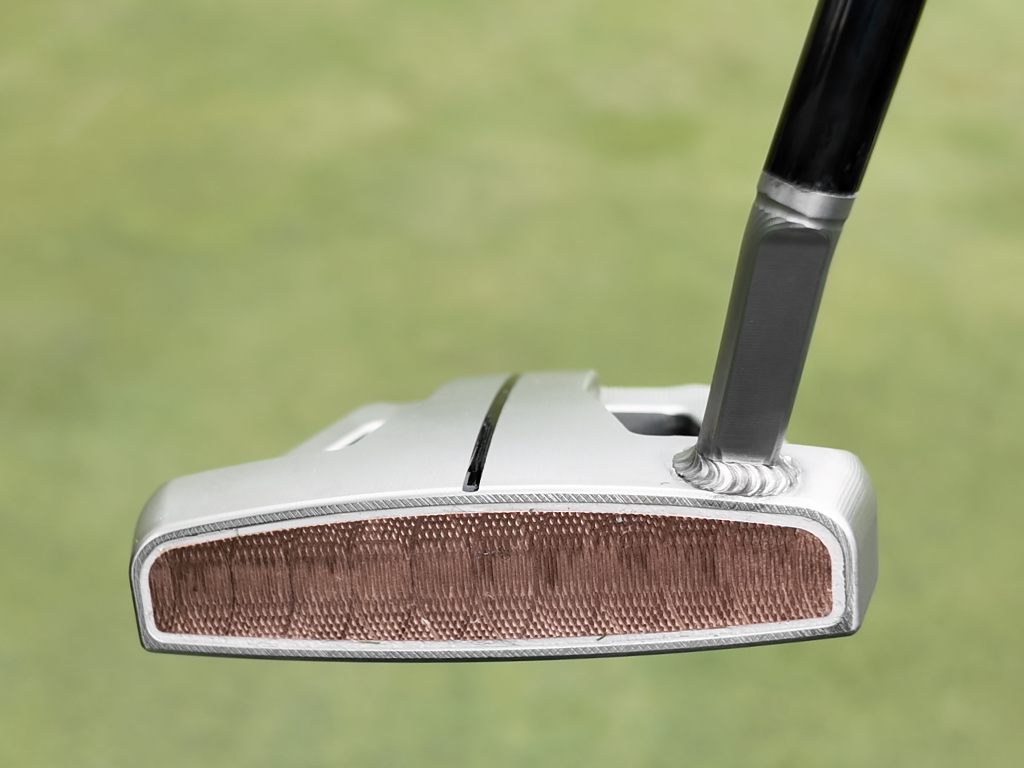
Arguably, the best perk of being a professional golfer on the PGA Tour is the ability to request or even just be handed pretty much any club you could think of. It happens more often than you think, usually with putters around the practice green from one event to the next. Come Wednesday, the Tour bags lining the edge of the putting surface become resting places for fallen flatsticks that never made the cut.
So let’s take a look at some of the best we’ve seen out on Tour this year that never made it to the competition. (You may notice none of Hideki Matsuyama’s custom Scotty Cameron putters made this list. There are too many.)
Let’s start with this custom Damascus Milled Odyssey Rossie made for Ryo Hisatsune. Featuring a single line and the short-slant hossel, we’ve seen plenty of Number 7 and jailbird heads featuring the Damascus Milled insert, but this is the first and only one we’ve spotted in a Rossie. Hisatsune primarily putts with an Odyssey Black Series iX #9, but we have seen him recently with a TaylorMade TP Collection SOTO, so there could be potential that the Damascus Milled Rossie could end up in the bag.

Everyone wants to be Cameron Young right now. We’ve had Justin Thomas and Tom Hoge both game the Scotty Cameron 9.5R prototype. Well, for the PGA Championship, Brooks Koepka nearly joined that list after requesting the same style of putter, with the full-length alignment line. But the Scotty Cameron reps took the request a step further and made one specially for Koepka with a Teryllium insert, similar to one in his previous Newport 2 gamers. The reason why this one didn’t go into play, though? Because it was too heavy.

Harry Hall was the third-best putter on Tour last year, so when Bettinardi made him a custom proto, you know it was going to be good. The custom BB28 blade features VDF face milling, a custom-welded single-bend shaft, and the owner’s initials – HH – on the sole of the putter. Hall, who usually games an Odyssey O-Works #7 W, has dabbled with a TaylorMade Spider Tour X already this year. Maybe there’s a chance this Bettinardi might make his bag.

Honestly, this one doesn’t need a description. It’s Kieth Mitchell’s custom Scotty Cameron Napa. One Scotty Cameron face stamp, two Scotty Dogs, two Scotty Cameron 7-Point Crowns and one Circle T. That is all. Oh, except for the Cashmere Cameron headcover.

Finally, and just for fun, how about we pour one out for this TaylorMade Spider Tour X made for Scottie Scheffler in its new torched finish. It’s unlikely we’ll see a putter change anytime soon from the best golfer in the world. In fact, he hit just two putts with it on the Harbour Town practice before going back to his trusty gamer.


Driver: Titleist GT3 (9 degrees) Buy here.
Shaft: Aldila Rogue Silver 130 M.S.I. 70 TX


3-wood: TaylorMade Qi35 (15 degrees)
Shaft: Fujikura Ventus Blue 7 X

7-wood: TaylorMade Qi35 (21 degrees)
Shaft: Fujikura Ventus Blue 8 X

Irons: Grindworks PR-202 (4), Grindworks PR-101A (5-PW)
Shafts: True Temper Dynamic Gold Tour Issue X100


Wedges: Cleveland RTX6 Tour Rack (52-10 Mid), Titleist Vokey Design SM10 (56-08M), SM11 (60-04T)
Shafts: True Temper Dynamic Gold Tour Issue S400


Putter: Scotty Cameron Tour Rat 1.5 Tour Prototype


Ball: Titleist Pro V1x
Grips: Golf Pride MCC


In our forums, our members have been discussing their favorite major winning irons used by Tiger Woods. WRXer ‘golferdude54’ kicks off the thread saying:
“Mizuno MP 14/29. Titleist 681T. Nike Forged Blades. TaylorMade P7TW.
Among these irons that helped Tiger win 15 majors, which is your favorite in terms of looks?”
And our members have been naming their favorites and why in response.
Here are a couple of posts from the thread, but make sure to check out the entire discussion and have your say at the link below.
- SwingBlade: “I prefer the early blades he played and the more recent TM TW’s especially because after Tiger had his major behavioral setbacks, part of Nikes support payback was making Tiger play a Nike putter and cease using his beloved uniquely customized Scotty putter.”
- ProjectX: “This (Nike Forged Blades) and there’s not even a close second.”
Entire Thread: “Which of Tiger’s major winning irons are your favorite? – GolfWRXers discuss”

Justin Rose WITB 2026 (April): Full WITB breakdown with new McLaren irons

RBC Heritage Tour Report: More minis, course-specific setups, Spider & GTS launches

What’s the story behind Webb Simpson’s custom-stamped irons?

Cadillac Championship Tour Report: Spieth’s sizable changes, McLaren Golf launches, and more

Kristoffer Reitan’s winning WITB: 2026 Truist Championship

Cameron Young’s winning WITB: 2026 Cadillac Championship

Aaron Rai’s winning WITB: 2026 PGA Championship

Nelly Korda WITB 2026 (April)

Justin Rose on the switch to McLaren Golf, learnings from previous equipment moves

Photos from the 2026 PGA Championship


Patrick Reed WITB 2026 (May)
Driver: Titleist GT3 (9 degrees) Buy here. Shaft: Aldila Rogue Silver 130 M.S.I. 70 TX 3-wood: TaylorMade Qi35 (15 degrees)...

Aaron Rai’s winning WITB: 2026 PGA Championship
Driver: TaylorMade M6 (9 degrees) Shaft: Aldilda Synergy Blue 70 TX 3-wood: TaylorMade Qi10 (15 degrees) Shaft: Fujikura Ventus Blue...


Michael Block WITB 2026 (May)
Driver: TaylorMade Qi4D (9 degrees) Shaft: Fujikura Ventus Black VeloCore+ 5 X 3-wood: TaylorMade Qi4D (15 degrees @14.25) Shaft: Mitsubishi...


Bryson DeChambeau WITB 2026 (May)
Driver: Krank Formula Fire Pro (6 degrees) Shaft: Project X Prototype 3-wood: Krank Formula Fire (10 degrees) Shaft: LA Golf BAD...
-
 Whats in the Bag3 weeks ago
Kristoffer Reitan’s winning WITB: 2026 Truist Championship
-
Whats in the Bag2 weeks ago
Aaron Rai’s winning WITB: 2026 PGA Championship
-
 Tour Photo Galleries3 weeks ago
Photos from the 2026 PGA Championship
-
 Equipment2 weeks ago
GolfWRX Launch Report: 2026 Titleist GTS drivers
-

 Equipment2 weeks ago
PGA Championship Tour Report: Fitzpatrick, Koepka among big-name putter switches for Aronimink
-

 News2 weeks ago
WITB Time Machine: Phil Mickelson’s winning WITB, 2021 PGA Championship
-

 Equipment2 weeks ago
Which of Tiger’s major winning irons are your favorite? – GolfWRXers discuss
-

 Equipment2 weeks ago
Lead Tape Report: Adjusting the swingweight of the Wanamaker Trophy


Harris Telemacher
Jan 16, 2015 at 11:38 am
1992 Apex and Apex II model came from the same dies…….I think the only difference is the stamping and grooves.
Ben Hogan
Dec 28, 2014 at 7:16 pm
I had a 30 min conversation with Mr. Koehler a couple months back and learned that he will deliver a quality iron set. Unlike many of the past company owners, he and his R&D team have direct ties to Mr. Hogan (when he was still consulting). Koehler has the passion and perfectionist standards that I think would Mr. Hogan would respect.
Brett
Dec 28, 2014 at 5:14 pm
any pics of the new clubs or date when they will be released?
Rick Wilmoth
Dec 23, 2014 at 12:41 pm
What about left handed clubs? What about that history?
Care
Dec 27, 2014 at 3:18 am
Left handed?
Snowman2134
Dec 22, 2014 at 9:12 am
How about folks just hold their water and wait to see what they produce?
ramel
Dec 22, 2014 at 3:01 am
I’m curious to see where Mr. Koehler positions the Hogan clubs in the market.
There are just so many good clubmakers, and even those formerly associated with making shovels now make very fine player irons.
I do hope he considers getting some inspiration from the JDM. Right now, Japan produces some of the most beautiful irons.
slimeone
Dec 21, 2014 at 9:18 pm
Not sure what they are trying to achieve by bringing Hogans back. When Hogan started the company it was because he wasn’t happy with the standard of clubs currently available. But now there are countless manufacturers all over the world making very fine forged player’s irons. All of the major OEMs have at least one basic player’s blade in their lineup and they all use comparable design and manufacturing technology and also have huge backing behind their RnD which was something Hogan brand specialised in.
Also most of the Hogan faithful have moved on, and I don’t see how they are gonna attract young golfers to the brand over Cobra or TM or one of the cool companies.
Phat
Dec 21, 2014 at 9:47 pm
+1 on that front, though who knows what’s around the corner… Brands like Hogan do represent a more stylish time for golf and there may well be a market for some of that sauce. Cycling for example has had a resurgence the past 5-6 years in boutique high street-styled competition apparel bearing modern technology (Rapha), and stylish cutting edge OEM manufacturers like Campagnolo. if a couple of pro’s with that Palmer swagger started demanding gear that doesn’t look like it was designed by Mattel, the reborn Hogan brand could be killing it again…
slimeone
Dec 22, 2014 at 1:19 am
Good points, and given that the influence of the Hogan Personal can be seen so clearly in modern irons it does make sense that people will appreciate the authentic Hogan style once again. But I agree that they need some serious tour presence to get the name out there. Maybe a couple of young upstarts and some grizzled veterans.
Waste
Dec 22, 2014 at 2:15 am
I don’t think the new Hogan brand could be killing anything at all, because even many good players these days aren’t really playing blades any more, so the new Hogan company would end up having to go with the times and provide combo- type sets to attract the mid market, and that will inevitably bring the company down to the level of other major OEMs, and therefore will struggle.
The only way for this new Hogan company to stay slick and hold water would be to become a company like Miura and only produce premium equipment at higher prices and custom build everything to order. The new company cannot let it be watered down and suckered into the general lower retail markets.
But I think the Hogan name should be put to rest and never be used again. How is this new company going to license the Apex name from Callaway, anyways, without paying a massive fee? Buy out the name again from Callaway?
This whole venture is a waste of time.
slimeone
Dec 22, 2014 at 4:03 pm
I agree, but Miura’s success is built on their reputation for unsurpassed forging and finishing. Eidelon Brand’s heritage in forging is non-existent.
Plod
Dec 23, 2014 at 2:35 am
True. But Miuras have been forged in Japan for ages, and hasn’t change much there.
For the new Hogan company to even pretend to be present the kind of quality that Mr Hogan wanted in the first place is the same type of quality, and where would the new Hogan get such quality at reasonable prices? It can’t. Unless it’s done in some place like China or Thailand or perhaps another cheap country may be in South America? But would people pay such high prices for ones not made in the USA? Most likely not! So for it to be made in the USA, the prices surely are going to be comparable to the Miura types, and that is why this new Hogan company is in a quandary.
Lee
Dec 23, 2014 at 3:03 pm
Heads made in China, sure the best factories out their make great products but what with the call for ‘Mr Hogan!’ to be Canonised well this is what it sounds like to me (and don’t forget the great Arnold Palmer who never says a bad word about anyone once commented ‘I don’t like that man’) why aren’t they being made in the US or Japan at least. I don’t see it.
Chuck
Dec 25, 2014 at 2:23 pm
It’s just possible, that the right way to think about it is that the success of Ben Hogan Golf was due to Mr. Hogan.
And the success of Miura Golf is due to Mr. Miura.
Shallowface
Dec 22, 2014 at 7:48 am
“Cool companies.” Is that what it’s all about?
Sheesh.
Something it would do American Business a world of good to learn.
It’s not all about the young.
The young are broke, mainly from trying to be cool.
I’m 54, retired, play 100 rounds a year, and I’m standing in the golf shop (or any number of other businesses) with wads of disposable cash and there’s nothing for me to buy, because all of the focus is on the young and the cool.
It is the absolute epitome of stupidity, and it deserves to fail.
Ben
Dec 22, 2014 at 2:04 pm
I love you.
george
Dec 23, 2014 at 11:46 am
+1 Thank you. I could not have said it better.
Superlooper
Dec 23, 2014 at 1:34 pm
Excellent point! The Hogan Tradition & name has incredible value in the game of golf. Calloway is fast on the way to “Spaldingsville” when it comes to golf. I wish the Hogan people much success! I love their products from days gone by. Real men play blades….!
Jason Hutty
Dec 23, 2014 at 2:40 pm
Mizuno. Quality, design, style. Why shop anywhere else?
Steve Haefele
Dec 23, 2014 at 11:35 am
As far as ™ and Cobra being a “cool” company that may be true with today’s youth market. There is definitely a market for classic looking forged clubs like Hogan’s not the new trend of numerous badges and Nascar striped clubs made by Cobra,™ et al.
Joseph
Dec 26, 2014 at 6:03 pm
Yes….sadly most Hogan men have moved on. My first set was the Apex II then the 88 Redlines which were considered by many the greatest blade ever made by Hogan. I for one will buy a new set no matter what it looks like.
Cyd
Dec 27, 2014 at 8:40 am
I still play Redlines.
I too will buy a set.
Snakeeyes
Dec 21, 2014 at 6:44 pm
I played various Hogan iterations starting with the Apex II, PC, Apex Redline, with the original Apex shaft. Whatever they do, PLEASE bring back the original Apex shaft.
Doug Ferreri
Dec 23, 2014 at 1:02 pm
Still use Apex 5 shaft from 1978. Shaft not only ahead of it’s time but still playable today.
Shallowface
Dec 21, 2014 at 4:46 pm
I really appreciate the honesty Terry shows with his comment about needing to see a pro if you can’t hit somewhere near the middle of the face. The truth hurts, but it’s still the truth.
Truth is, guys were 16-20 handicaps with blades in the 1960s when that was all that was available and people with that same ability are 16-20 today with SGI irons. Sole design today is better across the board for sure. Ralph Maltby’s playability charts were a real eye opener for me. Don’t bother with how he ranks the clubs. Just compare measurements.
Finally, the collection above, while impressive, is incomplete. If there’s a Magnum there, I don’t see it!
Hogan may well have believed in forged, but they sold cast clubs (the Producer) as early as 1975. This will be argued to the end of time, but a cast stainless club, properly designed, feels just as good as any forging and is more durable. I could never bring myself to stick a beautiful forged iron head into the “turf” of a sandy driving range in Florida, hitting dirty balls to boot. The grooves would be worn out in one range session.
KC
Dec 20, 2014 at 8:28 pm
Make a modern Apex PC with a sweet spot bigger than a pin head, and I’ll buy it. I learned on the PC, and my hands can still tell the tale. I have my old 6i in the entryway. As I leave for a round, I touch it to remember my beginnings in this game.
Shallowface
Dec 21, 2014 at 8:11 pm
The sweet spot on every iron is the size of a pin head.
But on a club like the PC, it tends to be located more near the hosel and higher than it would be on a game improvement design.
So, if you hit the ball dead center on the clubface, you’ve essentially hit it on the toe to some degree. This can account for the less than solid feel. Players who excelled with a club like this tended to impact the ball on the heel side of the clubface.
I’m betting Terry’s Hogan Irons have a proper center of gravity location.
Ian
Dec 20, 2014 at 1:53 pm
Click bait… the headline suggests we will get to see a ‘future’ iron along with the past.
LimeShark
Dec 20, 2014 at 12:11 pm
The reason they are 16-20 handicappers, is because they are trying to hit fade and draws instead of hitting the fairway.
There is an old story about the poet Robert Frost. A young poet walked up to him and asked Frost’s opinion about a poem the young poet had written. It was a complicated, advanced piece.
Frost told him “you need focus on the rhymey dimey stuff first and become good at it; until you do, you never be good at more advanced poetry.”
Phat
Dec 19, 2014 at 11:25 pm
Who is the head designer, where will they be forged and are they bringing back a modern version of the Apex shaft, and maybe an anniversary iron? I’m excited but sceptical of all the PR drivel. If someone like Jeff Sheets is involved + some of the old core staffers in the production it could be great fun.
Thai Endo
Dec 20, 2014 at 9:05 pm
They’ll be forged in Thailand, probably, like the new Nikes are, at Endo Thailand.
Fred
Dec 23, 2014 at 9:35 pm
Phat: I’ve read previously that, along with moving the HQs back to Fort Worth, some of the original staff members will also be on board. As far as the Apex name is concerned, I always thought it pretty shallow of Calloway to even consider using the name from another brand of clubs – be original; make up your own name, and not try and cash in on clubs that were once better than anything Calloway has ever made. I’m a Mizuno man, but have always been a big Hogan fan. Looking forward to the company’s new products.
DJ
Dec 19, 2014 at 11:15 pm
Kris Tschetter said in her book, “Once Mr. Hogan was no longer involved in his company, the quality of the products he had so diligently perfected went downhill to the point where I could no longer get a set of Hogan clubs that had any consistency at all. This became a real struggle for me. I had played Hogan clubs all my life, and I hated that I was going to have to change. I loved looking down at those beautiful blades. Nothing looked as good as a Hogan iron.”
IMO Mr. Koehler is a brave soul to take on the challenge of creating a product that Mr. Hogan would be proud of and to some degree right the wrongs that Ms. Tschetter referred to. From everything I’ve read, he seems to be taking all the right steps and doing the due diligence required to get it right. I for one can’t wait to see his final product.
Mad-Mex
Dec 19, 2014 at 9:35 pm
Sadly many of todays players will never know what it feels like to hit a flush shot using a balata wound ball and a Apex Iron,,,,,,,,
Chuck
Dec 19, 2014 at 10:51 pm
There’s much merit to what you say. A balata ball hit properly by a forged blade isn’t just a special feel; it actually sounded different. Like spikes on pavement, or a persimmon wood.
But there was also a trick, with the old Apex clubs. And that was the Apex shaft. Which was very much different from the always-dominant True Temper Dynamic shafts. The Apex had a softer tip, which fooled a lot of people into thinking that somehow the Hogan forged heads were themselves softer when of course such a thing is impossible. The softer-tip Apex shaft was combined with a compact, high-CoG head. Essentially a high-launching shaft connected to a low-hitting head. Just get the ball onto the sweet spot of that little clubhead.
Superlooper
Dec 23, 2014 at 1:42 pm
Well said….
I
Dec 19, 2014 at 9:10 pm
I really wish that this new Hogan company would go away.
I think it is better served in history that the name not be used any more for a new golf equipment company.
The man is gone. Let him rest. Don’t use his name to make gains for yourself.
snowman
Dec 19, 2014 at 6:52 pm
Played Hogan Irons in the 70’s and some of the newer ones after goldsmith bought the brand (think)… Love the looks then and now. Hope they will offer a forged Cavity back and maybe a muscle back blade set or a combo set. Like many of the other comments, I cannot fathom why he would say 60% of 16-20 handicappers are trying to hit fades and draws. From what I’ve seen they are trying to make contact and allow for their natural ball flight (probably a big fade) — maybe thats what he meant.
Golfraven
Dec 19, 2014 at 5:59 pm
I had them and maybe one day again.
nikkyd
Dec 19, 2014 at 5:50 pm
I did a bad thing. I regripped one and only one powerthrust iron for a friend that was new to golf. Original grip, it was loose on the shaft and i couldnt pull it with or or solvent because it was so dried out. When he showed me the like new hogan bag and complete set of irons that were near mint, my jaw dropped. I did a bad thing. He got them for $75 at a yard sale. At least he is using them. Hogan would shake his head if we hung them on the wall instead of using then to dig the secret out of the dirt
Pat
Dec 20, 2014 at 7:51 am
What are you, 5 years old? “I did a bad thing….” ROFL.
slimeone
Dec 19, 2014 at 5:42 pm
I hope they use a reputable forging house and a nice gooey-grade steel!
TheFightingEdFioris
Dec 20, 2014 at 12:56 pm
You know Terry Koehler would not settle for anything less… So exciting.
CairnsRock
Dec 19, 2014 at 4:28 pm
I wish them success but golf tech has moved on. Romanticizing about 90’s tech will not be enough.
Just my opinion based on memory and experience. The average 16 to 20 guys back then couldn’t hit the Hogan irons. They were great looking irons much beloved by low handicappers. Whether fuelled by usability or elitism (that’s what good golfers play, ergo I must)
So my perception is shaded. I hope I’m wrong.
Jafar
Dec 19, 2014 at 4:00 pm
If you aren’t trying to hit a fade or draw, I don’t know what you would be trying to hit. I’m pretty sure it won’t be going straight though, and if it does, it didn’t go as far as it could.
Attempting to hit the ball straight on shots longer than 125 yards is a losing battle. I think if you’re 16-20 handicap then you have enough sense to pick one side of the fairway to miss on.
Jesse
Dec 19, 2014 at 3:11 pm
Hopefully these will be another option in high end forged clubs, but I’m not sure that market is big enough to support another company. I’m interested to see what they come up with.
GodSpeed
Dec 19, 2014 at 1:58 pm
This coming from someone that would like to see them do well? “60% of golfers 16-20 cap are trying to hit fades/draws”? Is he serious? I know quite a few people in my golf league that fall into that category, and all are still struggling to just hit the ball straight. I get it that he is maybe trying to say their direction is going to be mid-cappers thru scratch players, but 16-20? I think he meant 10-14 maybe?
But anyway, with that comment in mind, he is either out of touch with the market or he is trying desperately to beef up a product that he is afraid of tanking. Either way, I’ve got that awkward-don’t-look feeling and crossing my fingers for them.
Realisitic
Dec 19, 2014 at 1:14 pm
DOA
Dead on Arrival
Saying most golfers want to hit draws and fades… self fulfilling prophecy much Terry? sheesh what a farce
chris franklin
Dec 19, 2014 at 1:03 pm
“60% of 16-20 handicappers are trying to hit draws and fades”.
Hard to believe,in fact it’s so hard to believe I can’t believe it at all,so Mr Koehler your credibility has just gone straight down the toilet.
Will the ‘forged’ irons be properly forged or the same as the current Wilson Staff which are castings that go through a stamping die?
Cynical?Who,me?
Mark
Dec 19, 2014 at 1:01 pm
Very interesting article. Two of my regular playing partners had multiple sets of Hogan irons. Apex, Apex2, Apex PC, Medallion, Edge Forged, FTXs…one still has an old Copper gap wedge and even older forged Special SI in his bag…and off scratch at 50…
Large chris
Dec 19, 2014 at 12:37 pm
It’s all very exciting,I think my apex 99s are pretty great BUT
What I now notice a lot with my clubs, and it’s in the photos in the article, is how straight the leading edge of most Hogan irons is, with no heel or toe relief. To me this limits their versatility, from side hill lies I think the clubs are more of a struggle than most, possibly they were all originally designed for flat Hard Texas conditions.
I will be watching to see if these new clubs can be made a bit more user friendly.
Josh
Dec 19, 2014 at 3:27 pm
This is an absolutely outstanding comment with a great observation.
Neil
Dec 22, 2014 at 12:11 pm
I respectfully disagree.
These are not game improvement clubs – they are aimed at players who understand how to adjust for different conditions. Changing the leading edge would dramatically change the turf interaction and, I suspect, would require other changes to the sole of the club that would render them something other than what the original Hogans are. For me, at least, that straight leading edge is a critical design element of the various iterations of the Hogan Apex; it should NOT be eliminated.
Can't you see I'm eating my lunch?
Dec 19, 2014 at 12:32 pm
Artwork!
Neil
Dec 19, 2014 at 10:27 am
Fabulous! IMHO, Hogan Apex is still the all-time iconic players club. I played the Apex II in college (in the late 1970’s) and the ’88 Redlines through the 1990’s. I currently own a set of the ’92 Apex (2-E, barely used) and a set of ’99 Apex (also 2-E), which I played up until I bought a set of Mizuno MP-32’s in 2006. I still like to take the ’99s out for a spin a couple of times per year, and when I do, they get Ferrari-level attention. Even guys who never hit a two iron in their lives can tell there is something special about those clubs, and they want to see/touch/feel/know all about them.
Thanks for the article!
Superlooper
Dec 23, 2014 at 1:50 pm
So true, Neil…and that feeling is what golf is all about. It’s the feeling of excellence!
Jeff
May 4, 2015 at 6:03 am
Hi Neil, I love the 1992 and looking for a mint set. Willing to sell at a good price?
Jonny B
Dec 19, 2014 at 10:22 am
Can’t wait. Beautiful irons in these pics!
Pingpro1959
Dec 19, 2014 at 10:19 am
I cant wait….:)
Dennis
Dec 19, 2014 at 10:19 am
The last part is pretty funny. This coming from a guy that sold Eidelon and Scor with neither being forged. Does that tell us that his previous products are inferior or just that they are trying to sell something now that they know die hard Hogan fans wont buy (their only audience) unless they are forged.
I would also love to know where the 60% of golfers are trying to work the ball number came from.
RG
Dec 19, 2014 at 10:01 am
Can’t wait to see the what the new line is like. Hopefully the company will make a good solid forged iron and leave the hype to everyone else.