
Instruction
Squat, Spring and Swing: A new breed of power

https://www.youtube.com/watch?v=FDeQNBN_oiw
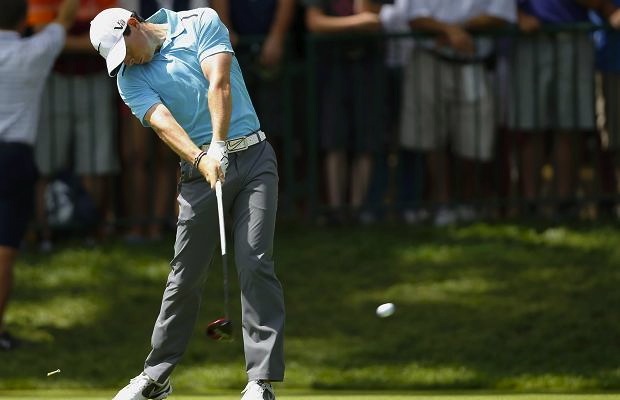
In the video above you will notice that Rory McIlroy, the world’s No. 1 ranked golfer, does three things: he squats, he springs and he swings.
These three moves, as I have analyzed in the video, are imperative to create power and distance in your golf swing, as the world’s new breed of golfers have figured out.
The video above shows Chris Como, Tiger’s new instructor, trying to swing a golf club while free-falling, thus not having a ground surface to leverage. The result of his experiment? It’s nearly impossible.
If any of us were asked to jump, the very first thing we’d do is squat. Using the legs and the gluteal muscles to create power, we would squat and then push off the ground to create as much force as possible. We, as instructors, have come to see the value of Ground Reaction Force (GRF) as one of the main power sources in the golf swing. It is what long hitters use to create the speed they do, and it’s what many club golfers lack because they simply do not utilize the ground properly. The ground is the base of the kinetic chain and starts in motion the power that eventually reaches the arms and club. Without it, we’d hit it nowhere, and Como’s video is evidence of that.
Watch Rory as he uses his 5-foot 9-inch, 165-pound frame to create 125 mph of club head speed. If you still think the ground isn’t important in creating power, consider this: most of the long drive champions have a 30-inch or more vertical leap, which is amazing considering how big some of them are.
If you look closely at the video of Rory, you will notice something quite interesting — in the downswing, his hands reach their low point before impact and begin coming UP as the club reaches the ball. After the hands reach their lowest point in their arc, they begin pulling UP, which in turn snaps the head of the club DOWN! The low point is the “squat,” and the “spring” is the hand line coming UP.
For many years we were taught that in order to keep the force on the club, the hands drove DOWN as the shaft leaned forward, creating a position where the hands and club reached their low point together. But if you watch the best players recently, divots have gotten more shallow (I had the good fortune to play with Tiger once circa 2006, and I couldn’t help notice how shallow his attack angle was). The “barely bruising the turf” movement is the result of a whole new generation of players learning a new pattern of swinging the club IN and UP — forcing the club head out and down — as they spring up and turn through the ball into impact.
If you’re digging a lot of turf and looking for more distance, try the “squat, spring and swing” for yourself. At 66 years young, I’m one-club longer since learning to work within this pattern. Yes, you must be on plane and in good posture to do it, but if you are you’ll be amazed at how you will scrape the ball off the turf.
If you’d like me to analyze your swing, go to my Facebook page and send me a message, or contact me (dennisclarkgolf@gmail.com) about my online swing analysis program.



The LPGA Tour is kicking off its 2026 season this week at Lake Nona Golf and Country Club in Orlando, and the pros are dealing with something most Florida golfers rarely face: freezing temperatures.
“It’s colder here than in the UK at the minute, which is a first,” said England’s Charley Hull during Wednesday’s media day at the Hilton Grand Vacations Tournament of Champions.
Even Lydia Ko, who lives at Lake Nona, seemed surprised by the cold snap. “We’re pretty much getting to below zero in celsius here, which maybe in other parts of the country they would be thankful, but when you’re in Florida it is a little bit of a surprise,” she said.
If the world’s best players are adjusting their games for cold weather, recreational golfers should, too. Here’s how to play smart when the mercury drops.
Understand What Cold Does to Your Game
Before you change anything, you need to know what you’re fighting against. Cold air is denser than warm air, which means your ball won’t fly as far. Period.
Hull noticed this immediately during practice rounds at Lake Nona. She mentioned hitting a gap wedge into the 18th hole during a previous win but needing a 4-iron during Tuesday’s practice round. That’s a difference of four or five clubs for the same shot.
Action item: Expect to lose 5-10 yards on every club in your bag when temperatures dip below 50 degrees. Plan accordingly and don’t be stubborn about club selection.
Layer Up Without Restricting Your Swing
Hull admitted she wore three pairs of pants during practice. While that might be extreme for most of us, staying warm is critical to playing well in cold conditions.
Your muscles need warmth to function properly. When you’re cold, your body tightens up and your swing gets shorter and faster. Neither of those things help you hit good golf shots.
Action item: Wear multiple thin layers instead of one bulky jacket. Look for golf-specific cold weather gear that stretches with your swing. Keep hand warmers in your pockets between shots. And don’t forget a good hat because you lose significant body heat through your head.
Take More Club Than You Think You Need
This is where ego gets in the way of good scores. When it’s cold, the ball doesn’t compress as well off the clubface. Combined with denser air, you’re looking at serious distance loss.
The pros at Lake Nona are dealing with a course that measures 6,642 yards but plays much longer this week. If they’re adjusting, you should too.
Action item: Take at least one extra club on every approach shot. In temperatures below 40 degrees, consider taking two extra clubs. It’s better to fly the ball to the back of the green than to come up short in a bunker.
Adjust Your Expectations on the Greens
Cold weather affects putting in ways most golfers don’t consider. The ball is harder and doesn’t roll as smoothly. Your hands are cold, making it harder to feel the putter. And if there’s any moisture on the greens, they’ll be slower than normal.
Ko mentioned that she still sometimes reads the greens wrong at Lake Nona despite being a member for years. Cold weather makes that challenge even tougher.
Action item: Hit putts more firmly than usual. The ball needs extra speed to hold its line on cold greens. Take a few extra practice strokes to get a feel for the speed before you putt.
Embrace the Mental Challenge
Hull said something interesting about cold weather golf: “I like the mental toughness of it.”
That’s the right attitude. Everyone on the course is dealing with the same conditions. The player who stays patient and doesn’t get frustrated by the extra difficulty will come out ahead.
Action item: Lower your expectations by a few strokes. If you normally shoot 85, accept that 90 might be a good score in 40-degree weather. Focus on solid contact and smart decisions rather than perfect shots.
Warm Up Longer and Smarter
This might be the most important tip of all. Cold muscles are tight muscles, and tight muscles get injured easily.
World No. 1 Jeeno Thitikul revealed she’s been protecting a wrist injury that bothered her late last season. Cold weather makes those kinds of injuries more likely if you don’t prepare properly.
Action item: Spend at least 20 minutes warming up before your round. Start with stretching, then hit easy wedge shots before working up to your driver. Keep moving between shots on the course to maintain body heat and flexibility.
The pros at Lake Nona this week will adapt and compete at the highest level despite the cold. You can do the same at your local course by following these tips and keeping a positive attitude.
PGA Professional Brendon Elliott is an award-winning coach and golf writer. You can check out his writing work and learn more about him by visiting BEAGOLFER.golf and OneMoreRollGolf.com. Also, check out “Playing Through” now on R.org, RG.org’s partner site, each Monday.
Editor’s note: Brendon shares his nearly 30 years of experience in the game with GolfWRX readers through his ongoing tip series. He looks forward to providing valuable insights and advice to help golfers improve their game. Stay tuned for more tips!

Brooks Koepka is back on the PGA Tour, and whether you love him or hate him, the guy knows how to win when it matters. After his LIV Golf stint, the five-time major champion returns this week at the Farmers Insurance Open.
What makes Koepka fascinating? He doesn’t fit the mold. His swing isn’t textbook. He doesn’t obsess over mechanics. Yet he’s won three PGA Championships and two U.S. Opens, regularly making it look easier than guys with prettier swings.
So, what can average golfers learn from someone who treats the game so differently? Quite a bit.
Stop Overthinking Every Shot
Koepka describes his approach as “reactionary” rather than mechanical. While most tour pros grind over swing thoughts, Brooks sees the target and hits it. No mental checklist.
This might be the most valuable lesson for weekend golfers who’ve watched too many YouTube swing videos.
How to actually do this:
On the range, hit five balls where you stare at the target for three seconds prior to addressing the ball. Don’t think about grip or stance. Just burn that target into your brain. You’ll be shocked at how pure you hit it when your brain focuses on where the ball is going instead of how you’re swinging.
Next time you play, give yourself a rule: Once you pull the club, you’ve got 15 seconds to hit. Koepka is one of the fastest players on tour because he doesn’t give his brain time to sabotage him.
If you feel tension in your hands at address, you’re trying to control too much. Koepka’s grip pressure is famously light. Loosen up until the club almost feels like it might slip, then add just enough pressure to hold on. That’s your swing thought: soft hands, see the target.
This approach works better under pressure. When you’re standing over that shot with water left and OB right, the last thing you need is a mental checklist. See it, feel it, hit it.
Play to Your Strengths (Even If They’re Not Pretty)
Koepka uses a strong grip that wouldn’t pass muster in some teaching circles. But he’s built his game around what works for him, elite driving distance and recovery skills. He doesn’t try to be someone he’s not.
Here’s how to build your game like Brooks:
Look at your last five rounds and figure out where you’re actually gaining strokes. Bombing it off the tee, but can’t hit greens? Lean into it. Play courses where distance matters more than precision. On tight holes, grip down on your 3-wood instead of trying to thread a driver through a keyhole you’ll miss seven times out of ten.
Koepka knows he can scramble, so he’s not afraid to miss greens. If you’re deadly from 50 to 75 yards, start leaving yourself those distances on the par 5’s instead of going for them in two every time.
Know when to take your medicine. Koepka in the trees at the PGA? He’s punching out to 100 yards, not trying to bend a 6-iron around three oaks. You’re in the rough with a flyer lie and water short? Hit your 8-iron to the middle and move on. That’s not playing scared, that’s playing smart.
Save Your Best for When It Counts
Here’s a wild stat: Koepka’s putting average in majors is often more than a full stroke better per round than in regular events. He elevates when pressure is highest.
How does an amateur tap into that gear? It’s not about trying harder, it’s about caring differently.
Here’s what actually works:
Decide which rounds matter to you. Club championship? Member-guest? That annual trip with college buddies? Circle those dates and treat them differently. Koepka doesn’t care much about regular tour events, but majors? That’s when he locks in.
Two weeks before your big round, change your practice. Stop beating balls mindlessly. Play nine holes in which every shot has consequences. Miss the fairway? Hit from the rough on the next hole too. Three-putt? Twenty push-ups. Koepka’s practice intensity ramps up before majors because he’s rehearsing pressure, not just swings.
Develop a between-shot routine that resets your brain. Koepka is famous for his blank expression after bad shots. Try this: After any shot, take three deep breaths while walking, then find something specific to notice, a tree, a cloud, someone’s shirt. That’s your reset button. By the time you reach your ball, the last shot is gone.
The Bottom Line
Brooks Koepka’s return reminds us there’s no single path to success in golf. His “substance over style” approach proves that results matter more than looking good.
You don’t need a perfect swing; you need a reliable one that holds up under pressure. You don’t need to hit every shot in the book; you need the shots you can count on. And you don’t need to play great every time; you need to play great when it matters.
Welcome back, Brooks. Thanks for the reminder that golf is ultimately about getting the ball in the hole, not winning style points.
PGA Professional Brendon Elliott is an award-winning coach and golf writer. You can check out his writing work and learn more about him by visiting BEAGOLFER.golf and OneMoreRollGolf.com. Also, check out “Playing Through” now on R.org, RG.org’s partner site, each Monday.
Editor’s note: Brendon shares his nearly 30 years of experience in the game with GolfWRX readers through his ongoing tip series. He looks forward to providing valuable insights and advice to help golfers improve their game. Stay tuned for more tips!

Blades Brown made a big impression last week in the California desert, and not just because he’s only 18. He put up numbers that would catch any weekend golfer’s attention. Most of us won’t hit 317-yard drives or find 86% of our greens in regulation, but there’s a lot to learn from how Brown managed his game at The American Express.
Here are three practical lessons from his performance that you can use on your own course this weekend.
Step 1: Give Priority to Accuracy Over Distance Off The Tee
Brown’s driving stats are impressive. He averaged almost 318 yards off the tee, ranking 12th in the field. More importantly, he hit 76.79% of his fairways, tying for fourth place in the tournament.
Think about that ratio for a second. Brown could have swung harder, chased more distance and tried to overpower the course. Instead, he played smart golf and kept his ball in play.
Your Action Item: Next time you’re on the tee box, ask yourself a simple question before pulling the driver. Do you need maximum distance here, or do you need to be in the fairway? If there’s trouble lurking or the hole doesn’t demand every yard you can muster, take something off your swing. Grip down an inch. Make a three-quarter swing. Do whatever it takes to find the short grass. Brown’s approach illustrates that fairways lead to greens, and greens lead to birdies. He made 22 of them last week, along with an eagle.
The math is simple. When you’re hitting three out of every four fairways like Brown did, you’re giving yourself legitimate looks at the green with your approach shots. That’s when scoring happens.
Step 2: Commit To Hitting More Greens
This is where Brown really separated himself. He hit 62 of 72 greens in regulation, an 86.11% clip that tied for first in the entire field. Read that again. An 18-year-old kid tied for the lead in one of the most important ball-striking statistics in professional golf.
How did he do it? By keeping his ball in the fairway (see Step 1) and giving himself clean looks with mid-irons and wedges.
Your Action Item: Start tracking your greens in regulation. You don’t need a fancy app or a statistics degree. Just mark down whether you hit the green in the regulation number of strokes. Par 3s in one shot. Par 4s in two shots. Par 5s in three shots.
Once you know your baseline, set a goal to improve it by 10%. If you’re currently hitting five greens per round, aim for six. The beauty of this approach is that it forces you to think strategically about club selection and shot shape. Brown’s strokes gained approach number was positive (0.179), meaning he was better than the field average. You don’t need to be perfect. You just need to be on the dance floor more often.
When you hit more greens, you eliminate the need for heroic short game shots. Brown only had to scramble 10 times all week, and he got up and down 70% of the time. That’s solid, but the real story is that he rarely put himself in scrambling situations to begin with.
Step 3: Minimize Mistakes And Stay Patient
Here’s the stat that jumps off the page: Brown made only three bogeys all week. Three. In four rounds of professional golf against the best players in the world.
He also made just one double bogey. That kind of clean card doesn’t happen by accident. It happens when you play within yourself, avoid the big miss and trust that pars are never bad scores.
Your Action Item: Before your next round, decide that you’re going to play boring golf. No hero shots over water. No driver on tight holes just because you can. No aggressive pins when there’s a safe side of the green.
Brown’s performance shows us that consistency beats flash every single time. He didn’t lead the field in any single strokes gained category, but he was solid across the board. That’s how you post numbers and cash checks.
Give these three steps a try. Your scorecard will thank you.
PGA Professional Brendon Elliott is an award-winning coach and golf writer. You can check out his writing work and learn more about him by visiting BEAGOLFER.golf and OneMoreRollGolf.com. Also, check out “The Starter” now on R.org, RG.org’s partner site, each Monday.
Editor’s note: Brendon shares his nearly 30 years of experience in the game with GolfWRX readers through his ongoing tip series. He looks forward to providing valuable insights and advice to help golfers improve their game. Stay tuned for more tips!

RBC Heritage Tour Report: More minis, course-specific setups, Spider & GTS launches

Justin Rose WITB 2026 (April): Full WITB breakdown with new McLaren irons

Best fairway woods of 2026: The most versatile fairway woods + the most forgiving fairway woods

What’s the story behind Webb Simpson’s custom-stamped irons?

Cadillac Championship Tour Report: Spieth’s sizable changes, McLaren Golf launches, and more

The 24 players who can win the Masters

Rory McIlroy’s winning WITB: 2026 Masters

Kristoffer Reitan’s winning WITB: 2026 Truist Championship

J.J. Spaun’s winning WITB: 2026 Valero Texas Open

Cameron Young’s winning WITB: 2026 Cadillac Championship


Alex Fitzpatrick WITB 2026 (May)
Driver: Ping G440 LST (9 degrees) Shaft: Fujikura Ventus Black 6 X 3-wood: TaylorMade Qi4D (15 degrees) Shaft: Fujikura Ventus...

Kristoffer Reitan’s winning WITB: 2026 Truist Championship
Driver: Ping G440 Max (9 degrees) Shaft: Mitsubishi Tensei 1K White 60 TX 3-wood: Ping G440 Max (15 degrees) Shaft:...


WITB Time Machine: Rory McIlroy’s winning WITB, 2021 Truist Championship
Rory McIlroy’s victory at the 2021 Wells Fargo Championship 2021 (now the Truist Championship) marked a significant return to form,...


Collin Morikawa WITB 2026 (May)
Driver: TaylorMade Qi4D LS (8 degrees) Shaft: Mitsubishi Diamana D+ Limited 60 TX 3-wood: TaylorMade SIM Tour (14 degrees) Shaft:...
-
 Equipment2 weeks ago
Justin Rose WITB 2026 (April): Full WITB breakdown with new McLaren irons
-
 Equipment1 week ago
What’s the story behind Webb Simpson’s custom-stamped irons?
-
 Equipment2 weeks ago
Cadillac Championship Tour Report: Spieth’s sizable changes, McLaren Golf launches, and more
-
Whats in the Bag3 days ago
Kristoffer Reitan’s winning WITB: 2026 Truist Championship
-
 Whats in the Bag1 week ago
Cameron Young’s winning WITB: 2026 Cadillac Championship
-

 Whats in the Bag3 weeks ago
Nelly Korda WITB 2026 (April)
-

 Equipment2 weeks ago
Justin Rose on the switch to McLaren Golf, learnings from previous equipment moves
-

 Tour Photo Galleries2 weeks ago
Photos from the 2026 Cadillac Championship


TB
Aug 13, 2016 at 11:31 am
I also think that this is a key move to be able to sustain your posture as you move through the shot. Try to rotate your hips in front of your upper body without some sort of sit down move and you’ll build a pretty nice early extension, sit down and weight shift keeps that spine in the right spot and the bum backing away from the ball. It definitely adds for power but I think that it allows the golfers to maintain spine angle, which makes for a nice consistent strike on the face. Maintaining posture is a key fault for a majority of golfers, myself included. As you get more flexibility/torque between your upper and lower body, you’ll need this move. But this article is not really telling you how to do it b/c the author makes a living from golf instruction and therefore he should not give you a step by step plan for “trying” this out. Reading something and executing something are two totally different things. So, stop trying to get freebies or criticizing his advice, the point of writing the article is awareness to a brand or a name, not to fix your golf swing for free.
Matty D
May 29, 2015 at 12:11 pm
I “think” Butch and Tiger said it best.
“when I really want to step on one” as in driving (aggressively stepping on) ur left foot into the ground, straightening ur left leg, causing ur hips to rotate over quickly.
Creating lots of POWER 🙂
Antoine
May 7, 2015 at 4:14 pm
Forget to mention I feel less tired and less of back pain after a 18-hole round.
Antoine
May 7, 2015 at 4:10 pm
I have learned and praticed this GRF move for two years now. It is not an easy move in the beginning but it pays off (in distance and direction consistency) when you have it. It is all about finding the exact moment to start the little squat (down) and when to start/finish the little jump in the downswing. I found out that for my senior swing speed this move has to been done when my hands start to drop at the end of the backswing. Thanks.
Josh
Dec 21, 2014 at 6:18 pm
Click Here!
zoots
Dec 14, 2014 at 7:54 pm
I wouldnt teach my kids this. Looks like a good way to blow out your lead knee…ala Mr. Woods
tim
Dec 14, 2014 at 6:07 pm
Fascinating read! I vividly remember seeing Tiger do this and always being fascinated. I am surprised about the comments that this is not an athletic swing. Does anyone think that Tiger and Rory do not look athletic. Probably some of the most violent swings in the history of the game. I have started to play with this swing. What I have noticed, is a real increase in consistency, especially with the irons. However, I have lost significant distance with the driver. Anyone had similar findings with trying to move to this type of swing?
Chris C
Dec 9, 2014 at 11:45 pm
Fascinating discussion and impressive video. I have essentially attempted to maintain the same swing for the 55 years I have been golfing. Since I have lost at least 25 yards per club in length over the past several years, I figured why not? The good news is that I did not not require hospitalization following my attempt to incorporate squating and springing into my swing. The bad news is that I may need to refurbish my driver. My first two attempts at driving resulted in my bottoming out my driver a good six inches behind the ball. I concluded that I lacked sufficient spring and endeavored to channel Michael Jordan.Lo and behold! My next two drives resulted in dimples on the bottom of my driver. When the snow forces me into our local dome, I will venture forth with tin cup stuberness to see if I can master the right combination of squatting and springing prior to shattering either my club or my body. I suspect that I will eventually return to my efforts to emulate the beautifully simple swing of Steve Stricker.
gvogel
Dec 9, 2014 at 10:04 pm
I am calling bogus on this move.
Sam Snead had a “silent” head – that is, it moved almost nothing at all – and he was as long as anyone in his generation. Sam could flat out kill the ball.
Let’s say you are standing on a frozen pond. If you have flat leather shoes, you can’t generate any power. If you have spikes that you can dig into the ice, you can generate plenty of power. It isn’t because you can squat and spring, it is because you can pivot/torque off the inside of your right (trail) foot.
It is the pivot/torque that we need; not the ability to squat and spring.
By the way, I love Rory’s swing. It is poetry in motion. but it is poetry in motion because of his athleticism, and his amazing flexibility. Look at the way he walks – he is looseness personified.
Jeff
Dec 4, 2014 at 3:22 pm
If you’re going to give this a shot, take some advice from Rory himself and get your body in shape. Strengthen your legs and shoulders and become an athlete. Making your body more explosive and powerful goes hand in hand with squat, spring, and swing. if you are going to attempt to swing like an athlete, please treat your body like you are one. Thanks for the write up.
Dennis Clark
Dec 4, 2014 at 4:55 pm
Particularly your quads, hammys and glutes but anyone can do it just won’t create as much force. Squares with light weights with fit ball on wall is a great one. My wife teaches yoga and Pilates and has helped me a lot with that. Thx Jeff
Jeff
Dec 4, 2014 at 5:38 pm
Absolutely. I’d love to get into some kind of “yoga for golf” or Pilates for golf instruction. I know there’s improvement to be had for anyone that takes it up and in that way it’s a truly under explored area of our potential. Again this is why I like your articles so much. Thanks, keep it up.
Pat
Dec 4, 2014 at 5:44 pm
Forget pilates. That stuff is for women. I’ve been in the fitness/bodbuilding/sports and golf industry for a long time. Focus on strength training and stretching. Speed trainin(plyometrics) also helps generate more speed with less effort. Foam rolling is also a must to break up inflammation from strength training. There, I gave you the “secrets” to making the squat move easier to perform.
Jake Anderson
Dec 4, 2014 at 10:14 am
Very interesting article! Thank you Mr. Clark!
There is one thing that I would like to clarify, because it might cause a lot of problems for average players.
You note that McIlroy’s hands reach their low point before impact! That is correct! However it is paramount to explain why this happens! McIlroy has a lot of lag and his hands lead the club, so that the wrists are still hinged when the hands reach the low point of the swing and the club has not reached the ball.
The average amateur must be warned that the low point of the hands in the swing must be directly over the ball or slightly in front. And only because of the lag that a good players has, it is possible to hit the ball after low point has been reached.
Shut
Dec 4, 2014 at 4:07 am
Has anybody realized that perhaps this video is completely misleading? That Rory intended on hitting this club this way because of the kind of lie he had, the grass he encountered, the conditions he faced and the green he was attacking as well the pin placement? Besides, he is hitting a longer iron here, and when have you seen anybody really take a gouging divot with a 3 or 4 iron????
What a totally useless video analysis.
KDC
Dec 3, 2014 at 11:46 pm
This is something that I have noticed over tha last couple of years. When I’m at my best I have the feeling of hitting “up” and there is never much of a divot. I think in Elkington’s book, Five Fundamentals, he mentions something similar (i.e not needing to take a divot)
Mad-Mex
Dec 3, 2014 at 10:32 pm
A *WARNING* should accompany articles like these in my humble opinion, because you will have too many people out there who will go out and try this, jacking up an already jacked up swing!
99% of us do not have the athletic abilities these pros have, much less a 15-20 handicap who plays with shafts in his blade irons that are way too stiff with not enough loft in his driver and demands to play from the black/back tees.
BUT, I liked the article and took as , well, a very good, no, nearly outstanding INFORMATIONAL article. What ever happen to the “stack and tilt”?
Dennis Clark
Dec 4, 2014 at 7:01 am
Mad, Good on ya for at least trying the idea. The worst thing that happens if you don’t like it, go back to the way you were playing. Just another few range ballsQ Thx
Dennis Clark
Dec 3, 2014 at 5:07 pm
Watch Rory’s hand path, there a lesson there!
Greg
Dec 3, 2014 at 4:22 pm
Correct me if I’m wrong, but didn’t Snead talk about sitting on a barstool back in the ’40s? Looking at classic photos or Barnes, Snean, Hagen, Jones……. They ALL made this move. This is THE move in golf. It’s nothing new though.
Dennis Clark
Dec 3, 2014 at 4:49 pm
Yes the Snead “squat” I think he called it, nothing new you’re right. Its just that a lot more kids are are straightening left leg and driving up with with hand path which drives the club head down and out
Bill
Dec 3, 2014 at 3:19 pm
Sadly I have played golf for 20+ years not understanding that the ground is my friend. I always heard the old Hogan slogan “The secret is in the dirt” but I wish I had heard “The secret is how your legs use the dirt”.
Now that I have started solidly grounding myself & flexing my knees more in a athletic position straighter & farther than ever…even though I’m older.
Mark
Dec 3, 2014 at 3:17 pm
Excellent video. I experimented with this briefly at the end of the season and is something that I’m going to work on this year. One thing that I’ve done over the past couple of off seasons is a lot of olympic lifting (squats, snatch, clean and jerk) and I think there are a lot of parallels to this type of movement in the swing. The movement in the hips is almost the exact same as a jerk – small drop in the hip level and then explode up. Only difference is you’re adding rotation into the mix. I suspect that building strength in legs/glutes/hips and core will be very advantageous for those interesting in integrating the squat and spring into their swing.
Regis
Dec 3, 2014 at 2:45 pm
I’m always puzzled by those who criticize writers of golf tips. I have a golf library that would rival the Library of Congress (Seriously, how many of you own a copy of Mindy Blake’s “Golf Swing of the Future-I gamed it for 2 years). Using the ground as a swing platform has been preached in one form or another for decades. But just looking at Dennis’ video makes my joints ache. That being said I loved it. Thanks Dennis.
Dennis Clark
Dec 3, 2014 at 6:48 pm
Regis glad you enjoyed it. I’d like to see your library. Mine is 500 and growing! Thx
Drew
Dec 3, 2014 at 11:52 am
Dennis,
Is this a move you advise for those over 30? Rory’s swing is beautiful, but I look at it and wonder if his back will hold up over time.
Dennis Clark
Dec 3, 2014 at 1:34 pm
Drew, Its a move anyone of any age can TRY. If it helps, great if not you can always go back to what you were doing. But if you do incorporate it, understand it thoroughly. It can be a big help. Thx for reading and commenting
bradford
Dec 3, 2014 at 11:31 am
My Dad (2hcp at 72, so no slouch by any means) has watched my swing for years and said “You’re dipping”…It’s tough to explain to him that it’s intentional.
It’s like an upside down trebuchet, where the upward motion of the body acts as the normally gravity driven counterweight. The club head is the payload, the ball is incidental.
Jonny B
Dec 3, 2014 at 11:08 am
Great article and analysis pointing out some simple mechanics that many of us amateurs should work on to improve power.
Does anyone else notice how eerily similar Rory’s swing is to Tiger’s swing with Hank Haney ala 2006 2007 timeframe when he was winning 40% of his starts – the massive squat and the spring action.
tom
Dec 3, 2014 at 10:59 am
Thx Dennis. I enjoyed watching and reading this.
Dennis is nice enough to spend his time to put this together, and people just criticize the heck out of it. I’m amazed that people continue to contribute here on Golfwrx only to get ridiculous backlash from so many others on here.
Philip
Dec 3, 2014 at 12:50 pm
Second that! Very thank-you for his persistence.
Dennis Clark
Dec 3, 2014 at 1:31 pm
we don’t even know they’re there 🙂 Thx
Travis Tibbs
Dec 3, 2014 at 10:15 am
I find it funny how all of these people are so quick to disregard this as a legitimate swing philosophy. If you don’t like it or feel it is not for you, then don’t do it. That doesn’t mean it doesn’t work, it just means it’s not for you. Take a look at Jim Furyk, how many times do you think someone told him that his swing was wrong. He is still one of the most consistent players on tour. This is merely a new style of swinging the club, no need to shoot it down so quickly.
Dennis Clark
Dec 3, 2014 at 1:30 pm
You’ve hit the nail on the head on Travis! read a suggestion and simply be critical for critical’s sake BEFORE you even try it. There but for the sake of some good sense go I
Shut
Dec 4, 2014 at 3:55 am
it’s not new at all.
Rory will be done in 10 years’s time when his body refuses to do this. Problem is, in the argument, people will say “well nobody will care, certainly not Rory as he will have made billions.”
That’s this modern swing in a nutshell. Swing your socks off (as in the video above), break your body, but make billions while you’re doing it. Why not? The sponsors moneys are huge, so go get as much of it as quickly as possible while you’re young.
That’s why Snead’s swing was “Swing for a lifetime” yet Rory’s and many other modern swings like it will be “fatten up your bank account as quickly as possible” type swing.
If Rory’s swing doesn’t stand the test of his body’s time into his 60’s (at least, since Snead was able to with his swing), then nobody should ever copy Rory’s swing, ever, if they wish to continue to be playing late into their life.
Jafar
Dec 3, 2014 at 9:48 am
Can’t wait to try some of these techniques… wish I lived in warm weather climate.
I don’t understand why people like to criticize these techniques, if it works for you then great, if not, move on and find something that does, no need to say someone is wrong, incorrect, or hogwash.
Golf is the most individual game you can play, you don’t even need another person. So to each their own.
Cardi
Dec 3, 2014 at 9:35 am
They have been teaching this for years on the Rotary Swing Tour website.
Charlie
Dec 3, 2014 at 9:31 am
A spring promotes an upward swing (lessens a downward swing), thereby reducing backspin. Less spin = more distance when the golfer has a proper launch angle.
James
Dec 3, 2014 at 8:50 am
I have swung the club like this as long as I can remember. Of course, I am not as talented as McIlroy but it is how I have hit the ball hard as I can. Thing is, I have had MANY teaching pros tell me how “wrong” this is. “You can’t swing like that!”, they would say. Glad I never listened. Basically, you are loading your legs and using them to apply all the power you have. Hence strong legs are important. Great analysis!
Dennis Clark
Dec 3, 2014 at 9:24 am
Correct, it changes NOTHIBG else, your just adding power and using a more exacting force on the Golf club, Thx for participation.
Bobby
Dec 3, 2014 at 1:21 pm
Thanks for posting about the golfswing. I always look forward to what you have to write about. This was a great article and gives me something to work on as opposed to trying to muscle the golfswing for distance. Disregard the critics. Teaching the golf may not be quite as dramatic as this but it holds some relevance I believe:
It is not the critic who counts; not the man who points out how the strong man stumbles, or where the doer of deeds could have done them better. The credit belongs to the man who is actually in the arena, whose face is marred by dust and sweat and blood; who strives valiantly; who errs, who comes short again and again, because there is no effort without error and shortcoming; but who does actually strive to do the deeds; who knows great enthusiasms, the great devotions; who spends himself in a worthy cause; who at the best knows in the end the triumph of high achievement, and who at the worst, if he fails, at least fails while daring greatly, so that his place shall never be with those cold and timid souls who neither know victory nor defeat.
Dennis Clark
Dec 3, 2014 at 1:27 pm
As a well known entertainer once said: “The critics, don’t even ignore them” 🙂 Thx for comments
Dennis Clark
Dec 5, 2014 at 5:29 pm
Thx Bobby for your interest and comments.
Agree...
Dec 3, 2014 at 10:16 am
Agreed as I would take slight criticism for my head barely, but making a moderate lowering position as I tend to ball up (“ball up” is a bad descrip, but kinda feels like) my power in Backswing, but not losing where I need to be at downswing and moi. I would compare spring affect as pushing off ground with all of force I can to get a feel as I’m pulling club and my hands creating a more torquey snap just as I begin to come up from lowest part of swing arc. This came natural to me, doesn’t look weird…but I feel it gives me a really repeatable rhythm as well, an in an up path which for me is what I’m looking for, other theories may work great for some, but this exact description from Dennis is exactly what I feel and is the simplest swing for me to repeat and maintain a very consistent rhythm. Maybe I’m completely off base, but this works for me, and allows my legs to generate a very torque influenced swing which in turn feels like I’m loading as much power as my body can generate coming through the ball. It almost feels as if you’re using the “athletic position ” you use in pretty much every sport, but taking advantage of leg spring to unleash on a goofball. Just an opinion, and appoligize if this made no sense
Dennis Clark
Dec 3, 2014 at 1:26 pm
your not off base at all because it WORKS because I’ve seen it work. What I get a great kick out of is people who dismiss out of hand an idea that have not even tried. Thx for the comments
Big Dawg
Dec 3, 2014 at 5:24 am
I think the heavier clubs of days gone promote more use of the ground for leverage. Although I wouldn’t think this stuff to death. Swing the clubhead ffs
Jon
Dec 3, 2014 at 5:09 am
*sigh* More people talking about the golf swing who shouldn’t be. You can’t teach the most important parts of the golf swing because you can’t see the most important parts; you can only feel them. Thus the instruction industry is a joke, because unless you’re world class you’ll explain aspects of the swing completely wrong, ala everyone constantly talking about rory’s “Squat”. It’s not a squat. Anyone that is any kind of athletic intuits creating power by compressing and decompressing the spine, which creates the illusion that the legs are involved. They move passively, they move as a EFFECT of the spinal compression, not a cause. Chicken and egg. But by all means, the blind keep leading the blind.
Dennis Clark
Dec 3, 2014 at 9:27 am
Or as ben Hogan once said: My muscles have no memory; I TELL them what to do. Sightlessness is a terrible affliction that I encounter in golf forums all day.
bradford
Dec 3, 2014 at 11:21 am
While I agree with you about “feel”, I don’t think you’ve got this motion Dennis is talking about. If you did, you’d realize it’s a very active and intentional movement. The timing is where feel plays the biggest role.
Bobby
Dec 3, 2014 at 1:16 pm
Spinal Compression? Seriously? Your spine bends forward, backwards and sideways and points in between. It does not compress and decompress to any noticeable degree outside of pressure on the discs between the vertebrae. Try this, sit upright in a chair and “compress” your spine to lower your head without any sort of trunk flexion. Pretty much impossible. Your spine is not an accordian. Your upper body lowers either by trunk flexion or bending your knees.
Shut
Dec 4, 2014 at 3:58 am
Bingo, Bobby! Thank you!
Duncan Castles
Dec 3, 2014 at 3:22 am
Thanks Dennis. Interesting article.
An extra club of distance is impressive, did it come at any cost in terms of accuracy?
Dennis Clark
Dec 3, 2014 at 7:11 am
Thx Duncan; not at all. Unfortunately this is the beginning of my busy teaching season, so I wont get to play as much, but I’ve been real happy with making better use of the ground. Im glad you enjoyed the article.
Duncan Castles
Dec 6, 2014 at 5:55 am
Thanks for the reply Dennis. Am I right in thinking that spine angle and hip bend should be retained until the spring part of the swing?
David
Dec 3, 2014 at 3:04 am
“Well MY coach prefers Adam Scott than Rory McIlroy’s swing, you should hit it cleaner and smoother.”
Yeah, but McIlroy is the better ranked golfer than Scott, is 10 or so years younger with a better career already. Look, nobody will be able to copy Rory, that is why he is the phenomenon that he is. It’s true you can hit the ball further by squatting and springing etc. but you wouldn’t be able to do it like McIlroy does.
Stick to what YOU want to swing like, and work for YOU. Everybody has a different body, use your own strengths and hide your weaknesses.
Mark
Dec 3, 2014 at 2:39 am
A couple of our top Juniors are being taught this technique. Both can bomb it off the tee but have no idea where it will finish. Both are worse than they were before the swing changes.
Scott
Dec 3, 2014 at 5:35 pm
I do appreciate the article, but come on. It is WAY too tough for any of the people on this board to be anything that resembles consistent with this method. Go ahead and try it if you like but get used to some shots. Rory has all the time in the world to practice this method. I doubt anyone reading this has enough time to make that work.
Dennis Clark
Dec 3, 2014 at 6:42 pm
Scott. Thx glad you enjoyed it. Its not at all radical, The thing about This is it’s not really much different than anything you’re doing now. Just push off and feel like the hands pull up a bit. Try it. Let me know.
Dennis Clark
Dec 3, 2014 at 1:04 am
I might add that I was introduced to this information through the work of Golf’s “Wise Guys”, Brian Manzella and Michael Jacobs, two of the most dedicated, hard working, accomplished teaching professionals in the world. AND the crack team of golf research scientists with whom they collaborate
It has been my policy for over 30 years to study every qualified professional in my industry. But I do not simply take anyone’s word on anything. When I come across information that I feel will help my students, I TEST that info in the real world, that is on my lesson tee. EVERY single player I have helped through this process, has walked away a better player. THAT IS why I am suggesting it to my readers. If you think it will help you, try it, but be sure you understand it first. If not stay with what you’re doing. It IS for everybody who desires to incorporate ALL of it, not simply the parts that may feel comfortable. THx
Dennis Clark
Dec 3, 2014 at 12:39 am
http://youtu.be/XpstgWHtUXg
Moist
Dec 3, 2014 at 12:35 am
“a new pattern of swinging the club IN and UP — forcing the club head out and down — as they spring up and turn through the ball into impact.”
Complete and utter hogwash drivel. NOT true, in any way, whatsoever.
It only APPEARS to be so, when the courses are made to run out HARD and fast.
If you’d ask old Trevino, in countless interviews and speeches he talks about how he’d grown up on hard-pan, almost dried-dirt-like courses in Texas, and when he came to the Tour he encountered these “soft fairways.” Well, these days, in our obsession to get more yardages, a lot of the courses are set up dry, hard, and runs out for miles. Even if you tried to hit down and through that hard stuff, you hardly ever would see any extra-deep divots because you just can’t dig down enough.
But, when the courses are wet and soft, you do still them digging them deep and have HUGE divots.
So it’s not all about how the few times you see them hit shallow. It’s the conditions and the course set-up. That’s also why old Lee Trevino was so good at playing the British Open where the conditions are hard and fast, basically dusty most of the time.
Dennis Clark
Dec 3, 2014 at 12:53 am
Michael explains this concept very well below: Watch and enjoy.
http://www.xgolfschool.com/golf-show/episode-01-the-release/
No bueno
Dec 3, 2014 at 1:21 am
The worst explanation possible for the simplest thing about the golf swing; that all we do is we HIT the ball. The rest is all just about how athletic a person is to coordinate his body movements to get the job done the best way he possibly can. That video was completely unnecessary and confusing for most amateurs.
Dennis Clark
Dec 3, 2014 at 7:05 am
thx for the constructive addition to the discussion. I hope your students all improve this year.
Dennis Clark
Dec 3, 2014 at 12:32 am
http://youtu.be/M883F63e0R0
Doug L
Dec 2, 2014 at 10:58 pm
Shawn Clement does a great job explaining this movement.
Create Serious Speed!
gg
Dec 2, 2014 at 10:27 pm
“new”?
https://www.youtube.com/watch?v=5ocMJecgW2w
Dennis Clark
Dec 3, 2014 at 12:17 am
Jack used the ground and the power of his lower body was tremendous; watched it up close in person at Lost tree for years in shorts! Rory, Adam, Byron nelson and a gaggle of others chose to squat but even those players who remain “somewhat” level are compressing the ground. What’s “new” is the teaching and emphasis on it because it is science, not opinion. Thx
Slimeone
Dec 2, 2014 at 8:48 pm
Moe Norman advocated “bruising the turf”. Is he part of the new generation?
Dennis Clark
Dec 2, 2014 at 9:23 pm
Moe was not from any generation; he was from planet Moe, one of the most intriguing individuals to ever grace our game. or maybe our planet; watched him several times, talked to him and always loved his act. There is a savant in all greats to some extent
JT
Dec 2, 2014 at 10:12 pm
Sorry but this is silly. Good luck to anyone, Rory included, who hopes to bounce around and maintain any shot control.
Please write an article comparing the swing from his hot steak at the end of 2014 to his pogo routine from the beginning of the year when he couldn’t contend.
I would propose there is a noticeable calming of the bounce in the winning swing he produced during the last quarter of the season when he was on fire.
marcel
Dec 2, 2014 at 10:32 pm
finally 😉
to keep the correct distance between the club during the swing and turf and ball requires more control of the spine angle and same height…
my AAA+ coach has always preferred calm posture and clean striking.. Adam Scott is the best example…
Dennis Clark
Dec 3, 2014 at 12:08 am
http://youtu.be/mScJ7Np8eao?list=UUxjzNe9ZapZKjixya59YPiA
Alex
Dec 3, 2014 at 1:35 am
Explain how having the hands forward at impact can allow you to have them also the same height off the ground?
It’s not possible. Diagonals are longer than vertical or horizontal lines.
So since your shaft is a fixed length, if you have any amount of forward shaft lean you have to have it lower to the ground at impact. How do you lower the handle any amount while maintaining perfect height at impact?
Think about what you guys write. It would probably do you some good. All good players have a head lower to the ground than it was at address. The key is keeping it low through impact. Some people raise too early and cause issues. But if you drop and stay down you’ll actually kill the ball.
And it’s actually pretty stable…because in order to lower like that you have to use your core and thighs.
Alex
Dec 3, 2014 at 1:36 am
Not to mention, forward hands and keeping secondary spine tilt at impact…how do you not lower into the ball?
Show one good player whose head is the same height at impact as it is at address.
Dennis Clark
Dec 3, 2014 at 12:09 am
Doesn’t have to be Rory
http://youtu.be/mScJ7Np8eao?list=UUxjzNe9ZapZKjixya59YPiA
farmer
Dec 2, 2014 at 8:33 pm
The jump off the board is meaningless, because of the balance issues. The Rory swing mechanics may be fine for those physically gifted enough to copy them, but that’s an awful lot of stuff to try to incorporate into an existing swing.
Philip
Dec 2, 2014 at 9:05 pm
Well I’m almost 50, 35 pounds overweight (have to fix this), not that flexible (and this too), work all day sitting at a desk and spend too much time looking at a computer at home and I actually find the golf swing easier with the squat. It occurs naturally if I relax my body and make my swing. Creates an explosive swing for sure. Plus I find it so easy to clear my hips this way.
Trick for me is to practice making a very, very slow backswing with either 3 wedges or a weighted club (1 weight ring + sand in the shaft for a 7 iron, like I have) allowing the weight of the club to turn your upper body against your back leg making sure to maintain your balance. Now for me my left knee starts to collapse towards my right leg as I am not as flexible as Rory, but I’ll work on my flexibility over the winter. It still works for me though. I then trigger my downswing by turning the toes of my right foot clockwise.
Personally what I find is that as I practice in slow motion the mechanics just become part of my swing, no different than walking. Just have to take your time and spent 5-10 minutes each night doing slow motion swings from set-up to follow-through. At normal swing speed, as long as I maintain my balance for the entire swing (address, backswing, downswing and follow-through) I am maximizing my potential. What more is there?
Philip
Dec 2, 2014 at 9:07 pm
maintain balance (for me) = centre of gravity is not swaying all over the place
Dennis Clark
Dec 3, 2014 at 1:07 am
Agreed, that’s not the point of the article. Center of pressure and center of mass are very different centers.
Pat
Dec 2, 2014 at 7:20 pm
One more thing. I do not recommend the squat for older golfers or fat out of shape golfers. You will blow out your knee or lower back if you don’t have the strength. Get in shape first(cardio and strength training) and make sure you do your stretches.
Dennis Clark
Dec 2, 2014 at 8:06 pm
agree Pat; YOGA and PILATES. Stay off the weights, particularly as you get older
marcel
Dec 2, 2014 at 10:35 pm
stay off the weights? Cardio is the biggest problem of older ppl because it eats protein / muscle content and not fat as believed. muscle needs stimulation thru moderate weight lifting. yoga is part of it not only bit of it.
christian
Dec 3, 2014 at 4:46 am
Wrong, the latest science advises older people to lift as heavy weight as they can control, heavy enough to only allow 3 reps. This ti activate deep tissue muscles that older people in particular really need to activate. Many-reps training/light training won’t let you contact those deep tissue muscle fibers.
Pat
Dec 3, 2014 at 6:28 am
Dennis, I believe that strength training is essential for older people. The only difference is that younger folks can push themselves, while the older generation needs to really be careful because of joint issues. I would recommend doing lighter weights and higher reps for this group. I have an extensive fitness backround and have worked with high level amateur golfers and bodybuilders in the past. For my older clients, I had them focus more on machines and exercises on the medicine and bosu balls and have them do lighter weights with higher reps. Much easier on the joints compared to powerlifting style training. Yoga or even basic stretching is crucial for golf. You cannot generate speed without flexibility. Christian I don’t care what latest science says. Making an older individual do only 3 rep sets is ludicrous. It would mess up their joints and the chances of severe injury increase lifting like a powerlifter which you are promoting for old people. Ever notice how strongmen and powerlifters have bad joints and suffer from devastating injuries? Horrible advice. Do not listen to Christian people.
Philip
Dec 2, 2014 at 9:20 pm
Personally I find this way more easier on my lower back, legs and knees. A more easier than my old slicer swing. Guess we are all different.
Rich
Dec 2, 2014 at 7:11 pm
I would argue that this a series of very complex moves in Rory’s swing that very few people could introduce into their game. Changing levels in the swings like that for most people would make it impossible to make clean consistent contact. Fat and thin shots would be the order of the day. While I’d like Rory’s 125mph club head speed, I certainly would not chase it to the detriment of solid contact. Solid contact will give you distance gains more quickly and consistently than this squatting business. If it’s natural, keep doing it. If it’s not, don’t try it for too long or you might sacrifice more than you gain.
rgb
Dec 2, 2014 at 7:47 pm
I tried, for the heck of it and no good reason, to do Kutcher’s rock-back-on-the-heel-before-the-swing swing. Totally threw me off. I love Rory’s swing (and Tiger’s old swing) but I’d damn near kill myself trying to tighten and unwind as much as they do. Ah, but to be 20-ish again.
Dennis Clark
Dec 2, 2014 at 8:10 pm
Rich, the club forces and hand path are the dynamics most impacted by the ground reaction forces. Yes power might be a part of it, and I would not teach it carte blanche, it dramatically alters force for more competent players. Thx for comment
Rich
Dec 2, 2014 at 9:30 pm
No worries. So definitely not for everyone then?
marcel
Dec 2, 2014 at 10:40 pm
rich spot on. clean contact makes distance. if i hit my iron 2inch before the ball i lose 10% of the distance. i can out-muscle this by increasing speed and power by 10% and lose even more balance… or I focus all my power on correct height and swing plane?
i am 5’7″ 36yo – driving close to 280yrd… 4i 200yrd… stiff shafts PX6.
current back squat 242pnds, dead lift 220 pnds, shoulders 77pnds each hand. this helped my power and greater stability.
Pat
Dec 2, 2014 at 6:56 pm
I already do this in my swing. Being only 5’7, I can’t generate speed and power with width like taller guys, so I have found from an early age that doing the “Tiger” squat was the only way to add about 8mph to my driver swing. It also helps that I workout like these guys as well. Went from 110 to 120mph and currently sit at 71 kilos at 9% body fat which is just the right size for golf for my height.
Dennis Clark
Dec 2, 2014 at 5:22 pm
on a more serious note…The ground creates power if you know how to use it, and the hands do NOT swing down and put pressure on the club.
Double Mocha Man
Dec 2, 2014 at 4:37 pm
There’s already a sizable splash in the water where Mr. Como lands. Did he throw his bag of clubs in first?!
Philip
Dec 2, 2014 at 4:45 pm
No, they turned on the jets for some reason just as he jumped. I can’t think of why.
pugster22
Dec 2, 2014 at 5:16 pm
The air bubbles make the landing softer and gives the diver a visual reference.
Philip
Dec 2, 2014 at 4:14 pm
I started doing this last week as a natural progression of my swing (after applying that Chris Como tip on triggering my downswing). I am pretty solid on my address now and I noticed as I made a “very, very slow” backswing that as my arms got to the top at some point my body would naturally start squatting to allow my club to get to parallel. I remembered that video above of Rory so figured it couldn’t be all that bad.
To help “feel” it I either use three wedges or a club filled with sand + weight ring. I can take a full swing in my apartment now without fear of hitting the cement floor – pretty cool for a guy who 6 weeks ago was still taking divots behind the ball.
Dennis Clark
Dec 2, 2014 at 4:18 pm
it is amazing how it starts to shallow you and create power at the same time
JC
Dec 2, 2014 at 2:52 pm
This is cool. Dennis – any drills to help with these movements?
joey
Dec 2, 2014 at 3:23 pm
get your self a diving board and jump off it; if u can hit a ball while falling standing still should be no problem
Dennis Clark
Dec 2, 2014 at 4:11 pm
LOL well I think Chris is using a metaphor here…I know ur smart enough to not interpret this literally 🙂
Dennis Clark
Dec 2, 2014 at 4:05 pm
I wouldn’t suggest a diving board :). But its really a matter of trial and error for me. Feel it. Hit some balls with the sun at your back, see if you can squat a little and the jump and let it go!
CJ Bell
Dec 2, 2014 at 2:50 pm
Love love love seeing these types of videos getting traction on big golf websites, check out Trackman Maestro and Mark Crossfield for further info on IN and UP hand path/wrist flexion extension….plus anything that makes hacks like Brandel Chamblee look even dumber are great. Keep pushing this stuff Dennis.
Dennis Clark
Dec 2, 2014 at 4:03 pm
Thx CJ, I wouldn’t go so far as to call Chamblee a “hack” he played the PGA Tour!! I disagree with a lot of his analysis but he could obviously play. 🙂
Dennis Clark
Dec 2, 2014 at 2:43 pm
Exactly Chip-and by Miller, Faldo and the the like. Sad really.
Chip
Dec 2, 2014 at 2:25 pm
Great video and article. I feel like Tiger has been doing this for years….. And getting criticized for dipping his head too much….
Denis
Dec 4, 2014 at 8:10 am
I squat and then spring into the ball as it sure does give me more speed. However, I am also pretty sure that for me this action hurts my shot dispersion and especially my back the next morning. I do it anyway though as I want to beat my friends drives.