
Instruction
Michael Breed on the future of golf equipment, advice to PGA Professionals

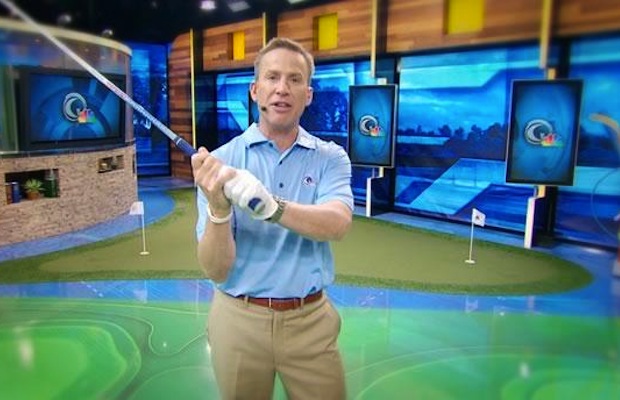
Last week, I talked with Golf Channel’s Michael Breed about Tiger Woods’ swing and short game issues at the Hero World Challenge.
Beyond the “teaching and instruction-related question du jour,” I wanted to ask Mr. Breed for his thoughts on the state of the golf industry in general and instruction in particular.
Breed is in a unique position to comment on industry trends: he’s in frequent contact with both the leadership of the PGA of America and the organization’s boots on the ground, club professionals. Breed speaks regularly many of the PGA of America’s sections, and he was a club pro himself until recently. And of course, Breed is a past PGA National Teacher of Year too.
Check out what he had to say.
The topics are in bold with Breed’s replies below.
[youtube id=”14WNR5GaZLg” width=”620″ height=”360″]
What he makes of the industry-related doom and gloom
We’ve been seeing rounds decreasing since 1999. When I was a golf professional, from 1990 to 2008 we saw a 20 percent decrease in rounds, so I don’t think this is something that’s just happened in the last two years.
This is something that’s been going on for an extended period of time. And only 20 percent of the people who play the game are taking golf lessons. That 20 percent is going to take golf lessons forever.
Where there’s cause for concern
I do have a doom-and-gloom feeling about what’s going to happen in the business as a result of the expectation of the manufacturers.
Those guys are expecting to sell clubs and balls and gloves and hats the way that they were sold back in 1995. That’s just not going to happen. Everybody wants their business to grow.
To me, the doom and gloom of all this is when the vendors go to the internet — Hopkins Golf is already there. When it’s direct-buy across the board, and it’s going to happen, that’s really the doom and gloom for me.
And the millennials, that’s the only way they buy, they’re going to buy online. And everything’s going to be adjustable and everything’s going to have a 30-day money-back guarantee. Everything will go that way.
The changes affecting rounds played
I don’t think there are fewer rounds on Friday, Saturday and Sunday. I think the people that can play golf are playing golf. Instead of playing 50 rounds a year, people are playing 30 rounds because they’re not playing on Tuesday, Wednesday, Thursday.
They have to be at their desks and doing the things that we all have to do.
This argument about how many people are playing, you have to factor in all kinds of things. Safety. Kids’ safety. How families travel. Travel soccer. Travel baseball. Everything has gotten bigger and bigger. Time constraints have gotten greater and greater.
Preparing for the future of golf
Take this to the next step: You’re going to be in Massachusetts, I’m going to be in Connecticut and we’ve got another good friend, Billy in Montana. The way people are going to play golf now—with what’s going on with simulators and launch monitors—all of us are going to do Go2Meeting at nine at night.
We’re going to take our launch monitors and go to our garage and we’re all going to play against one another in an hour. And when that starts to happen, golf courses have a problem. And that’s going to happen.
If I were looking at a golf shop in 2050, I see a golf shop with a couple of putters, a couple of wedges, a little run of shoes in case somebody runs into problems. I see somebody behind the counter servicing members, not necessarily a PGA Professional.
When a business wants to cut costs, you look at salaries. That’s what I fear.
How are we going to be prepared as PGA Professionals when things start to shift? We have to start to figure out how to do that.
What I worry about is that will take the number of PGA pros and decrease it.
What he’s telling PGA Professionals
I speak to a lot of PGA Pros across the country, and I say, “Guys, you’ve got to start thinking outside the box.”
I think one of the most important assets that a PGA Professional can get is the ability to speak in a three-dimensional space. You’ve got to figure out how to be entertaining in the video space now. I recommend guys go to Dale Carnegie classes and learn how to speak on video. It’s critical.
When all this stuff happens, you’re going to be giving golf lessons over the internet. You’ve got to be entertaining, and if you’re not, you’re going to run into trouble.
The future of golf instruction
You see what’s happening with live television; it’s now solely a sporting event thing. Everybody wants everything when they want it and how they want it. That’s what’s happening. Prepare for it. Deal with it. Prepare to be the best pro you can be.
The competition is going to become global in 2050. And [students aren’t] going to have to get on a plane. They’re going to be able to take video, send it in, then have a guy on a range going through it.
Lessons in the future: I’m standing on my range somewhere, you’re standing on your range somewhere. We’re looking at each other and I’m giving you a lesson. When we’re done, I go teach someone who’s at a range in, say, California… then somebody who’s on a range in Japan.
The attention span of the human mind is getting shorter and shorter. In the last 15 years, it’s gone from 12 seconds to eight seconds. If you’re doing YouTube stuff, you will lose half of your audience after one minute. If a guy signs up to take a lessons and he doesn’t like the lesson, he’ll just video somebody else. Whereas now, they’re going to go to the other guy on staff.
That means you’ve got to know what you’re doing. You’ve got to study. Somebody wants to know Stack-and-Tilt, you better know all the principles … Right now, that would be considered the elite instructor. In 2050, that’s going to be the everyday instructor. And the guys who don’t get that are going to be out of business.
Look at the iPhone 6…it’s getting closer and closer to the iPad. If that doesn’t tell you the importance of video, nothing will. Sixty-five percent of emails are opened on the phone… and that number is going up and up and up. You’ve got to be able to connect the dots.
The mindset PGA Pros need to have
Instruction is the thing that separates us as PGA Professionals. Instruction is the thing the average guy can’t do for himself.
People need golf balls to play and golf clubs to play. Then there are people who want instruction. There are some people who don’t feel they need instruction. So when you start separating the world into wants and needs, as instructors, we’re in the want category.
Only 20 percent of people playing the game of golf are taking lessons. So, the question becomes, “How can we take that 20 percent and make it 60, 70, or 80 percent?”
If we can take that 20 percent and turn it into 60 or 80 percent, now all of a sudden we’ve grown our business.
People don’t need to buy clubs, balls and wedges from a PGA Professional. That’s proven every single day. They can buy it at Dick’s, they can buy it online.
Eighty percent of the people who play don’t take instruction. That’s what I want to figure out, “How are we going to get those 80 percent?” You know they’re finding instruction somewhere….
That’s why, as a PGA Professional, I’m telling people all the time: become the best instructor you can become and you’re going to be fine.
As a rule, across the board, you will stay afloat if you know what you’re doing when it comes to instruction.
The model for success
If you can’t or you don’t invest in yourself, then you shouldn’t ask other people to invest in you. And you certainly shouldn’t expect them to.
Look, if you make $25,000 a year, you can certainly figure out how to go on some sort of a budget and save $600, or whatever you need to save, to get certified in a D-Plane, or get an understanding of what happens in a one-plane swing, or go listen to a seminar presented by whoever. Go to the PGA Show and take all of the educational opportunities that exist there.
It’s a very easy thing in life to come up with reasons why you can’t do what you want to do.
If you’re capable of not arguing for what is preventing you from success, then what you’ll do is be successful.
Don’t argue for your limitations or you’re going to end up doing the same thing that you’re doing.
To bring this back to Tiger [Woods] and Chris [Como]: That’s what Chris Como does. He’s getting a degree in biomechanics. I know that costs him money. I know what that guy did is, he had that mentality when he was 22 and wasn’t making any money. He figured out how to get some degree in something to make him a little more elite than the next guy. He made a little bit more money and then he reinvested in himself. Then he made a little more money and reinvested in himself. And the next thing you know, Tiger Woods is asking him to consult with him on his golf swing.
That’s the model. That’s what you do to be successful.


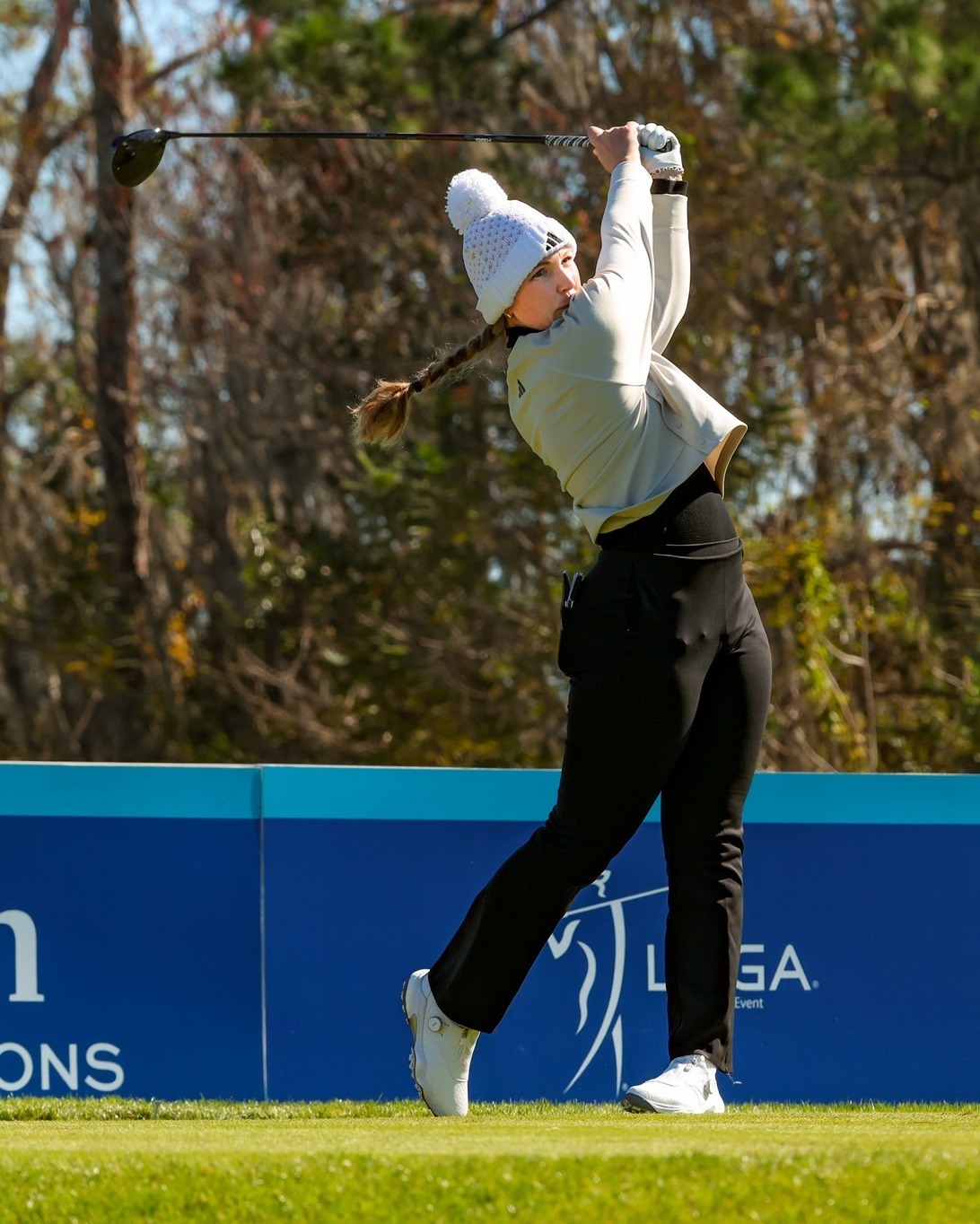
The LPGA Tour is kicking off its 2026 season this week at Lake Nona Golf and Country Club in Orlando, and the pros are dealing with something most Florida golfers rarely face: freezing temperatures.
“It’s colder here than in the UK at the minute, which is a first,” said England’s Charley Hull during Wednesday’s media day at the Hilton Grand Vacations Tournament of Champions.
Even Lydia Ko, who lives at Lake Nona, seemed surprised by the cold snap. “We’re pretty much getting to below zero in celsius here, which maybe in other parts of the country they would be thankful, but when you’re in Florida it is a little bit of a surprise,” she said.
If the world’s best players are adjusting their games for cold weather, recreational golfers should, too. Here’s how to play smart when the mercury drops.
Understand What Cold Does to Your Game
Before you change anything, you need to know what you’re fighting against. Cold air is denser than warm air, which means your ball won’t fly as far. Period.
Hull noticed this immediately during practice rounds at Lake Nona. She mentioned hitting a gap wedge into the 18th hole during a previous win but needing a 4-iron during Tuesday’s practice round. That’s a difference of four or five clubs for the same shot.
Action item: Expect to lose 5-10 yards on every club in your bag when temperatures dip below 50 degrees. Plan accordingly and don’t be stubborn about club selection.
Layer Up Without Restricting Your Swing
Hull admitted she wore three pairs of pants during practice. While that might be extreme for most of us, staying warm is critical to playing well in cold conditions.
Your muscles need warmth to function properly. When you’re cold, your body tightens up and your swing gets shorter and faster. Neither of those things help you hit good golf shots.
Action item: Wear multiple thin layers instead of one bulky jacket. Look for golf-specific cold weather gear that stretches with your swing. Keep hand warmers in your pockets between shots. And don’t forget a good hat because you lose significant body heat through your head.
Take More Club Than You Think You Need
This is where ego gets in the way of good scores. When it’s cold, the ball doesn’t compress as well off the clubface. Combined with denser air, you’re looking at serious distance loss.
The pros at Lake Nona are dealing with a course that measures 6,642 yards but plays much longer this week. If they’re adjusting, you should too.
Action item: Take at least one extra club on every approach shot. In temperatures below 40 degrees, consider taking two extra clubs. It’s better to fly the ball to the back of the green than to come up short in a bunker.
Adjust Your Expectations on the Greens
Cold weather affects putting in ways most golfers don’t consider. The ball is harder and doesn’t roll as smoothly. Your hands are cold, making it harder to feel the putter. And if there’s any moisture on the greens, they’ll be slower than normal.
Ko mentioned that she still sometimes reads the greens wrong at Lake Nona despite being a member for years. Cold weather makes that challenge even tougher.
Action item: Hit putts more firmly than usual. The ball needs extra speed to hold its line on cold greens. Take a few extra practice strokes to get a feel for the speed before you putt.
Embrace the Mental Challenge
Hull said something interesting about cold weather golf: “I like the mental toughness of it.”
That’s the right attitude. Everyone on the course is dealing with the same conditions. The player who stays patient and doesn’t get frustrated by the extra difficulty will come out ahead.
Action item: Lower your expectations by a few strokes. If you normally shoot 85, accept that 90 might be a good score in 40-degree weather. Focus on solid contact and smart decisions rather than perfect shots.
Warm Up Longer and Smarter
This might be the most important tip of all. Cold muscles are tight muscles, and tight muscles get injured easily.
World No. 1 Jeeno Thitikul revealed she’s been protecting a wrist injury that bothered her late last season. Cold weather makes those kinds of injuries more likely if you don’t prepare properly.
Action item: Spend at least 20 minutes warming up before your round. Start with stretching, then hit easy wedge shots before working up to your driver. Keep moving between shots on the course to maintain body heat and flexibility.
The pros at Lake Nona this week will adapt and compete at the highest level despite the cold. You can do the same at your local course by following these tips and keeping a positive attitude.
PGA Professional Brendon Elliott is an award-winning coach and golf writer. You can check out his writing work and learn more about him by visiting BEAGOLFER.golf and OneMoreRollGolf.com. Also, check out “Playing Through” now on R.org, RG.org’s partner site, each Monday.
Editor’s note: Brendon shares his nearly 30 years of experience in the game with GolfWRX readers through his ongoing tip series. He looks forward to providing valuable insights and advice to help golfers improve their game. Stay tuned for more tips!
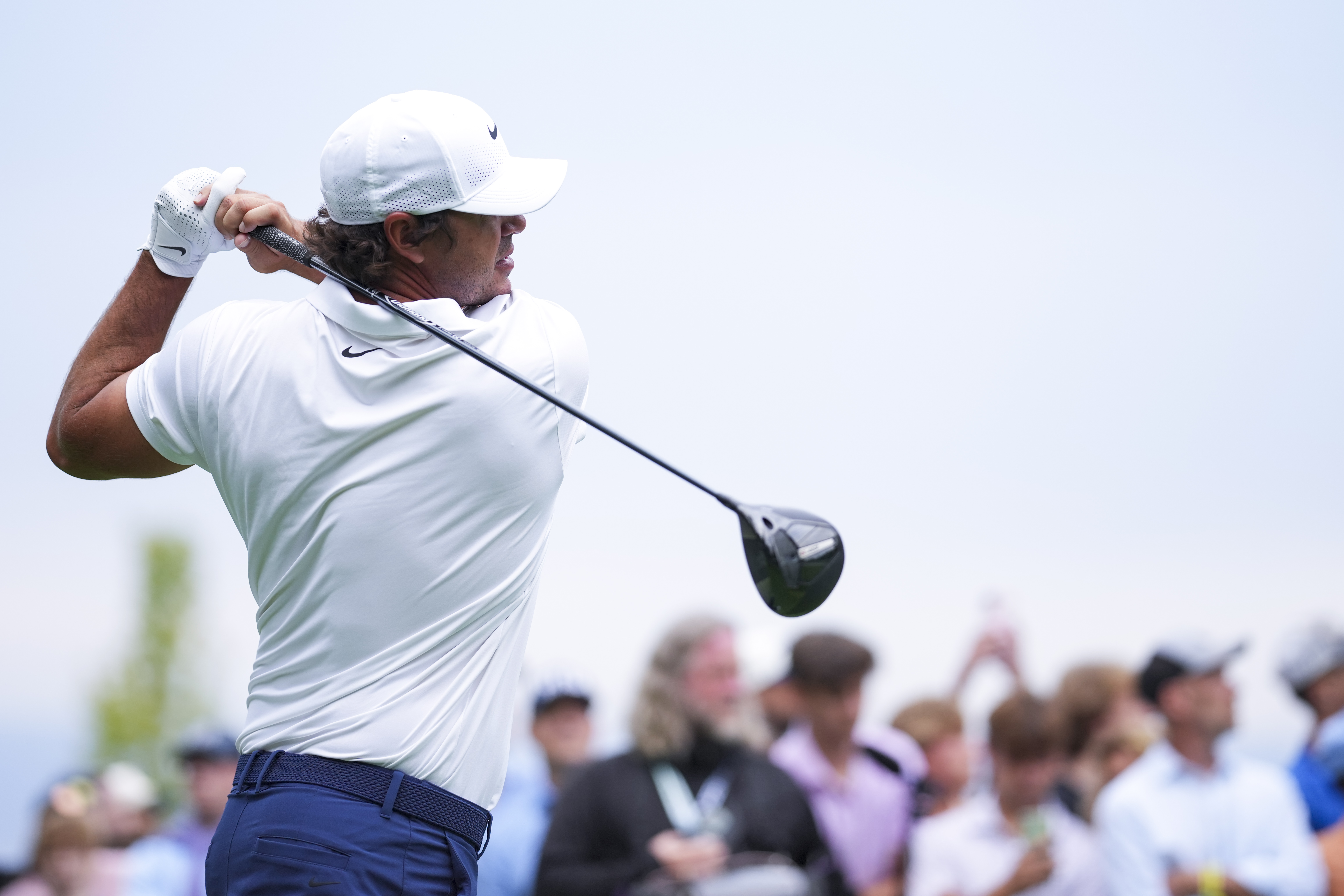
Brooks Koepka is back on the PGA Tour, and whether you love him or hate him, the guy knows how to win when it matters. After his LIV Golf stint, the five-time major champion returns this week at the Farmers Insurance Open.
What makes Koepka fascinating? He doesn’t fit the mold. His swing isn’t textbook. He doesn’t obsess over mechanics. Yet he’s won three PGA Championships and two U.S. Opens, regularly making it look easier than guys with prettier swings.
So, what can average golfers learn from someone who treats the game so differently? Quite a bit.
Stop Overthinking Every Shot
Koepka describes his approach as “reactionary” rather than mechanical. While most tour pros grind over swing thoughts, Brooks sees the target and hits it. No mental checklist.
This might be the most valuable lesson for weekend golfers who’ve watched too many YouTube swing videos.
How to actually do this:
On the range, hit five balls where you stare at the target for three seconds prior to addressing the ball. Don’t think about grip or stance. Just burn that target into your brain. You’ll be shocked at how pure you hit it when your brain focuses on where the ball is going instead of how you’re swinging.
Next time you play, give yourself a rule: Once you pull the club, you’ve got 15 seconds to hit. Koepka is one of the fastest players on tour because he doesn’t give his brain time to sabotage him.
If you feel tension in your hands at address, you’re trying to control too much. Koepka’s grip pressure is famously light. Loosen up until the club almost feels like it might slip, then add just enough pressure to hold on. That’s your swing thought: soft hands, see the target.
This approach works better under pressure. When you’re standing over that shot with water left and OB right, the last thing you need is a mental checklist. See it, feel it, hit it.
Play to Your Strengths (Even If They’re Not Pretty)
Koepka uses a strong grip that wouldn’t pass muster in some teaching circles. But he’s built his game around what works for him, elite driving distance and recovery skills. He doesn’t try to be someone he’s not.
Here’s how to build your game like Brooks:
Look at your last five rounds and figure out where you’re actually gaining strokes. Bombing it off the tee, but can’t hit greens? Lean into it. Play courses where distance matters more than precision. On tight holes, grip down on your 3-wood instead of trying to thread a driver through a keyhole you’ll miss seven times out of ten.
Koepka knows he can scramble, so he’s not afraid to miss greens. If you’re deadly from 50 to 75 yards, start leaving yourself those distances on the par 5’s instead of going for them in two every time.
Know when to take your medicine. Koepka in the trees at the PGA? He’s punching out to 100 yards, not trying to bend a 6-iron around three oaks. You’re in the rough with a flyer lie and water short? Hit your 8-iron to the middle and move on. That’s not playing scared, that’s playing smart.
Save Your Best for When It Counts
Here’s a wild stat: Koepka’s putting average in majors is often more than a full stroke better per round than in regular events. He elevates when pressure is highest.
How does an amateur tap into that gear? It’s not about trying harder, it’s about caring differently.
Here’s what actually works:
Decide which rounds matter to you. Club championship? Member-guest? That annual trip with college buddies? Circle those dates and treat them differently. Koepka doesn’t care much about regular tour events, but majors? That’s when he locks in.
Two weeks before your big round, change your practice. Stop beating balls mindlessly. Play nine holes in which every shot has consequences. Miss the fairway? Hit from the rough on the next hole too. Three-putt? Twenty push-ups. Koepka’s practice intensity ramps up before majors because he’s rehearsing pressure, not just swings.
Develop a between-shot routine that resets your brain. Koepka is famous for his blank expression after bad shots. Try this: After any shot, take three deep breaths while walking, then find something specific to notice, a tree, a cloud, someone’s shirt. That’s your reset button. By the time you reach your ball, the last shot is gone.
The Bottom Line
Brooks Koepka’s return reminds us there’s no single path to success in golf. His “substance over style” approach proves that results matter more than looking good.
You don’t need a perfect swing; you need a reliable one that holds up under pressure. You don’t need to hit every shot in the book; you need the shots you can count on. And you don’t need to play great every time; you need to play great when it matters.
Welcome back, Brooks. Thanks for the reminder that golf is ultimately about getting the ball in the hole, not winning style points.
PGA Professional Brendon Elliott is an award-winning coach and golf writer. You can check out his writing work and learn more about him by visiting BEAGOLFER.golf and OneMoreRollGolf.com. Also, check out “Playing Through” now on R.org, RG.org’s partner site, each Monday.
Editor’s note: Brendon shares his nearly 30 years of experience in the game with GolfWRX readers through his ongoing tip series. He looks forward to providing valuable insights and advice to help golfers improve their game. Stay tuned for more tips!

Blades Brown made a big impression last week in the California desert, and not just because he’s only 18. He put up numbers that would catch any weekend golfer’s attention. Most of us won’t hit 317-yard drives or find 86% of our greens in regulation, but there’s a lot to learn from how Brown managed his game at The American Express.
Here are three practical lessons from his performance that you can use on your own course this weekend.
Step 1: Give Priority to Accuracy Over Distance Off The Tee
Brown’s driving stats are impressive. He averaged almost 318 yards off the tee, ranking 12th in the field. More importantly, he hit 76.79% of his fairways, tying for fourth place in the tournament.
Think about that ratio for a second. Brown could have swung harder, chased more distance and tried to overpower the course. Instead, he played smart golf and kept his ball in play.
Your Action Item: Next time you’re on the tee box, ask yourself a simple question before pulling the driver. Do you need maximum distance here, or do you need to be in the fairway? If there’s trouble lurking or the hole doesn’t demand every yard you can muster, take something off your swing. Grip down an inch. Make a three-quarter swing. Do whatever it takes to find the short grass. Brown’s approach illustrates that fairways lead to greens, and greens lead to birdies. He made 22 of them last week, along with an eagle.
The math is simple. When you’re hitting three out of every four fairways like Brown did, you’re giving yourself legitimate looks at the green with your approach shots. That’s when scoring happens.
Step 2: Commit To Hitting More Greens
This is where Brown really separated himself. He hit 62 of 72 greens in regulation, an 86.11% clip that tied for first in the entire field. Read that again. An 18-year-old kid tied for the lead in one of the most important ball-striking statistics in professional golf.
How did he do it? By keeping his ball in the fairway (see Step 1) and giving himself clean looks with mid-irons and wedges.
Your Action Item: Start tracking your greens in regulation. You don’t need a fancy app or a statistics degree. Just mark down whether you hit the green in the regulation number of strokes. Par 3s in one shot. Par 4s in two shots. Par 5s in three shots.
Once you know your baseline, set a goal to improve it by 10%. If you’re currently hitting five greens per round, aim for six. The beauty of this approach is that it forces you to think strategically about club selection and shot shape. Brown’s strokes gained approach number was positive (0.179), meaning he was better than the field average. You don’t need to be perfect. You just need to be on the dance floor more often.
When you hit more greens, you eliminate the need for heroic short game shots. Brown only had to scramble 10 times all week, and he got up and down 70% of the time. That’s solid, but the real story is that he rarely put himself in scrambling situations to begin with.
Step 3: Minimize Mistakes And Stay Patient
Here’s the stat that jumps off the page: Brown made only three bogeys all week. Three. In four rounds of professional golf against the best players in the world.
He also made just one double bogey. That kind of clean card doesn’t happen by accident. It happens when you play within yourself, avoid the big miss and trust that pars are never bad scores.
Your Action Item: Before your next round, decide that you’re going to play boring golf. No hero shots over water. No driver on tight holes just because you can. No aggressive pins when there’s a safe side of the green.
Brown’s performance shows us that consistency beats flash every single time. He didn’t lead the field in any single strokes gained category, but he was solid across the board. That’s how you post numbers and cash checks.
Give these three steps a try. Your scorecard will thank you.
PGA Professional Brendon Elliott is an award-winning coach and golf writer. You can check out his writing work and learn more about him by visiting BEAGOLFER.golf and OneMoreRollGolf.com. Also, check out “The Starter” now on R.org, RG.org’s partner site, each Monday.
Editor’s note: Brendon shares his nearly 30 years of experience in the game with GolfWRX readers through his ongoing tip series. He looks forward to providing valuable insights and advice to help golfers improve their game. Stay tuned for more tips!

RBC Heritage Tour Report: More minis, course-specific setups, Spider & GTS launches

Justin Rose WITB 2026 (April): Full WITB breakdown with new McLaren irons

Best fairway woods of 2026: The most versatile fairway woods + the most forgiving fairway woods

What’s the story behind Webb Simpson’s custom-stamped irons?

Cadillac Championship Tour Report: Spieth’s sizable changes, McLaren Golf launches, and more

The 24 players who can win the Masters

Rory McIlroy’s winning WITB: 2026 Masters

Kristoffer Reitan’s winning WITB: 2026 Truist Championship

J.J. Spaun’s winning WITB: 2026 Valero Texas Open

Cameron Young’s winning WITB: 2026 Cadillac Championship


Alex Fitzpatrick WITB 2026 (May)
Driver: Ping G440 LST (9 degrees) Shaft: Fujikura Ventus Black 6 X 3-wood: TaylorMade Qi4D (15 degrees) Shaft: Fujikura Ventus...

Kristoffer Reitan’s winning WITB: 2026 Truist Championship
Driver: Ping G440 Max (9 degrees) Shaft: Mitsubishi Tensei 1K White 60 TX 3-wood: Ping G440 Max (15 degrees) Shaft:...


WITB Time Machine: Rory McIlroy’s winning WITB, 2021 Truist Championship
Rory McIlroy’s victory at the 2021 Wells Fargo Championship 2021 (now the Truist Championship) marked a significant return to form,...


Collin Morikawa WITB 2026 (May)
Driver: TaylorMade Qi4D LS (8 degrees) Shaft: Mitsubishi Diamana D+ Limited 60 TX 3-wood: TaylorMade SIM Tour (14 degrees) Shaft:...
-
 Equipment2 weeks ago
Justin Rose WITB 2026 (April): Full WITB breakdown with new McLaren irons
-
 Equipment1 week ago
What’s the story behind Webb Simpson’s custom-stamped irons?
-
 Equipment2 weeks ago
Cadillac Championship Tour Report: Spieth’s sizable changes, McLaren Golf launches, and more
-
Whats in the Bag3 days ago
Kristoffer Reitan’s winning WITB: 2026 Truist Championship
-
 Whats in the Bag1 week ago
Cameron Young’s winning WITB: 2026 Cadillac Championship
-

 Whats in the Bag3 weeks ago
Nelly Korda WITB 2026 (April)
-

 Equipment2 weeks ago
Justin Rose on the switch to McLaren Golf, learnings from previous equipment moves
-

 Tour Photo Galleries2 weeks ago
Photos from the 2026 Cadillac Championship


Marc White
Mar 22, 2015 at 10:53 pm
I have been in the teaching trenches for over 30 years. About 10 years ago I also became a TPI certified golf fitness instructor which allowed me to teach golf fitness classes at a local athletic club to help supplement my off season income. I’m glad I did that because it has proven to quite lucrative. One of the things that I’ve learned over the past 30+ years of teaching and coaching golf is that the time commitment required for my students to work on and make the changes we discuss does not match my level of commitment to them. If I’m giving somebody 45 to 60 minutes of my time and expertise, I’d like to see three times that amount of time commitment on their part in dedicated practice before I see them again. Few students come close to doing that. To make changes to someone’s full swing move requires so much dedication to realize significant long term improvement. Most people can’t, won’t and don’t do that. Short game instruction on the other hand is different. Putting, chipping and pitching mechanics are so much easier for the average golfer to understand and improve upon. I’ve seen so much improvement in my clients golf game by improving their fitness levels (balance, flexibility, strength and power generation), and short game skills. If I could make a living just doing that, I would be thrilled if I never had to evaluate a driver swing again for the rest of my life.
golferjack
Dec 27, 2014 at 6:56 am
Interesting article. Would like to giev a bit of Feedback directed at some of the comments. As I started out as A PGA Pro I had to have a handicap in the top 5% of the Country, I work about 60 hours a week, pay my own health and unemployment insurance, retirement plan, car etc. I don’t get Weekends or Holidays off but can’t Charge more for lessons at These times. I have two Launch Monitors, and a Computer Video Analysis Programme, all financed by me, the lessons cost the same with or without These things. I attend sminars etc sometimes abroad at my own cost. The shop is mine but I pay rent, the indoor room in the town is paid for by me and is needed due to seasonal changes.Any time off is unpaid. Compare this to some of your situations. Regarding lessons, I sense that some people out there have had bad expriences with pros, sometimes the Problem Comes because the pupil doesn’t cleary state what he expects from the lesson. Sometimes a series of lessons is the best route, sometimes, if someone is a good experienced Player he only Needs 15 minutes, we are all different. Unfortunately many Players prefer to struggle for years without getting better and are even proud of how bad they are….”I’ve been playing for 20 years and have had a slice for 19″ If someone can fix that in 15 Minutes then he deserves big Money. Generally speking a pro will save you time and give you more fun with your golf, you have to work together. You Tube is great but it can’t see you so it can only give tips. If you Need Petrol and put diesel in the tank the car won’t run. There are good pros out there who don’t Charge the earth, what we all know however is if it goes wrong it’s our fault and if it works it is because the Player fixed it himself. When I look back or Forward, and could start over, I think I would take a more “normal” Job, enjoy my Weekends, evenings, and paid Holidays. Play golf for fun and take lessons to make it more so.
Nathan
Dec 27, 2014 at 11:53 am
Good comments from the perspective of a small business owner, I’m sure you have invested a great deal of both time and money into your lively hood. It’s intersting to hear your perspective on the cost argument and the justification of the high price of lessons. From that standpoint, I can see where the club pro or professional teacher might feel the cost is truly at a value and at the same point I can see the reason for the disconnect.
I think the real issue may be the is a gross misunderstanding of what the average golfer wants from a pro and what the pro thinks the customer wants. I think that 90% of the golfing public hasn’t a clue on how to hold the club, setup to the ball and then aim. All the gadgets are cool but are useless without the most basic understanding which can be thought in thirty minutes or less. This technology may be offputting to the average golfer and paying for the use of it is useless if every swing is different. Sure, the advanced golfer will see the value in it, but what is the size of that target group? I’m guessing very small.
Maybe the PGA Pros need to rethink the business model and market more to target the larger group of golfers looking to break 100, or 90 and just stating out. Group lessons, lessons and a round, lunch or dinner and learn seminar are just a few ideas. I would do anything to get these people to have more fun and come out more often! Sadly, guys like Breed are part of the problem because there is a large segment of the golfing public that will watch him for free instead of taking lessons. In my opinion he’s raking in the cash at the expense of the local pros across the country.
golferjack
Dec 28, 2014 at 6:20 am
Thanks for your comments Nathan. I have to say that I do try to target the Groups in this section and the funny Thing is that some of the Groups ask to be downsized to only three People instaed of 6 even though it costs more. I try to get them on a ten week course at two hours a week and we have a Programme that includes Video / Launch Monitor, Goal Setting, short game and on course situations. I try to get thegroups to Play a tournament with each other at the end of the season, they get to know each other, have fun and usually eat together after the round which is good for the Club retaurant aswell.
I do agree that lots of People need Basic lessons and I don’t use the Technology in all lessons, someone who only hits it 70 Yards doesn’t Need a Launch Monitor. Unfortunately the nature of the Business requires These things more and more and in Indoor teaching they are very useful.
Nathan
Dec 29, 2014 at 9:02 am
Jack,
Good for you, I wish there was something like that in my area! I really think that’s the key to growing golf and your right on track. The more people you can bring together to learn and play the more likely friendships will be made and that’s really the best part of golf. The guys and girls you choose to play with become almost a family and they will keep people coming back much more than shooting lower scores.
Charlie
Dec 25, 2014 at 7:46 pm
I’m retired & 69 years old. At my public course more than half the weekday golfers are like me. We want to hit the ball solid & straight but can’t do it consistently. Many of us want to take lessons but the price per lesson is just too high for our golf budget. I practice, but it is not enough. I despise playing behind a group that is on a 5hour pace – but, frankly, it’s the inability to play solid golf that keeps me at home.
Nathan
Dec 25, 2014 at 6:30 pm
When a service is grossly over priced, your business will fail. That’s the reason only 20% of the golfing public pays for lessons. Anything over $35-$50 bucks an hour is going result in a PGA instructor sitting around all day wondering why he dosent have a line at the door. The economy still stinks, money is tight nationwide and most people don’t have the $100 plus to cough up for an hour of lessons. In my mind I’d rather make $30 or $40 and hour and be swamped with clients than charge $100 and have three lessons a week. Just my two cents worth… If you price yourself out of work, how can you expect to stay in business.
Chuck
Dec 25, 2014 at 11:42 am
I’m a bit late to this comments thread, but I really want to congratulate Ben Alberstadt for this interview, as well as Michael Breed for some astonishingly honest and thoughtful comments. Props to GolfWRX for posting it. And kudos to some of the brightest minds in golf, for their comments in this thread.
I’ve been an avid participant in the golf equipment discussion boards for ten years or more. I’ve learned a lot, and I think that I have shared quite a lot too.
I love golf equipment and the golf equipment business but above all I love the game. And the biggest thing that I have gotten out of my devotion to golf equipment is this:
THE BEST THING TO BUY IN A PRO SHOP IS LESSONS.
Tom Wishon
Dec 24, 2014 at 11:49 am
Being a former PGA member before the equipment side consumed me, I still find myself with a bit of a soft spot for PGA club pros. Breed’s article is not just scary and sobering, but it sure seems to be on target with regard to his doomsday predictions for the majority of PGA members. And there’s not going to be much of a future for most of the 25,000 PGA members out there because of all these things he brings up. Unless you have the pedigree or resume to land one of the elite club jobs, a PGA card is not going to be worth squat.
Fewer course owners want to give the pro shop commerce to the pro. Lessons are too expensive for the vast, vast majority to consider. 15 min lessons would be better, but change comes hard for many of the pros. Sadly it also seems for every one superbly nice, considerate pro, there are 5 who adopt this sad holier than thou attitude in their jobs. There may be some success for a few in online teaching through video, but that’s not the solution for the rest of the pros.
Bottom line is that course owners and players too are seeing they can do just fine without a PGA pro and the PGA has no real recourse to change that attitude.
Sean
Dec 24, 2014 at 9:53 am
And folks, he is spot on. After being a PGA professional for 9 years, this is exactly why I got out of the golf business. It’s a dying breed, which is indeed unfortunate, but it’s the truth. Digital technologies that allow for us to save time to focus on home and work, the more important things in life, will take over.
Chris
Dec 24, 2014 at 1:30 am
I’d love to get more than 3 lessons a year, but I just can’t afford it. That being said, I truly love the game and will play until I can’t anymore. Faster rounds and cheaper courses aren’t the way to “grow the game”. If there was a way to get the ” rich mans sport ” connotation away from the game, it will then truly grow. I could never play the private courses because I just don’t have the pedigree or bank account to allow me to play them. I don’t need a fancy course. Just being outside, on the course does it for me.
Awedge333
Dec 23, 2014 at 7:09 pm
I would like to find a pro for lessons. Everyone I talk to seems to be this condecending demi-god that underscores he can hit it straight and long and YOU can’t.
Regis
Dec 23, 2014 at 6:50 pm
I’ve been playing for 50 years and have always taken lessons. Let me draw a parallel to what Michael is saying. Several years ago I came down with a very serious illness. I wanted a second opinion with an orthopedist. I scheduled an on line consult with a top doctor at a top facility in New York. Had a number of options. Set up the call. He had on line access to my records and I photographed and e-mailed a photo of the affected body part. No travel, appointment went off on time, reasonable charge and got the answer I was looking for. Becoming very standard in the internet age.
Justin
Dec 28, 2014 at 11:09 am
My wife was having trouble while pregnant with our second child (…) the Emergency Room in MI where we were at sent the information to another hospital in Australia… It isn’t just the average person moving into the future. Professionals themselves are taking advantage of this technology.
Ed Bardoe
Dec 23, 2014 at 12:42 pm
Michael’s description of a pro shop is already true at public courses. Here in Ohio and where I play in Florida, all the public courses have just token pro shops and if the guy behind the counter is a pga member, its only because he is the owner of the course (or his son). At my home course, a former tour player gives some lessons on a freelance basis, and those are the only lessons I have seen in years. No, I don’t take lessons, and play just a badly as you are thinking!
Ed
David
Dec 23, 2014 at 2:32 am
I’ve read through the comments and juxtaposed to them to the article. What I read from all of this is how to bridge the gap between taking lessons will equate to more fun in the game. I think the worst part is knowing that you (generic golfer) may have to go through three to five instructors to find the guy that works with you. I wonder if it may make sense for instructors to pool together and say, “Our team of instructors will let you test us out for $X fee for one- (four 15 min fixes), two-, three- hour packages”.
Golfraven
Dec 22, 2014 at 6:57 pm
I agree with both the article and some of the comments. Lots of the pros are not up-to-date and you need to pull teeth to get a video made of your swing analysed. Don’t make the game easier (is that not the reason why we come back for more and the challenge is keeping us motivated), make teaching easier and give people the knowledge they need. I propagate more video and cheeper lessons (give me the 15 min fix for 15$). I think youtube rocks if you know what to search for – and there is tons of free lessons and advise.
Chris
Dec 24, 2014 at 1:36 am
“Cheaper” and adviCe. There’s a lesson for you
Marshall Brown
Dec 22, 2014 at 6:40 pm
Great article! There’s not many articles that I read completely, but this is definitely one of them!
Patrick
Dec 22, 2014 at 6:33 pm
Here is the exact problem with golf…
Golf has become a game at which no matter the skill level the most important thing is hitting it far. Now I know this has been said before but let me explain it in a different way.
It all starts with the broadcasting of PGA Tour Events. Its a catch 22 for them because in order to make the players seem more remarkable and entertaining the announcers say “Wow, he hit that one out there 3 hundred and blah blah blah yards, my goodness”. Now thats good for them because it impresses the viewer and gets them engaged in how talented the professional is.
BUT the major problem with this is that its bread a generation of golfer that would rather hit it far than shoot 5 strokes better. Even worse is that this is for pretty much every skill level out there. Im not talking about your 40-50 yr old guy who knows his game and hits it short and straight and gets up and down, Im talking about the 40 and under crowd right now that no matter the skill level its 100% about length. Ive seen this first hand from many friends who are hacks and just like to go out there and booze with friends but like hitting it far instead of consistent. Also, for even myself a low single digit handicap I even catch myself trying to hard to hit it further when that isnt whats going to lower my scores, I hit it long enough to score under par yet i shoot in the mid to high 70’s and continually try and find ways to increase driver lenght. Its been shoved down my throat since a youth to hit it as far as possible, sadly thats what golfs become.
To change this trend a couple things need to happen. Courses on Tour need to be set up WAY harder so that hitting the fairway is Important every week and not just during the US Open. They need to make it so accuracy is Far beyond important than hitting it far so that the next generation of ameateur golfer is awe inspired by the guy who hits 85% of fairways and from there can put the ball where ever he wants on the greens. Thats how this gets changed, I dont see it happening though.
Plod
Dec 23, 2014 at 2:27 am
The problem with comparing current Tour course set-ups and analysis with the youth-oriented distance problem with courses, you’re missing the BIG picture, and I mean the pun intended!
It is simply that the courses on TV are geared for viewing angles and to entice more space for the crowd to be able to line the edges of the holes, that the courses on the Tour are wider than people realize. That makes it conducive for the bombers to go for it, and because the crowd is there, there is also less fear of perhaps losing sight of the ball when hit poorly, because somebody is bound to see it and be able to find the ball, as well as the rough being trampled as well making it easier to get out of the rough in many spots. But the BIG picture here is that the width of the holes are much wider than people realize.
That is why you will never see the Tour go to some tight little course with tiny greens and try to conduct a Tournament there. And I mean real tight, that they players could never think about bombing over the corner of the trees because the trees are so close to the sides of the rough that there is no way to get it up and over in time, therefore forcing them to curve it round the corner, or, to lay up and play smart (ha-ha). But, once again, that makes for poor TV viewing angles, as well as the perceived “boring” game of plodding along the course design as it was intended, not being able to go for it on the mid-length Par 5s because they can’t see the hole from the second shot as it dog-legs around the corner so severely.
When the Tour went to Merion last year, it was a pretty big deal because of some of this type of problem. It’s tight, it’s hard to get camera towers in the right spots with the crowd all over it, that logistically, it may have been a total nightmare. But they did cut back some of the tree lines and sight lines and widened the fairways as well to let the ball run out a bit more.
So it’s not just about bombing it all over the map. The Tour will never go to some of these famous old courses that are relatively short, but extremely tight (by modern standards), with tall, mature trees and thick, heavy rough with no escape for errant shots or for good viewing by the crowds or for TV.
Bob Vitti
Dec 23, 2014 at 12:17 pm
As a NON-PGA professional, I can’t agree more! However, on the bright side, all my students focus more on consistency of accuracy and distance CONTROL if I FOCUS on those things.
It’s almost always on the instructor, once trust is established with the student.
What happens once the student gets out on the course with his friends is on him. At least until we work on course managment and competition brain.
Justin
Dec 28, 2014 at 11:04 am
It’s how the equipment is sold, as well…
Mark
Dec 22, 2014 at 2:40 pm
Some how we have to make the game easier to be a little more fun. Usga has to expand a little and bring bigger groves back, hotter and/or more forgiving drivers and courses can be pretty but bigger fairways.
other paul
Dec 22, 2014 at 2:27 pm
What I don’t like about lessons at a range is that I don’t want to pay $50-80 for a half hour. What I want is to get a quick fix for $10. Tell me my hands are to far behind at impact (because your phone shoots 120fps) and then help me to get my hands forward, and then move on. For some of us better players its all we need.
M
Dec 22, 2014 at 3:05 pm
I so agree with you.
Half the time the instructor is thinking about “how do I get this 1 lesson to become 5 more” instead of what you just said.
Review My Golf Pro
Dec 23, 2014 at 10:26 am
Well what a good marketer would do in that situation is fix you in 10 minutes, get your e-mail address so he can reach out to you in the future to see how you are doing and also ask you to refer your 10 friends you play with who aren’t thinking about lessons for the same reasons you were reluctant to see him. Now he’s got another 5 lessons coming his way…
Double Mocha Man
Dec 23, 2014 at 5:38 pm
Excellent. Almost like being on the Tour and having your own personal coach/instructor. Without the steep bill.
I’d relish some of the better teaching pros in my area doing this. Though most pros here regurgitate Golf Digest. Probably the same everywhere.
Raven
Dec 23, 2014 at 12:57 pm
Exactly – I would pay for lessons at a reasonable price, but when it’s $80/30mins for an average teacher at a low-end course it’s money I’d rather spend playing a round. The other thing which bugs me is that if I want to bring my kid so we can both take something from that 30 minutes, it goes up by more than 50%. For the same person and duration. I would spend money on lessons but there has to be more value to them.
Justin
Dec 28, 2014 at 10:59 am
If you spend $X to get your car fixed by a “certified” mechanic, you expect it to get fixed. If not, they take it back and fix it the right way without charge. “Certified” golf instructors seem to want to charge a lot, but have an out in case you don’t lower your handicap…
Lord Helmet
Dec 22, 2014 at 1:16 pm
I personally enjoy what Breed has to say.
David
Dec 25, 2014 at 11:03 pm
Ja vold, Lord Helmet!
Robeli
Dec 22, 2014 at 1:08 pm
So only 20% of golfers take lessons (and will so for the rest of their lives!) and MB say the success model is to get the other 80% to get lessons! Not happening. Ever. Why? ROI. I am NOT spending 1K’s on lessons just to shave a shot or 3 from my score (and then it is not even guaranteed I will play 3 shots better forever going forward). Also, those 80% are just happy to play 80, 90, 100 with their flawed swing (and don’t have the money). I am enjoying playing with 10 h/c. What I am NOT enjoying, is it takes me 5h to play that @#$% 82!! SOLVE THAT, MR PGA PRO. If 18 holes can be played in 3 hours, golfers will stream to the courses (and make it cheaper please).
CJK
Dec 22, 2014 at 3:19 pm
Your last point is the root of the whole golf problem – we need less expensive courses and quicker rounds. Forget the elitist players, they will buy lessons forever because they can. To grow the game, we need $25 greens fees on courses that are playable. Not cow pastures but not Augusta either.
Stwve
Dec 23, 2014 at 7:06 pm
If you cant play look for another sport that may suit your walket. You wanna drive a Porsche and pay like a nissan!!!! Haha
Robeli
Dec 24, 2014 at 9:21 am
Typical troll remark.
Real
Dec 22, 2014 at 12:04 pm
Great…… so you teachers are worried that golfers won’t pay you enough to keep you afloat? that’s hilarious.
The first and most important thing for people wanting to get into golf is that they can just go out and play it.
If the average Joe has to pay more than double or even triple the price of a tee time at a Muni to be taught for an HOUR by a teacher to fix his swing, he’ll think that the teacher is just being GREEDY.
The golf teachers need to stop acting like Doctors and charge the exact same amount of a tee time at the average muni course they can play, because that’s the majority of people who are playing the game.
So what if you, the teacher, can’t all be like Butch or Haney or any of the top 100, making millions? You all need to get real and realize that you might just have to live on $40,000 a year like a normal person and live in a small apartment and not a palace on the hill.
Having said that, all the private courses around the country where people can afford to pay such ludicrous fees to be members and be playing those expensive courses – that’s how it’s always been and so that should be enough to keep golf elite and separate from all the other sports as it always has been – an elitist sport and hobby for the riches.
Reduce the number who plays? Well remove the price boom we saw in the last 25 years and we can all go back to the quiet normal levels of the past and the rich golf hobbyists will always be there and be happy.
Get real. The gas prices just went down to almost half what it was 4 years ago. I don’t see the economy reducing the food prices or hotel prices or prices of goods in retails stores, do you? No. Because you’re all greedy.
JR
Dec 22, 2014 at 12:11 pm
All I need is to just have 10 clients to teach for $10k a year and I’d be set!
rwvarneypga
Dec 23, 2014 at 9:38 am
Real,
I’m sorry if you had a bad experience with a PGA professional, as it kind of sounds like you had one that is causing a bias towards this article. Most PGA Professionals would need a significant pay increase in order to make $40,000 a year though. There are those positions within the industry that are great paying, but those are few and far between. Just scrolling though open assistant/teaching professional positions available on PGA links, the average expected earnings for upcoming jobs is about $25,000 a year. Disregarding the long hours, lack of benefits, or any other complaints that you might hear from a pro, these positions require immense cost just to even attain. The PGA PGM program is costing about $8,000 right now to get through. That isn’t much compared to the cost of a four-year degree, except that most professional positions now require a Bachelor’s degree as well. Many professionals have also been reducing their fees, while more courses are starting to charge professionals to even teach at their facility. This doesn’t just apply to outside instructors by the way, but also a lot of Head Professionals or Directors of Golf employed by the clubs themselves. Professionals used to be able to make a decent amount of money off of owning the golf shop, but more clubs want ownership of the golf shop and to see those profits kept for themselves. Even if a professional owns their own shop, the must now compete with online sales, counterfeit clubs from eBay, or clubs instituting the “mill river” plan, which limits the percentage over cost that a professional can sell an item for. In clubs that limit that percentage to 15% markup, a professional would have to see 85 out of 100 shirts at full price to see any money for themselves. It’s nice of the club to give the professional $20,000 to stock the golf shop under this plan, but when the shop costs $400,000 to stock, it’s only a drop in the bucket. (When taking the $20,000 into account, it’s 81 shirts to see any profit, but still not a high likely hood of that happening.) Professionals know we have to change; we’ve known it for years. Anything Michael Breed said wasn’t news to anybody who has ever read PGA Magazine. We are just like any other profession in this way, but please don’t say we need to make less money when most of us can barely afford rent.
P.S. I didn’t include this because it was spent towards something we love, but all the money that you spend on golf, we have spent too, and probably more. It takes tens of thousands of dollars and tens of thousands of hours to get our games good enough to pass the playing ability test, which is the first step that must be completed before entering the PGA PGM program.
rwvarneypga
Dec 23, 2014 at 9:41 am
*would have to sell 85 out of 100 (not see 85 out of 100)
Stwve
Dec 23, 2014 at 7:09 pm
The true is that people think that golf is for everybody. If you cant afford look for something else. Sailing insteuctors dont complaint. PGA instructors should also becone ATP instructors to increase their annual gains.
Corey
Dec 27, 2014 at 9:46 am
Well said………I work in a club fitting business and make $50K salary….I came up just like everyone else as a low paid club pro and worked my way to my current position. Good paying jobs are available for PGA Pro’s…..Breed charges $500 an hour…..I think charging a $1 a minute is the proper rate for golf lessons. As far as equipment goes…..people waste too much money on guessing on clubs and a proper fitting will save them money.
Grass Candy
Jan 19, 2015 at 12:33 am
“Pros” can barely afford rent because the PGA set the standard so low to become one. Any old Joe that can put together a pair of 78s from 6800 yards can become a PGA professional. There are thousands of kids willing to do the job for pocket change. Most leaving the business in search of better pay. Many more right behind them to fill the position. If they set the standard of the PAT to require a professional to have a higher playing ability, the market wouldn’t be so saturated. Then maybe the job would pay!
Tom Stickney
Dec 22, 2014 at 11:35 am
You better invest in your career personally because if you don’t few others will
Todd Kersting
Dec 22, 2014 at 1:58 pm
Great article Michael. I am doing some research for my thesis for PGA about the future of golf that relates to many topics you mentioned.
Two years ago I wanted to build a golf studio at my house to reach my students outside Albuquerque. It was a heated debate with my wife as she brought up many good points including where guest will sit during holidays.
It all work out in the end as there is so much more room when an ex-wife takes the furniture. And since our golf course has less inventory, we also just installed an indoor net. This will help my assistant teaching professionals stay married and start reaching other students around the country to subsidize their income.
Anybody know if Furrs is open on Christmas?
Michael
Dec 22, 2014 at 11:07 am
Michael Breed on speaking on video: Yell as loudly as you can!
The dude
Dec 22, 2014 at 2:52 pm
Let’s do thiiiiiiiiis!!!!!!! Lol!