
Opinion & Analysis
A True Story About Putters (Part 1)

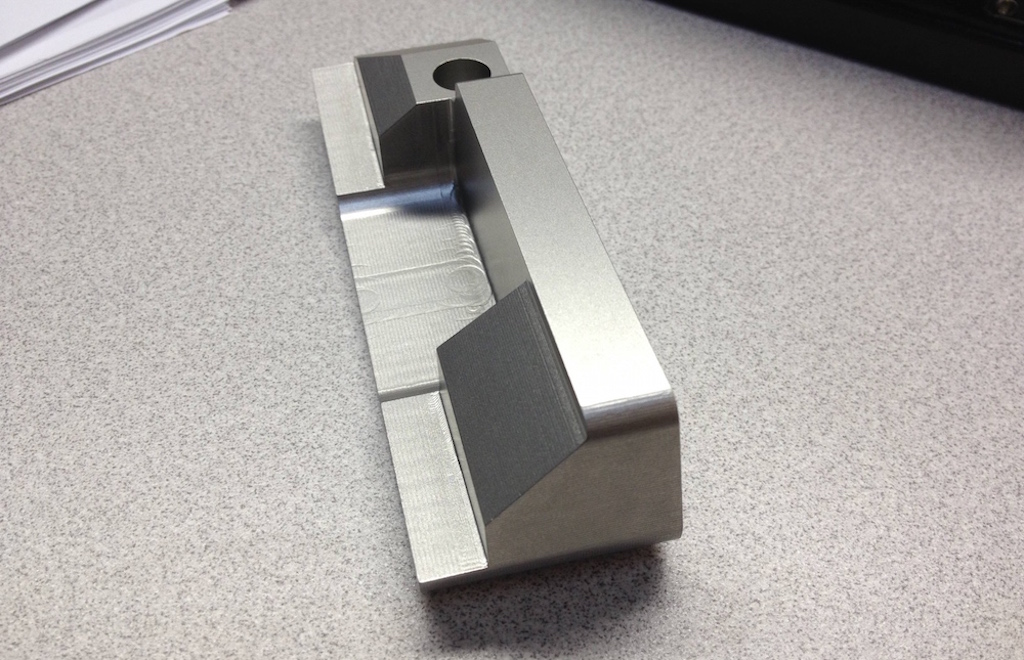
“Ball on Green,” or putting, is a statistical environment of its own and was my introduction into the golf equipment business. A mutual friend introduced me to Dave Pelz more than 40 years ago, saying that as two equipment nuts we deserved each other. At the time I fooled around with ideas, but Dave was the real thing with his own booth at the annual PGA Merchandise show.
I started attending the Show with him on my own nickel and years later ended up working full time with Dave in Abilene, Texas. I mention this only as background to my years of study on putting implements, both how and why they work. Unlike Dave, I didn’t focus on the putting stroke. My world was what happened when the club head contacted the ball and how that relationship could be optimized.
Now fast forward some 44 years and my phone rings. I’m retired and concentrating on how to drive the ball distances that violate the laws of physics given my club head speed. It’s an old friend from the golf business and after a bit of reminiscing he says, “Barnyard I have someone you must talk to. He has invented the best putter ever designed.”
That got my attention immediately, because my friend was not unknowledgeable and conversely I did not believe there was such a thing as one putter that was significantly better than others. That thought was my little secret which I did not divulge.
My friend went on to explain that the person who designed the putter was a certified genius with an IQ well over 200. As some intellectuals are inclined, he was not given to sympathy toward those with lesser intellect. The obvious problem ahead was that you could hit a wedge between our IQ’s, however, my friend assured me that he had prepared the genius. I was lacking in many areas, but I did know putters and could render an honest evaluation.
We agreed on a time and date and as a favor to my friend I called the designer. It took maybe 15 seconds for me to realize that this person was very uncomfortable speaking with someone well below his intellectual level and I had to get on common ground. I asked him to explain his design to me.
The concept revolved around optimum torsional effectiveness, or “forgiveness on off center hits” as it’s more commonly known. I immediately thought of the Bulls Eye putter that was designed in the 40’s. It’s a putter that’s still used on Tour by some players, and Johnny Miller shot his famed 63 at Oakmont in the ’73 Open with one.
The Bulls Eye is not exactly the epitome of torsional effectiveness, but I wasn’t going to open that door — questioning his design would be tantamount to a personal attack. So I asked him what loft he had on his standard model and he said, “Zero of course. The design precludes the need for face loft, something I have tested extensively.”
I then asked how he conducted his tests and he said, “On a pool table, to understand the performance of the head the testing environment must be perfect.”
He didn’t say, “You dolt,” but the inflection was there.
Up to that point I was on my good behavior, but admittedly diplomacy is not my strong suit.
[quote_box_center]”I’m sorry, but your premise of no loft is incorrect and your testing environment is not applicable,” I said. “Your putter design has a fatal flaw.”[/quote_box_center]
You could hear a sharp intake of breath.
[quote_box_center]”Why don’t you explain the technical reasons behind your comment,” he said, his words heavy with sarcasm.[/quote_box_center]
It didn’t take me long.
[quote_box_center]”Putting is about controlling speed,” I said. “Some surfaces are excellent, some shall we say politely are less so. On the green the ball is sitting down in the grass and needs to get up onto the surface so it can roll on its axis and have minimal influence from imperfections. Depending on the quality of the surface, a launch angle off the face between 1.25 and 1.75 degrees is optimal (I thought I’d throw that in to try and penetrate his air of superiority). To do so, you must have face loft ideally matching the putting surface.”[/quote_box_center]
I was prepared to supply more of my putter design knowledge, but he had heard enough — which was basically that I disagreed with him, an unacceptable position.
In a thinly disguised effort to hide his disapproval, he ended the conversation making it clear there would be nothing further worth discussion. I told my friend the story and that I had to be honest about what I knew to be true. He said not to worry; they had found a wealthy individual who loved golf and they thought he was going to invest.
They were right — he did and the operation busted out (and to repeat this is a true story).
To be continued…








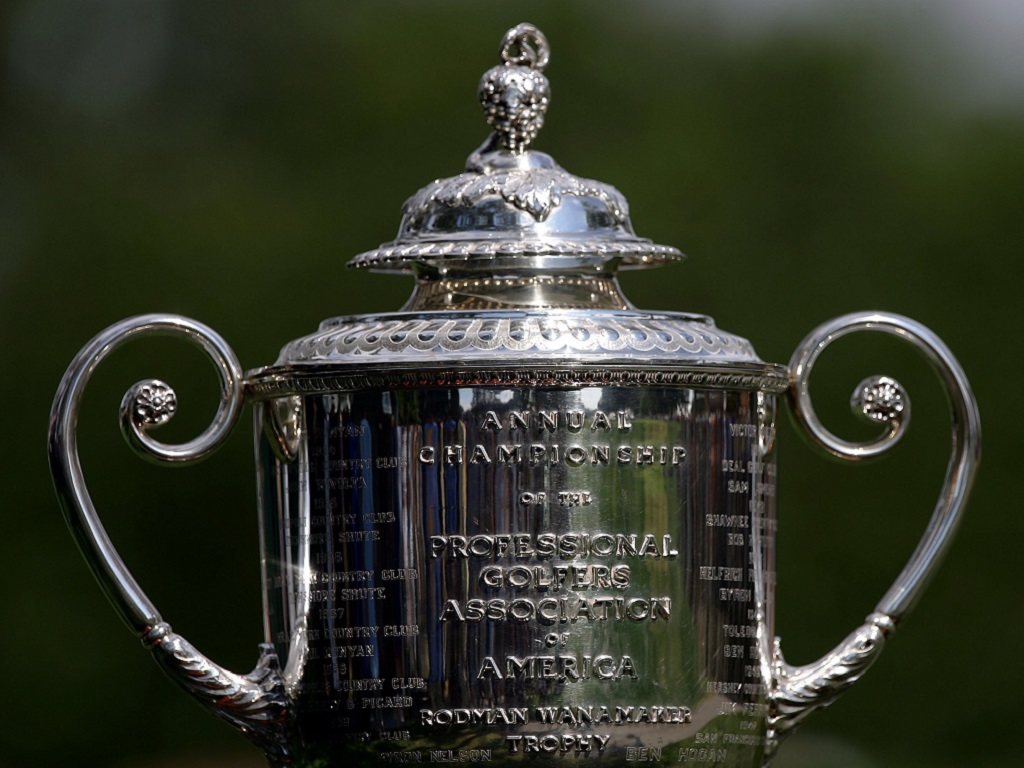
Aronimink is not a storied club, but when Donald Ross himself proclaimed it to be as good as he can design and build, one had to take notice. Jay Sigel was the pre-eminent male amateur golfer from the mid-1970s to the mid-1990s. He might have called any number of Philadelphia clubs home, but he chose Aronimink. It served him well. Gary Player won a PGA Championship here in 1962, and was followed by the 1993 winner … nobody. Aronimink gave that event away to Inverness, for reasons of which it is certainly not proud. So be it. We had to wait sixty-four years for the PGA to return to Newtown Square, but here we are. Aronimink has been neo-restored by Gil Hanse and team, to return Ross features with an eye toward defense against the dark arts, errrr, high-tech equipment.
Day one saw Rory McIlroy and Bryson DeChambeau dig big holes, to the tune of plus-four and plus-six, respectively. Since the first-round lead will be minus-three at worst, many shots will need to be made up for the power couple to reach contention. By nightfall, seven golfers held the day-one lead at three-under par 67. Shots and sticks caught our attention, and we are proud to present Five Things We Learned on Tech Thursday at the 2026 PGA Championship. Thanks to InsideTourGolfer, Today’s Golfer, and GolfWRX for initial equipment research.
First, meet Min Woo Lee
Min Woo Lee, aka Dr. Chipinski, has once again thrust himself into the conversation of Can he, will he, when will he? Lee has so much talent, wins not nearly as often as we believe that he should, and has no major near-misses (much less titles) on his wiki. The young Aussie is getting older and wiser, but is he able to avoid the scarring that holds the older and wiser back from breaking through? Philadelphia offers another opportunity. Min Woo signed for five birdies and two bogeys on day one, and grabbed a share of the opening-day lead at Aronimink. Winners transcend history and the moment, and Lee will need that sort of ascent to lift the Wannamaker on Sunday.
Second, meet Aldrich Potgeiter
The young South African golfer can rip driver with the best of them. Aronimink tips out at nearly 7400 yards, but beyond the fairway bunkers that ensnare only the mortals, Potgeiter can take his chances with wedge from the rough. On Thursday, he spent plenty of time in the spinach. Like Popeye, he used his muscles to gouge and thrash and dig his way out. Six birdies against three bogeys on the card brought AP in a three deep.
Third, meet Martin Kaymer
Not a major event takes place without a where’s he been throwback moment. We know that Martin Kaymer left the PGA and DP World tours for LIV golf, but the two-time (US Open and PGA) major winner has a lifetime exemption into at least one major event, and he seizes the opportunity each May. Kaymer joined the six-seven brigade with four birdies and a solitary bogey on day one. Kaymer was never a long hitter, and the years are kind to no golfer. The German champion will need to uncork every bottle of guile and strategy in his cabinet to remain in contention. For today, though, he occupies a rung on the ladder of Tour Tech.
Fourth, meet Scottie Scheffler
Let’s see, he’s the defending champion at the PGA, and he found his way back to the top tier with five birdies against two bogeys. To be a favorite and then play up to that stature and expectation is quite difficult. Just ask Rory, Bryson, and some of the other pre-tournament heartthrobs. Scheffler’s game is complete, and to knock him off the OWGR #1 pedestal, one needs to defeat him at the majors. Aronimink is the sort of course that fits Scheffler’s game. Better yet, it unfits the game of many of his challengers. Don’t expect Scheffler to go away anytime soon. Come Sunday, he’ll be around.
Fifth, meet Stephan Jaeger
Clocking in for the unheralded players shift are Ryo Hisatsune and Stephan Jaeger. Hisatsune logged seven birdies on day one, but gave most of them back with four bogeys. Still, he’s tied at the top for a time. Jaeger pitched five birdies against two bogeys, including a run of three consecutive, from holes four through six. Odds are that one of the two will hang around through 36 holes. Odds also suggest that both will be gone by Saturday evening. Still, the PGA Championship has historically been the major most likely to be won by an under-known. Both Hisatsune and Jaeger feature on that list, so good luck, lads!

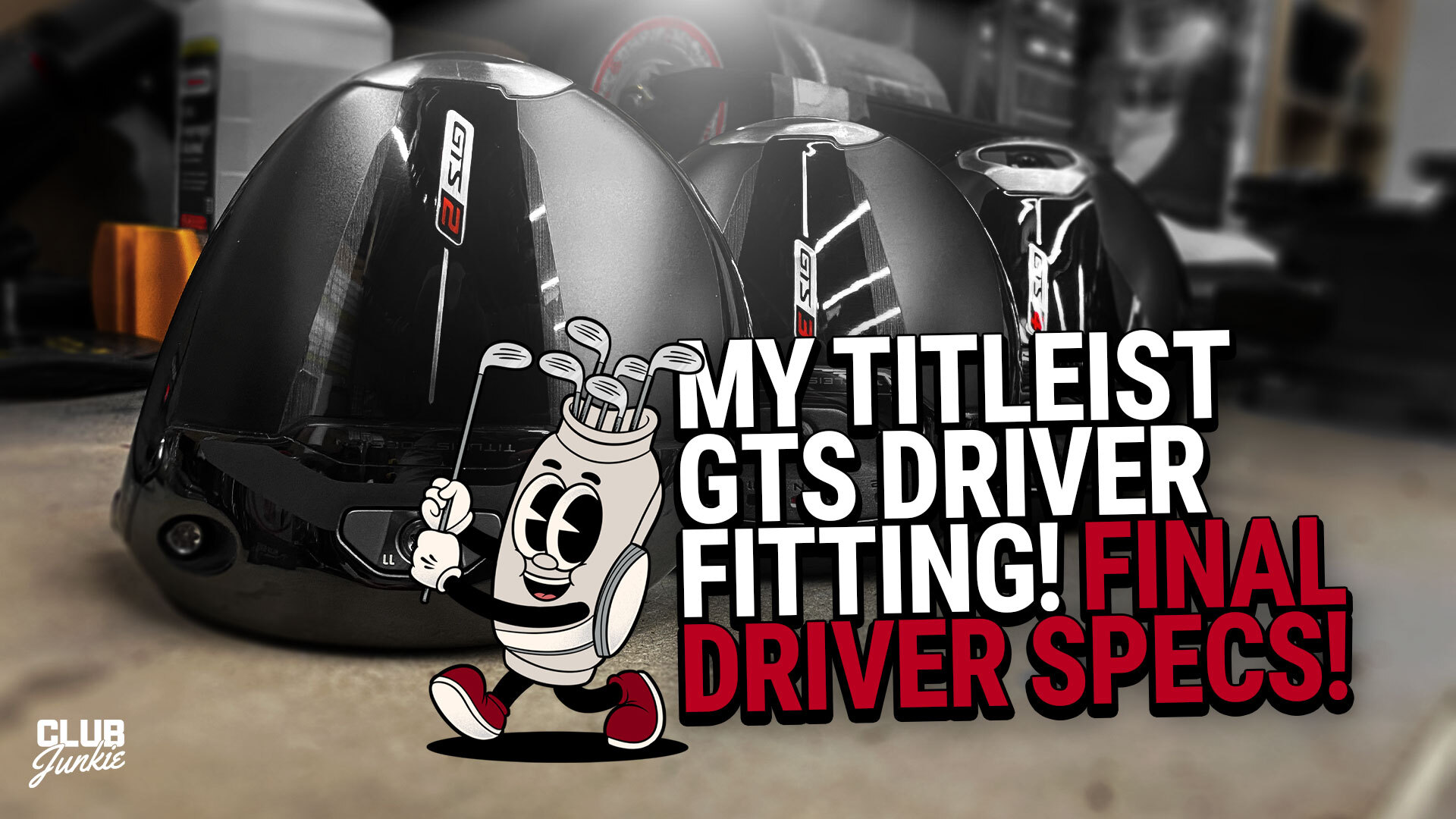
On this episode of the Club Junkie Podcast, I head to the Titleist Performance Institute for a full driver fitting with the new Titleist GTS lineup. We dive into the fitting process, talk about what made the biggest difference in performance, and break down how the different GTS heads and shaft combinations compare on the launch monitor. If you are thinking about a new driver setup for this season, there is a lot to take away from this one.
I also get into Brooks Koepka and the gear setup he brought to the PGA Championship, including the putters that caught my eye during the week. There are some interesting equipment trends showing up at the highest level right now and we break down what stands out.
To wrap things up, I talk about reshafting a few wedges, what I learned during the process, and swapping an adaptor onto a new shaft for another build project in the shop. A gear packed episode from start to finish for anyone who loves golf equipment and club building.
Follow Club Junkie everywhere:
Instagram: https://www.instagram.com/clubjunkiepod/
X: https://x.com/ClubJunkiePod
TikTok: https://www.tiktok.com/@clubjunkiepod
Threads: https://www.threads.com/@clubjunkiepod
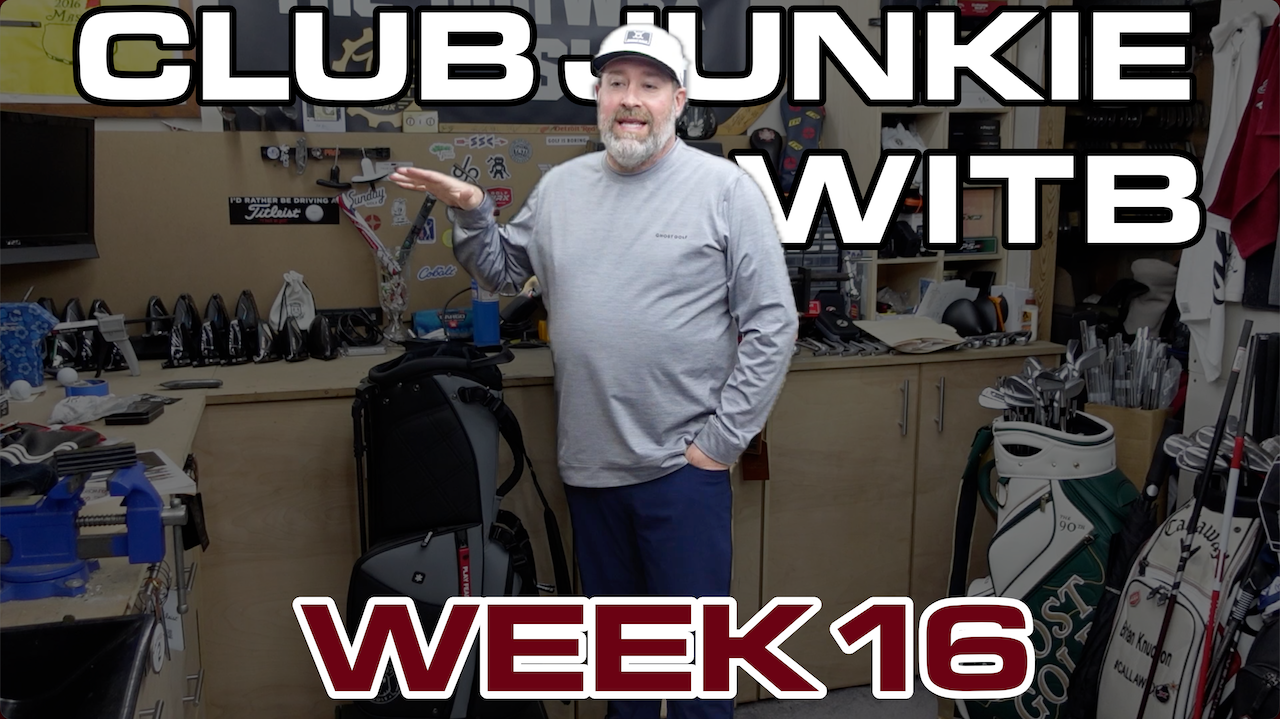
Excited for this week’s WITB as we get to add the new Titleist GTS woods to the bag! I was fit at Titleist’s TPI facility in Oceanside California a few weeks ago and my new clubs just showed up. I am also adding a cool set of irons that I built last year some wild custom wedges into a new golf bag. Speaking of the bag I have a new Ghost Anyday Black Ops stand bag that I will be using on my Motocaddy Remote M7 electric cart.
Driver: Titleist GTS3 (11 degrees @ 10.25)
Shaft: Fujikura Ventus Red 6s
3-wood: Titleist GT1 3Tour (14.5 degrees)
Shaft: Graphite Design Tour AD CQ-7s
5-wood: Titleist GTS (18 degrees)
Shaft: Fujikura Ventus Red 7s
9-wood: Titleist GT1 (24 degress)
Shaft: Fujikura Ventus Red 7s
Irons: Bettinardi CB24 (5-PW)
Shafts: KBS C-Taper Lite 110 stiff
Wedge: TaylorMade MG5 (50-09 SB)
Shaft: Mitsubishi MMT 125 Stiff
Wedge: TaylorMade MG5 (56-12 SB)
Shaft: Mitsubishi MMT 125 Stiff
Wedge: TaylorMade MG5 (60-08 LB)
Shaft: Mitsubishi MMT 125 Stiff
Putter: Dan Carraher ZT Proto
Ball: Callaway Chrome Tour
Bag: Ghost Anyday Black Ops Stand Bag

Justin Rose WITB 2026 (April): Full WITB breakdown with new McLaren irons

RBC Heritage Tour Report: More minis, course-specific setups, Spider & GTS launches

What’s the story behind Webb Simpson’s custom-stamped irons?

Cadillac Championship Tour Report: Spieth’s sizable changes, McLaren Golf launches, and more

Kristoffer Reitan’s winning WITB: 2026 Truist Championship

Cameron Young’s winning WITB: 2026 Cadillac Championship

Aaron Rai’s winning WITB: 2026 PGA Championship

Nelly Korda WITB 2026 (April)

Justin Rose on the switch to McLaren Golf, learnings from previous equipment moves

Photos from the 2026 PGA Championship


Patrick Reed WITB 2026 (May)
Driver: Titleist GT3 (9 degrees) Buy here. Shaft: Aldila Rogue Silver 130 M.S.I. 70 TX 3-wood: TaylorMade Qi35 (15 degrees)...

Aaron Rai’s winning WITB: 2026 PGA Championship
Driver: TaylorMade M6 (9 degrees) Shaft: Aldilda Synergy Blue 70 TX 3-wood: TaylorMade Qi10 (15 degrees) Shaft: Fujikura Ventus Blue...


Michael Block WITB 2026 (May)
Driver: TaylorMade Qi4D (9 degrees) Shaft: Fujikura Ventus Black VeloCore+ 5 X 3-wood: TaylorMade Qi4D (15 degrees @14.25) Shaft: Mitsubishi...


Bryson DeChambeau WITB 2026 (May)
Driver: Krank Formula Fire Pro (6 degrees) Shaft: Project X Prototype 3-wood: Krank Formula Fire (10 degrees) Shaft: LA Golf BAD...
-
 Whats in the Bag3 weeks ago
Kristoffer Reitan’s winning WITB: 2026 Truist Championship
-
Whats in the Bag2 weeks ago
Aaron Rai’s winning WITB: 2026 PGA Championship
-
 Tour Photo Galleries3 weeks ago
Photos from the 2026 PGA Championship
-
 Equipment2 weeks ago
GolfWRX Launch Report: 2026 Titleist GTS drivers
-

 Equipment2 weeks ago
PGA Championship Tour Report: Fitzpatrick, Koepka among big-name putter switches for Aronimink
-

 News2 weeks ago
WITB Time Machine: Phil Mickelson’s winning WITB, 2021 PGA Championship
-

 Equipment2 weeks ago
Which of Tiger’s major winning irons are your favorite? – GolfWRXers discuss
-

 Equipment2 weeks ago
Lead Tape Report: Adjusting the swingweight of the Wanamaker Trophy


BIG STU
Apr 25, 2015 at 5:27 am
It all boils down to a couple of thing one of them being common sense and common business sense. Barney seems to have both IMHO. He just stated the facts from his common and business experiences in the golf industry. And I will make a comment on the loft thing and it is a common phrase different strokes for different folks. I for one forward press and hold it at impact so I need a putter set at around 3.5* static where someone who does not forward press will need less. That is why you have club fitters and putter bending machines. To get back to the original topic you have to find a niche for any product whether it is in golf or widgets. I would have to say Barney knows his stuff
Rhoward
Jan 27, 2015 at 8:56 am
IQ’s value itself is debatable. IQ in the beginning was useful. It was developed by the Army to judge whether a soldier could handle explosives and the alike. The original scale does not go above 135 nor below 65. Only 3% are above or below those values. The value of an IQ above 135 is not given by the original design. Einstein’s IQ is in question given the new evidence in Israel’s archives — love letters showing his first wife came up with key ideas, and all the surviving physics notes that are hand written are in the wife’s handwriting. During the Manhattan Project and again when the Space Shuttle blew up — the big wigs (super high IQ’d physicists) debated the whys and wherefores. Socially, high IQ club membership usually takes hundreds of hours of practice testing to gain membership (yes, it’s a learned behavior). The great industrial epoch makers like Edison, Bell and Tesla would not have tested well; their knowledge was too single minded and their personalities too irascible. Lastly, child geniuses have not shown to achieve much when grown. This is all to say that Adams is right — the best ideas of engineering are forged in the heat of argument between like minded but tolerant mechanically minded individuals. The Wright Brothers debated fiercely for hours, days and even weeks on end over the smallest design details. They constructed their own primitive wind tunnels to help settle those fist pumping mental wrestling matches.
Bread
Jan 26, 2015 at 4:08 pm
Einstein had an IQ of 160. An IQ over 200 has been recorded exactly 3 times…
holly
Jan 13, 2015 at 9:30 pm
david kargetta? black swan?
guy couldnt hear a question, let alone a differing opinion
bradford
Jan 8, 2015 at 1:03 pm
I find I putt better when I rub my older cat with my putter. It is important to note this does NOT work with the kitten.
I can promise that anyone who putts with MOI, spin, torsion, and loft in mind hasn’t putted well in years.
Gotta love your putter.
.
bradford
Jan 8, 2015 at 1:08 pm
oh, and there are ~15 living people with IQ’s at 200+. I doubt seriously any of them is going into (and failing at) the gimmicky putter industry. Not when they can make HUGE money in the gimmicky pharma industry.
Paul
Jan 7, 2015 at 5:10 pm
Love it, ‘Barnyard’!
Can’t wait for the next chapter.
ca1879
Jan 7, 2015 at 4:23 pm
Barney – are you ready to accept yet that no amount of straight talk and factual information will change a believers mind? Almost all golf related businesses fail or struggle, but telling an ambitious entrepreneur that will just harden their resolve to forge ahead. Laying out the facts on golf club performance will only prompt those who think their miracle club has revolutionized some aspect of their game, when they are really just falling prey to the many ways we can all fool ourselves. This unfortunate example, is just a another sad tale in the long list of things we golfers fall for. This con person sold people with no understanding of basic science a product that does not work as claimed (not saying it doesn’t work, but it’s not because of the imaginary zero MOI, or because it resembles a B2 wing) by using a “sciency sounding” line of patter. We’re a pretty gullible lot when you get right down to it, and it’s not just where golf equipment is concerned.
ca1879
Jan 7, 2015 at 4:30 pm
“will only prompt” should be “will not change the minds of”
Barney Adams
Jan 7, 2015 at 10:04 pm
Golfers have passion and when it comes to the business side I try to help them by ” telling it as it is” some are appreciative some call me a wet blanket ( or worse) Years ago a guy came to me with a plan for a putter Infomercial. I explained that he didn’t have enough margin cost to sale price on TV. He got furious said I didn’t want anyone else to have the success I did etc. ( and I mean really angry) He went forward, all in financially. Went bankrupt.
Scott
Jan 8, 2015 at 2:40 pm
Thanks Barney for your articles and stories. Keep them coming!
Jonny B
Jan 7, 2015 at 11:25 am
This story just seems like the ramblings of an old guy. Oh wait, it is.
Not really too familiar with all the technical stuff behind the theory of this article, but I can tell you my putting has dramatically improved using a zero-loft putter by Cure. Take it for what it’s worth. http://cureputters.com/zero-loft-tru-roll.aspx
bradford
Jan 8, 2015 at 12:58 pm
What do I call MY overspin putter? MONEYYYY…
derek
Jan 10, 2015 at 12:49 pm
i got a cure putter on ebay cheap, have u gotten over the aluminum bat sound?
Ken
Jan 7, 2015 at 11:20 am
The best putter is the one that just holed the last 30 footer.
bradford
Jan 8, 2015 at 1:04 pm
^this
Merty Huckle
Jan 7, 2015 at 11:20 am
you know, This is really interesting. At first I was pissed with the To be continued, ut I have to admit I’m hooked.
RG
Jan 7, 2015 at 4:49 am
That guy is crazy!! Personally I’ve found that eye of newt roasted in bats blood lightly sprinkled over your putter while chanting,”Oingo Boingo Bingo Bar, I need a birdie but I’ll take a Par,’ works everytime.
Pooch
Jan 7, 2015 at 9:41 pm
RG,
Now where can I get the Eye of Newt and the Bats Blood? Thanks for the tip.
Pooch
jesse
Jan 9, 2015 at 6:35 am
Now you have me totally confused !
8thehardway
Jan 7, 2015 at 2:40 am
Mad genius with 200 IQ ignores Barney’s good advice, finishes flawed design.
POW!!!
Jack Hamm’s Zero Latitude putter goes on sale (it looks like a 3-foot long hammer)
Jack now doing Tee It Forward promos for Barney
killerbgolfer
Jan 6, 2015 at 11:02 pm
Great story!
Stretch
Jan 6, 2015 at 12:52 pm
A couple of points while waiting for Part 2; loft is needed to get the ball to roll especially on less than perfect greens, the more the MOI in a club the more likely the ball striking becomes poor.
3-4 degrees of loft works best for smooth fast greens as well as grainy slow and bumpy ones. On fast greens the extra loft will let the golfer apply more force to get the same distance. On short side hill putts on fast smooth greens this means the ball will start on the line instead of slightly sliding downhill at the release of the ball off the face causing missed putts unrelated to the quality of the stroke.
Miller’s 63 was with persimmon woods, muscle back irons and the Bulls Eye. All had a small MOI and needed great ball striking to perform.
Sb
Jan 6, 2015 at 6:15 pm
As someone who has studied putting and the technology behind putters and loft specifically, loft is probably the most important individual factor in improving speed or distance control.
Most amateurs buy putters off the rack and generally the putter has somewhere from 2-4*. Add the fact that most of those players add loft at impact and now have effective lofts of 4-6 degrees sometimes! This creates backspin and causes the ball to lose pace and skid offline.
Bottom line is, on green speeds around 10 on average, an effective loft of 1 Degree is ideal for creating neutral launch. So for those golfers, having a static loft on a putter of 0 is necessary to achieve the 1-1.5 degrees of ideal effective loft.
Ponjo
Jan 7, 2015 at 4:12 pm
Indeed. 52years of age and Miller still my favourite ever golfer
Brad Ingarfield
Jan 8, 2015 at 7:54 am
“The more MOI in a club the more likely ball striking becomes poor” – interesting observation. I have often thought about this. Do you have any evidence or is it your opinion? No disrespect intended!
Stretch
Jan 10, 2015 at 11:26 am
The MOI opined about concerns how small headed putters and clubs demand a strike that is solid. Large headed clubs disguise the need for a precise by giving results when missing the sweet spot.
No disrespect taken. 5 decades of playing at and with players in tournaments where the players’ handicaps (if created in the Tour players case) would be +2-+7 range.
jesse
Jan 9, 2015 at 6:48 am
Stretch: When does “Part 2” come around? I’ve been looking all over this website.
Regarding “getting the ball rolling”; I always thought it skidded the first few inches anyway?
Not sure about the mojo of the MOI. If you cannot strike a putt solidly, more than likely it took more than par to get to where you can putt. Not much chance of a 63 there.
So you are advocating using a 3-4 degree putter for “everything”. On those fast greens and applying more force, wouldn’t that possibly cause more “un-solid” hits, or non-solid hits, or miss-hits, and more sidespin (and however slight it might be), therefore possibly starting on the right line, but never staying there. I’ve seen a guy cut every putt, be he seems to make more than everyone else. Just sayin
Stretch
Jan 10, 2015 at 11:40 am
Part 2 is up to the masters of the WRX site. I did try the Yar putter early in its life and could not get the ball rolling properly in the first 2″. No loft = no “tumble roll.” The ball may skid to some degree but the less it does the more the ball will stay on the line until the break of the green changes its direction.
More force does not necessarily cause miss hits and sidespin. What does cause those conditions is not applying it parallel to the line the eyes look down. This is the secret to hit solid accurate golf shots no matter what the club used.
I know of a player still playing on the Tour whose cut shot putting style evolved from an arced stroke to a hard slice. If you do it consistently it works. Slow grainy greens are not so productive for this style of stroke.
Steve Barry
Jan 6, 2015 at 11:36 am
I was first thinking Yar as well, but considering there wasn’t anything about “him” saying they needed to ‘focus on the product, not the person’ I’m starting to think it might be something else. Here’s to hoping!
aharp
Jan 6, 2015 at 12:02 pm
This is a “TRUE” story. Seek the “Truth”?
D man
Jan 6, 2015 at 11:21 am
So what was the point in this article?
jesse
Jan 9, 2015 at 6:50 am
The point in this article is you need a putter with no loft?
MattyTeaks
Jan 6, 2015 at 10:16 am
Yep. Guessing he’s referring to the yar putter.
http://grantland.com/features/a-mysterious-physicist-golf-club-dr-v/
Don
Jan 6, 2015 at 10:55 am
o.k. That is seriously messed up.
Jafar
Jan 6, 2015 at 11:28 am
Wow, what a story…
stripe
Jan 6, 2015 at 12:04 pm
WOW.
A
Jan 6, 2015 at 12:34 pm
Facinating Grantland article and the writer got killed for it but he shouldn’t have been. This needs to be made into a movie.
spazo
Jan 6, 2015 at 12:40 pm
HOLY CRAP! what a story!
Tom Bowles
Jan 6, 2015 at 1:31 pm
Holy crap! That’s nuts!
Alex
Jan 6, 2015 at 1:51 pm
Crazy story, but not the likely candidate for Barry’s story because Barry uses the masculine pronoun to describe the ‘genius’. This could be an intentional switch though..
Marshall
Jan 7, 2015 at 7:53 am
That article makes it clear that Gary McCord is a liar and a fool, but that was pretty much already known.
Josh
Jan 7, 2015 at 11:53 am
I was thinking the same thing. Best Grantland article ever.
Jonny B
Jan 7, 2015 at 12:02 pm
Crazy story. Had no idea about Dr. V or Yar prior to today. If this is in fact the putter/person Barney was referring to, which it does sound like, that’s amazing.
If anything, I am interested in trying the Yar putter. Anyone already done so? Their website is borderline pathetic. If it is truly the gamechanging breakthrough piece of equipment it is advertised to be, don’t you think people would have heard about it/been using it by now? Marketing FAIL…
steve
Jan 7, 2015 at 12:49 pm
That is by far the most interesting story i have gotten while on WRX.
Great find
Platonist
Jan 9, 2015 at 4:17 am
This grantland article was one of the best I have read in years. Solid investigative journalism!
Jafar
Jan 6, 2015 at 9:55 am
Part 2 please…