
Equipment
Visual Sports Systems: Can a $40,000 golf simulator be worth it?

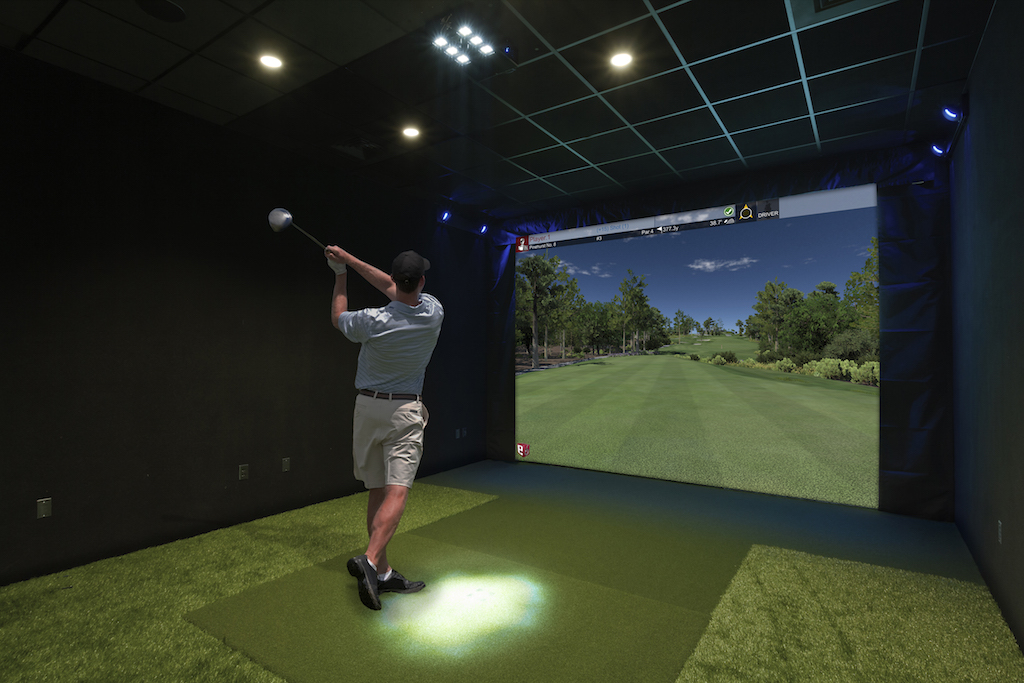
Golf simulators are nothing new. In fact, basic sports simulation systems have been around since the early 1970s. That said, modern versions hardly resemble their 40-year old counterparts — and if recent trends continue, you may be more likely to have one of these in your basement than you think.
Based in Toronto, Ontario, engineering firm Visual Sports Systems (VSS) started in 2000 by creating a simulator specific to hockey for the Hall of Fame (also located in Toronto). Over the past 15 years, Visual Sports has blossomed into one of the premier high-end interactive sports simulator companies in the market. Even as the game has witnessed a sharp decrease in participation, VSS continues to grow and expand. 2014 marked the company’s best year, posting a record 30 percent increase in sales over the previous year.
Although current platforms allow for 13 different games (hockey, baseball, soccer, etc.) on either VS (Versatile Solutions) or ES (Elite Series) platforms, it is chiefly golf simulation that drives its interest. Golf is the magnet that pulls in corporations and homeowners alike.
Commercial clients (think: cruise ships, stadium events like the Super Bowl and retail golf centers) typically purchase a VS system — costing $30,000 to $35,000 — which offers the same technology and gaming platforms as the ES, but is better suited for a quicker, turn-key set-up, install and relocation.
In fact, if you were at the Super Bowl this year, you may have seen two of Visual Sports simulators sponsored by Tommy Bahama and Chevrolet.
If you’re looking to augment your garage or deck out your man-cave, the ES (Elite System) series will blow your mind and set you back about $45,000. Primarily, the difference between the ES and VS is that the ES system is custom built and installed to fit a particular room or area in your house. If this sounds appealing, plan on a space about 10-feet high, 14-feet wide and about 20-feet deep. Also, plan on getting a lot more than a screen that shows you about how far your shot went.
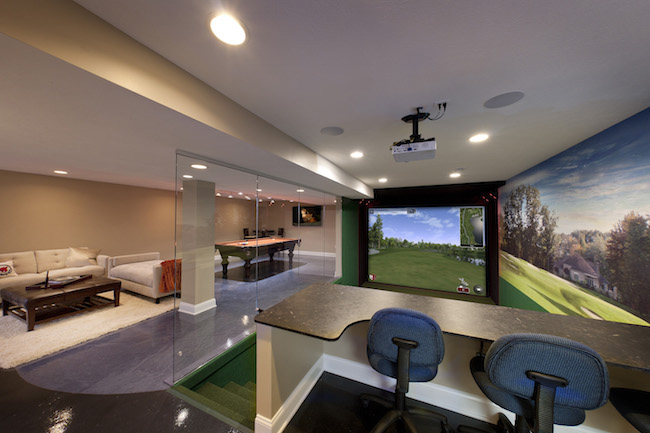
For about 45K, you could augment your man cave with a VS system.
Using four ultra-high speed cameras for each technology, both the ES and VS systems accurately measure both ball and swing data utilizing proprietary V-Track and Swing-Track technology. V-track records ball data at 2000 FPS (frames per second), or 30 times faster than HD Video. Like high-end launch monitors, V-Track measures spin, launch angle, velocity (ball speed), ball flight and other pertinent data.
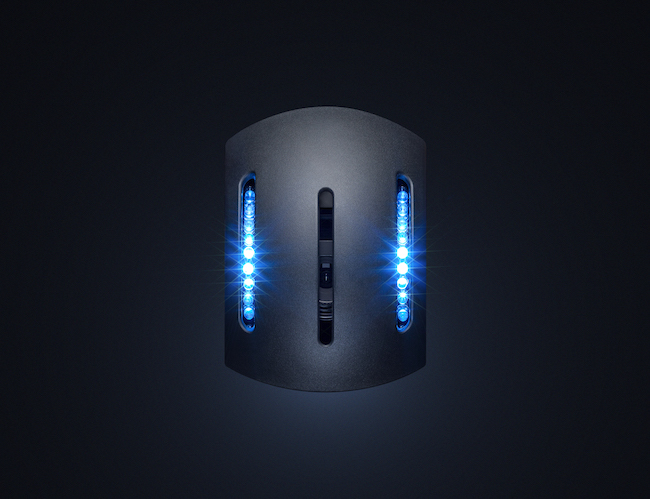
V-Track ball flight camera
Swing-Track technology records images at a rate of 600 FPS so the player can see exactly what their swing is doing and how it impacts ball flight. For instructors, allowing a player to see ball flight, launch data and swing information at the same time, is “something very unique to this product,” according to Chris Lee, marketing director for Visual Sports Systems. It’s like having a “launch monitor and frame-by-frame swing sequence at the same time.”
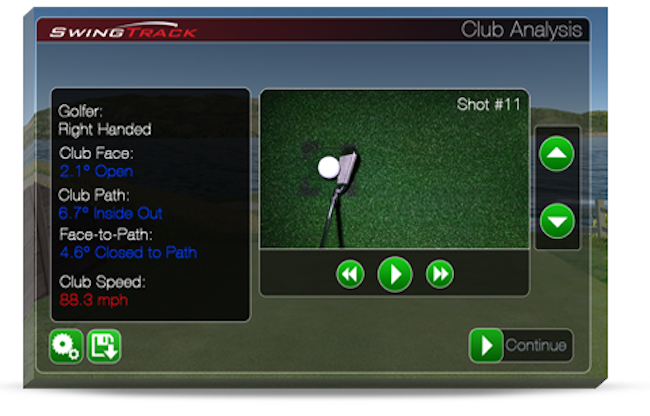
Screen shot of Swing-Track club analysis
So maybe you can’t stomach a $40,000 toy for the man cave just yet, but “give it 5-to-7 years,” Lee says. Like other technologies “prices have already started to come down and as demand increases, economies of scale takes over a bit.”
What that means exactly, no one can predict. However, if companies can produce the same quality product for 20 percent of the current cost, simulators will be competing against hot tubs instead of kitchen remodels and that, according to Lee, is “exceptionally realistic.”
Even at $40,000, Visual Sports provides significant value. Or put another way, if you spend $40,000 on a system, you’re going to get $40,000 worth of technology. Unlike some competitors, Visual Sports doesn’t have a large advertising budget and is very careful not to pass unnecessary costs onto the customer.
As costs continue to decline, Lee’s optimism is grounded not only in sales projections but in what he knows to be true about golf. From the casual player seeking entertainment, to the teaching pro looking to offer something unique, to the condominium complexes wanting to revamp the traditional recreation center — there’s no shortage of people looking to make tee time anytime.


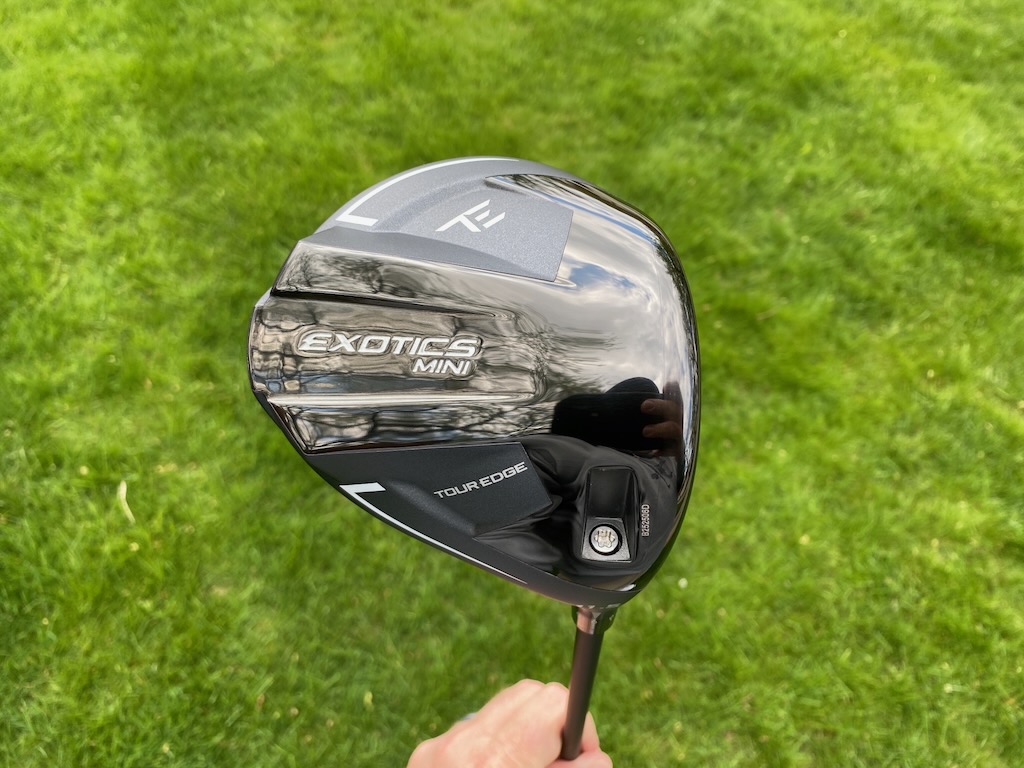
Tour Edge Golf has today introduced the all-new Exotics mini driver, engineered to deliver a powerful combination of speed, control, and versatility in the long game.
The Exotics Mini combines a titanium face with a stainless-steel body in design to balance ball speed with stability and control, creating a versatile option at the top end of the bag.

At the core of the design is Tour Edge’s proprietary Combo Brazing technology, a high-precision thermal bonding process that seamlessly fuses a titanium cup face to a stainless-steel body into a single, continuous structure. By eliminating energy loss found in traditional multi-piece constructions, Combo Brazing is designed to deliver faster face response, more efficient energy transfer, and a uniquely powerful yet controlled feel.

The multi-material construction also allows mass to be positioned lower and deeper in the head in a bid to increase stability, while the thin titanium face is engineered to maintain ball speed across a wider impact area.

“While the initial goal was to enhance control and versatility in the long game, Combo Brazing ultimately drove measurable gains in ball speed and distance within the mini driver category. In robot testing, we’ve documented higher ball speeds, higher launch, reduced spin, and increased carry and total distance compared to leading models.” – Vice President of R&D Matt Neeley

In addition to distance performance, the Exotics mini emphasizes forgiveness through a heavier stainless-steel body that shifts mass toward the perimeter. This configuration increases MOI relative to traditional all-titanium mini drivers, helping preserve ball speed and directional stability on off-center strikes. Paired with Pyramid Face Technology from the Exotics metalwood line, the design is intended to support consistent speed across the face.

To further enhance MOI, a lightweight carbon fiber crown frees additional mass that is strategically repositioned low and deep in the head in design to improve stability and promote optimal launch with controlled spin.

“We designed the Mini to be about five millimeters shallower than other mini drivers on the market. That change improves playability off the deck. From a clean fairway lie, it can function as a strong 3-wood alternative while still providing control off the tee.” – Tour Edge CEO David Glod
An adjustable hosel system allows for loft and lie tuning to dial in trajectory and shot shape, while a fixed 13-gram rear weight helps stabilize the head through impact to improve dispersion consistency. The Exotics Mini Driver is available in 11.5 and 13.5-degree lofts in right-handed models.

Pricing & Availability
The Exotics Mini Driver is available for pre-order beginning today for $399.99 USD at touredge.com, and will be available for purchase at retail outlets worldwide on May 22, 2026.

In our forums, our members have been pitting a Srixon ZXi combo against a TaylorMade P7CB/770 combo. WRXer ‘edutch22’ is on the hunt for a new set of irons and kicks off the thread saying:
“Looking at picking up a new set of irons and think I’ve narrowed it down to Srixon ZXi combo or Taylormade P7CB/770 combo. I am currently a 5 cap and allbeit I feel irons are my weakness. My miss is a little to the toe side. I am decently steep at 4-5 down. Always thought I am high spin but recently on trackman my 7 was spinning at 5800 roughly.
My question or looking for thoughts on which one would benefit me more from a forgiveness standpoint? Or is there another iron is should be looking at entirely? I only get to play about once or twice a week, if I am not playing a 2-3 day event. Thanks in advance.”
And our members have been sharing their thoughts and suggestions in response.
Here are a few posts from the thread, but make sure to check out the entire discussion and have your say at the link below.
- manima1: “You just can’t go wrong with Srixon ZXi7.”
- MattM97: “You have to hit them to know, the V-Sole on the Srixon can be make or break for many.”
- dmeeksDC: “P7CB is more forgiving for me than ZXi7 because my main miss is low middle and the P7CB still flies and spins great on that miss. These are both really nice irons but I like the P7CB more than the Zxi7 and the P770 (or P790) more than the Zxi5. The Srixons are larger so if that gives you confidence that is the way to go. I don’t feel like I get any benefit from the V-sole and the P7CBs live up to their high Maltby forgiveness rating so the TaylorMades have been great for me.”
Entire Thread: “Srixon ZXi combo or TaylorMade P7CB/770 combo? – GolfWRXers discuss”

At GolfWRX, we are a community of like-minded individuals who all experience and express our enjoyment of the game in many ways.
It’s that sense of community that drives day-to-day interactions in the forums on topics that range from best driver to what marker you use to mark your ball. It even allows us to share another thing we all love – buying and selling equipment.
Currently, in our GolfWRX buy/sell/trade (BST) forum, @pianoman0123 has a 2024 Wilson Staff CB/Blade combo up for grabs.

From the listing: “2024 Wilson Staff CB/Blade Combo. 4-8 irons are CB’s and the 9,PW are Blades. 5-PW have Project X 6.0 Shafts and the 4 Iron has a Steelfiber CW110 Stiff Shaft. Standard Length, Lie and Lofts. These are in very good condition the shafts just don’t work for me. Like new Lamkin Grips on the 5-PW and a stock Golf Pride on the 4 Iron. $525 OBO.”
To check out the full listing in our BST forum, head through the link. If you are curious about the rules to participate in the BST Forum, you can learn more here: GolfWRX BST Rules

RBC Heritage Tour Report: More minis, course-specific setups, Spider & GTS launches

Justin Rose WITB 2026 (April): Full WITB breakdown with new McLaren irons

Best fairway woods of 2026: The most versatile fairway woods + the most forgiving fairway woods

What’s the story behind Webb Simpson’s custom-stamped irons?

Cadillac Championship Tour Report: Spieth’s sizable changes, McLaren Golf launches, and more

The 24 players who can win the Masters

Rory McIlroy’s winning WITB: 2026 Masters

Kristoffer Reitan’s winning WITB: 2026 Truist Championship

J.J. Spaun’s winning WITB: 2026 Valero Texas Open

Cameron Young’s winning WITB: 2026 Cadillac Championship


Alex Fitzpatrick WITB 2026 (May)
Driver: Ping G440 LST (9 degrees) Shaft: Fujikura Ventus Black 6 X 3-wood: TaylorMade Qi4D (15 degrees) Shaft: Fujikura Ventus...

Kristoffer Reitan’s winning WITB: 2026 Truist Championship
Driver: Ping G440 Max (9 degrees) Shaft: Mitsubishi Tensei 1K White 60 TX 3-wood: Ping G440 Max (15 degrees) Shaft:...


WITB Time Machine: Rory McIlroy’s winning WITB, 2021 Truist Championship
Rory McIlroy’s victory at the 2021 Wells Fargo Championship 2021 (now the Truist Championship) marked a significant return to form,...


Collin Morikawa WITB 2026 (May)
Driver: TaylorMade Qi4D LS (8 degrees) Shaft: Mitsubishi Diamana D+ Limited 60 TX 3-wood: TaylorMade SIM Tour (14 degrees) Shaft:...
-
 Equipment2 weeks ago
Justin Rose WITB 2026 (April): Full WITB breakdown with new McLaren irons
-
 Equipment1 week ago
What’s the story behind Webb Simpson’s custom-stamped irons?
-
 Equipment2 weeks ago
Cadillac Championship Tour Report: Spieth’s sizable changes, McLaren Golf launches, and more
-
Whats in the Bag3 days ago
Kristoffer Reitan’s winning WITB: 2026 Truist Championship
-
 Whats in the Bag1 week ago
Cameron Young’s winning WITB: 2026 Cadillac Championship
-

 Whats in the Bag3 weeks ago
Nelly Korda WITB 2026 (April)
-

 Equipment2 weeks ago
Justin Rose on the switch to McLaren Golf, learnings from previous equipment moves
-

 Tour Photo Galleries2 weeks ago
Photos from the 2026 Cadillac Championship


T Bundus
Apr 13, 2015 at 4:20 am
@Thomas, I have an HD Simulator and there are actually 4 cameras and 8 stereoscopic sensors. It’s extremely accurate and doesn’t miss. The cameras are located in the top right and left of the simulator supports, as well as 2 over head. Additionally, there are 2 extra cameras for video at 450pics a second. This is far more accurate than a trackman; for numerous reasons: 1) it doesn’t move, 2) it reads spin axis, 3) spin is read via a reflective strip and not via an angle of attack calculation 4) doesn’t require you to input data i.e. human manipulation. 5) it doesn’t matter where you hit it from in the sim as long as you are somewhere in the center. There are numerous reasons why you should splash out on a real simulator if you care about accuracy. Launch angle is also there, as well as all other regular numbers you’d expect to see on a simulator and more hang time for example, club fitting and equipment comparison. These are all very usefull functions for anyone that plays golf. Choose wisely.
Thomas
Apr 10, 2015 at 1:48 am
Key thing to look out for are 2-camera systems, they’re the most accurate (the other cameras are usually there to film your swing and allow swing analysis, but don’t actually feed the ball-flight information as far as I know. You want your ball-flight to be captured by a overhead camera and a side camera. Devices like Skytrak can’t tell where your ball lands because they’re measuring only from face on, so they are significantly off most of the time on side angle and side spin. HD golf or Aboutgolf also seem to fail, on launch angle and backspin mainly, because they only capture from above. Trackman, Sportscoach and VSS in my view have the best technology in the upscale range, it just makes sense to read the ball in 3D, I just don’t get how a “stereoscopic” camera is going to make any difference to that.
Thomas
Apr 10, 2015 at 1:36 am
GC2 is a good tool for indoor/outdoor use, nice and flexible launch monitor which you can almost carry around with you. I haven’t tried it as a simulator is it any good at the fun bits?
Thomas
Apr 10, 2015 at 1:14 am
I am thinking of some day getting a mancave of sorts. 40k to 80k if you go for the best products is a pretty lumpy sum of money, though, I was thinking more like 20k budget. Under 20k the stuff I’ve tried didn’t do the trick for me. At my local simulator shop we play on a Golfzon simulator, Korean stuff. It’s pretty good fun, but the courses are all Asian so no chance of playing a round at Augusta or Pebble Beach. Nice interesting courses though. As far as simulation goes, out of the 20 simulators I have tried, the Golfzon is probably average plus. It’s quite playable, reads most of your shots if you set up properly, does ok on short game but putting is an issue. Big weakness is the inability to properly read spin. Only few simulators have 3D high speed HD camera technology to properly read side and backspin. If you’re looking for the most realistic golf experience, I would go for the Trackman simulator, for 55-65k, VSS not far behind and slightly cheaper – both provide very accurate and detailed data. If you want the best data feedback for your fitting purposes, probably also Trackman. In terms of value for money and versatility, go for Sports Coach simulator, also very realistic I think prices start from about 25k and build up from there to around 70k. I would probably go for Sports Coach myself, especially because their short game modules seem to be ahead of the curve as far as I can tell, so you can actually play any shot, whereas it’s really hard to guess distances on most of the others, for the short game, and also because they have the most golf courses mapped. I personally don’t rate AboutGolf or HDGolf as much, they seem more of a rip-off to me (definitely go for Trackman if you’re going to spend 55k), but still very good product (not sure about accuracy of data). Total thumbs down to Golf Achiever which is by far the worst I have played on, can’t read a shot properly to save it’s life, not worth spending anywhere close to 20k on. Golfzon is ok, and as I understand it’s good value for money at around 20-30k (not sure about price). So that’s how far I’ve got in my market study so far… Any suggestions as to how to make do with 20k for a realistic round is welcome! I hope not to have to wait 7 years!
MikeD
Mar 31, 2015 at 4:03 am
I played in an indoor league for two winters on similar $40k units. Was it fun? Yep. Did we drink a ton of beer? Yep.
Would I ever, in any situation, purchase a simulator like this? Nope. Not ever.
Is this a piece to put in a man-cave? Surely. Then all your golf buddies come and use it, drink YOUR beer, and feel great doing it.
There are clearly more cost effective means to the simulator/trainer end. Will these sell? Sure. There are enough guys out there with disposable income to warrant this company being viable. Will it trickle down? Nah… I don’t see it. Not with the more “reasonable” options out there.
John
Mar 29, 2015 at 9:19 am
For 40K I’d rather get a TrackMan system and get some serious practicing done
Thomas
Apr 10, 2015 at 1:37 am
Totally agree although it seems to me if you want the full simulator package it’s more like 55-65k I think?
Birdeez
Mar 27, 2015 at 10:44 pm
A huge issue besides cost is space. Not many have 10ft ceilings in the basement.
Thomas
Apr 10, 2015 at 1:51 am
Ever thought of digging deeper into your basement? Do you know what is beneath?
other paul
Mar 27, 2015 at 10:19 pm
I got to try skytrak for $2000. The straighter you hit it the more accurate it is. Also had a $2000 optional software package. If you include PC, projector and the screen and frame, $10000. But I could use it just fine for $5000. Wouldn’t use for club fitting. But it was fun like crazy.
bob
Mar 27, 2015 at 5:35 pm
I have a foresight gc2 in the basement with The Golf Club software all in for projector and all was around 12k. Beats most of these 50k units also. There is also skytrack that is suppose to have some simulation software coming out soon and skytrack unit only costs 2k. Not sure how these big 50k simulators are going to survive with better cheaper solutions out there.
Kyle
Mar 27, 2015 at 7:21 pm
You get what you pay for. The more expensive ones will be more accurate. To some, that’s important. To others, not as much. I’d love to get a track an setup in the future if possible.
Brian
Mar 28, 2015 at 10:07 am
My $300 Optishot is better than this $45,000 ES because it’s cheaper. Is a reasoning I hear here. ??? As long as you hit I straight and square every time. Is the justification?
Chris
Mar 27, 2015 at 7:57 pm
I’d be interested to know what makes your unit better than the ES or VS systems? These high end companies are doing very well and growing – So it seems they’re competing quite well.
Scooter McGavin
Mar 29, 2015 at 10:19 am
I don’t think he’s trying to say that the GC2 is necessarily better in its performance than this system, but the Foresight system is one of the more accurate compact systems out there, which is why numerous fitters and teachers use it. I think he was trying to inquire about what you’re getting from this 45k system that you wouldn’t get from a system, that even brand new you could probably assemble for 20k (isn’t a new GC2 around 10-15k or something?). Is it just the custom room design that accounts for the much higher cost? The slow motion swing camera feature could factor in some, but I doubt the system is much more accurate than the Foresight.
Josh
Mar 27, 2015 at 5:21 pm
Living in Michigan, the value of one of these seems much more justified this time of year. Cabin fever does cravy things to ya