
Opinion & Analysis
In Memory of Par: Ending an Era of Exasperation

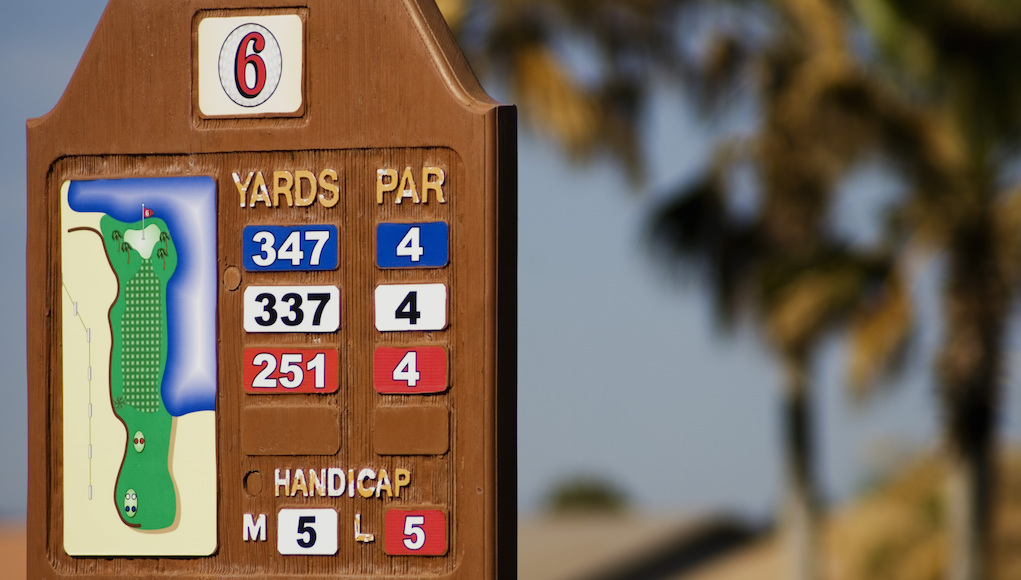
Did you know that less than 1 percent of all golfers have ever finished an 18-hole round at a regulation golf course in par or better? In light of this, the concept of par might be one of the most diabolically conceived aspects of the game of golf, and could arguably be called its biggest single source of frustration — outside of slow play.
Very little about the relative difficulty of each course we play is taken into account when computing the par. Additionally (and more importantly), the differing abilities of each player and how far they hit the ball aren’t a consideration, either.
Scottish golf history tells us the term “par” dates from late 19th century England. It gained popularity in the U.S. in the early 1900s and was adopted by the USGA in 1911, along with a relatively sadistic system for computing par based upon hole yardages. Under this system, par is determined by assigning uniform playing lengths for holes for scratch golfers of each gender. This is represented in the table below.
|
Par |
Men (in yards) |
Women (in yards) |
|
3 |
Up to 250 | Up to 210 |
|
4 |
251 to 470 |
211 to 400 |
|
5 |
471 to 690 |
401 to 590 |
| 6 | 691+ |
591+ |
This system then assumes these same scratch golfers will take two putts on each hole, and added to that is the number of shots it should take him or her to reach the green. Now, I’m all for high standards, but looking at this I think you can see the folly in most of us consistently measuring our games against a standard that is all but unattainable.
Golf is a difficult game — maybe the most difficult — and by painting everyone with such a broad brush when it comes to par, you are essentially measuring 99 percent of the players against the best 1 percent that has ever played. Not only that, golf is known as the game of a lifetime, with regular players of both genders playing from almost the time they can stand up and sometimes into their 90s. To assume that — whether you’re 9, 29, or 90 — you have the ability to hit the ball as far as a scratch golfer is downright ludicrous. It might not have been conceived this way intentionally, but under the current system of computing par, haven’t we essentially set most everyone up for failure?
The game of golf has been scrambling around the past half-dozen years or so to try and figure out why it has been losing players. The amount of time it takes to play, an unfriendly environment toward women and children, too restrictive dress codes, too expensive equipment, too many rules, the recession and other reasons have all been targeted as contributory factors in the slight decline in participation. At the same time, many in the game’s leadership have been lamenting the fact that more of today’s youth aren’t even picking it up in the first place. The shorter time commitment, faster pace, and lower initial investment to participate in sports like soccer, basketball, and tennis are constantly cited as reasons our nation’s youth are opting for those other sports. Also, the allure of increasingly realistic video games is bemoaned as the single biggest factor keeping kids from even participating in sports period. Certainly there can be cogent arguments made for all of these issues, as potential barriers to increasing participation in the game, but could a big part of the problem be hidden in plain sight?
The fact is, most people of any generation aren’t generally inclined to stick with something very long if they aren’t very good at it, or don’t at least see some improvement in their ability. So when it comes to the game of golf, our forefathers may have inadvertently set the bar so high that, for the majority, significant improvement will never be possible. And while misery apparently loves company (and we’ve got a lot of company here), most people aren’t likely to keep doing something if they are, by the industry standard at least, miserable at it. If you want new people to become attracted to the game in the first place, an ever-present air of impossibility isn’t necessarily the best impression to give off.
So here’s what I am suggesting. First of all, don’t get me wrong. The concept of par is a good one, and it has served us fairly well for a long time. It just needs a little tweaking. Secondly, I am always one for preserving the game’s traditions. It’s just that in the quest to attract more players, keep more players engaged, and allow the majority of us the opportunity to enjoy the game more and stay motivated on our quests to improve, I think we are long past the time when we should have updated it a bit so that everyone who plays has a better measuring stick to gauge their games.
To accomplish this, we need to bring par up to the 21st century. For that reason, I’ve developed a new chart that gives each player the ability to find their personal par. Instead of being gender-based, it will be based upon how far each player is able to carry their average drive in the air.
|
Tier |
Drive Carry |
Par 3 (in yards) |
Par 4 (in yards) |
Par 5 (in yards) |
Par 6 (in yards) |
Par 7 (in yards) |
|
5 |
Up to 100 |
0 to 100 | 101 to 200 | 201 to 300 | 301 to 400 | 401+ |
|
4 |
100 to 150 |
0 to 125 |
126 to 250 | 251 to 375 | 376 to 500 |
501+ |
|
3 |
150 to 200 |
0 to 175 |
176 to 350 | 351 to 475 | 476 to 600 |
601+ |
|
2 |
200 to 250 |
0 to 225 |
226 to 450 | 451 to 575 | 576+ |
N/A |
| 1 | 250+ | 0 to 275 | 276 to 550 | 551+ | N/A |
N/A |
Now, please believe me, I totally get that for many purists the idea of par-sixes is near blasphemous, let alone par-sevens. If you carry this logic forward a bit, however, I think you can see the method to my madness. Aside from male professionals and the best male amateur players out there today, virtually no one hits the ball 250+ yards in the air off the tee, so almost no one should be playing under the current par structure. The average man carries his tee shot a little over 175 yards in the air, and the average woman less than 150. This would mean the average regulation course would likely end up playing to a regulation par of somewhere in the high 80s for the average man and of a little over 100 for the average woman. Is it now any small wonder why the average men’s and ladies’ handicaps have hovered around 18 and 32 respectively for decades?
Measuring par on my chart has a host of other potential benefits, as well. Remember the slow-play issue? One of the biggest contributors to that problem has long been players who are playing from the wrong set of tees for their given ability. Extra strokes equal extra time and less fun, so instead of assigning players to tees by handicap or gender, you could assign them to a tee that’s most appropriate for how far they hit the ball. Ideally, more and more clubs would eventually have up to five different sets of tees, but with everyone playing at least from the set that allows them the best opportunity to shoot their personal par, strokes and time off everyone’s round will be cut. This could allow for players of differing ages and genders to compete on a more level playing field, opening up the door for new and different types of events.
Now, I can already hear your gears turning, so trust me, I get the fact that this would open up a whole can of worms when it comes to handicapping. I can already hear the cries of “Sandbagger!” when you get paired with another Tier-3 guy in the men’s invite and he hits three or four drives more than 200 yards, all the while crying, “I don’t know what’s got into me today, I’ve never hit it this good.” The real point is this: The majority of golfers aren’t scratch players, so the game and the majority of its players need a more accurate litmus test to measure their ability. Can’t we all agree it would be more fun to have a standard to shoot for that is potentially attainable?
I’ll leave the handicapping aspect to the rocket scientists (I know one actually, and might just put it to him), but if you at least use the chart I created to establish what your par should be on the course you play from the set of tees you play most often, you can finally aim for a realistic number, and it will be a much better measuring stick by which to gauge your day-to-day rounds. So shoot for your personal par and, in a sense, you will be playing the course (in relation to par, at least) much the same way that the pro or scratch player does every day. And because of that, I think you’ll find how you feel about each and every round is a lot more positive.
In the end, doesn’t that sound like a whole lot more fun?


Opinion & Analysis
Brandel Chamblee PGA Championship Q&A: Rose’s huge McLaren risk, distracted LIV pros and why Aronimink suits the bombers


PGA Championship week is here, and Brandel Chamblee did not hold back in our latest discussion ahead of the season’s second major.
In our 2026 PGA Championship Q&A, golf’s leading analyst made the case that PIF pulling LIV’s funding has left its players competing in a state of confusion, called Justin Rose’s mid-season equipment switch a huge risk at 45, and explained why Aronimink will be a bombers’ delight this week.
Check out the full Q&A below.
Gianni: With the PIF confirming that they’re pulling funding from LIV at the end of the season, what impact do you expect that to have on the LIV players competing at the PGA Championship?
Brandel: I would imagine that they have all been thrown into a state of confusion, and will be distracted, not knowing where they are going to play next year and not knowing exactly their road back to either the DP World Tour or the PGA Tour. Or in Rahm’s case, being tied to a sinking ship for the next few years, likely playing for pennies on the dollar in events that no one cares about or watches.
I doubt this would put him in the best frame of mind to compete at his highest level. Keeping in mind, however, that majors are the only time that LIV disciples get to play in events that matter, so never disregard the motivation they have to prove to the world they are still relevant.
Gianni: Justin Rose switched to McLaren Golf equipment mid-season while playing some of the best golf of his career. What do you make of the change?
Brandel: I don’t really know what to make of Rose switching equipment. It seems a huge risk on his part, even though it is likely, in my opinion, that the clubs he’s playing are similar, if not the exact grinds, to what he was playing previously, with a McLaren stamp on them.
Having said that, at best, it is a distraction when he seemed to be as dialed in with his game as any 45-year-old could be and trending in the majors to perhaps do something that would definitely put him in the Hall of Fame. At worst, given the possibility that these clubs aren’t just duplicates of his old set stamped with McLaren on them, he’s made an equipment change that would take time, and 45-year-old athletes don’t have the time to do such things.
Gianni: Aronimink has only hosted a handful of professional events since it hosted the 1962 PGA Championship. What kind of test does it present, and does a course with less recent major championship history tend to level the playing field?
Brandel: Even though Aronimink has only hosted a handful of meaningful professional events, it has been fairly discerning in who can win there. When Keegan Bradley won the BMW Championship on the Donald Ross masterpiece in 2018, he was the 2nd best iron player on tour coming into that week. When Nick Watney won the AT&T at Aronimink in 2011, he was 2nd in strokes gained total coming into the week.
In 2020, Aronimink hosted the KPMG Championship, and Sei Young Kim won. On the LPGA that year, she was first in greens in regulation, putts per green in regulation, and scoring average on the way to being the LPGA player of the year. And then there is the 1962 PGA Championship won by Gary Player, who eventually became just one of a few players to win the career grand slam on the way to winning 9 majors. It is a formidable test, and if it’s not softened by rain, it will bring out the best in the upper echelons of the game.
Gianni: Is there a specific hole at Aronimink that you think will do the most to decide the winner?
Brandel: The hardest hole at Aronimink in each of the three tour events that have been played there since 2010 has been the long par-3 8th hole, with the par-4 10th being the second hardest, so most of the carnage will happen around the turn, but with the par-5 16th offering opportunities for bold plays and the tough closing holes at 17 and 18, the finish is likely to be frenetic.
Gianni: The PGA Championship has always sat in the shadow of the other majors. What does the ideal PGA Championship look like in your eyes, and what would it take for it to carve out its own identity?
Brandel: The PGA Championship, to whatever degree it suffers from the comparison to the other three majors, is still counted just as much when adding them up at the end of one’s career. Almost 1/3 of Nicklaus’ major wins were the five PGA Championships he won. Walter Hagen won 11 majors, five of which were PGA Championships.
Tiger Woods twice in his career won back-to-back PGA Championships, and those four majors count just as much as the other 11 he won. The PGA may not have the prestige of the other three, but it carries the same weight. Having said that, I preferred the identity that it had as the last major of the year.
Gianni: You nailed your Masters picks. Rory won, Scottie finished solo second, and Morikawa surged to a tie for seventh. Who are your top 3 picks for the PGA Championship and why?
Brandel: I am not a huge fan of majors played on golf courses that have been shorn of most of the trees, although I understand some of the agronomic reasons for doing so and of course the ease with which it allows members to play after errant drives. However, at the highest level, it all but eliminates any strategy off the tee and turns professional golf into an even bigger slugfest. That means that it will likely be a bomber’s delight this week, but fortunately, Scottie Scheffler is long enough to play that game and straight enough to play it better than anyone else.
The major championships give us very few surprises anymore, going back to the beginning of 2012, so the last 57 majors played, the average world rank of the winners has been better than 15th in the world. So look at the highest ranked and longest drivers who are on form coming into the PGA Championship who also have great short games as the surrounds at Aronimink are very challenging. That’s Scottie Scheffler by a mile and then McIlroy and Cameron Young with a far bigger nod towards DeChambeau than I gave him at the Masters.


In this episode of the Club Junkie Podcast, we dive into one of the most interesting flatstick releases of the year with a full review of the new TaylorMade SYSTM 2 putters. After spending time on the greens, I break down what makes this design stand out, where it performs, and why it has me completely torn between loving it and fighting it. If you are into feel, alignment, and consistency, this is one you will want to hear about.
We also take a look at some of the putters in play on the PGA Tour last week. From familiar favorites to a few surprising setups, there is always something to learn from what the best players in the world are rolling with under pressure.
To wrap things up, I walk through the process of building a set of JP Golf Prime irons paired with Baddazz Gold Series shafts. From component selection to performance goals, this is a deep dive into what goes into creating a unique custom set and why this combo has been so intriguing.


This year my 50th birthday. Gosh, where has the time gone?
As a teenager in rural Missouri, some of my junior high and high school years felt interminable. Graduation seemed light years away. But the older I get, the faster life seems to fly by.
I’m also increasingly aware of my mortality. My dad died recently. Earlier this year, a friend and fellow PGA of America professional and I were texting about our next catch-up. The next message I received was news of his unexpected passing at 48. Shortly after, a woman I dated in college succumbed to cancer at 51.
Certainly, one can share perspective at any age. Seniors help freshmen, veterans guide rookies. But reaching this milestone feels like as good a time as any to do one of those “what would I tell my younger self?” articles.
I’ve had a uniquely varied career in golf. I started as a 27-year-old, average-length-hitting, 14-handicap computer engineer and somehow managed to turn pro before running out of money, constantly bootstrapping my way forward. I’ve won qualifiers and set venue records in the World Long Drive Championships, finished fifth at the Speedgolf World Championships, coached all skill levels as a PGA of America professional, built industry-leading swing speed training programs for Swing Man Golf, helped advance the single-length iron market with Sterling Irons®, caddied on the PGA TOUR and PGA TOUR Champions, and played about 300 courses across 32 countries.
It’s been a ride, and I’ve gone both deep and wide.
So while I can consult and advise from a lot of angles, let me keep it to a few things I’d tell the average golfer who wants to improve.
1. Think About What You Want
Everyone has their own reason for picking up a golf club.
Oddly, as a professional athlete, I’m not internally driven by competition. That can be challenging, as the industry currently prioritizes and incentivizes competition over the love of the game.
For me, I love walking and being outdoors. Nature helps balance my energy. I prefer courses that are integrated into the natural beauty of their surroundings. I’m comfortable practicing alone. I’m a deep thinker, and I genuinely enjoy investigating the game, using data and intuition to unearth unique, often innovative insights. I’m fortunate to be strong and athletic, so I appreciate the chance to engage with my abilities. Traveling feels adventurous. I could go on.
You don’t have to overthink it like I do. For you, it might be as simple as hitting balls to escape work, hanging out with friends, and playing loosely with the rules and the score.
The point is to give yourself permission to play for your own reasons, and let that be enough.
But if improvement is your goal, thinking about your destination—and when you want to get there—is important, because it dictates the steps you need to take. When I set out to go from a 14-handicap to the PGA TOUR as quickly as possible, the steps I needed were very different from those of a working golfer trying to break 90 in six months. That’s also different from someone who just wants a few peaceful hours outside each week, away from work or family.
None of these goals are better than the others, but each requires a different plan that you can work backward from.
2. There Are Lots of Things That Can Work
One of the challenges of golf is that, although there are rules for playing, there aren’t clear, industry-wide standards for how to best play the game. There’s a lot of gray area.
You might hear a top coach or trainer insist that a certain move is the best way to swing or train. Then you dig a bit deeper and, much to your confusion and frustration, another respected coach or trainer says something completely different. I don’t think anyone is trying to confuse you—at least I hope not. It’s just where the industry is right now.
You have to be careful with advice from tournament pros, too. They might be great at scoring, but they’re also human and sometimes just as susceptible as amateurs to believing things that don’t really move the needle. Tour players might describe what they feel, but that’s not always what they’re actually doing when assessed with technology.
I recently ran a test on my YouTube channel (which connects to my GolfWRX article “How to use your hands in the golf swing for power and accuracy”), and, interestingly, two of the most commonly taught hand actions produced the worst results in the test.
Coaches can certainly help. If you find someone you connect with to help navigate, that’s great. But there are many ways to get the ball in the hole. In the current landscape, you may need to seek multiple opinions, think critically, and use your own intuition to discern what seems true and whose advice resonates with you.
I’d recommend seeking someone who is open-minded and always learning, because things constantly change. Absolutes like “correct” or “proper” should raise a red flag. AI can be useful, but it tends to confidently repeat popular advice, so proceed with caution.
3. Get Custom Fit
If you’re serious about becoming a better player, getting custom fit is hugely important. There’s no sense fighting your equipment if you don’t have to. Most better players get fit these days and, if they don’t, they’re usually skilled enough to work around clubs that aren’t ideal.
If you plan to play for a long time, it’s worth spending a little more upfront to get something that truly fits you and your game, rather than continually buying and discarding equipment.
Equipment rules haven’t really changed significantly since the early 2000s. To stay in business, manufacturers keep pushing those limits. If you pull a bunch of clubs and balls off the rack and test them, you’ll find differences. I’ve tested two new drivers and seen a 30-yard total distance gap. Usually, the issue isn’t bad equipment; it’s that the combination of components simply isn’t the best fit.
It’s like wearing a new pair of floppy clown shoes. Sure, they’re shoes—but you won’t sprint your best in them compared to track shoes that fit perfectly.
Be wary of what’s called custom fitting, too. Sometimes the term is used as a marketing strategy rather than an actual fitting. In some retail settings, fitters may be incentivized to steer you toward higher-priced components. That doesn’t automatically mean it’s not the best fit, but you should be aware of potential biases.
I learned a version of this lesson outside of golf. Years ago, I bought a tennis racquet at a big box store from a seemingly knowledgeable employee who thought it would suit me best. The racquet gave me tennis elbow, and I spent months recovering with rest and acupuncture. The next season, I invested more time and money to find what actually fit me, and I walked away with something amazing that I still play with years later.
So if you’re going to get fit, be smart about it.
Find someone you believe has deep knowledge—possibly with certifications, but not necessarily. Make sure there’s a wide inventory across many brands. Check recent reviews for the individual fitter if possible. Make sure you trust that the fitter has your best interests at heart. If they’re wearing a hat or shirt with a specific brand’s logo, proceed with caution. Unless you specifically want a certain brand or look, be wary of upsells, especially if two options perform nearly the same.
Also, while golf is called a sport of integrity, there’s a thread of manipulation in the industry. I once drafted an equipment article for an industry magazine, structured just like one of their previous popular stories, with matching word count and great photos. The assistant editor loved it; it was useful to readers and required little work on his part. But the editor-in-chief nixed the story. When I asked why, I was told it was because I wasn’t an advertiser. It turned out the article I’d modeled mine after was a paid ad cleverly disguised as editorial content.
I really dislike games, clickbait, and fear-based manipulation. I hope this changes, but golfers deserve to know it exists.
4. Distance and Strategy Matter
There’s a real relationship between how far you hit the ball and your scoring average, even at the PGA TOUR level.
I experienced this early in my pro career. I started as a power hitter, swinging in the high 120s and breaking 200 mph ball speed with a stock driver.
Back then, some instructors advised swinging at 80%, so I tried slowing down for more accuracy. That worked fine on shorter, tighter courses. But on longer setups, I was coming into greens with too much club, and par 5s stopped being

RBC Heritage Tour Report: More minis, course-specific setups, Spider & GTS launches

Justin Rose WITB 2026 (April): Full WITB breakdown with new McLaren irons

Best fairway woods of 2026: The most versatile fairway woods + the most forgiving fairway woods

What’s the story behind Webb Simpson’s custom-stamped irons?

Cadillac Championship Tour Report: Spieth’s sizable changes, McLaren Golf launches, and more

The 24 players who can win the Masters

Rory McIlroy’s winning WITB: 2026 Masters

Kristoffer Reitan’s winning WITB: 2026 Truist Championship

J.J. Spaun’s winning WITB: 2026 Valero Texas Open

Cameron Young’s winning WITB: 2026 Cadillac Championship


Alex Fitzpatrick WITB 2026 (May)
Driver: Ping G440 LST (9 degrees) Shaft: Fujikura Ventus Black 6 X 3-wood: TaylorMade Qi4D (15 degrees) Shaft: Fujikura Ventus...

Kristoffer Reitan’s winning WITB: 2026 Truist Championship
Driver: Ping G440 Max (9 degrees) Shaft: Mitsubishi Tensei 1K White 60 TX 3-wood: Ping G440 Max (15 degrees) Shaft:...


WITB Time Machine: Rory McIlroy’s winning WITB, 2021 Truist Championship
Rory McIlroy’s victory at the 2021 Wells Fargo Championship 2021 (now the Truist Championship) marked a significant return to form,...


Collin Morikawa WITB 2026 (May)
Driver: TaylorMade Qi4D LS (8 degrees) Shaft: Mitsubishi Diamana D+ Limited 60 TX 3-wood: TaylorMade SIM Tour (14 degrees) Shaft:...
-
 Equipment2 weeks ago
Justin Rose WITB 2026 (April): Full WITB breakdown with new McLaren irons
-
 Equipment1 week ago
What’s the story behind Webb Simpson’s custom-stamped irons?
-
 Equipment2 weeks ago
Cadillac Championship Tour Report: Spieth’s sizable changes, McLaren Golf launches, and more
-
Whats in the Bag3 days ago
Kristoffer Reitan’s winning WITB: 2026 Truist Championship
-
 Whats in the Bag1 week ago
Cameron Young’s winning WITB: 2026 Cadillac Championship
-

 Whats in the Bag3 weeks ago
Nelly Korda WITB 2026 (April)
-

 Equipment2 weeks ago
Justin Rose on the switch to McLaren Golf, learnings from previous equipment moves
-

 Tour Photo Galleries2 weeks ago
Photos from the 2026 Cadillac Championship


Jnak97
May 2, 2016 at 11:44 pm
If you all scroll down to a comment posted under PCV you will find an amazing idea for forcing people to play the right tees and likely speeding up play. Contrary to what some of the people here have said, the tees you play can make an incredible difference in what pace you play at because of the amount of shots you need to get o the greed. Even 20 yards can make a difference if that means carrying your wormburner so that it runs down the fairway instead of getting stuck in tee box rough. PCV’s amazing idea of forced carry would solve this problem, and would not require much of a change in the amount of tees, just a change in their spacing. This would damage a lot of egos and make some people leave, but it would also bring back nearly everyone that left the game because they are paying $50+ to play a five hour round of golf. This would be great for the game of golf and would save literally millions of gallons of water everyday if implemented nation wide. As for changing par, I think it would be a much better solution to implement this.
J.R.
Apr 29, 2016 at 4:35 pm
Breaking Par has nothing to do with carry distance. People are just too lazy to practice the areas of the game that will improve their scores, Short game and Putting. Go to a driving range and count how many people go chip and putt after they hit their bucket. I’ve played with a gang of fools that wonder how I manage to turn in scores better then them after seeing me slap it all over the place on a bad day. Forget about “Drive for Show” my new saying is “Up and Down From The World.”
dapadre
Apr 29, 2016 at 11:30 am
The issue is simple, people refusing to play at the right tee! I cant count the numerous times I have played with someone and suggested they move up a tee, to get THAT LOOK like Oh no not me, then go out and shoot 100+. The tees have been ‘dehumanized’ to the extent that ppl dont want to play them. As for me I really dont care where you play, after all the handicap the equalizer to an extent.
Ben
May 22, 2016 at 1:18 am
100% correct…..you need to play the tees that let you hit your second shot within chipping distance on most par 4’s and within chipping distance on all par 3’s..
8thehardway
Apr 29, 2016 at 9:34 am
I’ll preface this by suggesting that 1. handicaps are influenced by experienced golfers leaving golf (or the handicap system) and newer golfers replacing them and 2. golfers tend to group around skill levels and limit comparisons on any given day to their average scores and those in their group.
The classic system of assigning Par is already illusory in that the expert, scratch or elite amateur golfer wouldn’t play from the middle tees yet their Par value is identical. Put another way, on a Par 4 where the back tees were set at 460 yards and the middle tees set at 260 or 360, does a par from each set represent an equivalency of effort and ability? No one who plays lesser distances is comparing themselves to experts.
Other Paul
Apr 28, 2016 at 8:12 pm
I think if i changed how i measured myself against the course i will know that I didnt play better. I would also feel that i would be doing myself a disservice by lying to myself. If i change the rules and then tell everyone that i shot 18 under my personal par then it doesnt mean anything. I would rather have par as a measuring system. I currently make par or better 50-60% of the time. I would be dishonoring my hard work if i changed what par is just to feel better about myself. I dont track a handicap but shoot mid 80s and my score is going lower.
Ron
Apr 27, 2016 at 6:35 pm
Mike, interesting article – but I, like nearly everyone else who posted, disagrees with the premise. Par, like age, is just a number. I admit I’ve been lucky and still have a few rounds of par or better each year (I’m nearly 76 with a 4-index). But I don’t see the inability for most to shoot par golf as an issue at all. For many recreational golfers, par on any given hole is a great score – and they get a great sense of accomplishment when they do so – and making a birdie is often the highlight of their day. So it seems to me that having an established ‘par’ be a target score on each hole is a good thing. (There’s a 465 yard par-4 hole on a 70-par course I occasionally play. For me, it plays like a short par-5. But it doesn’t matter what it’s called. I’ve had a couple of 71’s there, but not sure if I’ve ever been even for a round. Does that matter? Don’t think so.)
Pace of play – and how tee boxes affect that IS an issue at most courses. Linking tee boxes to handicaps can be problematic for us old guys who still play fairly well. But an idea I’ve heard recently linking the tees you play to your average ‘good’ drive is interesting. That is, Tour players play courses roughly 25.5 times as long as their average drives. So those whose average ‘good’ drives are 225 yards should be playing from the 5700-6000 yard tee boxes, etc. I still like playing from longer tees occasionally to push myself – but play is faster when golfers have middle and short irons into 4-pars, and more par and birdie opportunities and fewer doubles go with that which speeds up play and lowers the frustration level of the game.
mike dowd
Apr 27, 2016 at 7:08 pm
Ron, I truly appreciate your thoughtful disagreement, and in truth, love all the impassioned opinions here. Well, almost all of them. With comments ranging from “this is The New Testament of Golf”, to the “dumbest article I’ve read so far”, you’d think I was advocating Marxism, or even “Gasp!” voting for a Democrat in the upcoming election. Oh wait, that might be the same thing… Just kidding, I’ll leave the socialism/communism discussion for my next article on the Handicap System! ?… Unfortunately, despite my best efforts, it appears some missed the slightly tongue and cheek undertones of my suggestions and confused this with a full-blown crusade. As I mentioned near the end of the piece, my real intention was to provide a helpful tool for those who, through no fault of their own, will never be able to shoot anywhere close to a traditional “par” score, while adding a touch of perspective for those of us who can. It’s silly to suggest that my 7 year old daughter or my 70 year old mother could hit the ball far enough to shoot anywhere near “par” as it stands, regardless of what forward tee they play from. Consequently, they will never even have a “par” putt, let alone experience the thrill of putting for an actual “birdie”. How many times have we heard people say (or said ourselves), “That’s what keeps you comin’ back.” after sticking a shot close for birdie on the last hole, even though the rest of the round might have been a complete train wreck. Would sticking that shot feel half as good if it the resulting putt was for a double or a triple? Not a chance. I’ve played competitive golf and the majority of players I coach are highly competitive, but the research shows that the majority of people who actually play golf play for social reasons and just want to find little ways to get a little better and enjoy the game a little more. It would be elitist (not to mention short-sighted) for me or anyone else in the industry to dismiss those cold realities and stubbornly cling to old paradigms that leave the majority of the game’s players out in the cold. I’m not suggesting 5 gallon bucket sized cups or trading in our surlyns for Soccer balls here. Just the way it is, I believe golf is already the best game the mind of man has ever conceived. But the way I see it, the more ways I can find to help more people enjoy it just a bit more, the more people who will ultimately come to believe it’s the best game too. Now if you’ll excuse me, I’m late for a Bernie Sanders rally. 😉
larrybud
Apr 27, 2016 at 9:46 pm
Mike, outside of the occasional overblown reaction, an objective par rating is a GOOD thing, as it allows you to measure yourself against other golfers.
Greg
Apr 27, 2016 at 3:53 pm
Seriously??? The distance you carry your driver has little to no bearing on how you score. Your accuracy with woods and irons and your short game and putting determine your score. I carry my driver 225-240 and consistently beat guys who hit it 275.
Shank
Apr 28, 2016 at 11:33 am
Guys that hit their drives 180-200 have no business playing 400+ yard par 4s. So yes, distance does mean something!
Jnak97
May 2, 2016 at 11:14 pm
Agreed with Shank. The distance you carry your drives matters as much as your accuracy with woods! When you have to hit a three wood into a par four you have such a great disadvantage to someone playing an approach with a seven iron it almost isn’t quantifiable. I carry it about 240 and my disadvantage to those carrying it is because of them playing a mid to short iron in when i have to play a long iron, even though the rest of our games are equivalent.
Brian Mcguinness
Apr 27, 2016 at 3:51 pm
Isn’t this what handicap is for? Am I missing the point here? I can tell perfectly well how my game is improving or (as it happens ) not . Had I read this article three weeks ago then I may have laughed at the obvious April fool wind up. ..Someone please tell me.. Where is the unsubscribe button?
Ben
Apr 27, 2016 at 9:01 am
I don’t think moving up the tees for newbies or slow players will increase the pace of play all that much. 15 or 20 yards per hole is not that much and isn’t going to stop slow players from taking 5 practice swings before every shot or taking forever to line up their putts while ensuring the arrow on their ball is pointing straight at the hole. Slow play is a systemic problem. To fix it courses need to take ownership.
Double Mocha Man
Apr 27, 2016 at 10:22 am
Local pros should give free on-course lessons, to the worst offenders, on how to play “ready golf”, how to take just one practice swing to loosen up, how to put their golf bag on the exit side of the green, how to quickly read a putt, how to wave faster players through.
Brian
Apr 27, 2016 at 1:18 pm
The funny thing is that the majority of the time someone takes a practice swing, it’s nothing like the one they’re about to produce when standing over the ball. I guess I understand practice swings to loosen up…but if you’re walking and playing ready golf, you probably don’t need to loosen up much.
The other thing people need to learn to do when finding themselves in the middle of a slow round is join the group in front! I’ve played WAY too many times at a twosome with another twosome behind us, and we find ourselves backed up at a tee box. I’ll invite the twosome behind us to join and they’ll decline. I know foursomes aren’t that much faster, but I’d rather have a group of four at roughly similar distances in the fairway as opposed to two on shot two and another two waiting to tee off. Is that off-base?
Mat
Apr 27, 2016 at 8:09 am
Par isn’t the issue. Never has been, and never will be. It is simply the static measure of what a solid score is on each hole based on a generic level.
“Personal Par” exists. It’s your handicap. All you have done here is to oversimplify the handicap process. There are only two things that need to be done:
#1 – Tees should be coded based on handicap, not age/gender.
#2 – Beginning golfers, especially those without established handicaps, should be “scored” based on how many times they double-bogey or better. Once you’re consistently 14/18 or better, you should move on to the normal handicap system. If you aren’t in with a double bogey and you are playing stroke, pick up and triple.
Also, you can consider “casual” rules under this “match vs the course” system… all penalties are lateral. Maybe that’s the name… Fourteens?
Egor
Apr 27, 2016 at 3:31 pm
“Personal Par” exists. It’s your handicap.
^ This. Use the hdcp system, use the course handicap, pick up the ball after you reach ESC max. It’s not rocket surgery.
The article is socialism for golf. It identifies those who are lazy or don’t have the time and energy to put into improvement and drastically lowers the bar for them so they “feel good” about their game. If you want to play the way Mike describes, sure – go for it, but you’re not playing golf if you’re not playing by the rules of the game.
Play how you want to, don’t call it golf or when you tell folks you “broke 80” make sure to clarify that you used 6 ‘mulligans’, moved your ball out of the sand and from behind that tree, but most of all – don’t slow my round down. “Practice” swings are for the range.
Mat
Apr 27, 2016 at 7:44 pm
Egor, I think we’re on the same page, for sure. I’m not saying Mike’s intent is bad, but your point about ESC Max is key. We need to make it plain what an ESC Max is on a hole so people pick up. Hell, they do it for putt-putt, so how hard is it?
If you don’t have an official (or even unofficial calculated) handicap, you should have a simple system that isn’t par. So the point can be made, but it shouldn’t be an arbitrary middle. It should be “well done” or “most allowed” strokes. We can all enjoy the relativity between.
Mat
Apr 27, 2016 at 7:45 pm
And Stableford needs a rebirth.
Forsbrand
Apr 27, 2016 at 3:52 am
The handicap system is massively flawed!
A guy who shoots 35 stableford points and misses the CSS Buffer by a single shot gets treated the same as the guy who only putts out on say 11 holes and returns a score of 21 points, SURELY this is not fair? Both players go up 0.1
There are certain old clubs in Great Britain where you pick the handicap you want to play when playing with your friends. If you play to 10 and chose to play off 6 whilst playing with the boss or friends fine you won’t lose friends. If you play to 10 and decide to play off 15 and whitewash a group of friends then so be it you might find guys not speaking to you or not wanting to play with you but that’s the game utmost integrity we all have to make that call each time we play ; if you accidentally touch the sand in the bunker on your backswing it is up to you to own up, if you don’t you have to to live with it!
The games has got complicated enough and slightly less enjoyable for some. Keep it simple and let’s use common sense.
Philip
Apr 26, 2016 at 10:28 pm
I have never known a golfer who plays to PAR. Everyone has a total score and the birdies and pars are what fuels the desire to continue. The fact that an everyday joe or doe can do what the pros do is part of the draw of the game – part of the mystic. If you want people to play faster, than tee it forward is part of the solution, but par 6 or par 7, it is just mind games – an illusion. I’ve used it myself (boogie golf) and it can work magic, only because it helps us we play within our present abilities better. Interesting thoughts – but I’ll pass.
Luke
Apr 26, 2016 at 6:16 pm
Don’t we already have a handicap system that does this if your a 10 handicap this means the 10 hardest holes play a shot harder
ScratchHack
Apr 26, 2016 at 4:26 pm
I wish golf went back to adjusting par every day like in the old days due to course conditions. If one’s playing a 7200 yard course and it is 35, windy, and rainy, par may be adjusted to 77 or some other number. Not that this is related to the article but this is my opinion on adjusting par.
Jnak97
May 2, 2016 at 11:23 pm
I think that is partially what ratings are for, but i get that conditions may change compared to the rating. Good point!
Joey5Picks
Apr 26, 2016 at 3:44 pm
The bottom line is, “par” is irrelevant. It’s only there to be able to compare scores of players (such as in a televised tournament) who have completed different numbers of holes. There’s no bonus for making a “birdie” on a 500-yard par 5 versus a “par” on the exact same hole when it’s called a par 4. A 4 is still a 4 on the card.
At the US Open at Oakmont there will be a 280+ yard “par 3” which many will complain is too long to be a par 3. It doesn’t matter what it’s called. The hole is 280+ whatever it’s labeled. a 3 is a good score on that hole. The lowest score wins the tournament, regardless if it’s an arbitrary “4 under par” or the same total score, but “even par” because the USGA called a 550-yard hole a “par 4”.
I want to build a golf course, but have no pars for the holes. Just yardages. #1 is 380 yards, #2 is 199 yards, etc. Shooting 75 is shooting 75 regardless of whether it’s +3 or even. The best measure of “par” is the course’s rating.
Charlie
Apr 26, 2016 at 3:29 pm
The reason golf is such an interesting game and experience is that you can ONLY lose. There is no winning in golf. Even guys that go and shoot 59 in PGA tour events, still lost. Unless you can go out and shoot 18, which no one ever will, you’re losing. Understanding that concept helps you understand that golf is an experience relative to skill level. 90 can be the worst number anyones ever shot and the best number anyones shot simultaneously. Par is simply a number that the game has given you as a measuring stick…it’s a lot like time; It doesn’t really exist, it just helps us understand when (or in this case, how) things are happening in relation to one another. I play golf semi-professionally on mini tours, but have taken the last 6 months off as i’m a little burnt out on the game. Before my break, if I had shot anything above -1 on a home course I was disappointed. When I returned from my 6 month hiatus, I shot 79, and was just relieved I could still break 80. People get so caught up in the number, when the best players in the world know it’s not about that. It’s about progress in areas you’re working to fix. Score is almost always a poor representation of how you played. Theres been days i’ve personally hacked it all over the place and scrambled to shoot a good score, and other days when I hit the ball great and fucked up around the greens so badly that I shot a number that looked like I played worse than I had. That’s the beauty of the game. It would behoof newer / higher handicap golfers to focus on showing progress in a certain area that they’re working on ON the golf course (short game, putting, driving, whatever). Take those things as a positive and not what the number shows it. Never tells the whole story. Par, and course length will never be the problem with golfers. The problem with golfers will ALWAYS be mismanagement of expectation…that is true from the highest level of the game to the lowest.
Spaulding Smails
Apr 26, 2016 at 2:48 pm
This idea about golf losing players is over blown. What happened during the Tiger Woods boom and the real estate boom in the 90s in early 2000’s is they over built courses to sell real estate this brought new people to the game and created a fad like effect. The powers of golf forget this and need to understand that golf popularity is going back to pre boom popularity. The keep bringing up changing the game. It’s a niche sport. The same thing happened to Bowling. The way golf is played is fine.
Johny Thunder
Apr 27, 2016 at 12:47 pm
This is what happens when modern corporate “values” interact with things they shouldn’t. You might also mention – golf is *supposed* to be a challenge. If you don’t *want* it to be a challenge, then don’t play by the official rules. My guess is most don’t anyway – the casual weekend golfer takes mulligans, gimmes, etc. Do we really need an “official” change to make that “system” even easier? I don’t think so. Real, avid golfers embrace the challenge. Those who don’t have always been free to play by their own rules – unless you’re playing in an actual competition, no one really cares.
The modern era seems to embrace “making things easier for everyone” rather than “stepping up to the challenge” – hence No Child Left Behind. “No Golfer Left Behind” would simply change par to the highest score anyone shoots on a hole, then force everyone to play at that pace.
Making par higher will absolutely not speed up play – it will give higher scoring golfers a better excuse to take their time on that putt for a 9 on a par 4 (now a par 6)… And anyone who plays golf with the masses knows that “slow play” has very little to do with any perceived or real decline in participation.
J Zilla
Apr 26, 2016 at 1:53 pm
I don’t think making the game feel easier without actually making it easier will bring more people in. The main obstacle to golf popularity is cost of entry. If golf is trying to compete with youth sports like basketball or soccer then there needs to be a fundamental change in the finances of the sport. There’s just no way golf can compete with essentially free sports like basketball and soccer.
PCV
Apr 26, 2016 at 1:41 pm
An idea my dad and I came up with, and rolled around among our golf buddies, was bred out of a lot of So Cal courses taking out large chunks of grass between the tee box and fairway to conserve water. The idea would be a course lay out with at least half of the holes, if not more, with forced carries relating to the tee you should be playing. Now granted there is not always a direct correlation to distance and handicap but I’ve seen very few in the last 20 years who should be playing the tips and can’t carry at least 220-230. I’ve also seen the 15 handicap who can blast a drive then takes another 5 to get home, but they aren’t really the problem.
So black tees would have to carry 220-230. Blue carry 200-220. White carry 150-200. Red carry can be roughly 50 and then the last set on the other side of the trouble with no carry. That way it is your choice if you want to go out and lose 9 brand new $4 Pro-vs. If not, play the correct tee. Just last weekend I played behind an ego-maniacal twosome who could barely hit a drive 150 yards. So, where did they play from, the blue tees at 6900 yds. One par 3 we came to measured 160. One guy hit the best long iron I saw him hit all day, pure as silk, and it came up halfway short. He didn’t think he should use his driver on a 160 yard par 3 even though his long drive of the day was maybe 170…on a downhill hole.
I think the tee-it-forward approach is a great idea moving forward but the one road block is always going to be the ego. No amount of Jack Nicklaus commercials are going to get us past that. This approach combines the ideas of TIF and forces a players hand.
Large chris
Apr 30, 2016 at 12:53 pm
Nice idea, don’t quite believe the example of the distances the players in front of you were hitting, but nice idea. Even a forced carry over jungle on the first one or two holes would help getting players on the right tee box for the day.
Par isn't the problem.......
Apr 26, 2016 at 1:37 pm
So if you change par to base it off of how far someone carries their drives, I see two problems. The first being that most people don’t know how far they carry their drives, and high handicappers hit worm burners and topped shots. Second, this is already kinda accomplished with the different tee boxes and the “tee it forward” campaign. the shorter hitters get to move up a tee box or two….but sometimes that’s only 20 yards or so. my father in law gets to play from the senior tees, but I still blast it 100 yards past him and he hits 5woods into greens from 160 yards. I shoot in the low 80s most of the time, and I can remember that my goal used to be to break 90 (bogey golf usually), then 85, and now I’m trying to break 80 consistently. People need to quit worrying about what par is and just go out to have fun. In my opinion, the one thing that keeps people from playing the game is price of a round and cost of clubs. how can we expect someone to pick up the game of golf and go out and play and enjoy it when all that they can afford is a 15yr old set of unforgiving irons. They won’t have fun when they are hitting horrible shots because the clubs are really difficult to hit well. Then they have to go out and buy balls, which Titleist gets shoved down your throat on tv so much that they will probably buy those which run $25 for the “cheap” ones. Not even that, if they go out and buy a dozen Top Flights for $12, and then lose 10 of them, they have to go out and buy more again next weekend. Then you add in that a “cheap” course nowadays is still $35-$40 for a tee time. This turns into about $50 a week to go out and play a game that they aren’t good at yet. Sure, you can find cheap clubs and balls online, but the average Joe who is just trying the game out won’t be doing that. Golf used to be viewed as the rich, country club person’s game, and to an extent that’s true because of how much it costs. I got off topic there because this article is about changing Par and not about why the game is losing new players, but I don’t think that changing Par will bring more people to game and keep them playing any more than different tee boxes and handicaps.
CJ
Apr 26, 2016 at 12:59 pm
I’m a tier 2, are there any existing tees that corresponds to tier 2?
DJ
Apr 26, 2016 at 12:10 pm
First off, on well struck shots, I carry 250-260. A friend of mine who’s a 10 handicap (cause he doesn’t think about the shots he should play into the green) carries his drives 270. Now you are wondering how often we hit well struck shots…let’s say for conversation sake, 50% of the time. We play from the Men’s tees. So, we not going all out, but we definitely don’t need to play it forward. (btw, I got the length of Luke Donald in the body of Craig Stadler). Secondly, according to your chart, if I carry my drive 250, I should be able to play par 4’s up to 550 yards…so a drive of 250 carry w/ a 20 yard roll out leaves me 280 into the green. Now that doesn’t make sense. The only way the Tier 1 numbers make sense is if you carry your drives 290+
Shank
Apr 26, 2016 at 12:45 pm
The chart is a guideline. Holes play downwind/upwind and downhill/uphill. There is also elevation to take into consideration in some places. The chart makes sense if the holes are designed properly.
TCJ
Apr 26, 2016 at 11:38 am
Just because someone isn’t great at a sport, doesn’t mean we have to adjust said sport to suit their level of play, what a ridiculous notion! When did society start pandering to the lowest common denominator?
Joey5Picks
Apr 26, 2016 at 3:37 pm
The sport isn’t being adjusted. Only the irrelevant definition of “par” for them is. Par has no real meaning. Fine, all a certain hole a par 4 and another a par 6. If you go 5-7 on those two holes it’s still a total of 12 strokes. It doesn’t matter if that’s “2 over” or “even”. It’s still 12 strokes.
Steve
May 5, 2016 at 1:15 am
If it doesn’t matter if it’s “2 over” or “even,” then why do we have to change anything? You said it yourself – it’s still 12 strokes either way.
tiger woods
Apr 26, 2016 at 11:27 am
Dumbest article Ive ever read on wrx
Steven
Apr 26, 2016 at 10:55 am
Wouldn’t Tee It Forward be a simpler fix to the slow play and frustration that many golfers experience without messing with what par represents.
Christosterone
Apr 26, 2016 at 11:08 am
I couldn’t agree more…like most WRXers I can fly my driver around 395 in the air with 25rpm…
Not 2500, 25!!
Anyhow, while on the course I choose to only hit it 250 so as not to blow my cover and often tee it forward despite the fact I could shoot -54 under all the time, every time…
-Christosterone
Rich
Apr 26, 2016 at 10:54 am
This is a silly idea. As many have already pointed out, handicaps are exactly how this game is levelled out. If you play off 18 you get 18 shots on a scratch golfer. It’s that simple. None of this mumbo jumbo other rubbish. If your system was brought in, if I carry my driver 260 and it rolls to a total of 275, I’d be left with the same for my second on a 550yard par 4 meaning I’d have no chance of reaching the green in 2. I don’t think you thought about your solution at all. It’s ridiculous. Besides, your trying to solve a problem that doesn’t even exist.
Rob
Apr 26, 2016 at 10:52 am
There is already a system in place to calculate your own person par, it’s called a handicap index. That’s why golf courses have a rating and a slope.
Par is just a number, the goal is to shoot the lowest score possible. If a person is so mentally fragile that they can’t forget about the “par” and just focus on playing their best game then maybe golf isn’t for them.
Double Mocha Man
Apr 26, 2016 at 10:29 am
This news just in! Augusta National re-adjusts par on its course. Jordan Spieth wins Masters with a 50 under score!
Dave
Apr 27, 2016 at 9:34 am
As long as he keeps the ball out of Rae’s Creek!
Bryan
Apr 26, 2016 at 9:47 am
While I think this is an interesting idea, I believe this is EXACTLY why people SHOULD have and UNDERSTAND an established handicap. That is exactly what it does. You figure out what your ‘Par’ is based on your handicap and how many strokes you should get against the ‘scratch’ golfer who should shoot ‘par.’ That way you know if you have a course handicap of 18 then you are getting an extra stroke on each hole, and bogey becomes your personal par. I know that when I first started golfing I knew that par was 3, 4, or 5, but that I was doing well if I was shooting 5-7 on each hole. I didn’t need to see a higher par value, I knew that bogey was great, and double was normal for me. Then you get that first string of pars, and you expect to do a little better. As you grow with that game and develop as a player you can enjoy getting closer to ‘par’ which is something to aim for versus going from having an 5-par to a 4-par to a 3-par. The course isn’t changing, so the ‘par’ for the course should stay the same. The golfer is unique, and his or her handicap index can be used to show them what the ‘par’ for them is on that course.
BJ
Apr 26, 2016 at 9:42 am
I have to disagree with this article.
This is an extremely unwieldy and complex solution to a problem that hasn’t been proven to exist. First, I think most people compare themselves to par, not because it’s what the scorecard says, but because that’s what the guys on TV are shooting. Changing my personal par won’t delude me into thinking I’m better than I am. Plus, anyone who’s played golf for more than week already knows that shooting even is out of reach for most people. They aren’t frustrated because they shot +13. And they really aren’t frustrated because they shot 85. That’s not what’s perceived to be hard. What makes this game hard for most is that a significant number of shots don’t go where the person intends them to go. And for 18 handicappers, a few don’t really go anywhere at all. It’s the frustration of not making contact, not an arbitrary score that makes golf hard for a beginner.
And in order to have fun, we don’t need a new system of par, we just need more folks to embrace what they used to do in Scotland: find people with about the same ability and play match play.
Jacob
Apr 26, 2016 at 9:40 am
I think what everyone is truly missing is golf is a niche sport. I got hot a while back for a few years back, and is leveling off.
I am not a scratch golfer(golf fanatic) I shoot mid to high 70’s(par 72 course) and I carry the ball easily over 270-280. I play 3-4 times a week, and the days I play golf I generally build my day around when I play. But I will tell you that when I am busy I do not play. Not only is golf time consuming, it can be mentally and physically draining. Also, it is damn expensive. I have a membership and a 9 hole course that is a par 33. It has 4 par 4’s and the rest par 3’s. It cost only $35 a month plus the other parts if the facility that comes with the deal. I can tell you, right now I would rather play a normal golf course every day, however this course is perfect your time strapped, cash strapped, not so great golfer to play. I can go out and play 9 just about anytime I want, and can walk the course in 1 hr and 15min on a slow day. If I play 18 I can do 18 in 2 hr 30 min.
I’m not saying every course should be like this, however the par 4’s are 330-340 yards. The par 3’s have a few that are 180-200 and the rest 150 and under. If golf wants to truly expand, don’t cater to the scratch golfer, cater to the average joe who doesn’t have tons of money to throw away and the time to go with it.
Johnny
Apr 26, 2016 at 9:31 am
What am I missing here? Just play the correct set of tees and you basically are playing the yardages in the chart. Duh!
Greg V
Apr 26, 2016 at 9:30 am
Interesting concept – and one that I have been playing with. When I play with my regular equipment, I move up to the senior tees when the par 4’s are over 400 yards, particularly when it is cold and the ground is soft. In those conditions I hit my driver about 220 in calm conditions.
when i play with my hickories, I have been moving up to the ladies tees on longer par 4’s and all par 5’s, and play senior tees on the other holes. I only hit the ball about 190 on average with the hickories.
JB
Apr 26, 2016 at 8:47 am
I agree with Less strokes = Less time.
The fault I see in the system though is that if you raise par you allow players to take MORE strokes. Now you will have players grinding over 3 footers for 7, or “Par”, when they should just pick it up for double and move on.
SHANK
Apr 26, 2016 at 12:51 pm
Good point. There are handicaps for a reason.
Rwj
Apr 26, 2016 at 8:34 am
A big problem for the average golfer is he isn’t very good. That makes for a long round. He enjoy watching the pros, and the pga commercials, announcers tell you if you want to improve, see your local pga professional. Then your friendly local pga pro charges you $60-120 per hour for lessons. They aren’t doctors, yet they charge an exorbitant amount for something that takes a lot of time to see lasting improvement. That’s what I see as a major issue
Dan Moller
Apr 26, 2016 at 9:10 am
Well said, Rwj.
To shoot a round at par or near par takes a tremendous amount of time, patience and practice in this game – not to mention the string of focus required on all 72 shots. It’s a feat reserved for those who dedicate themselves to this game and practice even when they should or could be doing something else. It’s the result of sacrifice and a labor of love.
Creating a tier system for par is silly – why? So we can all say we shot par? Why not just state your score and be done with it. Keeping score is a standardized way of comparing your performance to your previous rounds or another’s round. How about a solution of don’t keep score at all… like all of these youth sports we hear about nowadays. Make sure nobody’s feelings get hurt.
This just seems like a way to make those who take their clubs out of the closet on Saturday morning and play 18 holes feel warm and fuzzy about their scores… man up and accept the result of the time you invest, play the ball as it lies, count your strokes…all of them. Use your score as a basis for setting small goals to get better — or just pretend your 105 is par and tell all your friends.
One more thing – what about the dedicated golfer that drives the ball 199. Improves his game over the course of a few years. He was shooting ‘par’ at a score of 90 but now he’s shooting 70… does that mean he’s 20 under for the day?
Sorry, Mike Dowd – I don’t often disagree with you – nothing personal :). I very much enjoyed reading and considering your article, opinion and ideas.
Mike Dowd
Apr 26, 2016 at 9:57 am
No offense taken at all Dan. I appreciate your thoughts as well as everyone else’s here. I am truly at heart a purist, and in a game as steeped in tradition as ours I don’t pretend to believe that we will ever truly change par. The fact remains, however, that despite all the improvements in equipment, the ball, and methods of instruction, the average handicap hasn’t changed in decades and that speaks more to do with the fact that “Par”, as it stands, is a fairly unobtainable standard and, as others have mentioned, people can’t or won’t play a set of tees that align with their ability than it does with us PGA Professionals and our ability (or lack of ability) to justify our exorbitant rates with results. 🙂 . I know many won’t agree with what I suggested here, but if it at least stimulates a little conversation about the topic I think I’ve done my job.
TCJ
Apr 26, 2016 at 11:52 am
Leave par out of this! Perhaps there are just a great number of people who don’t have the physical ability or mental fortitude to excel at the game, regardless of the club, ball or instructor.
Dan Moller
Apr 27, 2016 at 8:52 am
Oh you did your job… took me a while to scroll down to your reply.
I agree that it’s funny the handicap hasn’t changed despite all of the equipment improvements. I think it only highlights the fact that there’s just no substitute for practice.
Keep up the good work!