
Opinion & Analysis
What I learned from my single-length irons experiment

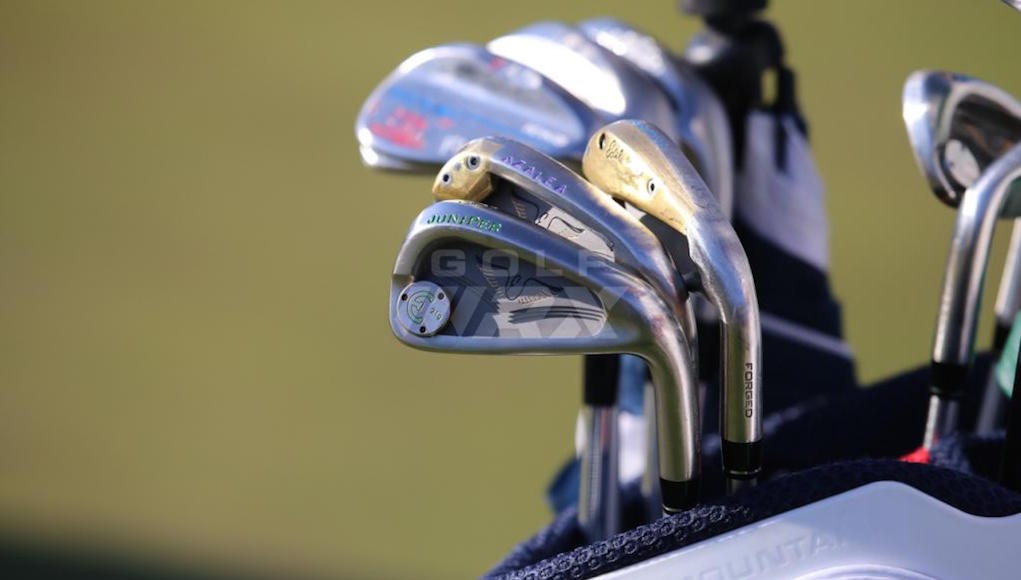
Among the stories for this year’s Masters, the serious club folks show a serious interest in Bryson DeChambeau, specifically his single-length clubs. This evokes memories for me, as I experimented with a single-length set many years ago.
First a little history. Back in the mid ’80s, a golf pro by the name of Jimmy Shack from Royal Oak Country Club in Titusville, Florida, came up with a concept for a single-length set. He managed to get the Tommy Armour Company interested, and they came out with the EQL irons in 1989. They were a single-length set using the 6-iron length as standard. Despite a strong marketing push, they were relatively short lived and eventually disappeared into the great club box in the sky.
Fast forward to the mid ’90s when I was designing sets for Adams Golf and the idea of single length re-appeared, at least for my personal clubs. I read that Bryson is 6 feet 1 inches tall, and I strongly suspect his height was a factor in his single-length set. Before arthritis and age took their toll, I was 6 foot 3 inches tall, and was facing a personal club-fitting problem. It’s funny, but I clearly remembered my mindset at the time.
“Where was it written that a set of irons had to be based on a 37.5-inch 5 iron? Why couldn’t the 5 iron be 40 inches or 34 inches? Why did the increments have to be 0.5 inches?” I figured it all started with a Scotsman, who was probably 5-foot 9-inches or so, shaping a set of clubs that fit him. As decades passed, it became “standard.”
As I saw it, the objective with a set of irons/wedges was to have a club that went a maximum distance, working back to a club that went the shortest distance. The key factor was an equal gap from one club to another. Given this rather broad premise, I turned to the club-fitting system I had designed to see what evolved.
One of the keys in our club-fitting system was establishing a comfortable position at address. We measured knuckles to the ground standing erect (more consistent than fingertips because of hand size). We combined this with what we called maximum drop — how much the hands lowered gripping the club — the idea being a solid address position before we got into flex, lie, etc.
One thing I learned is all of us are not ideally suited to a proper address position in conjunction with clubs we could play. For example, I am long from the waist up, which means to get a comfortable address position I needed clubs 3 inches over standard length, and they were simply too long. For a guy 6 foot 8 inches to 6 foot 10 inches, no problem, but for me, problem. I used to tell people that not everyone has a body that can handle the required length, so in some cases you have to bend over at address a little extra. Given that I couldn’t automatically fit myself, I started with the maximum distance and gapping and worked backward. It wasn’t about the clubs; it was about ball flight.
I remembered the equal-length story and started to experiment. I liked the length of short irons when I made them all like 6 irons, but 5 iron and down were too short. One thing that I’m taking as a given here is the readers understand the need for different head weights and lie angles. Add 3 inches to a standard PW and it becomes significantly “head heavy.” The playing lie changes, too, and all of those things have to be recognized. As I experimented, my emphasis was also on trying to make a set with constant inertia. I wanted the clubs to all swing the same so I would be more consistent controlling ball flight, even when hitting different kinds of shots.
After much work, I ended up with a “tri” single-length set, which I labeled The Oxymoron’s. My longer irons (4-6) were all one length, my 7-8 irons slightly shorter and the higher-lofted clubs were a little more than 2 inches over standard. I felt comfortable at address, so any gapping issues were attacked with loft. Every club had unusual head weights, and they were all were back-weighted — again, my approach to obtaining constant swing inertia. I didn’t have a 3 iron, because another experiment resulted in a rather odd-looking long iron patterned after the Troon clubs of the 1800s.
How did the irons work out? They were pretty good; I think I would have really liked them with a bit more fine tuning. I’ll never know. We got pretty busy, and I essentially stopped playing for the better part of 10 years, so my inertial irons idea disappeared. We did introduce irons as a company, but they were industry standard specs. We didn’t influence the market; it influenced us. Besides, my clubs were for me and I’m not standard.
I’m not convinced there isn’t a way to improve a set of irons, so at 77 I’m still messing around. Do I think there is a place in the industry for single length sets? I’d say in the general market, no. Possibly in some custom fitting applications where the size of the player is outside normal standards.
In the business, there are things that are nice and play well, but aren’t technically different. And there are ideas that when fully tested identify a technical improvement to making clubs. It’s the latter that keeps us experimenting.


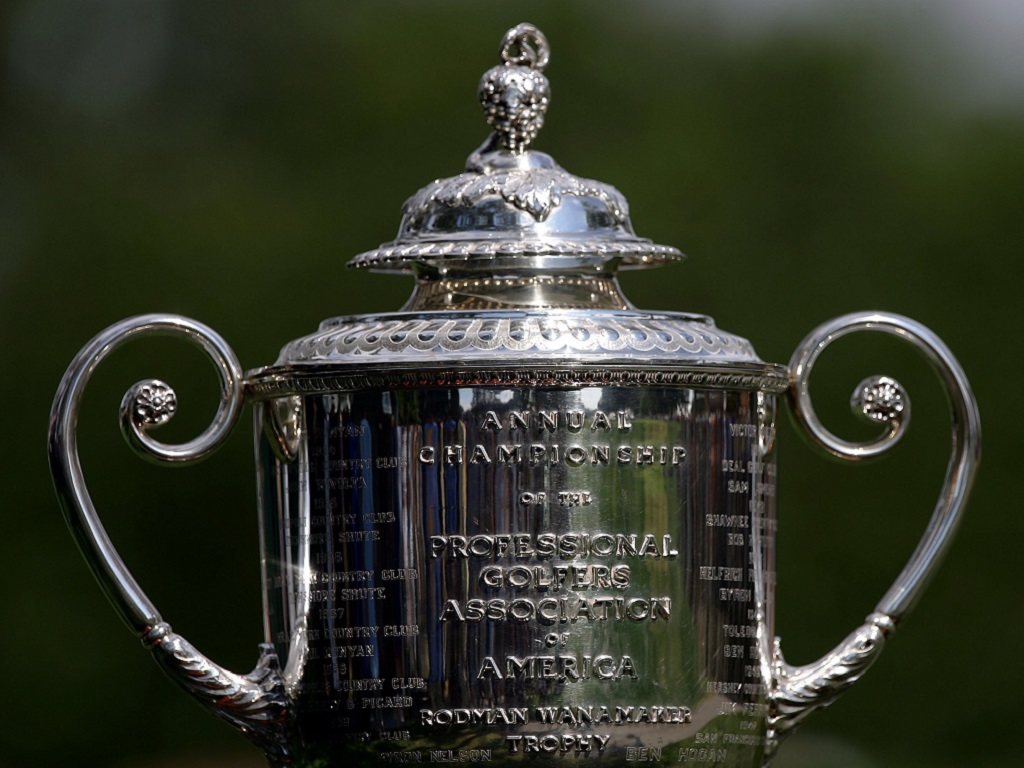
Aronimink is not a storied club, but when Donald Ross himself proclaimed it to be as good as he can design and build, one had to take notice. Jay Sigel was the pre-eminent male amateur golfer from the mid-1970s to the mid-1990s. He might have called any number of Philadelphia clubs home, but he chose Aronimink. It served him well. Gary Player won a PGA Championship here in 1962, and was followed by the 1993 winner … nobody. Aronimink gave that event away to Inverness, for reasons of which it is certainly not proud. So be it. We had to wait sixty-four years for the PGA to return to Newtown Square, but here we are. Aronimink has been neo-restored by Gil Hanse and team, to return Ross features with an eye toward defense against the dark arts, errrr, high-tech equipment.
Day one saw Rory McIlroy and Bryson DeChambeau dig big holes, to the tune of plus-four and plus-six, respectively. Since the first-round lead will be minus-three at worst, many shots will need to be made up for the power couple to reach contention. By nightfall, seven golfers held the day-one lead at three-under par 67. Shots and sticks caught our attention, and we are proud to present Five Things We Learned on Tech Thursday at the 2026 PGA Championship. Thanks to InsideTourGolfer, Today’s Golfer, and GolfWRX for initial equipment research.
First, meet Min Woo Lee
Min Woo Lee, aka Dr. Chipinski, has once again thrust himself into the conversation of Can he, will he, when will he? Lee has so much talent, wins not nearly as often as we believe that he should, and has no major near-misses (much less titles) on his wiki. The young Aussie is getting older and wiser, but is he able to avoid the scarring that holds the older and wiser back from breaking through? Philadelphia offers another opportunity. Min Woo signed for five birdies and two bogeys on day one, and grabbed a share of the opening-day lead at Aronimink. Winners transcend history and the moment, and Lee will need that sort of ascent to lift the Wannamaker on Sunday.
Second, meet Aldrich Potgeiter
The young South African golfer can rip driver with the best of them. Aronimink tips out at nearly 7400 yards, but beyond the fairway bunkers that ensnare only the mortals, Potgeiter can take his chances with wedge from the rough. On Thursday, he spent plenty of time in the spinach. Like Popeye, he used his muscles to gouge and thrash and dig his way out. Six birdies against three bogeys on the card brought AP in a three deep.
Third, meet Martin Kaymer
Not a major event takes place without a where’s he been throwback moment. We know that Martin Kaymer left the PGA and DP World tours for LIV golf, but the two-time (US Open and PGA) major winner has a lifetime exemption into at least one major event, and he seizes the opportunity each May. Kaymer joined the six-seven brigade with four birdies and a solitary bogey on day one. Kaymer was never a long hitter, and the years are kind to no golfer. The German champion will need to uncork every bottle of guile and strategy in his cabinet to remain in contention. For today, though, he occupies a rung on the ladder of Tour Tech.
Fourth, meet Scottie Scheffler
Let’s see, he’s the defending champion at the PGA, and he found his way back to the top tier with five birdies against two bogeys. To be a favorite and then play up to that stature and expectation is quite difficult. Just ask Rory, Bryson, and some of the other pre-tournament heartthrobs. Scheffler’s game is complete, and to knock him off the OWGR #1 pedestal, one needs to defeat him at the majors. Aronimink is the sort of course that fits Scheffler’s game. Better yet, it unfits the game of many of his challengers. Don’t expect Scheffler to go away anytime soon. Come Sunday, he’ll be around.
Fifth, meet Stephan Jaeger
Clocking in for the unheralded players shift are Ryo Hisatsune and Stephan Jaeger. Hisatsune logged seven birdies on day one, but gave most of them back with four bogeys. Still, he’s tied at the top for a time. Jaeger pitched five birdies against two bogeys, including a run of three consecutive, from holes four through six. Odds are that one of the two will hang around through 36 holes. Odds also suggest that both will be gone by Saturday evening. Still, the PGA Championship has historically been the major most likely to be won by an under-known. Both Hisatsune and Jaeger feature on that list, so good luck, lads!

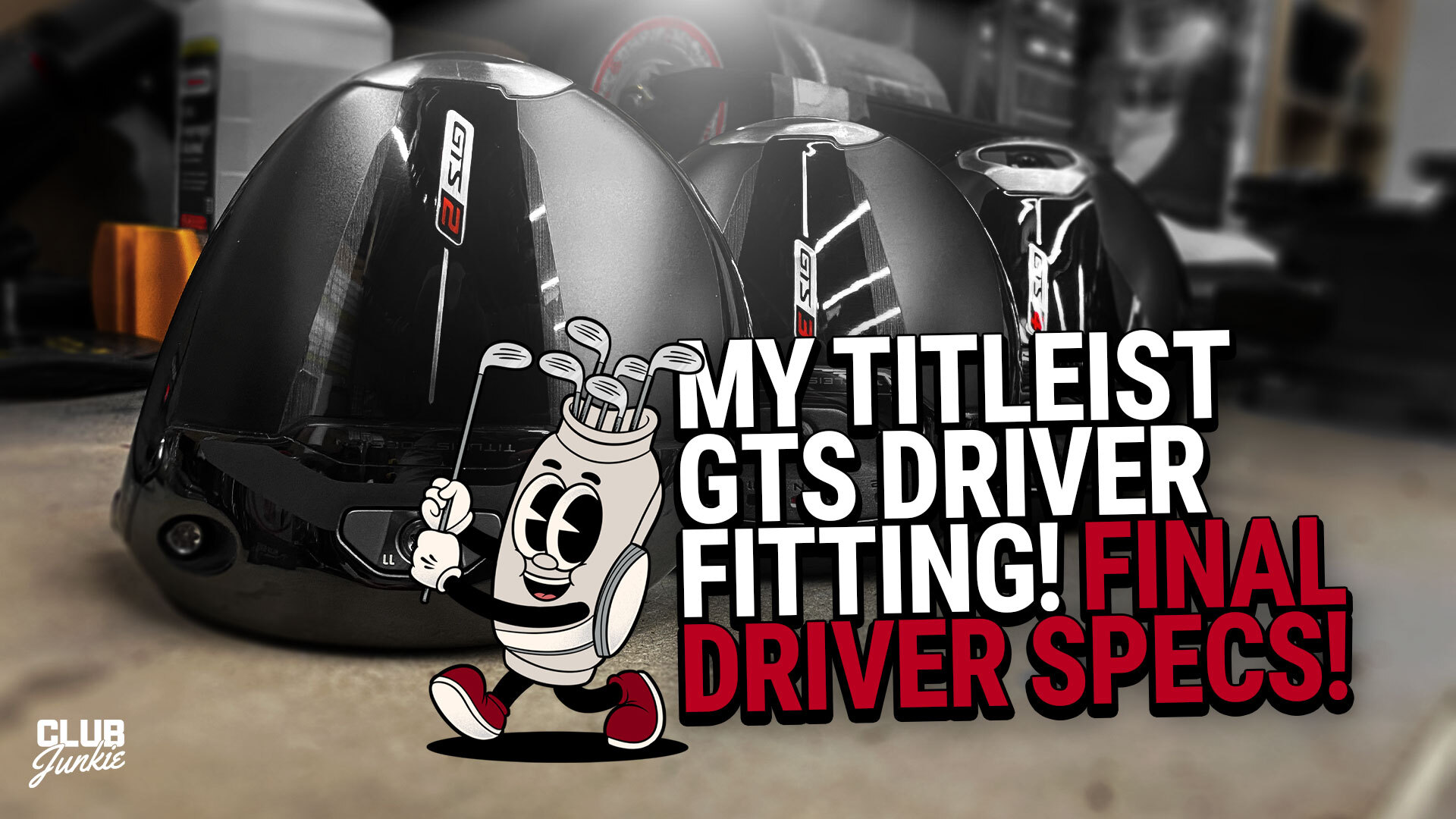
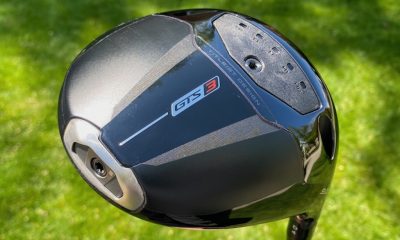
On this episode of the Club Junkie Podcast, I head to the Titleist Performance Institute for a full driver fitting with the new Titleist GTS lineup. We dive into the fitting process, talk about what made the biggest difference in performance, and break down how the different GTS heads and shaft combinations compare on the launch monitor. If you are thinking about a new driver setup for this season, there is a lot to take away from this one.
I also get into Brooks Koepka and the gear setup he brought to the PGA Championship, including the putters that caught my eye during the week. There are some interesting equipment trends showing up at the highest level right now and we break down what stands out.
To wrap things up, I talk about reshafting a few wedges, what I learned during the process, and swapping an adaptor onto a new shaft for another build project in the shop. A gear packed episode from start to finish for anyone who loves golf equipment and club building.
Follow Club Junkie everywhere:
Instagram: https://www.instagram.com/clubjunkiepod/
X: https://x.com/ClubJunkiePod
TikTok: https://www.tiktok.com/@clubjunkiepod
Threads: https://www.threads.com/@clubjunkiepod
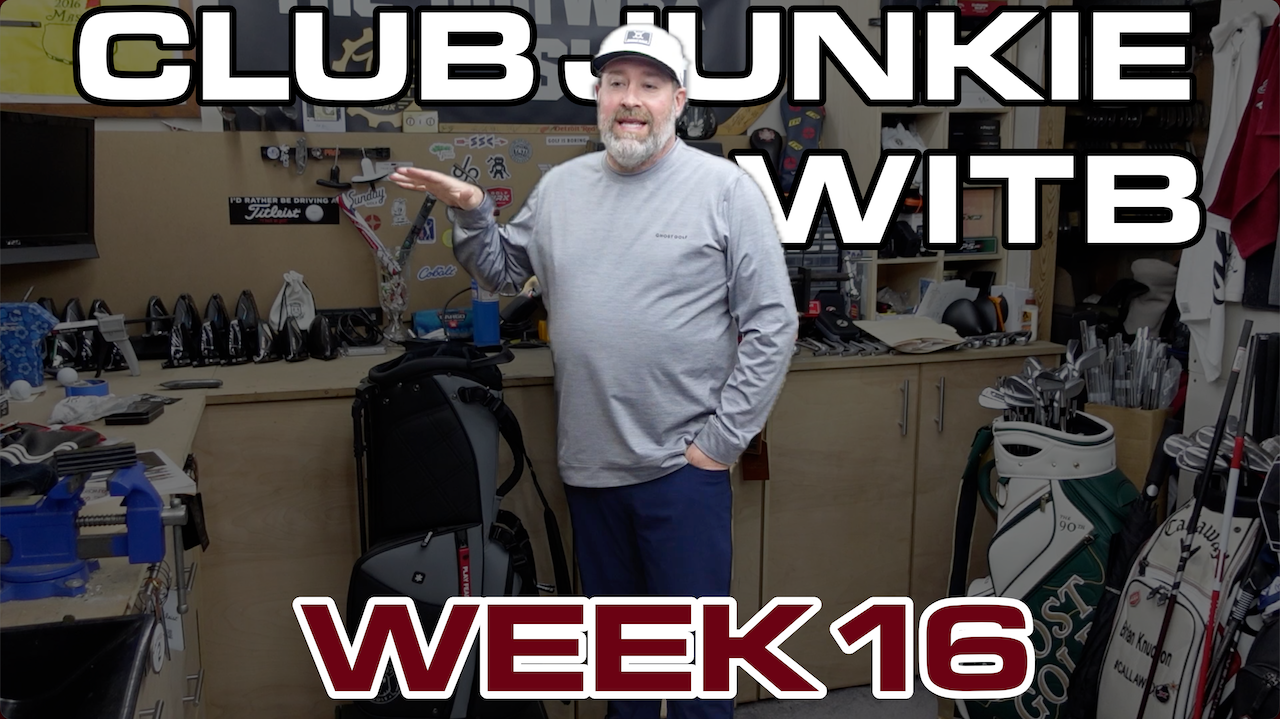
Excited for this week’s WITB as we get to add the new Titleist GTS woods to the bag! I was fit at Titleist’s TPI facility in Oceanside California a few weeks ago and my new clubs just showed up. I am also adding a cool set of irons that I built last year some wild custom wedges into a new golf bag. Speaking of the bag I have a new Ghost Anyday Black Ops stand bag that I will be using on my Motocaddy Remote M7 electric cart.
Driver: Titleist GTS3 (11 degrees @ 10.25)
Shaft: Fujikura Ventus Red 6s
3-wood: Titleist GT1 3Tour (14.5 degrees)
Shaft: Graphite Design Tour AD CQ-7s
5-wood: Titleist GTS (18 degrees)
Shaft: Fujikura Ventus Red 7s
9-wood: Titleist GT1 (24 degress)
Shaft: Fujikura Ventus Red 7s
Irons: Bettinardi CB24 (5-PW)
Shafts: KBS C-Taper Lite 110 stiff
Wedge: TaylorMade MG5 (50-09 SB)
Shaft: Mitsubishi MMT 125 Stiff
Wedge: TaylorMade MG5 (56-12 SB)
Shaft: Mitsubishi MMT 125 Stiff
Wedge: TaylorMade MG5 (60-08 LB)
Shaft: Mitsubishi MMT 125 Stiff
Putter: Dan Carraher ZT Proto
Ball: Callaway Chrome Tour
Bag: Ghost Anyday Black Ops Stand Bag

Justin Rose WITB 2026 (April): Full WITB breakdown with new McLaren irons

RBC Heritage Tour Report: More minis, course-specific setups, Spider & GTS launches

What’s the story behind Webb Simpson’s custom-stamped irons?

Cadillac Championship Tour Report: Spieth’s sizable changes, McLaren Golf launches, and more

Kristoffer Reitan’s winning WITB: 2026 Truist Championship

Cameron Young’s winning WITB: 2026 Cadillac Championship

Aaron Rai’s winning WITB: 2026 PGA Championship

Nelly Korda WITB 2026 (April)

Justin Rose on the switch to McLaren Golf, learnings from previous equipment moves

Photos from the 2026 PGA Championship


Patrick Reed WITB 2026 (May)
Driver: Titleist GT3 (9 degrees) Buy here. Shaft: Aldila Rogue Silver 130 M.S.I. 70 TX 3-wood: TaylorMade Qi35 (15 degrees)...

Aaron Rai’s winning WITB: 2026 PGA Championship
Driver: TaylorMade M6 (9 degrees) Shaft: Aldilda Synergy Blue 70 TX 3-wood: TaylorMade Qi10 (15 degrees) Shaft: Fujikura Ventus Blue...


Michael Block WITB 2026 (May)
Driver: TaylorMade Qi4D (9 degrees) Shaft: Fujikura Ventus Black VeloCore+ 5 X 3-wood: TaylorMade Qi4D (15 degrees @14.25) Shaft: Mitsubishi...


Bryson DeChambeau WITB 2026 (May)
Driver: Krank Formula Fire Pro (6 degrees) Shaft: Project X Prototype 3-wood: Krank Formula Fire (10 degrees) Shaft: LA Golf BAD...
-
 Whats in the Bag3 weeks ago
Kristoffer Reitan’s winning WITB: 2026 Truist Championship
-
Whats in the Bag2 weeks ago
Aaron Rai’s winning WITB: 2026 PGA Championship
-
 Tour Photo Galleries3 weeks ago
Photos from the 2026 PGA Championship
-
 Equipment3 weeks ago
GolfWRX Launch Report: 2026 Titleist GTS drivers
-

 Equipment2 weeks ago
PGA Championship Tour Report: Fitzpatrick, Koepka among big-name putter switches for Aronimink
-

 News2 weeks ago
WITB Time Machine: Phil Mickelson’s winning WITB, 2021 PGA Championship
-

 Equipment2 weeks ago
Which of Tiger’s major winning irons are your favorite? – GolfWRXers discuss
-

 Equipment2 weeks ago
Lead Tape Report: Adjusting the swingweight of the Wanamaker Trophy


SteveK
Oct 7, 2017 at 2:27 am
I just can’t seem to hit my irons pure and I blame it on the different shaft lengths. It’s so obvious that a single shaft length is the logical way to go. Why in God’s name do golf clubs need to be various lengths? Doesn’t that mean I must have 13 different swing planes?!!
Mat
Jul 1, 2017 at 7:12 pm
It’s funny. Everyone bags either SLI or 1/2″ steps. The truth is that if you built a set at 1/4″ steps, you’d really get the best of both… SLI would fly more “normally” and land better, and the physical change would assist almost the same as true SLI. Imagine only 1″ between a 5-9 iron instead of 2″…
Craig Waggaman
Feb 15, 2017 at 5:33 pm
I have been fascinated by the possibilities of single length irons ever since I started dabbling in club making many years ago. So i did something I have never done- pre-ordered a set of Cobra F7 One single length irons. I received them about a week ago and will be writing about my experiences on my golf blog:
linkswanderer.com
Feel free to take a look and ask questions or comment.
Scientific Golfer
Jan 7, 2017 at 8:23 pm
Ironic and pathetic …. the average golfer (95% of all golfers) keep seeking a golf solution that doesn’t involve physical conditioning, sport-specific training and then performance training. They just seek an equipment solution that avoids time commitment to the sport… and then delude themselves into buying a game with the ‘best’ equipment no matter the cost.
What we are witnessing now is the squeezing of the last $$$$ from a declining delusional golf population and will desperately spend to rescue their fantasies. Look at the OEM advertising… it’s so obvious.
Most recreational golfers and other sports don’t devote enough time to practice and refuse to admit they themselves are the fault of their incompetence. “If I could just adjust the clubs to my personal swing!” …. so the OEMs are producing multi-adjustable clubs for failures who have more money than brains!!! Sorry for the rant, and discouraging comments from others who have been hit with this reality.
Andre
Nov 17, 2016 at 7:27 am
Very interesting article Mister Adams,
You mentionned backweighting and constant moment of inertia. Just curious as to how you went about that and if you reached your target MOI. Did you try to obtain a certain swingweight across the set or else?
Thank you
Andre
Nov 17, 2016 at 7:20 am
Very interesting article Mister Adams.
Ryan morris
Oct 24, 2016 at 5:19 am
I purchased a set of slc last week. Had the best round of my life and i play about 2 to 3 rds per week. I felt the real magic came in hitting the 3-5 iron (its was almost boringly easy). On the range and course, im showing zero distance loss. Its amazing the misconceptions out there, even the pro at the course said, im sure you wont…..well i bet if…..etc etc
Regardless, they work. Getting people to try them will be the challenge. I did notice a little control issue with my pw, at first, but i think the range has sorted this out the last few days.
OB
Sep 7, 2017 at 3:33 pm
Incredible, fantastic, wonderful, almost too good to be true …. which it is not!
Ted
Oct 6, 2016 at 2:36 am
I own a set of EQLs: 2-7 are 7i length; 8-PW are 8i length. Easy as pie to hit; distances are predictable. 2 iron is dead straight unless I mess up the swing. Warm ups? Only need to hit 2 irons to warm up. Only drawback (for you chumsp who want a reason to reject the concept) is that the PW @ 8i length could be more accurate at shorter yardages, i.e., below it’s standard PW shot @ 8i length. Fix: choke down, put the ball back in the stance, and knockdowns are dead on. I also own PING BECUs, Cal BB Golds, and set of custom Alpha blades worth more than all these sets combined. Have owned just about every set/concept out there. Am now making a longer set of single length irons with some Matrix graphite X shafts because the concept works. Will go with 4i & 5i lengths to make the transition from these to the driver & woods more consistent through the round, and because I love to choke down & hit knockdowns. To each his own. If God wanted golf to be consistent, we probably would all be left-handers… (no offense, Phil)…
Brian
Jun 12, 2016 at 11:59 am
wishon Sterlings have resolved all of these issues and now we have the best option for single length on the market. Hundreds of sets have been sold and every client I have built for is thrilled with the results. Look up a competent club fitter from Tom Wishon’s site and you can try them.
Justin
May 27, 2016 at 7:06 pm
Before we start: I know… I’m always late for the party. Not just “fashionably late”- freaking late.
Anyway, I see Single-Length irons as being on par with ideas like True Length. It’s not a fad, but it’s not going to threaten the status quo, either. Someone, somewhere, will benefit from these so-called quirky ideas. If it helps someone enjoy their time on the course more, I’m all for it.
Jack Wullkotte
May 6, 2016 at 4:08 pm
I’m not an engineer, mathematician, scientist, or scholar of any kind, just a klutzy old clubmaker, but, I can assure you that the market for a set of irons, all the same length is going to be minimal at best. Naturally, there’s always someone out there who will buy anything that’s new, because they have more money than brains. Way back in the 1950’s, while working for the MacGregor Golf Co., we made a set of irons for someone in which all the irons were the same length. He returned within a few months and requested that we make them all standard length. I believe the length was 37″ and I think the swing weight was D-6. In order to make the 3 iron 38 1/2 inches, we would have had to grind about 3/4 of an ounce of weight off of the head, 1/2 an ounce off the 4 iron and a quarter ounce off the 5 iron. The 6 iron head would have remained the same. We would have then had to add 1/4 ounce of weight to the 7 iron, 1/2 ounce to the 8 iron, 3/4 ounce to the 9 iron and 1 ounce to the pitching wedge in order to get a standard D-6 swingweight throughout the set. Our plant manager, Bob Lysaght told the guy to go suck and egg or buy a new set. True story.
Jonathan Birch
Apr 29, 2016 at 11:10 pm
I’ve been playing the single-length irons from 1 Iron Golf for about 12 years and would never go back to traditional length clubs again. Once you get used to using the same swing and ball position with every iron magic happens. I’m not impressed with the other companies who have sprung up over the past couple of years offering single-length irons since it is painfully obvious that they are just climbing onto the band wagon and really have little, if any, experience in this area.
300 Yard Pro
May 31, 2016 at 1:47 am
1 Iron are the biggest junk clubs. That’s their problem.
Christopher Fotos
Jun 11, 2016 at 8:57 pm
I, too, have been playing 1 Iron Golf clubs for something like a decade now. High quality — I’ve never had to replace the irons or woods during that time. I’ve gotta say I marvel a bit about the recent appearance of stories about single-length clubs without mentioning the continued success of 1 Iron Golf, which arrived at this destination quite some time ago.
I don’t have it handy, but company founder David Lake has a booklet about the history of clubmaking as it relates to length. My recollection is imperfect but IIRC back in the wood-shaft days many clubs were single length. There are also anecdotes thrown out there occasionally about pros using custom-fit single length irons without talking about it. I remember one such tale claiming a set of clubs used by Nicklaus back in the days, now on display in Columbus, show many of the irons are single-length (they’re sitting in a bag).
duke
Apr 27, 2016 at 6:31 pm
looking for set of old tommy armour EQLl irons! same length. Im 6’6″bad worn out back so before spending a fortune on custom made, thinkin this might be starting point.
Justin
May 27, 2016 at 6:58 pm
What do you consider a fortune? Value Golf has their Pinhawk SL set that starts out at $234. Throw in a GW, SW and LW and it bumps it up to $351. In that configuration, it comes with the Apollo Standard Stepless irons (personally, I really like these) and the Karma Black Velvet (similar to Golf Pride Tour Velvet) grips. You can have the shafts and/or grips swapped out, for an upcharge.
As of right now they’re out of stock, though a couple of sites are saying they’ll be available in June.
KevS.
Apr 18, 2016 at 5:13 pm
Barney, you say playing lie angles must adjust through the set of a single-length irons…and yet on the TV broadcast for the RBC at Harbor Town, Nick Faldo said he’s discussed the set with DeChambeau several times and his set features a consistent lie angle for all irons regardless of loft. I believe Faldo mentioned all irons are 77 degrees (13 degrees upright), but don’t quote me on the specific numbers because I did not make a note of it. Frankly, I don’t understand how he plays tough trouble shots at times, and Gary McCord was also mentioning the specifics of sand bunker shots with a sand wedge the length of a 6-iron.
Deano
Apr 13, 2016 at 4:53 pm
To all the Shank, Flop, and OB critics – what gives? This was a good article from a legend club maker. What’s Pebble Beach – LOL?
Shallowface
Apr 12, 2016 at 8:12 pm
The Armour EQL was available from 1989-1994. I have all of those catalogs. I wouldn’t call that short lived.
Not saying they sold very well as it’s been a long time since I saw a full set, especially when compared with the 845s which I find on a regular basis everywhere from Ebay to thrift stores.
Ron
Apr 12, 2016 at 12:22 pm
Barney and others….
I tried the single length experiment a few years ago by taking a set of heads with an undercut
sole and adding weight in the cavity for the 5 and 6 irons, and played with the 8,9,W a little too
heavy. I have a loft and lie machine, so adjusting the lie angles to match was no problem. The
set played OK, but I didn’t like the wedge being so long, so I didn’t give it a good enough chance before going back to my trusty Ping i5’s.
When I bought my next new set (Callaway Xr’s last spring), I adjusted the length of them to
have only a 1/4 inch differential from one club to another. This means that the difference between
the 6 iron and the wedge is only 1 inch. This way, I feel I have the best of both worlds with the set
being “almost single length”, yet maintaining weight increments. It works for me, and I guess in the final analysis, I guess that’s all that matters!
MRC
Apr 9, 2016 at 10:06 pm
Enjoyed your article Mr.Adams.
Appreciate the nuggets and most of all, the fact that you’ve been there and done that!!
Keep up the great writing.
oldredtop
Apr 9, 2016 at 8:09 am
To those who would like some technical background on single length clubs, may I suggest a trip to GolfWRX contributor Tom Wishon’s website. http://wishongolf.com/designs/sets/sterling-irons-single-length-set/
His company has just released a single length iron set and and there is a great deal of technical information there along with the philosophy behind his approach to single length. Are they for everyone? Certainly not. But for me, if Tom is willing to put his name on a set of single length irons, the concept is solid and worth a little study.
oldredtop
Apr 9, 2016 at 9:39 am
disclaimer: I am not financially affiliated with Wishon Golf Technology in any form or fashion. Just a happy customer. 🙂 (771CSI irons)
Bif
Apr 10, 2016 at 2:05 am
That’s affiliation enough!
Barney Adams
Apr 8, 2016 at 11:32 pm
Re Moe’s clubs. I made a set of irons he played with for several years. They were not single length. They were however very head heavy offset somewhat by oversize and heavier grips.
Bif
Apr 10, 2016 at 2:04 am
It’s what happens when you have small hands like yours Smizzle and can’t handle man-sized grips
Ike16
Apr 8, 2016 at 5:32 pm
Have played twice with my SL irons. All heads weighed 270 grams, shafts are Steel Fibre i70 tipped light R and all weighted the same at 37 inches, FLO tested, and finished with Winn W-5 grips. Every club is within 17 MOI points. Each has exactly the same lie. The feel of the swing with each is identical. Have to sometimes look twice at the number on the toe to make sure which one is used. The biggest challenge to date is getting used to wedges that are on the ground farther from my toes. That’s look, not feel. Next is forcing myself to play each in a coordinated (same) position. No more forward or back due to loft or length. These are cast heads and I have played forged for ages, but as a builder the challenge was too great to ignore. So far the playing distances are building trust and the plan is to keep these in the bag for the foreseeable future.
toad37
Nov 7, 2016 at 2:15 pm
Would love an update… how are they working for you?
Joshuaplaysgolf
Apr 8, 2016 at 4:10 pm
My buddy is playing with single-length irons. Actually just finally got his pinhawk heads in today. It’s been really interesting talking with him about the challenges he is running into and the process of getting things dialed in, as he made his old irons all single-length just to see if he liked it. What I’ve noticed more than anything, is he hits his mid-short irons MILES into the air. We live in Denver, so t’s relatively windy, and when even a slight (5-10mph) breeze picks up, he has to pay extra attention to conditions. This will probably get ironed out when he gets the new lofts dialed in, just my observation so far…but interesting concept. Especially for those of us with nagging backs.
Loser
May 18, 2016 at 11:05 pm
You cant just chop down a regular set and make them the same length.
kn
Apr 8, 2016 at 2:47 pm
Hi Barney,
I enjoy reading your articles. I think DeChambeau has a hard row to hoe, especially if he wants to make golf his profession. He’ll have to win in a way nobody else has done it, and in today’s environment of cutting-edge golf equipment. He’ll always be playing with the wind in his face, so to speak. Until he wins, and it’s probably going to have to be a lot, he’ll just be considered a quirky egghead on the peripheral. That may be a tad brutal, but it’s also reality. If we all played with single-length clubs, maybe the story would be different.
Mike
Apr 8, 2016 at 7:26 pm
I couldn’t disagree with this more.
Grim
Apr 8, 2016 at 8:47 pm
Even if he won a couple, it still wouldn’t be enough, he would have win 40 or 50 events
Buddy
Apr 8, 2016 at 10:57 pm
Until he wins? U.S. Am doesn’t count?
Buddy's an eejit
Apr 9, 2016 at 12:48 am
Have you looked at who’ve won the US Am in the past? Tells you everything about your question
Guy
Apr 9, 2016 at 9:30 pm
Sure there’s some past winners who didn’t do much on tour. But the stat meant was “until he wins” which he has. As someone who can’t even win a club championship, I feel some respect should be payed to winning the U.S. Am.
Cyd2293
Apr 10, 2016 at 9:52 am
+1
Seve
Apr 16, 2016 at 11:01 am
I totally agree. I would love a US Am on my resume!
Scott
Apr 29, 2016 at 4:37 pm
Yeah like that Tiger guy and that Jack guy and that Arnold guy. Those guys did nothing.
300 Yard Pro
May 20, 2016 at 12:34 pm
He won the top two Am events the same year. Only people to do that were some losers called Jack and Tiger. I wonder what happened to those losers?
Loser
May 18, 2016 at 11:07 pm
He contended at the Masters, pounding tons of the best in the world and backed it up with a T4 at Harbor.
Alex
Apr 8, 2016 at 1:05 pm
Great read Barney. My question is, while I have been fitted for clubs before I feel that at 5’6″ (on a good day) I should try to have my irons cut down more than the standard 0.5″ for us little guys. So, if I were to go closer to 1-1.5″ off would I need to add weight to the club heads? Would this really be beneficial? Because, I love my putter at 32″ and I’m fairly upright putter.
Thanks
Barney Adams
Apr 8, 2016 at 8:08 pm
Best I could suggest is have one club shortened and bring out the lead tape. let your shots answer.