
Opinion & Analysis
Making sense of the most difficult questions in golf instruction


If you’re a GolfWRXer, there’s little chance you haven’t read at least a few instruction articles from Dennis Clark and Tom Stickney. They’re golf-instruction legends on GolfWRX, with a combined 57 years experience teaching the game and 8 million GolfWRX views… and counting.
The GolfWRX Editorial Team has the pleasure of working with Dennis and Tom almost every week as we assist them in crafting golf-instruction gold. This week, we thought we’d try a different format. We came up with the best questions we could think to ask them about golf instruction, and sent them the way of Clark, our resident PGA Master Professional, and Stickney, our very own Trackman Master. It made for an epic email chain, which became this incredible Q&A.
If you haven’t kept up on Clark and Stickney, do yourself a favor and browse through their Featured Writer Profiles to see what they’ve been writing about (here’s Dennis Clark‘s, here’s Tom Stickney‘s). Then make sure to read the Q&A below, in which Clark and Stickney help you navigate the maze the golf-instruction industry has become.
—
WRX: OK Dennis and Tom, let’s start this Q&A off with a question that’s widely debated among our readers. Do swing mechanics matter, or is it all about consistency?
Tom Stickney: In my opinion, you cannot have long-term consistency without mechanical efficiency. You will always be limited by your mechanics, and it’s tough to work around poor mechanics at the higher-handicap level.
Dennis Clark: If by mechanics we are referring to the positions and motions that direct the golf club, of course they matter. But they are not immutable; they change from golfer to golfer. Consistent, solid impact stems from finding one’s own mechanics.
WRX: What comes first when you’re teaching a new golfer? Is it more important to help them score better or swing better in the beginning?
Tom Stickney: Personally, I first try to teach them to get the ball airborne each time in any way possible. After they can do this with some consistency, I then add one swing thought at a time. I try not to put any outcome goals on students at this phase so that golf remains fun at this point.
Dennis Clark: Well, when I’m working with a new golfer there is no such thing as “better” because there’s nothing that preceded it. I’m trying to teach them to swing period. I do that by first teaching a grip and a stance. There is nothing normal about holding a golf club or standing over a golf ball, so they have to get used to that. I agree with Tom that we have to get flight as early on as we can. If they continue to hit ground balls, they’re not going to stay with the game. Scoring does not even enter my mind with the new golfer.
WRX: When does scoring start to matter more than swing mechanics?
Tom Stickney: Anytime your score actually matters, but what you will find is that with poor mechanics you will have a miss that you are working to stop or you will not be able to hit certain types of shots. When this occurs, get around the golf course in the least amount of strokes possible. Then get to the practice facility and fix it.
Dennis Clark: I try to introduce scoring when my students can get their golf ball into the scoring zone, an area I consider 50 yards from the green, in the regulation number of strokes. If it is taking a player four or five shots to get to that area, scoring cannot be a concern… yet.
WRX: What technologies do you use in your teaching, and how often do you use them?
Dennis Clark: FlightScope, V1 Sports video and BodiTrak. I use FlightScope and BodiTrak often with skilled players, less often for higher handicaps and never for new players. Video for everyone, every lesson.
Tom Stickney: I use V1 Sports video and Trackman 4. Technology is in every one of my lessons, regardless of handicap level or age. It’s for my own benefit. I might not ever mention it or show the client the results unless it’s necessary, though. As the teacher, I feel I need all the information I can possibly get to make the best decision for my clients. I believe using technology is necessary for the teacher, so mistakes are kept to a minimum on my end.
WRX: What have you learned from technology, and how has it changed how you teach?
Tom Stickney: Technology has taught me how to better apply what I know from understanding the mechanics of the golf swing and how the body works while doing so. Secondly, it has helped modify any incorrect thoughts or ideas I had as I learned more about how the ball and club interact. Lastly, technology helps me to see instantly what’s going on, and from there I can use my experience, knowledge, and talent to make people better. It has accelerated my ability to help people improve and stops any arguments that might erupt between teacher and student, as all the information is right there.
Dennis Clark: It’s been a big help in the diagnosis part of the lesson for sure. Impact is much more clearly defined. The D-Plane, true path, centered contact, swing plane, are all quantified and illustrated scientifically. Guesswork is reduced to a minimum. What’s more, not only are certain impact factors more clearly defined, in some cases technology has dispelled certain misconceptions under which many labored in the pre-tech era. Having taught in both eras, I can say unequivocally, this time is better!
Technology has had little to no effect on my approach to teaching golf, though. While I believe my communication and correctional skills have improved, it has more to do with experience than technology. After I know all the data, I have to do something with it. Here, I’m leaving the science and headed into the art of golf instruction. Despite the all the revelations on the screen, I still have to use my eyes and my gut to teach golf. If I can’t sense where the student is at every moment, all the technology in the world is not going to help me. Working with different learning styles and personalities, using many ways of saying the same thing … I’m the same guy, I just know more.
WRX: How much variance is acceptable in golf-instruction technology? What we’re asking is, does an instructor need to have the most accurate technology, or can budget tools work, too? What about teachers who don’t have access to modern technology?
Tom Stickney: Anything is better than nothing. In regards to teachers who don’t use technology, there is no excuse not to have video or a basic launch monitor. These things have been made affordable through iPhone and iPad technology for under $5, and a basic launch monitor will run under $500. If you want to be the best, you have to take the steps to be the best if you are beginning in the business in today’s day and age. I worked extra hours, never took days off, taught free clinics, and gave my services away as cheaply as possible to afford the chance to teach golf for a living. Once I had a following, I took out loans in order to re-invest in my business and influence my success in this business. You are either serious about your teaching career or you are not. Every top teacher I know in the business today did the same thing.
Dennis Clark: Ditto. I agree with Tom 100 percent.
WRX: Does an aspiring golf instructor need to go to PGM school nowadays?
Tom Stickney: Not having your PGA Affiliation can hamper your ability to get hired at many golf courses.
Dennis Clark: If teaching is an aspiring golf professional’s passion, he/she needs to build a resume by getting their PGA affiliation and seeking the advice and guidance of an experienced instructor. You learn teaching from teachers.
WRX: What lesson or tip drives you crazy to hear it on the range or from another instructor?
Dennis Clark: Slow your swing down. Keep your head down. Take your pick!
Tom Stickney: Any lesson given by someone other than a teaching professional. Ninety-nine percent of the time the people teaching other people on the range are only seeing the results of previous swing flaws, not the cause of the flaw itself. You might think you know what you are doing, but most of the time your tips are harmful.
Dennis Clark: I’ll add to that. It takes a trained and experienced teaching professional to understand the dynamics of the swing. Others are simply passing on tips that they’ve heard or read, and hoping that they get lucky. Every lesson is different.
WRX: You both have been writing for GolfWRX for several years, published many stories and responded to many more comments. What’s the best piece of advice you can offer our readers to improve their golf games?
Tom Stickney: Have fun! Golf is a game, not a death march. Enjoy the process: read all you can on the internet, visit YouTube, google the top teachers, seek out the best teachers in your area. The information is out there for you to improve; it’s up to you to find it. Lastly, I sincerely thank each and every person who has taken the time to read what I have written on GolfWRX and responded positively or negatively. It is a true honor and blessing to have an outlet to reach out to the masses. I am very lucky.
Dennis Clark: Find a teacher you trust and with whom you’re comfortable. Ask questions. Understand why you’re being asked to do something, and don’t ever lose sight of the big picture when working toward a goal. Getting bogged down in details is a recipe for disaster. Never fix that which is not broken, and when you read or hear a “tip,” be certain it applies to your problem.
I have been uncommonly lucky to have forged a career in the game I love. Writing for GolfWRX has been a most pleasant chapter in that career. The satisfaction of hearing from a reader that something I suggested has helped them improve is truly gratifying. And if, through that progress, some are enjoying the game more, well, what a nice thought that is, too.
WRX: Thanks guys. Now back to teaching!



Aronimink is not a storied club, but when Donald Ross himself proclaimed it to be as good as he can design and build, one had to take notice. Jay Sigel was the pre-eminent male amateur golfer from the mid-1970s to the mid-1990s. He might have called any number of Philadelphia clubs home, but he chose Aronimink. It served him well. Gary Player won a PGA Championship here in 1962, and was followed by the 1993 winner … nobody. Aronimink gave that event away to Inverness, for reasons of which it is certainly not proud. So be it. We had to wait sixty-four years for the PGA to return to Newtown Square, but here we are. Aronimink has been neo-restored by Gil Hanse and team, to return Ross features with an eye toward defense against the dark arts, errrr, high-tech equipment.
Day one saw Rory McIlroy and Bryson DeChambeau dig big holes, to the tune of plus-four and plus-six, respectively. Since the first-round lead will be minus-three at worst, many shots will need to be made up for the power couple to reach contention. By nightfall, seven golfers held the day-one lead at three-under par 67. Shots and sticks caught our attention, and we are proud to present Five Things We Learned on Tech Thursday at the 2026 PGA Championship. Thanks to InsideTourGolfer, Today’s Golfer, and GolfWRX for initial equipment research.
First, meet Min Woo Lee
Min Woo Lee, aka Dr. Chipinski, has once again thrust himself into the conversation of Can he, will he, when will he? Lee has so much talent, wins not nearly as often as we believe that he should, and has no major near-misses (much less titles) on his wiki. The young Aussie is getting older and wiser, but is he able to avoid the scarring that holds the older and wiser back from breaking through? Philadelphia offers another opportunity. Min Woo signed for five birdies and two bogeys on day one, and grabbed a share of the opening-day lead at Aronimink. Winners transcend history and the moment, and Lee will need that sort of ascent to lift the Wannamaker on Sunday.
Second, meet Aldrich Potgeiter
The young South African golfer can rip driver with the best of them. Aronimink tips out at nearly 7400 yards, but beyond the fairway bunkers that ensnare only the mortals, Potgeiter can take his chances with wedge from the rough. On Thursday, he spent plenty of time in the spinach. Like Popeye, he used his muscles to gouge and thrash and dig his way out. Six birdies against three bogeys on the card brought AP in a three deep.
Third, meet Martin Kaymer
Not a major event takes place without a where’s he been throwback moment. We know that Martin Kaymer left the PGA and DP World tours for LIV golf, but the two-time (US Open and PGA) major winner has a lifetime exemption into at least one major event, and he seizes the opportunity each May. Kaymer joined the six-seven brigade with four birdies and a solitary bogey on day one. Kaymer was never a long hitter, and the years are kind to no golfer. The German champion will need to uncork every bottle of guile and strategy in his cabinet to remain in contention. For today, though, he occupies a rung on the ladder of Tour Tech.
Fourth, meet Scottie Scheffler
Let’s see, he’s the defending champion at the PGA, and he found his way back to the top tier with five birdies against two bogeys. To be a favorite and then play up to that stature and expectation is quite difficult. Just ask Rory, Bryson, and some of the other pre-tournament heartthrobs. Scheffler’s game is complete, and to knock him off the OWGR #1 pedestal, one needs to defeat him at the majors. Aronimink is the sort of course that fits Scheffler’s game. Better yet, it unfits the game of many of his challengers. Don’t expect Scheffler to go away anytime soon. Come Sunday, he’ll be around.
Fifth, meet Stephan Jaeger
Clocking in for the unheralded players shift are Ryo Hisatsune and Stephan Jaeger. Hisatsune logged seven birdies on day one, but gave most of them back with four bogeys. Still, he’s tied at the top for a time. Jaeger pitched five birdies against two bogeys, including a run of three consecutive, from holes four through six. Odds are that one of the two will hang around through 36 holes. Odds also suggest that both will be gone by Saturday evening. Still, the PGA Championship has historically been the major most likely to be won by an under-known. Both Hisatsune and Jaeger feature on that list, so good luck, lads!

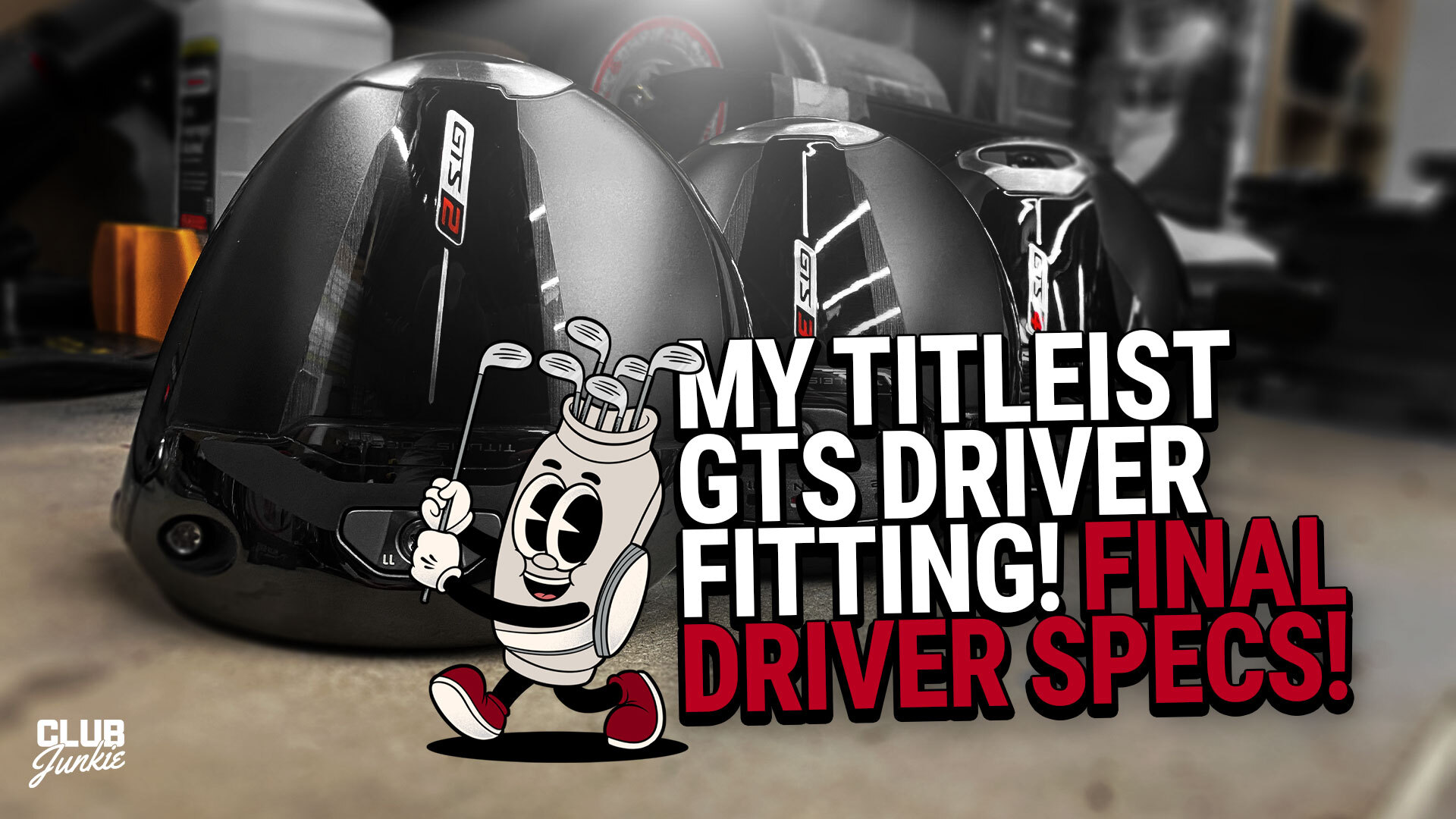
On this episode of the Club Junkie Podcast, I head to the Titleist Performance Institute for a full driver fitting with the new Titleist GTS lineup. We dive into the fitting process, talk about what made the biggest difference in performance, and break down how the different GTS heads and shaft combinations compare on the launch monitor. If you are thinking about a new driver setup for this season, there is a lot to take away from this one.
I also get into Brooks Koepka and the gear setup he brought to the PGA Championship, including the putters that caught my eye during the week. There are some interesting equipment trends showing up at the highest level right now and we break down what stands out.
To wrap things up, I talk about reshafting a few wedges, what I learned during the process, and swapping an adaptor onto a new shaft for another build project in the shop. A gear packed episode from start to finish for anyone who loves golf equipment and club building.
Follow Club Junkie everywhere:
Instagram: https://www.instagram.com/clubjunkiepod/
X: https://x.com/ClubJunkiePod
TikTok: https://www.tiktok.com/@clubjunkiepod
Threads: https://www.threads.com/@clubjunkiepod
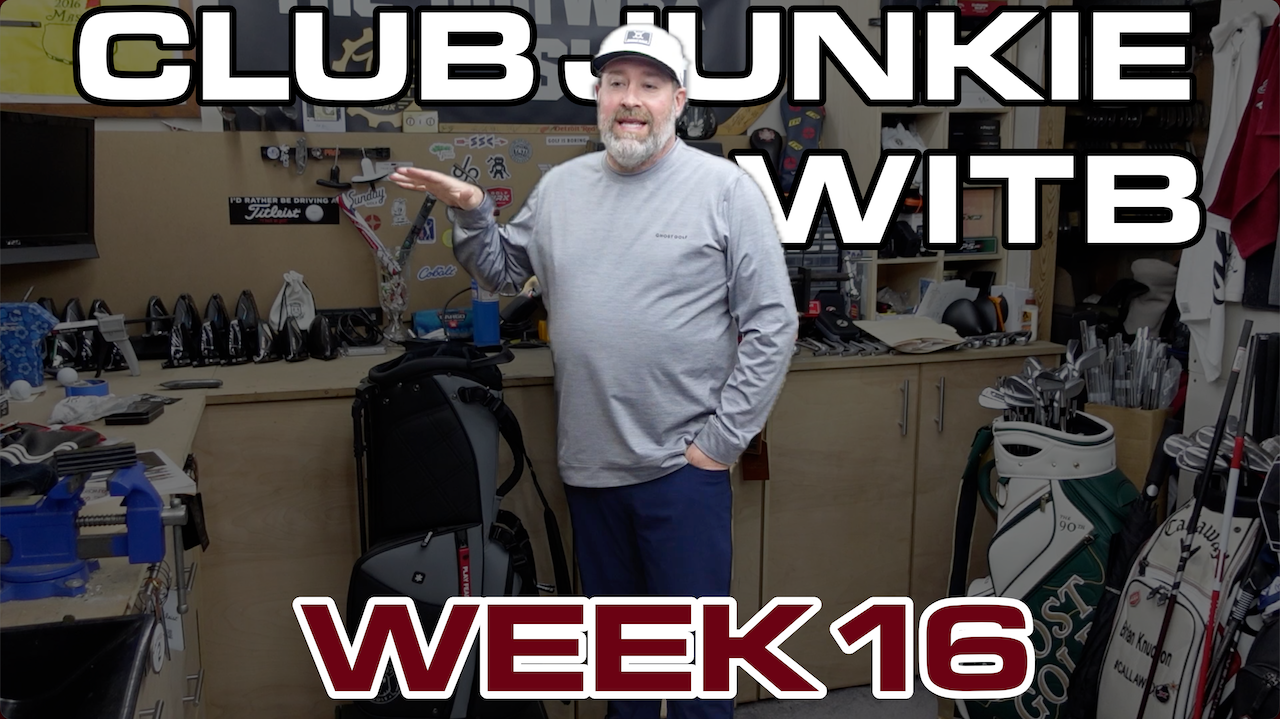
Excited for this week’s WITB as we get to add the new Titleist GTS woods to the bag! I was fit at Titleist’s TPI facility in Oceanside California a few weeks ago and my new clubs just showed up. I am also adding a cool set of irons that I built last year some wild custom wedges into a new golf bag. Speaking of the bag I have a new Ghost Anyday Black Ops stand bag that I will be using on my Motocaddy Remote M7 electric cart.
Driver: Titleist GTS3 (11 degrees @ 10.25)
Shaft: Fujikura Ventus Red 6s
3-wood: Titleist GT1 3Tour (14.5 degrees)
Shaft: Graphite Design Tour AD CQ-7s
5-wood: Titleist GTS (18 degrees)
Shaft: Fujikura Ventus Red 7s
9-wood: Titleist GT1 (24 degress)
Shaft: Fujikura Ventus Red 7s
Irons: Bettinardi CB24 (5-PW)
Shafts: KBS C-Taper Lite 110 stiff
Wedge: TaylorMade MG5 (50-09 SB)
Shaft: Mitsubishi MMT 125 Stiff
Wedge: TaylorMade MG5 (56-12 SB)
Shaft: Mitsubishi MMT 125 Stiff
Wedge: TaylorMade MG5 (60-08 LB)
Shaft: Mitsubishi MMT 125 Stiff
Putter: Dan Carraher ZT Proto
Ball: Callaway Chrome Tour
Bag: Ghost Anyday Black Ops Stand Bag

Justin Rose WITB 2026 (April): Full WITB breakdown with new McLaren irons

RBC Heritage Tour Report: More minis, course-specific setups, Spider & GTS launches

What’s the story behind Webb Simpson’s custom-stamped irons?

Cadillac Championship Tour Report: Spieth’s sizable changes, McLaren Golf launches, and more

Kristoffer Reitan’s winning WITB: 2026 Truist Championship

Cameron Young’s winning WITB: 2026 Cadillac Championship

Aaron Rai’s winning WITB: 2026 PGA Championship

Nelly Korda WITB 2026 (April)

Justin Rose on the switch to McLaren Golf, learnings from previous equipment moves

Photos from the 2026 PGA Championship


Patrick Reed WITB 2026 (May)
Driver: Titleist GT3 (9 degrees) Buy here. Shaft: Aldila Rogue Silver 130 M.S.I. 70 TX 3-wood: TaylorMade Qi35 (15 degrees)...

Aaron Rai’s winning WITB: 2026 PGA Championship
Driver: TaylorMade M6 (9 degrees) Shaft: Aldilda Synergy Blue 70 TX 3-wood: TaylorMade Qi10 (15 degrees) Shaft: Fujikura Ventus Blue...


Michael Block WITB 2026 (May)
Driver: TaylorMade Qi4D (9 degrees) Shaft: Fujikura Ventus Black VeloCore+ 5 X 3-wood: TaylorMade Qi4D (15 degrees @14.25) Shaft: Mitsubishi...


Bryson DeChambeau WITB 2026 (May)
Driver: Krank Formula Fire Pro (6 degrees) Shaft: Project X Prototype 3-wood: Krank Formula Fire (10 degrees) Shaft: LA Golf BAD...
-
 Whats in the Bag3 weeks ago
Kristoffer Reitan’s winning WITB: 2026 Truist Championship
-
Whats in the Bag2 weeks ago
Aaron Rai’s winning WITB: 2026 PGA Championship
-
 Tour Photo Galleries3 weeks ago
Photos from the 2026 PGA Championship
-
 Equipment2 weeks ago
GolfWRX Launch Report: 2026 Titleist GTS drivers
-

 Equipment2 weeks ago
PGA Championship Tour Report: Fitzpatrick, Koepka among big-name putter switches for Aronimink
-

 News2 weeks ago
WITB Time Machine: Phil Mickelson’s winning WITB, 2021 PGA Championship
-

 Equipment2 weeks ago
Which of Tiger’s major winning irons are your favorite? – GolfWRXers discuss
-

 Equipment2 weeks ago
Lead Tape Report: Adjusting the swingweight of the Wanamaker Trophy


ignorance123
May 22, 2016 at 7:34 am
I listen to the responses and I immediately gravitate to one instructor over the other (I won’t say who)…sounds like one needs to talk to a few instructors and establish a rapport with an instructor before committing to a swing change.
Ace
May 20, 2016 at 8:06 am
Uhhh… what about the question “why is it so expensive?”….
(fitting, clubs, lessons, shoes, tee times, etc. the list goes on and on)
As much as we continue to fight the impression it keeps getting reinforced that golf is an elite sport for wealthy individuals. Nothing against that but lets make sure we are all at the same starting point.
Ra
May 20, 2016 at 12:46 pm
This has nothing to do with money, that’s why
Bob Jones
May 19, 2016 at 4:46 pm
Why is “slow down your swing” bad advice?
Dennis Clark
May 19, 2016 at 5:58 pm
http://www.golfwrx.com/361490/why-slowing-down-your-golf-swing-can-be-a-recipe-for-disaster/
Bob Jones
May 19, 2016 at 8:51 pm
Dennis, thank you for the link. I see what you mean. Much of this is confusion of terms, though, about which golf instruction does not have consistent definitions. Those terms are tempo, rhythm, and timing. The first two come from the world of music (I am a former professional opera singer), not golf. Tempo means the overall speed or pace of a piece of music. Rhythm is the varied duration of its parts (notes and rests). Stars and Stripes Forever can be played be played briskly or more stately (tempo), but the note values remain the same in either case (rhythm). In your article, the 3:1 ratio of backswing to downswing is the rhythm of the swing, not its timing. (And timing, it seems, means whatever the particular author/pro says it means. I have never found any consistency over this term.) If golfers only slow down part of their swing, then we can’t conclude that slowing down a swing is bad advice, because they didn’t follow the advice. While tempo is a preference, the golfers I play with swing on the fast side of how they should be swinging. Their swing is out of control. My own experience (which I could be projecting) is that whenever my ball striking goes south during a round, it’s because my tempo picked up, and rhythm consequently got disrupted. When I slow tempo back down, everything falls into place again. Swing speed for me is not a balance issue, but ultimately a club control issue.
Dennis Clark
May 20, 2016 at 11:41 am
Bob, thx for the reply. I think the operative phrase in your piece, is “I could be projecting”. That distinction is critical. “Slowing down your swing often leads to swinging faster and harder on the downswing”. That is an empirical observation based on observing thousands of swings over 35+ years. I long ago abondoned the policy of explaining what works or doesn’t work for ME. I’m glad you replied because I’m about to write a piece for WRX on this very subject. Thx. DC
Other Paul
May 19, 2016 at 1:08 pm
Cool article. Well done you two.
At one point Dennis says “It takes a trained and experienced teaching professional to understand the dynamics of the swing”. But then Dennis says “Never fix that which is not broken, and when you read or hear a “tip,” be certain it applies to your problem”
How is the average golfer supposed to know if it applies if only the teachers know?
I took a few lessons and played quite a bit the last few years. After having back pain the entire time i googled “golf without back pain” and found Kelvinmiyahira.com. since then i read everything he wrote or put on youtube. After learning his swing method i have had my back pain go away, i swing 20MPH faster (117 average 122 max) i have concluded that you pretty much need to pick a swing method and follow it. Dont read tips online or watch everything. I follow kelvin for full swing, and i take lessons from a local guy for short game and putting. The local guy has read kelvins stuff and doesn’t agree with it but likes my results. So my point is pick someone and follow, reading everything will mess you up.
Dennis Clark
May 19, 2016 at 3:31 pm
Good. Glad Kelvin is helping you, especially with the upper end tour club head speed. That’s awesome.