
Opinion & Analysis
Nutrition for the everyday golfer


Earlier this year, you most likely heard the back-and-forth with Brandel Chamblee and Rory McIlroy over his fitness regime. Rory defended his gym time, while Brandel wondered if it could lead to injury and hurt his game. While I can certainly see both sides, it is a common occurrence for members of the media, players and everyday golfers to look at PGA Tour players and marvel at their physique and say, ”What do these guys do in the gym?”
The exercises tour players do have been highly publicized through various organizations and trainers. The more I learned, the more I began to wonder, ““OK, but what do these guys eat?” Strangely, we hardly hear any details about what tour players are eating before, during and after the round. That’s why over the course of the past year, I have spent a lot of time speaking to fitness and nutrition experts, both in and out of the golf world, to gain some insight into the important role nutrition plays in athletic performance.

Look at this post from McIlroy’s Instagram. He only had In-N-Out Burger ONCE during the Northern Trust Open, and it was after the event.
How many times have you been deep into a round and felt your mind begin to fog? Have you ever stood over the ball and thought of something else besides the shot at hand? Well, what if I told you that through research, it has been determined that the mind can lose mental focus and sharpness based on quantity, timing and the quality of the food you are eating that day, and quite possibly the day before? It may sound silly, because most of us are scarfing down hot dogs and light beers while playing, but what you eat and when you eat it are immensely important to maintaining mental and physical sharpness during a round of golf. So if you seriously want to play your best golf, you need to eat the right things at the right time.
First, let’s talk about some specifics as it pertains to the caloric burn during a round of golf. For much of this article I have included information from Dr. Greg Wells (http://drgregwells.com/), Andrew Aussem (http://www.thebarefootgolfer.com/) and Aleah DeBoer (https://www.facebook.com/groups/424296304421788/).
- During an 18-hole round, the average golfer will burn between 800-1,200 calories riding in a golf cart and approximately 1,500-2,000 while walking. These numbers can vary based on the weight of the golf bag, walking speed, climate and the difficulty (hills) of walking the course.
- The golf swing is an anaerobic exercise, which is an exercise where the body does not require oxygen and takes less than 60 seconds, including practice swings and setting up. Walking on the golf course is an aerobic exercise that the body needs oxygen to complete. Overall, a round of golf can be considered as low-intensity exercise with intermittent bursts of high-intensity movements where the body uses fats, proteins and carbohydrates for energy and other physiological processes.
- Primarily, your body will utilize the carbohydrates and fats while it “fuels” your performance. Complex carbohydrates are preferred, as they contain more fiber than simple carbs, digest slowly, and have minimal effects on your blood sugar levels. Simple carbohydrates are quickly moved into your blood, which causes insulin levels to increase. The insulin stimulates your muscles and liver to absorb the blood sugar and leads to an energy crash shortly afterward.
Before a round
Let’s assume a 10 a.m. tee time. Before your round, you need to be eating at two different stages: three-to-four hours before and one hour before.
7 a.m. Three-to-four hours before your round, you should eat a well-rounded meal of carbohydrates, proteins and fats. For example, you could eat scrambled eggs, whole grain toast and some avocado. You would want about 50 percent complex carbohydrate, 25 percent lean protein and 25 percent healthy fats (avocado, coconut, organic nut butter). Healthy smoothies are also great (http://www.precisionnutrition.com/super-shake-creation).
9 a.m. One hour before your round, you should eat a much smaller meal or snack. This could be a banana and nuts, yogurt or an apple. This meal is meant to maintain your blood sugar and make sure you are not hungry by the time you get to the first tee.
During a round
According to Dr. Greg Wells, the best way to approach the round of golf is to separate it into two parts (front and back nine) or even three parts (first six holes, second six holes, third six holes). This way, you can plan accordingly as to what you are going to eat and when you’re going to eat. During the round, you will want to have a mix of proper nutrients, but err on the side of lean protein (edamame, hard-boiled egg, oatmeal, chickpeas, Greek yogurt), organic nut butter on whole grain toast, wheat crackers with hummus, celery with hummus, unroasted almonds, kefir, tuna packs or even a sweet potato mash. We have famously witnessed Rickie Fowler eating peanut butter and jelly sandwiches which have a mix of carbohydrate, healthy fat and protein.
- First Six Holes: Eat a banana with a handful of nuts and a few whole grain crackers on No. 4.
- Second Six Holes: Berries and protein on No. 11.
- Third Six Holes: One small apple with peanut butter on No. 16.

Tiger Woods eating some Kingmade Beef Jerky (protein) during a round.
After a round
Due to the fact your body expends so much of your carbohydrate and protein stores during a round, it is important to eat as healthy a meal as you can following your round. According to Dr. Well, a meal similar to the first meal of the day (3-4 hours before your round) in nutrients can be a great way to recover. Grilled chicken with green beans and a baked potato, whole-grain crust pizza with vegetables or even a lean hamburger on a whole grain bun are all good choices.
Hydration
We need water to live, right? According to Aleah DeBoer, dehydration symptoms occur when the body is 1 percent dehydrated. Once these symptoms occur, mental and physical performance has already been compromised. “Mental fog, anxiety, irritability, muscle fatigue, headaches, muscle cramps, chills, and dry mouth are few symptoms of dehydration,” DeBoer says. When you feel thirsty, it could potentially be too late.
During a round of golf, the average golfer can lose 2-5 pounds. Every pound lost equates to a 16-ounce loss of water. At a minimum, you should be consuming approximately 60 ounces of water per round, if not more. Due to climate and different body types, the amount of water loss can vary. In order to figure out how much you should drink, the best thing is to weigh yourself before a round, play 9-18 holes without drinking any water, followed by another weigh in. The scale will tell you the number of pounds you have lost, thus giving you a benchmark for how much water to drink.
A good rule of thumb is to drink plenty of water before your round followed by 16 ounces of water every 3-5 holes. This will provide you with enough water to keep you hydrated during a normal round. If you are in a much hotter climate and walking, you will want to drink even more (20 ounces every three holes). Late in rounds, you may substitute in a sports drink, which contains some essential electrolytes, but due to the ingredients (mostly sugar) sports drinks should be consumed sparingly. Any beverage consumed containing alcohol or caffeine does not count toward the ounces goal, as these beverages are diuretics and cause the body to lose more water that it gains.
- Upon waking, drink 12-16 ounces of water. This will jumpstart your mind and body for activity.
- Drink another 12-16 ounces of water with breakfast.
- During your warmup, drink another 12-16 ounces of water.
- During your round, drink 16-20 ounces of water every 3-5 holes.
These recommendations are a minimum and you should adjust based on the climate. Most people will need more than this on any given day.
Conclusion
What you eat during a day of playing golf is critical to your performance and well-being. This may seem complicated and difficult to do (it is not for everyone), but it takes proper planning and preparation. If you’re striving to play your best golf possible, start planning out your day with each thing you will eat and when you will eat it. Then, be sure you stock on those foods before you get the course unless your course has the high-quality food items you need.
The opinions expressed by Adam Scott through this article are published for educational and information purposes only, and are not intended as a diagnosis, treatment, or as a substitute for professional medical advice, diagnosis and treatment. Please consult your physician or other health care professional for your specific health care and/or medical needs or concerns.
It is important to talk to your doctor so you can gather all of the information about your health to determine your current status and if you have any food allergies. The information provided in this article are not intended to substitute for consultations with your doctor, nor medical advice specific to your health condition.


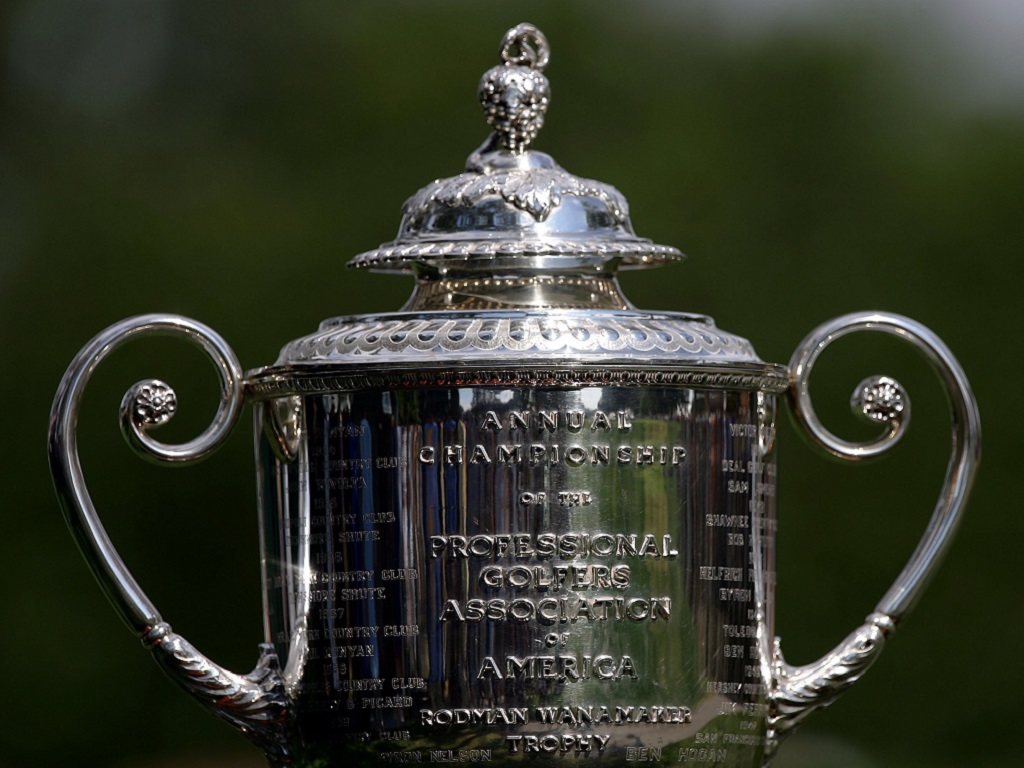
Aronimink is not a storied club, but when Donald Ross himself proclaimed it to be as good as he can design and build, one had to take notice. Jay Sigel was the pre-eminent male amateur golfer from the mid-1970s to the mid-1990s. He might have called any number of Philadelphia clubs home, but he chose Aronimink. It served him well. Gary Player won a PGA Championship here in 1962, and was followed by the 1993 winner … nobody. Aronimink gave that event away to Inverness, for reasons of which it is certainly not proud. So be it. We had to wait sixty-four years for the PGA to return to Newtown Square, but here we are. Aronimink has been neo-restored by Gil Hanse and team, to return Ross features with an eye toward defense against the dark arts, errrr, high-tech equipment.
Day one saw Rory McIlroy and Bryson DeChambeau dig big holes, to the tune of plus-four and plus-six, respectively. Since the first-round lead will be minus-three at worst, many shots will need to be made up for the power couple to reach contention. By nightfall, seven golfers held the day-one lead at three-under par 67. Shots and sticks caught our attention, and we are proud to present Five Things We Learned on Tech Thursday at the 2026 PGA Championship. Thanks to InsideTourGolfer, Today’s Golfer, and GolfWRX for initial equipment research.
First, meet Min Woo Lee
Min Woo Lee, aka Dr. Chipinski, has once again thrust himself into the conversation of Can he, will he, when will he? Lee has so much talent, wins not nearly as often as we believe that he should, and has no major near-misses (much less titles) on his wiki. The young Aussie is getting older and wiser, but is he able to avoid the scarring that holds the older and wiser back from breaking through? Philadelphia offers another opportunity. Min Woo signed for five birdies and two bogeys on day one, and grabbed a share of the opening-day lead at Aronimink. Winners transcend history and the moment, and Lee will need that sort of ascent to lift the Wannamaker on Sunday.
Second, meet Aldrich Potgeiter
The young South African golfer can rip driver with the best of them. Aronimink tips out at nearly 7400 yards, but beyond the fairway bunkers that ensnare only the mortals, Potgeiter can take his chances with wedge from the rough. On Thursday, he spent plenty of time in the spinach. Like Popeye, he used his muscles to gouge and thrash and dig his way out. Six birdies against three bogeys on the card brought AP in a three deep.
Third, meet Martin Kaymer
Not a major event takes place without a where’s he been throwback moment. We know that Martin Kaymer left the PGA and DP World tours for LIV golf, but the two-time (US Open and PGA) major winner has a lifetime exemption into at least one major event, and he seizes the opportunity each May. Kaymer joined the six-seven brigade with four birdies and a solitary bogey on day one. Kaymer was never a long hitter, and the years are kind to no golfer. The German champion will need to uncork every bottle of guile and strategy in his cabinet to remain in contention. For today, though, he occupies a rung on the ladder of Tour Tech.
Fourth, meet Scottie Scheffler
Let’s see, he’s the defending champion at the PGA, and he found his way back to the top tier with five birdies against two bogeys. To be a favorite and then play up to that stature and expectation is quite difficult. Just ask Rory, Bryson, and some of the other pre-tournament heartthrobs. Scheffler’s game is complete, and to knock him off the OWGR #1 pedestal, one needs to defeat him at the majors. Aronimink is the sort of course that fits Scheffler’s game. Better yet, it unfits the game of many of his challengers. Don’t expect Scheffler to go away anytime soon. Come Sunday, he’ll be around.
Fifth, meet Stephan Jaeger
Clocking in for the unheralded players shift are Ryo Hisatsune and Stephan Jaeger. Hisatsune logged seven birdies on day one, but gave most of them back with four bogeys. Still, he’s tied at the top for a time. Jaeger pitched five birdies against two bogeys, including a run of three consecutive, from holes four through six. Odds are that one of the two will hang around through 36 holes. Odds also suggest that both will be gone by Saturday evening. Still, the PGA Championship has historically been the major most likely to be won by an under-known. Both Hisatsune and Jaeger feature on that list, so good luck, lads!

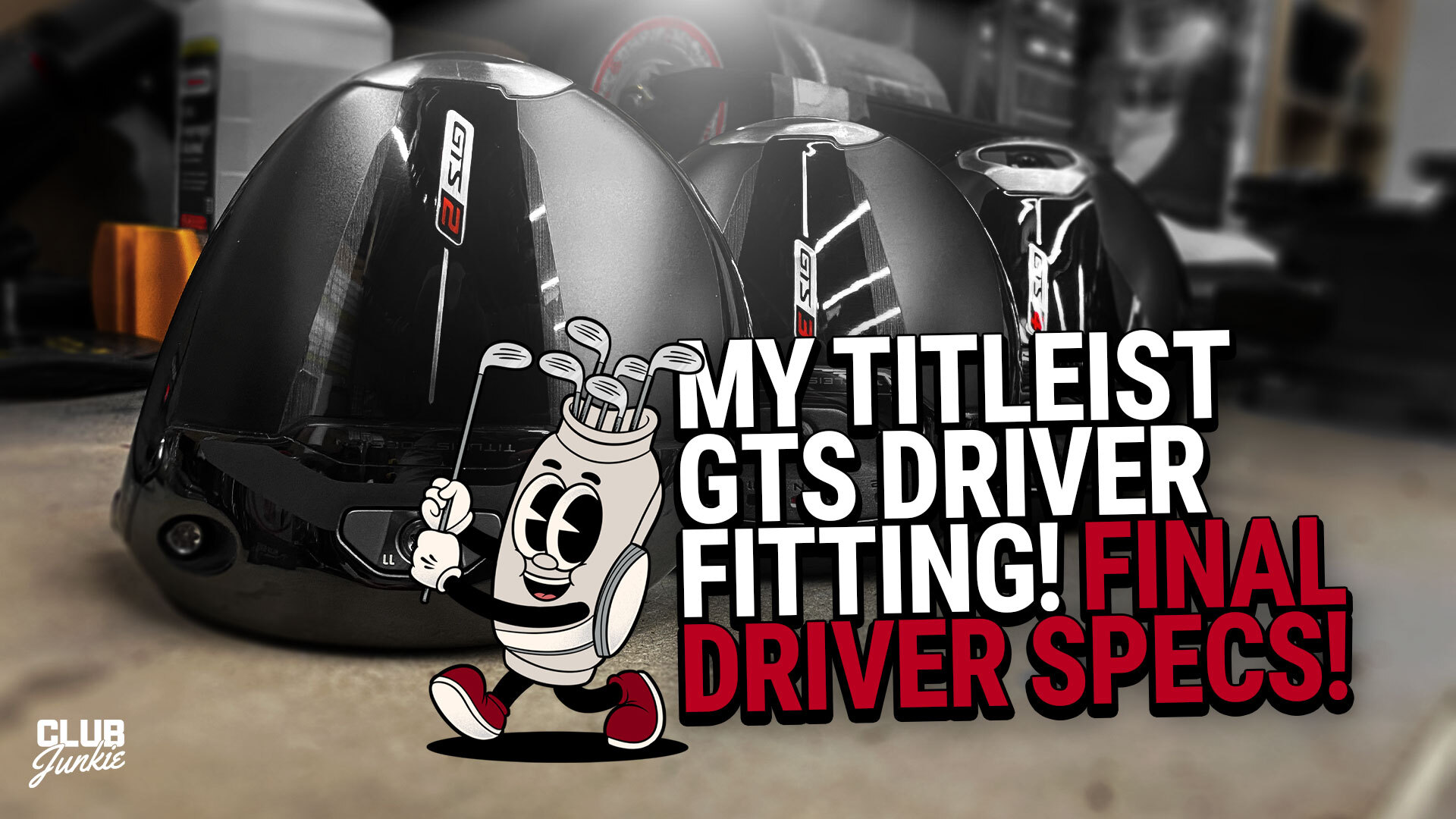
On this episode of the Club Junkie Podcast, I head to the Titleist Performance Institute for a full driver fitting with the new Titleist GTS lineup. We dive into the fitting process, talk about what made the biggest difference in performance, and break down how the different GTS heads and shaft combinations compare on the launch monitor. If you are thinking about a new driver setup for this season, there is a lot to take away from this one.
I also get into Brooks Koepka and the gear setup he brought to the PGA Championship, including the putters that caught my eye during the week. There are some interesting equipment trends showing up at the highest level right now and we break down what stands out.
To wrap things up, I talk about reshafting a few wedges, what I learned during the process, and swapping an adaptor onto a new shaft for another build project in the shop. A gear packed episode from start to finish for anyone who loves golf equipment and club building.
Follow Club Junkie everywhere:
Instagram: https://www.instagram.com/clubjunkiepod/
X: https://x.com/ClubJunkiePod
TikTok: https://www.tiktok.com/@clubjunkiepod
Threads: https://www.threads.com/@clubjunkiepod

Excited for this week’s WITB as we get to add the new Titleist GTS woods to the bag! I was fit at Titleist’s TPI facility in Oceanside California a few weeks ago and my new clubs just showed up. I am also adding a cool set of irons that I built last year some wild custom wedges into a new golf bag. Speaking of the bag I have a new Ghost Anyday Black Ops stand bag that I will be using on my Motocaddy Remote M7 electric cart.
Driver: Titleist GTS3 (11 degrees @ 10.25)
Shaft: Fujikura Ventus Red 6s
3-wood: Titleist GT1 3Tour (14.5 degrees)
Shaft: Graphite Design Tour AD CQ-7s
5-wood: Titleist GTS (18 degrees)
Shaft: Fujikura Ventus Red 7s
9-wood: Titleist GT1 (24 degress)
Shaft: Fujikura Ventus Red 7s
Irons: Bettinardi CB24 (5-PW)
Shafts: KBS C-Taper Lite 110 stiff
Wedge: TaylorMade MG5 (50-09 SB)
Shaft: Mitsubishi MMT 125 Stiff
Wedge: TaylorMade MG5 (56-12 SB)
Shaft: Mitsubishi MMT 125 Stiff
Wedge: TaylorMade MG5 (60-08 LB)
Shaft: Mitsubishi MMT 125 Stiff
Putter: Dan Carraher ZT Proto
Ball: Callaway Chrome Tour
Bag: Ghost Anyday Black Ops Stand Bag

Justin Rose WITB 2026 (April): Full WITB breakdown with new McLaren irons

RBC Heritage Tour Report: More minis, course-specific setups, Spider & GTS launches

What’s the story behind Webb Simpson’s custom-stamped irons?

Cadillac Championship Tour Report: Spieth’s sizable changes, McLaren Golf launches, and more

Kristoffer Reitan’s winning WITB: 2026 Truist Championship

Cameron Young’s winning WITB: 2026 Cadillac Championship

Aaron Rai’s winning WITB: 2026 PGA Championship

Nelly Korda WITB 2026 (April)

Justin Rose on the switch to McLaren Golf, learnings from previous equipment moves

Photos from the 2026 PGA Championship


Patrick Reed WITB 2026 (May)
Driver: Titleist GT3 (9 degrees) Buy here. Shaft: Aldila Rogue Silver 130 M.S.I. 70 TX 3-wood: TaylorMade Qi35 (15 degrees)...

Aaron Rai’s winning WITB: 2026 PGA Championship
Driver: TaylorMade M6 (9 degrees) Shaft: Aldilda Synergy Blue 70 TX 3-wood: TaylorMade Qi10 (15 degrees) Shaft: Fujikura Ventus Blue...


Michael Block WITB 2026 (May)
Driver: TaylorMade Qi4D (9 degrees) Shaft: Fujikura Ventus Black VeloCore+ 5 X 3-wood: TaylorMade Qi4D (15 degrees @14.25) Shaft: Mitsubishi...


Bryson DeChambeau WITB 2026 (May)
Driver: Krank Formula Fire Pro (6 degrees) Shaft: Project X Prototype 3-wood: Krank Formula Fire (10 degrees) Shaft: LA Golf BAD...
-
 Whats in the Bag3 weeks ago
Kristoffer Reitan’s winning WITB: 2026 Truist Championship
-
Whats in the Bag2 weeks ago
Aaron Rai’s winning WITB: 2026 PGA Championship
-
 Tour Photo Galleries3 weeks ago
Photos from the 2026 PGA Championship
-
 Equipment2 weeks ago
GolfWRX Launch Report: 2026 Titleist GTS drivers
-

 Equipment2 weeks ago
PGA Championship Tour Report: Fitzpatrick, Koepka among big-name putter switches for Aronimink
-

 News2 weeks ago
WITB Time Machine: Phil Mickelson’s winning WITB, 2021 PGA Championship
-

 Equipment2 weeks ago
Which of Tiger’s major winning irons are your favorite? – GolfWRXers discuss
-

 Equipment2 weeks ago
Lead Tape Report: Adjusting the swingweight of the Wanamaker Trophy


Slugga Meat
Jun 18, 2016 at 9:58 pm
Peanut butter and jelly sandwich, never has it left me hanging. Half while warming up, and the last half at the turn. Wanna beat your playing partner? Buy him one of those huge hotdogs they sell at the clubhouse, he or she will loose their cool by the 11th hole, total mind eraser. Give it a shot. And by the way, who is eating :edamame, hard-boiled egg, oatmeal, chickpeas, Greek yogurt,organic nut butter on whole grain toast, wheat crackers with hummus, celery with hummus, unroasted almonds, kefir, tuna packs or even a sweet potato mash while playing freekin golf? Go eat that sh?t at Top Golf
Jack Nash
Jun 6, 2016 at 9:38 am
Every Apple you eat contains, on avg. 20/25 grams of sugar. You want a sugar spike? Eat an apple. You need to maintain an even keel on insulin production. Sugars just spike it in the wrong direction.
M smizzy
Jun 5, 2016 at 7:09 pm
No swingOIL? Stuff is a must to get the hips hoppin and poppin. And a banana cognac at the turn for finish strong.
J C
Jun 5, 2016 at 12:11 pm
Totally unrealistic for the casual golfer. Too much planning. We just want to show up, keep it in play, make a few putts, and enjoy a beer after.
Tom
Jun 5, 2016 at 12:35 pm
Thanks I think, You make us sound lazy….
Modern Male
Jun 5, 2016 at 11:58 am
Is white cheddar popcorn and Mountain Dew a good pre-round meal?
Scott Shields
Jun 7, 2016 at 12:41 pm
lol
C Snizzle
Jun 5, 2016 at 11:34 am
I stopped reading at ‘riding a cart 800-1200’calories, walking 1500-2000 calories’.
Complete cobblers, let’s apply some common sense / do a sanity check, how can this possibly be true? And the good doctor is conflating normal (ie resting energy expenditure) with the additional calorie burn from exercise.
Mark Walgren
Jun 6, 2016 at 12:13 pm
800-1200, 1500-2000 has been known for a long, long time… it’s not unrealistic. For a 150-lb. person, SITTING quietly burns 68 calories per hour, SITTING while talking, spectating at a sports event or doing light work burns 102 calories per hour and SITTING while doing moderate work burns 170 calories per hour. It usually takes about 4 hours for a round and you WALK a lot more than sitting and there is slope, quite a lot usually. 800-1200 is not so unrealistic now is it?
Large chris
Jun 7, 2016 at 8:26 am
If you check my post, you will see that I specifically commented on him conflating resting energy expenditure (ie seated) with additional energy expenditure (ie exercising)
You MIGHT just about be burning 800-1200 calories TOTAL in 5 hours of cart riding, but if that’s the case then walking (he isn’t specific about carrying) is a lot more than 1500-2000. The figures are laughable and the diet recommendations are ridiculous pseudo science.
birly-shirly
Jun 5, 2016 at 7:56 am
Massive shank OB. An eating strategy that stretches back 4 hours, never mind 24 hours prior to your tee time? This is absurdly over engineered.
Eat healthily for general health, it has next to nothing to do with the quality of your golf. If you can’t get round without eating then you are playing way, way too slowly.
Dirt
Jun 5, 2016 at 5:58 am
Thank you. I always wanted to know what was the proper things to eat during a round.
Is there a hot dog conversion?
Mark
Jun 5, 2016 at 4:51 am
No way do you burn off that much energy and calories playing Golf. We should all be stick thin and chomping protein shakes. I can see someone losing 5lbs in an epic tennis game but not wandering round the links at a 2-3mph.
Mark Walgren
Jun 6, 2016 at 12:14 pm
800-1200, 1500-2000 has been known for a long, long time… it’s not unrealistic. For a 150-lb. person, SITTING quietly burns 68 calories per hour, SITTING while talking, spectating at a sports event or doing light work burns 102 calories per hour and SITTING while doing moderate work burns 170 calories per hour. It usually takes about 4 hours for a round and you WALK a lot more than sitting and there is slope, quite a lot usually. 800-1200 is not so unrealistic now is it?
Tommy O'Show
Jun 5, 2016 at 3:49 am
I’m surprised by the amount of calories we burn in a golf round. Interesting informations though.
Korean Slum Lord
Jun 5, 2016 at 12:57 am
Greats such Ben Hogan, Sam Snead, and Lee Trevino would never have won on tour if it wasn’t for their clean diets.
Tl
Jun 5, 2016 at 2:44 am
Yeah. Ben Hogan’s pack of cigarettes a day definitely worked. Sam was a teetotaler. Trevino yapped it up a bit with the boys after rounds at the bar with a few drinks telling jokes every night, but hey, you know they ATE well (yeah right!)
Ya ain’t got a clue whatcha talking about, man! They didn’t even have plastic water bottles back then! Barely any watering holes. There were some drinks stations here and there when they played in the desert, but most of the time they barely took a drink at the turn back in the day.
M smizzy
Jun 4, 2016 at 10:54 pm
What about a beer or shot prior to the first tee to ease the nerves? Heard this was a cliassic Hogan move.
Mark Walgren
Jun 6, 2016 at 12:14 pm
I’d love to know about this too.
Mark Odenthal
Jun 4, 2016 at 9:23 pm
Great read. Thanks Adam!