
Opinion & Analysis
The Tour’s New Strokes Gained Stats: What do they mean and how can you use them?

What is Strokes Gained anyway?
Don’t feel stupid if you have to ask this question. I deal with many people who make their living in the golf business and do not really understand this concept – and forget about the TV commentators. Simply stated, Strokes Gained is the best thing to happen to golf analysis since the game was invented. It renders the one-dimensional, traditional golf statistics virtually obsolete as it provides an accurate assessment of every player’s relative skill in each of the four categories of the game.
Strokes Gained evaluates each shot by comparing it to a standard derived from a computer model of performance. The starting position of the shot and its distance from the hole have a value as do the end position and distance. The values are based upon statistical analysis of all of the PGA Tour rounds since the advent of Shotlink data in 2004. The values for every possible distance and position represent the average # of strokes to hole out from each position.
Here’s how the Strokes Gained (or Lost) are calculated:
- Start value – (End value + # strokes need to get there)
Here’s a quick example:
- Start: 8-foot putt opportunity. End: Holed (1-putt)
- Start value: 1.50 – (End value: 0.0 – 1.0 to get there) = .5 Strokes Gained
- The player gained/saved half a shot. A 2-Putt would have lost half a shot
A bit more background
The PGA Tour launched Strokes Gained Putting in 2011. A second feature, Strokes Gained Tee-to-Green, was added in 2014. This was applauded by most as the long game “analysis,” when in fact it was simply everything else but putting, no analysis at all. If a player enjoyed Strokes Gained Putting of +1.00 but scored at exactly the level of the field, his Strokes Gained Tee-to-Green would be -1.00, simple subtraction.
The new stats and what they mean
In late May 2016, the Tour added three new Strokes Gained (SG) analysis pieces:
- SG Off-the-Tee: Considers all drives on par-4 and par-5 holes. Say goodbye to the most useless stat in golf: Fairways Hit. This new off-the-tee stat includes not only fairways hit or missed and the relative distances accomplished, but more importantly, the relative severity of the misses, or what I refer to as driving errors. Including these misses is critical. I have analyzed more than a few events in which the top-5 finishers hit fewer fairways than the field, but their overall driving was heads and shoulders better. Clearly, a new performance yardstick was sorely needed.
- SG Approach-the-Green: Considers any approach shot that starts more than 30 yards from the edge of the green. This number also reflects distance and accuracy of the good shots as well as the misses.
- SG Around-the-Green: Considers all shots starting from within 30 yards of the edge of the green, the Tour’s measure of the short game. It includes all positions: fairway, rough, and sand. This stat is driven by proximity to the hole of the shots (how close they are hit), but also includes the not-so-rare mistakes, or shots that miss the green. Unfortunately, these often costly missed short game shots have never counted or been visible in any of the 653 stats that the Tour publishes. At least now they are being counted.
Add the SG Putting stat to these three and we now have the entire Strokes Gained puzzle. It provides much more clarity into each player’s true strengths and weaknesses, and they all have them!
How can you apply Strokes Gained to your game?
Unfortunately, without a detailed performance model, one cannot implement the system. However, with the growing popularity of Strokes Gained, a number of applications have been introduced. If you Google “Strokes Gained Websites” you will see quite a few options. I, of course, recommend mine, ShotByShot.com, as I have been doing it longer than anyone and have a better understanding of the process and 250.000+ rounds of comparative “Target data.” This unique database helps players at every level clearly identify the nature of their strengths and weaknesses.
If you are looking for insight into your game where you do not have to buy anything, please see my recent GolfWRX article: How to track some of the most important stats in golf.


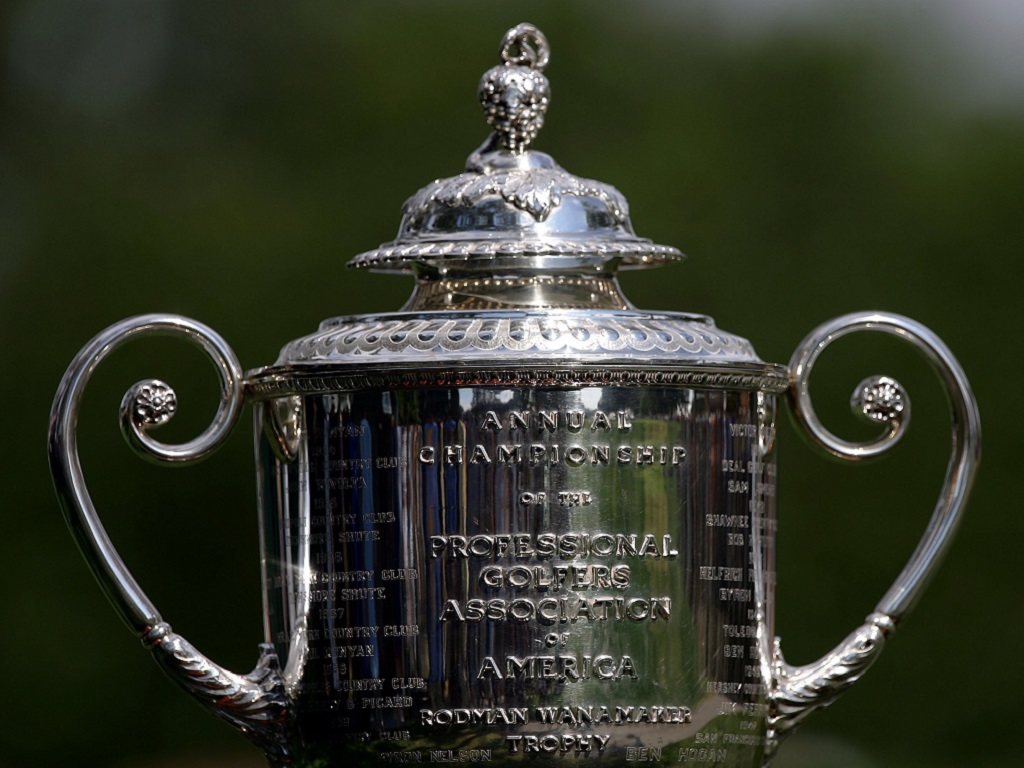
Aronimink is not a storied club, but when Donald Ross himself proclaimed it to be as good as he can design and build, one had to take notice. Jay Sigel was the pre-eminent male amateur golfer from the mid-1970s to the mid-1990s. He might have called any number of Philadelphia clubs home, but he chose Aronimink. It served him well. Gary Player won a PGA Championship here in 1962, and was followed by the 1993 winner … nobody. Aronimink gave that event away to Inverness, for reasons of which it is certainly not proud. So be it. We had to wait sixty-four years for the PGA to return to Newtown Square, but here we are. Aronimink has been neo-restored by Gil Hanse and team, to return Ross features with an eye toward defense against the dark arts, errrr, high-tech equipment.
Day one saw Rory McIlroy and Bryson DeChambeau dig big holes, to the tune of plus-four and plus-six, respectively. Since the first-round lead will be minus-three at worst, many shots will need to be made up for the power couple to reach contention. By nightfall, seven golfers held the day-one lead at three-under par 67. Shots and sticks caught our attention, and we are proud to present Five Things We Learned on Tech Thursday at the 2026 PGA Championship. Thanks to InsideTourGolfer, Today’s Golfer, and GolfWRX for initial equipment research.
First, meet Min Woo Lee
Min Woo Lee, aka Dr. Chipinski, has once again thrust himself into the conversation of Can he, will he, when will he? Lee has so much talent, wins not nearly as often as we believe that he should, and has no major near-misses (much less titles) on his wiki. The young Aussie is getting older and wiser, but is he able to avoid the scarring that holds the older and wiser back from breaking through? Philadelphia offers another opportunity. Min Woo signed for five birdies and two bogeys on day one, and grabbed a share of the opening-day lead at Aronimink. Winners transcend history and the moment, and Lee will need that sort of ascent to lift the Wannamaker on Sunday.
Second, meet Aldrich Potgeiter
The young South African golfer can rip driver with the best of them. Aronimink tips out at nearly 7400 yards, but beyond the fairway bunkers that ensnare only the mortals, Potgeiter can take his chances with wedge from the rough. On Thursday, he spent plenty of time in the spinach. Like Popeye, he used his muscles to gouge and thrash and dig his way out. Six birdies against three bogeys on the card brought AP in a three deep.
Third, meet Martin Kaymer
Not a major event takes place without a where’s he been throwback moment. We know that Martin Kaymer left the PGA and DP World tours for LIV golf, but the two-time (US Open and PGA) major winner has a lifetime exemption into at least one major event, and he seizes the opportunity each May. Kaymer joined the six-seven brigade with four birdies and a solitary bogey on day one. Kaymer was never a long hitter, and the years are kind to no golfer. The German champion will need to uncork every bottle of guile and strategy in his cabinet to remain in contention. For today, though, he occupies a rung on the ladder of Tour Tech.
Fourth, meet Scottie Scheffler
Let’s see, he’s the defending champion at the PGA, and he found his way back to the top tier with five birdies against two bogeys. To be a favorite and then play up to that stature and expectation is quite difficult. Just ask Rory, Bryson, and some of the other pre-tournament heartthrobs. Scheffler’s game is complete, and to knock him off the OWGR #1 pedestal, one needs to defeat him at the majors. Aronimink is the sort of course that fits Scheffler’s game. Better yet, it unfits the game of many of his challengers. Don’t expect Scheffler to go away anytime soon. Come Sunday, he’ll be around.
Fifth, meet Stephan Jaeger
Clocking in for the unheralded players shift are Ryo Hisatsune and Stephan Jaeger. Hisatsune logged seven birdies on day one, but gave most of them back with four bogeys. Still, he’s tied at the top for a time. Jaeger pitched five birdies against two bogeys, including a run of three consecutive, from holes four through six. Odds are that one of the two will hang around through 36 holes. Odds also suggest that both will be gone by Saturday evening. Still, the PGA Championship has historically been the major most likely to be won by an under-known. Both Hisatsune and Jaeger feature on that list, so good luck, lads!

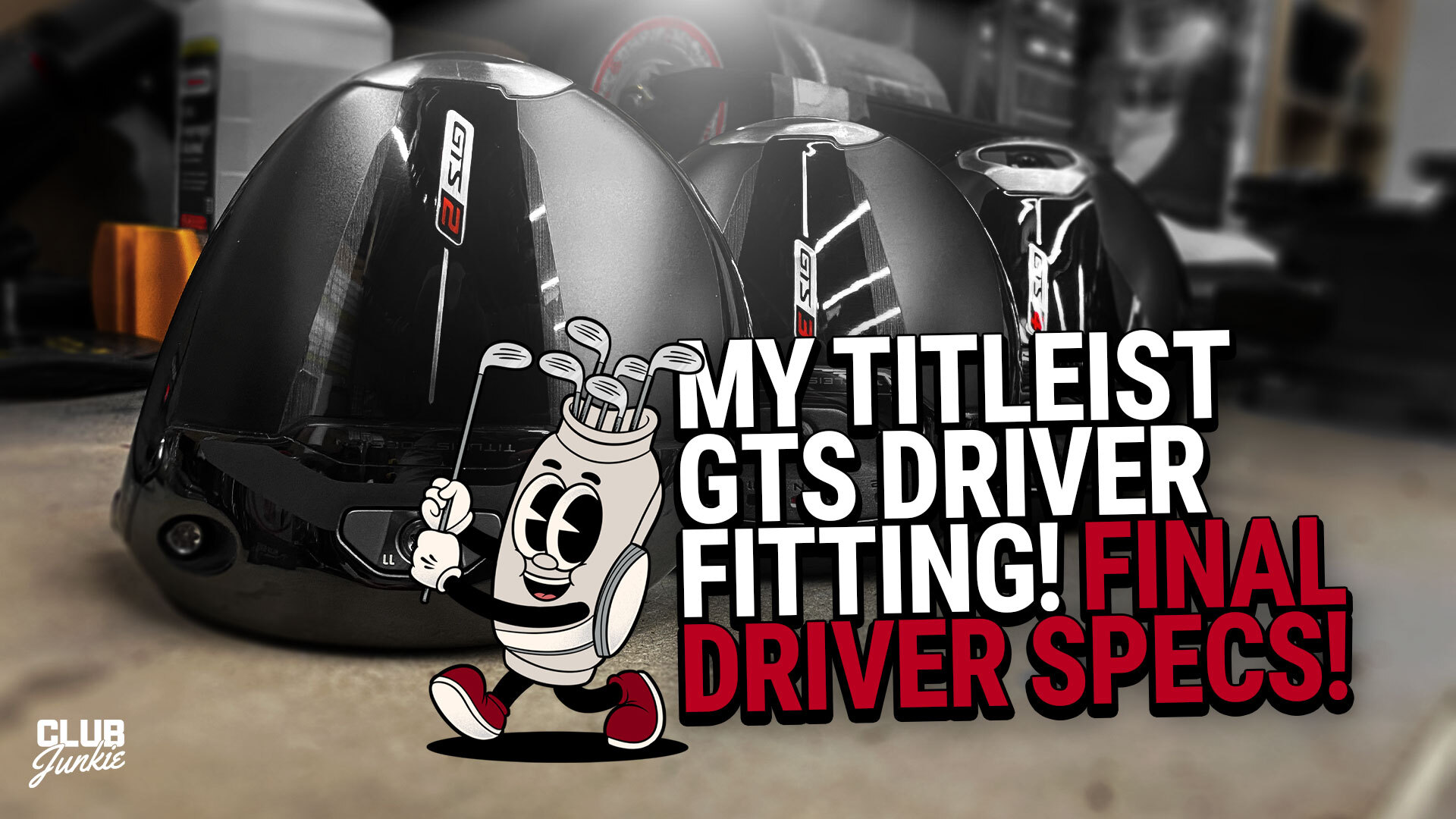
On this episode of the Club Junkie Podcast, I head to the Titleist Performance Institute for a full driver fitting with the new Titleist GTS lineup. We dive into the fitting process, talk about what made the biggest difference in performance, and break down how the different GTS heads and shaft combinations compare on the launch monitor. If you are thinking about a new driver setup for this season, there is a lot to take away from this one.
I also get into Brooks Koepka and the gear setup he brought to the PGA Championship, including the putters that caught my eye during the week. There are some interesting equipment trends showing up at the highest level right now and we break down what stands out.
To wrap things up, I talk about reshafting a few wedges, what I learned during the process, and swapping an adaptor onto a new shaft for another build project in the shop. A gear packed episode from start to finish for anyone who loves golf equipment and club building.
Follow Club Junkie everywhere:
Instagram: https://www.instagram.com/clubjunkiepod/
X: https://x.com/ClubJunkiePod
TikTok: https://www.tiktok.com/@clubjunkiepod
Threads: https://www.threads.com/@clubjunkiepod

Excited for this week’s WITB as we get to add the new Titleist GTS woods to the bag! I was fit at Titleist’s TPI facility in Oceanside California a few weeks ago and my new clubs just showed up. I am also adding a cool set of irons that I built last year some wild custom wedges into a new golf bag. Speaking of the bag I have a new Ghost Anyday Black Ops stand bag that I will be using on my Motocaddy Remote M7 electric cart.
Driver: Titleist GTS3 (11 degrees @ 10.25)
Shaft: Fujikura Ventus Red 6s
3-wood: Titleist GT1 3Tour (14.5 degrees)
Shaft: Graphite Design Tour AD CQ-7s
5-wood: Titleist GTS (18 degrees)
Shaft: Fujikura Ventus Red 7s
9-wood: Titleist GT1 (24 degress)
Shaft: Fujikura Ventus Red 7s
Irons: Bettinardi CB24 (5-PW)
Shafts: KBS C-Taper Lite 110 stiff
Wedge: TaylorMade MG5 (50-09 SB)
Shaft: Mitsubishi MMT 125 Stiff
Wedge: TaylorMade MG5 (56-12 SB)
Shaft: Mitsubishi MMT 125 Stiff
Wedge: TaylorMade MG5 (60-08 LB)
Shaft: Mitsubishi MMT 125 Stiff
Putter: Dan Carraher ZT Proto
Ball: Callaway Chrome Tour
Bag: Ghost Anyday Black Ops Stand Bag

Justin Rose WITB 2026 (April): Full WITB breakdown with new McLaren irons

RBC Heritage Tour Report: More minis, course-specific setups, Spider & GTS launches

What’s the story behind Webb Simpson’s custom-stamped irons?

Cadillac Championship Tour Report: Spieth’s sizable changes, McLaren Golf launches, and more

Kristoffer Reitan’s winning WITB: 2026 Truist Championship

Cameron Young’s winning WITB: 2026 Cadillac Championship

Aaron Rai’s winning WITB: 2026 PGA Championship

Nelly Korda WITB 2026 (April)

Justin Rose on the switch to McLaren Golf, learnings from previous equipment moves

Photos from the 2026 PGA Championship


Patrick Reed WITB 2026 (May)
Driver: Titleist GT3 (9 degrees) Buy here. Shaft: Aldila Rogue Silver 130 M.S.I. 70 TX 3-wood: TaylorMade Qi35 (15 degrees)...

Aaron Rai’s winning WITB: 2026 PGA Championship
Driver: TaylorMade M6 (9 degrees) Shaft: Aldilda Synergy Blue 70 TX 3-wood: TaylorMade Qi10 (15 degrees) Shaft: Fujikura Ventus Blue...


Michael Block WITB 2026 (May)
Driver: TaylorMade Qi4D (9 degrees) Shaft: Fujikura Ventus Black VeloCore+ 5 X 3-wood: TaylorMade Qi4D (15 degrees @14.25) Shaft: Mitsubishi...


Bryson DeChambeau WITB 2026 (May)
Driver: Krank Formula Fire Pro (6 degrees) Shaft: Project X Prototype 3-wood: Krank Formula Fire (10 degrees) Shaft: LA Golf BAD...
-
 Whats in the Bag3 weeks ago
Kristoffer Reitan’s winning WITB: 2026 Truist Championship
-
Whats in the Bag2 weeks ago
Aaron Rai’s winning WITB: 2026 PGA Championship
-
 Tour Photo Galleries3 weeks ago
Photos from the 2026 PGA Championship
-
 Equipment2 weeks ago
GolfWRX Launch Report: 2026 Titleist GTS drivers
-

 Equipment2 weeks ago
PGA Championship Tour Report: Fitzpatrick, Koepka among big-name putter switches for Aronimink
-

 News2 weeks ago
WITB Time Machine: Phil Mickelson’s winning WITB, 2021 PGA Championship
-

 Equipment2 weeks ago
Which of Tiger’s major winning irons are your favorite? – GolfWRXers discuss
-

 Equipment2 weeks ago
Lead Tape Report: Adjusting the swingweight of the Wanamaker Trophy


Scott Carlson
Jun 30, 2016 at 8:59 pm
This is great stuff, Peter. This is very similar to metrics used by financial professionals/analysts to compare the performance of securities to others within the same industry. Peer analysis allows the investor to gain an understanding into the unique competitive advantages a company has against its competitors. Now, this may be one individual financial or operational category that far exceeds peer performance (e.g. return on equity) or a comprehensive set of metrics that provide consistent outperformance (e.g. market share growth to earnings growth to debt/equity ratio). Also, in a similar fashioin, MLB scouts have used sabermetrics with great success to determine WAR (wins above replacement) to get more useful and objective performance measures of prospects and current players.
To the other commenters that seem to have a very basic understanding of mathematics…you don’t buy a company’s stock because you like a their products or they have lots of revenue, rather, you buy their stock because they show a consistent and unique competitive advantage over time relative to their peers. This is the same situation…relative performance analysis!
I work in junior golf (AJGA) and getting this information to college golf coaches would be HUGE in helping them with their perpetually tightening recruiting budgets…all the way from large D1 programs down to NAIA schools. I understand the tracking will be a significant barrier, but ShotByShot may help (post-round). Offering this analysis to our 6,500+ members would be an enormous benefit in helping them improve their games and/or earn that prized scholarship.
Another thing that would be cool is to perform a regression analysis to the existing Tour data to determine correlation patterns/trends to the basic stats (like SG Off the Tee to Total Driving and Fairway Hit %) and then apply those patterns/trends to historical data over time to see how a player fares to some of golf’s greatest legends. Surely the basic data exists back to the early to mid 20th century!
Awesome work!!!
Peter
Jul 5, 2016 at 3:29 pm
Scott,
Thanks for your very supportive comment. As to our SG analysis being of help to AJGA and/or college golf programs, most of our 150+ coaches that use our program with their players have active junior programs. Juniors have become such a large part of our business that we added 9-hole data entry and analysis early this year. In addition, we work with several college teams but could always like to see the word get out to more.
If you have any ideas on how we might collaborate, please contact me at psanders@shotbyshot.com.
Patricknorm
Jun 22, 2016 at 3:02 pm
I like when logic gives you data. In this case the numbers don’t lie. For a pro though it’s abundantly clear that your ability to outdrive everyone, hit a shorter iron into the green ( which should be more accurate) and then have shorter putts, you should shoot lower scores.
Tiger Woods, at his peak was a superb driver of the ball, a better iron player, which meant he holed more putts. The same went for Jack Nicklaus.
Last weekend Dustin Johnson was fantastic off the tee, excellent on his irons, and a good enough putter to stay in contention and eventually win. In today’s game a consistent 330 drive is necessary to get the ball rolling ( metaphorically) in golf. If your relatively accurate it compensates the player by letting him a shorter iron out of the rough towards the green.
Good article. Instinctively I know when my approach shots can’t be chipped in off the green I’m really scrambling for par. And conversely if I’m 50 feet from the pin on the green, it’s no guarantee I’ll make par. Nice to be able to quantify this data.
Peter
Jun 23, 2016 at 10:37 am
Thanks Patricknorm!
Captain Wedge
Jun 22, 2016 at 2:35 pm
In general yeah, you know what parts of your game are weak. But do you know “how many strokes” that part of your game is costing you? Doubt it…
Tony
Jun 22, 2016 at 1:33 pm
All comments here, other than the unsupported “useless endeavor” opinion, point to ‘strokes gained’ as a very useful endeavor. I’m down!
Captain Wedge
Jun 22, 2016 at 3:06 pm
Your comments show how little you know. It’s measured against other non-professionals based on how many rounds they have statistical data for.
Peter
Jun 23, 2016 at 10:42 am
ShotByShot.com measures your Strokes Gained against the averages from the thousands of rounds posted by those in your “Target” Handicap group. Briefly, if a player is a 20 handicap, it does not good to be compared to a 5 handicap or the PGA Tour. We have target ranges from +6 to +4 all the way up to 25 to 29 handicaps.
mikee
Jun 21, 2016 at 10:28 pm
All said and done, the approach shot or should I say, the quality of the approach shot (distance from the pin) is the most important shot in the game. Most of the rest of the stats are relatively meaningless for us amateurs
Captain Wedge
Jun 22, 2016 at 2:32 pm
I don’t think they are meaningless. I used to track all my one-dimensional stats (Fairways, GIRs, and Putts). Now those are meaningless bc at the end of the day they told me nothing about my final score as there were no trends to them. Strokes Gained actually pinpoints where your game was strong vs. where it cost you strokes. I’d like to see these stats on my own game. My only issue is having to track and document EVERY shot. Not really something I want to do when I want to relax and play a round of golf. Maybe I’ll try it on a few rounds here and there.
Peter
Jun 23, 2016 at 10:50 am
Captain Wedge, thanks for your support. I have purposely streamlined the data requirements of ShotByShot.com because I too did not want a lot of work when I was enjoying a round or competing. Try it, you will see it is extremely easy once you understand the system and the apps make it even easier.
Peter
Jun 23, 2016 at 10:47 am
Not so mikee! I have found that from Tour players up to 20+ handicaps, we are all snowflakes and find our unique way to shoot our number. While there may be trends and certain parts of the game occupy a larger piece of the pie, everyone has distinct Strengths and Weaknesses. The challenge is to discover what and why they are so that they can be properly addressed.
ooffa
Jun 21, 2016 at 1:24 pm
Easy to understand. But ultimately a useless endeavor. Hey, I putted badly today I better practice, serves the same purpose.
Peter
Jun 21, 2016 at 2:06 pm
But how do you know when you putted badly? # of putts? Strokes Gained is accurate. If relying on # of putts, one should also balance their checkbook based upon the # of checks written without regard to the $ amounts.
James
Jun 21, 2016 at 4:35 pm
To build on your point, ‘I putted badly’ is a complete subjective. I might say I’ve putted badly, but if in fact I putted to my average, then practicing my putting is pointless, because it was probably my irons that let me down
Steve
Jun 21, 2016 at 8:01 pm
To argue against your point – If you think you “putted badly” but actually putted to your average, your average probably isn’t very good… In that case, putting practice is still very necessary…
Shark
Jun 21, 2016 at 9:34 pm
You may think you putted ‘badly’ based on number of putts, but actually putted from a greater distance due to decreased accuracy of iron shots. A larger improvement may be gained from practicing iron accuracy, thus leaving shorter putts.
J Zilla
Jun 22, 2016 at 4:37 pm
Yeah. I vaguely remember some story about Tiger early in his career complaining to Butch about his putting woes at the time. Tiger started toward to the practice green but Butch stopped him and handed him an iron. “Putting’s not your problem, your approach shots are.” (Or something to that effect)
Peter
Jun 23, 2016 at 10:58 am
My golf professional used my original program years ago while trying to qualify for the senior tour. He completed my scorecards for all rounds and mailed them to me. When he came home we met to go thru his analysis. I started by asking for his assessment of his Strengths and weaknesses. He said: “I hit the ball as well as anyone out there and my short game is strong but I am a terrible putter.” I then shared my Strokes Lost/Saved (Strokes Gained) analysis that showed that he was actually a very good putter but while he was a long driver, he made too many driving errors, missed too many GIR’s and put too much pressure on his short game and putting.
The game is a roller coaster. Without a way of routinely recording performance, it is very difficult to know where one may need the most work.