
Opinion & Analysis
Ditch the draw to play the most consistent golf of your life

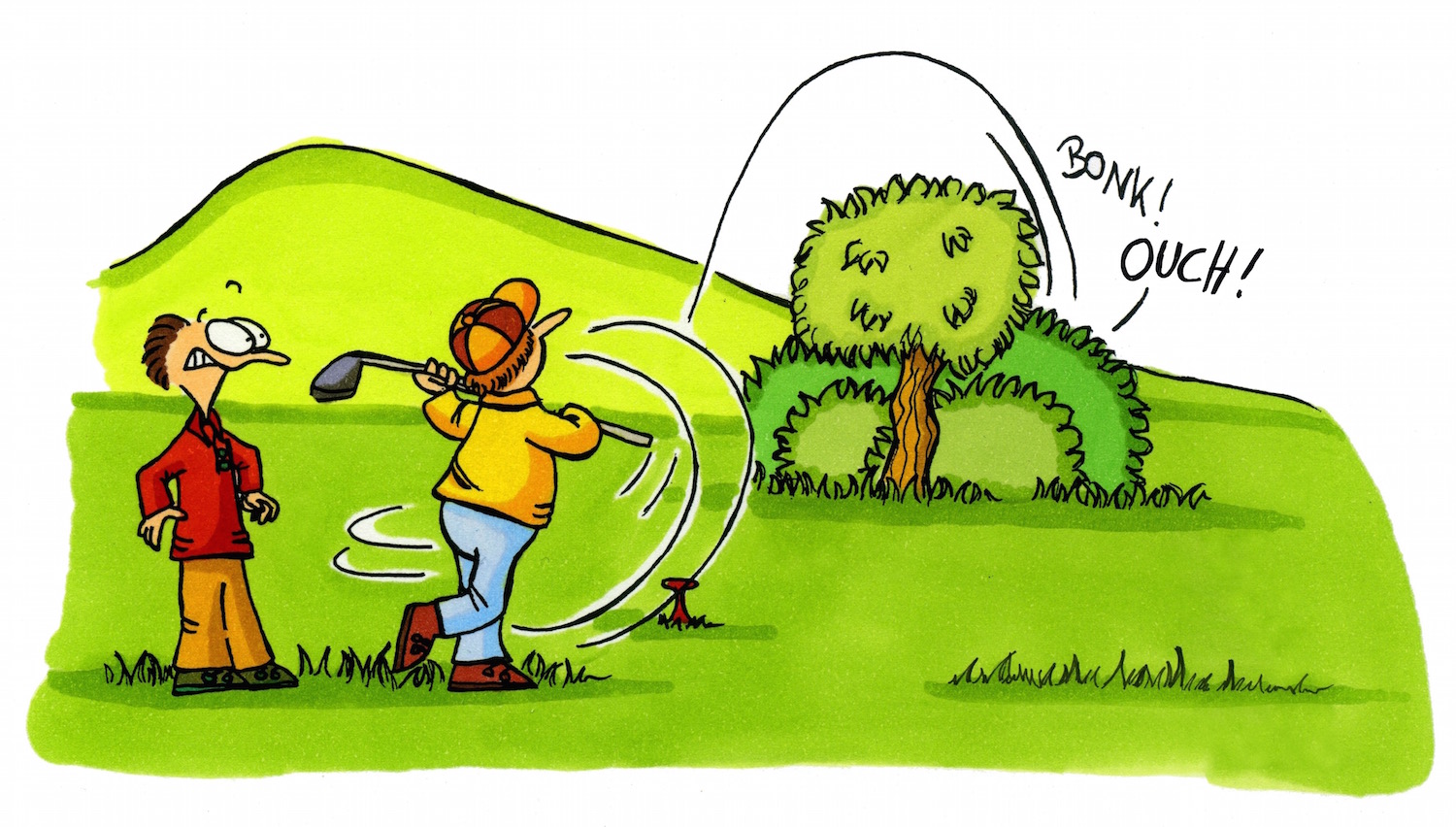
Ask anyone who teaches for a living, and you’ll hear that the No. 1 thing most golfers are looking for is consistency. Equipment companies cash in by promising each successive club will hit the ball farther than the last, but in more than a quarter century of teaching this great game I’ve yet to meet a golfer who wouldn’t give up a few yards in exchange for finding the fairway more often.
As golfers, then, we’re in a bit of a conundrum. We crave consistency, but when the chips are down we put our money down on distance. And while it’s not impossible to achieve some degree of both, if we’re serious about finding the fairway more often, giving up those extra yards might be exactly what we need to do.
Here’s why.
When it comes to consistency, ball flight patterns matter. Commenting on his preferred shot shape, Lee Trevino once famously said, “You can talk to a fade, but a hook won’t listen.” I learned that lesson the hard way back in college during my own Tin Cup moment. After being under par most of the round, I found myself walking up No. 18 with my head down, out of the match because I was out of balls after stubbornly refusing to hit a controlled fade (my natural shot) instead of the draw that would have made the hole play shorter. Trevino was right. Despite that painful lesson, however, it still took a few years — and my looming PGA Player Ability Test — to finally sink in.
I was preparing for the test by playing a practice round with an 18-handicap buddy of mine. I was still struggling with the driver, and that’s when I had a bit of an epiphany. This guy hit a short, ugly 30-yard slice off every tee, but after watching it find the fairway on darn near every hole I realized my buddy knew something I didn’t — where his ball was going. And despite the fact that I didn’t like the look of it, I knew that I could hit that shot, too. So I decided to put my ego aside and play what I called my Big Ol’ Hacker’s Cut. It wasn’t as long, but I knew where it was going, and in the end that’s what I needed to start scoring again. And I did.
Now as far as great players go, last time I checked I hadn’t made anyone’s short list, but there are a couple of great ones who you might never have heard of either if they hadn’t learned that very same lesson. The first was the immortal Ben Hogan. Early in his career, Hogan spent a decade in obscurity fighting the big hook that nearly ended his career before it began. Now Hogan loved to practice, and he eventually figured out a few things while spending a legendary amount of time on the range, but despite all his cryptic talk about his secret being in the dirt, if you really paid attention to Hogan’s interviews you’d realize his game changed when he changed his preferred shot shape. Years later, when asked if he ever tried to hit a straight ball Hogan answered, “Never. Jesus Christ can’t hit a ball straight.”
Which way did Hogan always try to hit it? Left to right, or with a little cut.
A player at the opposite end of the practice spectrum from Hogan, but one who might best exemplify the reliability of the cut, was Bruce Lietzke. Lietzke disdained practice and was the Tour’s king of taking time off, often taking a few weeks off at time during the season to go fishing in the 1980’s and 1990’s. Burned out and tired of the ups and downs of his game, Lietzke quit the game briefly after college, and when he came back to it found his swing had changed and he couldn’t hit anything but a cut. Frustrated at first, Lietzke soon realized that while he didn’t like the look of his new shot, he was scoring more consistently and his game held up better under pressure. And the real kicker? He realized he could take a week or two off — and ultimately a few months off from the game to go fishing — and his swing was still there when he got back, as reliable as ever.
The most famous story about Lietzke that highlighted this happened at the end of 1984 when he told his caddie to remove everything from his bag except the clubs because he wouldn’t be using them until the next season started, more than three months later. His caddie didn’t believe him, so he took the head cover off his driver and stuffed a banana inside. The next February, when Lietzke arrived at the practice range of his first event, his caddy opened up the bag to a stomach-turning smell. When they pulled the head cover off the driver, it was covered with nasty black fungus and rotten banana, never again playable.
Now I’m not trying to compare anything about my game to Hogan’s, or even Lietzke’s, but the common thread here is how a player struggling with consistency eventually found it in a little shot called the cut. In my case, turning professional and learning to teach the game taught me why that shot was more consistent. Mechanically speaking, there are a handful of reasons playing a hook is often less predictable, but there is one primary reason why. As Trevino said, a hook doesn’t want to listen.
Before I say any more, though, I want to apologize up front to all my Homer Kelly disciples and other hardcore swing analytics for what I’m sure you will think is a gross over-simplification. It’s important, however, to explain my point in a way that doesn’t take intimate knowledge of the golf swing to grasp.
- Swings with a lot of hands in the hitting area (read draws and hooks) require very precise timing and that usually translates into a lot of time spent beating balls to achieve a modicum of reliability and consistency.
- Swings with less hand action in the hitting area (read cuts, fades, and slices) are less dependent on precise timing of the hands because they typically have the face of the club in relation to the path and or target for a longer period of time and use the body more than the hands to square that clubface. This means swings that produce shots that cut, fade, or slice often produce more consistent results and are more low-maintenance (read less practice time), even though they don’t produce quite as much distance due to the increased spin created by the path, the slightly steeper angle of attack, and less release of the hands.
So If you’ve been looking for the road to consistency for a while, maybe it’s time to take a shortcut and stop ditch that draw. Sure, it might not look as pretty, and you might sacrifice a few yards, but in the end you just might find a shot that will actually listen to all that hoping and praying you’ve been doing while it’s in flight. And with all the newfound time that was previously spent trying to reign in that hook on the practice tee, you just might be able to pick up a second hobby. Fishing anyone?


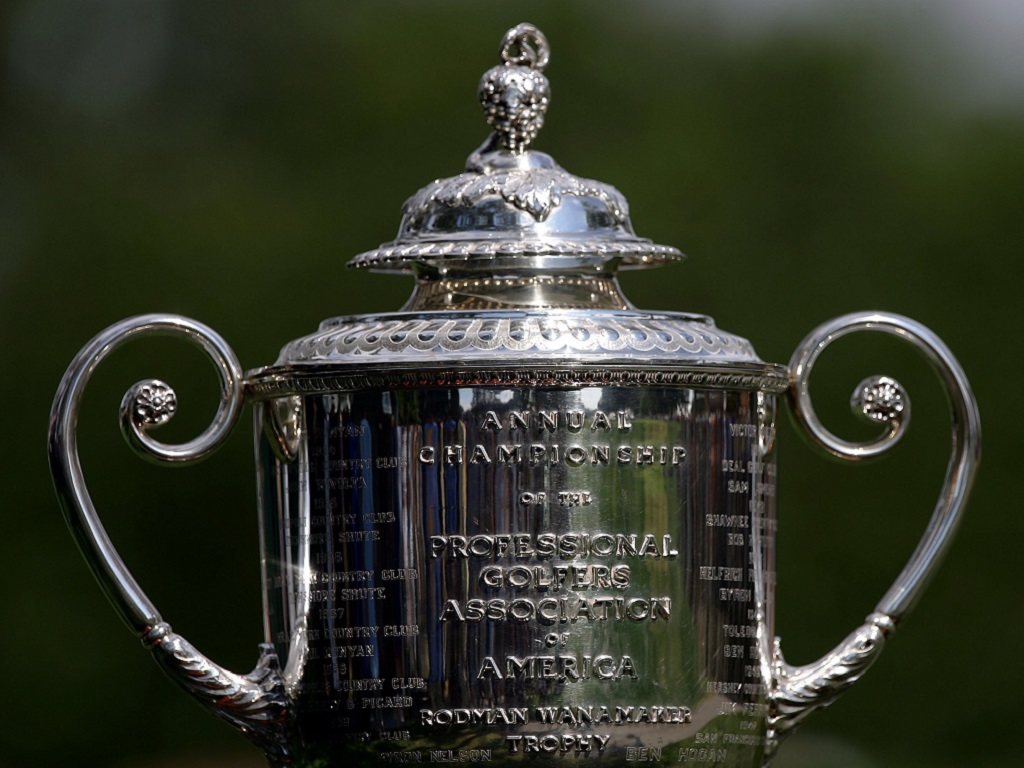
Aronimink is not a storied club, but when Donald Ross himself proclaimed it to be as good as he can design and build, one had to take notice. Jay Sigel was the pre-eminent male amateur golfer from the mid-1970s to the mid-1990s. He might have called any number of Philadelphia clubs home, but he chose Aronimink. It served him well. Gary Player won a PGA Championship here in 1962, and was followed by the 1993 winner … nobody. Aronimink gave that event away to Inverness, for reasons of which it is certainly not proud. So be it. We had to wait sixty-four years for the PGA to return to Newtown Square, but here we are. Aronimink has been neo-restored by Gil Hanse and team, to return Ross features with an eye toward defense against the dark arts, errrr, high-tech equipment.
Day one saw Rory McIlroy and Bryson DeChambeau dig big holes, to the tune of plus-four and plus-six, respectively. Since the first-round lead will be minus-three at worst, many shots will need to be made up for the power couple to reach contention. By nightfall, seven golfers held the day-one lead at three-under par 67. Shots and sticks caught our attention, and we are proud to present Five Things We Learned on Tech Thursday at the 2026 PGA Championship. Thanks to InsideTourGolfer, Today’s Golfer, and GolfWRX for initial equipment research.
First, meet Min Woo Lee
Min Woo Lee, aka Dr. Chipinski, has once again thrust himself into the conversation of Can he, will he, when will he? Lee has so much talent, wins not nearly as often as we believe that he should, and has no major near-misses (much less titles) on his wiki. The young Aussie is getting older and wiser, but is he able to avoid the scarring that holds the older and wiser back from breaking through? Philadelphia offers another opportunity. Min Woo signed for five birdies and two bogeys on day one, and grabbed a share of the opening-day lead at Aronimink. Winners transcend history and the moment, and Lee will need that sort of ascent to lift the Wannamaker on Sunday.
Second, meet Aldrich Potgeiter
The young South African golfer can rip driver with the best of them. Aronimink tips out at nearly 7400 yards, but beyond the fairway bunkers that ensnare only the mortals, Potgeiter can take his chances with wedge from the rough. On Thursday, he spent plenty of time in the spinach. Like Popeye, he used his muscles to gouge and thrash and dig his way out. Six birdies against three bogeys on the card brought AP in a three deep.
Third, meet Martin Kaymer
Not a major event takes place without a where’s he been throwback moment. We know that Martin Kaymer left the PGA and DP World tours for LIV golf, but the two-time (US Open and PGA) major winner has a lifetime exemption into at least one major event, and he seizes the opportunity each May. Kaymer joined the six-seven brigade with four birdies and a solitary bogey on day one. Kaymer was never a long hitter, and the years are kind to no golfer. The German champion will need to uncork every bottle of guile and strategy in his cabinet to remain in contention. For today, though, he occupies a rung on the ladder of Tour Tech.
Fourth, meet Scottie Scheffler
Let’s see, he’s the defending champion at the PGA, and he found his way back to the top tier with five birdies against two bogeys. To be a favorite and then play up to that stature and expectation is quite difficult. Just ask Rory, Bryson, and some of the other pre-tournament heartthrobs. Scheffler’s game is complete, and to knock him off the OWGR #1 pedestal, one needs to defeat him at the majors. Aronimink is the sort of course that fits Scheffler’s game. Better yet, it unfits the game of many of his challengers. Don’t expect Scheffler to go away anytime soon. Come Sunday, he’ll be around.
Fifth, meet Stephan Jaeger
Clocking in for the unheralded players shift are Ryo Hisatsune and Stephan Jaeger. Hisatsune logged seven birdies on day one, but gave most of them back with four bogeys. Still, he’s tied at the top for a time. Jaeger pitched five birdies against two bogeys, including a run of three consecutive, from holes four through six. Odds are that one of the two will hang around through 36 holes. Odds also suggest that both will be gone by Saturday evening. Still, the PGA Championship has historically been the major most likely to be won by an under-known. Both Hisatsune and Jaeger feature on that list, so good luck, lads!

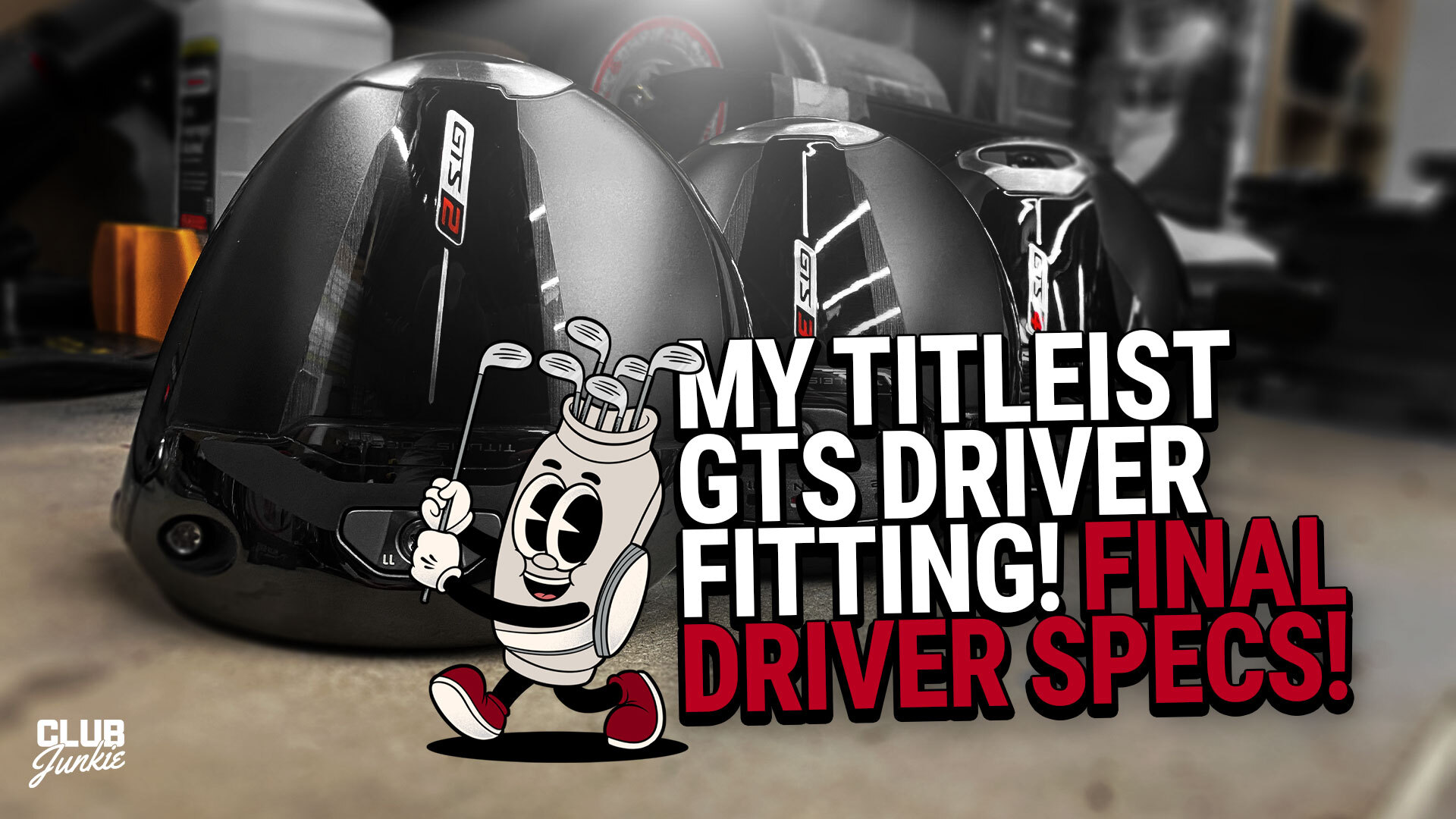
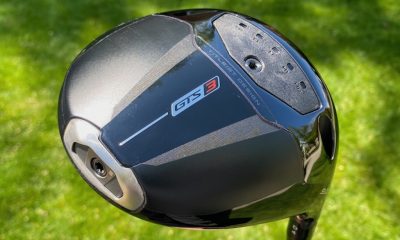
On this episode of the Club Junkie Podcast, I head to the Titleist Performance Institute for a full driver fitting with the new Titleist GTS lineup. We dive into the fitting process, talk about what made the biggest difference in performance, and break down how the different GTS heads and shaft combinations compare on the launch monitor. If you are thinking about a new driver setup for this season, there is a lot to take away from this one.
I also get into Brooks Koepka and the gear setup he brought to the PGA Championship, including the putters that caught my eye during the week. There are some interesting equipment trends showing up at the highest level right now and we break down what stands out.
To wrap things up, I talk about reshafting a few wedges, what I learned during the process, and swapping an adaptor onto a new shaft for another build project in the shop. A gear packed episode from start to finish for anyone who loves golf equipment and club building.
Follow Club Junkie everywhere:
Instagram: https://www.instagram.com/clubjunkiepod/
X: https://x.com/ClubJunkiePod
TikTok: https://www.tiktok.com/@clubjunkiepod
Threads: https://www.threads.com/@clubjunkiepod
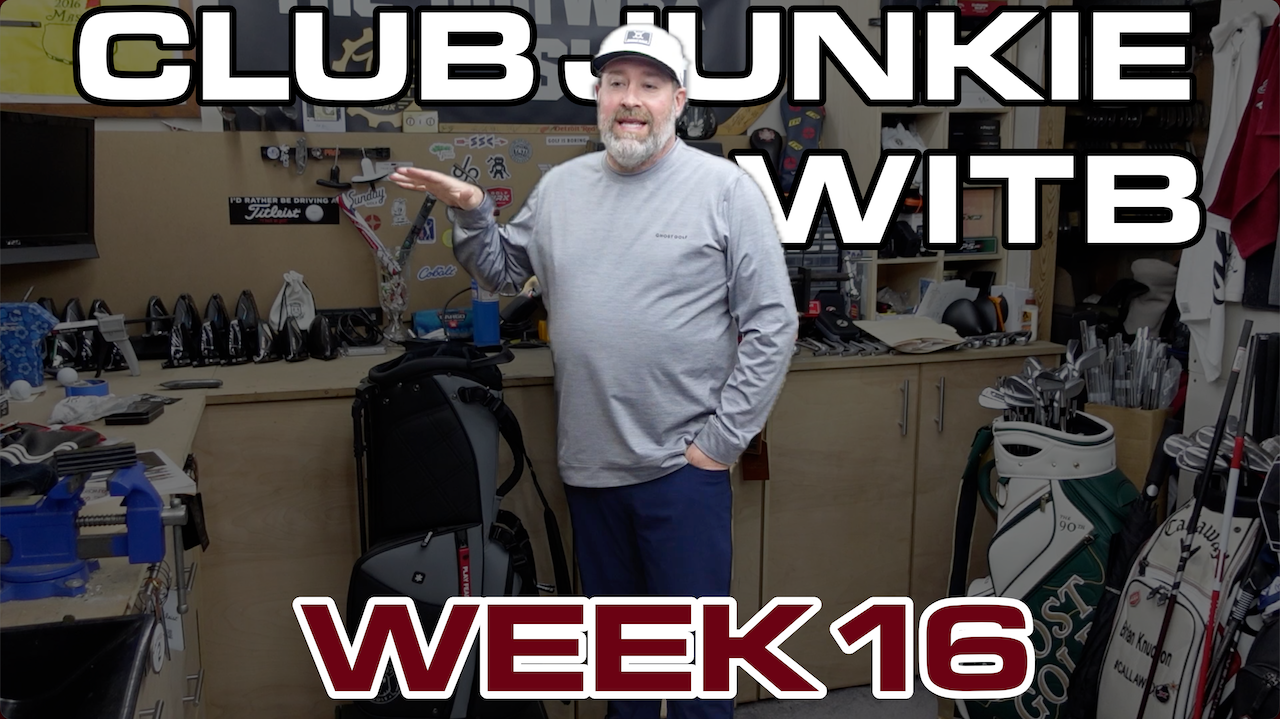
Excited for this week’s WITB as we get to add the new Titleist GTS woods to the bag! I was fit at Titleist’s TPI facility in Oceanside California a few weeks ago and my new clubs just showed up. I am also adding a cool set of irons that I built last year some wild custom wedges into a new golf bag. Speaking of the bag I have a new Ghost Anyday Black Ops stand bag that I will be using on my Motocaddy Remote M7 electric cart.
Driver: Titleist GTS3 (11 degrees @ 10.25)
Shaft: Fujikura Ventus Red 6s
3-wood: Titleist GT1 3Tour (14.5 degrees)
Shaft: Graphite Design Tour AD CQ-7s
5-wood: Titleist GTS (18 degrees)
Shaft: Fujikura Ventus Red 7s
9-wood: Titleist GT1 (24 degress)
Shaft: Fujikura Ventus Red 7s
Irons: Bettinardi CB24 (5-PW)
Shafts: KBS C-Taper Lite 110 stiff
Wedge: TaylorMade MG5 (50-09 SB)
Shaft: Mitsubishi MMT 125 Stiff
Wedge: TaylorMade MG5 (56-12 SB)
Shaft: Mitsubishi MMT 125 Stiff
Wedge: TaylorMade MG5 (60-08 LB)
Shaft: Mitsubishi MMT 125 Stiff
Putter: Dan Carraher ZT Proto
Ball: Callaway Chrome Tour
Bag: Ghost Anyday Black Ops Stand Bag

Justin Rose WITB 2026 (April): Full WITB breakdown with new McLaren irons

RBC Heritage Tour Report: More minis, course-specific setups, Spider & GTS launches

What’s the story behind Webb Simpson’s custom-stamped irons?

Cadillac Championship Tour Report: Spieth’s sizable changes, McLaren Golf launches, and more

Kristoffer Reitan’s winning WITB: 2026 Truist Championship

Cameron Young’s winning WITB: 2026 Cadillac Championship

Aaron Rai’s winning WITB: 2026 PGA Championship

Nelly Korda WITB 2026 (April)

Justin Rose on the switch to McLaren Golf, learnings from previous equipment moves

Photos from the 2026 PGA Championship


Patrick Reed WITB 2026 (May)
Driver: Titleist GT3 (9 degrees) Buy here. Shaft: Aldila Rogue Silver 130 M.S.I. 70 TX 3-wood: TaylorMade Qi35 (15 degrees)...

Aaron Rai’s winning WITB: 2026 PGA Championship
Driver: TaylorMade M6 (9 degrees) Shaft: Aldilda Synergy Blue 70 TX 3-wood: TaylorMade Qi10 (15 degrees) Shaft: Fujikura Ventus Blue...


Michael Block WITB 2026 (May)
Driver: TaylorMade Qi4D (9 degrees) Shaft: Fujikura Ventus Black VeloCore+ 5 X 3-wood: TaylorMade Qi4D (15 degrees @14.25) Shaft: Mitsubishi...


Bryson DeChambeau WITB 2026 (May)
Driver: Krank Formula Fire Pro (6 degrees) Shaft: Project X Prototype 3-wood: Krank Formula Fire (10 degrees) Shaft: LA Golf BAD...
-
 Whats in the Bag3 weeks ago
Kristoffer Reitan’s winning WITB: 2026 Truist Championship
-
Whats in the Bag2 weeks ago
Aaron Rai’s winning WITB: 2026 PGA Championship
-
 Tour Photo Galleries3 weeks ago
Photos from the 2026 PGA Championship
-
 Equipment2 weeks ago
GolfWRX Launch Report: 2026 Titleist GTS drivers
-

 Equipment2 weeks ago
PGA Championship Tour Report: Fitzpatrick, Koepka among big-name putter switches for Aronimink
-

 News2 weeks ago
WITB Time Machine: Phil Mickelson’s winning WITB, 2021 PGA Championship
-

 Equipment2 weeks ago
Which of Tiger’s major winning irons are your favorite? – GolfWRXers discuss
-

 Equipment2 weeks ago
Lead Tape Report: Adjusting the swingweight of the Wanamaker Trophy


James G
Sep 7, 2016 at 2:31 pm
My son is but 12 and has made this discovery on his own. He has found he can hit a slight cut much easier and actually swing faster so he doesn’t lose distance. Said he got the idea watching Dustin Johnson at the US Open. His scores have dropped playing the cut. He has won two junior tournaments since going the cut route.
Mike
Sep 6, 2016 at 1:53 pm
As soon as I stopped trying to play a fade to exclusively play a draw my scores plummeted. I’ve eliminated the right side of the course and gained distance. I’ve gone from a 7-8 handicap to a 3-4. The next jump might require a swing change but I’m guessing it has more to do with chipping and putting…
DeadFish
Sep 6, 2016 at 3:48 pm
Do you play courses that exclusively feature dogleg lefts? A draw is never always the answer, and neither is a fade. The best shot is the one that gets you closest to the hole. The closer you are to the hole the better the chances of making par….
If that means a fade on a dogleg right, you better freaking play a fade. If that means a draw on a dogleg left, you better freaking play a draw. Catch my drift?
Doesn’t matter what shot shape, as long as it gets you closer to the hole…
Scott
Sep 8, 2016 at 11:07 am
But according to the article, for Ben Hogan a fade *was* always the answer. I think you missed the point of the article. The best shot is the one you can get the farthest and control. If you can’t control a draw, do not hit one.
Mat
Sep 5, 2016 at 8:55 pm
This “story” is too personal. The fact is that this is overstating the true wisdom in this article. His buddy could control his drive.
As a pro, you have to know that:
#1 – as long as you get distance, rough matters little. Keep pounding; the stats back you up.
#2 – a fade is just the description of a narrow slice as it relates to the intended line.
#3 – a fade is always technically simpler when the club length is ~ 45″.
#4 – I’d argue that it is no more precise with the hands to hit a “fade” than a “draw”. What’s very easy to hit with little hand movement is a slice.
So while his experience is just that; his, it’s fair to say that all players must find a balance between control and ball flight. Hell, that’s golf by definition. There’s no picture to how your ball flies on a scorecard, but the emotional process of what a ball flight “wants to be” is usually based around optimal results. It’s ego-shattering when you aren’t capable of hitting an optimal shape, and that’s a hard lesson to swallow. In this case, at least the friend was there to demonstrate that.
KK
Sep 8, 2016 at 11:41 pm
“Precise with the hands” might be the most ridiculous phrase I’ve ever heard. This isn’t heart surgery.
Pingback: Ditch the draw to play the most consistent golf of your life
bogeypro
Sep 4, 2016 at 10:35 pm
Dustin Johnson pounds a fade and so does Bubba. Please stop with the idea that draw is longer. find the shape that works best for you and own it.
Kujan
Sep 4, 2016 at 8:40 pm
Great article. Don’t want to abandon the draw but sometimes a fade is called for.
Kujan
Sep 7, 2016 at 5:17 pm
On second thought I may have to embrace the fade or whatever I get with a steeper swing plane.
Pa
Sep 4, 2016 at 7:59 pm
Tom Watson shot his age, 67, on his birthday, today.
I’m a gonna stick to the draw. Thanks
Smokin'Gun
Sep 4, 2016 at 11:38 am
Your body type will dictate your ball flight, your path versus face relationship is based on how you deliver the club to the ball… Play to your strength and get a bioscience fitting… It will open your eyes!!!
Steve Wozeniak
Sep 4, 2016 at 11:29 am
A draw is a straight shot that falls left……a fade is a straight shot that falls right…….anything else is a hook or a slice and is easy to fix with correct information…….
JustWellsy
Sep 6, 2016 at 1:44 am
The way you used the word “easy” is the biggest exaggeration I’ve ever seen. Easy to fix? You have any idea how good most golfers would be if they could fix their swing as soon as they had the right “information?” There have been people that work for years to perfect a swing with no such luck. Some people give up the game because of the yips… It’s not all all easy
Mike Dowd
Sep 4, 2016 at 11:20 am
When most of us learn the game, we initially hit some version of a cut, fade, or slice and it’s typically drilled into us early on, not only that the draw is longer, but preferable. Good players draw it and hackers slice it, and so a great many players spend years of frustration trying to learn to hit it the other way. Some do, but some never do, at least not with any real consistency. My point was that’s o.k., and in many ways the storyline of having to draw it to be a good player is misleading. Plenty of great players have preferred to cut it and some couldn’t hit anything but a cut. There are advantages to that shot shape (like the ball sitting on the green better) and we shouldn’t look at it with as much disdain as many of us do. Sure, it’s nice to be able to hit it both ways, and it helps you become more of a complete player if you can, but if you’ve been struggling with consistency you might want to experiment with playing it the other way. Whether it’s left or right, the real key to scoring is just knowing which way it’s going, so if it’s easier for you stop fighting that fade and just roll with it. Hope it helped and thanks for all the great comments. – Mike
Groundpounder
Sep 4, 2016 at 10:27 am
I signed up for 52 lessons at GolfTEC because they said I’d never get better unless I learned to hit a push-draw. Guess I wasted my money…
Smokin'Gun
Sep 4, 2016 at 11:34 am
Any type of instruction from a qualified instructor is definitely not a waste of money. As long as you own and practice the information given. Just like a script from your doc, practice and take with water!!!
KoreanSlumLord
Sep 4, 2016 at 2:28 am
Ben Hogan was disgusted at the sight of a right to left shot pattern. Myself, I play a low running fade or what I call a reverse hook of the tee- not unlike Jimmy Demarets. Very predictable drives.
Tom
Sep 4, 2016 at 10:26 am
I hit a high soft draw. Very predictable.
snowman
Sep 3, 2016 at 11:22 pm
I agree. A guy I play with regularly hits a draw(often a hook) and when he pures it (rare) he is 15-20 yards longer than me off tee); however I hit probably twice as many fairways as he does and his average drive is 10 yards longer than my average. Now, with my CONTROLLED little cut I can easily knock it on the green more consistently than him, even though I’m 10yards farther away. A draw is probably evidence of a ‘better swing’, but not many average-joe type players can hit a consistent draw that finds target. The Fade / Pull-Cut is not a sexy or long-ball type of shot but it rarely goes way wrong.
Tom
Sep 3, 2016 at 11:21 pm
So when I’m on the wrong side of the fairway and I need to hit a draw………?
tom
Sep 3, 2016 at 10:55 pm
Great article. Shot the best score of my life earlier this year (2 under par) but before the round at the range I was hooking my driver really badly. I told myself … I’m just gonna hit a cut/slice off the tee all day. I don’t care how far right it goes but I’m not going left. Worked like a charm and yeah I did give up a few yards but I hit 11/14 fairways. Yet I’ve found myself getting away from that again … so stupid.
KK
Sep 3, 2016 at 9:27 pm
Driver fade, just like iron fade, is scientifically proven to be a more predictable shape. Too bad most golfers are too egotistical to give up the 10 yds off the tee for perfect placement on the fairway.
Tom
Sep 3, 2016 at 11:23 pm
define “perfect placement”?
Scooter McGavin
Sep 4, 2016 at 10:45 pm
In the fairway…. It says it literally right after the bit you quoted…
PO
Sep 3, 2016 at 9:14 pm
My game got easier and more consistent with less pain in my side when I switched to draw from fade. Fade will kill your side if you compress that side as you try to come over the top and hold that slide.
vince guest
Sep 3, 2016 at 5:23 pm
Kenny Perry and Patrick Reed would disagree…but personally I’d love to hit a Bubba Long fade.
Cris
Sep 3, 2016 at 2:07 pm
Why does a draw “require more hands through the hitting area”?
Golfer
Sep 3, 2016 at 4:26 pm
You have to rotate the face over more through impact to draw the ball.
Sometimes a Smizzle
Sep 3, 2016 at 10:25 pm
Me to, from 11 degrees inside.
Jack
Sep 5, 2016 at 6:18 am
I don’t think so. I used to use a lot more hands but as long as the clubface is set more closed than your club path it will draw away from ur club path. But perhaps the “hands” is what’s causing the extra distance? I feel that it’s the slight delofting of draws compared to fades.
shimmy
Sep 3, 2016 at 12:31 pm
I have a high toe miss, and I’ve found that if I play a fade, that miss wants to go straight. If I play a draw, the toe miss is left of left.
kkp
Sep 3, 2016 at 11:39 am
Yeah that’s why Tom Watson plays the draw. Duh