
Opinion & Analysis
Part 1: Taking the guesswork out of selecting shafts

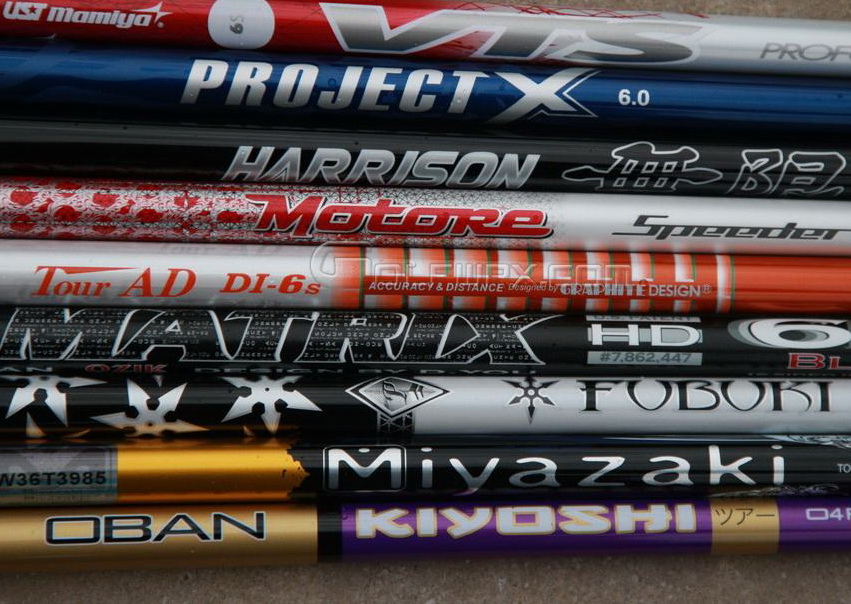
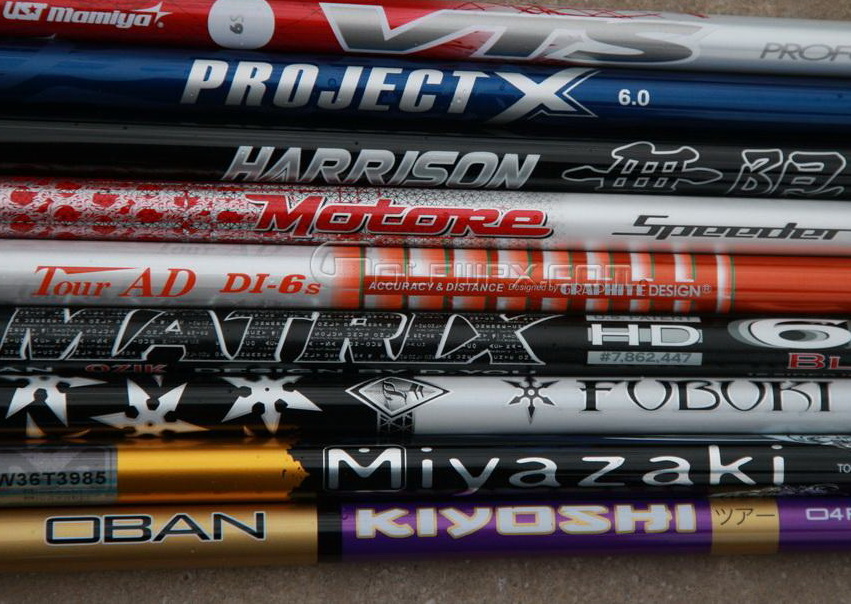
It’s clear that a lot of threads and posts in the GolfWRX forums are from golfers asking all sorts of questions about shafts. In nearly 40 years of golf equipment design and research work, I think it is fair to say that the shaft is the least understood component of the golf club.
I have engaged in serious shaft research since 1990, and from that have learned a lot about shaft design, performance and fitting, I would like to help clear some things up and share some facts about shafts and what you need to know to pick the best shaft for YOUR swing.
I will do my best to make all of this understandable without stressing everyone’s attention span. But there is a lot to explain about this subject so I will separate this into three parts with some time in between each thread to allow you to digest it and ask questions.
How Can Golfers TRULY Compare Shafts to Know their Real Performance Differences?
Below is a typical “specification chart” from a major shaft company. I have removed the names because it is not my intent to criticize a specific shaft maker. It is simply my desire to show you how the typical information provided about shafts will not allow golfers to know what they really need to know about shafts to be able to make an informed buying decision.
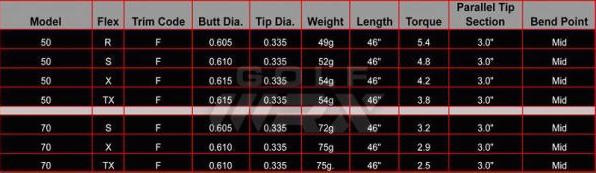
Plain and simple, the information in this chart cannot tell a golfer how any of these shafts truly perform, much less how they actually compare in stiffness to any other the shaft.
The flex? There are no standards for exactly how stiff any of the flex letter codes are. Charts like this provide no quantitative measurements of exactly how stiff any shaft might be. In fact the ONLY bits of information on a typical chart like this which can be helpful are the WEIGHT and the TORQUE.
The butt and tip diameter? These are fine for knowing what the hosel bore of the clubhead needs to be to easily accept the shaft and to know how to install the grip to obtain a desired size.
The parallel tip section? That simply tells you if you cut more than 2 inches off the tip, it’s not likely to fit all the way into any normal hosel with a 0.335-inch bore.
The bend point? Sorry, but the term bend point is not relevant because with terms like “high,” “mid,” or “low,” it has always been way too generic. WHERE EXACTLY IS a mid bend point? And how does this mid bend point compare to some other company’s mid or low or high bend point?
Recently I have seen a couple of other shaft companies begin to offer a form of QUANTITATIVE stiffness measurements for their shafts. Here’s an example:
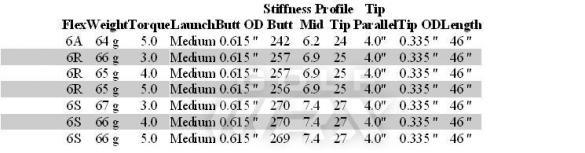
This shaft company offers a series of stiffness profile measurements for the butt, mid and tip sections of their shafts. That’s a start, but the problem is that this company only offers these stiffness profile measurements for their own shafts. This is somewhat reasonable for comparing the various shaft models and flexes within this one company, but what if you have some other company’s shaft in your driver, or you wish to compare these shafts to some other company’s shafts? And if you have never hit one of these shafts, how stiff or flexible are any of these measurements in the first place? These rudimentary stiffness profile measurements do not allow the depth and scope of stiffness information to allow you to make a valid shaft fitting decision.
You might look at the butt stiffness number and say, “That’s a frequency measurement and I know how stiff a 270 cpm shaft plays.” Yes, that butt stiffness number is a frequency measurement. But the problem is you have no idea how these butt frequency measurements were obtained.
- What length of the butt was clamped?
- How heavy was the tip weight?
- Is this 270 cpm frequency the same as a 270 cpm shaft that you played?
Again, there are no standards in the golf industry for shaft frequency measurement so you have no idea if a measurement of say, 270 cpm from this company is equivalent to a measurement of 255 cpm or 265 cpm or whatever cpm using one of the many other types of shaft frequency measurement.
What makes all this even more “exciting” or I should say, challenging, is the fact the industry is now populated with many shafts that are VERY expensive. Do you really want to GUESS whether that $300 shaft is right for you, or would you like to have a more definitive way to help make that decision?
Is there a Better Way to Compare Shaft Stiffness?
Ever since I began to perform quantitative measurements on shafts, I knew we needed a way to be able to see and compare the stiffness of as many shafts as possible, and do it over their entire length. That way, club makers and golfers could have a tangible way to compare the complete full length stiffness design of shafts to each other. The performance and the bending feel of any shaft are products of its stiffness design over its entire length. Not just the butt, not just the tip, but the whole length of the shaft. There are almost an infinite number of ways the stiffness of a shaft can be created over its entire length.
In 2005, we arrived on a reasonably simple method to perform full length comparative stiffness measurements for golf shafts. From this, we created a software program that would house and display the data from our shaft stiffness comparison methodology. We made the first version of the software available to club makers in 2006. Two times each year we ask the shaft companies to send us multiples of each of their new shaft models and flexes so we can keep adding shafts to the software data base.
At present, we have more than 2,000 different wood, hybrid and iron shafts in the TWGT Shaft Bend Profile software. We charge a one-time fee of $129.50 for the software because the expense to have it programmed and maintained is not insignificant. It also takes us quite a number of hours to acquire, test and input the new shaft data into the software two times each year. You can find more information about this on my site, which is linked in my bio.
As much as we would like, there is no possible way we can include EVERY shaft in the industry in the software’s data base. We have to rely on the shaft companies to send us the multiple samples of each of their shafts to measure because we simply cannot afford to actually buy all of the shafts. We also cannot obtain the OEM stock shafts because the OEM companies will simply not allow anyone to have their raw shafts for any measurement work like this. We do have some OEM stock shafts in the data base, which come from “pulls” from OEM clubs that we can measure. But we do try to put as many shafts as we can into the data base so that clubmakers and golfers can better compare the relative stiffness of shafts.
To date more than 600 different club makers now use the TWGT Shaft Bend Profile software in their shaft fitting. This use by the club makers has also provided “in the field” verification that the measurements of the shafts do indeed provide a valid representation of the performance and even the bending feel of the shafts in the data base. The shaft fitting comparisons made with the data in the TWGT Shaft Bend Profile software is most definitely valid for predicting the performance and feel of a shaft.
How Does the Bend Profile Data Explain the Performance and Differences Between Shafts?
Some of you have seen graphs from the TWGT Bend Profile software that I have posted to answer a question here and there about shafts. For those of you who have not seen this, the following is a basic screen image from the software showing a comparison of the relative stiffness design of two shafts. I just randomly chose to use the Mitsubishi Rayon’s Diamana White 83 X5CT S flex and the UST ProForce V2 HL65 S flex to start the explanation.
You see seven columns in the data box. These show WHERE on the shafts we do the stiffness measurements. Starting at 11 inches up from the tip, the measurements then are made at 5-inch spaced positions up from the tip end of each shaft, ending at 41 inches up from the tip. Because iron and hybrid shafts are shorter in raw length, their measurements run from 11 inches up to 36 inches up from the tip end of the shafts.
Measurements are done with a 454 gram weight attached to the tip of the shaft using a specially designed frequency analyzer that measures the shaft oscillations using two separate load cells and two separate strain gauges. Each shaft is tested at the same exact place on the shaft, using the same exact test methodology. This ensures the data is comparable from shaft to shaft to shaft in the data base of the software.
Let’s take a look at an example graph and data chart

The 41-inch, 36-inch and 31-inch measurements represent the butt section, the 31-inch, 26-inch and 21-inch measurements represent the center section and the 21-inch, 16-inch and 11-inch measurements represent the tip section of the shaft (yes, there is an overlap).
When companies design different flexes of a shaft, each different letter flex version is ordained chiefly by the stiffness measurements of the 41-inch to 21-inch positions of the shaft (butt, to center, to upper tip). Tip section differences on shafts do not play as significant of a role in the overall flex design (swing speed rating) of a shaft as do the butt to center to upper tip sections. The tip section design of a shaft is chiefly designed to create differences in the launch angle, trajectory and spin rate among shafts within the same flex.
After significant research and study of the shaft data, we can make conclusions about how much of a difference in the stiffness measurements is significant or not. With so many shafts in the data base, we can also identify a basic relationship between a golfer’s clubhead speed, the average bending force generated by that clubhead speed, and the overall stiffness design of a shaft. This is very important for being able to tell a golfer which shaft may be better suited to his clubhead speed. Therefore, we can use the stiffness measurements of the 41-inch to 21-inch positions on the shaft to determine the swing speed rating of any shaft.
We can also determine how much of a measurement difference is significant or not with respect to stiffness in the butt, center and tip sections of the shafts.
- For example, at the start of the butt section, as represented by the 41-inch measurement, a measurement difference of 8-to-10 cpm is approximately equivalent to one full letter flex difference.
- At the middle of the center section, as represented by the 26-inch measurements, a difference of 12-to-15 cpm is equivalent to one full letter flex difference.
- In the middle of the tip section, as represented by the 16-inch measurement, a difference of 30-to-40 cpm usually accounts for a visible difference in the launch angle, trajectory and spin rate of the shot.
There are no standards for how stiff any of the letter flex designations of shafts may be. How stiff IS an R flex, an S flex (or any of the other letter flexes)? How much variation is there among shafts of the same letter flex?
Below is data to show the low-to-high range in stiffness for all shafts for drivers and fairway woods in our data base that are marked as being a letter R flex shafts. These are listed from softest to stiffest, but all of these are made and marked by their respective companies to be an R flex shaft.
Based on the measurements of the 41-inch and 36-inch sections for the butt section, you are looking at a range of FOUR FULL FLEXES. That means the R flex shafts in the golf industry actually exist within a range of four full flexes. The same is true for S flex shafts, as well.
Because there are far fewer L, A and X flex shafts, the range in stiffness within these letter flex codes is not quite as wide as it is within the R and S flex shafts. Here is the Bend Profile graph and data chart to illustrate the range in R flex shafts for woods that exist today.

Based on all of our research to associate a driver clubhead speed with the measurements for the 41-inch, 36-inch, 31-inch, 26-inch positions of the butt and center of the shaft, here are the appropriate driver clubhead speed ratings for each of these above five different R flex shafts:
- Miyazaki C.Kua 39 R: For a golfer with a driver clubhead speed of 55-to-65 mph
- UST ProForce V2 HL-55 R: For a golfer with a driver clubhead speed of 65-to-75 mph
- Aldila RIP’d NV65 R: For a golfer with a driver clubhead speed of 75-to-85 mph
- Fujikura Blue 004 R: For a golfer with a driver clubhead speed of 85-to-95 mph
- Rapport Blue Velvet R: For a golfer with a driver clubhead speed of 95-to-105 mph
Therefore, you are looking at shafts in the golf industry that match up to a range in swing speed of 50 mph, yet ALL are marked and sold as R flex shafts.
You may be prompted to comment, “This has to be the exception rather than the rule.” If we take a look at the data base to search where the majority of R-flex shafts lie with respect to their 41-inch, 36-inch and 31-inch butt section measurements, we find that the majority of R-flex shafts exist within a range that represents a 20-to-30 mph difference in the clubhead speed rating for the shafts.
This is precisely why golfers sometimes buy a new club and its shaft doesn’t feel as stiff or feels stiffer than their previous shaft with the same letter flex.
Do all shafts of the same letter flex have the same butt-to-center section stiffness (same swing speed rating) within the same shaft company or the same golf club company?
Let’s take a look at the R-flex version of a number of different shaft models from one shaft manufacturing company. All are selected on the basis of being very close to the same shaft weight so they potentially could be considered for purchase by the same golfer.

I want to be sure to first make something clear. I am NOT saying it is wrong for a company to make the same letter flex version of each different shaft model to be of a different stiffness design. That is their right as a company to determine the exact design of each flex for each shaft they make.
What I am saying is that it is very difficult for consumer golfers to know how to choose the shaft that might best match their swing when the companies provide no empirical information like this to use for making quantitative comparisons of the different shafts.
The swing speed range for all these R-flex shafts from Aldila ranges by 25 mph. At one end, the NVS 65-R is a shaft that would be rated for use by a golfer with a driver clubhead speed of 70-to-80mph. At the other end, the RIP Gamma 60-3.6-R is a shaft that would be rated for use by a golfer with a driver clubhead speed of 85-to-95 mph. That means within all the R-Flex shafts from Aldila, the clubhead speed rating for possible selection by a golfer can range by 25 mph – yet all are marked as being an R-Flex shaft.
On top of this are definite differences in the TIP SECTION design of all these different R-flex shafts. Within all the R-Flex shafts from Aldila, we see shafts with a tip section design that ranges from the very tip-soft (Habanero 60-R) all the way up to the moderately tip stiff design of the RIP Gamma 60-3.6-R. If both these R-flex shafts were hit by the same golfer, the Habanero would launch the ball approximately 3-degrees higher and with an estimated 750 rpm more backspin than the RIP Gamma 60-3.6-R. Yet again, both are marked as R-flex shafts.
Again, each company is free to design their shafts as they see fit, for whichever golfer swing types they designate. But how can any golfer really know the difference in the overall stiffness design of any of these shafts and from that, know anything about the performance difference between these shafts of the same flex without clear, quantitative comparative information?
Please understand that variation between the same letter flex of different shaft models goes on INTENTIONALLY with every shaft company in the golf industry. It is not specific to Aldila. I simply use them to illustrate that this does happen within each shaft manufacturing company. Without a clear, quantitative means to compare the stiffness design of shafts, consumer golfers are in the dark with respect to making accurate shaft buying and shaft fitting decisions.
For those of you who made it this far, CONGRATULATIONS! You ARE indeed interested in shafts. For those of you who didn’t… well, true shaft knowledge can be a little beyond a normal realm of interest, I do admit that. I hope you all got something out of this, and there is more to come to help you know much more about how to determine the differences between shafts and how to turn that information into better shaft buying decisions.
By the way, there are many custom clubmakers out there who can help you find the right shaft FAR more accurately than the ways you have been trying to pick the right shaft in the past. These club makers who study this stuff are worth knowing and can help you. Again, to find a good club fitter, check out these sources:
- The AGCP (Association of Golf Clubfitting Professionals)
- The ICG (International Clubmakers’ Guild)
- The TWGT Clubmaker Locator
Related



Aronimink is not a storied club, but when Donald Ross himself proclaimed it to be as good as he can design and build, one had to take notice. Jay Sigel was the pre-eminent male amateur golfer from the mid-1970s to the mid-1990s. He might have called any number of Philadelphia clubs home, but he chose Aronimink. It served him well. Gary Player won a PGA Championship here in 1962, and was followed by the 1993 winner … nobody. Aronimink gave that event away to Inverness, for reasons of which it is certainly not proud. So be it. We had to wait sixty-four years for the PGA to return to Newtown Square, but here we are. Aronimink has been neo-restored by Gil Hanse and team, to return Ross features with an eye toward defense against the dark arts, errrr, high-tech equipment.
Day one saw Rory McIlroy and Bryson DeChambeau dig big holes, to the tune of plus-four and plus-six, respectively. Since the first-round lead will be minus-three at worst, many shots will need to be made up for the power couple to reach contention. By nightfall, seven golfers held the day-one lead at three-under par 67. Shots and sticks caught our attention, and we are proud to present Five Things We Learned on Tech Thursday at the 2026 PGA Championship. Thanks to InsideTourGolfer, Today’s Golfer, and GolfWRX for initial equipment research.
First, meet Min Woo Lee
Min Woo Lee, aka Dr. Chipinski, has once again thrust himself into the conversation of Can he, will he, when will he? Lee has so much talent, wins not nearly as often as we believe that he should, and has no major near-misses (much less titles) on his wiki. The young Aussie is getting older and wiser, but is he able to avoid the scarring that holds the older and wiser back from breaking through? Philadelphia offers another opportunity. Min Woo signed for five birdies and two bogeys on day one, and grabbed a share of the opening-day lead at Aronimink. Winners transcend history and the moment, and Lee will need that sort of ascent to lift the Wannamaker on Sunday.
Second, meet Aldrich Potgeiter
The young South African golfer can rip driver with the best of them. Aronimink tips out at nearly 7400 yards, but beyond the fairway bunkers that ensnare only the mortals, Potgeiter can take his chances with wedge from the rough. On Thursday, he spent plenty of time in the spinach. Like Popeye, he used his muscles to gouge and thrash and dig his way out. Six birdies against three bogeys on the card brought AP in a three deep.
Third, meet Martin Kaymer
Not a major event takes place without a where’s he been throwback moment. We know that Martin Kaymer left the PGA and DP World tours for LIV golf, but the two-time (US Open and PGA) major winner has a lifetime exemption into at least one major event, and he seizes the opportunity each May. Kaymer joined the six-seven brigade with four birdies and a solitary bogey on day one. Kaymer was never a long hitter, and the years are kind to no golfer. The German champion will need to uncork every bottle of guile and strategy in his cabinet to remain in contention. For today, though, he occupies a rung on the ladder of Tour Tech.
Fourth, meet Scottie Scheffler
Let’s see, he’s the defending champion at the PGA, and he found his way back to the top tier with five birdies against two bogeys. To be a favorite and then play up to that stature and expectation is quite difficult. Just ask Rory, Bryson, and some of the other pre-tournament heartthrobs. Scheffler’s game is complete, and to knock him off the OWGR #1 pedestal, one needs to defeat him at the majors. Aronimink is the sort of course that fits Scheffler’s game. Better yet, it unfits the game of many of his challengers. Don’t expect Scheffler to go away anytime soon. Come Sunday, he’ll be around.
Fifth, meet Stephan Jaeger
Clocking in for the unheralded players shift are Ryo Hisatsune and Stephan Jaeger. Hisatsune logged seven birdies on day one, but gave most of them back with four bogeys. Still, he’s tied at the top for a time. Jaeger pitched five birdies against two bogeys, including a run of three consecutive, from holes four through six. Odds are that one of the two will hang around through 36 holes. Odds also suggest that both will be gone by Saturday evening. Still, the PGA Championship has historically been the major most likely to be won by an under-known. Both Hisatsune and Jaeger feature on that list, so good luck, lads!

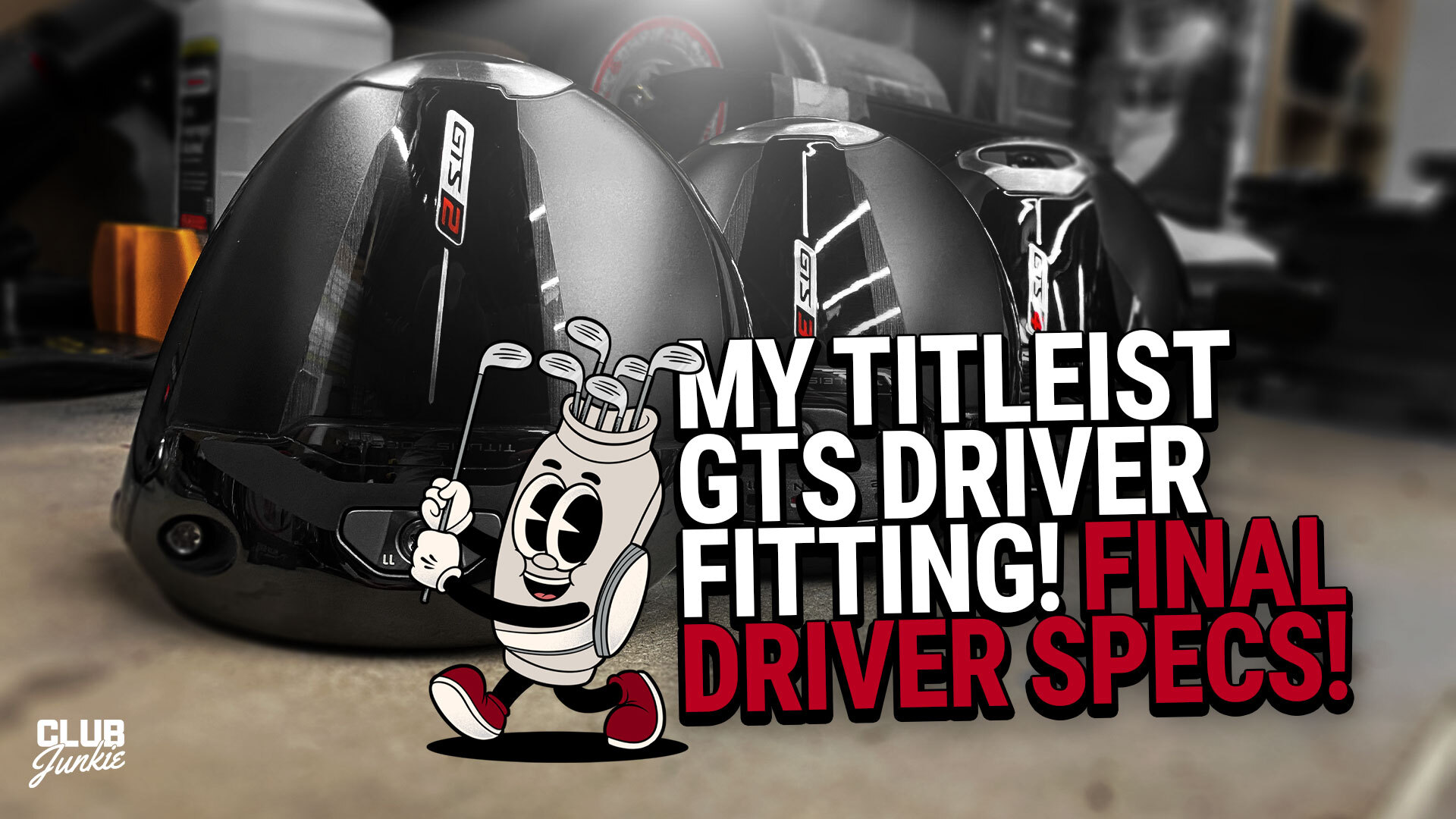
On this episode of the Club Junkie Podcast, I head to the Titleist Performance Institute for a full driver fitting with the new Titleist GTS lineup. We dive into the fitting process, talk about what made the biggest difference in performance, and break down how the different GTS heads and shaft combinations compare on the launch monitor. If you are thinking about a new driver setup for this season, there is a lot to take away from this one.
I also get into Brooks Koepka and the gear setup he brought to the PGA Championship, including the putters that caught my eye during the week. There are some interesting equipment trends showing up at the highest level right now and we break down what stands out.
To wrap things up, I talk about reshafting a few wedges, what I learned during the process, and swapping an adaptor onto a new shaft for another build project in the shop. A gear packed episode from start to finish for anyone who loves golf equipment and club building.
Follow Club Junkie everywhere:
Instagram: https://www.instagram.com/clubjunkiepod/
X: https://x.com/ClubJunkiePod
TikTok: https://www.tiktok.com/@clubjunkiepod
Threads: https://www.threads.com/@clubjunkiepod

Excited for this week’s WITB as we get to add the new Titleist GTS woods to the bag! I was fit at Titleist’s TPI facility in Oceanside California a few weeks ago and my new clubs just showed up. I am also adding a cool set of irons that I built last year some wild custom wedges into a new golf bag. Speaking of the bag I have a new Ghost Anyday Black Ops stand bag that I will be using on my Motocaddy Remote M7 electric cart.
Driver: Titleist GTS3 (11 degrees @ 10.25)
Shaft: Fujikura Ventus Red 6s
3-wood: Titleist GT1 3Tour (14.5 degrees)
Shaft: Graphite Design Tour AD CQ-7s
5-wood: Titleist GTS (18 degrees)
Shaft: Fujikura Ventus Red 7s
9-wood: Titleist GT1 (24 degress)
Shaft: Fujikura Ventus Red 7s
Irons: Bettinardi CB24 (5-PW)
Shafts: KBS C-Taper Lite 110 stiff
Wedge: TaylorMade MG5 (50-09 SB)
Shaft: Mitsubishi MMT 125 Stiff
Wedge: TaylorMade MG5 (56-12 SB)
Shaft: Mitsubishi MMT 125 Stiff
Wedge: TaylorMade MG5 (60-08 LB)
Shaft: Mitsubishi MMT 125 Stiff
Putter: Dan Carraher ZT Proto
Ball: Callaway Chrome Tour
Bag: Ghost Anyday Black Ops Stand Bag

Justin Rose WITB 2026 (April): Full WITB breakdown with new McLaren irons

RBC Heritage Tour Report: More minis, course-specific setups, Spider & GTS launches

What’s the story behind Webb Simpson’s custom-stamped irons?

Cadillac Championship Tour Report: Spieth’s sizable changes, McLaren Golf launches, and more

Kristoffer Reitan’s winning WITB: 2026 Truist Championship

Cameron Young’s winning WITB: 2026 Cadillac Championship

Aaron Rai’s winning WITB: 2026 PGA Championship

Nelly Korda WITB 2026 (April)

Justin Rose on the switch to McLaren Golf, learnings from previous equipment moves

Photos from the 2026 PGA Championship


Patrick Reed WITB 2026 (May)
Driver: Titleist GT3 (9 degrees) Buy here. Shaft: Aldila Rogue Silver 130 M.S.I. 70 TX 3-wood: TaylorMade Qi35 (15 degrees)...

Aaron Rai’s winning WITB: 2026 PGA Championship
Driver: TaylorMade M6 (9 degrees) Shaft: Aldilda Synergy Blue 70 TX 3-wood: TaylorMade Qi10 (15 degrees) Shaft: Fujikura Ventus Blue...


Michael Block WITB 2026 (May)
Driver: TaylorMade Qi4D (9 degrees) Shaft: Fujikura Ventus Black VeloCore+ 5 X 3-wood: TaylorMade Qi4D (15 degrees @14.25) Shaft: Mitsubishi...


Bryson DeChambeau WITB 2026 (May)
Driver: Krank Formula Fire Pro (6 degrees) Shaft: Project X Prototype 3-wood: Krank Formula Fire (10 degrees) Shaft: LA Golf BAD...
-
 Whats in the Bag3 weeks ago
Kristoffer Reitan’s winning WITB: 2026 Truist Championship
-
Whats in the Bag2 weeks ago
Aaron Rai’s winning WITB: 2026 PGA Championship
-
 Tour Photo Galleries3 weeks ago
Photos from the 2026 PGA Championship
-
 Equipment2 weeks ago
GolfWRX Launch Report: 2026 Titleist GTS drivers
-

 Equipment2 weeks ago
PGA Championship Tour Report: Fitzpatrick, Koepka among big-name putter switches for Aronimink
-

 News2 weeks ago
WITB Time Machine: Phil Mickelson’s winning WITB, 2021 PGA Championship
-

 Equipment2 weeks ago
Which of Tiger’s major winning irons are your favorite? – GolfWRXers discuss
-

 Equipment2 weeks ago
Lead Tape Report: Adjusting the swingweight of the Wanamaker Trophy


Pingback: Best 13 swing speed shaft flex chart - lindaadvisors.com
Graham Davis
Dec 10, 2016 at 10:00 pm
One more point. I am 5 fòot 7 inches and 11 stone, so not a power house. 7 is my highest handicap and I hit my driver about 240 yards with mý 88 to 90mph swing speed. 220 yards carry.
Graham Davis
Dec 10, 2016 at 9:15 pm
I should add to my previous mail that I have put together at least ten different shaft combos ranging from 45.5 inch fujikura 44gm regular to 44.25 inch black tie regular. I have tried senior, regular and stiff flex, and high , mid and low bend points At 85 to 90mph, why does a long heavy shaft give me the best results?
Graham Davis
Dec 10, 2016 at 9:02 pm
I am a 7 handicap 61 year old with driver swing speed of 88 to 90 mph. You often say current drivers are too long and to use more loft but my stats on trackman say 45.5 inch shaft at 9° gives my best launch and carry with least spin. Why is this? I use grafalloy prolaunch blue and swing weight is about D5. This is a 68gm shaft. I have the same shaft at 44.5 inches but don’t hit it as far. Consistency is not a compromised with the longer shaft. My smash factor is just as good. I can see 10 to 20 yards more carry. Do I simply have good tempo?
Montree
Mar 23, 2016 at 11:34 pm
May I share my story to choose golf swing analyser
A common mistake made by amateur golfers is choosing golf clubs that are not suited to their swing speed. If you do not match your clubs to your abilities to swing them, it can have an adverse effect on your game. Club factors that should be adjusted based on how fast you swing a club include the shaft flex, torque and the type of shaft. By taking the time to find the right clubs for your game, you can best leverage your golf equipment to improve your game.
Step 1
Determine your swing speed. Many golf retail stores and pro shops can take this measurement. Otherwise, the speed can be estimated based on the club that you hit from a distance of 150 yards. If you use a 3-iron or wood, your swing speed is probably less than 60 mph; a 4-iron is 60-75 mph; a 5-iron is 75-84 mph; a 6- or 7-iron is 84-93 mph; and an 8- or 9-iron is over 93 mph.
Step 2
Determine the shaft flex of your clubs based on your swing speed. The shaft flex is representative of how much force is required for the shaft to transfer energy to the golf ball during your swing. Ladies flex should be used for a swing speed of less than 60 mph, senior flex for 60-75 mph, regular flex for 75-84 mph, stiff flex for 84-93 mph, and extra-stiff flex for speeds above 93 mph. Choosing the wrong shaft flex can lead to hooked, sliced or generally inaccurate shots.
Step 3
Pick a material for the shafts of your irons. The two most common options are graphite and steel. Players with a slow swing speed normally will choose a graphite shaft to maximize the distance the ball travels, while those with a fast swing will choose steel for greater consistency. If your swing speed is moderate, test clubs of each type to determine which feels the best. The majority of modern fairway woods and drivers are sold with graphite shafts and should be chosen based on the information provided in Step 2.
Step 4
Choose the clubhead for your irons. Low-handicap players will prefer half-cavity or blade clubheads for greater consistency and control, while high-handicap players should opt for full-cavity clubs to aid in getting the ball in the air consistently. A half- or full-cavity golf clubhead has a hollowed-out area toward the back to distribute weight around the clubhead, creating a larger “sweet spot.” Blade clubheads have more weight around the face of the club.
Step 5
Test the clubs you have chosen before purchasing them. If you do not like the feel of the clubs, pick a different manufacturer with the same configuration options before changing the shaft flex, material or clubhead variant.
Read More : http://www.golfswinganalysers.com/best-golf-swing-analyzer-2016/
Pingback: How to Hit More Fairways with a Custom Golf Shaft
Rob Campbell
May 8, 2015 at 6:45 pm
Dear Mr. Wishon,
How about if I clamp the grip to a work bench with the shaft cantilevered, hang a weight (maybe 454 g) onto the head (hosel) and measure the deflection along the shaft, once with just the head, once with the added weight? A lot more time consuming than clamping a bare shaft in an expensive oscillator but way easier for us at home. A profile of the shaft bend could be drawn and different shafts could be compared without messing with the club.
I just found out I hit my cousin’s driver 30 yards further than mine. He’s got an R Fujikara and I have an A Project X. His would have way more deflection.
Could such a profile convert to yours?
Pingback: Does the golf shaft really effect your shots? | golfblogaustralia
Adrian Hubert
Mar 31, 2013 at 11:20 am
Hi,
I have some good knowledge of shafts, please can someone confirm that there is a difference between buying a shaft from say Golfsmith and having the same branded shaft from the tour. ?
Tom
Mar 11, 2013 at 5:38 pm
Great article Tom. Just wondering, how did you determine that 454 grams was the best weight to use?
tlmck
Oct 8, 2012 at 10:09 pm
lol. Just thinking of the guy who tried to sell me a C.Kua 39 R for my 92mph clubhead speed.
I can say for certainty, with only my swing as evidence, that a C.Kua 39 stiff is equivalent to a Diamana Red 44L stiff. I have the C.Kua in my identical head backup driver as the Diamana is apparently no longer made, and was nowhere to be found. It’s also nice that the C.Kua does nor require a special grip.
Nathan
Oct 2, 2012 at 3:56 am
This article looked promising untill i got to the part ( you really want to know it will cost you!!) good work
Chris
Oct 1, 2012 at 9:39 pm
When can we expect part 2?
Tom Wishon
Sep 26, 2012 at 5:25 pm
to JEFF who asked about shaft swing speed ratings for golfers with different levels of transition/tempo force in their swing.
Most definitely you are sniffing at a lot of what is going to be in Part 2 of this series. This is precisely why we teach clubmakers to do a basic 1, 2, 3 rating of each golfer’s transition force and downswing tempo to go along with their swing speed.
For example, three golfers all with a 90mph swing speed. But Golfer #1 has a very forceful transition and aggressive tempo. Golfer 2 has an average force/aggressiveness in transition/tempo and Golfer 3 has a smooth, more passive “swinger” type of transition and tempo.
For golfer 2, you can choose from shafts rated to be 85-95mph because his bending force is average for a 90mph swing. For golfer 1, you’d pick from shafts rated at 90-100 because these would be slightly stiffer shafts his swing speed is at the low end of the shaft’s rating – more stiff to better match with the fact that for his 90mph swing speed, his strong/forceful transition/tempo puts more bending force on the shaft so he needs a little stiffer shaft than what his swing speed indicates on its own.
And then finally the 90mph smooth swinger should pick from shafts with a swing speed rating of 80-90mph because he is NOT putting as much bending force on the shaft for his 90mph swing.
But you have the big basic point of shaft flex fitting down – amount of bending force is not always related to the golfer’s swing speed, but is heavily influenced by their transition and downswing tempo.
Tom Wishon
Sep 26, 2012 at 5:04 pm
To John who asked about OEM stock shaft stiffness:
There’s no nice way to say this. You can’t and won’t know how stiff an OEM stock shaft is. The OEMs do not provide any quantitative information on the stiffness/bend profile design of their stock shafts. Test hitting is the only way unless you buy the club, take it apart and then send me the shaft so I can measure it and include it in the data base of the software we created.
We’d love to include them in the data base of this software program but they will not send us their stock shafts to measure, nor will they allow their shaft mfg vendor to do that either. So the few OEM stock shafts we have in the software come from clubmakers who pull these shafts intact from stock clubs and send them to us to measure.
This again is one more good reason to be working with a GOOD, experienced clubmaker who has this software when you want to nail down what works/performs best for your swing and sense of feel.
Ian Mikutel
Apr 22, 2013 at 4:18 am
Why not use some of the $129.50 you charge for database access to purchase OEM shafts each year? It seems to me like the most valuable data for most golfers out there would be that of the OEM shafts, not super expensive, custom shafts? Unfortunate that the OEMs won’t send clubs for this testing, or just standardize this testing across all OEMs.
Pingback: GolfWRX.com – Taking the guesswork out of selecting shafts (Part 1) | Golf Products Reviews
Pingback: Light VS heaver shafts or clubs??? - Page 2 - Golf Forum - Golf Rewound is the Family Friendly Golf Forum and Discussion Group
Justin
Sep 24, 2012 at 11:36 pm
@Eric:
Yes, the more flexible the shaft, the more you can “feel”.
Davy
Mar 29, 2015 at 2:40 pm
The more ‘what’ you can feel?
The answer should be interesting.
Ryan
Sep 22, 2012 at 4:17 pm
Great write up. This definitely confirms what a lot of us already thought we knew which was every OEM even within there own shafts has no tangible way of discerning flex even within their own shafts that to me is CRAZY but soo glad Tom gave us real eveidence to prove this and I cannot wait for part 2
Davy
Mar 29, 2015 at 2:50 pm
You seem to have missed the point. Each manufacturer arbitrarily decides by their own measurement and priorities what they will market as an ‘R’ flex for example. One practice is to offer an ostensible ‘R’ flex with an ‘S’ shaft band on it to capture the vastly misinformed share of the market that believes they require a stiff shaft. But, you are correct about Tom’s authoritative expertise.
Ryan
Sep 22, 2012 at 4:14 pm
Great write up. This definitely confirms what a lot of us already thought we knew which was every OEM even within there own shafts has no tangible way of discerning flex even within their own shafts that to me is CRAZY but soo glad Tom gave us real eveidence to prove th
Jeff
Sep 21, 2012 at 8:24 pm
Terrific article. Does the data about stiffness profiles lend itself to discerning which shafts are more suitable based on an individual’s loading characteristics at a given swing speed? Does this matter? Looking forward to reading your next article.
Eric
Sep 21, 2012 at 5:17 pm
Tom:
I play hickory clubs with a group. One thing I’ve noticed is one can truly feel the weight of the club, and I believe that significantly affects how the club is swung – particularly as you begin the forwardswing, and your subconscious changes the path of the swing.
As a result, I wonder if the whippier shafts improve feel of the clubhead – OR – is there a way to get great clubhead feel without giving up the control of a stiffer shaft?
Mark
Sep 21, 2012 at 3:06 pm
Thanks Tom.
As always, a well thought out and informative article. I’ll be getting the software, and look forward to part 2.
ACGOLFWRX
Sep 21, 2012 at 8:42 am
Excellent information for the masses, well written and above all, very informative.
John
Sep 21, 2012 at 6:16 am
Very well written Tom – thanks. The only problem remains, how do I know what level of stiffness I should be purchasing through the OEM’s at retail stores? Hope that’s covered in Part II.
Al
Oct 16, 2012 at 11:47 pm
Not speaking for Tom by any means, but his philosophy is that, rather than relying on the OEM’s, you should be custom fitted for your clubs rather than buying off the shelf.
Davy
Mar 29, 2015 at 2:54 pm
Well, you might try hitting before buying. Would you buy shoes without trying them on?
Matt
Sep 20, 2012 at 10:50 pm
As an engineer I am fascinated by this and am always on the search for the right fit as a scratch golfer, to maximize my game. This is revolutionary stuff. Thanks!
Davy
Mar 29, 2015 at 3:18 pm
It probably seems revolutionary, but Tom has been doing this since back in the 1980s when he was at Dynacraft and wrote his first Complete Guide to Golf Shaft Fitting. While there are no generalities, many tour players over the years have opted for heavier dynamic and static weighting with flatter lie angles than off the shelf mass-produced clubs. As an engineer, you probably enjoyed reading Homer Kelley’s The Golfing Machine. Bob Tway, Bobby Clampett, and a litany of others found it interesting all the way to their demise in a vortex of paralysis by analysis. But, it is interesting and has one salient bit of advice you can look up at 6B-1D in the book.
Bill B
Sep 20, 2012 at 8:54 pm
Tom,
Without a doubt this is the best information on shafts I have seen in one place. You have created my dream of the “golf shaft genome project”. The golf shaft is the heart of the club and you are making quantative information available that provides options to professional fitters and club junkies alike. We have all made our own personal golf shaft assments on various shafts via real life play, launch monitor results, and feel, but this speeds up the process and opens the door to choices across various manufactures.
Thanks and keep up the good work
Bill Baitinger
Mike D.
Sep 20, 2012 at 12:50 pm
Thanks for the write-up Tom. Verifies what I’ve thought about shaft manufacturing. Can’t wait to see part two!
Chris
Sep 20, 2012 at 12:35 pm
This is absolutely fantastic information. Many thanks!.