
WRX Forum Buzzz
917 vs. 915: Results from the Ultimate Titleist Driver Fitting Experience

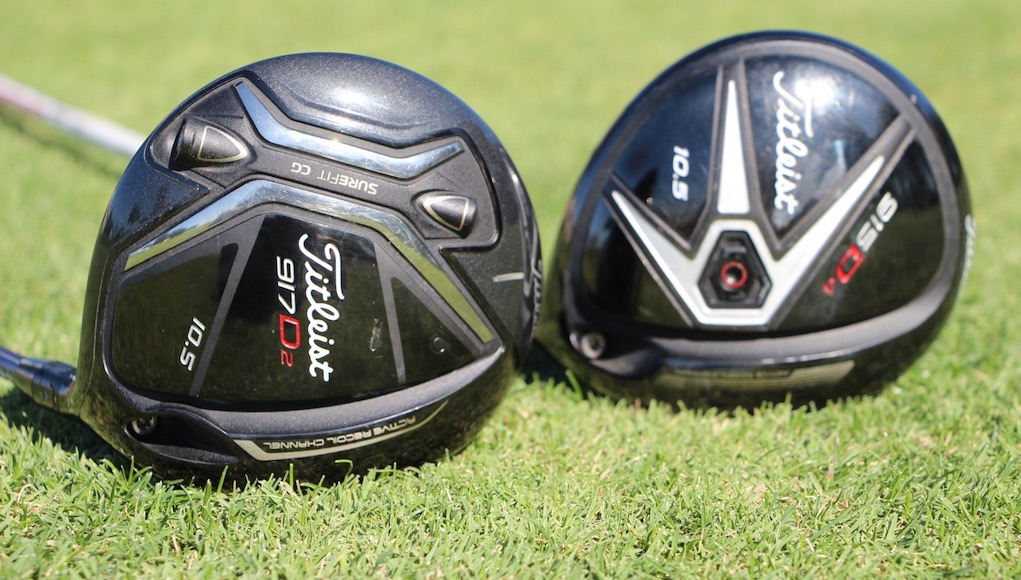
GolfWRX sent six members to the Titleist’s Oceanside Test Facility on October 19 to get fit for the company’s new 917 drivers. The catch? Each member had to be playing a Titleist 915 driver, setting up a battle of new versus old at the company’s world-renowned facility in Southern California.
Would Titleist’s newest drivers help our members hit longer, straighter drives? And how? That’s what we wanted to document and explain.

Titleist’s Oceanside Test Facility in Oceanside, Calif.
The six members we selected ranged in handicap from 3 to 12 and from 91 to 112 mph on average swing speed. Each of them underwent a one-hour driver fitting at Oceanside, working one-on-one with a Titleist Master Fitter. The fitters used Trackman 4 to record the results, and all shots were hit with Titleist Pro V1X golf balls.
The Results
- Each of the six members increased their driving distance with a 917 driver.
- On average, our members increased their carry distance by +5.9 yards.
- The average total distance increase was +8.1 yards.
- The biggest improvement was +15.2 yards (total distance).
- The smallest improvement was +1.8 yards (total distance).
What isn’t discernible from those results is exactly how Titleist’s Master Fitters helped our members achieve their distance gains, and they didn’t do it how you might think. Longer shafts? Lighter builds? Nope. Actually, the approach of Titleist’s Master Fitters was the opposite.
Three of our six members were fit for a shorter driver than what they were using, while two others walked away with a driver with a heavier swing weight. That’s because first and foremost, Titleist’s fitters were concerned with helping our members hit more fairways with their new drivers so they could score better, which made their distance gains all the more impressive.
Related: Want Titleist to fit you in your city? Learn more about Titleist Thursdays
So we wouldn’t influence their fitting choices, we didn’t tell our six members an all-important detail about the experience until after their last ball was hit at Oceanside. Titleist agreed to ship each of them the 917 driver they were fit for, free of charge (you can follow their progress with their new 917 drivers is this thread).
Learn more about each member’s fitting in the recaps below.
Ken Sakai: +6.9 yards carry, +15.2 yards total distance

Ken Sakai (left) with Titleist Master Fitter Glenn Mahler, who has been fitting golf clubs for 30 years.
New driver: 917D2 (9.5 degrees, A2 setting)
Shaft: Mitsubishi Rayon Diamana M+ LE 50R (45 inches, D3 swing weight)
Sure Fit CG: Draw setting
Old driver: 915D2 (10.5 degrees, A2 setting)
Shaft: Mitsubishi Rayon Diamana M+ 50R (45 inches, D1 swing weight)
Ken Sakai brought to Oceanside an already well-fit driver, a 915D2. After a brief warmup and a few swings with his big stick, it was clear that Sakai had no problems finding the sweet spot on his driver.
“That means the length of the club is good,” Titleist Master Fitter Glenn Mahler said.
Mahler also found the shaft model, weight and flex were well suited to Sakai’s swing. So Mahler would need to change something about the clubhead to increase Sakai’s distance. He also wanted to eliminate Sakai’s big miss, which was high and to the right. It wasn’t an easy task. Sakai’s downward angle of attack of -3.1 degrees was good for control, but made it difficult to create optimal launch conditions. Sakai is no slouch, playing to a 3.7 handicap index, but he called driving the worst part of his game.
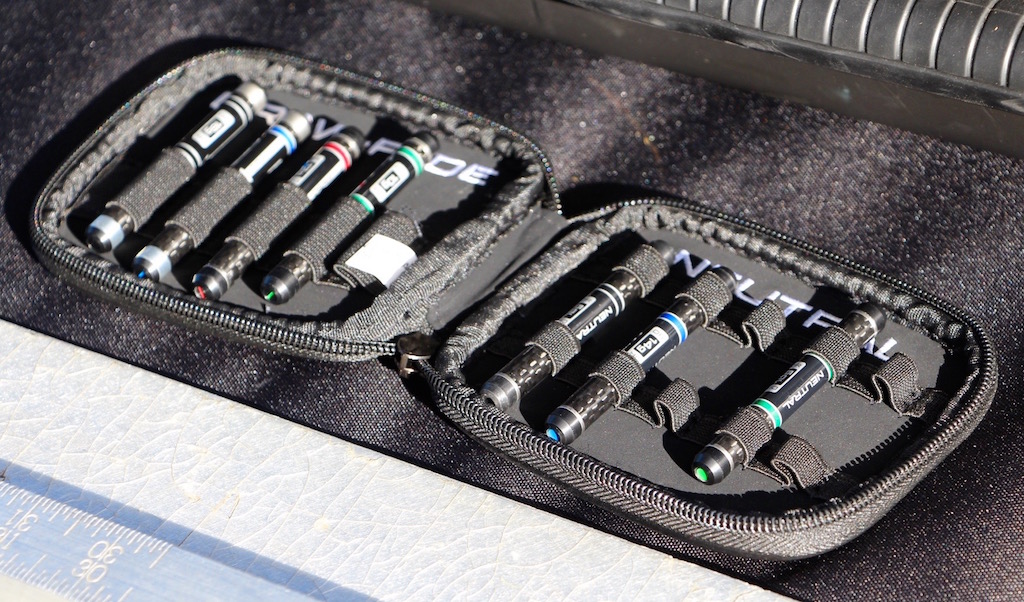
Titleist’s new Sure Fit CG weights come in pairs (neutral and draw/fade) and are available in several different weights.
Early on in the fitting, Mahler closed the face of a 917D2, Titleist’s largest and most forgiving new driver, to help eliminate the miss to the right. That wasn’t going to work for Sakai, who didn’t like the appearance of a closed face at address.
Titleist’s SureFit CG technology was added to the 917 drivers for such occasions. Each 917 driver comes with two weights, one of which is lopsided. If it’s inserted into the driver’s SureFit CG weight port with the heavy end closer to the heel, it creates more draw bias. If it’s inserted with the heavy end closer to the toe, it create more fade bias. A uniformly heavy, neutral weight can also be installed. Mahler set Sakai’s 917D2 to the draw setting, giving him the draw bias he needed without changing the look of the clubface at address.
Mahler also had another trick up his sleeve. He installed a heavier Sure Fit CG weight, adding more draw bias to the club and increasing the swing weight by two points. The big misses to the right started to occur less frequently.

The last order of business was choosing the correct loft. Sakai arrived with a 10.5-degree driver, but it was clear that a 9.5-degree 917D2 was a better fit. Even with the lower-lofted 917D2, Sakai was able to increase his average launch angle 1.4 degrees, while reducing average spin by more than 1000 rpm — an incredible change. His ball speed also increased by 1.3 mph, netting Sakai 6.9 yards of carry and 15.2 yards of total distance, the biggest increase in the test.
Sakai’s landing angle fell from 32.8 degrees to 28.6 degrees, below the optimal range of 32-45 degrees, but the lower flight will actually benefit Sakai, adding to the roll he enjoys on Southern California’s desert courses.
Samuel Youn (pitchinwedge): +2 yards carry, +8.5 yards total distance

Samuel Youn hits a drive at the Titleist Oceanside Test Facility.
New Driver: 917D2 (8.5 degrees, A1 setting)
Shaft: Mitsubishi Rayon Diamana S+ Limited Edition 60S (44.5 inches, D2 swing weight)
Sure Fit CG: Draw setting
Old Gamer: 915D2 (9.5 degrees, D1 setting)
Shaft: Mitsubishi Rayon Diamana S+ 62R (44.5 inches, D2 swing weight)
Like a lot of golfers who go for a fitting, Samuel Youn arrived to Titleist’s Oceanside Test facility without his best swing. Contrary to what many golfers believe about club fitting, however, that can be a good thing. Club fitters can actually learn just as much, and maybe even more, from a golfer’s bad shots than they can from their good shots.
According to Titleist Master Fitter Glenn Mahler, there are four key changes a fitter can make to improve dispersion: (1) shorten the shaft, (2) make the club or shaft heavier, (3) make the shaft stiffer and (4) reduce the loft of the clubhead. In his fitting with Youn, Mahler found the most improvement by stiffening the shaft and reducing the loft.
By changing from a 915D2 with 9.5 degrees of loft to a 917D2 with 8.5 degrees of loft, as well as a stiffer version of Mitsubishi Rayon’s Diamana S+ shaft, Youn was able to hit drives on a flatter trajectory. Doing so increased his carry distance 2 yards, and his total distance by 8.5 yards. He also reduced his launch angle 2.1 degrees and his spin rate 425 rpm, while increasing his ball speed 1.2 mph.
“[Glen] believed a lower flight with less spin would not only increase my total yardage, but also reduce how far my balls were going off-line,” Youn wrote in his forum post.
The second part was key to Mahler. The lower trajectory created a more optimal landing angle of 36 degrees, down from 42.1 degrees, while reducing the hang time of his drives. Since less time in the air means less curvature, it also means straighter drives.

Mahler also positioned the Sure Fit CG weight in the draw position on Youn’s 917D2 driver, and changed his hosel setting. He went from Titleist’s D1 Sure Fit Hosel setting, which reduces loft 0.75 degrees and slightly opens to club face, to the A1 setting, which maintains loft and a square club face. Both tweaks helped Youn tame his miss to the right.
In his forum post, Youn also commented favorable on the looks and feel of the 917D2 driver.
“Right away I was really surprised by how much I like[d] the color of the 917,” he said. “Looking at it indoors, it hadn’t really caught my eye, but outside, addressing a ball… whoa, I like[d] it.”
Marc Aquino (MB Dirtyy): +7.8 yards carry, +6.6 yards total distance

Marc Aquino hits a drive at the Titleist Oceanside Test Facility.
New Driver: 917D3 (9.5 degrees, B1 setting)
Shaft: Fujikura Speeder Evo 661S Tour Spec (44.5 inches, D4 swing weight)
Sure Fit CG: Neutral setting
Old Gamer: 915D3 (8.5 degrees, B1 setting)
Shaft: Fujikura Speeder Evo 661S Tour Spec (44.5 inches, D1 swing weight)
Marc Aquino got a deal on his Titleist 915D3 driver. He bought if off the GolfWRX Classifieds, paying $230 for the club. As it turned out, it was a near ideal driver for him. But after a few adjustments, the new 917D3 offered better performance.
Titleist Master Fitter Glenn Mahler watched Aquino stripe drive after drive on the range, looking like a far better player than his 8.9 index indicated. He let Aquino know that based on the way he swung the club, the maximum amount of carry he could expect was 252 yards… and he was already carrying drives 242.1 yards on average. Mahler got him to an average carry distance of 245.4 yards, and 270.8 yards of total distance (+7.8 yards carry, +6.6 yards total distance). He did it by adding 1 degree of loft to his driver, and offering Aquino a tip about impact.
“The idea was that the 9.5 [degrees of] loft would first increase my launch and spin, then when paired with hitting [shots] a little higher on the face, it would increase my launch and LOWER spin,” Aquino wrote in a forum post.
Mahler also added a heavier Sure Fit CG weight to Aquino’s 917D3, installing it in a neutral position. That increased his driver’s swing weight from D1 to D4. The change helped reduce Aquino’s tendency to miss to the left with his driver, his stated goal at the beginning of the fitting.

Aquino also commented favorably on the improved sound of the 917 drivers, which he said was reminiscent of the Titleist 910 driver he used to own.
“The best way I can explain it is the 915D3 has a high-pitched TINK, while the 917D3 has a high-pitched CRACK to it,” he said. “It’s like a 910 sound on steroids. It’s really subtle, but it’s enough to give it a faster feeling sound. I was hooked.”
Neil McKenna (LuckyLowbrow): +4.2 yards carry, +1.8 yards total distance
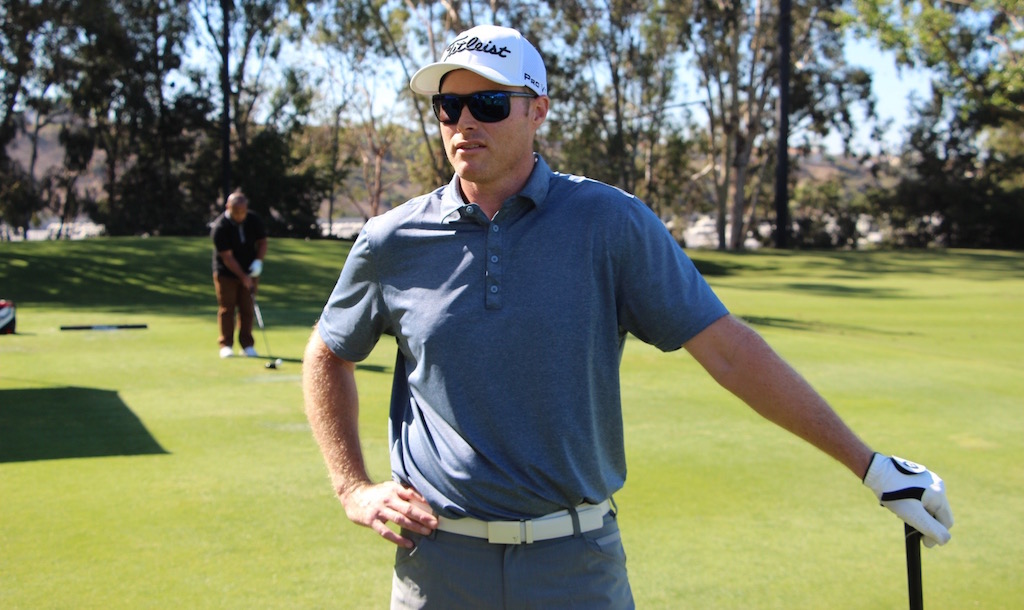
Neil McKenna at Titleist’s Oceanside Test Facility.
New Driver: 917D2 (9.5 degrees, C1 setting)
Shaft: Mitsubishi Rayon Diamana S+ Limited Edition 80TX (44.5 inches, D6 swing weight)
Sure Fit CG: Fade setting
Old Gamer: 915D4 (8.5 degrees, A1 setting)
Shaft: Mitsubishi Rayon Diamana D+ 70TX (44.75 inches, D5 swing weight)
Titleist Master Fitter Dino Antenucci told Neil McKenna not to look at the shaft he installed in the 917 driver he was testing. Had McKenna done so, he would have been surprised at what he saw. The 8.5-index said he’s tested dozens of drivers the past five years, hoping to tame his hook. Following common knowledge, he tried stiffer and stiffer shafts to help alleviate the issue. With his 110+ mph swing speed, he tested some of the stiffest shafts the industry had to offer. None of them helped.
In his 21 years fitting golf clubs, Antenucci has learned a few secrets. One of them is that golfers who struggle from a hook often find relief with a softer-tip shaft. It can increase the lag and droop of the shaft at impact, contributing to a flatter dynamic lie angle and a more open club face — both of which will reduce a hook. For that reason, Antenucci switched McKenna from Mitsubishi Rayon’s Diamana D+ 70TX shaft to MRC’s Diamana S+ 80TX. Its softer tip section, along with its slightly heavier weight and shorter length (-0.25 inches), helped keep McKenna’s drives from diving left in the air.
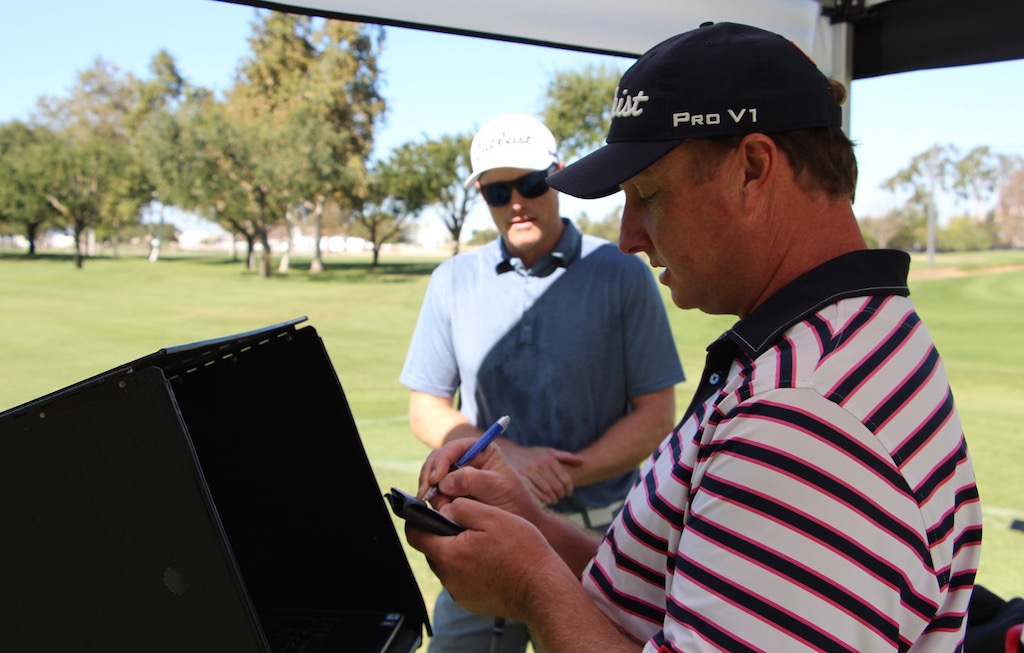
Titleist Master Fitter Dino Antenucci with Neil McKenna (left).
The driver head Antenucci chose for McKenna was just as crucial. McKenna arrived with two Titleist drivers — a 915D2 and a 915D4 — and wasn’t sure which was best for him. As it turned out, he needed aspects of both driver designs to improve his tee game. Thanks to Titleist’s new Sure Fit CG system, he could have them.
McKenna enjoyed the high-launch, low-spin launch conditions and fade bias of his 915D4, but at times he struggled with its relative lack of forgiveness when compared to his 915D2. By placing the Sure Fit CG weight in the fade position on a 917D2, however, McKenna was able to maintain the fade bias he liked in the 915D4, while reaping the benefits of the 917D2’s added forgiveness.

According to Antenucci, the 917D2 can create significantly less spin than the 915D2, which was the case for McKenna. For that reason, he was able to go up in loft to 9.5 degrees (from 8.5 degrees in his 915D4 and 7.5 degrees in his 915D2). Despite the added loft, McKenna saw his ball speed jump 1.7 mph. The result was a higher, more consistent trajectory that had him hitting drives an average of 284.7 yards in the air, and achieving an average total distance of 308.9 yards. It was an improvement of 4.2 yards of carry and 1.8 yards of total distance.
Michael Kim (KPH808): +7.9 yards carry, +8.10 yards total

Michael Kim hits a drive at Titleist’s Oceanside Test Facility.
New Driver: 917D3 (8.5 degrees, B2 setting)
Shaft: True Temper HZRDUS Black 6.5-Flex 75-grams (44.5 inches, D5 swing weight)
Sure Fit CG: Fade setting
Old Gamer: 915D4 (8.5 degrees, A1 setting)
Shaft: Graphite Design Tour AD-BB 7X (44.75 inches, D6 swing weight)
When Michael Kim hits a bad shot on the course, it’s usually a ball that starts left and goes left. For that reason, he smartly found his way to Titleist’s 915D4 driver, which has a forward center of gravity (CG) position that helps him avoid the left rough. On his good shots, the 915D4 also helped Kim achieve the high-launching, low-spinning trajectory that led to his longest drives. The issue for Kim was he was not hitting enough good drives. He wanted to be more consistent so he could lower his 4.2 index.
With Titleist’s 917D3 driver, Master Fitter Dino Antenucci was able to help Kim hit more good drives, but it didn’t start out that way. The first new driver he tested, a 917D3, had Titleist’s Sure Fit CG weight in the neutral position. With that setup, Kim had a tendency hit shots even farther left due to the driver’s more rearward CG position. The 917D2 driver was not considered, as its even more rearward CG position would accentuate a miss to the left.
“[Antenucci] adjusted this by putting the weight in the fade setting [of the 917D3 driver] to get the CG closer to the face to help me square it more since that’s how the CG is in the D4,” Kim wrote is a forum post.
Feeling more confident, Kim could now benefit from the increased forgiveness of the 917D3 head, and that showed up in the way of 2.1 mph more swing speed. Keeping the same loft (8.5 degrees), he was also able to increase his launch angle 1.3 degrees, while reducing his spin rate 232 rpm. That increased carry 5.2 yards and total distance +7.9 yards.
“The biggest thing for me was the forgiveness between the two, the 917D3 was more forgiving on mishits,” Kim said in a forum post.

As for shafts, Kim brought with him to the fitting a Graphite Design Tour AD-BB 7X shaft, which had been his gamer for years. Antenucci recommended that he try a True Temper HZRDUS Black 75-gram (6.5 flex), which he speculated could improve his consistency. If Kim were playing in a tournament the next day, he would have stuck with his Tour AD-BB, but he was clearly interested in seeing what the HZRDUS Black could do for him.
Antenucci made a few other tweaks to his new 917D3: the shaft was made 0.25 inches shorter and the Sure Fit Hosel setting was changed from B2 to A1, creating a flatter lie angle that would further alleviate Kim’s miss to the left.
Alan Peng (brushie): +6.6 yards carry, +8.7 yards total
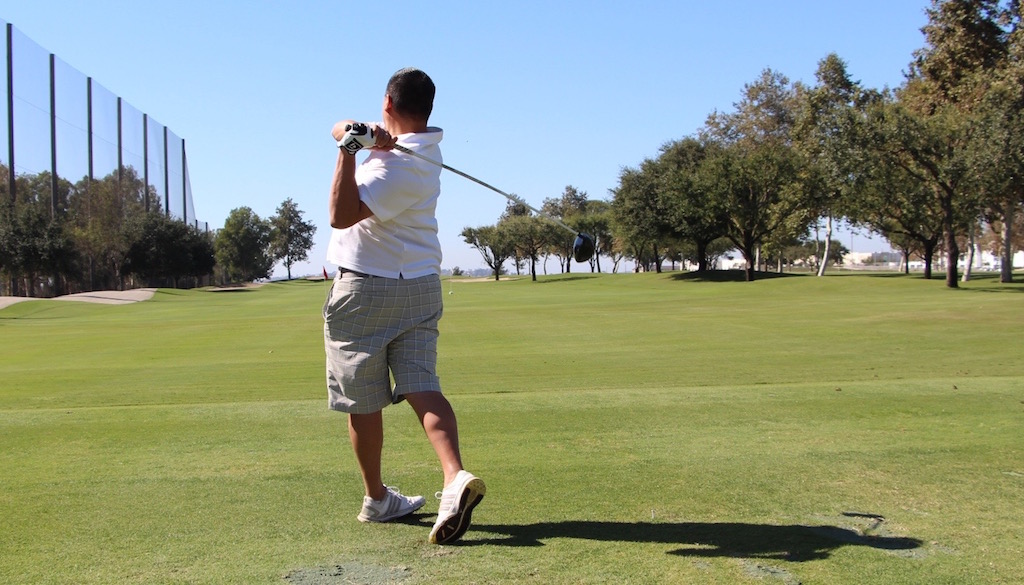
Alan Peng at Titleist’s Oceanside Test Facility.
New Driver: 917D3 (10.5 degrees, A1 setting)
Shaft: Fujikura Speeder Pro 74S Tour Spec (44.5 inches, D4 swing weight)
Sure Fit CG: Neutral setting
Old Gamer: 915D4 (10.5 degrees, A1 setting)
Shaft: Fujikura Speeder 661S (45 inches, D4 swing weight)
Accurate launch monitor data is crucial for club fitters; it tells them where golfers are and where they need to go to improve their performance. But sometimes the numbers don’t tell the whole story, and that was the case with Alan Peng.
“If you look at his averages, they look pretty good,” Titleist Master Fitter Dino Antenucci said. “But that’s because of the variability.”
Peng was missing shots both left and right early on his his fitting, so Antenucci immediately started down the path of improving his consistency. The two tried a few different shafts, eventually choosing Fujikura’s Speeder Pro 74S Tour Spec, which was heavier and stiffer than the Fujikura Speeder 661S Peng was fit for two years earlier. The added stiffness and weight, along with 0.5-inch shorter length of the club, helped Peng find more consistency.

With his shots flying a little straighter, it was time to focus on the clubhead. Peng arrived with a 915D4, but Antenucci knew the 917D3 would bring him better performance. The loft (10.5 degrees) and hosel setting (A1) stayed the same, and the Sure Fit CG weight was kept in neutral. For that reason, the fitting offered a very direct comparison between Titleist’s 915D4 and the 917D3.
Peng saw slightly lower ball speeds (-1.5 mph) with the 917D3, which he attributed to the heavier shaft, but he was able to increase his launch angle by 2.7 degrees and reduce his spin by a whopping 562 rpm. With the new driver, he also added 6.6 yards of carry distance and 8.7 yards of total distance.
“Towards the end my swing was deteriorating from hitting so many balls,” Peng said. “I missed a couple with the winning combo and it stayed straight and I ended up with a lot more distance than I would have seen with my 915D4.”
Their testing, their words: The Ultimate Titleist 917 Driver Fitting Forum Thread.


In our forums, our members have been discussing their favorite major winning irons used by Tiger Woods. WRXer ‘golferdude54’ kicks off the thread saying:
“Mizuno MP 14/29. Titleist 681T. Nike Forged Blades. TaylorMade P7TW.
Among these irons that helped Tiger win 15 majors, which is your favorite in terms of looks?”
And our members have been naming their favorites and why in response.
Here are a couple of posts from the thread, but make sure to check out the entire discussion and have your say at the link below.
- SwingBlade: “I prefer the early blades he played and the more recent TM TW’s especially because after Tiger had his major behavioral setbacks, part of Nikes support payback was making Tiger play a Nike putter and cease using his beloved uniquely customized Scotty putter.”
- ProjectX: “This (Nike Forged Blades) and there’s not even a close second.”
Entire Thread: “Which of Tiger’s major winning irons are your favorite? – GolfWRXers discuss”

In our forums, our members have been discussing a recent find by one WRXer. ‘Speeder717’ has just got his hands on an Adams Idea Pro hybrid with a Midas shaft and V55 grip, and has documented his find in the forums saying:
“There’s just something about old tour gear that still hits different for a lot of us who’ve been around WRX forever. Before every tour setup was posted on Instagram five minutes after a round, you had to dig for this stuff. You’d spend hours going through used bins at the local range, scrolling classified ads, or checking Gypsy Golf hoping some random listing would turn out to be something special.
That’s what made the hunt fun.
And when it comes to players with recognizable gear, Bernhard Langer has always been near the top of the list. His bag has barely changed in years. The putter is untouchable. The G400 somehow refuses to leave. And then there are the Adams Idea Pro hybrids with the Midas shafts and V55 grips that instantly make longtime gear guys stop scrolling.
I was lucky enough to grab one off eBay recently, and the more I looked at it, the more things started lining up with Langer. The build, the details, the overall wear… it just has that look. If you’ve followed his setup over the years, you start comparing tiny details from old WITB photos, looking at grip setups, lead tape placement, wear patterns, all trying to connect the dots.
Maybe it’s a legit gamer, maybe it’s just built exactly like one. Either way, that’s almost beside the point.
For a lot of us older WRXers, this is the stuff that keeps the hobby fun. The stories, the searching, the possibility that a random club sitting in a listing somewhere might actually have some history behind it. That feeling never really goes away.”
And our members have been sharing their thoughts and reactions in our forum.
Here are a couple of posts from the thread, but make sure to check out the entire discussion and have your say at the link below.
- kwxsports: “I still play a couple of those hybrids. Cool find.”
- EastpointeCC: “If the wear pattern is the size of a dime and there’s no idiot marks. Could be his.”
Entire Thread: “Have I just found the holy grail with this hybrid? – GolfWRXers discuss”

In our forums, our members have been reacting to a post from a WRXer who still can’t get enough of his 20-year-old irons. ‘Kennapsi’ has been unable to replace his Callaway X-forged irons, and kicks off the conversation saying:
“I just can’t find a better set of irons than my 20-year-old Callaway X-forged irons. Boy have I tried…. T100, iblade, Taylormade… the list goes on!!! I somehow feel a guilt and just want to spend money on a new set…
I can’t even blame the groove rule and say they are non conforming as that rule has expired in the UK now… I play county events and nobody ever mentioned it anyway…To make it worse, can you see any similarities between Miura TC 201 and X-forged 2007?
Do I need help, or should I just play them?”
And our members have been sharing their thoughts on the matter in response.
Here are a few posts from the thread, but make sure to check out the entire discussion and have your say at the link below.
- BowMain42: “Coming from a guy that refuses to give up his MP-60’s (when he’s not playing stuff even older), I’d say don’t worry about it. Then again, the WRXer in me says ‘replace them anyway just because'”
- iNeedMoreGolf: “My X forged 18 mb/cb are that way for me. The closest thing I think I’ve come across is P7MC by TaylorMade.”
- jplroper: “When something works, just run with it.”
Entire Thread: “Why I still love my 20-year-old irons – GolfWRXers discuss”

Justin Rose WITB 2026 (April): Full WITB breakdown with new McLaren irons

RBC Heritage Tour Report: More minis, course-specific setups, Spider & GTS launches

What’s the story behind Webb Simpson’s custom-stamped irons?

Cadillac Championship Tour Report: Spieth’s sizable changes, McLaren Golf launches, and more

Kristoffer Reitan’s winning WITB: 2026 Truist Championship

Cameron Young’s winning WITB: 2026 Cadillac Championship

Aaron Rai’s winning WITB: 2026 PGA Championship

Nelly Korda WITB 2026 (April)

Justin Rose on the switch to McLaren Golf, learnings from previous equipment moves

Photos from the 2026 PGA Championship


Patrick Reed WITB 2026 (May)
Driver: Titleist GT3 (9 degrees) Buy here. Shaft: Aldila Rogue Silver 130 M.S.I. 70 TX 3-wood: TaylorMade Qi35 (15 degrees)...

Aaron Rai’s winning WITB: 2026 PGA Championship
Driver: TaylorMade M6 (9 degrees) Shaft: Aldilda Synergy Blue 70 TX 3-wood: TaylorMade Qi10 (15 degrees) Shaft: Fujikura Ventus Blue...


Michael Block WITB 2026 (May)
Driver: TaylorMade Qi4D (9 degrees) Shaft: Fujikura Ventus Black VeloCore+ 5 X 3-wood: TaylorMade Qi4D (15 degrees @14.25) Shaft: Mitsubishi...


Bryson DeChambeau WITB 2026 (May)
Driver: Krank Formula Fire Pro (6 degrees) Shaft: Project X Prototype 3-wood: Krank Formula Fire (10 degrees) Shaft: LA Golf BAD...
-
 Whats in the Bag3 weeks ago
Kristoffer Reitan’s winning WITB: 2026 Truist Championship
-
Whats in the Bag2 weeks ago
Aaron Rai’s winning WITB: 2026 PGA Championship
-
 Tour Photo Galleries3 weeks ago
Photos from the 2026 PGA Championship
-
 Equipment2 weeks ago
GolfWRX Launch Report: 2026 Titleist GTS drivers
-

 Equipment2 weeks ago
PGA Championship Tour Report: Fitzpatrick, Koepka among big-name putter switches for Aronimink
-

 News2 weeks ago
WITB Time Machine: Phil Mickelson’s winning WITB, 2021 PGA Championship
-

 Equipment2 weeks ago
Which of Tiger’s major winning irons are your favorite? – GolfWRXers discuss
-

 Equipment2 weeks ago
Lead Tape Report: Adjusting the swingweight of the Wanamaker Trophy


Dover
Feb 5, 2017 at 4:23 pm
I have been fit for a the 915D2 9.5 with the Accra fx300 M4 shaft in 2015 and went in the fall 2016 to see if the 917 was a better choice along with getting fit for 3wood and hybrid. What I found out by putting my Accra shaft in 917D2 9.5 driver is that I picked up 6 to 8 yards in total distance and depression was tighter and got even tighter when I added the draw weight. So I hope that helps all
Tim
Nov 10, 2016 at 1:19 pm
Interesting on the scatter charts that the 915 used 4 drives, and the 917 used three. Thus making the 915 scatter wider, wouldn’t it make sense to use 4 drives for both clubs? No consistency, poorly done.
Golfer
Nov 6, 2016 at 3:14 pm
It seems to be a test of fitting players who were not really fitted rather than comparing how much better 917 does vs. 915.
And what about the comparison to other drivers? It almost looks like Titleist promo article:-)
Mad-Mex
Nov 5, 2016 at 12:05 am
Just another infomercial disguised as a article.
cgasucks
Nov 5, 2016 at 10:40 am
They did a pretty good job at it!
Drew
Nov 4, 2016 at 5:29 pm
Unless I’m missing something, this experiment doesn’t tell us much about the comparison between the 915’sand 917’s, but tells us that being properly fit improves performance, which we all already know. Unless the same fitting optimization is done with their old drivers as well as the 917’s, you can’t say, with any certainty, that the 917’s are better drivers. But after this test, all we know now is that a properly fit 917 done by a titleist professional will outperform a 915 that was fit to varying degrees, most likely not by a titleist professional. Thanks I guess?
greg
Nov 4, 2016 at 7:45 pm
Good point. It would have been interesting to have seen them fitted with both models and then used the numbers for comparison of equipment benefit.
Personally, I was fitted at a Titleist Thursday event with a 917. I did not see any appreciable difference in distance between it and my 913. Under 5 yds at best. I did note a huge difference in how the ball came off the face. Much more forgiving and much more accurate on toe and heal misses. The accuracy was a major benefit. Loved the sound as well.
Now, is all of this worth another $500?
R0B
Nov 6, 2016 at 2:50 am
Def. not!
Grizz01
Nov 4, 2016 at 11:16 pm
Not only that… but I tend to hit better the more I get into the swing of things. Did they club improve or were the players now after hitting thier old stuff now better warmed up and ready to hit better. Were there swings more in the groove by the time they got the new club?
moses
Nov 5, 2016 at 10:10 am
EXACTLY what I was thinking. It’s the fitting process that’s made them longer not the clubs that were basically off the rack.
One might say that similar fittings from Taylormade yielded better results in the past. Cough cough SLDR.
JonS
Nov 4, 2016 at 5:20 pm
The golfers were in some cases fit for the 915 also, and “master fitter” or not, when you’re fit you’re fit. It’s not going to make THAT big of a difference. Also, the differences between the lofts and setups between the 915 and 917 in a lot of these cases weren’t all that different. There were some clear performance gains with the 917. I would agree with all that suggest that having a fitting like this… outside on a launch monitor with a master fitter certainly increases your odds for success.
Judge Smails
Nov 4, 2016 at 2:38 pm
These results mean nothing. Were each of these guys properly fitted for their 915 drivers? How can you compare a master fitted 917 to a non-fitted (at least non-master fitted) 915???
Thus
Nov 4, 2016 at 1:04 pm
I would say there would be 2-3 different drivers that would be longer. And straighter…
Thus
Nov 4, 2016 at 1:03 pm
JC hit it on the the head.
If the was no master club fitter here doing an incredible job fitting and applying his knowledge the 29917 prob would have been shorter and spun more…
Great prize WRX and great experience for those members!!!
Shortside
Nov 4, 2016 at 12:06 pm
The latest trend of shortening shafts (closer to what the pro’s play) is long overdue. Traditional lofts for irons if fine by me too.
robin
Nov 4, 2016 at 11:56 am
So if you don’t have a master fitter stick to your old club.
Kellen
Nov 4, 2016 at 11:54 am
I do agree with what has been said about this not exactly being an apples to apples comparison. Regardless, very cool gesture from team Titleist and GolfWRX and one that adds more respect for both of them in my eyes. I think this is a great marketing tool that was a positive experience for everyone involved and the results show a measurable improvement is possible for many, if not all golfers who are able and willing to invest the money in a professional fitting for a brand new club.
TR1PTIK
Nov 4, 2016 at 11:39 pm
I don’t understand this argument about an apples to oranges comparison. The characteristics of two different driver heads are distinct to their own make and model. Pairing them to the same shaft doesn’t make sense if you want to see a best vs best comparison. Simply put, it’s not likely that the same exact shaft and specs will achieve the optimal combination of performance for both club heads which is more important in my opinion. Although it’s really all a moot point considering that what works for one golfer is in now way guaranteed to work for another.
Rimjob
Nov 4, 2016 at 11:48 am
Everybody ends up swinging harder to impress everybody when they hit the new club at the TPI. We need another follow-up review a couple months from now to see if these guys are keeping the same results in the real world.
R0B
Nov 6, 2016 at 2:54 am
+1
The dude
Nov 4, 2016 at 11:18 am
Great….now I’ll have a lob wedge into all par fours….instead OF A LOB WEDGE!!!…all you wimps need to hit the gym…go on a diet and let the ballers BALL!!!!
Tom
Nov 4, 2016 at 11:06 am
So depending on your skill level, you get extra yards and a tighter dispersion with a properly fit 917.
Jon
Nov 4, 2016 at 10:51 am
I guess it is time for me to blow the dust off of the wallet so I can test my 905R against one of the new 917’s.
905rIsHardToBeat
Nov 4, 2016 at 11:43 am
I’m still rocking a 905r too. I wonder how much distance we could gain with a properly fit new driver these days.
Jon
Nov 4, 2016 at 3:27 pm
Hopefully 15-20+ more than my current 3 wood. Ha! I parked my driver since I bought a Callaway X2Hot Pro 3 wood last year since I am hitting the 3 wood farther and straighter than the 905R. 235 yards down the middle works for me.
TR1PTIK
Nov 4, 2016 at 11:28 pm
Up until this summer I was still playing either a 905R or a 905S. I purchased the Nike Vapor Pro (2015 model) and saw a 15 yard increase in my average distance simply from the increased forgiveness. Also, seeing an uptick in fairway percentage and a reduction in my big miss (slice). Would very much be interested in a 917 when they become more affordable for me so I can go back to a full Titleist bag.
cgasucks
Nov 4, 2016 at 10:04 am
Impressive…what is even more impressive is that their old drivers were already fitted for them in the first place yet still gained more distance from the 917…
birdy
Nov 4, 2016 at 10:02 am
i really like these types of articles and what a great opportunity for these players….
however i realize its a tough ask, but I’d like to see these players fit properly in to their old equipment, proper 915 head, shaft, loft, etc….and then send them to Titleist to see what gains come from the new equipment. I think what we’re seeing in gains is 10% 917 technology and 90% simply being properly fitted.
Brandon
Nov 4, 2016 at 10:40 am
Lol ask anyone if a 10% gain in distance is worth it. Guarantee every pro and amateur would say yes.
JC
Nov 4, 2016 at 11:39 am
He’s not stating 10% gain in distance. He’s stating that of the gains they made, that 10% of that was made from the technology and 90% from being properly fit.
Brandon
Nov 4, 2016 at 2:02 pm
Yep, I’m an idiot
Regis
Nov 5, 2016 at 10:11 pm
Given the handicaps and swing speeds of the test group the gain in carry and total yards was actually closer to 3%.
JayG
Nov 4, 2016 at 9:44 am
This sort of information is helpful! Also shows the benefits of being properly fit