
Opinion & Analysis
Where does the golf ball go from here?

According to an unusual statistic I came across recently there are 2,378 golf balls in the air during any given second around the world. Or to extend that out, it equates to 75 billion seconds of golf ball “airtime” per year. So it’s true golf balls play a significant role to golfers.
Right now there’s a lot of buzz in the ball market with big claims being made from a raft of new entrants. New models claim to be longer off the tee and offer more spin from short range while suppling buttery softness and feel. The industry standard premium ball, Titleist’s Pro V1, has consistently led the way in terms of performance since its launch in 2000. Bridgestone, Callaway, Srixon and TaylorMade are also competing at the top end of the market, which is defined at up to $4 per ball.
But imagine getting all that performance at a fraction of that price? Golfers are starting to sit up and take notice. Should Titleist and the other premium golf ball manufacturers be quaking in their corporate boots? And where does golf ball evolution go from here?
Who Makes the Best Golf Balls?
The ideal ball is one that maximizes distance through low spin with the driver, minimizes the effect of wind, stays straight on off-center hits and spins when it hits the green and offer the right feel.
If you ask Tiger Woods what the best golf balls are, he would say Bridgestone (he’s a brand endorser and uses the company’s B330S). Jordan Speith would say Titleist (he uses a ProV1x) and Phil Mickelson would say Callaway (he uses a Chrome Soft). If you ask a 20-handicap golfer the same question, he or she would probably say any number of brands and balls. And it’s not simply an endorsement issue; it comes down to the requirements of the player. In other words, what ball best suits a golfer’s needs in terms of performance… and of course, what’s the price?
It’s kind of like asking who makes the best beer. It’s a topic that sparks ongoing debate in bars all round the world, because everyone has their own favorite. It’s the same with golf balls. Brand loyalty and marketing play a big part in a golfer’s purchasing decision, and improvements in technology have made “the best ball” hard to define.
One thing is for sure, the market is certainly evolving. With the news that Rory McIlroy has chosen to return to Titleist’s Pro V1x golf ball and Bubba Watson will play Volvik’s S4 in pink, we are seeing success by both new and old brands.
Trending Technologies
There is so much technology behind golf balls these days. Polymers and associated materials are advancing at rapid rates, and computer aided design is enabling a better understanding of aerodynamics and performance. Manufacturing is getting more sophisticated and ball-testing technology can optimize the effects of dimples size and shape, spin, attack angles and aerodynamics.
The theory that every player is different is substantiated by Bridgestone, which has invested heavily in its golf-ball testing research and has more than two million swings in its database.
“Getting fitted for your ball is like getting fitted for your driver,” says Adam Rehberg, Bridgestone’s Head of Golf Ball Fitting. “Swing speed, launch angles and spin rates will point you toward a specific ball to optimize your goals. We are very enthusiastic at Bridgestone, as we don’t just make one ball. We are constantly pushing boundaries, and being part of a conglomerate, Bridgestone Golf balls has access to a ton of R&D from Bridgestone Tires. Polymers being used on tires today will undoubtedly be put into play by Bridgestone Golf.”
One Ball for One Swing?
According to Bridgestone’s swing database research, we are all different and swing a golf club differently.
“We gather real golfer data, not just generated from a robot,” Rehberg says. “We realize that people will not hit the ball perfectly. They will have different swing speeds, attack angles and face angles. Golfers should play a profile of ball that meets their needs that will optimize their performance, be that a slower swing speed or better feel round the green.”
But this tee-to-green strategy is different from Titleist’s recent advertising campaigns that say either its Pro V1 or Pro V1x will be the best-performing Titleist golf ball for golfers whatever their level of play.
Titleist takes a green-to-tee approach in its golf ball development and fitting, which involves an evaluation of all shots on the golf course. The greatest emphasis is placed on shots into and around the green, because “the golf ball that performs best on these shots is your key to lower scores,” the company says.
“Many golfers are led to believe they should be fit for a golf ball based solely on their driver swing speed,” the company says. “This is a flawed approach. The truth is golfers use a wide range of swing speeds to execute the vast array of shots required in every round. The golf ball must perform with every club, at every speed, on every shot.”
So in theory, a 20-handicap golfer can play exactly the same ball as their golfing idol does. But who is right?
New Players in the Market
In recent years, the golf ball industry has become packed with new entrants and existing companies that have created an ever-expanding array of models. New players like Vice, Snell, MG and Kirkland are offering urethane-covered golf balls at significantly lower prices. Test data and on-course feedback from golfers suggest that the technology gap is narrowing and more direct-to-market channels enable these companies to reduce overheads.
Judging by some social media-generated player feedback and by sales of these new entrants, golfers are buying into the price-performance deal. And then you have companies like Volvik with their new S3/S4 balls available now in different colors, not to mention Callaway’s success with its Chrome Soft Truvis golf balls, which have soccer ball-like graphics and sold so well Callaway struggled to meet demand.
New Ways to Buy Balls
Balls are also more likely to be bought online rather than through a pro shop these days.
“Trends are showing that consumers are more comfortable buying stuff on their mobile devices” said Elliot Mellow, Bridgestone’s Head of Golf Ball Fitting. “We have changed our channel model selling more direct online through our own website and partner websites and anticipate that to grow.”
It’s easy to see how technology can push down golf ball prices. There are already scenarios in the future that see a drone delivering a consignment of balls to the first tee before you play, presumably ordered on your smart phone that day.
The Golf Ball of the Future
So how will the golf ball of the future differ? It took 200 years for the featherie to make it to the guttie. How long will we have to wait for the next generation breakthrough?
Talking to Dean Snell is a fascinating insight into ball technology, history and engineering. He worked at Titleist to develop the Pro V1 and then at TaylorMade to design its Penta golf balls. Now he heads up his own golf ball company, Snell Golf, and is adamant that the ball regulations are so tight now that the distance feature has been maxed out.
“The area to focus in on now is from 150 yards and in,” he said. “And essentially that means spin rates.” And he doesn’t just focus on balls for pro golfers. At TaylorMade, he was behind its Noodle, Burner, RocketBallz and Project (a) golf balls, which were designed to perform for average golfers.
Snell says many golfers are being mis-sold on the concept that they need a lower-compression ball for slower swing speeds, believing that it will give them greater distance.
“Based on a 100 mph swing hitting the ball 250 yards, a low-compression ball will only add about one extra yard of distance compared to a higher compression ball,” he says. “But this tiny pick-up in distance is completely offset with lack of feel and ability to spin the ball on or around the green. In order to get enough backspin, you have to have a big enough contact area and you have to have the cover going into the grooves. A very hard ball, even if it had a soft cover, it wouldn’t be interacting with very many grooves, so you do actually need it to deform a certain amount.”
Bridgestone, on the other hand, is adamant it can help golfers hit the ball farther.
“We have invested a lot of R&D research into aerodynamics,” Elliot says. “Our ‘Dual-Dimple Pattern’ will offer less drag and shallow out the landing angle for more roll-out. We will be introducing a new dimple in 2017 that will also add stability and added forgiveness. In addition, we see next generation advances in the ball core. We are moving to a gradational-compression core technology. This will offer one-piece performance, but act like a dual core. We see this offering significant added distance.”
The ball of the future may also be optically different, be it in color or design. Like Volvik and Callaway, Bridgestone representatives see the value of color in certain ball segments, but they say it less than 5 percent of total sales. But they’re working on something novel as well.
“We are always looking at ways to help the golfer and I have a new optics-driven concept ball sitting in my desk right now that we are very excited about,” Elliot says. “It will be very different than anything else on the market. It is still in the R&D stage and will involve a different manufacturing process, but it could be available on the market in 2017.”
Is It All Just a Load of Balls?
Lots of golfers couldn’t care less about what ball they play, especially if they are at the beginner or less-advanced stage. Given that they will be donating a lot of balls per round to the local wildlife, they want something that delivers price performance. After all, they can hit a TaylorMade just as far into the woods as they can hit a Top Flight. But there are differences in performance between brands and models. How much of it is a placebo effect? We all love our golf brands and are passionate about how much superior they are to the competition… but we say the same about our beer, our cars, our phones and everything else.
To succeed in the golf ball business is all about winning user acceptance and distribution. The barriers to entry have diminished a lot over the last 10 years. If Microsoft or Apple decided to muscle in, it would become very interesting indeed.
So you can wrap yourself up in all the ball technology you want. Heck, I’m a lifelong marketing guy; I know how it all works. But the truth is play the ball you’re most comfortable using, one that matches your skill level, personality and pocket.
Bubba summed it up pretty well in his recent signing with Volvik. “As long as the performance differences are not huge, I can have a lot more fun hitting a pink golf ball, so why not?”




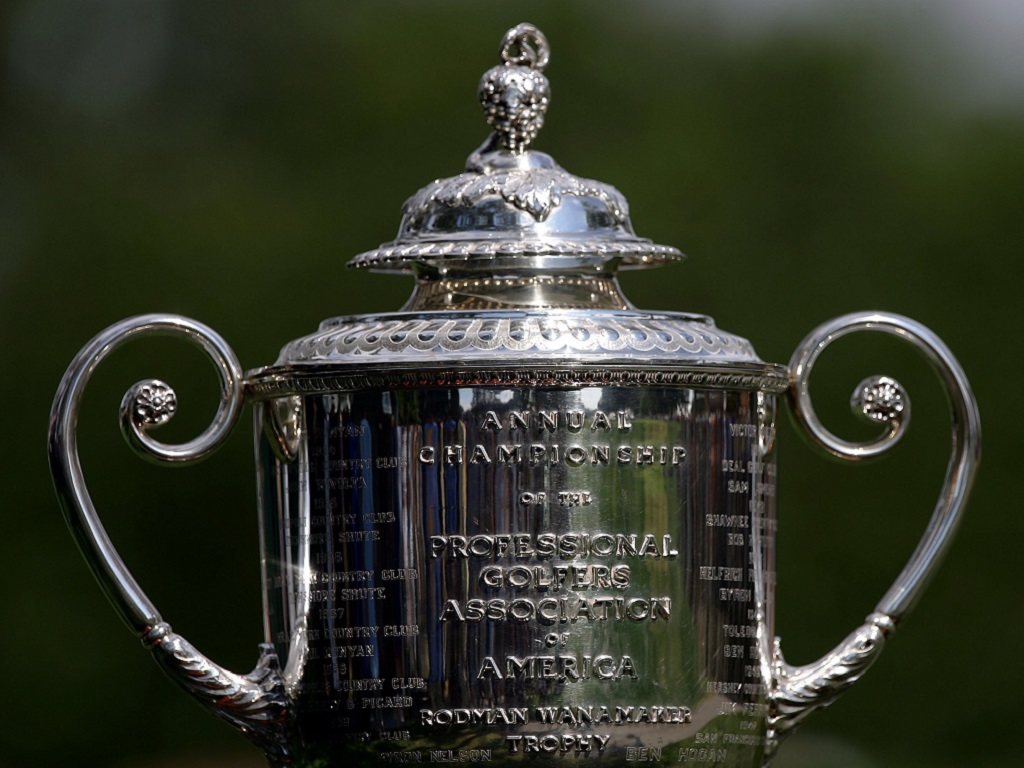
Aronimink is not a storied club, but when Donald Ross himself proclaimed it to be as good as he can design and build, one had to take notice. Jay Sigel was the pre-eminent male amateur golfer from the mid-1970s to the mid-1990s. He might have called any number of Philadelphia clubs home, but he chose Aronimink. It served him well. Gary Player won a PGA Championship here in 1962, and was followed by the 1993 winner … nobody. Aronimink gave that event away to Inverness, for reasons of which it is certainly not proud. So be it. We had to wait sixty-four years for the PGA to return to Newtown Square, but here we are. Aronimink has been neo-restored by Gil Hanse and team, to return Ross features with an eye toward defense against the dark arts, errrr, high-tech equipment.
Day one saw Rory McIlroy and Bryson DeChambeau dig big holes, to the tune of plus-four and plus-six, respectively. Since the first-round lead will be minus-three at worst, many shots will need to be made up for the power couple to reach contention. By nightfall, seven golfers held the day-one lead at three-under par 67. Shots and sticks caught our attention, and we are proud to present Five Things We Learned on Tech Thursday at the 2026 PGA Championship. Thanks to InsideTourGolfer, Today’s Golfer, and GolfWRX for initial equipment research.
First, meet Min Woo Lee
Min Woo Lee, aka Dr. Chipinski, has once again thrust himself into the conversation of Can he, will he, when will he? Lee has so much talent, wins not nearly as often as we believe that he should, and has no major near-misses (much less titles) on his wiki. The young Aussie is getting older and wiser, but is he able to avoid the scarring that holds the older and wiser back from breaking through? Philadelphia offers another opportunity. Min Woo signed for five birdies and two bogeys on day one, and grabbed a share of the opening-day lead at Aronimink. Winners transcend history and the moment, and Lee will need that sort of ascent to lift the Wannamaker on Sunday.
Second, meet Aldrich Potgeiter
The young South African golfer can rip driver with the best of them. Aronimink tips out at nearly 7400 yards, but beyond the fairway bunkers that ensnare only the mortals, Potgeiter can take his chances with wedge from the rough. On Thursday, he spent plenty of time in the spinach. Like Popeye, he used his muscles to gouge and thrash and dig his way out. Six birdies against three bogeys on the card brought AP in a three deep.
Third, meet Martin Kaymer
Not a major event takes place without a where’s he been throwback moment. We know that Martin Kaymer left the PGA and DP World tours for LIV golf, but the two-time (US Open and PGA) major winner has a lifetime exemption into at least one major event, and he seizes the opportunity each May. Kaymer joined the six-seven brigade with four birdies and a solitary bogey on day one. Kaymer was never a long hitter, and the years are kind to no golfer. The German champion will need to uncork every bottle of guile and strategy in his cabinet to remain in contention. For today, though, he occupies a rung on the ladder of Tour Tech.
Fourth, meet Scottie Scheffler
Let’s see, he’s the defending champion at the PGA, and he found his way back to the top tier with five birdies against two bogeys. To be a favorite and then play up to that stature and expectation is quite difficult. Just ask Rory, Bryson, and some of the other pre-tournament heartthrobs. Scheffler’s game is complete, and to knock him off the OWGR #1 pedestal, one needs to defeat him at the majors. Aronimink is the sort of course that fits Scheffler’s game. Better yet, it unfits the game of many of his challengers. Don’t expect Scheffler to go away anytime soon. Come Sunday, he’ll be around.
Fifth, meet Stephan Jaeger
Clocking in for the unheralded players shift are Ryo Hisatsune and Stephan Jaeger. Hisatsune logged seven birdies on day one, but gave most of them back with four bogeys. Still, he’s tied at the top for a time. Jaeger pitched five birdies against two bogeys, including a run of three consecutive, from holes four through six. Odds are that one of the two will hang around through 36 holes. Odds also suggest that both will be gone by Saturday evening. Still, the PGA Championship has historically been the major most likely to be won by an under-known. Both Hisatsune and Jaeger feature on that list, so good luck, lads!

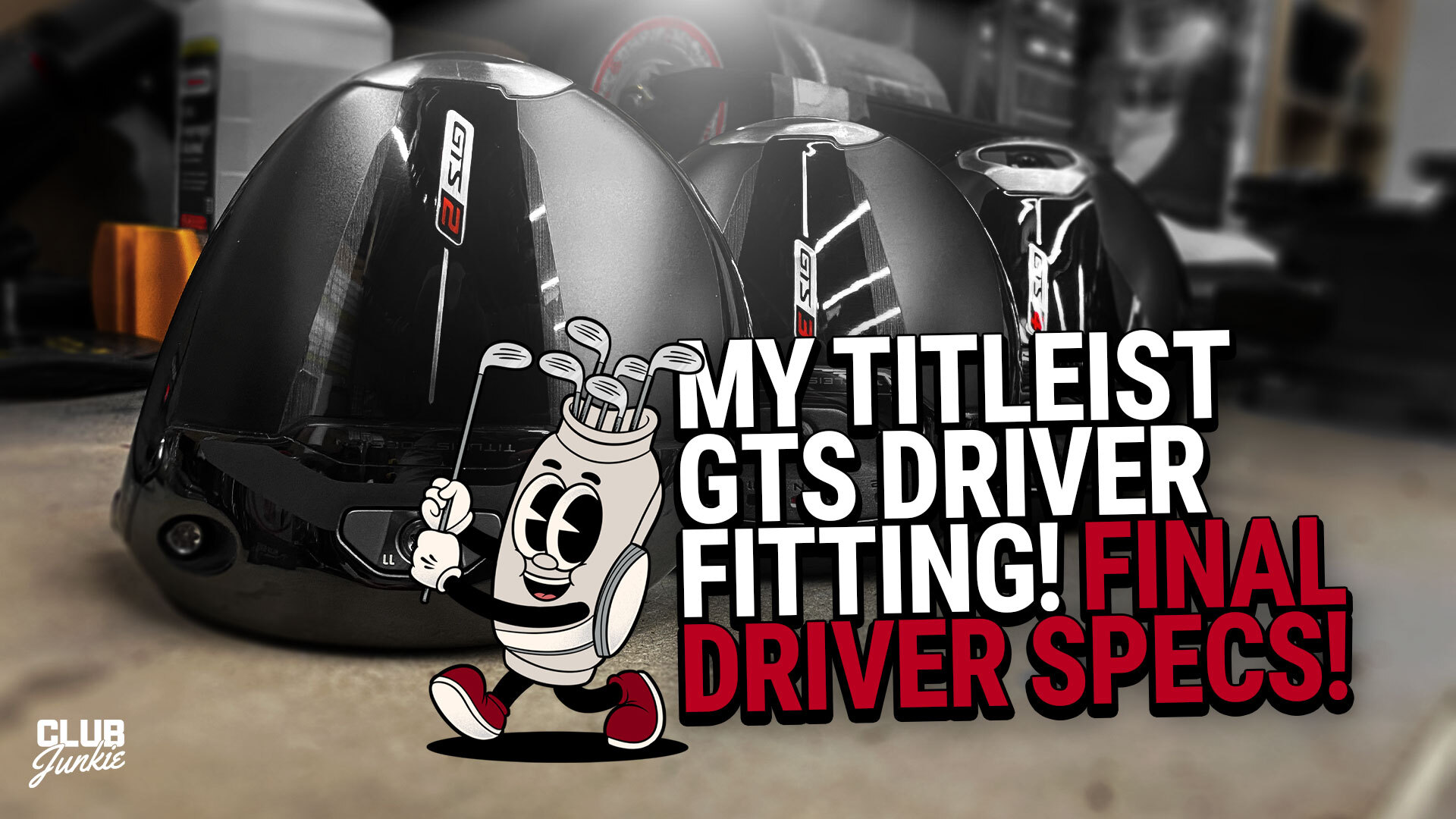
On this episode of the Club Junkie Podcast, I head to the Titleist Performance Institute for a full driver fitting with the new Titleist GTS lineup. We dive into the fitting process, talk about what made the biggest difference in performance, and break down how the different GTS heads and shaft combinations compare on the launch monitor. If you are thinking about a new driver setup for this season, there is a lot to take away from this one.
I also get into Brooks Koepka and the gear setup he brought to the PGA Championship, including the putters that caught my eye during the week. There are some interesting equipment trends showing up at the highest level right now and we break down what stands out.
To wrap things up, I talk about reshafting a few wedges, what I learned during the process, and swapping an adaptor onto a new shaft for another build project in the shop. A gear packed episode from start to finish for anyone who loves golf equipment and club building.
Follow Club Junkie everywhere:
Instagram: https://www.instagram.com/clubjunkiepod/
X: https://x.com/ClubJunkiePod
TikTok: https://www.tiktok.com/@clubjunkiepod
Threads: https://www.threads.com/@clubjunkiepod
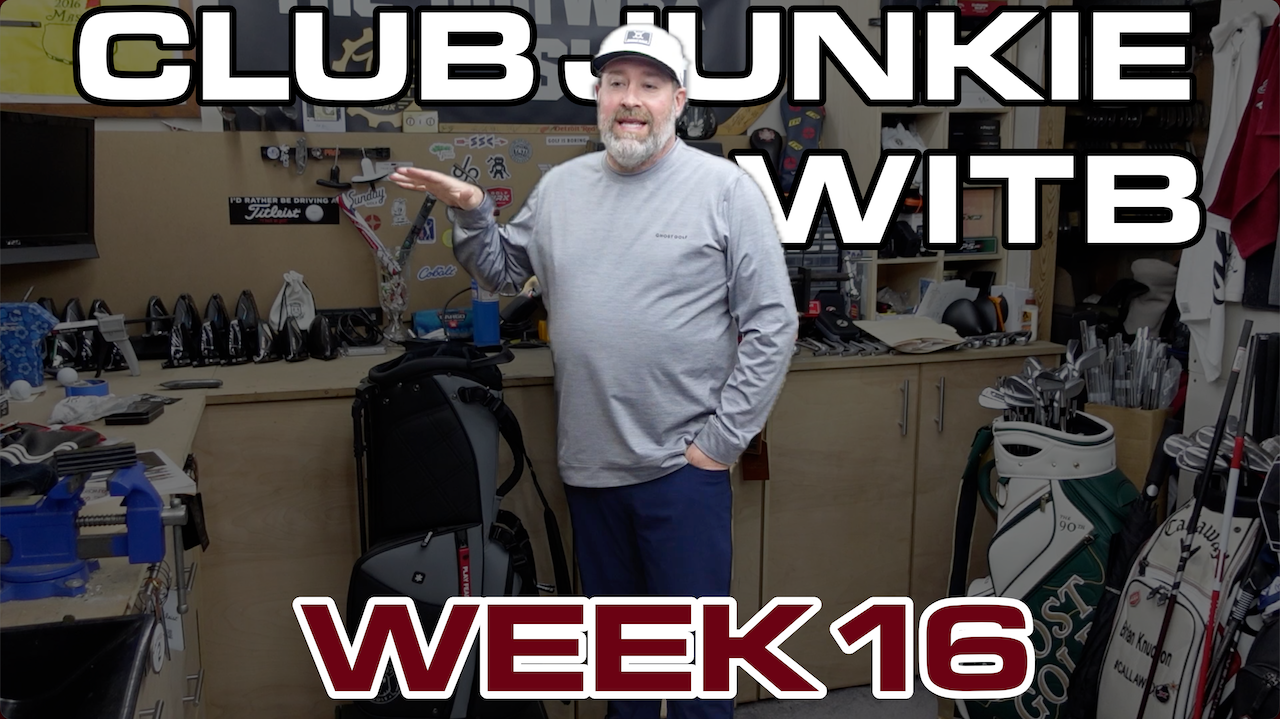
Excited for this week’s WITB as we get to add the new Titleist GTS woods to the bag! I was fit at Titleist’s TPI facility in Oceanside California a few weeks ago and my new clubs just showed up. I am also adding a cool set of irons that I built last year some wild custom wedges into a new golf bag. Speaking of the bag I have a new Ghost Anyday Black Ops stand bag that I will be using on my Motocaddy Remote M7 electric cart.
Driver: Titleist GTS3 (11 degrees @ 10.25)
Shaft: Fujikura Ventus Red 6s
3-wood: Titleist GT1 3Tour (14.5 degrees)
Shaft: Graphite Design Tour AD CQ-7s
5-wood: Titleist GTS (18 degrees)
Shaft: Fujikura Ventus Red 7s
9-wood: Titleist GT1 (24 degress)
Shaft: Fujikura Ventus Red 7s
Irons: Bettinardi CB24 (5-PW)
Shafts: KBS C-Taper Lite 110 stiff
Wedge: TaylorMade MG5 (50-09 SB)
Shaft: Mitsubishi MMT 125 Stiff
Wedge: TaylorMade MG5 (56-12 SB)
Shaft: Mitsubishi MMT 125 Stiff
Wedge: TaylorMade MG5 (60-08 LB)
Shaft: Mitsubishi MMT 125 Stiff
Putter: Dan Carraher ZT Proto
Ball: Callaway Chrome Tour
Bag: Ghost Anyday Black Ops Stand Bag

Justin Rose WITB 2026 (April): Full WITB breakdown with new McLaren irons

RBC Heritage Tour Report: More minis, course-specific setups, Spider & GTS launches

What’s the story behind Webb Simpson’s custom-stamped irons?

Cadillac Championship Tour Report: Spieth’s sizable changes, McLaren Golf launches, and more

Kristoffer Reitan’s winning WITB: 2026 Truist Championship

Cameron Young’s winning WITB: 2026 Cadillac Championship

Aaron Rai’s winning WITB: 2026 PGA Championship

Nelly Korda WITB 2026 (April)

Justin Rose on the switch to McLaren Golf, learnings from previous equipment moves

Photos from the 2026 PGA Championship


Patrick Reed WITB 2026 (May)
Driver: Titleist GT3 (9 degrees) Buy here. Shaft: Aldila Rogue Silver 130 M.S.I. 70 TX 3-wood: TaylorMade Qi35 (15 degrees)...

Aaron Rai’s winning WITB: 2026 PGA Championship
Driver: TaylorMade M6 (9 degrees) Shaft: Aldilda Synergy Blue 70 TX 3-wood: TaylorMade Qi10 (15 degrees) Shaft: Fujikura Ventus Blue...


Michael Block WITB 2026 (May)
Driver: TaylorMade Qi4D (9 degrees) Shaft: Fujikura Ventus Black VeloCore+ 5 X 3-wood: TaylorMade Qi4D (15 degrees @14.25) Shaft: Mitsubishi...


Bryson DeChambeau WITB 2026 (May)
Driver: Krank Formula Fire Pro (6 degrees) Shaft: Project X Prototype 3-wood: Krank Formula Fire (10 degrees) Shaft: LA Golf BAD...
-
 Whats in the Bag3 weeks ago
Kristoffer Reitan’s winning WITB: 2026 Truist Championship
-
Whats in the Bag2 weeks ago
Aaron Rai’s winning WITB: 2026 PGA Championship
-
 Tour Photo Galleries3 weeks ago
Photos from the 2026 PGA Championship
-
 Equipment2 weeks ago
GolfWRX Launch Report: 2026 Titleist GTS drivers
-

 Equipment2 weeks ago
PGA Championship Tour Report: Fitzpatrick, Koepka among big-name putter switches for Aronimink
-

 News2 weeks ago
WITB Time Machine: Phil Mickelson’s winning WITB, 2021 PGA Championship
-

 Equipment2 weeks ago
Which of Tiger’s major winning irons are your favorite? – GolfWRXers discuss
-

 Equipment2 weeks ago
Lead Tape Report: Adjusting the swingweight of the Wanamaker Trophy


rasel
Oct 2, 2017 at 1:54 am
its a really great idea that you have described here. thanks a lot for this best idea
Joey
Feb 23, 2017 at 2:15 pm
Is it just me or do other people just hate when you are playing with people and they will tell you ball doesn’t matter. I was playing the other day and I bought some b330s golf balls and he was wondering why I bought them instead of Top Flights that are half the price. Does anyone know something smart that i can say back to people who comment on balls that i use?
Miuralovechild
Feb 6, 2017 at 1:20 am
I can’t wait for the Sams Choice ball from Sam’s Club. They won’t let Costco dominate the ball market.
Dan
Feb 12, 2017 at 10:41 pm
more likely it will be an Amazon ball right? I’ve been buying all my golf balls from Amazon for the last year+. It’s only a matter of time before they get the same factory as Costco to make their own “prime” ball.
Eye4Golf-Albuquerque
Feb 1, 2017 at 9:31 pm
I play on city courses 95% of the time and play 3 times a week, so high end premium balls are not a good return on investment. If you play on high end courses you see some improvement if you play to a 6-12 hdcp, higher no help, lower no brainier. Last time I read the average golfer shoots in mid 90’s. I think it’s great to have such a variety of value priced quality balls Snell,Vice, Wilson Staff and others from $12-32 dozen. Duo’s yellow in winter and Kirkland rest of time are my favorites. Finding the right ball is easier and cheaper than golf clubs.
Kyle p
Feb 1, 2017 at 12:05 pm
I’ve read that article countless times with only slight variations over the years with regards to balls and clubs. It comes across as a child writing a report.
I’m asking the editor, please don’t post articles just for the sake of filling up space.
This website has always been knowledgeable and insightful and I hope that resumes in the future.
Stevegp
Feb 1, 2017 at 12:41 am
Interesting summation article. You “use” the golf ball on every shot. The ball you choose is important (IMHO). The golf ball also is the least expensive piece of equipment you purchase and one that can impact every shot, enjoyment of the game, and your performance.
S Hitter
Feb 1, 2017 at 1:28 am
No, the least expensive piece of equipment is the tee that you put your ball on
Jim
Jan 31, 2017 at 5:26 pm
Absolutely time for ‘the official tournament ball’
a barrel full on the range and every player loads their bag with them. Period. Different mfrs can sponsor events and their ‘tour compliant’ ball will be the one used that week.
let the pampered ones cry. They’ll still all have their endorsement deals on the side
george
Jan 31, 2017 at 11:54 am
Well, I’ve still got 10 dz B330-RX in the basement. I guess I’ll have to wait another two months zu select a new and improved ball… 😉
cgasucks
Jan 31, 2017 at 8:30 am
When it comes to buying new tour level quality balls, the KSig gives you the best deal for your hard earned dollars. I will count the days when it will come back (as per their Chairman’s comments).
Tim
Jan 31, 2017 at 6:23 pm
Going a little far calling the KSig a tour level ball…good ball for amateurs yes….you know the Costco ball does not or did not go through all the testing a Prov1 or other tour balls go through right…I think you will find the real threat of the KSig ball is for all the off tour balls all the big boys sell…Who would pay $22 or more for a hard cover ball if you could get a urethane ball for $15 a dozen…that is the real threat
Brian
Jan 31, 2017 at 8:40 pm
Michael Breed, is that you?
Mark
Jan 31, 2017 at 2:42 am
Hopefully more affordable. Kirkland have rocked the boat but you find a lot of golfers who want expensive and would not be seen dead with anything that wasn’t from a premium priced brand. And are off 20 and hit it all over the parish and then spend an inordinate amount of time looking for them. “It’s lost mate, this is where Elephants come to die. Not a chance…these are £3.50 each”….
JuNiOR
Jan 31, 2017 at 12:24 am
Who Makes the Best Golf Balls?
Hands down the Kirkland Signature 4 piece!!!
1. Performance
2. Price
3. Did I say price….$30.00 for 2 DOZEN
Jim
Jan 31, 2017 at 12:39 am
Your talking about an ok ball for the White Tee 15 to 20 handicapper….for a real player, one who makes birdies from the Blue or Back tees the higher end balls are going to be better…why, because the high end balls (Prov1 etc) are built to be and play better…at best with a Kirkland ball your getting a ball with play ability 5 or more years old. Fine for those that just not going to get any better..
Brian
Jan 31, 2017 at 8:43 pm
Is Titleist paying you per post or an hourly rate?
STeve S
Jan 31, 2017 at 8:52 pm
Have you seen the testing? Ksig numbers within experimental error of the 2016 Pro V1. If it’s 5 year old technology that means all the BS about new technology is just that…BS.
SV
Feb 1, 2017 at 9:53 am
A rather snarky comment. Actually a player will do his best with a ball that suits him and they don’t have to be tour level and cost $50 per dozen. Just because someone doesn’t want to pay an exorbitant price for balls doesn’t mean they can’t play. My favorite balls, which unfortunately are no longer available, are the Srixon AD333 and Callaway Diablo HX Tour. By the way, I am 68 years old, play to a 5 handicap and play to it from any set of tees.
MiloTheMarauder
Jan 30, 2017 at 8:33 pm
I’m looking forward to playing the new Chrome soft X, hopefully in Truvis.
Adam
Jan 30, 2017 at 7:01 pm
Hopefully it goes in the hole a lot more and sooner on each hole!
Geoff
Jan 30, 2017 at 1:19 pm
I’ve played the Chromax ball for about 3 years and it simply outperforms other premium balls that I’ve played. They really run out a little more on Drives, approaches and putts. Most players want more distance on their Driver and they often miss greens and putts short. Urethane balls produce more spin of the driver which causes the ball to hook or slice more and stop quickly on a good drive, while the Chromax ball is very straight and picks up a couple of extra yards. On approach shots, the urethane ball will stop and spin back; if most misses are short, you don’t want the ball to spin back. The Chromax ball takes a hop forward and then stops for me. On putts, the urethane ball grips each imperfection on the green and slows down the ball. I hate the putts you leave inches short with the perfect line—that is far less likely to happen with this ball. Pull and hit the same clubs you normally would and hit more greens and hole more putts, it’s really a no-brainer. I’m very happy with the Chromax O.V. ball.
Ian
Jan 31, 2017 at 1:42 pm
who should they make the endorsement check out to?
Geoff
Jan 31, 2017 at 5:39 pm
Ha, me I would think!