
Opinion & Analysis
How Golf Can Learn from the NBA’s 3-Point Line

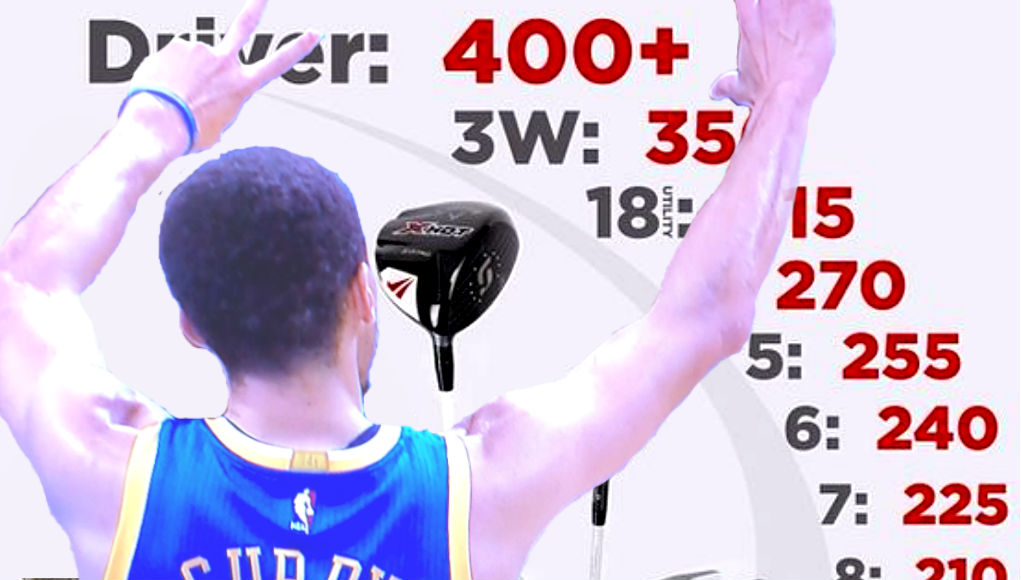
For more than a decade, the hot topic of conversation in golf has been driving distance. Members of the media have been asking the USGA and the R&A to address the issue of driving distance and the governing bodies have essentially refused to address it to any degree… until now.
The USGA recently released their statistical analysis on driving distance and how it’s affecting the game. Their results? It’s not. The USGA claims that the increase of driving distance has been marginal since 2003 and should not cause alarm.
As soon as the report was published — you can read the report in full right here — golf writers and analysts took to Twitter, Facebook, and the airwaves, to discuss the conclusions the USGA provided.
I think, much like the sentiment with anchored putters, the real concern is that the fabric of the game will change, or already has changed and that it’s not the same game it was 20 years ago.
As the discussion ensues about driving distance and how the USGA is handling it (or ignoring it), I think the discussion is going in the wrong direction. The primary argument is that iconic courses are becoming obsolete because there is only so much real estate for those courses to lengthen. Or that it’s becoming more and more difficult to build new courses that can cater to the PGA Tour. The second half of that argument is that, if they continue to lengthen courses, then they are essentially eliminating players who don’t average 300 yards or more off the tee. At this point, I agree with the sentiment that courses don’t need to be any longer. But there is more to the story.
I think, much like the sentiment with anchored putters, the real concern is that the fabric of the game will change, or already has changed and that it’s not the same game it was 20 years ago. It’s a game that doesn’t reward shot making and short-game abilities, or the best putters on the planet. It’s a game that rewards power and the “bomb and gouge” mentality. And the argument is the bomb and gouge mentality is bad for the game.
I disagree. The game has changed because that’s what games do. They evolve.
Before we talk about the evolution of the 3-point line, let’s talk about course conditions. As lawn care advanced over the decades, golf courses have changed dramatically from tee to green. Greens haven’t always been 12 or 13 on the Stimpmeter week in and week out. With the change of the green speeds came the change of putting strokes. It also changed the way players had to fly the ball into the green for approach shots. Faster and firmer greens meant that it was harder to get the ball to stop. Grooves in irons and wedges changed, as did the ball.
The same thing happened to the fairways. When the greens became firmer and faster, so did the fairways. In a 2011 article from Golf Digest, David Toms talks about this at great length.
“[The tour has] tried to do the best they can to get the fairways firmer,” said Toms. “Guys wanted firm, fast conditions. That’s what the tour’s supposed to do. That’s part of their setup plan. So if the weather stays dry, I know they’ve tried to get them to firm up. Perhaps that translates into overall distance being a little longer.”
So, my question is, why is all the focus on the equipment? Rioting about equipment is a fruitless effort. Changing the entire marketing principle for the golf industry — Distance! Distance! Distance! — is infinitely more difficult than trying to change the set-up plan for the tour.
If people really believe that distance on the professional circuits is a problem, then we should be talking about course conditions. Let the fairways and the rough grow a little higher so that the ball doesn’t run 40 yards on a high draw. If a player wants his ball to run out, make him do it from the tee box by controlling his trajectory. A simpler solution is altering course conditions, but what if distance isn’t actually a problem? I mean, we’re really only talking about 1,000 players, right? Not the 30 million amateur golfers.
So, let’s think about it this way.
In 1967 there was no 3-point basket in the NBA, NCAA, or high school basketball. There was, however, a 3-point basket in the American Basketball Association. In an attempt to compete with the NBA, the ABA tried to spice things up in their league and one of the main ways they did that was by adding the 3-point line.
The coaches at the helm of ABA teams had coached basketball their entire careers based on a game without 3-point shots. Throwing in a basket that counted more than any other on the floor caused the coaches to rethink their entire philosophy of how the game was played. It caused the strategic problems that even lead to one game being decided by a 92-foot shot just before the buzzer. The problem was, the score before the shot was 116-118. The players on the team that made the basket didn’t realize they’d won because they weren’t thinking about the 3-pointer.
The ABA would be relatively short lived and eventually merge with the NBA. And like all established organizations, the NBA was slow to adopt change, but it finally added the 3-point line in 1979. And though it didn’t happen overnight, the game would change drastically over the course of the next three decades.
It took nearly 40 years for the game to evolve into a game where the 3-point shot was built into the repertoire of the best players in the game.
In the days before the 3-point line, basketball was played as close to the rim as possible. Big guys like Bill Russell and Wilt Chamberlain dominated the game down low. It was physical and focused on driving in the paint and scoring either by short lay-ups or drawing the foul inside.
When the 3-point line was added, it gave smaller guys, who didn’t stand a chance at the physical game, an opportunity to score big points from beyond the arc. In the ’96-’97 season, the leading scorer was Michael Jordan; in that season he made 111 three-point shots. In the 03’-’04 season, the leading scorer was Kevin Garnett; that season he made 88 three-point shots. In the ’15-’16 season, the leading scorer was James Harden; he made 236 three-points shots. The second leading scorer in that season was Steph Curry who made 402.
It took nearly 40 years for the game to evolve into a game where the 3-point shot was built into the repertoire of the best players in the game. It takes time for people to accept change, but it will happen.
Maybe that’s the thing that has golf enthusiasts scared; maybe they don’t want the game to change, but the problem is that it’s inevitable. It’s already happened. It changed when players stopped putting hickory shafts in their irons and using steel. It changed when players stopped using putters that looked like 1-irons and started using the mallet. It changed when Gene Sarazen invented the sand wedge.
The game has evolved, but just because we see players hitting it 330 yards, does that mean those players are the one’s winning all the tournaments? Let’s look at some numbers.
Between 2003 and 2015 the average driving distance of all winners in that period (a total of 500 events) was 293.3 yards. The average driving distance on tour was 287.8 yards. That means that, on average, the winner of a PGA Tour event was driving the ball 5 yards longer than the rest of the field. But the problem is not the average distance; it’s the top 10 percent that has everybody worried. It’s also not the majority of the tour players who take that average to new heights. What we’re seeing are about 10-12 guys that hit it over 20 yards longer than the tour average.
Can we really make huge changes in the game because we have about 15 players that are just that much longer than the rest of the field? I don’t know. Maybe we can, but like so many have said about the USGA Driving Distance Report, “It doesn’t pass the eye test.”
 Out of the 500 events between ‘03 and ‘15, 160 winners averaged fewer yards off the tee than the tour average. And you have to remember that in that same span 44 events were won by Tiger Woods, 21 events were won by Phil Mickelson, 23 were won by Vijay Singh and nine were won by Dustin Johnson. Four players account for nearly 20 percent of the wins between ’03 and ’15, and all four of those players hit the ball longer than the tour average (by about 11 yards).
From of the remaining 403 events, 160 averaged less than the tour average in driving distance. That gives us right at 40 percent of the winners on tour from ’03 to ’15 averaged less than the tour average in driving distance. Even further, out of all 500 events in that time, only five players averaged more than 303.3 yards. That’s one percent of the winners averaging over 303.3 yards.
The current proposed solutions are as follows: increase the ball size (or dial the ball back) and increase club regulations. Both of those solutions are going to punish the average golfer, which is completely the wrong thing to do. The golf industry is unlike most other sports; it doesn’t make its money from the professionals, it makes its money from the amateur. So why punish the target audience for revenue? (A surefire way to hurt the game.)
The solution is much simpler. Alter the course set up. If you’re tired of players being able to hit every par-five in two, then grow the rough up and narrow the fairway at 300 yards. Dustin Johnson didn’t win at Oakmont last year because he hit the ball further than everyone else, he won the U.S. Open because drove the ball in the fairway and hit his irons close to the hole. If you look at DJ’s stats from last year, from the rough at 150-175 yards, he was T164. From 50-125 yards, he was T103.
What does that tell you? If the long hitters drive the ball in the rough, they have a harder time getting the ball close to the hole. Like everyone else.
Dustin Johnson didn’t win at Oakmont last year because he hit the ball further than everyone else, he won the U.S. Open because drove the ball in the fairway and hit his irons close to the hole.
The USGA and the PGA Tour are offended that players are hitting the ball 330 yards. And they’re even more upset by the fact that there are 30 guys who can hit it that far. That’s a PGA Tour and USGA problem; it’s not a player or a manufacturer problem. Up to this point, those entities have tried to solve “their” problem in the least creative way possible: lengthening courses. It’s the wrong way to look at it. It’s also the wrong way to look at it by assuming it’s actually a problem. Things change. Games evolve. Players get better. Equipment gets better.
So what are we so worried about? If the score of the average tournament is 20- or 21-under par, who really cares? There are only a couple of times a year that anybody wants to really see PGA Tour players struggle; the U.S. Open and the Open Championship. And players struggle for completely different reasons at those tournaments. The rest of the year just let the drama be that players are trying to beat each other. Not that they are trying to beat the course.
Let’s stop whining and enjoy watching the best players in the world do what they do. Use the ProTracer function more on your coverage. Let’s take advantage of the technology we have and show the types of shots players could hit when they are stuck behind the tree and stop complaining that they’re behind a tree because they tried to cut the corner and failed.
Driving distance is only a problem for the people who refuse to admit that the game is going to change. It’s only a problem for those who refuse to be creative with course setup and think the only way to even the playing field is to lengthen the course. If anything, they are only reinforcing what they call a problem. Players have to hit it farther to be consistently competitive if you stretch all the courses to 7,500 yards or longer. It’s a circular logic that has created an entire subcategory of “searchable problems” in golf. We don’t need any more problems, we already have the most difficult one to overcome: expense.
We’re trying to solve a problem that is only a problem based on the data points for 0.01 percent of the players who play the game. In any other industry that would be considered lunacy. Like the 3-point line changed the way basketball was played, so too will distance in golf. It’s inevitable.
You can scrutinize my calculations here.



Aronimink is not a storied club, but when Donald Ross himself proclaimed it to be as good as he can design and build, one had to take notice. Jay Sigel was the pre-eminent male amateur golfer from the mid-1970s to the mid-1990s. He might have called any number of Philadelphia clubs home, but he chose Aronimink. It served him well. Gary Player won a PGA Championship here in 1962, and was followed by the 1993 winner … nobody. Aronimink gave that event away to Inverness, for reasons of which it is certainly not proud. So be it. We had to wait sixty-four years for the PGA to return to Newtown Square, but here we are. Aronimink has been neo-restored by Gil Hanse and team, to return Ross features with an eye toward defense against the dark arts, errrr, high-tech equipment.
Day one saw Rory McIlroy and Bryson DeChambeau dig big holes, to the tune of plus-four and plus-six, respectively. Since the first-round lead will be minus-three at worst, many shots will need to be made up for the power couple to reach contention. By nightfall, seven golfers held the day-one lead at three-under par 67. Shots and sticks caught our attention, and we are proud to present Five Things We Learned on Tech Thursday at the 2026 PGA Championship. Thanks to InsideTourGolfer, Today’s Golfer, and GolfWRX for initial equipment research.
First, meet Min Woo Lee
Min Woo Lee, aka Dr. Chipinski, has once again thrust himself into the conversation of Can he, will he, when will he? Lee has so much talent, wins not nearly as often as we believe that he should, and has no major near-misses (much less titles) on his wiki. The young Aussie is getting older and wiser, but is he able to avoid the scarring that holds the older and wiser back from breaking through? Philadelphia offers another opportunity. Min Woo signed for five birdies and two bogeys on day one, and grabbed a share of the opening-day lead at Aronimink. Winners transcend history and the moment, and Lee will need that sort of ascent to lift the Wannamaker on Sunday.
Second, meet Aldrich Potgeiter
The young South African golfer can rip driver with the best of them. Aronimink tips out at nearly 7400 yards, but beyond the fairway bunkers that ensnare only the mortals, Potgeiter can take his chances with wedge from the rough. On Thursday, he spent plenty of time in the spinach. Like Popeye, he used his muscles to gouge and thrash and dig his way out. Six birdies against three bogeys on the card brought AP in a three deep.
Third, meet Martin Kaymer
Not a major event takes place without a where’s he been throwback moment. We know that Martin Kaymer left the PGA and DP World tours for LIV golf, but the two-time (US Open and PGA) major winner has a lifetime exemption into at least one major event, and he seizes the opportunity each May. Kaymer joined the six-seven brigade with four birdies and a solitary bogey on day one. Kaymer was never a long hitter, and the years are kind to no golfer. The German champion will need to uncork every bottle of guile and strategy in his cabinet to remain in contention. For today, though, he occupies a rung on the ladder of Tour Tech.
Fourth, meet Scottie Scheffler
Let’s see, he’s the defending champion at the PGA, and he found his way back to the top tier with five birdies against two bogeys. To be a favorite and then play up to that stature and expectation is quite difficult. Just ask Rory, Bryson, and some of the other pre-tournament heartthrobs. Scheffler’s game is complete, and to knock him off the OWGR #1 pedestal, one needs to defeat him at the majors. Aronimink is the sort of course that fits Scheffler’s game. Better yet, it unfits the game of many of his challengers. Don’t expect Scheffler to go away anytime soon. Come Sunday, he’ll be around.
Fifth, meet Stephan Jaeger
Clocking in for the unheralded players shift are Ryo Hisatsune and Stephan Jaeger. Hisatsune logged seven birdies on day one, but gave most of them back with four bogeys. Still, he’s tied at the top for a time. Jaeger pitched five birdies against two bogeys, including a run of three consecutive, from holes four through six. Odds are that one of the two will hang around through 36 holes. Odds also suggest that both will be gone by Saturday evening. Still, the PGA Championship has historically been the major most likely to be won by an under-known. Both Hisatsune and Jaeger feature on that list, so good luck, lads!

On this episode of the Club Junkie Podcast, I head to the Titleist Performance Institute for a full driver fitting with the new Titleist GTS lineup. We dive into the fitting process, talk about what made the biggest difference in performance, and break down how the different GTS heads and shaft combinations compare on the launch monitor. If you are thinking about a new driver setup for this season, there is a lot to take away from this one.
I also get into Brooks Koepka and the gear setup he brought to the PGA Championship, including the putters that caught my eye during the week. There are some interesting equipment trends showing up at the highest level right now and we break down what stands out.
To wrap things up, I talk about reshafting a few wedges, what I learned during the process, and swapping an adaptor onto a new shaft for another build project in the shop. A gear packed episode from start to finish for anyone who loves golf equipment and club building.
Follow Club Junkie everywhere:
Instagram: https://www.instagram.com/clubjunkiepod/
X: https://x.com/ClubJunkiePod
TikTok: https://www.tiktok.com/@clubjunkiepod
Threads: https://www.threads.com/@clubjunkiepod

Excited for this week’s WITB as we get to add the new Titleist GTS woods to the bag! I was fit at Titleist’s TPI facility in Oceanside California a few weeks ago and my new clubs just showed up. I am also adding a cool set of irons that I built last year some wild custom wedges into a new golf bag. Speaking of the bag I have a new Ghost Anyday Black Ops stand bag that I will be using on my Motocaddy Remote M7 electric cart.
Driver: Titleist GTS3 (11 degrees @ 10.25)
Shaft: Fujikura Ventus Red 6s
3-wood: Titleist GT1 3Tour (14.5 degrees)
Shaft: Graphite Design Tour AD CQ-7s
5-wood: Titleist GTS (18 degrees)
Shaft: Fujikura Ventus Red 7s
9-wood: Titleist GT1 (24 degress)
Shaft: Fujikura Ventus Red 7s
Irons: Bettinardi CB24 (5-PW)
Shafts: KBS C-Taper Lite 110 stiff
Wedge: TaylorMade MG5 (50-09 SB)
Shaft: Mitsubishi MMT 125 Stiff
Wedge: TaylorMade MG5 (56-12 SB)
Shaft: Mitsubishi MMT 125 Stiff
Wedge: TaylorMade MG5 (60-08 LB)
Shaft: Mitsubishi MMT 125 Stiff
Putter: Dan Carraher ZT Proto
Ball: Callaway Chrome Tour
Bag: Ghost Anyday Black Ops Stand Bag

Justin Rose WITB 2026 (April): Full WITB breakdown with new McLaren irons

RBC Heritage Tour Report: More minis, course-specific setups, Spider & GTS launches

What’s the story behind Webb Simpson’s custom-stamped irons?

Cadillac Championship Tour Report: Spieth’s sizable changes, McLaren Golf launches, and more

Kristoffer Reitan’s winning WITB: 2026 Truist Championship

Cameron Young’s winning WITB: 2026 Cadillac Championship

Aaron Rai’s winning WITB: 2026 PGA Championship

Nelly Korda WITB 2026 (April)

Justin Rose on the switch to McLaren Golf, learnings from previous equipment moves

Photos from the 2026 PGA Championship


Patrick Reed WITB 2026 (May)
Driver: Titleist GT3 (9 degrees) Buy here. Shaft: Aldila Rogue Silver 130 M.S.I. 70 TX 3-wood: TaylorMade Qi35 (15 degrees)...

Aaron Rai’s winning WITB: 2026 PGA Championship
Driver: TaylorMade M6 (9 degrees) Shaft: Aldilda Synergy Blue 70 TX 3-wood: TaylorMade Qi10 (15 degrees) Shaft: Fujikura Ventus Blue...


Michael Block WITB 2026 (May)
Driver: TaylorMade Qi4D (9 degrees) Shaft: Fujikura Ventus Black VeloCore+ 5 X 3-wood: TaylorMade Qi4D (15 degrees @14.25) Shaft: Mitsubishi...


Bryson DeChambeau WITB 2026 (May)
Driver: Krank Formula Fire Pro (6 degrees) Shaft: Project X Prototype 3-wood: Krank Formula Fire (10 degrees) Shaft: LA Golf BAD...
-
 Whats in the Bag3 weeks ago
Kristoffer Reitan’s winning WITB: 2026 Truist Championship
-
Whats in the Bag2 weeks ago
Aaron Rai’s winning WITB: 2026 PGA Championship
-
 Tour Photo Galleries3 weeks ago
Photos from the 2026 PGA Championship
-
 Equipment2 weeks ago
GolfWRX Launch Report: 2026 Titleist GTS drivers
-

 Equipment2 weeks ago
PGA Championship Tour Report: Fitzpatrick, Koepka among big-name putter switches for Aronimink
-

 News2 weeks ago
WITB Time Machine: Phil Mickelson’s winning WITB, 2021 PGA Championship
-

 Equipment2 weeks ago
Which of Tiger’s major winning irons are your favorite? – GolfWRXers discuss
-

 Equipment2 weeks ago
Lead Tape Report: Adjusting the swingweight of the Wanamaker Trophy


Sean
Mar 11, 2017 at 7:12 pm
I never did understand all this talk of dialing back the equipment. All they need to do is change the course set up.
However, networks probably feel this would not make for compelling TV. So fairways are cut and rolled, rough isn’t penal, etc. When the professionals play under very soggy conditions I note that many drives are in the 265-275 range.
Ronald Montesano
Mar 11, 2017 at 12:34 pm
One of the points you’re missing is the flexibility of course set-up, contrasted with the inflexibility of an NBA court. Greens DON’T have to stimp at 12-13. Rough does not have to be set to a certain height. And most importantly, the 3-point arc of the NBA does not impact playgrounds and gymanasia, where pick-up games are played across the world.
Shift to golf, where courses and clubs watch the tours religiously, then often seek to emulate course set-ups, to the degradation of the game (which includes loss of players for whom the game is too challenging.)
The Tours need to look beyond their own, money-making role in this, and recognize the negative impact of what they do, on the people and their courses. We need enhance participation, not rough. We need to speed up play, not green speeds. If the tour does it, zealous club members and course denizens will compel superintendents to match wits. The regular golfer loses.
Greg V
Mar 10, 2017 at 9:48 am
“The current proposed solutions are as follows: increase the ball size (or dial the ball back) and increase club regulations. Both of those solutions are going to punish the average golfer, which is completely the wrong thing to do.”
I happen to disagree with that premise. If average golfers move up a tee or two, they will not be punished by a dialed-back ball.
They will simply be playing a shorter course, and will likely take less time to play it. That could be a good thing, no?
carl spackler
Mar 10, 2017 at 8:41 am
In the immortal words of Jean Paul Sartre, ‘Au revoir, gopher’.
S Hitter
Mar 9, 2017 at 6:36 pm
THE dumbest article ever on WRX, worse than some of the cheerleading articles sniffing Michelle Wie’s backside.
Look here http://www.golfchannel.com/media/golfs-lowest-rounds-58s-and-59s-tour
You’re worried about the bomb and gougers, now? Now? Sam Snead was known to be extremely long during his time, especially in his earlier days, and people were astounded. Nobody stopped him – well, they tried to, when he tried to putt croquet-style. But nobody took away his length – and he was doing it with the old equipment with fluffy balls!
This game has never been about a level playing field. You take it for what it is, and if you don’t have length or power, but a good enough short game and are very straight, well, you can skin this cat in many ways. But dominance is dominance. That’s the same in every sport.
Adam Crawford
Mar 10, 2017 at 9:05 am
I think you missed the actual statement the article was trying to make. It’s trying to say that it’s not actually a problem, but if it were, the solution is much simpler than changing the ball or the equipment.
Tom
Mar 9, 2017 at 10:03 am
I’ve been curious about this issue for a while, and the way different people view it. A: golfers are more athletic now than ever, and that, combined with some increase in equipment and ball features has probably lead to some form of increased distance by the majority of the field. But, looking back, Tiger hit it a mile before all of the crazy equipment talk set in, and John Daily hit it a mile longer, well before all of this.
The faster fairways has been my question as well, and why that’s not to blame. It’s not too typical on any course I play, to get 30-40 yards of roll. Every year I play a course within a day or two after the tour comes through, and it’s incredible how much faster the fairways are. The greens pretty typically do run between 11 and 13, so that stays the same, just on the higher end, but the fairways are like run ways compared to the way the course plays the rest of the year. I think that makes more of a difference than equipment, since equipment might account for what, 20 yards? I’m not really talking about the comparison of today’s gear to persimmon woods, but I’d be surprised to see DJ, Rory, Bubba, etc. lose more than 10-20 yards off the tee with any driver they try. Iron wise, most these guys use MB’s, and you’re going to hit one MB just as far as any other MB.
Tal
Mar 9, 2017 at 4:11 am
I think the anaogy is the wrong way round; this dialing back distance is like taking the 3 point line away, not adding it. I don’t think professional basketball would be as it is today without that line. Nor eould golf be anywhere near as interesting if you couldn’t marvel at the distance or ball speed of the pros. I think it would really lose the spark if DJ was hitting it, say, 280.
Part of the excitement of professional golf is watching how powerfully some guys hit it and if the ball is dialed back, the shorter hitters will still be shorter and the longer guys won’t draw as much of a crowd. Plus, plenty of great players would lose one of the elements that made them great on the first place. How is that fair?
DJ isa great example; always one of the longest but didn’t win a major until his wedges and putting improved. Distance doesn’t win by itself as you have to capitalise on the advantage.
So, this isn’t the same as adding the 3 point line. How fair would it be to Steph Curry if 3 pointers were taken back out of the game?
David W.
Mar 9, 2017 at 3:41 am
I think the author is onto something here – why was the WGC in Mexico so great to watch??? Because the course was narrow and many good players were in the trees.
Mat
Mar 8, 2017 at 2:10 pm
This analogy is only relevant if the Tour started playing Modified Stableford. I’m not opposed to that, but that’s a “3-point line”. You’re rewarding lower percentage changes with more points. The rest of this argument is irrelevant. Statistically, the game has changed, courses have changed, and it’s disingenuous to talk about “course setups”. Major changes are expensive, if at all possible. Sure, you can cut the grass a little higher, but if you do that, you’re just sounding like a whiner. So much for “Let’s stop whining…”
Chris B
Mar 8, 2017 at 1:22 pm
I love how the usga are using stats from 2003, this doesn’t show the true impact the ball has made. Golf is becoming boarring to watch, everyone just smashes it as far and as high as they can. Some guys just hit it further. The true craft of controlling your ball is being lost. Modern equipment is more beneficial to the longer hitters.
Luke
Mar 8, 2017 at 11:31 am
How about they play golf in normal conditions and stop following the sun round the globe. They play in high altitude climates. Come and play in the windy wet UK won’t be hitting it 350+
Greg V
Mar 8, 2017 at 11:13 am
Stupid article. The NBA didn’t change the size of the court, they didn’t change the ball, and they didn’t change the height of the basket. It is basically the same game with different scoring.
In golf, the ball changed, the clubs changed and the courses had to change. Same scoring. The result of the equipment and athletes’ changes required that the courses be made longer, which has increased the amount of time required to play.
Just go back to the US Amateur before steel shafts (1927). Every match was 36 holes. Why? Because the ball didn’t go as far (and the clubs were heavy and wood), so the courses were shorter and the players could play 36 every day.
I conclude: the better the equipment, the longer the courses. The longer the courses, the more time that it takes to play, or conversely, the less golf that we can play in the same amount of time. Why do we put up with that? Because we have egos and we want to hit the ball farther. That is self-defeating if you want to play more golf.
By the way, a basketball game takes about 3 hours. A hockey game takes about 3 hours. A football game takes 3 to 3-1/2 hours. Golf, at 4-1/2 to 5 hours takes way too much time.
RI_Redneck
Mar 8, 2017 at 11:13 am
The part of this article that really stands out to me is the firmness of the fairways and the lack of sufficient rough. It would not be difficult to have CERTAIN sections of the fairway that allow more rollout while having other sections less firm. So rollout will only come for those who are accurate enough to hit the right spot. Bomb and gouge is popular because there’s no penalty to hitting out of the fairway. Increase the rough length for pro tournaments and we will see them focusing more on hitting fairways and the competition will be tighter. I also think the gallery should be kept out of the rough nearer the course so that it stays at a suitable depth and is not trampled down.
BT
LD
Mar 8, 2017 at 1:01 pm
Interesting idea, sort of like the professional oil patterns on the PBA.
Steve
Mar 8, 2017 at 11:08 am
Lengthening courses results in longer rounds and greater maintenance costs. The ball goes longer for higher swing speeds and does not benefit most amateurs. The area that seems to evade discussion is that the ball goes straighter. The internal structure and dimple patterns on today’s ball lead to ideal high launch low spin drives. You want to bring some back shot making, bring back the balata spin rates on today’ ball.
JohnFS
Mar 8, 2017 at 10:37 am
How about Jack’s idea of having a “tour” ball. I’ve always thought that was the best solution.
Eddie
Mar 8, 2017 at 10:34 am
The speed at which a ball rebounds off the face of a driver has been capped since 2003. Any distance gains are due to golfers swinging faster, fairways being firmer, or dialing in perfect launch and spin rates.
The big difference is the golfers. They are younger, stronger, and more athletic then at any other point in history. How is this any different than Palmer or Nicklaus dominating with their relative length back in the day? Length has always been an advantage.
Greg V
Mar 8, 2017 at 4:39 pm
Length will always be an advantage, no matter what ball is played.
In essence you are right, distance gains since 2003 have been about 1 yard a year, due to lower spinning driver heads and better shafts. What the distance study fails to capture is the inordinate distance gain by equipment from about 1990 to 2003 due to solid balls, titanium large driver heads and graphite shafts. The perfect storm.
Eric
Mar 8, 2017 at 10:20 am
So if the fairways are rolling faster, why aren’t Launch Monitors requiring that not only WIND be adjusted and SLOPE/ELEVATION to calculate proper distances, but also fairway firmness to account for ball spin/speed meeting firmer or softer ground? We’d get more accurate yardages and I’m guessing a lot more amateurs would be longer when measured on Trackman
Michael
Mar 8, 2017 at 10:34 am
What you say is true and a good point, but it isn’t close to what the article is about.
Progolfer
Mar 8, 2017 at 10:19 am
The PGA Tour can eliminate this entire argument in a simple way: play golf courses that are narrow and demand precision and accuracy. Personally, I think it’s more fun to play courses that are difficult and require shot-making than courses where I essentially only hit driver and a wedge. I love playing courses where par is a great score. Instead, the Tour continues to think the best way to entertain the public is with long drives and lots of birdies. Is there any wonder why manufacturers constantly push for distance gains in equipment?!
Steve S
Mar 8, 2017 at 10:16 am
I don’t care what the pros do or the rule changes that have been made for the top 1 percent. The folks I play with ignore the groove rule and the anchored putting rule. We’d ignore the COR rule too, if you could find “off the shelf” clubs that exceeded 0.83. Making the ball go shorter is lunacy for all but the longer hitters. With most amateur golfers swinging driver at well below 100mph they struggle just to get a carry distance above 200-210 yards. How much fun would it be to hit a driver 180 and a 5 iron 130? Maybe when you’re 85 years old.
Darryl
Mar 8, 2017 at 10:00 am
I want to see the ProTracer on every shot, I love it, watching most shots where the ball instantly disappears into the sky is really pointless isn’t it???????? Why aren’t they using it more, I see Youtubers using the technology for their own little shows for crying out loud so it can’t be a cost issue.
Deadeye
Mar 8, 2017 at 9:03 am
Why is this a problem? Unlike other games played with a ball, golf is completely adjustable. We move the tees up and back, we move the pins up and back, we have multiple sets of tee boxes. You can play any legal ball or club you like. Want more distance off the tee? Just move to a more forward tee box! Gain twenty to fifty yards instantly! You say the pros can’t do that? Screw them, if they make the cut they can make more than a million dollars a year and finish fiftieth. It’s the amateur players that pay for this game and keep it alive. The USGA needs to seriously consider making separate rules for professional players if they think distance is a problem(which they don’t). Professional tournaments should be played more on courses like Chapultepec in Mexico. Narrow fairways, more trees, difficult greens. Deep US Open type rough is not the answer. The Scots figured out long ago how to make golf more difficult, deep bunkers strategically placed, undulating greens, burns. Best advice for those seeking more distance: get fit for a new driver, don’t just buy off the rack. You could easily pick up twenty yards. And we still have to putt.
Matt K
Mar 8, 2017 at 8:57 am
A softer compression ball would hurt a longer player more than a shorter hitter. I think. Don’t know a lot about it but if you take a ball with x compression that player A hits 250 and he compresses it fully. If you make that the limit then player B who hits its 320 will hit that ball shorter, whilst player A loses nothing. Is this sound logic?
Steve
Mar 8, 2017 at 11:23 am
It makes sense in theory, but why should the bigger, faster, stronger guy be punished over everyone else? Whether he’s naturally gifted or busts his butt in the gym, he SHOULD be hitting it a heck of a lot further than the guys that don’t work as hard.
Greg Hunter
Mar 8, 2017 at 8:18 am
Good article!
LD
Mar 8, 2017 at 9:45 am
One of the best articles I have read on this site.
Kyle
Mar 8, 2017 at 8:18 am
There’s a big difference between a sport evolving and the equipment evolving…
So, should they allow metal bats in pro baseball by the same logic of this article?
Isn’t Augusta trying to spend millions just to extend #13? Am I the only one that thinks that’s crazy???
There’s nothing wrong with hitting the ball shorter. it means we can play shorter courses. Shorter courses have a smaller environmental impact, are easier to walk, cheaper to maintain.
Not to mention, if you’re a short hitter, you’re going to be shorter than other players either way. The numbers change, but your comparative disadvantage is the same. So what is the point?
Crazy
Mar 8, 2017 at 8:49 am
Everything about Augusta is crazy if you think about it… And that hole is only like 515.
Greg V
Mar 8, 2017 at 9:15 am
Excellent comment. If the ball is made shorter, we can simply move up to a shorter tee.
Mike Davis recently raised the possibility of a shorter ball for great old short courses such as Myopia Hunt Club. Good – at least the USGA is considering such a change.
It’s time for Bill Payne to advocate for a “Masters” ball.
Michael
Mar 8, 2017 at 10:55 am
Metal bat comparison – Not really relevant. MLB has no way to counteract that effect that would destroy other aspects of the game. Pro golf has several options regarding distance gains and most of them would restore aspects of the game that have faded. If courses want to host PGA Tour/professional events let them do whatever they want to land the event. It’s their money. If you change the setups just about all of the classics can still present the appropriate challenge and excitement. The real argument here is the refusal of the PGA Tour to deal with this. It isn’t USGA or R&A equipment standards.
My guess is 90% of all golfers are almost never playing a set up over 6600 yards. I belong to a private TPC course which can play 7500 yards. I’ve never seen anyone other than some tour members practicing or PGA section events participants play it from all the way back. The most common set up is the “Members” tees which blends the two middle tees and plays about 6400 yards with a 71.2/141 rating. The tips are set at 7400 yards and 76.2/155. If you are scratch or pro maybe this is an issue. T/hat portion of the golfing population is minuscule.
Steve
Mar 8, 2017 at 11:18 am
MLB has changed the ball many times, and they’re currently attempting to do it again…
SV
Mar 8, 2017 at 8:15 am
Two things I noticed: 1. 2003 as the year chosen for the baseline was after the greater jump in distance had occurred from multi-piece balls, larger metal drivers and graphite shafts. 2. Citing the driving distance of winners versus tour average does not take into account the course and clubs used for the tee shots (driver vs 3 wood or 3 iron or hybrid).
Crazy
Mar 8, 2017 at 8:51 am
If you knew how driving distance stats are calculated… They pick two holes running roughly opposite ways where they think most players are very likely to hit drivers.
DaveT
Mar 8, 2017 at 8:10 am
Absolutely spot-on!
While the Tour is gaining distance (albeit slowly), I’m losing distance. If the need for distance in order to play increases, it becomes less fun for me. BTW, you also identified expense as the single most difficult problem golf needs to overcome. Making courses longer just makes it worse.
Ian
Mar 8, 2017 at 7:54 am
Don’t really care what they do on the tours. I would like to play a shorter ball on a shorter course so that it wouldn’t take me 6 hours to get around.
Crazy
Mar 8, 2017 at 8:51 am
You want a shorter ball?? Just move up a set of tees.
Ian
Mar 8, 2017 at 8:56 am
No moving up a tee would only make the course shorter – I can move the ball out plenty, so all that would do it make it easier. A shorter ball and course would keep the skill requirement up but shorten the round time because I wouldn’t need to walk as far.
Scott
Mar 8, 2017 at 10:46 am
I am not sure that I understand. You mention playing a long course with a shorter distance ball. Then because the ball goes less, you want to play a shorter course which is different from the one you are currently playing , but you don’t want to move up a set of tees at the course you are playing? All in an effort to save some steps and play in a shorter amount of time? Maybe try tennis.
Ian
Mar 8, 2017 at 11:14 am
Never said a longer course. Shorter course and shorter ball = fewer steps and more importantly less time.
Steve
Mar 8, 2017 at 11:20 am
How about driving a cart… then you can take minimal steps and drive a heck of a lot faster than you walk.
George
Mar 9, 2017 at 4:35 pm
I can walk my 6600yd home course in 2h45 without getting out of breath. I played single behind a 4-ball in Scotland taking 3h for 18 holes (no need to play through). And I’ve played 6000yd courses in FL driving a cart that took me 4h. Your argument stinks.
Michael
Mar 8, 2017 at 11:01 am
If it is taking you six hours to play the issue is one of two things or both:
1. You need basic instruction and aren’t really ready to be on the course yet and haven’t learned basic golf etiquette and rules of the game.
And/or …
2. The course where you are playing is horribly mismanaged and there is no rangering program or enforcement of the rules and policies.
Ian
Mar 8, 2017 at 11:16 am
Thanks bud, off a 5 so you tell me.
Good course but no marshalls.