
Opinion & Analysis
What Happened to The Dan Plan?


In November of 2008, Malcolm Gladwell released a book that accomplished something very few books ever do – it changed our vocabulary. In his book, Outliers, he described success in ways that most had never thought about before. Gladwell brought the idea of 10,000 hours being the threshold for expertise.
In principle, Gladwell claimed that it took around 10,000 hours to master a skill. The Beatles mastered their art by performing in small dive bars in the U.K. night after night after night, eventually getting to 10,000 hours. Tiger Woods reached his 10,000-hour mark sometime before he got to Stanford.
The most interesting thing about this concept, though, is what people have done with it since Gladwell made the concept mainstream. Dan McLaughlin was a commercial photographer who quit his day job to pursue a quest of 10,000 hours of to see if someone who’d never played a full 18-holes of golf could reach the PGA Tour.
The Journey
McLaughlin tracked everything with daily blog posts, sometimes only a sentence or two. It started in April of 2010 with a simple first post:
“Day one: April 5, 2010. Went out and putted for two hours. Don’t have the ‘real’ clubs yet, but it still counts as a start! So, down to 9,998 hours.”
At the beginning of his journey there was some media buzz to see what would happen or if he was serious, and within a year or so people began to realize he was. The question soon changed from, “Is he going to stick it out?” to “Can he make it on tour?”
By the end of 2012, McLaughlin lowered his handicap to 5.9, a number less than 6 percent of golfers will ever see. In a blog posted December 31, 2012, he said:
“Great day to end the year. Found my mojo after a few day slump and played pretty well despite absolutely frozen greens that played like hardpan. Didn’t score super well, but found my drive and iron shots once again. It snowed for a lot of the day. 6,310 remain. Random Stat: Shot an 80 at Heron Lakes and about 5-over for 9 at CECC.”
After only 3,690 hours, a man who’d never played a full round of golf before 2010 shot 80 in the snow. How long is 3,690 hours? In normal metrics, it’s 92 full work weeks.
In a post on April 20, 2014, McLaughlin describes breaking a barrier that only approximately 1 percent of golfers will ever break.
“April 20: Easter Sunday, hid some eggs and did an Easter egg hunt in the morning and then made it for a round at 1 p.m. at Heron Lakes. I didn’t warm up and just went for it and played what started as a pretty decent round then got better as the day went along. I managed to get in a decent position with my tee shots then either hit greens or be close to them and scrambled well. All in all shot the best round to date and was very happy about it. 4,968 remain. Random Stat: shot a 70 to finally break par!”
Just over half-way through the 10,000-hour journey, he’d broken par, but he was also four years into this journey and still had over 4,900 hours left.
The Beginning of the End
So, where is McLaughlin now? In another post from his blog on April 13, 2015, we can see the beginning of the end:
“April 13: I kind of hurt my back a little yesterday somehow, but had my Monday league play so after working in the yard through the morning (lightly) I went to Broadmoor and played a 9-hole match. It was absolutely pouring out and not much fun in the conditions, honestly. 4,013 remain. Random Stat: lost 2 down.”
Right there. “I kind of hurt my back a little yesterday somehow.” The rest of the post ignores the back issue, and he only mentions it again on April 15th, when he opens his post with, “The back is still a little weird, and I’m in the middle of moving still so had limited practice time today.” It’s unclear what happened to his back, but he goes into a little more detail on the Golf.com podcast from November 6, 2015.
If you listen to this episode, you’ll find that McLaughlin appreciated his break from the journey. It was “sort of a nice break,” he said.
In one of McLaughlin’s last posts he wrote:
“April 25-26: Played in the two-man two-day best ball tourney at Rose City with a friend. I thought the back would be better, but it took everything I had to try and hit a tee shot, and anything longer than a 7-iron from the fairway was instant pain…Need to see a professional tomorrow. 3,997 remain. Random Stat: I’ve never felt pinches like this.”
McLaughlin was stymied at just over 6,000 hours in five years. His initial goal was to complete the 10,000 hours by 2016, but he had higher expectations as well.
From the podcast interview:
“I thought maybe I’d get to scratch in about a year or something, so potentially I’m a little behind where I was hoping to be, but you know, you are where you are, and I have 4,000 hours left.”
I spoke with McLaughlin on the phone the other day and asked him what he learned from the journey.
“Golf changed who I am in a lot of ways, he said. “There is a direct correlation between how much time you put in and the results you see in your golf game. But it’s not just the hours; you have to have focused hours. You have to work on something specific with a goal each time you show up. The same is true in business or any other venture.”
At his playing peak, McLaughlin got his handicap down to a 2.6 index, which is fantastic golf by almost anyone’s standards. He first reached this peak in June of 2014, only four years after he’d begun. When I asked him what he thought about his game when he was at the peak handicap of his journey, he said, “I don’t think I reached my peak. When I hurt my back, I was playing well, but I was hitting the driver really bad. I never felt like I was able to put it all together. Other parts of my game that were good were sort of keeping me together.”
In June of 2014, McLaughlin had put in 5,145 hours of practice. He didn’t make it to the tour, but his journey shows that dedicated practice can get golfers closer to where they want to go.
The Future
There’s much to be learned from McLaughlin’s experience, and not just in a golf sense. It’s long been known within the self-development space that people enjoy life more when they have a personal quest. For some people that means running a marathon, 10 marathons or 50 marathons in all 50 states. For others, it’s about building a start-up and taking it to an IPO, bench pressing 300 pounds or winning their club championship.
McLaughlin never really set the goal of becoming a PGA Tour player, but he did want to see if the 10,000-hour rule could hold true. Could someone with no experience in a sport or another other venture put in the 10,000 of deliberate work and achieve what most would consider mastery status? But more so, he wanted something almost transcendental.
“When I started this journey, I wanted to inspire people to be the best person they could be,” McLaughlin said. “It was a journey about human potential, about my own potential.”
As we spoke on the phone, he told me that as the attention grew for his plan — which it did fairly quickly — he started to lose sight of his goal of inspiring people. It started to become more about the golf and shooting the score. He’d lost sight of his quest.
The interviewer on the Golf.com podcast asked McLaughlin if he had any regrets (at the time of the interview, he had been on a layoff for his back for over six months).
Interviewer: “There are no regrets, right? I mean, you’re happy you undertook this task?”
“I mean, it’s just, in so many ways it’s been transformative. It’s taught me a lot about life; it’s opened a lot of doors, you know I’ve met a lot of people through this journey. I’ve learned a ton, I think and all in all, it’s made me a better person.”
The golf didn’t teach him a lot of about life. It wasn’t the result of the shots or the result of the putts he hit; it was the quest. It was the day-in, day-out pursuit of something that helped him gain perspective and discipline, two things people can take with them the rest of their lives.
Behind all great achievements is a human on a quest. It’s why the greatest stories from our childhood have a character fighting their way through some sort of turmoil. It’s why, when people feel they have no purpose, they start reaching for something to give them purpose. Dan McLaughlin set out to prove or disprove a theory, but what he ended up doing is finding himself in the process.
Unfortunately, the last public update we have on his journey from his website is the last post from May 2, 2015:
“Just a bad week. Saw Chiropractor Seth and he said I was all twisted up in the hips and lower back and needed a couple of adjustments. First one was on Monday, followed by an easy Tuesday and then again in his office Wednesday. Late Wednesday night I came down with norovirus, which knocked me out completely for Thursday and Friday, so I scheduled the third adjustment with him this coming Monday. The back feels better, it’s just the lower right side now which is the final adjustment coming Monday. It’s been a long time off and not for a good reason, which is kind of a bummer, but better to get healthy than to risk deeper injury. After Monday I should be able to at least go out and chip and putt on Tuesday, I hope.”
That was over 18 months ago. When I spoke to McLaughlin on the phone, he was upbeat. He told me his new girlfriend had come across some media coverage of his journey (he met his girlfriend well after the back injury sidelined him) and he sat down and went through it all again and explained it to her.
“She told me she noticed a theme as we went through the old press stuff together, the theme was that it was about inspiring people,” he said. “I can definitely point to a time in my journey when I lost sight of that. But as I sit here today, I feel as though I achieved something worthwhile.”
The data on McLaughlin’s site shows that as well, but that’s what journeys are, right? They are a string of failures mixed with a few wins sprinkled in to keep us going, and if we stick it out long enough, we’ll find something important.
Unfortunately, McLaughlin may never make it to 10,000 hours.
“I went through months of physical therapy and I couldn’t even putt for six months because it hurt so bad,” he said. “I’ve just recently, in the last couple of months been able to play somewhat pain-free. I have started this new venture, and we’re having a lot of fun. I have tried to write the final post on the site so many times, but I can never seem to close it out. I would like to think that down the road when I’ve got the capital to fully commit again; I can make golf a full-time focus and maybe make a run for the senior tour. Who knows?”
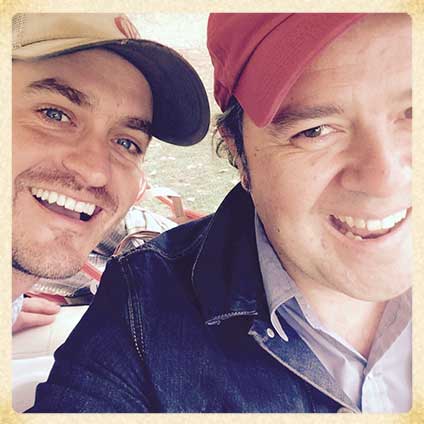
McLaughlin (left) and his neighbor Chris Onstad, who together founded a Portland Soda Works, a craft soda company in 2012.
Even if McLaughlin never logs another blog post, it’s safe to say that he inspired me as a writer. I hope that if you’d never heard of his story until now that you look him up, read his blog and watch the press videos. His journey may inspire you to pick up something new or to rededicate to something of old.
McLaughlin learned a lot about being a better person and what it means to pursue something with everything you’ve got. And that’s a skill that may only require 6,003 hours to master, and it may take him further than golf ever would have. We’ll have to wait and see.
Related


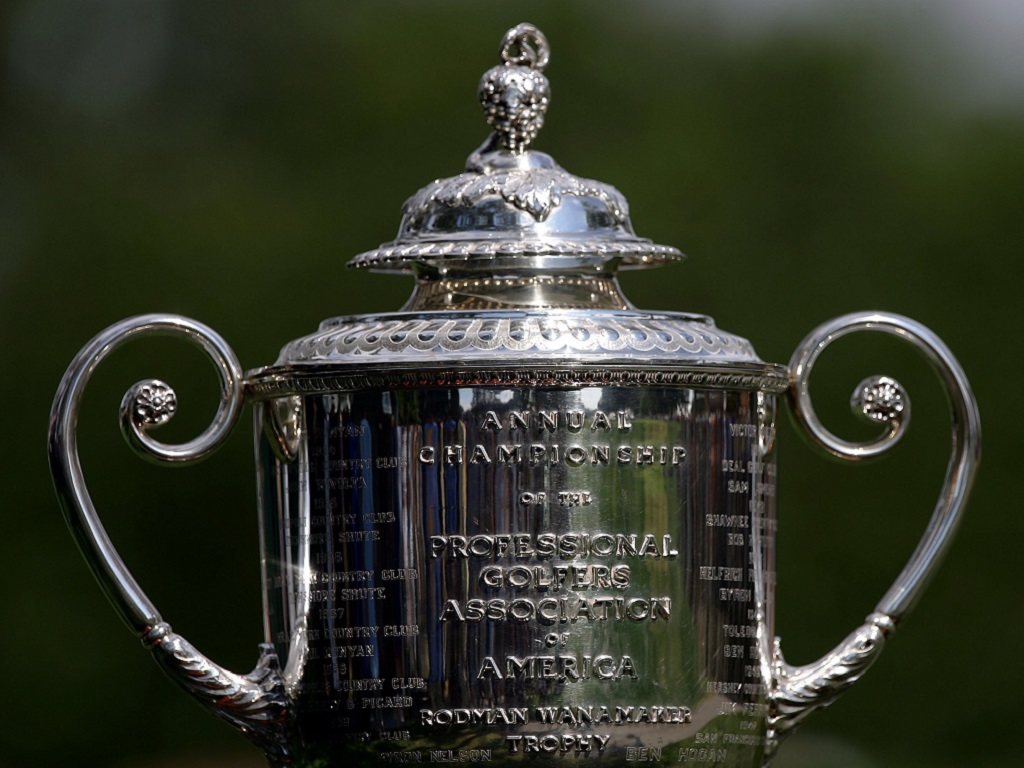
Aronimink is not a storied club, but when Donald Ross himself proclaimed it to be as good as he can design and build, one had to take notice. Jay Sigel was the pre-eminent male amateur golfer from the mid-1970s to the mid-1990s. He might have called any number of Philadelphia clubs home, but he chose Aronimink. It served him well. Gary Player won a PGA Championship here in 1962, and was followed by the 1993 winner … nobody. Aronimink gave that event away to Inverness, for reasons of which it is certainly not proud. So be it. We had to wait sixty-four years for the PGA to return to Newtown Square, but here we are. Aronimink has been neo-restored by Gil Hanse and team, to return Ross features with an eye toward defense against the dark arts, errrr, high-tech equipment.
Day one saw Rory McIlroy and Bryson DeChambeau dig big holes, to the tune of plus-four and plus-six, respectively. Since the first-round lead will be minus-three at worst, many shots will need to be made up for the power couple to reach contention. By nightfall, seven golfers held the day-one lead at three-under par 67. Shots and sticks caught our attention, and we are proud to present Five Things We Learned on Tech Thursday at the 2026 PGA Championship. Thanks to InsideTourGolfer, Today’s Golfer, and GolfWRX for initial equipment research.
First, meet Min Woo Lee
Min Woo Lee, aka Dr. Chipinski, has once again thrust himself into the conversation of Can he, will he, when will he? Lee has so much talent, wins not nearly as often as we believe that he should, and has no major near-misses (much less titles) on his wiki. The young Aussie is getting older and wiser, but is he able to avoid the scarring that holds the older and wiser back from breaking through? Philadelphia offers another opportunity. Min Woo signed for five birdies and two bogeys on day one, and grabbed a share of the opening-day lead at Aronimink. Winners transcend history and the moment, and Lee will need that sort of ascent to lift the Wannamaker on Sunday.
Second, meet Aldrich Potgeiter
The young South African golfer can rip driver with the best of them. Aronimink tips out at nearly 7400 yards, but beyond the fairway bunkers that ensnare only the mortals, Potgeiter can take his chances with wedge from the rough. On Thursday, he spent plenty of time in the spinach. Like Popeye, he used his muscles to gouge and thrash and dig his way out. Six birdies against three bogeys on the card brought AP in a three deep.
Third, meet Martin Kaymer
Not a major event takes place without a where’s he been throwback moment. We know that Martin Kaymer left the PGA and DP World tours for LIV golf, but the two-time (US Open and PGA) major winner has a lifetime exemption into at least one major event, and he seizes the opportunity each May. Kaymer joined the six-seven brigade with four birdies and a solitary bogey on day one. Kaymer was never a long hitter, and the years are kind to no golfer. The German champion will need to uncork every bottle of guile and strategy in his cabinet to remain in contention. For today, though, he occupies a rung on the ladder of Tour Tech.
Fourth, meet Scottie Scheffler
Let’s see, he’s the defending champion at the PGA, and he found his way back to the top tier with five birdies against two bogeys. To be a favorite and then play up to that stature and expectation is quite difficult. Just ask Rory, Bryson, and some of the other pre-tournament heartthrobs. Scheffler’s game is complete, and to knock him off the OWGR #1 pedestal, one needs to defeat him at the majors. Aronimink is the sort of course that fits Scheffler’s game. Better yet, it unfits the game of many of his challengers. Don’t expect Scheffler to go away anytime soon. Come Sunday, he’ll be around.
Fifth, meet Stephan Jaeger
Clocking in for the unheralded players shift are Ryo Hisatsune and Stephan Jaeger. Hisatsune logged seven birdies on day one, but gave most of them back with four bogeys. Still, he’s tied at the top for a time. Jaeger pitched five birdies against two bogeys, including a run of three consecutive, from holes four through six. Odds are that one of the two will hang around through 36 holes. Odds also suggest that both will be gone by Saturday evening. Still, the PGA Championship has historically been the major most likely to be won by an under-known. Both Hisatsune and Jaeger feature on that list, so good luck, lads!

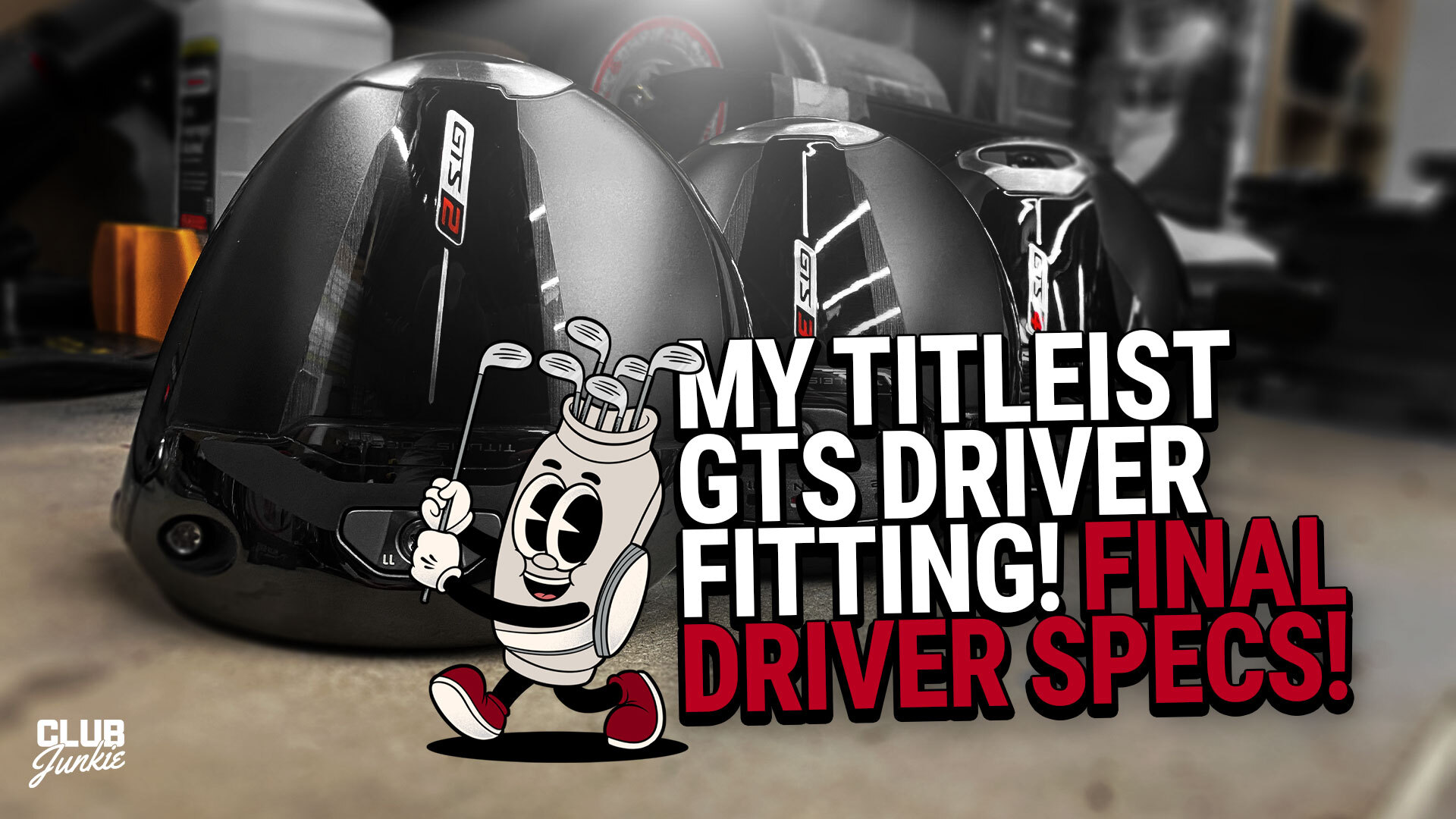
On this episode of the Club Junkie Podcast, I head to the Titleist Performance Institute for a full driver fitting with the new Titleist GTS lineup. We dive into the fitting process, talk about what made the biggest difference in performance, and break down how the different GTS heads and shaft combinations compare on the launch monitor. If you are thinking about a new driver setup for this season, there is a lot to take away from this one.
I also get into Brooks Koepka and the gear setup he brought to the PGA Championship, including the putters that caught my eye during the week. There are some interesting equipment trends showing up at the highest level right now and we break down what stands out.
To wrap things up, I talk about reshafting a few wedges, what I learned during the process, and swapping an adaptor onto a new shaft for another build project in the shop. A gear packed episode from start to finish for anyone who loves golf equipment and club building.
Follow Club Junkie everywhere:
Instagram: https://www.instagram.com/clubjunkiepod/
X: https://x.com/ClubJunkiePod
TikTok: https://www.tiktok.com/@clubjunkiepod
Threads: https://www.threads.com/@clubjunkiepod
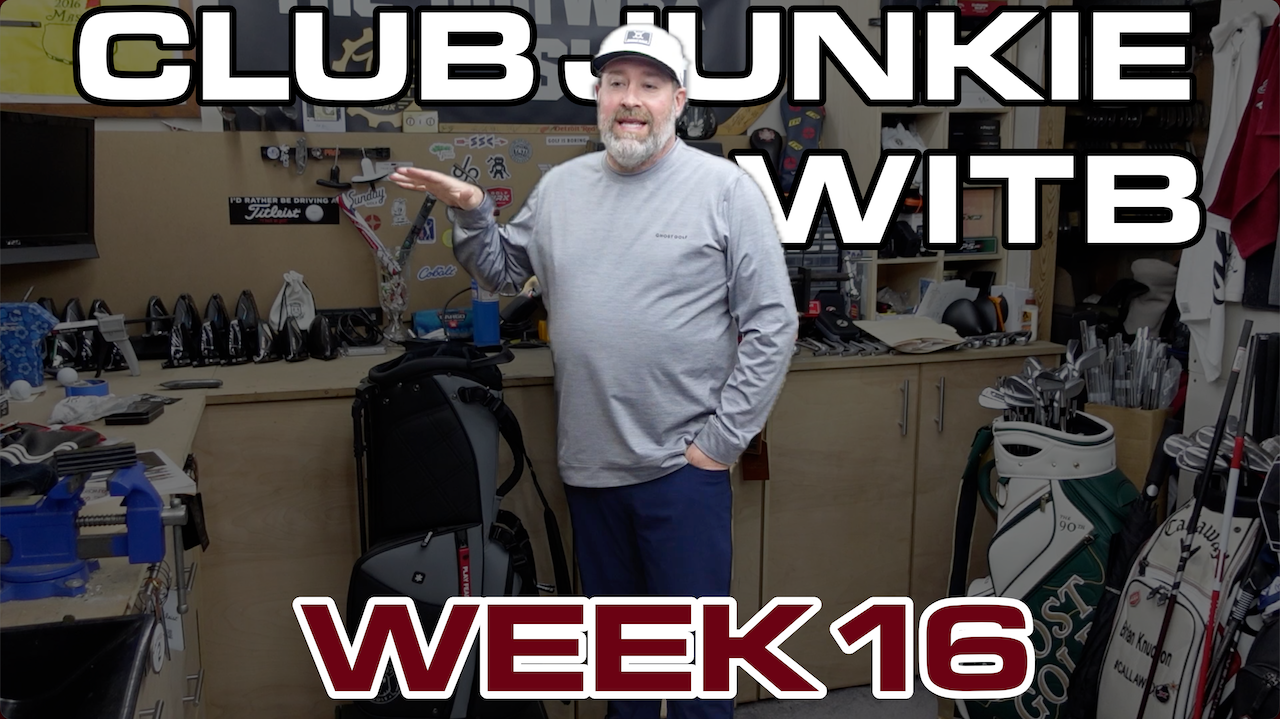
Excited for this week’s WITB as we get to add the new Titleist GTS woods to the bag! I was fit at Titleist’s TPI facility in Oceanside California a few weeks ago and my new clubs just showed up. I am also adding a cool set of irons that I built last year some wild custom wedges into a new golf bag. Speaking of the bag I have a new Ghost Anyday Black Ops stand bag that I will be using on my Motocaddy Remote M7 electric cart.
Driver: Titleist GTS3 (11 degrees @ 10.25)
Shaft: Fujikura Ventus Red 6s
3-wood: Titleist GT1 3Tour (14.5 degrees)
Shaft: Graphite Design Tour AD CQ-7s
5-wood: Titleist GTS (18 degrees)
Shaft: Fujikura Ventus Red 7s
9-wood: Titleist GT1 (24 degress)
Shaft: Fujikura Ventus Red 7s
Irons: Bettinardi CB24 (5-PW)
Shafts: KBS C-Taper Lite 110 stiff
Wedge: TaylorMade MG5 (50-09 SB)
Shaft: Mitsubishi MMT 125 Stiff
Wedge: TaylorMade MG5 (56-12 SB)
Shaft: Mitsubishi MMT 125 Stiff
Wedge: TaylorMade MG5 (60-08 LB)
Shaft: Mitsubishi MMT 125 Stiff
Putter: Dan Carraher ZT Proto
Ball: Callaway Chrome Tour
Bag: Ghost Anyday Black Ops Stand Bag

Justin Rose WITB 2026 (April): Full WITB breakdown with new McLaren irons

RBC Heritage Tour Report: More minis, course-specific setups, Spider & GTS launches

What’s the story behind Webb Simpson’s custom-stamped irons?

Cadillac Championship Tour Report: Spieth’s sizable changes, McLaren Golf launches, and more

Kristoffer Reitan’s winning WITB: 2026 Truist Championship

Cameron Young’s winning WITB: 2026 Cadillac Championship

Aaron Rai’s winning WITB: 2026 PGA Championship

Nelly Korda WITB 2026 (April)

Justin Rose on the switch to McLaren Golf, learnings from previous equipment moves

Photos from the 2026 PGA Championship


Patrick Reed WITB 2026 (May)
Driver: Titleist GT3 (9 degrees) Buy here. Shaft: Aldila Rogue Silver 130 M.S.I. 70 TX 3-wood: TaylorMade Qi35 (15 degrees)...

Aaron Rai’s winning WITB: 2026 PGA Championship
Driver: TaylorMade M6 (9 degrees) Shaft: Aldilda Synergy Blue 70 TX 3-wood: TaylorMade Qi10 (15 degrees) Shaft: Fujikura Ventus Blue...


Michael Block WITB 2026 (May)
Driver: TaylorMade Qi4D (9 degrees) Shaft: Fujikura Ventus Black VeloCore+ 5 X 3-wood: TaylorMade Qi4D (15 degrees @14.25) Shaft: Mitsubishi...


Bryson DeChambeau WITB 2026 (May)
Driver: Krank Formula Fire Pro (6 degrees) Shaft: Project X Prototype 3-wood: Krank Formula Fire (10 degrees) Shaft: LA Golf BAD...
-
 Whats in the Bag3 weeks ago
Kristoffer Reitan’s winning WITB: 2026 Truist Championship
-
Whats in the Bag2 weeks ago
Aaron Rai’s winning WITB: 2026 PGA Championship
-
 Tour Photo Galleries3 weeks ago
Photos from the 2026 PGA Championship
-

 Equipment2 weeks ago
GolfWRX Launch Report: 2026 Titleist GTS drivers
-

 Equipment2 weeks ago
PGA Championship Tour Report: Fitzpatrick, Koepka among big-name putter switches for Aronimink
-

 News2 weeks ago
WITB Time Machine: Phil Mickelson’s winning WITB, 2021 PGA Championship
-

 Equipment2 weeks ago
Which of Tiger’s major winning irons are your favorite? – GolfWRXers discuss
-

 Equipment2 weeks ago
Lead Tape Report: Adjusting the swingweight of the Wanamaker Trophy


Rod Grinberg
Mar 31, 2022 at 10:41 am
This guy was always a charlatan. I play golf at some of the same courses in Portland, heard talk about him, he was caught cheating in local tournaments, and nobody liked playing with him because he was very slow. A ten handicapper at best from what I have heard.
Pingback: Practical Steps to Improve Your Craft
Tim Roggero
Dec 28, 2018 at 10:00 am
I am a pga golf professional and have seen and worked with the only guy to ever go from the bagroom to the pga tour at the age of 25 and shooting in the mid 70s.You must put timing into the 10000 hrs so there is skill development.The worst people you can listen to our those teaching feelings and perceptions or listening to a good player.Ask any physics professor and they will tell you every thing that is currently taught about where speed comes from is wrong.How it is taught guarantees it will never work this is why nobody ever improves but for hitting highs and lows along the way.There is not one teacher on the pga circuit who has or is currently helping anyone.Study neuroscience you will see its impossible.It all comes down to a time learned release of the forearms in every swing.Please feel free to question rgg284@aol.com
Michael Robles
Aug 6, 2017 at 3:04 am
I read Outliers in October 2012 and finished the book by December 2012. I immediately started the journey to 10,000 hours. I practiced 3 hours a day for 8 months and then ramped it up to 5 hours a day in August 2013. I practice everyday. I have not tracked my hours practiced but I mentioned that I practice everyday. So I’m probably 7,500 hours into the experiment. When I started I was shooting low 100’s and I am a 2 handicap now. It definitely works. I have made 2 major swing changes and that has slowed my progress. I didn’t receive pro instruction for my first 2 years. That was a huge mistake. If you’re interested in seeing my journey search HOOA on youtube. I vlog my journey and record all of my competitive rounds.
Jocko
Jul 1, 2017 at 10:19 am
The 10,000 hour rule is separate from the talent component. Of course anybody will get better at something if they do it a lot. But imagine that we’re talking about the 100 yard dash. No amount of time is going to make a non talented person competitive with a talented one. It’s the same with golf, but less so. Putting and chipping and even the short iron game can be much easier to “master” than components of the game that require high club head speed, fast twitch muscle firing, etc.
Ramrod
Apr 5, 2017 at 8:42 pm
I didn’t know Sean Foley was coaching him.
Steve Wozeniak
Mar 17, 2017 at 1:38 pm
It’s not just the hours….it’s WHAT your working on and if he hurt his back it was the wrong stuff…talent along with athletic ability has a little to do with success at the highest levels as well.
Steve Wozeniak PGA
AnonGolfer
Mar 17, 2017 at 11:55 am
What’s missing from this is that the 10,000 hours rule has been known by many psychologists as a major misinterpretation of Erricson’s ideas…Erricsons ideas are more based on deliberate practice which he developed by playing chess as a kid
AnonGolfer
Mar 17, 2017 at 12:00 pm
Gladwell is also in record stating the 10,000 hour rule does not apply to sports
Don M
Mar 17, 2017 at 10:20 am
I wonder if he has serious regret. I sure would. It’s one thing to pursue a dream. But to end up with a back injury is not a good tradeoff for becoming a good golfer. Not to mention the grind of it all.
Adam Crawford
Mar 17, 2017 at 11:10 am
When I spoke to him on the phone, he said he didn’t have regrets. He was obviously bummed because he was injured to the point that he couldn’t even putt. However, he felt like he’d gained a lot more out of the experience than getting better at golf, which I think is why a lot of us play the game any way.
Anthony
Mar 17, 2017 at 9:39 am
A couple of points here for me:
1. The book outliers is dumb. The book should have phased the 10000 hours thing like this: “10,000 hours being the threshold for expertise FOR YOUR POTIENTAL”. I do believe that if you put in 10000 hours at something, you will be the best that YOU will ever be at it, might even be able to call yourself an expert. But what about all those others that put in 10000 too at the same skill? What differentiates you with them? Talent. I just feel like the book gives all these false hopes by not setting the standard that TALENT is still needed. Golf as an example, if there are 2000 golfers in the world with 10000 hours of dedicated practice, what separates the 200 on the PGA from the other 1800…you guessed it, TALENT.
2. you mean the golf swing breaks down the body? It’s not just working out in the gym and heavy lifting that will hurt a golfer’s back? Someone please please tell this to that idoit Chamblee. I bet Tiger has logged between 20000 and 30000 hours of golf practice throughout his life. That will really break down your body quick.
Victor Su
Feb 27, 2018 at 7:38 pm
Talent does matter, but I disagree with the part you said about PGA tour. You do need talent to be the best on tour, but you do NOT have to have talent to make it on the tour. Dan’s goal was to make through Q-school to just have a PGA membership card, which is something hard work alone can definitely can get you to even though you are not talented. So if your goal is just to be on the tour making enough money to stay for next year and so on, unless you are super extremely stupid, you can definitely make it by putting enough hard work. But that’s gonna be A LOT OF work though.
Jim
Mar 17, 2017 at 9:26 am
Even the most enthusiastic backers can’t buy someone ‘the gift’ of supreme talent. 40 years ago maybe…enough to grab a couple sponsors (75K from FJ for shoes & hat) 50K from ‘Tommy Armour or Lynx’ for bag n clubs….small time peanuts now, but enough to keep up with travel, phone, car payments, food and entry fees…..NOW GO WIN – OR finish emough top 20’s to make some extra money.
sorry man, life sux then you die.
not everyone gets through BUDS – not the big time Annapolis football hero – it’s the GRUNTS that pass…maybe never won the 10 mile run, never finished an evolution first… just NEVER QUIT, TAKE THE PAIN and finish top 20…
no pressure, expenses paid, you know you’re playing next week ’cause your entry fees paid and your not sleeping in your car – cause you can’t afford a motel….
bottom line – just not good enough. Period. Now go away
Jim
Mar 17, 2017 at 10:36 am
I WILL GIVE HIM THIS…..sheeit…wish I thought of it – get a bunch of good ol boy sportsman type ‘betting men’ to finance your self indulgent / blogger ‘arteest’ career change and basically pay for you to become a great recreational golfer….
…I wouldn’t have had to sell off my most valuabke possessions and (most of) my gun collection to finance me quitting my job & playing golf and practicing all day when I turned professional…
kinda brilliant 😉
stevep1000
Mar 16, 2017 at 10:49 pm
The guy had a compelling story, and sought followers and financial support from his followers. It’s remarkably weak that he abandoned the plan and his followers without so much as a comment on his website.
toad
Mar 16, 2017 at 10:57 pm
Agreed. Gotta man up, as painful as it may be.
toad
Mar 16, 2017 at 10:40 pm
He inspired my to become an expert daytrader. I fizzled out like Danny boy did. Moral of the story: Getting 10k in is tough.
S Hitter
Mar 16, 2017 at 8:58 pm
!0,000 hours AND a bottomless pit of cash is what you need in golf. Unless, if he was smart enough, he was gambling while he was playing some of those rounds making cash on the side to pay for some of the rounds. The theory doesn’t quite correlate well with The Beatles, lets say, or musicians, because musicians can sit at home with their guitar or piano and tinker for 10,000 hours without spending any money getting good at it, unlike in golf. So, yeah, it’s shank for the this guy, because he should have also illustrated how much money it cost him to get to where he did. Including the costs of the doctors he had to see to get his back fixed, which is where a lot of guys also lose their enthusiasm, because it costs so much money without making any of it back, unless you’re competing on the Pro level and winning some of it back. He could have learned a lot about himself without doing that through golf
LandofBoz
Mar 16, 2017 at 7:51 pm
Gladwell actually said that experts have put in at least 10,000 hours, not that it took 10,000 hours to be an expert.
TheGrftKngs
Mar 16, 2017 at 3:24 pm
Reminds me of the book “Paper Tiger” which is based on the same premise: a real-life journalist who devoted himself to earning his Tour card within a year. Just finished it and loved every minute.
Scott
Mar 17, 2017 at 9:13 am
Paper Tiger was a fun read. I will say that the guy in this article seemed more delusional than the guy who wrote Paper Tiger.
TR1PTIK
Mar 16, 2017 at 3:20 pm
I followed the Dan Plan closely as well and felt that his enthusiasm for the game started to dwindle towards the end. There always seemed to be something that would sideline him or hold him up a little bit. If nothing else, his journey certainly inspired me to put more concentration and effort (and hours) into the things that are important to me. I think the ability to inspire others is a much more meaningful (though maybe not as rewarding [$]) accomplishment than getting on tour. Best of luck!
Sega69
Mar 16, 2017 at 3:18 pm
Makes you appreciate tour pros even more. Feel bad for him re injury and it’s a great story, but even guys with talent, money, hard work and luck don’t make. I’ve met lots (as I’m sure many of us have) of mini tour guys and college players that can shoot 65 and win club c’s but even they will tell you that the pros are in a different stratosphere. Unrewarded talent is almost a proverb.
TechnologyGolfer.com
Mar 16, 2017 at 2:00 pm
I too used to follow the Dan Plan and read probably 50 posts or more. I was pulling for Dan even though I knew it was a longshot. I’m sure he’ll get something positive from the experience though, and would do it again if he could.
farmer
Mar 16, 2017 at 1:00 pm
He quit his job, started practicing, lived off savings and donations, has gotten to be a good golfer, but nowhere near elite. Had he spent 10000 hours working at photography, (his real job) he might be mentioned with Ansel Adams.
Nick
Mar 16, 2017 at 1:00 pm
Check out Anders Ericsson who is the original person to talk about 10,000 hours. Deliberate practice with proper feedback will make those hours successful.
AceW7Iron
Mar 16, 2017 at 10:37 am
Can totally relate to the part about specific focus on certain parts of the game being the key to lowering your scores. I have played alot of golf in the last 12 months and only temporarily dipped below a 10…as I look back on 95% of the occasions I played it was just show up to see who I was THAT day…not really focusing on parts of my game that would make me better tomorrow.
MiloTheMarauder
Mar 16, 2017 at 10:32 am
Never heard of this dude or his book and it just goes to show you. People have to take care of their bodies better or get that magic juice that brings American football players back from ACL tears in less than a year.
birdie
Mar 16, 2017 at 9:35 am
i think this shows how naive non golfers are on how quickly you can become a scratch player. plenty of people who see the occasional golf highlight on espn or watch some Masters coverage who’ve never really played and think the game doesn’t look all that hard.
Jim
Mar 16, 2017 at 9:30 am
There’s a WRX forum article about this as well, that was started over a year ago. IT was a good idea and an interesting follow, but back injuries aren’t fun and can derail a golfing ambition.
Adam
Mar 16, 2017 at 9:17 am
I read that 90% of PGA tour players have some sort of back issue. Typical back can’t last 10,000 hours I guess.
KillerPenguin
Mar 16, 2017 at 8:45 am
I used to follow Dan closely and was really sad for him when he broke the news about the back. While I don’t think he was ever going to make it through Q School and the Web.com Tour and onto the PGA TOUR, his approach to the game and thought provoking posts were always enjoyable and often inspiring. Pour one out for the Dan Plan!