
Equipment
PING G20 PRODUCT LAUNCH–WOODS

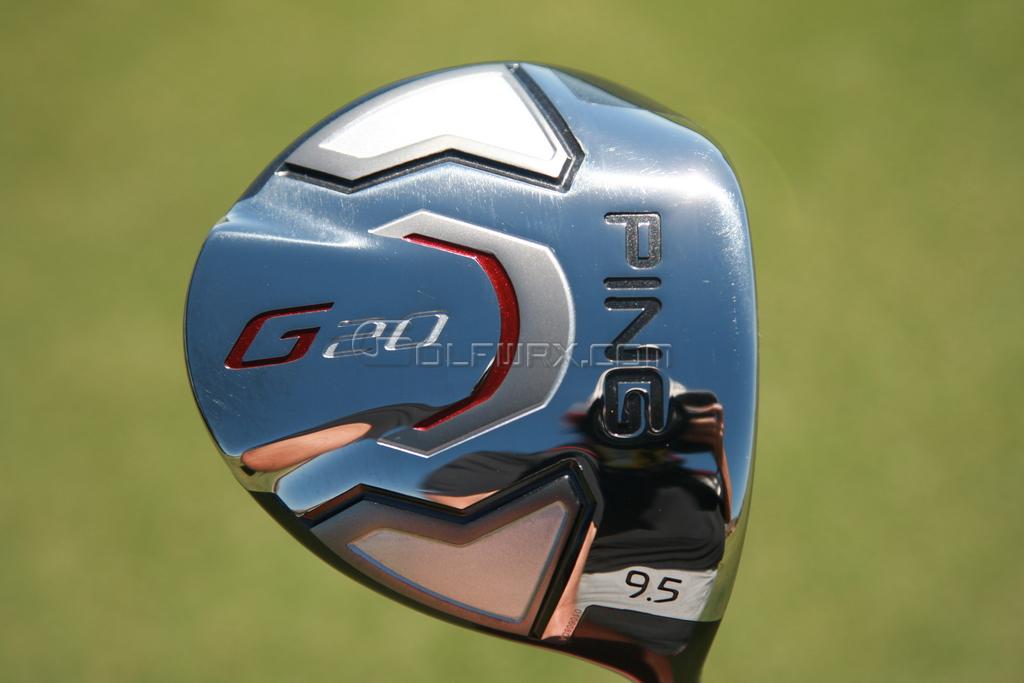
Anybody who’s been on this board for any amount of time tends to get a feel for what clubs garner the most buzz and, more importantly, what clubs live up to that hype. For the last two years PING’s G15 driver and irons have been in a class few others can claim. Recognizing this, PING followed the same formula to make improvements on an already incredible club.
Now, in the G20 series, PING decided to reemphasize the concept of having a complete set design. They wanted to do away with the idea of having a favorite club that just seems to fit your swing really well by matching the entire set to your swing. This is not a new concept, even to PING, but with the advanced technologies they have available, and their long history of designing clubs from an understanding of engineering and physics, they have matched these sets from top to bottom by examining and matching system mass, MOI about the hosel axis, CG position of the clubhead, etc., to synchronize the natural head rotation or delivery of the club. This provides fitters the flexibility to fit for trajectory and distance gapping without having to worry about having golfers adjust their swing to different clubs.
DRIVER
For the G20 Driver, PING utilized the high balance point shaft technology first employed in the G15, and took it a little further. By using a counterbalanced shaft, there were able to add more weight to the head, lighten the shaft, and keep the system mass and swingweight the same. This allowed PING to add more mass to the head which delivers more energy to the ball. The G15 added 5 grams to their standard G10 headweight and the G20 added another 2, yielding a current driver headweight of 203 grams. Testing shows that this concept adds distance and forgiveness as you're not slowing the clubhead during the swing and you're increasing inertia from the increased head mass.
In verifying this concept, PING tested clubs of otherwise same specifications, including shaft specs (swingweight, stiffness, torque, kick point, etc.), only changing the total system mass from 270, 286, and 304 grams between the three. They discovered that clubhead and ball speeds were not statistically significantly faster in any of the system weights, but distance and forgiveness were best with the heavier setup. Additionally, real world testing showed that there are benefits in having a more natural progression from your driver as per the complete set design outlined above as golfers don’t have to fight their swing going from a superlight driver to a heavier fairway or iron.
While not surprising, one point that bears mentioning deals with the G20‘s standard shaft length of 45.75 inches (and D3 swingweight). While this seems overly-long, especially to the GolfWRX membership where 45” seems to be the preference, it’s actually the standard length PING has stayed with since the TiSI. When the USGA published their standard for measuring, PING was using a 56º sole plate and measuring to the end of the ungripped shaft. When the standard of measurement required a 60º sole plate and measurement to the end of a gripped club, PING opted to change their published lengths rather than shorten what they’ve been doing. They also discovered through player testing that golfers can handle this length with no significant drawbacks on the course and without forcing golfers to fight their swing.
In the G20 driver, PING was able to lower and move weight even further back to optimize trajectory. Bubba's long because he launches 16º at 1800 RPM. And SlingMan is able to launch it even higher with lower spin to reach even farther distances–so there's still lots of distance to be gamed through trajectory optimization without even touching ball speed.
For the G20 driver, PING changed the material to Ti811 from Ti64: they are both very similar in terms of strength and elongation, but Ti811 is slightly lighter and less dense, so they can utilize more volume to mess with the thickness variances to better optimize CG and inertia. A larger head profile increases inertia, especially along the horizontal AND vertical axises and PING was able to increase the face area over the G15. The G20 is constructed from a cast body with the variable thickness sheet face. This allows to take weight away from some areas and add elsewhere and requires only one weld.
Driver testing between the G15 and G20 on PingMan and Player testing showed distance increases, and tighter dispersion across the board for swing speeds (spin rates were close between the two with some overlaps depending on several factors).


FAIRWAYS
In the G20 PING made a fairway that was easy to get up in the air through center of gravity and trajectory optimization. Made club deeper front to back to move the CG even lower and to the back. By increasing the dynamic launch angle, they were able to strengthened the standard loft of the 3 wood back to 15º. The 4 wood is same length as the 3, so it’s basically a higher lofted 3 wood. PING has found it to work even better with over 60% of golfers getting more optimal performance out of 4 wood in player testing. In fact, Bubba plays a 4 wood.
Often times, when companies make improvements, they’re usually on the smaller scale. Such is true in the vertical axis of the fairway where PING was able to improved MOI for heel-to-toe hits by 4%. HOWEVER, PING increased the MOI on the vertical axis by 25%, making it significantly more forgiving on high and low mishits. This is especially important as it seems overly easy to hit a fairway thin (just me?).
So golfers can expect less distance loss on fairway mishits in the G20, and slightly increased overall distance as the launch conditions have been optimized. Across the board, in both player and PingMan testing, the G20 fairways produced higher ball speeds because they were able to slightly lower the spin and increase the launch angle despite strengthening the standard loft resulting in longer distances…again–especially on mishits.


HYBRID
Not going to lie: this was the club I was least interested in going in, especially after seeing it was going to resemble the G15. However, after listening to the presentation and, more importantly, hitting it, it is the club I’m most excited for!
When PING designed the G15 hybrid, they took a 3 iron face profile and built around that. Taking Karsten Solheim’s original concept in incorporating offset, they were able to greatly increase launch angle without raising spin. Additionally, the design of the club increases the moment of inertia by 50% over the standard design. This provides significantly more forgiveness, tighter dispersion, and less twisting from mishits. And again, the offset increases the dynamic launch without increasing spin, especially on high and low mishits because of the high MOI, giving significantly more distance control and less variance between flushed shots and mishits.
Based on feedback of the G15, PING made adjustments in the G20 hybrid to appeal to more people. One complaint was that the club appeared too upright, especially in conjunction with the higher toe, so PING shortened the club from heel-to-toe, moving the CG in a bit, allowing them to bend the lie angle flatter by 2º. This also reduced the toe-down droop seen at higher swing speeds. Despite this move, they were able to keep the same MOI. PING also increased the versatility of the club by increasing the heel-toe sole curvature.
One point of interest is that complaints of the G20 by actual owners of that club were minimal. The voiced complaints were overwhelmingly made by people who never bothered to hit the club…myself included. At demo days, the feedback from golfers who actually hit the club was very positive. PING is hoping that the changes made will get more people to pick it up and give it a try. In test results, the G20 hybrid performed very similarly to the G15. Same goes for player testing. However, player perceptions were drastically improved.


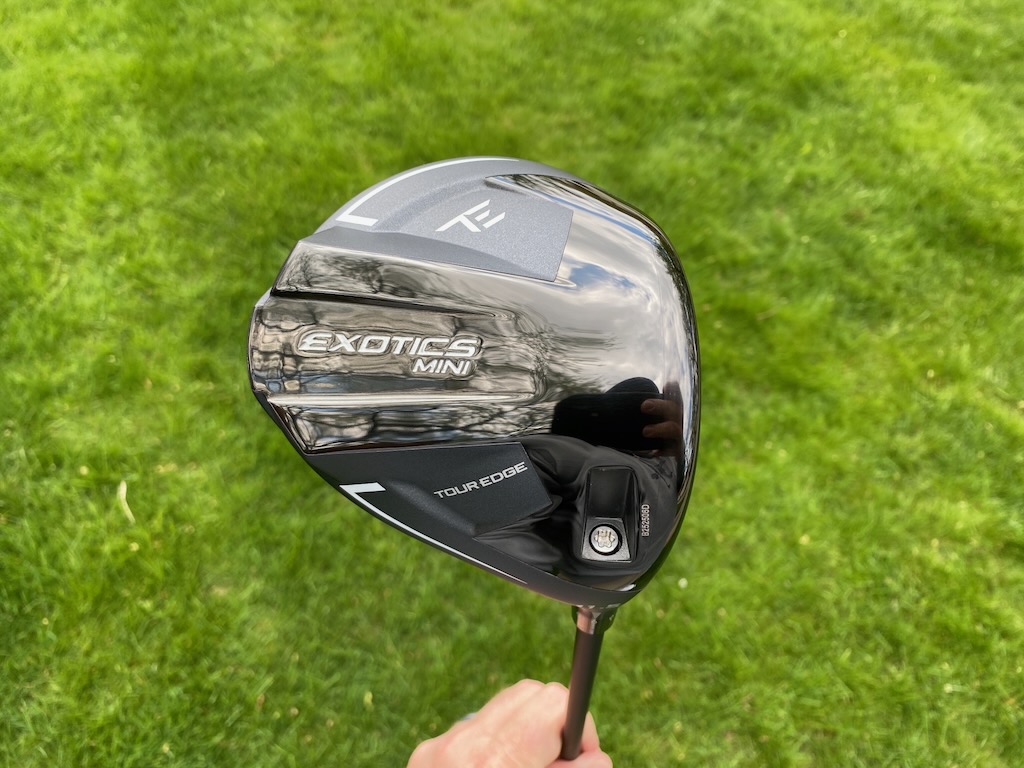
Tour Edge Golf has today introduced the all-new Exotics mini driver, engineered to deliver a powerful combination of speed, control, and versatility in the long game.
The Exotics Mini combines a titanium face with a stainless-steel body in design to balance ball speed with stability and control, creating a versatile option at the top end of the bag.

At the core of the design is Tour Edge’s proprietary Combo Brazing technology, a high-precision thermal bonding process that seamlessly fuses a titanium cup face to a stainless-steel body into a single, continuous structure. By eliminating energy loss found in traditional multi-piece constructions, Combo Brazing is designed to deliver faster face response, more efficient energy transfer, and a uniquely powerful yet controlled feel.

The multi-material construction also allows mass to be positioned lower and deeper in the head in a bid to increase stability, while the thin titanium face is engineered to maintain ball speed across a wider impact area.

“While the initial goal was to enhance control and versatility in the long game, Combo Brazing ultimately drove measurable gains in ball speed and distance within the mini driver category. In robot testing, we’ve documented higher ball speeds, higher launch, reduced spin, and increased carry and total distance compared to leading models.” – Vice President of R&D Matt Neeley

In addition to distance performance, the Exotics mini emphasizes forgiveness through a heavier stainless-steel body that shifts mass toward the perimeter. This configuration increases MOI relative to traditional all-titanium mini drivers, helping preserve ball speed and directional stability on off-center strikes. Paired with Pyramid Face Technology from the Exotics metalwood line, the design is intended to support consistent speed across the face.

To further enhance MOI, a lightweight carbon fiber crown frees additional mass that is strategically repositioned low and deep in the head in design to improve stability and promote optimal launch with controlled spin.

“We designed the Mini to be about five millimeters shallower than other mini drivers on the market. That change improves playability off the deck. From a clean fairway lie, it can function as a strong 3-wood alternative while still providing control off the tee.” – Tour Edge CEO David Glod
An adjustable hosel system allows for loft and lie tuning to dial in trajectory and shot shape, while a fixed 13-gram rear weight helps stabilize the head through impact to improve dispersion consistency. The Exotics Mini Driver is available in 11.5 and 13.5-degree lofts in right-handed models.

Pricing & Availability
The Exotics Mini Driver is available for pre-order beginning today for $399.99 USD at touredge.com, and will be available for purchase at retail outlets worldwide on May 22, 2026.

In our forums, our members have been pitting a Srixon ZXi combo against a TaylorMade P7CB/770 combo. WRXer ‘edutch22’ is on the hunt for a new set of irons and kicks off the thread saying:
“Looking at picking up a new set of irons and think I’ve narrowed it down to Srixon ZXi combo or Taylormade P7CB/770 combo. I am currently a 5 cap and allbeit I feel irons are my weakness. My miss is a little to the toe side. I am decently steep at 4-5 down. Always thought I am high spin but recently on trackman my 7 was spinning at 5800 roughly.
My question or looking for thoughts on which one would benefit me more from a forgiveness standpoint? Or is there another iron is should be looking at entirely? I only get to play about once or twice a week, if I am not playing a 2-3 day event. Thanks in advance.”
And our members have been sharing their thoughts and suggestions in response.
Here are a few posts from the thread, but make sure to check out the entire discussion and have your say at the link below.
- manima1: “You just can’t go wrong with Srixon ZXi7.”
- MattM97: “You have to hit them to know, the V-Sole on the Srixon can be make or break for many.”
- dmeeksDC: “P7CB is more forgiving for me than ZXi7 because my main miss is low middle and the P7CB still flies and spins great on that miss. These are both really nice irons but I like the P7CB more than the Zxi7 and the P770 (or P790) more than the Zxi5. The Srixons are larger so if that gives you confidence that is the way to go. I don’t feel like I get any benefit from the V-sole and the P7CBs live up to their high Maltby forgiveness rating so the TaylorMades have been great for me.”
Entire Thread: “Srixon ZXi combo or TaylorMade P7CB/770 combo? – GolfWRXers discuss”

At GolfWRX, we are a community of like-minded individuals who all experience and express our enjoyment of the game in many ways.
It’s that sense of community that drives day-to-day interactions in the forums on topics that range from best driver to what marker you use to mark your ball. It even allows us to share another thing we all love – buying and selling equipment.
Currently, in our GolfWRX buy/sell/trade (BST) forum, @pianoman0123 has a 2024 Wilson Staff CB/Blade combo up for grabs.

From the listing: “2024 Wilson Staff CB/Blade Combo. 4-8 irons are CB’s and the 9,PW are Blades. 5-PW have Project X 6.0 Shafts and the 4 Iron has a Steelfiber CW110 Stiff Shaft. Standard Length, Lie and Lofts. These are in very good condition the shafts just don’t work for me. Like new Lamkin Grips on the 5-PW and a stock Golf Pride on the 4 Iron. $525 OBO.”
To check out the full listing in our BST forum, head through the link. If you are curious about the rules to participate in the BST Forum, you can learn more here: GolfWRX BST Rules

RBC Heritage Tour Report: More minis, course-specific setups, Spider & GTS launches

Justin Rose WITB 2026 (April): Full WITB breakdown with new McLaren irons

Best fairway woods of 2026: The most versatile fairway woods + the most forgiving fairway woods

Gary Woodland’s winning WITB: 2026 Texas Children’s Houston Open

What’s the story behind Webb Simpson’s custom-stamped irons?

Cadillac Championship Tour Report: Spieth’s sizable changes, McLaren Golf launches, and more

The 24 players who can win the Masters

Rory McIlroy’s winning WITB: 2026 Masters

Kristoffer Reitan’s winning WITB: 2026 Truist Championship

J.J. Spaun’s winning WITB: 2026 Valero Texas Open


Alex Fitzpatrick WITB 2026 (May)
Driver: Ping G440 LST (9 degrees) Shaft: Fujikura Ventus Black 6 X 3-wood: TaylorMade Qi4D (15 degrees) Shaft: Fujikura Ventus...

Kristoffer Reitan’s winning WITB: 2026 Truist Championship
Driver: Ping G440 Max (9 degrees) Shaft: Mitsubishi Tensei 1K White 60 TX 3-wood: Ping G440 Max (15 degrees) Shaft:...


WITB Time Machine: Rory McIlroy’s winning WITB, 2021 Truist Championship
Rory McIlroy’s victory at the 2021 Wells Fargo Championship 2021 (now the Truist Championship) marked a significant return to form,...


Collin Morikawa WITB 2026 (May)
Driver: TaylorMade Qi4D LS (8 degrees) Shaft: Mitsubishi Diamana D+ Limited 60 TX 3-wood: TaylorMade SIM Tour (14 degrees) Shaft:...
-
 Equipment2 weeks ago
Justin Rose WITB 2026 (April): Full WITB breakdown with new McLaren irons
-
 Equipment1 week ago
What’s the story behind Webb Simpson’s custom-stamped irons?
-
 Equipment2 weeks ago
Cadillac Championship Tour Report: Spieth’s sizable changes, McLaren Golf launches, and more
-
Whats in the Bag3 days ago
Kristoffer Reitan’s winning WITB: 2026 Truist Championship
-

 Whats in the Bag1 week ago
Cameron Young’s winning WITB: 2026 Cadillac Championship
-

 Whats in the Bag3 weeks ago
Nelly Korda WITB 2026 (April)
-

 Equipment2 weeks ago
Justin Rose on the switch to McLaren Golf, learnings from previous equipment moves
-

 Tour Photo Galleries2 weeks ago
Photos from the 2026 Cadillac Championship


Maurice Yuen
Nov 4, 2012 at 8:26 pm
Dear Sir,
What is the difference between TFC 330D & 169D?
Thanks.