
News
The USGA might have a problem with PGA Tour yardage books

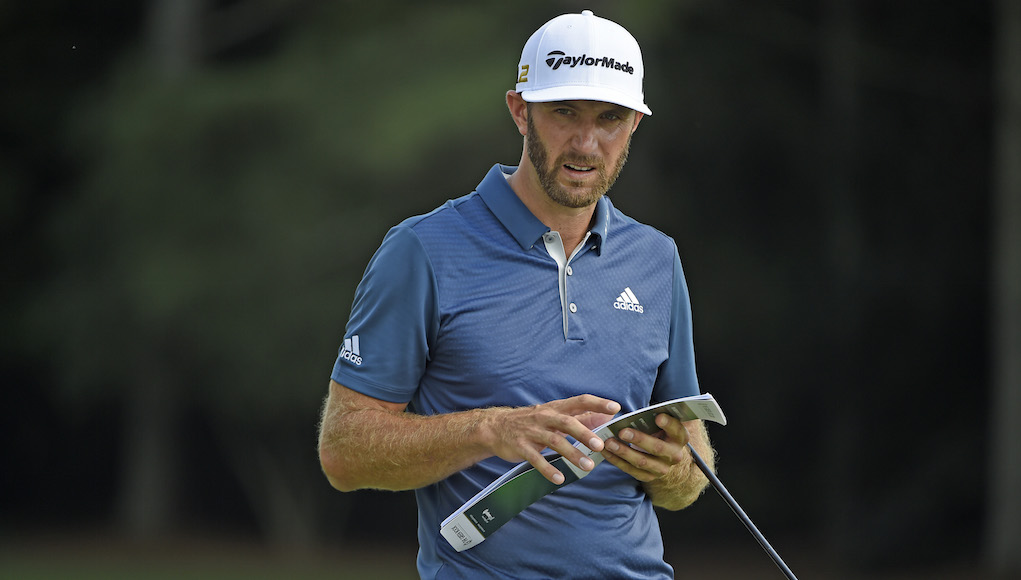
Less than a week after introducing the “Lexi Thompson Rule,” or New Decision 34-3/10, the USGA sent a signal that it has something else on its radar. Namely, defending the art of green reading.
Viewing the issue through the lens of Rule 14-3, the USGA expressed concern over, it seems, the green detail in professional yardage books. Rule 14-3 bars a player from “the use of any artificial device or unusual equipment … for the purpose of gauging or measuring distance or conditions that might affect his play.” Thus, in a roundabout way, the green-mapping technology used to create the highly sophisticated and detailed pro yardage books is troubling to the guardians of the game.
The USGA-R&A’s full joint statement reads:
“The R&A and the USGA believe that a player’s ability to read greens is an essential part of the skill of putting. Rule 14-3 limits the use of equipment and devices that might assist a player in their play, based on the principle that golf is a challenging game in which success should depend on the judgment, skills and abilities of the player. We are concerned about the rapid development of increasingly detailed materials that players are using to help with reading greens during a round. We are reviewing the use of these materials to assess whether any actions need to be taken to protect this important part of the game. We expect to address this matter further in the coming months.”
Reading between the lines, it certainly seems the “concern” is centered around yardage books that show slope and topographical information. You know, like these.
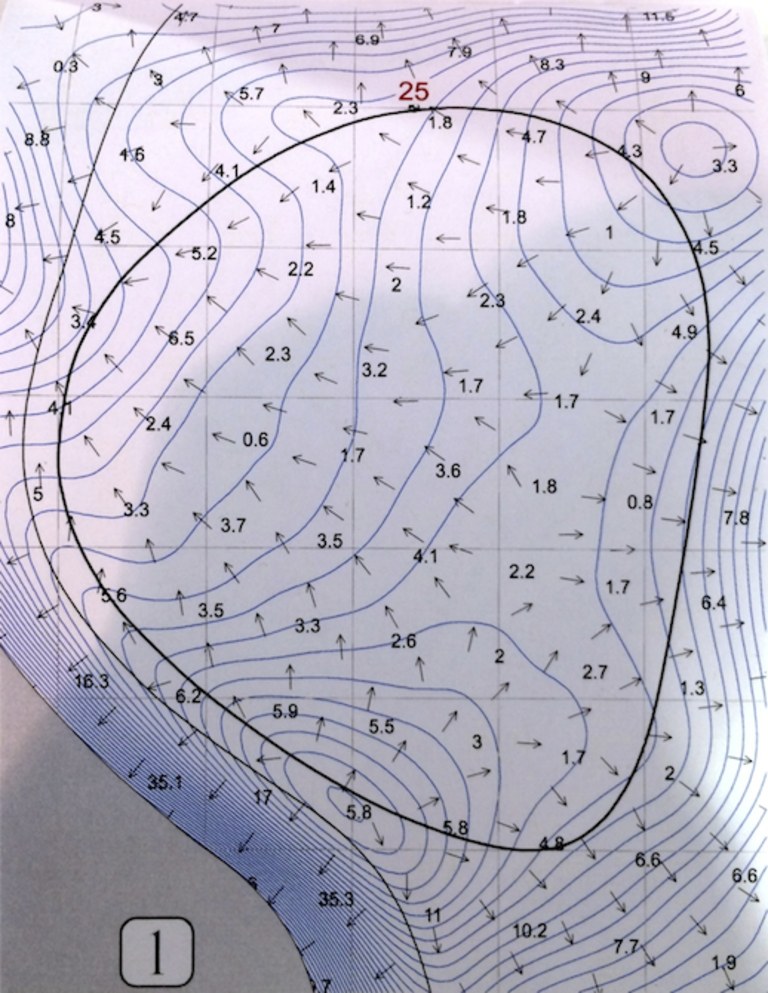
Credit: Golf Digest/Tour Sherpa
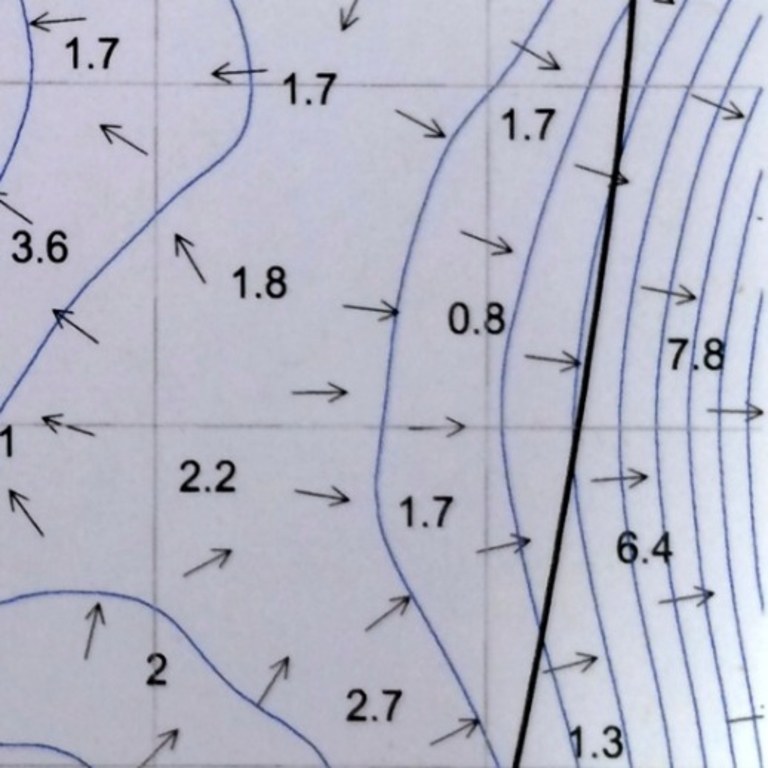
Credit: Golf Digest/Tour Sherpa
Thomas Pagel, the USGA’s senior director of rules and amateur status, told Golf Digest’s Mike Stachura the worry centers around the following:
“The increased level of detail that the USGA and the R&A has seen of late, both in printed and electronic form, that has prompted the study. It is fair to say all materials will be reviewed, but the original intent was not focused on basic printed yardage guides found at most golf courses, but those with an increased level of detail/sophistication.”
This led Stachura to connect the dots, writing, “It seems conceivable that green charts instead of contour lines measuring the percentage of slope…might someday reach a stage where all putting locations might be determined to have a certain break like two feet right or six inches left.”
Yardage books in general have long been contentious on the PGA Tour, but the USGA largely hasn’t had an issue with the pocket course maps until now. It will be interesting to see if the folks in Far Hills ultimately rule on the level of detail in Mark Long’s (and similar) yardage books.
If you ask PGA Tour pro Luke Donald, he seems to agree with the concern.
Totally agree. There is an art to green reading that is getting lost, just like judging the wind & this will help speed up play ???????? https://t.co/epWiq1jUOC
— Luke Donald (@LukeDonald) May 1, 2017


Scottie Scheffler leads the betting ahead of the second major championship of the year, with the World Number One a +345 favorite to get his hands on a second PGA Championship.
Rory McIlroy who won the Masters back in April is a +800 shot to complete half of the calendar slam at Aronimink Golf Club this week, while Jordan Spieth can be backed at +5900 to become a career grand slam winner.
Here is the full betting board for the 2026 PGA Championship courtesy of DraftKings.
Scottie Scheffler +345 – (Check 0ut his WITB here)

Rory McIlroy +800 – (Check out his WITB here)

- Jon Rahm +1300
- Cameron Young +1500
- Bryson DeChambeau +1700
- Xander Schauffele +1850
- Matt Fitzpatrick +1950
- Ludvig Aberg +2000
- Tommy Fleetwood +2600
- Collin Morikawa +3500
- Brooks Koepka +3900
- Justin Rose +4300
- Russell Henley +4600
- Si Woo Kim +4700
- Justin Thomas +4800
- Robert MacIntyre +5300
- Patrick Cantlay +5300
- Viktor Hovland +5400
- Tyrrell Hatton +5500
- Jordan Spieth +5900
- Sam Burns +6000
- Hideki Matsuyama +6200
- Adam Scott +6400
- Rickie Fowler +7000
- Chris Gotterup +7400
- Patrick Reed +7400
- Min Woo Lee +7800
- Ben Griffin +8000
- Sepp Straka +8400
- Shane Lowry +9000
- Akshay Bhatia +9200
- Maverick McNealy +9200
- Joaquin Niemann +9200
- Jake Knapp +9200
- Jason Day +9600
- Kurt Kitayama +10000
- J.J. Spaun +10000
- Harris English +10500
- Nicolai Hojgaard +11000
- Gary Woodland +11000
- David Puig +11000
- Michael Thorbjornsen +12000
- Jacob Bridgeman +12000
- Keegan Bradley +12500
- Corey Conners +14000
- Alex Fitzpatrick +15000
- Sungjae Im +15500
- Sahith Theegala +15500
- Harry Hall +15500
- Alex Noren +16000
- Thomas Detry +16500
- Marco Penge +16500
- Kristoffer Reitan +17000
- Alex Smalley +17000
- Wyndham Clark +17500
- Sam Stevens +17500
- Keith Mitchell +17500
- Daniel Berger +18500
- Ryan Gerard +20000
- Nick Taylor +20000
- Rasmus Hojgaard +21000
- Dustin Johnson +21000
- Pierceson Coody +23000
- Aaron Rai +24000
- Jordan Smith +24000
- Angel Ayora +24000
- Bud Cauley +25000
- Matt McCarty +26000
- Jayden Schaper +26000
- Brian Harman +27000
- Taylor Pendrith +27000
- Ryan Fox +27000
- J.T. Poston +27000
- Cameron Smith +29000
- Ryo Hisatsune +29000
- Michael Kim +29000
- Max Homa +29000
- Denny McCarthy +29000
- Tom McKibbin +30000
- Rico Hoey +32000
- Matt Wallace +32500
- Ricky Castillo +33000
- Haotong Li +33000
- Michael Brennan +34000
- Max Greyserman +36000
- Stephan Jaeger +37500
- Christiaan Bezuidenhout +37500
- Rasmus Neergaard-Petersen +39000
- Aldrich Potgieter +40000
- Andrew Novak +42000
- Patrick Rodgers +42500
- Daniel Hillier +42500
- Max McGreevy +46000
- Billy Horschel +48000
- Chris Kirk +48000
- Ian Holt +49000
- Casey Jarvis +49000
- William Mouw +50000
- Steven Fisk +50000
- John Parry +50000
- Nico Echavarria +52500
- Garrick Higgo +52500
- John Keefer+55000
- Matthias Schmid +57500
- Austin Smotherman +57500
- Sami Valimaki +60000
- Andrew Putnam +60000
- Lucas Glover +62500
- Daniel Brown +62500
- Jhonattan Vegas +75000
- Emiliano Grillo +80000
- Mikael Lindberg +85000
- Adrien Saddier +100000
- Bernd Wiesberger +100000
- Elvis Smylie +110000
- Stewart Cink +130000
- Kota Kaneko +130000
- David Lipsky +150000
- Chandler Blanchet +150000
- Andy Sullivan +150000
- Joe Highsmith +180000
- Adam Schenk +200000
- Travis Smyth +200000
- Davis Riley +225000
- Martin Kaymer +400000
- Brian Campbell +400000
- Padraig Harrington +450000
- Kazuki Higa +450000
- Jordan Gumberg +450000
- Ryan Vermeer +500000
- Austin Hurt +500000
- Tyler Collet +500000
- Timothy Wiseman +500000
- Shaun Micheel +500000
- Y.E. Yang +500000
- Michael Block+500000
- Mark Geddes+500000
- Luke Donald+500000
- Bryce Fisher+500000
- Jimmy Walker +500000
- Jason Dufner +500000
- Jesse Droemer +500000
- Jared Jones +500000
- Garrett Sapp +500000
- Francisco Bide +500000
- Zach Haynes +500000
- Paul McClure+500000
- Derek Berg +500000
- Chris Gabriele +500000
- Braden Shattuck +500000
- Ben Polland +500000
- Ben Kern +50000

GolfWRX is on site for the second major of 2026: The PGA Championship from Aronimink in Newtown Square, Pennsylvania.
The tournament’s location, just outside Philadelphia, and its status as a major championship mean GolfWRXers are in for a treat: WITBs from a strong field, custom gear celebrating the PGA Championship, and the rich culture of the City of Brotherly Love — we have noted a relative absence of cheesesteak-themed items thus far this week, but most of the rest of the usual suspects are well represented.
Check out links to all our photos below.

General Albums
- 2026 PGA Championship – Monday #1
- 2026 PGA Championship – Monday #2
- 2026 PGA Championship – Monday #3
- 2026 PGA Championship – Monday #4
- 2026 PGA Championship – Tuesday #1
- 2026 PGA Championship – Tuesday #2
- 2026 PGA Championship – Tuesday #3

WITB Albums
- Dustin Johnson – WITB – 2026 PGA Championship
- Bryce Fisher – WITB – 2026 PGA Championship
- Brooks Koepka – WITB – 2026 PGA Championship
- Jon Rahm – WITB (mini) – 2026 PGA Championship
- Martin Kaymer – WITB – 2026 PGA Championship
- Francisco Bide – WITB – 2026 PGA Championship
- Travis Smyth – WITB – 2026 PGA Championship
- Cameron Smith – WITB – 2026 PGA Championship
- Chris Gabrielle – WITB – 2026 PGA Championship
- Jared Jones – WITB – 2026 PGA Championship
- Ian Holt – WITB – 2026 PGA Championship
- Ben Kern – WITB – 2026 PGA Championship
- Angel Ayora – WITB – 2026 PGA Championship
- Zach Haynes – WITB – 2026 PGA Championship
- Daniel Hillier – WITB – 2026 PGA Championship
- Mikael Lindburg – WITB – 2026 PGA Championship
- Paul McClure – WITB – 2026 PGA Championship
- Garrett Sapp – WITB – 2026 PGA Championship
- Austin Hurt – WITB – 2026 PGA Championship
- Mark Geddes – WITB – 2026 PGA Championship
- Adrien Saddier – WITB – 2026 PGA Championship
- Patrick Reed – WITB – 2026 PGA Championship
- Joaquin Niemann – WITB – 2026 PGA Championshi
- Derek Berg – WITB – 2026 PGA Championship
- Timothy Wiseman – WITB – 2026 PGA Championship
- Tyler Collett – WITB – 2026 PGA Championship
- Andy Sullivan – WITB – 2026 PGA Championship
- Jesse Droemer – WITB – 2026 PGA Championship
- Michael Block – WITB – 2026 PGA Championship
- Jordan Gumberg – WITB – 2026 PGA Championship
- Braden Shattuck – WITB – 2026 PGA Championship
- Elvis Smylie – WITB – 2026 PGA Championship

Pullout Albums
- Cameron putter covers – 2026 PGA Championship
- Custom Cameron made for Brooks to test – 2026 PGA Championship
- Cameron putters – 2026 PGA Championship
- Haotong Li’s custom Cameron putter – 2026 PGA Championship
- L.A.B. Golf putter covers – 2026 PGA Championship
- TaylorMade putter covers – 2026 PGA Championship
- New L.A.B. Golf VZN.1i putter for Adrien Saddier – 2026 PGA Championship
- Odyssey putter covers – 2026 PGA Championship
- TaylorMade staff bag and covers – 2026 PGA Championship
- Callaway staff bag and covers – 2026 PGA Championship
- Xander with a new Odyssey milled 7X putter – 2026 PGA Championship
- Srixon driver head cover – 2026 PGA Championship
- Bettinardi covers – 2026 PGA Championship


Kristoffer Reitan held his nerve at Quail Hollow on Sunday to claim his first PGA Tour victory and the $3.6 million winner’s check that came with it. The Norwegian fended off a packed leaderboard on a dramatic final day, with Rickie Fowler and Nicolai Højgaard both taking home $1.76 million for their runner-up finishes.
With a total prize purse of $20 million up for grabs, here’s a look at how much each player won at the 2026 Truist Championship.
1: Kristoffer Reitan, $3,600,000
T2: Rickie Fowler, $1,760,000
T2: Nicolai Hojgaard, -$1,760,000
4: Alex Fitzpatrick, $960,000
T5: Tommy Fleetwood, $730,000
T5: Sungjae Im, $730,000
T5: J.J. Spaun, $730,000
T8: Ludvig Aberg, $600,000
T8: Harry Hall, $600,000
T10: Patrick Cantlay, $500,000
T10: Matt McCarty, $500,000
T10: Cameron Young, $500,000
13: Justin Thomas, $420,000
T14: Min Woo Lee, $360,000
T14: Chris Gotterup, $360,000
T14: Nick Taylor, $360,000
T17: Alex Smalley, $310,000
T17: Gary Woodland, $310,000
T19: Austin Smotherman, $242,100
T19: Rory McIlroy, $242,100
T19: Keegan Bradley, $242,100
T19: Sudarshan Yellamaraju, $242,100
T19: Kurt Kitayama, $242,100
T24: Patrick Rodgers, $156,643
T24: Pierceson Coody, $156,643
T24: Adam Scott, $156,643
T24: Andrew Novak, $156,643
T24: Harris English, $156,643
T24: J.T. Poston, $156,643
T24: David Lipsky, $156,643
T31: Brian Harman, $114,416.67
T31: Viktor Hovland, $114,416.67
T31: Alex Noren, $114,416.67
T31: Tony Finau, $114,416.67
T31: Nico Echavarria, $114,416.67
T31: Corey Conners, $114,416.67
T37: Sam Burns, $82,187.50
T37: Maverick McNealy, $82,187.50
T37: Akshay Bhatia, $82,187.50
T37: Taylor Pendrith, $82,187.50
T37: Matt Wallace, $82,187.50
T37: Andrew Putnam, $82,187.50
T37: Bud Cauley, $82,187.50
T37: Lucas Glover, $82,187.50
T45: Justin Rose, $60,000
T45: Daniel Berger, $60,000
T45: Ryo Hisatsune, $60,000
T48: Denny McCarthy, $50,000
T48: Aldrich Potgieter, $50,000
T48: Webb Simpson, $50,000
T48: Michael Kim, $50,000
T52: Mackenzie Hughes, $45,187.50
T52: Max Homa, $45,187.50
T52: Brian Campbell, $45,187.50
T52: Jhonattan Vegas, $45,187.50
T52: Matt Fitzpatrick, $45,187.50
T52: Chandler Blanchet, $45,187.50
T52: Jordan Spieth, $45,187.50
T52: Jacob Bridgeman, $45,187.50
T60: Xander Schauffele, $42,500
T60: Robert MacIntyre, $42,500
T60: Ricky Castillo, $42,500
T63: Ben Griffin, $41,250
T63: Sepp Straka, $41,250
T65: Ryan Gerard, $40,250
T65: Si Woo Kim, $40,250
67: Ryan Fox, $39,500
68: Jason Day, $39,000
69: Sahith Theegala, $38,000

RBC Heritage Tour Report: More minis, course-specific setups, Spider & GTS launches

Justin Rose WITB 2026 (April): Full WITB breakdown with new McLaren irons

Best fairway woods of 2026: The most versatile fairway woods + the most forgiving fairway woods

What’s the story behind Webb Simpson’s custom-stamped irons?

Cadillac Championship Tour Report: Spieth’s sizable changes, McLaren Golf launches, and more

The 24 players who can win the Masters

Rory McIlroy’s winning WITB: 2026 Masters

Kristoffer Reitan’s winning WITB: 2026 Truist Championship

J.J. Spaun’s winning WITB: 2026 Valero Texas Open

Cameron Young’s winning WITB: 2026 Cadillac Championship


Alex Fitzpatrick WITB 2026 (May)
Driver: Ping G440 LST (9 degrees) Shaft: Fujikura Ventus Black 6 X 3-wood: TaylorMade Qi4D (15 degrees) Shaft: Fujikura Ventus...

Kristoffer Reitan’s winning WITB: 2026 Truist Championship
Driver: Ping G440 Max (9 degrees) Shaft: Mitsubishi Tensei 1K White 60 TX 3-wood: Ping G440 Max (15 degrees) Shaft:...


WITB Time Machine: Rory McIlroy’s winning WITB, 2021 Truist Championship
Rory McIlroy’s victory at the 2021 Wells Fargo Championship 2021 (now the Truist Championship) marked a significant return to form,...


Collin Morikawa WITB 2026 (May)
Driver: TaylorMade Qi4D LS (8 degrees) Shaft: Mitsubishi Diamana D+ Limited 60 TX 3-wood: TaylorMade SIM Tour (14 degrees) Shaft:...
-
 Equipment2 weeks ago
Justin Rose WITB 2026 (April): Full WITB breakdown with new McLaren irons
-
 Equipment1 week ago
What’s the story behind Webb Simpson’s custom-stamped irons?
-
 Equipment2 weeks ago
Cadillac Championship Tour Report: Spieth’s sizable changes, McLaren Golf launches, and more
-
Whats in the Bag3 days ago
Kristoffer Reitan’s winning WITB: 2026 Truist Championship
-
 Whats in the Bag1 week ago
Cameron Young’s winning WITB: 2026 Cadillac Championship
-

 Whats in the Bag3 weeks ago
Nelly Korda WITB 2026 (April)
-

 Equipment2 weeks ago
Justin Rose on the switch to McLaren Golf, learnings from previous equipment moves
-

 Tour Photo Galleries2 weeks ago
Photos from the 2026 Cadillac Championship


Don
Jun 1, 2017 at 8:46 am
Give them lasers for yardage use only. let them carry there own bags read there own greens. Spoilt children these pros are.
Mat
May 30, 2017 at 2:25 am
So, here’s a question… if the USGA generally allow rangefinders that don’t allow slope, how is it they’re being provided with slope information? How has that been allowed to become a cottage industry?
Personally, I think this is all a waste. I think the slope algorithm in the current rangefinders aren’t a big deal. Frankly, whatever speeds play is good, and those books don’t sink putts. But this type of grandstanding just annoys players. But please start making the pros play like we have to. Let them have a laser, but take their books. Or don’t, and clarify that slope information is ok. What drives me batty about the USGA is they approach it as if it’s this new thing. It’s not.
Kyle
May 21, 2017 at 1:02 pm
But they want to allow range finders? i don’t understand
drkviol801
May 29, 2017 at 7:40 pm
Right? #logic
Dave R
May 8, 2017 at 9:03 pm
Personally I think you would have to have studies in rocket science to even read this thing. I would not know which way to turn the thing up down or sideways. But then I never went far in college never got to map reading.
GH
May 3, 2017 at 12:26 pm
The game has gotten too concerned with low scores and records. We also should go back to not allowing to mark the ball on the green and play stymie. It’s about who navigates the situations to win the tournament, not about just getting low scores
PG
May 4, 2017 at 5:18 pm
Stymie is awesome for match play. It would be fun to watch. During stroke play it could be abused and would be unfortunate if it affected the outcome.
Dace
May 3, 2017 at 11:53 am
I would like to see this stopped.
Along with that I would also like to see caddies actually just caddy.
Carry the bag, give distance from the ball to the pin and little else.
Keep them off the greens and lets see the pros use their own skills to navigate the contours.
Simplify the rules also, ball on tee not to be touched again until it is on the green.
Any unplayable/lost/hazard ball, drop at the original point of strike with a shot penalty.
Remove all line of sight relief.
As mentioned above remove all grandstands from the green area.
Also in agreement with Brandon … Brandon May 3, 2017 at 10:05 am
Actually I would like to see a 90 second shot clock with 3 60 second extensions per round, but that is me personally.
The game is too slow and the rules too complex.
We are losing a generation to the game, almost no one understands the rules now .
Bob Jones
May 3, 2017 at 11:39 am
Why not go all the way and make the pros play like the rest of us do? Ban yardage books (except for notes they personally make during practice rounds), ban daily pin sheets, ban caddies. Make them pull their clubs around on a cart and hunt for sprinkler heads to get their distances. Really! I’m not kidding. Once a year I would like to see a tournament played like this.
Duncan Castles
May 3, 2017 at 9:30 am
Fully agree that the governing bodies should ban the use of detailed green charts during competitive rounds. They both slow down the game and reduce the need to develop and deploy one of golf’s key skills.
JLBIII
May 3, 2017 at 8:35 am
For the last 15 years, I’ve used my feet to read greens. I would never use a mapped chart because it would change my trust and confidence in what I feel.
Ron
May 3, 2017 at 8:29 am
Good idea! Caddies should also not be able to give players any information other than distances and wind direction. The player ought to be able to figure out what club to hit and how to hit it. That goes for alignment too.
And, USGA, address the ball in motion rule, where the wind moves the ball on the green. The player who doesn’t cause the ball to move should be able to replace it in its original spot without penalty.
Jack Nash
May 3, 2017 at 8:05 am
Great idea. Let’s make a 6 hr round 6 1/2 while watching a pro do laps on a green before they decide to get over the ball. Next thing you know there’ll be a 24 sec. clock.
Brandon
May 3, 2017 at 10:05 am
Actually I would like to see a 90 second shot clock with 3 60 second extensions per round, but that is me personally.
Ron
May 3, 2017 at 1:24 am
I’m curious who and what kind of tech creates these topographical green maps? Must be already in the yardage books given to the players before the tournament.
Gordy
May 2, 2017 at 8:48 pm
I wish they’d ban the grand stands behind every green that stops the ball from going 30 yards past the hole on a bad shot.
Adam P Smith
May 3, 2017 at 8:54 am
Agree 100%. In fact last week in China at the European Tour event the 18th hole had water cutting in to the green on the right side with the flag (for round 4) inaccessible some 6 paces from the water. Immediately left of the green was a stand, the closest to a green I’ve ever seen. What happens? More than one pro took dead aim at the lower portion of this stand from 150-180 yards away and bounced the ball onto the green and close to the flag; closer than could have been achieved by a normal shot. Utter madness on the part of the tournament director and officials…those guys need sacked. It’s golf not billiards!
larrybud
May 2, 2017 at 6:24 pm
Yeah, I can see how this is a problem since nobody seems to miss any putts…. lol I mean, who cares? You better ban all yardage books then, and sprinkler heads with numbers on them, since those numbers were derived from laser range finders.
Stupid is as stupid does, sums up the USGA nicely.
avg_joseph
May 2, 2017 at 5:14 pm
If all players have access to this same information what does it matter? If the information is out their and they are banned during tournament play, all you are doing is giving a leg up to players with better memory/photographic memory…
Access to this information speeds up play as well. Do you really want to have these guys(and gals) with millions of dollars on the line taking longer to read putts on their own? If pace of play is such an important issue to the USGA why would they take detailed information out of a players hand that is going to make the pros take longer to do their job? If anything, Courses that have this information should give these to any player with the knowledge to use them to help speed up play!
Adam P Smith
May 3, 2017 at 8:57 am
Nonsense, use of these green-reading books slows play down; are you Stevie Wonder? But slow play isn’t the real issue in this: skill and judgment is what golf is founded upon not having fancy, cheat-bibles like these.
drkviol801
May 29, 2017 at 7:45 pm
I don’t see a problem either, nobody has an advantage over one another with these technological breakthroughs, and it results in better quality golf
chinchbugs
May 2, 2017 at 1:47 pm
About Time! This game was getting too easy!
Taylor
May 2, 2017 at 1:42 pm
I thought the yardage books just had blank green shapes and the pros filled them out as they read the greens. The advantage to the more veteran guys whom have played the greens more and have had many different looks. I didn’t know they were given how the topography of the greens were.
Adam P Smith
May 3, 2017 at 8:58 am
Oh dear, do try to keep up grandpa.
Mark
May 2, 2017 at 1:29 pm
Good grief. I had no idea they were that detailed. Let us get back to the player and only the player lining up his putts. And these maps should be banned. The club player uses his own eyes so why not someone supposedly more skilled?
ROY
May 2, 2017 at 9:40 am
So if I can bring a topographical map why not a wind gauge?? Could extend my 18 foot ball retriever, stick it on the top of that and be a little more certain about what the winds speed and direction is.
John
May 2, 2017 at 11:55 am
you might be the only guy who knows some rules of golf AND carries an 18 foot ball retriever.
Anthony
May 3, 2017 at 6:58 pm
he’s that guy that holds people up behind while he retrieves 15 balls from the lake instead of just his own 😉
Anthony
May 3, 2017 at 7:00 pm
he’s that guy who holds up play while retrieving 15 balls from the lake instead of just his own hahaha
DB
May 2, 2017 at 9:33 am
I believe the charts get even more complicated/detailed than what is pictured.
And I think they should be restricted at some point. Laser rangefinders that calculate slope are banned from tournament use. What’s the basic difference between that and a fold-out chart that details every little slope in the green?
RG
May 2, 2017 at 7:03 am
More ridiculousness from the USGA. Graphite shafts, titanium golf clubs, range finders and four piece multi material golf balls are good, topographical maps bad! ridiculous! the toothpaste is out of the tube.
H
May 2, 2017 at 3:07 am
Lemur?
Matt Gates
May 2, 2017 at 1:18 am
Seriously USGA….
This is completely ridiculous. These guys talk about growing the game but yet have zero clue as to what it takes to actually pulls off what current PGA tour pros do. Its actually a little disgusting that these dinosaurs are guiding a sport that so desperately needs an injection of life.
This still comes down to execution. You HAVE to be able to execute exactly what it says on the books, whether its yardage or the slopes on a green.
Pathetic…..
Brian
May 2, 2017 at 9:22 am
What does the use of detailed topographical maps by Tour Pros have to do with growing the game?
Joey5Picks
May 2, 2017 at 3:55 pm
My question, as well. The two are not related in the slightest.
Aaron
May 2, 2017 at 11:00 am
ya dumb response, nobody else has access to these charts and even if they did talk about slowing the F out of the game….I can’t stand the USGA but 100% agree with this concern. Putting at all levels is fun to be a part of and the art of the “guess” is great at all levels……
Judge Smells
May 2, 2017 at 12:03 pm
cant wait till you see kids at Junior tournaments making topographically maps of the green during their practice round so they can be like Dustin Johnson referring to their green map
DMACK
May 1, 2017 at 9:43 pm
I have been playing the same courses for years and am still trying to figure out and remember all the breaks. I definitely think green reading is a big part of the art of putting. The green contour map like shown above can be viewed as equipment that aides the golfer. It’s at least worth a debate. (Can I order such a map for my home course, surely could eliminate some 3 putts.)
Scott
May 2, 2017 at 7:57 am
DMACK, I was told by a guy at Golf Galaxy that there are highly detailed yardage books out there now (or on their way), but I was told they are a bit pricey. Might be worth it for a few courses though.
Zach
May 7, 2017 at 8:25 am
We can provide you one…www.flaghunting.com
Or email us at Zach@flaghunting.com. Not nearly as expensive as people think
Daniel
May 1, 2017 at 6:53 pm
If reading a green is an integral part of the game to be preserved where does that leave us with rangefinders? If judgement of a putt is a skill to be preserved and rewarded why not yardage estimation?
But, I don’t need a thing to make the game harder and I’d wager the bulk of golfers don’t either. Furthers the argument that rules bifurcation is needed in some degree.
H
May 2, 2017 at 3:06 am
You can’t use rangefinders in professional competition. So that’s what this is implying, that perhaps during play, these contour-Aimpoint maps will be banned, only to be used during practice rounds, as the rangefinders are.
Adam
May 1, 2017 at 6:40 pm
I assume, then, that these things are why pros look COMPLETELY AND UTTERLY BEWILDERED when they miss something inside 10 feet? They look at these sheets, it tells them one things, they go with it, they miss, they curse the world. How much reliance is on these books and how much of it is actual green reading?
Double Mocha Man
May 1, 2017 at 4:45 pm
It is an interesting sort of “give an inch, take a foot” quandary for the USGA. A topographic map for backpacking is good, a topographic map for reading greens is cheating. Unless you’re camping out on the steep ridge on #14 green at Pebble Beach.
Adam P Smith
May 3, 2017 at 9:00 am
You are funny but you are 100% correct!
Paul G
May 1, 2017 at 4:28 pm
seems like luke donald needs to heed some advice from Kendrick Lamar – sit down, be humble.
wow, players doing what they can while adhering to the rules to help gain information about a course? crazy talk. USGA, stop screwing things up every chance you get. Let your DVR-committee do your bidding to get your rulings right. USGA puts out that they want to allow rangefinders or measuring devices but want to dial back the information you can put in your yardage book? smh.
TR1PTIK
May 1, 2017 at 5:08 pm
I don’t think their issue is necessarily the level of detail within a yardage book as much as it is how that information is obtained. However, you could not achieve the same level of detail by simply walking a green and rolling a few putts. I agree with the USGA and with Luke Donald though. Green reading is an acquired skill and a bit of an art. Players should be allowed to record slope information in their yardage book, but without the assistance of special equipment. They should only be allowed to make note of the things they can visibly see and physically feel. They should not be able to use any type of technology to help them measure the various contours of a green. Plain and simple. And no, I don’t believe this is in any way similar to using a rangefinder that ONLY measures yardage. Yardage is a far easier measurement to obtain through other means and I believe the use of rangefinders can only help pace of play.
Kim
May 2, 2017 at 10:59 am
These contour maps are made by digital mapping of the greens. It would be impossible to enforce a rule banning the maps as players could review in privacy off the course. They should be banned on the course during play, including practice and tournament rounds.
TR1PTIK
May 2, 2017 at 1:51 pm
I think that kind of goes without saying which is why it wasn’t said. Lol. Anyone can do whatever they want off the course.
H
May 1, 2017 at 6:40 pm
Who the F is Kendrick Lamer
Poetic Justice
May 1, 2017 at 7:00 pm
I thinks he’s the guy who emailed the usga regarding his disdain for these pga tour yardage books and started this whole quandary.
Judge Smells
May 2, 2017 at 12:05 pm
hes lexi thompson’s caddy