
Equipment
Spotted: Titleist 718 MB, CB, AP2, T-MB, AP3 and AP1 Irons

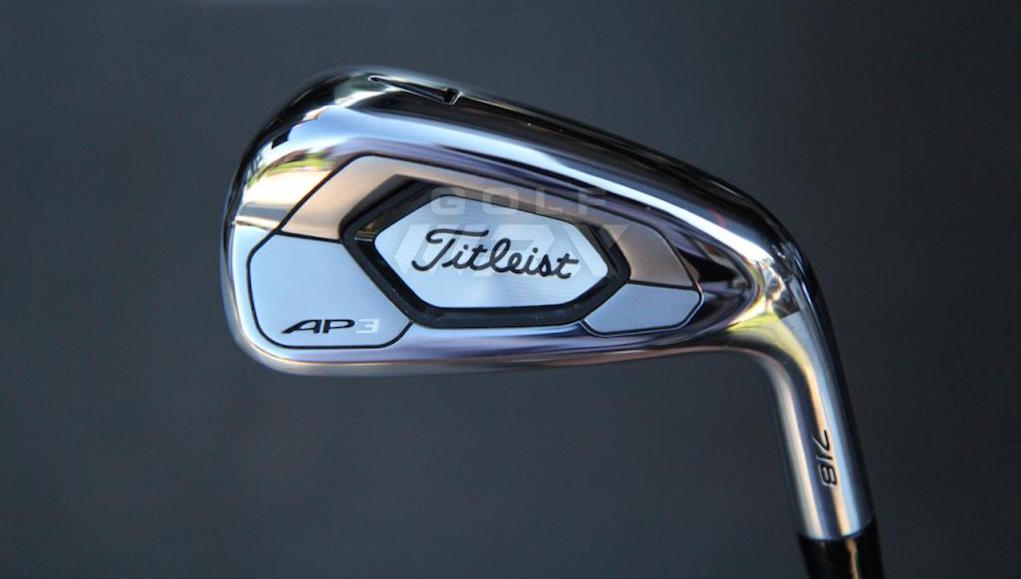
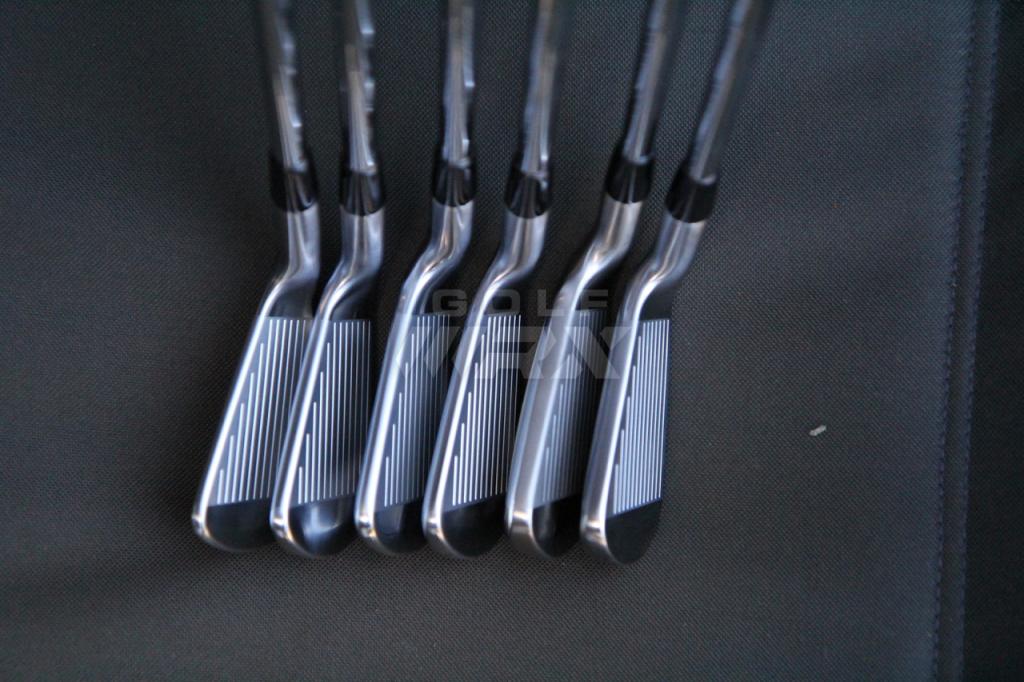
We spotted Titleist’s new 718 irons at the Quicken Loans National, where the clubs were officially released to PGA Tour players for testing. We photographed the company’s new AP1, AP2, T-MB, CB and MB irons, as well as its all-new AP3 model. The irons have also been released to players at the European Tour’s HNA Open de France.
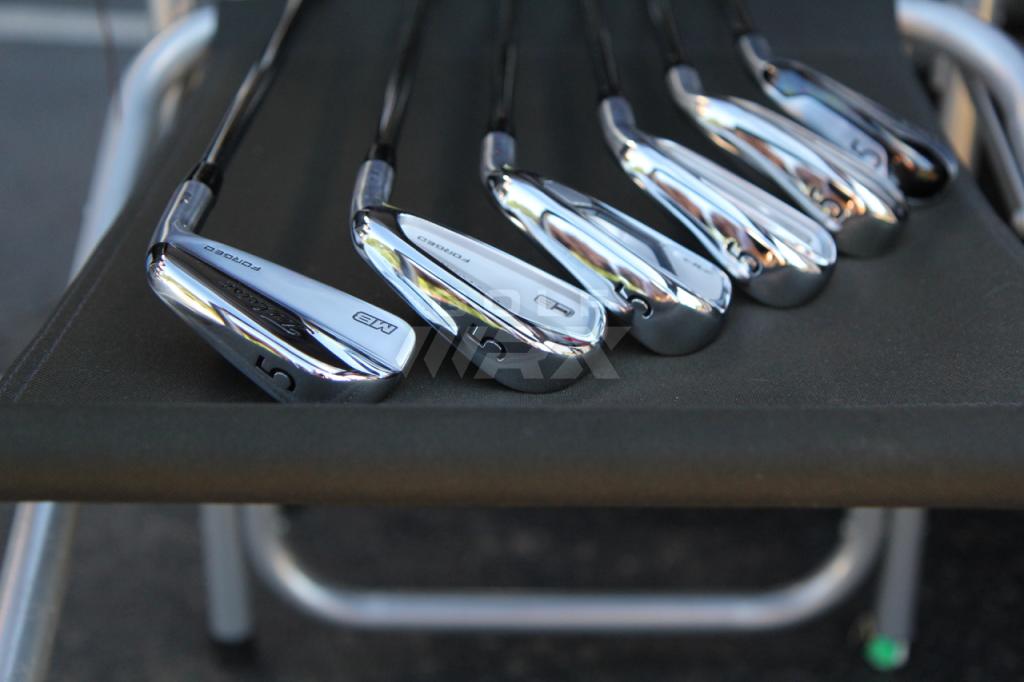
“Product seeding and player validation is a critical step in the go-to-market process for all Titleist equipment,” Titleist said in a press release. “Earning the validation of the game’s best players, as well as dedicated golfers at every level of the game, ensures that new products are faithful to the Titleist brand promise of innovation, performance and quality excellence.”
The 718 Lineup

From Left: Titleist’s AP1, AP3, AP2, T-MB, CB and MB Irons (Photo from Titleist).
Titleist isn’t sharing any details of the new irons at this time, nor do we expect any details from the company any time soon (those will likely come closer to the retail launch, which is expected this fall). The most anticipated details are about the company’s new AP3 irons. We can make some educated guesses about the AP3 based on our photos, as well as a photo Titleist released of the clubs.

The new AP3 irons seems to fill a gap between the company’s AP1 and AP2 irons. It appears to be larger in size than the AP2, which is one of the most popular iron models on the PGA Tour. It looks smaller than the AP1, however, Titleist’s longest-flying iron model that targets higher-handicap golfers.
On Friday, Ian Poulter shared photos of the new 718 irons in his bag on Instagram. He appeared to be testing a mix of AP3 and T-MB irons as his long and mid irons, along with a mix of AP2 and MB irons for his short irons. The arrangement indicates that the AP3 irons, or at least the AP3 long irons, will have hot faces like Titleist’s 716 AP1 and T-MB irons to create additional height and distance.
718 MB


More Photos of the 718 MB and CB Irons
718 CB

More Photos of the 718 MB and CB Irons
718 T-MB

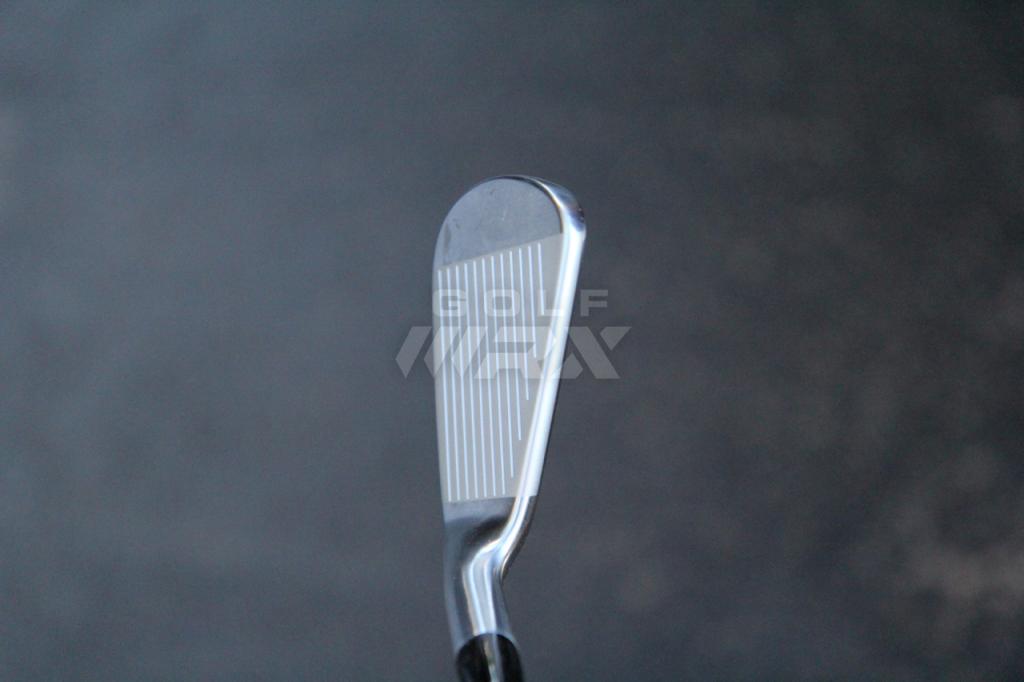
More Photos of the 718 T-MB and AP1 Irons
718 AP2

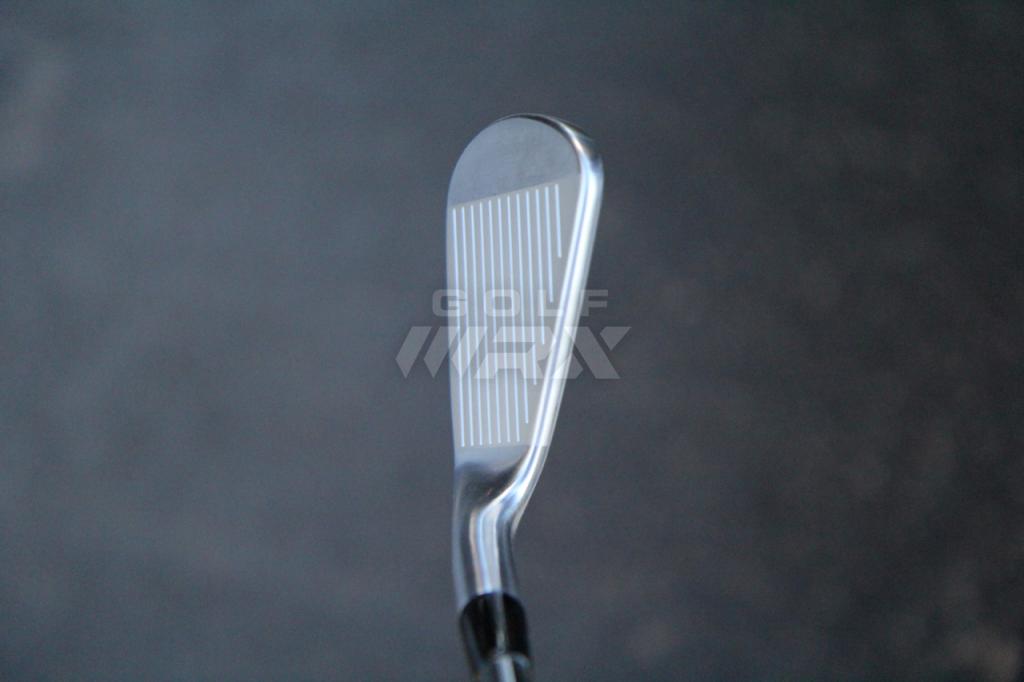
More Photos of the 718 AP2 and AP3 Irons
718 AP3

 More Photos of the 718 AP2 and AP3 Irons
718 AP1

 More Photos of the 718 T-MB and AP1 Irons
More Photos


Equipment
Putters that never made it: Check out some of the best tour builds that didn’t make the cut

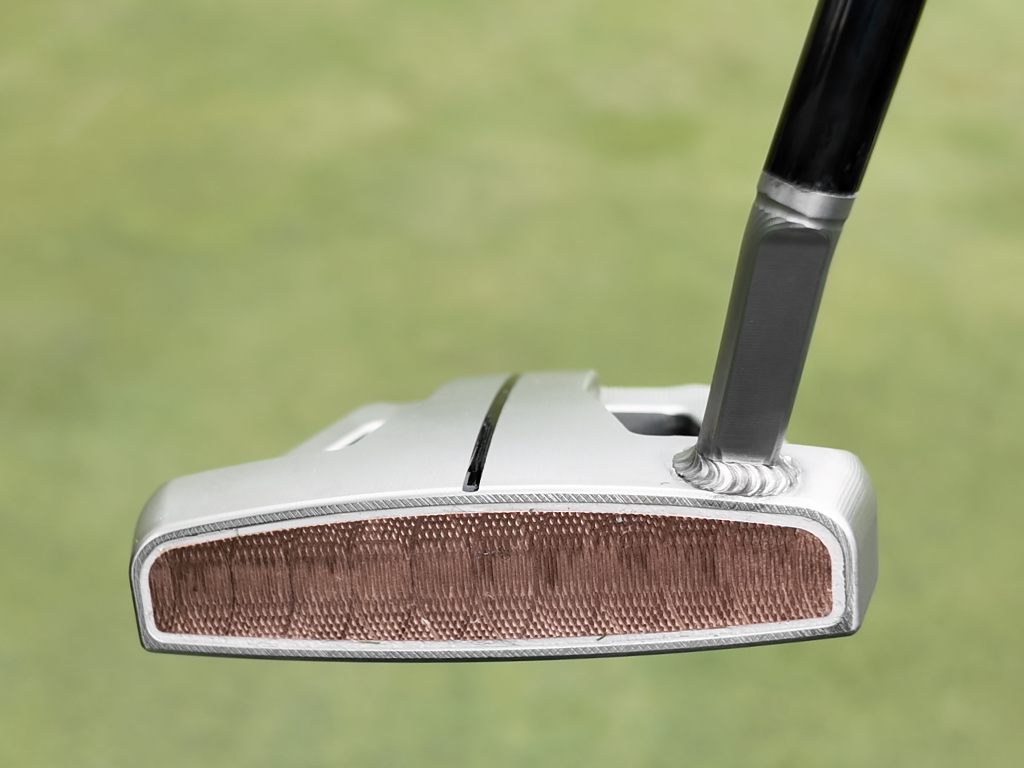
Arguably, the best perk of being a professional golfer on the PGA Tour is the ability to request or even just be handed pretty much any club you could think of. It happens more often than you think, usually with putters around the practice green from one event to the next. Come Wednesday, the Tour bags lining the edge of the putting surface become resting places for fallen flatsticks that never made the cut.
So let’s take a look at some of the best we’ve seen out on Tour this year that never made it to the competition. (You may notice none of Hideki Matsuyama’s custom Scotty Cameron putters made this list. There are too many.)
Let’s start with this custom Damascus Milled Odyssey Rossie made for Ryo Hisatsune. Featuring a single line and the short-slant hossel, we’ve seen plenty of Number 7 and jailbird heads featuring the Damascus Milled insert, but this is the first and only one we’ve spotted in a Rossie. Hisatsune primarily putts with an Odyssey Black Series iX #9, but we have seen him recently with a TaylorMade TP Collection SOTO, so there could be potential that the Damascus Milled Rossie could end up in the bag.

Everyone wants to be Cameron Young right now. We’ve had Justin Thomas and Tom Hoge both game the Scotty Cameron 9.5R prototype. Well, for the PGA Championship, Brooks Koepka nearly joined that list after requesting the same style of putter, with the full-length alignment line. But the Scotty Cameron reps took the request a step further and made one specially for Koepka with a Teryllium insert, similar to one in his previous Newport 2 gamers. The reason why this one didn’t go into play, though? Because it was too heavy.

Harry Hall was the third-best putter on Tour last year, so when Bettinardi made him a custom proto, you know it was going to be good. The custom BB28 blade features VDF face milling, a custom-welded single-bend shaft, and the owner’s initials – HH – on the sole of the putter. Hall, who usually games an Odyssey O-Works #7 W, has dabbled with a TaylorMade Spider Tour X already this year. Maybe there’s a chance this Bettinardi might make his bag.

Honestly, this one doesn’t need a description. It’s Kieth Mitchell’s custom Scotty Cameron Napa. One Scotty Cameron face stamp, two Scotty Dogs, two Scotty Cameron 7-Point Crowns and one Circle T. That is all. Oh, except for the Cashmere Cameron headcover.

Finally, and just for fun, how about we pour one out for this TaylorMade Spider Tour X made for Scottie Scheffler in its new torched finish. It’s unlikely we’ll see a putter change anytime soon from the best golfer in the world. In fact, he hit just two putts with it on the Harbour Town practice before going back to his trusty gamer.


Driver: Titleist GT3 (9 degrees) Buy here.
Shaft: Aldila Rogue Silver 130 M.S.I. 70 TX


3-wood: TaylorMade Qi35 (15 degrees)
Shaft: Fujikura Ventus Blue 7 X

7-wood: TaylorMade Qi35 (21 degrees)
Shaft: Fujikura Ventus Blue 8 X

Irons: Grindworks PR-202 (4), Grindworks PR-101A (5-PW)
Shafts: True Temper Dynamic Gold Tour Issue X100


Wedges: Cleveland RTX6 Tour Rack (52-10 Mid), Titleist Vokey Design SM10 (56-08M), SM11 (60-04T)
Shafts: True Temper Dynamic Gold Tour Issue S400


Putter: Scotty Cameron Tour Rat 1.5 Tour Prototype


Ball: Titleist Pro V1x
Grips: Golf Pride MCC


In our forums, our members have been discussing their favorite major winning irons used by Tiger Woods. WRXer ‘golferdude54’ kicks off the thread saying:
“Mizuno MP 14/29. Titleist 681T. Nike Forged Blades. TaylorMade P7TW.
Among these irons that helped Tiger win 15 majors, which is your favorite in terms of looks?”
And our members have been naming their favorites and why in response.
Here are a couple of posts from the thread, but make sure to check out the entire discussion and have your say at the link below.
- SwingBlade: “I prefer the early blades he played and the more recent TM TW’s especially because after Tiger had his major behavioral setbacks, part of Nikes support payback was making Tiger play a Nike putter and cease using his beloved uniquely customized Scotty putter.”
- ProjectX: “This (Nike Forged Blades) and there’s not even a close second.”
Entire Thread: “Which of Tiger’s major winning irons are your favorite? – GolfWRXers discuss”

Justin Rose WITB 2026 (April): Full WITB breakdown with new McLaren irons

RBC Heritage Tour Report: More minis, course-specific setups, Spider & GTS launches

What’s the story behind Webb Simpson’s custom-stamped irons?

Cadillac Championship Tour Report: Spieth’s sizable changes, McLaren Golf launches, and more

Kristoffer Reitan’s winning WITB: 2026 Truist Championship

Cameron Young’s winning WITB: 2026 Cadillac Championship

Aaron Rai’s winning WITB: 2026 PGA Championship

Nelly Korda WITB 2026 (April)

Justin Rose on the switch to McLaren Golf, learnings from previous equipment moves

Photos from the 2026 PGA Championship


Patrick Reed WITB 2026 (May)
Driver: Titleist GT3 (9 degrees) Buy here. Shaft: Aldila Rogue Silver 130 M.S.I. 70 TX 3-wood: TaylorMade Qi35 (15 degrees)...

Aaron Rai’s winning WITB: 2026 PGA Championship
Driver: TaylorMade M6 (9 degrees) Shaft: Aldilda Synergy Blue 70 TX 3-wood: TaylorMade Qi10 (15 degrees) Shaft: Fujikura Ventus Blue...


Michael Block WITB 2026 (May)
Driver: TaylorMade Qi4D (9 degrees) Shaft: Fujikura Ventus Black VeloCore+ 5 X 3-wood: TaylorMade Qi4D (15 degrees @14.25) Shaft: Mitsubishi...


Bryson DeChambeau WITB 2026 (May)
Driver: Krank Formula Fire Pro (6 degrees) Shaft: Project X Prototype 3-wood: Krank Formula Fire (10 degrees) Shaft: LA Golf BAD...
-
 Whats in the Bag3 weeks ago
Kristoffer Reitan’s winning WITB: 2026 Truist Championship
-
Whats in the Bag2 weeks ago
Aaron Rai’s winning WITB: 2026 PGA Championship
-
 Tour Photo Galleries3 weeks ago
Photos from the 2026 PGA Championship
-
 Equipment2 weeks ago
GolfWRX Launch Report: 2026 Titleist GTS drivers
-

 Equipment2 weeks ago
PGA Championship Tour Report: Fitzpatrick, Koepka among big-name putter switches for Aronimink
-

 News2 weeks ago
WITB Time Machine: Phil Mickelson’s winning WITB, 2021 PGA Championship
-

 Equipment2 weeks ago
Which of Tiger’s major winning irons are your favorite? – GolfWRXers discuss
-

 Equipment2 weeks ago
Lead Tape Report: Adjusting the swingweight of the Wanamaker Trophy


ooffa
Jul 10, 2017 at 5:12 pm
Grumpy much!
JD
Jun 28, 2017 at 8:32 pm
So do the 718 AP2’s have tungsten in 4-7 and no tungsten in 8-P just like the 716’s?
DrRob1963
Jun 27, 2017 at 3:00 am
Any idea about the specs???
Twalkrz
Jun 26, 2017 at 10:22 pm
Titleist and callaway work together? The new drivers look similar and these look like Apex irons.
H8R
Jun 26, 2017 at 8:13 pm
AP3 will do well
D
Jun 26, 2017 at 7:53 pm
It’s great that Titleist does not add clutter to the AP3 by etching the word “forged”. They should remove the word “forged” from the AP2 as well. Best to avoid as much badging as possible.
Beefhouse
Jun 27, 2017 at 6:42 am
If it’s forged they’ll you about it. Fairly strong guess that the AP3s are not forged…
golfraven
Jun 26, 2017 at 6:05 pm
The more I look at the CBs the more I can see the subtle changes Titleist made. I like the fact the head is partly chrome (back, sole) and brushed (face) which gives it a nice style and should reflect less. I don’t think this was as dominent oin the 716 line. Same for MBs from what I can see. The topline of the MBs is like a toothpick – rather sick. Fans of the 690 might love it.
718 line looks OK but does not excite me as much as the Bridgestone Tour B CB and MB. Will need to compare both in fall.
Sef
Jun 26, 2017 at 3:30 pm
Other than dropping the word tungsten the CB is very similar to the 716. The line above the muscle in the cavity changed slightly, but not much going on there.
golfraven
Jun 26, 2017 at 5:36 pm
Fully agree. That was my first impression too. You as well may but a set of 716 CBs on ebay or new for couple 100 less. Not sure this line is going to fly of the shelf.
izzlist of izzles
Jul 4, 2017 at 1:07 am
Subtle difference, true but I think it’s the bullocks.
Wish I could hit it.
Jball
Jul 31, 2017 at 5:56 pm
Hopefully the gap the CB’s loft a bit closer to the AP2’s. I would love a blended set, but if its a 2-3 degree change, then I’m guessing bounce starts getting out of line.
Juice
Jun 26, 2017 at 11:18 am
They look boring but that’s what Titleist does…make boring looking clubs. They do perform and that’s the most important thing. I like the idea of the AP3. Do something new to offset the boring look.
Tom1
Jun 26, 2017 at 12:14 pm
Huh… Titleist pretty much ran these gamut with these models
TR1PTIK
Jun 26, 2017 at 12:18 pm
Some call it boring, others call it classic. No need for orange, blue, or “volt” colors that fade and wear off over time making your clubs look even more dated than they actually are. I even say that with a bag full of Nike Vapors. I’d much rather play Titleist or Mizuno irons, but I wanted (needed) fresh grooves and new tech (at a reasonable price) more than I wanted to keep playing my 735 CM’s which I still think look better. Like you said, it’s all about performance.
Tom1
Jun 26, 2017 at 10:51 am
which one did Jordan use to win yesterday?
Dat
Jun 26, 2017 at 11:02 am
716 AP2. I can see him switching easily to the 718 since they look very similar to the 714s in a certain way. Can’t wait to try them all myself though. Classy looks.
Jack Nash
Jun 26, 2017 at 3:59 pm
Jordan used the “Horeshoe” model. Specifically made for him.
Robert Parsons
Jun 26, 2017 at 6:32 pm
What is the horseshoe model? I’m assuming that was the word you tried to type. How is it different from the AP2 off the shelf?
Joe
Jun 27, 2017 at 7:25 am
Mr Parsons are you trying to steal plans from Titleist for your next PXG irons!?