
Opinion & Analysis
The 5 Biggest Mistakes in Club Fitting

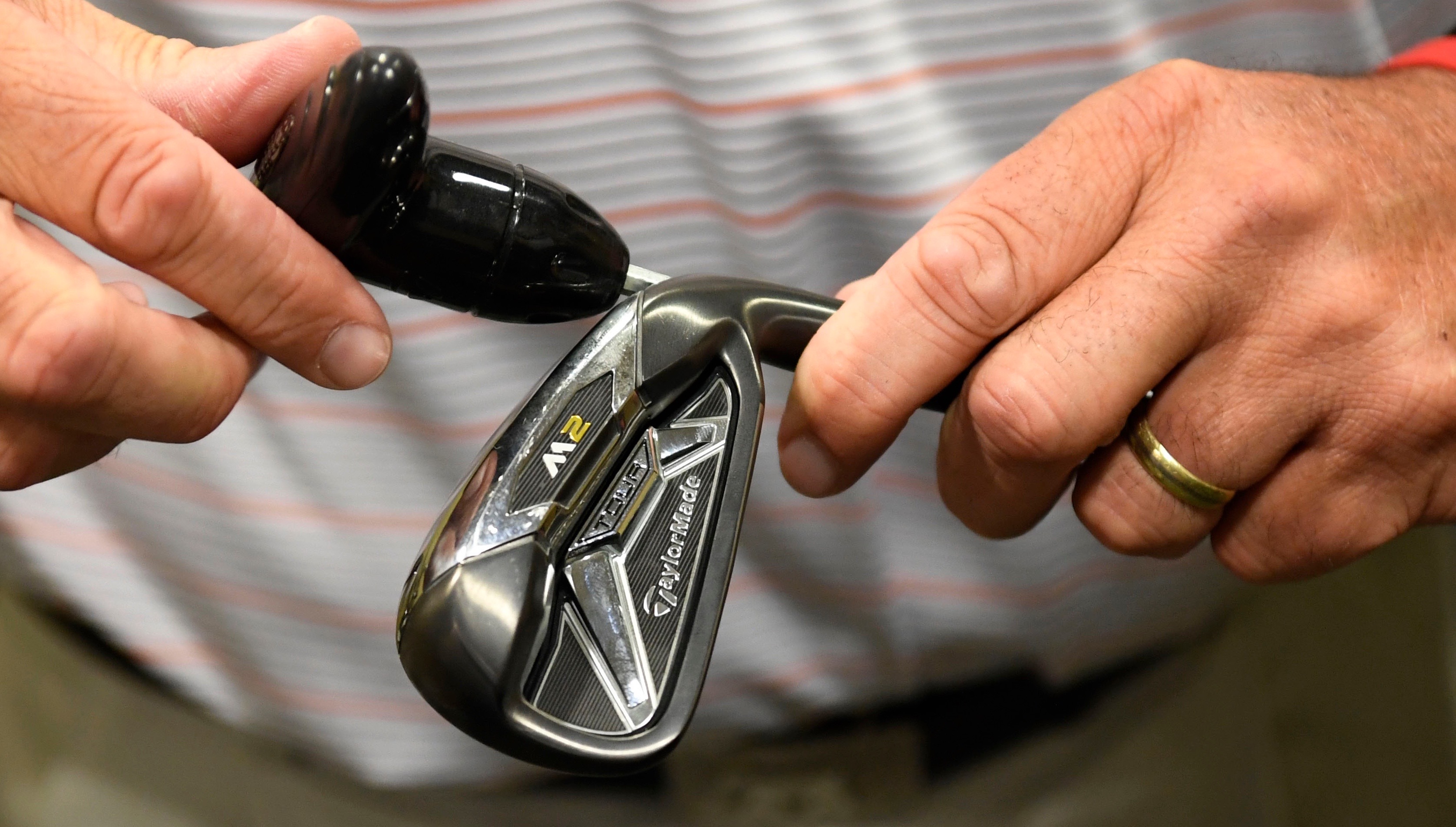
Throughout my golf career, I have been fortunate to spend time with some of the best club fitters in the world. Before I became a full-time golf instructor, I was a Tour Rep for TrackMan, which had me traveling around the U.S. and beyond to top club fitters and golf professionals. Through that experience, combined with my own teaching and fitting background, I have come to understand the many mistakes that can be made during a club fitting.
This article is not meant as a criticism toward any club fitter or golf professional. I simply want to pass on what I’ve learned to GolfWRXers and the greater golf community to do my part to make sure golfers don’t end up with a set of clubs that are a detriment to their games (and their wallets). These are the 5 biggest mistakes in club fitting.
1. Using Face Tape
Face tape has been used in club fitting for a long time. It is extremely helpful in showing us where on the club face a golf ball was struck, and it helps us understand more about why the ball is flying the way it does. This is the only way I would ever recommend using tape on the face of a golf club.
If you are a club fitter or a golf professional trying to protect your golf club during a fitting, it’s fine to put tape on the top or bottom of a wood to protect it from sole wear or potential sky marks. It’s a grave mistake to use tape on the face when you’re evaluating ball flight and/or launch monitor numbers, however, and you can see why in the example below.
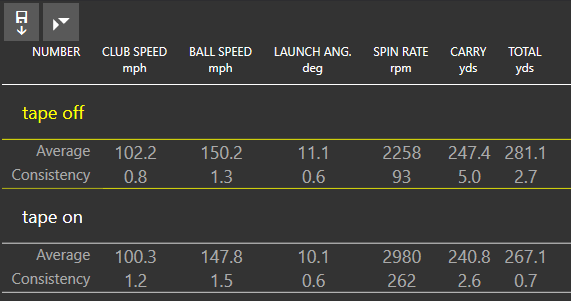
With the tape on his driver club face, this golfer had about 700 more rpm of spin and 14 yards less total distance. If you are a golf professional and you want to dial in your students, DO NOT use face tape when you’re evaluating ball flight. A good alternative to face tape is Dr. Scholls foot spray. It may sound a little strange, but it will show where the ball was struck and have little to no effect on the ball flight.
2. Assuming Optimal Launch and Spin are Uniform
This is something I hear quite a bit, even from golf equipment manufacturers. Not too long ago, many in the golf industry were in agreement that the optimal launch and spin for any golfer with a driver for maximum distance was a 17-degree launch angle with 1700 rpm of spin. This might be true in a bubble, but we as humans have thousands of different combinations of swings and speeds, making this guideline almost completely useless. Take a look at some numbers for two very different golfers below: Player A and Player B. I want you to consider what you think good launch and spin should be for both.
Player A
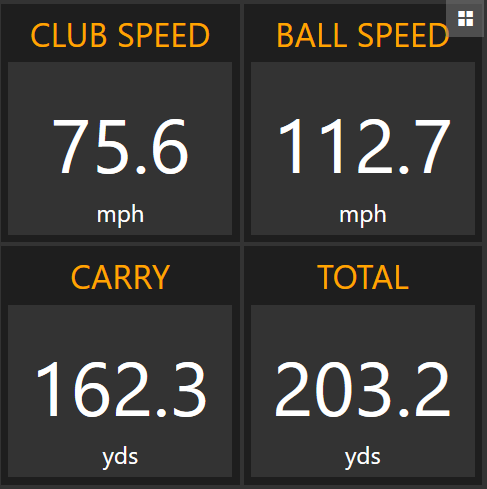
Player B

In this scenario, I think most would assume that Player A (a low-speed player) would need significantly more spin to be optimal than Player B (a high-speed player). The rule of thumb is that the slower a golfer swings, the more spin they need to keep the ball in the air for maximum distance. Using that guideline, however, you wouldn’t optimize either golfer.
In club fittings, everything hinges on the specific needs of the golfer in front of you. The three main player inputs that determine optimal launch and spin are:
- Club Head Speed
- Attack Angle
- Desired Trajectory
In choosing a desired trajectory, a golfer has three options. They can opt for a high trajectory for maximum carry distance, a low trajectory for the most roll out (and sometimes the most total distance, depending on the conditions of the courses they play), or a combination that balances the two (carry and total). For simplicity, let’s assume both of these golfers want to optimize for the combination of carry and total. Now, let’s take a look at the optimization chart for each player below.
Player A Optimized
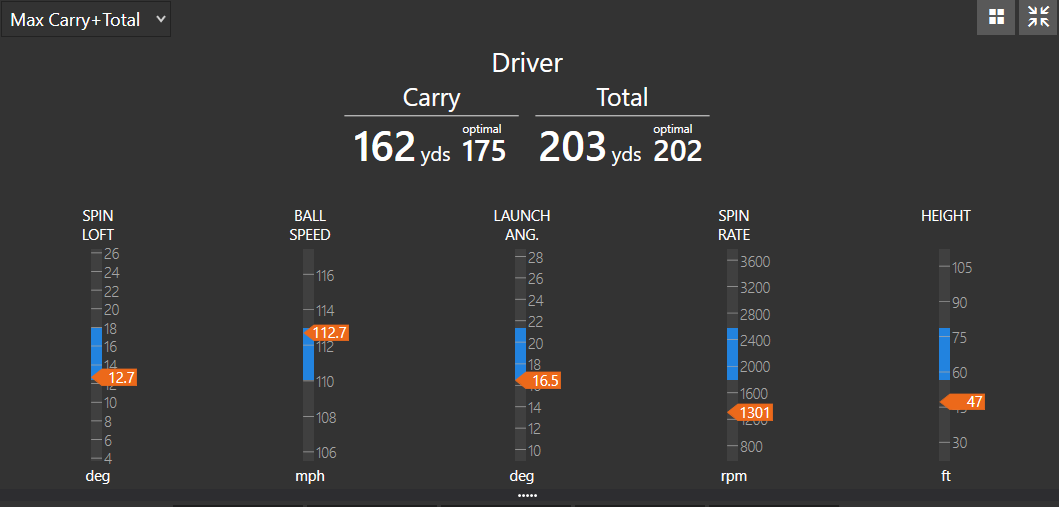 Player B Optimized
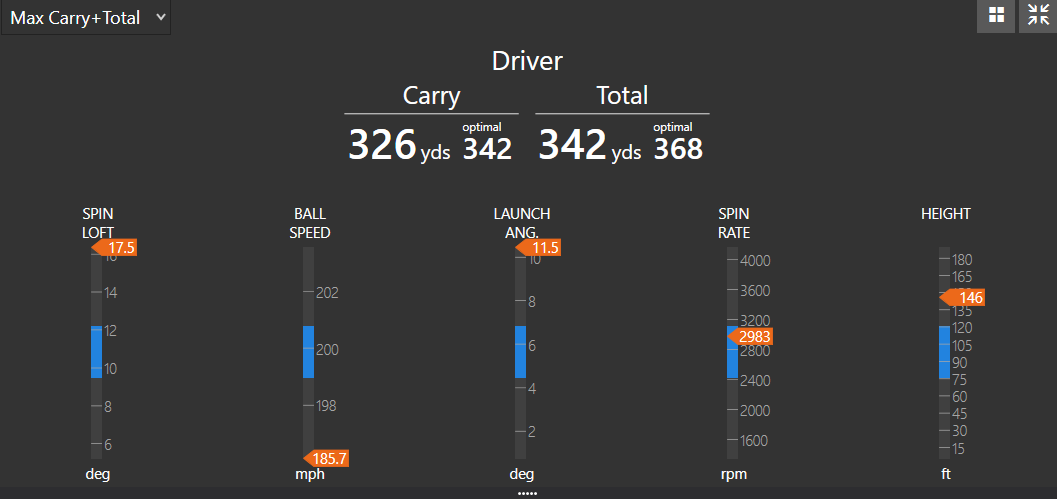
As it turns out, Player B with 135 mph of club head speed needs more spin than Player A with 76 mph of club head speed. It goes against my instincts, too, but it’s true. The reason is the Attack Angle for each player.
- Player A is hitting 5-degrees up on the ball, so he is already launching the ball into the air. For that reason, he doesn’t need as much spin for optimal distance.
- Player B is hitting 3-degrees down on the ball, so he needs more more loft and more spin to keep the ball in the air for optimal distance.
3. Only Looking at Distance Gained
This is the biggest and most common mistake I see during fittings. Both golfers and fitters are guilty of focusing on the one shot that travels 8-10 yards further during a fitting, and because it has the most distance potential, they assume that it’s the best club. I will never tell anyone that distance isn’t important, but I believe that too much emphasis has been placed on it in both driver and iron fittings.
Dispersion is huge for playability, and I suggest fitters take the time to allow golfers to hit plenty of shots in fittings. This allows them to not only optimize for distance, but also for dispersion.
Golf equipment manufacturers have given us fantastic equipment that can makes it very easy to adjust ball flight. The ability we have to tweak weighting, face angle, and lie angle can be vital to our ability to create a tighter dispersion. If you’re fitting outside, however, I encourage all fitters to go beyond the flat, perfect lies of the driving range. Have golfers hit shots from different lies and locations, and get them out on the course if you can. By testing clubs for the shots golfers are most likely to encounter during a normal round of play, you’re going to gain a much better understanding of what club will actually perform best for them.

Above are the Trackman numbers for a highly skilled junior golfer during a driver fitting. He was carrying shots about 245 yards with a total distance of 260 yards, and the ball was flying very straight. In the fitting, we were able to narrow down his best options to two drivers. With one of them, he cracked the longest shot he hit all day: 251.5 yards in the air, rolling out to almost 280 yards.
With that driver, he also recorded his fastest ball speed and best total distance by about 8 yards. When we look at the full picture, however, we will see it was not the best driver for him.

Driver #2 (white) is absolutely the most consistent in length and dispersion despite the fact that he hit Driver #1 (yellow) farther one time. Most golfers only think of their bad shots as “outliers,” when in fact they should often be discounting their very best shot with a club in the cases when the majority of their shots with the club are off-target.
4. Using a Lie Board

Lie boards are a thing of the past. There, I said it. Basing any loft or lie adjustments purely off a lie board is completely useless. On any well struck golf shot, the golf ball has already left the golf club before any significant ground and club interaction has occurred. This means the marks on the bottom of the club tells us next to nothing.

Above is a great picture from a friend of mine, Errol Helling. He’s the owner of Profectus Golf in Nashville, Tennessee. The photo shows the difference in where two golf clubs point at address: one at 3-degrees upright (pointing left) and one at 2-degrees flat (pointing right). It’s important to remember that the photo shows “static loft.” We are most interested in “dynamic loft” and the face angle at impact because that’s what effects ball flight. Just because we have an iron that is orientated a direction at setup does not mean it will point in the same direction at impact.
5. Looking at Divot Direction and Depth
Recently, this has been a frequent topic of discussion in the golf world. I hate to disagree with one of the greats of our game, Ben Hogan, but the secret is not in the dirt. I can’t say that Hogan was wrong, as his thoughts on the golf swing worked very well for him, but we now know that divot direction and divot depth tell us very little about ball flight. You can hit any kind of golf shot with every kind of divot, so why assume that the divot is going to tell us anything valuable?
Below are some pictures of shots I hit on the range. The divot direction is indicated by the alignment stick (on the left in each photo) that travels directly through the divot. The target line is the alignment stick on the right side of the picture. As you can see, the divots had no correlation to direction or curvature.
Shot #1

Shot #2

Shot #3

Shot #4
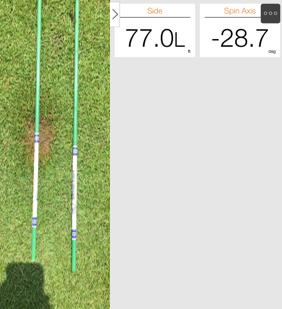
If you are trying to determine swing faults or fitting issues by looking at divots, you will be chasing an answer that does not exist. Keep your focus on impact location, face angle, club path, and angle of attack, and you’ll be on your way to better fittings.



Aronimink is not a storied club, but when Donald Ross himself proclaimed it to be as good as he can design and build, one had to take notice. Jay Sigel was the pre-eminent male amateur golfer from the mid-1970s to the mid-1990s. He might have called any number of Philadelphia clubs home, but he chose Aronimink. It served him well. Gary Player won a PGA Championship here in 1962, and was followed by the 1993 winner … nobody. Aronimink gave that event away to Inverness, for reasons of which it is certainly not proud. So be it. We had to wait sixty-four years for the PGA to return to Newtown Square, but here we are. Aronimink has been neo-restored by Gil Hanse and team, to return Ross features with an eye toward defense against the dark arts, errrr, high-tech equipment.
Day one saw Rory McIlroy and Bryson DeChambeau dig big holes, to the tune of plus-four and plus-six, respectively. Since the first-round lead will be minus-three at worst, many shots will need to be made up for the power couple to reach contention. By nightfall, seven golfers held the day-one lead at three-under par 67. Shots and sticks caught our attention, and we are proud to present Five Things We Learned on Tech Thursday at the 2026 PGA Championship. Thanks to InsideTourGolfer, Today’s Golfer, and GolfWRX for initial equipment research.
First, meet Min Woo Lee
Min Woo Lee, aka Dr. Chipinski, has once again thrust himself into the conversation of Can he, will he, when will he? Lee has so much talent, wins not nearly as often as we believe that he should, and has no major near-misses (much less titles) on his wiki. The young Aussie is getting older and wiser, but is he able to avoid the scarring that holds the older and wiser back from breaking through? Philadelphia offers another opportunity. Min Woo signed for five birdies and two bogeys on day one, and grabbed a share of the opening-day lead at Aronimink. Winners transcend history and the moment, and Lee will need that sort of ascent to lift the Wannamaker on Sunday.
Second, meet Aldrich Potgeiter
The young South African golfer can rip driver with the best of them. Aronimink tips out at nearly 7400 yards, but beyond the fairway bunkers that ensnare only the mortals, Potgeiter can take his chances with wedge from the rough. On Thursday, he spent plenty of time in the spinach. Like Popeye, he used his muscles to gouge and thrash and dig his way out. Six birdies against three bogeys on the card brought AP in a three deep.
Third, meet Martin Kaymer
Not a major event takes place without a where’s he been throwback moment. We know that Martin Kaymer left the PGA and DP World tours for LIV golf, but the two-time (US Open and PGA) major winner has a lifetime exemption into at least one major event, and he seizes the opportunity each May. Kaymer joined the six-seven brigade with four birdies and a solitary bogey on day one. Kaymer was never a long hitter, and the years are kind to no golfer. The German champion will need to uncork every bottle of guile and strategy in his cabinet to remain in contention. For today, though, he occupies a rung on the ladder of Tour Tech.
Fourth, meet Scottie Scheffler
Let’s see, he’s the defending champion at the PGA, and he found his way back to the top tier with five birdies against two bogeys. To be a favorite and then play up to that stature and expectation is quite difficult. Just ask Rory, Bryson, and some of the other pre-tournament heartthrobs. Scheffler’s game is complete, and to knock him off the OWGR #1 pedestal, one needs to defeat him at the majors. Aronimink is the sort of course that fits Scheffler’s game. Better yet, it unfits the game of many of his challengers. Don’t expect Scheffler to go away anytime soon. Come Sunday, he’ll be around.
Fifth, meet Stephan Jaeger
Clocking in for the unheralded players shift are Ryo Hisatsune and Stephan Jaeger. Hisatsune logged seven birdies on day one, but gave most of them back with four bogeys. Still, he’s tied at the top for a time. Jaeger pitched five birdies against two bogeys, including a run of three consecutive, from holes four through six. Odds are that one of the two will hang around through 36 holes. Odds also suggest that both will be gone by Saturday evening. Still, the PGA Championship has historically been the major most likely to be won by an under-known. Both Hisatsune and Jaeger feature on that list, so good luck, lads!

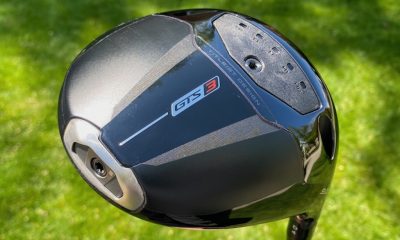
On this episode of the Club Junkie Podcast, I head to the Titleist Performance Institute for a full driver fitting with the new Titleist GTS lineup. We dive into the fitting process, talk about what made the biggest difference in performance, and break down how the different GTS heads and shaft combinations compare on the launch monitor. If you are thinking about a new driver setup for this season, there is a lot to take away from this one.
I also get into Brooks Koepka and the gear setup he brought to the PGA Championship, including the putters that caught my eye during the week. There are some interesting equipment trends showing up at the highest level right now and we break down what stands out.
To wrap things up, I talk about reshafting a few wedges, what I learned during the process, and swapping an adaptor onto a new shaft for another build project in the shop. A gear packed episode from start to finish for anyone who loves golf equipment and club building.
Follow Club Junkie everywhere:
Instagram: https://www.instagram.com/clubjunkiepod/
X: https://x.com/ClubJunkiePod
TikTok: https://www.tiktok.com/@clubjunkiepod
Threads: https://www.threads.com/@clubjunkiepod
Excited for this week’s WITB as we get to add the new Titleist GTS woods to the bag! I was fit at Titleist’s TPI facility in Oceanside California a few weeks ago and my new clubs just showed up. I am also adding a cool set of irons that I built last year some wild custom wedges into a new golf bag. Speaking of the bag I have a new Ghost Anyday Black Ops stand bag that I will be using on my Motocaddy Remote M7 electric cart.
Driver: Titleist GTS3 (11 degrees @ 10.25)
Shaft: Fujikura Ventus Red 6s
3-wood: Titleist GT1 3Tour (14.5 degrees)
Shaft: Graphite Design Tour AD CQ-7s
5-wood: Titleist GTS (18 degrees)
Shaft: Fujikura Ventus Red 7s
9-wood: Titleist GT1 (24 degress)
Shaft: Fujikura Ventus Red 7s
Irons: Bettinardi CB24 (5-PW)
Shafts: KBS C-Taper Lite 110 stiff
Wedge: TaylorMade MG5 (50-09 SB)
Shaft: Mitsubishi MMT 125 Stiff
Wedge: TaylorMade MG5 (56-12 SB)
Shaft: Mitsubishi MMT 125 Stiff
Wedge: TaylorMade MG5 (60-08 LB)
Shaft: Mitsubishi MMT 125 Stiff
Putter: Dan Carraher ZT Proto
Ball: Callaway Chrome Tour
Bag: Ghost Anyday Black Ops Stand Bag

Justin Rose WITB 2026 (April): Full WITB breakdown with new McLaren irons

RBC Heritage Tour Report: More minis, course-specific setups, Spider & GTS launches

What’s the story behind Webb Simpson’s custom-stamped irons?

Cadillac Championship Tour Report: Spieth’s sizable changes, McLaren Golf launches, and more

Kristoffer Reitan’s winning WITB: 2026 Truist Championship

Cameron Young’s winning WITB: 2026 Cadillac Championship

Aaron Rai’s winning WITB: 2026 PGA Championship

Nelly Korda WITB 2026 (April)

Justin Rose on the switch to McLaren Golf, learnings from previous equipment moves

Photos from the 2026 PGA Championship


Patrick Reed WITB 2026 (May)
Driver: Titleist GT3 (9 degrees) Buy here. Shaft: Aldila Rogue Silver 130 M.S.I. 70 TX 3-wood: TaylorMade Qi35 (15 degrees)...

Aaron Rai’s winning WITB: 2026 PGA Championship
Driver: TaylorMade M6 (9 degrees) Shaft: Aldilda Synergy Blue 70 TX 3-wood: TaylorMade Qi10 (15 degrees) Shaft: Fujikura Ventus Blue...


Michael Block WITB 2026 (May)
Driver: TaylorMade Qi4D (9 degrees) Shaft: Fujikura Ventus Black VeloCore+ 5 X 3-wood: TaylorMade Qi4D (15 degrees @14.25) Shaft: Mitsubishi...


Bryson DeChambeau WITB 2026 (May)
Driver: Krank Formula Fire Pro (6 degrees) Shaft: Project X Prototype 3-wood: Krank Formula Fire (10 degrees) Shaft: LA Golf BAD...
-
 Whats in the Bag3 weeks ago
Kristoffer Reitan’s winning WITB: 2026 Truist Championship
-
Whats in the Bag2 weeks ago
Aaron Rai’s winning WITB: 2026 PGA Championship
-
 Tour Photo Galleries3 weeks ago
Photos from the 2026 PGA Championship
-
 Equipment2 weeks ago
GolfWRX Launch Report: 2026 Titleist GTS drivers
-

 Equipment2 weeks ago
PGA Championship Tour Report: Fitzpatrick, Koepka among big-name putter switches for Aronimink
-

 News2 weeks ago
WITB Time Machine: Phil Mickelson’s winning WITB, 2021 PGA Championship
-

 Equipment2 weeks ago
Which of Tiger’s major winning irons are your favorite? – GolfWRXers discuss
-

 Equipment2 weeks ago
Lead Tape Report: Adjusting the swingweight of the Wanamaker Trophy


when_is_a_wrench_not_a_wrench
Aug 27, 2017 at 3:29 pm
Did anyone notice the main photo shows someone pretending to insert a wrench into a M2 Tour Iron head?
Beta
Aug 27, 2017 at 8:22 pm
Yeah? So? It’s a Fitting head. They have one of those last year lol so he’s not pretending
SoonerSlim
Aug 27, 2017 at 11:02 am
Hunter, very interesting article, but for me it did not go far enough because I’ve never seen and do not understand what the side and spin axis numbers you offer for the divot pictures represent. Unfortunately, you did not go far enough and offer an explanation for them. For example, what’s the difference between + and – spin axis? What does the side number mean? Great article except for the last part.
thanks, SoonerSlim
Hunter Brown
Aug 27, 2017 at 1:28 pm
Sooner, thanks for reading and giving your feedback. You are probably right I should have included some definitions about Spin Axis and Side. Coming from that world sometimes I forget not everyone knows the terminology. Spin axis represents which way the golf ball is curving so if positive the ball is curving to the right and if negative it is curving to the left. Side represents how far off of the target line the ball landed. Hope this helps! If you want to learn more about TrackMan Definitions visit the trackman blog.
SoonerSlim
Aug 27, 2017 at 9:34 pm
Thanks, Hunter
Never have seen or used a trackman, too old school I guess.
S
Michael
Aug 26, 2017 at 11:10 am
What if your line is straight on the club face but out towards the toe?
Beta
Aug 27, 2017 at 8:24 pm
Stand closer? Juuuuust kidding.
Jeffrey
Aug 26, 2017 at 4:14 am
Heres an idea. Why don’t we go out with our golf clubs and hit the ball and have some fun and forget about all this numbers/fitting/trackman/drills/etc BS. If you play good, great. If you play bad, there is always next time.
emb
Aug 28, 2017 at 2:49 pm
ya who cares about shooting your best possible scores, might as well buy your equipment from walmart and play top flites right
Stevegp
Aug 25, 2017 at 11:50 pm
Enjoyed the article and subsequent discussion. Getting fitted and hitting a club outdoors always seemed much different–and better–than hitting into a net while indoors.
Guia
Aug 25, 2017 at 6:38 pm
I am lost! Seems most of what has been accepted in the past is wrong, or misused.
Marooned
Aug 25, 2017 at 6:04 pm
No idea of how the “fitting culture” are in the states. But here in Europe (Sweden) most of this is common sense except your point of the lieboard.
It is such a great and easy tool and a must have. One thing about lie though that I feel is that many people just hit a couple of shots with an 7-iron and that sets the marknfor the lieangle throughout the set.
A longer iron such as an 4-iron often needs a more upright lieangle then a 9-iron for example.
The majority of people a do an lietest with hitting a 4, 7 and 9-iron are hitting it more on the toe with a 4-iron compared to the 9-iron.
Bert
Aug 26, 2017 at 6:23 pm
Good thoughts – I’ve always just hit a 6 or 7 off the lie board. I’ve measured all my lofts and lies but tomorrow I’ll hit the long irons and short irons off the board and note the results.
Bob
Aug 25, 2017 at 4:22 pm
Gee, it seems like there is a lot of disagreement about proper club fitting technique. I have gotten advice about clubs on several occasions but never really had a fitting. One reason is that I have heard so much disagreement about how it should be done and am not aware of any standards or any acknowledged experts (e.g. Ping vs Callaway, etc.). I suppose the best shot might be to work with a pro, who also provides instruction and who will be around to provide guidance after new clubs are purchased or current clubs are adjusted for length, loft, lie, swing weight, grip, etc. The big question is why spend a lot of money, if you don’t know what you are buying?
Rors
Aug 25, 2017 at 4:15 pm
Steve Elkington has a video on youtube about dynamic fitting for irons… He marks a ball with a sharpie and that mark imprints on your club… I tried it and its the best…
Ben Jones
Aug 25, 2017 at 3:24 pm
Good Lord! How did we survive before technology. Now, I can get some really great clubs perfectly fit for me on that day for $4,000 or more, but if my swing ain’t worth crap and I can’t putt, what good is all this?
Lorne
Aug 25, 2017 at 3:19 pm
Clubs have a ‘static’ lie and a ‘dynamic’ lie which is a function of shaft tip ‘droop’. The position of the hands and club butt end changes through release and impact, which will affect the shaft lie.
The weight and shape of the clubhead will affect dynamic lie because the clubhead CofGs vary the droop characteristics of the shaft. Shaft specs influences dynamic loft as does downswing plane and clubhead speed which can vary as the golfer fatigues during the round.
So we have how many variables for dynamic lie? 6? 7? 8? 9? More? Less?
A good fitter can measure several of these lie factors but must also use intuitive knowledge to match the golfer to the optimal shaft and clubhead, and grip too. Good luck.
Tata
Aug 25, 2017 at 2:41 pm
In regards to #3.
I can guarantee you that 9 out of 10 amateurs who can’t hit their driver past 200 yards is solely focused on that aspect. They don’t care about anything else, because they all believe that once their distance is sorted out, that they can then learn to control their ball flight. Which is deadly absolutely true.
Dave
Aug 25, 2017 at 2:28 pm
Very interested in this article, yes I understand how you can determine lie angle by using a marker pen on the ball and Callaway use this method a lot with there fitting. We use the marker on the ball when fitting outdoors, but indoors with launch monitor the Marker ruins the white screen we have for our projector and leaves black marks on the screen. Would be interested to know if there are any other ways of determining a correct lie angle without the option of a lie board or marker pen on a ball???
Noodler
Aug 25, 2017 at 8:26 pm
I temporarily hang a black tarp/net in front of the screen to prevent the marker from being left on the white screen.
Hunter Brown
Aug 25, 2017 at 8:28 pm
Dave I would suggest always keeping your focus on flight and dispersion. From there if you need to make adjustments to lie angle you can but it shouldn’t be the first thing we go to
Noodler
Aug 26, 2017 at 9:21 am
Sorry Hunter, but I believe this is misguided advice. Golfers should be fit to their physique, strength, flexibility, etc., not to their swing mechanics. Swing mechanics will change over time (even day to day). Using lie angle adjustment to compensate for swing flaws is not the right approach. Trying to use club fitting to compensate for swing flaws is the 6th biggest mistake in club fitting.
Hunter Brown
Aug 27, 2017 at 9:19 am
Why can’t it be both? I never said you shouldn’t fit for the human being in front of you. Too much mutual exclusivity in your train of thought.
TexasSnowman
Aug 25, 2017 at 11:31 am
Agree with the comments on hitting indoors; I never feel like I hit my best shots. Club Fitting needs some type of standards or certification for competence. Even if you pay for a “tour level” fitting, you really have no idea if the fitter knows what he is doing… I’m not saying take all the ‘art’ out of the process, but it’s really the wild west out there in terms of quality.
Bobalu
Aug 25, 2017 at 10:50 am
Hunter- Great points! Fittings need to be done with a competent fitter with Trackman on the range. Period. Good luck finding this.
ADIDAG
Aug 25, 2017 at 10:36 am
Looks like to get optimum anything players need to focus on roll
Nack Jicklaus
Aug 25, 2017 at 9:59 am
You can get a good idea if your lie angle is correct by drawing a straight line around the circumference of a ball with a sharpie. Sit the ball on the ground with the line pointing straight up and down and with the line also pointing directly where you intend to hit the ball (just like people who line up putts with a line drawn on their ball). Now hit your shot and some of the sharpie line will stick to the face of your club. If the line is perfectly perpendicular to the grooves on your club, then your lie angle is correct. If not, it needs changing one way or the other.
Steve
Aug 25, 2017 at 12:47 pm
100% spot on. Well done.
Hunter Brown
Aug 25, 2017 at 6:26 pm
I agree with this however if the line is perpendicular and the golf ball is going as straight as possible for that player then why should we care. My point is we should always focus on ball flight not the extraneous details that sometimes do or do not matter
Sam
Aug 25, 2017 at 9:56 am
Lie angle has been a big question mark for me. So what is a better way to determine this other than a lie board? Almost, every ‘fitter’ or club seller I’ve seen, used a lie board, with one exception at DSGoods .. one employee used impact tape and adjusted lie angle until center contact was made .. very strange to me.
OGWC
Aug 25, 2017 at 10:05 am
Use a dry erase marker and put a vertical line on the ball. This is a simple and effective way to read the lie. When you hit the ball, the line gets transferred to the club face. A straight line up and down on the iron face means the lie is good.
Hunter Brown
Aug 25, 2017 at 6:30 pm
Dry erase is a decent solution however I would suggest just to focus on ball flight and dispersion. I would never care if a sharpie isn’t perpendicular or a piece of tape on the bottom of the face is telling me the club is “upright”. If a player is getting good results then that’s all that matters on course.
Noodler
Aug 25, 2017 at 8:30 pm
This only makes sense if you adhere to the idea that you should use lie angle adjustment to change ball flight. Many other factors could be impacting ball flight. Trying to fix ball flight due to other swing flaws via lie angle adjustments is a fool’s folly (IMHO).
KV
Aug 25, 2017 at 9:49 am
Help me understand your thoughts on lie boards. You talk about dynamic loft but criticize the lie board. It’s not called a “loft” board it’s a lie board. How else do we adjust lie without knowing where and how the club sole contacts the ground? Get everything else right and have the wrong lie adjustment and you’ve wasted a lot of time.
Hunter Brown
Aug 25, 2017 at 6:32 pm
Hey KV thanks for reading and your thoughts. I would always start with ball flight and dispersion if this is something you can measure or a pro near you can. Lie board’s tell us nothing about the shot that was just hit so I don’t know why we should care.
JN
Aug 25, 2017 at 7:21 pm
Although there are better ways to examine dynamic lie over the lie board (e.g. HMT), it definitely is relevant. Regardless of someone’s ball flight, getting them fit so that the dynamic lie is near 0 will improve their consistency and quality of impact. It’s just hard to consistently hit the center of the face when the toe or heel of the club dig into the ground early. The small change in face angle due to a lie change can be always be addressed after the fact. If you need help with a slice, just closing the face during setup with a proper lie angle is better than making impact toe up and getting the face closed from that.
Justin
Aug 25, 2017 at 8:58 am
You say not to use a lie board…not to look at divots…. How do you determine proper lie? Cannot do by shot pattern into a net. If you are going to give criticism, provide a solution as well.
Jon
Aug 25, 2017 at 9:19 am
I couldn’t agree more, Justin. How am I supposed to determine the proper lie angle without the aid of a lie board? I am new at this and am trying to learn how to make the proper adjustments on my own.
Nick
Aug 25, 2017 at 9:48 am
Trackman
Nick W
Aug 25, 2017 at 11:15 am
Trackman does not tell lie angles, trackman spits out information regarding ball flight. It does not care if its 10* upright or 2* flat.
Matt
Aug 25, 2017 at 11:15 am
Take some chalk or marker that will transfer when struck. Draw a straight line on the ball. Put the ball on the ground with the line vertical where you will strike it. Hit the ball. Look at the club face… you’ll have a good idea whether your club is too flat or upright.
Hunter Brown
Aug 25, 2017 at 6:35 pm
Hey Justin thanks for the input. I would always prefer to do a fitting outside if possible. Even on the course sometimes. If not possible and you are only hitting into a net then hopefully you have availability of TrackMan. If not I would suggest trying to find one. My point of lie boards and divots is that they have no correlation to what the ball is actually doing so why should we care? TrackMan does not specifically spit out a number called lie angle however it does tell us Face Angle at impact and Dynamic loft which would be a result of lie angle. If those numbers are good then you should be ok.
Jon
Aug 25, 2017 at 8:54 am
If lie boards are horrid, how am I supposed to determine what lie angle is best suited for me? I am looking for a little more education on this subject as I am just getting started with trying to assemble and adjust my own clubs. Thank you in advance for any and all advice.
Greg
Aug 25, 2017 at 10:15 am
Draw a vertical line on the ball with a sharpie. Examine the line it leaves on the club face. Adjust until vertical. Google it or search the forums.
Hunter Brown
Aug 25, 2017 at 6:47 pm
Hey Jon thanks for reading and taking the time to respond. I would rather the focus to be on ball flight and dispersion in a fitting. Also loft and lie adjustments can sometimes be a band aid for a bullet hole as it doesn’t address the root cause of the issue. Not always the case if you are really trying to dial things in with little tweaks but I get scared when people are fit for major lie adjustments. Often I think it actually makes the problem worse. I would work from the ball flight backwards. If thats good then why adjust? If it isn’t then you can make some adjustments of the loft lie but as I said earlier be cautious
Loz
Aug 26, 2017 at 3:44 am
So as I’m 6′ 4″ provided I can hit an off the shelf club ok I shouldn’t worry about custom fitting? On the Ping scale I come out at 4 degrees upright and plus one inch. I know I can hit an off the shelf club well, but won’t I subconsciously be compensating in my setup and swing. I’m a 4 hcp and have pretty solid fundamentals. Surely I’m going to be catching the toe first on everything, which can’t be a good thing. What would be my start point in your fitting?
Robert Malaussena
Aug 25, 2017 at 8:52 am
Get fitted by your local PGA pro on a range.
Bert
Aug 26, 2017 at 7:08 pm
I’m not sure that’s good information. PGA Pro, good fitting? Maybe find a good PGA professional or golf instructor for lessons.
xjohnx
Aug 25, 2017 at 8:48 am
Though some of these mistakes are made only in professional, outdoor fittings, #3 is the biggest thing wrong with the golf industry as a whole. Most people getting “fit” are walking into a sporting goods store or golf shop and comparing a few drivers and looking at the “numbers” on a very one dimensional basis and in a short amount of time. #3 happens just about everywhere just about every time.
Me
Aug 25, 2017 at 8:47 am
As a fitter ….
Irons, I weigh on more ball flight, direction and consistent carry. Ideally on natural turf as opposed to a hard mat. Driver; I agree completely with the writer, then again the golfer has final say, after reviewing the data of what ball flight they “like” . There are some that prefer a lower ball flight period, its often what they feel the most comfortable with- despite the technology and Data. Sergio for example prefers a slightly lower & more boring trajectory. No everyone is like Sergio but there is a fair amount of my customers that prefer a 10 degree launch angle than a say a 12.
Even tougher to fit is older guys, who have slowly lost distance every year. Who in a subtle attempt of trying to speed up the driver head at impact, resort to lurching ahead of the ball with their hips, body and head, de-lofting the head to a negative attack angle. Rather than neutral or +1, 2, 3 degree attack angle by staying behind the ball.
good article over all.
Andy
Aug 25, 2017 at 8:39 am
I suspect many people do not feel like they are swinging 100% like they normally do with indoor fittings. I am one of those people who feel confined and I also like to have a further away target. We will look back at hitting balls 15 feet into a padded screen as a huge mistake. Hit the clubs on the range and on the course before purchasing. Not many fitters offer this.
There will come a day when we can swing some tool at a course and capture all the necessary data and the tool will identify the possible clubs to maximize our swing. The possible clubs will include past years and even various cost options. The Fitter model today is like new car salesman. I don’t feel 100% sure that their interest and my interest is fully aligned.
Me
Aug 25, 2017 at 8:52 am
Andy, that’s not unusual & normal for some. I compare the feeling you have to driving a car. When we do we focus on an object 100-150 feet ahead ( depending on car speed) as opposed to looking just over the hood and have to constantly correct steering of the automobile. In other examples some people feel like they are hitting into heavy fog when being fitted in an indoor simulator. I still do the fitting, but once things are narrowed down, take the club outdoors.
Tom F. Stickney II
Aug 25, 2017 at 8:34 am
Good points HB!
Hunter Brown
Aug 25, 2017 at 6:36 pm
Thanks Tom hope you are well!
Thus
Aug 25, 2017 at 8:21 am
Great advice, as a club fitter I recommend all other fitters and even coaches read this… lie boards are horrid and reading divots can create disastrous thoughts
Nick W
Aug 25, 2017 at 11:18 am
What would you propose for lie angle assessment if you are not using a lie board or reading divot patterns?
Loz
Aug 26, 2017 at 3:26 am
Yes I’d like to hear this too. I’m 6′ 4″ and am 4 degrees upright on the Ping scale. I currently have 2 degree up 1/2″ long Mizuno from their national UK fitting centre, yes a lie board was used. As I can hit my friends off the rack club straight, probably subconsciously compensating in my setup and swing, then I actually don’t need custom fit clubs. My natural swing is always going to hit slightly toe down and you think there’s nothing wrong with this in the long term?