
Opinion & Analysis
Golf’s Young Guns Just DON’T CARE!

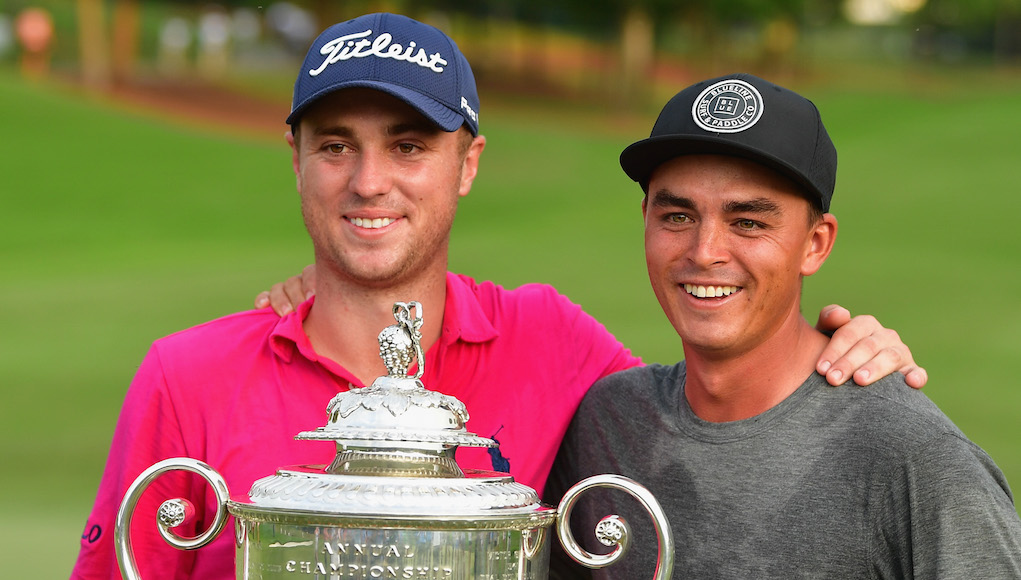
After watching Justin Thomas win the PGA Championship on Sunday, it is 100 percent clear to me that the “young guns” today on Tour just do not care. They don’t care about anything or anyone, and this I tell you is a GOOD thing. So what do I mean? I’m glad you asked. Let me list a few of the things that are different about the PGA Tour’s most talented young guns.
Their Fellow Tour Players
The young guns on the PGA Tour don’t care very much how their fellow players are playing. Not only do they want to beat each other, but they want to do it by as many strokes as possible. They amaze me with how well they can keep the pedal to the metal and go as low as possible. What a refreshing way to play; the goal is to not only win, but to do so in dominant fashion. You gotta love it!
The History of the Game
Records are made to be broken, as they say, but for many years records stayed intact. It always seemed like for some reason they just weren’t broken. Case in point, John Cook won the FedEx Classic years ago and was around 23- or 24-under par for the first three rounds. The record on Tour was 27-under, and he finished around 25-under (and won the event).
Today’s young guns would have tried to get it to 30-under without blinking. I’m not saying Cook didn’t try to do so, but he did fall short on one of the easier courses on Tour at that time. I would bet a ton of money that his record would have been shattered if the same thing happened today.
Par or Bogeys
I don’t think I ever heard that making par was a bad score; in fact, if you shot even par on Tour each week, you made a nice living and almost won a tournament or two. Nowadays on the PGA Tour, par gets you a weekend off. One of the things I like most about the young players of today is that they try to birdie each hole and rarely worry about an early bogey. Back in the day, you were fighting to get back to par. Now it’s all about going as low as you can go.
Fairways
Fairways hit was once an important category on Tour, and Calvin Peete and Fred Funk hit basically all of them. They had great careers. Now, it’s all about “how far” not “how straight.” The young guns bomb it, go find it, and hit it again. The older guys spent a lot of mental and emotional energy on missing fairways. Today, it’s one less thing to worry about, and I like that.
Social Media
I know that social media was not around years ago, but what a perfect way to learn about the private life of your favorite Tour player. Personally, I love hearing a PGA Tour player’s side of the story. I would have loved to hear the thoughts of Jack, Ben, and Arnie back in the day; wouldn’t you?
—
So basically, what I’m saying is that the younger players of today just play the game differently than my generation, and I absolutely love it. I love the fact that they are longer, shooting in the 50s more often, decimating par… and essentially cannot be stopped. The entire experience is just more fun to watch.
Thanks to the “young guns” for reinventing the game of golf.


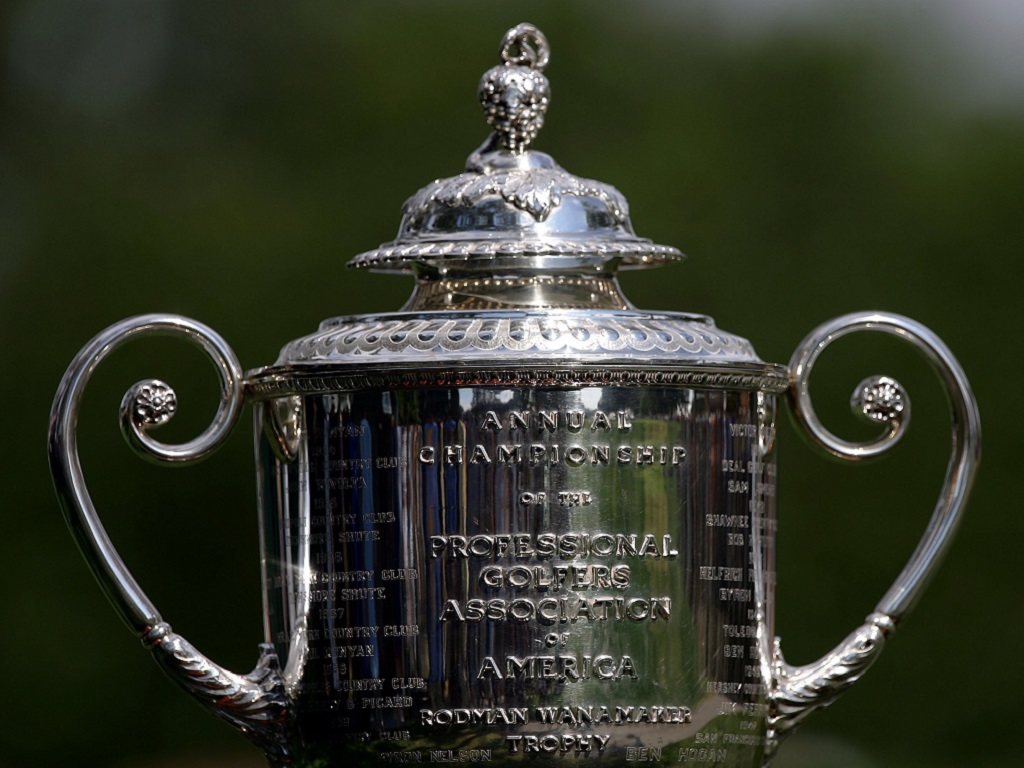
Aronimink is not a storied club, but when Donald Ross himself proclaimed it to be as good as he can design and build, one had to take notice. Jay Sigel was the pre-eminent male amateur golfer from the mid-1970s to the mid-1990s. He might have called any number of Philadelphia clubs home, but he chose Aronimink. It served him well. Gary Player won a PGA Championship here in 1962, and was followed by the 1993 winner … nobody. Aronimink gave that event away to Inverness, for reasons of which it is certainly not proud. So be it. We had to wait sixty-four years for the PGA to return to Newtown Square, but here we are. Aronimink has been neo-restored by Gil Hanse and team, to return Ross features with an eye toward defense against the dark arts, errrr, high-tech equipment.
Day one saw Rory McIlroy and Bryson DeChambeau dig big holes, to the tune of plus-four and plus-six, respectively. Since the first-round lead will be minus-three at worst, many shots will need to be made up for the power couple to reach contention. By nightfall, seven golfers held the day-one lead at three-under par 67. Shots and sticks caught our attention, and we are proud to present Five Things We Learned on Tech Thursday at the 2026 PGA Championship. Thanks to InsideTourGolfer, Today’s Golfer, and GolfWRX for initial equipment research.
First, meet Min Woo Lee
Min Woo Lee, aka Dr. Chipinski, has once again thrust himself into the conversation of Can he, will he, when will he? Lee has so much talent, wins not nearly as often as we believe that he should, and has no major near-misses (much less titles) on his wiki. The young Aussie is getting older and wiser, but is he able to avoid the scarring that holds the older and wiser back from breaking through? Philadelphia offers another opportunity. Min Woo signed for five birdies and two bogeys on day one, and grabbed a share of the opening-day lead at Aronimink. Winners transcend history and the moment, and Lee will need that sort of ascent to lift the Wannamaker on Sunday.
Second, meet Aldrich Potgeiter
The young South African golfer can rip driver with the best of them. Aronimink tips out at nearly 7400 yards, but beyond the fairway bunkers that ensnare only the mortals, Potgeiter can take his chances with wedge from the rough. On Thursday, he spent plenty of time in the spinach. Like Popeye, he used his muscles to gouge and thrash and dig his way out. Six birdies against three bogeys on the card brought AP in a three deep.
Third, meet Martin Kaymer
Not a major event takes place without a where’s he been throwback moment. We know that Martin Kaymer left the PGA and DP World tours for LIV golf, but the two-time (US Open and PGA) major winner has a lifetime exemption into at least one major event, and he seizes the opportunity each May. Kaymer joined the six-seven brigade with four birdies and a solitary bogey on day one. Kaymer was never a long hitter, and the years are kind to no golfer. The German champion will need to uncork every bottle of guile and strategy in his cabinet to remain in contention. For today, though, he occupies a rung on the ladder of Tour Tech.
Fourth, meet Scottie Scheffler
Let’s see, he’s the defending champion at the PGA, and he found his way back to the top tier with five birdies against two bogeys. To be a favorite and then play up to that stature and expectation is quite difficult. Just ask Rory, Bryson, and some of the other pre-tournament heartthrobs. Scheffler’s game is complete, and to knock him off the OWGR #1 pedestal, one needs to defeat him at the majors. Aronimink is the sort of course that fits Scheffler’s game. Better yet, it unfits the game of many of his challengers. Don’t expect Scheffler to go away anytime soon. Come Sunday, he’ll be around.
Fifth, meet Stephan Jaeger
Clocking in for the unheralded players shift are Ryo Hisatsune and Stephan Jaeger. Hisatsune logged seven birdies on day one, but gave most of them back with four bogeys. Still, he’s tied at the top for a time. Jaeger pitched five birdies against two bogeys, including a run of three consecutive, from holes four through six. Odds are that one of the two will hang around through 36 holes. Odds also suggest that both will be gone by Saturday evening. Still, the PGA Championship has historically been the major most likely to be won by an under-known. Both Hisatsune and Jaeger feature on that list, so good luck, lads!

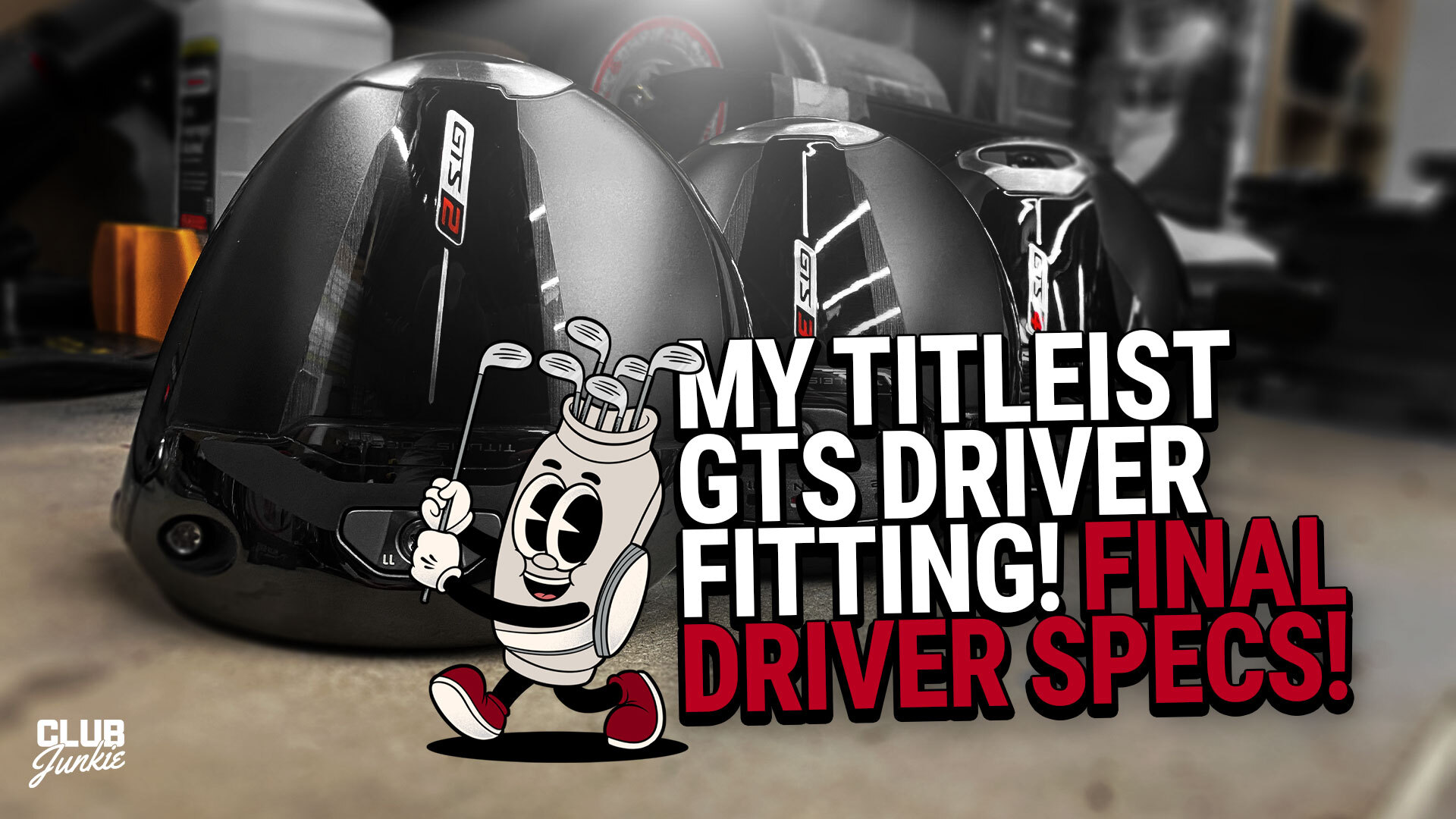
On this episode of the Club Junkie Podcast, I head to the Titleist Performance Institute for a full driver fitting with the new Titleist GTS lineup. We dive into the fitting process, talk about what made the biggest difference in performance, and break down how the different GTS heads and shaft combinations compare on the launch monitor. If you are thinking about a new driver setup for this season, there is a lot to take away from this one.
I also get into Brooks Koepka and the gear setup he brought to the PGA Championship, including the putters that caught my eye during the week. There are some interesting equipment trends showing up at the highest level right now and we break down what stands out.
To wrap things up, I talk about reshafting a few wedges, what I learned during the process, and swapping an adaptor onto a new shaft for another build project in the shop. A gear packed episode from start to finish for anyone who loves golf equipment and club building.
Follow Club Junkie everywhere:
Instagram: https://www.instagram.com/clubjunkiepod/
X: https://x.com/ClubJunkiePod
TikTok: https://www.tiktok.com/@clubjunkiepod
Threads: https://www.threads.com/@clubjunkiepod
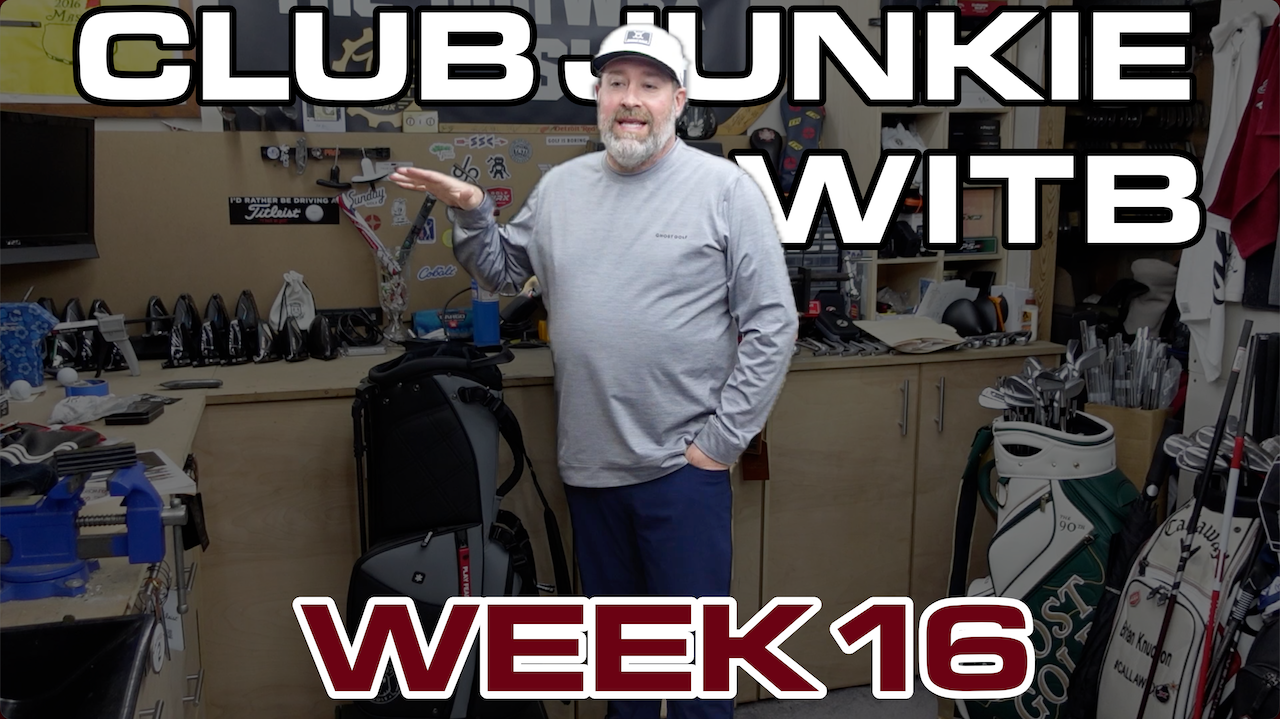
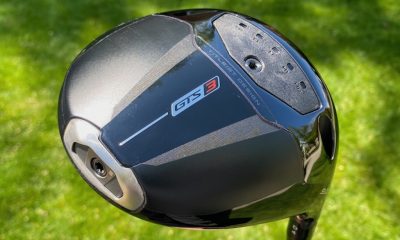
Excited for this week’s WITB as we get to add the new Titleist GTS woods to the bag! I was fit at Titleist’s TPI facility in Oceanside California a few weeks ago and my new clubs just showed up. I am also adding a cool set of irons that I built last year some wild custom wedges into a new golf bag. Speaking of the bag I have a new Ghost Anyday Black Ops stand bag that I will be using on my Motocaddy Remote M7 electric cart.
Driver: Titleist GTS3 (11 degrees @ 10.25)
Shaft: Fujikura Ventus Red 6s
3-wood: Titleist GT1 3Tour (14.5 degrees)
Shaft: Graphite Design Tour AD CQ-7s
5-wood: Titleist GTS (18 degrees)
Shaft: Fujikura Ventus Red 7s
9-wood: Titleist GT1 (24 degress)
Shaft: Fujikura Ventus Red 7s
Irons: Bettinardi CB24 (5-PW)
Shafts: KBS C-Taper Lite 110 stiff
Wedge: TaylorMade MG5 (50-09 SB)
Shaft: Mitsubishi MMT 125 Stiff
Wedge: TaylorMade MG5 (56-12 SB)
Shaft: Mitsubishi MMT 125 Stiff
Wedge: TaylorMade MG5 (60-08 LB)
Shaft: Mitsubishi MMT 125 Stiff
Putter: Dan Carraher ZT Proto
Ball: Callaway Chrome Tour
Bag: Ghost Anyday Black Ops Stand Bag

Justin Rose WITB 2026 (April): Full WITB breakdown with new McLaren irons

RBC Heritage Tour Report: More minis, course-specific setups, Spider & GTS launches

What’s the story behind Webb Simpson’s custom-stamped irons?

Cadillac Championship Tour Report: Spieth’s sizable changes, McLaren Golf launches, and more

Kristoffer Reitan’s winning WITB: 2026 Truist Championship

Cameron Young’s winning WITB: 2026 Cadillac Championship

Aaron Rai’s winning WITB: 2026 PGA Championship

Nelly Korda WITB 2026 (April)

Justin Rose on the switch to McLaren Golf, learnings from previous equipment moves

Photos from the 2026 PGA Championship


Patrick Reed WITB 2026 (May)
Driver: Titleist GT3 (9 degrees) Buy here. Shaft: Aldila Rogue Silver 130 M.S.I. 70 TX 3-wood: TaylorMade Qi35 (15 degrees)...

Aaron Rai’s winning WITB: 2026 PGA Championship
Driver: TaylorMade M6 (9 degrees) Shaft: Aldilda Synergy Blue 70 TX 3-wood: TaylorMade Qi10 (15 degrees) Shaft: Fujikura Ventus Blue...


Michael Block WITB 2026 (May)
Driver: TaylorMade Qi4D (9 degrees) Shaft: Fujikura Ventus Black VeloCore+ 5 X 3-wood: TaylorMade Qi4D (15 degrees @14.25) Shaft: Mitsubishi...


Bryson DeChambeau WITB 2026 (May)
Driver: Krank Formula Fire Pro (6 degrees) Shaft: Project X Prototype 3-wood: Krank Formula Fire (10 degrees) Shaft: LA Golf BAD...
-
 Whats in the Bag3 weeks ago
Kristoffer Reitan’s winning WITB: 2026 Truist Championship
-
Whats in the Bag2 weeks ago
Aaron Rai’s winning WITB: 2026 PGA Championship
-
 Tour Photo Galleries3 weeks ago
Photos from the 2026 PGA Championship
-
 Equipment2 weeks ago
GolfWRX Launch Report: 2026 Titleist GTS drivers
-

 Equipment2 weeks ago
PGA Championship Tour Report: Fitzpatrick, Koepka among big-name putter switches for Aronimink
-

 News2 weeks ago
WITB Time Machine: Phil Mickelson’s winning WITB, 2021 PGA Championship
-

 Equipment2 weeks ago
Which of Tiger’s major winning irons are your favorite? – GolfWRXers discuss
-

 Equipment2 weeks ago
Lead Tape Report: Adjusting the swingweight of the Wanamaker Trophy


Frankie
Aug 21, 2017 at 1:40 pm
The average PGA Tour winner birdies 1 of every 3 holes they play and they average around one bogey per round, this hasn’t changed at all…
stephenf
Aug 22, 2017 at 3:32 am
Yup. And with all the massive advantages in course conditioning, distance measuring, perfect greens, longer equipment, the all-exempt tour, and several other factors, the average score and typical Vardon Trophy-winning scoring average has gone down…what, a little over a shot in something like 50 years?
Oli
Aug 21, 2017 at 5:25 am
Seeing this article get many more shanks is further restoring my faith in humanity.
What a bizarre, coddling submissive cucked out beta male article. You’re better than this Stickney. Make you articles great again!
Peter S
Aug 21, 2017 at 12:29 am
So Brooks hit it 65 yards shorter than his ‘big’ driver Weezel…..probably on a driving range rather than a 30 yard wide fairway!
Golf on tour is a different game than it was pre Pro V1. The average amateur player hasn’t changed but the dynamics of straight or long in the Pro game are definitely biased towards long now! Doesn’t mean it is better though. All the great courses of the world are functionally irrelevant to the current crop. No strategy, just smash it and chase it.
You dropped the ball USGA/R&A
Gary Cook
Aug 20, 2017 at 8:28 pm
When you and your family are financially secure, it is easy to go for broke and fire at every pin because you are not worried about missing the cut, feeding your family, and paying college tuition for your future kids. This is due to large endorsement contacts and corporate outing paydays the the young “bucks” today earn versus “back then”.
Nothing against this advantage.
The PGA pros of “the early days” did not start to win majors until their early thirties, I believe, because by then they had made enough cuts, a few wins, and their family could survive if they missed a few cuts. Financially secure.
Thoughts?
George
Aug 21, 2017 at 1:00 pm
Besides a few pro golfers, Most of these guys come from wealthier families. I dont think money has ever been a issue for most of them
Paul K
Aug 20, 2017 at 6:36 pm
This is great, everyone clamoring on about how all these guys care about is endorsement this and the new equipment that. First of all, the beloved Arnold Palmer was the first to break into the endorsement game and make big money off of selling his ability to play golf. Regardless of what drives these young guys to play well, they still play well. They are still driven to play better. And can we please stop with the whole “if Jack and Arnie and Lee and Player had this equipment…” my gosh give it a rest. It’s a damn level playing field out there. No matter the shape of the golf course or the equipment available to the players, it’s a level playing field. Whether it’s 1970 or 2017, it’s a level playing field. It’s all relative and today’s top golfers have much greater competition from much earlier on in their careers, much more pressure and scrutiny from the media and fans, and an incredible amount of pressure from the companies who endorse them. It’s an entirely different world and game now, so they have to play it differenty. Jack didn’t have a Morning Drive show dissecting his every move from the previous tournament from Monday-Wednesday on why he didn’t win, or why his swing doesn’t work, or what he needs to changed or where he failed. These guys are under a microscope every step of the way and it’s great to see them take this sport by the balls and succeed.
Weezel
Aug 20, 2017 at 4:42 pm
And to everyone hear saying the “equipment” is difference. Let’s all take a look in the mirror and admit that the advances in equipment has benefited us, the regular golfer, more than it has the professionals. I saw Brooks Koepka hit a persimmon driver 305+ the other day. Holding the pros to standards of the past while we reap the new rewards is very hypocritical.
Weezel
Aug 20, 2017 at 4:36 pm
This is such a great take and one that has shown to be controversial to a lot of people. I think I bridge that gap between the younger generation and the old school, and this is refreshing to read. Just because things were done one way before doesn’t mean it has to stay like that. We are not destroying the game of golf, rather we are making it our own. Much the same way Jack and Arnie did before. Because players hang out with each other and are friends off the course does not at all mean that they do not care about winning. We all play with our friends every weekend and when there is something on the line, we want to win no matter what. I enjoy golf more when playing with my good friends, having some drinks and blasting some music from the cart. Talking in my swing is the least of my concerns as well. Maybe if we all lightened up a little a show how golf can bring people together we can help spread the goodness of the game. Cheers!
Sam
Aug 20, 2017 at 3:10 pm
In a decade we’re going to see the launch monitor generation. I expect to see half the field look like ball striking robots
Patricknorm
Aug 20, 2017 at 1:15 pm
Tom you nailed it perfectly. I’m a 7.8 index (63 years old) and yesterday I played a scramble tournament with three young guns 23,24, 22 years. ( indexes 2.5, 4.5 and 15.5). We shot 11 under ( par 72) on a very tough course( 132slope) . Two players could bomb their drives 330 when needed. To keep things rational we had to rotate a yellow ball amongst ourselves so that if we lost this ball we had to ante up $20.00. All three of these young players played without fear but they were always wanting to make birdies or eagles.
The attitude of young people is to emulate the Rickie Fowlers, Rory Mcilroys, Dustin Johnsons, Justin Thomas, Jordan Speiths, etc. Their yardages are very similar off the tee or on approach shots.
At our course the 18th is an uphill par 4 440 yards. Two of our youngest players bombed their drives over 330 yards. We used gps to verify distances. My drives go about on average 230 yards. I’ve never had an approach that close ever. Like I said, Tom hit the nail squarely in the head. Yes the equipment they used is better than we played with 30 years ago, but long is long.
Peter S
Aug 20, 2017 at 6:57 am
So Tom,
Tell me again how…Bomb it anywhere, chase it and gouge it toward the green is good? Strategy disappears! The equipment fiasco from the USGA has created these types of players! Get them on firm and fast running conditions with wind…and they have no idea how to play! The US Open would have shown that..but then the wind didn’t blow! The average PGA tour event is as boring as ****.
Jacked_Loft
Aug 20, 2017 at 4:17 am
It isn’t “not caring”, but more the younger players have been through a more rigorous seeding. Harder competition early on (already from the junior level and then into college) seasons the young players much quicker than previous generations. Don’t believe me? Just check out how many scratch players were in college when Jack was turning pro. The young guns of today have to play more aggressively or they just won’t win. The talent is just that deep today.
Heich
Aug 20, 2017 at 2:59 am
I enjoy golf anyway, regardless of when or who or how much. But, yeah these kids seem like they don’t care that much? You think? Well it is easier for them to make good money, and real good money. So that does help to help them relax a bit, that even if they don’t make it into the top 10 or 20 every week to make decent wages like they had to back in the day – they can still make decent money just by showing up, so it may seem like they’re just course-gouging sometimes – but then again, some of them can flat out play and make even more money. And that’s just how it is in society everywhere now, isn’t it? You can be smart and make real stupid money too.
Lou
Aug 19, 2017 at 11:52 pm
Can we stop calling them “Young Guns”? Emilio Estevez, Charlie Sheen, Kiefer Sutherland, Lou Diamond Phillips, and Dermont Mulroney were Young Guns. The guys on the PGA tour who are under 30 and win a lot (or come kinda close every once in a while, in the case of Dick Fowler) are just, well, guys on the PGA tour who are under 30 and win a lot.
HK
Aug 20, 2017 at 11:22 am
facts don’t change their ages. they are young no matter the number of wins. you don’t call Kiefer Sutherland a young gun cuz he’s not young any more. pro’ly our ‘young guns’ here don’t even know who KS is… so i have no problem calling young guns young guns.
Lou
Aug 20, 2017 at 8:23 pm
You realize I was referencing the cinematic masterpiece “Young Guns,” right? I miss 80’s movies.
R
Aug 19, 2017 at 10:46 pm
Might be the BIGGEST SHANK EVER.
Hogan Snead Nelson Casper Player Nicklaus
Palmer Watson Miller Floyd Wieskoph Watkins
Tiger Norman Els Couples Pavin Crenshaw Love III
Seve Phil and on and on. They needed to win
and made sure they could win.
Not much money as there is now. Courses were
Never any where near as in good a shape as now.
Not to mention the equipment out there now.
These New young Guys have great talent and are fun to watch. But they have just about everything
free now. So much money thrown at them.
And yes they want to beat the pants off of everyone.
But to say the guys of yesterday didn’t is BS.
Tiger wanted to beat you by 20 and not just 1.
I would love to see these guys from yesterday’s respond.
Heich
Aug 20, 2017 at 2:57 am
Yup. Lee Trevino tells about everything every time he’s on TV these days, especially on the Feherty show, he spills the beans.
Barry
Aug 19, 2017 at 9:36 pm
Sure, but Rickie Fowler is great at playing good enough to get on tv, but he’s not a winner like Spieth or Thomas
Rwj
Aug 19, 2017 at 7:58 pm
They don’t have to worry about winning to survive. They are clearing millions without winning. Wins are just icing to help pay to keep the models around
iShankEveryArticle
Aug 19, 2017 at 7:39 pm
Be careful Tom, don’t want to upset all the old fogies on this website.
stephenf
Aug 22, 2017 at 3:34 am
Right. Because anybody who comes back with a substantive argument that conclusively disproves this nonsense is an old fogey.
The problem is this kind of adolescent thinking in the first place. Yes, you.
Tom F. Stickney II
Aug 19, 2017 at 7:15 pm
Theses kids rock! I love that they just say you can’t beat me and believe it 100%!
Todd
Aug 19, 2017 at 9:16 pm
That’s just macho trash talk. What they fear is the golf course and their ability to beat the layout. Every pro is filled with doubts and questions about how to solve the golf course problems.
Brooky
Aug 19, 2017 at 6:39 pm
Eh, I’m not buying this. To play any professional sport at an elite level, you have to have a relentless drive to perform your personal best every time you compete. This hasn’t changed. Golfers have always tried card the lowest score possible.
Sports evolve with time and so does equipment. Young golfers today practice much more than golfers used to and there have been some incredible technological advances in golf equipment over the last couple decades. This is why current players are posting some of the lowest scores ever, not because they “don’t care.”
AlphaGolfer
Aug 19, 2017 at 8:06 pm
Not only the equipment but also the bio-mechanic sciences that explains the golf swing in factual detail. We have instrumentation not only to measure ball flight but also measure body mechanics for optimal performance. And add to that the mental discipline in sports psychology. There is big $$$£££¥¥¥ for the winners. Just ask Tiger.
rh30
Aug 19, 2017 at 3:34 pm
As I’m reading this, Davis Love III is leading the tour event this week. Hmmmm.
Clark G
Aug 19, 2017 at 3:19 pm
How about this — the young guns are driven by equipment endorsement incentives and the lower they go the more money they receive from their sponsoring OEM.
What clubs did they win with is the usual comment here. It’s not the player, it’s the winning clubs that interest the buying fans. Or, what wins on Sunday sells on Monday and that’s proven too.
Andy c
Aug 19, 2017 at 2:28 pm
But how do you know they don’t care?…….. it’s just your opinion hashed as fact really isn’t it?
What a load of old codswallop this article is……