
Opinion & Analysis
Hybrids or Long Irons? A Teacher’s Perspective

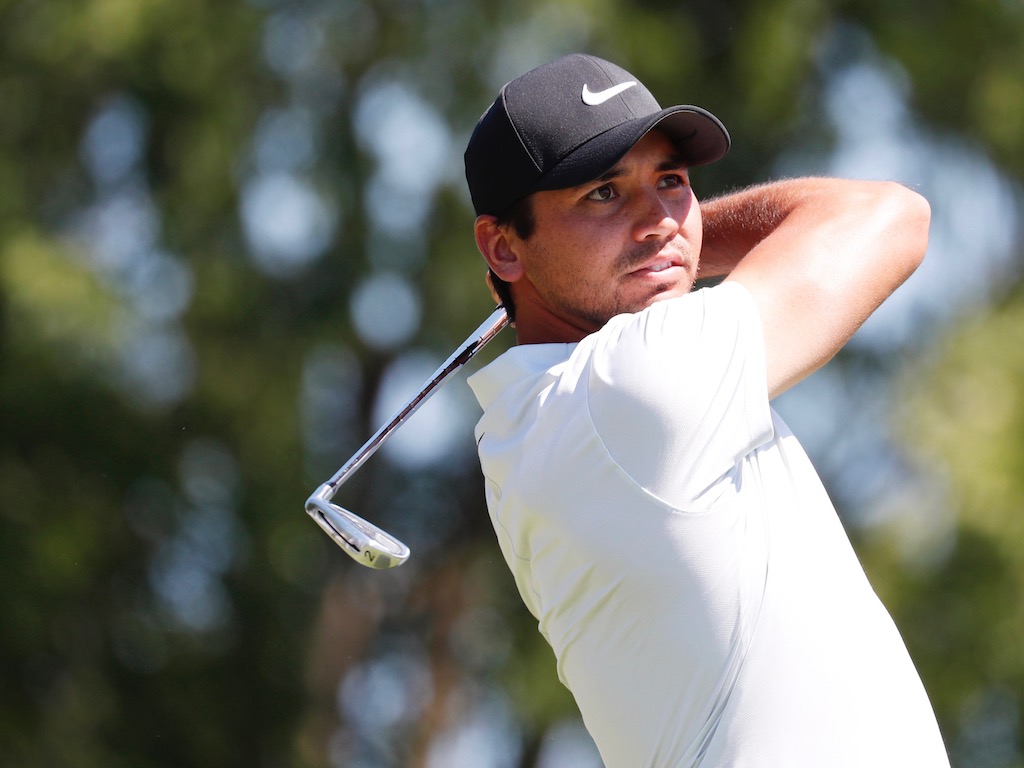
In golf instruction, there’s no more important position than impact. It’s called “the moment of truth” for a reason. If you have a good impact position, you’ll hit good shots. It’s as simple as that. When we’re talking about impact, most of our discussions will revolve around three things: angle of attack, club path, and face angle. They’re all very important, and with proper instruction they can be manipulated rather quickly.
One thing that’s very hard to change, however, is club head speed, and it’s the most important factor for golfers to consider when they’re choosing between a long iron and a hybrid.
When hitting a shot from the turf, golfers need to be able to first and foremost get the ball airborne. And when it comes to hitting effective long-iron shots, that takes ample club head speed. Most golfers fall short in that department, which is why hybrids were created. By design, hybrids are easier to get in the air. They create a higher launch angle, more spin, and more ball speed — all good things for golfers who don’t have a lot of club head speed.
I teach a lot of golfers who fall in the lack-of-speed category. I find that many of them are still trying to hit their 4 iron, or even 3 iron, from the fairway. This generally leads to poor habits — for example “hanging back,” or tilting the spine away from the target to help the golf ball in the air. In fact, using the wrong clubs is one of the leading causes of “hanging back.” It has the same effect as using shafts that are too stiff.
Long irons are for high speed players, plain and simple. When I’m asked how much speed, I’ll usually offer a vague answer like, “enough.” But when I considered it more carefully, I decided to design the following guidelines for my students. They can act as a reference for selecting the clubs that should make up their sets.
Hybrid/Long-Iron Guidelines
- If you hit a 7-iron 140 yards or less, a 6-iron should be the longest iron in your set. The 3, 4 and 5 should be hybrids. Even the 6 iron is marginal.
- If you can hit your 7-iron 150-160 yards, think about nothing longer than a 5 iron; 3 and 4 should be hybrids.
- If you can hit your 7-iron 160-170 yards, nothing longer than 4 iron; 3 should be hybrid.
- If you can hit a 7-iron more than 170 yards, you can use any set make up you choose.
Speed is vital to lift, and the design of the hybrid can be a huge help. There are, of course, other swing issues involved in hitting the golf ball too low, but this chart is a start for what clubs should be in your bag.
Not sure if your clubs or your swing is the problem? For a video analysis of your swing, visit my website.


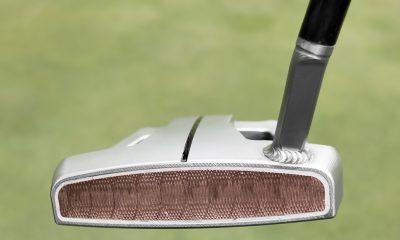


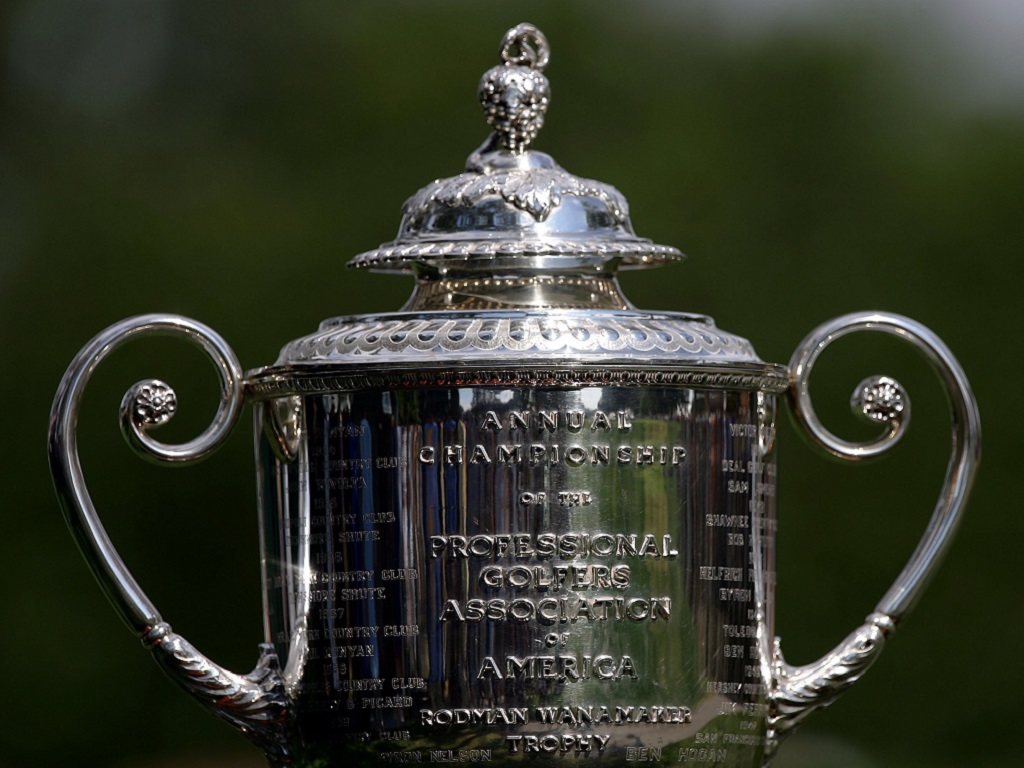
Aronimink is not a storied club, but when Donald Ross himself proclaimed it to be as good as he can design and build, one had to take notice. Jay Sigel was the pre-eminent male amateur golfer from the mid-1970s to the mid-1990s. He might have called any number of Philadelphia clubs home, but he chose Aronimink. It served him well. Gary Player won a PGA Championship here in 1962, and was followed by the 1993 winner … nobody. Aronimink gave that event away to Inverness, for reasons of which it is certainly not proud. So be it. We had to wait sixty-four years for the PGA to return to Newtown Square, but here we are. Aronimink has been neo-restored by Gil Hanse and team, to return Ross features with an eye toward defense against the dark arts, errrr, high-tech equipment.
Day one saw Rory McIlroy and Bryson DeChambeau dig big holes, to the tune of plus-four and plus-six, respectively. Since the first-round lead will be minus-three at worst, many shots will need to be made up for the power couple to reach contention. By nightfall, seven golfers held the day-one lead at three-under par 67. Shots and sticks caught our attention, and we are proud to present Five Things We Learned on Tech Thursday at the 2026 PGA Championship. Thanks to InsideTourGolfer, Today’s Golfer, and GolfWRX for initial equipment research.
First, meet Min Woo Lee
Min Woo Lee, aka Dr. Chipinski, has once again thrust himself into the conversation of Can he, will he, when will he? Lee has so much talent, wins not nearly as often as we believe that he should, and has no major near-misses (much less titles) on his wiki. The young Aussie is getting older and wiser, but is he able to avoid the scarring that holds the older and wiser back from breaking through? Philadelphia offers another opportunity. Min Woo signed for five birdies and two bogeys on day one, and grabbed a share of the opening-day lead at Aronimink. Winners transcend history and the moment, and Lee will need that sort of ascent to lift the Wannamaker on Sunday.
Second, meet Aldrich Potgeiter
The young South African golfer can rip driver with the best of them. Aronimink tips out at nearly 7400 yards, but beyond the fairway bunkers that ensnare only the mortals, Potgeiter can take his chances with wedge from the rough. On Thursday, he spent plenty of time in the spinach. Like Popeye, he used his muscles to gouge and thrash and dig his way out. Six birdies against three bogeys on the card brought AP in a three deep.
Third, meet Martin Kaymer
Not a major event takes place without a where’s he been throwback moment. We know that Martin Kaymer left the PGA and DP World tours for LIV golf, but the two-time (US Open and PGA) major winner has a lifetime exemption into at least one major event, and he seizes the opportunity each May. Kaymer joined the six-seven brigade with four birdies and a solitary bogey on day one. Kaymer was never a long hitter, and the years are kind to no golfer. The German champion will need to uncork every bottle of guile and strategy in his cabinet to remain in contention. For today, though, he occupies a rung on the ladder of Tour Tech.
Fourth, meet Scottie Scheffler
Let’s see, he’s the defending champion at the PGA, and he found his way back to the top tier with five birdies against two bogeys. To be a favorite and then play up to that stature and expectation is quite difficult. Just ask Rory, Bryson, and some of the other pre-tournament heartthrobs. Scheffler’s game is complete, and to knock him off the OWGR #1 pedestal, one needs to defeat him at the majors. Aronimink is the sort of course that fits Scheffler’s game. Better yet, it unfits the game of many of his challengers. Don’t expect Scheffler to go away anytime soon. Come Sunday, he’ll be around.
Fifth, meet Stephan Jaeger
Clocking in for the unheralded players shift are Ryo Hisatsune and Stephan Jaeger. Hisatsune logged seven birdies on day one, but gave most of them back with four bogeys. Still, he’s tied at the top for a time. Jaeger pitched five birdies against two bogeys, including a run of three consecutive, from holes four through six. Odds are that one of the two will hang around through 36 holes. Odds also suggest that both will be gone by Saturday evening. Still, the PGA Championship has historically been the major most likely to be won by an under-known. Both Hisatsune and Jaeger feature on that list, so good luck, lads!

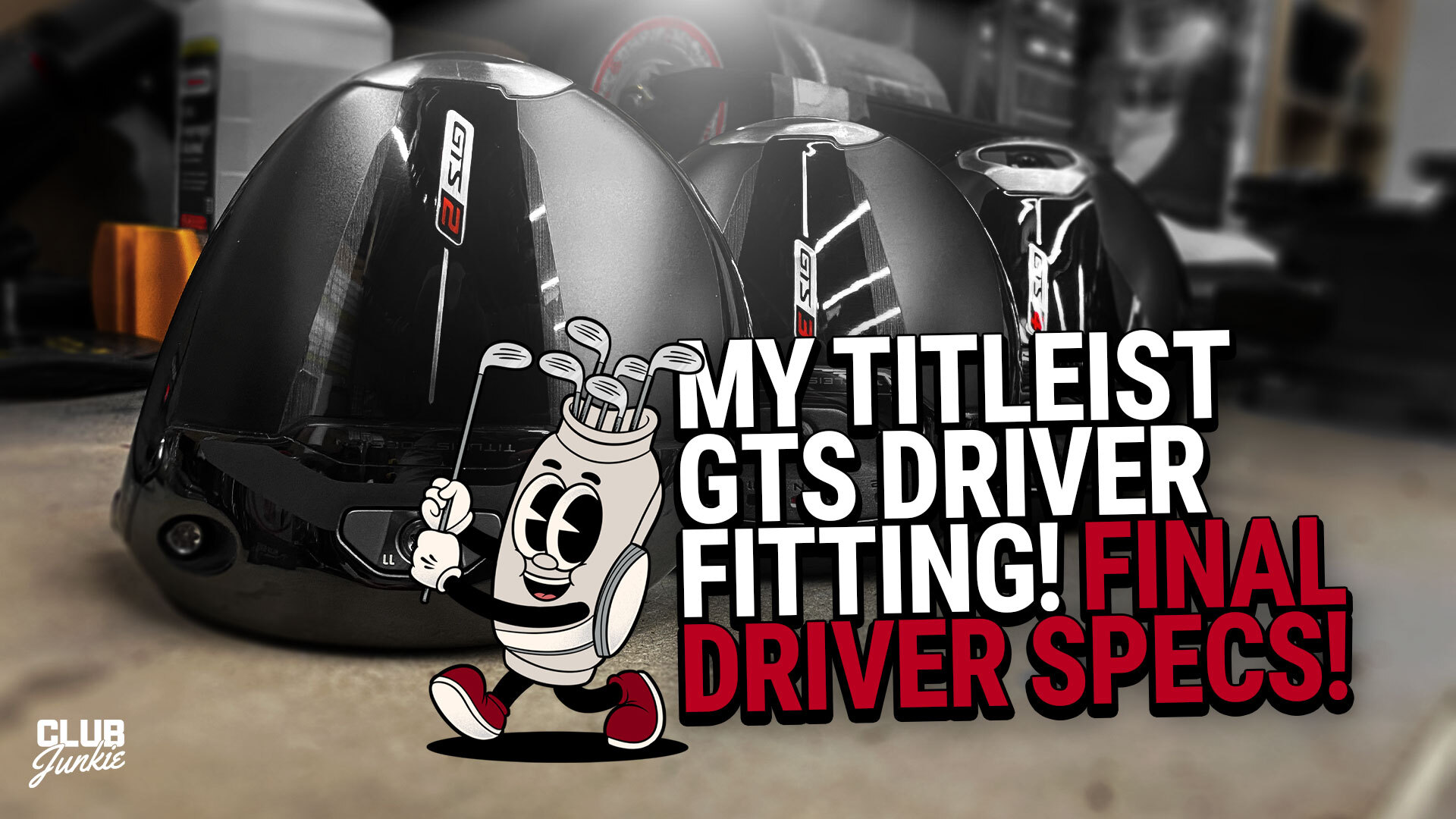
On this episode of the Club Junkie Podcast, I head to the Titleist Performance Institute for a full driver fitting with the new Titleist GTS lineup. We dive into the fitting process, talk about what made the biggest difference in performance, and break down how the different GTS heads and shaft combinations compare on the launch monitor. If you are thinking about a new driver setup for this season, there is a lot to take away from this one.
I also get into Brooks Koepka and the gear setup he brought to the PGA Championship, including the putters that caught my eye during the week. There are some interesting equipment trends showing up at the highest level right now and we break down what stands out.
To wrap things up, I talk about reshafting a few wedges, what I learned during the process, and swapping an adaptor onto a new shaft for another build project in the shop. A gear packed episode from start to finish for anyone who loves golf equipment and club building.
Follow Club Junkie everywhere:
Instagram: https://www.instagram.com/clubjunkiepod/
X: https://x.com/ClubJunkiePod
TikTok: https://www.tiktok.com/@clubjunkiepod
Threads: https://www.threads.com/@clubjunkiepod
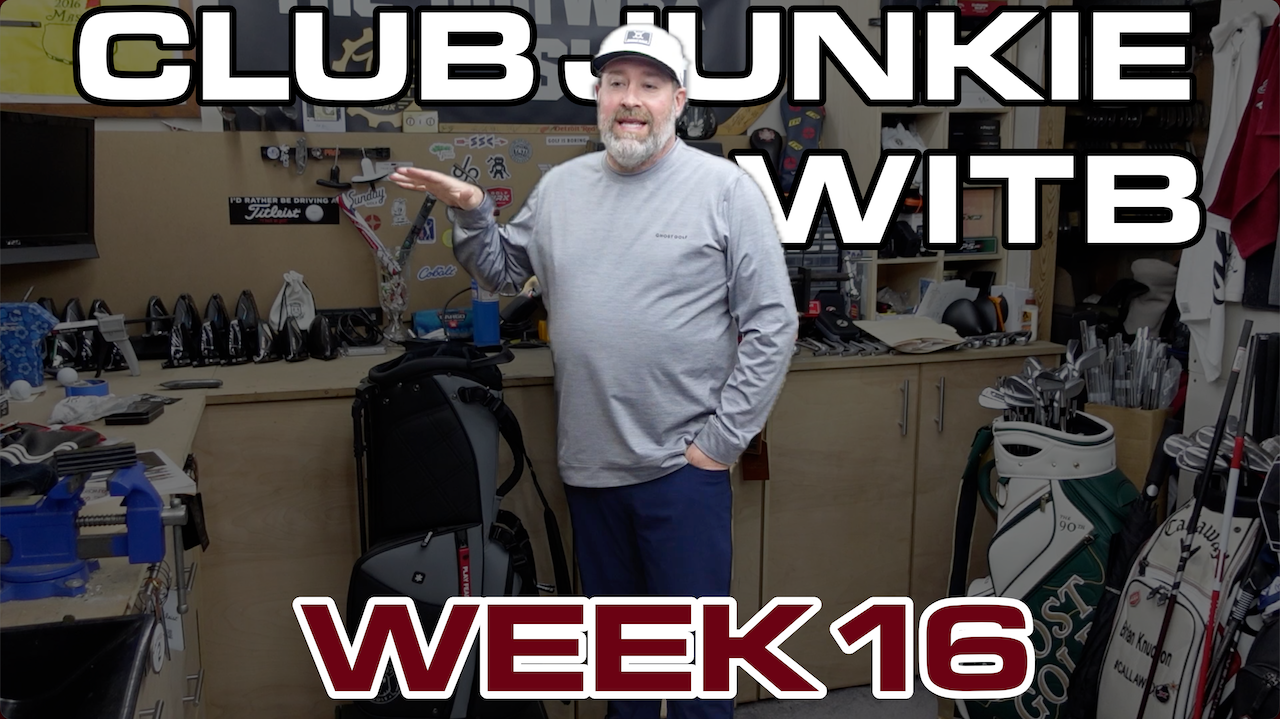
Excited for this week’s WITB as we get to add the new Titleist GTS woods to the bag! I was fit at Titleist’s TPI facility in Oceanside California a few weeks ago and my new clubs just showed up. I am also adding a cool set of irons that I built last year some wild custom wedges into a new golf bag. Speaking of the bag I have a new Ghost Anyday Black Ops stand bag that I will be using on my Motocaddy Remote M7 electric cart.
Driver: Titleist GTS3 (11 degrees @ 10.25)
Shaft: Fujikura Ventus Red 6s
3-wood: Titleist GT1 3Tour (14.5 degrees)
Shaft: Graphite Design Tour AD CQ-7s
5-wood: Titleist GTS (18 degrees)
Shaft: Fujikura Ventus Red 7s
9-wood: Titleist GT1 (24 degress)
Shaft: Fujikura Ventus Red 7s
Irons: Bettinardi CB24 (5-PW)
Shafts: KBS C-Taper Lite 110 stiff
Wedge: TaylorMade MG5 (50-09 SB)
Shaft: Mitsubishi MMT 125 Stiff
Wedge: TaylorMade MG5 (56-12 SB)
Shaft: Mitsubishi MMT 125 Stiff
Wedge: TaylorMade MG5 (60-08 LB)
Shaft: Mitsubishi MMT 125 Stiff
Putter: Dan Carraher ZT Proto
Ball: Callaway Chrome Tour
Bag: Ghost Anyday Black Ops Stand Bag

Justin Rose WITB 2026 (April): Full WITB breakdown with new McLaren irons

RBC Heritage Tour Report: More minis, course-specific setups, Spider & GTS launches

What’s the story behind Webb Simpson’s custom-stamped irons?

Cadillac Championship Tour Report: Spieth’s sizable changes, McLaren Golf launches, and more

Kristoffer Reitan’s winning WITB: 2026 Truist Championship

Cameron Young’s winning WITB: 2026 Cadillac Championship

Aaron Rai’s winning WITB: 2026 PGA Championship

Nelly Korda WITB 2026 (April)

Justin Rose on the switch to McLaren Golf, learnings from previous equipment moves

Photos from the 2026 PGA Championship


Patrick Reed WITB 2026 (May)
Driver: Titleist GT3 (9 degrees) Buy here. Shaft: Aldila Rogue Silver 130 M.S.I. 70 TX 3-wood: TaylorMade Qi35 (15 degrees)...

Aaron Rai’s winning WITB: 2026 PGA Championship
Driver: TaylorMade M6 (9 degrees) Shaft: Aldilda Synergy Blue 70 TX 3-wood: TaylorMade Qi10 (15 degrees) Shaft: Fujikura Ventus Blue...


Michael Block WITB 2026 (May)
Driver: TaylorMade Qi4D (9 degrees) Shaft: Fujikura Ventus Black VeloCore+ 5 X 3-wood: TaylorMade Qi4D (15 degrees @14.25) Shaft: Mitsubishi...


Bryson DeChambeau WITB 2026 (May)
Driver: Krank Formula Fire Pro (6 degrees) Shaft: Project X Prototype 3-wood: Krank Formula Fire (10 degrees) Shaft: LA Golf BAD...
-
 Whats in the Bag3 weeks ago
Kristoffer Reitan’s winning WITB: 2026 Truist Championship
-
Whats in the Bag2 weeks ago
Aaron Rai’s winning WITB: 2026 PGA Championship
-
 Tour Photo Galleries3 weeks ago
Photos from the 2026 PGA Championship
-
 Equipment2 weeks ago
GolfWRX Launch Report: 2026 Titleist GTS drivers
-

 Equipment2 weeks ago
PGA Championship Tour Report: Fitzpatrick, Koepka among big-name putter switches for Aronimink
-

 News2 weeks ago
WITB Time Machine: Phil Mickelson’s winning WITB, 2021 PGA Championship
-

 Equipment2 weeks ago
Which of Tiger’s major winning irons are your favorite? – GolfWRXers discuss
-

 Equipment2 weeks ago
Lead Tape Report: Adjusting the swingweight of the Wanamaker Trophy


Crazy About Golf
Dec 14, 2017 at 11:16 pm
Single digit handicaps can certainly game either long irons or hybrids….it’s a matter of personal preference. I sometimes substitute my 16-degree hybrid for my 15 degree fairway wood, depending on the day. Hybrids generally offer better distance, loft and foregiveness compared to long irons. However, the difference is more notable for persons with higher handicaps or slower swing speeds.
Geoff
Nov 26, 2017 at 12:28 am
Man, what a dumb article.
The number on the bottom of the irons is such an arbitrary number. My 7i is 34* and I hit it 155-160 yards. Most 7is now are closer to 30*. Which loft are you referencing, Dennis? By your logic, I shouldn’t be carrying a 4i, but here’s another flaw, what loft of a 4i should I not be carrying? The 24* lofted 4i in my bag, or the 20* standard 4i available in most sets. Come on man. Maybe you should spend a little more time thinking about the content of your articles and whether your thoughts are ideas are backed up with numbers.
That guy
Dec 23, 2017 at 8:34 pm
Sounds like you can hit your long irons just fine regardless. So what is your point?
Matt
Nov 21, 2017 at 1:04 am
Hybrids are excellent. Am on the cusp between irons and hybrids – got on really well with a Titleist 585 3h in the past (par 5 tamer) and an X2hot 4h is currently in the bag next to my 5 wood. Planning to try a current model 5h soon, and if it saves me a few strokes will add a 3 and a 4.
Dennis
Nov 19, 2017 at 1:21 pm
Can’t hit my iron 4(19°) further than my i6 (27°) from the fairway, which is 170 yards carry max My #3 Hybrid (21°) flies higher, but not further. My i4 flies 200 yards carry from the tee – I can’t hit my driver further than that. Stuck in Bogeygolf I guess…
Ross37
Nov 16, 2017 at 11:08 am
Will you clarify the loft of the 7 iron you mention in your guidelines. I play an older set of irons, and typically have to reach for more club than my playing partners.
Woody
Nov 15, 2017 at 10:08 pm
Any type of general guide will not fit all…but this is a really good article and guideline for most…I hit my 7 iron 180 and carry 3-PW and have never been concerned about getting the ball in the air..other people I know who hit the ball not as far I have recommended replacing their long irons with hybrids and woods just for the reasons outlined in this article.
Brian
Nov 15, 2017 at 9:58 pm
I’m 78 with a low swing speed. Lowest numbered iron in my bag is a #7 and I use a #7 wood off the fairway in lieu of long irons or hybrids. Works for me
Dave R
Nov 11, 2017 at 5:27 pm
I’m 68 years old index is 5.3 I hated my hybrids but now since I’ve learnt to hit them properly never going back to long irons . These are so easy to hit have a 5 hybrid with a 4iron length shaft goes 185 to 195 it’s set to 19 degrees. Have another 5 hybrid set to 21 degrees and is good for max 175 yards. This set up workes good for my slower swing speed.
TGK
Nov 10, 2017 at 5:47 pm
I am 76 years old, handicap 18. I have not used a 3,4, or 5 iron in 5-6 years. My swing speed with driver is 80mph. I have become much more consistent since i have been using hybrids. Looking for a lefty 6 hybrid in Canada & can’t find one. Anyone?
Dennis Clark
Nov 10, 2017 at 4:54 pm
Author’s note: The piece is addressed to low-speed players and is from observations of my students and the feedback i get from them and on Trackman numbers. Thx
Bob Jensen
Nov 9, 2017 at 5:30 am
Took me awhile to figure this out. I’m 60, and play to a 12. I added a 5 hybrid last year, and grudgingly a 6 this summer, but it has made a big difference.
JJC51
Nov 8, 2017 at 10:07 pm
I’m a 14 handicap and I hit my 3 iron much better than my hybrid. Can’t believe that I haven’t snapped that damned hybrid in two by now, worst club in my bag.
Dennis Clark
Nov 10, 2017 at 4:49 pm
before you snap it, pout it on eBay You’ll sell it QUICKLY!
Alan Bester
Nov 8, 2017 at 12:39 pm
Very informative article, Dennis, but could you also comment on differences in staff stiffness between high speed and lower speed swings?
Surely shaft stiffness is an important factor for swing speed and ball flight.
Do hybrids have softer and longer shafts than long irons? I suspect they do.
Thanks.
Dennis Clark
Nov 10, 2017 at 4:48 pm
Sorry I was away for bit, but here goes…Yes shaft stiffness, length, loft etc all make a difference. But don’t misunderstand me here. This is an article about DESIGN, IOW the Hybrid is designed to hit the ball higher all things being equal. When the center of gravity is recessed from the hitting area the golf ball goes higher. And yes I think the iron-like length makes them easier also. For 99% of my mid-high handicaps, they are the best thing going. Thx
Willie
Nov 8, 2017 at 12:25 pm
I am not sure i really agree with this. for most golfers maybe, but definitely not all.
I hit my 7 iron 160. fairly weekly lofted Bridgestone DCP’s. I used to have a hybrid in place of my 4 iron and then a 5 wood and 3 wood. once upon a time i had a hybrid replacing my 3 iron but couldn’t hit it for the life of me.
I did some testing, and found that I am much better off with a 3 and 4 iron. the 3 iron is a safety club off of a tee. I found that the 4 iron, even when mishit would still go fairly straight. a miss with the hybrid had the potential to go way offline. i would rather miss and be 30 yards short of expectation than dropping or taking a stroke and distance penalty. thats just me though.
worth noting that i dont think my swing speed is high enough to get the most out of long irons, but they stay low enough that they will roll out to a decent distance
ScottK
Nov 8, 2017 at 12:19 pm
This article is perfectly true for me but it took me 2 years to figure it out. I hit my 7 about 155 and always struggled with my 5 (already had hybrids for my 3 and 4). Finally, I checked my ego and swapped it out with a hybrid and haven’t looked back. Golf is much more fun when I’m not dreading a 175 yard shot. My father has followed the same advice and gone down to a 6 hybrid. It’s helped him tremendously.
Jordan Robert Anderson
Nov 8, 2017 at 11:26 am
Hit my 7 iron 183. Carry 2-P
Dennis Clark
Nov 10, 2017 at 4:51 pm
Great! You’d be long on PGA Tour!
Aren van Schalkwyk
Nov 8, 2017 at 8:32 am
This guideline is misleading to say the least. I play the 718 CB’s, which obviously have “weak” lofts compared to the AP1. I hit my 7 iron 150 carry, my 4 iron 180 and my 3 iron 190 yards carry. On top of that, I hit the 3 and 4 irons very well. As a matter of fact, they are some of my favorite irons. I do hit the AP1 7 iron 165 on the fly, which is to be expected with a loft of 30*, compared to the CB with a loft of 35*. I’m so over “knowledgeable” people pushing the hybrid narrative. Hybrids may or may not suit certain players, for example someone with a super slow swing speed and beginners may find them to be to more playable than a 3 or 4 iron. But as someone with a “slow”/”moderate” swing speed and as a low single digit handicap, I’m long past the stage where other people tells me what I should play because of how fast my swing speed is or how far I hit a particular club. The bottom line is, play what works for you, not what some other person may think will work for you.
Chopper
Nov 8, 2017 at 10:41 am
guide·line
/???d?l?n/
noun
plural noun: guidelines
a general rule, principle, or piece of advice.
synonyms: recommendation, instruction, direction, suggestion
Ward Wayne
Nov 7, 2017 at 11:25 pm
A better answer is “get fitted” because any guideline is too general. Manufacturers can’t even agree what is a 7 iron. The shaft also makes a difference and let’s not talk about the ball. Oh and by the way that TaylorMade 5 iron you bought is about the loft as your fathers Wilson Staff 2 iron so there goes your guide.
Above all, play what you like because life is too short and live with the consequences! Remeber the game is about putting the ball in the hole with the least amount of strokes not distance!
Dylan
Nov 7, 2017 at 9:31 pm
It might help to include what loft you’re talking about here. People’s carry with a traditional 36* 7 iron will vary enormously to a 28* shovel from TaylorMade.
Fitted 5-times
Nov 7, 2017 at 9:14 pm
Very helpful and practical guidance. I also find the old school advice of not playing an iron stronger than 24 degrees and longer than 38” very useful.
What are your thoughts on using utility irons like Ping G400 Crossover in place of 5i and/or 4i before moving to hybrids or high lofted woods?
The dude
Nov 7, 2017 at 8:47 pm
Nice article….it amazes me how many players don’t take heed!!
Acemandrake
Nov 7, 2017 at 5:38 pm
Also…You need fewer irons & more hybrids if the distance gaps between clubs are getting smaller due to a slower swing speed.
If you hit your 5-iron the same distance of your 6-iron then why are you carrying the 5-iron?
Loft is my friend 🙂
DrRob1963
Nov 7, 2017 at 4:30 pm
Good article!
I carry 3 & 4 Hybrids usually, but which 7-iron do you mean?
My Mizuno bladed MP-68 7-iron has a 35* loft and goes a comfortable 145yds. (The most gorgeous clubs on the planet!)
My Callaway Xhot Pro 7-iron is 0.25″ longer & has 31* loft which I can get out to 160yds.
And there are even stronger iron sets with jacked up lofts & lengths (“super-shovels”) – TaylorMade has a 28* 7-iron!!!
The OEM space-race for the longest iron ever has made these mid-iron comparisons almost impossible.
Crazy About Golf
Dec 14, 2017 at 10:57 pm
As a fellow Mizuno lover, I have to say that, while the MP68 is superb, the MP4 is the best looking iron ever made…..I currently game MP18s, mostly because they have a brushed finish and are less distracting than the chrome finish on the MP4/MP68. Just wanted to lob that out there to be a pain in the a$$.
pb
Nov 7, 2017 at 4:18 pm
Well… My Ping G25 7i goes 160 yrds and my Ping Eye2 7i goes 150 yrds. Modern clubs have stronger lofts. 5i is the highest iron in my bag (both sets) and then I carry a 4H, 3-wood, and 5-wood. works for me! Overall, good points made in this article. No shame in using hybrids over long irons for the average golfer.
TvGuyJake
Nov 7, 2017 at 3:19 pm
Generally sound advice; but some irons are more “forgiving” than others. I just switched to a more’modern’ set of Pings and picked up 10-12 yds. per club with moderate swing speed. In my case the only reason to carry a 4-iron is off the tee or punch-outs from the woods. 5-iron is not any more difficult than a 6i, unless your using blades or a forged iron set.
Chris
Nov 8, 2017 at 3:39 am
Forged irons are not more difficult to hit than cast irons. It’s just a method of manufacturing. Epon 7-series are among the easiest irons out there to hit.
Bob Castelline
Nov 7, 2017 at 3:08 pm
I like this article for its practicality. I know there are conversations about MOI and dynamic loft and all that, but most of us need simpler thumbrules. As one person said, it’s a gauge. It’s not completely scientific, and it’s not set in stone. One person might hit a 7-iron 160 but still carry a 4-iron. If it works, great. But for others, hybrids are a great choice. They are for me. Also, hybrids aren’t just for people who hit the big ball first. I hit hybrids with a bit of a divot, and I have great success with them. Everybody’s different as far as what they feel comfortable with. But the ideas in this article give you a nice place to start if you don’t have access to sophisticated launch monitors (or don’t care to go that deep).
Dennis Clark
Nov 7, 2017 at 4:47 pm
Yes the author mentioned the “guage”. 🙂
Bob Jones
Nov 7, 2017 at 3:00 pm
My 7-iron goes 145 yards. I can hit a 2-iron 200 yards off a tee, but forget about the fairway. The 3-iron is useless. Both of them have been replaced with equivalent hybrids. I can hit a 4-iron well, but the equivalent hybrid is so much easier. 5-iron on down, OK.
Stephen Finley
Nov 7, 2017 at 11:10 pm
Geez, Bob, I though you called these cleek, mashie, and mid-mashie. What gives?
Guia
Nov 7, 2017 at 2:54 pm
I think the article is right on. Too many people use long irons because of ego. Hybrids are easier to hit.
Dennis Clark
Nov 7, 2017 at 2:36 pm
As always, this is a general GUAGE…nothing cast in stone! Another consideration might be weather: On windy days you may not want the ball in the air, and on clam days, you may? Course: elevated protected greens consider hybrids, flat unprotected greens longer irons might not hurt. Lots of considerations.. Resistance to angular acceleration is another help, on toe and heel hits, less so on angle of attack. In general, hybrids have made my senior days in golf A LOT more fun. Glad it helped may of you! Thx.
Greg V
Nov 7, 2017 at 2:20 pm
What’s a hybrid? I’ve gone to a 7-wood… and I like it.
Brian
Nov 15, 2017 at 10:05 pm
Me too. Usual selection in my bag are a driver, 4wood and 7 wood.
Andrew
Nov 7, 2017 at 2:12 pm
So say one is a 2-10 hcp and hits their 7i 165 and carries a 3h. This makes a 2h and 13-15d 3 wood seem incorrect. What’s next? 16-18d fwy wood, 3h, and 4 wedges? Where can this golfer save the most strokes?
John
Nov 7, 2017 at 2:02 pm
This is a great article. 20 years ago I read an article that said you shouldn’t hit a 3I unless you were single digits, never swung one again. Then I replaced my 4I as part of 2H/3H/4H (due to high risk). Right now my 5I is almost never swung (180 vs. 175 6I at significantly greater risk) which was a go-to club 10 years ago (probably losing swing speed). So I’m at 2H (195), 3H (185), 5I (180), 6I (175), 7I (165) and carry extra wedges. I save a bunch of money only buying 5I-9I when I upgrade too.
James
Nov 9, 2017 at 2:35 am
If you take the five iron out of the bag and bend the 6 iron a touch strong you’ll have great yardage gaps and a lighter bag to boot!
Brewdawg
Nov 7, 2017 at 2:00 pm
Useful advice, and helpful to those that don’t know their swing speeds. Probably good advice for most, but after years of hitting a 4 hybrid, I’ve ditched it, and started using my 4 iron again. I hit a 7I about 155 yds. When I caught it right, the 4H flight was a thing of beauty, but I wasn’t near as consistent with it- I may be wrong on the reason, but it seemed the longer shaft gave a greater margin of error. My misses could be REAL bad, rather than off a little. A missed 4I is much less punishing for me. But then, I’ve never been normal.
Theo
Nov 7, 2017 at 1:55 pm
IMHO launch angle depends on dynamic loft at impact. If you have an iron with the same loft as the hybrid the launch angle will be identical.
The advantages of a hybrid are: higher MOI of clubhead hence more forgiving and less loss of clubspeed when hitting turf before hitting ball.
I would phrase it as follows: for golfers who hit ball-divot, mostly irons will do the job.
For golfers who regularly hit the big ball before hitting the small ball: use lots of hybrids.
Now the golfers who hit ball-divot are mostly the better golfers with higher clubhead speed, so there is a little bit of truth in your explanation.
With due respect I disagree with the reasoning: check it with your LM like I did.
Best Regards.
Adam
Jul 9, 2020 at 2:09 pm
This is not correct Theo.
Hybrid CG is lower and further back than an iron. CG back creates higher launch and spin, CG low creates higher launch and lowers spin. Overall the hybrid has a higher launch than an equivalent iron, even with identical impact conditions.
Added to that the hybrid is designed to promote higher dynamic loft at impact.
Long story short, hybrids are more forgiving and higher launching, if slightly less workable.
I don’t like hybrids much, and carry a 20 degree 3 iron (about a 215 carry). I do have a 16 degree hybrid, but find it doesn’t suit my swing.
JJVas
Nov 7, 2017 at 1:37 pm
I’m a 2-hcp that hits a pretty weak-lofted 7i 165 yards, and at 41, I finally decided that this would be the year I would replace the 4i with a hybrid (I play D-3W-5W). Too often, these high-end qualifiers play at 7000 yards with rough and firm greens, and mean that I better have an A+ driving day if I’m going to get anywhere. Kids can rip a 7i 180y out of the rough and hold greens that I can’t get to from 200y out with a 4i. For the most part, it’s been a pretty good move, but the fact is that when it’s all on the line, I would still much rather hit a 4i on a long Par 3 or on a risky approach. Even anti-hook hybrids are still a lot easier to turn over than a 4i by accident. My final move was to leave the 4i in the car, and base my decision on the course and situation. Maybe at 50 it’ll stay home.
jeff monik
Nov 7, 2017 at 1:35 pm
This is the one of the best things I’ve read….trying to hit long irons leads to bad habits.
Matt-78
Nov 7, 2017 at 1:11 pm
Dennis,
Great article! I would think these 7 iron yardages are somewhat relative to what club you play. I play Mizunos that have traditional lofts and don’t have hot faces. A typical easy 7 iron shot is 155-160 carry. However, if I pick up a Callaway Apex 7 for example it is certainly longer. What do you think?
Daniel
Nov 7, 2017 at 1:39 pm
Great feedback. I also think there’s some nuances at play with longer irons that should be talked about here. For example, I hit my 7-iron somewhere between 165-170 yds with Titleist 716 AP2’s (project x 6.0 shafts). I play a 3 and 4-iron but they’re Taylormade UDIs with C-taper lite stiff shafts. I am more accurate with irons than hybrids, and much more accurate with those UDI long irons than traditional hybrids. But the lighter shaft and wider sole provide more forgiveness than my AP2’s.