
Opinion & Analysis
Bobby Clampett: Why Tiger and I Could Never Find a Golf Coach

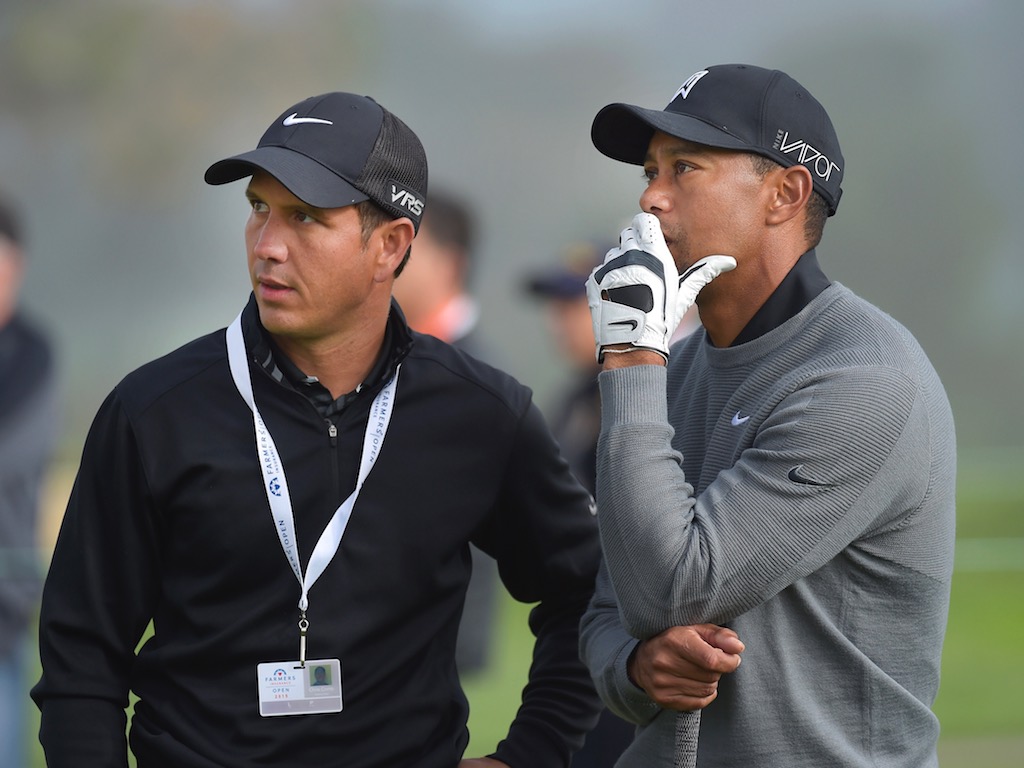
News of Tiger’s departure from his most recent coach, Chris Como, should come as no surprise to anyone. Tiger’s growing list now includes the so-called world’s best instructors: Butch Harmon, Hank Haney, Sean Foley and now Chris Como. It’s also worth mentioning that Tiger has spoken to so many more and gotten their feedback over the years. After the “interview” process, he chose not to hire many of them.
I’ve gotten to know many coaches that Tiger has hired and interviewed over the years. They all share a common passion for teaching and genuinely wanted to help Tiger. But why would Tiger end up firing all of them? Why were they not able to provide him what he needed? What is it that he needs?
Watching Tiger go through this process brought back memories for me, and not good ones. After winning back-to-back Northern California Junior Points Annual totals, winning back-to-back Fred Haskins Trophies (the Heisman Trophy of College Golf), being the No. 1 ranked Amateur in the world and having back-to-back years on the PGA Tour where I finished in the top-20 money winners, I got talked into trying some new coaches. I was told it was the only way to become the No. 1 player in the world.
Ben Doyle had been my coach for 10 years and I felt my game had plateaued with him. Never wanting to look back and regret that I didn’t at least try a new coach, I went for it. Like Tiger, I would talk to my Tour friends whom I trusted and get their opinions on who the best coaches were. Of course, they all advocated their coach at the time. That’s part of the ethics of being on Tour and having a coach. As a player, you want their success, too, just like they wants yours. Like Tiger, I dabbled with them for a while before I committed. Some I committed to longer than others, just like Tiger.
Like Tiger, I got differing opinions from different coaches. The one thing they all had in common is that they wanted me to make some pretty significant style changes, some that I just wasn’t capable of making. The changes were all different and some even conflicted with one another. One coach wanted my swing plane steeper in the backswing; the other wanted it flatter. One coach wanted a slight cupping of the left wrist at the top of the backswing; the other wanted the wrist to be flat. One coach wanted my hands low at address; the other wanted my hands to be higher. One coach wanted me to have a shorter backswing with a smaller hip turn; the other just wanted to change my setup posture. Tiger has been experiencing the very same things.
Not once did I ask the one question I should have asked. It’s probably the biggest regret I have in my 15+ years on the PGA Tour, and it could have changed the outcome of my career. I sincerely doubt any of the coaches could have given me a satisfactory answer, but I would have really enjoyed hearing the answer. The question is, “How is this style change you want me to make going to affect my impact?”
Impact is the only thing that really matters in golf. It is 100 percent responsible for sending the ball where it goes. Where the ball goes is 100 percent due to the conditions created at impact. Like I used to joke with my caddie Cliff Robinson on the Champions Tour, “The ball goes where I hit it every time!” Sure, things you alter in your swing can affect your impact, but the real key to understanding golf lies in answering the question, “How?”
I didn’t mention my other coaches, because I don’t believe in throwing them under the bus. They genuinely wanted to help me and were gracious with their time, but they were all looking in the wrong direction. I believe Tiger is experiencing the very same thing. Tiger was the No. 1 ranked player in the world with each of his three coaches, and he was also No. 1 without a coach. One of his coaches, who had been one of my coaches for a while, confided in me that he actually taught Tiger differently that he did me and others. He let Tiger determine the direction the coaching would go. I found that very interesting and certainly a departure from how he coached me. I think that was wise on his part and kept Tiger playing well. But did it improve his game? Tiger wouldn’t have left if he had kept improving. Tiger likes playing his best.
What I think Tiger is beginning to discover is what I discovered many years ago that led to my current impact-based instruction. What else explains why Jim Furyk, Bubba Watson, Eamonn Darcy, Corey Pavin, Bernhard Langer, Jim Thorpe, Fuzzy Zoeller, Arnold Palmer, Lee Trevino and countless others have had such great careers with such unorthodox and even in some cases, ugly swings. It certainly isn’t their swing style. The common ingredient of all these great champions is impact.
Tiger has proven this. He’s been No. 1 in the world with countless different styles of swings. In my opinion, Tiger doesn’t need a coach. He knows more than they do anyway. At least he doesn’t need a coach that’s going to try to improve his style of swing. To improve his golf, Tiger needs to stick with a style that’s comfortable. He needs to feel he can repeat his swing in competition. Then, he then needs to fine tune his impact, consistency and cause/affect understanding.
If Tiger can keep it simple, it will allow for the brilliant artist that exists to come out and paint the pallet of great shots. The world waits with anticipation.





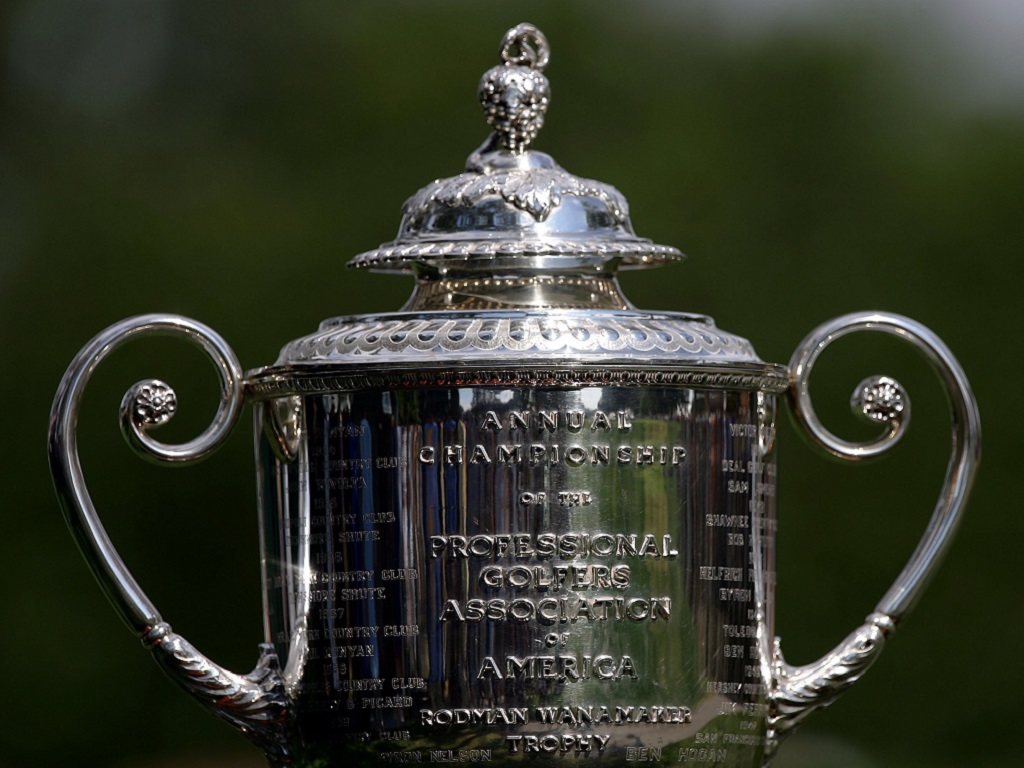
Aronimink is not a storied club, but when Donald Ross himself proclaimed it to be as good as he can design and build, one had to take notice. Jay Sigel was the pre-eminent male amateur golfer from the mid-1970s to the mid-1990s. He might have called any number of Philadelphia clubs home, but he chose Aronimink. It served him well. Gary Player won a PGA Championship here in 1962, and was followed by the 1993 winner … nobody. Aronimink gave that event away to Inverness, for reasons of which it is certainly not proud. So be it. We had to wait sixty-four years for the PGA to return to Newtown Square, but here we are. Aronimink has been neo-restored by Gil Hanse and team, to return Ross features with an eye toward defense against the dark arts, errrr, high-tech equipment.
Day one saw Rory McIlroy and Bryson DeChambeau dig big holes, to the tune of plus-four and plus-six, respectively. Since the first-round lead will be minus-three at worst, many shots will need to be made up for the power couple to reach contention. By nightfall, seven golfers held the day-one lead at three-under par 67. Shots and sticks caught our attention, and we are proud to present Five Things We Learned on Tech Thursday at the 2026 PGA Championship. Thanks to InsideTourGolfer, Today’s Golfer, and GolfWRX for initial equipment research.
First, meet Min Woo Lee
Min Woo Lee, aka Dr. Chipinski, has once again thrust himself into the conversation of Can he, will he, when will he? Lee has so much talent, wins not nearly as often as we believe that he should, and has no major near-misses (much less titles) on his wiki. The young Aussie is getting older and wiser, but is he able to avoid the scarring that holds the older and wiser back from breaking through? Philadelphia offers another opportunity. Min Woo signed for five birdies and two bogeys on day one, and grabbed a share of the opening-day lead at Aronimink. Winners transcend history and the moment, and Lee will need that sort of ascent to lift the Wannamaker on Sunday.
Second, meet Aldrich Potgeiter
The young South African golfer can rip driver with the best of them. Aronimink tips out at nearly 7400 yards, but beyond the fairway bunkers that ensnare only the mortals, Potgeiter can take his chances with wedge from the rough. On Thursday, he spent plenty of time in the spinach. Like Popeye, he used his muscles to gouge and thrash and dig his way out. Six birdies against three bogeys on the card brought AP in a three deep.
Third, meet Martin Kaymer
Not a major event takes place without a where’s he been throwback moment. We know that Martin Kaymer left the PGA and DP World tours for LIV golf, but the two-time (US Open and PGA) major winner has a lifetime exemption into at least one major event, and he seizes the opportunity each May. Kaymer joined the six-seven brigade with four birdies and a solitary bogey on day one. Kaymer was never a long hitter, and the years are kind to no golfer. The German champion will need to uncork every bottle of guile and strategy in his cabinet to remain in contention. For today, though, he occupies a rung on the ladder of Tour Tech.
Fourth, meet Scottie Scheffler
Let’s see, he’s the defending champion at the PGA, and he found his way back to the top tier with five birdies against two bogeys. To be a favorite and then play up to that stature and expectation is quite difficult. Just ask Rory, Bryson, and some of the other pre-tournament heartthrobs. Scheffler’s game is complete, and to knock him off the OWGR #1 pedestal, one needs to defeat him at the majors. Aronimink is the sort of course that fits Scheffler’s game. Better yet, it unfits the game of many of his challengers. Don’t expect Scheffler to go away anytime soon. Come Sunday, he’ll be around.
Fifth, meet Stephan Jaeger
Clocking in for the unheralded players shift are Ryo Hisatsune and Stephan Jaeger. Hisatsune logged seven birdies on day one, but gave most of them back with four bogeys. Still, he’s tied at the top for a time. Jaeger pitched five birdies against two bogeys, including a run of three consecutive, from holes four through six. Odds are that one of the two will hang around through 36 holes. Odds also suggest that both will be gone by Saturday evening. Still, the PGA Championship has historically been the major most likely to be won by an under-known. Both Hisatsune and Jaeger feature on that list, so good luck, lads!

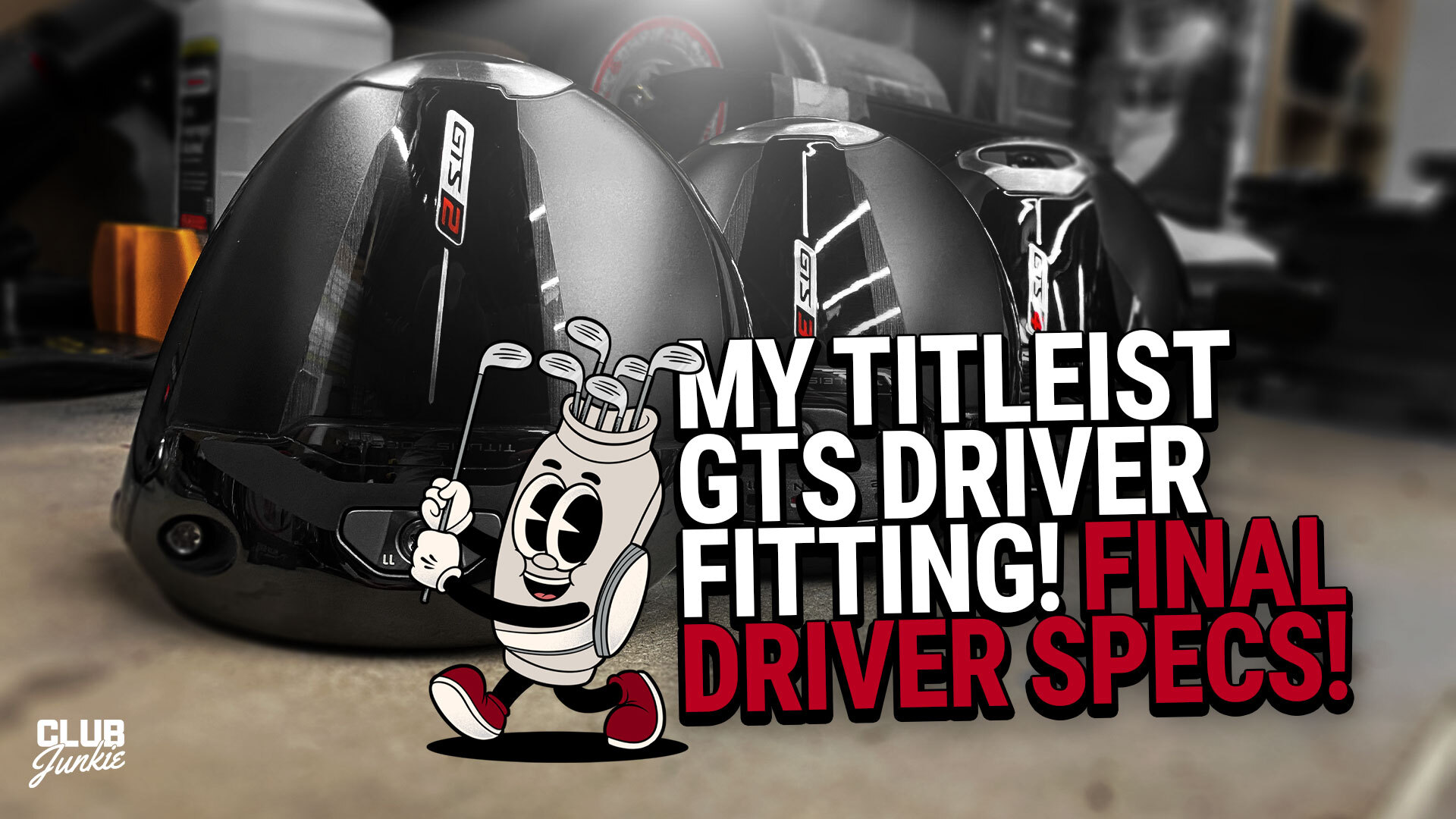
On this episode of the Club Junkie Podcast, I head to the Titleist Performance Institute for a full driver fitting with the new Titleist GTS lineup. We dive into the fitting process, talk about what made the biggest difference in performance, and break down how the different GTS heads and shaft combinations compare on the launch monitor. If you are thinking about a new driver setup for this season, there is a lot to take away from this one.
I also get into Brooks Koepka and the gear setup he brought to the PGA Championship, including the putters that caught my eye during the week. There are some interesting equipment trends showing up at the highest level right now and we break down what stands out.
To wrap things up, I talk about reshafting a few wedges, what I learned during the process, and swapping an adaptor onto a new shaft for another build project in the shop. A gear packed episode from start to finish for anyone who loves golf equipment and club building.
Follow Club Junkie everywhere:
Instagram: https://www.instagram.com/clubjunkiepod/
X: https://x.com/ClubJunkiePod
TikTok: https://www.tiktok.com/@clubjunkiepod
Threads: https://www.threads.com/@clubjunkiepod
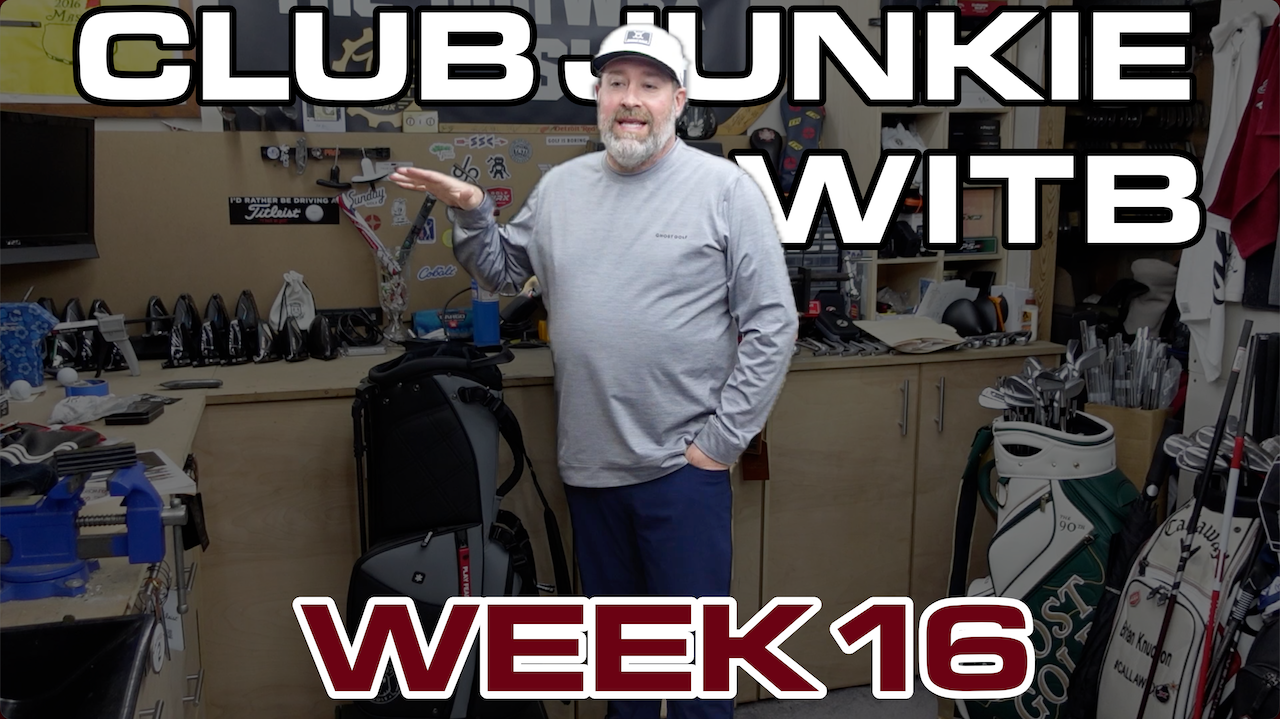
Excited for this week’s WITB as we get to add the new Titleist GTS woods to the bag! I was fit at Titleist’s TPI facility in Oceanside California a few weeks ago and my new clubs just showed up. I am also adding a cool set of irons that I built last year some wild custom wedges into a new golf bag. Speaking of the bag I have a new Ghost Anyday Black Ops stand bag that I will be using on my Motocaddy Remote M7 electric cart.
Driver: Titleist GTS3 (11 degrees @ 10.25)
Shaft: Fujikura Ventus Red 6s
3-wood: Titleist GT1 3Tour (14.5 degrees)
Shaft: Graphite Design Tour AD CQ-7s
5-wood: Titleist GTS (18 degrees)
Shaft: Fujikura Ventus Red 7s
9-wood: Titleist GT1 (24 degress)
Shaft: Fujikura Ventus Red 7s
Irons: Bettinardi CB24 (5-PW)
Shafts: KBS C-Taper Lite 110 stiff
Wedge: TaylorMade MG5 (50-09 SB)
Shaft: Mitsubishi MMT 125 Stiff
Wedge: TaylorMade MG5 (56-12 SB)
Shaft: Mitsubishi MMT 125 Stiff
Wedge: TaylorMade MG5 (60-08 LB)
Shaft: Mitsubishi MMT 125 Stiff
Putter: Dan Carraher ZT Proto
Ball: Callaway Chrome Tour
Bag: Ghost Anyday Black Ops Stand Bag

Justin Rose WITB 2026 (April): Full WITB breakdown with new McLaren irons

RBC Heritage Tour Report: More minis, course-specific setups, Spider & GTS launches

What’s the story behind Webb Simpson’s custom-stamped irons?

Cadillac Championship Tour Report: Spieth’s sizable changes, McLaren Golf launches, and more

Kristoffer Reitan’s winning WITB: 2026 Truist Championship

Cameron Young’s winning WITB: 2026 Cadillac Championship

Aaron Rai’s winning WITB: 2026 PGA Championship

Nelly Korda WITB 2026 (April)

Justin Rose on the switch to McLaren Golf, learnings from previous equipment moves

Photos from the 2026 PGA Championship


Patrick Reed WITB 2026 (May)
Driver: Titleist GT3 (9 degrees) Buy here. Shaft: Aldila Rogue Silver 130 M.S.I. 70 TX 3-wood: TaylorMade Qi35 (15 degrees)...

Aaron Rai’s winning WITB: 2026 PGA Championship
Driver: TaylorMade M6 (9 degrees) Shaft: Aldilda Synergy Blue 70 TX 3-wood: TaylorMade Qi10 (15 degrees) Shaft: Fujikura Ventus Blue...


Michael Block WITB 2026 (May)
Driver: TaylorMade Qi4D (9 degrees) Shaft: Fujikura Ventus Black VeloCore+ 5 X 3-wood: TaylorMade Qi4D (15 degrees @14.25) Shaft: Mitsubishi...


Bryson DeChambeau WITB 2026 (May)
Driver: Krank Formula Fire Pro (6 degrees) Shaft: Project X Prototype 3-wood: Krank Formula Fire (10 degrees) Shaft: LA Golf BAD...
-
 Whats in the Bag3 weeks ago
Kristoffer Reitan’s winning WITB: 2026 Truist Championship
-
Whats in the Bag2 weeks ago
Aaron Rai’s winning WITB: 2026 PGA Championship
-
 Tour Photo Galleries3 weeks ago
Photos from the 2026 PGA Championship
-

 Equipment2 weeks ago
GolfWRX Launch Report: 2026 Titleist GTS drivers
-

 Equipment2 weeks ago
PGA Championship Tour Report: Fitzpatrick, Koepka among big-name putter switches for Aronimink
-

 News2 weeks ago
WITB Time Machine: Phil Mickelson’s winning WITB, 2021 PGA Championship
-

 Equipment2 weeks ago
Which of Tiger’s major winning irons are your favorite? – GolfWRXers discuss
-

 Equipment2 weeks ago
Lead Tape Report: Adjusting the swingweight of the Wanamaker Trophy


Steve Wozeniak
Jan 6, 2018 at 1:46 pm
Load of GARBAGE…….Clampett could not sustain a high level of play because of one thing…..The Golfing Machine, your not alone bud, this took EVERYONE out that got into it……
Nice excuse though.
Steve Wozeniak PGA
Stephen Finley
Jan 18, 2018 at 9:45 pm
Not saying TGM is for everybody, or that it’s not possible it eventually led to too much complication for Clampett, but the guy was one of the best players in the world for several years, and he says it was a big factor in how he got there. Who else on this comment list has been on that level? You?
Tyler
Jan 29, 2018 at 12:15 pm
100% agree.
Mikele
Jan 6, 2018 at 7:38 am
Bobby has a nice gig over at TIburon. He gets all their tourists golfers and lots of kids and teens during the off season down here. But he is right all that matters is what happens at the moment of impact. Who really cares what is going on before that if you can train yourself to get impact right? That’s Clampett’s entire theory and it’s not wrong.
Every time we play Tiburon gold and we look over at his area from the first tee we do wonder how much he is able to soak out of those people. They pay a pretty penny, especially the in season resort people.
DS Sportsgolf
Jan 4, 2018 at 5:03 pm
Impact is largely predetermined by certain body, lever positions and angles which put the club path and club face into the best possible areas, as CG, weight shift and pressure is moved into the lead side. This occurs before impact when the golf club draws maximum CG force of around 3G’s – gravity is the most powerful force in the universe – roughly just out of transition, when the golf club first points into the ground on the downswing, and between 18 and 22 inches before impact. You can’t physically manipulate the golf club against those forces…… top players try to correct in that area, that’s where the “saved it” action comes in. It’s not just about impact…..impact is the result or action determined by previous actions with variables …… just my basic opinion.
Brennan Woods
Jan 4, 2018 at 3:08 pm
He needs The Golfing Machine, Bobby!
Jim
Jan 4, 2018 at 1:29 pm
Tiger just needs his confidence, bravado and unapologetic self back. Guy has more mojo than anyone on tour, ever.
pelzy
Jan 4, 2018 at 1:07 pm
This is right on the money but too many read who wrote it before they read what was written. This is the only way to explain how so many great champions had unorthodox swing motions yet were very successful. The intention to improve a player’s swing must start with impact deficiencies and expand from there.
I am also a guy who thinks he should have never left Butch and I firmly believe Butch would agree with Clampett’s impact first approach.
John Krug
Jan 4, 2018 at 12:58 pm
The most important thing about a swing is that it be mechanically sound and not harm the body. This requires the classic golf swing, namely, a flared left foot, a lifting of the left ankle and a hip turn. Any attempt to twist the spine is a recipe for physical injury, e.g. Tiger and numerous other pros. Tiger’s body has been destroyed by his instructors.
Doug
Jan 4, 2018 at 10:26 am
Great attempt at promoting more of your nonsense instruction!
Dana Booth
Jan 4, 2018 at 4:39 pm
How is Bobby’s instruction nonsense, Doug?
Tyler
Jan 4, 2018 at 9:19 am
I truly hate to be negative but this article is just like Clampett’s books; 90% bragging about his personal accomplishments and 10% self-promotion. Bobby, you have one PGA tour win so don’t ever compare yourself to any Hall of Famer again. Hell, I’ve won a few scrambles in my day. I remember when I bought the Impact Zone after it came out. I waited patiently for slow shipping and was extremely excited to see the book arrive at my doorstep. Upon reading the book I had a bigger let down than three putting for par. I thought how is knowing all about Bobby Clampett’s acheivements going to help my game??? It didn’t! Nice Golfwrx profile, by the way. I am sure all PGA Touring professionals list every single amateur event they won.
steve2
Jan 4, 2018 at 1:10 am
Unfortunately, Tiger seems to have lost his swing mojo some time ago by losing confidence in his golf swing knowledge. Perhaps he’s gone too cerebral and can’t get the answers from current teachers. So where should he look?
I believe he must look within himself to find what he is searching for… a consistent swing that delivers the clubhead to the ball at impact.
How can Tiger use the K.I.S.S. approach to reawaken his inner artistry? Perhaps he’s lost even that artistry. Perhaps he’s concentrated too much on athleticism, i.e. building up his body in the gym.
Yes, athleticism is the foundation for artistry…. just like technique is the foundation for musical, dancing, painting artistry. But, excessive dependence on athletic technique can destroy artistry. It’s a tricky balance.
Bryan
Jan 3, 2018 at 7:53 pm
It’s the coaches fault that I plateaued and didn’t win more. Maybe there is a correlation between changing coaches like underwear and being really really into yourself.
SK
Jan 3, 2018 at 3:14 pm
“To improve his golf, Tiger needs to stick with a style that’s comfortable. He needs to feel he can repeat his swing in competition. Then, he then needs to fine tune his impact, consistency and cause/effect understanding.
If Tiger can keep it simple, it will allow for the brilliant artist that exists to come out and paint the pallet of great shots.”
———————————
Those last sentences of this fine article just about says it all!!
Unfortunately, Tiger seems to have lost his swing mojo some time ago by losing confidence in his golf swing knowledge. Perhaps he’s gone too cerebral and can’t get the answers from current teachers.
So where should he look? Now he must look within himself to find what he is searching for… a consistent swing that delivers the clubhead to the ball at impact.
How can Tiger use the K.I.S.S. approach to reawaken his inner artistry? Perhaps he’s lost even that artistry. Perhaps he’s concentrated too much on athleticism, i.e. building up his body in the gym.
Yes, athleticism is the foundation for artistry…. just like technique is the foundation for musical, dancing, painting artistry. But, excessive dependence on athletic technique can destroy artistry. It’s a tricky balance.
What Tiger needs is a mentor to guide him in his search for his lost artistry. Only I can do it and tell him where he’s gone wrong in his compulsive athleticism. Tiger, if you’re reading …??!!! 😎
Skip
Jan 3, 2018 at 2:31 pm
Shameless plug for your “current impact-based instruction.” lol, geez took you long enough to discover that impact is all that matters.
And I’m gonna disagree, I’m pretty sure Tiger Woods, already knows what you’re referring to. He doesn’t need to discover anything.
David
Jan 3, 2018 at 2:23 pm
I agree with your assessment regarding style vs. impact. Bradley Hughes at Golfaus teaches the 4:30 path and he uses many of the all time greats as examples. Many ways to swing the club in the backswing. As long as the golfer gets to that 4:30 path.
Mike
Jan 3, 2018 at 1:41 pm
First off, Tiger didn’t fire Hank Haney. Haney quit after the scandal. Also I feel there is so much more scrutiny on Tiger that he gets criticized for things other don’t. For example, he’s had 4 coaches over a 20 year career. Is that even equal to the PGA Tour average? He’s had 3 caddies which I’m certain is way less than the average. 2 agents. Also probably less than average over 20 years. yet he gets hammered in the press for firing so many people. He also got to #1 with all 3 coaches that had a healthy Tiger to work with and had his best winning percentage with Hank (for all those never should have fired Butch people). Bottom line, Tiger knows what he needs. Everyone should stop armchair quarterbacking.
Philip
Jan 3, 2018 at 12:46 pm
Tiger didn’t fire all his coaches … and yet you write like you know everything about him intimately, but nice article about you and how Tiger may be lucky enough to follow your advice
farmer
Jan 3, 2018 at 12:42 pm
It’s all so simple: great impact makes for great golf. This little infomercial completely ignores the factors that lead to a great impact position. That is a different and considerably more complicated process. BC was a great college player, never a particularly good pro, and never got away from the TGM nonsense. Total bust of an article.
RG
Jan 3, 2018 at 12:41 pm
Great article Bobby, and right on point. Tiger was longoff the tee and with the irons, but his greatness came because he could get up and down out of a garbage can and in his prime he was the best putter ever, period. When I watched Tiger deteriorate I watched a man who was trying to do things that just aren’t necessary. There is no reason to hit all nine shots with perfect mastery, you just need a couple that are really good. Tiger used to have beautiful rhythm and tempo to his swing, then it disappeared. His confidence was supreme in his prime. I stood next to him at the Tavistock and watched him hit a pitch shot (that he chunked) and he looked more nervous than I get. If he stays within himself and finds the back of the ball with the smoothness he used to have, it’s game on.
juststeve
Jan 3, 2018 at 12:36 pm
Another Clampett article that’s really all about Clampett.
mwf0001
Jan 3, 2018 at 11:51 am
What Tiger needs to do is find consistency, especially off the tee. Why was he so good for so many years in the early 2000s? It’s because he had consistency off the tee. He used to have a go to shot with the stinger, whether with the 2 iron or the 3 wood. He almost never missed a fairway with those two clubs. That instilled confidence in the rest of his game and took the pressure off of the rest of his game, especially the driver. Why he ever got away from hitting those shots is beyond me. He was already the best iron player in the game, and he was already the best putter in the game. The only thing missing was consistency off the tee. In my opinion, in order for Tiger to get back to being a force on the PGA Tour, he needs to rekindle his flame with the stinger. Find fairways and let the rest of your game speak for itself.
Sincerely,
A Guy That Thinks He Never Should Have Left Butch
Dino
Jan 3, 2018 at 11:28 am
I respect Bobby’s opinion in this matter (ie: of going through a variety of swing coaches and the propensity that they have to make significant swing changes).
Yet, when I read the article, and knowing Bobby’s relationship in advocating for “Impact Zone Golf”, I cannot help but come to the conclusion that this was really an “infomercial” of sorts. It seems to be continuing in the same vein of seeking out another coach to help you get to number one or in every amateur golfer – to be the best that you can.
The only thing different is that he is advocating for “Impact golf” rather than “swing golf”. I do agree though that there are more ways to swing a club … after all, no two people swing the club exactly alike.
Brian
Jan 3, 2018 at 11:23 am
If only someone would come out with a book concerned with impact.