
Opinion & Analysis
12 reasons serious golfers don’t realize their potential

What stops serious golfers from realizing their potential? If you are an amateur who wants to get better, a young player trying to achieve more, or a young professional with big dreams, this article is for you.
I’ve made a career out of helping athletes maximize their abilities, golfers in particular. And the things I see young playing professionals doing prior to our work together is often what is holding them back. The reality is that most young players, no matter what their level, have three key problems:
- They’re distracted by what’s not important
- They have no detailed structure and plan to reach the targets they determine are important to them
- They have no formal process to develop mindset and attitude
In the list below, I share what I see working with these young players and some common blind spots.
1. No real plan and steps to achieve targets
Most players do not know how to create a long-term and short-term plan that outlines all steps needed to reach targets. Players should have yearly plans with targets, steps and actions and weekly plans to organize/schedule their time and prioritize key needs.
2. Not focused enough on the object of the game
This goes hand in hand with No. 1. Surprisingly, players seem to forget that the object of the game is get the ball in the hole in the least amount of strokes. Trophies and checks are not issued for the best swing, the best putting stroke or most balls hit.
3. Not enough pressure in practice
Most young players have loose practice. The intensity of feelings between the practice tee and the course are too different. Focus and intensity must be a part of all practice. Add competition and outcomes to sessions so some urgency is created.
4. Too much practice time on full swing
The data is clear — most shots in golf happen from 100 yards and in from the green. If the majority of practice time is not spent on these shorter shots, practice time is wasted.
5. An obsession with the look of the swing
Players are not generally prepared to own their own swings and embrace the differences that make them unique. Obsessing over swing mechanics is a major distraction for many players. Many players convince themselves that if it doesn’t look “good” on their iPhone, their swing won’t get results.
6. No structure with the driver
Since scoring is the main goal, a consistent, reliable shape to each shot is important. My experience has been that if players are trying to go both ways with the driver, that is a sure-fire way to elevate numbers on the card. Pick a shape and eliminate one side of the course. Predictability from the tee increases a player’s confidence to put the ball in the fairway more often, creating more opportunities to score.
7. Expectation that they will hit the ball well everyday
Many players have the unreasonable expectation that they will hit lots of fairways and greens every time they play. This expectation leads to constant disappointment in their game. Knowing that the leading professionals in the game average about 60.6 percent driving accuracy and 11.8 greens in regulation per round should be a good benchmark for the expectations of all players.
8. Trying to be too robotic and precise in putting
Some players get so caught up in the mechanics of putting that their approach becomes too robotic. They become obsessed with precision and being perfect. Feel, flow and instinct have to be a central part of putting. This can get lost in an overly robotic mindset trying to be too precise and perfect.
9. No process for assessment and reflection
Players do not have a formal process for assessing practice or rounds and reflecting on the experience. The right lessons are not consistently taken away to ensure step-by-step improvement. Knowing how to assess practice, play and ask the right questions is key to development.
10. Getting in their own way
The voice inside of most young players’ heads is not helpful for their performance. It’s often a negative, demanding voice that insists on perfection. This voice leads to hesitation, frustration and anger. The voice must be shaped (with practice) into the right “emotional caddie” to support efforts and promote excellence over perfection.
11. A focus on the negative before the positive
A default to the mistakes/flaws in the round before looking at the highlights and what worked. When asked about their round, most players highlight three-putts, penalty shots and any errors before anything else. Emphasis should always be on what went well first. Refection on what needs improvement is second.
12. The blame game
Young players love excuses. Course conditions, weather, coaching and equipment are a few of the areas that are often targets, deflecting responsibility away from the player. Many players do not take full responsibility for their own game and/or careers.
—
I hope this provides some insights on roadblocks that could get in your way on the path to reaching your targets in the game. Whether it’s lowering your handicap, winning a junior tournament, working toward the PGA Tour — or just general improvement — considering these observations might help you shorten the road to get there.




Aronimink is not a storied club, but when Donald Ross himself proclaimed it to be as good as he can design and build, one had to take notice. Jay Sigel was the pre-eminent male amateur golfer from the mid-1970s to the mid-1990s. He might have called any number of Philadelphia clubs home, but he chose Aronimink. It served him well. Gary Player won a PGA Championship here in 1962, and was followed by the 1993 winner … nobody. Aronimink gave that event away to Inverness, for reasons of which it is certainly not proud. So be it. We had to wait sixty-four years for the PGA to return to Newtown Square, but here we are. Aronimink has been neo-restored by Gil Hanse and team, to return Ross features with an eye toward defense against the dark arts, errrr, high-tech equipment.
Day one saw Rory McIlroy and Bryson DeChambeau dig big holes, to the tune of plus-four and plus-six, respectively. Since the first-round lead will be minus-three at worst, many shots will need to be made up for the power couple to reach contention. By nightfall, seven golfers held the day-one lead at three-under par 67. Shots and sticks caught our attention, and we are proud to present Five Things We Learned on Tech Thursday at the 2026 PGA Championship. Thanks to InsideTourGolfer, Today’s Golfer, and GolfWRX for initial equipment research.
First, meet Min Woo Lee
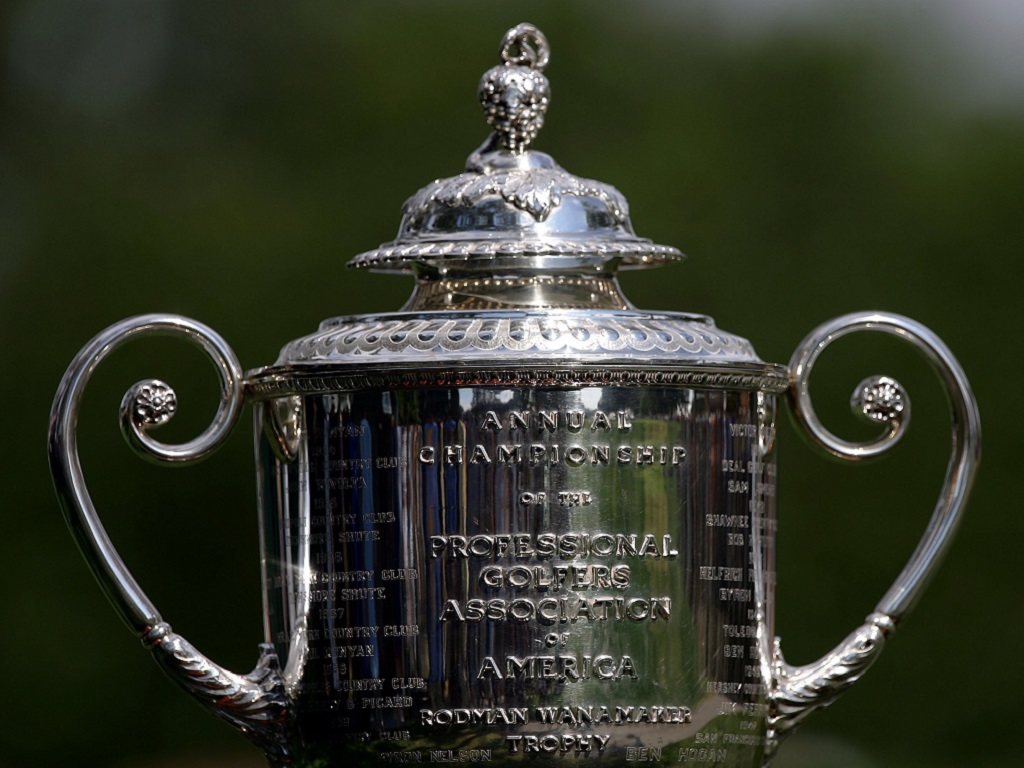
Min Woo Lee, aka Dr. Chipinski, has once again thrust himself into the conversation of Can he, will he, when will he? Lee has so much talent, wins not nearly as often as we believe that he should, and has no major near-misses (much less titles) on his wiki. The young Aussie is getting older and wiser, but is he able to avoid the scarring that holds the older and wiser back from breaking through? Philadelphia offers another opportunity. Min Woo signed for five birdies and two bogeys on day one, and grabbed a share of the opening-day lead at Aronimink. Winners transcend history and the moment, and Lee will need that sort of ascent to lift the Wannamaker on Sunday.
Second, meet Aldrich Potgeiter
The young South African golfer can rip driver with the best of them. Aronimink tips out at nearly 7400 yards, but beyond the fairway bunkers that ensnare only the mortals, Potgeiter can take his chances with wedge from the rough. On Thursday, he spent plenty of time in the spinach. Like Popeye, he used his muscles to gouge and thrash and dig his way out. Six birdies against three bogeys on the card brought AP in a three deep.
Third, meet Martin Kaymer
Not a major event takes place without a where’s he been throwback moment. We know that Martin Kaymer left the PGA and DP World tours for LIV golf, but the two-time (US Open and PGA) major winner has a lifetime exemption into at least one major event, and he seizes the opportunity each May. Kaymer joined the six-seven brigade with four birdies and a solitary bogey on day one. Kaymer was never a long hitter, and the years are kind to no golfer. The German champion will need to uncork every bottle of guile and strategy in his cabinet to remain in contention. For today, though, he occupies a rung on the ladder of Tour Tech.
Fourth, meet Scottie Scheffler
Let’s see, he’s the defending champion at the PGA, and he found his way back to the top tier with five birdies against two bogeys. To be a favorite and then play up to that stature and expectation is quite difficult. Just ask Rory, Bryson, and some of the other pre-tournament heartthrobs. Scheffler’s game is complete, and to knock him off the OWGR #1 pedestal, one needs to defeat him at the majors. Aronimink is the sort of course that fits Scheffler’s game. Better yet, it unfits the game of many of his challengers. Don’t expect Scheffler to go away anytime soon. Come Sunday, he’ll be around.
Fifth, meet Stephan Jaeger
Clocking in for the unheralded players shift are Ryo Hisatsune and Stephan Jaeger. Hisatsune logged seven birdies on day one, but gave most of them back with four bogeys. Still, he’s tied at the top for a time. Jaeger pitched five birdies against two bogeys, including a run of three consecutive, from holes four through six. Odds are that one of the two will hang around through 36 holes. Odds also suggest that both will be gone by Saturday evening. Still, the PGA Championship has historically been the major most likely to be won by an under-known. Both Hisatsune and Jaeger feature on that list, so good luck, lads!

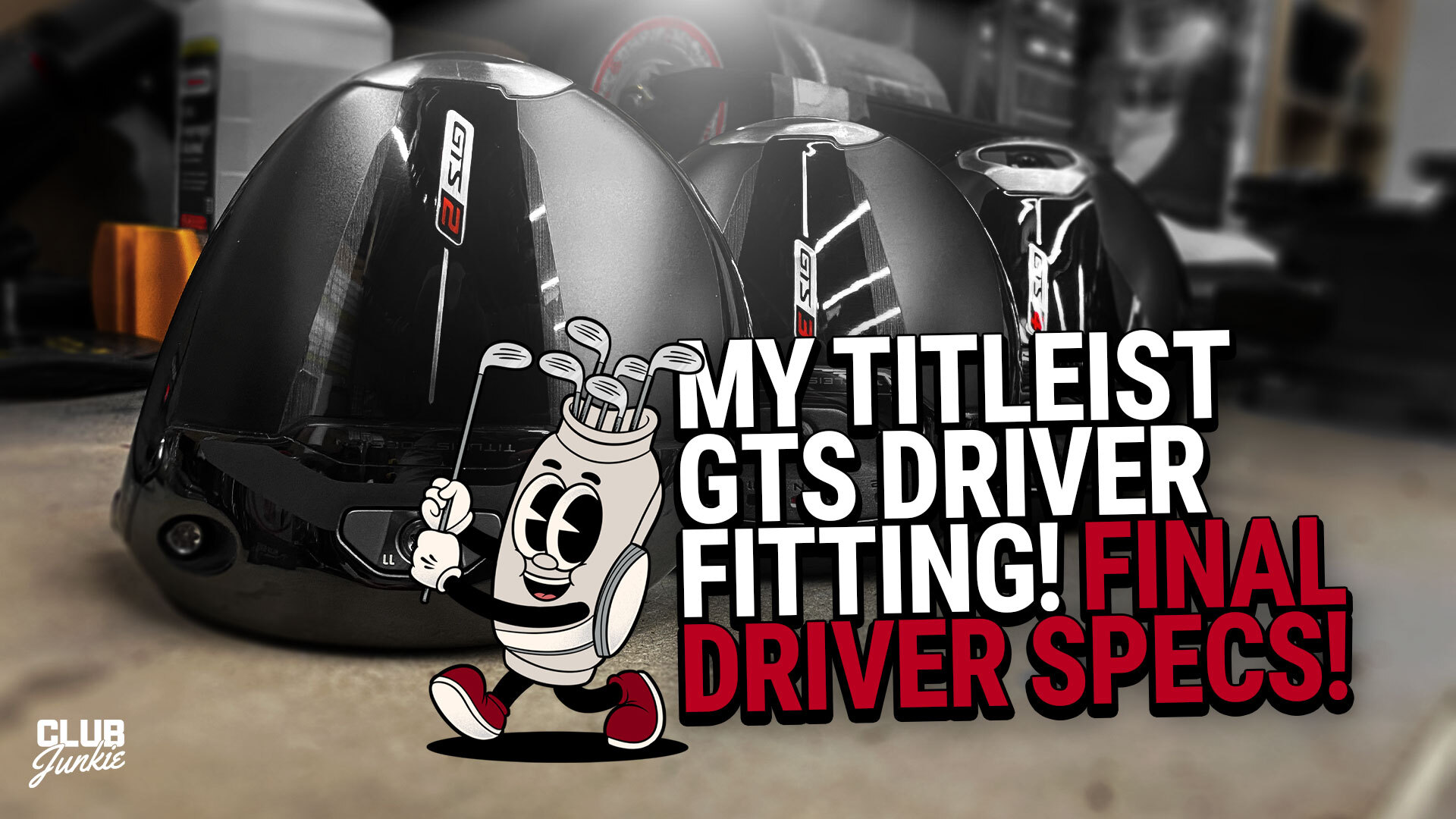
On this episode of the Club Junkie Podcast, I head to the Titleist Performance Institute for a full driver fitting with the new Titleist GTS lineup. We dive into the fitting process, talk about what made the biggest difference in performance, and break down how the different GTS heads and shaft combinations compare on the launch monitor. If you are thinking about a new driver setup for this season, there is a lot to take away from this one.
I also get into Brooks Koepka and the gear setup he brought to the PGA Championship, including the putters that caught my eye during the week. There are some interesting equipment trends showing up at the highest level right now and we break down what stands out.
To wrap things up, I talk about reshafting a few wedges, what I learned during the process, and swapping an adaptor onto a new shaft for another build project in the shop. A gear packed episode from start to finish for anyone who loves golf equipment and club building.
Follow Club Junkie everywhere:
Instagram: https://www.instagram.com/clubjunkiepod/
X: https://x.com/ClubJunkiePod
TikTok: https://www.tiktok.com/@clubjunkiepod
Threads: https://www.threads.com/@clubjunkiepod
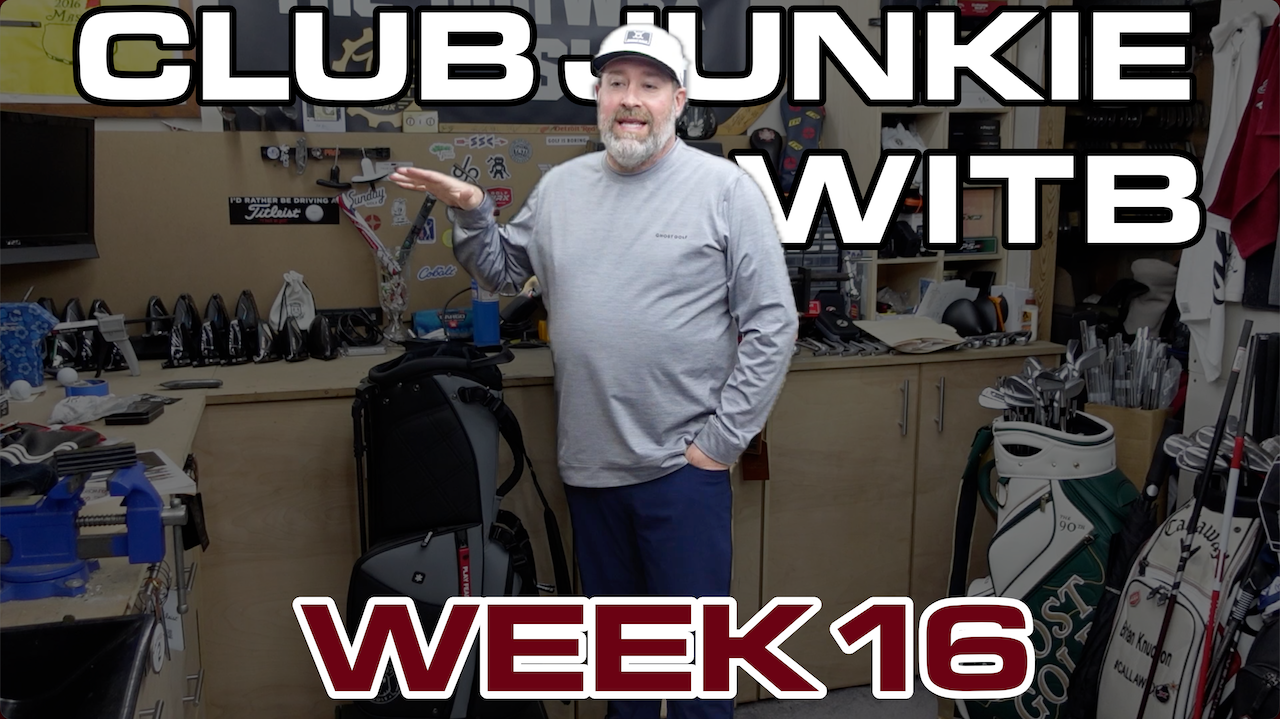
Excited for this week’s WITB as we get to add the new Titleist GTS woods to the bag! I was fit at Titleist’s TPI facility in Oceanside California a few weeks ago and my new clubs just showed up. I am also adding a cool set of irons that I built last year some wild custom wedges into a new golf bag. Speaking of the bag I have a new Ghost Anyday Black Ops stand bag that I will be using on my Motocaddy Remote M7 electric cart.
Driver: Titleist GTS3 (11 degrees @ 10.25)
Shaft: Fujikura Ventus Red 6s
3-wood: Titleist GT1 3Tour (14.5 degrees)
Shaft: Graphite Design Tour AD CQ-7s
5-wood: Titleist GTS (18 degrees)
Shaft: Fujikura Ventus Red 7s
9-wood: Titleist GT1 (24 degress)
Shaft: Fujikura Ventus Red 7s
Irons: Bettinardi CB24 (5-PW)
Shafts: KBS C-Taper Lite 110 stiff
Wedge: TaylorMade MG5 (50-09 SB)
Shaft: Mitsubishi MMT 125 Stiff
Wedge: TaylorMade MG5 (56-12 SB)
Shaft: Mitsubishi MMT 125 Stiff
Wedge: TaylorMade MG5 (60-08 LB)
Shaft: Mitsubishi MMT 125 Stiff
Putter: Dan Carraher ZT Proto
Ball: Callaway Chrome Tour
Bag: Ghost Anyday Black Ops Stand Bag

Justin Rose WITB 2026 (April): Full WITB breakdown with new McLaren irons

RBC Heritage Tour Report: More minis, course-specific setups, Spider & GTS launches

What’s the story behind Webb Simpson’s custom-stamped irons?

Cadillac Championship Tour Report: Spieth’s sizable changes, McLaren Golf launches, and more

Kristoffer Reitan’s winning WITB: 2026 Truist Championship

Cameron Young’s winning WITB: 2026 Cadillac Championship

Aaron Rai’s winning WITB: 2026 PGA Championship

Nelly Korda WITB 2026 (April)

Justin Rose on the switch to McLaren Golf, learnings from previous equipment moves

Photos from the 2026 PGA Championship


Patrick Reed WITB 2026 (May)
Driver: Titleist GT3 (9 degrees) Buy here. Shaft: Aldila Rogue Silver 130 M.S.I. 70 TX 3-wood: TaylorMade Qi35 (15 degrees)...

Aaron Rai’s winning WITB: 2026 PGA Championship
Driver: TaylorMade M6 (9 degrees) Shaft: Aldilda Synergy Blue 70 TX 3-wood: TaylorMade Qi10 (15 degrees) Shaft: Fujikura Ventus Blue...


Michael Block WITB 2026 (May)
Driver: TaylorMade Qi4D (9 degrees) Shaft: Fujikura Ventus Black VeloCore+ 5 X 3-wood: TaylorMade Qi4D (15 degrees @14.25) Shaft: Mitsubishi...


Bryson DeChambeau WITB 2026 (May)
Driver: Krank Formula Fire Pro (6 degrees) Shaft: Project X Prototype 3-wood: Krank Formula Fire (10 degrees) Shaft: LA Golf BAD...
-
 Whats in the Bag3 weeks ago
Kristoffer Reitan’s winning WITB: 2026 Truist Championship
-
Whats in the Bag2 weeks ago
Aaron Rai’s winning WITB: 2026 PGA Championship
-
 Tour Photo Galleries3 weeks ago
Photos from the 2026 PGA Championship
-
 Equipment2 weeks ago
GolfWRX Launch Report: 2026 Titleist GTS drivers
-

 Equipment2 weeks ago
PGA Championship Tour Report: Fitzpatrick, Koepka among big-name putter switches for Aronimink
-

 News2 weeks ago
WITB Time Machine: Phil Mickelson’s winning WITB, 2021 PGA Championship
-

 Equipment2 weeks ago
Which of Tiger’s major winning irons are your favorite? – GolfWRXers discuss
-

 Equipment2 weeks ago
Lead Tape Report: Adjusting the swingweight of the Wanamaker Trophy


Pingback: How To Become A Scratch Golfer – The Annika Academy
Pingback: How To Get The Most Out Of Your Garmin Vivoactive Golf GPS – GetinPulse
Pingback: How To Take Perfect Golf Swing Photos With Your IPad – The Annika Academy
Pingback: How To Play Golf With Just One Bag – The Annika Academy
Pingback: Why You Should Start Playing Golf Later In Life – The Annika Academy
Pingback: The Best Golf Gloves For Your Game – PrestwickCountryClub.net
Pingback: Do Golf Shoes Run Big Or Small? – PrestwickCountryClub.net
Pingback: The Shalimar Country Club: A Private Oasis In The Sunshine State – PrestwickCountryClub.net
Pingback: The Idle Hour Country Club: A Private Club In Macon GA – PrestwickCountryClub.net
shawn
May 30, 2018 at 12:47 pm
Young serious golfers aspiring to become professionals have low IQ intellect because all they have done is beat balls and seek ‘fun’ playing golf. Their brainlets are underdeveloped from childhood and they are unable to make intellectual decisions and solutions. Basically, they’re immature children.
ogo
May 29, 2018 at 3:05 pm
13. Blame your equipment, not yourself!
Hey, it can’t be you, it’s gotta be your obsolete equipment. Buy a new set of clubs and change balls, shoes and wardrobe. It will help the golf industry too.
Frank
May 7, 2018 at 3:45 pm
How about just one reason: not enough money.
Johnny Penso
May 3, 2018 at 8:42 pm
3. and 4. have always been important to me but even moreso this year. I’m no longer running through clubs in my bag from wedges to woods but sticking with 1 or 2 irons, a hybrid and a driver or wood. Practice hitting targets and creating the shots you need to play well. One of my favourite ways to practice hit the par 4 and par 5 teeshots I have to make on each hole of a course I’m going to play on the weekend. Pressure is on to move it left to right, right to left, high or low, a stinger etc. Just blasting the driver and watching the shot is a waste of time for anything other than warming up. Same with the wedges. Pick some targets and hit shots to the target. 5 to this flag high, then 5 low etc.
Dee Mac
May 3, 2018 at 2:23 am
Whether I win or lose today is important, but not as important as what I’ve learned from the game today that will make me a better golfer tomorrow. In a paradoxical way losing today will do more to help me be a better golfer tomorrow then if I’d won. Losing will expose more opportunities for improvement then if I’d won.
Golf as a “game” is a subset of golf as a “process.”
Thirdy8special
Apr 19, 2018 at 9:27 pm
I agree with what he is saying on shot shape. Know how to hit both but stick with one shot for most, hit the green and 2 putt and everyone will be shooting in the 70s pretty fast.
Nic
Apr 18, 2018 at 11:09 pm
Best article so far this year on this site.
millennial82
Apr 18, 2018 at 6:59 pm
Hi John, this was such a good read.. Could you please write and article about how to make a plan to lower your handicap for different handicaps?
if you could give us a break down on the road to success? I’m sure 30 handicaps- need to practice full swing contact with the ball.. 18’s- short game.. 10 and under- mental/ family/ work lol.
david
Apr 20, 2018 at 10:32 am
Nice effort millennial82, the problem is 98% of readers will NOT follow a plan. I know, I teach golf!
lulu
Apr 20, 2018 at 3:32 pm
‘Commitment’ is not in the vocabulary of most rec golfers …. only ‘fun’ and socializing with your equally decrepit golffing buddies… yo man, great shot …
Frank McChrystal
Apr 18, 2018 at 3:11 pm
The brain science of the past 10 – 15 years confirms the fact that chasing the perfect swing produces a high maintenance motion that actually picks a fight with the body’s will to be well. There are valid reasons why no two swings in the hall of fame are exactly alike. Your personal swing will serve you far better during competition than some perceived “perfect swing” you so brilliantly puppeteer on the range. There is a level of golf you have not experienced yet and it is not because of a lack of effort, it was pre determined by the era in which you were born. An entire generation accepts two or three errant drives and semi accurate approach shots as normal, relying on endless hours of short game practice to salvage scores. This joyless golf is the direct result of the “modern” instruction of the past 30 years. Relaxed concentration is never instinctive when you live the drudge of russian roulette every round, and no amount of “mental game” jargon spawned in the 70’s will ever change that. It is the instinctive beast that rules the athletic world, not the stressed out puppeteer. Do you think it is coincidence that chiropractors and mental game coaches arrived on the scene at about the same time?
John Haime
Apr 18, 2018 at 2:33 pm
Hi Everyone – thank-you for your comments. As a complement to this article, you might be interested in an article I wrote for GolfWRX last month highlighting how we work with a young, up and coming player early in the year and the areas we focus on. The mental/emotional piece is woven through these areas to help them process the game well. Here’s the link – http://www.golfwrx.com/487194/either-plan-for-excellence-or-underachieve/.
Thank-you again for your attention to the articles – great comments.
steve
Apr 18, 2018 at 3:02 pm
Great article on the 12 “roadblocks”, and I’ll just repeat my comment from your previous article here:
Without structure and a customized plan, their careers become a hit-and-hope scenario, potentially leading to long stints on the mini-tours and frivolously throwing sponsor money into the wind.”
This is such a telling comment (from your previous article) on the arrested mentality of most aspiring young players. Unfortunately, most are immature mentally and physically regardless of their playing ability. They cannot discipline themselves because they have a childish approach to the game and career. They play for fun and practice becomes a painful experience. Only those with an obsessive-compulsive mentality and proper mentoring and training can succeed. They are few.
PSG
Apr 18, 2018 at 2:20 pm
Ugh. Not another one of you. Yeah, most shots happen within 100 yards, but most of them have pre-determined outcomes. Unless you are actually advocating that players practice tap-in putts, the average good players round has WAY more shots outside 100 yards (since they miss putts by so little).
The rest of the article was good. The “the data is clear…” part was absolute nonsense.
John Haime
Apr 18, 2018 at 2:46 pm
good comment PSG – agreed that a poor player must focus more on long game. It’s pretty clear that if a player can’t get to 100 yds from the green – there’s not much point in excelling in that area. The better the player the more the short game becomes critical to success and the outcome.
Doug
May 7, 2018 at 4:16 pm
You really need to read Mark Broadie’s “Every Shot Counts.” You’re harboring some misconceptions about the relative importance of the short and long game at all skill levels. It hurts your credibility to be this off in an area.
Michael Riechmann
Apr 18, 2018 at 2:06 pm
Number 6 hurts so bad you don’t even know … And it all started with improving my ability to work it both ways … I’m just scared to play a controlled hook allah Patrick Reed when I hit a fade with every other club in my bag …
Zach
Apr 18, 2018 at 1:08 pm
I agree very much with points 4 and 5. When I am on the range you can look down and notice most people full swinging and trying to mimic swings their body cannot produce.
The only positive, it helps me secure more students.
Sup
Apr 18, 2018 at 1:06 pm
You missed the most important thing:
SUPPORT.
From your family and friends. Without support, there is nothing. You won’t get anywhere by yourself. You need a team with you at all times.
Team to manage your time, to manage your food, to manage your tee times, to manage your practice, to manage your money, to manage your life.
Any decent player has game. But without the support around him/her, you can’t take it to the next level.
Largechris
Apr 18, 2018 at 2:31 pm
Lol nonsense. How much support did Vijay Singh have in the jungles of Borneo as a young pro. Or Sorentram in the snow in Sweden. Or Woosnam living out of a caravan and building power by thousands of hours swinging in long meadow grass. It’s either in you or it’s not.
Sup
Apr 19, 2018 at 11:34 am
Is that why you still can’t play? You know about being alone, huh, you a loner and all, no friends, no family, you know it well lol
Andrew Cooper
Apr 20, 2018 at 8:55 am
If a player is good enough, physically and mentally, he or she will get there regardless of support. In fact the best get there often because they have the inner belief, borderline arrogance, to do it their way, not someone else’s way. They take responsibility, they don’t need someone holding their hand, or someone to blame when they play poorly. Not to criticise the author or this article, which is excellent, but if a young player is relying on a coach to structure their practice routines, or a mental coach to tell them to stay positive etc., then they’ve got a long way to go. Not to say that they can’t improve, but winners are simply cut from different cloth.
Joe
Apr 18, 2018 at 12:39 pm
I agree with many of these points. I know my practice routine is not at all like my rounds. great things to think about.
Steve Patterson
Apr 18, 2018 at 12:36 pm
Great article. Thanks so much for providing this information as I believe every golfer can find at least one aspect of your information to improve upon.
stephenf
Apr 18, 2018 at 12:22 pm
Well, how about that. Every bit of this is actually excellent. #2 through #8 are particularly good, but I hate to single out any of them, really. Worth saving and going back to.
One caveat: There’s some disagreement about #12. Some psychologists see a certain amount of blaming conditions, equipment, lies, weather, etc., as a useful device as a temporary buffer against the erosion of confidence after a tough round. I’m not sure I ever bought this either, but some pretty reputable people do. The idea is that it takes the immediate sting out of the deal, and if the player comes back in a day or two to work on whatever part of it actually _was_ his responsibility, the “blame” thing was never more than just a temporary device. I would think that if you were going to do some real research on the matter, you’d probably find that it depends on whether the blaming was at least partially true, what the specific player’s personality and orientation are like with regard to how well he can handle honest and direct self-evaluation in general, etc.
stephenf
Apr 18, 2018 at 12:28 pm
Also: Golf Digest (or maybe it was Golf Magazine) did an article quite a few years ago — pre-internet, I think — advising players to test and measure progress in practice: pick out a “fairway” on the range (between these two yardage signs, between the sign and the fence, whatever) and see how many out of 20 you could hit; keep track of how many times you were up and down in two from greenside or a practice bunker; how many putts you were making from three feet or six feet in a circle (maybe five balls at a time in a circle) around a hole with slope; etc.
It’s the same kind of thing advocated here with regard to specific goals. Seems so simple that of course anybody interested in actually improving would do it, but almost nobody does.
Bones Mackay
Apr 18, 2018 at 11:24 am
Pretty good overall but I have a couple of issues with 4 and 5.
On #4 – Strokes gained has shown that driving and approach shots are a good predictor of performance over a longer period of time and are much more influential than SG around the green. You may get small gains from improving short game, but it won’t be as big as if you improve off the tee and on your approach shots.
On #5 – Working on swing mechanics (assuming you’re working on the right stuff) can lead to improved ball striking and influence SG off the tee and approach.
2putttom
Apr 18, 2018 at 10:51 am
this is all too much to think about my moto keep it simple.
Miles M.
Apr 18, 2018 at 11:53 am
I think John is right on with this article. I played at a top-ranked DII school and I only found out most of what this article stated much too late in my process. This should be printed and taped above the bed for any young player who is serious and aspires to the PGA Tour.
Tycoo
Apr 18, 2018 at 12:17 pm
I don’t think it’s too much to think about . Players focus too much on how their swing looks as opposed to embracing their swing . Many of these points can be applied to every day life . There are a lot of haters on this site . It gets rediculous reading negative comments on an editor that is trying to help golfers stay positive .
stephenf
Apr 18, 2018 at 12:30 pm
yup.
steve
Apr 19, 2018 at 5:16 pm
When you are swinging a golf club you must not “think”, you must execute automatically. How do you do that? Lots of practice off the golf course.