
Equipment
Roll Back the Grooves
The Masters of the Golf Universe, those wizened characters who sit in judgement on all that is golf in the name of the USGA and the R&A have decided to change equipment standards as regards grooves. Beginning January 1, 2010 clubs will need to conform to a new standard. ” The objective of this change is to limit the effectiveness of grooves on shots from the rough to the effect of the traditional V-groove design, without mandating the use of only
V-grooves. The new regulations permit club designers to vary groove width, depth,
spacing and shape to create clubs that conform to this groove rule. ” So says the notification to manufacturers released August 5th. I find it fascinating that they want the performance of V-grooves without resurrecting the lawsuit filed by Ping in 1990, the last time these august bodies attempted to control grooves. What they plan to do is control the volume of the groove and the sharpness of the edges. Hopefully this will mean I won’t need to change balls after every full wedge shot because less sharp grooves mean less cover shaved off the ball.

.gif) The Masters of the Golf Universe, those wizened characters who sit in judgement on all that is golf in the name of the USGA and the R&A have decided to change equipment standards as regards grooves. Beginning January 1, 2010 clubs will need to conform to a new standard. " The objective of this change is to limit the effectiveness of grooves on shots from the rough to the effect of the traditional V-groove design, without mandating the use of only
The Masters of the Golf Universe, those wizened characters who sit in judgement on all that is golf in the name of the USGA and the R&A have decided to change equipment standards as regards grooves. Beginning January 1, 2010 clubs will need to conform to a new standard. " The objective of this change is to limit the effectiveness of grooves on shots from the rough to the effect of the traditional V-groove design, without mandating the use of only
V-grooves.
The new regulations permit club designers to vary groove width, depth,
spacing and shape to create clubs that conform to this groove rule. " So says the notification to manufacturers released August 5th. I find it fascinating that they want the performance of V-grooves without resurrecting the lawsuit filed by Ping in 1990, the last time these august bodies attempted to control grooves. What they plan to do is control the volume of the groove and the sharpness of the edges. Hopefully this will mean I won’t need to change balls after every full wedge shot because less sharp grooves mean less cover shaved off the ball.
“Our research shows that the rough has become less of a challenge for the highly skilled professional and that driving accuracy is now less of a key factor for success,” said USGA senior technical director Dick Rugge, who announced the rules change Aug. 5. “We believe that these changes will increase the challenge of the game at the tour level, while having a very small effect on the play of most golfers.” Thus the USGA believes they have adopted a change that will have noticable effects only on the elite 1% or so of all golfers. I read some of the test results and have to admit that I find them quite intriguing. Using both PGA and "developmental tour" players tests were conducted using a 5 iron, 8 iron, and SW using U and V grooves in various lengths of rough. Cleverly, the designations were "light", "medium", and "heavy". I just so admire scientific originality.
Surprisingly the 5 iron shots with the U-groove clubs produced more spin from the "light" rough than that produced on shots from the fairway. I am too far removed from my book learning to explain the why behind that finding. Witchcraft perhaps? What makes more sense is that the U-grooves do indeed put significantly more spin on the ball from all manner of rough than did the V-groove club. Quite unsurprising actually. What I do question is what ball they were using, something not stated in the results. Nor do they make it clear, or I just didn’t read correctly which is an affliction I suffer from more frequently than in the past, whether the V-grooved clubs are the new proposed clubs or the actual old V-grooved clubs. I have to think they represent the old version so that the data are more likely to produce the results they were looking to obtain.
The rules apply to clubs manufactured after Jan. 1, 2010, the same year that the USGA will enforce the new regulations through a condition of competition for the U.S. Open, U.S. Women’s Open and U.S. Senior Open and each of their qualifying events. So I have 4 sets of wedges which means I’ll only have to purchase 2 or 3 mores sets, enough to last until age 80 by my figures. If I live longer than that, well maybe I should buy 4 more sets just in case. They say preparation is the key to success, whoever they happen to be.
All USGA amateur championships will apply the new regulations through the condition of competition, after Jan. 1, 2014.
The PGA Tour, European PGA Tour, LPGA, PGA of America and the International Federation of PGA Tours have all indicated their support for the new regulations on grooves. Each of these organizations, as well as the Augusta National Golf Club, have told the USGA and the R&A that they intend to adopt the condition of competition, applying the rules for their competitions, beginning on Jan. 1, 2010.
Clubs manufactured prior to Jan. 1, 2010 that conform to current regulations will continue to be considered conforming to the rules of golf until at least 2024. These clubs may be used for establishment and maintenance of a USGA handicap index. This gives those of us hacks who just play for fun some time to ignore this change. Come to think of it, since this condition states "at least until 2024" we may get more time. Perhaps I should stock up on even more sets, open an ebay store and sell U-groove clubs on the oil can finish market. Hmm I need to ponder this a while longer.
Reactions amoung manufacturers were mixed; “We are very pleased to see the ruling bodies have carefully considered whether rules changes intended to address a perceived issue at tour events should be applied simultaneously to tour professionals, elite amateurs and other golfers, and ultimately opted to acknowledge those differences by separating their actions with respect to each group,” said Steve McCracken, Callaway’s senior executive vice president. I particularly like the use of the phrase "perceived issue". We’ve all seen that scores have plummeted over the last few years, to where scores of 30 under par are common place. After all, at this years Masters 19 players were under par after 36 holes, an obvious travesty foist upon us unsuspecting mooks who still believed that the game of golf was difficult. Had I but known the culprit responsible for this assault upon average scores was the result of the grooves in the club face, I would have returned to my Wilson Sam Snead Blue Ridge irons years ago. "perceived issue"…. nice phrase Mr. McCracken.
John Solheim, president and CEO of Ping whose father brought the suit against the USGA in 1990, let it be known he is dissappointed and needs to study the issue further. “I already know it moves the rule book backward,” Solheim said. “How does this help the average golfer enjoy the game more?” Why Mr. Solheim, this will make all those old classic courses more viable as major tournament sites. No longer will length be an issue, because if you miss the fairway you won’t be able to hold the green on your next shot. Augusta National will be able to reverse all the changes endorsed by Hootie Johnson and return the course to the state intended by its founder and designer. The Masters of April 2010 will no longer need rough because the new grooves won’t spin the ball as much from the fairway resulting in higher scores. No more 16 under par winning this tournament and besmisching history before our very eyes, no sir ree bob. Fun? What oh what are you talking about sir. Golf is a game meant to reduce one’s vocabulary to a series of four letter words, expelled by red faced overweight cigar chomping men several seconds away from exploding their heads all over the green. What fun could it be to hit a shot from the rough and have it stop on the green.
Mr. Solheim’s father is spinning in his grave. U-grooves will do that to a soul. Just ask the USGA.


In a golf world where players are looking to eke out every yard possible, usually by lengthening their drivers to add clubhead speed, there’s one player at the PGA Championship who’s going in the opposite direction. In fact, for Rickie Fowler, his goal off the tee is not about gaining extra distance or yards north to south, but rather about shrinking the misses from east to west.
Ahead of the PGA Championship and the week prior at the Truist Championship. Fowler mentioned to Cobra Tour Rep Ben Schomin that the driver didn’t quite swing feel the same as everything in the bag. As a result, and with Schomin’s suggestion to try and sync everything up with the big stick, Fowler decided to test out a shorter length shaft.
“He’s been at 45 (inches), and he’d been at 45 for a few weeks, 44 1/8 (inches) is really is where he is been living really for the most part, for the last couple of years, and is where he is been comfortable,” Schomin told GolfWRX. “It just felt like it was a little long and loose on him.”
Interestingly, Fowler ranks 40th in Driving Accuracy this year on the PGA Tour. It’s his most accurate season with the driver since the start of the decade. But sometimes for players, feel is more important than statistics.
“It was really more of a trying to get the swing to feel the fluidness from club to club to club to try to get it to feel the same,” Schomin added. “And so we took it down to 43 and a quarter, and it was a touch of a ball speed loss, just based on that overall club head speed. But honestly, he squared it up probably a little better. The right miss wasn’t nearly as far. So really, overall down-range dispersion tightened up a fair amount, and he felt confident in swinging it.”
The change in length had Fowler’s caddie, Ricky Romano, beaming at how well he had driven during Tuesday’s practice round at Aronimink. So much so, he was asking Schomin not to suggest changes anymore.
Fowler’s shaft-shortening is one of a few driver adjustments he’s made this season, and to Schomin’s credit, it’s thanks to the fact that he and the rest of the Cobra team had Fowler fit very well into three of the four heads in the Cobra OPTM lineup.
“He had three distinct drivers and the biggest decision was trying to decide which worked best at that time,” Schomin told GolfWRX previously. “He’s played the majority of the season with OPTM X, but has also played a couple of tournaments with OPTM LS. His overall driving stats have been good.”
At the RBC Heritage earlier this spring, Fowler switched drivers, changing from his Cobra OPTM X and into the Tour, low-loft Max K model that Gary Woodland used to win just a few weeks prior.
Now for the PGA Championship, Fowler’s back in the X head, but still using the UST Mamiya LIN-Q PowerCore White 6TX shaft, just a little bit shorter.
“Will he stay there? I’m not sure,” Schomin added. “Could we end up say at like 43 and 7.5 (of an inch). If it’s giving him the same feel of consistency through the bag, then I think we might end up just a touch longer. But if he likes where he is at, he’s confident where he is at, that’s really all that matters.”
If there’s more testing, though, just don’t tell his caddie.

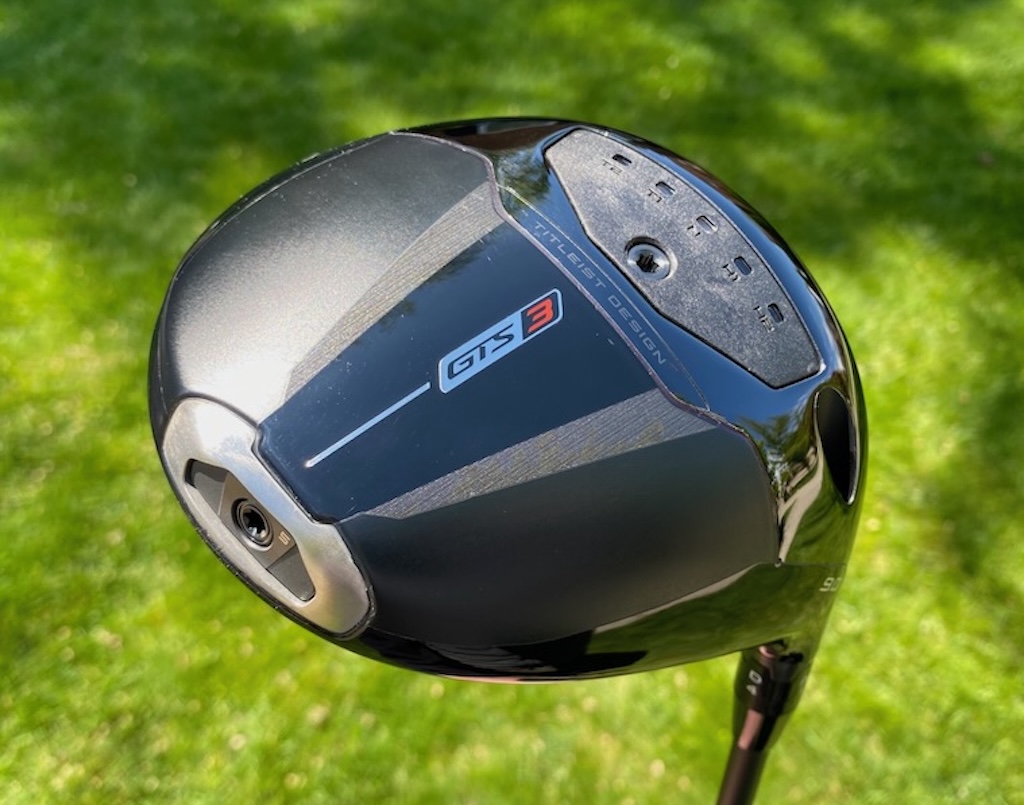
What you need to know: As is customary for the Fairhaven-based company, Titleist officially announced today that its GTS drivers are headed to retail, following a successful tour release. The GTS2, GTS3, and GTS4 drivers will be available in golf shops June 11.
Since debuting at the Texas Children’s Houston Open, the new GTS lineup has quickly gained traction on the PGA Tour, with more than 50 players already making the switch to a GTS2, GTS3, or GTS4 driver. Among them are Justin Thomas and Jordan Spieth.

Justin Thomas’ Titleist GTS2 driver (Greg Moore, GolfWRX)
According to Titleist, the GTS series builds upon the performance foundation established by the GT Series, while introducing several major technological advancements, including a new Split Mass Frame construction, refined aerodynamics, and an updated Speed Sync face design.

2026 Titleist GTS drivers: What’s new, key technology
Split Mass Frame and thermoform body
At the center of the new GTS lineup is a redesigned internal structure: the Split Mass Frame. This technology works with a full-thermoform body made from Titleist’s Proprietary Matrix Polymer (PMP), a lightweight composite that enables engineers to reposition mass more efficiently throughout the head. Compared to the previous GT generation, GTS drivers feature nearly double the PMP material, increasing from 13 grams to 26 grams, while maintaining the sound and feel preferred by better players.
The weight savings from the thermoform construction allowed Titleist engineers to strategically separate mass placement inside the head. Specifically, more weight is pushed rearward to improve stability and forgiveness, while additional mass is positioned low and forward to optimize speed, launch, and spin.
In short, golfers are able to maintain ball speed and consistency across both centered and off-center strikes.

Faster aerodynamics
Titleist also refined the aerodynamic shaping of the GTS heads to help players generate more clubhead speed.
The tails of the new GTS2 and GTS3 heads have been raised compared to previous models, helping airflow stay attached to the crown and sole longer during the swing. According to Titleist, the improved airflow reduces drag and increases speed without affecting launch conditions or center of gravity placement.
Typically, aerodynamic gains can compromise forgiveness or launch characteristics, but the weight savings from the Split Mass Frame allowed engineers to preserve preferred CG locations.

New Speed Sync face
The new Speed Sync Face design is engineered to improve ball speed retention across a larger portion of the face. A reinforced perimeter structure helps maximize face deflection and COR on centered strikes, while the upper portion of the support ring is opened up to increase speed on high-face impacts, a common strike location for many golfers. The face also features a variable thickness design to preserve speed and performance across a wider impact area.
Expanded adjustability
Each GTS model includes a dual-weighting system to fine-tune launch, spin, and shot shape more precisely than previous generations. GTS2 uses interchangeable forward and aft weights, while GTS3 and GTS4 combine a rear weight with an adjustable forward track weight system.
Tour-inspired face graphics
The new lineup features redesigned high-contrast face graphics to improve alignment and framing at address, according to Titleist. Sharp visual lines are designed to make it easier to center the golf ball and to perceive loft more easily at setup.

Additional model details
GTS2

- The GTS2 is the most forgiving model, designed for golfers seeking maximum stability and consistent speed across the face.
- It produces high launch with mid spin and features a larger, confidence-inspiring profile behind the ball.
- Standard weighting includes an 11-gram forward weight and a 5-gram rear weight, with additional fitting configurations available.
GTS3

- The GTS3 is aimed at players who want more control over launch, spin, and shot shaping.
- Compared to GTS2, the GTS3 offers lower launch and spin while featuring a more compact profile and deeper face design preferred by many stronger players.
- The head features an adjustable forward-track weight system to further fine-tune center of gravity placement.
GTS4

- The lowest-spinning option in the lineup, GTS4 is built for golfers looking to reduce excessive spin and maximize total distance.
- Unlike previous “4” models from Titleist, the new GTS4 features a full 460cc profile that improves forgiveness and stability while retaining its low-spin DNA.
- Like GTS3, it includes a forward track weighting system for precise fitting adjustments.

What Titleist says
“When we talk about driver design, it’s never about the one feature or benefit — it’s about all of them,” said Stephanie Luttrell, Titleist’s Senior Director of Metalwood R&D. “Ball speed, forgiveness, spin stability, adjustability, exceptional sound and feel… these are all attributes that golfers care about. It’s our job to design a lineup that elevates performance across the board without sacrificing in key areas, and we feel we’ve done that with GTS.”
“We know that forward CGs drive speed with great launch and spin characteristics, but you need to be able to do that with an inertial stability that still preserves ball speed, launch and spin consistency on off-center hits,” Luttrell said. “We’ve never before been able to hit these CG positions and inertia properties at the same time, and we’re achieving that because of GTS’ construction.”
Club Junkie’s take
I feel like every time there is a new Titleist wood release, I figure they can’t outdo their previous driver. And every year, I am wrong and impressed with the performance. The GTS fits right into that narrative again, as I didn’t know where Titleist could go from GT, but they pushed the limits again, and my fitting proved the smart people there found ways to improve.
My past four Titleist drivers have been a 2 series as my swing typically requires a little height, spin, and forgiveness so I figured I would just get a new GTS2 and be on my way. During the fitting, I was impressed by the new GTS construction, its added PMP material, and the advanced adjustability on each model. My fitter, Joey, got to work putting together a GTS2 and we started there. The launch and spin were great, and the consistency on misses was very tight. My average ball speed with the GTS went up a little bit as the new Speed Sync face creates more speed away from the center.
Joey then built up a GTS3 in 11 degrees, but I figured this wouldn’t have the stability I needed for tight dispersion on my miss hits. That thought was quickly erased after a few shots, and I really liked the more center start line and reduced draw on the misses I was seeing. We tried a few different settings and shafts to dial in the details in order to get the best fit. Having a forward and rear weight in the head allowed Joey to set up the GTS3 with a heavier rear weight to keep the launch and spin up, while the Sure Fit hosel set flat created a more center start line for me. My misses were not nearly as far left, and I was really impressed with the consistency on the spin and launch when I didn’t hit it in the center.
Titleist again created a wood line in GTS that delivers improvements over previous drivers while keeping the traditional look and feel you expect. More adjustability, better off-center speed, and 3 drivers that are playable over a wider range of players should make these extremely successful in fittings.
Pricing, specs, availability
GTS2 lofts: 8, 9, 10, 11 degrees (RH/LH)
GTS3 lofts: 8, 9, 10, 11 degrees (RH/LH)
GTS4 lofts: 8, 9, 10 (RH/LH)
Featured shafts
- Project X Titan Black
- Mitsubishi Tensei 1K White
- Mitsubishi Tensei 1K Blue
- Mitsubishi Tensei 1K Red
Premium shafts
- Graphite Design Tour AD DI
- Graphite Design Tour AD VF
- Graphite Design Tour AD FI
Available for fittings and pre-sale now.
In golf shops worldwide beginning June 11.
Price: $699 (standard), $899 (premium)


Titleist has today introduced its new GTS2 and GTS3 fairways.
Lower and deeper center of gravity (CG) positions, new adjustable heel-toe weights and advanced clubface innovations drive total performance in the two tour-proven models.
- Tour-inspired polished clubfaces: To help players see more of the clubface at address.
GTS2 Fairway


The new GTS2 fairway is designed with a shallower face and a larger profile than GTS3, ideal for players with more sweeping deliveries with their fairway metals.


GTS2’s new face height, inspired by tour feedback, was designed shallower than the prior generation GT2 model and more in line with the GT1 fairway. Each loft in GTS2 leverages a shallower profile except for the 13.5-degree, which maintains a slightly taller face.

With its new dual-weighting system, the ‘2’ model now has heel-toe CG adjustability.
Lofts: 13.5, 15.0, 16.5, 18.0, 21.0
Dual-weight system: 11-gram weight in heel, 5-gram weight in toe (standard)
GTS3 Fairway


The new GTS3 fairway is designed with a deeper face and a more compact profile, ideal for players who hit down on the golf ball more with their fairway metals.

New to the GTS3 family is a 21-degree offering, giving players two distinct profiles in Titleist’s 7-wood loft.


RBC Heritage Tour Report: More minis, course-specific setups, Spider & GTS launches

Justin Rose WITB 2026 (April): Full WITB breakdown with new McLaren irons

What’s the story behind Webb Simpson’s custom-stamped irons?

Cadillac Championship Tour Report: Spieth’s sizable changes, McLaren Golf launches, and more

The 24 players who can win the Masters

Rory McIlroy’s winning WITB: 2026 Masters

Kristoffer Reitan’s winning WITB: 2026 Truist Championship

J.J. Spaun’s winning WITB: 2026 Valero Texas Open

Cameron Young’s winning WITB: 2026 Cadillac Championship

The putters of the past 10 Masters champions


Alex Fitzpatrick WITB 2026 (May)
Driver: Ping G440 LST (9 degrees) Shaft: Fujikura Ventus Black 6 X 3-wood: TaylorMade Qi4D (15 degrees) Shaft: Fujikura Ventus...

Kristoffer Reitan’s winning WITB: 2026 Truist Championship
Driver: Ping G440 Max (9 degrees) Shaft: Mitsubishi Tensei 1K White 60 TX 3-wood: Ping G440 Max (15 degrees) Shaft:...


WITB Time Machine: Rory McIlroy’s winning WITB, 2021 Truist Championship
Rory McIlroy’s victory at the 2021 Wells Fargo Championship 2021 (now the Truist Championship) marked a significant return to form,...


Collin Morikawa WITB 2026 (May)
Driver: TaylorMade Qi4D LS (8 degrees) Shaft: Mitsubishi Diamana D+ Limited 60 TX 3-wood: TaylorMade SIM Tour (14 degrees) Shaft:...
-
 Equipment3 weeks ago
Justin Rose WITB 2026 (April): Full WITB breakdown with new McLaren irons
-
 Equipment2 weeks ago
What’s the story behind Webb Simpson’s custom-stamped irons?
-
 Equipment2 weeks ago
Cadillac Championship Tour Report: Spieth’s sizable changes, McLaren Golf launches, and more
-
Whats in the Bag1 week ago
Kristoffer Reitan’s winning WITB: 2026 Truist Championship
-
 Whats in the Bag2 weeks ago
Cameron Young’s winning WITB: 2026 Cadillac Championship
-

 Equipment3 weeks ago
Justin Rose on the switch to McLaren Golf, learnings from previous equipment moves
-

 Tour Photo Galleries3 weeks ago
Photos from the 2026 Cadillac Championship
-

 Equipment3 weeks ago
What GolfWRXers are saying about McLaren Golf’s new irons


Ed
Sep 9, 2008 at 2:40 am
No. This is all BS to me. The bottom line is that we dont even see the ball checking up on the green as much as it use to. I remember in the 90s as well as early 2000s you would see guys back spin the balls off of the greens. It was rediculous. The bottom line is that all of this groove stuff is alot to do about nothing. It makes the PGA look like its doing somthing. The real rpbolem with the modern game is exactly what the article says is “makiing it more challanging at the pro level but not at the amature level” (is that possible, NO)- that is that driving and rough play dont matter as much any more in regards to scoreing and wining. This is true but it is not a good thing. I want a golfer who can hit the big club straight- and is rewarded for doing so- that is I want a rough that penalizes.
The reason why the game is boring is because there is no premium for accuracy off of the tee and no penalty for misses. If there was you would have a much more interesting and diverse game. Basically I am sick of watching them play 8 million yard parking lots!
bobsuruncle
Aug 11, 2008 at 10:49 am
Let’s see, there are 3 main aspects of the golf game – long game (driving), medium game (approach), and short game (wedge + putting).
Jack Nicholas argues that today’s driving length is killing the game and reducing old courses to “Par 3 pitch-and-putts”. He wants something done to the ball to limit the distance it flies.
It appears here that the “rulers” of the game are more focused on the short game. They already make the pros putt on ice, and now they want to control the “wedge game”.
I think I prefer Jack’s assessment of the ills of the game. I think it unfair that someone with a slower swing speed should be able to drive it past someone with a higher swing speed (think Tiger), thanks to modern equipment. And I think the short game should separate the men from the boys. Take the long game away from some of today’s young guns (bombers) and let’s see how they fair against the veterans, who invariably have better course management and short games (if they haven’t developed the yips).