
Opinion & Analysis
The 6 Biggest Myths About TrackMan

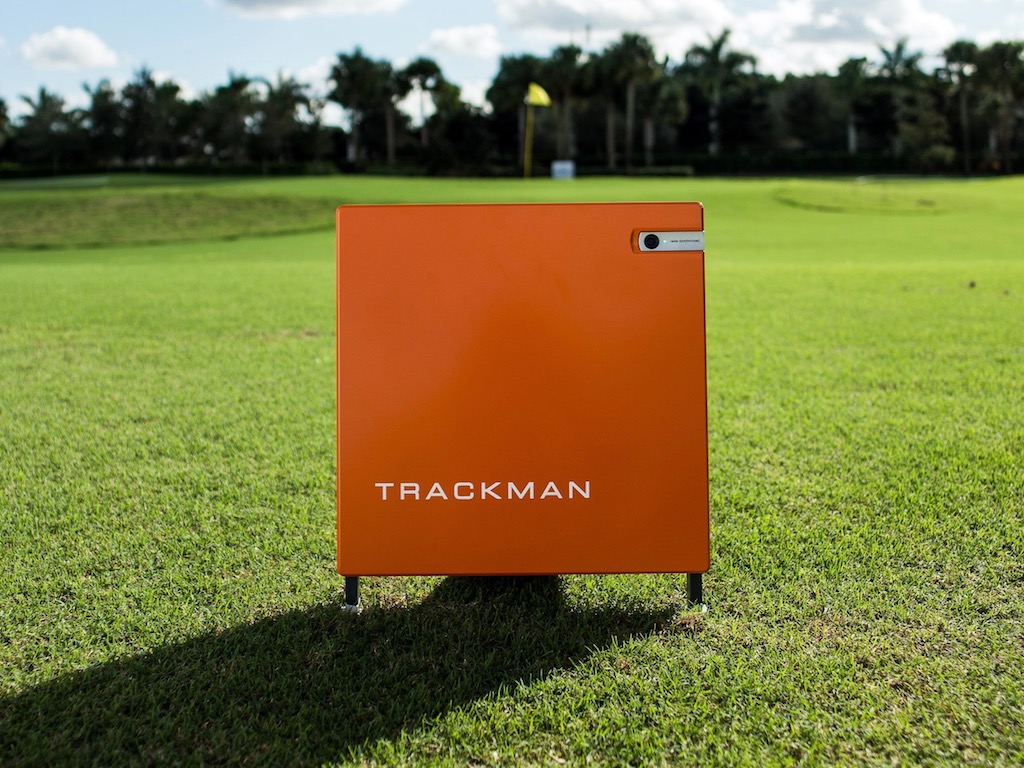
Recently, there has been quite a bit of discussion on TrackMan and technology warning golfers and teachers to be wary of TrackMan. I actually agree with some of what has been said, however, I feel as though there are quite a few misconceptions about TrackMan that are either just misunderstood or sometimes flat out “fake news.”
Here are the most common things I hear and have seen from tech or TrackMan naysayers. Inspired by fact-checking websites in the political world we all have been living in, I will grade each of these statements with five categories. TRUE, LACKING CONTEXT, IT’S COMPLICATED, MOSTLY SPIN, or FALSE.
Full disclosure, I worked for TrackMan for three years. If you think that makes me biased, you are entitled to that opinion, but I would strongly argue it only makes me more qualified to make an impartial judgement on these statements. After I left TrackMan, I had the decision just as every other teaching professional out there of what launch monitor to buy. Spoiler alert, I bought TrackMan.
No. 6: TrackMan numbers are wrong if you don’t hit the ball on the center of the face
Grade: FALSE
This one is completely false and comes from a misunderstanding of the numbers. TrackMan always calculates the face angle from where you hit the ball on the face. It doesn’t matter if you hit it center, on the heel, on the toe or in the hosel. TrackMan will tell you where that spot on the face was pointed at impact.
All things constant, if you hit one shot dead center on the face and the next shot exactly the same but 1 inch towards the toe (excluding twist face here) you will get a Face Angle number of 5 degrees more open. When reading these numbers, you will see the face angle open to the path, but the ball will hook.
This is where people don’t understand the numbers and get confused. TrackMan is accurate on both numbers, but because there is gearing in this shot the gear effect overrides the face-to-path ratio in the ultimate curvature of the ball. Great news for this is that TrackMan is about to release a software update that shows where the ball was hit on the face so you can understand the gearing even easier.
No. 5: TrackMan is Measuring a Blob Hitting a Blob
Grade: MOSTLY SPIN

While this isn’t necessarily a completely false statement, it is extremely misleading. If you or I were to look at a raw radar readout from TrackMan (like the one above), we would absolutely just see some blobs — but that by no means says anything about TrackMan or the accuracy of its data.
There are very smart people and highly intelligent software that take the readout and tell us exactly what happened at impact and in the resultant ball flight. For context, I once sent a raw radar file to TrackMan HQ because I didn’t understand what was going on with some of the numbers. After looking at this file one of the TrackMan engineers asked me, “Hunter, are you using a big plastic tee on a mat about 3 inches high and 2 inches in diameter?” He was exactly right. That is what I was using, and unfortunately it caused some interference with the radar.
The TrackMan engineers could look at that “blob” and tell me the exact dimensions and shape of a plastic tee I was using without any prior knowledge. People who say TrackMan is just measuring a blob hitting a blob don’t fully understand the technology… or they have another agenda.
No. 4: TrackMan Takes Out the Feel of the Game
Grade: MOSTLY SPIN
There is no doubt that I have seen and even personally experienced times where I felt like I was trying to perfect the numbers and got wrapped up in the 28 different data points TrackMan offers. This has absolutely nothing to do with the machine, however, and everything to do with the coach or teacher.
If your teacher is using TrackMan in a way that makes you feel trapped by positions and numbers, then your coach isn’t judging you well and is not using TrackMan properly. I still haven’t heard TrackMan ever tell me or one of my students that a shot was “bad” (but maybe Amazon will join in and Alexa can tell us we all stink).
I have used TrackMan for 10 years, and the coolest thing about it is that once you understand the numbers and the relationship they create between golf swing and causality of ball flight, you can get away from being technical. It actually helps to create feel in my students because they can relate the number to a feel in their golf swing. Now that they have the information or feel based on those numbers, they realize and learn how far they have to change things in order to actually accomplish a change in ball flight.
No. 3: TrackMan Can’t See the Face
Grade: LACKING CONTEXT
Yes, TrackMan is positioned behind the ball, driver and golfer. So technically speaking, it cannot directly see the front of the club face at impact. This doesn’t mean that it cannot accurately calculate the face angle of the golf club. With the new Trackman 4, it can actually bend the radar waves around the shape of an object to more accurately calculate club face numbers.
Without getting super scientific, the easiest way to explain this is by thinking about cell phone reception. Just because you are behind a wall or underneath a building doesn’t mean you cannot get cell service. The waves bend. If you would like to learn more on this subject, click the following link: https://blog.trackmangolf.com/looking-around-corners-radar/
No. 2: TrackMan is Too Expensive
Grade: IT’S COMPLICATED
I know you’re already thinking this is a cop out answer, but I strongly believe otherwise. Because what is too expensive? Isn’t that a relative term? No, I am not saying that $16,000-$25,000 is not a lot of money, and I’m also not saying every golfer should invest in a TrackMan. What I am saying is that there is absolutely a high value in an investment in TrackMan.
If you are a teaching professional or golf course, Trackman is vital to your operation. I know of hundreds of PGA Professionals including myself who have not just paid off their TrackMan, but make more money because of it.
No. 1: TrackMan isn’t Perfect
Grade: TRUE
This is absolutely true, and I have never heard anyone from TrackMan nor users who know the system ever make this statement. TrackMan has limitations as all technology does. It has made a mistake (once or twice) in the numbers. The good news is that TrackMan is and always has been the best, most accurate launch monitor on the market. This is directly due to how TrackMan is operated as a company, the tolerances it has for its products, the hundreds of employees who ensure mistakes don’t happen and the millions of dollars invested testing its own product.
TrackMan continues to push itself and the golf industry by constantly innovating and questioning its own product. So if there is a limitation, you can guarantee the engineers at TrackMan are hard at work trying to solve it.



Aronimink is not a storied club, but when Donald Ross himself proclaimed it to be as good as he can design and build, one had to take notice. Jay Sigel was the pre-eminent male amateur golfer from the mid-1970s to the mid-1990s. He might have called any number of Philadelphia clubs home, but he chose Aronimink. It served him well. Gary Player won a PGA Championship here in 1962, and was followed by the 1993 winner … nobody. Aronimink gave that event away to Inverness, for reasons of which it is certainly not proud. So be it. We had to wait sixty-four years for the PGA to return to Newtown Square, but here we are. Aronimink has been neo-restored by Gil Hanse and team, to return Ross features with an eye toward defense against the dark arts, errrr, high-tech equipment.
Day one saw Rory McIlroy and Bryson DeChambeau dig big holes, to the tune of plus-four and plus-six, respectively. Since the first-round lead will be minus-three at worst, many shots will need to be made up for the power couple to reach contention. By nightfall, seven golfers held the day-one lead at three-under par 67. Shots and sticks caught our attention, and we are proud to present Five Things We Learned on Tech Thursday at the 2026 PGA Championship. Thanks to InsideTourGolfer, Today’s Golfer, and GolfWRX for initial equipment research.
First, meet Min Woo Lee
Min Woo Lee, aka Dr. Chipinski, has once again thrust himself into the conversation of Can he, will he, when will he? Lee has so much talent, wins not nearly as often as we believe that he should, and has no major near-misses (much less titles) on his wiki. The young Aussie is getting older and wiser, but is he able to avoid the scarring that holds the older and wiser back from breaking through? Philadelphia offers another opportunity. Min Woo signed for five birdies and two bogeys on day one, and grabbed a share of the opening-day lead at Aronimink. Winners transcend history and the moment, and Lee will need that sort of ascent to lift the Wannamaker on Sunday.
Second, meet Aldrich Potgeiter
The young South African golfer can rip driver with the best of them. Aronimink tips out at nearly 7400 yards, but beyond the fairway bunkers that ensnare only the mortals, Potgeiter can take his chances with wedge from the rough. On Thursday, he spent plenty of time in the spinach. Like Popeye, he used his muscles to gouge and thrash and dig his way out. Six birdies against three bogeys on the card brought AP in a three deep.
Third, meet Martin Kaymer
Not a major event takes place without a where’s he been throwback moment. We know that Martin Kaymer left the PGA and DP World tours for LIV golf, but the two-time (US Open and PGA) major winner has a lifetime exemption into at least one major event, and he seizes the opportunity each May. Kaymer joined the six-seven brigade with four birdies and a solitary bogey on day one. Kaymer was never a long hitter, and the years are kind to no golfer. The German champion will need to uncork every bottle of guile and strategy in his cabinet to remain in contention. For today, though, he occupies a rung on the ladder of Tour Tech.
Fourth, meet Scottie Scheffler
Let’s see, he’s the defending champion at the PGA, and he found his way back to the top tier with five birdies against two bogeys. To be a favorite and then play up to that stature and expectation is quite difficult. Just ask Rory, Bryson, and some of the other pre-tournament heartthrobs. Scheffler’s game is complete, and to knock him off the OWGR #1 pedestal, one needs to defeat him at the majors. Aronimink is the sort of course that fits Scheffler’s game. Better yet, it unfits the game of many of his challengers. Don’t expect Scheffler to go away anytime soon. Come Sunday, he’ll be around.
Fifth, meet Stephan Jaeger
Clocking in for the unheralded players shift are Ryo Hisatsune and Stephan Jaeger. Hisatsune logged seven birdies on day one, but gave most of them back with four bogeys. Still, he’s tied at the top for a time. Jaeger pitched five birdies against two bogeys, including a run of three consecutive, from holes four through six. Odds are that one of the two will hang around through 36 holes. Odds also suggest that both will be gone by Saturday evening. Still, the PGA Championship has historically been the major most likely to be won by an under-known. Both Hisatsune and Jaeger feature on that list, so good luck, lads!

On this episode of the Club Junkie Podcast, I head to the Titleist Performance Institute for a full driver fitting with the new Titleist GTS lineup. We dive into the fitting process, talk about what made the biggest difference in performance, and break down how the different GTS heads and shaft combinations compare on the launch monitor. If you are thinking about a new driver setup for this season, there is a lot to take away from this one.
I also get into Brooks Koepka and the gear setup he brought to the PGA Championship, including the putters that caught my eye during the week. There are some interesting equipment trends showing up at the highest level right now and we break down what stands out.
To wrap things up, I talk about reshafting a few wedges, what I learned during the process, and swapping an adaptor onto a new shaft for another build project in the shop. A gear packed episode from start to finish for anyone who loves golf equipment and club building.
Follow Club Junkie everywhere:
Instagram: https://www.instagram.com/clubjunkiepod/
X: https://x.com/ClubJunkiePod
TikTok: https://www.tiktok.com/@clubjunkiepod
Threads: https://www.threads.com/@clubjunkiepod

Excited for this week’s WITB as we get to add the new Titleist GTS woods to the bag! I was fit at Titleist’s TPI facility in Oceanside California a few weeks ago and my new clubs just showed up. I am also adding a cool set of irons that I built last year some wild custom wedges into a new golf bag. Speaking of the bag I have a new Ghost Anyday Black Ops stand bag that I will be using on my Motocaddy Remote M7 electric cart.
Driver: Titleist GTS3 (11 degrees @ 10.25)
Shaft: Fujikura Ventus Red 6s
3-wood: Titleist GT1 3Tour (14.5 degrees)
Shaft: Graphite Design Tour AD CQ-7s
5-wood: Titleist GTS (18 degrees)
Shaft: Fujikura Ventus Red 7s
9-wood: Titleist GT1 (24 degress)
Shaft: Fujikura Ventus Red 7s
Irons: Bettinardi CB24 (5-PW)
Shafts: KBS C-Taper Lite 110 stiff
Wedge: TaylorMade MG5 (50-09 SB)
Shaft: Mitsubishi MMT 125 Stiff
Wedge: TaylorMade MG5 (56-12 SB)
Shaft: Mitsubishi MMT 125 Stiff
Wedge: TaylorMade MG5 (60-08 LB)
Shaft: Mitsubishi MMT 125 Stiff
Putter: Dan Carraher ZT Proto
Ball: Callaway Chrome Tour
Bag: Ghost Anyday Black Ops Stand Bag

Justin Rose WITB 2026 (April): Full WITB breakdown with new McLaren irons

RBC Heritage Tour Report: More minis, course-specific setups, Spider & GTS launches

What’s the story behind Webb Simpson’s custom-stamped irons?

Cadillac Championship Tour Report: Spieth’s sizable changes, McLaren Golf launches, and more

Kristoffer Reitan’s winning WITB: 2026 Truist Championship

Cameron Young’s winning WITB: 2026 Cadillac Championship

Aaron Rai’s winning WITB: 2026 PGA Championship

Nelly Korda WITB 2026 (April)

Justin Rose on the switch to McLaren Golf, learnings from previous equipment moves

Photos from the 2026 PGA Championship


Patrick Reed WITB 2026 (May)
Driver: Titleist GT3 (9 degrees) Buy here. Shaft: Aldila Rogue Silver 130 M.S.I. 70 TX 3-wood: TaylorMade Qi35 (15 degrees)...

Aaron Rai’s winning WITB: 2026 PGA Championship
Driver: TaylorMade M6 (9 degrees) Shaft: Aldilda Synergy Blue 70 TX 3-wood: TaylorMade Qi10 (15 degrees) Shaft: Fujikura Ventus Blue...


Michael Block WITB 2026 (May)
Driver: TaylorMade Qi4D (9 degrees) Shaft: Fujikura Ventus Black VeloCore+ 5 X 3-wood: TaylorMade Qi4D (15 degrees @14.25) Shaft: Mitsubishi...


Bryson DeChambeau WITB 2026 (May)
Driver: Krank Formula Fire Pro (6 degrees) Shaft: Project X Prototype 3-wood: Krank Formula Fire (10 degrees) Shaft: LA Golf BAD...
-
 Whats in the Bag3 weeks ago
Kristoffer Reitan’s winning WITB: 2026 Truist Championship
-
Whats in the Bag2 weeks ago
Aaron Rai’s winning WITB: 2026 PGA Championship
-
 Tour Photo Galleries3 weeks ago
Photos from the 2026 PGA Championship
-
 Equipment2 weeks ago
GolfWRX Launch Report: 2026 Titleist GTS drivers
-

 Equipment2 weeks ago
PGA Championship Tour Report: Fitzpatrick, Koepka among big-name putter switches for Aronimink
-

 News2 weeks ago
WITB Time Machine: Phil Mickelson’s winning WITB, 2021 PGA Championship
-

 Equipment2 weeks ago
Which of Tiger’s major winning irons are your favorite? – GolfWRXers discuss
-

 Equipment2 weeks ago
Lead Tape Report: Adjusting the swingweight of the Wanamaker Trophy


Ruben
Jun 20, 2019 at 2:49 am
Interesting read. I see both points need one vs not needing one. #1 Price, #2 Price. The only way to justify that expense would be if it was going to make you money. Other than that it would take forever to pay for itself.
Trevor
Mar 6, 2019 at 2:29 pm
I like to add one myth: Never trust an indoor trackman.
wayne
Feb 27, 2021 at 12:08 pm
Hi Trevor, I am a professional looking to upgrade my current launch monitor. I have been thinking of the trackman/indoor only, what do you mean by your comments? is the Quad better?
Ben Ross
Jan 8, 2019 at 9:53 pm
Trackman 4 and the associated reporting is faaaantaastic. What a brilliant tool if you know how to use it. Once you understand he to decipher the numbers, it can validate what your eyes see or tell you that you’re misinterpreting the visuals. People will always be salty about things they don’t understand.
Doug
Mar 30, 2018 at 6:12 pm
What about the health risk with the radar? I read stories about soldiers which got cancer from working with radar systems
randy
Mar 20, 2018 at 9:38 am
Most of you people are just mad because you can’t afford it and don’t understand all the data it gives you. And if you think the distance isn’t accurate don’t tell Dustin Johnson!
Myron miller
Mar 15, 2018 at 10:20 am
I’ve used a trackman a number of times and have yet to have the distance a drive was hit correct from trackman. And when I talked to a trackman rep at one course, he indicated that they use “pro conditions” for estimating rollout. it has given me consistently total distance in the 250-280 range with the ball actually landing 180-190 and then rolling out according to it’s internal calculations another 40-90 yards. IN real life, if i get 20 yards roll, i’m ecstatic. And i use a gps and also range finders to get actual yardage in real life so i know they’re reasonably accurate.
Nothing in this article other than author bias that trackman is better or worse than any foresight tool or several others. The article is strictly biased that trackman is the best for everything and nothing else works as well overall. As several replies above indicate, that is not necessarily accurate by a large margin. Each is better depending upon how the person uses it and what information is being derived and used. Trackman can be beneficial and it can be harmful. It depends upon how the person using it actually uses the data. Beauty is in the eye of the beholder and user really.
It’s a good tool that can be misused and is sometimes misleading. Like any tool, one has to understand the numbers and where they come from, which are calculated, which are actual and which are useful to the task being performed at the time. If tracking the swing thru the complete swing, then trackman is mostly useless. Other tools much better, such as swingbyte. Telling what the clubhead is doing at point of impact and path of the ball flight, then Trackman is excellent.
Hunter Brown
Mar 15, 2018 at 8:59 am
Thanks for reading and commenting your thoughts. I agree with some and think I could have included a little more for the average amateur. What I would suggest here instead of recommending another price point launch monitor is to encourage your pro at your club to look into getting TrackMan or find someone in your area who has and uses TM for teaching and fitting. Also to your point about Foresight, you can definitely make the argument that I have entrenchment but I don’t think that makes this article invaluable. The point of the article was to dispel the misconceptions people make about TrackMan it had nothing to do with other launch monitors. Also honestly I never would have gone to work for Foresight and that is not a bash on them. I worked at 2 clubs before I worked at TrackMan and had the opportunity to recommend a launch monitor purchase. We looked at several and decided on TrackMan because it was the best then and is the best now.
Shafted
Mar 15, 2018 at 2:06 am
Trackman 5 will be able to see through your shirt. They will be installing them at airports as you walk thru the barrier with your golf clubs. It is going to know how many inches your shafts are.
Martin
Mar 14, 2018 at 8:40 pm
Hallelujah!!
Michael Pasquill
Mar 14, 2018 at 3:12 pm
My issue with trackman is that it does not take into account is the affect of wind, air temp, or humidity when a person is hitting a ball especially inside it is a vacuum when you are inside. Outside I have seen it have issues too. I would rather do the evaluation on my feel and the trajectory that I am looking for. As a slow swing person under 80 mph many of the drivers are designed for players with higher swing speeds which does not help me a bit. Its about the shaft of the club for the most part.
Ben
Mar 15, 2018 at 3:33 am
Actually it does.
TrackMan tracks the full ball flight outdoor incl. temp, wind, humidity.. they even have a normalize feature where you can see how the data would look like if you change to no wind, another temp or elevation.
Pat
Apr 1, 2018 at 1:31 pm
False. There’s a Normalize function on Trackman to remove outside factors. You can add in temperature as well. Think of it, fitters would never be able to fit on windy days…
AndyK
Apr 1, 2018 at 7:42 pm
you’re wrong here, its why tour guys travel with them and get their carry yardages based on environment they are in while practicing.
Aaatkr
Mar 14, 2018 at 2:51 pm
GC Quad for my money. It shows your lie angle and contact point at impact. Trackman cannot. A picture is worth a thousand words.
AZ
Mar 15, 2018 at 11:03 am
It lies to you about the angles and a wrong picture costs you thousand of explanations. Just because a system put a number or a picture out there doesn’t mean it’s (close to) accurate.
Dave
Mar 14, 2018 at 2:35 pm
How much did Trackman pay you to say all of this, it’s clearly a sponsored article. I work in the military and can catogorically tell you radar can not see round corner and will prove it if you want me to. As you a coach you are brilliant and stick that.
Anthony
Mar 14, 2018 at 4:59 pm
“THIS” A radar beam can’t bend around corners!
GC Quad is A much better unit for teaching and fitting and yes, I have used both as I am a custom fitter and instructor. Nice sponsored article lol….
And about price, GC Quad is too expensive as well!
Hunter Brown
Mar 15, 2018 at 8:40 am
Hey Anthony thanks for the reply here but see below for info on how TrackMan can see around corners
Radar waves from TrackMan DO see around the clubhead. The physics are a bit complicated, but here we go:
The wavelength of the TrackMan radar is ½-1½ inches – this is in the same order of magnitude as the club head and golf ball. This means that the radar reflection, the so-called scattering mechanism, is in the ‘resonance region’ (see f.ex. http://www.radartutorial.eu/01.basics/Rayleigh-%20versus%20Mie-Scattering.en.html a simplified explanation of this).
In the ‘resonant region’ the reflecting objects generates ‘creeping waves’ that wraps around the object. An electromagnetic field that impact an object, will generate a current on this object, current are ‘closed loops’ which means the current will also run on parts of the object that is not facing the incident electromagnetic wave. The current will then generate a new electromagnetic field (the reflected signal) which will consequently also be radiated from parts of the object that is not facing the incident electromagnetic wave.
However, no matter the physical explanation the raw data from TrackMan clearly shows that we can see ‘around’ the club head. F.ex. it is clear in the radar signal from TrackMan exactly when the ball separates from the club face despite the club head occluding the ball completely.
Hunter Brown
Mar 15, 2018 at 8:46 am
Dave thanks for reading and the comment. Unfortunately I am not paid by TM, anymore, as I stated in the article I did work for TrackMan for 3 years. Also see below for the explanation on TM seeing around corners.
Radar waves from TrackMan DO see around the clubhead. The physics are a bit complicated, but here we go:
The wavelength of the TrackMan radar is ½-1½ inches – this is in the same order of magnitude as the club head and golf ball. This means that the radar reflection, the so-called scattering mechanism, is in the ‘resonance region’ (see f.ex. http://www.radartutorial.eu/01.basics/Rayleigh-%20versus%20Mie-Scattering.en.html a simplified explanation of this).
In the ‘resonant region’ the reflecting objects generates ‘creeping waves’ that wraps around the object. An electromagnetic field that impact an object, will generate a current on this object, current are ‘closed loops’ which means the current will also run on parts of the object that is not facing the incident electromagnetic wave. The current will then generate a new electromagnetic field (the reflected signal) which will consequently also be radiated from parts of the object that is not facing the incident electromagnetic wave.
However, no matter the physical explanation the raw data from TrackMan clearly shows that we can see ‘around’ the club head. F.ex. it is clear in the radar signal from TrackMan exactly when the ball separates from the club face despite the club head occluding the ball completely.
AZ
Mar 15, 2018 at 11:06 am
I think i agree with you on that single point. The face angle is calculated based on toe and heel positions, and impact location. And buldge and roll where all brands used to have the same
Coach Vitti
Mar 14, 2018 at 2:08 pm
Well, nice try, but superficial. I’m a retired teaching pro and never, once, used a trackman in my sessions. First reason? Cost. I could make zero business sense out of buying or leasing a Trackman or any other expensive launch monitors. Second reason? While I know that spin rates and directions, launch angles, path and club face angles matter, they really only matter to low-handicappers, pros and salesmen!
I never, once, had a student ask me “Hey, Coach, where’s your $25,000 launch monitor? Don’t we need the 28 ‘data’ points it provides?” Whether 28 points or 280 points, it’s not something that is going to benefit most amateurs as they struggle to get the club back to the ball!
I’ve only used a launch monitor on my own swing during a fitting. That’s an appropriate use of the technology, even for amateurs. It gives the fitter valuable information to fit the correct clubs to your swing and nothing more.
Besides, I can get all the information I need during a lesson from a $200 Swingbyte. That fits most pro’s budgets and get a better than 80% solution for 90% of students. Unfortunately, my season-long test of that tech failed to meet my reliability standards.
Oh, I forgot to mention that I am also a retired Systems Engineer with 20 years in Test and Evaluation. I spent several years around Doppler radar systems. So, please tell me how many ‘data points’ are actual measurements and how many are ‘calculated’? Hmmmmm….
And how about calibration? How about the human-in-the-loop (operator)? How about software bugs?
I also know snake oil salesmen.
Regis
Mar 15, 2018 at 7:41 am
I’m retired in a golf centric area and there are a lot of courses within 20 minutes of my home. I’ve been playing for over 50 years and have taken a lot of lessons. I will take an occasional lesson with any good pro but when it comes to a lesson package I only work with a pro that has launch monitor and video technology preferably outdoors.(I will never take an indoor lesson) Not for every lesson necessarily but integrated into the teaching. And I almost never buy a club without using a launch monitor. I appreciate the cost involved for the pro but from the students perspective that’s what I look for. It’s easily available and at least in terms of a lesson package it should be standard. Like bringing your car to a mechanic. They all have diagnostic equipment. Some have more sophisticated equipment.
Hunter Brown
Mar 15, 2018 at 8:53 am
Coach Vitti thanks for taking the time to read and reply with your experience. I am glad you had a successful career teaching. I never stated you had to have TrackMan to be a great teacher. There have been plenty of great teachers before TrackMan and still great teachers today who do not use TrackMan like a Butch Harmon. I simply choose to use it and encourage others to use it as it makes the learning process more efficient. Also from my experience TrackMan is best suited for Amateurs not scratch golfers or tour pros. The reason I believe this is because tour pros or already have good “numbers”. That is why they strike the ball so well and play for a living. They use it mostly as you stated for club fitting, distance training, and checking in on things. Amateurs or the 5-25 handicap range can find using TrackMan very positive because it helps them understand the difference between feel and real. If you are ever in Asheville, NC and are curious about how teachers use TM please let me know! I would be happy to show you how I use it and hopefully you will see that it is positive and not detrimental to the game of golf.
Spencer
May 6, 2019 at 1:13 am
Butch Harmon uses a GCQuad.
Leonard
Mar 14, 2018 at 12:43 pm
Excellent piece. Well thought out and explained!
Frank Xavier
Mar 14, 2018 at 12:40 pm
Definitely an interesting analysis and description. It could have been more insightful with some comparative observations to more economic solutions like Skytrak which according to their side by side produces very close results to Trackman for a fraction of the cost.
Tim S
Mar 14, 2018 at 12:25 pm
I think TrackMan is in invaluable tool. You can stand on the range and hit different drivers and watch them go, but the info you need really isn’t there without something measuring it. Spin and launch angle are hugely important in distance, and TrackMan gives you that info.
TrackMan can help you select a club. It’s up to you to dial it in.
Blake
Mar 14, 2018 at 12:12 pm
I wish he would have addressed indoor data performance and touched on the comparison to Flightscope. Regardless of that, good article and information.
Gregs
Mar 14, 2018 at 12:33 pm
Trackman is not great for indoor use for the driver or most clubs that gear effect is more prominent, since trackman can not follow the ball after it hits the screen. Hitting it on the toe comes up as a block even though it would gear back to center if not left of center. Foresight GCQuad is the best for indoor use and indoor fitting as it’s picks up strike zone and it will pick up gear effect. Outside trackman actually follows the ball so it takes in to account gear effect through tracking the actual ball throughout its flight. Trackman wins in the outside environment.
Judge
Mar 14, 2018 at 6:45 pm
My guess is that the whole indoor debate will change very soon. Just like TrackMan how couldn’t measure impact location or dynamic lie.. Their track record speaks for itself!
RJ
Apr 3, 2018 at 1:08 am
Thumbs up on your comments…. I use both in different fashions and can boast about features and benefits for both. To each his own based on his / her finances..
MIKEYP
Mar 14, 2018 at 11:59 am
I got a trackman and went to a secluded range with a pro and hit several shots. The pro went out into the range and put stakes in ground were the ball landed and were it finished. The trackman said the balls were landing at certain distances and then gave a total distance number. The distances were ALL 4+ yards off from were the ball actually landed and finished. I trust the spin, launch angle and other recorded data is reasonably accurate but the yardages were off every time. Might be the air density, ball, contact etc but the Trackman told a different story than the actual distance.
John
Mar 14, 2018 at 12:12 pm
Hey Dummy…. It isn’t going to get roll out right every time.
Coach Vitti
Mar 15, 2018 at 10:15 pm
I think I’m the only guy in Texas who can back up a drive! Trackman can’t calculate that!
larrybud
Mar 14, 2018 at 12:32 pm
What did you measure the stakes with and how do you know that was accurate?? Did they read long or short? Was this your trackman or the pros? Are you guys certified?
MIKEYP
Mar 15, 2018 at 10:28 am
Chris Moody is the certified pro. We were at a private range at a country club. Some of the shots came up short and some long. He would go to were the ball landed (he’s dangerously standing down range and would go to where the ball hit) and put a stake in the ground. Then went out to where the ball settled and put another stake. We then compared trackman and the distance was off every time. We were simply testing the accuracy of the distance. And yes John, I am a dummy.
Swing Dr
Jan 15, 2019 at 8:45 pm
You weren’t using carry flat distance with your poles out in the range. The ground was slightly uphill or slightly downhill from the tee. Carry distance is given to the same elevation as contact.
raynorfan1
Mar 14, 2018 at 11:43 am
“If you are a teaching professional or golf course, Trackman is vital to your operation.”
How is Trackman “vital” to the operation of a golf course?
Teaching professional, I get. Club fitter, I get. Pro shop, I get.
Golf course?
Andrew Cooper
Mar 14, 2018 at 3:20 pm
“Vital to your operation…”? I’m sure there are plenty of pros and facilities managing ok with their Flightscopes and GC2 Quads.
Hunter Brown
Mar 15, 2018 at 8:44 am
Andrew I do not disagree with that my main point was that information is vital and I choose TrackMan because it is the best information out there. However my intent was not to turn this into a TrackMan vs conversation just to explain the misconceptions people have
larrybud
Mar 14, 2018 at 10:47 am
Hunter, I’m sorry but this is NOT accurate:
“it can actually bend the radar waves around the shape of an object”
No, it CANT actually bend the radar waves, and the link you referenced give a simplified description of how it works, but radar does NOT “bend”. In fact, the link talks about cell phone signals bend through walls, but that’s not accurate either. They go THROUGH them because of the wavelength. See this link for more info:
http://www.physlink.com/Education/AskExperts/ae175.cfm
Radar is just radio waves, which is a high frequency light wave. Light does not “bend” (* yes, high gravitational objects such as planets/stars/black holes bend space, and thus light does bend around them, but that’s not what we’re talking about here!).
I think it’s important to be accurate in such articles, especially if your goal is to expel myths!
Hunter Brown
Mar 14, 2018 at 11:32 am
Larry thanks for taking the time to read and comment. I may have used a slightly misleading word in “bend” I was simply trying to explain the general idea without getting super scientific as I am not qualified to have that kind of conversation. I am just a golf pro! I understand your point though
Hunter Brown
Mar 15, 2018 at 8:42 am
Larry here is some follow up info on your question
adar waves from TrackMan DO see around the clubhead. The physics are a bit complicated, but here we go:
The wavelength of the TrackMan radar is ½-1½ inches – this is in the same order of magnitude as the club head and golf ball. This means that the radar reflection, the so-called scattering mechanism, is in the ‘resonance region’ (see f.ex. http://www.radartutorial.eu/01.basics/Rayleigh-%20versus%20Mie-Scattering.en.html a simplified explanation of this).
In the ‘resonant region’ the reflecting objects generates ‘creeping waves’ that wraps around the object. An electromagnetic field that impact an object, will generate a current on this object, current are ‘closed loops’ which means the current will also run on parts of the object that is not facing the incident electromagnetic wave. The current will then generate a new electromagnetic field (the reflected signal) which will consequently also be radiated from parts of the object that is not facing the incident electromagnetic wave.
However, no matter the physical explanation the raw data from TrackMan clearly shows that we can see ‘around’ the club head. F.ex. it is clear in the radar signal from TrackMan exactly when the ball separates from the club face despite the club head occluding the ball completely.
Patrucknorm
Mar 14, 2018 at 10:44 am
If I were a pro golfer or a golf pro that teaches, I would invest in one these as a tool. As an amateur I’ve seen my numbers and they are helpful. But it’s a tool not an aid. It’s great for actual yardages and quantifying your swing efficiency. I still believe golf is a game of nuances/ feel. But frankly, I’d rather be playing than hitting balls indoors.
Pat
Apr 1, 2018 at 1:36 pm
You know Trackman works outdoors, right?