
Opinion & Analysis
Should we really “roll back” the golf ball? A deep dive…

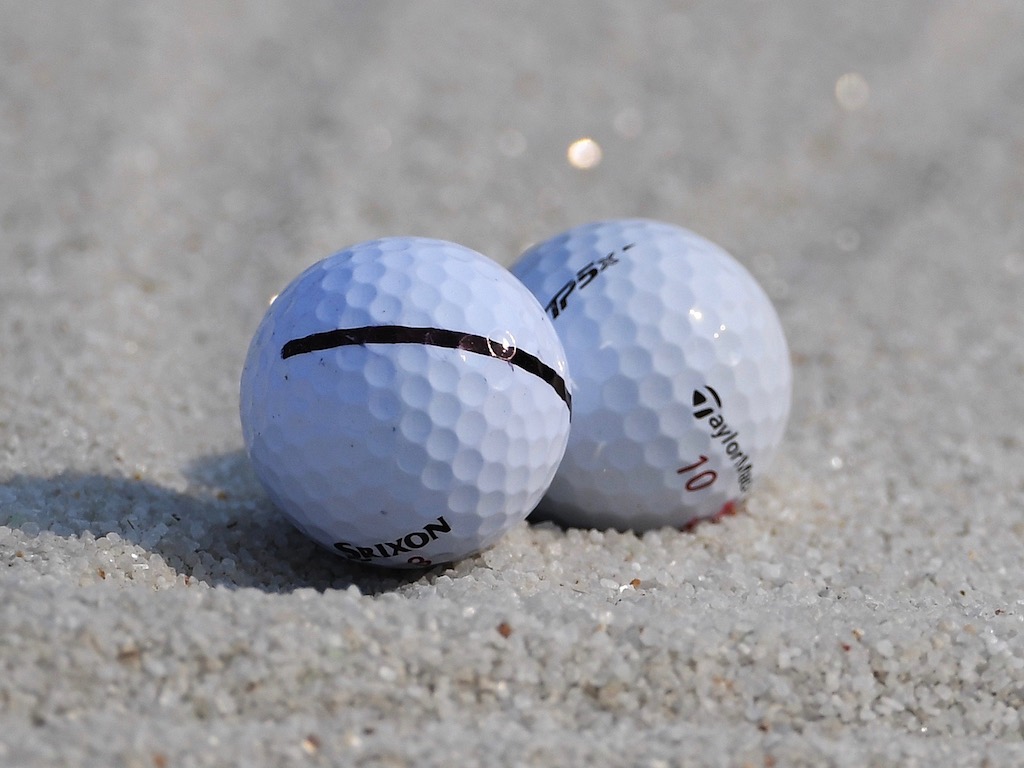
The USGA and R&A ruling bodies recently released their 2017 Distance Report, which gathered data from seven major tours. The driving distance of each player was measured using TrackMan and ShotLink on two select holes during each tournament. This analysis cumulatively yielded roughly 40,000 pieces of data over the course of a year. The report revealed that the average driving distance on the PGA Tour increased by a total of 3 yards over the past year, while the greatest increase was 10 yards on the Web.com Tour.
The report ignited a firestorm of comments. The general consensus is that the sport is facing a crisis — depending on who you believe and/or your group affiliation. They all have a vested interest in the outcome.
There are two issues on the table. They are linked together, but they also have individual considerations.
- The Distance the Golf Ball is Traveling: There are many reasons why the ball is going farther than ever before. There are some in the industry who believe the golf ball is not the problem and it would be a mistake to roll it back.
- The Golf Ball Itself: There are others in the industry of the opinion that the answer is to roll back the distance the golf ball travels by as much as 20 percent. Those in this group believe the golf ball is the problem, regardless of other factors that are contributing to what has been dubbed a“Distance Creep.”
In both cases, most everyone agrees that something must be done. The numbers tell the story. In 1980, the first year of officially measured drives on tour, the average distance off the tee was 257 yards. In the early 2000s, there were only a few players who we able to drive the ball over 300 yards. Today, there are 57 PGA Tour players who average 300 yards or more off the tee. A major concern is that most of the great courses throughout the country are becoming obsolete.
Wally Uihlein, the former leader of Titleist, has argued there are many contributing factors to the increased distances shots are now traveling: “thin face, oversized titanium drivers; low-spinning, solid core, high performance golf balls; the physiology of today’s professional golfer; improved technique and instruction; mobile launch monitors and customization of equipment; improved golf course conditioning and agronomy,” as he told GOLF in 2017.
GROUP 1
These three men, together with their respective organizations, will ultimately make the decision as to what should be done with respect to the golf ball and distance issue.
- Mike Davis, Executive Director of the USGA: Davis is the lead spokesman on this issue for the USGA. “These courses are expanding and are predicted to continue to expand. All it’s doing is increasing the cost of the game. The impact it has had has been horrible.”
- Mark Nowell, President USGA: The newly elected President’s comments have been more general in nature. “We have been, and we’re going to be focused on what that situation is and how we can deal with it … there is no fixed timetable, but we will commence this process immediately and endeavor to reach a conclusion as promptly as possible.”
- Martin Slumbers, Chief Executive of the R&A: The R&A will vote in accordance with the USGA. “I’m looking at the balance between skill and technology — are they in balance, is it good for the recreational game? And should it be the same for the elite game?”
GROUP 2
There are two other groups that have the ability to sway both public and private opinion. They are the PGA of America and the PGA Tour. The leaders of these two groups believe that the golf ball in not the problem, but that there are other extraneous factors responsible for the increased distance the golf ball travels.
- Jay Monahan, Commissioner of the PGA Tour: “We believe this increase in club head speed is mostly attributable to a combination of factors, such as increased player athleticism and fitness, physical build of the player and enhancements in equipment fitting.”
- Pete Bevacqua, CEO of the PGA of America: “We are highly skeptical that rolling back the golf ball in whole or part will be in the best interests of the sport and our collective efforts to grow the game.”
GROUP 3
And then there are the players, past and present. Jack Nicklaus has been at the forefront of this issue dating back to 1977 when he first called on the USGA to look at making a change to the ball. Nicklaus believes the distance the ball travels should be rolled back 20 percent.
- Tiger Woods agrees with Nicklaus that the ball travels too far. “I think the ball is going too far,” he said. “You would not want to take away the amateur’s ability to hit the ball farther and straighter, but with the touring pros you might want to roll the ball back… like in baseball you would have a pro ball and an amateur ball.
- Dustin Johnson agreed with Tiger Woods in a press conference in late November 2017, but then he changed his mind a few months later.” When was the last time you saw someone make the game too easy? I don’t really understand what all the debate is about, because it doesn’t matter how far it goes; it is about getting it in the hole.”
- Geoff Ogilvy agrees with Tiger Woods, using a similar baseball analogy. “Major League Baseball in America, they use wooden bats … everywhere else in baseball, they use aluminum bats. That’s kind of what’s happened to us at least with the drivers of these big hitters. We’ve completely outgrown the stadiums. So, do you rebuild every stadium in the world? That’s expensive. Or make the ball go shorter?”
- Gary Player, Hale Irwin and the late Arnold Palmer all have at one time or another agreed with Jack Nicklaus that something needs to be done with the ball because it travels too far.
GROUP 4
The last group that is a stakeholder in any decision made are the manufactures. A required change in the ball could mean thousands if not millions of dollars required to retool golf ball manufacturing plants. And from Titleist’s perspective, as they are the leader in sales with the greatest presence on the professional tours, there looms the possible loss of market share.
- Wally Uihlein, Former President and CEO of Acushnet, Titleist’s parent company, does not believe the ball is the problem. Titleist conducted its own study adding further context to the Distance Report’s finding of a three-yard average gain year over year across golf’s seven prominent professional tours. Titleist’s research shows a 0.5-yard gain in distance at PGA Tour events in 2017 that were played at the same course as 2016. Of the courses that were new for the 2016-17 season, Titleist found most of increase came at three of the major championship venues: the U.S. Open (Erin Hills vs. Oakmont, +20.4 yards), the British Open (Royal Birkdale vs. Royal Troon, +8.1 yards) and the PGA Championship (Quail Hollow vs. Baltusrol, +7.0 yards).
- Angel Ilagan, Bridgestone Golf President and CEO, says the company agrees with Tiger Woods that the distance the pro ball travels should be reduced while the equipment and the ball should be “juiced for the amateur.” “As it relates to the Tour, there needs to be something to standardize the ball because these guys are hitting it way too long,” he said.
- David Abeles, CEO and President TaylorMade: “We believe innovation and technology lead to better performance, and better performance brings more joy to the game for all who play it … As the discussion around bifurcation and rollback formalizes, we look forward to having a seat at the table to lend our voice. Until then, we will continue to create the best performing products for all golfers.”
In the end, we know it is about what the R&A and the USGA decide. They are like the Supreme Court; their decision is final. The PGA Tour and the PGA of America are like co-counsels presenting their case unofficially to the public and the media. And the players are on the opposing side, presenting their case for change—a roll back of the distance the ball travels.
What will the USGA decide, and when will it decide? We have seen through other changes at the USGA and R&A that they prefer a slow rollout rather than an fast rollback. The USGA has had to deal with other sensitive issues in the past. The current issue is reminiscent of the “battle of the groves” when Ping’s Karsten Solheim sued the USGA for $100 million in 1987. The lawsuit was eventually dropped, and Ping’s Eye2 irons were grandfathered in.
There was most recently the ban on anchoring, in which the PGA Tour and the PGA of America were considering enacting their own rules. After the USGA announced its intention in May 2013, the ban went into effect January 1, 2016. There was a period in which open discussion was entertained, and then after listening to various points of view the USGA set a date in which the ban on anchoring would go into effect: January 16, 2016. The PGA of America and the PGA Tour eventually capitulated.
In 1998, there was the issue of thin-faced drivers that were popularized by Callaway and TaylorMade. The USGA implemented a new rule restricting the coefficient of restitution to a value of 0.83 for drivers. The rule was then adopted world-wide by 2003.
It’s clear that the USGA moves carefully. It’s interested in hearing every point of view, which takes time. It also favors setting a date in the future when the rules change will become effective but, in the meantime, there is a waiting period in which those who are affected have the time and opportunity to adjust. What is also clear is the USGA is interested in doing what’s best for the game. While its actions may at times seem capricious and arbitrary, those who hold that opinion are the individuals that have been directly affected by a rules change.
As in the past, the USGA has shown that it will not back down from a fight if it believes the cause is just. At the same time, however, the USGA will listen to every point of view. This approach obviates the possibility of an out-and-out showdown. The greatest predictor of future behavior is past behavior, and for that reason I would predict that the USGA will announce its intention to make a change in the rules with regards to the ball in 2018. But whatever changes it decides, it will not go into effect until 2020 for professionals.
As for amateurs, the USGA will have to decide what the best approach is when it comes to them. They could:
- Reduce the distance the ball travels to match the standards applied to the professionals
- Keep it the same as today without making any changes
- Increase the limit the ball travels
Those who are in favor of regulating the distance the ball travels are not in favor of doing anything that would reduce the enjoyment of the amateur or have a negative effect on growing the game. As we consider the issue, we must believe that Mike Davis, Executive Director of the USGA, meant what he said over dinner with Jack Nicklaus in November of 1997. They were discussing the increasing distance the ball is traveling, and sarcastically Nicklaus asked Davis, “Are you going to study the issue for another 10 years?”
And Davis answered defensively, “No, no, no, we’re going to get there… and I’m going to need your help when we do.”
That sounds like a promise to me. What do you think?


Opinion & Analysis
Brandel Chamblee PGA Championship Q&A: Rose’s huge McLaren risk, distracted LIV pros and why Aronimink suits the bombers


PGA Championship week is here, and Brandel Chamblee did not hold back in our latest discussion ahead of the season’s second major.
In our 2026 PGA Championship Q&A, golf’s leading analyst made the case that PIF pulling LIV’s funding has left its players competing in a state of confusion, called Justin Rose’s mid-season equipment switch a huge risk at 45, and explained why Aronimink will be a bombers’ delight this week.
Check out the full Q&A below.
Gianni: With the PIF confirming that they’re pulling funding from LIV at the end of the season, what impact do you expect that to have on the LIV players competing at the PGA Championship?
Brandel: I would imagine that they have all been thrown into a state of confusion, and will be distracted, not knowing where they are going to play next year and not knowing exactly their road back to either the DP World Tour or the PGA Tour. Or in Rahm’s case, being tied to a sinking ship for the next few years, likely playing for pennies on the dollar in events that no one cares about or watches.
I doubt this would put him in the best frame of mind to compete at his highest level. Keeping in mind, however, that majors are the only time that LIV disciples get to play in events that matter, so never disregard the motivation they have to prove to the world they are still relevant.
Gianni: Justin Rose switched to McLaren Golf equipment mid-season while playing some of the best golf of his career. What do you make of the change?
Brandel: I don’t really know what to make of Rose switching equipment. It seems a huge risk on his part, even though it is likely, in my opinion, that the clubs he’s playing are similar, if not the exact grinds, to what he was playing previously, with a McLaren stamp on them.
Having said that, at best, it is a distraction when he seemed to be as dialed in with his game as any 45-year-old could be and trending in the majors to perhaps do something that would definitely put him in the Hall of Fame. At worst, given the possibility that these clubs aren’t just duplicates of his old set stamped with McLaren on them, he’s made an equipment change that would take time, and 45-year-old athletes don’t have the time to do such things.
Gianni: Aronimink has only hosted a handful of professional events since it hosted the 1962 PGA Championship. What kind of test does it present, and does a course with less recent major championship history tend to level the playing field?
Brandel: Even though Aronimink has only hosted a handful of meaningful professional events, it has been fairly discerning in who can win there. When Keegan Bradley won the BMW Championship on the Donald Ross masterpiece in 2018, he was the 2nd best iron player on tour coming into that week. When Nick Watney won the AT&T at Aronimink in 2011, he was 2nd in strokes gained total coming into the week.
In 2020, Aronimink hosted the KPMG Championship, and Sei Young Kim won. On the LPGA that year, she was first in greens in regulation, putts per green in regulation, and scoring average on the way to being the LPGA player of the year. And then there is the 1962 PGA Championship won by Gary Player, who eventually became just one of a few players to win the career grand slam on the way to winning 9 majors. It is a formidable test, and if it’s not softened by rain, it will bring out the best in the upper echelons of the game.
Gianni: Is there a specific hole at Aronimink that you think will do the most to decide the winner?
Brandel: The hardest hole at Aronimink in each of the three tour events that have been played there since 2010 has been the long par-3 8th hole, with the par-4 10th being the second hardest, so most of the carnage will happen around the turn, but with the par-5 16th offering opportunities for bold plays and the tough closing holes at 17 and 18, the finish is likely to be frenetic.
Gianni: The PGA Championship has always sat in the shadow of the other majors. What does the ideal PGA Championship look like in your eyes, and what would it take for it to carve out its own identity?
Brandel: The PGA Championship, to whatever degree it suffers from the comparison to the other three majors, is still counted just as much when adding them up at the end of one’s career. Almost 1/3 of Nicklaus’ major wins were the five PGA Championships he won. Walter Hagen won 11 majors, five of which were PGA Championships.
Tiger Woods twice in his career won back-to-back PGA Championships, and those four majors count just as much as the other 11 he won. The PGA may not have the prestige of the other three, but it carries the same weight. Having said that, I preferred the identity that it had as the last major of the year.
Gianni: You nailed your Masters picks. Rory won, Scottie finished solo second, and Morikawa surged to a tie for seventh. Who are your top 3 picks for the PGA Championship and why?
Brandel: I am not a huge fan of majors played on golf courses that have been shorn of most of the trees, although I understand some of the agronomic reasons for doing so and of course the ease with which it allows members to play after errant drives. However, at the highest level, it all but eliminates any strategy off the tee and turns professional golf into an even bigger slugfest. That means that it will likely be a bomber’s delight this week, but fortunately, Scottie Scheffler is long enough to play that game and straight enough to play it better than anyone else.
The major championships give us very few surprises anymore, going back to the beginning of 2012, so the last 57 majors played, the average world rank of the winners has been better than 15th in the world. So look at the highest ranked and longest drivers who are on form coming into the PGA Championship who also have great short games as the surrounds at Aronimink are very challenging. That’s Scottie Scheffler by a mile and then McIlroy and Cameron Young with a far bigger nod towards DeChambeau than I gave him at the Masters.


In this episode of the Club Junkie Podcast, we dive into one of the most interesting flatstick releases of the year with a full review of the new TaylorMade SYSTM 2 putters. After spending time on the greens, I break down what makes this design stand out, where it performs, and why it has me completely torn between loving it and fighting it. If you are into feel, alignment, and consistency, this is one you will want to hear about.
We also take a look at some of the putters in play on the PGA Tour last week. From familiar favorites to a few surprising setups, there is always something to learn from what the best players in the world are rolling with under pressure.
To wrap things up, I walk through the process of building a set of JP Golf Prime irons paired with Baddazz Gold Series shafts. From component selection to performance goals, this is a deep dive into what goes into creating a unique custom set and why this combo has been so intriguing.


This year my 50th birthday. Gosh, where has the time gone?
As a teenager in rural Missouri, some of my junior high and high school years felt interminable. Graduation seemed light years away. But the older I get, the faster life seems to fly by.
I’m also increasingly aware of my mortality. My dad died recently. Earlier this year, a friend and fellow PGA of America professional and I were texting about our next catch-up. The next message I received was news of his unexpected passing at 48. Shortly after, a woman I dated in college succumbed to cancer at 51.
Certainly, one can share perspective at any age. Seniors help freshmen, veterans guide rookies. But reaching this milestone feels like as good a time as any to do one of those “what would I tell my younger self?” articles.
I’ve had a uniquely varied career in golf. I started as a 27-year-old, average-length-hitting, 14-handicap computer engineer and somehow managed to turn pro before running out of money, constantly bootstrapping my way forward. I’ve won qualifiers and set venue records in the World Long Drive Championships, finished fifth at the Speedgolf World Championships, coached all skill levels as a PGA of America professional, built industry-leading swing speed training programs for Swing Man Golf, helped advance the single-length iron market with Sterling Irons®, caddied on the PGA TOUR and PGA TOUR Champions, and played about 300 courses across 32 countries.
It’s been a ride, and I’ve gone both deep and wide.
So while I can consult and advise from a lot of angles, let me keep it to a few things I’d tell the average golfer who wants to improve.
1. Think About What You Want
Everyone has their own reason for picking up a golf club.
Oddly, as a professional athlete, I’m not internally driven by competition. That can be challenging, as the industry currently prioritizes and incentivizes competition over the love of the game.
For me, I love walking and being outdoors. Nature helps balance my energy. I prefer courses that are integrated into the natural beauty of their surroundings. I’m comfortable practicing alone. I’m a deep thinker, and I genuinely enjoy investigating the game, using data and intuition to unearth unique, often innovative insights. I’m fortunate to be strong and athletic, so I appreciate the chance to engage with my abilities. Traveling feels adventurous. I could go on.
You don’t have to overthink it like I do. For you, it might be as simple as hitting balls to escape work, hanging out with friends, and playing loosely with the rules and the score.
The point is to give yourself permission to play for your own reasons, and let that be enough.
But if improvement is your goal, thinking about your destination—and when you want to get there—is important, because it dictates the steps you need to take. When I set out to go from a 14-handicap to the PGA TOUR as quickly as possible, the steps I needed were very different from those of a working golfer trying to break 90 in six months. That’s also different from someone who just wants a few peaceful hours outside each week, away from work or family.
None of these goals are better than the others, but each requires a different plan that you can work backward from.
2. There Are Lots of Things That Can Work
One of the challenges of golf is that, although there are rules for playing, there aren’t clear, industry-wide standards for how to best play the game. There’s a lot of gray area.
You might hear a top coach or trainer insist that a certain move is the best way to swing or train. Then you dig a bit deeper and, much to your confusion and frustration, another respected coach or trainer says something completely different. I don’t think anyone is trying to confuse you—at least I hope not. It’s just where the industry is right now.
You have to be careful with advice from tournament pros, too. They might be great at scoring, but they’re also human and sometimes just as susceptible as amateurs to believing things that don’t really move the needle. Tour players might describe what they feel, but that’s not always what they’re actually doing when assessed with technology.
I recently ran a test on my YouTube channel (which connects to my GolfWRX article “How to use your hands in the golf swing for power and accuracy”), and, interestingly, two of the most commonly taught hand actions produced the worst results in the test.
Coaches can certainly help. If you find someone you connect with to help navigate, that’s great. But there are many ways to get the ball in the hole. In the current landscape, you may need to seek multiple opinions, think critically, and use your own intuition to discern what seems true and whose advice resonates with you.
I’d recommend seeking someone who is open-minded and always learning, because things constantly change. Absolutes like “correct” or “proper” should raise a red flag. AI can be useful, but it tends to confidently repeat popular advice, so proceed with caution.
3. Get Custom Fit
If you’re serious about becoming a better player, getting custom fit is hugely important. There’s no sense fighting your equipment if you don’t have to. Most better players get fit these days and, if they don’t, they’re usually skilled enough to work around clubs that aren’t ideal.
If you plan to play for a long time, it’s worth spending a little more upfront to get something that truly fits you and your game, rather than continually buying and discarding equipment.
Equipment rules haven’t really changed significantly since the early 2000s. To stay in business, manufacturers keep pushing those limits. If you pull a bunch of clubs and balls off the rack and test them, you’ll find differences. I’ve tested two new drivers and seen a 30-yard total distance gap. Usually, the issue isn’t bad equipment; it’s that the combination of components simply isn’t the best fit.
It’s like wearing a new pair of floppy clown shoes. Sure, they’re shoes—but you won’t sprint your best in them compared to track shoes that fit perfectly.
Be wary of what’s called custom fitting, too. Sometimes the term is used as a marketing strategy rather than an actual fitting. In some retail settings, fitters may be incentivized to steer you toward higher-priced components. That doesn’t automatically mean it’s not the best fit, but you should be aware of potential biases.
I learned a version of this lesson outside of golf. Years ago, I bought a tennis racquet at a big box store from a seemingly knowledgeable employee who thought it would suit me best. The racquet gave me tennis elbow, and I spent months recovering with rest and acupuncture. The next season, I invested more time and money to find what actually fit me, and I walked away with something amazing that I still play with years later.
So if you’re going to get fit, be smart about it.
Find someone you believe has deep knowledge—possibly with certifications, but not necessarily. Make sure there’s a wide inventory across many brands. Check recent reviews for the individual fitter if possible. Make sure you trust that the fitter has your best interests at heart. If they’re wearing a hat or shirt with a specific brand’s logo, proceed with caution. Unless you specifically want a certain brand or look, be wary of upsells, especially if two options perform nearly the same.
Also, while golf is called a sport of integrity, there’s a thread of manipulation in the industry. I once drafted an equipment article for an industry magazine, structured just like one of their previous popular stories, with matching word count and great photos. The assistant editor loved it; it was useful to readers and required little work on his part. But the editor-in-chief nixed the story. When I asked why, I was told it was because I wasn’t an advertiser. It turned out the article I’d modeled mine after was a paid ad cleverly disguised as editorial content.
I really dislike games, clickbait, and fear-based manipulation. I hope this changes, but golfers deserve to know it exists.
4. Distance and Strategy Matter
There’s a real relationship between how far you hit the ball and your scoring average, even at the PGA TOUR level.
I experienced this early in my pro career. I started as a power hitter, swinging in the high 120s and breaking 200 mph ball speed with a stock driver.
Back then, some instructors advised swinging at 80%, so I tried slowing down for more accuracy. That worked fine on shorter, tighter courses. But on longer setups, I was coming into greens with too much club, and par 5s stopped being

RBC Heritage Tour Report: More minis, course-specific setups, Spider & GTS launches

Justin Rose WITB 2026 (April): Full WITB breakdown with new McLaren irons

Best fairway woods of 2026: The most versatile fairway woods + the most forgiving fairway woods

Gary Woodland’s winning WITB: 2026 Texas Children’s Houston Open

What’s the story behind Webb Simpson’s custom-stamped irons?

Cadillac Championship Tour Report: Spieth’s sizable changes, McLaren Golf launches, and more

The 24 players who can win the Masters

Rory McIlroy’s winning WITB: 2026 Masters

Kristoffer Reitan’s winning WITB: 2026 Truist Championship

J.J. Spaun’s winning WITB: 2026 Valero Texas Open


Alex Fitzpatrick WITB 2026 (May)
Driver: Ping G440 LST (9 degrees) Shaft: Fujikura Ventus Black 6 X 3-wood: TaylorMade Qi4D (15 degrees) Shaft: Fujikura Ventus...

Kristoffer Reitan’s winning WITB: 2026 Truist Championship
Driver: Ping G440 Max (9 degrees) Shaft: Mitsubishi Tensei 1K White 60 TX 3-wood: Ping G440 Max (15 degrees) Shaft:...


WITB Time Machine: Rory McIlroy’s winning WITB, 2021 Truist Championship
Rory McIlroy’s victory at the 2021 Wells Fargo Championship 2021 (now the Truist Championship) marked a significant return to form,...


Collin Morikawa WITB 2026 (May)
Driver: TaylorMade Qi4D LS (8 degrees) Shaft: Mitsubishi Diamana D+ Limited 60 TX 3-wood: TaylorMade SIM Tour (14 degrees) Shaft:...
-
 Equipment2 weeks ago
Justin Rose WITB 2026 (April): Full WITB breakdown with new McLaren irons
-
 Equipment1 week ago
What’s the story behind Webb Simpson’s custom-stamped irons?
-
 Equipment2 weeks ago
Cadillac Championship Tour Report: Spieth’s sizable changes, McLaren Golf launches, and more
-
Whats in the Bag3 days ago
Kristoffer Reitan’s winning WITB: 2026 Truist Championship
-

 Whats in the Bag1 week ago
Cameron Young’s winning WITB: 2026 Cadillac Championship
-

 Whats in the Bag3 weeks ago
Nelly Korda WITB 2026 (April)
-

 Equipment2 weeks ago
Justin Rose on the switch to McLaren Golf, learnings from previous equipment moves
-

 Tour Photo Galleries2 weeks ago
Photos from the 2026 Cadillac Championship


Paul
Mar 29, 2018 at 3:21 pm
Maybe this is a dumb question, but why can’t we let the pros just shoot lower scores?
Tom Newsted
Mar 29, 2018 at 8:13 am
This has been covered by so many people across the internet who have done testing with balls from today and balls from 20 – 25 years ago. I say put them on the robots and see if there is any major difference 20-30 yards is a major difference. If the robots are close then there is no reason to change the ball. I have said many times that this issue is the result of the players being in much better shape than ever before. Both PGA and LPGA players are extremely fit and have a physical trainer as part of their game. This along with some technology is why the ball is going further not the ball itself. When Tiger came on the scene in 97 he was the only one that took physical fitness seriously now all the kids that grew up wanting to be Tiger have done the same thing.
glfhsslr
Mar 29, 2018 at 6:36 am
MLB uses wooden bats yes. Ask some of the MLB pitchers of their opinion of the ball, They’ll all tell its juiced.
If the USGA decides to roll the ball back I think they should expand the hole to 6″ wide lol. Id make that exchange all day
Square
Mar 29, 2018 at 5:54 am
Every single decision should be based on how to make the game more fun, affordable, and optimum pace for amateur players. There should be no consideration as to what Tour Players are doing. Rolling back the ball for amateurs will not grow the game. I hit the ball 280 off the tee 25 years ago. At age 48 I still hit it 280 off the tee. Technology has allowed me to enjoy nearly the same experience for 25 years. If I was hitting it 240, I’d probably have slowed down a bit and picked up other interests.
gvogelsang
Mar 29, 2018 at 8:37 am
Why would you want the game to be easier. A big part of what makes golf a great game is the difficulty.
If you need easier, move up a set of tees, or two.
ewfnick
Mar 29, 2018 at 5:14 am
I have stopped watching golf on TV these days as it is simply boring, driver, wedge, driver, wedge, all that gets shown most of the time is putting, as the approach game has become too obvious.
I will continue to love and play the game, but watching for me, is now a thing of the past.
A. Commoner
Mar 28, 2018 at 10:06 pm
Don’t care what the PGA, Tour, USGA, or R&A does. There will be makers of and markets for balls appropriate for 90% of us “real” golfers. Just an aside: some people have strange ideas about how to “grow the game.”
KP
Mar 28, 2018 at 8:03 pm
Been playing since 1993. Busted my a** trying to hit it longer any straighter. Down to a 3 now, was a scratch about 10 years ago. I practice a few times a week and play on one or both weekend days. My handicap climbed when they got rid of belly putters. If they roll the ball back because the beasts that are the PGA Tour are hitting it further than they like and I start hitting it noticeably shorter…I’m done.
Hogan Fan
Mar 29, 2018 at 4:52 am
In all seriousness, the article compared golf to baseball and the analogy is correct. Do we rebuild all the stadiums or just make the ball go shorter? If they make it a bit shorter to control the costs of course maintenance, then everyone should just move up a proportionate amount. 10% rollback? Stop playing 7000 yards and go back to playing 6300. There are a ton of great courses under 6500 yards.
Mat
Mar 30, 2018 at 4:32 am
No, MLB also requires all parks to be 330 to the poles now, and 400 CF. So you can’t go saying “play a shorter course”, and say baseball is an example. It’s opposite. They are ensuring the “course” is a minimum distance.
Mat
Mar 28, 2018 at 7:59 pm
Frankly, there’s only one thing I care about. Whatever is decided in the area of the ball, and equipment in its entirety, is simple; it must remain equal, pros and amateurs.
If it’s reduced for the pros, it’s reduced for the ams. We all play conforming clubs, and the ball should be no different. If they do or don’t change, what I care about is that the ball is the same one that the professionals play. Right now, they play the same ball I can buy off the shelf. If that ever changes, you’ll find that golf will suffer. It is the fact that pros play the SAME as me that makes what they do amazing. Otherwise, I don’t have anything to compare them, and that’s when you lose the connection so vital in the game.
Golfer 5
Mar 28, 2018 at 6:59 pm
After reading a lot of comments it is a variety of factors in my opinion which has increased distance:
-Player fitness
-Faster conditions
-New technology
One thing that I think has really increased distance across the board is club fitting, even for pros. That in itself is so much more detailed and technologically advanced now it is crazy! The intricacies pros can maximize on are only going to increase their production further. If you combine all those factors and add in the fact that any golfer has a chance to play the most perfectly tailored set of clubs, then you are obviously going to maximize performance.
In that respect, perhaps they should regulate the COR standard of woods further, and put parameters on fairway woods as well.
Charles Miller
Mar 29, 2018 at 9:25 am
That is the critical point. Just publishing distance stats takes no account of clubhead speed. A recent analysis of the top 20 on the US PGA tour showed a 4mph (which translates to c.10 yard) improvement over a decade, so better heads and shafts, stronger players and perhaps a more aggressive approach all play their part. Given that the USGA and R&A have not changed the maximum permitted ball velocity for ages, other factors come into play.
One of those is the performance of today’s golf balls. Optimising spin, and fitting balls to players, means they nowadays fly better and more predictably (regardless of distance) than they did.
Bob
Mar 28, 2018 at 6:32 pm
I don’t see what the problem is. The game is fun and exciting to play as an amateur and it is fun and exciting to watch the pro’s play. Roll back the ball and you roll back the fun and excitement and you end up rolling back the growth of the game. Sorry, I think the USGA and the R&A are a bunch of old fuddy duddies
Bob Jones
Mar 28, 2018 at 6:13 pm
The problem, if there really is one, exists only in professional golf only. I don’t think my 220-yard drives are hurting the game.
And where is Group 5? A set of recreational golfers, who represent only about 95% of people who play the game?
Moe Selchen
Mar 28, 2018 at 6:54 pm
Exactly
Billable Hours
Mar 28, 2018 at 5:42 pm
I don’t understand why anything needs to change
Vance
Mar 28, 2018 at 5:39 pm
No course is obsolete. They will always be free to have tournaments at any course. They are only afraid of scores being too low, but won’t admit it. The same people who readily admit that players are better these days seem unable to accept that scores might be lower as a result.
gvogelsang
Mar 28, 2018 at 5:22 pm
They should roll back COR and reduce the driver head size for “elite” players. They have already defined elite players when they changed the groove rule.
A COR of .76 and a driver head size of 200 cc would work just fine.
R Symes
Mar 28, 2018 at 5:00 pm
I believe the Ball is going further due to a combination of inputs as mentioned by multiple people, course conditions, Ball technology improvements, club technology improvements, physical fitness. I do not see it as an issue as all play in the same environment with the aim to get the ball in the hole with the least number of strokes.
Why not conduct some analysis with the top ten players mixing up combinations of current balls/clubs and balls/clubs from 20 to 30 years ago! How far does the modern club hit the old ball and vice versa?
Get on with the game and let everyone enjoy it.
Golf fan 55
Mar 28, 2018 at 4:21 pm
I am an advocate of keeping the golf ball the same, and agree with Dustin Johnson being that the object “is getting it into the hole”. Why I wouldn’t compare golf equipment to baseball equipment.
1. The only reason aluminum is used everywhere but professional baseball is because of availability of wood and cost for amateurs to use wood.
2. Tiger’s comparison about the “Pro” baseball and “Amateur” baseball is exactly what is wrong with pro baseball right now, and why homeruns have become such a joke and how hard pitchers are throwing. There is a very distinct difference in how tightly wound the “Pro” baseball is and the height of the seams compared to a “Minor League” ball compared to a college/high school ball, thus creating less resistance in the wind. It is simply a money-maker for the sport of baseball.
I agree with all those who have said that the conditions of the course should change!!! The pros on average seem to be getting 20-30yds of roll-out on drives due to how fast, tight and firm the fairways are. And if putting greens are way faster today than when Arnie, Nicklaus, etc used to play, aren’t the fairways as well??? How is this not flawing the numbers as well? All in all, I do not think overall carry distance is much different through the years.
Golf fan 55
Mar 28, 2018 at 4:24 pm
I do not think pros needs to play on fairways that run 9-11 on a stimpmeter, which is faster than some of the greens most of us play on. And of course, something that runs that fast will also be more firm allowing the ball to roll more, thus distance+
Golf fan 55
Mar 28, 2018 at 4:35 pm
In my opinion, Golf is the only sport where the playing conditions are significantly different considering professional play vs “ordinary” conditions amateur conditions. Perhaps the pristine conditions of the courses need to be addressed as the conditions are contributing to distance gain.
dat
Mar 28, 2018 at 3:35 pm
Make the courses play harder. Or force all pros to play steel shafts over 100g in their woods. That will slow things down and force a decrease in length.
Dave
Mar 28, 2018 at 3:24 pm
as soon as they make anything different than i use. i will lose substantial interest in golf. i spend about 10k annually on golf. no longer will their 340 drive seem amazing as it will only be 300yards…i will be hitting 300 yards and so will DJ. STUPID. not every course needs to be tourney playable. its only those courses that need length and they only need that length for tourneys. no one is even playing the tips at any courses i play. half the time the tips are grown over. Just narrow the damn fairways and you will see more irons off the tee, hybrids etc. problem solved…
Rick Wilmoth
Mar 28, 2018 at 3:18 pm
We know its about the money, not the integrity of the game. However, to fix it is pretty simple. Same reasoning behind the baseball rules. Amateurs can use whatever they want, but the pros have to hit a standardized ball and use wood woods.
AndyK
Mar 28, 2018 at 1:48 pm
For what it’s worth
Top 10 players in World and swing speed (Fleetwood sub for Koepka, no keopka 2018 data)
1 D Johnson 121.6
2 J Thomas 117.7
3 J Rahm 118.4
4 J Speith 113.1
5 J Rose 117.7
6 H Matsuy 118.4
7 R McIIroy 122.4
8 R Fowler 115.2
9 S Garcia 119.0
11 Fleetw 116.7
Peeza
Mar 28, 2018 at 1:42 pm
Since the MLB seems to be the most common comparison, maybe the Tour courses should be made tougher like the MLB parks are made larger. High school and college baseball fields don’t measure up to MLB parks. Make the fairways narrower and softer, while making the rough longer and greens smaller.
99% of amateur golfers don’t play the courses the pro’s play. Change the pro’s courses and leave the am’s alone. Equipment remains the same.
Chuck
Mar 28, 2018 at 3:07 pm
We have been doing that — tricking up golf courses — for many years, and it is long since time to stop it. It does not produce the best golf. And it isn’t just doing tricky stuff in setups. We are changing golf courses — lengthening them, stretching them, changing them — all to accommodate $3.50 golf balls.
Ridiculous.
GolfGolfGolf
Mar 28, 2018 at 1:39 pm
simple – no
farmer
Mar 28, 2018 at 1:38 pm
1980 is damn near 40 years ago. How much longer were tour players in 1980 than in 1940? Did that 1980 ball need to be rolled back?
Chuck
Mar 28, 2018 at 3:11 pm
You are helping to make the rollback argument.
The differences between clubs and balls in the 1940-1980 period was negligible, to the 1980-2020 differences.
In 1940, as in 1980, all clubs were steel-shafted. Drivers were persimmon. Clublengths and lofts were mostly the same. In the 1970’s, a great many tour players were still playing with collectible MacGregor Tommy Armour drivers that were made in the 1950’s and 60’s.
Peeza
Mar 28, 2018 at 1:32 pm
At what playing level does the USGA make it mandatory to use a reduced flight ball(if they go that route). What does this do for guys on the Web.com Tour or college players aspiring to be pro?
The USGA will have to define a threshold where players competing at a certain level will have time to adjust.
A college player deciding to go pro will be at a serious disadvantage when they tee it up on a mini tour or the Web.com tour with a reduced flight golf ball. They will need time to adjust to their new yardages and the new ball’s characteristics.
Someone else already mentioned this but what will this do for the amateur that qualifies for a pro tournament? They’ll have to use a ball they haven’t used before or have very little practice with.
Also, will there now have to be another division for amateur tournaments for amateurs that want to use pro compliant equipment?
Too many variables for the roll back case IMO.
CB
Mar 28, 2018 at 1:26 pm
A semi-scientific thought…
A pro who achieves a very efficient contact may lose 20% with a new-tech ball. BUT an amateur with less efficient ball striking would lose a much lower % of their distance – maybe only 5%, because so many other factory are at play.
I think a ball which bunches the driving distances could be good – only the best longest pros getting to 300yds whilst the club players who get about 230 or so at the moment will be less effected an come out of this with 220 or 225yd drives.
Peeza
Mar 28, 2018 at 1:17 pm
Just for the record…MLB baseball is not the only league that uses wooden bats. Some Division II College baseball conferences use wooden bats. Like, the NE10 in New England.
Sorry to burst anyone’s bubble. Well, not sorry really.
Scooter
Mar 28, 2018 at 12:10 pm
The problem is that the courses are set up to reward longer hitters. The setup for tournaments should allow for long drives up to a pre-determined threshold. At that point, distance gets penalized with hazards, bunkers, long rough, etc.
Face it. Golf courses can’t continue to be made longer and longer. PGA tournament setups are rewarding only the bomb and gouge players by making the courses play longer and eliminating the shotmakers on tour. Give the long hitters 3-5 holes that reward their distance and setup the rest to level the field off the tee.
Scott
Mar 28, 2018 at 1:18 pm
(Scooter) And then make the cups smaller for better putters. Why penalize a player that can do something you can’t?
AndyK
Mar 28, 2018 at 1:31 pm
Haha seriously this is so true. That’s the real reason PGA guys light up course When they hit 15 greens and have 24 putts they is just insane.
That is much harder then hit the ball 300. I know plenty of guys shoot in 90s that hit it 300+
Dino
Mar 28, 2018 at 12:07 pm
Rod … you missed the group of players that are content with the golf ball and the distance issue. I suspect that there are plenty of players that would like to see it stay right where it is, but for some reason they never get the “ink” or “airtime” to make their perspective more clearly known.
nyguy
Mar 28, 2018 at 12:06 pm
on and on and on and on…. my god.
HeineyLite
Mar 28, 2018 at 12:04 pm
Going to the baseball comparison, make all pros play blades and and smaller than 360cc drivers. Maybe limit clubs they can carry from 14 to 11? IMO
ChiliDip
Mar 28, 2018 at 12:06 pm
True tour issue clubs now!!! Not a bad thought. But nothing will change.
Bob Jones
Mar 28, 2018 at 6:17 pm
Have you been peeking in my bag?
kevin
Mar 28, 2018 at 11:53 am
the real issue is when course strategy is removed because of the distance guys can carry it. i’m all for thicker rough and tighter fairways, but if guys now have ability to carry the hazard, carry the fairway bunker, cut the dogleg, and essentially eliminate the risk and reward the course architect spent so much time creating, then the game changes for the worse.
combine this with the forgiveness in the large driver heads and lack of spin with the new balls, and the separation or gap between the best ball strikers is narrowed. I want a bigger emphasis on ball striking as the deciding factor on tournament success vs what the game is quickly becoming…which is workout, perfect your launch angle to hit driver as high and far as possible, and become a good putter. course management, iron play, working the ball is taking a back seat to the bomb and gouge type of play. not sure that’s great for the game.
Humble Golfer
Mar 28, 2018 at 11:25 am
I think that we can use MLB as an example. Professional baseball are the only ones that use wooden bats. If they do pull the trigger on this, they should only reduce ball distance on Tour golf balls not consumer based balls. Just like golf clubs; pros use equipment that amateurs can’t get. Should be the same for the golf ball.
Allan
Mar 28, 2018 at 12:02 pm
Its hard to use MLB as an example. you don’t see true amateurs playing in the MLB. There are many Professional golf Tournaments that allow Amateur players to compete (IE Masters, US Open, British Open…the list goes on). So if Pros and Amateur are using different equipment, How cab they level the field? Only way would be to force Amateur to use Limited golf ball which is not what they’ve practiced with or play with on a regular basis, so the are at an immediate disadvantage.
HoleIn2
Mar 28, 2018 at 12:10 pm
What happens to top amateurs, top juniors, club championships, state, and national tournaments? Where do you draw the line.
Den
Mar 28, 2018 at 11:17 pm
You can’t draw the line because a line can’t exist…. would they take away the u.s. am champs invitation to the masters or u.s. open because they used the “amateur” ball instead of the regulated tour ball to qualify? it just wouldn’t work with two sets of rules. you’d have to do it for everyone…. and a 20% rollback would mean a 300yd drive would only go 240. so no recreational golfer could legitimately hit the ball 200yds basically. sounds like a great idea
Man
Mar 28, 2018 at 11:15 am
They should stop cutting the fairways so thin and running them out so firm on the Tour courses and let them get shaggy and clumped with crab grass like they are on many real, muni courses across the US. And then let’s see how the Pros do on courses that aren’t so perfect where the ball doesn’t roll out 50 yards
BH
Mar 28, 2018 at 11:54 am
Yup. The ball is NOT the problem.
AndyK
Mar 28, 2018 at 1:50 pm
TV wants low scores on long drives. Notice how they always but these shot tracer driving distance hole on a hole that’s off a cliff down hurricane with lava rock fairway.
All the pros care is how far they carry the driver and only a few can carry it 300.
Sam
Mar 28, 2018 at 11:03 am
Of course longer hitters on tour like Tiger and DJ want the ball rolled back. When they(longer hitters) are now hitting short irons and wedges into greens where other guys are hitting mid irons, roll the ball back and now the big hitters are still hitting short irons to mid irons to the greens the short guys are forced to hit long irons. Who’s going to have the advantage of getting the ball to stop close to the pins on the these fast greens? Yup the big guys.
Rev G
Mar 28, 2018 at 10:59 am
I think there is another perspective that you’re missing. Player’s on the tours hit it further for many reasons (clubs, balls, fitness, nutrition, instruction, course conditions, etc.) The ball is the easiest and most logical thing to roll back to counteract this. Saying the ball is at fault for the increase is not the point, the point is that the ball (and only reasonable) thing you can roll back. Tennis has encountered the same issues – the ball was traveling too fast because of new racquet technology, fitness, nutrition instruction, etc.). So what have tournaments done to counteract, they’ve made the ball fluffier. The ball wasn’t at fault, but it is the easiest thing to use to counteract.
Matt
Mar 28, 2018 at 2:11 pm
If fitness is the reason for the length then put a 300cc Wood headed driver and Balata ball in their hands and see what happens. Their swing speeds will drop and distances will go down regardless of how fit they are.
George
Mar 29, 2018 at 10:12 am
Fitness is not the reason.
RS
Mar 30, 2018 at 1:59 am
Was just about to leave a comment, but your post nailed it. The ball is the only logical thing to roll back.
Bye
Mar 28, 2018 at 10:47 am
Are we allowed to discuss this again? Every roll back thread seems to get shut down.
Chuck
Mar 28, 2018 at 3:25 pm
I think that the reason that these threads get shut down is because of the bad behavior of a small number of commenters. (Invariably the anti-rollback crowd.)
I haven’t seen any heavy-handed censorship by GolfWRX, and I congratulate GolfWRX on allowing this debate.
Kudos.
btw: I very mistakenly hit the “Report Comment” instead of the “Reply” button a moment ago. There is nothing wrong with Bye’s comment, and I apologize for the missed click.
Cory
Mar 28, 2018 at 10:46 am
Watch Rick Shiels’ video about him testing the titleist pro 90 vs the new pro v1. It’s a very small sample size but still effective for getting an idea of how far the ball has come. Teaser: there’s not much difference. The biggest factor in distance these days is the new era of pro golfers who train and lift weights and golf club technology IMO. Like the poster above me said, make the course conditions more punishable on fairways missed.
Mike
Mar 28, 2018 at 11:30 am
+1
Peeza
Mar 28, 2018 at 1:38 pm
Agree 100%
Matt
Mar 28, 2018 at 2:08 pm
Not sure how you get “There’s not much difference.” His Driver test showed 12 yards difference and his 7i showed 6 yards. That is what this discussion is all about.
James
Mar 28, 2018 at 4:44 pm
Which is one whole club. Not the doom and gloom that the powers-that-be are crying over
Jack
Mar 28, 2018 at 10:39 am
grow the rough up narrow and soften the fairways. problem solved
Phil
Mar 28, 2018 at 11:54 am
Agree with Jack & Man. Soften the fairways & grow the rough. Evaluate after this ….
Chuck
Mar 28, 2018 at 3:34 pm
“Grow the rough up; narrow and soften the fairways… PROBLEMS CREATED.”
First problem; effectively narrowing golf courses eliminates the architect’s original design intentions. Angles are shut down; natural landing area challenges are minimized or overlooked. You have eliminated much strategy, and turned course management into little more than a golf simulator, banging shots down a narrow one-dimensional chute.
Second problem; “softening” golf courses is bad in multiple ways. You first and foremost eliminate the “ground game” and the need to understand and manage the way that balls run out. It is also bad if a “softened” course cannot handle extra moisture in the form of rain during a tournament week.
Third problem; punitive rough is a terrible way to handle distance. The right way to handle extra distance is to address the distance; not trick the player into holding back because he fears the rough on a particular hole, but still has the reserve distance to bomb it over fairway bunkers on a different hole
I will never stop being amazed at the mentality that would regard it as better and more logical to make changes to a priceless, irreplaceable, historic golf course, simply to avoid making changes to something as forgettable as a golf ball.
Chris
Mar 29, 2018 at 11:24 pm
They aren’t talking about changing the golf course, but rather about keeping it as it is the rest of the year when there is no tournament and NOT change it with starved fairways running at 10 on the stimp. During tournament week only.