
Let’s Talk Gear: Graphite Iron Shafts 101


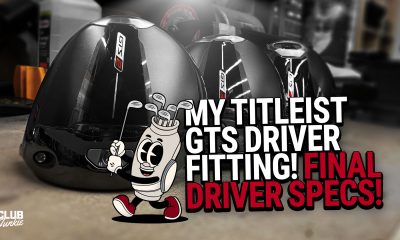




Decades after their introduction, there are still a lot of misconceptions about graphite iron shafts — especially when it comes to the question of who graphite iron shafts are for and how they can help a golfer’s game.
This video breaks down the origins of these misconceptions to help golfers understand the truth about graphite shafts. It also offers some great tips for club builders who are building with graphite iron shafts for the first time.


Equipment
Putters that never made it: Check out some of the best tour builds that didn’t make the cut

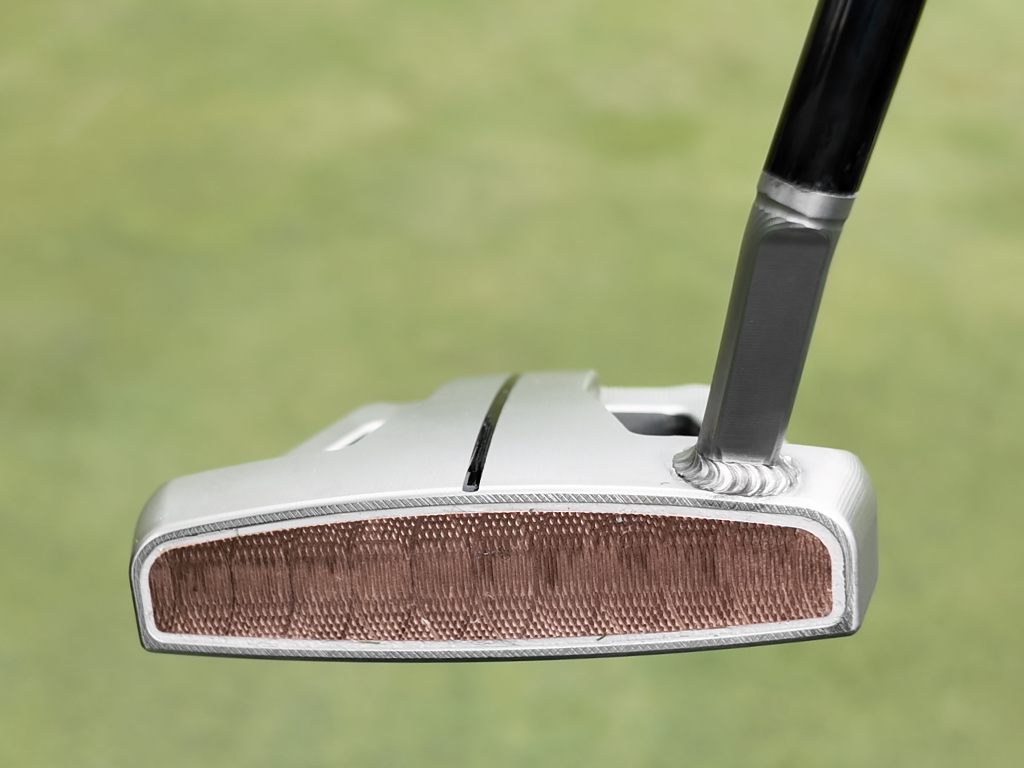
Arguably, the best perk of being a professional golfer on the PGA Tour is the ability to request or even just be handed pretty much any club you could think of. It happens more often than you think, usually with putters around the practice green from one event to the next. Come Wednesday, the Tour bags lining the edge of the putting surface become resting places for fallen flatsticks that never made the cut.
So let’s take a look at some of the best we’ve seen out on Tour this year that never made it to the competition. (You may notice none of Hideki Matsuyama’s custom Scotty Cameron putters made this list. There are too many.)
Let’s start with this custom Damascus Milled Odyssey Rossie made for Ryo Hisatsune. Featuring a single line and the short-slant hossel, we’ve seen plenty of Number 7 and jailbird heads featuring the Damascus Milled insert, but this is the first and only one we’ve spotted in a Rossie. Hisatsune primarily putts with an Odyssey Black Series iX #9, but we have seen him recently with a TaylorMade TP Collection SOTO, so there could be potential that the Damascus Milled Rossie could end up in the bag.

Everyone wants to be Cameron Young right now. We’ve had Justin Thomas and Tom Hoge both game the Scotty Cameron 9.5R prototype. Well, for the PGA Championship, Brooks Koepka nearly joined that list after requesting the same style of putter, with the full-length alignment line. But the Scotty Cameron reps took the request a step further and made one specially for Koepka with a Teryllium insert, similar to one in his previous Newport 2 gamers. The reason why this one didn’t go into play, though? Because it was too heavy.

Harry Hall was the third-best putter on Tour last year, so when Bettinardi made him a custom proto, you know it was going to be good. The custom BB28 blade features VDF face milling, a custom-welded single-bend shaft, and the owner’s initials – HH – on the sole of the putter. Hall, who usually games an Odyssey O-Works #7 W, has dabbled with a TaylorMade Spider Tour X already this year. Maybe there’s a chance this Bettinardi might make his bag.

Honestly, this one doesn’t need a description. It’s Kieth Mitchell’s custom Scotty Cameron Napa. One Scotty Cameron face stamp, two Scotty Dogs, two Scotty Cameron 7-Point Crowns and one Circle T. That is all. Oh, except for the Cashmere Cameron headcover.

Finally, and just for fun, how about we pour one out for this TaylorMade Spider Tour X made for Scottie Scheffler in its new torched finish. It’s unlikely we’ll see a putter change anytime soon from the best golfer in the world. In fact, he hit just two putts with it on the Harbour Town practice before going back to his trusty gamer.


Driver: Titleist GT3 (9 degrees) Buy here.
Shaft: Aldila Rogue Silver 130 M.S.I. 70 TX


3-wood: TaylorMade Qi35 (15 degrees)
Shaft: Fujikura Ventus Blue 7 X

7-wood: TaylorMade Qi35 (21 degrees)
Shaft: Fujikura Ventus Blue 8 X

Irons: Grindworks PR-202 (4), Grindworks PR-101A (5-PW)
Shafts: True Temper Dynamic Gold Tour Issue X100


Wedges: Cleveland RTX6 Tour Rack (52-10 Mid), Titleist Vokey Design SM10 (56-08M), SM11 (60-04T)
Shafts: True Temper Dynamic Gold Tour Issue S400


Putter: Scotty Cameron Tour Rat 1.5 Tour Prototype


Ball: Titleist Pro V1x
Grips: Golf Pride MCC


In our forums, our members have been discussing their favorite major winning irons used by Tiger Woods. WRXer ‘golferdude54’ kicks off the thread saying:
“Mizuno MP 14/29. Titleist 681T. Nike Forged Blades. TaylorMade P7TW.
Among these irons that helped Tiger win 15 majors, which is your favorite in terms of looks?”
And our members have been naming their favorites and why in response.
Here are a couple of posts from the thread, but make sure to check out the entire discussion and have your say at the link below.
- SwingBlade: “I prefer the early blades he played and the more recent TM TW’s especially because after Tiger had his major behavioral setbacks, part of Nikes support payback was making Tiger play a Nike putter and cease using his beloved uniquely customized Scotty putter.”
- ProjectX: “This (Nike Forged Blades) and there’s not even a close second.”
Entire Thread: “Which of Tiger’s major winning irons are your favorite? – GolfWRXers discuss”
-

 Whats in the Bag3 weeks ago
Kristoffer Reitan’s winning WITB: 2026 Truist Championship
-

 Whats in the Bag2 weeks ago
Aaron Rai’s winning WITB: 2026 PGA Championship
-

 Tour Photo Galleries3 weeks ago
Photos from the 2026 PGA Championship
-
 Equipment2 weeks ago
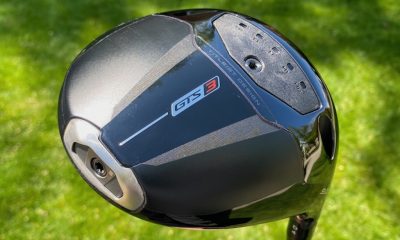
GolfWRX Launch Report: 2026 Titleist GTS drivers
-

 Equipment2 weeks ago
PGA Championship Tour Report: Fitzpatrick, Koepka among big-name putter switches for Aronimink
-

 News2 weeks ago
WITB Time Machine: Phil Mickelson’s winning WITB, 2021 PGA Championship
-

 Equipment2 weeks ago
Which of Tiger’s major winning irons are your favorite? – GolfWRXers discuss
-

 Equipment2 weeks ago
Lead Tape Report: Adjusting the swingweight of the Wanamaker Trophy


Johnny Taylor
Jan 2, 2019 at 8:39 pm
Ryan,
Looking for a graphite shafts for irons in the 80-110 gram weight range. What would you recommend that for performance and feel at a reasonable price?
Johnny
jimmy
Mar 14, 2018 at 10:20 pm
Graphite shafts have been on the market for over 30 years and they still haven’t engineered out the problems inherent with them. The only reason they still exist is cause they can bring out new models with fancy eye-catching new graphics annually…. to suck in the gullible gearheads.
WA
Mar 14, 2018 at 12:46 am
If this guy wasn’t a club builder he would be working at a quickie lube joint.
Ignat
Mar 14, 2018 at 5:08 pm
huh ????
frank irwin
Mar 13, 2018 at 7:19 pm
What type of tip weights do you recommend using for graphite shafts?
Ryan B
Mar 13, 2018 at 7:53 pm
I have found that these work quite well because you lose minimal insertion depth:
https://www.hirekogolf.com/7-5g-weight-plug-for-graphite-wood-iron-shaft.html
Max
Mar 13, 2018 at 5:25 pm
Love the steelfibers and recoils. Looking forward to try the Mitsubishi Thump’s and Ot’s. Driver speed: 108-110 mph.
Love the feel of graphite. Pure strikes feel better.
jimmy
Mar 14, 2018 at 10:17 pm
you obviously lie like a gearheaded duffer… sooo obvious
steve
Mar 13, 2018 at 4:16 pm
The best graphite shaft on the market is the $1200 Seven Dreamer shafts that are cured in an autoclave which drains out the plastic epoxy component to a minimum. All the other graphite shafts are oven-cured which leaves in the compromising epoxy plastic that causes the floppy soggy shaft tip inconsistent action.
Save your money for the superior Seven Dreamer graphite shafts, boys.
steve
Mar 13, 2018 at 4:18 pm
FYI here’s the link to the Seven Dreamers GolfWRX article:
http://www.golfwrx.com/489200/a-qa-with-seven-dreamers-about-its-1200-shafts/
KevinS
Mar 13, 2018 at 3:46 pm
Just a couple comments. I’m an “older” golfer and club tinkerer and I have to take exception with your point that firm or stiff graphite shafts for irons weren’t really available “back in the day.” They were. You just had to search more for them, high and low. Back in the early ’90s, I reshafted a set of Ram Laser FX irons with models called “Superior Graphite Shafts” by Norman Sports Company — stiff or firm flex. The reshafting, which I did myself, was fairly successful for an amateur, but as you mentioned, I had to end up applying lead tape to the backplate of many. Some not at all (PW); some a little (7 or 8 iron), some a lot (6 iron). Still don’t know today why they all came out so different in swingweight. Also, because of the overall weight and swingweight, I left the reshafted clubs a half-inch longer than the steel counterparts. I still use these clubs from time to time, but ended up abandoning them eventually, not because of the graphite shafts, but because of the Ram Laser’s sharp(er) leading edge and relatively flat sole. Somebody told me I could also grind down the leading edge, but I had fooled around with them enough. I still take them out and use them and like them and would compare the flex comparable with my Hogan Apex shafts #4, albeit lighter. To this day I still have not swung or hit any graphite shafted irons with shafts that feel as firm as the ones I installed in the early 90s. I know they exist; I just haven’t experienced them, even those marked “S.” These cavity-back forged Ram irons with graphite shafts have always launched higher and flown higher, so I have much more difficulty hitting “flighted” or knock-down short-iron shots with them.
Ryan B
Mar 13, 2018 at 7:57 pm
HI Kevin,
Thanks for watching. You are correct that shafts were available but, like I said in the video – to the general consumer something like what you mention was not a very easy to find option for those who shopped at either their local proshop or golf store. This along with misinformed sales people lead to a lot of the misconceptions I talked about.
I really appreciate you watching the video and taking time to comment.
Cheers
steve
Mar 13, 2018 at 12:30 pm
The problem with graphite shaft are at the tip section where the epoxy-graphite matrix behaves like a floppy soggy piece of plastic spaghetti… unless heavily reinforced with exotic materials and even steel fibers.
Any pro using graphite in their irons has the shaft tips heavily reinforced with space age materials or metal strands to make the shaft tips behave predictably.
That was the problem with graphite shafts when introduced 40 years ago and the problems are still not solved. Floppy soggy plastic straws.
steve
Mar 13, 2018 at 4:37 pm
Furthermore, driver shaft tip diameters were boosted to 0.350″ from the old standard of 0.335″. This has a significant affect on tip torque. This increase was done to increase tip torque resistance on graphite shafts and to hopefully stabilize the tip as it twists and flexes.
FYI… torque resistance for a thin-walled tube varies as the cube of the diameter. Even though it’s only about a 5% diameter increase, the torque resistance is increased by ~13%. It still doesn’t solve the problem of floppy soggy graphite shaft tips. Only the Seven Dreamers shafts fix the problems.
George
Mar 13, 2018 at 7:52 pm
FYI stiff graphite shafts can be achieved without going to exotic fibres.
Defy you to compare Nunchuk Xi iron shafts against any of the ridiculously expensive exotics.
Patents on Nunchuk include the method of wrapping the graphite. Defy you to find a stiffer tip, by design, on the market. Virtually zero droop, twist or kick at impact.
Cheers
PS video on nventix.com, Dallas Texas
jimmy
Mar 14, 2018 at 10:15 pm
A shaft with zero droop, twist or kick at impact would be totally unplayable because it would eliminate the whipsnap necessary in final release going into impact. Such a shaft would reduce the swing to shovelling and injure your hands and wrists too.
Duncan Marc
Mar 13, 2018 at 11:39 am
If torque has nothing to do with accuracy, how can it be a factor? Contradictory statement.
Mat
Mar 13, 2018 at 4:22 pm
Torque is very important. Just make sure it is a low twist graphite. But ya, that statement was way, way off.
Ryan B
Mar 13, 2018 at 8:02 pm
Hi Duncan,
Thanks for watching the video.
What I mean when I talk torque is that it is not a deciding factor when it comes to accuracy. It is an aspect of design for engineers as far manufacturing goes, but the overall profile and weight will have a bigger impact.
Torque is really a byproduct of the overall design of the shaft and not the deciding factor as far as final accuracy goes.
Thanks for watching!
steve
Mar 13, 2018 at 9:01 pm
“torque” is imposed on the shaft tip by the eccentric clubhead attempting to dynamically align to the shaft axis in the downswing and through Release.
There is a “centrifugal” torque imposed by the clubhead that results in shaft droop; and, there is axial torque that is created by the eccentric CofG of the clubhead closing the driver face and the iron face if the leading edge is offset significantly.
Torque is most certainly a large factor in clubface accuracy at Impact.
George
Mar 14, 2018 at 8:02 am
FYI stiff graphite shafts can be achieved without going to exotic fibres.
Nunchuk Xi iron shafts compare against any of the ridiculously expensive exotics.
Patents on Nunchuk include the method of wrapping the graphite. Challenge you to find a stiffer butt and tip, by design, on the market. Virtually zero droop, twist or kick at impact.
Cheers
PS video on nventix.com, Dallas Texas