
Opinion & Analysis
National Custom Works brings Don White’s Craftsmanship back


That’s right, folks. The legend of Don White has returned. I recently had the pleasure of speaking with Patrick Boyd, who has launched National Custom Works along with business partner Ari Techner (all formerly with Scratch Golf). Below is what ensued, and I hope you enjoy it as much as I did.
Talk to me about National Custom Works. What are you guys all about?
We fabricate irons (heads only for the moment), and we are a handmade custom company. There is absolutely zero mass production and everything is hand made specifically for the client. We start with heavy, raw forged heads and shape them by hand one at a time specifically to fit the client that will receive them. As of right now, this is all done by Don White, who is an absolute legend. He’s currently able to grind about 100 heads a month or so. Soon, we’ll have Jeff McCoy setup and will be able to double that capacity. I also sell custom ferrules through Boyd Blade and Ferrule, which is another brand that I’d launched last year. Custom ferrules are always a really great way to dress a set of clubs. We don’t go beyond that, at least for now, but if someone really wanted a fully assembled set of clubs, we have ways to make that happen.
Don White’s legend sort of speaks for itself, but tell me about how the two of you got linked up and how this whole thing began.
Well, I was heavily involved with Scratch Golf back in the day. Scratch started off as all handmade custom clubs as well. Later on, we got into the more mass-produced retail side of things in addition to custom product, but we eventually went down in October 2015. At the time we were trying to take Scratch to a new level. The market wasn’t ultimately ready to support a high-priced custom product. Nowadays, that market exists. But anyway, we had hired Don at Scratch in 2010, so that’s where our paths first crossed. He had worked for MacGregor since the early seventies, but MacGregor went bankrupt in 2009.
Don can do just about anything with his hands. He’s totally self-taught. He started for MacGregor polishing iron heads and he would spend his lunch break going around to all the different machines in the shop and seeing what every machine used in the process did. The guy’s just a magician. Obviously, his claim to fame is that he made countless clubs for Jack Nicklaus over the years. Really, he made just about everything for all their tour staffers from 1973 until they went bankrupt in 2009. More than that, though, Don White is one of the best people I’ve ever met. Period. I’ve been so lucky to be able to work with him. His genius in golf club making is widely known, but I can honestly say he’s as great a person as he is a craftsman.
Back to the question, though; I got in touch with Don because one of the guys from Sugarloaf Social Club reached out to me. We’d worked on a couple of projects since Scratch, but a mutual friend of ours was dying to get a set of irons made by Don. He wanted six-degree gaps, whereas a lot of standard sets are like three or four degrees. It was a cool set and it turned out really great. A tour player saw them and got a hold of me right away and we made a set for him. I knew Don was more or less retired at that point, but I asked him if he was interested in still making some golf clubs here and there. His first question was, “Well, how many do you think you can sell?” Ultimately, BB&F Co and then National Custom Works sort of grew from there.

Finished custom iron heads crafted by Don White through National Custom Works
Tell me about Jeff McCoy. What’s his role in all of this?
Jeff McCoy was one of the founders of Scratch Golf, so he and I go way back as well. He designed all the wedge and iron grinds on the clubs we produced at Scratch. He’s also a supremely talented grinder. The biggest difference between Don and Jeff is that Don mainly does crisper lines and Jeff mainly does softer lines. Jeff’s wedges are absolutely amazing and his grinds are second to none. Those are definitely his strengths in my opinion. You know, we learned our lesson with Scratch. We’re not going to try to go the retail route again. We want to keep this thing all handmade and custom-built to exact customer specifications. There are certainly challenges that come with that approach, but the rewards are also great as well. I would say probably half of the projects these days are non-traditional in the gaps of lofts. I personally just love working on those because each one is its own little puzzle. It just totally fascinates me.
What about before the club heads get into your guys’ hands? What can you say about how they’re made and all?
Well, I can tell you that they’re Japanese forgings and they’re as good as anything you can source. I have to be honest in saying some of the models are open (not made exclusively for one customer). There’s a couple of different heads we can start with and that ultimately depends on what a client wants. More often than not, we start with really heavy heads that were originally designed for prototyping. There’s probably 150-160 grams of weight to take off of those depending on the final specifications. To an OEM that is trying to crank out a ton of volume, producing clubs in this manner is not a viable option because that takes a lot of time, but for us it’s perfect. It gives us a ton of freedom to put the CG wherever we want it. We can create progressive sets where the CG moves a little lower in the long irons to help flight the ball higher and vice versa with the wedges. We can also leave a little extra weight in the toe or the heel for some fade or draw bias. All of this depends on what a client wants, but the extra material we have to play with makes it all possible.
When you buy one of our clubs, you’re not paying for advertising, an R&D budget, or clubs full of the latest technology. You’re paying for our expertise. You’re paying for craftsmanship. You’re paying to get exactly what you need. We are not taking something off the rack and just buzzing a little bit off here and there. We are able to customize virtually every aspect of the club; loft and lie of course, but we can change the offset, move the CG around, and all kinds of different things. And it is done by some of the best craftsman in the industry. Projects typically take six weeks (as of now) for you to get your heads and price can be all over the map depending on what you want, but you’re going to wind up with something that’s been handcrafted by the best talent in the industry to your exact standards. It’s something that, up until now, only the top tour players had access to and, really, even those guys are limited by what their sponsors manufacture. The end product of our process is second to none and we definitely stand behind that.
We’re trying to make the best clubs you can buy. Period. There is no target demographic in mind. We’re not looking to court people from a certain age group or anything. If you don’t want to be limited by what OEM’s have to offer and if you want a meticulously well-made product done to your exact specifications, we’re your best bet for sure.

Raw forged iron heads before being ground and finished by National Custom Works
You also run Sweetens Cove Golf Club down in Tennessee. Tell me about your duties there. Did those paths cross when this thing got started?
I’m the general manager out there. Outside of cutting the grass, I do pretty much everything else as far as the day-to-day operations go. I’m there for like 60-80 hours a week. My partner Rob Collins was the course designer, actually. He did it for a client who basically abandoned it. I first saw the course in November of 2013 and it had mostly been left for dead. Only about half the bunkers actually had sand in them. Mushrooms were growing everywhere. But you could still tell how good the bones were. It took a lot of really hard work to get it ready to open, but we did a soft opening in October of 2014 and we’ve been off and running ever since. It’s just as pure a golf experience as you’re going to find anywhere. We basically have a dinky little clubhouse and a couple port-a-potties and we’ve been the top public course in the state for the last three years according to Golfweek. We’re also No. 59 on their “Top-100 Modern Courses” list.
How long ago did you start playing golf? Tell me about your personal relationship with the game.
I started playing golf when I was 10 years old. I was really into tennis at the time, but my parents played golf. One day, I just decided I was going to skip my tennis lesson and play golf with my folks instead. After that day, it was over. I got hooked HARD. I think I played tennis for about another year or so, but golf was king in my life from that moment on. As hooked as I was on golf, though, I got way more into golf clubs specifically. When I was 12 years old, all I wanted was the Golf Club Identification & Price Guide. It was a book through Golf Works/Maltby. I finally got my hands on one and I circled everything in the book that interested me. The funny thing is more than half the stuff in there, I bought it, looked at it, maybe played a round or two with it and sold it. All I wanted was just to see everything. I just completely geek out over golf club design.
So how did golf and golf clubs then become a profession for you? How did that develop?
I suddenly found myself with some time on my hands and had always wanted to get into the golf business. I found a custom shop that was close to where I was working at the time and sent the owner an email. About an hour later, he shot me a response and about five minutes after we met I had my first golf job. The first several months, I went in after work and started cataloging all the shafts he’d pulled in the past year (there were around 400). After I went through all that, he taught me how to fit and build clubs. I ended up working with him off and on for a couple of years and we still keep in touch today. I had played golf in college at a Division III school, but that was my first actual job in the industry. From there, I was pretty much off and running.

Finished custom iron and ferrule through National Custom Works and Boyd Blade & Ferrule Co.
Lastly, tell people how to get in touch with you and how to tune in for what comes next from National Custom Works.
I get a lot of traffic on Instagram for sure. Our handle there is @nationalcustom. Our website just got launched a couple of weeks ago, and I also just launched an online store for the ferrules because that just grew to a point where I wasn’t able to take pictures for everyone. If someone is interested in starting a project with us, the best way to catch us is at my email: patrick@nationalcustomworks.com or my business partner Ari Techner at ari@nationalcustomworks.com. As for what’s coming up, all I’ll say right now is that we have some very interesting collaboration projects coming soon. Watch our Instagram feed for when that stuff drops.




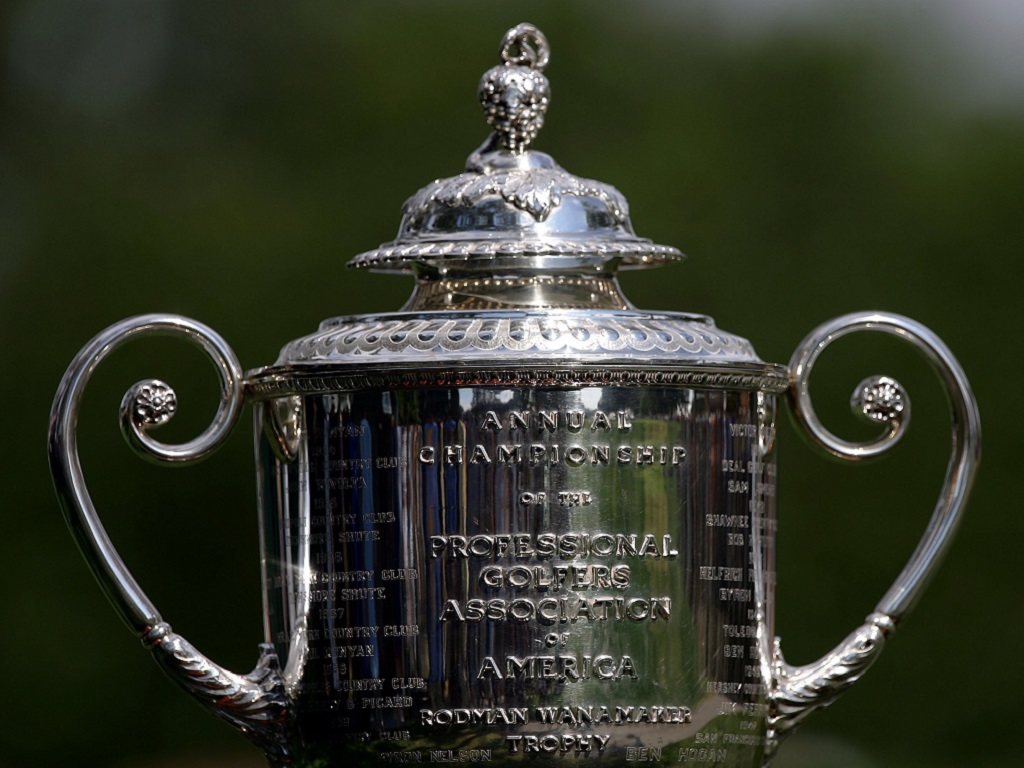
Aronimink is not a storied club, but when Donald Ross himself proclaimed it to be as good as he can design and build, one had to take notice. Jay Sigel was the pre-eminent male amateur golfer from the mid-1970s to the mid-1990s. He might have called any number of Philadelphia clubs home, but he chose Aronimink. It served him well. Gary Player won a PGA Championship here in 1962, and was followed by the 1993 winner … nobody. Aronimink gave that event away to Inverness, for reasons of which it is certainly not proud. So be it. We had to wait sixty-four years for the PGA to return to Newtown Square, but here we are. Aronimink has been neo-restored by Gil Hanse and team, to return Ross features with an eye toward defense against the dark arts, errrr, high-tech equipment.
Day one saw Rory McIlroy and Bryson DeChambeau dig big holes, to the tune of plus-four and plus-six, respectively. Since the first-round lead will be minus-three at worst, many shots will need to be made up for the power couple to reach contention. By nightfall, seven golfers held the day-one lead at three-under par 67. Shots and sticks caught our attention, and we are proud to present Five Things We Learned on Tech Thursday at the 2026 PGA Championship. Thanks to InsideTourGolfer, Today’s Golfer, and GolfWRX for initial equipment research.
First, meet Min Woo Lee
Min Woo Lee, aka Dr. Chipinski, has once again thrust himself into the conversation of Can he, will he, when will he? Lee has so much talent, wins not nearly as often as we believe that he should, and has no major near-misses (much less titles) on his wiki. The young Aussie is getting older and wiser, but is he able to avoid the scarring that holds the older and wiser back from breaking through? Philadelphia offers another opportunity. Min Woo signed for five birdies and two bogeys on day one, and grabbed a share of the opening-day lead at Aronimink. Winners transcend history and the moment, and Lee will need that sort of ascent to lift the Wannamaker on Sunday.
Second, meet Aldrich Potgeiter
The young South African golfer can rip driver with the best of them. Aronimink tips out at nearly 7400 yards, but beyond the fairway bunkers that ensnare only the mortals, Potgeiter can take his chances with wedge from the rough. On Thursday, he spent plenty of time in the spinach. Like Popeye, he used his muscles to gouge and thrash and dig his way out. Six birdies against three bogeys on the card brought AP in a three deep.
Third, meet Martin Kaymer
Not a major event takes place without a where’s he been throwback moment. We know that Martin Kaymer left the PGA and DP World tours for LIV golf, but the two-time (US Open and PGA) major winner has a lifetime exemption into at least one major event, and he seizes the opportunity each May. Kaymer joined the six-seven brigade with four birdies and a solitary bogey on day one. Kaymer was never a long hitter, and the years are kind to no golfer. The German champion will need to uncork every bottle of guile and strategy in his cabinet to remain in contention. For today, though, he occupies a rung on the ladder of Tour Tech.
Fourth, meet Scottie Scheffler
Let’s see, he’s the defending champion at the PGA, and he found his way back to the top tier with five birdies against two bogeys. To be a favorite and then play up to that stature and expectation is quite difficult. Just ask Rory, Bryson, and some of the other pre-tournament heartthrobs. Scheffler’s game is complete, and to knock him off the OWGR #1 pedestal, one needs to defeat him at the majors. Aronimink is the sort of course that fits Scheffler’s game. Better yet, it unfits the game of many of his challengers. Don’t expect Scheffler to go away anytime soon. Come Sunday, he’ll be around.
Fifth, meet Stephan Jaeger
Clocking in for the unheralded players shift are Ryo Hisatsune and Stephan Jaeger. Hisatsune logged seven birdies on day one, but gave most of them back with four bogeys. Still, he’s tied at the top for a time. Jaeger pitched five birdies against two bogeys, including a run of three consecutive, from holes four through six. Odds are that one of the two will hang around through 36 holes. Odds also suggest that both will be gone by Saturday evening. Still, the PGA Championship has historically been the major most likely to be won by an under-known. Both Hisatsune and Jaeger feature on that list, so good luck, lads!

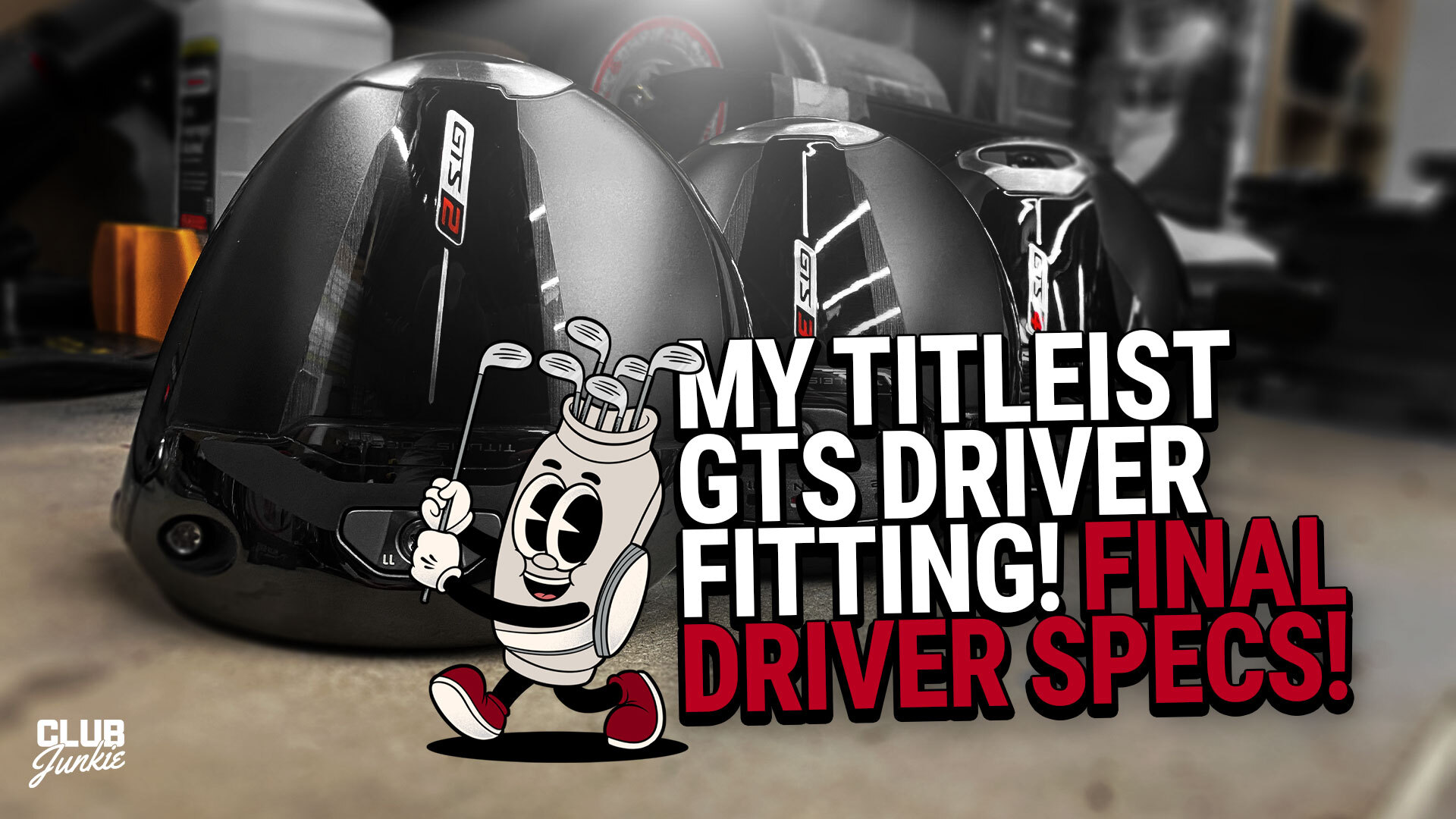
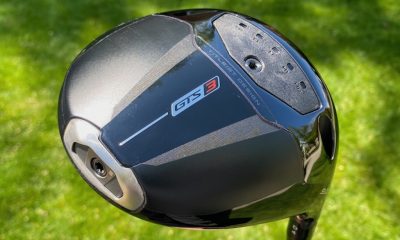
On this episode of the Club Junkie Podcast, I head to the Titleist Performance Institute for a full driver fitting with the new Titleist GTS lineup. We dive into the fitting process, talk about what made the biggest difference in performance, and break down how the different GTS heads and shaft combinations compare on the launch monitor. If you are thinking about a new driver setup for this season, there is a lot to take away from this one.
I also get into Brooks Koepka and the gear setup he brought to the PGA Championship, including the putters that caught my eye during the week. There are some interesting equipment trends showing up at the highest level right now and we break down what stands out.
To wrap things up, I talk about reshafting a few wedges, what I learned during the process, and swapping an adaptor onto a new shaft for another build project in the shop. A gear packed episode from start to finish for anyone who loves golf equipment and club building.
Follow Club Junkie everywhere:
Instagram: https://www.instagram.com/clubjunkiepod/
X: https://x.com/ClubJunkiePod
TikTok: https://www.tiktok.com/@clubjunkiepod
Threads: https://www.threads.com/@clubjunkiepod
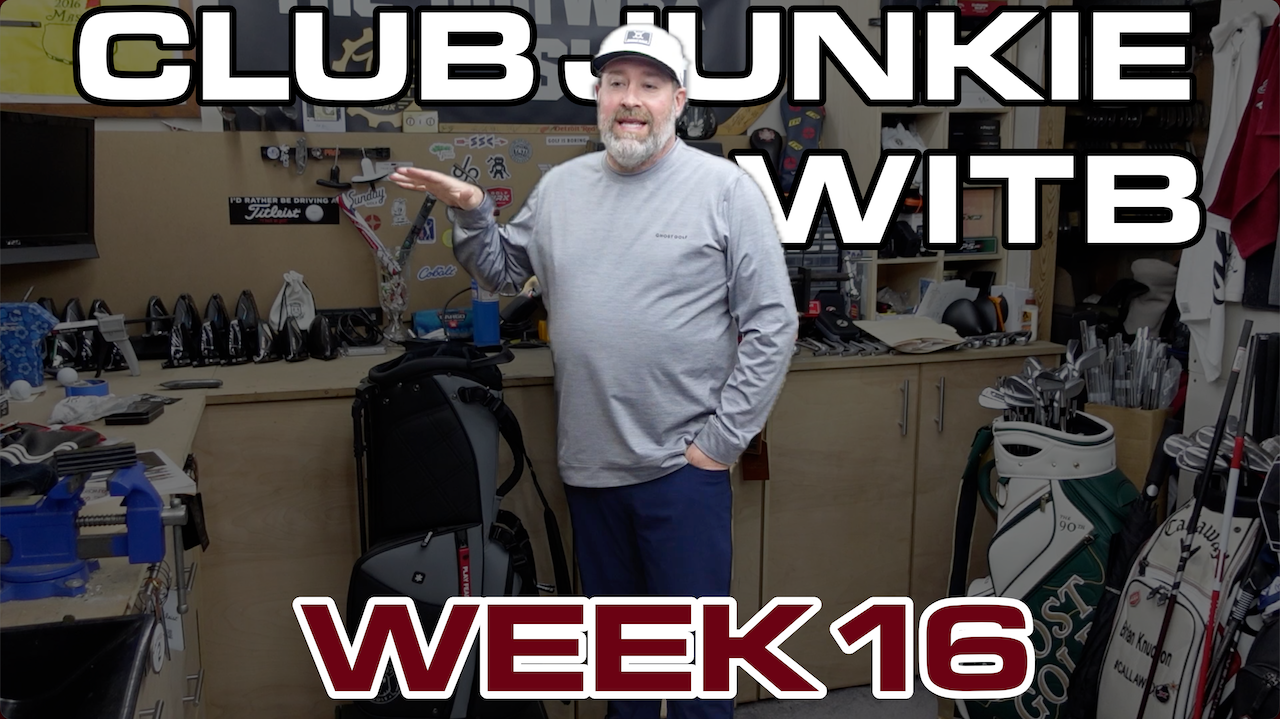
Excited for this week’s WITB as we get to add the new Titleist GTS woods to the bag! I was fit at Titleist’s TPI facility in Oceanside California a few weeks ago and my new clubs just showed up. I am also adding a cool set of irons that I built last year some wild custom wedges into a new golf bag. Speaking of the bag I have a new Ghost Anyday Black Ops stand bag that I will be using on my Motocaddy Remote M7 electric cart.
Driver: Titleist GTS3 (11 degrees @ 10.25)
Shaft: Fujikura Ventus Red 6s
3-wood: Titleist GT1 3Tour (14.5 degrees)
Shaft: Graphite Design Tour AD CQ-7s
5-wood: Titleist GTS (18 degrees)
Shaft: Fujikura Ventus Red 7s
9-wood: Titleist GT1 (24 degress)
Shaft: Fujikura Ventus Red 7s
Irons: Bettinardi CB24 (5-PW)
Shafts: KBS C-Taper Lite 110 stiff
Wedge: TaylorMade MG5 (50-09 SB)
Shaft: Mitsubishi MMT 125 Stiff
Wedge: TaylorMade MG5 (56-12 SB)
Shaft: Mitsubishi MMT 125 Stiff
Wedge: TaylorMade MG5 (60-08 LB)
Shaft: Mitsubishi MMT 125 Stiff
Putter: Dan Carraher ZT Proto
Ball: Callaway Chrome Tour
Bag: Ghost Anyday Black Ops Stand Bag

Justin Rose WITB 2026 (April): Full WITB breakdown with new McLaren irons

RBC Heritage Tour Report: More minis, course-specific setups, Spider & GTS launches

What’s the story behind Webb Simpson’s custom-stamped irons?

Cadillac Championship Tour Report: Spieth’s sizable changes, McLaren Golf launches, and more

Kristoffer Reitan’s winning WITB: 2026 Truist Championship

Cameron Young’s winning WITB: 2026 Cadillac Championship

Aaron Rai’s winning WITB: 2026 PGA Championship

Nelly Korda WITB 2026 (April)

Justin Rose on the switch to McLaren Golf, learnings from previous equipment moves

Photos from the 2026 PGA Championship


Patrick Reed WITB 2026 (May)
Driver: Titleist GT3 (9 degrees) Buy here. Shaft: Aldila Rogue Silver 130 M.S.I. 70 TX 3-wood: TaylorMade Qi35 (15 degrees)...

Aaron Rai’s winning WITB: 2026 PGA Championship
Driver: TaylorMade M6 (9 degrees) Shaft: Aldilda Synergy Blue 70 TX 3-wood: TaylorMade Qi10 (15 degrees) Shaft: Fujikura Ventus Blue...


Michael Block WITB 2026 (May)
Driver: TaylorMade Qi4D (9 degrees) Shaft: Fujikura Ventus Black VeloCore+ 5 X 3-wood: TaylorMade Qi4D (15 degrees @14.25) Shaft: Mitsubishi...


Bryson DeChambeau WITB 2026 (May)
Driver: Krank Formula Fire Pro (6 degrees) Shaft: Project X Prototype 3-wood: Krank Formula Fire (10 degrees) Shaft: LA Golf BAD...
-
 Whats in the Bag3 weeks ago
Kristoffer Reitan’s winning WITB: 2026 Truist Championship
-
Whats in the Bag2 weeks ago
Aaron Rai’s winning WITB: 2026 PGA Championship
-
 Tour Photo Galleries3 weeks ago
Photos from the 2026 PGA Championship
-
 Equipment2 weeks ago
GolfWRX Launch Report: 2026 Titleist GTS drivers
-

 Equipment2 weeks ago
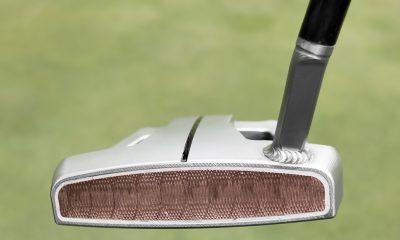
PGA Championship Tour Report: Fitzpatrick, Koepka among big-name putter switches for Aronimink
-

 News2 weeks ago
WITB Time Machine: Phil Mickelson’s winning WITB, 2021 PGA Championship
-

 Equipment2 weeks ago
Which of Tiger’s major winning irons are your favorite? – GolfWRXers discuss
-

 Equipment2 weeks ago
Lead Tape Report: Adjusting the swingweight of the Wanamaker Trophy


ogo
Apr 16, 2018 at 5:37 pm
They may look ‘good’.. but do they play good?
Brando
Apr 16, 2018 at 4:54 pm
Awesome irons Don White is a legend. I hope they keep the company small with low overhead and folks that respect this type of craftsmanship and the history behind White will buy Them. Thoes diamond back blades are similar to the ones Norman used in the 08 Open Championship. Awesome looking blades. I want a set. MacGregor made some of the best irons ever back in the 1980s 1990s glad to see they coming back.
Jim
Apr 16, 2018 at 1:00 pm
It’s interesting (and not surprising)to see the MacGregor influence in them – clearly some of Don’s favorite designs.
joro
Apr 16, 2018 at 12:56 pm
So he had time and “always wanted to get into the club business”, WOW, what fun for a Golfer to get into the business. The “business” is not fun, it is work, money, and a lot of marketing. As a club maker myself and having started up Companies for people with the same idea, failure comes real easy, no matter if you have competent people doing the clubs or not, failure comes easy and costly. I say Good Luck to them, at least they know how to go down the tubes.
The PXG influence is at work, but Parsons can afford to fail, it aint over yet.
Sweaty Cords
Apr 16, 2018 at 11:44 am
Great! Let these business geniuses run another company into the ground. Ask Ryan Moore what these guys are all about.
OJ
Apr 16, 2018 at 1:43 pm
Hey joro the clubmaker, I have a feeling what you have done in the past and what Patrick does isn’t the same. At all. I would love to hear your story too, though.
Tom Duckworth
Apr 16, 2018 at 5:54 am
No idea what they would cost but if I had the game and the money I would be talking to them. I looked at the gallery on their site and I could see how you could really dial in the perfect set for your game. I would think you would need to be pretty knowledgeable
of equipment and your own game to make this worth your money.
I don’t see this as a set just to brag about they have a subtle design and you would really be in on the design yourself from the ground up.
ogo
Apr 15, 2018 at 7:39 pm
If you can hit the ball on the sweet spot just put a slug of metal behind it for the greatest of feeels… and watch the ball take of into the heaven and drop on the green. Ecstasy… pure ecstasy …. and only you own exclusive model clubs.
ogo
Apr 15, 2018 at 7:32 pm
Beautiful, oh so beautiful… I just love the shape of the back of these beauties. It just proves that the mojo is all in the grinding and not the forging. These are high-end boutique clubs that will only be found in millionaire/billionaire WITB for whom price is irrelevant. Sigh… 🙁
John Murphy
Apr 15, 2018 at 7:02 pm
PXG who? Id pay top dollar for these heirlooms. Beautiful.
snickers
Apr 15, 2018 at 3:42 pm
I just cant believe you can order a set of forged irons nd wedges that are handmade by Don White who has won more Majors than Tiger himself. I will have to look into this and get a set. Just to say I did it and if I cant play them everyday I can play the 6-pw any day.
The dude
Apr 15, 2018 at 8:54 pm
Ya got more $$ than brains….
dat
Apr 15, 2018 at 2:55 pm
Drool
bc
Apr 15, 2018 at 2:04 pm
Is there really enough demand for custom irons for these people to make a living and stay in business? I wouldn’t think so, but…
Bill
Apr 15, 2018 at 12:13 pm
Wow,
When would the heads be marketed ?
Can’t find any source for models and pricing.
rymail00
Apr 15, 2018 at 9:37 pm
I believe you have to contact them with what your looking to have design wise and then the price comes into it (depending on much work or shaping is needed to achieve what your after in head design, I believe that’s how it works)