
Opinion & Analysis
Train Slow to Swing Fast and Play More


You are probably reading this article because the title made zero sense to you when you read it. You are probably thinking, “Slow training makes me go fast? Everyone knows you have to train fast if you want to go fast. We have all seen SuperSpeed Golf’s commercials. This guy is an idiot.”
With that rationale, not sure I can blame you!
If you’re a golfer and you want to move the clubhead faster, with more efficiency and for many more years to come, however, I encourage you to read on with a bit of curiosity and even skepticism if that is more your flavor. What you find out might turn the way you train 180 degrees onto its head. I know it did for me.
When I started training athletes more than 10 years ago, I subscribed to the “train fast to be fast” mentality for awhile. Then, thankfully, I read the research out there and realized how I was overlooking one of the most important phases to train mobility, power and maximal strength in my athletes as many people do: the eccentric phase.
There are a few phases of movement that we should clarify before going any further so as to clear up any confusion later on. Most movements consist of three phases:
- The Eccentric Phase
- The Isometric Phase
- The Concentric Phase
In a squat, the eccentric phase is the lowering phase to the bottom of the squat. The isometric phase is the pause at the bottom of the squat. The concentric phase is when the athlete starts to move their body back toward the start position.
In the golf swing, we can simply classify the three phases:
- The eccentric phase occurs toward the end of the backswing as the club is decelerated
- The isometric phase occurs at the top of the backswing as there is a slight pause right before the start of the transition toward the target (i.e. there is still tension in the tissues and joint, but there is no net joint motion occurring)
- The concentric phase occurs during the downswing when the club is accelerating toward the golf ball
Please note that there are many nuances and arguments could be made against these classifications. This categorization is made in the spirit of simplicity to help with understanding of the phases.
While all three of these movements are relatively easy to see in most human movement and in golf as well, we more often see a focus on the concentric training piece in the gym rather than all three phases. This is interesting to note, as the eccentric phase is a crucial one where athletes are able to store large amounts of energy in connective tissues (muscles and tendons mostly) that we can then use to produce more power during the concentric phase.
The caveat here is that you need to be strong enough to apply your brakes effectively to decelerate during the eccentric phase and reapply this force during the concentric phase. If you are weak in the eccentric phase, not only will you be inefficient in transferring the energy from the eccentric to concentric phase, but you will be more likely to be injured as well.
So why are we not focusing on this critically important phase of movement in our training of golfers? This is the million dollar question. By simply adding a focus on this part of your training, you will not only decrease your risk of injury, but also improve your strength, power, mobility, movement efficiency and muscle growth
Now to the “so what” part of this article. All of this information is great and cool, but how do you implement this type of training. More importantly, when in the year should we be doing this? Who is this NOT for? Let’s get into it!
This training is NOT for severely untrained individuals with no training background. What is going to follow is a simple progression from beginner to advanced that you can use to implement the benefits of eccentric training to help improve your longevity in the sport and your power output on the tee.
Please Note: If you’re a newbie, we recommend you seek out the help of a fitness professional to safely guide your progressions.
Step 1: Three-Second Eccentrics
This is probably the simplest form of eccentric training you can do, and it doesn’t matter if you are using a kettlebell, dumbbell or barbell. It is exactly what it says. Just focus on lowering yourself through the eccentric phase for a three-second count.
The weight that you use should be less than what you would normally do for the rep count, as the focus on the eccentric phase increases your time under tension and the demand on the system with lower weights. This is another reason why eccentric training with newer athletes is great. You don’t have to use as much weight, and you are forced to slowly move through the motion and truly own the pattern. There is no using speed to mask weakness or bad technique. Usually sets of 6-8 are plenty with this focus.
This video below is of a five-second eccentric squat (Step 2) but the technique is no different for the three-second eccentric other than the descent is not quite as slow.
Step 2: 5-7 Second Eccentrics
This is a simple progression off the three-second eccentrics in Step 1. After four weeks or so of the three-second program, you can move to the even slower and longer lowerings. This further challenges you to really own the patterns and control the motion perfectly. It allows you to be more in tune with how you are moving throughout the motion and many times will bring to light inefficiencies in your pattern that you can work to improve without the weight being crazy heavy.
Step 3: Three-Second Isometrics
This next step takes “feel the burn” to a whole new level. Now that you can control the eccentric phase, you will work to isometrically control and hold your position at the bottom of the motion. This is a nice variation away from the slow-lowering focus to really challenge you to control the weight during the transition phase of the motion.
A common question is, “How low do I need to go?” Without getting into the whole butt-to-ground vs. thigh-parallel-to-the-ground argument, go as low as you can (comfortably) while still maintaining sound technique. That being said, try to at least get to thigh-parallel if you’re able to with good technique.
Step 4: Overload Plyometrics
Depending on your age, your joint health and the overall ability you posses, Step 4 might be another game changer for you. Before going any further, if you have total joint replacements, bad arthritis, avoid high impact activities for any reason or just generally don’t think jumping is a good idea for your overall health, then the risk/reward is not present for you with this step. Stick to Steps 1-3 and enjoy the benefits there.
If you have no problems jumping or with higher impact force training, however, Step 4 can be not only fun, but also very beneficial to your performance! The idea of overload plyometrics is that as you drop down from a surface to the ground, you absorb that force and then explode as high as you can vertically or as far as you can horizontally — and then stick a solid landing.
In golf, the vertical force is what we are going to want to focus on training as the horizontal is less applicable. There are many variations you can perform such as altering your take-off mechanics, your landing mechanics (one vs. two feet) and even the height of the surface from which you are dropping. We utilize these variations with many of our traveling professional athletes as equipment can often times be difficult to find, but it is always easy to find a bench or step to drop from in order to make sure they are stimulating the nervous system response that we are after.
This example of a simple depth jump demonstrated below shows the athlete dropping off of an elevated surface on two feet and then exploding up onto a higher box, which reduces how much force he has to absorb on the second jump. By using a higher box for the landing of the second jump, you are decreasing the amount of neural stress you have to take on because the box “catches” you closer to the apex of your jump.
The name of the game with overload plyometrics is all about how much force you have to absorb. The more force you have to absorb, the harder and more advanced the exercise is. To clarify, if you jump 20 inches in the air and land on the ground, that would be more intense (you would have to absorb more force) than if you jump 20 inches in the air and land on a 12 inch box.
Step 5: Overloading
This is where a lot of the rubber hits the road, and it should not be attempted without professional guidance — and definitely not if you are not a highly trained athlete. This is not a type of training for the weekend warrior who hits the gym only 1-2x/week. If that is you, stick to the top 3 steps and you will still see gains.
Highly trained athletes can oftentimes handle up to 125 percent or more of their concentric ability eccentrically. This means that we can put higher levels of stress on their tissue to force it to adapt, leading to increased maximal strength and hypertrophy gains. This is the performance benefit for higher-level athletes with great movement competency. There are a number of ways to achieve this desired outcome of overload training, such as with drop bars on the side of the barbells, heavy chains, flywheel training or others.
Flywheel training is one that I would like to focus on here, as it is one of the safest forms of training around because it only allows you to put as much force on yourself eccentrically as you can create concentrically. This means the chances of injury are much lower than the other types of overload mentioned above. While these machines tend to be a bit cost prohibitive, it is this type of advance in training that will continue to occur to help golfers hit it longer for many more years to come while staying healthy. If you can find a facility near you that has one… JOIN!
—
In the end, eccentric-based training and eccentric-overload training create improvements in power, speed, strength, change of direction ability and mobility while also reducing the risk for injury. Each variation of this type of training may be more appropriate for different golfers at different stages in their life and career, but the first step is to be aware that this type of training exists. The next step is to figure out where it might fit into your training regimen. As always, I am more than happy to field questions and answer any specifics you may have by just emailing info@par4success.com.
As with anything, the success of this training depending on how it is executed. Because of the increased demand on the nervous system and muscles, there can be increased soreness after this type of training so recovery needs to be perhaps the biggest part of this conversation. Timing in terms of when in the season to utilize eccentric based training as well as how to support recovery with nutrition are conversations that you should have with your golf fitness professional.
Hopefully you have learned something here today and as always, please reach out with questions or specific issues to attempt to implement this type of training into your golf fitness routine. Swing Faster. Play Better. Hurt Less.
Editor’s Note: The author has no affiliation with Versapulley or any manufacturer shown in these videos.





Aronimink is not a storied club, but when Donald Ross himself proclaimed it to be as good as he can design and build, one had to take notice. Jay Sigel was the pre-eminent male amateur golfer from the mid-1970s to the mid-1990s. He might have called any number of Philadelphia clubs home, but he chose Aronimink. It served him well. Gary Player won a PGA Championship here in 1962, and was followed by the 1993 winner … nobody. Aronimink gave that event away to Inverness, for reasons of which it is certainly not proud. So be it. We had to wait sixty-four years for the PGA to return to Newtown Square, but here we are. Aronimink has been neo-restored by Gil Hanse and team, to return Ross features with an eye toward defense against the dark arts, errrr, high-tech equipment.
Day one saw Rory McIlroy and Bryson DeChambeau dig big holes, to the tune of plus-four and plus-six, respectively. Since the first-round lead will be minus-three at worst, many shots will need to be made up for the power couple to reach contention. By nightfall, seven golfers held the day-one lead at three-under par 67. Shots and sticks caught our attention, and we are proud to present Five Things We Learned on Tech Thursday at the 2026 PGA Championship. Thanks to InsideTourGolfer, Today’s Golfer, and GolfWRX for initial equipment research.
First, meet Min Woo Lee
Min Woo Lee, aka Dr. Chipinski, has once again thrust himself into the conversation of Can he, will he, when will he? Lee has so much talent, wins not nearly as often as we believe that he should, and has no major near-misses (much less titles) on his wiki. The young Aussie is getting older and wiser, but is he able to avoid the scarring that holds the older and wiser back from breaking through? Philadelphia offers another opportunity. Min Woo signed for five birdies and two bogeys on day one, and grabbed a share of the opening-day lead at Aronimink. Winners transcend history and the moment, and Lee will need that sort of ascent to lift the Wannamaker on Sunday.
Second, meet Aldrich Potgeiter
The young South African golfer can rip driver with the best of them. Aronimink tips out at nearly 7400 yards, but beyond the fairway bunkers that ensnare only the mortals, Potgeiter can take his chances with wedge from the rough. On Thursday, he spent plenty of time in the spinach. Like Popeye, he used his muscles to gouge and thrash and dig his way out. Six birdies against three bogeys on the card brought AP in a three deep.
Third, meet Martin Kaymer
Not a major event takes place without a where’s he been throwback moment. We know that Martin Kaymer left the PGA and DP World tours for LIV golf, but the two-time (US Open and PGA) major winner has a lifetime exemption into at least one major event, and he seizes the opportunity each May. Kaymer joined the six-seven brigade with four birdies and a solitary bogey on day one. Kaymer was never a long hitter, and the years are kind to no golfer. The German champion will need to uncork every bottle of guile and strategy in his cabinet to remain in contention. For today, though, he occupies a rung on the ladder of Tour Tech.
Fourth, meet Scottie Scheffler
Let’s see, he’s the defending champion at the PGA, and he found his way back to the top tier with five birdies against two bogeys. To be a favorite and then play up to that stature and expectation is quite difficult. Just ask Rory, Bryson, and some of the other pre-tournament heartthrobs. Scheffler’s game is complete, and to knock him off the OWGR #1 pedestal, one needs to defeat him at the majors. Aronimink is the sort of course that fits Scheffler’s game. Better yet, it unfits the game of many of his challengers. Don’t expect Scheffler to go away anytime soon. Come Sunday, he’ll be around.
Fifth, meet Stephan Jaeger
Clocking in for the unheralded players shift are Ryo Hisatsune and Stephan Jaeger. Hisatsune logged seven birdies on day one, but gave most of them back with four bogeys. Still, he’s tied at the top for a time. Jaeger pitched five birdies against two bogeys, including a run of three consecutive, from holes four through six. Odds are that one of the two will hang around through 36 holes. Odds also suggest that both will be gone by Saturday evening. Still, the PGA Championship has historically been the major most likely to be won by an under-known. Both Hisatsune and Jaeger feature on that list, so good luck, lads!

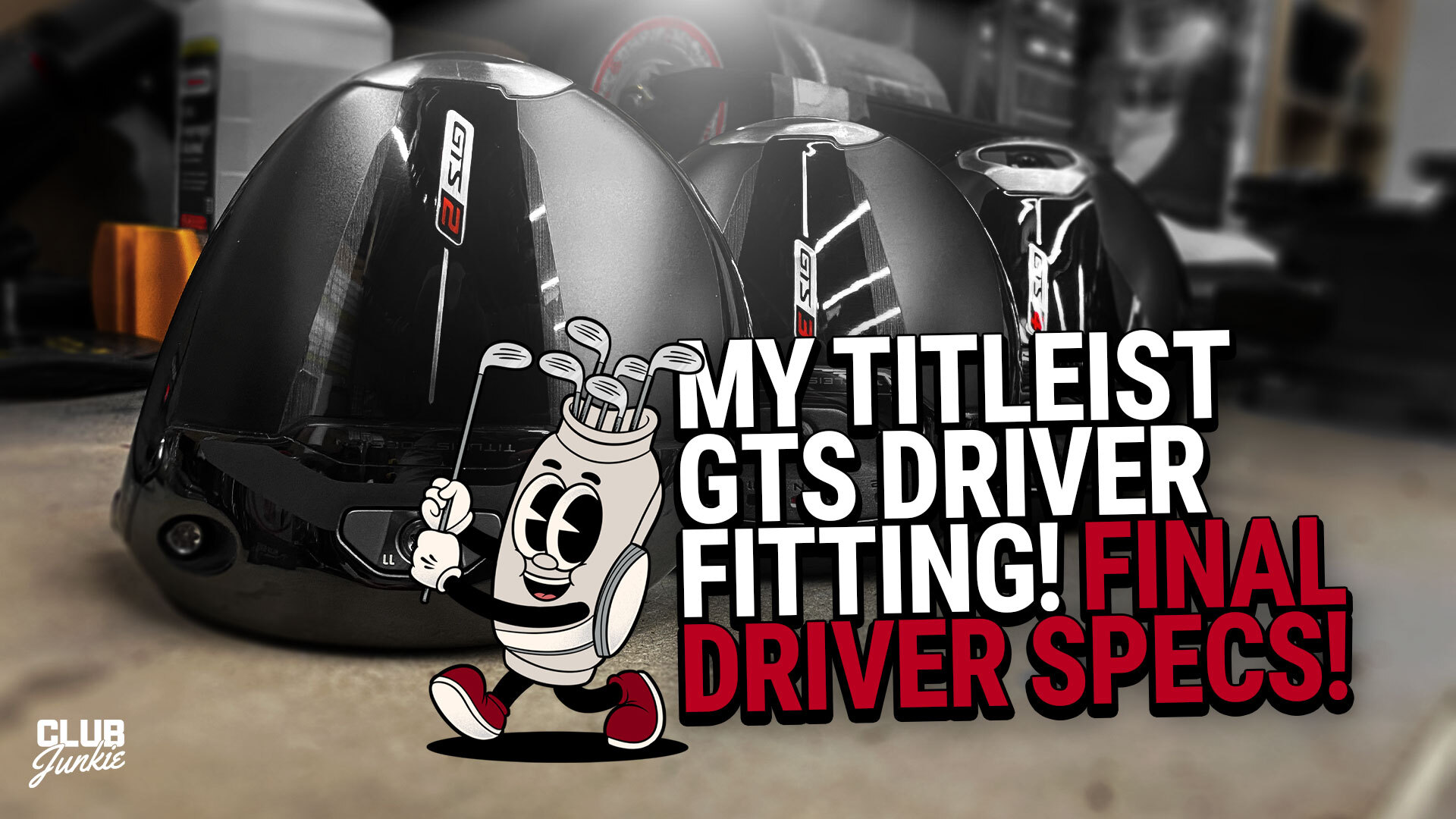
On this episode of the Club Junkie Podcast, I head to the Titleist Performance Institute for a full driver fitting with the new Titleist GTS lineup. We dive into the fitting process, talk about what made the biggest difference in performance, and break down how the different GTS heads and shaft combinations compare on the launch monitor. If you are thinking about a new driver setup for this season, there is a lot to take away from this one.
I also get into Brooks Koepka and the gear setup he brought to the PGA Championship, including the putters that caught my eye during the week. There are some interesting equipment trends showing up at the highest level right now and we break down what stands out.
To wrap things up, I talk about reshafting a few wedges, what I learned during the process, and swapping an adaptor onto a new shaft for another build project in the shop. A gear packed episode from start to finish for anyone who loves golf equipment and club building.
Follow Club Junkie everywhere:
Instagram: https://www.instagram.com/clubjunkiepod/
X: https://x.com/ClubJunkiePod
TikTok: https://www.tiktok.com/@clubjunkiepod
Threads: https://www.threads.com/@clubjunkiepod

Excited for this week’s WITB as we get to add the new Titleist GTS woods to the bag! I was fit at Titleist’s TPI facility in Oceanside California a few weeks ago and my new clubs just showed up. I am also adding a cool set of irons that I built last year some wild custom wedges into a new golf bag. Speaking of the bag I have a new Ghost Anyday Black Ops stand bag that I will be using on my Motocaddy Remote M7 electric cart.
Driver: Titleist GTS3 (11 degrees @ 10.25)
Shaft: Fujikura Ventus Red 6s
3-wood: Titleist GT1 3Tour (14.5 degrees)
Shaft: Graphite Design Tour AD CQ-7s
5-wood: Titleist GTS (18 degrees)
Shaft: Fujikura Ventus Red 7s
9-wood: Titleist GT1 (24 degress)
Shaft: Fujikura Ventus Red 7s
Irons: Bettinardi CB24 (5-PW)
Shafts: KBS C-Taper Lite 110 stiff
Wedge: TaylorMade MG5 (50-09 SB)
Shaft: Mitsubishi MMT 125 Stiff
Wedge: TaylorMade MG5 (56-12 SB)
Shaft: Mitsubishi MMT 125 Stiff
Wedge: TaylorMade MG5 (60-08 LB)
Shaft: Mitsubishi MMT 125 Stiff
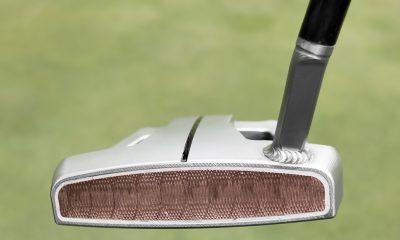
Putter: Dan Carraher ZT Proto
Ball: Callaway Chrome Tour
Bag: Ghost Anyday Black Ops Stand Bag

Justin Rose WITB 2026 (April): Full WITB breakdown with new McLaren irons

RBC Heritage Tour Report: More minis, course-specific setups, Spider & GTS launches

What’s the story behind Webb Simpson’s custom-stamped irons?

Cadillac Championship Tour Report: Spieth’s sizable changes, McLaren Golf launches, and more

Kristoffer Reitan’s winning WITB: 2026 Truist Championship

Cameron Young’s winning WITB: 2026 Cadillac Championship

Aaron Rai’s winning WITB: 2026 PGA Championship

Nelly Korda WITB 2026 (April)

Justin Rose on the switch to McLaren Golf, learnings from previous equipment moves

Photos from the 2026 PGA Championship


Patrick Reed WITB 2026 (May)
Driver: Titleist GT3 (9 degrees) Buy here. Shaft: Aldila Rogue Silver 130 M.S.I. 70 TX 3-wood: TaylorMade Qi35 (15 degrees)...

Aaron Rai’s winning WITB: 2026 PGA Championship
Driver: TaylorMade M6 (9 degrees) Shaft: Aldilda Synergy Blue 70 TX 3-wood: TaylorMade Qi10 (15 degrees) Shaft: Fujikura Ventus Blue...


Michael Block WITB 2026 (May)
Driver: TaylorMade Qi4D (9 degrees) Shaft: Fujikura Ventus Black VeloCore+ 5 X 3-wood: TaylorMade Qi4D (15 degrees @14.25) Shaft: Mitsubishi...


Bryson DeChambeau WITB 2026 (May)
Driver: Krank Formula Fire Pro (6 degrees) Shaft: Project X Prototype 3-wood: Krank Formula Fire (10 degrees) Shaft: LA Golf BAD...
-
 Whats in the Bag3 weeks ago
Kristoffer Reitan’s winning WITB: 2026 Truist Championship
-
Whats in the Bag2 weeks ago
Aaron Rai’s winning WITB: 2026 PGA Championship
-
 Tour Photo Galleries3 weeks ago
Photos from the 2026 PGA Championship
-
 Equipment2 weeks ago
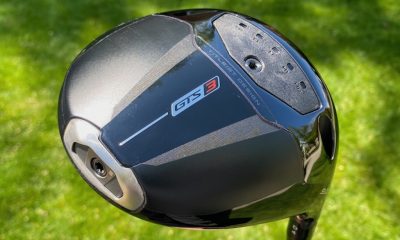
GolfWRX Launch Report: 2026 Titleist GTS drivers
-

 Equipment2 weeks ago
PGA Championship Tour Report: Fitzpatrick, Koepka among big-name putter switches for Aronimink
-

 News2 weeks ago
WITB Time Machine: Phil Mickelson’s winning WITB, 2021 PGA Championship
-

 Equipment2 weeks ago
Which of Tiger’s major winning irons are your favorite? – GolfWRXers discuss
-

 Equipment2 weeks ago
Lead Tape Report: Adjusting the swingweight of the Wanamaker Trophy


The Trash Company NC – Local trash pickup and services in Mill Spring NC
May 5, 2020 at 4:55 pm
The Trash Company NC – Local trash pickup and services in Mill Spring NC Thank you for another great post. The location else might anybody wardrobe type of details such the best ways of composing? I own a business presentation in the future, and I am with the find such information.
Patricknorm
May 27, 2018 at 7:23 pm
I took the time to read the article and watch the videos. The fact that you’re certified TPI adds to your credibility. Ignore the shameful comments. Excellent work. I imagine most serious golfers do some variation of this training. Most PGA Tour players do this as well. Even Beef Johnson. .
Chris Finn
May 29, 2018 at 8:43 pm
Thanks so much Patricknorm. Appreciate you taking the time to write this and hope you gained some value from it!
Kevin
May 27, 2018 at 5:15 pm
Well eccentric training has shown its speed in improving muscle strength over a particular muscle group but calling the backswing phase “eccentric” is probably a misunderstanding of the term.
I guess any extra weight training will in the end improve our SS, the key is to spare time and seriously do it. Its not only good for our golf but our life too
Chris Finn
May 29, 2018 at 8:50 pm
Thanks for the comment Kevin. I agree that the backswing is technically not “eccentric”. This was an attempt to simplify the actual sports science of what is happening for the general public. The rotary slings from the lead hip to trail shoulder anteriorly and the trail hip to the lead shoulder posteriorly are lengthening prior to their shortening during the downswing. This is the eccentric sling that allows the golfer to harness an increase in action potential for concentric contraction along those pathways. In a complex motion like the golf swing there are some muscles that are concentrically contracting simultaneously as other eccentrically contracting. I hope this helps to clarify what was meant by referring to the backswing as the “eccentric” phase. In sports science this is clearly not true, but it was an attempt to convey a point to a general audience. Thanks for calling for clarification and I couldn’t agree more with your comment that it is not only good for golf, but also for life.
ray
May 27, 2018 at 4:21 pm
dry needling.. snake oil BS
Chris Finn
May 29, 2018 at 8:53 pm
Thanks for your comment ray. Sorry to hear you have had such bad experience with trigger point dry needling. Are you around Raleigh, NC? Would be happy to have you come in and help you with any issues you may be having on me. just shoot me an email at info@par4success.com. Would also be happy to answer any of your questions related to this topic or any others over a phone chat! cheers!
ogo
May 27, 2018 at 3:44 pm
Has the WRX moderator locked all the comments longer than 2 lines? 😮
ogo
May 27, 2018 at 3:46 pm
Okay, let’s try this: “This training is NOT for severely untrained individuals with no training background.”
ogo
May 27, 2018 at 3:47 pm
That eliminates 95% of all 60 million golfers worldwide only playing golf for social fun.
ogo
May 27, 2018 at 3:50 pm
Then the fun buying golf weapons that will propel the ball to great heights. It’s a game of little boys chumming.
Chris Finn
May 29, 2018 at 9:02 pm
Thanks for your comment ogo. I would agree that if golfers are playing golf just for social fun (ie. no more than a few times a year and account for about 4% of total rounds played yearly worldwide) then they would not be interested in training to improve their golf game and fitness is probably the least of their worries for lowering their scores. But, if they are one of the 20 million golfers in the US alone who account for up to 85% of the rounds played per year…I think this article and fitness in general is very applicable.