
Opinion & Analysis
The real numbers behind driving the ball on Tour


By Rich Hunt
GolfWRX Contributor
In the era of modern technology, advanced fitness regimens and long driving competitions, there has been a growing sentiment towards golf favoring the ‘bomb-n-gouge’ style of play. However, we still see many shorter-hitting golfers like Zach Johnson who are successful in the game. Most of the clients on Tour I work with have questioned the advantages that power can have on Tour versus hitting the ball the more accurately. As a competitive amateur golfer myself, it was one of the first things I investigated from a statistical standpoint.
Part of the issue deals with the main metric designed to determine driving skill on Tour, called ‘Total Driving.” Total Driving utilizes a very simple formula by adding the rankings of a player’s Driving Distance and Fairway Percentage together. The lower the combined ranking, the better the golfer will rank in Total Driving. But it’s metrics like Total Driving that have only produced more questions than answers for golfers.
The main issue with the Total Driving metric is that it is flawed from a statistical standpoint and it is a very incomplete formula. From a pure statistical standpoint, the addition of taking the rankings and adding them together is a bad idea in general. Theoretically, a golfer on Tour could hit nothing but 4-irons off the tee and would likely lead the Tour in percentage of Fairways Hit. But, they would also likely be dead last in driving distance. And using the Total Driving formula of adding up the rankings would misrepresent how well the golfer hits the ball off the tee.
In that example, the golf would rank No. 1 in Fairway Percentage and No. 191 in Driving Distance. That would combine for 192 Total Driving points, leaving this particular golfer ranked 100th out of 192 golfers on Tour in Total Driving. However, the reality is that if a Tour golfer hit nothing but 4 irons off the tee, they would almost be guaranteed to be the least effective driver of the ball on Tour, if not in the history of the Tour.
And therein lies part of another issue with Total Driving — it assumes that driving distance is just as important as fairway percentage. When examining Driving Distance and Fairway Percentage to par-4 and par-5 scoring averages, the data shows that they are not of equal importance.
Not wanting to stop at just driving distance and fairway percentage, I examined other metrics as well. The one metric that showed some statistical influence to par-4 and par-5 scoring averages is called “Average Distance to the Edge of the Fairway.” This metric is measured on shots by a Tour player when they miss the fairway.
It’s easy to understand why combining Driving Distance, Fairway Percentage and Distance To the Edge of the Fairway can show a strong correlation to par-4 and par-5 scoring average. Distance helps measure power, fairway percentage helps measure accuracy and distance to the edge of the fairway helps measure precision. Now the question becomes putting it in a formula to best represent its effect on Tour players and then examine the results.
Eventually I came up with my own metric that I call “Driving Effectiveness.” It combines the metrics of Driving Distance, Fairway Percentage and Average Distance To the Edge of the Fairway. However, it utilizes the actual measurements instead of using the rankings. Furthermore, it weighs those metrics differently to better represent its typical impact on Tour golfers on par-4s and par-5s. Without giving the formula away, I will say that in the end that Driving Distance and Distance to the Edge of the Fairway have a larger impact on a golfer’s score than fairway percentage. But, do not let that fool you into believing that hitting fairways is unimportant.
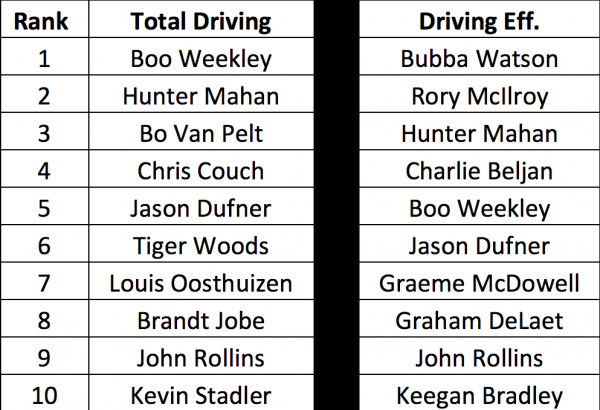
Here is a table showing the top-10 and bottom-10 players in Driving Effectiveness and the Total Driving metric.
Top-10 in Driving Effectiveness
Bottom 10 in Driving Effectiveness
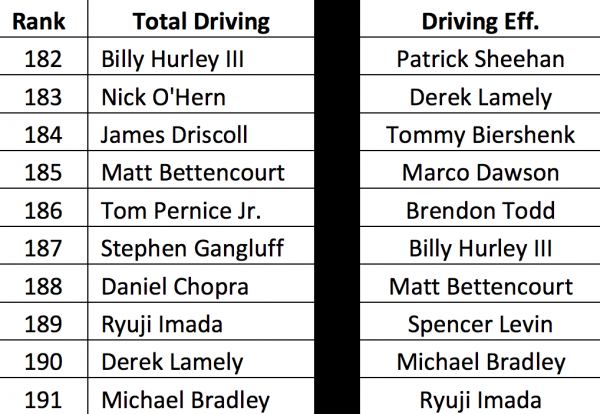
While there are some similarities between the rankings of the two metrics, there are plenty of players who are not accurately depicted in Total Driving. Here’s a look at the top-10 players who had the largest improvement in Driving Effectiveness ranking from the Total Driving metric.
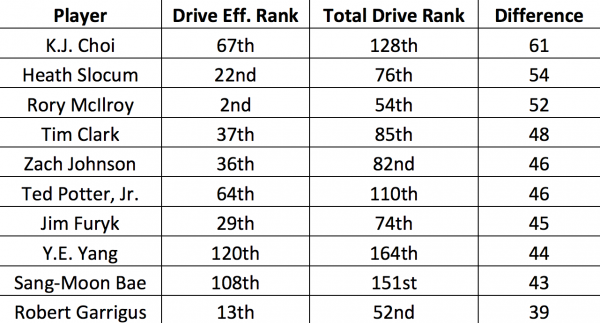
Here are the players with the largest decline in Driving Effectiveness ranking from the Total Driving metric.
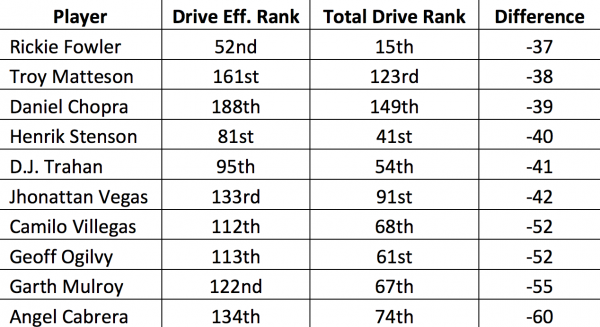
In golfers who had a much better Driving Effectiveness ranking, we see that favoring shorter hitters a little. Conversely, with the golfers with a worse Driving Effectiveness ranking, that has a small bias towards longer hitters. The reason being has to do with the Average Distance To The Edge of the Fairway metric.
However, the bias is somewhat small. I believe the reason for that is regardless of their length off the tee, Tour players do not typically see a sizeable difference in where they rank on Tour between fairway percentage and Average Distance to the Edge of the Fairway.
For example, KJ Choi saw the largest difference in Driving Effectiveness (67th) versus Total Driving (128th). Choi was ranked 54th in fairway percentage, hitting 64.08 percent of his fairways. But, Choi was also 2nd in Average Distance to the Edge of the Fairway, hitting it 18.7 feet from the edge on average. Thus, Choi was more effective than Total Driving indicates because when he did miss the fairway, he did not miss by much.
I think that amateurs can apply the general principles of Driving Effectiveness in their own game as well. If they are looking to become more effective off the tee, the ways to make the largest improvements would be to increase their driving distance (power) and their Distance to the Edge of the Fairway (precision). If they are looking at swing changes or a new driver in order to increase distance, they should focus more on how that may possibly affect their Average Distance To The Edge of the Fairway.
However, if they gain power but lose too much precision they may end up being less effective in the long run. And if they do not believe they can gain any power, they should probably focus their efforts on Fairway percentage (accuracy) and Distance To The Edge of the Fairway (precision) in order become more effective off the tee.


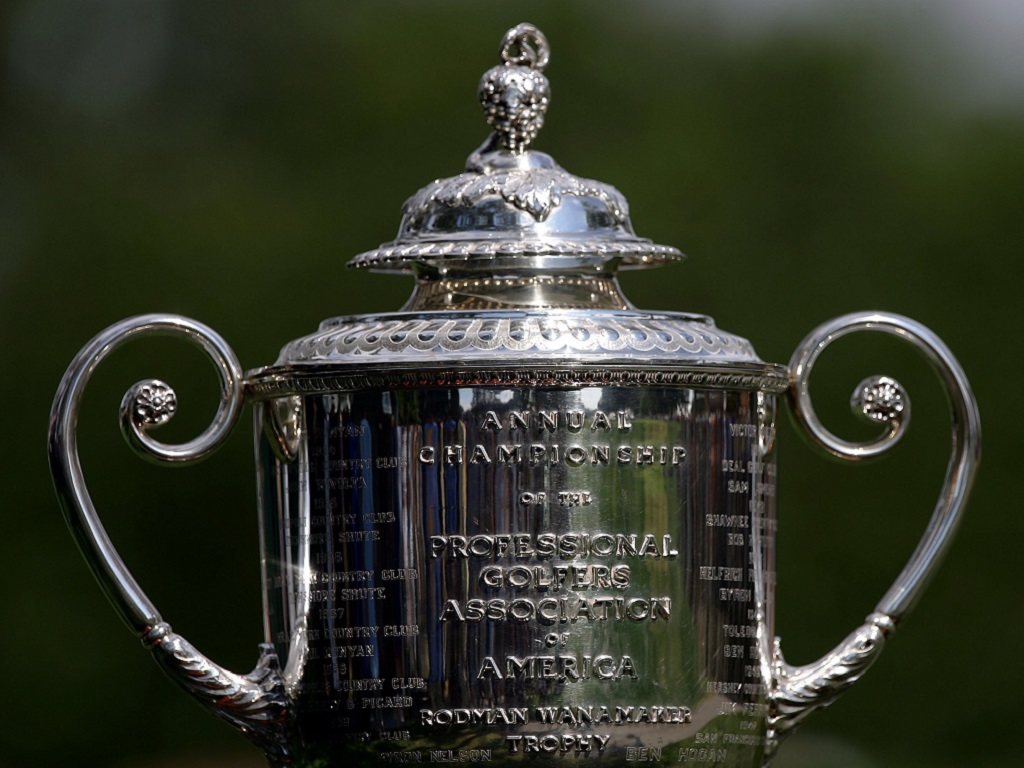
Aronimink is not a storied club, but when Donald Ross himself proclaimed it to be as good as he can design and build, one had to take notice. Jay Sigel was the pre-eminent male amateur golfer from the mid-1970s to the mid-1990s. He might have called any number of Philadelphia clubs home, but he chose Aronimink. It served him well. Gary Player won a PGA Championship here in 1962, and was followed by the 1993 winner … nobody. Aronimink gave that event away to Inverness, for reasons of which it is certainly not proud. So be it. We had to wait sixty-four years for the PGA to return to Newtown Square, but here we are. Aronimink has been neo-restored by Gil Hanse and team, to return Ross features with an eye toward defense against the dark arts, errrr, high-tech equipment.
Day one saw Rory McIlroy and Bryson DeChambeau dig big holes, to the tune of plus-four and plus-six, respectively. Since the first-round lead will be minus-three at worst, many shots will need to be made up for the power couple to reach contention. By nightfall, seven golfers held the day-one lead at three-under par 67. Shots and sticks caught our attention, and we are proud to present Five Things We Learned on Tech Thursday at the 2026 PGA Championship. Thanks to InsideTourGolfer, Today’s Golfer, and GolfWRX for initial equipment research.
First, meet Min Woo Lee
Min Woo Lee, aka Dr. Chipinski, has once again thrust himself into the conversation of Can he, will he, when will he? Lee has so much talent, wins not nearly as often as we believe that he should, and has no major near-misses (much less titles) on his wiki. The young Aussie is getting older and wiser, but is he able to avoid the scarring that holds the older and wiser back from breaking through? Philadelphia offers another opportunity. Min Woo signed for five birdies and two bogeys on day one, and grabbed a share of the opening-day lead at Aronimink. Winners transcend history and the moment, and Lee will need that sort of ascent to lift the Wannamaker on Sunday.
Second, meet Aldrich Potgeiter
The young South African golfer can rip driver with the best of them. Aronimink tips out at nearly 7400 yards, but beyond the fairway bunkers that ensnare only the mortals, Potgeiter can take his chances with wedge from the rough. On Thursday, he spent plenty of time in the spinach. Like Popeye, he used his muscles to gouge and thrash and dig his way out. Six birdies against three bogeys on the card brought AP in a three deep.
Third, meet Martin Kaymer
Not a major event takes place without a where’s he been throwback moment. We know that Martin Kaymer left the PGA and DP World tours for LIV golf, but the two-time (US Open and PGA) major winner has a lifetime exemption into at least one major event, and he seizes the opportunity each May. Kaymer joined the six-seven brigade with four birdies and a solitary bogey on day one. Kaymer was never a long hitter, and the years are kind to no golfer. The German champion will need to uncork every bottle of guile and strategy in his cabinet to remain in contention. For today, though, he occupies a rung on the ladder of Tour Tech.
Fourth, meet Scottie Scheffler
Let’s see, he’s the defending champion at the PGA, and he found his way back to the top tier with five birdies against two bogeys. To be a favorite and then play up to that stature and expectation is quite difficult. Just ask Rory, Bryson, and some of the other pre-tournament heartthrobs. Scheffler’s game is complete, and to knock him off the OWGR #1 pedestal, one needs to defeat him at the majors. Aronimink is the sort of course that fits Scheffler’s game. Better yet, it unfits the game of many of his challengers. Don’t expect Scheffler to go away anytime soon. Come Sunday, he’ll be around.
Fifth, meet Stephan Jaeger
Clocking in for the unheralded players shift are Ryo Hisatsune and Stephan Jaeger. Hisatsune logged seven birdies on day one, but gave most of them back with four bogeys. Still, he’s tied at the top for a time. Jaeger pitched five birdies against two bogeys, including a run of three consecutive, from holes four through six. Odds are that one of the two will hang around through 36 holes. Odds also suggest that both will be gone by Saturday evening. Still, the PGA Championship has historically been the major most likely to be won by an under-known. Both Hisatsune and Jaeger feature on that list, so good luck, lads!

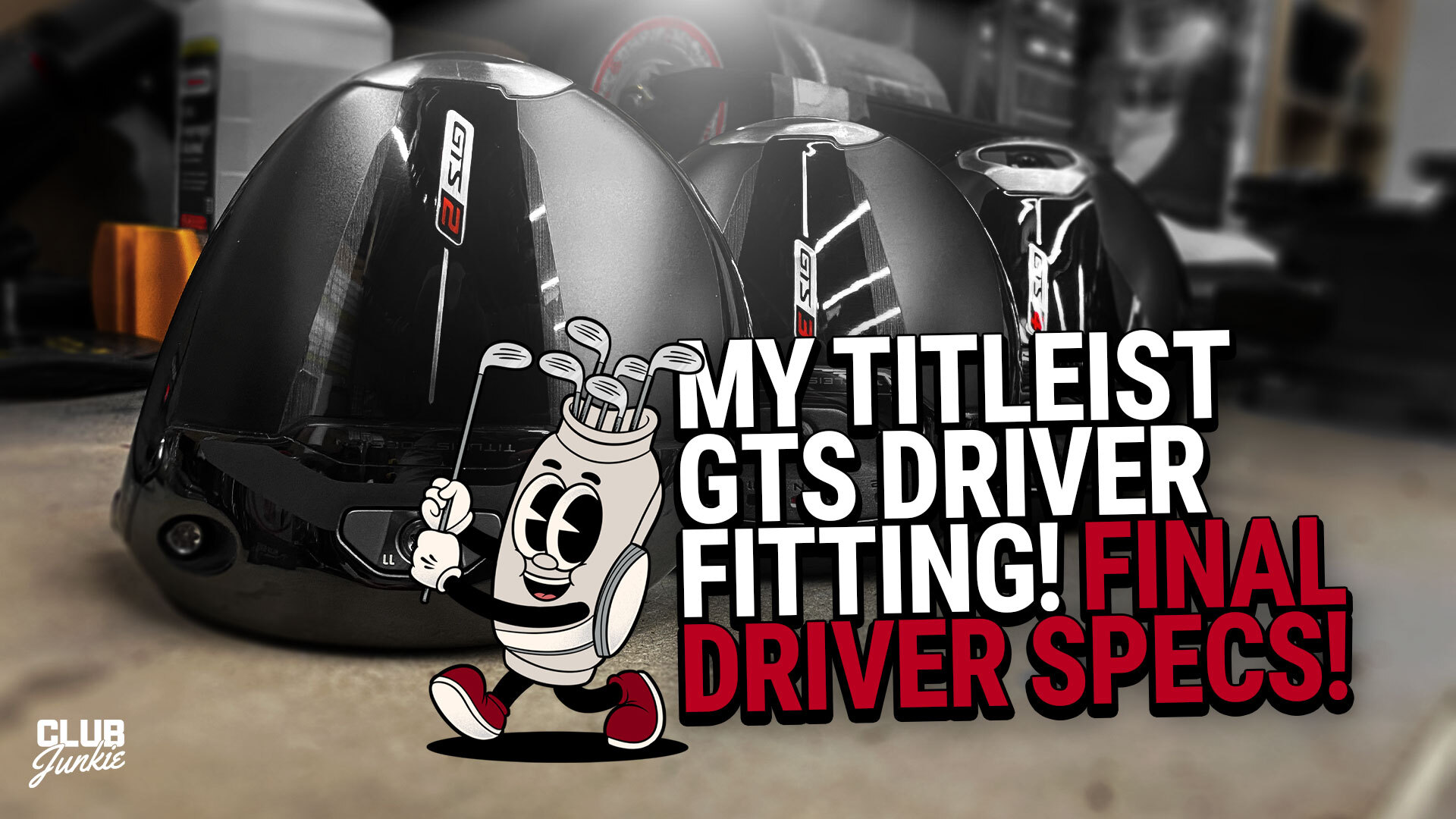
On this episode of the Club Junkie Podcast, I head to the Titleist Performance Institute for a full driver fitting with the new Titleist GTS lineup. We dive into the fitting process, talk about what made the biggest difference in performance, and break down how the different GTS heads and shaft combinations compare on the launch monitor. If you are thinking about a new driver setup for this season, there is a lot to take away from this one.
I also get into Brooks Koepka and the gear setup he brought to the PGA Championship, including the putters that caught my eye during the week. There are some interesting equipment trends showing up at the highest level right now and we break down what stands out.
To wrap things up, I talk about reshafting a few wedges, what I learned during the process, and swapping an adaptor onto a new shaft for another build project in the shop. A gear packed episode from start to finish for anyone who loves golf equipment and club building.
Follow Club Junkie everywhere:
Instagram: https://www.instagram.com/clubjunkiepod/
X: https://x.com/ClubJunkiePod
TikTok: https://www.tiktok.com/@clubjunkiepod
Threads: https://www.threads.com/@clubjunkiepod

Excited for this week’s WITB as we get to add the new Titleist GTS woods to the bag! I was fit at Titleist’s TPI facility in Oceanside California a few weeks ago and my new clubs just showed up. I am also adding a cool set of irons that I built last year some wild custom wedges into a new golf bag. Speaking of the bag I have a new Ghost Anyday Black Ops stand bag that I will be using on my Motocaddy Remote M7 electric cart.
Driver: Titleist GTS3 (11 degrees @ 10.25)
Shaft: Fujikura Ventus Red 6s
3-wood: Titleist GT1 3Tour (14.5 degrees)
Shaft: Graphite Design Tour AD CQ-7s
5-wood: Titleist GTS (18 degrees)
Shaft: Fujikura Ventus Red 7s
9-wood: Titleist GT1 (24 degress)
Shaft: Fujikura Ventus Red 7s
Irons: Bettinardi CB24 (5-PW)
Shafts: KBS C-Taper Lite 110 stiff
Wedge: TaylorMade MG5 (50-09 SB)
Shaft: Mitsubishi MMT 125 Stiff
Wedge: TaylorMade MG5 (56-12 SB)
Shaft: Mitsubishi MMT 125 Stiff
Wedge: TaylorMade MG5 (60-08 LB)
Shaft: Mitsubishi MMT 125 Stiff
Putter: Dan Carraher ZT Proto
Ball: Callaway Chrome Tour
Bag: Ghost Anyday Black Ops Stand Bag

Justin Rose WITB 2026 (April): Full WITB breakdown with new McLaren irons

RBC Heritage Tour Report: More minis, course-specific setups, Spider & GTS launches

What’s the story behind Webb Simpson’s custom-stamped irons?

Cadillac Championship Tour Report: Spieth’s sizable changes, McLaren Golf launches, and more

Kristoffer Reitan’s winning WITB: 2026 Truist Championship

Cameron Young’s winning WITB: 2026 Cadillac Championship

Aaron Rai’s winning WITB: 2026 PGA Championship

Nelly Korda WITB 2026 (April)

Justin Rose on the switch to McLaren Golf, learnings from previous equipment moves

Photos from the 2026 PGA Championship


Patrick Reed WITB 2026 (May)
Driver: Titleist GT3 (9 degrees) Buy here. Shaft: Aldila Rogue Silver 130 M.S.I. 70 TX 3-wood: TaylorMade Qi35 (15 degrees)...

Aaron Rai’s winning WITB: 2026 PGA Championship
Driver: TaylorMade M6 (9 degrees) Shaft: Aldilda Synergy Blue 70 TX 3-wood: TaylorMade Qi10 (15 degrees) Shaft: Fujikura Ventus Blue...


Michael Block WITB 2026 (May)
Driver: TaylorMade Qi4D (9 degrees) Shaft: Fujikura Ventus Black VeloCore+ 5 X 3-wood: TaylorMade Qi4D (15 degrees @14.25) Shaft: Mitsubishi...


Bryson DeChambeau WITB 2026 (May)
Driver: Krank Formula Fire Pro (6 degrees) Shaft: Project X Prototype 3-wood: Krank Formula Fire (10 degrees) Shaft: LA Golf BAD...
-
 Whats in the Bag3 weeks ago
Kristoffer Reitan’s winning WITB: 2026 Truist Championship
-
Whats in the Bag2 weeks ago
Aaron Rai’s winning WITB: 2026 PGA Championship
-
 Tour Photo Galleries3 weeks ago
Photos from the 2026 PGA Championship
-
 Equipment2 weeks ago
GolfWRX Launch Report: 2026 Titleist GTS drivers
-

 Equipment2 weeks ago
PGA Championship Tour Report: Fitzpatrick, Koepka among big-name putter switches for Aronimink
-

 News2 weeks ago
WITB Time Machine: Phil Mickelson’s winning WITB, 2021 PGA Championship
-

 Equipment2 weeks ago
Which of Tiger’s major winning irons are your favorite? – GolfWRXers discuss
-

 Equipment2 weeks ago
Lead Tape Report: Adjusting the swingweight of the Wanamaker Trophy


Philip
Feb 8, 2013 at 11:19 am
Great article. Recently, I’ve become intrigued by the statistics of the game of golf and other sports.
be_right
Jan 5, 2013 at 10:23 am
Great article….Do you publish your driving effectiveness stats anywhere? I’d love to follow along throughout the season.
stevielee
Nov 29, 2012 at 12:50 am
i disagree with The Pecker, this author somehow simply showed his approach and explained his findings without all the science behind it. now i can understand that even somedays that i couldnt hit single fairway and still had a decent day at the course. this is what you should get from an short online article.
Richie Hunt
Nov 15, 2012 at 5:00 pm
Hello,
I agree with many of your points, except for the last one stating that I am ‘fond of rendering the reader unable to form their own opinion.’
The difficult part for me is that I utilize a proprietary statistical model that took time, effort and mathematical knowledge to create. Thus, giving it away for free is not something I am willing to do.
This is not all that uncommon. I know the advanced metrics group for NFL research, Football Outsiders and Pro Football Focus, do not give away their models and algorithms either. But they present the information and their findings to their readers and then the readers decide how much sense it makes. This does typically lead to some debate as to how good certain players and teams are along with debating certain aspects and strategies of the game. But, they have obviously allowed their readers to render their own opinions because they have plenty of readers with plenty of opinions.
I think in this article, the reader can render some opinion on the importance of the Avg. Distance to the Edge of the Fairway metric along with the flawed nature of Total Driving from a basic mathematical standpoint and whether or not the metrics should be weighted evenly or disproportionally. The reader could also discern if a players I listed like KJ Choi, Rory McIlroy and Robert Garrigus are better or worse than their Total Driving metric indicates. If you have further questions, please let me know.
The Pecker
Nov 15, 2012 at 2:46 pm
While I think it is appropriate to incorporate more data into driving efficiency, I am unable to accept the author’s data for one simple reason. The author criticizes the PGA Tour for their “total driving” forumla, whereas, in the author’s analysis, they avoid mentioning any formula, rendering the reader unable to form their own opinion – something the author is clearly fond of doing.