
Opinion & Analysis
Fantasy Preview: 2018 The Players Championship

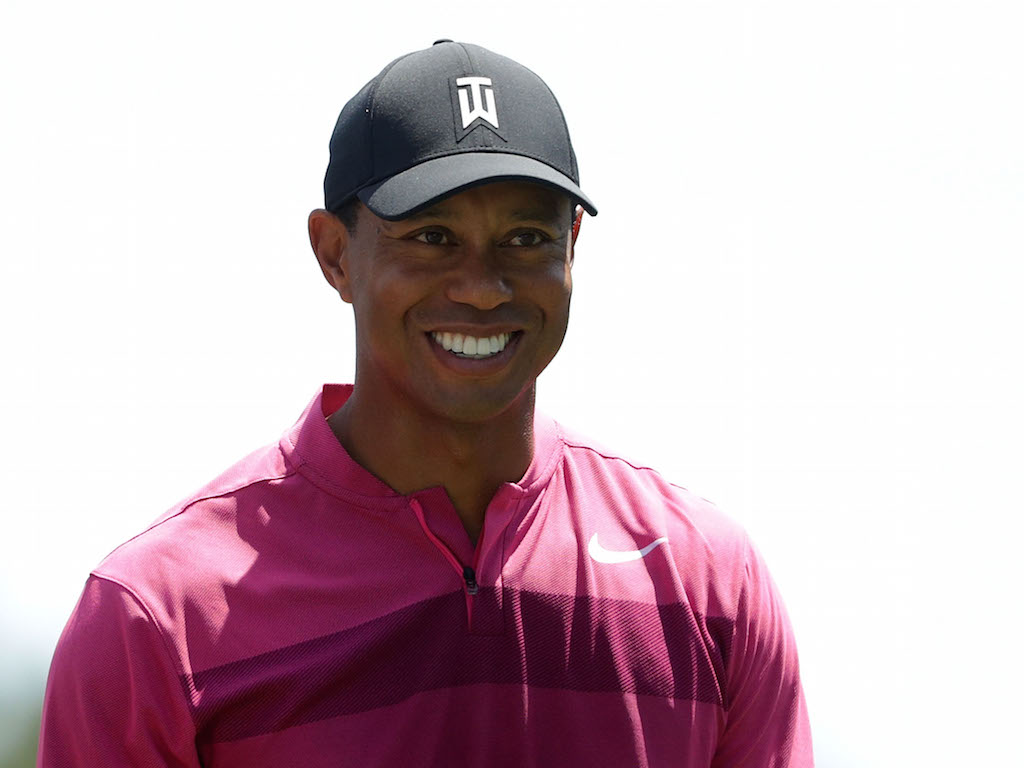
The so-called “Fifth Major” gets underway this week, and it boasts one of the best fields of the year. One hundred and forty four players will do battle at TPC Sawgrass, a venue that is known for delivering drama. At less than 7,200 yards, the Stadium Course isn’t one of the longer courses on the PGA Tour. There is also no distinct advantage for longer hitters off the tee. The likes of Dustin Johnson and Bubba Watson have never managed to get themselves into contention at TPC Sawgrass, and a lot of that has to do with the importance of placement off the tee as opposed to pure power.
The Stadium Course is a track for ball strikers, and that will be a key area to focus on this week along with Par-4 and Par-5 scoring. Changes were made to the course in 2017, most notably the 12th hole which is now a risk/reward driveable par 4. Last year, Si Woo Kim showed incredible poise to take the title, shooting a total of 10-under par to win by three strokes.
Selected Tournament Odds (via Bet365)
- Jason Day 14/1
- Rory McIlroy 14/1
- Jordan Spieth 16/1
- Justin Thomas 16/1
- Dustin Johnson 18/1
- Rickie Fowler 20/1
- Jon Rahm 25/1
When discussing excellent ball strikers, Henrik Stenson (28/1, DK Price $8,800) is a name that is bound to come up. The Swede has always been a supreme ball striker, and it’s no surprise that in his last 50 rounds he ranks sixth in this field in that department, while over his previous eight rounds he ranks first. Stenson surprisingly missed the cut at the Valspar Championship earlier in the year, but since then his form has been excellent. He’s posted three consecutive top-10 finishes coming into this event.
None of his top-10 finishes was more impressive than his T-5 finish at The Masters. Augusta has never been a good course Stenson. In fact, he had failed to post a top-10 finish at Augusta in his previous 12 starts before 2018. This year was different, however, and his ability to perform at a course that is not suited to him shows how well he is currently playing.
Over his previous eight rounds, Stenson ranks both second in Strokes Gained-Approach and Strokes Gained-Tee to Green. For the season, he leads the field in Par-4 scoring average. All very positive signs. Stenson has also been playing the Par 5’s well this year, and he ranks T-16 in Par-5 scoring average.
With his game seemingly close to its peak, the arrival of The Players Championship will undoubtedly please the Swede, whose record at TPC Sawgrass is excellent. As well as winning the title here back in 2009, Stenson’s recent form is very solid, too. He has made five of his last six cuts, and he has finished in the top-20 on four occasions. Stenson has the course knowledge and the form to pose a considerable threat once again at Sawgrass this week.
Coming off the back of two mediocre results, you wouldn’t expect to see much enthusiasm for Tiger Woods (40/1,DK Price $8,600). Despite his modest finish at the Wells Fargo Championship, there was a lot of encouragement for Woods. His inability to get into contention last week can be attributed to his putting, which was his worst putting performance in years. Woods dropped a massive 5.8 strokes on the greens at Quail Hollow, and it’s not something you should expect to see again. Off the Tee, however, Woods had his best week since 2012, gaining 3 Strokes-Off the Tee. His iron game, which went missing at Augusta, was also back to its best.
Just like at the Valspar Championship, the shorter layout of the Stadium Course could help Woods this week, too. Woods ranks fourth in the field this week for Strokes Gained-Approaching the Green over his last 12 rounds, and a golf course that demands less than driver off the tee for many of the holes could be a significant advantage for Woods.
Woods also plays Pete Dye-designed golf courses very well. In his previous 24 rounds on Pete Dye-designed courses, he ranks 8th in this field for Strokes Gained-Total. Woods has won this Championship twice in the past, and three events after he went off as one of the favorites for the Masters he looks undervalued to perform well here once again this week.
Bryson DeChambeau (50/1, DK Price $8,300) is getting closer and closer to winning in 2018. Last week, he finished solo 4th, which made it his third top-5 in his previous four events. DeChambeau’s iron play at the moment is imperious. Over his last 12 rounds, DeChambeau ranks first in Ball Striking and first in Strokes Gained-Approaching the Green. The Californian is also putting great, and he sits seventh in this field for Strokes Gained-Putting over his last 12 rounds.
It will be DeChambeau’s first appearance at The Players, and that is of some concern. But the likes of Kevin Kisner and Si-Woo Kim have recently excelled here despite having little course experience, and DeChambeau is certainly playing well enough to do the same. Another reason I like him this week is his Par-5 scoring. DeChambeau is 2nd on Tour for Par-5 Scoring Average this year with an impressive 4.48 average. Just as I said last week, there is no reason to desert the man with the hot hand right now, and he looks to be a good value once again.
Despite missing the cut last week at the Wells Fargo, Kevin Kisner (80/1, DK Price $8,000) has played some excellent golf in 2018. Kisner was a runner-up at the WGC-Matchplay and then collected a top-10 finish at the RBC Heritage. He also performed very well alongside Scott Brown at the Zurich Classic, where the duo held the 54-hole lead. There are no Strokes Gained statistics recorded for the WGC-Matchplay or the Zurich Classic, which makes it difficult when trying to analyze Kisner.
Despite his last two disappointing performances at The Players, Sawgrass is undoubtedly an excellent fit for Kisner. He proved that in 2015 where he came agonizingly close to claiming the title. Over his previous 24 rounds on Pete Dye courses, Kisner is ranked 71st in the field for Strokes Gained-Total. Yet, when you factor in courses that are less than 7,200 yards and designed by Pete Dye, he makes a massive jump up to 14th.
Recommended Plays
- Henrik Stenson 28/1, DK Price $8,800
- Tiger Woods 40/1, DK Price $8,600
- Bryson DeChambeau 50/1, DK Price $8,300
- Kevin Kisner 80/1, DK Price $8,000


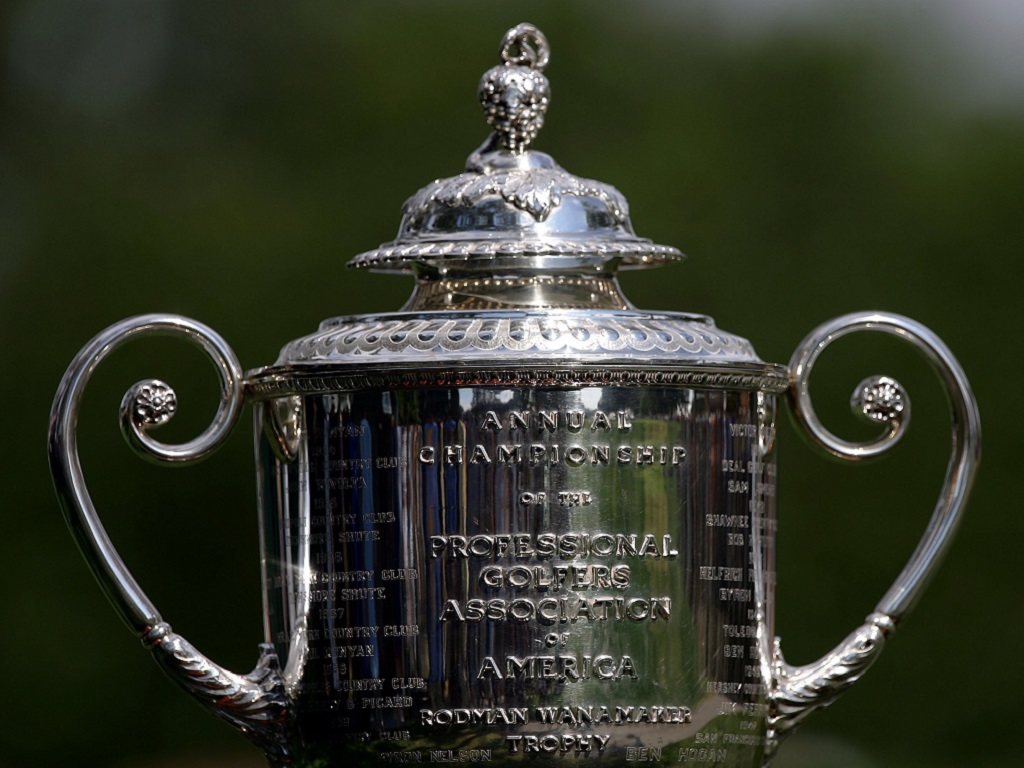
Aronimink is not a storied club, but when Donald Ross himself proclaimed it to be as good as he can design and build, one had to take notice. Jay Sigel was the pre-eminent male amateur golfer from the mid-1970s to the mid-1990s. He might have called any number of Philadelphia clubs home, but he chose Aronimink. It served him well. Gary Player won a PGA Championship here in 1962, and was followed by the 1993 winner … nobody. Aronimink gave that event away to Inverness, for reasons of which it is certainly not proud. So be it. We had to wait sixty-four years for the PGA to return to Newtown Square, but here we are. Aronimink has been neo-restored by Gil Hanse and team, to return Ross features with an eye toward defense against the dark arts, errrr, high-tech equipment.
Day one saw Rory McIlroy and Bryson DeChambeau dig big holes, to the tune of plus-four and plus-six, respectively. Since the first-round lead will be minus-three at worst, many shots will need to be made up for the power couple to reach contention. By nightfall, seven golfers held the day-one lead at three-under par 67. Shots and sticks caught our attention, and we are proud to present Five Things We Learned on Tech Thursday at the 2026 PGA Championship. Thanks to InsideTourGolfer, Today’s Golfer, and GolfWRX for initial equipment research.
First, meet Min Woo Lee
Min Woo Lee, aka Dr. Chipinski, has once again thrust himself into the conversation of Can he, will he, when will he? Lee has so much talent, wins not nearly as often as we believe that he should, and has no major near-misses (much less titles) on his wiki. The young Aussie is getting older and wiser, but is he able to avoid the scarring that holds the older and wiser back from breaking through? Philadelphia offers another opportunity. Min Woo signed for five birdies and two bogeys on day one, and grabbed a share of the opening-day lead at Aronimink. Winners transcend history and the moment, and Lee will need that sort of ascent to lift the Wannamaker on Sunday.
Second, meet Aldrich Potgeiter
The young South African golfer can rip driver with the best of them. Aronimink tips out at nearly 7400 yards, but beyond the fairway bunkers that ensnare only the mortals, Potgeiter can take his chances with wedge from the rough. On Thursday, he spent plenty of time in the spinach. Like Popeye, he used his muscles to gouge and thrash and dig his way out. Six birdies against three bogeys on the card brought AP in a three deep.
Third, meet Martin Kaymer
Not a major event takes place without a where’s he been throwback moment. We know that Martin Kaymer left the PGA and DP World tours for LIV golf, but the two-time (US Open and PGA) major winner has a lifetime exemption into at least one major event, and he seizes the opportunity each May. Kaymer joined the six-seven brigade with four birdies and a solitary bogey on day one. Kaymer was never a long hitter, and the years are kind to no golfer. The German champion will need to uncork every bottle of guile and strategy in his cabinet to remain in contention. For today, though, he occupies a rung on the ladder of Tour Tech.
Fourth, meet Scottie Scheffler
Let’s see, he’s the defending champion at the PGA, and he found his way back to the top tier with five birdies against two bogeys. To be a favorite and then play up to that stature and expectation is quite difficult. Just ask Rory, Bryson, and some of the other pre-tournament heartthrobs. Scheffler’s game is complete, and to knock him off the OWGR #1 pedestal, one needs to defeat him at the majors. Aronimink is the sort of course that fits Scheffler’s game. Better yet, it unfits the game of many of his challengers. Don’t expect Scheffler to go away anytime soon. Come Sunday, he’ll be around.
Fifth, meet Stephan Jaeger
Clocking in for the unheralded players shift are Ryo Hisatsune and Stephan Jaeger. Hisatsune logged seven birdies on day one, but gave most of them back with four bogeys. Still, he’s tied at the top for a time. Jaeger pitched five birdies against two bogeys, including a run of three consecutive, from holes four through six. Odds are that one of the two will hang around through 36 holes. Odds also suggest that both will be gone by Saturday evening. Still, the PGA Championship has historically been the major most likely to be won by an under-known. Both Hisatsune and Jaeger feature on that list, so good luck, lads!

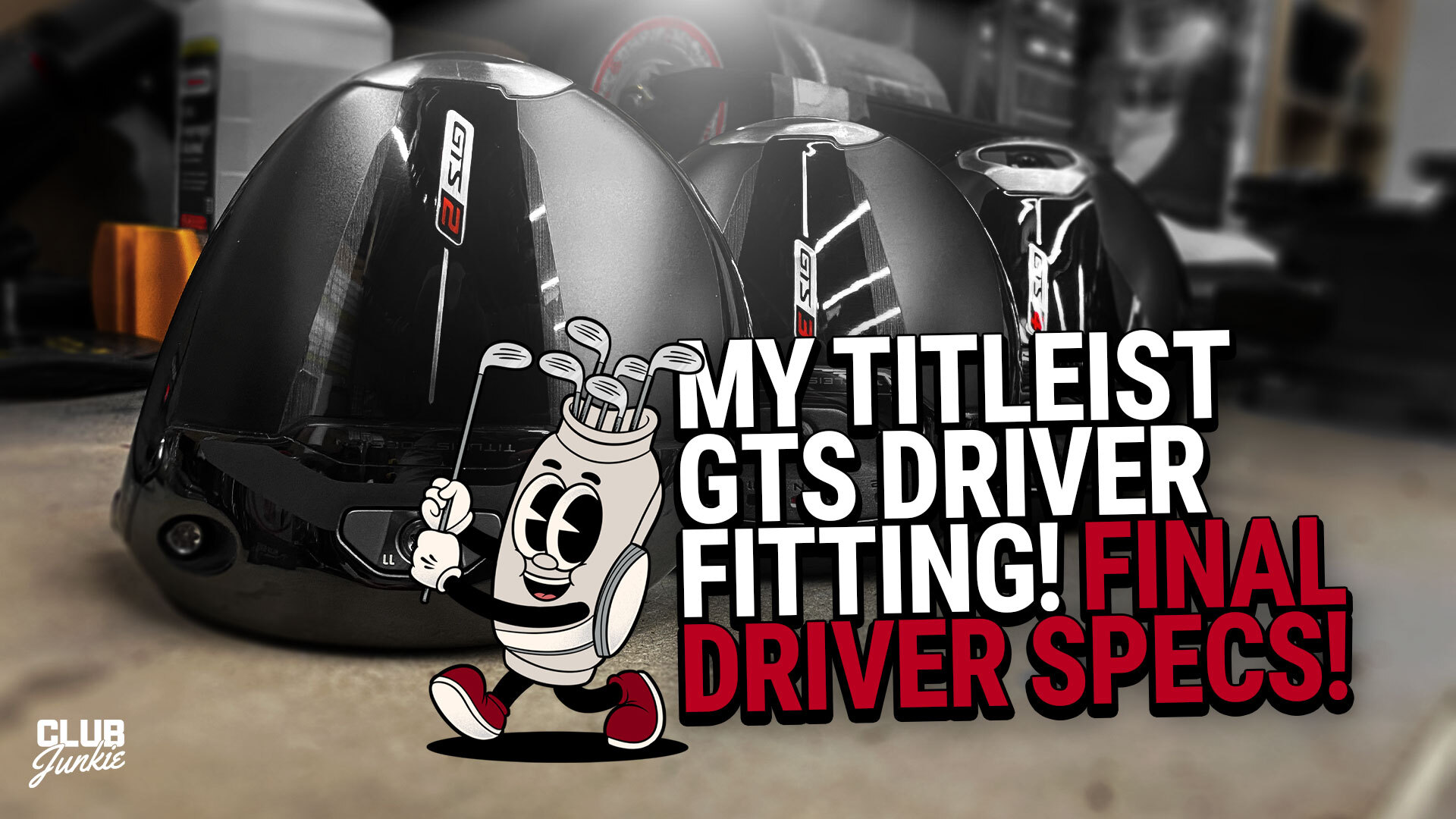
On this episode of the Club Junkie Podcast, I head to the Titleist Performance Institute for a full driver fitting with the new Titleist GTS lineup. We dive into the fitting process, talk about what made the biggest difference in performance, and break down how the different GTS heads and shaft combinations compare on the launch monitor. If you are thinking about a new driver setup for this season, there is a lot to take away from this one.
I also get into Brooks Koepka and the gear setup he brought to the PGA Championship, including the putters that caught my eye during the week. There are some interesting equipment trends showing up at the highest level right now and we break down what stands out.
To wrap things up, I talk about reshafting a few wedges, what I learned during the process, and swapping an adaptor onto a new shaft for another build project in the shop. A gear packed episode from start to finish for anyone who loves golf equipment and club building.
Follow Club Junkie everywhere:
Instagram: https://www.instagram.com/clubjunkiepod/
X: https://x.com/ClubJunkiePod
TikTok: https://www.tiktok.com/@clubjunkiepod
Threads: https://www.threads.com/@clubjunkiepod
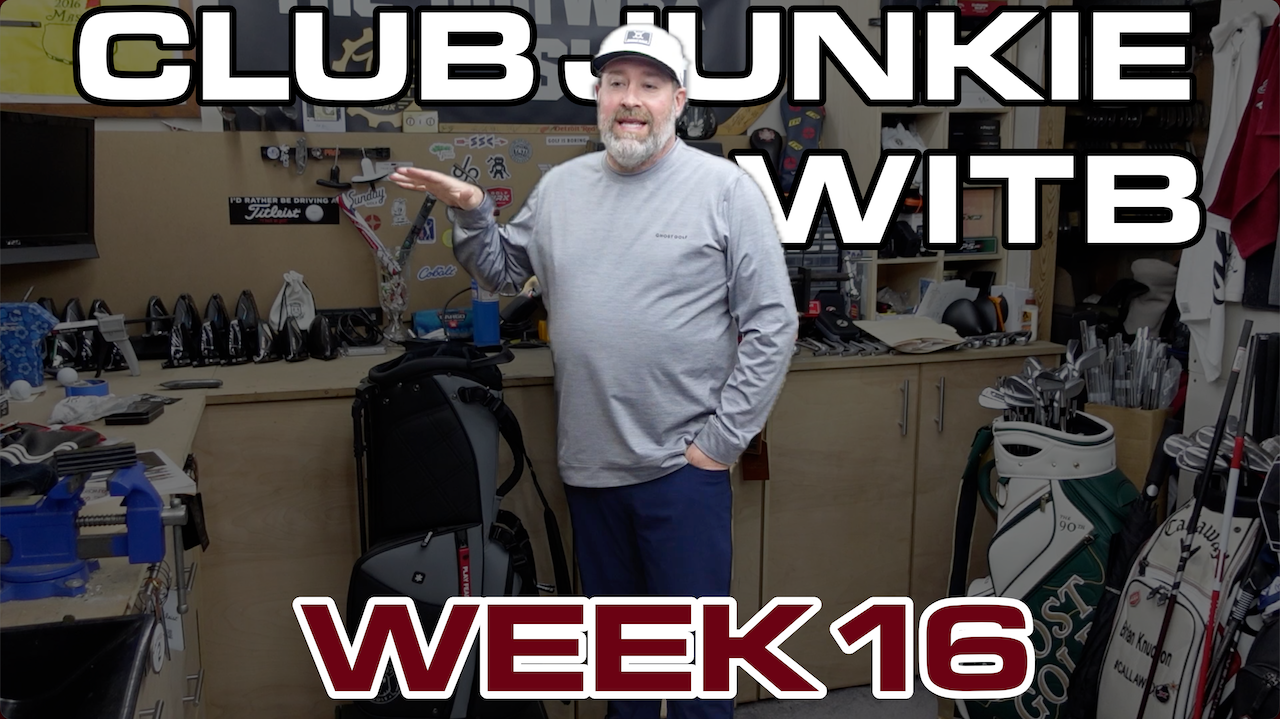
Excited for this week’s WITB as we get to add the new Titleist GTS woods to the bag! I was fit at Titleist’s TPI facility in Oceanside California a few weeks ago and my new clubs just showed up. I am also adding a cool set of irons that I built last year some wild custom wedges into a new golf bag. Speaking of the bag I have a new Ghost Anyday Black Ops stand bag that I will be using on my Motocaddy Remote M7 electric cart.
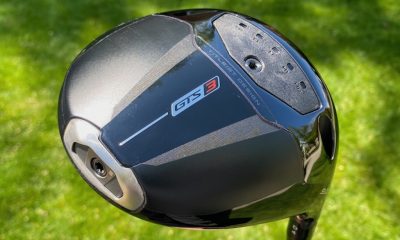
Driver: Titleist GTS3 (11 degrees @ 10.25)
Shaft: Fujikura Ventus Red 6s
3-wood: Titleist GT1 3Tour (14.5 degrees)
Shaft: Graphite Design Tour AD CQ-7s
5-wood: Titleist GTS (18 degrees)
Shaft: Fujikura Ventus Red 7s
9-wood: Titleist GT1 (24 degress)
Shaft: Fujikura Ventus Red 7s
Irons: Bettinardi CB24 (5-PW)
Shafts: KBS C-Taper Lite 110 stiff
Wedge: TaylorMade MG5 (50-09 SB)
Shaft: Mitsubishi MMT 125 Stiff
Wedge: TaylorMade MG5 (56-12 SB)
Shaft: Mitsubishi MMT 125 Stiff
Wedge: TaylorMade MG5 (60-08 LB)
Shaft: Mitsubishi MMT 125 Stiff
Putter: Dan Carraher ZT Proto
Ball: Callaway Chrome Tour
Bag: Ghost Anyday Black Ops Stand Bag

Justin Rose WITB 2026 (April): Full WITB breakdown with new McLaren irons

RBC Heritage Tour Report: More minis, course-specific setups, Spider & GTS launches

What’s the story behind Webb Simpson’s custom-stamped irons?

Cadillac Championship Tour Report: Spieth’s sizable changes, McLaren Golf launches, and more

Kristoffer Reitan’s winning WITB: 2026 Truist Championship

Cameron Young’s winning WITB: 2026 Cadillac Championship

Aaron Rai’s winning WITB: 2026 PGA Championship

Nelly Korda WITB 2026 (April)

Justin Rose on the switch to McLaren Golf, learnings from previous equipment moves

Photos from the 2026 PGA Championship


Patrick Reed WITB 2026 (May)
Driver: Titleist GT3 (9 degrees) Buy here. Shaft: Aldila Rogue Silver 130 M.S.I. 70 TX 3-wood: TaylorMade Qi35 (15 degrees)...

Aaron Rai’s winning WITB: 2026 PGA Championship
Driver: TaylorMade M6 (9 degrees) Shaft: Aldilda Synergy Blue 70 TX 3-wood: TaylorMade Qi10 (15 degrees) Shaft: Fujikura Ventus Blue...


Michael Block WITB 2026 (May)
Driver: TaylorMade Qi4D (9 degrees) Shaft: Fujikura Ventus Black VeloCore+ 5 X 3-wood: TaylorMade Qi4D (15 degrees @14.25) Shaft: Mitsubishi...


Bryson DeChambeau WITB 2026 (May)
Driver: Krank Formula Fire Pro (6 degrees) Shaft: Project X Prototype 3-wood: Krank Formula Fire (10 degrees) Shaft: LA Golf BAD...
-
 Whats in the Bag3 weeks ago
Kristoffer Reitan’s winning WITB: 2026 Truist Championship
-
Whats in the Bag2 weeks ago
Aaron Rai’s winning WITB: 2026 PGA Championship
-
 Tour Photo Galleries3 weeks ago
Photos from the 2026 PGA Championship
-
 Equipment2 weeks ago
GolfWRX Launch Report: 2026 Titleist GTS drivers
-

 Equipment2 weeks ago
PGA Championship Tour Report: Fitzpatrick, Koepka among big-name putter switches for Aronimink
-

 News2 weeks ago
WITB Time Machine: Phil Mickelson’s winning WITB, 2021 PGA Championship
-

 Equipment2 weeks ago
Which of Tiger’s major winning irons are your favorite? – GolfWRXers discuss
-

 Equipment2 weeks ago
Lead Tape Report: Adjusting the swingweight of the Wanamaker Trophy

