
Opinion & Analysis
A deep dive into “toe hang” of a putter, and why it matters

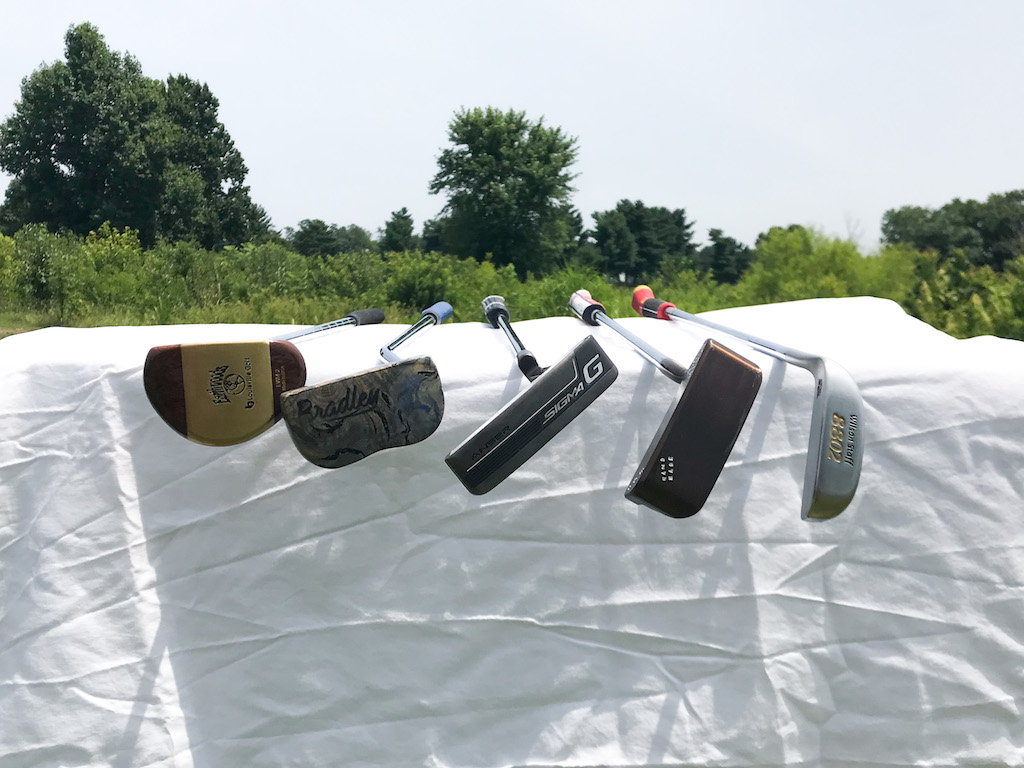
Let’s start with the basics just to be sure everyone is on the same page. When people talk about toe hang (at least in the traditional sense), what exactly are they talking about?
Grab your putter and lay it on a flat surface with the putter head hanging freely off the edge. Now, look at where the toe of your putter is pointing and imagine a clock face is centered on the axis of the shaft. The closer the toe of your putter is to pointing at 6:00, the more toe hang it has. The closer the toe of your putter is to pointing at 9:00 (for a right-handed golfer), the less toe hang it has. If the toe of the putter is pointing directly at 9:00 (where the face is pointing straight up), that is referred to as “face balanced.” If the toe of the putter is pointing at 7:30, that is generally referred to as “1/4 toe hang.” If the toe of the putter is pointing directly at 6:00, that is commonly referred to as “full toe hang.” Generally speaking, the majority of putters will fall on a spectrum somewhere between face balanced and full toe hang.
Of course, there are exceptions to that, but the point of this article will be to address more traditional designs.
What determines Toe Hang?
In technical terms, toe hang is determined by the relationship between the axis of the shaft and the center of gravity of the putter. If the two are perfectly aligned, the result is a face balanced putter. However, as the axis of the putter shaft gets closer to the golfer in relation to the putter’s center of gravity when addressing the golf ball, more toe hang will be the result. What that means from a feel perspective is that more toe hang will place the weight of the putter farther away from your hands as you swing the putter. That displacement will effectively place a moment arm on the putter shaft as you swing it, encouraging the face to open as you go back and then close as you move through the ball. Conversely, a face balanced putter will not want to torque at all naturally during the course of swinging the putter, as the two points are aligned with each other.
Something else to keep in mind is that there are two components to a torque or a moment. One is the distance between the two points (also referred to as the moment arm), which is essentially what we’ve been talking about up to now. The second component is the amount of force acting at that distance. As the weight of your putter increases, so will the effect of more or less toe hang. In practice, an original Ping Anser from 40 years ago won’t engage the hands in the same way during the stroke that a Ping Anser from today will due to today’s putter being 25-30 grams heavier. That may not sound like much until you point out that it’s a 10 percent increase.

Face-balanced putter’s relationship between axis of shaft (red line) and putter CG

Ping Anser’s relationship between axis of shaft (red line) and putter CG

8802’s relationship between axis of shaft (red line) and putter CG
What does Toe Hang actually do?
In the interest of full disclosure, I would have to submit that there is a myriad of characteristics that make a certain putter perfect for a particular golfer. This article is a deep dive into just one of those topics. We have to assume the putter’s length, lie angle, loft, offset, static weight, swing weight, grip size, grip shape, etc. are already suited to the golfer. We also have to assume the putter fits the golfer’s eye, feels right, and inspires confidence. Assuming those have all been configured correctly, let’s address what toe hang can do for a golfer.
Let’s go back to our previous discussion about more toe hang encouraging more torqueing of the putter face. Ultimately, you need to ask yourself what you want to feel when swinging the putter, as toe hang will contribute a lot to how the golfer feels where the face of the putter is. A golfer who prefers a lot of toe hang will complain that he or she has no idea where the face is when swinging a face balanced putter. On the contrary, a golfer who prefers a face balanced putter will feel like he or she has to fight with the putter in order to square the face of a heel-shafted blade.
As a general rule, more toe hang will either encourage or better suit a stronger arc in the putting stroke. One of the more classic examples of this arrangement would be Ben Crenshaw’s fluid, swinging-a-door putting stroke matched to the iconic heel-shafted blade putter he so famously wielded over the years.
Putters in the vicinity of ¼ toe hang (probably most of which would be somehow related to the trusty Ping Anser) generally encourage or better suit a slight arc in the putting stroke. Examples of this setup are nearly endless, but arguably one of the more successful would be Brad Faxon, who holds the record for lowest putts per GIR in a PGA Tour season at 1.704.
Face-balanced putters (as you might have guessed) generally encourage or will better suit a straight-back, straight-through putting stroke. These types of putters will most often appear in the form of a mallet with a double bend shaft. This recipe is one that has been widely attributed to legendary instructor Dave Pelz and his teaching methodology.
What does all of this ultimately mean?
When you go shopping for a new flat stick, try out different amounts of toe hang and get a feel for how they engage your hands as you swing the putter. Ultimately, that’s what you’re paying attention to. Different amounts of toe hang will allow you to have a different feel for where the face of the putter is, which will have different effects on how you release the putter. This will affect both the location you strike the ball on the face as well as your face angle control, so having a poor match could adversely affect both your distance and directional control.

Different putting stroke paths and their general relationship with toe hang
There is no “one size fits all” answer for what works, but as I alluded to above, there are some general guidelines for where you can start. As a rule, the more arc you have in your stroke, the more toe hang you will likely prefer. With that being said, there are exceptions to every rule. While it’s generally true that an 8802 is a good match with a strong arc stroke (for example), there are also cases where a golfer’s natural strong arcing stroke might benefit from something with less toe hang. Placing the center of gravity of the putter closer to the axis of the shaft could possibly quiet the golfer’s hands during the putting stroke. This, of course, depends on whether your personal putting stroke needs correcting or simply complimenting.
Also, your typical miss patterns could indicate a mismatch between you and the toe hang in your putter. If you miss a lot of putts to the right (for a right-handed golfer), a putter with less toe hang might help you correct that. Obviously, the reverse of that might also help you if you miss to the left often.
In short, while there are some general guidelines to follow that serve as good starting points, there is no cookie-cutter answer for finding the right putter from you apart from a fitting with an experienced professional. And when you find the right recipe for YOU, stick with it. No two golfers are the same and no two putters are the same.




Aronimink is not a storied club, but when Donald Ross himself proclaimed it to be as good as he can design and build, one had to take notice. Jay Sigel was the pre-eminent male amateur golfer from the mid-1970s to the mid-1990s. He might have called any number of Philadelphia clubs home, but he chose Aronimink. It served him well. Gary Player won a PGA Championship here in 1962, and was followed by the 1993 winner … nobody. Aronimink gave that event away to Inverness, for reasons of which it is certainly not proud. So be it. We had to wait sixty-four years for the PGA to return to Newtown Square, but here we are. Aronimink has been neo-restored by Gil Hanse and team, to return Ross features with an eye toward defense against the dark arts, errrr, high-tech equipment.
Day one saw Rory McIlroy and Bryson DeChambeau dig big holes, to the tune of plus-four and plus-six, respectively. Since the first-round lead will be minus-three at worst, many shots will need to be made up for the power couple to reach contention. By nightfall, seven golfers held the day-one lead at three-under par 67. Shots and sticks caught our attention, and we are proud to present Five Things We Learned on Tech Thursday at the 2026 PGA Championship. Thanks to InsideTourGolfer, Today’s Golfer, and GolfWRX for initial equipment research.
First, meet Min Woo Lee
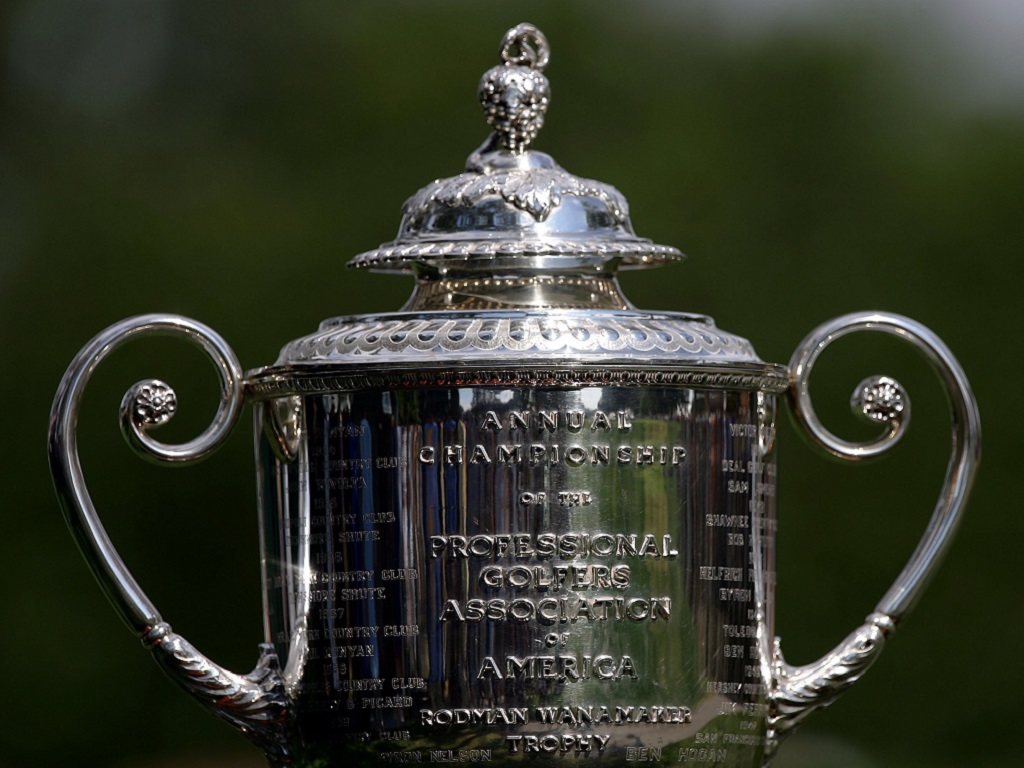
Min Woo Lee, aka Dr. Chipinski, has once again thrust himself into the conversation of Can he, will he, when will he? Lee has so much talent, wins not nearly as often as we believe that he should, and has no major near-misses (much less titles) on his wiki. The young Aussie is getting older and wiser, but is he able to avoid the scarring that holds the older and wiser back from breaking through? Philadelphia offers another opportunity. Min Woo signed for five birdies and two bogeys on day one, and grabbed a share of the opening-day lead at Aronimink. Winners transcend history and the moment, and Lee will need that sort of ascent to lift the Wannamaker on Sunday.
Second, meet Aldrich Potgeiter
The young South African golfer can rip driver with the best of them. Aronimink tips out at nearly 7400 yards, but beyond the fairway bunkers that ensnare only the mortals, Potgeiter can take his chances with wedge from the rough. On Thursday, he spent plenty of time in the spinach. Like Popeye, he used his muscles to gouge and thrash and dig his way out. Six birdies against three bogeys on the card brought AP in a three deep.
Third, meet Martin Kaymer
Not a major event takes place without a where’s he been throwback moment. We know that Martin Kaymer left the PGA and DP World tours for LIV golf, but the two-time (US Open and PGA) major winner has a lifetime exemption into at least one major event, and he seizes the opportunity each May. Kaymer joined the six-seven brigade with four birdies and a solitary bogey on day one. Kaymer was never a long hitter, and the years are kind to no golfer. The German champion will need to uncork every bottle of guile and strategy in his cabinet to remain in contention. For today, though, he occupies a rung on the ladder of Tour Tech.
Fourth, meet Scottie Scheffler
Let’s see, he’s the defending champion at the PGA, and he found his way back to the top tier with five birdies against two bogeys. To be a favorite and then play up to that stature and expectation is quite difficult. Just ask Rory, Bryson, and some of the other pre-tournament heartthrobs. Scheffler’s game is complete, and to knock him off the OWGR #1 pedestal, one needs to defeat him at the majors. Aronimink is the sort of course that fits Scheffler’s game. Better yet, it unfits the game of many of his challengers. Don’t expect Scheffler to go away anytime soon. Come Sunday, he’ll be around.
Fifth, meet Stephan Jaeger
Clocking in for the unheralded players shift are Ryo Hisatsune and Stephan Jaeger. Hisatsune logged seven birdies on day one, but gave most of them back with four bogeys. Still, he’s tied at the top for a time. Jaeger pitched five birdies against two bogeys, including a run of three consecutive, from holes four through six. Odds are that one of the two will hang around through 36 holes. Odds also suggest that both will be gone by Saturday evening. Still, the PGA Championship has historically been the major most likely to be won by an under-known. Both Hisatsune and Jaeger feature on that list, so good luck, lads!

On this episode of the Club Junkie Podcast, I head to the Titleist Performance Institute for a full driver fitting with the new Titleist GTS lineup. We dive into the fitting process, talk about what made the biggest difference in performance, and break down how the different GTS heads and shaft combinations compare on the launch monitor. If you are thinking about a new driver setup for this season, there is a lot to take away from this one.
I also get into Brooks Koepka and the gear setup he brought to the PGA Championship, including the putters that caught my eye during the week. There are some interesting equipment trends showing up at the highest level right now and we break down what stands out.
To wrap things up, I talk about reshafting a few wedges, what I learned during the process, and swapping an adaptor onto a new shaft for another build project in the shop. A gear packed episode from start to finish for anyone who loves golf equipment and club building.
Follow Club Junkie everywhere:
Instagram: https://www.instagram.com/clubjunkiepod/
X: https://x.com/ClubJunkiePod
TikTok: https://www.tiktok.com/@clubjunkiepod
Threads: https://www.threads.com/@clubjunkiepod
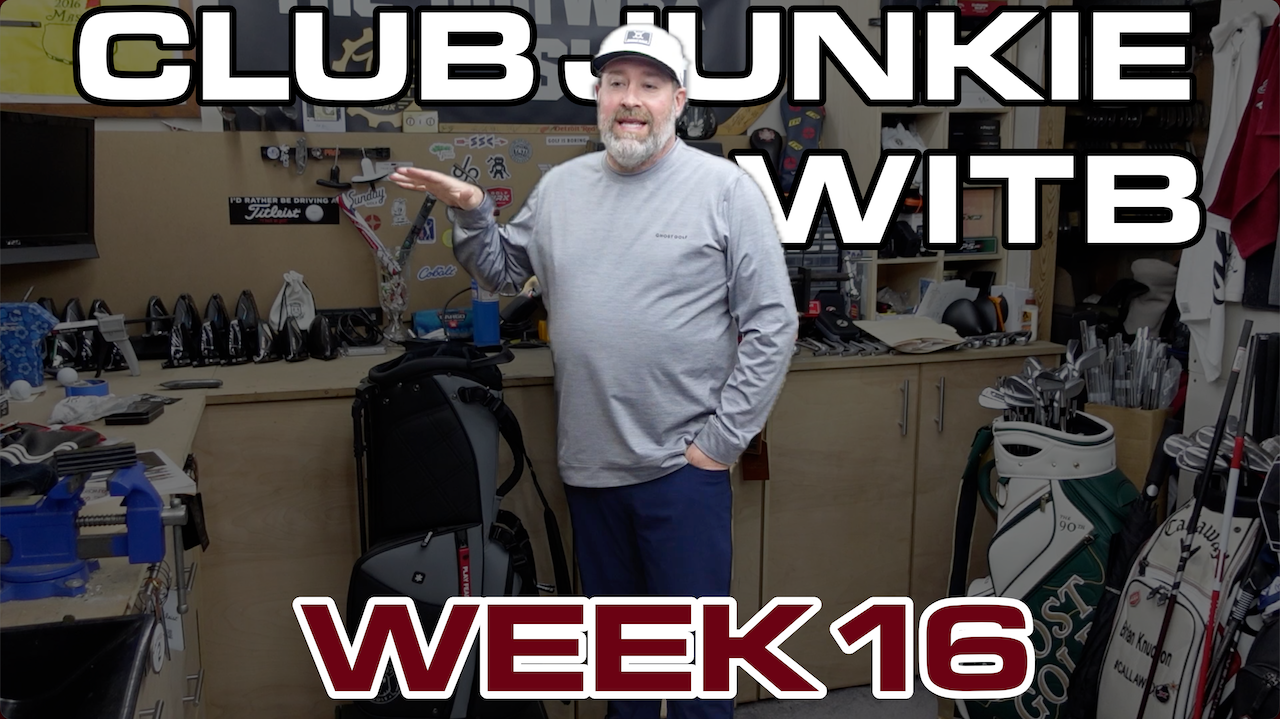
Excited for this week’s WITB as we get to add the new Titleist GTS woods to the bag! I was fit at Titleist’s TPI facility in Oceanside California a few weeks ago and my new clubs just showed up. I am also adding a cool set of irons that I built last year some wild custom wedges into a new golf bag. Speaking of the bag I have a new Ghost Anyday Black Ops stand bag that I will be using on my Motocaddy Remote M7 electric cart.
Driver: Titleist GTS3 (11 degrees @ 10.25)
Shaft: Fujikura Ventus Red 6s
3-wood: Titleist GT1 3Tour (14.5 degrees)
Shaft: Graphite Design Tour AD CQ-7s
5-wood: Titleist GTS (18 degrees)
Shaft: Fujikura Ventus Red 7s
9-wood: Titleist GT1 (24 degress)
Shaft: Fujikura Ventus Red 7s
Irons: Bettinardi CB24 (5-PW)
Shafts: KBS C-Taper Lite 110 stiff
Wedge: TaylorMade MG5 (50-09 SB)
Shaft: Mitsubishi MMT 125 Stiff
Wedge: TaylorMade MG5 (56-12 SB)
Shaft: Mitsubishi MMT 125 Stiff
Wedge: TaylorMade MG5 (60-08 LB)
Shaft: Mitsubishi MMT 125 Stiff
Putter: Dan Carraher ZT Proto
Ball: Callaway Chrome Tour
Bag: Ghost Anyday Black Ops Stand Bag

Justin Rose WITB 2026 (April): Full WITB breakdown with new McLaren irons

RBC Heritage Tour Report: More minis, course-specific setups, Spider & GTS launches

What’s the story behind Webb Simpson’s custom-stamped irons?

Cadillac Championship Tour Report: Spieth’s sizable changes, McLaren Golf launches, and more

Kristoffer Reitan’s winning WITB: 2026 Truist Championship

Cameron Young’s winning WITB: 2026 Cadillac Championship

Aaron Rai’s winning WITB: 2026 PGA Championship

Nelly Korda WITB 2026 (April)

Justin Rose on the switch to McLaren Golf, learnings from previous equipment moves

Photos from the 2026 PGA Championship


Patrick Reed WITB 2026 (May)
Driver: Titleist GT3 (9 degrees) Buy here. Shaft: Aldila Rogue Silver 130 M.S.I. 70 TX 3-wood: TaylorMade Qi35 (15 degrees)...

Aaron Rai’s winning WITB: 2026 PGA Championship
Driver: TaylorMade M6 (9 degrees) Shaft: Aldilda Synergy Blue 70 TX 3-wood: TaylorMade Qi10 (15 degrees) Shaft: Fujikura Ventus Blue...


Michael Block WITB 2026 (May)
Driver: TaylorMade Qi4D (9 degrees) Shaft: Fujikura Ventus Black VeloCore+ 5 X 3-wood: TaylorMade Qi4D (15 degrees @14.25) Shaft: Mitsubishi...


Bryson DeChambeau WITB 2026 (May)
Driver: Krank Formula Fire Pro (6 degrees) Shaft: Project X Prototype 3-wood: Krank Formula Fire (10 degrees) Shaft: LA Golf BAD...
-
 Whats in the Bag3 weeks ago
Kristoffer Reitan’s winning WITB: 2026 Truist Championship
-
Whats in the Bag2 weeks ago
Aaron Rai’s winning WITB: 2026 PGA Championship
-
 Tour Photo Galleries3 weeks ago
Photos from the 2026 PGA Championship
-
 Equipment2 weeks ago
GolfWRX Launch Report: 2026 Titleist GTS drivers
-

 Equipment2 weeks ago
PGA Championship Tour Report: Fitzpatrick, Koepka among big-name putter switches for Aronimink
-

 News2 weeks ago
WITB Time Machine: Phil Mickelson’s winning WITB, 2021 PGA Championship
-

 Equipment2 weeks ago
Which of Tiger’s major winning irons are your favorite? – GolfWRXers discuss
-

 Equipment2 weeks ago
Lead Tape Report: Adjusting the swingweight of the Wanamaker Trophy


PBB
Jun 25, 2020 at 2:19 pm
Backwards. Full toe hang putters want to close on the backswing and open on the follow through. Better for straight back / straight through strokes.
Face balanced putters want to open on the backswing and close on the follow through. Better for strong arc putters.
A. Paul McDonough
May 30, 2021 at 1:30 pm
You are CORRECT about Toe Hang Putters closing, Face to Path, in the Backstroke and Opening Face to Path on Forward Stroke.
However, Face Balanced Putters stay Square to Path Backwards and Forward.
An “Arc Stroke” Player will Pull, and/or Hook Putts with a Face Balanced Putter.
A “Straight Path” Player will be able to get away with minimal Toe Flow, but TOO MUCH Toe Flow will lead to Push and/or Slice Putts.
Bruce
May 11, 2019 at 1:35 pm
re: If the toe of the putter is pointing at 7:30, that is generally referred to as 1/4 toe hang.”
If 9 o’clock is face balanced and 6 o’clock is toe balanced, then 7:30 os 1/2 toe hang!
Tee-Bone
Sep 5, 2018 at 2:19 pm
I’m no scientist, but its pretty obvious that as the shaft is swung back, the cg, if not in-line with the path of that shaft, will want to stay behind. Meaning, a heel-shafted putter wants to CLOSE going back, not OPEN. Its a nice story to sell putters, though.
joro
Sep 1, 2018 at 3:18 pm
And yet they still stick by that old thinking. The fact is the Putt is going to go where the face is facing regardless of your stroke, so does it really matter if you are a swinging gate or back and through ? Watch on TV when they show from behind and you see by the set up where the face is pointing and the ball will go there regardless of the stroke, aim left, the ball goes left.
Rich
Aug 14, 2018 at 7:58 pm
I’m a straight back and thru stroke guy and use a mallet and at times a 8802 and haven’t changed my stroke ,but the 8802 has a super stroke grip and that helps..
Geohogan
Aug 22, 2018 at 8:37 pm
Super stroke grip, increases counter weighting ie lowers swing weight
and thereby less sensitive to the head, which makes it easier, more natural to control the stroke.
Geohogan
Aug 22, 2018 at 8:40 pm
Guessing your 8802 with super stroke grip is B10-C4 swing weight.
Chuck
Aug 10, 2018 at 3:28 pm
In the lead photo, what is the putter that is second from the right?
Rusty Trombone
Aug 3, 2018 at 9:27 pm
I went from a face balanced Musty Putter, to the Ping sigma G Tyrone, to the Scotty Cameron 5.5m, then to my dad’s old Taylormade (lots of toe hang) and started putting lights out with it. Just received the Taylormade TP Soto today, and although it doesn’t have the same plastic pure roll insert as my dad’s, (it’s got a metal “milled insert”) it has similar toe hang, and look forward to testing it out. Definitely want to try the SAM thing another poster mentioned.
stuart burley
Jul 28, 2018 at 10:15 am
The explanation of the COG in relation to the shaft is very good. Fact is though that the opening and closing and clubface torque have been proven to be the opposite. Good golfers aim slightly left and hold the clubface off through impact (negative gamma torque). Poor putters aim slightly right and over rotate during impact (positive gamma rotation). This is easier to do with a face balanced putter due to the removal of clubface torque.
shawn
Jul 29, 2018 at 10:35 pm
No, you are wrong about the COG. What Peter has shown is incomplete because you must also consider the COG of the putter head itself which may be well behind the “sweet spot” shown on the putter face. You must determine where the red line axis intersects the putter head to fully understand putter mechanics. And if you are applying torque to the putter you are incompetent.
Geohogan
Jul 29, 2018 at 11:24 pm
Whether a pro or am, impact between the putter face and the ball is
one, one thousandths of a second. There is no gamma rotation in one, one thousandths of a second, positive or negative.
Stop perpetuating mythology.
RBImGuy
Jul 27, 2018 at 8:27 am
I am a great putter and putt well with any sort of putter.
its the Indian not the bow
billwill
Jul 27, 2018 at 1:45 pm
So yer an “Indian”? Which tribe… or is it just a lot of sitting bull?
Geohogan
Jul 27, 2018 at 4:42 pm
Cant fool us, RBiMguy,
welcome to Golfwrx, Most Interesting Man in the World.
https://www.pinterest.ca/pin/230387337164228759/
Harv
Jul 26, 2018 at 7:39 pm
I got toe hang… but I just use a nail clipper…
HDTVMAN
Jul 25, 2018 at 10:50 pm
Another very important part of the putting decision is the grip. Thin, thick, flat, round, hard, soft…there are no right or wrongs, whatever you like.
Socrates
Jul 25, 2018 at 9:24 pm
Seems like a regurgitation of mythology with no real data to substantiate the claims. Plenty of players on Tour (I’ll use Tour players since they are the best putters out there) who use face balanced putters and have an arcing stroke. And plenty that use a toe hang putter that are SBST. Reminds me of how people thought they knew how to make the ball curve until the “new” ball flight rules told us what really happens.
Caroline
Jul 25, 2018 at 11:27 pm
Nothing, absolutely nothing is more important in golf, pitches, chips, putting..then hand eye coordination…pros have so much of it that trying to do what they do is impossible unless you have that coordination yourself. For us amateurs golf is an adventure every time we step on the first tee. Amateurs that improve and get better only do so because they stick with what ever they found that gets them into the hole. Sadly most amateurs are at the mercy of what ever the next swing,putt, chip article some “golf” instructor has published this month. If you find a way that gets it into the hole that is your secret.
Cris Kennedy
Jul 25, 2018 at 8:36 pm
The only putter you want is the one you paid SO MUCH MONEY FOR that you can never ever change to something else because, after all, you spent WAY MORE MONEY than you can ever justify, or even recover from financially. This way…you can never change putters. It FORCES you to learn how to use that putter; i.e., you’ll finally learn how to putt and not keep thinking, “….maybe my problem I need the latest and greatest (different) putter that___________uses on tour……!!
Cameron Diego
Jul 26, 2018 at 11:09 am
Chris, you are so right. I’ve been making payments on my Scotty Cameron putter for the last fifteen years. It is almost paid off (only have five more years to go) and in the last two years, I have only three-putted once.
Terry Porvin
Jul 25, 2018 at 8:04 pm
There may be an error in the 2nd to last paragraph of the article. From my understanding, if a right handed golfer is missing putts right, he/she may need more to hang to square up the face & vise versa.
Scott S
Jul 27, 2018 at 7:59 am
Terry- When I read that I thought the same thing. More toe hang would create a greater amount of putter face closing during the stroke would it not? The only thing I could think of was perhaps with less toe hang the putter would not open up as much to begin with and effectively reduce overall opening/closing of the face. I would love to hear a greater explanation of this or a correction of what was written.
A. Paul McDonough
May 30, 2021 at 1:44 pm
Terry, Toe Hang Putters CLOSE – Face to Path – BACK and OPEN – FtP – going Forward. Coming from Inside to Square to Inside (Arc Stroke) with a “Closing” Face would produce either Pulls and/or Hooking Putts.
Face Balanced stay Square to Path.
A “Straight Line” Stroke Player can get away with minimal Toe Flow, too much would lead to Push and/or Slice Putts.
JR
Jul 25, 2018 at 2:44 pm
I find reading the putt correctly helps me make more putts.
billwill
Jul 27, 2018 at 1:44 pm
No kidding…. 😮
Joe Perez
Jul 25, 2018 at 2:15 pm
Wonderful article, but I still can’t figure out why sometimes I prefer a face-balanced mallet and other times, one with a lot of toe-hang. ????
Geohogan
Jul 28, 2018 at 12:53 am
“Change is as good as a rest?”
When we change it up, it stimulates our brain.
Its not toe hang or not toe hang, its the variety that increases focus and we do better .. until we need another fix.
Neurologists say, to change the route home from work every day. It stimulates neurons. Change in our golf prevents atrophy.
Billy
Apr 19, 2019 at 5:27 am
You hit the nail on the head. I just bay’d an O Works 1W and boy am I making putts!
CJ
Jul 25, 2018 at 1:50 pm
While there are always typical negative responses, most poor putters can’t read greens. Using arc style trainer and putting rh only for rh players helped me tremendously. Thanks for the article OP.
BL
Jul 25, 2018 at 12:34 pm
Toe hang can be very misleading. See: Bullseyes.
dtrain
Jul 25, 2018 at 12:22 pm
So what does this article prove that I haven’t seen 1000 times before? How exactly is this a “deep dive” More like sticking your toe in the kiddie pool. How about some serious testing, with actual golfers?
Peter Schmitt
Jul 25, 2018 at 11:50 am
Thanks for the discussion, folks. There’s a lot to unpack here and frankly there wasn’t enough room to talk about concepts such as toe up, face balanced at impact, and the like. This is intended to serve as a 101-level discussion to cover the “traditional” spectrum of one aspect of putter design. This should aid in having an informed discussion with a fitter, which IMO is the proper conclusion of the article. Go get a proper fitting with a qualified individual.
Don
Jul 25, 2018 at 2:58 pm
You also failed to mention how the actual “connection point” of the shaft to the putter head affects things. For example, your first picture (the one showing the face-balanced putter with the axis of the shaft pointing directly at the impact sweet spot) would actually create torque (twist) at the moment of impact because even though the axis of the shaft is pointed at the sweet spot, the shaft “connects” toward the heel. Now, contrast this to a center-shafted putter that has the exact same axis of the shaft but that connects to the putter head with no goose-neck. It would not twist when impacting the ball because it connects at the point where the sweet spot actually is. From a “physics” standpoint, a center-shafted putter would seem to be more ideal even though the axis of the shaft would be exactly the same as one with a goose-neck.
engineer bob
Jul 26, 2018 at 4:20 pm
Why is my scientifically valid comment being held for moderation?
Harv
Jul 26, 2018 at 7:38 pm
…. because if you’re too smart they will delete your comments because the don’t want the gearheads to blow up their heads…
Jimmie
Jul 25, 2018 at 9:16 am
How about putters that are perfectly 360 degree balanced, which means either no toe hang or any toe hang you desire. It is ideal as there is no bias and perfect feel. I got one from ebay P&si-Egos putter.
PT
Aug 1, 2018 at 9:00 pm
Yeah but you notice on their website that they have no video examples of anybody actually making any putts with the putter? Nobody! But they have videos of everybody else missing.
QB
Jul 25, 2018 at 9:02 am
You neglected to mention toe up putters, which point to 12 noon! 12 o’clock toe hang allows the face to remain square throughout the stroke, they’re nearly impossible to pull or push. Been bagging one for a couple years now and changed my game. Love my Edel brick but I believe odyssey came out with a line of toe up recently as well.
Jimmie
Jul 25, 2018 at 12:16 pm
I think Odyssey introduced a toe-down putter… just like Axis 1.
Antonio
Jul 25, 2018 at 3:16 am
Great article, thanks!
However I do not agree on the conclussion. By own experience If you tend to miss right a more toe Hung putter will help you close the face at impact and bring it more square, provided of course that you have and arc putter swing as you mentioned.
Scott S
Jul 27, 2018 at 8:04 am
Agreed!
Jim McPherson
Jul 25, 2018 at 1:48 am
So what is the consensus on putter fittings? Worth it?
Or is it all about rolling what appeals to the eye and then putting in the practice?
HDTVMAN
Jul 25, 2018 at 10:47 pm
I stress to my customers, before buying a putter, have a PGA Professional go thru the SAM, Science In Motion, program. It’s 90 minutes and $50 at our shop, and well worth it. It’s used at the Callaway Performance Center and TM’s Kingdom, and will show you your arc & strike angle, helping you to pick out the correct putter. We allow customers to compare their current putter to whatever putter on the floor that they are considering purchasing. Best $50 you will spend.
engineer bob
Jul 24, 2018 at 9:57 pm
… putter shaft axis… putter center of gravity… torque… moment… moment arm.… OK, stop here!!!
The table top test for toe hang is good, but let’s complicate it with some simple science.
Hold the top of your putter grip between the finger and thumb and twirl the hanging putter. If the shaft and spin axis coincide, the putter is face balanced. If the shaft rotates outside of the spin axis and wobbles, it’s not face balanced. (p.s. the vertical spin axis is called the longitudinal gravitational axis 😮 ).
David
Jul 24, 2018 at 9:21 pm
Check out the videos from the guys at Directed Force putters if you want to see what a crock “face-balanced” putters are. They absolutely, positively do not stay “square the the line” in any way, shape or form.
No I don’t work for Directed Force.
Yes, I bought one.
No, I no longer use it.
But, hey, let’s at least TRY to get the science right….
gif
Jul 24, 2018 at 9:59 pm
Are you a “feeel” putter?
Geohogan
Jul 24, 2018 at 10:40 pm
What if a putter did stay square to the line?
Putter ball contact is 1/1000 second for 1/4 inch.
That is all she wrote.
…so whether putter face stays square after impact is meaningless.
It is just more marketing BS, like oversize grips.
Check out the putters used by two of the greatest putters who ever lived, Bobby Jones and Bobby Locke.
Check out their putters.
gif
Jul 25, 2018 at 12:12 am
But you don’t realize that a putter represents a golfer’s fhallic symbol… his masculinity on the greens as he bravely putt-putts the ball into the hole… ploop 😮
acew/7iron
Jul 24, 2018 at 8:51 pm
Funny you mention big grips…I kept inching towards adding larger and larger ones until one day I realized I could not control distance or direction at all. Got a small grip and back to lagging them close or making them from time to time.
Geohogan
Jul 24, 2018 at 10:33 pm
ace, you werent adding larger and larger grips, but rather adding more and more weight to the butt end of the club. Some oversize grips will be 75 grams heavier than std(50 grams). Thats serious reduction in swing weight, maybe from D2 to C0? Serious reduction in clubhead feel.
IMO, adjustable counter weights is the way to go with putters. Its been proven that performance improves (up to 30 days) when we make changes; and if you believe a change will make a difference for the better (placebo effect), there is 60% chance you will improve.
gif
Jul 25, 2018 at 12:17 am
75 grams minus 50 grams = 25 grams… almost 1 ounce… insignificant…. and putter swingweight is irrelevant to a tiny putting movement. You can adjust to any putter size, shape, weight if you practice enough like the pros do.
Geohogan
Jul 26, 2018 at 7:50 am
Some oversize grips will be 75 grams heavier than std(50 grams
75+50=125 grams
Geohogan
Jul 24, 2018 at 7:51 pm
Messing around with an old Powerbilt, Model 57 blade putter not unlike Bobby Jones, Calamity Jane. 33.5 inches long, B 4 swing weight. Calamity Jane was B8, if reference I found is correct.
So although complete toe hanger(6 oclock), the counter balance puts so much weight in the hands, rather than the putter head,
that the face is very controllable.
Makes me think that counter balancing may be the reason for the fad to go to oversize grips. It must reduce Swing weight by at least 10 SW points , to add 50+ grams to the handle, with no compensation to the head.
I’ll bet if golfers maintained swing weight when they put oversize grips on their clubs the fad would go away. ie. its counter balancing resulting in significantly lower SW, that gives more clubhead control, not fatter grips.
gif
Jul 25, 2018 at 12:20 am
Those old 1-iron shaped vintage putters were used in the days of the “stymie”… where you had to loft your ball over your opponents ball to get to the hole… without contacting his ball…!!!
Geohogan
Jul 26, 2018 at 8:38 am
Many golfers today use putters with 6-10 degrees of loft and dont do it because of stymies. For one thing it allows forward lean or hands ahead and still maintain loft to get the ball rolling.
How much loft is remaining if putter has 2 degrees of loft and hands are ahead at impact?
Geohogan
Jul 26, 2018 at 2:13 pm
https://www.youtube.com/watch?v=_TCObKqRwtQ
1:20
Ben hogan , stymied, using an L Wedge?